Day: August 11, 2025

The Evolution of Lifeguards and Their Uniforms: From Quiet Sentinels to Cultural Icons

Dave

The lifeguard is one of those rare figures who seems to exist both in the periphery of our awareness and in the very heart of our sense of safety at the beach or pool. They’re there before the first towels hit the sand, scanning the horizon, and still there when the last stubborn swimmer reluctantly leaves the water. Over time, the image of the lifeguard—watchful, sun-kissed, and somehow a blend of casual relaxation and acute readiness—has evolved alongside the places they protect. But perhaps nothing tells the story of this transformation better than the changing uniforms they’ve worn through the decades.

The concept of a lifeguard dates back far earlier than many realize. In the 18th and early 19th centuries, there were no standardized uniforms, no organized forces patrolling the water’s edge. Early “lifeguards” were often local fishermen, sailors, or strong swimmers who happened to be nearby when trouble struck. Their “uniform” was whatever they wore that day—often heavy, impractical clothing that would make rescues even harder. Saving lives was a matter of instinct, courage, and proximity, not profession.

By the mid-to-late 1800s, the emergence of public bathing beaches and seaside resorts brought new challenges. Crowds of inexperienced swimmers needed watching, and communities began to formally hire beach patrols. In these early organized days, uniforms were minimal but symbolic—simple sashes, armbands, or caps to identify the lifeguard. The intention wasn’t fashion, but recognition: in an emergency, the rescuer needed to be immediately visible.

The early 20th century marked a significant turning point. Lifeguarding was becoming a profession, with training standards, rescue techniques, and official organizations. Uniforms shifted toward functionality—sleeveless wool swimwear for mobility in the water, with bright colors (often red or white) to stand out against the surf. Caps and tank-style swim shirts were common, both for sun protection and quick identification. The look was modest by modern standards, but it reflected the era’s swimwear trends and the need for practicality.

By the 1920s and 1930s, lifeguard uniforms were heavily influenced by competitive swimwear. One-piece tank suits for men, sometimes belted, and streamlined women’s suits replaced the heavy wool. Shorts became more common for male guards on shore duty, paired with sleeveless tops emblazoned with “LIFEGUARD” in bold lettering. This was also the period when lifeguard towers became more common fixtures, and uniforms needed to be comfortable for long shifts in the sun while remaining ready for sudden rescues.

The post-WWII era brought not only a boom in beach culture but also a shift toward the image of the lifeguard as an emblem of vitality and athleticism. Advances in fabric technology introduced lighter, quick-drying materials. Swim trunks for men grew shorter, and female lifeguards—still fewer in number—wore one-piece suits with brighter designs. The red-and-white color scheme began to dominate, thanks to its high visibility and the influence of rescue organizations worldwide.

In the 1960s and 1970s, surf culture began to shape the lifeguard aesthetic. In California, Australia, and Hawaii especially, lifeguards embodied the laid-back beach lifestyle, blending athleticism with an easy cool. Board shorts, sun-bleached hair, and reflective sunglasses became part of the unofficial “uniform” for many male guards, while female guards often adopted athletic bikinis or practical one-pieces paired with shorts. The rescue can (also known as the torpedo buoy) became a recognizable accessory—both a vital rescue tool and a symbol of authority on the sand.

The 1980s and early 1990s marked the explosion of lifeguard imagery into global pop culture. Television shows like Baywatch cemented the stereotype of the lifeguard as glamorous, perpetually tanned, and outfitted in form-fitting red swimwear. The slow-motion run down the beach became iconic, and the uniform—a high-cut red swimsuit for women, red shorts for men—was as much about branding as safety. While real lifeguards may have rolled their eyes at Hollywood dramatics, the impact was undeniable: the “lifeguard look” became a fashion trend in its own right, even away from the water.

But real lifeguards continued to adapt their uniforms with safety and practicality in mind. The late 1990s and 2000s brought lightweight rash guards for sun protection, moisture-wicking fabrics, and more standardized gear depending on region and climate. High-visibility colors remained key—red, yellow, and orange dominating in different parts of the world. Caps, visors, and polarized sunglasses became standard to reduce glare during long hours of scanning the water.

The modern lifeguard uniform is a careful balance between visibility, comfort, and utility. Many now include official logos, emergency whistle attachments, and quick-access pockets for small rescue gear. In some locations, guards switch between swimwear and more covered uniforms depending on weather and duty—board shorts and shirts for patrolling, streamlined suits for rescue swims. Technology has also crept in, with waterproof radios and even body cameras in some cases.

Importantly, the evolution of the lifeguard uniform mirrors the evolution of the profession itself. Once a loosely organized job for strong swimmers, it’s now a rigorous, highly trained role requiring certification in CPR, first aid, and specialized rescue techniques. The uniform signals authority, professionalism, and readiness. It also serves as a visible reminder to the public: someone is watching, prepared to act when seconds matter.

Yet, despite all the changes, the core image of the lifeguard hasn’t lost its timeless appeal. Whether it’s the stoic figure in a watchtower, the sprinter racing down the shore with a rescue can, or the calm rescuer guiding someone to safety, the lifeguard remains a reassuring presence. And their uniform—whether wool tank suit, red board shorts, or high-tech rash guard—tells a silent story about the era, the culture, and the shared human need to protect each other in the unpredictable meeting place between land and water.

From the beaches of Sydney to the shores of California, from lakeside camps to Olympic swimming venues, the lifeguard’s attire is more than fabric—it’s a flag of safety, an emblem of trust, and, in its own way, a piece of living history.

Related Posts

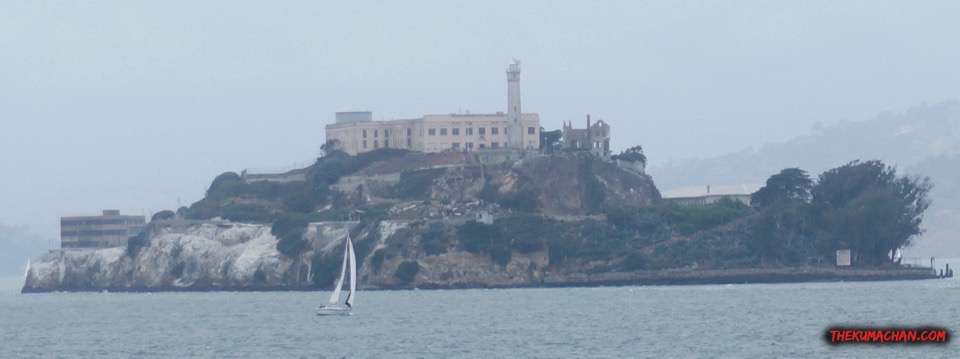
Alcatraz Receives Its First Federal Prisoners: The Rock, Capone, and the World at War

Elias Rowen

There are certain dates in history when events, separated by oceans and circumstances, become strangely intertwined. August 11 is one of those days. In 1934, the infamous Alcatraz Federal Penitentiary welcomed its first wave of inmates, among them some of the most dangerous and high-profile criminals in America—including the legendary gangster Al Capone. The Rock, as it became known, would soon grow into a symbol of both justice and isolation, a place where the law’s most notorious adversaries vanished into the fog.

But August 11 would also, years later, carry a different weight. In 1945, the date fell in the tense hours between Japan’s conditional surrender offer and the Allies’ official response. It was a day of waiting, of cautious communication, and of the silent turning of history’s gears toward the end of World War II. Two events—one set on a rocky island in San Francisco Bay, the other across a war-torn globe—would be bound forever by their place on the calendar.

Let’s start with Alcatraz, and the vision behind it. The federal government, facing the challenge of housing prisoners who were either too violent, too escape-prone, or too influential to be contained in regular penitentiaries, turned to an isolated military prison on an island less than two miles from San Francisco. The location was perfect for its purpose: cold, shark-infested waters and swift currents made any escape attempt almost suicidal. The Army had already been using Alcatraz for military prisoners since the late 19th century, but by the early 1930s, the Department of Justice saw an opportunity to transform it into the nation’s most secure civilian prison.

On August 11, 1934, the first group of 137 federal inmates arrived from the U.S. Penitentiary in Leavenworth, Kansas, under heavy guard. The transfer was conducted with military precision. Prisoners were transported in specially designed railroad cars, guarded by dozens of armed federal agents. Upon arrival in San Francisco, they were ferried to the island under the watchful eyes of armed Coast Guard vessels.

Among the arrivals was Alphonse “Al” Capone, the most famous gangster of the Prohibition era. Capone had built his empire on bootlegging, bribery, and violence, and though the government could never pin murder on him, they had finally brought him down on charges of tax evasion. By the time he arrived at Alcatraz, Capone’s power had already diminished, but authorities feared he could still influence guards and prisoners alike in a standard penitentiary. The Rock’s strict rules, isolation, and relentless routines were designed to break such influence.

Life at Alcatraz was nothing like the relatively loose conditions in other prisons of the time. Inmates spent most of their days in solitary confinement or at silent work details. Communication was minimal, privileges rare. Even meals were conducted with rigid discipline. The prison’s rules promised “privilege through merit,” meaning good behavior was the only way to earn even the smallest comforts. For men like Capone—used to bending the world to their will—Alcatraz was a cold, unyielding wall.

Capone’s time on the island was marked by a surprising shift in demeanor. Stripped of his networks and under constant supervision, he became increasingly withdrawn. At one point, he was even allowed to play banjo in the prison band—proof that even on The Rock, routine could soften a man’s edges. But there was no escaping the reality that Alcatraz was meant to be a one-way street for America’s most feared criminals.

Meanwhile, the prison gained a reputation not only for its harshness but also for its seeming inescapability. While several inmates would attempt daring escapes over the years—some vanishing into the bay, their fates unknown—none were officially confirmed to have succeeded. Alcatraz became both a literal and symbolic fortress, a reminder that the arm of federal justice could reach even the most untouchable.

Fast forward to August 11, 1945. On the other side of the world, the United States and its Allies were grappling with Japan’s conditional surrender offer, which had arrived the day before. The war in Europe had ended in May, but the Pacific conflict still raged, fueled by years of bloody island battles and culminating in the atomic bombings of Hiroshima on August 6 and Nagasaki on August 9.

Japan’s surrender proposal—acceptance of the Allies’ terms so long as Emperor Hirohito’s sovereignty was preserved—was a pivotal moment. But it was not met with immediate acceptance. For the Allies, the question of the Emperor’s role was politically sensitive. Could they preserve his position without undermining the principle of unconditional surrender? The American public, still furious over Pearl Harbor, had little appetite for leniency, yet military leaders recognized that preserving the Emperor might speed the end of the war and avoid a costly invasion of the Japanese mainland.

August 11, 1945, thus became a day of tense diplomacy. Messages were exchanged through neutral intermediaries in Switzerland and Sweden, as leaders in Washington, London, and other capitals debated the exact wording of their reply. The eventual decision was to accept the surrender on the condition that the Emperor’s authority would be subject to the Supreme Commander for the Allied Powers—effectively making him a figurehead under Allied control. This response, though not yet formally delivered on the 11th, was already taking shape.

It’s fascinating to think of these two August 11s—1934 and 1945—side by side. On one, a fortress prison was receiving its first residents, designed to be a place where lawbreakers would find no escape. On the other, the largest war in human history was nearing its close, with the world’s leaders trying to craft a peace that would hold. Both were about control—whether of individuals who threatened civil order or of nations whose ambitions had set the world ablaze.

There’s also a certain irony in the juxtaposition. Alcatraz was about the impossibility of escape; Japan’s leaders, in those August days of 1945, were trying to negotiate a way out of a war they could no longer win. In both cases, the outcome would reshape the future. For the inmates of The Rock, it meant years of isolation, stripped of power and influence. For Japan, it meant the end of an imperial era and the beginning of a transformation into a peaceful democracy.

Alcatraz would go on to house not just gangsters like Capone, but also bank robbers like George “Machine Gun” Kelly and Robert Stroud, the “Birdman of Alcatraz.” Each inmate’s story became part of the prison’s mythology, but Capone remained its most famous resident. By the time he left the island in 1939, his health had deteriorated sharply due to syphilis, and he spent his remaining years in relative obscurity.

The prison itself closed in 1963, not because it had been breached, but because it was too expensive to maintain. The Rock’s isolation had been its greatest strength as a prison, but it also made supplying and staffing it costly. Today, it stands as a tourist destination and a relic of a different era in criminal justice—a place where the walls still echo with whispers of its most infamous residents.

Meanwhile, the events of August 1945 continue to be studied and debated. The surrender correspondence of those days was a delicate dance of language and power, setting the stage for the formal end of the war on September 2 aboard the USS Missouri. The compromise over the Emperor’s status was controversial at the time but ultimately helped ensure a smooth transition from war to peace.

Looking back, August 11 is a reminder that history is rarely neat. Some days hold more than one story worth telling, more than one thread that shapes the fabric of our world. In 1934, that thread was steel bars and cold water, a fortress in the bay meant to contain the uncontainable. In 1945, it was the fragile bridge between war and peace, built on diplomacy, pragmatism, and the hope that the worst was finally behind us.

And perhaps that’s the deeper connection between Alcatraz and the surrender talks: both were about endings, about the moment when resistance gives way to acceptance, and the world, for better or worse, changes forever.

Related Posts