Day: August 12, 2025

Hidden Gem Beaches Worth Exploring: Escaping the Crowds, Finding the Magic

Dave

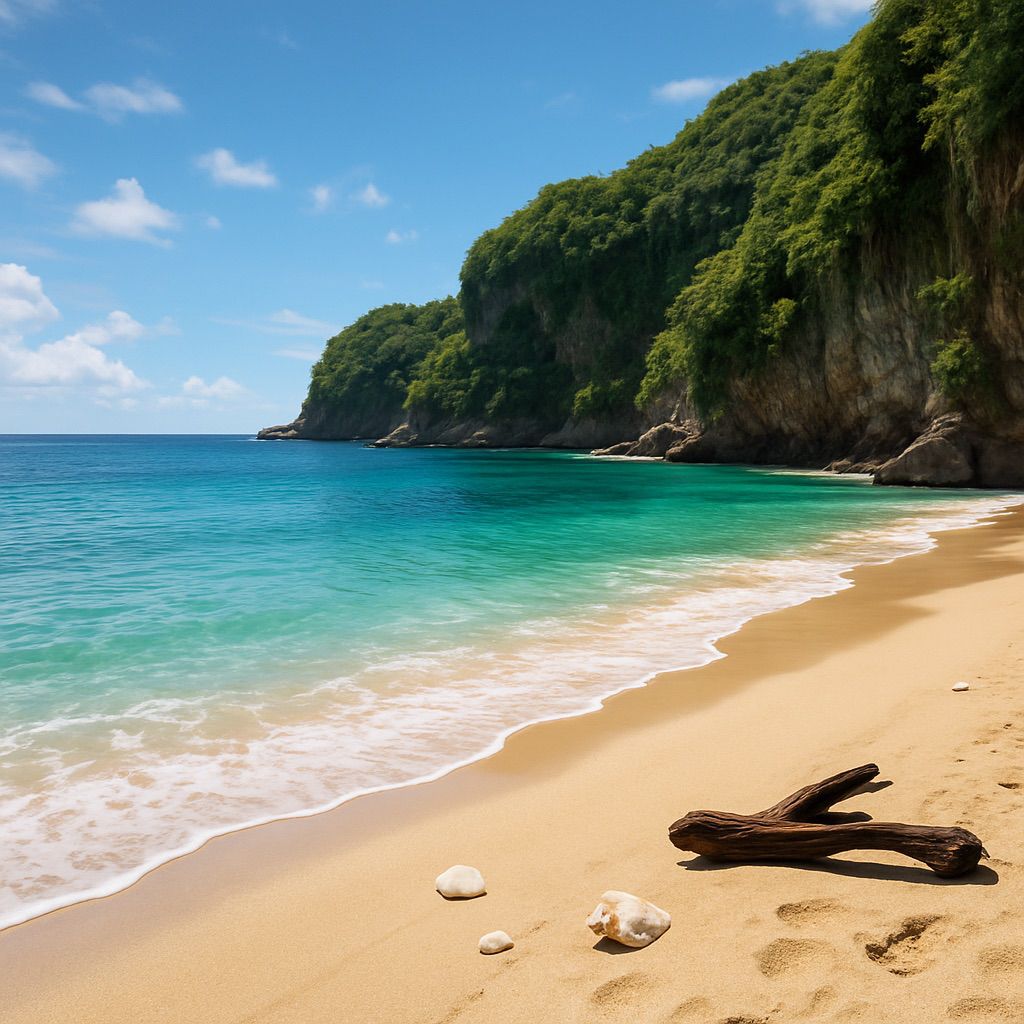
There’s something almost sacred about stumbling upon a beach you didn’t know existed, a place untouched by tourist swarms and left to the rhythm of the waves. These hidden gem beaches—some tucked behind rugged cliffs, others revealed only at low tide—are the antidote to the crowded boardwalk and the postcard-perfect but overrun resort. They offer a kind of intimacy with nature that’s hard to find in the age of social media check-ins and drone-shot travel videos. They are for those who are willing to wander off the beaten path, endure the dirt road, the steep hike, or the uncertain directions, in exchange for serenity and unspoiled beauty.

The first thing you notice about a hidden gem beach is the quiet. Not silence exactly—the ocean is rarely still—but the absence of human clamor. You hear the wind threading through coastal grasses, the soft hiss of waves on sand, the occasional cry of a gull. Without the buzz of jet skis or the thump of portable speakers, the beach feels alive in a different way, its soundtrack composed by wind, water, and wildlife. That quiet allows you to sink deeper into the moment.

The second thing is the feeling of discovery. Unlike well-known beaches, where you arrive knowing exactly what to expect from countless reviews and photographs, a hidden beach holds surprises. Maybe the sand is a shade darker than you’ve ever seen. Maybe the tide pools are rich with sea stars and anemones. Maybe a freshwater stream spills directly into the ocean, creating a mingling of currents you can feel at your ankles. These moments feel personal, as though the beach is showing you a secret it reserves only for those who come looking.

Finding these places often requires persistence. Some are known only to locals, shared in low voices over coffee or whispered directions. Others appear in obscure guidebooks, overshadowed by the “top ten” lists. Many demand a physical effort—trekking through jungle, clambering over boulders, or kayaking along a coastline until the perfect cove comes into view. But the journey is part of the magic. Every step or paddle is a declaration: you’re willing to work for this beauty, to earn it.

Hidden gem beaches are scattered across the globe, and each has its own personality. There’s Playa de Gulpiyuri in Spain, a landlocked beach connected to the sea through underground channels. There’s Whitehaven Beach in Australia’s Whitsundays, reachable only by boat or seaplane, with sand so pure it squeaks beneath your feet. In Hawaii, you might find yourself at Papakōlea, one of the rare green-sand beaches in the world, its olive hue born from volcanic minerals. In the Philippines, the secluded Nacpan Beach stretches for miles with barely a footprint. And along the coasts of lesser-traveled islands in Greece or Croatia, countless unnamed coves await the adventurous.

Beyond their beauty, these beaches carry an unspoken code: tread lightly. Their allure often lies in their relative untouched state, and it’s a responsibility to leave them as you found them. Pack out your trash, avoid trampling delicate dunes, resist the urge to take shells or stones. This respect ensures that future wanderers will feel the same wonder you did.

Many hidden beaches are more than just sand and sea—they’re ecosystems teeming with life. Coral reefs fringe some shorelines, offering snorkeling experiences richer than those at crowded tourist spots. Seabirds nest in rocky outcroppings, and if you’re lucky, you might catch sight of a pod of dolphins passing offshore or sea turtles hauling themselves onto the sand. Being there feels less like a vacation and more like being let into a private world where nature runs the show.

The best time to visit these beaches often defies the high-season calendar. Off-season trips mean fewer people, more dramatic weather, and in some places, migrating wildlife. Stormy skies can make turquoise waters glow even more vividly, and the occasional rain shower leaves the sand pristine, smoothing away any traces of the last visitor. The play of light at sunrise or sunset can transform even the simplest cove into something ethereal.

Traveling to these hidden spots changes the way you see beaches altogether. After a few experiences of sitting alone on a stretch of sand with no one else in sight, it’s hard to go back to fighting for a square of towel space between strangers. You begin to realize that beaches aren’t just backdrops for tanning and swimming—they’re living, shifting landscapes, each with its own story. And the ones you find yourself working to reach often leave the deepest imprint on your memory.

The joy of a hidden gem beach isn’t just in its beauty—it’s in the way it sharpens your senses. Without shops selling snacks or rental huts pushing parasols, you notice the salt in the air, the texture of the sand between your toes, the intricate lace of foam left by a receding wave. You taste your food more vividly when it’s the picnic you carried in your own backpack. You hear the faint rustle of crabs moving in tide pools, the low crash of a bigger wave beyond the reef.

Of course, the paradox is that the more we talk about these beaches, the less hidden they become. Sharing them is an act of generosity but also a risk. One extra set of footprints doesn’t seem like much, but multiply it by hundreds, and the fragile balance can tip. That’s why many travelers keep their favorite spots secret, or share them only with those who understand the importance of preservation. In an era when every discovery is documented and broadcast, protecting the mystery of a place can be an act of love.

Ultimately, hidden gem beaches remind us why we travel in the first place—not just to tick boxes on a list, but to connect with the world in a way that feels personal and rare. They invite you to slow down, to immerse yourself in a place without distraction, to let time stretch the way it does when you’re lying on the sand with no schedule. They strip away the extras and leave you with what matters: the meeting of land and sea, the feel of sun on your skin, the sense of being exactly where you should be, if only for a moment.

If you ever get the chance to wander down a barely marked path and find yourself stepping onto an empty shoreline, take it. Step onto that sand knowing that you are one of the few who have been there. Listen to the waves, breathe in the salt, and let the feeling sink deep. These beaches are worth more than any souvenir—they are memories you carry for a lifetime, treasures no one else can take from you.

Related Posts

Youth, Loss, and Leadership: A Date Where Generations Collide

Elias Rowen

History is full of dates that feel like crossroads, moments where the themes of life, death, and the shifting of generations meet in unexpected ways. August 12 is one such day—a day where the United Nations celebrates International Youth Day, honoring the promise, potential, and resilience of young people around the world. Yet, in a striking counterpoint, it is also a date marked by tragedies from the early 19th century—stories of lost youth, of political turbulence in Britain, of leaders grappling with personal despair and public duty. Together, these threads form a tapestry that reminds us that the human story is one of both hope and heartbreak, often intertwined more closely than we’d like to admit.

To appreciate the emotional range of August 12, we have to start with the modern celebration. International Youth Day was established by the United Nations in 1999, with the first observance held in 2000. Its purpose is as ambitious as it is necessary: to spotlight the challenges facing young people worldwide, to promote their rights, and to encourage their active participation in shaping a better future. Each year brings a different theme—ranging from employment and civic engagement to environmental sustainability and mental health—because the world young people inherit is as complex as it is full of opportunity.

International Youth Day is not meant to be a single feel-good event. It is, in essence, a global conversation. Governments, NGOs, schools, and youth organizations host conferences, art exhibitions, community projects, and policy dialogues. In cities across the world, young activists stand on stages and speak into microphones, not simply as the leaders of tomorrow but as leaders today. Their voices carry stories of innovation—apps designed to tackle climate change, grassroots campaigns to combat inequality, movements to protect indigenous cultures. On this day, the future doesn’t just seem possible—it feels present and tangible.

And yet, to fully grasp the poignancy of celebrating youth on August 12, it’s worth reflecting on the other stories the date holds. The early 19th century in Britain was an era of profound political and social upheaval. The Napoleonic Wars had reshaped Europe, the Industrial Revolution was transforming economies and societies, and the British political system was under immense pressure to adapt to these changes. Within this turbulent context, the nation’s leadership faced crises not only in Parliament but also in their personal lives.

One of the tragedies that casts a shadow over August 12 is the untimely death of Robert Stewart, Viscount Castlereagh, Britain’s Foreign Secretary and a key architect of the post-Napoleonic European order. On August 12, 1822, Castlereagh took his own life at the age of 53. His death sent shockwaves through Britain and Europe, for he had been a towering figure in diplomacy, instrumental in shaping the Congress of Vienna in 1815 and in maintaining the delicate balance of power that followed.

Castlereagh’s suicide was not only a personal tragedy but also a political one. He had been under intense strain, dealing with the burden of maintaining peace in a Europe still recovering from decades of war, while also confronting domestic unrest and political opposition. His mental health, likely deteriorating for months if not years, was further pressured by rumors and political attacks. His death opened questions about the human cost of leadership, about how even the most powerful can be crushed under the weight of expectation and responsibility.

The 19th century had its share of youthful promise cut short, too. In an era where life expectancy was shorter and medical knowledge far more limited, many young people—both in public life and out of it—never had the chance to fulfill their potential. The Romantic poets of the time, such as John Keats, Lord Byron, and Percy Bysshe Shelley, embodied this phenomenon. Keats died at 25, Shelley at 29, Byron at 36—youthful deaths that became part of their mythos and, in a way, part of the Romantic ideal itself. Their works brimmed with passion and urgency, perhaps in part because they were written in the shadow of their own mortality.

When we place International Youth Day alongside these earlier losses, the contrast is sharp but illuminating. On one side, we have a modern world actively trying to create conditions in which young people can thrive—celebrating their energy, giving them platforms, seeking to address the structural inequalities that hold them back. On the other, we have a historical period where youth was often cut short by disease, war, or despair, and where even the most accomplished individuals could succumb to isolation and hopelessness.

This juxtaposition prompts reflection on what it means to truly value youth. It’s not just about celebrating birthdays or milestones—it’s about creating environments where young people can flourish, mentally, emotionally, and physically. It’s about recognizing that leaders, too, need support, that even those who seem unshakable can be in need of care. The tragedies of the 19th century remind us that ambition and achievement do not shield anyone from human vulnerability.

The story of Castlereagh in particular resonates in today’s conversations about mental health. In the 1820s, the stigma around mental illness was so great that few spoke of it openly, and effective treatment was virtually nonexistent. Leaders were expected to embody strength without falter, and any sign of weakness could be politically fatal. Castlereagh’s death was reported with a mix of shock and guarded language, reflecting a society uncomfortable with confronting the emotional realities of its heroes.

Today, by contrast, International Youth Day often includes discussions on mental health as a central theme. Young activists talk openly about anxiety, depression, burnout, and the pressures of social media. Organizations promote mental health literacy, advocate for accessible care, and challenge the stigma that still lingers. The message is clear: valuing youth means valuing their well-being, not just their productivity.

The thread connecting these stories—modern and historical—is the idea of potential, both realized and lost. The youth celebrated on August 12 each year are the embodiment of possibility. They are the artists who will shape our culture, the scientists who will push the boundaries of knowledge, the leaders who will inherit a world facing climate change, political division, and technological transformation. But the stories from the 19th century remind us that potential is fragile, that even the brightest flame can be extinguished if we do not protect it.

One could imagine what someone like Castlereagh, with his diplomatic skill and vision, might have contributed had he lived longer in a world more attuned to mental well-being. One could imagine what a Keats or a Shelley might have written had they been given decades more life. And perhaps that imagining is part of the work of International Youth Day—to ensure that today’s young people do not become tomorrow’s lost voices.

In the end, August 12 is a date that bridges centuries, reminding us of the weight of leadership, the fragility of youth, and the responsibility of the present to the future. It is a day to listen—to the joy and ambition in young voices, and to the echoes of those who are gone. It is a day to act—to create policies and communities that nurture potential rather than squander it. And it is a day to remember—that every celebration of life is also an acknowledgment of its precious brevity.

Related Posts