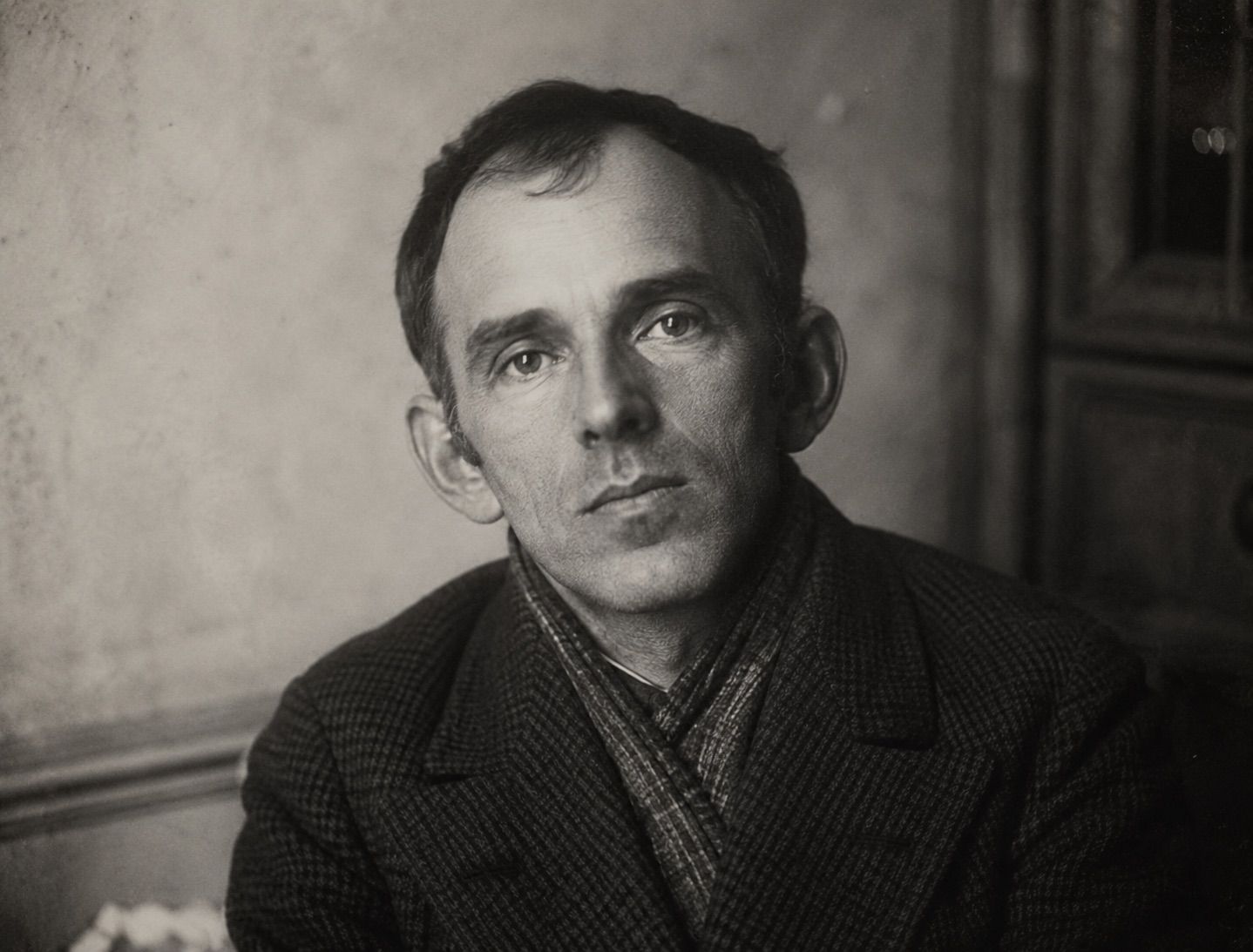
I’ve been thinking a lot about Osip Mandelstam lately, and I’m not entirely sure why he’s stuck with me like this. Maybe it’s because his poetry is like nothing I’ve ever read before – raw, unflinching, and somehow still beautiful even when it feels brutal. Or maybe it’s the way his life was marked by constant struggle, as if every step forward was met with a crushing weight that threatened to pull him back down.
I remember reading about how Mandelstam was one of the last great Russian poets before Stalin’s regime effectively silenced dissenting voices. It’s hard for me to wrap my head around what it must have been like to live in a time when words themselves could be a kind of treason. I feel a shiver run down my spine whenever I think about it – not just because of the fear and uncertainty, but also because of the weight of Mandelstam’s courage.
There’s something that resonates with me about his poetry’s willingness to confront darkness head-on. My own writing often feels like a way for me to process and make sense of my own messy emotions, and I think that’s what draws me to Mandelstam – he writes from a place of intense vulnerability, as if the words themselves are a lifeline keeping him afloat.
I’ve been thinking about his relationship with Nadezhda, his wife. They were like two people bound together by their shared experiences and struggles, but also by their individual strength and determination. It’s hard not to see them as this perfect, tragic couple – like Romeo and Juliet or something, but real and complicated in a way that feels almost unbearable.
What strikes me most about Mandelstam is the way his poetry seems to capture both the beauty and ugliness of life all at once. He doesn’t shy away from the darkness, but he also doesn’t get lost in it – instead, he finds this weird, fragile balance between hope and despair that feels almost… human? I don’t know how else to put it.
I’ve been reading his poetry a lot lately, trying to understand what draws me to it. But the more I read, the more I feel like I’m just scratching the surface of something much deeper – like there’s this whole other level of meaning and emotion that I’m not even close to grasping. It’s both exhilarating and frustrating at the same time.
Sometimes I wonder if Mandelstam’s poetry is like a mirror held up to my own life, reflecting back all these unresolved emotions and uncertainties that I’ve been struggling with for so long. Maybe his writing is just what I need right now – something to help me process and make sense of it all. Or maybe it’s just… I don’t know, some kind of weird, literary obsession.
As I keep reading and thinking about Mandelstam, I feel like I’m getting closer to understanding why he holds my attention so fiercely. But the more I learn, the more questions I have – and that feels almost exactly right.
I’ve been spending a lot of time in Mandelstam’s world lately, and it’s funny how easily his poetry can transport me to a different era, a different landscape. It’s like stepping into a time machine, but one that doesn’t take you back to the past so much as it takes you inside yourself.
I’ve been thinking about what it means to write from a place of vulnerability, like Mandelstam did. Is it possible to be authentic and raw without sacrificing artistic control? I feel like I’m always struggling with this in my own writing – how do I capture the messy emotions and thoughts without getting lost in them?
Reading Mandelstam’s letters to Nadezhda has been particularly eye-opening for me. Their relationship was so deeply intertwined with his poetry, and it’s clear that she was both a source of inspiration and a lifeline for him. But what strikes me is the way they communicate – not just through words, but through silences and absences too.
I find myself wondering if this is something I could learn from Mandelstam, not just as a writer, but as a person. How do we navigate our own vulnerabilities and fears without letting them consume us? Is it possible to be strong in the face of adversity without sacrificing our humanity?
As I delve deeper into Mandelstam’s work, I’m starting to see his poetry as less about aesthetics or technique, and more about this fundamental human search for meaning. He writes about the ordinary and the mundane, but also about the universal and the eternal.
Sometimes I feel like I’m just scratching the surface of what he’s trying to say – that there’s a whole other level of depth and complexity beneath his words. But maybe that’s what makes his poetry so compelling: it invites me to keep exploring, to keep searching for answers.
I’ve been carrying around this quote from Mandelstam’s poem “Noise of Time” in my head lately: “I want to be a poet / Not just any poet, but the last one.” It’s such a haunting line, and I’m not entirely sure what it means. Is he talking about being the last great poet before Stalin’s regime silenced dissenting voices? Or is he speaking more broadly, about the end of an era or the final breath of a dying art form?
I don’t know, but it keeps me up at night, wondering and questioning. Maybe that’s what I love most about Mandelstam – he leaves me with so many questions, and yet somehow manages to make me feel less alone in my own uncertainties.
As I continue to immerse myself in Mandelstam’s world, I find myself drawn to the way he navigates the complexities of language and identity. His poetry is like a puzzle, with each piece carefully crafted to reveal a new truth about himself and his place within the world.
I’m struck by how often Mandelstam writes about the tension between his Jewish heritage and his Russian upbringing. He seems to be grappling with the idea that he doesn’t quite fit into either category, that he’s caught between two cultures that don’t always understand or accept him.
This resonates deeply with me, because I’ve always felt like an outsider in my own way. Growing up as a first-generation American, I’ve often struggled to find my place within the dominant cultural narrative. Mandelstam’s poetry feels like a reflection of this same sense of dislocation, this feeling that one is perpetually caught between two worlds.
But what I think draws me to Mandelstam most is the way he writes about hope in the face of despair. His poetry is unflinching in its confrontation with the darkness, but it’s also suffused with a deep sense of longing and yearning. He writes about the possibility of transcendence, of finding meaning in the midst of chaos.
This feels like a radical act to me – a rejection of the idea that we’re forever bound by our circumstances. Mandelstam seems to be saying that even in the most desperate moments, there’s always a glimmer of hope, a chance for redemption or renewal.
As I read his poetry, I find myself wondering if this is something I can learn from him – not just as a writer, but as a person. How do we hold onto hope when everything seems lost? Is it possible to find meaning in the midst of suffering?
These are questions that I’ve been grappling with for years, and Mandelstam’s poetry feels like a powerful reminder that they’re worth exploring. His work is like a mirror held up to my own fears and doubts, reflecting back all the complexities and contradictions of the human experience.
And yet, even as I’m drawn into his world, I’m also aware of the limits of my understanding. Mandelstam’s poetry is a labyrinth, full of twists and turns that I’ll never fully navigate. But that’s okay – because it’s in those moments of uncertainty that I feel most alive, most connected to the mystery of the human heart.
I find myself getting lost in the labyrinth of Mandelstam’s poetry, unsure which path to take or where I’ll end up. It’s a disorienting feeling, but also exhilarating – like being on the edge of a great precipice, staring into the void. And yet, it’s precisely this sense of uncertainty that draws me in, makes me want to keep reading and exploring.
I think about how Mandelstam navigated his own uncertainties, how he wrote from a place of vulnerability and fear. He was a poet who refused to be silenced, even when the stakes were at their highest. And it’s this refusal to back down that inspires me, makes me want to face my own fears head-on.
But what does it mean to write from a place of uncertainty? Is it possible to be authentic and raw without sacrificing artistic control? I think about Mandelstam’s letters to Nadezhda, how he poured his heart out onto the page in a way that feels both deeply personal and universally relatable. How did he do it? Was it through some kind of intuitive understanding of language and emotion?
I feel like I’m struggling with this same question in my own writing – how to balance vulnerability with artistic control, how to express myself without sacrificing my identity as an artist. Mandelstam’s poetry feels like a reminder that this is a lifelong struggle, one that requires patience, courage, and an unwavering commitment to the craft.
As I continue to read and think about Mandelstam, I find myself drawn into his world in ways I never could have imagined. His poetry becomes a kind of mirror held up to my own life, reflecting back all the complexities and contradictions that make me who I am. It’s a disorienting feeling, but also strangely liberating – like being released from the constraints of my own expectations.
I think about how Mandelstam wrote about the tension between his Jewish heritage and his Russian upbringing. He seemed to be grappling with the idea that he didn’t quite fit into either category, that he was caught between two worlds that didn’t always understand or accept him. This resonates deeply with me, because I’ve always felt like an outsider in my own way.
Growing up as a first-generation American, I’ve often struggled to find my place within the dominant cultural narrative. Mandelstam’s poetry feels like a reflection of this same sense of dislocation, this feeling that one is perpetually caught between two worlds. But what I think draws me to him most is the way he writes about hope in the face of despair.
His poetry is unflinching in its confrontation with the darkness, but it’s also suffused with a deep sense of longing and yearning. He writes about the possibility of transcendence, of finding meaning in the midst of chaos. This feels like a radical act to me – a rejection of the idea that we’re forever bound by our circumstances.
Mandelstam seems to be saying that even in the most desperate moments, there’s always a glimmer of hope, a chance for redemption or renewal. And it’s this message that I find myself clinging to, like a lifeline thrown out into the void. Because when all else feels lost, it’s hard not to feel like there’s no way forward – that we’re forever trapped in some kind of existential quicksand.
But Mandelstam’s poetry reminds me that even in the midst of suffering, there’s always a way out. It’s a message that’s both beautiful and terrifying, because it implies that our choices matter – that we have agency in the face of adversity. And this is a profoundly liberating idea, one that I find myself returning to again and again as I read Mandelstam’s poetry.
I feel like I’m just beginning to scratch the surface of what he’s trying to say – that there’s a whole other level of depth and complexity beneath his words. But maybe that’s what makes his poetry so compelling: it invites me to keep exploring, to keep searching for answers. And even when I don’t find them, the journey itself feels worth it – like being on some kind of spiritual pilgrimage, one that leads me deeper into the heart of myself.
As I read Mandelstam’s poetry, I’m struck by how much he writes about the human condition – about love and loss, hope and despair. It’s a vast and sprawling landscape, full of contradictions and paradoxes that seem to defy explanation. But it’s precisely this uncertainty that makes his poetry feel so alive, so relevant.
Because when all else feels lost, Mandelstam’s poetry reminds me that I’m not alone – that there are others out there who have walked the same path, felt the same doubts and fears. And it’s in this shared humanity that I find a sense of connection, a feeling of belonging to something greater than myself.
I don’t know how much longer I’ll be drawn into Mandelstam’s world, but for now, I’m content to stay awhile – to immerse myself in his poetry and let its complexities wash over me. Because even when the darkness closes in around me, Mandelstam’s words feel like a beacon of hope, a reminder that there’s always a way forward, no matter how uncertain the path may seem.