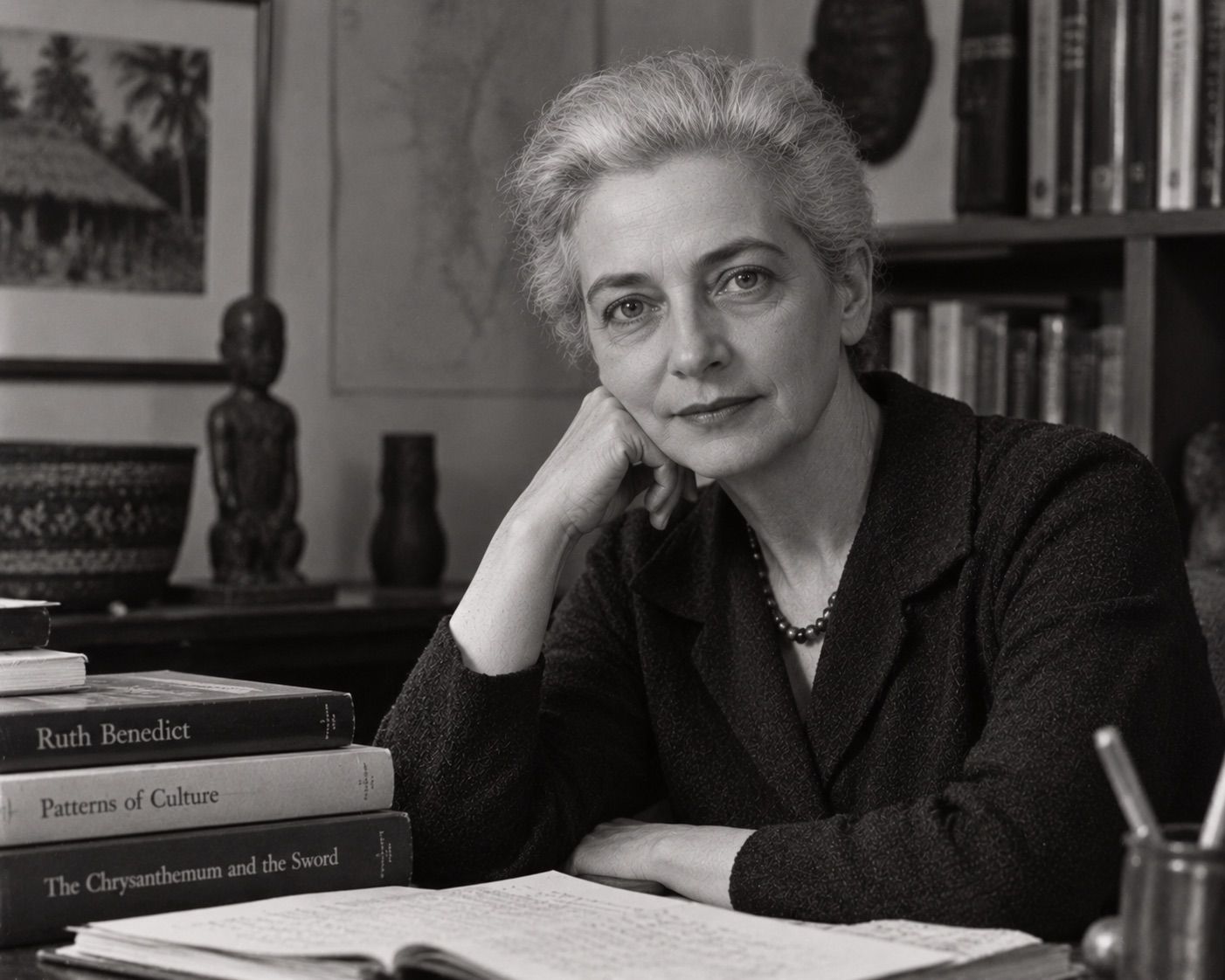
Ruth Benedict has been on my mind a lot lately, ever since I finished reading her classic anthropology text, “Patterns of Culture”. As I delved into the book, I couldn’t help but feel a sense of connection to this woman who lived over 80 years ago. What strikes me most about Benedict is how she navigated the complexities of culture and identity in a way that feels both timeless and deeply relevant.
I find myself drawn to her work because it speaks to my own struggles with cultural expectations. Growing up, I felt like I was caught between two worlds – my family’s conservative values and the more liberal, accepting atmosphere of college. Benedict’s writing resonates with me on this level, as she grappled with her own identity as a white woman in a society that often marginalized or erased indigenous cultures.
One of the things that fascinates me about Benedict is her relationship with Franz Boas, her mentor and intellectual partner. Theirs was a complex and multifaceted bond that transcended traditional notions of teacher-student relationships. I wonder what it must have been like for Benedict to navigate the power dynamics of their collaboration, particularly given the paternalistic attitudes of the time.
What also intrigues me is Benedict’s approach to anthropology as a discipline. She rejected the idea that cultures were fixed or static entities, instead advocating for a more nuanced understanding of cultural variability and contextuality. This perspective feels crucial in today’s world, where we’re increasingly aware of our own biases and shortcomings as anthropologists.
As I read through “Patterns of Culture”, I couldn’t help but feel a sense of discomfort with Benedict’s portrayal of certain cultures – like the Zuni people, who she presents as having a more primitive or simplistic worldview. On one hand, I understand that this was a product of her time and the anthropological theories that dominated the field. On the other hand, it’s hard not to cringe at some of the language she uses, particularly when describing indigenous cultures.
Perhaps what resonates most with me about Benedict is her ability to hold multiple perspectives simultaneously – to be both intellectually curious and deeply empathetic. As someone who struggles with taking a clear stance on complex issues, I admire her willingness to engage with contradictions and ambiguities.
In many ways, reading Ruth Benedict has been a journey of self-discovery for me. Her writing has forced me to confront my own biases and assumptions about culture and identity, and to think more critically about the ways in which we frame our understanding of the world. It’s humbling to realize how much I still have to learn from someone who wrote over 70 years ago.
As I close this essay, I’m left with a sense of wonder – not just about Benedict’s life and work, but about my own place within the larger narrative of anthropology. What does it mean to engage with cultures that are fundamentally different from our own? How do we balance intellectual curiosity with sensitivity and respect? These questions linger in my mind long after I finish reading Ruth Benedict’s words, a reminder that her legacy continues to inspire new generations of thinkers and writers like myself.
As I pondered these questions, I found myself returning to Benedict’s concept of “cultural relativity,” which posits that cultures should be understood on their own terms, rather than through the lens of our own cultural biases. This idea resonated deeply with me, as someone who has struggled to navigate different cultural contexts throughout my life.
I think about how Benedict’s work challenges me to question my own assumptions about what is “right” or “wrong” in different cultures. For example, I recall reading about the Zuni people’s complex system of kinship and social hierarchy, which might seem unfamiliar or even strange to me. But as I read on, I began to see the beauty and logic behind their system, and how it was adapted to their specific environment and needs.
This experience made me realize that my initial discomfort with Benedict’s portrayal of certain cultures was not just about the language she used, but also about my own limited understanding of those cultures. It forced me to confront my own biases and assumptions, and to consider the possibility that what seems “primitive” or “simplistic” to me might be a perfectly logical and effective way of living for another culture.
Benedict’s work has also made me think more critically about the role of anthropology in shaping our understanding of cultures. I wonder if she would agree with the ways in which anthropology is practiced today, particularly in light of criticisms around cultural appropriation, exoticism, and power dynamics within the field.
As someone who is interested in writing and storytelling, I’m also drawn to Benedict’s approach to ethnographic writing. She saw her work as a way of “listening” to cultures, rather than simply observing or documenting them. This emphasis on listening resonates with me, as someone who values empathy and understanding in my own writing.
What if anthropology was not just about collecting data or facts, but about truly engaging with the people and cultures we’re studying? What if our goal was not to categorize or explain others, but to learn from them, and to be transformed by their experiences?
These questions linger in my mind as I continue to grapple with Benedict’s ideas. Her work has challenged me to think more deeply about culture, identity, and the role of anthropology in shaping our understanding of the world. As I move forward, I’m excited to explore these questions further, and to see where they lead me.
As I continue to reflect on Ruth Benedict’s work, I find myself thinking about the tension between cultural relativity and the need for critique. While Benedict’s concept of cultural relativity emphasizes the importance of understanding cultures on their own terms, it also raises questions about how we can critically evaluate cultures that perpetuate harm or oppression.
I think back to my initial discomfort with Benedict’s portrayal of the Zuni people, and I realize that this discomfort stems from a desire to critique systems of power and inequality. As someone who is committed to social justice, I want to recognize and challenge cultural practices that are damaging or exploitative.
But how do we balance this critical perspective with the need for empathy and understanding? Benedict’s work suggests that we should approach cultures with an open mind and a willingness to listen, but it also acknowledges that some cultures may be more problematic than others.
I’m reminded of the complex discussions around cultural appropriation and exoticism in anthropology. Some argue that these practices are inevitable and even necessary for cross-cultural understanding, while others see them as perpetuating harm and exploitation.
Benedict’s work doesn’t provide easy answers to these questions, but it does encourage us to think critically about our own biases and assumptions. As I navigate these complex issues, I’m drawn back to her concept of “cultural relativity” and the importance of understanding cultures on their own terms.
But what if that understanding is incomplete or misleading? What if we’re missing crucial contexts or histories that shape a culture’s practices and values? Benedict’s work acknowledges that cultural knowledge is always provisional and subject to revision, but it also suggests that we should strive for a deeper understanding of the cultures we study.
As I continue to grapple with these questions, I’m struck by the complexity and nuance of Benedict’s ideas. Her work challenges me to think more critically about culture, identity, and power dynamics within anthropology. And yet, it also encourages me to approach these issues with empathy and an open mind.
I’m left wondering: how can we balance critique and cultural relativity in our own practices as anthropologists or writers? How do we navigate the tension between understanding cultures on their own terms and critically evaluating systems of power and inequality?
These questions linger in my mind, a reminder that Ruth Benedict’s work continues to inspire new generations of thinkers and writers. Her legacy encourages us to think more deeply about culture, identity, and the role of anthropology in shaping our understanding of the world.
As I ponder these questions, I find myself thinking about my own writing process and how it relates to Benedict’s approach to ethnographic writing. When I’m writing, I often try to imagine myself as a listener, rather than just an observer or narrator. I want to capture the voices and perspectives of the people I’m writing about, even if that means stepping outside of my own cultural norms and biases.
But how can I truly listen to cultures that are different from my own? What does it mean to be a good listener in this context? Benedict’s concept of “cultural relativity” suggests that we should approach cultures with an open mind and a willingness to learn, but it also acknowledges that our understanding will always be provisional and subject to revision.
I think about how I’ve approached writing about my own experiences as a mixed-heritage person. Sometimes I feel like I’m caught between two worlds, struggling to reconcile the cultural expectations of my family with my own desires and aspirations. Writing has been a way for me to process these complexities and find my own voice within them.
But what if my writing is not just about personal reflection, but also about representing or speaking on behalf of others? How do I balance my own experiences and perspectives with the need to listen to and amplify the voices of those around me? Benedict’s work suggests that we should approach these questions with humility and a willingness to learn from others.
I’m reminded of the ways in which language and culture are intertwined. When I write about certain cultures or communities, I often feel like I’m struggling to find the right words or expressions. It’s as if I’m trying to translate a language that’s not my own, using vocabulary and concepts that may be unfamiliar or inadequate.
Benedict’s work acknowledges this challenge, but also suggests that we should approach it with empathy and a willingness to learn from others. She writes about the importance of “empathic understanding” in anthropology, which involves putting ourselves in the shoes of those we’re studying and trying to see things from their perspective.
But what if our perspectives are fundamentally different? What if our cultural norms or values are at odds with one another? Benedict’s work doesn’t provide easy answers to these questions, but it does encourage us to approach them with curiosity and an open mind.
As I continue to grapple with these ideas, I’m struck by the complexity and nuance of Benedict’s legacy. Her work challenges me to think more critically about culture, identity, and power dynamics within anthropology, while also encouraging me to approach these issues with empathy and an open mind.
As I reflect on Benedict’s emphasis on empathic understanding, I’m reminded of the ways in which language can both unite and divide us. When we try to write about cultures or communities that are different from our own, we often struggle to find the right words or expressions. We may use terms or concepts that are familiar to us, but that don’t quite capture the complexity of the culture we’re trying to describe.
I think back to my own experiences writing about my mixed-heritage identity. Sometimes I feel like I’m caught between two languages – not just literal languages, but also cultural vocabularies and conceptual frameworks. My family’s conservative values and traditions clash with the more liberal, accepting atmosphere of college, where I felt like I could be myself without apology.
Writing has been a way for me to process these complexities and find my own voice within them. But what if my writing is not just about personal reflection, but also about representing or speaking on behalf of others? How do I balance my own experiences and perspectives with the need to listen to and amplify the voices of those around me?
Benedict’s work suggests that we should approach these questions with humility and a willingness to learn from others. She writes about the importance of “cultural competence” in anthropology, which involves not just learning about cultures, but also being willing to confront our own biases and assumptions.
I’m reminded of the ways in which language can be both a bridge and a barrier between cultures. When we use language to describe or represent other cultures, we may inadvertently perpetuate stereotypes or reinforce existing power dynamics. But when we listen to and amplify the voices of those around us, we can begin to break down these barriers and build bridges of understanding.
As I continue to grapple with these ideas, I’m struck by the importance of language in shaping our understanding of culture and identity. Benedict’s work reminds me that language is not just a tool for communication, but also a reflection of power dynamics and cultural norms.
I think about how language has been used throughout history to marginalize or erase certain cultures or communities. The way we speak about others can be both empowering and disempowering – it can either validate their experiences and perspectives or erase them altogether.
Benedict’s emphasis on empathic understanding encourages me to approach these questions with sensitivity and respect. She reminds me that language is not just a neutral tool for communication, but also a reflection of our own biases and assumptions.
As I reflect on Benedict’s legacy, I’m left wondering: how can we use language in a way that respects and honors the cultures and communities we’re writing about? How do we balance our own experiences and perspectives with the need to listen to and amplify the voices of others?
These questions linger in my mind as I continue to grapple with Benedict’s ideas. Her work challenges me to think more critically about language, culture, and power dynamics within anthropology, while also encouraging me to approach these issues with empathy and an open mind.
I’m reminded of the ways in which language can be both a reflection of our own biases and assumptions, and also a tool for challenging and subverting them. When we use language to describe or represent other cultures, we may inadvertently perpetuate stereotypes or reinforce existing power dynamics.
But when we listen to and amplify the voices of those around us, we can begin to break down these barriers and build bridges of understanding. Benedict’s work encourages me to approach this process with humility and a willingness to learn from others.
I’m left wondering: what does it mean to be a good listener in this context? How do we balance our own experiences and perspectives with the need to listen to and amplify the voices of those around us?
These questions linger in my mind as I continue to grapple with Benedict’s ideas. Her work challenges me to think more critically about language, culture, and power dynamics within anthropology, while also encouraging me to approach these issues with empathy and an open mind.
As I ponder these questions, I’m struck by the complexity and nuance of Benedict’s legacy. Her work reminds me that language is not just a neutral tool for communication, but also a reflection of our own biases and assumptions.
I think about how language has been used throughout history to marginalize or erase certain cultures or communities. The way we speak about others can be both empowering and disempowering – it can either validate their experiences and perspectives or erase them altogether.
Benedict’s emphasis on empathic understanding encourages me to approach these questions with sensitivity and respect. She reminds me that language is not just a tool for communication, but also a reflection of power dynamics and cultural norms.
As I continue to grapple with these ideas, I’m struck by the importance of empathy in shaping our understanding of culture and identity. Benedict’s work encourages me to approach this process with humility and a willingness to learn from others.
I’m left wondering: what does it mean to be an empathetic listener? How do we balance our own experiences and perspectives with the need to listen to and amplify the voices of those around us?
These questions linger in my mind as I continue to reflect on Benedict’s legacy. Her work challenges me to think more critically about language, culture, and power dynamics within anthropology, while also encouraging me to approach these issues with empathy and an open mind.
As I ponder these questions, I’m struck by the complexity and nuance of Benedict’s ideas. Her work reminds me that language is not just a neutral tool for communication, but also a reflection of our own biases and assumptions.
I think about how language has been used throughout history to marginalize or erase certain cultures or communities. The way we speak about others can be both empowering and disempowering – it can either validate their experiences and perspectives or erase them altogether.
Benedict’s emphasis on empathic understanding encourages me to approach these questions with sensitivity and respect. She reminds me that language is not just a tool for communication, but also a reflection of power dynamics and cultural norms.
As I continue to grapple with these ideas, I’m struck by the importance of empathy in shaping our understanding of culture and identity. Benedict’s work encourages me to approach this process with humility and a willingness to learn from others.
I’m left wondering: how can we use language in a way that respects and honors the cultures and communities we’re writing about? How do we balance our own experiences and perspectives with the need to listen to and amplify the voices of others?
These questions linger in my mind as I continue to reflect on Benedict’s legacy. Her work challenges me to think more critically about language, culture, and power dynamics within anthropology, while also encouraging me to approach these issues with empathy and an open mind.
As I ponder these questions, I’m struck by the complexity and nuance of Benedict’s ideas. Her work reminds me that language is not just a neutral tool for communication, but also a reflection of our own biases and assumptions.
I think about how language has been used throughout history to marginalize or erase certain cultures or communities. The way we speak about others can be both empowering and disempowering – it can either validate their experiences and perspectives or erase them altogether.
Benedict’s emphasis on empathic understanding encourages me to approach these questions with sensitivity and respect. She reminds me that language is not just a tool for communication, but also a reflection of power dynamics and cultural norms.
As I continue to grapple with these ideas, I’m struck by the importance of empathy in shaping our understanding of culture and identity. Benedict’s work encourages me to approach this process with humility and a willingness to learn from others.
I’m left wondering: what does it mean to be an empathetic listener? How do we balance our own experiences and perspectives with the need to listen to and amplify the voices of those around us?
These questions linger in my mind as I continue to reflect on Benedict’s legacy. Her work challenges me to think more critically about language, culture, and power dynamics within anthropology, while also encouraging me to approach these issues with empathy and an open mind.
As I ponder these questions, I’m struck by the complexity and nuance of Benedict’s ideas.