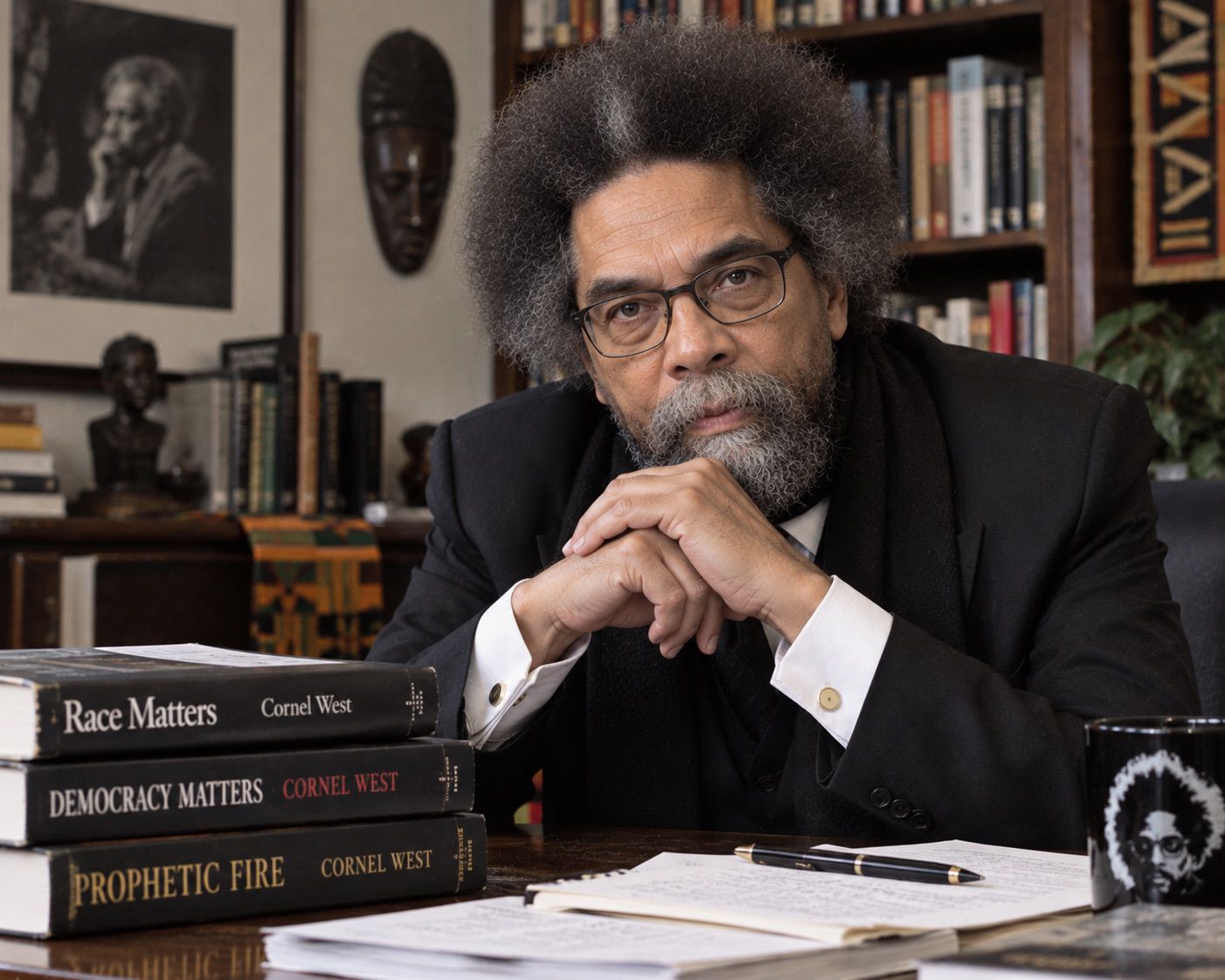
Cornel West has been on my mind a lot lately, and I’m not entirely sure why. Maybe it’s because we’re around the same age, or maybe it’s because our shared experiences as educated young people grappling with social justice issues resonate with me. But I think what really drew me to him is the way he seamlessly blends intellectual rigor with emotional vulnerability.
I remember watching an interview of his where he talked about growing up in a low-income household and facing racism from a young age. He spoke about how those experiences informed his worldview, but also about how they’ve made it difficult for him to connect with people who haven’t had similar struggles. I felt a pang of recognition – I grew up in a relatively comfortable household, but navigating the complexities of identity and privilege as a young adult has left me feeling lost and unsure of how to articulate my own experiences.
As I delved deeper into West’s work, I became fascinated by his critiques of neoliberalism and the commodification of education. He argues that institutions like universities have become mere marketplaces, churning out students who are more concerned with their individual success than with collective action. This resonates deeply with me – my own experience of higher education was marked by a sense of disconnection from the world outside the campus bubble.
But what really gets to me is West’s emphasis on the importance of prophetic witness in times of crisis. He talks about how intellectuals have a responsibility to speak truth to power, even when it’s uncomfortable or unpopular. It’s a call to action that feels both exhilarating and terrifying – I’m not sure if I’m ready to take up that mantle.
One thing that’s always struck me is the way West writes about his own struggles with depression and anxiety. He talks about how those experiences have shaped his perspective on the world, but also how they’ve made it difficult for him to connect with people who haven’t had similar struggles. I relate to this so deeply – as someone who has struggled with mental health issues, I often feel like I’m living in a bubble of my own making.
I wonder if West’s willingness to be vulnerable about his own struggles is what makes his critique of the system so compelling. He’s not just some distant intellectual pontificating from on high; he’s a human being who’s been hurt and who’s willing to get messy in order to speak truth. And yet, at the same time, I feel like there’s a part of him that remains inaccessible – a part that’s shielded from the world by a sense of pride or vulnerability.
I’m not sure what it is about West that draws me in so much – maybe it’s his willingness to take risks, or maybe it’s just the way he seems to inhabit this space between intellectual rigor and emotional vulnerability. Whatever it is, I know that engaging with his work has forced me to confront some of my own assumptions and biases, and for that, I’m grateful.
As I continue to grapple with Cornel West’s ideas, I find myself thinking about the relationship between vulnerability and authenticity. He talks about how being vulnerable is not a weakness, but rather a strength, because it allows us to connect with others on a deeper level. But what does that mean for someone like me, who has struggled with mental health issues and feels like she’s always performing some version of herself?
I think back to my own experiences with anxiety and depression, and how often I felt like I was living in a state of perpetual performance – pretending to be okay when really I was falling apart. And it’s funny, because on one level, that performance felt necessary – I had to put on a brave face for the sake of my loved ones, or so I thought. But on another level, it felt suffocating – like I was trapped in this never-ending cycle of hiding and pretending.
West’s emphasis on vulnerability as a strength resonates with me because it suggests that there’s another way to be – one where we can drop the act and just be ourselves, messy and imperfect as that may be. But what if being vulnerable means being exposed? What if it means showing up in all our brokenness and uncertainty?
I think about how hard it is for me to admit when I’m struggling, even to myself. It’s like there’s this voice inside my head that’s always whispering “you’re not good enough,” or “you’re a failure.” And it’s hard to shake that voice, because it’s been with me for so long.
West talks about how intellectuals have a responsibility to speak truth to power – but what does that mean when the only thing I feel like I can speak truth to is my own inner critic? Is being vulnerable enough, or do we need something more?
I’m not sure, and I don’t think West has all the answers either. But I do know that engaging with his ideas has forced me to confront some of my own assumptions about what it means to be strong, or brave, or authentic. And for that, I’m grateful – even if it’s uncomfortable, and even if I’m not sure where this journey will take me.
As I continue to grapple with these questions, I find myself thinking about the concept of “prophetic witness” and how it relates to my own experiences as a young adult trying to navigate the complexities of identity and privilege. West argues that intellectuals have a responsibility to speak truth to power, but what does that look like in everyday life? Is it simply being outspoken on social media, or is there something more required?
I think about how often I’ve seen people use their platforms to call out injustice, only to be met with backlash and criticism. And then there are those who remain silent, choosing not to speak out against the systems of oppression that exist around them. It’s as if we’re stuck in this binary, where we either shout loudly from the rooftops or keep quiet altogether.
West’s concept of prophetic witness suggests that there’s a third way – one that involves speaking truth to power while also being vulnerable and open to critique. But what does it mean to be truly prophetic? Is it simply shouting into the void, or is there something more required?
I think about my own experiences with activism and how often I’ve felt like I’m just repeating the same phrases and slogans without really thinking critically about the issues at hand. It’s as if we’re stuck in a cycle of rhetoric rather than truly engaging with the complexities of the world.
West’s emphasis on prophetic witness challenges me to think differently – to consider what it means to be an engaged and active participant in the world around me, rather than just a passive observer or commentator. But it also makes me uncomfortable, because I’m not sure if I’m willing to take that risk.
As I reflect on my own experiences with mental health and identity, I realize that being vulnerable is not just about speaking truth to power – it’s also about being honest with myself and others about my own limitations and biases. It’s about recognizing when I don’t have the answers, or when I’m struggling to understand a particular issue.
In many ways, West’s concept of prophetic witness feels like a call to humility – a recognition that we don’t have all the answers, but rather are part of a larger conversation that requires ongoing learning and growth. But it also feels like a reminder that our words and actions have consequences, and that we have a responsibility to use our privilege and platforms for good.
As I continue to grapple with these ideas, I’m left wondering what it means to be an engaged and active participant in the world around me. Is it simply being outspoken on social media, or is there something more required? And how do we balance the need to speak truth to power with the risk of vulnerability and critique?
I’ve been thinking a lot about the concept of “prophetic witness” in relation to my own experiences as a young adult trying to navigate the complexities of identity, privilege, and mental health. West’s idea that intellectuals have a responsibility to speak truth to power is both exhilarating and terrifying – it feels like a call to action that requires me to confront my own limitations and biases.
As I reflect on my own experiences with anxiety and depression, I realize that being vulnerable is not just about speaking truth to power – it’s also about being honest with myself and others about my own struggles. It’s about recognizing when I’m struggling to understand a particular issue, or when I need help and support from others.
West’s emphasis on prophetic witness feels like a call to humility – a recognition that we don’t have all the answers, but rather are part of a larger conversation that requires ongoing learning and growth. But it also feels like a reminder that our words and actions have consequences, and that we have a responsibility to use our privilege and platforms for good.
I think about how often I’ve seen people use their platforms to call out injustice, only to be met with backlash and criticism. And then there are those who remain silent, choosing not to speak out against the systems of oppression that exist around them. It’s as if we’re stuck in this binary, where we either shout loudly from the rooftops or keep quiet altogether.
But what if being vulnerable means showing up in all our brokenness and uncertainty? What if it means admitting when we don’t have the answers, or when we’re struggling to understand a particular issue? West’s concept of prophetic witness suggests that there’s a third way – one that involves speaking truth to power while also being open to critique and feedback.
As I continue to grapple with these ideas, I’m left wondering what it means to be an engaged and active participant in the world around me. Is it simply being outspoken on social media, or is there something more required? And how do we balance the need to speak truth to power with the risk of vulnerability and critique?
I think about my own experiences as a writer – I write because it helps me process my thoughts and emotions, but also because it allows me to connect with others on a deeper level. But what if my words are not enough? What if they’re just noise in the void, or simply another iteration of the same tired rhetoric?
West’s emphasis on prophetic witness feels like a reminder that our words and actions have consequences – that we have a responsibility to use our privilege and platforms for good. But it also feels like a call to creativity and imagination – to think outside the box and come up with new solutions to old problems.
As I continue to reflect on these ideas, I’m left wondering what it means to be a prophetic witness in my own life. Is it simply speaking truth to power, or is there something more required? And how do we balance the need for authenticity and vulnerability with the risk of critique and backlash?
I don’t have any answers, but I know that engaging with West’s ideas has forced me to confront some of my own assumptions about what it means to be strong, or brave, or authentic. And for that, I’m grateful – even if it’s uncomfortable, and even if I’m not sure where this journey will take me.
As I sit with these questions, I find myself thinking about the ways in which Cornel West’s ideas intersect with my own experiences as a writer. For me, writing is not just a way to process my thoughts and emotions, but also a means of connecting with others on a deeper level. But what if my words are not enough? What if they’re just noise in the void, or simply another iteration of the same tired rhetoric?
I think about how often I’ve felt like I’m writing for myself, rather than for anyone else. Like, I’m pouring out my thoughts and feelings onto the page, but it’s not like anyone is reading them, or even if they are, it doesn’t seem to be making a difference in the world. It’s a feeling of isolation, of being trapped in this bubble of my own making.
West’s emphasis on prophetic witness feels like a reminder that our words and actions have consequences – that we have a responsibility to use our privilege and platforms for good. But it also feels like a call to creativity and imagination – to think outside the box and come up with new solutions to old problems. As I reflect on my own experiences as a writer, I realize that I’ve been stuck in this same old cycle of rhetoric, repeating the same phrases and slogans without really thinking critically about the issues at hand.
I’m starting to wonder if being prophetic means taking risks, pushing boundaries, and challenging the status quo. Not just speaking truth to power, but actually creating new narratives, new language, and new forms of resistance. It’s a daunting thought, but also kind of exhilarating – like, what would happen if I actually took those risks and tried something new?
I think about how often I’ve felt like I’m stuck in this binary, where I either write from a place of anger or frustration, or I write from a place of hope and optimism. But West’s concept of prophetic witness suggests that there’s a third way – one that involves embracing both the darkness and the light, and using those contradictions to fuel our creativity and imagination.
As I continue to grapple with these ideas, I’m left wondering what it means to be an engaged and active participant in the world around me. Is it simply being outspoken on social media, or is there something more required? And how do we balance the need for authenticity and vulnerability with the risk of critique and backlash?
I don’t have any answers, but I know that engaging with West’s ideas has forced me to confront some of my own assumptions about what it means to be strong, or brave, or authentic. And as I reflect on those assumptions, I’m starting to realize that maybe being prophetic doesn’t mean having all the answers – maybe it just means being willing to ask the questions, and then take the leap into the unknown.
I think about how often I’ve felt like I’m stuck in this cycle of self-doubt and uncertainty. Like, I’ll write something and immediately start thinking “oh no, what if people don’t like it?” or “what if I’m just being stupid?” But West’s emphasis on prophetic witness feels like a reminder that those doubts are normal – that they’re even necessary.
It’s like, maybe the only way to truly be authentic is to acknowledge our own limitations and biases. To admit when we don’t have the answers, or when we’re struggling to understand a particular issue. And then, instead of trying to silence that voice, we can use it as fuel for creativity and imagination.
As I sit with these thoughts, I’m starting to feel a sense of hope – like maybe being prophetic doesn’t mean having all the answers, but rather embracing the uncertainty and complexity of the world around us. Maybe it’s not about being perfect or flawless, but about being brave enough to take risks, to push boundaries, and to challenge the status quo.
I don’t know what this means for me as a writer, or as a person. But I do know that engaging with West’s ideas has forced me to confront some of my own assumptions about what it means to be strong, or brave, or authentic. And for that, I’m grateful – even if it’s uncomfortable, and even if I’m not sure where this journey will take me.