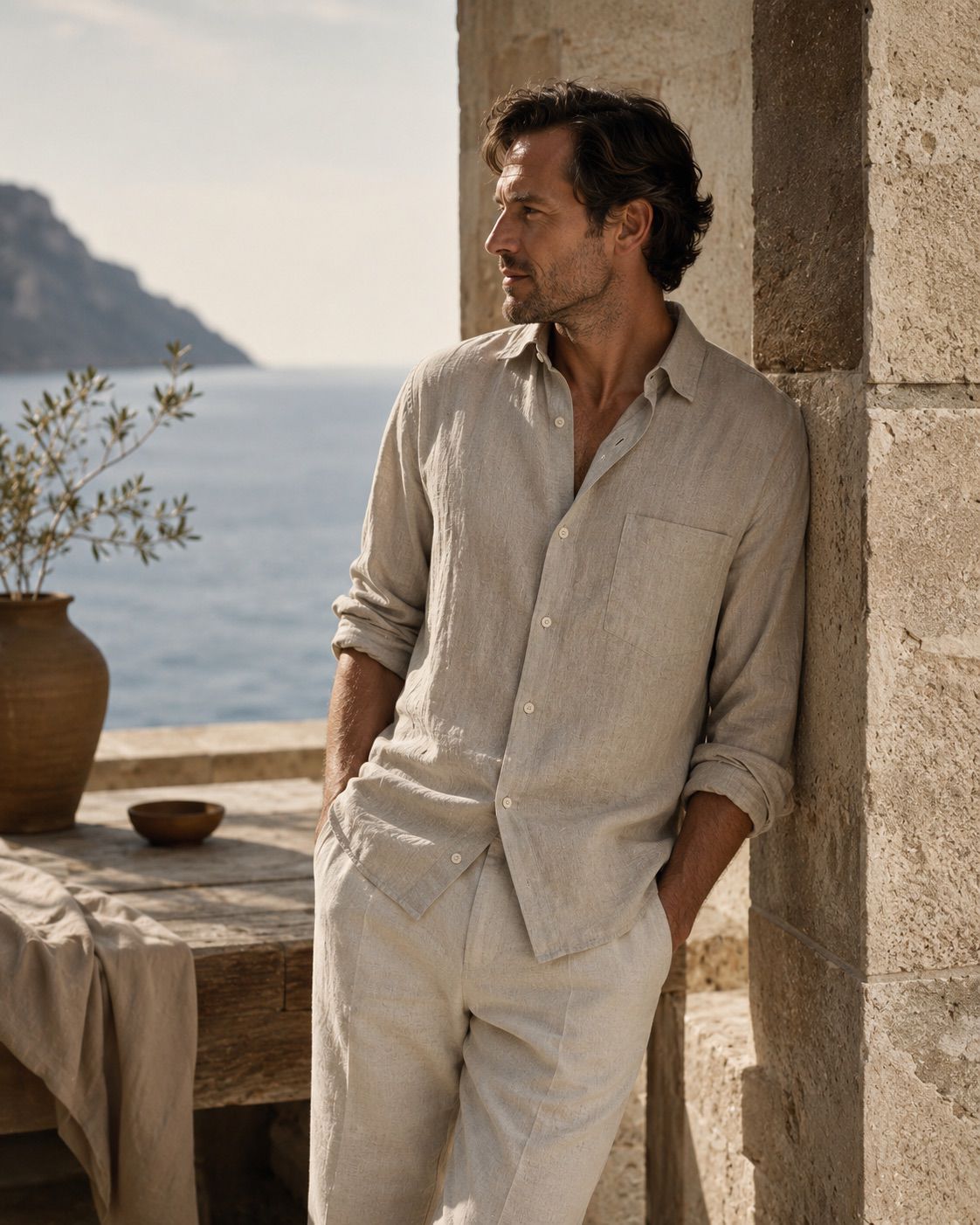
As spring arrives with its promise of renewal, the fashion world awakens from its winter slumber. Amidst the flurry of fresh trends and must-haves, one fabric stands out for its understated elegance: linen. Misunderstood by many as a bland, utilitarian material, linen is, in fact, a masterclass in refinement.
Linen’s reputation as a humble, homespun fabric stems from its association with rustic tablecloths and simple summer dresses. However, this perception belies the complexity of linen’s texture, drape, and history. Linen has been prized for centuries by those who value subtlety over showiness. From ancient Egyptian pharaohs to 19th-century European aristocrats, linen has been a staple of refined attire.
One reason linen is often misunderstood lies in its tendency to wrinkle. Unlike the smooth, synthetic fabrics that dominate modern clothing, linen’s natural fibers can appear rumpled and uncooperative. However, this perceived drawback is, in fact, a hallmark of linen’s authenticity. The subtle creases and folds that develop on a well-worn linen garment are testaments to its organic, human-made nature.
The production process itself contributes to linen’s unique character. Linen fibers are derived from the flax plant, which requires careful cultivation and harvesting. Unlike cotton or polyester, which can be mass-produced with ease, linen demands attention to detail and a commitment to quality. This labor-intensive process imbues linen with an air of exclusivity, making it a favorite among those who value craftsmanship.
Despite its rich history and cultural significance, linen is often relegated to the realm of “summer wear.” However, this seasonal categorization does linen a disservice. While it’s true that linen excels in warm weather, its versatility extends far beyond the confines of summer fashion. A well-made linen garment can be dressed up or down, paired with statement accessories or understated essentials.
One of the most compelling aspects of linen lies in its relationship to movement. Unlike stiff, structured fabrics that restrict the body’s natural flow, linen drapes elegantly around the form, allowing for a full range of motion. This fluidity makes linen an ideal choice for those who prioritize comfort without sacrificing style. Observe the way a linen dress flows behind a woman as she walks, or how a linen suit hangs effortlessly on a man’s frame — these are testaments to the fabric’s mastery of movement.
As we recalibrate our approach to wellness in the wake of overstimulation and exhaustion, linen offers a refreshing respite from the noise. In an era where “wellness” often translates to flashy athleisure wear or Instagram-perfect yoga poses, linen reminds us that true elegance lies in restraint. By embracing the subtle beauty of linen, we can rediscover the value of understatement.
Consider the way linen interacts with light. Unlike synthetic fabrics, which can appear garish or overly reflective, linen absorbs and diffuses light with ease. This gentle relationship between fabric and illumination creates a soft, flattering glow that enhances the wearer’s natural complexion. Whether paired with earthy tones or bold colors, linen provides a subtle yet striking backdrop for self-expression.
In an age where social media often reduces fashion to a series of attention-grabbing gestures, linen stands as a testament to the power of subtlety. Unlike showy logos or loud prints, linen’s understated elegance requires no explanation. Its beauty lies in its quiet confidence, its refusal to shout for attention in a world dominated by noise.
As we navigate the complexities of modern life, linen offers a rare and precious commodity: simplicity. In an era where “self-care” often translates to elaborate routines or expensive spa treatments, linen reminds us that true restoration can be found in the simplest things — a well-made garment, a carefully chosen color palette, and a commitment to quality over quantity.
In the stillness of spring, as the world awakens from its winter slumber, linen stands as a beacon of refinement. It is a fabric that rewards attention, that demands to be understood on its own terms. And it is here, in the quiet beauty of linen, that we may rediscover the value of subtlety — a quality that, in an age of overstimulation and exhaustion, has never been more precious.
The creases on a well-worn linen shirt are not imperfections; they are testaments to the fabric’s authenticity.
In this sense, linen embodies a philosophy of fashion that prioritizes character over perfection. It is a reminder that true style lies not in the flawless, Photoshopped images that dominate our feeds, but in the subtle imperfections that make us human. The soft patina that develops on a well-loved linen garment is a testament to its history, a record of the moments and memories it has accumulated over time.
This approach to fashion also speaks to the value of longevity. In an era where fast fashion reigns supreme and garments are discarded without a second thought, linen offers a refreshing alternative. A well-made linen piece can be treasured for years, even decades, its beauty only deepening with age. This durability is not just a practical consideration, but also an aesthetic one — the subtle signs of wear and tear that accumulate on a linen garment are a testament to its enduring appeal.
Furthermore, linen’s relationship with nature is deeply symbiotic. Unlike synthetic fabrics, which often rely on chemical treatments and artificial processes, linen is derived from the flax plant, a renewable resource that requires minimal pesticides and irrigation. This eco-friendly approach to production makes linen an attractive choice for those who prioritize sustainability in their fashion choices.
As we move forward in our quest for a more mindful approach to fashion, linen offers a compelling model for how to redefine our relationship with clothes. By embracing the subtle beauty of this natural fiber, we can rediscover the value of quality over quantity and cultivate a deeper appreciation for the craftsmanship that goes into creating each garment.
In the end, linen’s understated elegance is not just a matter of style — it’s also a statement about values. In an age where fashion often prioritizes flash over substance, linen reminds us that true beauty lies in restraint, simplicity, and a deep respect for the natural world.