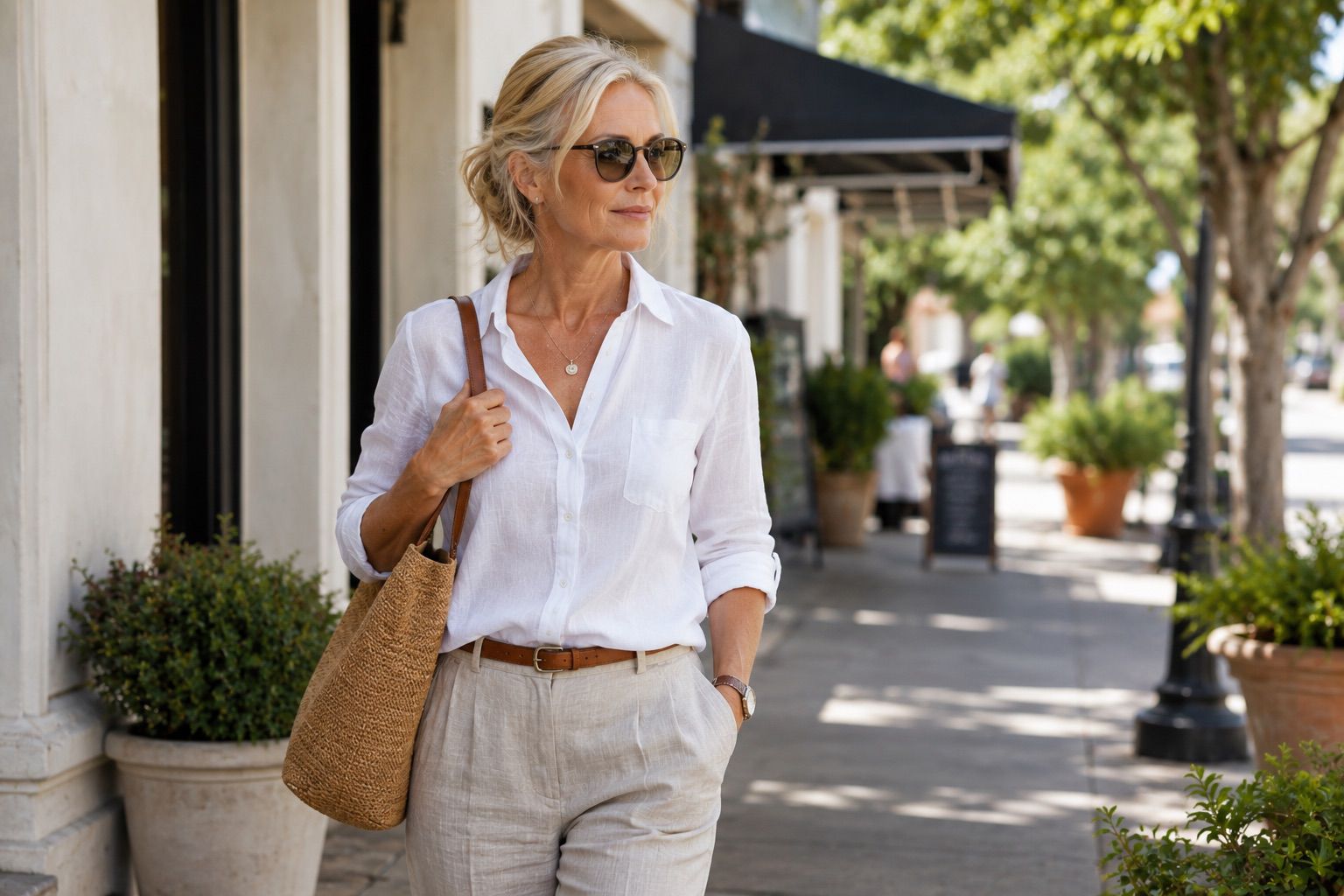
There is a quiet difference between dressing to feel confident and dressing to be approved of. The first begins with comfort, personal taste, and the practical realities of everyday life. The second depends on reactions that can never be fully controlled. Fiona’s approach has always favored the quieter path. Clothing should support the person wearing it rather than ask that person to perform for everyone else.
Confidence is often misunderstood as visibility. Modern style advice frequently encourages people to stand out, follow every trend, or dress for the photograph before considering the day itself. Yet genuine confidence rarely comes from attracting attention. It grows from knowing that what you are wearing allows you to move comfortably through the hours ahead without constant adjustment or self-consciousness.
A useful place to begin is with the question of ease. The best outfit is not always the one that receives the most compliments. It is the one that lets the shoulders relax, the stride remain natural, and the mind focus on conversations, work, family, or simply enjoying the day. Clothing that constantly needs to be adjusted eventually becomes something else to manage rather than something that quietly supports everyday life.
Summer makes this distinction easier to recognize. Heat quickly exposes clothing that only looks comfortable. Fabrics that trap warmth, shoes that become tiring after a short walk, or accessories that require continual attention often create unnecessary effort. Breathable materials, thoughtful layering, and shoes that can comfortably carry someone through the day rarely appear dramatic, yet they often inspire a deeper kind of confidence because they remove distractions instead of creating them.
Confidence also becomes steadier when personal taste matters more than public opinion. Trends can be enjoyable, but they should remain invitations rather than obligations. Not every color, silhouette, or seasonal style belongs in every wardrobe. Choosing what genuinely suits one’s lifestyle, personality, and comfort is often more satisfying than trying to keep pace with every changing recommendation.
There is a similar balance in beauty routines. Makeup, skincare, and hair care should help someone feel prepared rather than burdened. A routine that takes only a few thoughtful steps yet leaves the skin comfortable and the person feeling like themselves often provides more confidence than an elaborate process that feels difficult to maintain. The goal is not transformation. It is feeling at ease in one’s own appearance.
One of the strongest sources of confidence is reducing unnecessary decisions. Keeping a wardrobe filled with pieces that work well together, choosing shoes that can handle an ordinary day, or carrying only what is genuinely needed all remove small points of friction that quietly consume attention. Every unnecessary decision avoided leaves a little more room for the experiences that matter.
Approval, by its nature, is unpredictable. One person may admire a particular outfit while another barely notices it. Trends change, opinions differ, and expectations shift from one setting to the next. Confidence is more dependable because it comes from within. It grows from making thoughtful choices that feel authentic rather than waiting for reassurance from someone else.
Fiona’s standard has never been perfection. It is believability. The strongest wardrobes look as though they belong naturally to the person wearing them. They leave room for warm afternoons, unexpected errands, long conversations, changing weather, and imperfect days. They do not depend on ideal lighting or carefully staged moments to feel successful.
There is also confidence in choosing enough. Modern life encourages people to optimize every detail and present a polished image at all times. Dressing well does not require constant refinement or endless consumption. A well-fitting linen shirt, comfortable trousers, supportive shoes, and a simple bag that holds what is needed often accomplish more than a wardrobe built around chasing attention.
That is the value of dressing for confidence without dressing for approval. It is not about ignoring style or pretending appearances do not matter. It is about recognizing that the most enduring confidence comes from clothing that supports the life being lived rather than the image being projected. When comfort, personal taste, practicality, and quiet refinement work together, confidence no longer depends on someone else’s opinion. It simply becomes part of the way a person moves through the world.