Category: Holidays

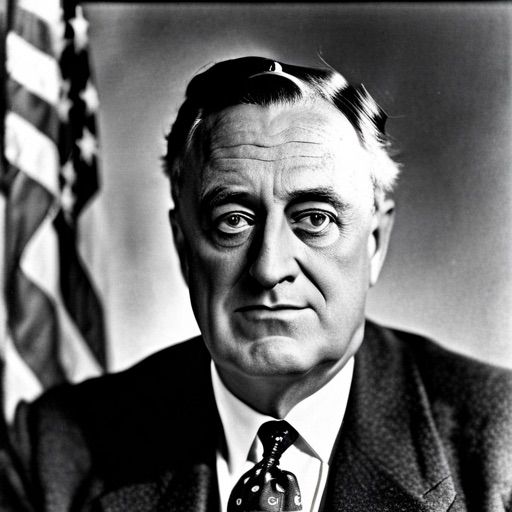
Franklin D. Roosevelt Received an Excellent Education and Began his Political Career at a Young Age

Dave

a man wearing a suit and tie
Meet Franklin D. Roosevelt, affectionately known as FDR, the 32nd President of the United States who led the country from 1933 until his passing in 1945. He is widely regarded as one of the greatest U.S. presidents in history, having played an instrumental role in shaping the country during some of its darkest moments.

Born in 1882 to a wealthy family in Hyde Park, New York, Roosevelt received an excellent education and began his political career at a young age. He was elected to the New York State Senate in 1910, and nothing could deter him, not even the tragic incident of contracting polio in 1921, which left him paralyzed from the waist down. He remained resolute in his quest for political success.

In 1932, amid the Great Depression, Roosevelt won the presidential election and immediately set to work implementing a series of programs known as the New Deal. This initiative provided jobs and welfare to millions of Americans, including the creation of the Civilian Conservation Corps, Works Progress Administration, and Social Security Administration. With the government taking an active role in the economy, Roosevelt’s leadership helped stabilize the country and prevent social unrest.

FDR also led the United States through World War II, guiding the country through some of its darkest days. He was instrumental in building the Allied coalition, planning and executing the D-Day invasion, and a strong advocate for the establishment of the United Nations, which was created after the war to promote international cooperation and prevent future conflicts.

While not immune to criticism, Roosevelt’s legacy as a transformative leader who guided the country through its most challenging moments remains strong. Today, he is remembered as a champion of the common man, a tireless advocate for social justice, and one of the greatest presidents in American history.

Related Posts

Herbert Hoover Led a Life of Remarkable Achievements Despite Facing Early Adversity

Dave

a man wearing a suit and tie smiling and looking at the camera
Herbert Hoover, the 31st President of the United States, led a life of remarkable achievements despite facing early adversity. Born on August 10, 1874, in West Branch, Iowa, Hoover lost his parents at a young age. However, he refused to let his circumstances define him and went on to attend Stanford University, where he earned a degree in mining engineering.

Hoover’s ingenuity and business acumen propelled him to great heights, and he became a successful mining engineer and businessman. But his presidency was marked by the Great Depression, a catastrophic financial crisis that began shortly after he took office. Despite his best efforts to address the crisis, his initiatives were largely unsuccessful, and he faced intense criticism for his response to the economic downturn.

Hoover’s belief in the power of individual initiative and self-reliance made him hesitant to intervene directly in the economy, ultimately contributing to his political downfall. However, despite his struggles as President, Hoover remained dedicated to public service throughout his later years. He served on various government commissions and continued to advocate for humanitarian aid and relief efforts.

Hoover was also a prolific writer, delving into topics ranging from mining and engineering to politics and history. His numerous books and articles are a testament to his intellectual curiosity and his unwavering commitment to learning and growth.

Today, Hoover’s legacy is a complex one, reflecting both his triumphs and his struggles. Although his presidency is often remembered for its shortcomings during the Great Depression, his life and career demonstrate the importance of perseverance and determination in overcoming adversity. His contributions to engineering and business continue to be felt to this day, and his commitment to public service and humanitarian causes serves as an inspiration to many. Overall, Herbert Hoover remains an important figure in American history, embodying both the challenges and opportunities that define the American experience.

Related Posts

Calvin Coolidge was a Man of Quiet Strength and Unwavering Principles

Dave

a man wearing a suit and tie
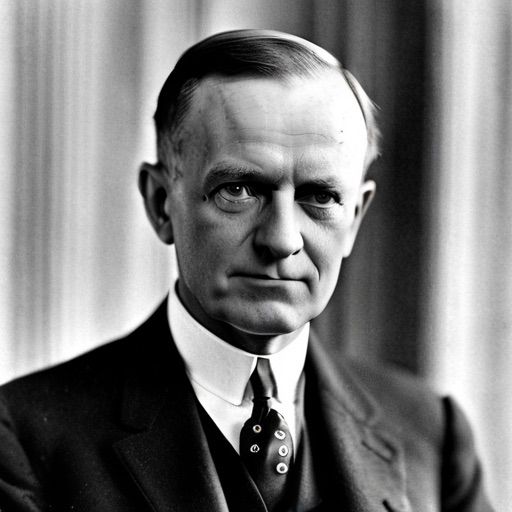
Calvin Coolidge, the 30th President of the United States, was a man of quiet strength and unwavering principles. Born on the Fourth of July in 1872 to a family of Vermont farmers, Coolidge rose to national prominence during the Boston Police Strike of 1919. His calm and steady leadership during the crisis earned him a reputation as a decisive and effective leader.

In 1920, Coolidge was chosen as Vice President under Warren G. Harding, and after Harding’s sudden death in 1923, he became President. During his presidency, Coolidge continued his predecessor’s pro-business policies and oversaw a period of unprecedented economic growth, known as the “Roaring Twenties.” He signed into law the Revenue Act of 1924, which lowered income tax rates and increased the personal exemption, putting more money in the pockets of hardworking Americans.

Coolidge was also a champion of peace, supporting the Kellogg-Briand Pact, which renounced war as an instrument of national policy. He recognized the growing importance of radio broadcasting and established the Federal Radio Commission to regulate the industry.

Despite his popularity and success as a leader, Coolidge declined to seek a second full term in 1928, citing his belief in limited government and the dangers of becoming too entrenched in power. After leaving office, he retired to Massachusetts, where he wrote his autobiography and made occasional public appearances.

While some praise Coolidge’s commitment to small government and individual liberty, others criticize his lack of action on issues such as civil rights and labor reform. Regardless of one’s opinion, Coolidge’s legacy as a president who championed free enterprise and limited government continues to influence American politics to this day.

Related Posts

Warren G. Harding Grew up in a Modest Family and Worked in his Father’s Newspaper

Dave

a man wearing a suit and tie

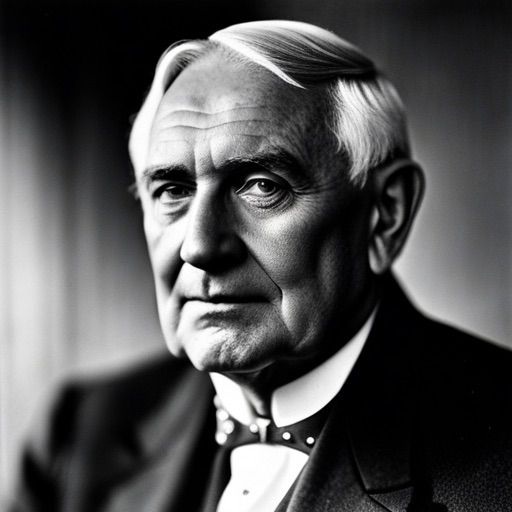
Warren G. Harding, the 29th President of the United States, lived an extraordinary life that began on November 2, 1865, in the small town of Blooming Grove, Ohio. Despite growing up in a modest family, Harding’s ambition and determination led him to become the owner of the Marion Daily Star in 1884, where he honed his skills in journalism and developed his passion for politics.

As his reputation grew, so did his involvement in civic affairs, and he eventually became the Lieutenant Governor of Ohio in 1903. Harding’s political career skyrocketed when he was elected as a U.S. Senator from Ohio in 1915, where he championed pro-business policies and supported the League of Nations.

In 1920, Harding’s determination and popularity earned him the Republican nomination for president, which he won by a landslide victory. His inauguration in March 1921 marked a new era of prosperity and stability for the nation as he promised a “return to normalcy” after the chaos of World War I. His presidency was characterized by a reduction in government regulation, economic prosperity, and the signing of the Fordney-McCumber Tariff Act.

However, despite his efforts to bring stability to the country, Harding’s administration was plagued by corruption scandals, including the infamous Teapot Dome scandal, where government officials were found to have accepted bribes in exchange for leasing federal oil reserves to private companies.

Despite the scandals, Harding remained popular with the American people, who appreciated his affable personality and his efforts to restore the country’s economy and promote peace. Sadly, his presidency was cut short when he died suddenly of a heart attack in San Francisco on August 2, 1923, during a tour of the western United States.

Overall, Warren G. Harding’s legacy is a mixed one. While he is remembered for his efforts to restore the economy and bring stability to the country, he is also known for the corruption that occurred under his watch. Nonetheless, Harding’s life and accomplishments serve as a reminder of the power of determination and hard work in achieving success.

Related Posts

Woodrow Wilson was Known for his efforts to Promote Peace and Democracy

Dave

a man wearing glasses posing for the camera
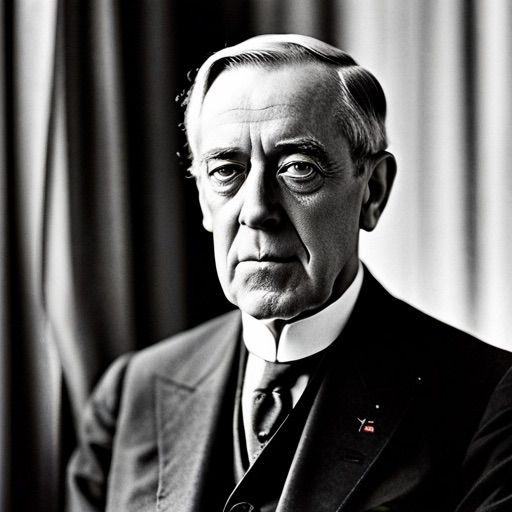
Woodrow Wilson, the 28th President of the United States, was a man of great conviction and vision. Serving in office from 1913 to 1921, he left an indelible mark on American history with his unwavering commitment to promoting peace and democracy worldwide.

During his presidency, Wilson ushered in a wave of domestic and foreign policy achievements that still reverberate today. He established the Federal Reserve System, created the Federal Trade Commission, and passed the Clayton Antitrust Act. Furthermore, he was a champion of women’s rights, instrumental in the passage of the 19th Amendment which gave women the right to vote.

Wilson’s foreign policy was characterized by his passionate belief in democracy and self-determination. He was a key figure in the establishment of the League of Nations, an international organization aimed at preventing future wars and promoting cooperation among nations. Though the United States did not ultimately join the League, Wilson’s vision for a more peaceful world order continues to inspire international efforts to this day.

However, Wilson’s legacy is not without controversy. He oversaw the segregation of federal agencies and the military during his presidency, and his handling of the First World War and the rise of fascism in Europe faced criticism. Despite these shortcomings, Wilson’s contributions to the country and the world are still studied and debated, making him a significant figure in American history.

Related Posts

William Howard Taft was Dedicated to the Rule of Law

Dave

a man wearing a suit and tie

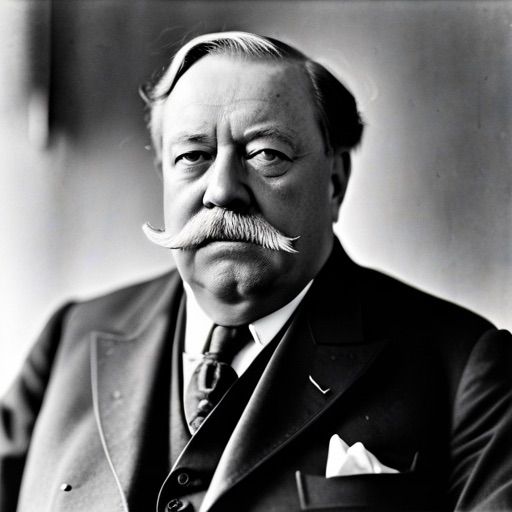
William Howard Taft, the 27th President of the United States, was a man of many talents. His legal expertise and dedication to the rule of law were evident throughout his career, and he served as a judge, Solicitor General, and Secretary of War under President Theodore Roosevelt before assuming the presidency himself in 1909.

Taft’s presidency was marked by his focus on trust-busting, conservation, and foreign policy. He continued many of the policies of his predecessor, Theodore Roosevelt, including enforcing the Sherman Antitrust Act and expanding national parks and forests. But Taft was also a trailblazer, introducing the 16th Amendment, which established a federal income tax.

One of Taft’s most notable achievements on the world stage was negotiating the Knox–Porter Resolution, which officially ended the Russo-Japanese War. He also established the Dollar Diplomacy policy, which aimed to promote American business interests abroad by providing financial support to countries in need.

Despite these successes, Taft’s presidency was not without controversy. He faced criticism from both progressive and conservative factions within his own party, and his relationship with Roosevelt became strained. But Taft remained committed to the rule of law and his contributions to American jurisprudence cannot be denied.

After leaving office, Taft went on to serve as a law professor at Yale University and eventually became Chief Justice of the United States from 1921 to 1930. While his legacy may be mixed, there is no denying that Taft was a man of great accomplishments and a true champion of the law.

Related Posts

Theodore Roosevelt a Famous American President

Dave
a man wearing a suit and hat

Theodore Roosevelt

Theodore Roosevelt was not only a famous American president, but also an influential figure who left an indelible mark in the history of the United States. Born in the bustling city of New York in 1858, Roosevelt grew up in a wealthy family. Despite being a sickly child who suffered from asthma, he never let his condition get in the way of his passions. In fact, he embraced them wholeheartedly, including his love for hunting, hiking, and studying natural history.

Roosevelt’s insatiable thirst for knowledge led him to attend Harvard University, where he honed his writing skills, eventually becoming a prolific author who wrote on a range of subjects, from history and politics to nature. His writing prowess would later come in handy when he stepped into the political arena in the late 19th century as a reformer, serving as a member of the New York State Assembly. There, he championed various progressive causes, including civil service reform and workers’ rights, earning himself a reputation as a fearless advocate for the people.

Roosevelt’s drive for change and his unrelenting spirit saw him appointed as the Police Commissioner of New York City, where he took on corruption and worked to improve the city’s police force. However, it was his leadership during the Spanish-American War, leading the Rough Riders, a volunteer cavalry unit, which propelled him to national hero status and ultimately the governorship of New York in 1899.

In 1901, Roosevelt’s life took a dramatic turn when President William McKinley was assassinated, and he became the 26th President of the United States. As president, he continued his progressive agenda, including trust-busting, conservation, and workers’ rights. He also oversaw the construction of the Panama Canal and was a staunch advocate for American imperialism.

Roosevelt’s legacy as a reformer, conservationist, and American hero is still felt today, almost a century after his death in 1919. His impact on American politics and public life remains unmatched, and he is undoubtedly one of the greatest presidents the United States has ever had.

Related Posts

William McKinley was Known for his Unwavering Support for the Gold Standard

Dave
a man wearing a suit and tie smiling at the camera

William McKinley

Step back in time with me to the late 1800s, where William McKinley was born and raised in Niles, Ohio in 1843. Despite his humble beginnings, McKinley had a strong determination to succeed, which led him to become a schoolteacher before enlisting in the Union Army during the Civil War.

After the war, he pursued higher education, studying law and eventually becoming a member of the Ohio bar in 1867. McKinley’s political career took off as he served in the U.S. Congress for 14 years, where he became known for his unwavering support of protective tariffs and the gold standard.

In 1891 and 1893, McKinley was elected Governor of Ohio, where he demonstrated exceptional leadership skills, paving the way for his presidential bid. During his presidency, he oversaw a period of remarkable economic growth and expansion. He was a trailblazer in promoting civil rights, particularly the advancement of African American voting rights in the South.

McKinley’s legacy was not only defined by his accomplishments but also by his tragic death. In September 1901, he was shot by an anarchist while attending the Pan-American Exposition in Buffalo, New York. Despite the best efforts of medical professionals, McKinley succumbed to his injuries eight days later. His untimely death robbed America of a strong and steady leader, leaving a deep impact on the nation’s history.

Related Posts

Grover Cleveland 2nd Term

Dave
a man wearing a suit and tie

Grover Cleveland

Grover Cleveland, a man of many accomplishments, was the only president in US history to serve non-consecutive terms. He held office twice, from 1885-1889 and then again from 1893-1897, during a time of tremendous change and upheaval.

During his second term, Cleveland had to navigate a series of crises, including a brutal economic depression, labor unrest, and tensions with Spain over Cuba’s independence. Despite these challenges, Cleveland was a staunch fiscal conservative, committed to reducing government spending and cutting tariffs. He also championed civil service reform and helped establish the Interstate Commerce Commission to regulate the railroad industry.

One of the most controversial decisions of Cleveland’s second term was his handling of the Pullman Strike of 1894. When workers at the Pullman Palace Car Company went on strike to protest wage cuts and layoffs, Cleveland sent in federal troops to break up the strike. His decision was widely criticized by labor unions and progressive reformers, who saw it as an attack on workers’ rights.

Cleveland’s foreign policy was also a source of controversy during his second term. He was opposed to American expansionism and imperialism, and he refused to annex Hawaii or acquire territories in the Pacific. However, his support for Cuban independence from Spain created increased tensions with the Spanish government, ultimately leading to the Spanish-American War in 1898, after Cleveland left office.

Despite these challenges and controversies, Cleveland’s second term was marked by significant accomplishments and contributions to American history. His legacy includes his commitment to fiscal conservatism, civil service reform, and his efforts to regulate the railroad industry. Grover Cleveland was truly a president of the people, navigating turbulent times with strength and conviction.

Related Posts

Benjamin Harrison Born into a Family of Political Powerhouses

Dave
a man wearing a suit and tie

Benjamin Harrison

Step right up and meet Benjamin Harrison, the 23rd President of the United States! Born into a family of political powerhouses in North Bend, Ohio in 1833, Harrison had big shoes to fill as his grandfather, William Henry Harrison, was also a U.S. President, though his tenure was cut short after just one month due to an untimely death.

Nevertheless, Harrison was determined to make his own mark. He studied law at Miami University in Ohio and began his political career in Indianapolis, Indiana. When the Civil War broke out, he served in the Union Army and rose to the rank of brigadier general before returning to his legal career and diving headfirst into Republican Party politics.

Harrison’s dedication and hard work paid off when he was elected to the U.S. Senate from Indiana in 1881, a position he held until 1887. In 1888, he clinched the presidency, promising to focus on increasing tariffs and promoting economic growth. And he did not disappoint! Harrison signed the McKinley Tariff Act of 1890, which helped to boost the economy, and the Sherman Antitrust Act, which aimed to prevent monopolies and promote fair competition.

But Harrison’s presidency was not without controversy. One of his notable actions was the support for the construction of the first federal immigration station on Ellis Island, which opened in 1892. However, the Lodge Bill, which would have authorized the federal government to oversee elections in the South and prevent voter suppression of African Americans, was defeated in the Senate. Furthermore, the economy experienced a severe downturn during his presidency, leading to criticism of his economic policies.

Despite these challenges, Harrison’s commitment to promoting economic growth and competition through tariffs and antitrust laws paved the way for future success. After losing his bid for re-election in 1892, Harrison returned to practicing law and remained active in Republican Party politics until his death in 1901 at the age of 67. He may have had his ups and downs, but Benjamin Harrison will always be remembered as a President who fought for what he believed in.

Related Posts

Grover Cleveland Vetoed More Bills than any other President in History

Dave
a man wearing a suit and tie

Grover Cleveland

Grover Cleveland was more than just another name in American political history. He was a trailblazer, a leader who dared to challenge the status quo and push for change. Born in 1837, Cleveland grew up in upstate New York and worked as a lawyer before entering politics. He served as the Sheriff of Erie County and later as the Mayor of Buffalo, paving the way for his future in national politics.

In 1884, Cleveland made history by becoming the 22nd President of the United States. He defeated James G. Blaine in a fiercely contested election, and immediately set to work on enacting his vision for the country. Cleveland’s first term was marked by his focus on civil service reform and his efforts to reduce tariffs. He also made headlines by successfully preventing the annexation of Hawaii and vetoing several bills that he deemed unconstitutional.

Despite his achievements, Cleveland faced his fair share of challenges during his time in office. He lost his bid for re-election in 1888 to Benjamin Harrison, but he didn’t let that setback stop him. In 1892, Cleveland ran again and won, becoming the only President to serve two non-consecutive terms. During his second term, he faced a severe economic depression and was criticized for his handling of the Pullman Strike. However, Cleveland never wavered in his commitment to civil service reform, and he vetoed more bills than any other President in history.

After leaving office, Cleveland retired to his home in New Jersey but remained an active force in politics until his death in 1908. He is remembered as a principled and independent leader who stood up for his beliefs and put the interests of the country above his own political ambitions. Grover Cleveland’s legacy lives on as a testament to the power of courage, conviction, and perseverance in the face of adversity.

Related Posts

Chester A. Arthur from Humble Beginnings all the way to the Presidency

Dave
a man wearing a suit and tie

Chester A. Arthur

Chester A. Arthur, the 21st President of the United States, left an indelible mark on American history. Born in Fairfield, Vermont in 1829, Arthur grew up in a humble family that struggled to make ends meet. Despite his financial hardships, Arthur was determined to pursue his education and attended Union College in Schenectady, New York, where he excelled in his studies.

After earning his degree, Arthur went on to study law and later became a prominent lawyer in New York City. His impressive legal career caught the attention of President Ulysses S. Grant, who appointed him as the Collector of the Port of New York, a position notorious for its corruption. However, Arthur surprised everyone by rooting out corruption and transforming the office into a model of efficiency. His remarkable efforts earned him the nickname “The Gentleman Boss,” a title that he wore proudly.

Arthur’s leadership skills did not go unnoticed, and he later became the Vice President in 1880. However, he was not widely respected, and many doubted his ability to lead. But fate had other plans for Arthur when President James A. Garfield was shot by a disgruntled office seeker in 1881, and Arthur was thrust into the presidency. Despite the initial skepticism, Arthur quickly proved himself to be an effective and competent leader.

He supported civil service reform and modernized the Navy, but his most notable achievement was signing the Pendleton Civil Service Reform Act into law. This transformative act marked a significant milestone in American history, as it aimed to eliminate political corruption and promote merit-based hiring practices.

However, Arthur’s presidency was not without controversy, as he also signed the Chinese Exclusion Act into law, which prohibited Chinese immigration to the United States for ten years. Despite this, Arthur’s legacy as a competent and effective leader who worked tirelessly to modernize America is undeniable.

Although he was not nominated for a second term in 1884, Arthur’s presidency was a success, and he remains a pivotal figure in American history. Sadly, he died in 1886 at the age of 57 due to kidney disease. Today, Chester A. Arthur is remembered as a leader who defied expectations and worked hard to leave a lasting impact on the United States.

Related Posts

James A. Garfield the Teacher, Major General, Lawyer, Politician, and President

Dave
a man wearing a uniform

James A. Garfield

Meet James A. Garfield, the brilliant scholar who rose to the rank of Major General and became the 20th U.S. President. Born in Ohio in 1831, Garfield was a true prodigy who became a teacher at only 17 years old. He later pursued law and served in the Union army during the Civil War, where he displayed exceptional leadership skills and earned a promotion to Major General.

After the war, Garfield entered politics, and his progressive views earned him a spot in the House of Representatives, where he served for nine terms. Throughout his career, he championed civil rights and education, and he was widely respected for his integrity and dedication to public service.

In 1880, Garfield won the Republican nomination for President, and his victory in a close election marked the beginning of his brief but impactful presidency. Known for his intelligence and commitment to modernizing the federal government, Garfield quickly implemented a series of reforms during his short time in office.

Unfortunately, his presidency was cut short when he was shot by a deranged office seeker just four months into his term. Despite a determined effort by his doctors to save him, Garfield passed away 80 days later.

Although Garfield’s presidency was brief, his legacy as a champion of civil rights, education, and good government lives on. He was truly a remarkable figure who left an indelible mark on American history.

Related Posts

Rutherford B. Hayes had many Accomplishments

Dave
a man wearing a suit and tie

Rutherford B. Hayes

Get ready to travel back in time to learn about one of America’s most influential leaders! Rutherford B. Hayes, the 19th President of the United States, was a man of many talents and accomplishments. Born on October 4, 1822, in Delaware, Ohio, Hayes was the fifth child of a farmer and a schoolteacher. He attended Kenyon College, where he honed his critical thinking skills, and graduated in 1842 before studying law at Harvard Law School, where he mastered the art of legal argumentation.

Hayes was a man of action, and his patriotism inspired him to fight for his country during the Civil War as a Union officer. He was wounded several times during the war but persevered and eventually rose to the rank of major general. After the war, Hayes transitioned to politics and was elected to Congress in 1864. He served three terms in Congress before being elected Governor of Ohio in 1867, where he continued to make an impact in the realm of politics.

As President, Hayes was a trailblazer for civil rights and reforming the civil service. He signed the Compromise of 1877, which effectively ended the era of Reconstruction and removed federal troops from the South. This compromise gave Hayes the presidency in exchange for the withdrawal of federal troops from the South. Hayes was an advocate for education and signed the bill that established the U.S. Naval Academy at Annapolis, Maryland. He also signed the bill that established the Smithsonian Institution, which is now one of the world’s largest museums and research centers.

After his presidency, Hayes devoted himself to philanthropy and education. He founded the Hayes Memorial Library and Museum in Fremont, Ohio, which is dedicated to the study of American history. Hayes died on January 17, 1893, at the age of 70, but his legacy lived on. He is remembered as a President who worked tirelessly to improve the country’s civil service and promote civil rights. He was also a philanthropist who dedicated his life to education and the study of history.

Related Posts

Ulysses S. Grant was a Man of Many Talents

Dave
a man wearing a uniform

Ulysses S. Grant

Get ready to be inspired by one of America’s most fascinating figures! Ulysses S. Grant was a man of many talents, from his distinguished military career to his groundbreaking work as the 18th president of the United States. Born in Ohio in 1822, Grant began his journey as a soldier at the United States Military Academy at West Point, where he honed his skills and served in the Mexican-American War.

After resigning from the army in 1854, Grant struggled to make ends meet, working various jobs as a civilian. But when the Civil War broke out in 1861, he knew he had to answer the call of duty. Grant quickly rose through the ranks, earning a reputation for his strategic brilliance and his victories at Fort Donelson, Shiloh, and Vicksburg.

In 1864, President Abraham Lincoln appointed Grant commander-in-chief of the Union Army, a position he held until the end of the war. With his leadership, the Union Army was able to defeat the Confederacy and end the Civil War, cementing Grant’s status as a national hero.

But Grant’s achievements didn’t end there. As president, he worked tirelessly to protect the rights of African Americans and promote civil rights, signing the 15th Amendment into law and modernizing the government and the economy by expanding the railroad system and establishing the first national parks.

Despite his political successes, Grant faced scandals during his presidency, but his reputation for honesty and transparency remained intact. After leaving office, he embarked on a world tour, meeting with leaders in Europe and Asia before returning to the United States to pen his memoirs.

Grant passed away in 1885, but his legacy lives on. He is remembered as a pivotal figure in American history, not only for his military leadership during the Civil War but also for his efforts to promote civil rights and modernize the government.

Related Posts

Andrew Johnson had a Passion for Serving the People

Dave
a man wearing a suit and tie

Andrew Johnson

Andrew Johnson, the 17th President of the United States, was no ordinary politician. Born in North Carolina in 1808, Johnson started his career as a tailor before entering politics. He had no formal education, but his passion for serving the people was unmatched. He served as a member of the Tennessee state legislature in the 1830s, where he earned the reputation of being a champion of the common man.

Johnson’s presidency was marked by the aftermath of the Civil War and the process of Reconstruction. As a Democrat who supported states’ rights, Johnson vehemently opposed the Radical Republicans in Congress who sought to impose harsh conditions on the defeated Confederate states. He believed that the former Confederacy should be treated with leniency and forgiveness, which was not well-received by many Northerners.

Despite his controversial policies, Johnson played a crucial role in shaping the course of American politics during a critical period in the nation’s history. His presidency was marked by conflicts with Congress, which ultimately led to his impeachment in 1868. Although he narrowly avoided being removed from office, Johnson’s legacy remains one of the most debated and analyzed in American history.

As a self-taught man who rose to the highest office in the land, Johnson’s story is a testament to the power of determination and hard work. His advocacy of the common man and his opposition to the political and economic elite resonated with millions of Americans, and his impact on the nation’s political landscape cannot be overstated.

Related Posts

Abraham Lincoln was a Remarkable Leader who Steered the Nation Through one of its Most Challenging Periods

Dave

a man wearing a suit and tie talking on a cell phone

Abraham Lincoln

Abraham Lincoln, the 16th President of the United States of America, was a remarkable leader who steered the nation through one of its most challenging periods. Born in a humble log cabin in Kentucky in 1809, Lincoln’s childhood was marked by poverty and limited education. Nonetheless, he possessed an insatiable thirst for knowledge and taught himself law, which led him to become a successful lawyer in Illinois.

Lincoln began his political career in the Illinois state legislature, where he served for several years before winning a seat in the U.S. House of Representatives in 1846. It was during this time that he gained national recognition for his vocal opposition to the Mexican-American War and his unwavering support for the abolition of slavery.

In 1860, Lincoln was elected President of the United States, winning the election with a plurality of the popular vote. However, his election was met with fierce opposition from Southern states, many of which seceded from the Union to form the Confederacy. This led to the outbreak of the American Civil War, a four-year conflict that claimed the lives of over 600,000 Americans.

Throughout the war, Lincoln’s leadership was pivotal in keeping the Union together and ultimately securing victory for the North. He issued the Emancipation Proclamation, a groundbreaking document that declared all slaves in Confederate-held territory to be free. Additionally, he delivered the historic Gettysburg Address, which remains one of the most revered speeches in American history.

Tragically, Lincoln’s presidency was cut short when he was assassinated in 1865, just a few months after the war’s end. Nevertheless, his legacy endures as one of America’s greatest presidents. His steadfast commitment to liberty, equality, and justice for all continues to inspire people worldwide.

Related Posts

James Buchanan has a Reputation as a Mediocre President

Dave
a man wearing a suit and tie

James Buchanan

James Buchanan, the 15th President of the United States, had a remarkable career in public service. Born in Pennsylvania in 1791, he studied law and ventured into politics, serving as a Congressman, Senator, Minister to Russia, and Secretary of State. However, his presidency was not without controversy. From 1857 to 1861, Buchanan was at the helm of a nation on the brink of civil war, and his leadership was tested. Unfortunately, he was unable to prevent the secession of seven southern states, which led to the bloodiest conflict in American history.

Many historians have criticized Buchanan’s lack of action during this critical period. Some argue that his inaction allowed the conflict to escalate, leading to tragic consequences. Despite his shortcomings, Buchanan’s legacy includes some notable accomplishments that cannot be ignored. He played a crucial role in resolving the Oregon boundary dispute with Great Britain, and he was also a key player in the drafting of the Ostend Manifesto, which called for the acquisition of Cuba from Spain. Buchanan was a staunch defender of the Constitution and believed strongly in the rights of states to govern themselves.

Sadly, Buchanan’s reputation as a mediocre President has persisted to this day. However, some historians have reevaluated his legacy in recent years, arguing that he was unfairly maligned by his contemporaries. They suggest that his failures as President were largely the result of circumstances beyond his control. Despite these debates, one thing is for sure: James Buchanan’s life and career in public service left an indelible mark on American history.

Related Posts

Franklin Pierce was a man who Lived and Breathed Politics

Dave
a man wearing a suit and tie

Franklin Pierce

Franklin Pierce, the 14th President of the United States, was a man who lived and breathed politics. Born in Hillsborough, New Hampshire in 1804, he was raised in a family that was deeply involved in the political scene. Pierce was an intelligent and ambitious young man who graduated from Bowdoin College in 1824 and went on to study law in Northampton, Massachusetts. He soon became a skilled lawyer and was admitted to the bar in 1827, returning to his home state of New Hampshire to begin his legal career.

Pierce’s talent for politics was evident from the start. He was elected to the New Hampshire legislature in 1829, and later served in the U.S. House of Representatives from 1833 to 1837 and in the U.S. Senate from 1837 to 1842. In 1852, Pierce was nominated as the Democratic candidate for President and won the election by a landslide. He was a man of action, and his presidency was marked by several significant events.

During his presidency, Pierce oversaw the Gadsden Purchase which added a large portion of land to the southwestern United States. He also supported the Fugitive Slave Act of 1850, which required the return of runaway slaves to their owners, and was a strong advocate for national unity. However, Pierce’s presidency was not without controversy. The Kansas-Nebraska Act, which he supported, led to violent conflict over the issue of slavery, and his stance on the issue drew sharp criticism from many in the North.

Despite his early successes, Pierce’s presidency ultimately failed to maintain the status quo on the issue of slavery. His efforts to appease Southern interests only deepened the divide between North and South, and he was not nominated for re-election in 1856. Today, Franklin Pierce is considered one of the least successful presidents in American history. However, he is remembered for his strong commitment to the principles of democracy and his efforts to promote national unity during a difficult and divisive period in American history.

Related Posts

Millard Fillmore was the son of a Farmer and was Largely Self-taught

Dave
a man wearing a suit and tie

Millard Fillmore

Get ready to be transported back in time to learn about the life and legacy of Millard Fillmore, the 13th president of the United States! Born in a humble log cabin in New York, Fillmore was the son of a farmer and was largely self-taught. Despite his humble beginnings, he became a teacher before studying law and eventually becoming a lawyer in 1823.

But that wasn’t enough for Fillmore – he was involved in politics from an early age and was elected to the New York State Assembly in 1829. He went on to serve in the U.S. House of Representatives from 1833 to 1843, where he became known for his strong stance against slavery.

In 1849, Fillmore became vice president under Zachary Taylor and took over as president upon Taylor’s untimely death in 1850. During his presidency, Fillmore supported the Compromise of 1850, which aimed to settle disputes between slave and free states. This included the admission of California as a free state and the controversial Fugitive Slave Act, which required the return of runaway slaves to their owners.

Despite his efforts to delay the outbreak of the Civil War, Fillmore’s presidency was mired in controversy and he was not nominated for re-election in 1852. However, he didn’t let that stop him from continuing to serve the public. He spent the rest of his life working on various philanthropic projects, including the establishment of the University at Buffalo, which later became the State University of New York at Buffalo.

Fillmore’s legacy is complicated, but his commitment to education and philanthropy continue to inspire Americans to this day. So take a moment to appreciate the life and contributions of Millard Fillmore, a man who played an important role in the tumultuous period leading up to the Civil War and whose impact still resonates today.

Related Posts