The chilling Grim Reaper, with its bony frame and menacing scythe, stands as an enduring symbol that captivates the realms of folklore and mythology. Whether known as the Angel of Death or the embodiment of mortality, this enigmatic figure represents the ultimate cessation of life. Throughout the annals of history, the Grim Reaper has transcended cultural boundaries, embodying the timeless concept of death and the unstoppable flow of time. Its image instills fear and apprehension, for it is believed to be the harbinger that escorts souls from this world to the next. In many traditions, the Grim Reaper personifies impartiality, executing its solemn duty devoid of emotion or judgment. It serves as a potent reminder that death is an inescapable facet of the human experience, indifferent to one’s stature, wealth, or influence. From art to literature to the expansive realm of popular culture, the Grim Reaper has inspired countless masterpieces, weaving intricate narratives that explore mortality, destiny, and the ephemeral nature of existence. Despite its eerie visage, this spectral figure embodies a symbolic force that beckons us to contemplate and reflect upon the inevitability of our own demise, urging us to seize the present moment and treasure the precious time we possess.
Category: Holidays
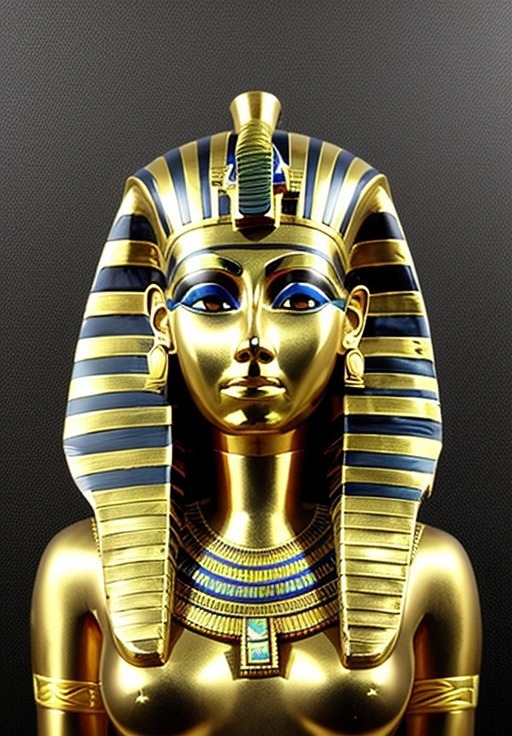
Wrapped in History: The Unraveling Charm of Mummies
Mummies and Halloween are a match made in the afterlife. These ancient beings have transcended time to become legendary monsters, injecting a bone-chilling thrill into the holiday. Originating from the sacred rituals of ancient Egypt, mummification was a meticulous process aimed at preserving the bodies of pharaohs and revered figures for the journey beyond. But in the realm of popular culture, mummies have undergone a spine-tingling transformation. Wrapped in tattered bandages, they wander through dimly lit tombs, their presence striking terror into the hearts of those who behold them.
The mere sight of a mummy sends shivers down the spine, for they are often portrayed as cursed creatures, roused from their eternal slumber. With their decaying visage, vacant gazes, and deliberate, haunting movements, mummies masterfully blend the familiar with the grotesque. The notion of a reanimated corpse, preserved over centuries and now seeking vengeance or spreading chaos, taps into humanity’s deepest fears of death and the great unknown.
Mummies often find themselves entrusted with the role of guardians, protecting ancient treasures and cursed artifacts. This adds an aura of mystery and danger to their already formidable character. Relentless and unstoppable, they become formidable foes in horror tales and silver screen spectacles alike. The image of a mummy, swathed in ancient wrappings and exuding an eerie presence, has seamlessly woven itself into the fabric of Halloween. From trick-or-treaters donning mummy costumes to spine-chilling props adorning front yards, the mummy has undeniably claimed its throne as one of Halloween’s timeless monsters.
So, when the moon hangs low and Halloween approaches, prepare yourself for the lurking shadows. Mummies await, ready to send shivers coursing through your veins, reminding us all that even the dead can rise again.
Related Posts
Embracing the Moon: Unraveling the Mystique of Werewolves
For centuries, the world has been captivated by the enigmatic and spine-chilling tales of werewolves. These supernatural beings, also known as lycanthropes, have clawed their way into folklore and mythology, leaving a trail of fascination and terror in their wake. Picture this: humans morphing into wolves under the spell of a full moon, their existence intertwined with ancient civilizations such as Greece and Rome.
Legends of werewolves trace back to a time when shape-shifting creatures roamed the imaginations of people across the globe. Cultures far and wide believed that these cursed individuals faced a twisted fate, their punishment being the transformation into fearsome wolves. The metamorphosis itself is said to be a tormenting and uncontrollable process, unleashing an array of physical and psychological changes.
Once in their lupine form, werewolves are said to possess extraordinary strength, heightened senses, and an insatiable appetite for the flesh of unsuspecting humans. Throughout different regions, tales of these creatures have taken various forms, but one thing remains constant: the moon’s undeniable influence. It is believed that the celestial body triggers the metamorphosis, causing the afflicted to lose all control over their human side, succumbing entirely to their primal instincts.
In the annals of werewolf lore, silver has emerged as a powerful weapon against these formidable beasts. Legends whisper that this precious metal possesses the ability to harm or even bring about their demise. With such rich mythology surrounding them, werewolves have clawed their way into literature, films, and television shows, forever etching their place in popular culture.
While these creatures may dwell within the realms of fiction, their allure and the fear they inspire continue to captivate our imaginations. Whether viewed as nocturnal terrors or tragic figures trapped between two worlds, werewolves have become an enduring symbol of transformation, duality, and the eternal struggle between our human and animalistic selves.
Related Posts
Unveiling the Enigmatic Allure: Unearthing the Secrets of Halloween Traditions in Japan
In recent years, Halloween traditions in Japan have been skyrocketing in popularity, despite their relatively shallow roots in Japanese culture. Thanks to the influence of Western customs, Halloween has transformed into a thrilling and enthralling time for people of all ages across Japan. One tradition that stands out is the vibrant celebration of costume parties. Japanese folks go all out, donning meticulously crafted and elaborate costumes that span from iconic characters to hair-raising creatures. Their attention to detail and boundless creativity truly shines through.
But that’s not all. Trick-or-treating has also taken Japan by storm, particularly in bustling cities. Children and adults alike parade through shops and homes, dressed to the nines in their Halloween garb, eagerly collecting treats and candies from the enthusiastic locals. The spirit of Halloween has even seeped into the culinary scene, giving birth to a fascinating tradition of Halloween-themed food and decorations. Restaurants and cafes tantalize taste buds with limited-edition Halloween menus featuring ghost-shaped dishes, pumpkin-inspired creations, and other spine-chilling symbols. Supermarkets and bakeries, too, embrace the festivities, offering an array of Halloween-themed cakes, cookies, and snacks that add a delightful touch of Halloween spirit to the culinary landscape.
But the excitement doesn’t stop there. Japan takes Halloween to a whole new level with its array of special events and attractions, hosted by theme parks and shopping centers. From bone-chilling haunted houses to captivating parades and captivating live performances, these experiences captivate both locals and tourists. It’s a testament to the adaptability and unwavering enthusiasm of the Japanese people, who wholeheartedly embrace diverse cultures and traditions.
Although Halloween may be a relatively new addition to Japan’s holiday calendar, its rapid rise in popularity showcases the Japanese people’s eagerness to embrace and make their own mark on different customs and festivities.
Related Posts
Kyūketsuki Chronicles: Unraveling the Bone-Chilling Tales of Japanese Vampires
In the realm of Japanese folklore, behold the enigmatic and unnerving presence of the “kyūketsuki,” an otherworldly vampire unlike any you’ve encountered before. Unlike their Western counterparts, these creatures of the night are anything but suave and seductive. Prepare yourself for a macabre and bone-chilling spectacle.
These bloodthirsty beings possess unparalleled strength and agility, lurking in the shadows, ready to pounce on unsuspecting prey. With their disheveled, tangled manes, pallid complexions, and fangs that seem to stretch into eternity, the kyuuketsuki instill terror deep within the hearts of all who dare cross their path.
What sets these vampiric creatures apart is their defiance of convention. They defy the limits of darkness, fearlessly roaming the earth even in daylight. This unexpected twist makes them all the more perilous, their actions shrouded in unpredictability.
Generation after generation, the tales of the kyuuketsuki have woven an intricate web of captivating narratives. These stories delve into the tragic origins of these creatures, unearthing the torment and despair that birthed their accursed existence. Whether it be a tormented soul seeking vengeance or a malevolent spirit haunting the living, Japanese vampire stories paint a vivid tapestry of folklore and horror. Brace yourself, for these tales will both enchant and send shivers down your spine, captivating listeners and readers alike.
Related Posts
Shapeshifting Shadows: The Mysterious World of Vampire Transformations
For centuries, vampires have captivated our imaginations with their enigmatic presence in folklore, literature, and pop culture. One aspect of their mystique that never fails to ignite passionate debates is their shape-shifting abilities. While vampires are revered across different cultures and media, there is a general consensus that they do not possess the traditional shape-shifting powers like werewolves or other supernatural beings. However, don’t be fooled, for vampires are masters of illusion and disguise. Their cunning allows them to manipulate their appearance, seamlessly blending in with human society or appearing differently to their unsuspecting victims. This uncanny ability is often intertwined with their hypnotic powers, enabling them to control minds and manipulate perceptions. In some vampire lore, they are even said to transform into bats or mist, further blurring the line between shape-shifting and illusion. Nevertheless, it is essential to distinguish these transformations from the complete physical metamorphosis commonly associated with shape-shifting. While vampires may possess certain transformative abilities, they do not conform to the traditional notion of shape-shifters like other mythical creatures.
Beyond their shape-shifting capabilities, vampires possess a myriad of extraordinary talents that continue to bewitch us. One of their most alluring traits is immortality, defying the natural cycle of life and death. Throughout the centuries, vampires remain ageless, perpetually frozen in time. Coupled with this immortality is their exceptional regenerative power, allowing them to swiftly heal even the most grievous wounds. Furthermore, vampires possess unrivaled strength and speed, surpassing the limits of ordinary humans. With their superhuman physical prowess, they effortlessly overpower their prey and showcase astonishing feats of agility. However, their extraordinary abilities do not stop there. Vampires possess heightened senses that far exceed those of mere mortals. Their acute hearing, sight, and smell enable them to detect the minutest changes in their surroundings, making them formidable hunters. Moreover, vampires are often associated with the power of mesmerization or compulsion. With a single gaze or a mere touch, they can manipulate the minds of their victims, bending them to their will or even erasing memories at their whim. Finally, vampires are renowned for their ability to transform into various incarnations, be it bats, wolves, or ethereal mist. This shape-shifting prowess allows them to move swiftly and stealthily, evading detection and striking fear into the hearts of their adversaries. While the specific abilities of vampires may vary depending on the folklore or depiction, these remarkable characteristics have solidified their status as captivating and fearsome creatures in popular culture.
Related Posts
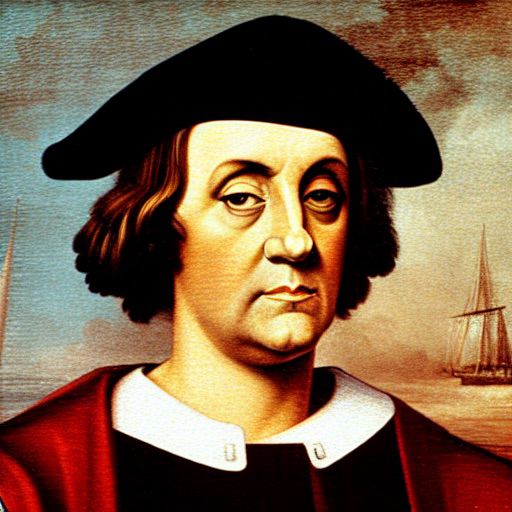
Charting Columbus Day: Navigating the Legacy and Controversy
Columbus Day, commemorated on the second Monday in October, has long been a subject of debate and controversy. The holiday marks the arrival of Christopher Columbus in the Americas on October 12, 1492. While it has traditionally been celebrated as a day to honor Columbus’s achievements and his role in European exploration, there is a growing movement calling for a reevaluation of this holiday. Critics argue that Columbus’s actions towards indigenous peoples were marked by violence, exploitation, and the beginning of a painful history of colonization. They emphasize the devastating impact that European colonization had on the native populations, including forced labor, diseases, and cultural suppression. As a result, many cities and states across the United States have chosen to rename or replace Columbus Day with Indigenous Peoples’ Day, which seeks to recognize and celebrate the rich cultures, contributions, and resilience of Native Americans.
The debate surrounding Columbus Day raises important questions about how we choose to remember historical figures and events. It challenges us to critically examine the narratives we have inherited and consider the perspectives of marginalized communities. Supporters of Columbus Day argue that it is essential to acknowledge Columbus’s role in history, as he is credited with opening up the New World to European exploration and paving the way for the eventual establishment of the United States. They view Columbus as an important figure in the context of his time, and argue that judging historical figures by contemporary standards is unfair and ignores the complexity of history.
However, opponents argue that celebrating Columbus Day perpetuates a whitewashed version of history that ignores the suffering and oppression endured by indigenous peoples. They argue that honoring Columbus not only overlooks the atrocities committed by him and his crew, but also sends a harmful message to Native Americans, who have long been marginalized and displaced. By replacing Columbus Day with Indigenous Peoples’ Day, they hope to bring attention to the ongoing struggles and resilience of indigenous communities, as well as promote a more inclusive and accurate understanding of history.
The controversy surrounding Columbus Day is not limited to the United States. Countries across the Americas, including Canada and several Latin American nations, have their own versions of Columbus Day or celebrate it under different names. In recent years, there has been a push in some countries to redefine the holiday or replace it with alternative commemorations that focus on indigenous peoples and their history. This global conversation reflects a broader shift towards reevaluating colonial legacies and acknowledging the rights and experiences of marginalized communities.
As we navigate the legacy and controversy surrounding Columbus Day, it is important to approach the discussion with empathy, open-mindedness, and a commitment to learning from the past. Whether we choose to celebrate Columbus Day, Indigenous Peoples’ Day, or any other alternative, it is crucial that we continue to engage in meaningful conversations about history, colonialism, and the ongoing struggles for justice and equality. Only by acknowledging the complexities of our collective past can we move towards a more inclusive and just future.
Related Posts
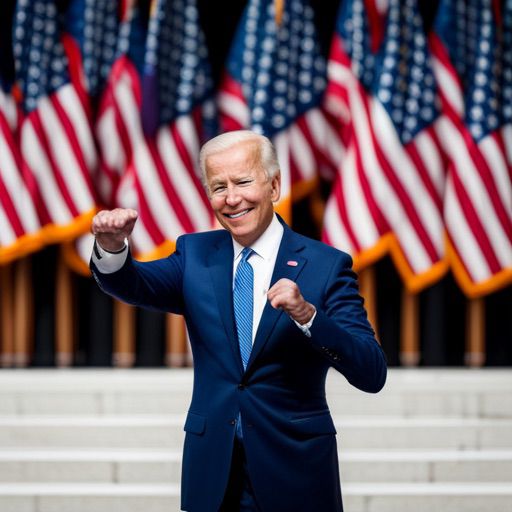
Building Back Better: The Biden Presidency Unveiled

Joe Biden’s presidency marks a historic moment in the United States’ political landscape. As the 46th President, he was inaugurated on January 20, 2021, after an impressive career of public service. Prior to his presidency, he served as Vice President under Barack Obama from 2009 to 2017 and as a senator representing the state of Delaware from 1973 to 2009.
Throughout his political career, Biden has been a vocal advocate for important causes such as civil rights, gun control, and healthcare. His expertise in foreign policy is also noteworthy, having played a key role in shaping U.S. policy towards Iraq, Afghanistan, and Russia while serving as the chairman of the Senate Foreign Relations Committee.
In the 2020 presidential election, Biden emerged victorious against the incumbent Donald Trump, making history as the oldest person ever elected to the presidency at the age of 78. Since taking office, Biden has made it his top priority to address the COVID-19 pandemic. He implemented several measures such as mandating mask-wearing on federal property and increasing vaccine distribution to combat the spread of the virus.
Furthermore, Biden has proposed several policy initiatives, including a $1.9 trillion COVID relief package, a $2 trillion infrastructure plan, and a plan for comprehensive immigration reform. His presidency has been characterized by a focus on unity and bipartisanship, with the president often calling for an end to the divisiveness that has plagued American politics in recent years.
Overall, Biden’s long political career and experience in government make him a capable and well-suited leader for the United States during a time of significant challenges and change. His administration will undoubtedly leave a lasting impact on the country, and it will be exciting to see what the future holds under his leadership.
Related Posts
Trumped Nation: Exploring the Impact of President Donald Trump

President Donald Trump was not your typical politician. Born on June 14, 1946, in the bustling borough of Queens, New York City, Trump was a businessman, television personality, and author before serving as the 45th president of the United States of America from 2017 to 2021. He was the man behind The Trump Organization, a US-based real estate developer, and the host of the wildly popular reality television show, The Apprentice, which kept viewers glued to their screens from 2004 to 2015.
Trump’s unconventional approach to politics shook up the establishment and won him a loyal following, but it also sparked controversy and criticism from the public and the media. He was known for his frequent use of social media to communicate with the public, often making headlines with his unfiltered tweets and posts. During his presidency, Trump implemented several policies, including tax cuts, immigration reform, and the repeal of the Affordable Care Act. However, his administration was also plagued by several high-profile scandals, including the Russia investigation and the impeachment proceedings launched against him in 2019.
Despite the controversies that surrounded his presidency, Trump remained a divisive figure in American politics. His supporters credit him with revitalizing the economy and placing America’s interests first, while his detractors view him as a danger to democracy and a threat to the country’s values and ideals. Trump’s presidency came to a dramatic end in January 2021, amid a contentious election that saw him refuse to accept the results and launch several legal challenges.
Whether you loved him or loathed him, there’s no denying that President Donald Trump’s time in office was one of the most tumultuous in American history. His legacy will continue to be debated for years to come, as the nation grapples with the aftermath of his presidency and charts a course for the future.
Related Posts
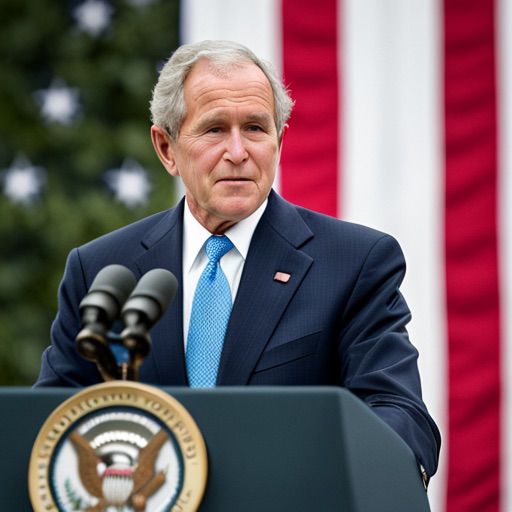
George W. Bush and the Unyielding Fight Against Terror

Get ready to learn about the life and times of George W. Bush, one of the most influential presidents in the history of the United States. Born in New Haven, Connecticut in 1946, Bush spent most of his childhood in Texas before attending Yale University, where he earned a degree in history. He then went on to earn an MBA from Harvard University and worked in the oil and gas industry before entering politics.
Bush’s political career took off when he became the governor of Texas from 1995 to 2000. During his presidency from 2001 to 2009, Bush faced numerous challenges, including the September 11 terrorist attacks in 2001. His leadership in the aftermath of the attacks was widely praised, but his decision to invade Iraq in 2003 remains a topic of debate to this day.
Despite this controversy, Bush signed into law several significant acts during his presidency, including the No Child Left Behind Act and the Medicare Prescription Drug, Improvement, and Modernization Act. These aimed to improve education and healthcare access for Americans.
Apart from his political legacy, Bush’s philanthropy and advocacy work have been significant in shaping his legacy. He has worked tirelessly to improve education, fight HIV/AIDS, and support veterans and their families through the George W. Bush Presidential Center.
While his presidency was marked by both significant accomplishments and controversies, there is no denying that George W. Bush is a leader who cared deeply about his country and its people. His dedication to improving education and supporting veterans has cemented his legacy as a transformative figure in American history.
Related Posts
A Presidential Odyssey: Exploring Bill Clinton’s Impactful Legacy

Bill Clinton, a charismatic and intelligent American politician, made history as the 42nd President of the United States from 1993 to 2001. Born in Hope, Arkansas, Clinton came from a family that struggled financially but he overcame his circumstances with his ambition and brilliance. He received his education from prestigious institutions such as Georgetown University, Yale Law School, and Oxford University, where he studied as a Rhodes Scholar.
Clinton began his political career by serving as the Attorney General of Arkansas before being elected as the state’s governor in 1978. He held the governor’s office for a total of twelve years before running for president in 1992.
As President, Clinton presided over a period of significant economic growth and expansion in the United States. He was committed to balancing the federal budget, creating jobs, and improving access to healthcare. Clinton was also recognized for his efforts to promote peace and stability around the world. He played a key role in the Northern Ireland peace process and attempted to broker a peace agreement between Israel and Palestine.
Despite his numerous accomplishments, Clinton’s presidency was not without controversy. He was impeached in 1998 for perjury and obstruction of justice related to his affair with White House intern Monica Lewinsky. However, Clinton remains a revered figure in American politics, known for his political savvy and charm.
After leaving office, Clinton continued to be involved in public life. He devoted himself to various humanitarian and philanthropic causes through the Clinton Foundation. Undoubtedly, Bill Clinton’s presidency will be remembered as a defining moment in American history, marked by both significant achievements and controversies. He will be remembered as one of the most influential presidents of the 20th century, a true American legend.
Related Posts
The George Bush Chronicles: Leadership, Legacy, and the American Journey

George H.W. Bush, the 41st President of the United States, was a man of many talents and accomplishments. Though born into privilege, he made a name for himself through his hard work and dedication to public service.
Bush’s journey began at Yale University, where he honed his intellect and developed a passion for leadership. He went on to serve as a fighter pilot in World War II, showcasing his bravery and determination in the face of adversity.
However, it was in the political arena where Bush truly shone. He held a variety of positions throughout his career, including Director of Central Intelligence and Vice President under Ronald Reagan. But it was during his presidency that he truly made his mark on history.
As leader of the United States, Bush faced many challenges, including the Gulf War – a conflict with Iraq over its invasion of Kuwait. Despite the odds, he proved himself to be a skilled and strategic commander, leading his country to victory with grace and dignity.
But it wasn’t just his political prowess that made Bush a beloved figure among Americans. He was also known for his commitment to public service and volunteerism, famously coining the phrase “a thousand points of light” to inspire others to give back to their communities.
Even after leaving office, Bush remained an active and engaged citizen, dedicating himself to causes such as education and the environment. His passing in November 2018 was mourned by many, but his legacy of leadership and service lives on.
Related Posts
The Reagan Revolution: Unveiling the Charismatic Legacy

Ronald Reagan, the 40th President of the United States, was not just a politician, but also a radio sports announcer and an actor! Born in Tampico, Illinois on February 6, 1911, he started his career in the entertainment industry before making his mark in politics.
As the Governor of California from 1967 to 1975, Reagan gained the attention of the American people with his conservative policies and his belief in limited government. He was elected as President in 1980 and implemented policies that aimed to reduce government regulation and taxes, increase military spending, and promote a strong national defense. Reagan’s leadership was instrumental in ending the Cold War with the Soviet Union, through his policies of increased military spending and strategic diplomacy.
Despite these successes, Reagan’s presidency was not without controversy. He faced criticism for his handling of the Iranian hostage crisis, the Iran-Contra affair, and his response to the AIDS epidemic. Nevertheless, Reagan remains a beloved figure in American politics and is often credited with restoring confidence in the American economy and the American spirit.
Reagan was a champion of individual liberty and freedom, and he worked tirelessly to promote these values both domestically and internationally. He fought for religious freedom, opposed communism, and strengthened the relationship between the United States and Israel. His famous quote “Mr. Gorbachev, tear down this wall!” is still celebrated today as a key moment in the end of the Cold War.
After leaving office, Reagan was unfortunately diagnosed with Alzheimer’s disease and passed away on June 5, 2004. However, his legacy continues to live on in American politics and culture. His conservative policies and his belief in individual freedom and liberty continue to influence politicians and citizens alike. Today, Reagan is remembered as one of the most influential and beloved Presidents in American history.
Related Posts
Jimmy Carter: The Trailblazing President with a Heart of Gold

Jimmy Carter, the 39th President of the United States, is a remarkable individual whose life and work have left an indelible mark on history. Born on October 1, 1924, in Plains, Georgia, Carter spent his early years on a farm and learned the value of hard work from a young age. After graduating from the United States Naval Academy, he served in the Navy before returning to take over his family’s business.
Carter’s political career began in 1962 when he was elected to the Georgia State Senate. From there, he went on to serve as Governor of Georgia from 1971 to 1975 before being elected President in 1976. During his presidency, he accomplished many significant achievements, including the signing of the Camp David Accords between Israel and Egypt and the establishment of diplomatic relations with China. He was also a strong advocate for human rights and environmental protection, creating the Department of Energy and the Department of Education.
Despite his successes, Carter’s presidency was also marked by economic struggles, high inflation rates, and the Iran hostage crisis. However, he remained committed to his ideals and continued to work tirelessly for the betterment of society.
After leaving office, Carter founded the Carter Center, a non-profit organization dedicated to promoting democracy and human rights worldwide. The center has had a significant impact on various initiatives, from monitoring elections to eradicating diseases to promoting peace in conflict-ridden areas. Carter has also served as a mediator in conflicts in Haiti, North Korea, and other countries.
Carter’s humanitarian work has earned him numerous awards and accolades, including the Nobel Peace Prize in 2002. He has authored several books on topics ranging from politics to religion to history, and his legacy as a statesman and humanitarian is widely recognized. His life is an inspiration to many, and his commitment to making the world a better place serves as a reminder of the power of one person to effect positive change.
Related Posts
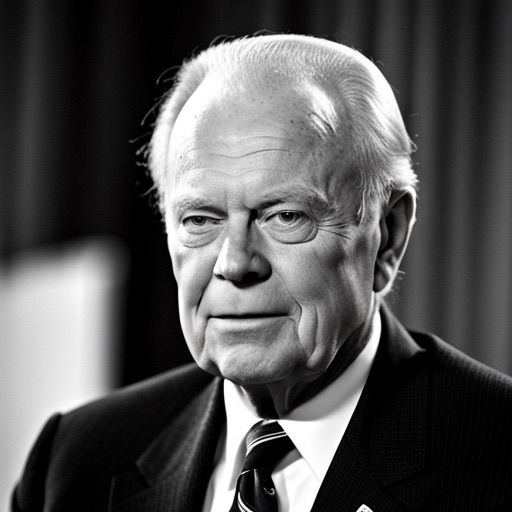
Gerald R. Ford – The Athlete Turned President Who Saved America’s Integrity
The 38th President of the United States, Gerald R. Ford, was a remarkable man whose life was full of achievements and challenges. Born in Omaha, Nebraska in 1913, he grew up to be an accomplished athlete, playing football for the University of Michigan and later for the Green Bay Packers. However, it was his political career that truly set him apart.
After serving in the Navy during World War II, Ford began his political journey in the House of Representatives, where he served for 25 years and eventually became the Minority Leader. His leadership qualities and dedication to public service were evident from the start, and he quickly became a respected figure in Washington.
Ford’s rise to the presidency was a result of one of the most significant events in American history. The Watergate scandal had engulfed Richard Nixon’s presidency, leading to his resignation. As the Vice President, Ford was next in line and took the oath of office in August 1974. One of his earliest decisions as President, to pardon Nixon, was heavily criticized at the time but is now considered a bold and necessary move that helped the nation heal.
During his presidency, Ford faced several significant challenges, including soaring inflation, economic recession, and the fall of Saigon. Despite all these hurdles, he worked tirelessly to improve the country’s relations with its global counterparts, including the Soviet Union and China.
Ford’s commitment to public service was evident in his legislative accomplishments. He signed several crucial bills into law, including the Foreign Intelligence Surveillance Act and the Privacy Act. His establishment of the Presidential Clemency Board helped to address the issue of Vietnam War-era draft dodgers and deserters, showcasing his empathy and compassion for those affected by the war.
Ford’s integrity, honesty, and dedication to public service earned him the Presidential Medal of Freedom in 1999, over two decades after his presidency. His legacy continues to inspire generations of Americans to serve their country with honor and integrity.
In conclusion, Gerald R. Ford was not just a President, but a man who embodied the spirit of America. From an athlete to a politician, he dedicated his life to improving the lives of Americans and preserving the nation’s integrity. His story is an inspiration to all those who seek to make a positive difference in the world.
Related Posts
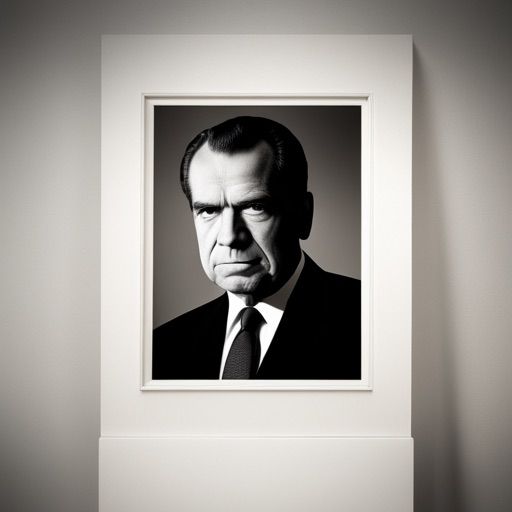
Uncovering the Truth About Richard Nixon: The Rise and Fall of a Political Giant
Get ready to learn about one of the most iconic US Presidents in history! Richard Nixon, the 37th President of the United States, was an ambitious and complex figure who served his country from 1969 to 1974. Born on January 9, 1913, in Yorba Linda, California, Nixon was a trailblazer in foreign policy initiatives, including initiating diplomatic relations with China and putting an end to the Vietnam War.
Nixon’s political career began when he became a member of the House of Representatives, representing California’s 12th district from 1947 to 1950. He then served as a senator from California from 1950 to 1953. In 1952, he ran for president with Dwight D. Eisenhower and won in a landslide victory.
During his presidency, Nixon worked tirelessly to improve relations with China and the Soviet Union. In 1972, he made history by visiting China, which opened the door to diplomatic relations between the two countries. He also signed arms control agreements with the Soviet Union, including the Strategic Arms Limitation Treaty (SALT).
However, Nixon’s time in office was also marked by the infamous Watergate scandal, which led to his resignation in 1974. The scandal involved illegal activities by his administration, including the break-in at the Democratic National Committee headquarters at the Watergate complex in Washington, D.C. Although Nixon initially denied any involvement in the scandal, audio recordings later proved that he was part of a cover-up.
Despite the controversy surrounding his presidency, Nixon’s legacy includes several significant accomplishments, including his efforts to improve relations with China and the Soviet Union, his environmental initiatives, and his establishment of the Environmental Protection Agency. Nixon was also a prolific author, writing several books on foreign policy and political philosophy.
Richard Nixon passed away on April 22, 1994, in New York City at the age of 81. No matter what you think of his presidency, there is no denying that Nixon was a complex and fascinating figure who left a significant mark on the United States and the world.
Related Posts
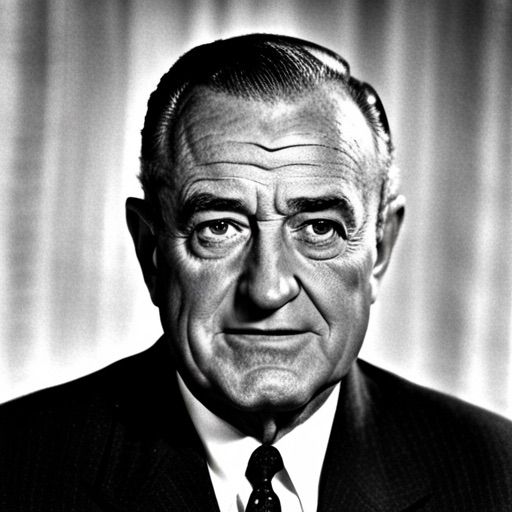
LBJ: The Complex and Controversial President Who Changed America Forever
Meet Lyndon Baines Johnson, the 36th President of the United States, famously known as LBJ. Born in the heart of Texas in 1908, he grew up in a small agricultural community and worked as a teacher before pursuing his passion for politics. Johnson’s political career started as a member of the House of Representatives and he later served as a Senator before becoming Vice President under John F. Kennedy.
After JFK’s assassination in 1963, Johnson took on the mantle of the President and continued many of Kennedy’s policies. However, it was his bold domestic agenda, “The Great Society”, that set him apart. Johnson aimed to reduce poverty, provide education, and improve healthcare through a range of social welfare programs. His most notable accomplishments were the Civil Rights Act of 1964, which outlawed discrimination based on race, religion, sex, color, or national origin, and the Voting Rights Act of 1965, which removed barriers to voting for African Americans. He also launched the War on Poverty, which included initiatives like Head Start and Medicare.
Nevertheless, Johnson’s presidency was not without controversy. His escalation of the Vietnam War, which led to protests and divisions in the country, was met with criticism. He also faced backlash for his handling of civil unrest and the use of government surveillance and wiretapping. Despite these challenges, Johnson was an exceptional politician who succeeded in passing significant legislation and introduced important changes in American society.
Post-presidency, Johnson retired to his beloved ranch in Texas, where he continued to engage in politics and philanthropy until his passing in 1973. Despite a mixed legacy, LBJ will always be remembered as a transformative President who made remarkable strides in the fight for civil rights and the war on poverty.
Related Posts
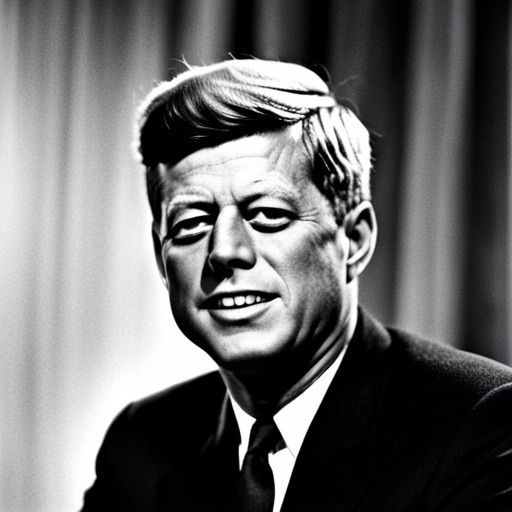
JFK: The Charismatic Leader Who Captivated a Nation and Inspired a Generation

John F. Kennedy, or JFK as we all know him, was a true American icon. He made history as the 35th President of the United States, serving the nation from January 1961 until his tragic assassination in November 1963. Born in Brookline, Massachusetts in 1917, JFK was a man of many firsts. He was the youngest person ever elected to the presidency, taking office at the tender age of 43.
But JFK’s remarkable achievements didn’t start with his political career. Before becoming a leader of the free world, he was a Navy serviceman, who showed great bravery during World War II and earned numerous medals for his valor. After his military service, JFK began his political journey, serving first in the U.S. House of Representatives, then as a Senator, before running for president in 1960.
JFK’s presidency was marked by numerous challenges, including the infamous Bay of Pigs invasion and the Cuban Missile Crisis. He also played a crucial role in advancing the Civil Rights Movement, making significant strides towards equality for all Americans. But perhaps what JFK is best remembered for is his inspiring call to action, delivered during his inaugural address, where he famously said, “Ask not what your country can do for you, ask what you can do for your country.”
Sadly, JFK’s presidency was cut short when he was assassinated in Dallas, Texas on November 22, 1963. His death was a shock to the nation, and many mourned the loss of a charismatic and forward-thinking leader. Despite his abbreviated time in office, JFK is remembered as one of the most popular and inspiring presidents in U.S. history, whose legacy still lives on today.
Related Posts
From General to President: The Leadership Lessons of Dwight D. Eisenhower

Dwight D. Eisenhower, also known as “Ike,” was a legendary figure in American history, who served as the 34th President of the United States from 1953 to 1961. Born in Denison, Texas, on October 14, 1890, he spent his formative years in Kansas. Before his presidency, Eisenhower had a remarkable military career, graduating from the prestigious United States Military Academy at West Point in 1915. He went on to serve his country in both World Wars, becoming a highly respected and decorated military leader.
Eisenhower’s greatest achievement was his role as the Supreme Commander of the Allied Forces in Europe during World War II. He led the successful D-Day invasion of Normandy, which helped turn the tide of the war in favor of the Allies. He was a strategic mastermind and inspired his troops with his unwavering leadership, earning him the nickname of “The General.”
After the war, Eisenhower continued to serve his country in various roles, including as the Army Chief of Staff and as President of Columbia University. As President of the United States, Eisenhower focused on domestic issues, such as infrastructure, education, and civil rights. His most notable achievement was signing the Federal Aid Highway Act of 1956, which authorized the construction of the interstate highway system, revolutionizing transportation in America. He also championed civil rights and signed the Civil Rights Act of 1957, which marked the first federal civil rights legislation since Reconstruction.
Eisenhower’s foreign policy was characterized by the Cold War and the looming threat of nuclear war. He worked tirelessly to contain the spread of communism, signing the Southeast Asia Treaty Organization (SEATO) to prevent its spread in Asia. He also signed the Eisenhower Doctrine, which authorized the use of military force to protect American interests in the Middle East.
After his presidency, Eisenhower retired to his farm in Gettysburg, Pennsylvania, where he enjoyed a quiet life. He passed away on March 28, 1969, at the age of 78. Eisenhower is remembered as a beloved president who was a true leader during World War II, a tireless advocate for infrastructure and civil rights, and a dedicated defender of American interests during the Cold War.
Related Posts
The Legacy of Harry S. Truman: From Humble Beginnings to the Presidency and Beyond

Harry S. Truman, an iconic figure in American history, served as the 33rd President of the United States from 1945 to 1953. Born on May 8, 1884, in Lamar, Missouri, Truman grew up in a farming family, instilling the values of hard work and perseverance that would later shape his presidency.
As President, Truman played a pivotal role in several significant events that shaped the course of history. He oversaw the end of World War II, which culminated in the atomic bombings of Hiroshima and Nagasaki, forcing Japan to surrender and bringing the war to a close. In addition, Truman helped establish the United Nations and the Marshall Plan, aimed at rebuilding Europe after the war.
However, Truman’s presidency was not without challenges. The onset of the Cold War marked a period of heightened tensions between the United States and the Soviet Union, leading to the arms race and the establishment of NATO. Truman’s domestic policies, including the Fair Deal, aimed to expand social welfare programs and civil rights, but faced opposition from conservatives.
Despite his many achievements, Truman faced criticism for his handling of the Korean War and the controversial firing of General Douglas MacArthur. His approval ratings were low when he left office in 1953, but his legacy has since been reevaluated. Truman is now widely regarded as a decisive and effective leader during a critical time in American history, who paved the way for future leaders to navigate the complexities of global politics.