Category: Religion

Samigina (Gamigin): The Infernal Marquis Who Speaks with the Dead and Reveals the Forgotten Voices of History

Dave

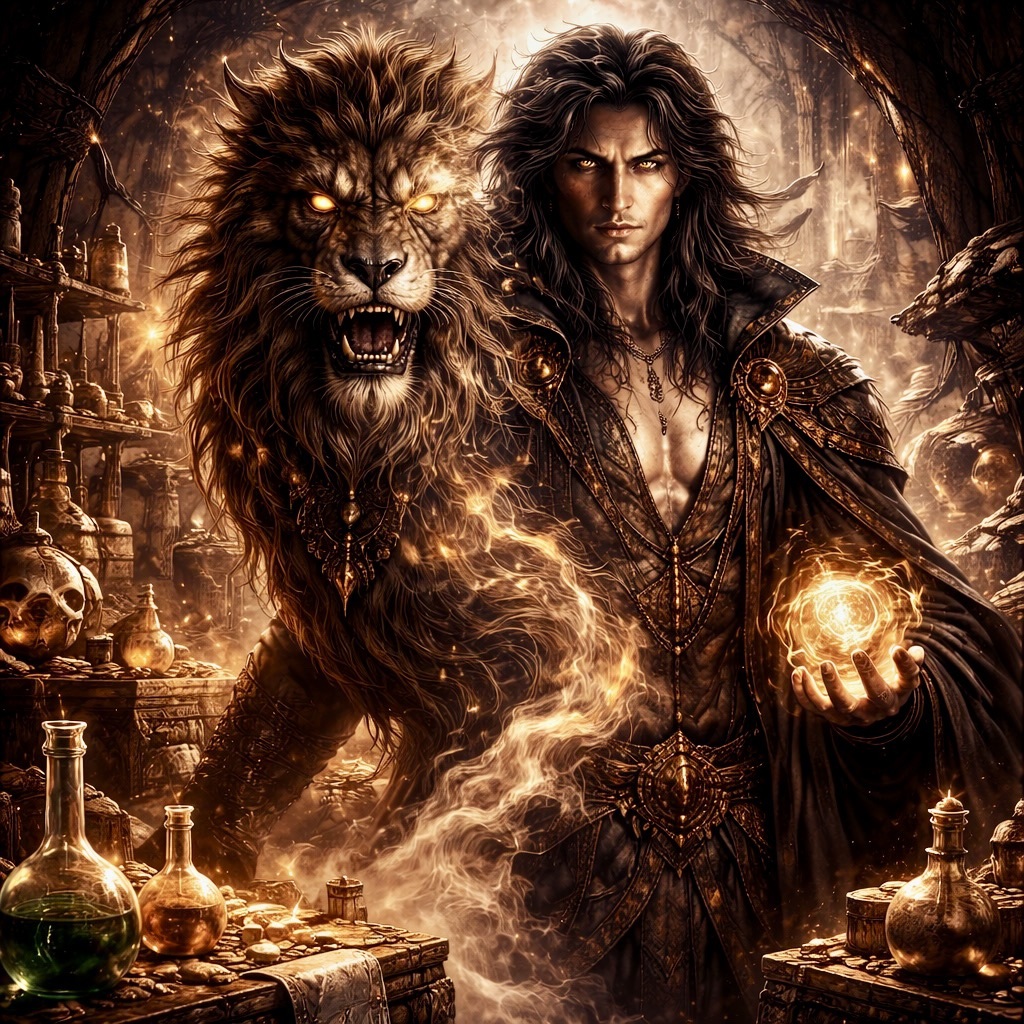
Among the seventy-two spirits recorded in the Ars Goetia, there are demons who command armies, shape desire, reveal hidden knowledge, and manipulate the natural world. Yet Samigina—also known as Gamigin—belongs to a more somber and reflective domain. He is not a figure of chaos or temptation in the traditional sense. Instead, he exists in the quiet space between life and memory, between the living and the dead, between what is known and what has been forgotten.

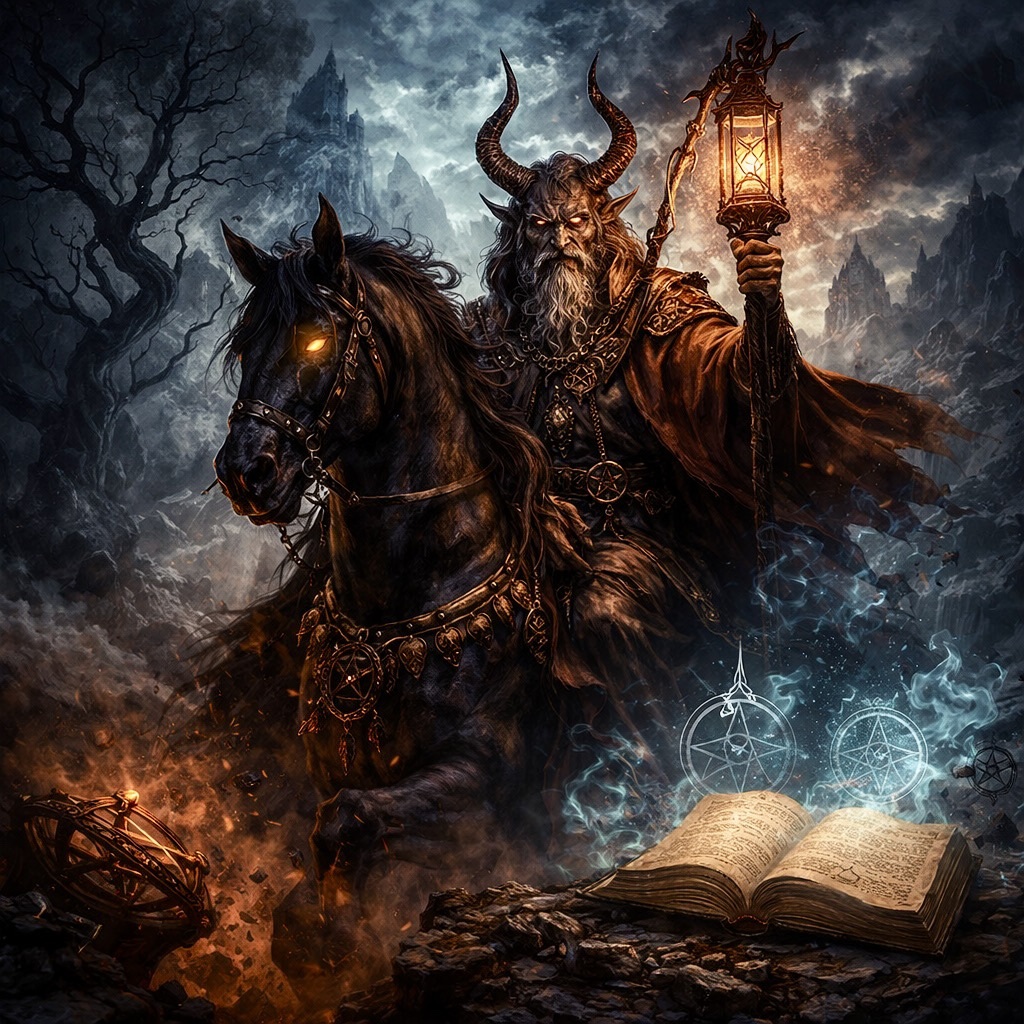
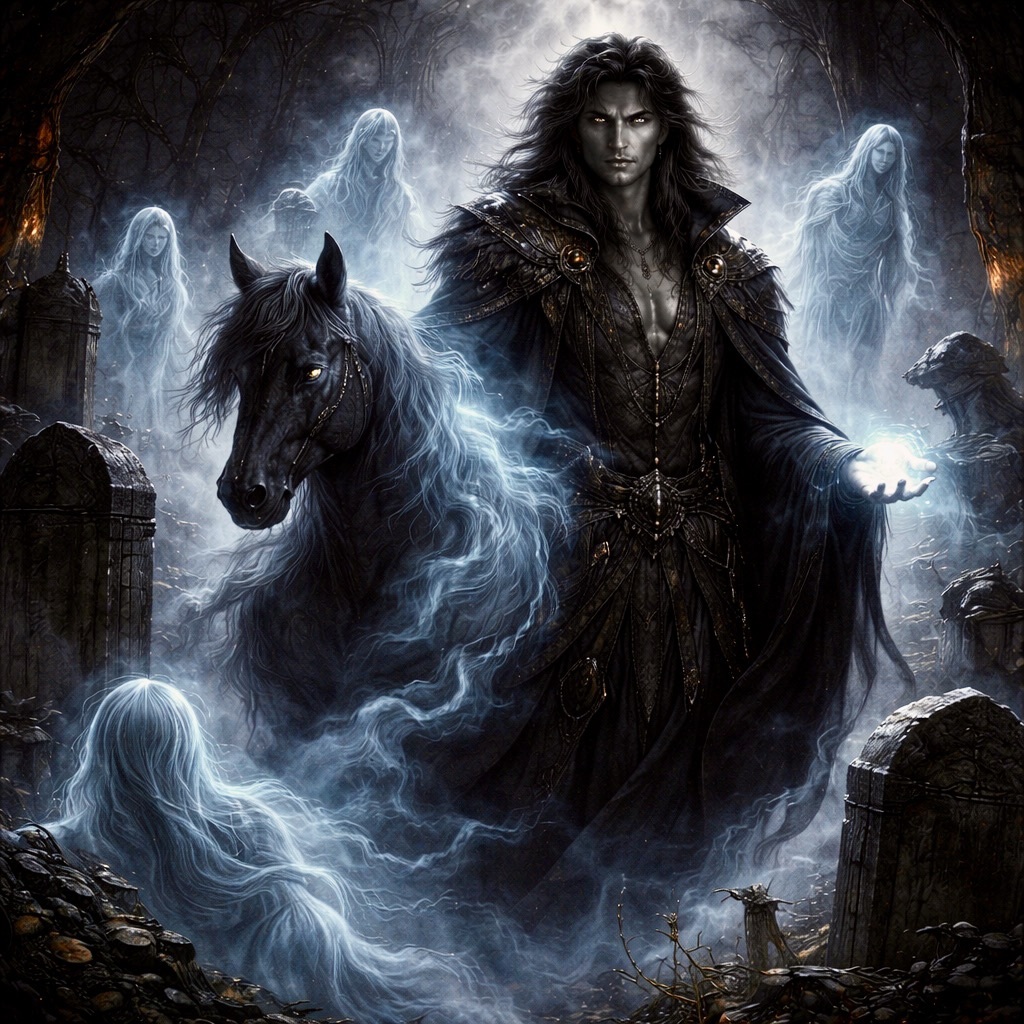
Described as a Marquis of Hell commanding thirty legions of spirits, Samigina is said to appear first in the form of a small horse before taking on a human shape when commanded. This transformation is subtle compared to the dramatic forms of other spirits, but it carries deep symbolic meaning. The horse, historically associated with movement, transition, and passage, suggests a being that travels between worlds. It is not a creature of stillness. It moves, carries, and connects.

When Samigina assumes human form, he becomes a communicator—a figure capable of speaking, explaining, and revealing. This dual nature reflects his core role: bridging the gap between what is gone and what remains.

The grimoires state that Samigina can summon and communicate with the souls of the dead, particularly those who died in sin or without resolution. He can answer questions about them, reveal their experiences, and bring their voices into the present.

This ability places him in a unique position within demonology. While many spirits deal with the present or the future, Samigina is deeply tied to the past—not just as a sequence of events, but as a collection of lived experiences, memories, and unresolved stories.

To understand the significance of this, we need to consider how humans relate to the past.

History is often treated as a series of facts—dates, events, and outcomes. But behind those facts are individuals, each with their own perspectives, emotions, and motivations. The past is not just what happened; it is how it was experienced.

Much of that experience is lost.

Records fade, stories are simplified, and details disappear over time. What remains is often incomplete—a fragmented version of reality.

Samigina represents the desire to recover those lost voices.

He embodies the idea that the past is not silent, that it still holds meaning, and that understanding it requires more than surface-level knowledge. It requires listening.

The imagery of spirits surrounding him reinforces this idea. These are not abstract entities; they are remnants of lives once lived. Each carries a story, a perspective, a truth that may differ from what is recorded or remembered.

Samigina does not create these voices. He reveals them.

This makes him one of the most introspective figures in demonology. His power is not about control, but about access—to memory, to history, to the unseen layers of human experience.

The Renaissance context in which the grimoires were compiled adds depth to this interpretation. During this period, there was a renewed interest in history, classical texts, and the recovery of lost knowledge. Scholars sought to understand the past not just as a series of events, but as a foundation for the present.

At the same time, beliefs about the afterlife and the nature of the soul were deeply ingrained in society. The idea that the dead could communicate with the living was not entirely foreign. It existed in religious traditions, folklore, and philosophical speculation.

Samigina’s role reflects this intersection of curiosity and belief. He represents the possibility that the past is not entirely inaccessible—that with the right approach, it can be understood more fully.

From a psychological perspective, Samigina can be interpreted as an archetype of memory and reflection. He embodies the process of revisiting past experiences, understanding them, and integrating them into present awareness.

This process is central to human cognition. Memory shapes identity. It influences decisions, behaviors, and perceptions. Understanding the past—whether personal or collective—is essential for growth.

Yet memory is not perfect. It is selective, influenced by emotion and perspective. People remember events differently, often emphasizing certain details while overlooking others.

Samigina’s mythology suggests a form of memory that is complete—unfiltered by bias or distortion.

This idea is both appealing and unsettling.

On one hand, it offers clarity. On the other, it removes the protective layers that often soften difficult truths.

Consider how people respond when they revisit past experiences with new understanding. A situation that once seemed straightforward may reveal hidden complexities. Actions that were misunderstood may take on new meaning.

This process can lead to healing, but it can also be challenging.

Samigina represents that moment of revelation.

He does not change the past. He reveals it.

The fact that he communicates specifically with souls who died in sin or without resolution adds another dimension. These are not peaceful or complete narratives. They are unfinished stories—experiences that did not reach a natural conclusion.

This focus suggests that Samigina’s role is not just about remembering, but about resolving.

Unresolved experiences often linger, both in individuals and in societies. Conflicts, regrets, and unanswered questions can persist across generations, influencing behavior and perception.

By bringing these experiences into the present, Samigina allows them to be addressed.

This aligns with modern therapeutic practices, where individuals revisit past experiences to understand and resolve them. By examining what happened and why, people can gain insight and move forward.

Samigina’s ability to summon voices from the past mirrors this process on a larger scale.

He provides access to perspectives that might otherwise remain hidden.

The transformation from horse to human also reflects this process. The horse, as a symbol of movement, represents the passage through time—the journey from past to present. The human form represents understanding—the ability to interpret and articulate what has been encountered.

Together, they form a complete cycle: movement and comprehension.

This cycle is central to learning. Experience alone is not enough. It must be understood, contextualized, and integrated.

Samigina embodies both stages.

His presence in demonology serves as a reminder that the past is not static. It continues to influence the present, shaping decisions and outcomes. Understanding it requires effort, attention, and a willingness to confront complexity.

In literature and storytelling, characters who interact with the past often undergo significant transformation. They gain insight, confront hidden truths, and emerge with a deeper understanding of themselves and their world.

Samigina plays a similar role.

He is not a force of change in the traditional sense. He does not alter reality directly. Instead, he changes perception.

And through that change, everything else follows.

The graveyard or ruin imagery often associated with him reinforces this idea. These are places where time is visible—where the past is physically present in the form of structures, artifacts, and remains.

They are spaces of reflection.

Samigina exists within these spaces, not as a figure of fear, but as a guide.

He does not demand attention. He invites it.

In modern life, the pace of change often leaves little room for reflection. People move quickly from one experience to the next, rarely pausing to examine what has come before.

Yet without reflection, understanding remains incomplete.

Samigina’s mythology highlights the importance of this process. It suggests that listening—to the past, to memory, to hidden voices—is essential for clarity.

This does not mean dwelling endlessly on what has already happened. It means acknowledging it, understanding it, and allowing it to inform the present.

In the end, Samigina stands as a symbol of connection—between past and present, between memory and understanding, between what is known and what has been forgotten.

He is not a figure of chaos or destruction, but of quiet revelation.

And in the stillness where memory surfaces, where forgotten voices begin to speak again, where the past reveals its hidden layers—that is where Samigina resides.

Not as a force that changes what was, but as one who ensures it is finally heard.

Related Posts

Marbas: The Infernal President of Transformation, Healing, and the Hidden Mechanics of the Human Body

Dave

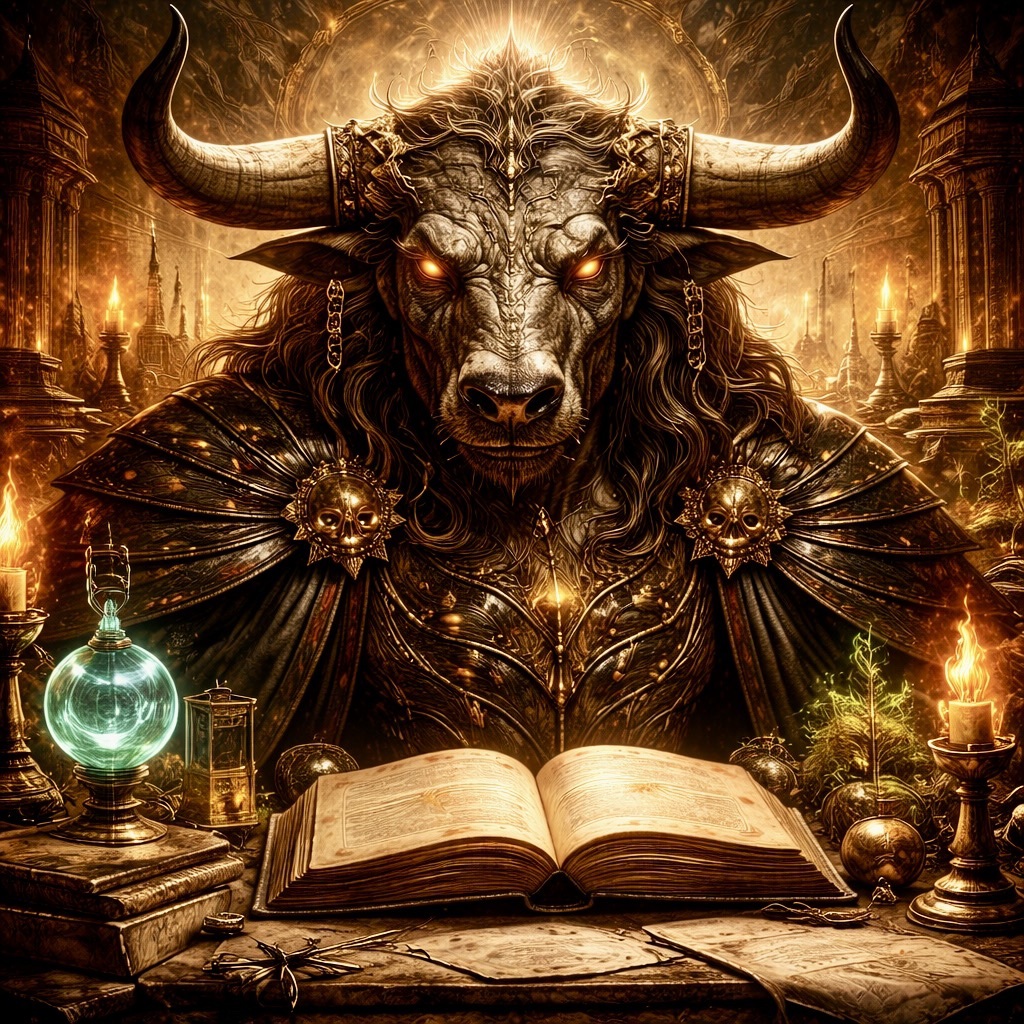
Among the seventy-two spirits cataloged within the Ars Goetia, Marbas stands as one of the most fascinating and paradoxical figures in the entire infernal hierarchy. Unlike many demons associated with deception, destruction, or temptation, Marbas occupies a domain that feels almost unsettlingly constructive. He is described as a President of Hell commanding thirty-six legions of spirits, and his powers revolve around transformation, healing, and knowledge of the human body—domains that sit at the intersection of science, medicine, and mystery.

At first glance, this combination seems contradictory. How can a demon—a figure traditionally associated with chaos and corruption—also be a healer and a revealer of knowledge? Yet this contradiction is precisely what makes Marbas so compelling. He does not fit neatly into categories of good or evil. Instead, he exists in the space where knowledge becomes power, and power becomes transformation.

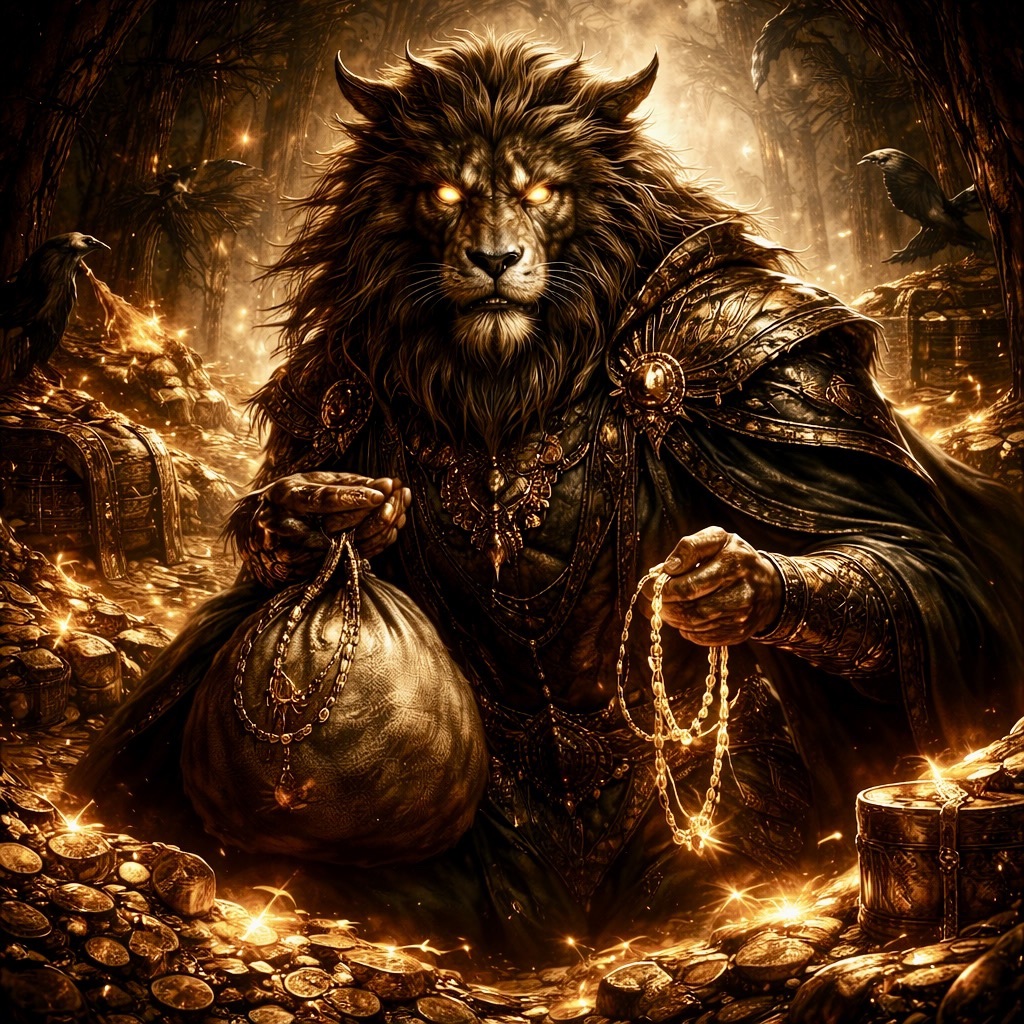
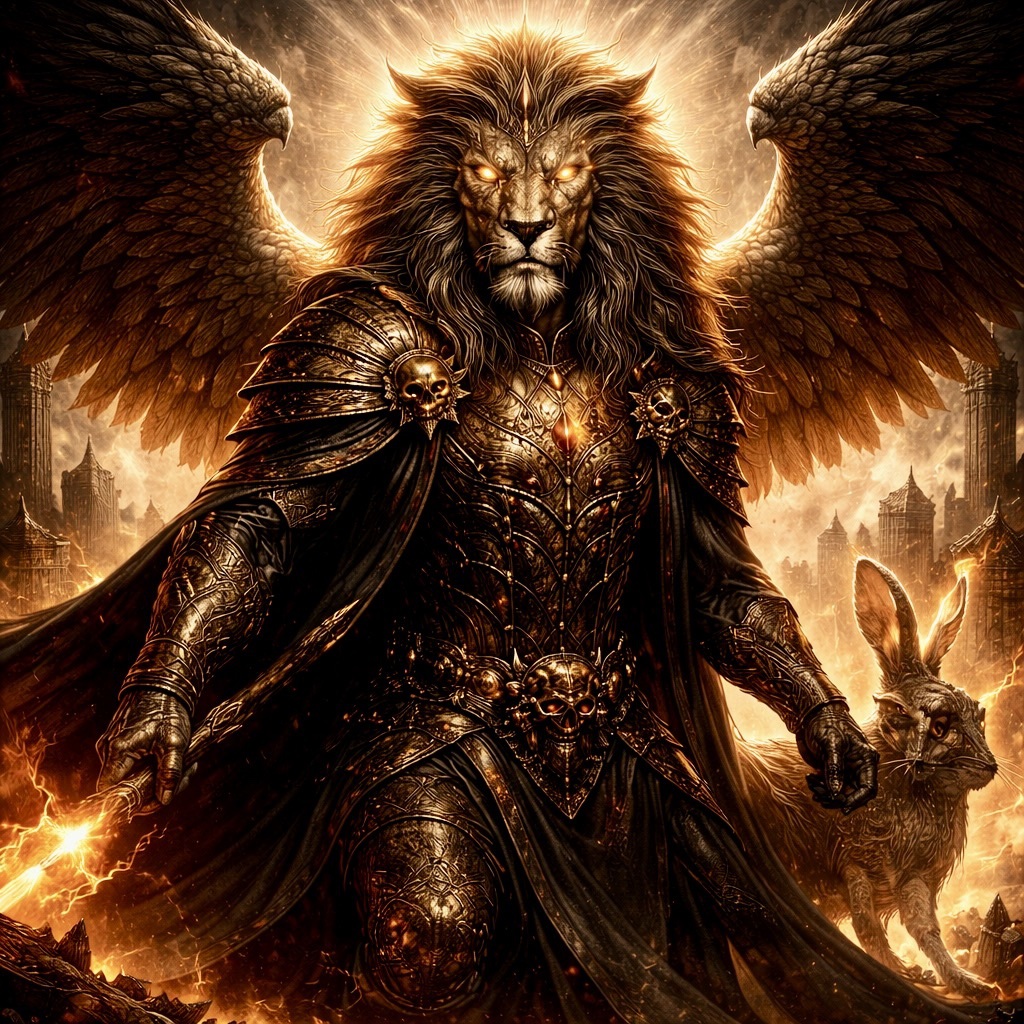
Marbas is said to appear initially as a great lion. This form is significant, not only for its symbolic weight but for what it represents in relation to his abilities. The lion has long been a symbol of strength, authority, and primal force. It is a creature that commands attention, embodying both power and instinct.

But Marbas does not remain in this form. When commanded, he transforms into a human figure.

This transformation is central to his identity.

It represents the transition from raw, instinctive force into structured understanding. The lion is power without refinement. The human is power shaped by intellect. Marbas embodies both states, suggesting that transformation—whether physical, intellectual, or emotional—is a process that moves between these extremes.

His ability to change form is mirrored in his broader domain. Marbas is said to answer questions truthfully, reveal hidden knowledge, cause or cure diseases, and alter the shape of objects or beings. In essence, he governs change.

To understand the significance of this, we need to consider how transformation has been viewed throughout history.

In ancient and medieval thought, transformation was often seen as both miraculous and dangerous. Alchemists sought to transform base metals into gold, but their work was not merely about material change. It was also about spiritual transformation—the idea that understanding the hidden principles of the world could lead to personal enlightenment.

Similarly, medicine in the Renaissance period was deeply intertwined with ideas of balance and transformation. The human body was thought to be governed by humors—fluids that needed to be balanced to maintain health. Disease was seen as a disruption of this balance, and healing involved restoring it.

Marbas’s ability to both cause and cure illness reflects this dual understanding. He does not simply heal. He controls the process itself.

This duality is crucial.

Healing and harm are not entirely separate processes. They are opposite ends of the same spectrum. Understanding how to cure a disease requires understanding how it functions. Knowledge of the body includes knowledge of both its vulnerabilities and its resilience.

Marbas represents that complete understanding.

From a modern perspective, this aligns with how we view medical science. Researchers study diseases not only to prevent them but to understand their mechanisms. Treatments are developed by examining how systems fail and how they can be restored.

Marbas embodies this investigative process—the drive to understand the inner workings of the body and to use that understanding to effect change.

His association with anatomy and hidden knowledge of the human form is particularly striking. The grimoires suggest that he can reveal secrets about the body, including how it functions and how it can be altered.

In the Renaissance, anatomical study was both groundbreaking and controversial. Dissection of human bodies was not widely accepted, yet it provided critical insights into physiology. Scholars like Andreas Vesalius began to challenge long-held assumptions about the body, replacing speculation with observation.

This shift from belief to evidence marked a turning point in scientific history.

Marbas’s mythology reflects this transition. He represents knowledge that is gained through exploration and understanding rather than blind acceptance.

The alchemical imagery often associated with him reinforces this idea. Alchemy was not just about turning lead into gold. It was about uncovering hidden principles—understanding how transformation occurs at a fundamental level.

Marbas operates within that same framework. He does not merely change things; he understands how change works.

The lion-to-human transformation can also be interpreted psychologically. It mirrors the human capacity for growth and self-awareness. People are not static. They change over time, influenced by experience, knowledge, and introspection.

At times, individuals act on instinct—reacting quickly, driven by emotion. At other times, they act with deliberation—considering consequences, analyzing situations, and making informed decisions.

Marbas embodies both states. He is the instinctive and the rational, the force and the understanding.

This duality is essential for transformation. Growth requires both awareness and action. It requires recognizing patterns and making changes based on that recognition.

Marbas represents that process.

His ability to answer questions truthfully places him alongside other knowledge-bearing spirits like Gusion and Amon. However, while those figures focus on time and perception, Marbas focuses on structure—on how things are built and how they function.

He is less concerned with when something will happen and more concerned with how it works.

This distinction is important.

Understanding time provides context. Understanding structure provides control.

Marbas offers the latter.

In modern terms, he can be seen as an archetype of scientific inquiry. He represents the desire to understand systems at a fundamental level and to use that understanding to create change.

This archetype appears across disciplines. Engineers study structures to design better systems. Biologists examine organisms to understand life processes. Psychologists analyze behavior to understand the mind.

In each case, the goal is the same: to uncover hidden mechanisms and apply that knowledge effectively.

Marbas embodies this goal in its most complete form.

His association with both healing and harm also reflects the ethical complexity of knowledge. Scientific advancements can be used for beneficial purposes or harmful ones. The same understanding that leads to medical breakthroughs can also be used to develop destructive technologies.

Marbas does not dictate how knowledge is used. He provides it.

This neutrality is a recurring theme in demonology. Knowledge is not inherently moral. It is the application that determines its impact.

The laboratory imagery often associated with Marbas—filled with tools, diagrams, and experiments—captures this idea. It is a place of discovery, but also of risk. Experiments can succeed or fail. Discoveries can lead to progress or unintended consequences.

Marbas stands at the center of that environment, representing the process of exploration itself.

From a psychological standpoint, he also represents self-transformation. Understanding one’s own patterns—habits, behaviors, and thought processes—can lead to personal growth. Recognizing what needs to change is the first step toward change.

Marbas embodies that recognition.

He reveals what is hidden, not only in the external world but within the individual.

This makes him one of the most introspective figures in demonology. While others influence external events, Marbas focuses on internal systems.

The body, the mind, the structure of reality itself—these are his domains.

His presence suggests that transformation is not random. It follows patterns. It can be understood, predicted, and guided.

And yet, it remains complex.

The wheel-like movement seen in other spirits like Buer reflects cycles. Marbas, by contrast, reflects mechanisms—the gears within those cycles, the processes that drive change.

In the end, Marbas stands as a symbol of transformation in its most complete form. He is not merely a changer of shapes, but a revealer of how change occurs.

He represents the pursuit of understanding that leads to control—not over others, but over systems.

And in a world where change is constant, where systems evolve and adapt, that understanding is one of the most powerful tools available.

Somewhere between instinct and intellect, between chaos and structure, between illness and healing—that is where Marbas exists.

Not as a force of destruction, but as something far more precise.

The one who knows how things work.

Related Posts

Valefor: The Infernal Duke of Temptation Who Rewards Loyalty, Commands Thieves, and Tests the Boundaries of Trust

Dave

Among the seventy-two spirits described in the Ars Goetia, Valefor occupies a particularly intriguing position—not because of overwhelming power or intellectual dominance, but because of the subtle and deeply human nature of his domain. He is not a king commanding vast armies like Paimon, nor a philosopher like Buer, nor a reconciler of truth like Amon. Instead, Valefor exists in a space far more personal and morally complex: the realm of temptation, loyalty, and trust.

Described as a Duke of Hell commanding ten legions of spirits, Valefor is often depicted as having the head of a lion or a lion-like face upon a human body. This combination of forms is immediately symbolic. The lion has long represented strength, courage, and authority, while the human body suggests intellect, intention, and choice. Together, they create a figure that is both instinctive and deliberate—a being that understands power, but chooses how to apply it.

Unlike many other demons, Valefor’s influence is not primarily external. He does not reshape the environment or command natural forces. Instead, he operates within human relationships and decisions, particularly those involving trust.

The grimoires state that Valefor tempts people to steal, and that he is a patron of thieves. At first glance, this might seem straightforward—a demon associated with crime and deception. But the deeper symbolism reveals something far more nuanced.

Valefor does not simply cause theft. He encourages it in a specific way: through trust.

He is said to make those he befriends good thieves, but also loyal companions—at least for a time. This detail is crucial. Valefor’s influence is not about chaotic wrongdoing. It is about the tension between loyalty and betrayal, between trust and exploitation.

To understand this, we need to look at the nature of trust itself.

Trust is one of the foundational elements of human society. It allows people to cooperate, form relationships, and build systems that rely on mutual understanding. Without trust, even the simplest interactions become difficult.

Yet trust also creates vulnerability. To trust someone is to give them the opportunity to betray you.

Valefor exists precisely in that space.

He represents the moment when trust is tested—when loyalty becomes conditional, when temptation arises, and when individuals must decide whether to honor their commitments or pursue personal gain.

The association with theft is symbolic of this decision. Theft, in its simplest form, is a violation of trust. It involves taking something that does not belong to you, often from someone who did not expect to be wronged.

But theft is not always driven purely by greed. It can emerge from desperation, opportunity, or rationalization. People justify their actions in various ways, convincing themselves that the consequences are acceptable or that the act is deserved.

Valefor embodies that rationalization.

He does not force people to steal. He makes it seem reasonable.

This subtlety is what makes his mythology so compelling. Unlike demons that represent overt destruction or chaos, Valefor represents internal conflict—the quiet negotiation between right and wrong, between loyalty and self-interest.

The lion imagery reinforces this idea. Lions are powerful, but they are also social animals, living within structured groups known as prides. Within these groups, loyalty and hierarchy are essential. Each member has a role, and cooperation is necessary for survival.

By giving Valefor a lion’s head, the grimoires suggest that he understands these dynamics. He knows how trust operates within groups. And more importantly, he knows how it can be broken.

From a psychological perspective, Valefor can be seen as an archetype of temptation and moral ambiguity. He represents the voice that justifies questionable decisions, the reasoning that makes unethical actions appear acceptable.

This voice is not external. It exists within every individual.

People often face situations where the boundaries of right and wrong are not clear. A small lie, a minor shortcut, an opportunity to gain something without being noticed—these moments test integrity.

Valefor is present in those moments.

He does not demand action. He suggests it.

The Renaissance context in which the grimoires were written adds another layer to this interpretation. During this period, trade, commerce, and social mobility were expanding rapidly. Wealth was becoming more accessible, but also more unevenly distributed.

Opportunities for gain—both legitimate and illegitimate—were increasing. At the same time, systems of trust were becoming more complex. Contracts, partnerships, and financial arrangements required individuals to rely on one another in new ways.

In such an environment, the temptation to exploit trust would have been a significant concern.

Valefor’s mythology reflects this societal shift. He represents the risks associated with trust in an increasingly interconnected world.

The idea that he can make someone a “good thief” is also worth examining. Skill in theft requires more than just intent. It involves planning, observation, and understanding human behavior. A successful thief must anticipate reactions, identify vulnerabilities, and act with precision.

These are cognitive skills—forms of intelligence.

Valefor, therefore, is not merely associated with wrongdoing. He is associated with the application of intelligence toward questionable ends.

This distinction is important because it highlights a broader theme in demonology: the neutrality of ability.

Knowledge, skill, and intelligence are not inherently good or evil. They are tools. How they are used determines their impact.

Valefor represents the misuse of those tools—the application of understanding in ways that undermine trust.

Yet the grimoires also suggest that those who follow Valefor may remain loyal to each other. This introduces an interesting paradox. Even within systems of deception, trust can exist.

Groups engaged in wrongdoing often rely heavily on internal loyalty. They must trust each other precisely because they operate outside conventional systems. This creates a complex dynamic where trust and betrayal coexist.

Valefor embodies this paradox.

He fosters loyalty within a context that undermines trust more broadly.

From a modern perspective, this dynamic can be seen in various contexts—from criminal organizations to competitive business environments. Individuals may form strong bonds within their group while simultaneously exploiting others.

This duality reflects the complexity of human behavior. People are capable of both cooperation and competition, loyalty and betrayal.

Valefor exists at the intersection of these tendencies.

The idea that he commands ten legions of spirits suggests that his influence is not isolated. It extends across many situations and individuals. Temptation is not rare. It is constant.

Every day, people face decisions that test their integrity. Most are small, almost insignificant on their own. But collectively, they shape behavior and character.

Valefor’s presence in demonology serves as a reminder of this ongoing process.

He is not a singular event. He is a pattern.

In literature and storytelling, characters who embody temptation often play pivotal roles. They do not force the protagonist into action, but they present choices. They create scenarios where decisions must be made.

Valefor fits this role perfectly. He is not the villain in the traditional sense. He is the catalyst—the figure who introduces the possibility of deviation from the expected path.

This makes him one of the more psychologically realistic figures in demonology. His influence aligns closely with actual human experience.

People rarely encounter dramatic, clear-cut choices between good and evil. More often, they face subtle decisions with unclear boundaries. The consequences may not be immediate or obvious.

Valefor operates in that uncertainty.

He thrives in ambiguity.

In the end, Valefor stands as a symbol of the fragile nature of trust. He reminds us that loyalty is not guaranteed, that integrity must be maintained consciously, and that temptation is always present.

He does not destroy systems outright. He weakens them from within.

And perhaps that is why his mythology endures.

Because the greatest threats to trust are not always external forces.

Sometimes, they come from within—quietly, persuasively, and just convincingly enough to make us believe that crossing the line might not matter.

That moment—when the line blurs, when justification replaces certainty—that is where Valefor exists.

Not as a force of chaos, but as something far more subtle.

The one who asks, “Why not?”

Related Posts

Amon: The Infernal Marquis Who Sees All Truths, Reconciles Enemies, and Walks Between Past and Future

Dave

Among the seventy-two spirits cataloged within the Ars Goetia, the name Amon carries a peculiar weight—one that feels less theatrical than kings like Paimon and less chaotic than war-bringers like Leraje, yet somehow more unsettling in its precision. Amon is not a demon of spectacle. He is a demon of understanding. Of seeing things as they truly are. Of exposing what was hidden, what is, and what will be.

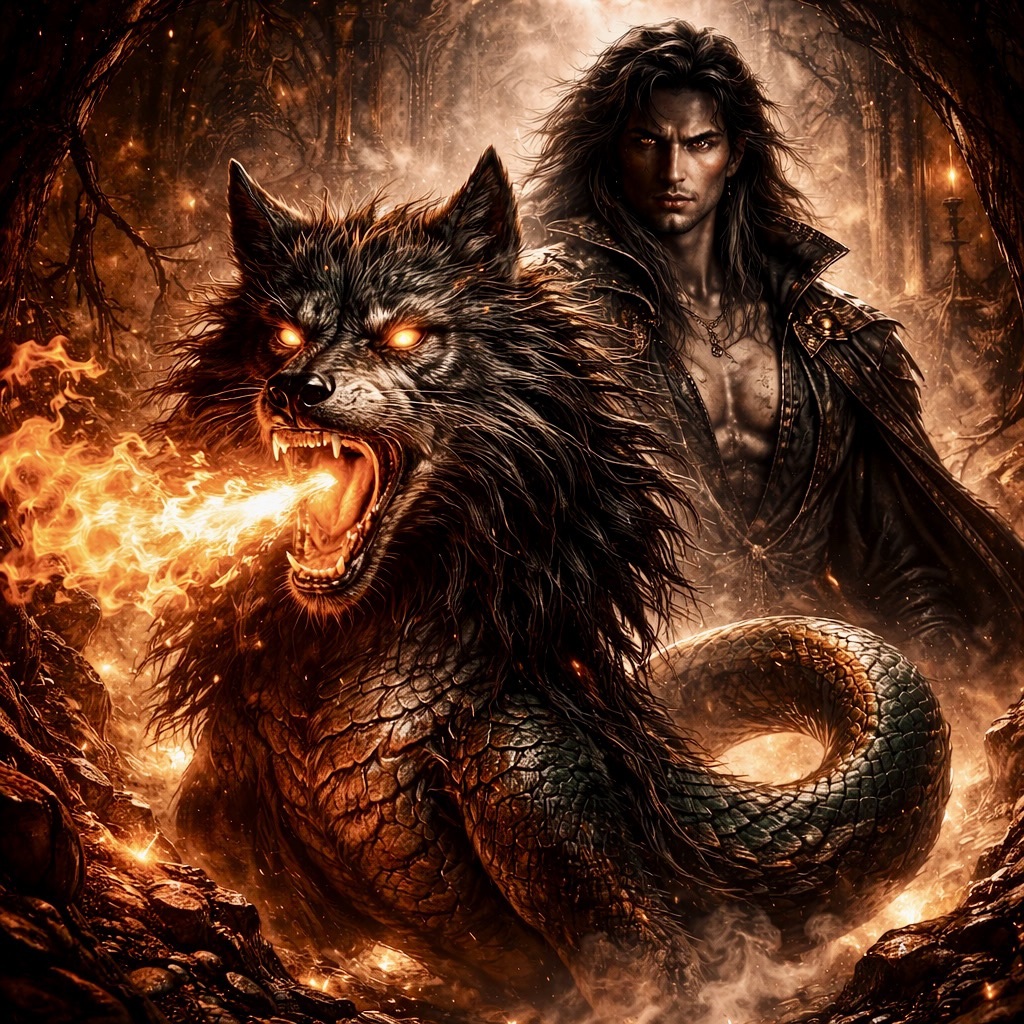
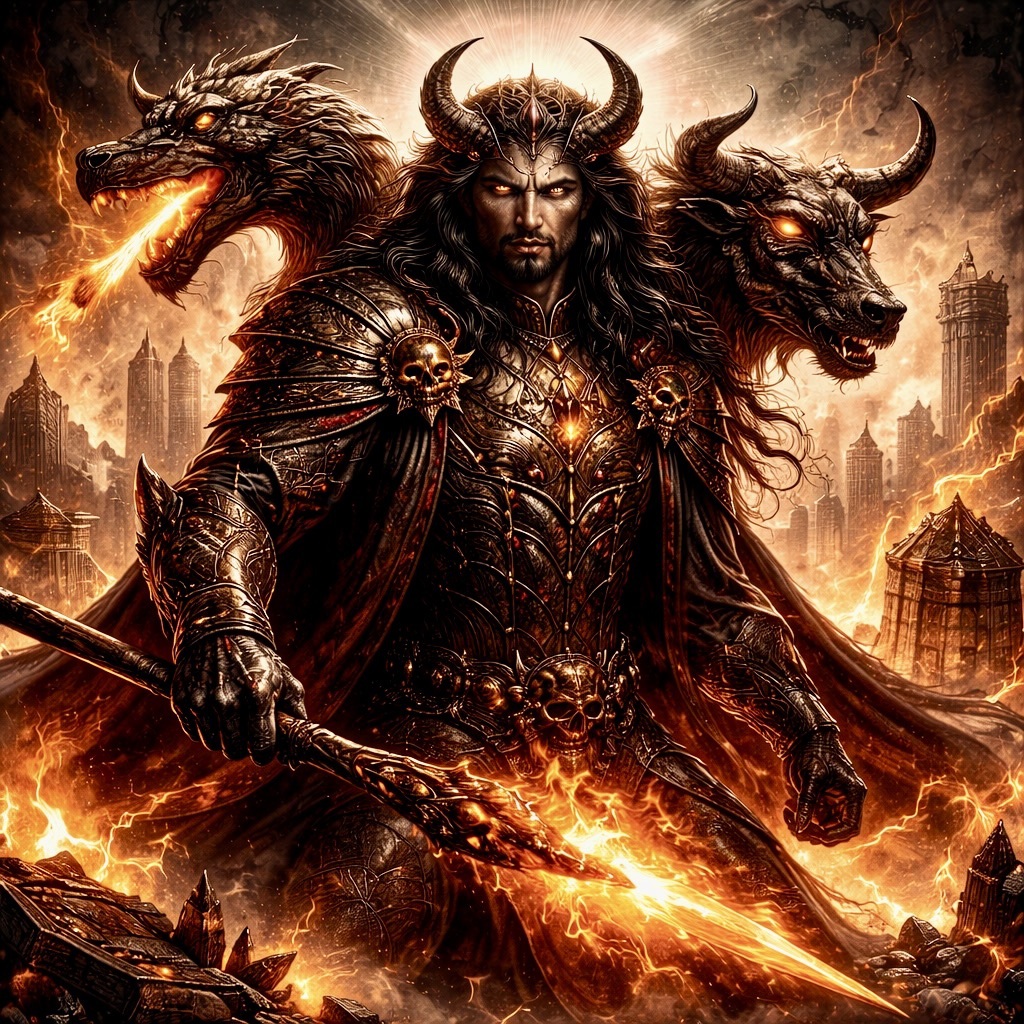
Described as a Marquis of Hell commanding forty legions of spirits, Amon appears first as a strange and fearsome creature—often depicted with the head of a wolf or raven, a serpent’s tail, and the ability to breathe fire. Yet like several spirits within the Goetic hierarchy, he possesses the ability to transform into a human form when commanded. This dual nature—beast and man—sits at the core of his symbolism, representing the divide between instinct and awareness, chaos and comprehension.

At first glance, Amon’s grotesque form seems to align him with destruction or primal force. The wolf evokes predation, instinct, and survival. The serpent tail suggests hidden knowledge and transformation. Fire, of course, has long symbolized both destruction and revelation—burning away what is false to expose what remains. Yet despite this fearsome appearance, Amon’s true domain is not destruction, but clarity.

The grimoires state that Amon can reveal all things past and future, and reconcile friends and foes. This combination of abilities places him in a unique position within demonology. He is both a revealer of truth and a restorer of balance. He does not merely expose reality—he allows it to be understood in a way that resolves conflict.

To understand why this matters, it helps to consider how conflict typically arises. Most disputes—whether between individuals, families, or nations—are not born purely from malice. They emerge from misunderstanding, incomplete information, or differing perspectives. One person sees an action as intentional harm; another sees it as necessity. One side remembers history one way; the other remembers it differently.

Amon exists at the point where these narratives collide.

If all sides could see the full picture—the true sequence of events, the genuine motivations, the hidden context—many conflicts would dissolve. Not all, of course, but many. Misunderstanding is one of the most powerful sources of division.

Amon’s role as a reconciler reflects this truth. He does not force peace. He reveals the conditions that make peace possible.

His connection to both past and future further reinforces this role. To resolve a conflict, one must understand its origin—the past—and anticipate its consequences—the future. Without this perspective, decisions are made blindly, often perpetuating the very problems they seek to solve.

Amon sees both ends of the timeline.

This places him among a rare class of figures in mythology and demonology—those associated with temporal awareness. Like Gusion, he is not bound to the present moment. He perceives continuity. Cause and effect. The chain of events that stretches backward and forward through time.

From a psychological perspective, this ability can be interpreted as a form of deep insight. Humans are capable of understanding patterns—recognizing how past experiences influence present behavior and how current actions shape future outcomes. This capacity is central to learning, decision-making, and growth.

Amon represents that capacity taken to its extreme. He is the mind that sees everything at once—the full arc of a situation, from origin to consequence.

Yet this level of awareness carries its own weight.

Knowing the past means confronting truths that may be uncomfortable. Knowing the future means recognizing outcomes that may be unavoidable. Amon does not offer comforting illusions. He offers clarity.

And clarity can be unsettling.

The raven imagery sometimes associated with Amon adds another dimension to this idea. Ravens have long been symbols of intelligence, observation, and prophecy. In Norse mythology, Odin’s ravens, Huginn and Muninn, traveled the world gathering information. In many cultures, ravens are seen as watchers—creatures that observe from a distance, noticing what others miss.

If Amon takes on a raven-like form, it reinforces his role as an observer. He does not act impulsively. He watches, gathers, understands.

The wolf aspect, on the other hand, connects him to instinct and raw perception. Wolves are highly social animals, capable of complex communication and cooperation within their packs. They are also keen observers, able to read subtle cues in their environment.

By combining wolf, serpent, and raven symbolism, Amon becomes a composite of awareness—instinctive, intellectual, and transformative.

His transformation into a human form is perhaps the most important detail of all. It suggests that this awareness, while appearing alien or monstrous at first, ultimately becomes something recognizable. Understanding, once achieved, feels natural. Obvious, even.

We have all experienced moments like this—when something that once seemed confusing suddenly makes perfect sense. A pattern clicks into place. A misunderstanding is resolved. A hidden truth becomes clear.

In that moment, what once felt chaotic becomes structured.

Amon’s transformation mirrors this process.

The fire he breathes can also be interpreted symbolically. Fire destroys, but it also illuminates. It provides light in darkness, allowing hidden things to be seen. In alchemy, fire is associated with purification—the burning away of impurities to reveal what is essential.

Amon’s fire, then, is not merely destructive. It is revealing. It strips away illusion, leaving only truth behind.

This aligns with his role as a reconciler. To resolve conflict, false narratives must be burned away. Only then can understanding emerge.

In the Renaissance context, where the grimoires were compiled, this idea would have been deeply significant. The period was marked by intense intellectual and religious conflict. Different interpretations of truth led to division, war, and upheaval.

In such an environment, the concept of a being who could reveal absolute truth—and thereby resolve conflict—would have held powerful appeal.

Yet the fact that Amon is categorized as a demon suggests an important caution. Absolute knowledge is not without consequence. It can challenge beliefs, disrupt systems, and force individuals to confront realities they might prefer to ignore.

Amon does not comfort. He clarifies.

From a modern perspective, Amon can be seen as an archetype of understanding and reconciliation. He represents the process of uncovering truth and using that truth to restore balance.

This process is evident in many areas of life. In therapy, individuals explore past experiences to understand present behavior and make better choices for the future. In diplomacy, negotiators examine historical context and future implications to resolve disputes. In science, researchers study patterns to uncover underlying principles.

In each case, the goal is the same: to see clearly.

Amon embodies that goal.

He also reflects the idea that truth is often hidden beneath layers of perception. People do not always see reality as it is. They interpret it through the lens of their experiences, beliefs, and emotions.

Amon cuts through those layers.

This is why his initial form is so unsettling. Truth, when first encountered, can feel alien. It challenges assumptions, disrupts expectations, and forces reevaluation. Only after it is understood does it become familiar.

The reconciliation aspect of his role is particularly important in today’s world. Conflict—whether personal, political, or cultural—often persists because of incomplete understanding. People speak past each other, interpreting the same events in different ways.

Amon’s mythology suggests that resolution requires more than compromise. It requires clarity. A shared understanding of what is true.

This does not mean that all conflicts can be resolved simply by revealing facts. Emotions, values, and interests also play roles. But without a foundation of truth, resolution becomes far more difficult.

Amon provides that foundation.

He does not impose peace. He makes it possible.

In the end, Amon stands as one of the most intellectually grounded figures in demonology. He is not defined by chaos or temptation, but by insight. He represents the moment when confusion gives way to understanding, when conflict begins to dissolve, and when the full scope of a situation becomes visible.

His monstrous form reminds us that truth can be difficult to face. His human form reminds us that it can also be integrated, understood, and used.

And somewhere between those two forms—between instinct and awareness, between past and future—that is where Amon exists.

Not as a force of destruction, but as something far more powerful.

The one who sees everything.

Related Posts

Barbatos: The Infernal Duke Who Speaks with Animals, Reveals Hidden Treasures, and Listens to the Language of the Earth

Dave

Among the seventy-two spirits recorded in the Ars Goetia, there are those who command armies, those who manipulate desire, and those who reveal hidden truths about time and knowledge. Yet Barbatos stands apart in a way that feels quieter, almost grounded—rooted not in grand displays of power, but in something older, deeper, and more intimate. He is a Duke of Hell, commanding thirty legions of spirits, but his domain is not chaos or conquest. Instead, Barbatos governs communication—specifically, the ability to understand the voices of animals, the language of nature, and the hidden things buried beneath the surface of the world.

He is described as appearing when the sun is in Sagittarius, accompanied by the sound of horns and surrounded by four noble kings and their armies. His presence is not silent. It echoes, almost like a hunt beginning at dawn. There is something ancient in that imagery, something that reaches back beyond medieval Europe into a much older relationship between humans and the natural world.

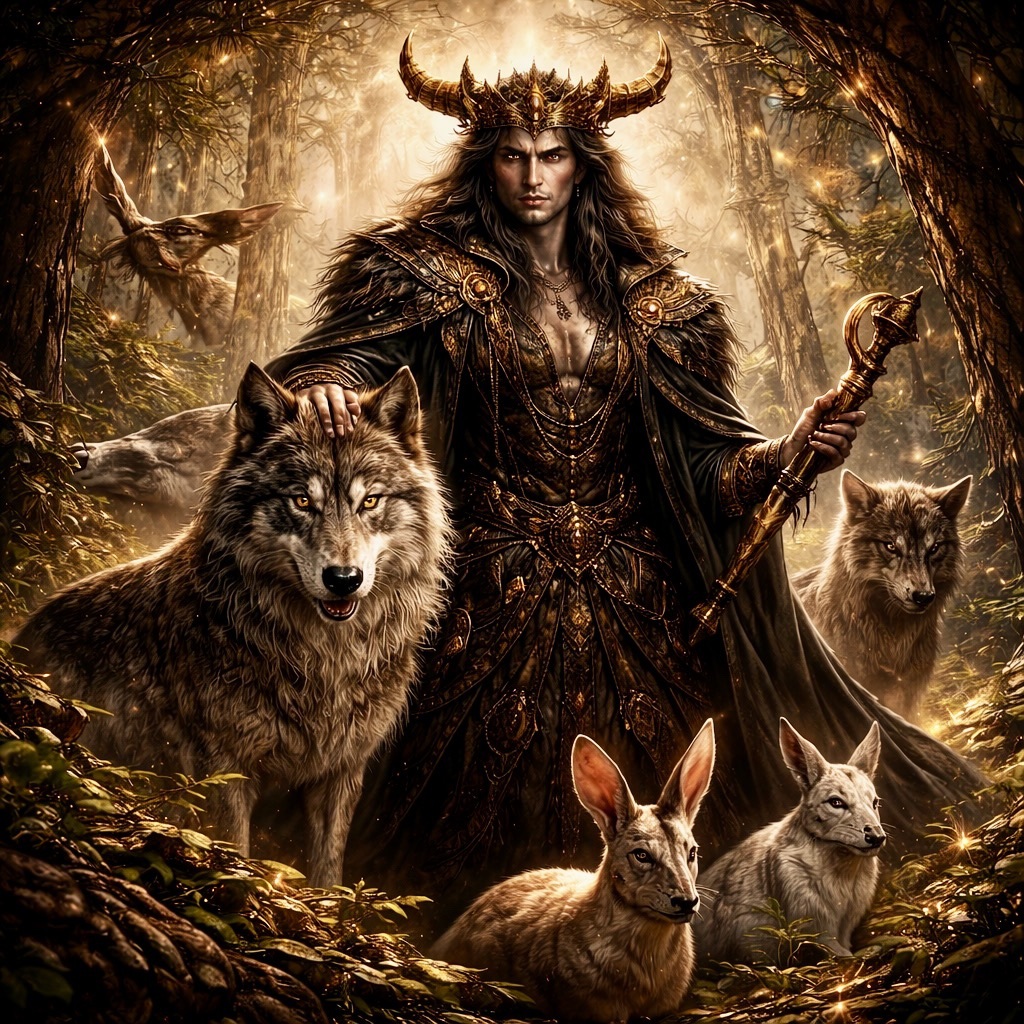
Barbatos is often depicted as a hunter or woodsman, sometimes crowned, sometimes holding a bow or horn. Unlike many demons in the Goetic tradition, his form is not grotesque or monstrous. It is familiar. Human. Almost noble. And that familiarity is part of what makes him so intriguing.

Because Barbatos represents something that humans once understood instinctively, but have largely forgotten.

His most well-known ability is the power to understand and speak with animals. This idea appears across cultures and mythologies—the notion that there was once a time when humans and animals shared a common language, when communication between species was possible. In many traditions, this ability is reserved for shamans, prophets, or beings who exist between worlds.

Barbatos embodies that connection.

To understand why this matters, we need to look at how humans once related to the natural world. Before cities, before industrialization, before the separation of humanity from wilderness, people lived within nature, not apart from it. Survival depended on understanding animal behavior, seasonal patterns, and environmental changes.

Animals were not just resources or background elements. They were part of the same system—participants in a shared existence.

Over time, as societies developed, that connection weakened. Language became more specialized, focused on human interaction. The ability to interpret animal behavior remained, but the sense of shared communication faded.

Barbatos represents that lost connection.

When the grimoires describe him as understanding the voices of animals, it can be interpreted literally within the context of demonology. But symbolically, it suggests something more nuanced—the ability to perceive meaning in the natural world, to recognize patterns and signals that are often overlooked.

Animals communicate constantly, but not through words. They use movement, sound, posture, and behavior. A bird’s call can signal danger. A change in migration patterns can indicate environmental shifts. The way a predator moves can reveal intent.

To “understand” animals is to interpret these signals accurately.

Barbatos, then, is not just a speaker of animal language. He is an observer—someone who sees and understands patterns that others miss.

This ties directly into his second major ability: revealing hidden treasures.

At first, this might seem unrelated. Speaking to animals and finding treasure appear to belong to entirely different domains. But there is a connection.

Hidden things—whether they are physical objects buried underground or patterns hidden within behavior—require perception to uncover. They are not visible to everyone. They must be noticed, interpreted, and understood.

Barbatos reveals what is hidden because he sees differently.

In the Renaissance context, treasure was not always literal gold or jewels. It could refer to knowledge, opportunities, or insights that were not immediately apparent. The idea of “hidden treasure” often carried symbolic meaning—something valuable waiting to be discovered by those who knew how to look.

Barbatos’s ability to reveal such things aligns with his role as a communicator and observer. He understands the language of the world, and through that understanding, he uncovers what others cannot see.

His association with reconciliation is another important aspect of his mythology. The grimoires state that Barbatos can bring friends and rulers into agreement, resolving disputes and restoring harmony.

At first glance, this might seem disconnected from his other abilities. But when viewed through the lens of communication, it becomes clear.

Conflict often arises from miscommunication. People misunderstand each other’s intentions, misinterpret actions, or fail to express themselves clearly. Without accurate understanding, tensions grow.

Barbatos’s ability to interpret and communicate extends beyond animals to humans. He bridges gaps in understanding, allowing individuals to see each other more clearly.

In this way, he becomes a mediator—not through force, but through clarity.

The sound of horns associated with his arrival reinforces this idea. Horns have long been used as signals—announcing events, coordinating movement, or marking transitions. In hunting traditions, horns were used to communicate across distances, guiding participants and signaling important moments.

Barbatos’s arrival with the sound of horns suggests the beginning of awareness—the moment when something hidden becomes known, when attention is drawn to something important.

The presence of four kings accompanying him adds another layer of symbolism. In many traditions, the number four represents stability and structure—four directions, four elements, four seasons. These kings may represent foundational forces, reinforcing Barbatos’s role as a stabilizing influence.

He does not disrupt. He aligns.

From a psychological perspective, Barbatos can be interpreted as an archetype of awareness and connection. He represents the ability to perceive patterns, understand subtle signals, and bridge gaps in communication.

In modern life, this ability is more relevant than ever.

Despite advances in technology and communication, misunderstandings remain common. People communicate through text, tone, and expression, yet meaning is often lost or distorted. Relationships—both personal and professional—can suffer from a lack of clarity.

Barbatos represents the skill of listening—not just hearing words, but understanding intent.

This kind of listening requires attention, patience, and empathy. It involves observing not only what is said, but how it is said, and what is left unsaid.

Similarly, understanding the natural world requires observation. Environmental changes often occur gradually, signaled by subtle shifts in behavior or patterns. Recognizing these signals is essential for sustainability and ecological awareness.

Barbatos’s mythology, though ancient, reflects a deeply modern challenge: the need to reconnect with systems of communication that extend beyond immediate perception.

His role as a Duke commanding thirty legions suggests that his influence is widespread. Communication, after all, touches every aspect of life. It shapes relationships, guides decisions, and influences outcomes.

Without clear communication, even the most well-intentioned actions can lead to conflict.

With it, understanding becomes possible.

Barbatos does not command armies or alter reality directly. He changes perception. And through that change, everything else follows.

The forest imagery often associated with him reinforces this idea. Forests are complex ecosystems, filled with interactions between countless organisms. Every sound, movement, and change carries meaning.

To someone unfamiliar, a forest may seem chaotic. But to someone who understands it, patterns emerge. The forest speaks—just not in words.

Barbatos is the one who listens.

He hears the rustle of leaves, the call of birds, the movement of animals, and understands what they signify. He reads the environment as a language.

In doing so, he reveals not just hidden treasures or secrets, but the structure of the world itself.

In the end, Barbatos stands as one of the most grounded figures in demonology. He does not dominate or deceive. He observes, interprets, and reveals.

He reminds us that understanding is not always about acquiring more information, but about seeing what is already there.

And in a world filled with noise, distraction, and constant activity, that ability—to truly listen, to truly see—may be one of the most powerful skills of all.

Somewhere in the quiet spaces between sounds, in the subtle patterns that go unnoticed, in the language that does not use words—that is where Barbatos resides.

Not as a force of chaos, but as something far more enduring.

The one who understands.

Related Posts

Paimon: The Infernal King of Knowledge, Power, and the Hidden Architecture of Reality

Dave

Among the seventy-two spirits recorded in the Ars Goetia, few names carry the same weight, presence, and strange reverence as Paimon. He is not simply another demon listed in the hierarchy—he is a king, one of the most powerful rulers within the infernal order, commanding vast legions of spirits and surrounded by a court that reflects his immense authority. His presence in the grimoires is not subtle or understated. Like a monarch arriving before a crowd, Paimon is described with ceremony, spectacle, and unmistakable dominance.

In the ancient texts of The Lesser Key of Solomon, Paimon is introduced as a Great King of Hell, obedient to Lucifer, yet commanding an extraordinary number of spirits—often described as legions beyond easy counting. He is said to appear riding a camel, crowned, and accompanied by a procession of spirits that resemble musicians or attendants. Trumpets and strange sounds herald his arrival, announcing his presence long before he is seen.

This imagery alone is enough to set him apart from many other spirits. Where others emerge in shadows or silence, Paimon arrives with deliberate display. His entrance is not just an appearance—it is an event.

That distinction matters, because Paimon’s domain is not chaos or raw force. It is structure, hierarchy, and knowledge. He is a king not merely because of power, but because of control—control over information, understanding, and the systems that shape reality itself.

The camel he rides is one of the most fascinating details in his depiction. In Western demonology, the camel is an unusual and deliberate choice. It is not an animal associated with speed or aggression. Instead, it represents endurance, resilience, and the ability to traverse harsh, unfamiliar terrain. Camels carry travelers across deserts—vast, empty spaces where direction is uncertain and survival requires discipline.

Symbolically, this aligns perfectly with Paimon’s role. He is a guide through intellectual deserts—the vast unknown regions of knowledge where answers are not easily found. He does not rush or charge like a war demon. He moves steadily, deliberately, carrying those who seek understanding across difficult terrain.

The crown he wears reinforces his authority, but it also suggests something more specific: sovereignty over knowledge. Paimon is often described as teaching all arts and sciences, revealing secrets of the earth, the mind, and the universe. He is said to provide knowledge of hidden things, including the nature of the world itself.

This makes him one of the most intellectually significant figures in demonology. While many spirits offer specific abilities—wealth, love, or influence—Paimon offers understanding. He is not limited to a single domain. His influence extends across disciplines, making him a kind of universal teacher.

In the context of the Renaissance, when these grimoires were compiled, this role was particularly important. The period was marked by a surge in intellectual curiosity. Scholars were rediscovering ancient texts, exploring new scientific ideas, and questioning established beliefs. Knowledge was expanding rapidly, but so was uncertainty.

In such a climate, the idea of a being who could reveal hidden truths would have been incredibly appealing. Paimon represented access to knowledge that lay beyond conventional study—insight into the structure of reality itself.

The presence of attendants surrounding him adds another layer to his symbolism. These spirits are often described as musicians or voices, producing sounds that precede his arrival. Music, in many traditions, represents harmony, order, and structure. It reflects patterns—rhythms that repeat and evolve.

Paimon’s association with music suggests that knowledge itself is structured, composed of patterns that can be understood and interpreted. Just as a musician learns to recognize and create harmony, a seeker of knowledge learns to identify patterns within information.

This idea aligns with modern scientific thinking. Much of what we understand about the universe is based on recognizing patterns—mathematical relationships, physical laws, and recurring behaviors. Whether in physics, biology, or psychology, discovery often begins with pattern recognition.

Paimon, in this sense, represents the mind that sees those patterns clearly.

His role as a teacher of arts and sciences also reflects the Renaissance belief that knowledge was interconnected. There was no strict separation between disciplines. Art, mathematics, philosophy, and natural science were all part of a unified pursuit of understanding.

Leonardo da Vinci, for example, studied anatomy, engineering, painting, and physics simultaneously. To him, these fields were not separate—they were different expressions of the same underlying principles.

Paimon embodies this holistic approach. He does not specialize narrowly. He teaches broadly, revealing connections between different areas of knowledge.

Yet there is something unsettling about this as well. Complete knowledge, or even the promise of it, raises questions about limits. How much should be known? Are there boundaries that should not be crossed?

Throughout history, the pursuit of knowledge has often been accompanied by cautionary tales. The story of Prometheus in Greek mythology tells of a figure who stole fire from the gods to give to humanity, only to be punished for his actions. The biblical story of the Tree of Knowledge warns of the consequences of seeking forbidden understanding.

Paimon exists within this tradition. He offers knowledge, but his position within the infernal hierarchy suggests that such knowledge may come at a cost.

This does not necessarily mean the knowledge itself is harmful. Rather, it reflects the idea that understanding changes the individual. Once something is known, it cannot be unknown. Perspectives shift, priorities change, and the world may appear different.

From a psychological perspective, Paimon can be interpreted as an archetype of intellectual expansion. He represents the moment when curiosity leads to discovery, when questions lead to answers that reshape understanding.

This experience is familiar to anyone who has pursued knowledge deeply. A new idea can change the way we see everything. Learning about the vastness of the universe, the complexity of the human brain, or the interconnectedness of ecosystems can fundamentally alter one’s perspective.

Paimon embodies that transformative moment.

He is also associated with the ability to influence others—particularly in matters of understanding and persuasion. The grimoires suggest that he can grant influence over the minds of others, allowing the practitioner to communicate ideas effectively.

This aspect reflects the power of knowledge in social contexts. Understanding is not just about acquiring information; it is also about sharing it. Leaders, teachers, and thinkers shape the world not only through what they know, but through how they convey it.

Throughout history, individuals who possessed deep knowledge and the ability to communicate it effectively have held significant influence. Philosophers, scientists, and political leaders have all used understanding as a tool for shaping society.

Paimon’s influence in this area suggests mastery over both knowledge and communication—the ability to not only understand the world but to articulate that understanding in ways that affect others.

The idea that he must be approached with respect is also important. The grimoires emphasize that Paimon should be treated with dignity and authority, often requiring specific rituals and symbols to ensure proper interaction.

Symbolically, this reflects the relationship between knowledge and discipline. Understanding is not something that can be approached casually. It requires effort, structure, and respect for the complexity of the subject.

This principle remains true today. Scientific research, academic study, and intellectual exploration all require discipline and careful methodology. Without structure, knowledge becomes fragmented and unreliable.

Paimon’s insistence on respect mirrors this requirement. He represents knowledge that demands seriousness.

Another fascinating aspect of Paimon’s mythology is his connection to hidden structures. He is said to reveal secrets of the earth and the universe—insights that go beyond surface-level understanding.

This aligns with the idea that reality itself has layers. What we see is only part of the picture. Beneath observable phenomena lie deeper mechanisms—physical laws, biological processes, and psychological patterns.

The pursuit of these hidden structures is at the heart of science and philosophy. Physicists study the fundamental forces of the universe, biologists explore the mechanisms of life, and psychologists examine the workings of the mind.

Paimon represents the drive to uncover these layers—to move beyond appearances and understand the underlying framework.

In modern terms, he might be seen as the embodiment of deep learning—the kind of understanding that goes beyond memorization into comprehension.

His presence in demonology serves as a reminder that knowledge has always been both sought after and feared. It has the power to illuminate, but also to disrupt. It can empower individuals, but also challenge established systems.

This dual nature is what makes Paimon such a compelling figure. He is not a simple character defined by a single trait. He is complex, representing the intersection of curiosity, power, and transformation.

In the end, Paimon stands as one of the most intellectually rich figures in the entire Goetic tradition. He is a king not because of brute force, but because of mastery—mastery over knowledge, structure, and understanding.

His camel moves steadily across the vast desert of the unknown, carrying those who seek answers into regions where certainty is rare and discovery is constant. His crown reflects authority, but his true power lies not in command, but in revelation.

And in the quiet moment when a question becomes an answer, when confusion becomes clarity, and when the hidden structure of something finally makes sense—that is where Paimon’s presence is most clearly felt.

Related Posts

Buer: The Infernal President of Healing, Philosophy, and the Hidden Science of the Natural World

Dave

Among the seventy-two spirits recorded in the Ars Goetia, there are those who terrify, those who deceive, and those who command immense destructive power. And then there is Buer—a figure so unusual that he almost seems out of place among the infernal ranks. While many demons are associated with chaos or temptation, Buer is something else entirely. He is a teacher, a healer, and a guide to understanding the natural world. His presence within demonology reveals something deeply fascinating about how earlier societies understood knowledge, medicine, and the boundary between science and the supernatural.

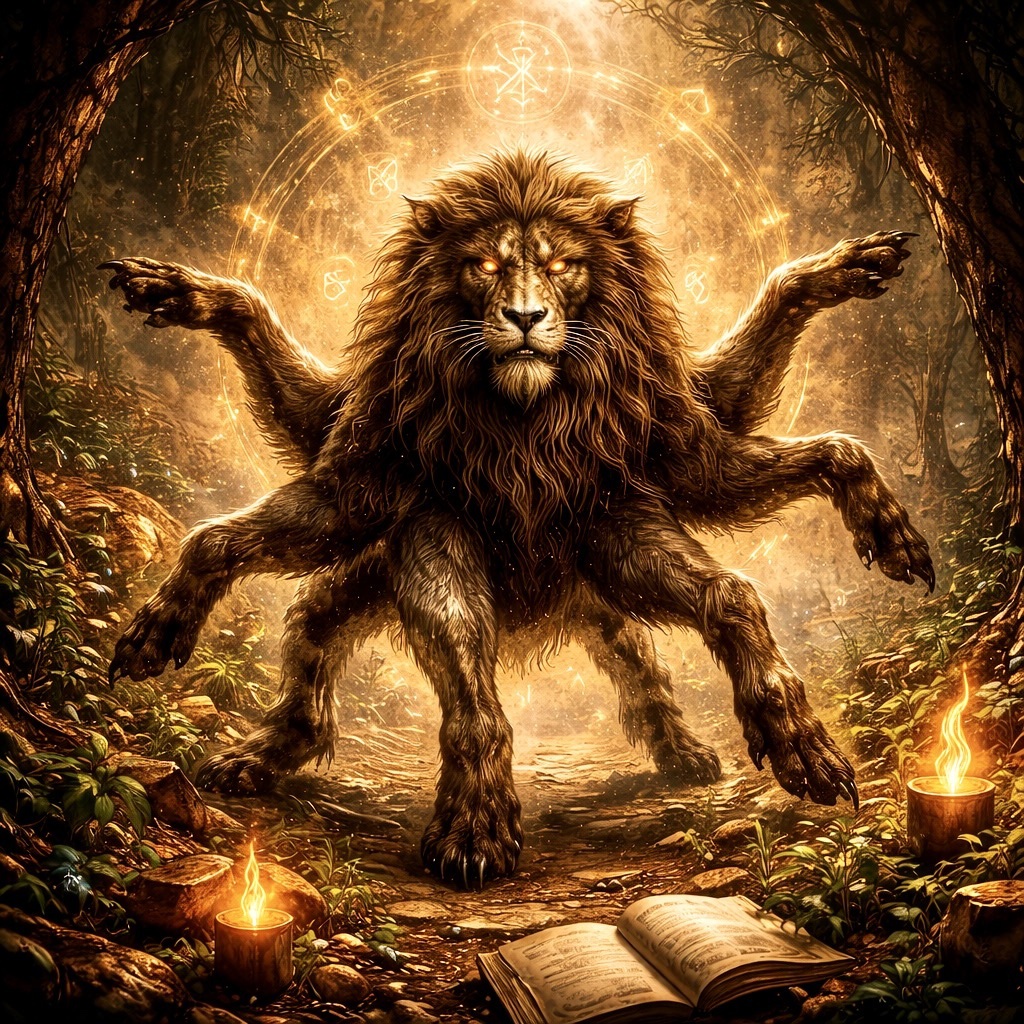
Buer is described as a President of Hell commanding fifty legions of spirits. His appearance is one of the most bizarre in all of demonology. He is said to have the head of a lion surrounded by five goat legs arranged like spokes on a wheel, allowing him to move in any direction. At first glance, this imagery feels almost surreal, even absurd. But like much of demonology, it is not meant to be taken purely at face value. It is symbolic—layered with meaning that reflects how people once understood complexity, motion, and the nature of knowledge itself.

The circular form of Buer’s body is particularly significant. The wheel has long been a symbol of cycles—of time, of nature, of life and death repeating endlessly. In ancient philosophy, the natural world was often understood as a series of interconnected cycles: seasons turning, plants growing and dying, the human body constantly renewing itself. By giving Buer a wheel-like form, the grimoires place him firmly within this worldview. He is not a disruptor of nature; he is an interpreter of it.

The lion’s head adds another layer. Lions have historically symbolized authority, strength, and command. In Buer’s case, this suggests mastery—not over armies or destruction, but over knowledge. He is not a king of war, but a ruler of understanding. His authority lies in teaching rather than conquering.

Perhaps the most striking aspect of Buer’s mythology is his association with healing. The grimoires state that he teaches natural philosophy, logic, and the virtues of herbs. He is said to cure all infirmities, particularly those affecting the human body. This places him in a category almost entirely unique among infernal spirits. While others tempt or deceive, Buer heals.

To understand why a demon would be associated with healing, we need to look at the historical context in which these texts were written. During the Renaissance, the boundaries between science, medicine, and magic were not clearly defined. Physicians studied herbal remedies alongside astrology. Scholars believed that plants, minerals, and celestial bodies all contained hidden properties that could influence health.

This field of study, often called “natural philosophy,” was the precursor to modern science. It sought to understand how the world worked through observation, experimentation, and interpretation of ancient texts. However, because knowledge was incomplete and often misunderstood, many of these studies were intertwined with mystical beliefs.

In that context, Buer becomes a representation of knowledge that sits on the edge of the known and the unknown. Healing, at the time, could feel almost miraculous. A plant that cured a disease might appear to possess magical properties. A physician who understood the body could seem like a sorcerer.

Buer’s role as a teacher of herbs is particularly important. Before modern medicine, herbal remedies were the primary means of treating illness. Knowledge of which plants could heal, which were poisonous, and how to prepare them was incredibly valuable. This knowledge was often passed down through generations, guarded carefully by those who possessed it.

By attributing this knowledge to a demon, the grimoires acknowledge its mysterious nature. Healing was not fully understood, and therefore it was seen as something that might originate from hidden or supernatural sources.

Buer also teaches logic, which may seem surprising at first. Logic is the foundation of rational thought—the ability to analyze, reason, and draw conclusions. Why would a demon be associated with such a disciplined and intellectual skill?

The answer lies in the Renaissance understanding of knowledge itself. Logic was considered a tool for uncovering truth, but truth was not always comfortable. It could challenge established beliefs, question authority, and reveal uncomfortable realities. In that sense, logic was both empowering and dangerous.

Buer embodies this duality. He offers knowledge that can heal and enlighten, but that knowledge also has the potential to disrupt. Understanding the natural world can lead to progress, but it can also challenge existing systems of power and belief.

The idea that a demon might teach philosophy and healing reflects a broader theme in demonology: that knowledge itself is morally neutral. It is neither good nor evil. Its impact depends on how it is used.

This perspective is remarkably modern. Today, we recognize that scientific advancements can improve lives while also introducing new challenges. Medicine can cure diseases, but it can also raise ethical questions. Technology can connect people, but it can also create new forms of conflict.

Buer’s mythology anticipates this complexity. He is not a villain, nor is he a benevolent guardian. He is a source of knowledge—one that must be approached with understanding and caution.

The wheel-like structure of his body also suggests movement and adaptability. Unlike a creature bound to a single direction, Buer can move freely, adjusting his path as needed. This reflects the nature of knowledge itself. Understanding is not static; it evolves. New discoveries reshape old ideas, and perspectives shift over time.

In this way, Buer represents the process of learning. It is not a straight path but a continuous cycle of observation, interpretation, and revision.

From a psychological perspective, Buer can be interpreted as an archetype of intellectual curiosity and healing. He embodies the human drive to understand the world and improve it. When people study medicine, research new treatments, or seek to understand the body, they are engaging with the same impulse that Buer represents.

Healing, both physical and emotional, often begins with knowledge. Understanding the cause of an illness is the first step toward treating it. Recognizing patterns in behavior can lead to personal growth. In this sense, Buer’s teachings extend beyond herbs and medicine into broader aspects of human experience.

Interestingly, Buer’s appearance—so strange and unconventional—may also reflect the complexity of the systems he represents. The human body is not simple. It is an intricate network of systems working together in delicate balance. The natural world is equally complex, with countless interactions between plants, animals, and environmental factors.

Buer’s form, with its multiple limbs and circular motion, mirrors this complexity. It is not meant to be easily understood. It challenges the observer, forcing them to look beyond simple interpretations.

This aligns with the nature of scientific inquiry. The deeper we look into the world, the more complex it becomes. Simple explanations give way to intricate systems that require careful study and analysis.

In medieval and Renaissance thought, this complexity often led to the belief that hidden forces were at work. Without modern scientific tools, many phenomena could not be explained fully. Disease, in particular, was mysterious and often frightening. Epidemics could spread rapidly, and their causes were not well understood.

In such a world, the idea of a spirit who could heal and explain the natural world would have been incredibly appealing.

Buer’s association with curing all infirmities suggests a form of ultimate knowledge—an understanding so complete that it can address any problem. This idea resonates with the human desire for certainty and control over illness.

Even today, medicine continues to evolve, striving toward greater understanding and more effective treatments. The quest for a cure for every disease remains one of humanity’s most ambitious goals.

Buer represents that aspiration in mythological form.

At the same time, his presence within demonology serves as a reminder that knowledge is not always comfortable. Learning the truth about something—whether it is an illness, a system, or a personal reality—can be challenging. It requires confronting uncertainty and complexity.

Buer does not simplify the world. He reveals its intricacies.

In modern interpretations, Buer is often seen as a symbol of intellectual and scientific exploration. He represents the pursuit of knowledge that leads to healing and understanding. His teachings are not limited to a specific domain but encompass a broader approach to learning.

This makes him one of the most intriguing figures in demonology. While many demons embody fear or temptation, Buer embodies curiosity and insight.

His presence suggests that the boundaries between knowledge and mystery are not always clear. What we understand today may have been considered magical in the past. What seems mysterious now may become understood in the future.

Buer exists at that boundary—where understanding begins to emerge from uncertainty.

In the end, his mythology offers a powerful reflection on the nature of knowledge itself. It is complex, evolving, and often difficult to grasp fully. It can heal, but it can also challenge. It requires patience, observation, and a willingness to explore beyond the familiar.

And like the strange, wheel-like figure moving in all directions at once, the pursuit of understanding does not follow a straight path. It turns, shifts, and adapts, revealing new perspectives with every step.

In that ever-turning motion, in the quiet search for answers and the steady progress of discovery, that is where Buer truly resides.

Related Posts

Gusion: The Infernal Duke Who Reveals All Truths, Commands Time, and Shapes the Fate of Kings

Dave

Among the many figures described in the ancient grimoires of demonology, Gusion stands apart not because of brute force or theatrical terror, but because of something far more unsettling—certainty. In a world defined by uncertainty, doubt, and unanswered questions, Gusion represents the impossible idea that everything can be known. Listed among the seventy-two spirits of the Ars Goetia, the first section of The Lesser Key of Solomon, Gusion is described as a Great Duke of Hell commanding forty legions of spirits. His powers are not rooted in destruction or temptation, but in knowledge—specifically, knowledge of the past, present, and future.

He is said to answer all questions truthfully, reconcile friendships, and grant honor and dignity. Yet even these seemingly benevolent abilities carry a deeper, more complex edge. Because if there is anything humanity has learned across history, it is that truth is rarely simple, and knowledge—especially complete knowledge—can be as dangerous as it is empowering.

Gusion’s appearance is one of the most curious in the Ars Goetia. He is described initially as a baboon, a detail that has puzzled scholars and occultists for centuries. Unlike the regal lions, serpents, or armored knights that appear elsewhere in demonology, the baboon seems almost out of place. Yet within this odd imagery lies a powerful symbolic thread.

In ancient cultures, primates were often associated with imitation, curiosity, and intelligence. The baboon, in particular, held significance in Egyptian mythology, where it was linked to Thoth, the god of knowledge, writing, and time. Baboons were observed at dawn, seemingly greeting the rising sun, and were thus associated with cycles, awareness, and observation.

When viewed through this lens, Gusion’s initial form begins to make sense. He represents raw intelligence—curiosity unrefined, observation without judgment. But the grimoires also state that when commanded, Gusion transforms into a human form. This transformation is deeply symbolic. It suggests the evolution from instinctive awareness into structured understanding. Knowledge begins as observation, but it becomes meaningful only when shaped into something coherent.

This dual form mirrors the human experience of learning itself. We begin by noticing patterns—small details, fragments of information—and gradually assemble them into a larger picture. Gusion embodies both the primal and refined aspects of that process.

The most striking aspect of Gusion’s mythology, however, is his relationship with time. The grimoires claim that he can reveal the past, present, and future with absolute clarity. This ability places him in a rare category among infernal spirits. While many demons possess specialized knowledge or influence, Gusion’s domain encompasses the entirety of temporal experience.

Time has always been one of humanity’s greatest mysteries. From ancient philosophers to modern physicists, people have struggled to understand its nature. Is time linear, moving steadily from past to future? Or is it cyclical, repeating patterns endlessly? Or perhaps it exists all at once, with past, present, and future coexisting in ways we cannot perceive?

Gusion’s mythology suggests a perspective in which time is fully accessible. He does not merely predict the future; he sees it as clearly as the present. For those living in the Renaissance period, such an ability would have been both awe-inspiring and deeply unsettling.

Imagine knowing the outcome of every decision before making it. Imagine seeing every consequence, every branching path, every possible future laid out in front of you. While this might seem empowering, it also raises profound questions about free will. If the future can be known with certainty, then how much of it can truly be changed?

Gusion embodies this tension. He offers knowledge, but that knowledge may challenge the very idea of choice.

The grimoires also state that Gusion has the power to reconcile friendships. This detail might seem secondary compared to his mastery over time, but it is deeply connected to his role as a revealer of truth. Conflict often arises from misunderstanding—misinterpreted actions, hidden motives, or incomplete information. By revealing the truth of a situation, Gusion enables resolution.

In this sense, he represents clarity. When all facts are known, when every perspective is understood, many conflicts lose their foundation. Anger gives way to comprehension, and hostility can transform into reconciliation.

This ability aligns with a broader theme found throughout demonology: that knowledge itself is neither inherently good nor evil. It is a tool. How it is used determines its impact.

In the Renaissance world where these grimoires were compiled, knowledge was undergoing a dramatic transformation. The rediscovery of classical texts, the invention of the printing press, and the expansion of scientific inquiry were reshaping how people understood the universe. Old beliefs were being questioned, and new ideas were emerging at an unprecedented pace.

Yet this surge of knowledge also created anxiety. With new information came uncertainty. Established authorities were challenged, and traditional frameworks of understanding began to shift. In such a climate, the idea of absolute knowledge—of knowing everything with certainty—held both appeal and danger.

Gusion reflects this duality. He offers answers, but those answers may disrupt existing beliefs. He reveals truth, but truth can be uncomfortable.

From a psychological perspective, Gusion can be interpreted as an archetype of insight. He represents the moment when confusion gives way to clarity, when fragmented understanding becomes complete. This experience can feel almost supernatural. Suddenly, patterns make sense, connections become visible, and uncertainty disappears.

Yet such moments of clarity are often accompanied by a sense of inevitability. Once something is understood fully, it cannot be unlearned. Decisions must be made with that knowledge in mind.

Consider how people respond when they uncover a hidden truth in their personal lives. Discovering a betrayal, a secret, or a long-hidden fact can reshape one’s entire perspective. Relationships may change, priorities may shift, and previously stable assumptions may collapse.

Gusion embodies that moment of revelation. He is not merely a source of information; he is the force that brings hidden realities into the open.

The ability to grant honor and dignity, as described in the grimoires, adds another layer to his character. In historical contexts, honor was closely tied to reputation, status, and social standing. Knowing the truth about individuals—both their strengths and their flaws—could influence how they were perceived by others.

Gusion’s role in granting honor suggests that truth has the power to elevate as well as expose. When actions are understood fully, when intentions are clear, individuals may gain recognition for their true character.

This aspect of his mythology aligns with modern ideas about transparency and authenticity. In many areas of life—business, politics, personal relationships—honesty is valued because it builds trust. Yet achieving that honesty often requires confronting difficult truths.

Gusion’s presence represents that process. He does not create new realities; he reveals existing ones.

The baboon imagery, when reconsidered in this context, becomes even more meaningful. Baboons are highly social animals, living in complex hierarchies and communicating through a range of vocalizations and behaviors. They observe, adapt, and respond to their environment with intelligence and awareness.

By beginning in this form, Gusion symbolizes the observational foundation of knowledge. Before understanding can occur, there must be awareness. Before clarity, there must be curiosity.

His transformation into a human form reflects the refinement of that awareness into structured knowledge. It suggests that understanding is not instantaneous but evolves through stages.

In modern interpretations of demonology, figures like Gusion are often seen as representations of internal processes rather than external beings. From this perspective, Gusion embodies the human capacity for insight—the ability to analyze, understand, and predict.

This interpretation aligns with cognitive science, which studies how the brain processes information and makes decisions. Humans are constantly gathering data from their environment, forming patterns, and using those patterns to anticipate future outcomes.

While we do not possess perfect foresight, we are capable of remarkable prediction. We learn from past experiences, adjust our behavior in the present, and make decisions based on expected outcomes.

Gusion represents this predictive capacity taken to its extreme—a mind that sees all possibilities with complete clarity.

Yet this raises an important question: if such knowledge were truly attainable, would it be desirable?

Uncertainty, while often uncomfortable, also allows for possibility. It creates space for hope, creativity, and change. If every outcome were known in advance, the sense of discovery might disappear.

Gusion’s mythology hints at this tension. His knowledge is absolute, but it comes with implications that challenge the nature of experience itself.

In literature and storytelling, characters who possess complete knowledge are often portrayed as distant or detached. Their understanding sets them apart from others, creating a sense of isolation. Without uncertainty, the emotional stakes of decision-making may diminish.

Gusion, as a demon, occupies that liminal space between understanding and detachment. He offers knowledge, but he does not share in the uncertainty that defines human life.

This distinction reinforces his role as an outsider—a being who observes rather than participates.

Throughout history, the pursuit of knowledge has been both a driving force and a source of conflict. Scientific advancements have improved quality of life while also introducing new challenges. Philosophical inquiry has expanded understanding while raising difficult questions about meaning and existence.

Gusion’s mythology captures this complexity. He is not a villain in the traditional sense, nor is he a benevolent guide. He is a force of revelation, embodying the power and consequences of knowing.

In the end, Gusion stands as one of the most intellectually compelling figures in demonology precisely because of this focus. He does not rely on spectacle or fear to assert his presence. Instead, he represents something far more profound: the idea that truth exists, waiting to be uncovered, and that once it is revealed, it changes everything.

And perhaps that is why his image begins not as a towering king or monstrous beast, but as a quiet observer—a creature watching, learning, and waiting for the moment when understanding emerges.

Because in the silent spaces between questions and answers, between uncertainty and clarity, that is where Gusion truly resides.

Related Posts

Sitri: The Infernal Prince of Desire Who Unveils Secrets of Passion and Hidden Lust

Dave

In the shadowed hierarchy of spirits described in the ancient grimoires, there are demons who command armies, demons who reveal hidden knowledge, and demons who shape the natural world itself. Yet among them exists a category far more intimate and unsettling—those who influence desire, attraction, and the private emotions that most people prefer to keep hidden. Sitri is one of these figures, a demon whose presence lingers not in storms or battlefields, but in the quiet, charged moments between people, where glances linger too long and secrets hover just beneath the surface.

Sitri is listed among the seventy-two spirits of the Ars Goetia, a section of The Lesser Key of Solomon, and is described as a Great Prince of Hell commanding sixty legions of spirits. His domain is not wealth, war, or prophecy, but something far more unpredictable: human desire. According to the grimoires, Sitri has the power to cause men and women to love one another, but more specifically, to inflame desire and reveal hidden feelings—especially those that people would rather keep concealed. He is also said to uncover secrets of intimacy, exposing what is private and unspoken.

His appearance is one of the most striking among the Goetic spirits. Sitri is described as having the face of a leopard and the wings of a griffin. When commanded, he can transform into a handsome human figure. This transformation is not just a visual detail—it is central to his symbolism. The leopard represents primal instinct, stealth, and raw appetite. The griffin, a mythical creature combining eagle and lion, symbolizes power, dominance, and heightened awareness. Together, they form a being that is both animalistic and elevated, instinctive yet controlled.

When Sitri takes on human form, he becomes something else entirely—refined, attractive, and approachable. This duality reflects the nature of desire itself. Beneath every polished interaction lies something more instinctive, something ancient and difficult to control. Sitri embodies both sides: the hidden, animalistic drive and the outward, socially acceptable expression of attraction.

The grimoires emphasize that Sitri does not merely create love in a gentle or harmonious sense. Instead, he intensifies desire, often to a point where it becomes difficult to ignore. He reveals what people truly feel, whether they are ready to confront it or not. In this way, Sitri is less a creator of relationships and more a revealer of truth—specifically, emotional truth that exists beneath layers of social restraint.

This aspect of his mythology speaks directly to human experience. People rarely express their full feelings openly. Social norms, fear of rejection, and personal insecurity often lead individuals to hide their desires. Relationships develop gradually, sometimes obscured by ambiguity or hesitation. Sitri represents the force that strips away that ambiguity.

Imagine a moment when two people realize simultaneously that their feelings are no longer hidden. The subtle tension that once existed becomes undeniable. Words are no longer necessary. That moment—charged, revealing, and often overwhelming—is where Sitri exists.

From a psychological perspective, this experience is rooted in both conscious and unconscious processes. Humans are highly attuned to social cues—facial expressions, tone of voice, body language. These signals often communicate more than words ever could. Over time, patterns emerge, and individuals begin to sense what others feel even if it is never explicitly stated.

Sitri’s mythology transforms this subtle psychological process into something dramatic and supernatural. Instead of gradual realization, he forces clarity. He exposes what has been hidden, bringing desire into the open.

The association between desire and revelation is particularly significant. In many cultures, desire has been treated as something that must be controlled or concealed. Religious and moral systems often emphasize restraint, discipline, and modesty. As a result, expressions of attraction can carry an undercurrent of secrecy.

Sitri disrupts that secrecy. He does not allow desire to remain hidden. He brings it forward, whether it is convenient or not.

This characteristic makes him a particularly unsettling figure within demonology. Unlike demons associated with external events—storms, wealth, or knowledge—Sitri operates within the private sphere of emotion. His influence is personal, immediate, and difficult to resist.

The leopard imagery reinforces this idea. Leopards are solitary hunters, moving quietly through their environment before striking with precision. They represent patience and instinct, waiting for the perfect moment to act. Desire often behaves in a similar way. It builds gradually, unnoticed at first, until it reaches a point where it can no longer be ignored.

The griffin wings add another layer of meaning. Griffins were often seen as guardians of treasure in mythology. In Sitri’s case, the “treasure” is emotional truth—the hidden feelings people guard closely. By giving him griffin wings, the grimoires suggest that he has access to these guarded places, able to uncover what others protect.

His transformation into a handsome human figure is perhaps the most telling aspect of all. Attraction is often tied to perception. What one person finds appealing may differ from another, yet certain qualities—confidence, symmetry, charisma—tend to draw attention universally. Sitri’s ability to take on an attractive form symbolizes the way desire can reshape perception.

When people are attracted to someone, they often see them differently. Flaws become less noticeable. Small gestures take on greater meaning. Emotional investment alters perception in subtle but powerful ways.

Sitri’s transformation represents this shift. He becomes what the observer is drawn to, embodying the ideal that triggers attraction.

The Renaissance period, during which the grimoires were compiled, held complex attitudes toward desire. On one hand, courtly love traditions celebrated romantic devotion and emotional expression. On the other, religious authorities often warned against the dangers of uncontrolled passion.

This tension is reflected in Sitri’s role. He is not purely destructive, but he is not entirely benevolent either. He represents desire as a force that can both connect and disrupt.

In literature from this period, characters often struggle with hidden feelings. Love is portrayed as something that must be navigated carefully, balancing personal desire with social expectations. Sitri’s mythology captures the moment when that balance is broken—when desire becomes visible and unavoidable.

From a modern perspective, we can interpret Sitri as an archetype rather than a literal being. He represents the psychological experience of attraction and emotional revelation. His presence symbolizes the moment when internal feelings become external reality.

Neuroscience offers insight into why this experience feels so intense. When individuals are attracted to someone, the brain releases dopamine, creating a sense of reward and motivation. Oxytocin strengthens emotional bonds, while adrenaline increases alertness and excitement.

These chemical processes can create a sense of urgency, as though something important is happening. Time may seem to slow, and attention becomes focused entirely on the other person. This heightened state can feel almost otherworldly, as though influenced by something beyond conscious control.

For people living centuries ago, without knowledge of these biological mechanisms, such experiences would have been difficult to explain. Demonology provided a framework for understanding them. A spirit like Sitri could account for the sudden intensity of attraction and the way hidden feelings seemed to surface unexpectedly.

Even today, people describe attraction using language that suggests external influence. They speak of being “drawn” to someone, “pulled” toward them, or feeling a “spark” that cannot be explained. These expressions echo the ancient idea that desire is something that happens to us rather than something we fully control.

Sitri embodies that idea. He is not a gentle guide but a force that pushes individuals toward confrontation with their own emotions.

Another important aspect of Sitri’s mythology is his connection to truth. While many demons in the Ars Goetia are associated with deception or illusion, Sitri reveals what is hidden. This places him in a unique position within the hierarchy.

Truth, particularly emotional truth, can be uncomfortable. People often avoid acknowledging their own feelings because doing so requires vulnerability. It may lead to rejection, conflict, or change.

Sitri removes that option. He forces recognition. He brings what is hidden into the light.

This aspect of his character aligns with broader themes in mythology and psychology. Growth often requires confronting uncomfortable truths. Whether in relationships, personal development, or social dynamics, progress begins with awareness.

Sitri represents that moment of awareness—the point at which denial is no longer possible.

In relationships, this can manifest as a turning point. Two people may have been circling around their feelings for some time, unsure of how to proceed. Then something shifts. A conversation becomes more direct. A glance lingers longer than usual. The underlying tension becomes explicit.

That shift can lead to connection, but it can also lead to conflict. Not all revelations result in positive outcomes. Sometimes, hidden feelings create complications that were easier to ignore when unspoken.

Sitri’s influence encompasses both possibilities. He does not determine the outcome; he initiates the revelation.

Throughout history, stories of love and desire often revolve around moments of discovery. Characters realize what they feel, sometimes too late, sometimes at great cost. These moments drive narrative tension and emotional depth.

Sitri can be seen as the embodiment of that narrative device—the force that pushes stories forward by exposing what lies beneath the surface.

In modern culture, this archetype appears in countless forms. Romantic films, novels, and television shows frequently center on the moment when characters confront their feelings. That moment carries both excitement and risk, capturing the essence of Sitri’s domain.

Despite the dramatic imagery associated with demonology, the underlying themes remain deeply human. Sitri is not simply a creature of myth; he represents a universal experience. The tension between hidden desire and open expression is something nearly everyone encounters at some point.

Whether in the first spark of attraction or the slow realization of deeper feelings, that moment of clarity can feel powerful and transformative.

In the end, Sitri stands as a symbol of emotional truth. He is the force that reveals what has been concealed, the presence that turns uncertainty into clarity. His leopard face and griffin wings remind us that desire is both instinctive and elevated, rooted in biology yet shaped by perception.

And when he takes human form—when instinct becomes visible, when attraction becomes undeniable—he reflects one of the most familiar and mysterious experiences in human life: the moment when what we feel can no longer remain hidden.

Related Posts

Beleth: The Infernal King Who Commands Love, Fear, and the Terrifying Power of Attraction

Dave

In the strange and intricate hierarchy of spirits described within the Ars Goetia, few figures embody contradiction as vividly as Beleth. Counted among the seventy-two demons of The Lesser Key of Solomon, Beleth is not merely another infernal entity cataloged for ritual summoning. He is a king—one of the highest-ranking figures in the entire demonic order—commanding eighty-five legions of spirits and appearing with a spectacle so dramatic that even seasoned magicians were warned to proceed with caution. Yet despite his terrifying entrance and overwhelming presence, Beleth’s primary power is not destruction, war, or deception. Instead, he governs one of the most powerful and unpredictable forces in human experience: love.

At first glance, the idea of a demon king presiding over love seems paradoxical. In many traditions, love is associated with divinity, purity, or emotional connection. Demonology, on the other hand, is often associated with chaos, corruption, and manipulation. Beleth exists at the intersection of these two ideas, representing a version of love that is intense, overwhelming, and potentially dangerous. He does not create gentle affection or stable companionship. Instead, he ignites passion—sudden, consuming, and sometimes terrifying in its force.

The grimoires describe Beleth’s appearance in vivid and theatrical detail. When summoned, he is said to arrive riding a pale or fiery horse, accompanied by a great host of spirits. Before his arrival, trumpets and other instruments are heard, signaling his approach. The sheer spectacle of his entrance emphasizes his status as a king. He does not emerge quietly or subtly. He arrives with noise, presence, and authority, commanding attention from all who witness him.

This dramatic arrival is not merely decorative imagery. It reflects a deeper symbolic truth about the nature of the force Beleth represents. Love, particularly passionate attraction, rarely enters a person’s life quietly. It arrives suddenly, often without warning, disrupting routines and reshaping priorities. One moment, everything feels stable and predictable; the next, a single encounter can alter the entire course of a person’s life.

The horse Beleth rides carries its own symbolic weight. In many mythological traditions, horses represent power, movement, and transformation. A rider on horseback suggests mastery over these forces. Beleth’s command of the horse indicates his control over the momentum of emotion—the way feelings can carry individuals forward into new and uncertain territory.

In medieval symbolism, the pale horse was often associated with death or otherworldly passage, while a fiery horse represented intensity and destruction. Both interpretations align with Beleth’s domain. Passion can feel both life-giving and dangerous, capable of creating deep connection or causing emotional upheaval.

The grimoires emphasize that summoning Beleth requires caution. Magicians are instructed to maintain respect and authority, often wearing protective symbols or invoking divine names to ensure control over the spirit. This warning reflects the belief that Beleth’s power, while useful, is not easily contained.

This idea resonates strongly with human experience. Love is not something that can be fully controlled or predicted. People may attempt to rationalize their feelings, set boundaries, or avoid certain situations, yet attraction often emerges regardless of intention. It can override logic, disrupt plans, and introduce unpredictability into even the most carefully structured lives.

Beleth’s role as a king commanding eighty-five legions of spirits further reinforces this concept. In demonological texts, legions represent vast numbers of subordinate entities, each carrying out specific tasks. Symbolically, these legions can be understood as the countless factors that contribute to attraction and emotional connection.

Consider how many elements must align for two people to develop a relationship. Physical appearance, personality, shared experiences, timing, cultural context, and emotional readiness all play roles. Even subtle details—tone of voice, body language, or shared humor—can influence whether attraction develops.

From a mythological perspective, Beleth’s legions could be imagined as the invisible forces orchestrating these interactions. They guide encounters, shape perceptions, and amplify emotions, creating the conditions under which love emerges.

The association between love and fear within Beleth’s mythology is particularly significant. The grimoires suggest that his presence can be overwhelming, even terrifying, to those who encounter him unprepared. This combination of fear and attraction reflects a fundamental aspect of human psychology.

Love often involves vulnerability. Opening oneself to another person requires trust and emotional risk. The possibility of rejection, loss, or betrayal introduces an element of fear into even the most positive relationships. People may hesitate to express their feelings precisely because of this uncertainty.

Beleth embodies this tension. He represents the force that pushes individuals toward connection while simultaneously confronting them with the risks involved. His presence is both alluring and intimidating.

Throughout history, literature has frequently explored this dual nature of love. Romantic narratives often include elements of conflict, uncertainty, and emotional struggle. Characters must overcome obstacles, confront fears, and make difficult choices before achieving connection.

In many ways, these stories mirror the experience of encountering Beleth. Love does not arrive as a simple or straightforward event. It challenges individuals, forcing them to confront their own desires and insecurities.

The Renaissance period, during which the grimoires gained popularity, was particularly fascinated with these themes. Courtly love traditions emphasized intense emotional devotion, often involving longing, jealousy, and dramatic expression. At the same time, societal expectations regarding marriage and family created tension between personal desire and social obligation.

Beleth’s mythology reflects this cultural context. He represents love as a force that disrupts established order, introducing both possibility and chaos into human relationships.

From a psychological perspective, the experiences associated with Beleth can be understood in terms of neurochemistry. Romantic attraction triggers the release of powerful chemicals in the brain, including dopamine, oxytocin, and serotonin. These chemicals create feelings of pleasure, attachment, and emotional intensity.

Dopamine, in particular, is associated with reward and motivation. It drives individuals to seek out experiences that produce pleasure. During early stages of attraction, dopamine levels increase significantly, creating a sense of excitement and focus on the person of interest.

Oxytocin, often called the “bonding hormone,” plays a role in forming emotional connections and trust. It is released during physical contact and shared experiences, strengthening the bond between individuals.

These biological processes can create experiences that feel overwhelming or even uncontrollable. People may find themselves thinking constantly about another person, prioritizing that relationship above other aspects of their lives.

In earlier centuries, without knowledge of neuroscience, such experiences were often interpreted as supernatural influence. A demon like Beleth provided a narrative explanation for the intensity and unpredictability of romantic attraction.

Yet even in modern times, people continue to describe love using language that suggests external influence. Phrases like “falling in love” imply a lack of control. People speak of being “swept away” or “captivated,” as though acted upon by forces beyond themselves.

Beleth’s mythology captures this sensation with remarkable clarity. He is not a gentle guide leading people toward connection. He is a king commanding powerful forces, capable of overwhelming those who encounter him.

Another interesting aspect of Beleth’s description is the emphasis on respect and authority in dealing with him. The grimoires warn that a magician must approach him properly, showing both confidence and caution. Failure to do so could result in negative consequences.

This detail can be interpreted symbolically as well. Navigating relationships requires a balance between vulnerability and self-respect. Allowing oneself to be completely overwhelmed by emotion can lead to poor decisions, while excessive caution may prevent meaningful connection.

Beleth’s mythology suggests that love must be approached with awareness. It cannot be ignored, but it also cannot be allowed to dominate entirely without consideration.

In modern interpretations of demonology, figures like Beleth are often viewed as archetypes rather than literal beings. From this perspective, Beleth represents the intense, transformative power of attraction—the force that draws individuals together while challenging their sense of stability.

Archetypes serve as symbolic representations of universal human experiences. The warrior, the lover, the sage, and the trickster all appear across cultures because they reflect fundamental aspects of human behavior.

Beleth fits within the archetype of the overwhelming lover—the force that disrupts order and introduces emotional intensity.

This archetype appears in many mythological traditions. In Greek mythology, Eros (or Cupid in Roman tradition) was depicted as a mischievous figure who caused people to fall in love through his arrows. Unlike the gentle cherub often portrayed in later art, early depictions of Eros emphasized his unpredictability and power.

Similarly, in various folklore traditions, spirits or enchantments cause individuals to fall in love suddenly, often with unexpected consequences. These stories reflect a common understanding that attraction can feel external, as though imposed by forces beyond conscious control.

Beleth’s role as a king elevates this concept further. He does not simply cause attraction; he commands it. His influence is vast, affecting not just individuals but the broader dynamics of human relationships.

Throughout history, love has shaped societies in profound ways. Marriages have forged alliances between kingdoms. Romantic relationships have inspired art, literature, and music. Personal connections have influenced political decisions and altered the course of events.

Beleth’s mythology acknowledges this influence. By placing love under the command of a powerful king, the grimoires suggest that attraction is not a minor aspect of human life but a force capable of reshaping entire worlds.

In the end, Beleth stands as one of the most complex figures in demonology precisely because of this contradiction. He is both terrifying and alluring, commanding both fear and desire. He represents a force that is essential to human experience yet capable of causing profound disruption.

Whether interpreted as a literal spirit from ancient grimoires or as a symbolic representation of emotional intensity, his story captures something deeply familiar. Love can feel like a storm—sudden, powerful, and impossible to ignore.

And like the distant sound of trumpets announcing the arrival of an unseen king, it often announces itself long before we fully understand what is about to change.

Related Posts

Leraje: The Infernal Archer of Hell Who Commands Conflict, Wounds Pride, and Ignites War

Dave

Among the many spirits cataloged in the ancient grimoires of demonology, few evoke imagery as vivid and unsettling as Leraje. His name appears in the Ars Goetia, the famous first section of the seventeenth-century grimoire The Lesser Key of Solomon, a text that attempts to catalog seventy-two infernal spirits believed to exist within a structured hierarchy beneath the rulers of Hell. Each demon in this strange and fascinating catalog is assigned a rank, a number of legions under command, and a specific domain of influence over the human world. Some demons reveal knowledge of hidden treasures, others teach philosophy or astronomy, while many influence emotions, relationships, or the forces of nature. Leraje, however, represents something far more dangerous and immediate. He is the archer of the infernal hierarchy—the spirit who inspires conflict, ignites disputes, and wounds both body and pride with supernatural precision.

In the grimoires, Leraje is described as a Great Marquis of Hell commanding thirty legions of spirits. He appears in the form of a handsome archer dressed in green, carrying a bow and arrows. His appearance is not monstrous in the way many demons are described; instead, he resembles a skilled hunter or soldier. This subtlety is part of what makes Leraje’s symbolism so powerful. War does not always arrive as a roaring beast or terrifying monster. Sometimes it arrives quietly, carried by a single arrow.

The arrow is one of humanity’s oldest weapons, and its symbolism runs deep through mythology and history. Unlike the sword, which requires direct confrontation, the bow allows distance between attacker and target. It represents calculated action, patience, and strategy. Archers must wait, observe, and strike at precisely the right moment. In demonological symbolism, this makes Leraje less a brute force of destruction and more a strategist of discord.

The grimoires state that Leraje has the power to cause great battles and disputes among people. He is said to make wounds that fester and refuse to heal, especially wounds caused by arrows. While this description might appear literal on the surface, it also carries deep metaphorical significance. Conflicts between individuals or nations often begin with small provocations—an insult, a misunderstanding, a rumor whispered in the wrong ear. These small “arrows” can strike the pride of a person or group and create injuries that linger long after the initial moment has passed.

Throughout history, wars have begun over seemingly minor incidents. A single assassination in Sarajevo in 1914 ignited the First World War. A dispute over territory or honor has sparked countless battles across centuries. The mythology of Leraje captures this truth with eerie precision. Conflict rarely emerges suddenly from nothing. It begins with something small, something precise, something that hits exactly where it hurts.

In many ways, Leraje embodies the psychology of conflict itself. Human beings possess a deep sensitivity to perceived threats and insults. Evolutionary psychologists suggest that this sensitivity developed because early human societies depended heavily on reputation and social standing for survival. An insult or humiliation could damage one’s position within the group, potentially threatening access to resources or allies. As a result, humans evolved to react strongly to perceived slights.

Leraje’s arrows symbolize these emotional triggers. A single word spoken at the wrong moment can provoke anger that spreads through entire communities. Rumors can inflame tensions between families, tribes, or nations. The demon archer therefore becomes a mythological representation of the invisible forces that escalate disagreements into full-scale conflict.

The green clothing associated with Leraje in the grimoires is another intriguing detail. Green has long carried multiple symbolic meanings across cultures. It is the color of nature, growth, and vitality, but it is also associated with envy and jealousy. In literature and art, the phrase “green with envy” has been used for centuries to describe the corrosive emotion of jealousy.

By dressing Leraje in green, the grimoires may be hinting that many conflicts arise from envy or resentment. When one individual perceives another as more successful, powerful, or admired, bitterness can grow quietly beneath the surface. That resentment becomes fertile ground for the arrows of conflict to strike.

Demonology often served as a symbolic language through which people attempted to understand human behavior. Rather than viewing demons purely as external supernatural beings, many modern scholars interpret them as representations of psychological or social forces. From this perspective, Leraje becomes the embodiment of rivalry, resentment, and provocation.

Yet the mythology surrounding him also reflects the worldview of the Renaissance period in which the grimoires were compiled. The seventeenth century was an era of constant warfare in Europe. Religious conflicts, territorial disputes, and political rivalries frequently erupted into violence. The Thirty Years’ War alone devastated large portions of the continent, leaving millions dead and reshaping the political landscape.

In such an environment, war was not an abstract concept but a daily reality. People sought explanations for why conflict seemed so inevitable. Demonology provided a framework through which these destructive patterns could be interpreted. If demons like Leraje influenced human behavior, then perhaps the seemingly endless cycle of violence had a supernatural cause.

The hierarchy of Hell described in the Ars Goetia mirrors the political structures of Renaissance Europe. Kings, princes, dukes, and marquises ruled over legions of spirits in much the same way earthly nobles governed armies and territories. Leraje’s rank as a Marquis suggests a commander responsible for strategic operations within the infernal order.

In historical terms, a marquis governed frontier regions that were vulnerable to invasion or conflict. These border territories were often the first places where wars began. The title therefore carries an interesting symbolic connection to Leraje’s domain. He operates at the boundaries where peace breaks down and conflict emerges.

The idea that Leraje causes wounds that do not heal is particularly striking. Physical wounds from arrows were indeed dangerous in medieval warfare. Arrowheads could introduce infection deep into the body, leading to injuries that lingered for weeks or months. But the grimoires likely intended a broader meaning as well.

Emotional wounds can persist far longer than physical ones. Words spoken in anger may be remembered for decades. Betrayals can fracture friendships and families permanently. Nations sometimes carry grievances across generations, passing resentment from parents to children.

Leraje’s arrows therefore symbolize injuries that strike not only the body but also the memory. They create scars within relationships that resist healing.

Across mythology and literature, archers often represent forces that influence destiny from afar. The Greek god Apollo was an archer whose arrows could bring sudden death or plague. Artemis used her bow to punish those who violated sacred boundaries. Cupid, perhaps the most famous mythological archer, shot arrows that caused people to fall in love.

Leraje’s arrows are different. They do not inspire love or divine judgment. They ignite rivalry and hostility.

Yet even this destructive role reflects an important truth about human society. Conflict has shaped civilization just as much as cooperation has. Wars have redrawn borders, toppled empires, and accelerated technological advancement. The same drive that fuels competition in warfare also fuels ambition in art, science, and politics.

Some philosophers argue that conflict is an unavoidable part of human nature. Competition for resources, status, and influence creates tensions that occasionally erupt into open confrontation. Demonology personifies these tensions through figures like Leraje, transforming abstract social dynamics into mythological characters.

In modern psychological terms, Leraje might represent the phenomenon of escalation. When two individuals or groups become locked in conflict, each action by one side provokes a stronger reaction from the other. What begins as a minor disagreement can spiral into intense hostility.

Social scientists refer to this pattern as a “conflict spiral.” Each step increases the stakes until resolution becomes increasingly difficult. The arrow fired by Leraje is the first moment in that spiral—the spark that ignites the chain reaction.

Interestingly, the grimoires also note that Leraje’s wounds are caused specifically by arrows. This detail reinforces the idea of distance and precision. Unlike chaotic violence, which erupts suddenly, Leraje’s influence operates through deliberate targeting.

In social terms, this resembles the way propaganda, rumors, or strategic insults can destabilize communities. A carefully crafted lie can provoke anger between groups that might otherwise coexist peacefully. Political leaders throughout history have exploited these dynamics, using rhetoric to inflame tensions and consolidate power.

The mythology of Leraje therefore anticipates many modern understandings of psychological warfare.

Even in everyday life, small provocations can escalate rapidly. A disagreement between coworkers becomes a workplace feud. A misunderstanding between neighbors turns into years of resentment. Families fracture over disputes that begin with a single careless remark.

These moments feel strangely precise, as though someone has fired an invisible arrow into the heart of the situation.

In literature, characters who embody conflict often serve as catalysts for the story’s central drama. Without conflict, narratives lack tension and transformation. Heroes are defined by the obstacles they overcome. Rivalries drive character development and reveal hidden motivations.

Leraje, as the infernal archer, represents that catalytic force within the mythological landscape of demonology.

Yet the grimoires also imply that knowledge of such spirits could allow magicians to counteract their influence. Rituals for summoning demons often involved compelling them to reveal secrets or obey commands. In theory, a skilled practitioner could force Leraje to stop provoking conflict or to explain the hidden causes of disputes.

Whether or not such rituals were believed to work literally, the concept carries symbolic meaning. Understanding the mechanisms of conflict is the first step toward preventing it.

Historians, diplomats, and mediators perform a similar role in modern society. By studying the causes of war and analyzing patterns of escalation, they attempt to prevent future violence.

In that sense, the mythology of Leraje also contains an implicit lesson. Conflict may appear mysterious or inevitable, but it often follows recognizable patterns. By identifying the arrows—those initial provocations—people can intervene before disputes spiral out of control.

Across cultures, myths about supernatural agents of conflict remind societies to remain vigilant about the forces that divide them. Whether those forces are interpreted as demons, psychological impulses, or political manipulation, their effects are real.

Leraje stands as a reminder that the most destructive events in history often begin quietly. A single arrow released into the air may seem insignificant in the moment it leaves the bow. Yet once it strikes, its consequences can spread far beyond the original target.

The archer of the infernal hierarchy does not need armies or storms to cause devastation. All he needs is a clear aim and a moment of opportunity.

And in the silence before conflict begins, when tensions hang unnoticed in the air, one might almost imagine the faint sound of a bowstring being drawn somewhere beyond sight—Leraje preparing to release another arrow into the fragile balance of human relationships.

Related Posts

Eligos (Abigor): The Infernal War Duke Who Reveals Secrets of Battle and Commands Hell’s Armies

Dave

Within the dark and mysterious pages of medieval demonology, certain figures stand apart not merely for their terrifying appearance but for the roles they play in shaping the unseen forces of conflict and strategy. Among the seventy-two spirits cataloged in the Ars Goetia, the famous section of the seventeenth-century grimoire The Lesser Key of Solomon, the spirit known as Eligos—sometimes called Abigor—holds a distinctive place. Unlike demons associated primarily with temptation, wealth, or forbidden knowledge, Eligos is a figure deeply tied to warfare, leadership, and the hidden mechanics of victory and defeat. He is described as a powerful Duke of Hell who commands sixty legions of spirits and appears as a noble knight riding upon a spectral horse, carrying a lance, a banner, or sometimes a serpent.

The imagery surrounding Eligos immediately distinguishes him from many other infernal spirits. Rather than appearing as a monstrous creature of chaos, he manifests as a disciplined warrior. His armor gleams like that of a medieval cavalry officer, and his posture suggests calm authority rather than wild aggression. This detail reveals something important about how demonologists of the Renaissance understood conflict. War was not merely destruction; it was strategy, planning, and the careful orchestration of forces. Eligos embodies this strategic intelligence.

In the grimoires, Eligos is said to possess the ability to reveal hidden things—especially secrets related to warfare. He can disclose the plans of enemies, reveal the outcomes of battles, and expose the thoughts of opposing commanders. Such abilities would have been extraordinarily valuable in the political climate of early modern Europe. Wars were frequent, alliances shifted rapidly, and rulers constantly sought any advantage they could obtain.

It is not surprising, therefore, that occult practitioners imagined a spirit who could unveil the secret intentions of rival leaders. If one could learn the strategies of an enemy before the battle even began, victory might be secured without unnecessary bloodshed.

The name Abigor appears in some demonological texts as an alternate identity for Eligos, and in certain traditions the two are treated as the same entity. The name itself carries echoes of ancient languages, possibly derived from Hebrew or Latin roots associated with power and authority. Like many demonological names, its precise origin remains uncertain, which only deepens the aura of mystery surrounding the figure.

Descriptions of Eligos consistently portray him as riding a horse. Horses have long symbolized speed, nobility, and military prowess. In medieval warfare, cavalry units often determined the outcome of battles. A mounted knight possessed mobility and striking power that infantry soldiers could rarely match. By depicting Eligos as a mounted warrior, the grimoires associate him with command, mobility, and swift action.

The lance he carries reinforces this martial symbolism. Lances were weapons used in decisive charges during medieval combat. A cavalry charge could shatter enemy lines and determine the course of an entire battle within moments. The lance therefore represents precision and timing—the ability to strike exactly when conditions are favorable.

Yet Eligos is not merely a brute warrior. His most notable power lies in revealing secrets and predicting outcomes. This combination of intellect and martial skill makes him more of a strategist than a soldier. In modern terms, he resembles a military advisor or intelligence officer rather than a battlefield berserker.

Throughout history, intelligence gathering has played a crucial role in warfare. Generals rely on scouts, spies, and reconnaissance to understand the movements and intentions of their enemies. Sun Tzu, the ancient Chinese strategist who wrote The Art of War, famously emphasized the importance of knowing both oneself and one’s enemy. Without accurate information, even the most powerful army can be defeated.

Eligos’s mythology reflects this timeless principle. His supernatural knowledge represents the ultimate form of military intelligence. If a commander could consult such a spirit, they might gain insight into hidden weaknesses or impending threats.

In Renaissance Europe, where the grimoires gained popularity, warfare was becoming increasingly complex. Gunpowder weapons, professional armies, and shifting alliances transformed the battlefield. Commanders needed not only courage but also tactical insight. The idea of consulting supernatural advisors fit naturally into a worldview where spiritual forces were believed to influence everyday events.

Ceremonial magic during this era was often practiced by educated individuals—scholars, clergy, and noblemen who studied ancient manuscripts alongside theology and philosophy. They believed that spirits inhabited a structured universe governed by divine laws. By performing precise rituals, they hoped to summon these spirits and compel them to reveal hidden knowledge.

The rituals described in grimoires such as The Lesser Key of Solomon were highly elaborate. Magicians would draw protective circles inscribed with sacred names, recite invocations in Latin or Hebrew, and burn specific incenses believed to attract spiritual entities. These procedures were designed not only to summon the spirit but also to control it, preventing harm to the practitioner.

When summoned, Eligos was believed to appear calmly and speak truthfully about matters of conflict. Unlike many demons described as deceitful or mischievous, Eligos was said to provide accurate information when properly commanded.

This portrayal raises interesting questions about the moral complexity of demonology. If a demon reveals truth and helps prevent defeat, is that influence entirely evil? Medieval theologians debated such questions extensively. Some believed that demons could occasionally provide truthful information as part of a larger scheme to mislead humanity. Others argued that knowledge obtained through infernal means was inherently dangerous regardless of its accuracy.

From a modern perspective, the mythology of Eligos can be interpreted symbolically rather than literally. Instead of viewing him as an actual supernatural being, we might understand him as an archetype representing the strategic mind in times of conflict.

Psychologists and historians often describe archetypes as recurring patterns of human thought and behavior that appear across cultures. Figures such as warriors, sages, tricksters, and rulers appear in myths from every civilization. Eligos fits neatly into the archetype of the strategist—the individual who sees patterns and possibilities invisible to others.

In literature and storytelling, strategists often serve as pivotal characters who guide events from behind the scenes. They analyze situations, anticipate opponents’ moves, and shape outcomes through careful planning. Famous fictional strategists—from Sherlock Holmes to Tyrion Lannister—demonstrate how powerful intellect can be when applied to complex problems.

Eligos embodies that same strategic intelligence but within the dramatic framework of demonology.

Another intriguing aspect of Eligos’s mythology is his connection to foresight. The grimoires suggest that he can reveal the future of battles and conflicts. This ability reflects humanity’s longstanding desire to know what lies ahead. Uncertainty has always been one of the most frightening aspects of warfare. Soldiers march into battle without knowing whether they will survive or whether their cause will succeed.

Prophets, oracles, and seers appear throughout history precisely because people crave reassurance about the future. Ancient Greek generals consulted the Oracle of Delphi before launching campaigns. Medieval rulers relied on astrologers who claimed to predict auspicious moments for battle.

Eligos represents a darker counterpart to these prophetic traditions. Instead of divine inspiration, his knowledge emerges from the infernal realm. Yet the underlying human desire remains the same: certainty in the face of chaos.

The banner sometimes depicted in his hand carries its own symbolism. Banners in medieval warfare served as rallying points for soldiers. They represented the identity and honor of a particular army or kingdom. Losing one’s banner during battle was considered a devastating humiliation.

If Eligos carries a banner, it suggests authority over armies and allegiance. It reinforces his role as a commander rather than a mere warrior.

In some artistic depictions, a serpent appears alongside Eligos or forms part of his banner. The serpent is one of the most ancient symbols in human mythology. Across cultures it has represented wisdom, deception, transformation, and hidden knowledge. In the biblical tradition, the serpent embodies cunning intelligence.

By associating Eligos with a serpent, demonologists emphasize his connection to insight and strategy. Like a serpent, he observes patiently before striking with precision.

The dual identity of Eligos and Abigor also reflects the fluid nature of demonological traditions. Grimoires were copied and translated across centuries, often introducing variations in names and descriptions. Some texts portray Abigor as a separate figure, while others merge the identities completely.

Despite these variations, the core symbolism remains consistent: a mounted warrior with deep knowledge of conflict and hidden strategies.

In modern occultism, practitioners sometimes interpret spirits like Eligos as forces that influence psychological states rather than physical events. From this viewpoint, invoking Eligos might represent accessing one’s own capacity for strategic thinking and foresight.

Human beings possess remarkable abilities to analyze patterns, anticipate consequences, and adapt strategies in response to changing circumstances. Military leaders, chess grandmasters, and skilled negotiators all demonstrate this capacity.

When facing conflict—whether in business, politics, or personal relationships—individuals often benefit from stepping back and observing the situation with clarity. Emotional reactions can cloud judgment, while strategic thinking reveals alternative solutions.

Eligos’s mythology highlights the importance of this perspective. Rather than rushing blindly into battle, the wise leader studies the terrain, understands the opponent, and plans carefully.

Throughout history, the greatest commanders have shared this trait. Figures such as Alexander the Great, Napoleon Bonaparte, and Hannibal Barca achieved victories not merely through bravery but through innovative tactics and careful preparation.

The demonological image of Eligos riding calmly into battle mirrors the composure required of effective leaders. Panic and rage rarely produce good decisions. Strategy requires patience, observation, and discipline.

Even outside the context of warfare, these qualities remain valuable. Businesses compete in markets much like armies compete on battlefields. Political leaders navigate complex alliances and rivalries. Individuals manage personal conflicts that require negotiation and foresight.

In each of these situations, success often depends on understanding the hidden motivations and strategies of others.

Eligos’s mythology therefore resonates beyond the realm of supernatural folklore. It reflects enduring truths about conflict, leadership, and intelligence.

The fascination with such figures persists because they personify forces that shape human history. War and strategy have influenced the rise and fall of civilizations for thousands of years. Stories about supernatural generals and infernal advisors capture the drama and uncertainty of those struggles.

In the end, Eligos stands as a symbol of calculated power rather than chaotic destruction. His armored form, mounted on a spectral horse and carrying the instruments of war, represents the disciplined mind navigating the turbulence of conflict.

Whether interpreted as a literal demon from ancient grimoires or as a symbolic archetype of strategy, his legend reminds us that victory rarely belongs to the strongest alone. More often, it belongs to those who see clearly, plan carefully, and strike at precisely the right moment.

In the silent space before battle begins, when armies wait and the outcome remains uncertain, one might imagine the shadowy figure of Eligos riding along the horizon—watching, calculating, and whispering the secrets of war to those who dare to listen.

Related Posts

Zepar: The Infernal Duke Who Commands Desire, War, and the Dangerous Power of Seduction

Dave

Throughout the strange and shadowed traditions of medieval demonology, certain names appear again and again in the pages of grimoires that attempted to catalog the supernatural world. These texts, written by scholars, mystics, and occultists across centuries, described hierarchies of spirits believed to inhabit invisible realms parallel to our own. Among the seventy-two spirits recorded in the Ars Goetia, a section of the famous grimoire The Lesser Key of Solomon, one figure stands out for his unsettling mixture of romance, manipulation, and warlike authority. His name is Zepar, a Great Duke of Hell who commands twenty-six legions of spirits and whose influence centers on love, desire, and the complicated politics of human attraction.

Zepar is described in the old grimoires as appearing in the form of a soldier clad in red armor. Sometimes he is depicted with wings, sometimes holding a weapon such as a spear. The imagery is deliberate and symbolic. Red armor evokes passion, violence, and intensity all at once. Unlike many demons associated with brute destruction or forbidden knowledge, Zepar operates in a far subtler arena. His power lies in influencing relationships between men and women, causing them to fall in love—or perhaps more accurately, causing attraction that may not always end well.

This strange combination of romance and warfare tells us something important about how earlier societies understood love itself. In medieval and Renaissance culture, love was rarely seen as a gentle or purely joyful emotion. Instead, it was often described using the language of battle. Lovers “conquered” hearts. Poets wrote of being “wounded” by affection. Desire was depicted as an arrow shot by Cupid or as a force capable of overthrowing reason entirely. Zepar’s soldier-like appearance captures this ancient belief that love can feel like a conflict—something fought, endured, and sometimes survived rather than calmly chosen.

The grimoires attribute a specific ability to Zepar that reveals much about historical attitudes toward relationships. He is said to cause women to love men, yet also to render them barren so they cannot bear children. This curious detail reflects deep cultural anxieties present in the societies that wrote these texts. During the Renaissance period, lineage, inheritance, and legitimate offspring were matters of enormous importance. Political alliances, family wealth, and social status often depended on marriage producing heirs. Any force that disrupted reproduction was therefore seen as deeply threatening.

In that context, Zepar becomes a symbol of relationships driven by passion rather than stability. Love without the expectation of family or lineage could be interpreted as dangerous or unnatural. The demon therefore represents the seductive but destabilizing power of desire detached from social responsibility.

To understand why figures like Zepar appeared in grimoires at all, we must look at the worldview of the people who wrote them. During the Renaissance, Europe was undergoing dramatic intellectual change. Ancient Greek and Roman texts were being rediscovered, scientific thinking was expanding, and exploration was revealing entirely new continents. Yet at the same time, belief in supernatural forces remained deeply embedded in daily life.

Scholars and magicians believed the universe was filled with invisible intelligences—angels, demons, spirits, and planetary influences—that interacted with the physical world. By studying ancient manuscripts and performing elaborate rituals, they believed it might be possible to communicate with these entities and gain knowledge or influence events.

Ceremonial magic was therefore treated almost like an experimental science. Practitioners followed strict procedures, drew protective circles, invoked divine names, and recorded the results of their rituals carefully. The grimoires functioned as manuals describing which spirits could be summoned, what powers they possessed, and how they might behave.

Within this system, Zepar held the rank of Duke. In the hierarchical structure described by the Ars Goetia, dukes were powerful commanders within the infernal realm. They oversaw legions of lesser spirits and were associated with specific domains of influence. Zepar’s domain—romantic attraction—might seem unusual compared to demons associated with storms, treasure, or warfare. Yet when viewed through the lens of Renaissance society, it makes sense.

Romantic relationships had enormous consequences during this period. Marriages determined alliances between noble families, transferred wealth through dowries, and influenced political power structures across Europe. A single affair or scandal could ignite feuds that lasted generations. Passion was not merely personal; it could reshape entire communities.

Zepar’s mythology reflects this understanding. He represents the unpredictable power of attraction that can override logic, social expectations, and even moral judgment.

Consider how often love has altered the course of history. The relationship between Cleopatra and Mark Antony reshaped the Roman world. Henry VIII’s obsession with Anne Boleyn led to England breaking from the Catholic Church and forming the Church of England. Entire wars have begun over romantic alliances or betrayals.

These historical examples illustrate why earlier societies might interpret romantic influence as supernatural. The sudden intensity of attraction often feels mysterious even today. People meet unexpectedly, develop deep feelings quickly, and make life-altering decisions based on emotional connection.

From a psychological perspective, this experience is rooted in neurochemistry. Dopamine, oxytocin, serotonin, and adrenaline flood the brain during early romantic attraction. These chemicals create feelings of euphoria, obsession, and emotional bonding that can override rational thinking. To individuals living centuries ago without knowledge of neuroscience, such powerful sensations might easily appear as external influence.

Zepar therefore becomes a mythological explanation for something deeply human: the overwhelming nature of desire.

Yet the demon’s association with barrenness adds a darker dimension to his symbolism. Passion without long-term stability can lead to heartbreak, jealousy, and social disruption. The grimoires warn that interactions with infernal spirits often produce unintended consequences. This caution reflects a broader moral message present throughout Renaissance demonology.

Many grimoires were written by scholars who believed magic should ultimately serve divine wisdom rather than selfish desire. Demons could provide knowledge or influence, but they were also considered dangerous because they might manipulate human weaknesses.

Zepar’s domain—romantic desire—was one of the most powerful weaknesses of all.

His depiction as a soldier reinforces this idea. Soldiers operate within systems of strategy, discipline, and command. By portraying Zepar as a warrior rather than a monstrous creature, the grimoires imply that desire itself follows patterns and tactics. Attraction may seem spontaneous, but it often unfolds through subtle signals, shared experiences, and emotional vulnerability.

The red armor associated with Zepar carries multiple layers of meaning. Red has long symbolized both love and violence. It is the color of roses given to lovers and the color of blood spilled in battle. In mythology and art, red often represents the intensity of human emotion—whether passion, anger, or courage.

Zepar wearing red armor therefore suggests that love and conflict are not entirely separate experiences. Relationships often involve negotiation, misunderstanding, and emotional struggle. Even the most joyful romance can contain moments of tension or uncertainty.

In literature throughout history, love stories frequently mirror battlefield narratives. Shakespeare’s plays are filled with lovers overcoming obstacles, rivalries, and misunderstandings. Epic poetry from ancient cultures often intertwines romance with warfare.

Zepar embodies this fusion of emotional and martial symbolism. He is the general commanding armies of desire.

Another interesting aspect of Zepar’s mythology is the number of legions under his control. The Ars Goetia states that he commands twenty-six legions of spirits. In demonological texts, legions represent vast numbers of subordinate entities carrying out the will of their leader.

Symbolically, these legions may represent the countless subtle influences that shape romantic attraction. Small coincidences, shared conversations, mutual interests, and emotional timing all contribute to the formation of relationships.

Consider how many tiny events must align for two people to meet and develop affection. A conversation begins in a crowded room. A chance introduction occurs through a friend. Two strangers happen to sit beside each other during a journey. Each of these moments can alter the trajectory of entire lives.

In mythological terms, Zepar’s legions could be imagined as the invisible forces guiding such encounters.

Yet demonology also warns that not all attraction leads to happiness. Passion can become obsession, and relationships built on impulse may collapse under pressure. The barrenness associated with Zepar serves as a reminder that not all love stories lead to stable futures.

This theme appears frequently in folklore and literature. Many tragic romances begin with intense attraction but end in sorrow. Stories like Romeo and Juliet illustrate how powerful emotions can override reason and produce devastating consequences.

Zepar’s mythology captures that dangerous edge of desire. He is not a gentle matchmaker guiding people toward lifelong companionship. Instead, he represents the spark that ignites attraction regardless of outcome.

In modern occult traditions, interpretations of demons like Zepar have shifted significantly. Rather than viewing them as literal supernatural beings, many practitioners see them as archetypes representing aspects of human psychology.

From this perspective, Zepar symbolizes the primal force of attraction itself. He embodies the moment when desire emerges suddenly and reshapes perception.

Psychologists often describe attraction as a combination of biological instinct, emotional compatibility, and environmental influence. Yet despite extensive research, the precise reasons people fall in love remain partly mysterious.

Even today, individuals struggle to explain why one person feels irresistibly compelling while another does not. Compatibility involves subtle factors such as body language, tone of voice, shared values, and unconscious psychological patterns.

Zepar’s mythology dramatizes this mystery. He stands as the invisible general orchestrating the battlefield of emotion.

The enduring fascination with demonology reveals something profound about human curiosity. Ancient grimoires were attempts to map the unseen forces believed to influence everyday life. While modern science has replaced many supernatural explanations, the questions behind those beliefs remain.

Why do people feel sudden attraction? Why do some relationships flourish while others fail? Why do powerful emotions sometimes override logic and long-term planning?

These mysteries continue to shape human experience.

Zepar’s story also reflects a deeper philosophical idea: that desire itself is neither purely good nor purely evil. It is a force that can inspire creativity, connection, and joy, but also jealousy, obsession, and conflict.

In mythology, such forces are often personified as powerful beings because they feel larger than individual control. Love, ambition, anger, and curiosity have all been depicted as gods or demons throughout human history.

Zepar represents one of those forces—an embodiment of passionate attraction and the unpredictable consequences that follow.

Even in an age of neuroscience and psychology, the emotional intensity of romantic connection can still feel supernatural. People describe meeting someone and feeling as though their entire world has shifted. Decisions that once seemed obvious suddenly become uncertain.

That moment—the spark of attraction that disrupts ordinary life—is the domain of Zepar.

The grimoires portray him as disciplined and orderly despite his association with passion. This detail reminds us that emotions, however chaotic they appear, often follow recognizable patterns. Attraction emerges from complex interactions between biology, environment, and experience.

Zepar’s soldier-like composure suggests that even the wildest emotions operate within hidden structures.

Ultimately, the figure of Zepar stands as a fascinating intersection of mythology, psychology, and cultural history. He reflects humanity’s attempt to understand one of its most powerful and unpredictable experiences.

Love can feel like destiny, accident, or magic depending on perspective. It can build families, inspire art, and shape civilizations. It can also create heartbreak, jealousy, and social upheaval.

The ancient demonologists who wrote about Zepar recognized that desire carries both creation and destruction within it. Their solution was to personify that force as a warrior in crimson armor—commanding invisible armies that move quietly through the human heart.

And somewhere in the endless intersections of human lives, where strangers meet and attraction sparks without warning, the legend of Zepar continues to echo in the oldest mystery of all: why one heart chooses another.

Related Posts

Botis: The Infernal Arbiter Who Reveals Truth, Ends Conflict, and Speaks the Secrets of Time

Dave

Among the many figures described in the ancient grimoires of demonology, few carry the same strange mixture of menace and wisdom as Botis. His name appears in the Ars Goetia, the first and most famous section of the seventeenth-century grimoire The Lesser Key of Solomon, a book that catalogs seventy-two spirits believed to inhabit the infernal hierarchy. These spirits were said to have been bound by King Solomon himself, forced to reveal their names, powers, and ranks. Each demon in the text possesses unique abilities—some command storms, some bring wealth, others sow deception or inspire knowledge. Botis occupies an unusual place among them. He is described as both a President and an Earl of Hell, commanding sixty legions of spirits, and his abilities revolve not around destruction but revelation. Botis is said to tell of things past, present, and future, and perhaps even more intriguingly, to reconcile friends and enemies.

The image of a demon capable of ending conflict is curious. Demonology usually portrays infernal spirits as creators of chaos and corruption, yet Botis appears almost diplomatic in his abilities. According to the grimoires, he begins his appearance as a hideous viper—an ancient symbol of cunning and hidden knowledge—but when commanded by a magician, he transforms into a human form with large teeth and horns, carrying a sharp sword. The transformation itself is significant. It reflects the belief that truth often begins in darkness and distortion before revealing itself clearly. The serpent form embodies secrecy and danger, while the human form suggests communication, negotiation, and clarity.

The serpent has always held a complex role in mythology. In Western tradition, serpents symbolize deception and temptation, but they also represent wisdom and renewal. The serpent shedding its skin became an ancient symbol of rebirth. In Greek mythology, serpents were associated with prophecy and healing. The staff of Asclepius, wrapped by a serpent, remains a symbol of medicine even today. Botis’s initial form as a viper aligns him with this long history of serpentine symbolism. Hidden knowledge coils quietly beneath the surface, waiting to strike when the moment is right.

When Botis assumes human form in the grimoires, he carries a sword. Swords have always symbolized authority, judgment, and truth. In medieval iconography, the sword was often associated with justice, capable of cutting through lies and deception. When combined with Botis’s reputation for revealing truths across time, the sword becomes an emblem of discernment. It suggests that Botis does not merely reveal information; he separates truth from illusion.

The idea that a demon might possess knowledge of past, present, and future reflects humanity’s ancient fascination with prophecy. Across cultures, people have sought guidance about the future through oracles, visions, and supernatural intermediaries. The Oracle of Delphi in ancient Greece offered cryptic prophecies believed to come from the god Apollo. Norse mythology described seers who could glimpse the threads of fate. In medieval Europe, astrology and prophecy were taken seriously by rulers and scholars alike.

Botis appears within this long tradition as a figure associated with foresight. Yet unlike divine oracles, his position within the infernal hierarchy suggests that knowledge itself was sometimes viewed as morally ambiguous. Knowing the future could be empowering, but it could also be dangerous. Medieval theologians often warned that seeking forbidden knowledge might lead individuals away from divine guidance.

The Renaissance period, when grimoires like The Lesser Key of Solomon gained popularity, was a time of intense intellectual curiosity. Scholars studied ancient texts from Greece, Rome, and the Islamic world, rediscovering philosophies and sciences that had been forgotten in Europe. This era produced extraordinary advancements in art, astronomy, and mathematics. At the same time, it also fueled fascination with occult knowledge.

Magicians who practiced ceremonial magic believed they could communicate with spiritual entities to obtain hidden wisdom. These practitioners were often highly educated individuals—scholars, priests, or noblemen who blended theology with mystical experimentation. To them, spirits like Botis represented gateways to knowledge beyond human perception.

Rituals for summoning such spirits were elaborate and precise. Practitioners would draw protective circles inscribed with sacred names, burn specific incenses, and recite invocations written in Latin, Hebrew, or other ancient languages. The purpose of these rituals was to compel the spirit to appear and answer questions without harming the magician. In this context, Botis was often sought for guidance about disputes, alliances, and political tensions.

The ability attributed to Botis to reconcile friends and enemies is perhaps his most intriguing characteristic. It suggests that the spirit possessed not only knowledge but also influence over human relationships. Conflict has always been one of the central forces shaping history. Wars, rivalries, and betrayals have determined the fate of nations. The idea of a supernatural mediator capable of restoring peace would have been extremely appealing to rulers and advisors navigating dangerous political landscapes.

Yet there is also a symbolic interpretation of this ability that resonates deeply with human psychology. Conflict often arises from misunderstanding, pride, and fear. Reconciliation requires clarity—the ability to see the truth of a situation from multiple perspectives. Botis, as a revealer of truth, becomes a metaphor for the process of understanding that resolves disputes.

When hidden motives are exposed and misconceptions corrected, enemies sometimes discover that their conflict was built on illusion. In this way, Botis represents the moment when truth cuts through confusion and reveals the possibility of peace.

This symbolic interpretation aligns with the transformation from serpent to human described in the grimoires. At first, knowledge appears frightening and alien. Truth can be uncomfortable, even threatening. Yet once revealed clearly, it allows communication and resolution.

Throughout history, individuals who acted as mediators between opposing sides were often regarded with a mixture of suspicion and respect. Diplomats, advisors, and negotiators possessed the ability to influence events quietly yet profoundly. Botis’s mythology echoes the role of such figures. He does not command armies or destroy cities. Instead, he alters the course of events through knowledge and understanding.

The rank attributed to Botis—both Earl and President—reinforces this idea of authority through wisdom. In the hierarchical structure of the infernal realm described in demonological texts, each rank carried specific responsibilities. Presidents were believed to govern legions of spirits and oversee specialized domains of knowledge or influence. Earls commanded loyalty and power similar to noble titles within human societies.

Botis commanding sixty legions of spirits suggests that his influence extends far beyond a single task. Each legion might represent different aspects of knowledge, observation, or communication. In symbolic terms, this reinforces the idea that truth emerges from many sources rather than a single perspective.

Modern interpretations of demonology often approach these figures as archetypes rather than literal beings. From this perspective, Botis embodies the archetype of revelation and reconciliation. He represents the moment when individuals confront uncomfortable truths and transform conflict into understanding.

Carl Jung’s concept of the shadow provides a useful framework for understanding such archetypes. The shadow represents aspects of the self that individuals prefer not to acknowledge—hidden fears, desires, or contradictions. Confronting the shadow requires courage because it forces individuals to confront truths they would rather ignore.

Botis’s serpent form mirrors this shadow element. It represents hidden truths coiled beneath the surface of consciousness. When confronted and understood, these truths can transform into clarity and wisdom.

Another intriguing aspect of Botis’s mythology is his connection to time. The ability to reveal past, present, and future places him outside the ordinary flow of events. Time has always been one of humanity’s greatest mysteries. Philosophers and scientists have struggled for centuries to understand whether time is linear, cyclical, or something far stranger.

Ancient cultures often imagined time as a tapestry woven by unseen forces. Norse mythology described the Norns, beings who spun the threads of fate. Greek mythology featured the Moirai, who measured and cut the threads of life. In these traditions, knowledge of time’s patterns was associated with supernatural beings.

Botis fits naturally into this tradition as a figure capable of perceiving events across temporal boundaries. His knowledge of the past reveals causes, while his insight into the future reveals consequences. Together, these perspectives provide the clarity necessary to resolve conflict.

Modern readers might interpret this ability metaphorically. Understanding the past allows people to avoid repeating mistakes, while anticipating future consequences encourages wiser decisions. In this sense, Botis becomes a symbol of historical awareness and foresight.

Leadership often requires precisely these qualities. Effective leaders study history to understand patterns of success and failure. They analyze current conditions carefully and attempt to predict future outcomes. When disputes arise, they seek solutions that consider both past grievances and future stability.

Botis’s mythology therefore reflects qualities associated with wisdom rather than malevolence. While he remains part of the infernal hierarchy in demonological texts, his abilities emphasize knowledge, diplomacy, and foresight.

This ambiguity is characteristic of many figures within occult traditions. The boundary between good and evil was not always portrayed as simple or absolute. Spirits could possess both helpful and dangerous qualities depending on how they were approached.

Such complexity mirrors the nature of knowledge itself. Information can empower or mislead depending on how it is interpreted. Truth can heal relationships or deepen divisions depending on how it is revealed.

The sword carried by Botis symbolizes this double-edged nature. A sword can defend or destroy. It can protect justice or enforce tyranny. In the same way, truth can illuminate or wound.

The enduring fascination with figures like Botis suggests that people continue to grapple with these themes. Even in modern society, conflict often arises from hidden motives and misunderstood intentions. Diplomacy requires patience, empathy, and careful analysis of information.

When disputes escalate, the ability to uncover truth becomes invaluable. Investigative journalists, historians, and mediators perform roles not unlike the symbolic function attributed to Botis. They reveal facts that reshape narratives and encourage reconciliation.

Stories about supernatural arbiters of truth resonate because they reflect a deep human desire for clarity. In moments of conflict, people often wish for an impartial figure who can reveal what truly happened and guide opposing sides toward resolution.

Botis embodies that wish in mythological form. He stands as a figure who sees beyond illusion and speaks with authority about events across time.

The imagery associated with him—serpent transformation, sword of judgment, knowledge of past and future—creates a powerful symbolic portrait of truth itself. At first it appears frightening, like a viper emerging from darkness. Yet once understood, it becomes a tool capable of restoring balance.

Perhaps this is why Botis remains one of the more intriguing spirits within the Ars Goetia. Unlike demons associated purely with temptation or destruction, he represents a more nuanced idea: that knowledge, even when unsettling, can lead to peace.

In the end, Botis’s mythology reminds us that truth has always carried both power and responsibility. It can expose deception, reveal hidden motives, and transform enemies into allies. But it must be wielded carefully, like the sword he carries.

For those who seek understanding in times of confusion, the story of Botis offers a timeless message. Truth may first appear as something dangerous and unsettling, coiled like a serpent in the dark. Yet when brought into the light, it possesses the extraordinary ability to change the course of human relationships—and perhaps even the course of history itself.

Related Posts

Bathin: The Infernal Duke Who Guides Hidden Journeys Across the Worlds

Dave

Among the shadowed pages of Renaissance grimoires, where demons are cataloged with careful precision and strange authority, the name Bathin appears with an air of quiet mystery. Unlike many infernal spirits described as chaotic tempters or destructive forces, Bathin occupies a more enigmatic position within the hierarchy of demonology. He is listed among the seventy-two spirits of the Ars Goetia, a section of the famed grimoire known as The Lesser Key of Solomon. In these ancient texts, Bathin is described as a Great Duke of Hell who commands thirty legions of spirits and possesses unusual powers related to knowledge, movement, and transformation. His influence extends beyond mere destruction or deception. Instead, Bathin represents guidance through unseen paths, mastery over hidden routes, and the strange ability to carry individuals across vast distances in an instant.

In the grimoires, Bathin’s appearance is described in vivid terms. He is said to appear as a strong man with the tail of a serpent riding upon a pale or skeletal horse. Sometimes he is depicted holding a staff or lantern, objects traditionally associated with travelers and guides. The serpent tail adds a layer of symbolism that is difficult to ignore. Serpents have long been associated with wisdom, transformation, and hidden knowledge across many cultures. By combining the image of a serpent with that of a mounted traveler, Bathin becomes a figure representing both movement and enlightenment. He is not merely a demon of wandering; he is a demon of purposeful travel.

This idea of supernatural travel held tremendous fascination for medieval and Renaissance occultists. The world in which these grimoires were written was far different from the one we inhabit today. Long journeys were dangerous, slow, and uncertain. A trip across a continent might take months and expose travelers to disease, bandits, storms, and political unrest. In such a world, the idea of instantaneous movement—or guidance through hidden routes—would have felt miraculous.

According to the ancient texts, Bathin possesses the power to transport individuals from one country to another with supernatural speed. While modern readers might interpret this ability metaphorically, Renaissance magicians took such claims quite seriously. They believed that spiritual entities could manipulate the natural world in ways that human beings could not understand.

The fascination with supernatural travel reveals much about the mindset of the era. Exploration was expanding rapidly during the Renaissance. Sailors crossed oceans into lands unknown to Europeans, and new maps of the world were constantly being drawn. Knowledge of geography was incomplete and mysterious, leaving room for speculation about hidden routes, secret passages, and magical shortcuts through the fabric of reality itself.

Bathin’s association with travel may therefore reflect the cultural excitement surrounding exploration. Just as sailors relied on navigational instruments and stars to guide their journeys, occult practitioners imagined spiritual forces capable of guiding travelers through unseen dimensions.

The lantern often depicted in artistic interpretations of Bathin reinforces this theme. Lanterns symbolize illumination in darkness. They guide travelers along uncertain roads and reveal hidden obstacles. In mythological terms, the lantern represents knowledge that allows individuals to move safely through unfamiliar territory.

In this sense, Bathin becomes something like a supernatural guide through the unknown. He illuminates paths that would otherwise remain invisible. His presence suggests that knowledge itself is a form of travel—a journey through unfamiliar landscapes of thought and discovery.

Another ability attributed to Bathin involves teaching the virtues of herbs and precious stones. This aspect of his mythology connects him to the long tradition of natural magic that flourished during the Renaissance. Scholars of the period believed that plants, minerals, and celestial bodies contained hidden powers that could influence health, fortune, and spiritual development.

The study of herbal medicine was especially important during this time. Without modern pharmaceuticals, healers relied heavily on plants to treat illness. Knowledge of which herbs could cure or harm someone was highly valued. By attributing such knowledge to a demon like Bathin, grimoires acknowledged that hidden understanding of nature often felt mysterious and powerful.

It is important to remember that Renaissance scholars did not draw strict boundaries between science, magic, and religion the way modern society does. Astronomy and astrology were intertwined. Alchemy existed alongside early chemistry. Spiritual forces were believed to influence physical reality in ways that were not yet understood.

Within this worldview, Bathin’s knowledge of herbs and stones represented mastery over the hidden properties of the natural world. Precious stones were believed to hold protective and healing powers, while herbs could influence everything from health to emotional states.

Bathin therefore becomes more than a demon of travel. He represents exploration in a broader sense—the pursuit of knowledge about both the physical world and the unseen forces believed to shape it.

The serpent tail attributed to Bathin deepens this symbolism even further. Throughout history, serpents have represented cycles of transformation and renewal. In ancient mythology, the serpent shedding its skin symbolized rebirth and change. The serpent also appears frequently as a guardian of sacred knowledge.

In the biblical story of Eden, the serpent introduces humanity to knowledge of good and evil. In Greek mythology, the staff of Asclepius, entwined with a serpent, became a symbol of medicine and healing. Across many cultures, serpents represent wisdom that exists beyond ordinary perception.

By giving Bathin a serpent’s tail, demonologists may have been emphasizing his role as a guide through transformative knowledge. Travel changes people. It exposes them to new cultures, ideas, and perspectives. In the same way, the pursuit of knowledge can transform a person’s understanding of the world.

Bathin’s mythological role therefore combines two forms of journey: physical travel across distant lands and intellectual travel through new ideas.

The skeletal or pale horse he rides also carries symbolic meaning. Horses have historically been associated with movement, freedom, and power. A skeletal horse, however, introduces darker undertones. It suggests a creature that exists between life and death, between worlds.

In folklore, pale horses often symbolize passage between realms. They appear in stories about ghost riders, spectral messengers, and supernatural travelers. Bathin’s horse may therefore represent the ability to cross boundaries that ordinary humans cannot cross.

Occult practitioners believed that certain rituals could allow communication with spiritual beings who existed beyond the physical world. Bathin’s horse becomes a metaphor for that crossing point—the vehicle that carries knowledge between dimensions.

Modern readers might interpret these symbols psychologically rather than literally. From a psychological perspective, Bathin could represent the human drive to explore the unknown. Curiosity has pushed humanity across oceans, into space, and deep into scientific discovery.

Every major advancement in history began with someone venturing into unfamiliar territory. Explorers sailed beyond the edges of known maps. Scientists experimented with dangerous chemicals. Philosophers questioned long-held assumptions about reality.

Bathin embodies that spirit of exploration. He is the guide who leads seekers into hidden territories of knowledge and experience.

This interpretation becomes especially compelling when considering Bathin’s calm and cooperative demeanor in the grimoires. Unlike many other demons who are described as deceitful or hostile, Bathin is often portrayed as helpful when properly summoned.

Such descriptions suggest that knowledge itself is not inherently dangerous. It becomes dangerous only when pursued recklessly or without preparation. Renaissance magicians believed that strict ritual discipline was necessary to interact safely with spiritual forces.

Circles of protection were drawn on the ground, sacred names were invoked, and complex procedures were followed to ensure that spirits remained under control. These rituals symbolized the importance of structure and intention when seeking knowledge.

Even today, exploration requires discipline. Scientific research follows rigorous methodology. Pilots rely on careful navigation systems. Travelers study maps and plan routes before embarking on journeys.

Bathin’s mythology reflects this understanding. The demon offers guidance, but the seeker must approach with preparation and respect.

The connection between travel and knowledge appears repeatedly throughout human history. Ancient philosophers believed that wisdom came through experience rather than theory alone. Greek scholars traveled across the Mediterranean to study mathematics, astronomy, and philosophy from different cultures.

During the Age of Exploration, European explorers returned from distant lands with new plants, animals, and cultural knowledge that reshaped scientific understanding. Trade routes connected civilizations and allowed ideas to spread across continents.

Bathin’s role as a guide through distant lands therefore mirrors a fundamental truth about human development. Progress often begins when individuals leave familiar surroundings and encounter something unexpected.

The same principle applies to intellectual exploration. Scientific breakthroughs frequently occur when researchers challenge established assumptions. Creative discoveries emerge when artists experiment with unfamiliar techniques.

Bathin becomes a symbol of that leap into uncertainty—the moment when curiosity overcomes fear and a person steps onto a path that leads somewhere unknown.

Yet demonology also reminds us that exploration carries risks. The grimoires caution that demons should never be summoned carelessly. Knowledge gained without wisdom can lead to unintended consequences.

History offers many examples of discoveries that produced both benefits and dangers. Nuclear technology brought both energy production and devastating weapons. Industrial progress improved living standards while contributing to environmental challenges.

Bathin’s mythology therefore reflects the dual nature of exploration. New knowledge can illuminate the world or disrupt it depending on how it is used.

In contemporary occult traditions, Bathin is sometimes invoked as a spirit of insight and transformation rather than literal travel. Practitioners interpret his powers as the ability to guide individuals through periods of personal change.

Life itself often resembles a journey through unknown territory. People change careers, move to new countries, and navigate emotional challenges that reshape their identities. During these transitions, individuals often seek guidance from mentors, teachers, or philosophical traditions.

Bathin’s archetype fits naturally into this context. He becomes the symbolic guide who illuminates hidden possibilities and encourages seekers to move forward despite uncertainty.

Stories about supernatural guides appear in many mythological traditions. Greek mythology featured Hermes, the messenger god who traveled freely between realms. Norse mythology described Odin wandering the world in search of wisdom. In many spiritual traditions, mysterious figures appear to travelers at moments of decision, offering guidance or warning.

Bathin belongs to this long lineage of mythic guides. Whether viewed as a literal spirit or symbolic archetype, he represents the presence that appears when someone stands at a crossroads between the familiar and the unknown.

His lantern illuminates the path ahead, but it does not reveal the entire journey. Travelers must still walk the road themselves.

That image captures something essential about human experience. No guide—spiritual or otherwise—can remove uncertainty entirely. Exploration always involves risk. Yet it is precisely that risk that makes discovery meaningful.

The Renaissance magicians who wrote about Bathin lived in a world filled with mystery. They believed that unseen forces shaped reality in ways that science had not yet explained. While modern knowledge has changed our understanding of the universe, the sense of wonder surrounding exploration remains.

Space missions send probes to distant planets. Scientists study the depths of the ocean where sunlight never reaches. Artificial intelligence researchers explore new forms of machine cognition. Each of these pursuits reflects the same curiosity that drove ancient explorers across uncharted seas.

Bathin’s mythology reminds us that exploration is not merely a physical act. It is also an intellectual and emotional journey. The courage required to seek new knowledge remains one of humanity’s defining traits.

In the end, Bathin stands as a fascinating figure within demonology precisely because he represents movement rather than stagnation. He guides travelers through darkness with a lantern held high. He rides across boundaries that others fear to cross.

Whether interpreted as myth, psychology, or spiritual symbolism, Bathin embodies the restless curiosity that has always pushed humanity forward.

The road he travels stretches beyond the horizon, disappearing into landscapes that no map has yet recorded. And somewhere along that road, lantern light flickers in the distance, inviting the next traveler to follow.

Related Posts

Sallos: The Infernal Duke Who Commands the Mysteries of Love and Desire

Dave

In the shadowy pages of ancient grimoires, where kings, princes, and dukes of the infernal hierarchy are cataloged with careful detail, the figure of Sallos stands out as both curious and paradoxical. Demonology is often associated with chaos, destruction, and deception, yet Sallos represents something far more intimate and human. Among the seventy-two spirits described in the legendary grimoire known as the Ars Goetia, Sallos is a demon who governs love. His domain is not the battlefield or the storm, but the strange and complicated terrain of human emotion. He is described as a powerful Duke of Hell who rides a mighty crocodile and wears a ducal crown, appearing as a handsome soldier before the magician who summons him. His purpose, according to centuries-old occult texts, is to cause men and women to love one another.

The idea of a demon whose power lies in creating affection seems almost contradictory at first glance. Demons in medieval and Renaissance theology were generally believed to corrupt and manipulate, not to nurture emotional connection. Yet Sallos occupies a peculiar role within demonology because his influence centers on attraction, passion, and romantic longing. Whether interpreted literally as a supernatural entity or symbolically as an archetype within human psychology, Sallos represents the overwhelming force that draws people together, sometimes against reason, logic, or social expectations.

Historical demonology often reflected the anxieties of the cultures that produced it. Love has always been one of humanity’s most powerful and destabilizing experiences. Entire kingdoms have been reshaped by romance, jealousy, and obsession. From ancient epics to modern novels, love has sparked wars, toppled rulers, and altered destinies. In this sense, the inclusion of Sallos among the infernal spirits may reflect a deeper recognition that romantic desire can feel like a supernatural force—unpredictable, irresistible, and occasionally destructive.

The earliest surviving descriptions of Sallos appear in seventeenth-century occult manuscripts compiled during a period when ceremonial magic was practiced by scholars, mystics, and aristocrats across Europe. The Ars Goetia, part of the larger grimoire known as The Lesser Key of Solomon, catalogs seventy-two demons allegedly bound by the biblical King Solomon and made to reveal their powers. Each spirit is described with remarkable specificity: appearance, rank, abilities, and the number of legions under its command.

Sallos is listed as a Great Duke of Hell who commands thirty legions of spirits. His appearance is vivid and unusual. He rides upon a crocodile, wears a ducal crown, and appears in the form of a gallant soldier. The crocodile itself carries deep symbolic meaning. Throughout history, crocodiles have represented primal power, patience, and ancient instinct. They are creatures that move silently through dark waters, striking suddenly when opportunity appears. In the context of Sallos’s mythology, the crocodile may symbolize the hidden depths of desire—the instinctive pull that lies beneath conscious thought.

The soldier imagery is equally significant. Soldiers represent discipline, order, and purpose. By presenting Sallos as a soldier rather than a monstrous creature, the grimoires imply that love itself can be strategic, directed, even orchestrated. Romance may appear spontaneous, but it often unfolds through subtle gestures, calculated risks, and emotional courage.

Occult practitioners who attempted to summon Sallos did so through elaborate ritual procedures. Ceremonial magic during the Renaissance was highly structured and steeped in religious symbolism. Magicians drew protective circles inscribed with divine names, burned specific incenses, and recited invocations written in ancient languages. These rituals were intended to compel spirits to appear and obey commands while preventing them from harming the summoner.

When summoned successfully—at least according to the texts—Sallos would appear peacefully and willingly perform his function. Unlike many other spirits described in the Ars Goetia, he is not characterized as deceitful or hostile. In fact, the grimoires explicitly state that Sallos is gentle and agreeable, making him one of the more cooperative figures within the infernal hierarchy.

This unusual description raises fascinating questions about how historical occultists perceived love itself. If demons were embodiments of temptation, corruption, or chaos, why would one of them be tasked with fostering affection between people? The answer may lie in medieval theology’s complicated relationship with romantic passion.

During the Middle Ages and Renaissance, romantic love—especially outside arranged marriage—was often viewed with suspicion. Passion was believed to overwhelm reason and lead individuals away from moral discipline. Courtly love literature celebrated intense emotional devotion, but church authorities frequently warned that such passion could become spiritually dangerous. In this worldview, uncontrolled desire could indeed appear demonic.

Sallos therefore becomes a symbolic figure representing love’s power to disrupt rational control. His influence might bring two people together, but the consequences of that union could range from joy to obsession. The demon does not guarantee happiness; he merely ignites attraction.

In literature and folklore, love has often been portrayed as something inflicted upon individuals rather than chosen. Cupid’s arrows in Roman mythology function much like Sallos’s power. One moment a person is indifferent, the next they are hopelessly captivated. Shakespeare’s plays frequently revolve around characters falling in love unexpectedly and irrationally, sometimes under the influence of magical interference.

These stories reflect a fundamental human experience. Love rarely feels logical while it is happening. People fall for those they never expected to admire, sometimes ignoring clear warnings from friends and family. Emotional bonds form quickly and reshape priorities overnight. In that sense, the demon Sallos personifies the mysterious and uncontrollable nature of attraction.

Modern psychology provides additional insight into why love has historically been interpreted as supernatural. Neuroscience shows that romantic attraction triggers powerful chemical reactions in the brain. Dopamine, oxytocin, serotonin, and adrenaline surge during early stages of romance, producing feelings of euphoria, obsession, and heightened emotional focus. The experience can resemble addiction, with lovers constantly thinking about one another and craving interaction.

For people living centuries ago without knowledge of brain chemistry, such overwhelming sensations may indeed have seemed like external influence. A spirit such as Sallos offered a narrative explanation for why individuals suddenly felt compelled toward someone else.

Even today, people often describe love using supernatural language. We speak of “falling” in love as though it happens involuntarily. Couples say they felt an instant “spark” or that destiny brought them together. These expressions mirror the ancient idea that forces beyond conscious control guide romantic connections.

Sallos’s role as a Duke commanding thirty legions also suggests that love operates through many subtle influences rather than a single moment of magic. In symbolic terms, these legions might represent countless small events that bring people together: chance encounters, shared interests, unexpected conversations, and emotional vulnerability.

Consider how many relationships begin through seemingly trivial circumstances. Two strangers sit beside each other on a train. A colleague mentions a book that sparks a long discussion. A missed bus leads to meeting someone new. These moments appear random, yet they often shape the course of entire lives.

Within the mythological framework of demonology, Sallos would be the invisible architect behind such coincidences. His presence would guide individuals toward one another, aligning paths that otherwise might never intersect.

The crocodile imagery also invites deeper interpretation when viewed through symbolic psychology. Crocodiles are ancient creatures, unchanged for millions of years. They embody primal instincts that predate civilization. Love, despite modern cultural complexity, remains rooted in biological impulses tied to reproduction, bonding, and survival.

By riding a crocodile, Sallos may represent mastery over these ancient instincts. He directs them rather than being controlled by them. The image suggests that desire itself is both ancient and powerful—something capable of carrying individuals into unknown emotional territory.

Historical depictions of Sallos sometimes portray him as calm and composed despite the dramatic symbolism surrounding him. This composure reflects another truth about love: while it can begin with explosive intensity, lasting relationships require stability and patience. Passion may ignite the connection, but commitment sustains it.

Another intriguing aspect of Sallos’s mythology is that his influence is limited specifically to mutual affection. According to the grimoires, he causes men and women to love each other rather than forcing love from one unwilling person to another. This distinction is subtle but important. It implies that Sallos does not create love from nothing; he reveals or amplifies feelings that already exist beneath the surface.

In modern terms, one might interpret this as the moment when two people finally recognize the attraction they have both been feeling. A conversation shifts, a glance lingers, and suddenly the relationship changes.

Throughout history, stories of supernatural matchmaking have appeared in many cultures. Ancient Greek myths featured gods intervening in mortal romances. Norse legends spoke of fate weaving relationships through invisible threads. Even contemporary romantic comedies often revolve around chance meetings that feel destined.

Sallos belongs to this long tradition of attributing romantic connection to forces beyond ordinary explanation.

Yet demonology also warns that any supernatural influence carries potential consequences. Passion without wisdom can lead to heartbreak, jealousy, or destructive obsession. Many grimoires caution practitioners against using spirits to manipulate emotions because such interference might produce unintended outcomes.

From a psychological perspective, this warning reflects the reality that relationships require mutual respect and emotional maturity. Attempts to force affection or control another person’s feelings rarely lead to lasting happiness.

The symbolic lesson within Sallos’s mythology may therefore be one of humility. Love cannot truly be commanded or engineered. It emerges through shared experience, trust, and emotional openness. Even if supernatural forces were involved, they would merely guide circumstances rather than override human agency.

In contemporary occult circles, Sallos is sometimes invoked in rituals focused on attraction or reconciliation between lovers. These modern interpretations often frame the demon less as a malevolent spirit and more as a symbolic representation of romantic energy.

Such reinterpretations reflect a broader shift in how people view demonology. Rather than literal belief in infernal beings, many practitioners see these figures as archetypes representing aspects of human psychology. Within that framework, Sallos becomes the embodiment of desire, emotional connection, and the mysterious chemistry that draws individuals together.

Whether approached as mythology, psychology, or occult tradition, Sallos continues to fascinate because he embodies one of the most powerful forces in human life. Love has shaped art, literature, and history more profoundly than perhaps any other emotion.

Entire civilizations have been influenced by romantic relationships between rulers. Cleopatra and Mark Antony’s partnership altered the course of Roman history. Henry VIII’s desire for Anne Boleyn triggered the English Reformation. Countless wars, alliances, and political decisions have been motivated by love or jealousy.

In ordinary lives, love exerts equally transformative power. People relocate across continents for partners. Careers shift, priorities change, families form. Moments of emotional connection can define decades of experience.

Against that backdrop, it becomes easier to understand why ancient demonologists placed a spirit of love among the most powerful entities in their infernal hierarchy. To them, love was not a gentle sentiment but a force capable of overturning reason and reshaping destiny.

Sallos therefore stands as a reminder that human emotions possess immense power. Whether interpreted as supernatural influence or natural psychology, attraction has the ability to alter perception, behavior, and identity.

The image of the crowned duke riding his crocodile through shadowy realms captures this idea perfectly. Beneath the calm exterior lies something ancient and unstoppable—the instinctive pull toward connection that has guided human relationships since the beginning of our species.

In the end, Sallos’s mythology does not merely describe a demon. It tells a story about love itself: unpredictable, powerful, and sometimes frightening in its intensity. It reminds us that affection can appear suddenly, reshape our lives, and carry us into emotional landscapes we never anticipated.

Perhaps that is why stories about spirits like Sallos endure across centuries. They give shape to experiences that remain difficult to explain. Love still feels mysterious even in an age of neuroscience and psychology. It arrives unexpectedly, changes everything, and leaves people wondering how such a powerful emotion could arise from a single meeting.

If ancient magicians believed that a crowned duke riding a crocodile guided such encounters, it was because they recognized something profound about human nature. Love, like magic, often feels as though it comes from somewhere beyond ourselves.

Related Posts

Purson the Demon King: Revealer of Secrets, Master of Hidden Knowledge, and the Unsettling Voice of What Was Never Meant to Be Known

Dave

Purson is a demon whose authority does not rely on fear, violence, or spectacle, but on revelation. In the Ars Goetia, Purson is named as a Great King of Hell, commanding twenty-two legions and often appearing with the face of a man and the body of a lion, sometimes riding a fierce beast and crowned to signify his rank. This form is deliberate and symbolic. Purson is not a servant, a trickster, or a destroyer. He is a sovereign of knowledge, and what he governs is the act of uncovering.

Purson’s defining power is his ability to reveal hidden things. He answers questions about the past, present, and future, exposes secrets long buried, and reveals truths that others have worked very hard to conceal. Unlike demons who manipulate perception, Purson removes it. He does not distort reality. He clarifies it, often to devastating effect.

The lion body associated with Purson represents authority, confidence, and dominance over territory. Lions do not sneak. They occupy space openly. Purson’s revelations work the same way. When he exposes something, it cannot be quietly reburied. Once known, it becomes part of the landscape. The human face, by contrast, represents consciousness, judgment, and moral awareness. Purson knows what he is revealing and understands the consequences of that knowledge.

This combination makes Purson uniquely unsettling. He does not plead ignorance. He does not claim inevitability. He reveals truth with full awareness that truth is not always welcome, healing, or safe.

Purson is also associated with astrology and the movements of celestial bodies. This connection reinforces his role as a revealer rather than a manipulator. He does not invent futures. He observes patterns already in motion. His knowledge feels less like prophecy and more like exposure of momentum. Under Purson, fate is not mystical destiny. It is accumulated consequence.

Psychologically, Purson represents the human drive to know what lies beneath appearances, even when knowing carries risk. He governs curiosity that refuses to be satisfied with surface explanations. Under Purson, secrets become intolerable. Silence becomes suspicious. The unknown demands illumination.

Unlike demons who trade in desire or fear, Purson trades in certainty. He gives answers that remove ambiguity. This is both a gift and a curse. Ambiguity provides comfort. It allows hope, denial, and flexibility. Purson strips that away. What remains is clarity—and responsibility.

Purson’s status as a King is important. Kings rule domains that persist. Purson’s domain is not a single emotion or act, but an enduring process: the exposure of truth. He governs not just the moment of revelation, but the aftermath. Once something is known, systems reorganize around it. Relationships change. Power shifts. Purson understands this ripple effect and does not intervene to soften it.

In demonological texts, Purson is said to speak with a clear and pleasant voice. This detail is critical. His truths are not screamed or forced. They are spoken calmly, even gently. This makes them harder to dismiss. Purson does not sound like an enemy. He sounds like someone who assumes you are ready to know.

Purson also reveals hidden treasures. This trait is often interpreted materially, but it carries a deeper meaning. Treasure is anything of value that has been concealed—knowledge, leverage, memory, or truth. Under Purson, buried value resurfaces. What was hidden for safety or advantage is brought into the open.

There is an ethical tension embedded in Purson’s power. Revelation is not inherently good. Secrets exist for reasons. Some protect the vulnerable. Some preserve stability. Purson does not evaluate motive. He reveals regardless. This makes him dangerous in environments where exposure causes harm alongside clarity.

In modern symbolic terms, Purson resembles investigative journalism, whistleblowing, intelligence gathering, and radical transparency. He is present wherever hidden systems are exposed and the public is forced to confront realities it would rather ignore. Like Purson, these forces often claim neutrality while triggering upheaval.

Purson does not incite rebellion or chaos directly. He allows truth to do the work. This is more effective. People react more strongly to exposed reality than to imposed change. Purson understands that once knowledge enters a system, control dissolves.

The beast Purson rides reinforces dominance over revelation. He is not overwhelmed by what he reveals. He commands it. Secrets do not frighten him. He treats them as assets, not dangers. This composure distinguishes him from demons who thrive on panic.

Purson’s association with time—past, present, and future—makes his revelations comprehensive. He does not isolate events. He contextualizes them. Under Purson, patterns emerge. Lies unravel not individually, but structurally.

There is no comfort in Purson’s truth. He does not promise resolution, forgiveness, or peace. He assumes that knowing is its own justification. What follows is the responsibility of those who now see clearly.

Purson’s endurance in demonology reflects a deep human contradiction. People crave truth and fear it simultaneously. They demand transparency and recoil from its consequences. Purson embodies that tension without apology.

To engage with Purson symbolically is to accept that some knowledge cannot be unlearned and some doors cannot be closed once opened. He does not warn you away. He assumes consent in the act of asking.

Purson is not the demon who creates secrets. He is the demon who ends them.

Once he speaks, the silence never returns.

Related Posts

Marax (Morax) the Demon: Infernal President of Hidden Knowledge, Memory, and the Science Beneath the World

Dave

Marax, also known as Morax in the Ars Goetia, is a demon whose power does not announce itself with fire, violence, or spectacle. Instead, it settles quietly into the mind and stays there. He is listed as a Great President and Earl of Hell, commanding thirty-six legions, and he most often appears in the form of a mighty bull, sometimes with a human face. This form alone tells you nearly everything about his nature. Marax is not a destroyer. He is a bearer of weight. He carries knowledge the way a bull carries burden—steadily, patiently, and without concern for whether the load is wanted.

Marax governs astronomy, liberal sciences, the virtues of herbs and stones, and, most importantly, memory. He teaches truths that do not dazzle but endure. In a hierarchy crowded with demons of desire, destruction, and domination, Marax stands apart as a custodian of foundational understanding. He does not chase power. He preserves it in usable form.

The bull imagery associated with Marax is deeply symbolic. Bulls represent strength, persistence, fertility, and grounded reality. They do not move quickly, but they move decisively. Marax’s knowledge works the same way. It does not overwhelm all at once. It settles in, changes how a person thinks, and reshapes perception over time. Once learned, it is difficult to forget.

Marax is said to teach astronomy, but not in the romantic sense of stargazing or prophecy. Under Marax, astronomy is structure. It is understanding cycles, order, and position. He teaches how celestial bodies move not to inspire wonder, but to reinforce the idea that the universe operates according to patterns whether humans approve or not. Marax’s astronomy is humbling rather than mystical.

His association with the liberal sciences reinforces this. Liberal sciences are not indulgent knowledge. They are foundational disciplines—logic, mathematics, structure, and reasoning. Marax teaches how systems fit together, how principles apply across domains, and how understanding one structure allows comprehension of many others. Under Marax, intelligence becomes cumulative.

One of Marax’s most important attributes is his command over memory. This is not the theatrical manipulation of recollection seen in some mythic figures. Marax does not erase memories or implant false ones. He strengthens retention. He ensures that what is learned remains accessible. This makes him uniquely dangerous and uniquely valuable. Knowledge granted by Marax is difficult to discard.

Psychologically, Marax represents the part of the mind that refuses to let go of understanding once it has been achieved. He is the demon of “now you know, and you can’t unknow it.” This makes him deeply unsettling to those who prefer ignorance or ambiguity. Marax does not permit selective memory.

The virtues of herbs and stones also fall under Marax’s domain. This knowledge is practical, grounded, and ancient. He teaches how natural materials interact with the body and environment, not through superstition, but through observation and accumulation of experience. Under Marax, nature is not mystical chaos. It is a system of properties waiting to be understood.

Unlike demons associated with excess, Marax is restrained. He does not promise shortcuts. He does not inflate ego. His teachings require patience, repetition, and respect for process. This makes him unappealing to the impulsive and invaluable to the disciplined.

Marax’s dual rank as President and Earl is significant. As a President, he governs instruction and dissemination of knowledge. As an Earl, he governs territory and structure. Marax controls both learning and the environments in which learning persists. He understands that knowledge does not survive without institutions, memory, and continuity.

The bull’s presence reinforces stability. Bulls are often used in agriculture, ritual, and labor. They are essential but rarely celebrated. Marax’s knowledge functions the same way. It supports everything else but rarely draws attention to itself. Those who rely on it often forget where it came from.

Marax does not tempt through desire or fear. He tempts through usefulness. His knowledge solves problems, answers questions, and clarifies confusion. The danger is not corruption. The danger is overreliance. When knowledge becomes absolute, humility disappears. Marax does not prevent this outcome. He enables it.

In modern symbolic terms, Marax resembles foundational science, institutional memory, and the quiet power of expertise. He is present wherever systems persist because someone remembers how they work. He is the demon of engineers, archivists, scholars, and those who maintain rather than disrupt.

Marax’s teachings also carry a subtle burden. Memory can be heavy. Remembering everything makes forgiveness harder. Understanding systems makes innocence impossible. Marax does not soften this burden. He assumes that those who seek knowledge are prepared to carry it.

Unlike demons associated with madness or illusion, Marax is stabilizing. His presence calms rather than agitates. This calm, however, can feel oppressive. There is no escape into fantasy under Marax. Reality asserts itself clearly.

Marax endures in demonology because civilization depends on memory. Knowledge lost must be rediscovered at great cost. Knowledge preserved shapes the future quietly. Marax governs that preservation.

To engage with Marax symbolically is to accept that learning is irreversible. Once you understand how something works, you are responsible for that understanding. Ignorance is no longer an option.

Marax is not the demon of revelation. He is the demon of retention. He does not dazzle. He stays.

Related Posts

Ipos the Demon: The Hybrid Prince of Truth, Courage, and the Unforgiving Knowledge of Time

Dave

Ipos is a demon who unsettles not through cruelty or chaos, but through certainty. In the Ars Goetia, he is named as both a Prince and an Earl of Hell, commanding thirty-six legions and appearing in a form that seems deliberately contradictory: the head of a lion, the body of an angel, and the tail of a hare or rabbit. This strange hybrid is not decorative mythology. It is a psychological blueprint. Ipos embodies courage, clarity, and truth delivered without comfort.

Unlike many demons who manipulate through illusion or desire, Ipos governs knowledge of the past, present, and future. He does not predict in riddles or half-truths. He answers plainly. That is what makes him dangerous. People often believe they want truth, but what they usually want is reassurance. Ipos offers neither reassurance nor protection from consequence. He offers accuracy.

The lion’s head represents courage, authority, and dominance. Lions do not question their place in the hierarchy. They act with confidence rooted in instinct and experience. Ipos channels this quality not as aggression, but as certainty. He teaches how to stand firm in knowledge even when that knowledge is unpopular or isolating. Under Ipos, courage is not bravado. It is endurance.

The angelic body is equally important. Angels symbolize order, message-bearing, and alignment with higher structure. Ipos’s angelic form reinforces that his knowledge is not chaotic or deceptive. It is structured. He does not fabricate futures. He observes trajectories. His insights feel less like prophecy and more like inevitability explained.

The rabbit or hare tail introduces a jarring contrast. Hares are prey animals, associated with vulnerability, speed, and survival through awareness rather than strength. This aspect of Ipos represents the awareness that courage and knowledge do not make one invincible. Even those who see clearly remain exposed. Ipos does not deny fragility. He integrates it.

Together, these elements form a demon who understands time not as mystery, but as momentum. Ipos sees how decisions compound, how patterns repeat, and how outcomes harden long before they arrive. He does not intervene to change them. He reveals them.

In demonological texts, Ipos is said to make men bold and witty, and to answer questions regarding all things—past, present, and future. This wit is not humor. It is sharpness of understanding. Under Ipos, intelligence becomes decisive. Hesitation fades not because fear disappears, but because ambiguity does.

Psychologically, Ipos represents the part of the human mind that recognizes when denial has run its course. He is the internal voice that says, “You already know how this ends.” He does not comfort that realization. He demands response.

Unlike demons who thrive on manipulation, Ipos does not need leverage. He speaks plainly. This makes him unsettling in a culture accustomed to spin and narrative padding. Under Ipos, excuses evaporate. There is no ambiguity to hide behind.

Ipos’s dual rank as Prince and Earl is significant. Princes govern influence and direction. Earls govern territory and structure. Ipos controls both the conceptual and the practical. He understands ideas and how they manifest materially over time. This gives his insights weight. They do not remain abstract.

Courage under Ipos is not heroic fantasy. It is the willingness to act with full awareness of consequence. He does not teach fearlessness. He teaches resolve. Fear is acknowledged, not denied. Action proceeds anyway.

The lion symbolism reinforces this. Lions do not eliminate risk. They accept it as the cost of survival. Ipos teaches the same principle. Knowledge does not remove danger. It clarifies it.

The angelic aspect of Ipos also carries an important implication. Angels are messengers, not decision-makers. They deliver information. What is done with that information is not their concern. Ipos functions similarly. He does not guide choices. He informs them.

This makes Ipos deeply uncomfortable for those seeking validation. He will not tell you that you are right, only that you are accurate or inaccurate. He will not praise intention, only outcome.

In modern symbolic terms, Ipos resembles data-driven forecasting, strategic analysis, and brutal honesty delivered without emotional cushioning. He is present wherever people are forced to confront realities they would rather soften.

Ipos is also associated with bold speech. He grants the ability to speak with confidence and clarity, even in hostile environments. This does not mean persuasive charm. It means conviction rooted in understanding. Under Ipos, speech is not ornamental. It is declarative.

There is a quiet loneliness embedded in Ipos’s domain. Seeing clearly often isolates. Those who understand outcomes early are rarely thanked for saying so. Ipos does not resolve this isolation. He normalizes it.

Unlike demons associated with madness or excess, Ipos is stable. He does not escalate emotion. He dampens it. His presence feels cold, not cruel. He removes hope when hope is dishonest, and leaves it intact when it is earned.

The hare tail reminds us that even with knowledge and courage, vulnerability remains. Speed, awareness, and adaptability matter as much as strength. Ipos teaches when to stand and when to move quickly. He does not confuse bravery with stubbornness.

Ipos endures in demonology because humans struggle with foresight. We want to believe that clarity will make things easier. Often, it makes them harder. Ipos embodies that burden.

To engage with Ipos symbolically is to accept responsibility for what you already understand. He does not allow ignorance as refuge once insight is gained.

Ipos is not the demon of fate. He is the demon of recognition. He does not lock futures in place. He shows how tightly they are already set.

In the end, Ipos represents the cost of truth delivered without anesthesia. He does not wound. He exposes.

What you do after that exposure is no longer his concern.

Related Posts

Aim (Aym) the Demon: The Fire-Bearing Duke of Destruction, Ruin, and Uncomfortable Truth

Dave

Aim, also known as Aym, is not a subtle demon. He does not whisper doubts, tempt desire, or patiently corrode belief. He arrives with fire, noise, and irreversible consequence. In the Ars Goetia, Aim is listed as a Great Duke of Hell, commanding twenty-six legions and appearing as a man with three heads—one human, one serpent, and one calf—while wielding firebrands capable of setting cities ablaze. This imagery is not symbolic flourish. It is a declaration. Aim governs destruction that exposes reality rather than conceals it.

Aim’s domain is ruin with purpose. He destroys cities, fortresses, and reputations not for amusement, but to reveal what was already unsustainable. Where other demons manipulate systems from within, Aim burns them down from the outside. He is the demon of forced clarity, the one who removes illusions by eliminating the structures that support them.

The three heads attributed to Aim represent distinct but unified modes of perception. The human head symbolizes conscious awareness and judgment. Aim knows exactly what he is destroying and why. The serpent head represents cunning, instinct, and the primal recognition of weakness. Serpents do not attack strength. They strike vulnerability. The calf’s head represents stubborn material attachment—wealth, property, tradition, and false security. Aim destroys what people cling to most fiercely.

Fire is Aim’s primary instrument, and fire is never ambiguous. It consumes indiscriminately, but it also illuminates. Under Aim, destruction is public. There is no quiet collapse. There is no denial. When Aim acts, everyone knows something has ended.

Unlike demons associated with chaos, Aim is precise. He does not burn randomly. He targets structures that have outlived their integrity. His fires are surgical in intent even when catastrophic in scale. Aim does not believe in gradual reform. He believes in collapse as correction.

In demonological texts, Aim is said to teach cunning, provide truthful answers about private matters, and reveal hidden truths. This combination is important. Aim does not destroy blindly. He knows what he is dismantling. He understands secrets, weaknesses, and fault lines before he ignites them. Under Aim, destruction is informed.

Psychologically, Aim represents the moment when denial becomes impossible. He is the force behind sudden breakdowns that expose long-ignored problems. Burnout, public scandal, institutional collapse, and personal implosion all carry Aim’s signature. He appears when systems refuse to change voluntarily.

Aim’s association with firebrands reinforces this. Firebrands are not wildfires. They are carried deliberately. Aim does not rely on chance. He chooses ignition points carefully. He understands how quickly destruction spreads once introduced at the right location.

The Duke title reflects authority over territory and infrastructure. Aim governs environments rather than individuals. He does not tempt one person at a time. He reshapes landscapes. His influence is felt across communities, organizations, and cultures.

The calf head is particularly telling. Calves symbolize wealth, sacrifice, and comfort. In ancient traditions, calves were offerings and idols. Aim destroys idols. He targets what people treat as untouchable. Under Aim, sacred cows burn first.

The serpent head reinforces instinctual intelligence. Aim recognizes weakness intuitively. He does not need extensive analysis to know where collapse will begin. He senses instability and exploits it decisively.

The human head completes the triad. Aim is aware. He does not hide behind instinct or inevitability. His destruction is intentional, not accidental. This makes him frightening. There is no randomness to blame.

Aim’s fires are also deeply tied to truth. Lies require structure to persist. Fire removes structure. When Aim burns something down, excuses burn with it. What remains is what could survive exposure.

In modern symbolic terms, Aim resembles whistleblowers, revolutions, corporate collapses, and public reckonings. He is present wherever entrenched systems refuse reform until they are destroyed. Aim is not patient. He does not negotiate.

Unlike demons who promise power, Aim promises consequence. Those who call upon him do not gain control. They trigger events that cannot be undone. Aim does not rebuild what he destroys. He leaves that task to others.

Aim is also associated with cunning, which might seem contradictory to his blunt force. But his cunning lies in timing. He waits until structures are weakest, most overextended, or most arrogant. Then he acts.

There is an implicit warning in Aim’s lore. Destruction is not selective once it begins. Those who believe they can control the fire often discover they are standing too close. Aim does not protect allies. He clears ground.

Aim endures in demonology because destruction is inevitable where stagnation persists. Systems that refuse adaptation invite catastrophe. Aim embodies that catastrophe.

To engage with Aim symbolically is to accept that some problems cannot be solved through reform. Some must be ended. He does not ask whether destruction is ethical. He asks whether it is necessary.

Aim is not the demon of chaos for its own sake. He is the demon of endings that expose truth, of fire that removes lies, of collapse that reveals what was never stable.

When Aim passes through, what remains is honest—even if it is ash.

Related Posts