Category: Religion

Embracing the Spirit of Saint Patrick: A Global Celebration of Irish Heritage

Dave

Get ready to don your green attire and join in on the global celebration of St. Patrick’s Day! This cultural and religious holiday, held every year on March 17th, pays tribute to the patron saint of Ireland, Saint Patrick, and the rich Irish heritage. What began as a religious feast day in Ireland has now evolved into a worldwide festivity, highlighting the country’s culture, traditions, and identity.

Saint Patrick, a British native, was captured by Irish raiders as a teenager and brought to Ireland as a slave. Despite his hardships, he found solace in Christianity and eventually escaped back to Britain. However, his calling to spread the Christian faith among the pagan Irish led him back to Ireland as a missionary.

Legend has it that Saint Patrick used the three-leafed shamrock, a native Irish plant, to explain the concept of the Holy Trinity to the Irish people. He also famously drove out all the snakes from Ireland, symbolizing his efforts to eradicate pagan beliefs.

Initially, St. Patrick’s Day was a religious observance, marking the anniversary of Saint Patrick’s death in the 17th century. It was a day filled with religious services and feasting. However, as the holiday gained popularity, it became more secularized, especially among the Irish diaspora in countries like the United States, Canada, and Australia.

Irish immigrants brought their St. Patrick’s Day traditions with them wherever they settled, and over time, the holiday transformed into a celebration of Irish culture and identity. Today, parades, traditional Irish music and dance, and the consumption of Irish food and drink are all part of the festivities. It’s a day for all to revel in the spirit of the global Irish community and honor the enduring legacy of Saint Patrick.

Related Posts

Scandals and Controversies: The Impact on Trust in Religious Institutions

Dave

Scandals and controversies within religious institutions, ranging from clergy abuse to financial mismanagement, have profoundly shaken public trust and respect for these once-revered organizations. This paper examines the consequences of such scandals on the reputation and credibility of religious institutions, as well as their broader implications for society. By exploring the dynamics of these scandals and discussing responses and reforms, this paper aims to shed light on the challenges facing religious institutions and potential strategies for rebuilding trust.

Religious institutions have historically served as pillars of moral authority and community cohesion. However, shocking cases of clergy abuse and financial mismanagement scandals have shattered the trust and respect they once commanded. These scandals not only stain the reputation of the organizations involved but also sow seeds of doubt and disbelief, triggering a crisis of faith and a loss of trust in institutions once revered as bastions of morality and integrity. This paper examines the impact of such scandals on trust in religious institutions and the broader implications for society.

Among the most devastating scandals to rock religious institutions are allegations of clergy abuse. Tales of exploitation and abuse, particularly against children and vulnerable individuals, have stunned the public and called into question the moral compass of those meant to offer spiritual guidance. The mishandling of these allegations by religious authorities has further compounded the damage, leading to widespread disillusionment and calls for accountability.

In addition to scandals of clergy abuse, revelations of financial mismanagement within religious institutions have deepened the sense of disillusionment among followers. Reports of funds meant for charity being misused and betraying the values of kindness and selflessness these institutions stand for have further eroded trust and respect. The perception of hypocrisy, especially when religious leaders preach austerity and humility, undermines the moral authority of these institutions.

The fallout from these scandals has been significant, with trust in religious institutions reaching historic lows. Polls and surveys indicate a decline in religious affiliation and attendance, as well as growing skepticism towards religious leaders and their teachings. The erosion of trust not only affects the implicated institutions but also has broader implications for social cohesion and moral values in society.

In response to the crisis of trust, some religious institutions have implemented reforms aimed at addressing misconduct and increasing transparency. Measures such as independent audits, mandatory reporting of abuse allegations, and victim support programs seek to rebuild trust and restore integrity. However, the effectiveness of these reforms depends on the commitment of religious leaders and the willingness of the community to hold them accountable.

Scandals and controversies within religious institutions have profoundly shaken public trust and confidence in their leadership. From shocking cases of clergy abuse to financial mismanagement scandals, these incidents serve as a stark reminder of the vital need for transparency, accountability, and ethical leadership to preserve the sanctity and credibility of religious institutions in the eyes of their followers and society at large. Rebuilding trust will require not only addressing the specific issues at hand but also a broader commitment to the values of humility, compassion, and justice that lie at the heart of religious teachings.

Related Posts

Saraqael’s Whispers: Guiding the Soul on Spiritual Journeys

Dave

Archangel Saraqael, sometimes known as Sariel in various religious and mystical traditions, is regarded as one of the most profound and enlightening figures within the celestial hierarchy. Often associated with spiritual guidance, divine wisdom, and the pursuit of truth, Saraqael occupies a unique role among the archangels. While some archangels are known primarily for protection, healing, justice, or communication, Saraqael’s mission centers on guiding souls toward greater understanding, deeper spiritual awareness, and a closer relationship with the divine. Throughout centuries of spiritual teachings, mystical writings, and angelic traditions, Saraqael has been viewed as a compassionate guide whose purpose is to illuminate the path for those seeking answers to life’s most profound questions.

The name Saraqael has been interpreted in various ways throughout history, but many traditions associate it with divine guidance, spiritual oversight, and the revelation of higher truths. As a celestial being dedicated to enlightenment, Saraqael is believed to possess an extraordinary understanding of both the spiritual and material dimensions of existence. This unique perspective allows the archangel to assist individuals who find themselves searching for meaning, purpose, and clarity in a world often filled with uncertainty and distraction. Those who seek Saraqael’s guidance frequently do so during periods of personal transformation, spiritual awakening, or significant life transitions, when deeper understanding becomes especially important.

Humanity has always sought answers to questions that extend beyond the physical world. Across every culture and civilization, people have wondered about the purpose of life, the nature of the soul, the existence of a higher power, and what lies beyond earthly experience. These questions form the foundation of the spiritual journey, a journey that Saraqael is believed to support and nurture. Unlike guides who simply provide solutions, Saraqael encourages individuals to explore these questions for themselves, fostering personal growth and deeper awareness through reflection, insight, and spiritual exploration.

One of the most remarkable aspects of Saraqael’s role is the emphasis on personal discovery. Spiritual growth is rarely a straightforward process. It often involves periods of uncertainty, questioning, and self-examination. During these moments, many people feel lost or disconnected from their sense of purpose. Saraqael is believed to offer guidance not by removing every obstacle but by helping individuals navigate challenges with wisdom and confidence. Through subtle inspiration and intuitive understanding, this archangel assists seekers in uncovering truths that may have been hidden beneath layers of doubt, fear, or distraction.

Many spiritual traditions describe enlightenment as a process of awakening to deeper realities. This awakening often begins when individuals recognize that there is more to existence than what can be perceived through the senses alone. Saraqael is frequently associated with this awakening process. His presence is believed to inspire curiosity, expand awareness, and encourage people to look beyond surface appearances. Rather than accepting life at face value, seekers guided by Saraqael often develop a greater appreciation for the interconnectedness of all things and the spiritual dimensions that exist alongside the physical world.

Throughout history, countless mystics, philosophers, and spiritual teachers have emphasized the importance of inner wisdom. While knowledge can be acquired through study and observation, wisdom emerges through experience, reflection, and spiritual insight. Saraqael is often viewed as a guardian of this higher wisdom. His influence encourages individuals to cultivate discernment, allowing them to distinguish truth from illusion and wisdom from mere information. In an age where knowledge is readily available but genuine understanding can be difficult to attain, the guidance associated with Saraqael remains especially relevant.

One of the ways Saraqael is believed to communicate with spiritual seekers is through intuition. Intuition is often described as an inner knowing that transcends logical reasoning. It manifests as a quiet sense of certainty, a feeling that guides individuals toward decisions aligned with their highest good. Many who feel connected to Saraqael report experiencing heightened intuition during periods of prayer, meditation, or contemplation. These intuitive insights often arrive unexpectedly, providing clarity regarding relationships, career choices, spiritual practices, or personal challenges.

In addition to intuition, Saraqael is frequently associated with synchronicities—meaningful coincidences that seem too significant to be random. These experiences may involve repeated symbols, unexpected encounters, recurring messages, or circumstances that align in remarkable ways. For many spiritual seekers, such synchronicities serve as reminders that they are being guided toward a particular path or lesson. Saraqael’s influence is often believed to be present within these moments, gently directing attention toward opportunities for growth and understanding.

Meditation is one of the practices most commonly associated with connecting to Saraqael’s energy. Through meditation, individuals create space for quiet reflection and inner awareness. In the stillness of meditation, distractions fade, allowing deeper insights to emerge. Many spiritual practitioners believe that Saraqael’s presence can be felt most strongly during these moments of silence, when the mind becomes receptive to higher guidance. Whether through visualizations, prayer, or simple mindfulness, meditation offers a pathway for individuals seeking a deeper connection with the wisdom Saraqael represents.

Prayer serves a similar purpose. Across countless spiritual traditions, prayer has long been regarded as a means of communicating with the divine. Those who seek Saraqael’s guidance often incorporate prayer into their spiritual practice, asking for clarity, wisdom, and understanding. Such prayers are not always requests for specific answers. More often, they are invitations for insight and guidance that can help illuminate the next steps on one’s journey. Many individuals report feeling a profound sense of peace and reassurance after engaging in heartfelt prayer directed toward divine wisdom.

Self-reflection is another important aspect of the journey Saraqael encourages. Modern life often moves at a relentless pace, leaving little time for introspection. Yet true spiritual growth requires moments of honest self-examination. By reflecting on thoughts, actions, beliefs, and experiences, individuals gain a deeper understanding of themselves and their place in the world. Saraqael’s influence is believed to encourage this process, helping people recognize patterns, identify areas for growth, and develop greater self-awareness.

A significant theme associated with Saraqael is the pursuit of purpose. Many people spend years searching for a sense of meaning and direction. Questions such as “Why am I here?” and “What am I meant to do?” are deeply personal and often difficult to answer. Saraqael is believed to assist individuals in uncovering their unique purpose by helping them recognize their gifts, passions, and opportunities for service. Rather than imposing a predetermined path, Saraqael’s guidance encourages individuals to discover their own calling and align their lives with their highest values.

One of the most comforting aspects of Saraqael’s presence is the reminder that no one walks their spiritual path alone. Spiritual growth can sometimes feel isolating, particularly when individuals encounter challenges or begin questioning long-held beliefs. During such periods, the support associated with Saraqael provides reassurance and encouragement. His presence symbolizes the idea that divine guidance is always available to those who seek it sincerely, even when the path ahead appears uncertain.

Compassion also plays a central role in Saraqael’s mission. Spiritual growth is not merely an intellectual exercise but a process that involves the heart as well as the mind. Saraqael encourages individuals to approach themselves and others with kindness, understanding, and empathy. True wisdom, after all, is not measured solely by knowledge but by how that knowledge is applied. Compassion transforms understanding into meaningful action, allowing individuals to contribute positively to the lives of those around them.

The modern world presents unique challenges for spiritual seekers. Constant distractions, information overload, and the pressures of daily life can make it difficult to maintain a sense of connection with deeper truths. Many people feel overwhelmed by responsibilities, uncertainty, and competing priorities. In such an environment, the qualities associated with Saraqael—clarity, wisdom, intuition, and spiritual awareness—are more valuable than ever. His guidance serves as a reminder to slow down, listen inwardly, and remain open to the lessons that life offers.

Saraqael’s influence extends beyond any single religion or spiritual tradition. While different faiths may describe angelic beings in various ways, the qualities represented by Saraqael resonate across cultural and spiritual boundaries. The pursuit of truth, wisdom, purpose, and enlightenment is a universal human experience. Regardless of background or belief system, individuals can find inspiration in the principles that Saraqael embodies. His presence reminds humanity that spiritual growth is not confined to specific doctrines but is an ongoing journey available to all who seek deeper understanding.

Many artists, writers, and mystics have attempted to capture the essence of Saraqael through imagery and symbolism. He is often depicted surrounded by radiant light, representing illumination and higher knowledge. This symbolism reflects the belief that divine wisdom dispels confusion and reveals deeper truths. Light serves as a universal metaphor for understanding, while darkness often represents ignorance or uncertainty. Saraqael’s role is to bring light into those dark places, helping individuals perceive reality with greater clarity and insight.

Ultimately, the enduring significance of Archangel Saraqael lies in his representation of humanity’s quest for enlightenment. Throughout history, people have sought guidance in navigating life’s complexities, understanding their purpose, and deepening their relationship with the divine. Saraqael stands as a symbol of that journey—a celestial guide who encourages exploration, reflection, and growth. His presence inspires individuals to trust their intuition, pursue wisdom, and remain open to the transformative power of spiritual discovery.

As spiritual seekers continue their journeys, Saraqael serves as a reminder that enlightenment is not a destination but a lifelong process of learning, growth, and self-discovery. Every challenge, every question, and every moment of insight contributes to this unfolding journey. Through gentle guidance, intuitive inspiration, and unwavering support, Saraqael encourages humanity to move forward with courage and curiosity. His influence reminds us that divine wisdom is always available, waiting to illuminate the path for those willing to seek it.

In a world often characterized by uncertainty and change, Archangel Saraqael remains a beacon of hope, wisdom, and spiritual guidance. His enduring message is simple yet profound: the answers we seek are often closer than we realize, and the journey toward truth begins with the willingness to listen, learn, and trust the guidance that emerges from within. Through that journey, individuals can discover not only a deeper understanding of the divine but also a greater understanding of themselves and their place within the vast tapestry of creation.

Related Posts

Remiel’s Radiance: Illuminating Paths of Hope and Resilience

Dave

Archangel Remiel, often recognized as the Angel of Hope, occupies a cherished place within numerous religious traditions, spiritual teachings, and mystical interpretations. Throughout history, hope has served as one of humanity’s most powerful and enduring forces. It has inspired individuals to persevere through adversity, overcome unimaginable challenges, and continue moving forward even when circumstances seemed impossible. Within this context, Remiel emerges as a profound symbol of optimism, resilience, renewal, and unwavering faith in the possibility of a better future. His presence serves as a reminder that even during life’s darkest moments, light remains within reach and hope continues to endure.

The name Remiel is often associated with divine mercy, compassion, and encouragement. In various spiritual traditions, he is viewed as a heavenly guide whose mission is to uplift weary hearts and strengthen those facing hardship. Unlike archangels associated primarily with protection, healing, wisdom, or justice, Remiel’s purpose centers on nurturing hope within the human spirit. He serves as a beacon for those who feel lost, discouraged, or overwhelmed by the burdens of life. Through his influence, individuals are reminded that difficult circumstances are temporary and that brighter days remain possible regardless of present challenges.

Hope is a unique and powerful force. Unlike certainty, hope exists even when outcomes remain unknown. It allows people to continue striving despite obstacles and to maintain faith when evidence of success is not immediately visible. Throughout human history, hope has sustained individuals through wars, natural disasters, personal tragedies, illness, and countless other hardships. Without hope, perseverance becomes nearly impossible. Remiel embodies this essential quality, offering reassurance that no matter how difficult circumstances may appear, possibilities for healing, growth, and renewal still exist.

Many spiritual seekers describe Remiel as radiating a gentle yet powerful presence. Unlike images of warrior angels engaged in cosmic battles, Remiel is often envisioned as a calm and comforting figure whose very presence inspires courage and optimism. His energy is believed to soothe troubled minds and ease feelings of despair. During moments of grief, uncertainty, or emotional exhaustion, individuals frequently turn to Remiel for encouragement and support. His influence serves as a reminder that setbacks do not define the future and that even the longest night eventually gives way to dawn.

One of the reasons Remiel resonates so deeply with people is because hardship is a universal human experience. Every person encounters challenges, disappointments, losses, and moments of uncertainty. While circumstances differ from one individual to another, the emotional impact of adversity often feels remarkably similar. Fear, doubt, loneliness, and discouragement can affect anyone regardless of age, background, or belief system. Remiel’s role as the Angel of Hope addresses these universal struggles by offering comfort and reassurance during times when they are needed most.

Hope is often misunderstood as simple wishful thinking. However, true hope is far more powerful than passive optimism. Hope involves the belief that improvement is possible even when difficulties remain present. It motivates action, encourages perseverance, and provides the emotional strength necessary to continue moving forward. Remiel’s influence is believed to inspire this active form of hope, empowering individuals to face their challenges with courage rather than surrendering to despair.

Many spiritual traditions associate Remiel with periods of transition and transformation. Life is filled with moments when familiar circumstances change and uncertainty dominates the future. Career changes, illness, loss of loved ones, relationship difficulties, and personal setbacks can all create feelings of instability and fear. During these transitions, hope becomes especially important. Remiel’s presence is often viewed as a guiding light that helps individuals navigate unfamiliar territory while maintaining confidence in the possibility of positive outcomes.

One of the most significant aspects of Remiel’s influence is his connection to resilience. Resilience is the ability to recover from adversity and continue moving forward despite difficulties. While resilience is often viewed as an internal quality, many spiritual teachings suggest that divine support can strengthen an individual’s capacity to endure hardship. Remiel’s energy is believed to reinforce this resilience, helping people find strength they may not realize they possess.

Throughout history, countless stories have emerged of individuals who overcame extraordinary challenges because they refused to abandon hope. Survivors of illness, victims of tragedy, and people facing seemingly insurmountable obstacles often describe hope as the force that sustained them during their darkest moments. These experiences illustrate the profound impact hope can have on human lives. Remiel serves as a symbolic representation of this enduring power, reminding humanity that resilience and perseverance are often born from hope itself.

Another important aspect of Remiel’s role involves emotional healing. While Raphael is traditionally associated with physical, emotional, and spiritual healing, Remiel focuses specifically on restoring hope to wounded hearts. Emotional pain can leave individuals feeling isolated, defeated, or uncertain about the future. During such times, hope may seem distant or impossible to access. Remiel’s influence helps individuals reconnect with their capacity for optimism and rediscover the possibility of joy, fulfillment, and meaningful growth.

Grief represents one of the most challenging emotional experiences human beings encounter. The loss of a loved one can create profound feelings of sadness and emptiness. During periods of mourning, hope often feels difficult to maintain. Many spiritual traditions suggest that Remiel offers comfort to those experiencing grief by reminding them that love endures beyond physical separation and that healing remains possible even after devastating loss. His presence encourages individuals to honor their pain while gradually rediscovering reasons to move forward.

Remiel’s connection to renewal also makes him an important figure during times of personal growth. Growth often requires individuals to release outdated beliefs, overcome limiting fears, and embrace new possibilities. This process can be uncomfortable and uncertain. Remiel’s influence provides encouragement throughout these transformations, helping individuals trust that positive change is possible even when the outcome remains unclear. His presence serves as a reminder that endings often create opportunities for new beginnings.

Many spiritual practitioners believe that Remiel communicates through subtle signs and experiences. Rather than dramatic supernatural manifestations, his guidance is often described as gentle encouragement that appears during moments of need. This may take the form of unexpected inspiration, meaningful coincidences, uplifting conversations, or a sudden sense of peace amid difficult circumstances. Such experiences remind individuals that they are not alone and that support remains available even when challenges feel overwhelming.

The symbolism associated with Remiel reflects his role as a bringer of hope and renewal. Light frequently appears in artistic depictions of Remiel, representing the triumph of hope over darkness. Dawn and sunrise imagery are also common symbols because they illustrate the arrival of new possibilities after periods of uncertainty. These images reinforce the idea that no matter how difficult circumstances may seem, every ending contains the potential for a new beginning.

Another powerful symbol associated with Remiel is the flame. Unlike a raging fire, Remiel’s flame often represents a small but enduring light that continues burning despite surrounding darkness. This imagery captures the essence of hope itself. Even when circumstances appear bleak, a single spark of hope can provide enough illumination to guide individuals toward a better future. Remiel’s flame reminds humanity that hope does not require certainty; it requires only the willingness to believe that improvement remains possible.

In modern society, the importance of hope remains as relevant as ever. Individuals face numerous sources of stress, uncertainty, and anxiety. Economic challenges, social divisions, health concerns, and personal struggles can all contribute to feelings of discouragement. Amid these difficulties, Remiel’s message continues to resonate. His example reminds people that maintaining hope is not a sign of naivety but an act of courage. Choosing optimism in the face of adversity requires strength and determination.

Psychological research has consistently demonstrated the benefits of hope. Individuals who maintain hope during difficult circumstances often exhibit greater resilience, improved mental health, and stronger motivation to pursue solutions. Hope encourages problem-solving, fosters emotional well-being, and strengthens relationships. While spiritual traditions attribute these qualities to divine influence, modern psychology recognizes hope as a critical component of human flourishing. The enduring appeal of Remiel may stem in part from his embodiment of a quality that is both spiritually meaningful and psychologically beneficial.

Remiel’s influence also extends beyond individual experiences to communities and societies. Throughout history, collective hope has inspired social progress, humanitarian efforts, and movements for positive change. Communities facing adversity often rely on shared hope to sustain morale and maintain unity. By representing hope on both personal and collective levels, Remiel serves as a reminder that optimism can inspire meaningful action and transformation.

Many individuals find comfort in viewing Remiel as a companion during life’s most difficult moments. Whether facing illness, financial hardship, emotional struggles, or periods of uncertainty, they draw strength from the belief that hope remains present even when circumstances seem discouraging. This belief does not eliminate challenges, but it changes how individuals respond to them. Rather than feeling defeated by obstacles, they become empowered to continue moving forward with determination and faith.

The enduring significance of Remiel lies in his representation of one of humanity’s most essential qualities. Hope has enabled individuals and civilizations to survive extraordinary hardships throughout history. It has inspired innovation, courage, perseverance, and recovery. Without hope, progress becomes impossible. Remiel embodies this timeless force, serving as a celestial reminder that adversity is temporary and that brighter possibilities always exist.

Whether viewed as a literal heavenly being or as a symbolic representation of hope itself, Remiel continues to inspire countless individuals around the world. His message transcends religious boundaries because it addresses a universal human need. Everyone encounters moments when they require encouragement, reassurance, and the belief that better days lie ahead. Remiel stands as a powerful symbol of that belief, offering comfort to those who struggle and strength to those who persevere.

Ultimately, Archangel Remiel’s legacy is one of optimism, resilience, and unwavering faith in the future. His presence reminds humanity that hope is not merely an emotion but a transformative force capable of sustaining individuals through even the most difficult circumstances. Through his example, people are encouraged to trust in the possibility of healing, embrace opportunities for renewal, and continue moving forward despite uncertainty. In every generation, Remiel serves as a beacon of light, illuminating the path toward a future filled with promise, growth, and enduring hope.

Related Posts

Raguel’s Resolve: Guardian of Celestial Justice and Harmony

Elias Rowen

Archangel Raguel, often recognized as the Angel of Justice, occupies a unique and vital place within numerous religious traditions, spiritual teachings, and angelic hierarchies. While some archangels are primarily associated with healing, protection, or divine messages, Raguel’s role centers on one of the most fundamental principles governing both heaven and earth: justice. His name is commonly translated as “Friend of God,” a title that reflects not only his close relationship with the divine but also his unwavering dedication to carrying out God’s will through fairness, balance, and righteous judgment. Throughout centuries of religious writings and spiritual interpretations, Raguel has been viewed as a powerful force for harmony, accountability, and moral order, ensuring that divine laws are respected and that all beings are treated with fairness and integrity.

The concept of justice has always held profound significance within human civilization. Societies flourish when fairness prevails and suffer when corruption, favoritism, and inequality take root. In much the same way, spiritual traditions teach that the celestial realms operate according to principles of order and balance. Raguel’s role within these heavenly realms is often described as maintaining harmony among angels and ensuring that divine responsibilities are fulfilled appropriately. Rather than acting as a warrior or messenger, Raguel serves as a celestial mediator whose presence promotes cooperation, accountability, and mutual respect among heavenly beings. His influence helps preserve the integrity of divine order and ensures that conflicts are resolved according to principles of wisdom and justice.

Many descriptions portray Raguel as possessing a commanding yet compassionate presence. He embodies authority without tyranny and firmness without cruelty. Unlike a judge who seeks punishment for its own sake, Raguel is often viewed as a guardian of fairness whose ultimate goal is restoration and harmony. His justice is not motivated by vengeance but by the desire to create balance where imbalance exists. This distinction is important because true justice seeks not merely to identify wrongdoing but to restore what has been disrupted. In this sense, Raguel’s influence extends beyond simple judgment and encompasses reconciliation, understanding, and the pursuit of lasting peace.

Throughout history, humanity has wrestled with questions of fairness and morality. People often find themselves confronting situations where right and wrong are not immediately obvious. Conflicts arise within families, workplaces, communities, and nations. During such moments, many spiritual seekers turn to Archangel Raguel for guidance. His wisdom is believed to help individuals view situations objectively, set aside personal biases, and pursue resolutions that serve the greater good. Rather than encouraging impulsive reactions or emotional retaliation, Raguel’s influence promotes thoughtful reflection, honest communication, and a commitment to fairness.

One of Raguel’s most significant attributes is his role as a mediator. Mediation requires patience, understanding, and the ability to recognize the perspectives of all parties involved. In both celestial and earthly matters, Raguel is often viewed as an intermediary who helps resolve disputes before they escalate into greater conflicts. This role has made him especially meaningful to those facing disagreements or struggles within their personal lives. Individuals seeking reconciliation with family members, friends, coworkers, or community members frequently invoke Raguel’s guidance in hopes of restoring harmony and understanding.

The importance of mediation extends beyond personal relationships. Throughout history, entire societies have depended upon fair and impartial mediators to resolve disputes and maintain stability. The principles associated with Raguel remind humanity that justice is not solely about enforcing rules but also about fostering understanding between opposing sides. True justice recognizes the humanity of all individuals involved and seeks solutions that promote healing and long-term peace rather than temporary victories.

Raguel’s influence is also closely associated with accountability. In many spiritual traditions, accountability is viewed as an essential component of justice. Actions have consequences, and individuals must accept responsibility for their choices. However, accountability under Raguel’s guidance is not intended to produce shame or despair. Instead, it serves as an opportunity for growth, learning, and transformation. By acknowledging mistakes and striving to make amends, individuals can restore balance and strengthen their character. Raguel’s presence encourages honesty, self-reflection, and a willingness to pursue what is right even when doing so may be difficult.

The modern world presents countless situations in which the qualities represented by Raguel are desperately needed. Social divisions, political disagreements, workplace conflicts, and personal disputes often arise from misunderstandings, prejudice, or a lack of communication. In an era where people are frequently encouraged to choose sides and view opponents as enemies, Raguel’s example serves as a reminder that justice requires empathy as well as discernment. His influence encourages individuals to seek truth rather than merely defending their own positions. By promoting dialogue, fairness, and mutual respect, Raguel offers a model for resolving conflicts in ways that preserve dignity and foster cooperation.

Many spiritual practitioners believe that Raguel provides guidance to those working within legal systems, government institutions, educational organizations, and leadership positions. Individuals entrusted with authority face the responsibility of making decisions that affect the lives of others. The qualities associated with Raguel—fairness, integrity, wisdom, and accountability—are essential for ethical leadership. Leaders who embody these principles are better equipped to make decisions that serve the common good rather than personal interests. In this way, Raguel’s influence extends into many aspects of society, inspiring individuals to exercise authority responsibly and justly.

The symbolism often associated with Archangel Raguel further reflects his role as a guardian of justice. He is frequently depicted carrying scales, representing balance and impartial judgment. The scales symbolize the careful weighing of actions, intentions, and consequences. Unlike human judgments, which may be influenced by emotion or personal bias, divine justice is portrayed as objective and fair. Some artistic depictions also show Raguel holding a staff or scepter, representing authority and leadership. These symbols remind believers that justice requires both wisdom and strength, as maintaining fairness often demands courage in the face of opposition.

Beyond external conflicts, Raguel’s influence is also believed to operate within the human heart. Many individuals experience internal struggles involving guilt, resentment, fear, or uncertainty. Emotional wounds and unresolved grievances can create imbalance within a person’s life, affecting relationships, decision-making, and overall well-being. Raguel’s guidance encourages individuals to examine these inner conflicts honestly and pursue healing through forgiveness, accountability, and self-awareness. His presence is often associated with emotional clarity and the ability to release bitterness in favor of understanding and peace.

Forgiveness occupies an important place within the justice associated with Raguel. Contrary to popular misconceptions, forgiveness does not mean ignoring wrongdoing or excusing harmful behavior. Instead, it involves releasing the desire for revenge and allowing healing to take place. Raguel’s balanced approach recognizes the importance of accountability while also acknowledging the transformative power of mercy. This combination of justice and compassion reflects a deeper understanding of human nature and the potential for personal growth.

Many people who seek spiritual guidance describe experiencing a sense of calm and clarity when focusing on Raguel’s qualities. During times of conflict or confusion, reflecting on fairness, honesty, and balance can help individuals approach challenges with greater wisdom. Rather than reacting impulsively, they become better able to evaluate situations objectively and make decisions aligned with their values. In this way, Raguel’s influence is not limited to extraordinary spiritual experiences but can be applied to everyday life through thoughtful action and ethical decision-making.

The relevance of Raguel’s message has only grown in today’s complex and interconnected world. Advances in technology and communication have created unprecedented opportunities for cooperation while also amplifying misunderstandings and conflicts. Social media, political polarization, and cultural divisions often encourage people to view disagreements as battles to be won rather than opportunities for understanding. Raguel’s example offers an alternative perspective—one rooted in fairness, dialogue, and mutual respect. His teachings remind humanity that justice is not achieved through domination or revenge but through balance, integrity, and a sincere commitment to truth.

In many ways, Raguel serves as a reminder that justice is both a personal and collective responsibility. Every individual contributes to the fairness and harmony of society through their choices and actions. Acts of honesty, kindness, accountability, and respect may seem small, but they help create a culture in which justice can flourish. Conversely, ignoring wrongdoing, spreading falsehoods, or treating others unfairly contributes to imbalance and discord. Raguel’s influence encourages people to recognize their role in shaping the world around them and to act in ways that promote equity and understanding.

Spiritual traditions often teach that divine justice ultimately transcends human limitations. While earthly systems may sometimes fail, the principles represented by Raguel offer hope that fairness and truth remain enduring realities within the greater order of creation. This belief provides comfort to those who have experienced injustice, reminding them that their struggles are not unseen and that integrity ultimately matters. Raguel’s presence symbolizes the assurance that justice is not merely an abstract ideal but a living principle woven into the fabric of existence.

The enduring appeal of Archangel Raguel lies in his representation of humanity’s deepest aspirations for fairness, accountability, and harmony. Across generations, people have sought guidance in navigating conflicts, resolving disputes, and creating more just communities. Raguel embodies these aspirations by demonstrating that justice is not simply about punishment or authority but about restoring balance and promoting understanding. His influence encourages individuals to pursue truth with courage, exercise compassion alongside discernment, and strive for solutions that benefit all involved.

Whether viewed as a literal celestial being or as a symbolic representation of divine justice, Archangel Raguel continues to inspire countless individuals seeking fairness and resolution. His example reminds humanity that justice requires patience, wisdom, and integrity. It calls upon people to rise above personal biases, consider the needs of others, and work toward outcomes that reflect the highest principles of morality and compassion. In a world often marked by conflict and division, Raguel stands as a powerful symbol of hope, demonstrating that harmony can be restored when fairness and understanding guide our actions.

Ultimately, Archangel Raguel’s legacy endures because it speaks to a universal human desire for justice and peace. His role as the Angel of Justice reminds us that fairness is not merely a legal concept but a spiritual principle that shapes every aspect of life. Through his example, individuals are encouraged to cultivate integrity, pursue truth, and contribute to a more balanced and compassionate world. In doing so, they participate in the very work that Raguel is believed to champion throughout both the heavenly and earthly realms—a mission dedicated to restoring harmony, promoting fairness, and ensuring that justice remains a guiding force for all.

Related Posts

Uriel’s Illumination: Navigating Life’s Depths with Divine Wisdom

Dave

Archangel Uriel, often known as the Angel of Wisdom, occupies a unique and revered place within religious traditions, spiritual teachings, and ancient writings. Throughout history, Uriel has been associated with enlightenment, insight, truth, and the illumination of the human mind and spirit. His name is commonly translated as “God is my Light” or “Fire of God,” reflecting his role as a divine source of wisdom and understanding. For countless generations, believers, theologians, mystics, and spiritual seekers have looked to Uriel as a guide during times of uncertainty, confusion, and spiritual searching. While some archangels are primarily associated with protection, healing, or divine messages, Uriel is often regarded as the celestial embodiment of wisdom itself, helping humanity discover truth and gain a deeper understanding of life’s mysteries.

The symbolism behind Uriel’s name reveals much about his purpose. Light has long represented truth, knowledge, and spiritual awakening, while darkness often symbolizes ignorance, fear, or uncertainty. Uriel is believed to bring light into those dark places, helping individuals perceive situations more clearly and make decisions grounded in wisdom rather than emotion or confusion. The association with divine fire further emphasizes his role as a force of transformation and revelation. Fire has historically symbolized purification, inspiration, and enlightenment, and Uriel’s wisdom is often viewed as a sacred flame that illuminates the mind and soul. Rather than simply providing answers, Uriel encourages individuals to seek understanding, examine their circumstances thoughtfully, and pursue deeper truths about themselves and the world around them.

Although Uriel is not mentioned in every version of the Bible, he appears prominently in various ancient religious texts and traditions. In Jewish literature, Uriel is often described as one of the chief angels who stand before God, serving as a guardian of sacred knowledge and an interpreter of divine mysteries. Some texts portray him as a guide who helps humanity understand visions, prophecies, and spiritual truths that might otherwise remain hidden. Within certain Christian traditions, particularly those influenced by apocryphal writings, Uriel is recognized as one of the seven archangels who serve in the presence of God. He is commonly associated with wisdom, repentance, divine justice, and spiritual enlightenment. Eastern Christian traditions frequently depict him carrying a flame or a scroll, symbolizing his role as a bearer of divine knowledge and understanding.

Uriel’s role as the Angel of Wisdom extends far beyond intellectual knowledge. Wisdom involves more than simply possessing information; it requires discernment, understanding, and the ability to apply knowledge in meaningful and ethical ways. Many individuals turn to Uriel when faced with difficult choices or complex situations. Whether confronting personal challenges, career decisions, family concerns, or spiritual questions, people often seek his guidance in the hope of gaining clarity and perspective. Wisdom rarely arrives as an immediate revelation. More often, it develops through reflection, experience, patience, and spiritual growth. Uriel is believed to support this process by illuminating possibilities that may have previously gone unnoticed, helping individuals approach their circumstances with greater understanding and insight.

Throughout life, people inevitably encounter periods of uncertainty. Questions about purpose, relationships, faith, and the future can leave even the most confident individuals feeling lost or overwhelmed. During such times, Uriel is often regarded as a comforting and reassuring presence. Unlike a messenger who simply delivers information, Uriel is frequently viewed as a mentor who helps individuals discover their own inner wisdom. His guidance encourages reflection, contemplation, and trust in divine timing. Many who seek his assistance report experiencing moments of clarity after prayer, meditation, or quiet introspection. These moments often bring a renewed sense of understanding and confidence, allowing them to move forward with greater certainty and peace.

Uriel is also closely associated with spiritual enlightenment and personal transformation. Many traditions describe him as a teacher who helps individuals deepen their connection to the divine and expand their awareness of spiritual truths. Spiritual growth often involves confronting difficult questions, challenging long-held assumptions, and exploring deeper dimensions of existence. Uriel’s influence is believed to encourage this journey by inspiring honesty, humility, and a sincere desire to learn. His presence often motivates individuals to pursue greater understanding through study, reflection, and spiritual practice. Rather than promoting blind acceptance, Uriel’s wisdom encourages thoughtful exploration and personal discovery, demonstrating that faith and reason can work together to reveal profound truths.

The symbolism associated with Uriel further reinforces his role as an illuminator of minds and hearts. Throughout history, he has often been depicted holding a flame, torch, scroll, or book. The flame represents divine truth and enlightenment, while books and scrolls symbolize knowledge, learning, and sacred wisdom. These images serve as reminders that wisdom is a gift that must be cultivated and applied responsibly. In many artistic depictions, Uriel radiates light, emphasizing his role as a source of clarity and understanding. The imagery reflects the belief that true wisdom helps individuals see beyond appearances and recognize deeper realities.

Personal growth is another area in which Uriel’s influence is frequently recognized. Life’s challenges, setbacks, and disappointments often serve as powerful teachers, but only when individuals are willing to learn from them. Uriel encourages people to view difficulties not merely as obstacles but as opportunities for growth and self-discovery. His wisdom inspires individuals to examine their experiences honestly, extract valuable lessons, and use those insights to become stronger and more compassionate. Rather than dwelling on mistakes or regrets, Uriel’s guidance emphasizes learning, resilience, and continual growth. Through this process, challenges become stepping stones toward greater maturity, understanding, and fulfillment.

Many spiritual seekers also associate Uriel with creativity and inspiration. Creative pursuits often require imagination, insight, and the ability to see possibilities beyond conventional thinking. Writers, artists, musicians, inventors, and innovators frequently describe moments of inspiration that seem to emerge from a deeper source of wisdom. Uriel’s role as an illuminator of minds makes him a natural symbol of creative insight. His influence encourages individuals to think creatively, approach problems from new perspectives, and embrace innovative ideas. In this sense, creativity itself can be viewed as a form of divine illumination, revealing possibilities that were previously hidden from view.

In today’s world, the qualities associated with Uriel remain as relevant as ever. Modern society offers unprecedented access to information, yet wisdom continues to be one of humanity’s most valuable and elusive resources. Information alone does not guarantee understanding, and knowledge without discernment can often lead to confusion rather than clarity. Uriel’s example serves as a reminder that wisdom involves more than accumulating facts; it requires thoughtful reflection, ethical judgment, and the ability to distinguish truth from misinformation. In a world filled with distractions, conflicting viewpoints, and constant change, the pursuit of wisdom remains essential for navigating both personal and collective challenges.

The enduring appeal of Archangel Uriel lies in his representation of humanity’s universal desire for understanding. Across cultures, religions, and generations, people have sought answers to life’s deepest questions. They have searched for meaning, purpose, and guidance in the face of uncertainty. Uriel embodies the belief that wisdom is available to those who sincerely seek it. His presence serves as a reminder that enlightenment is not reserved for a select few but is a possibility open to all who pursue truth with humility and determination.

Whether viewed as a literal heavenly being or as a symbolic representation of divine wisdom, Uriel continues to inspire individuals around the world. His teachings encourage people to cultivate understanding, seek truth, and approach life’s challenges with insight and compassion. He represents the transformative power of wisdom to illuminate confusion, strengthen faith, and guide individuals toward their highest potential. Through his enduring legacy as the Angel of Wisdom, Uriel reminds humanity that true enlightenment is not simply the acquisition of knowledge but the development of understanding, integrity, and spiritual awareness. In every age, his message remains timeless: when guided by wisdom and illuminated by truth, even the most difficult paths can lead toward growth, understanding, and a deeper connection with the divine.

Related Posts

Raphael’s Radiance: A Healing Light in Spiritual Traditions

Dave

Archangel Raphael stands among the most beloved and comforting figures within religious and spiritual traditions throughout the world. Revered as the Angel of Healing, Raphael embodies compassion, restoration, mercy, and divine care. His presence has inspired countless individuals seeking relief from physical illness, emotional pain, spiritual struggles, and life’s many hardships. Across centuries of sacred writings, theological teachings, and personal testimonies, Raphael has been viewed as a powerful source of healing energy and guidance. Whether regarded as a literal heavenly being or as a symbol of divine restoration, his enduring legacy continues to offer hope and encouragement to those in need.

The name Raphael carries profound significance. Derived from the Hebrew words “Rafa” and “El,” it is commonly translated as “God heals” or “Healer of God.” This meaning reflects the central purpose associated with Raphael throughout religious history. Unlike warrior angels who confront darkness through battle or messenger angels who deliver divine revelations, Raphael’s mission is centered on healing and restoration. His role highlights the compassionate aspect of divine care, reminding humanity that healing is possible even in the midst of suffering and adversity.

One of the most well-known appearances of Raphael occurs in the ancient Book of Tobit, a text recognized in several Christian traditions. In this story, Raphael disguises himself as a traveler named Azarias and accompanies a young man named Tobias on a journey. Throughout the journey, Raphael offers protection, wisdom, and practical guidance. He ultimately helps heal Tobias’s father, Tobit, who had suffered from blindness, while also assisting Tobias in overcoming significant challenges. This story illustrates several of Raphael’s defining qualities: healing, guidance, protection, and compassion. It also emphasizes an important theme that appears repeatedly throughout traditions associated with Raphael—that healing often occurs through a process involving both divine assistance and human participation.

Healing is one of the most universal human needs. Every person experiences pain, loss, illness, disappointment, or emotional hardship at some point in life. While the specific circumstances may differ, suffering is a shared aspect of the human experience. Raphael’s enduring appeal stems largely from his connection to this universal reality. He represents the possibility that pain can be alleviated, wounds can heal, and brokenness can be restored. His presence offers reassurance that healing remains possible even when circumstances seem overwhelming.

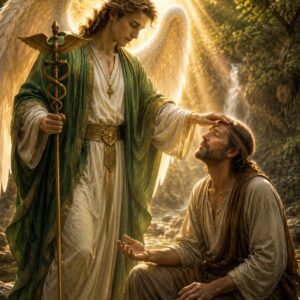
Physical healing is perhaps the aspect of Raphael’s role most commonly recognized by believers. Throughout history, individuals facing illness or injury have prayed for his assistance. Hospitals, healing ministries, and religious organizations have often invoked Raphael’s name as a source of comfort and hope. Many traditions portray him as carrying a staff, symbolizing both healing and guidance. This imagery reflects the belief that healing involves more than simply curing symptoms; it involves restoring balance, strength, and well-being to the entire person.

For many people, physical illness can be one of life’s most difficult challenges. Illness often brings uncertainty, fear, and feelings of vulnerability. During such times, the idea of a compassionate healer watching over them provides comfort and encouragement. Whether viewed through a spiritual or symbolic lens, Raphael’s presence reminds individuals that they are not alone in their struggles. His influence encourages hope, patience, and trust during the healing process.

Yet Raphael’s role extends far beyond physical healing. Many spiritual traditions emphasize that emotional wounds can be just as painful as physical ones. Grief, heartbreak, trauma, anxiety, guilt, and depression can affect every aspect of a person’s life. Emotional suffering often leaves invisible scars that are difficult for others to see. Raphael’s compassion is believed to encompass these wounds as well. His presence offers comfort to those struggling with emotional pain and encourages the gradual process of recovery and renewal.

Emotional healing is rarely instantaneous. Unlike physical injuries that may heal according to predictable timelines, emotional wounds often require patience, reflection, and personal growth. Raphael’s influence is frequently associated with helping individuals navigate this journey. Through prayer, meditation, counseling, supportive relationships, and self-reflection, many people find themselves moving toward greater emotional well-being. Raphael serves as a symbol of the healing power that can emerge when individuals remain open to growth and transformation.

Trauma represents another area where Raphael’s role is often emphasized. Traumatic experiences can leave lasting emotional and psychological effects. Fear, anger, sadness, and feelings of helplessness may persist long after the original event has passed. Spiritual traditions frequently portray Raphael as offering support during the difficult process of healing from trauma. His presence symbolizes hope, reminding individuals that recovery is possible even after profound suffering.

Beyond physical and emotional healing, Raphael is also closely associated with spiritual healing. Spiritual wounds can arise from feelings of disconnection, loss of purpose, moral struggles, or crises of faith. At times, individuals may feel distant from God, uncertain about their beliefs, or disconnected from their deepest values. Raphael’s guidance encourages spiritual renewal and helps individuals rediscover meaning, purpose, and inner peace.

Many people experience periods in life when they question their direction or purpose. Such moments are often accompanied by feelings of confusion and uncertainty. Raphael’s role as a spiritual guide helps individuals navigate these challenges. Rather than providing all the answers, he encourages self-discovery, reflection, and a deeper connection to the divine. His influence reminds seekers that spiritual growth often emerges through life’s difficulties and that healing frequently involves transformation as well as restoration.

Another significant aspect of Raphael’s mission is his connection to travelers and journeys. In the story of Tobit, Raphael accompanies Tobias on a physical journey, guiding and protecting him along the way. Over time, this role expanded symbolically to include life’s broader journeys. Many people view Raphael as a protector of travelers and those embarking on new chapters in their lives. Whether facing a literal journey or a significant life transition, individuals often seek Raphael’s guidance and support.

Life itself can be viewed as a journey filled with unexpected challenges, opportunities, and lessons. Along this path, individuals encounter moments of joy, sorrow, growth, and change. Raphael’s presence symbolizes the idea that guidance and healing are available throughout this journey. His example encourages people to trust the process of growth, even when the destination is not yet visible.

Compassion lies at the heart of Raphael’s identity. Compassion involves more than simply recognizing another person’s suffering; it involves a desire to alleviate that suffering and promote healing. Raphael’s actions consistently reflect this principle. His role reminds humanity of the importance of kindness, empathy, and service to others. In many ways, Raphael inspires individuals not only to seek healing but also to become instruments of healing in the lives of those around them.

The symbolism associated with Raphael further reinforces his role as a healer. He is often depicted carrying a staff, a fish, or a vessel containing healing remedies. The fish originates from the story of Tobit, where Raphael instructs Tobias to use parts of a fish as a means of healing and protection. These symbols emphasize practical action alongside divine assistance. Healing is portrayed not as passive waiting but as a collaborative process involving faith, wisdom, and effort.

Light is another common symbol associated with Raphael. Just as light dispels darkness, healing brings restoration where pain and suffering once existed. Artistic depictions frequently portray Raphael surrounded by radiant green or golden light. Green, in particular, has become closely associated with healing energy and renewal. This imagery reflects the restorative qualities that Raphael represents and reinforces his role as a source of hope and vitality.

Modern society continues to face numerous challenges that make Raphael’s message highly relevant. Chronic illness, mental health struggles, emotional stress, social isolation, and spiritual uncertainty affect millions of people worldwide. Advances in medicine and psychology have greatly improved humanity’s ability to address many forms of suffering, yet the need for compassion, hope, and healing remains as important as ever. Raphael’s example serves as a reminder that healing involves caring for the whole person—body, mind, and spirit.

Interestingly, many aspects of Raphael’s symbolism align with modern understandings of wellness. Contemporary approaches to health increasingly recognize the interconnected nature of physical, emotional, mental, and spiritual well-being. True healing often requires attention to multiple dimensions of life rather than focusing solely on symptoms. Raphael’s role as a healer of the whole person reflects this holistic perspective and continues to resonate with individuals seeking comprehensive well-being.

Throughout history, countless individuals have reported experiences they associate with Raphael’s presence. Some describe feelings of peace during illness. Others recount moments of unexpected clarity, emotional release, or recovery following prayer and meditation. While such experiences remain deeply personal and difficult to verify objectively, they illustrate the powerful impact Raphael’s symbolism can have on those seeking comfort and healing.

Raphael’s enduring popularity also reflects humanity’s deep longing for restoration. People naturally desire wholeness, peace, and relief from suffering. The idea of a compassionate healer who offers guidance and support speaks to one of the most fundamental aspects of the human experience. Whether facing physical illness, emotional hardship, or spiritual uncertainty, individuals are drawn to sources of hope that remind them healing remains possible.

The influence of Raphael extends beyond personal healing into relationships and communities. Healing often involves reconciliation, forgiveness, and the restoration of trust. Broken relationships can create significant emotional pain and division. Raphael’s compassionate example encourages individuals to pursue understanding, empathy, and reconciliation whenever possible. In this way, his influence contributes not only to individual well-being but also to healthier relationships and stronger communities.

Ultimately, Archangel Raphael represents far more than the healing of physical ailments. He embodies the broader concept of restoration in all its forms. His presence reminds humanity that healing can occur within the body, mind, heart, and soul. He encourages individuals to remain hopeful during difficult times and to trust that growth and renewal are possible even after profound suffering.

Whether viewed as a literal heavenly healer or as a powerful symbol of compassion and restoration, Raphael continues to inspire countless people around the world. His example demonstrates that healing is not merely the absence of pain but the presence of peace, balance, and wholeness. Through his guidance, individuals are reminded that every wound has the potential to heal, every hardship can contribute to growth, and every journey of recovery begins with hope.

The enduring legacy of Archangel Raphael lies in his message of compassion, renewal, and transformation. His story reminds humanity that healing is one of the most profound expressions of divine love. In every generation, people continue to seek comfort during times of suffering and guidance during periods of uncertainty. Raphael’s presence serves as a reassuring reminder that healing remains possible, that hope can flourish even in difficult circumstances, and that restoration is available to all who are willing to embrace the journey toward wholeness.

Related Posts

Michael the Magnificent: Unveiling the Warrior Archangel’s Legacy

Dave

Archangel Michael stands among the most revered and recognizable figures in religious and spiritual traditions throughout the world. Across centuries of history, cultures, and faiths, Michael has emerged as a powerful symbol of courage, protection, justice, and unwavering devotion to the divine. Often described as the supreme commander of the heavenly armies, he embodies strength in the face of darkness and righteousness in the midst of conflict. His presence has inspired countless individuals seeking protection, guidance, and reassurance during life’s most difficult challenges. Whether viewed through the lens of Christianity, Judaism, Islam, or broader spiritual traditions, Michael remains one of the most influential and enduring angelic figures ever known.

The name Michael carries profound significance. Derived from the Hebrew phrase “Mi ka El,” it translates to “Who is like God?” This question is not intended to suggest that anyone is equal to God. Rather, it serves as a declaration of God’s unmatched power, authority, and perfection. Michael’s very name reflects his role as a defender of divine truth and a champion of righteousness. It reminds believers that ultimate authority belongs to God alone and that Michael’s strength comes from his unwavering loyalty to the divine will.

Throughout sacred texts and religious teachings, Michael consistently appears as a protector and warrior. He is often portrayed as leading the armies of heaven against the forces of evil, standing as a guardian of both the celestial realm and humanity itself. These depictions have contributed to his reputation as the greatest warrior among the archangels. Unlike earthly warriors who fight for territory, power, or personal gain, Michael’s battles symbolize the eternal struggle between good and evil, truth and deception, light and darkness.

One of the most famous references to Michael appears in the Book of Revelation, where he leads the heavenly hosts in a great battle against Satan and his followers. This dramatic image of Michael defeating the dragon has become one of the most enduring symbols in Christian art and literature. The story represents more than a literal battle; it symbolizes the triumph of righteousness over corruption and the ultimate victory of divine order over chaos. For believers, Michael’s victory serves as a reminder that goodness will ultimately prevail, even when darkness appears powerful and overwhelming.

Michael’s role as a protector extends far beyond the battlefield. Many individuals view him as a guardian who watches over people during times of danger, uncertainty, and spiritual struggle. Throughout history, soldiers, travelers, law enforcement officers, and countless others have prayed for Michael’s protection. His presence is often invoked during moments when courage is needed most. Whether facing physical threats, emotional hardships, or spiritual challenges, believers frequently turn to Michael as a source of strength and reassurance.

Courage is perhaps one of the qualities most closely associated with Archangel Michael. Courage is often misunderstood as the absence of fear. In reality, courage involves moving forward despite fear. Michael’s example teaches that bravery is not about being fearless but about remaining steadfast in the face of adversity. This message resonates deeply because every person encounters situations that require courage. Challenges such as illness, loss, uncertainty, conflict, and personal growth all demand strength and determination. Michael’s presence serves as a reminder that courage is available even during life’s most difficult moments.

The symbolism associated with Michael reinforces these qualities. He is frequently depicted wearing shining armor, carrying a sword, and standing triumphantly over a defeated dragon or demon. Each element carries powerful meaning. The armor represents spiritual protection and preparedness. The sword symbolizes truth, justice, and the ability to cut through deception. The dragon represents evil, fear, temptation, or any force that seeks to undermine righteousness. Together, these symbols communicate Michael’s role as a defender of truth and a protector against harmful influences.

Many spiritual traditions emphasize that Michael’s battles are not merely external conflicts but also internal struggles that take place within every human being. Fear, doubt, anger, resentment, and temptation can all be viewed as forms of darkness that individuals must confront. Michael’s example encourages people to face these challenges honestly and courageously. His influence inspires individuals to overcome self-destructive behaviors, pursue integrity, and remain faithful to their values even when doing so is difficult.

Justice is another central aspect of Michael’s identity. Throughout religious tradition, he is often associated with fairness, moral order, and divine judgment. While Raguel is typically regarded as the Angel of Justice, Michael also plays a significant role in defending what is right and opposing what is wrong. His actions are guided not by personal preference but by divine principles. This commitment to justice has made him a symbol of moral courage and ethical leadership.

Leadership itself is one of Michael’s defining characteristics. As commander of the heavenly hosts, he is entrusted with immense responsibility. Effective leadership requires strength, wisdom, discipline, and the ability to inspire others. Michael exemplifies these qualities through his unwavering dedication to his mission. His leadership serves as a model for individuals in positions of responsibility, reminding them that true authority is exercised through service, integrity, and commitment to the greater good.

Many people find comfort in viewing Michael as a source of spiritual protection. Life often presents situations that leave individuals feeling vulnerable or uncertain. During such times, the idea of a powerful guardian watching over them can provide reassurance and peace of mind. Whether interpreted literally or symbolically, Michael’s protective presence helps people feel less alone when facing challenges. His example reminds them that strength can be found even in moments of weakness and that courage often emerges when it is needed most.

Throughout history, countless stories have emerged describing encounters with Michael’s protective influence. Some individuals report experiencing an overwhelming sense of calm during dangerous situations. Others describe moments of clarity, strength, or unexpected assistance during times of crisis. While such experiences cannot be objectively verified, they reflect the profound impact Michael’s symbolism has had on people’s lives. For many believers, these experiences reinforce their faith in divine protection and guidance.

Michael’s significance extends beyond Christianity. In Judaism, he is regarded as a powerful protector of Israel and a defender of God’s people. Jewish traditions often portray him as an advocate who intercedes on behalf of humanity. In Islam, Michael, known as Mikail, is recognized as one of the principal angels responsible for carrying out God’s commands. He is associated with mercy, provision, and the maintenance of natural order. The presence of Michael across multiple faith traditions highlights his universal importance and enduring appeal.

One reason Michael resonates so strongly across cultures is that he embodies qualities people admire and aspire to develop. Courage, integrity, loyalty, discipline, and strength are virtues valued throughout human history. Michael serves as a powerful representation of these ideals. Whether viewed as a literal angelic being or as a symbolic archetype, his example inspires individuals to cultivate these qualities within themselves.

The concept of spiritual warfare is another important theme associated with Michael. Spiritual warfare does not necessarily refer to physical battles. Instead, it often represents the ongoing struggle between positive and negative influences in human life. Every person faces choices between honesty and deception, compassion and cruelty, courage and fear. Michael symbolizes the determination to choose what is right even when doing so requires sacrifice. His example reminds individuals that the most important battles are often fought within the heart and mind.

Modern life presents its own forms of spiritual warfare. Anxiety, addiction, hopelessness, division, and misinformation can all undermine well-being and personal growth. Michael’s example remains relevant because it encourages individuals to confront these challenges with courage and integrity. His symbolism reminds people that strength is not merely physical but also emotional, moral, and spiritual.

Many artists throughout history have been captivated by Michael’s powerful imagery. Paintings, sculptures, stained-glass windows, and literary works frequently depict him as a majestic warrior standing victorious over darkness. These artistic representations have helped preserve his legacy and communicate his message across generations. Whether displayed in cathedrals, museums, or private collections, images of Michael continue to inspire awe and admiration.

Michael’s influence can also be seen in popular culture. Books, films, television programs, and video games often draw upon his image as a celestial warrior and protector. While these portrayals sometimes take creative liberties, they reflect the enduring fascination people have with his character. The idea of a powerful guardian fighting on behalf of good continues to resonate because it speaks to universal hopes for justice, protection, and triumph over adversity.

Another aspect of Michael’s significance involves personal empowerment. While many individuals seek his protection, his example also encourages them to develop their own inner strength. Michael does not merely rescue people from difficulties; he inspires them to become stronger, more courageous, and more resilient. His influence reminds individuals that they possess the ability to overcome challenges and remain faithful to their principles.

Faith plays a central role in Michael’s story. His unwavering commitment to God’s will demonstrates the power of trust and devotion. Even when confronting immense opposition, Michael remains steadfast because his confidence rests not in himself but in the divine authority he serves. This lesson resonates with many believers who seek to maintain faith during uncertain times. Michael’s example teaches that faith can provide strength, direction, and stability even when circumstances are difficult.

In today’s world, the qualities represented by Michael remain as important as ever. People continue to face challenges that require courage, integrity, and perseverance. Whether dealing with personal hardships, societal issues, or spiritual questions, individuals often look for sources of inspiration that encourage them to keep moving forward. Michael’s enduring legacy provides exactly that. His story reminds humanity that goodness is worth defending, that courage can overcome fear, and that hope remains possible even in the face of adversity.

Ultimately, the lasting significance of Archangel Michael lies in what he represents. He is more than a warrior, more than a protector, and more than a figure from ancient religious texts. He symbolizes the human desire to stand against darkness, defend what is right, and remain faithful to higher principles. His presence serves as a reminder that courage is not the absence of fear but the determination to act despite it. Through his example, countless individuals have found inspiration to face their own battles with strength and conviction.

Whether viewed as a literal celestial commander or as a powerful symbol of courage and righteousness, Archangel Michael continues to inspire people around the world. His image endures because it speaks to universal human experiences and aspirations. In every generation, individuals face challenges that require bravery, integrity, and faith. Michael’s story offers reassurance that these qualities can prevail and that even the most formidable obstacles can be overcome through perseverance and trust in what is right. His legacy remains a timeless testament to the enduring power of courage, protection, and unwavering devotion to the forces of good.

Related Posts

Angelic Harmony: Unveiling the Roles of the Seven Archangels

Dave

Throughout human history, people have looked toward the heavens in search of guidance, protection, wisdom, and hope. Across numerous religious traditions and spiritual teachings, angels have occupied a special place as messengers and servants of the divine. Among these celestial beings, the archangels hold a particularly important role. They are often regarded as powerful spiritual entities entrusted with significant responsibilities that influence both heavenly and earthly affairs. While angels in general are viewed as divine messengers and guardians, archangels are frequently described as leaders among the angelic hosts, carrying out specialized missions on behalf of God and assisting humanity in profound and meaningful ways.

The concept of archangels appears in several major religious traditions, including Christianity, Judaism, and Islam. Although the specific details and interpretations vary among these faiths, the common thread is the belief that certain angels have been given extraordinary authority and responsibility. These archangels serve as intermediaries between the divine and human realms, helping to communicate God’s will, protect believers, inspire spiritual growth, and guide humanity through life’s challenges. Their stories have been preserved through sacred texts, theological writings, artistic depictions, and centuries of spiritual tradition.

Within many Christian traditions, seven archangels are often recognized as holding special prominence. These seven are Michael, Gabriel, Raphael, Uriel, Raguel, Remiel, and Saraqael. Each archangel is associated with distinct virtues, responsibilities, and areas of influence. Together, they represent a broad spectrum of divine qualities, ranging from protection and healing to wisdom, justice, hope, and spiritual guidance. Their collective presence symbolizes the many ways in which divine assistance is believed to manifest in the lives of individuals and communities.

Among the seven archangels, Michael is perhaps the most widely recognized. Often depicted as a mighty warrior clothed in radiant armor, Michael serves as the leader of the heavenly hosts and the defender of righteousness. His name is commonly translated as “Who is like God?” and reflects his unwavering loyalty to the divine. Throughout religious tradition, Michael is portrayed as standing against the forces of darkness and protecting humanity from spiritual harm. He is frequently shown carrying a sword or shield, symbolizing his role as a guardian and protector.

For countless believers, Michael represents courage, strength, and perseverance in the face of adversity. People often turn to him during times of fear, uncertainty, or spiritual struggle. His example serves as a reminder that goodness can prevail over evil and that divine protection is available even in life’s most challenging moments. Michael’s role extends beyond physical protection, encompassing spiritual defense as well. He inspires individuals to remain steadfast in their faith, confront their fears, and pursue what is right even when faced with significant obstacles.

While Michael embodies strength and protection, Gabriel is known primarily as the messenger of God. Throughout sacred history, Gabriel appears at pivotal moments to deliver important revelations and divine announcements. His name is often translated as “God is my strength,” and he is regarded as one of the most trusted messengers in the heavenly realm. Gabriel’s role highlights the importance of communication between the divine and humanity.

Perhaps Gabriel’s most famous appearance in Christian tradition is the Annunciation, during which he informed the Virgin Mary that she would give birth to Jesus Christ. This event established Gabriel as a central figure in Christian theology and reinforced his reputation as a bearer of divine messages. Beyond Christianity, Gabriel also occupies a prominent place within Islam, where he is believed to have delivered God’s revelations to the Prophet Muhammad. His presence across multiple faith traditions underscores the universal significance of divine communication.

Gabriel’s influence extends beyond dramatic revelations. Many spiritual seekers view him as a source of inspiration, creativity, and clarity. Those seeking guidance in communication, writing, teaching, or public speaking often feel drawn to Gabriel’s energy. His presence symbolizes the importance of truth, understanding, and the responsible sharing of knowledge.

Raphael occupies another unique role among the archangels. Known as the Angel of Healing, Raphael is associated with restoration, compassion, and well-being. His name is commonly interpreted as “God heals,” reflecting his mission of bringing comfort and recovery to those who suffer. Throughout religious and spiritual traditions, Raphael is regarded as a powerful source of healing energy that encompasses physical, emotional, and spiritual dimensions.

Many individuals seek Raphael’s assistance when facing illness, emotional pain, or personal challenges. His compassionate presence is believed to provide comfort during times of distress and encourage healing in all areas of life. Raphael’s influence extends beyond curing physical ailments; he is also associated with helping individuals overcome emotional wounds, release past traumas, and achieve greater inner peace.

In addition to healing, Raphael is often considered a guide for travelers and those embarking on important life journeys. His presence reminds believers that healing is not always an instantaneous event but often a gradual process involving growth, self-discovery, and transformation. Through his nurturing influence, Raphael inspires hope and resilience in those facing adversity.

Uriel, often referred to as the Angel of Wisdom, serves as a source of enlightenment and understanding. His name is commonly translated as “God is my Light” or “Fire of God,” reflecting his role as a bringer of illumination and truth. Uriel’s mission centers on helping humanity gain deeper insight into spiritual matters and navigate life’s complexities with wisdom and discernment.

Many traditions portray Uriel as a guardian of knowledge and a guide for those seeking answers to life’s most profound questions. His influence encourages thoughtful reflection, intellectual curiosity, and spiritual growth. Individuals often turn to Uriel during periods of uncertainty, seeking clarity and understanding when faced with difficult decisions.

Uriel’s wisdom extends beyond academic knowledge. True wisdom involves the ability to apply understanding in meaningful and ethical ways. Through his guidance, individuals are encouraged to cultivate discernment, recognize deeper truths, and make choices aligned with their highest values. Uriel’s presence serves as a reminder that wisdom is a lifelong pursuit and that genuine understanding often emerges through experience, reflection, and spiritual awareness.

The archangel Raguel represents another essential aspect of divine order. Known as the Angel of Justice, Raguel is responsible for maintaining fairness, harmony, and balance within the celestial realms. His name, often translated as “Friend of God,” reflects his close relationship with divine principles and his dedication to upholding righteousness.

Raguel’s role involves ensuring that justice prevails and that harmony is preserved among both celestial and earthly communities. He is frequently viewed as a mediator who helps resolve conflicts and restore balance when disputes arise. His influence encourages honesty, accountability, and fairness in all aspects of life.

People seeking resolution in difficult situations often turn to Raguel for guidance. Whether addressing personal conflicts, workplace challenges, or broader issues of injustice, his presence symbolizes the possibility of reconciliation and equitable solutions. Raguel reminds humanity that true justice involves compassion as well as accountability and that lasting harmony can only be achieved through fairness and understanding.

Remiel, often known as the Angel of Hope, occupies a special place among the archangels. During times of hardship, loss, and uncertainty, Remiel serves as a source of encouragement and inspiration. His presence reminds individuals that even in the darkest moments, hope remains possible.

Life inevitably presents challenges that test human resilience. During such times, despair can feel overwhelming. Remiel’s mission is to help individuals rediscover optimism and find the strength to persevere. His influence encourages faith, courage, and trust in the possibility of a brighter future.

Many spiritual traditions associate Remiel with renewal, resurrection, and transformation. He helps individuals move beyond discouragement and embrace new possibilities. Whether facing personal setbacks, grief, or periods of uncertainty, those who seek Remiel’s guidance often report experiencing renewed confidence and determination. His presence serves as a powerful reminder that hope is not merely wishful thinking but a source of strength that enables individuals to overcome adversity and continue moving forward.

The final member of the seven archangels is Saraqael, also known in some traditions as Sariel. Saraqael is commonly associated with spiritual guidance, enlightenment, and the pursuit of divine truth. His role centers on assisting seekers as they navigate their spiritual journeys and strive to deepen their understanding of themselves and the divine.

Unlike archangels whose missions involve protection, healing, or justice, Saraqael focuses on guidance and direction. He is often viewed as a celestial mentor who helps individuals discover their purpose and align their lives with higher truths. Through intuition, insight, and spiritual inspiration, Saraqael encourages seekers to trust their inner wisdom and remain open to divine guidance.

Many people experience periods in life when they feel uncertain about their direction or purpose. During such times, Saraqael’s influence is believed to provide clarity and encouragement. His guidance often manifests through intuition, meaningful coincidences, spiritual insights, and moments of profound understanding. Rather than dictating a specific path, Saraqael helps individuals recognize the signs and opportunities that lead them toward personal growth and spiritual fulfillment.

Together, these seven archangels represent a comprehensive portrait of divine assistance. Michael offers protection and courage. Gabriel delivers revelation and truth. Raphael provides healing and restoration. Uriel illuminates the mind with wisdom. Raguel ensures justice and harmony. Remiel inspires hope and resilience. Saraqael guides seekers toward purpose and enlightenment.

Although interpretations of the archangels vary across different religious traditions, their enduring appeal lies in the universal qualities they represent. Humanity has always sought protection from danger, healing from suffering, wisdom during uncertainty, justice in times of conflict, hope during hardship, and guidance when facing life’s many crossroads. The archangels embody these aspirations and serve as powerful symbols of divine support.

Their stories continue to inspire people around the world because they address fundamental human needs. Whether viewed as literal celestial beings or as symbolic representations of spiritual virtues, the archangels remind us that we are not alone in our struggles. They offer reassurance that strength, wisdom, healing, justice, hope, and guidance are always available to those who seek them.

In an increasingly complex world, the timeless lessons associated with the archangels remain relevant. Their examples encourage individuals to live with courage, compassion, integrity, and faith. They remind humanity that spiritual growth is a lifelong journey and that divine assistance often appears in ways both subtle and profound. Through their enduring presence in religious tradition and spiritual practice, the seven archangels continue to serve as beacons of light, guiding humanity toward greater understanding, deeper faith, and a more meaningful connection with the divine.

Related Posts