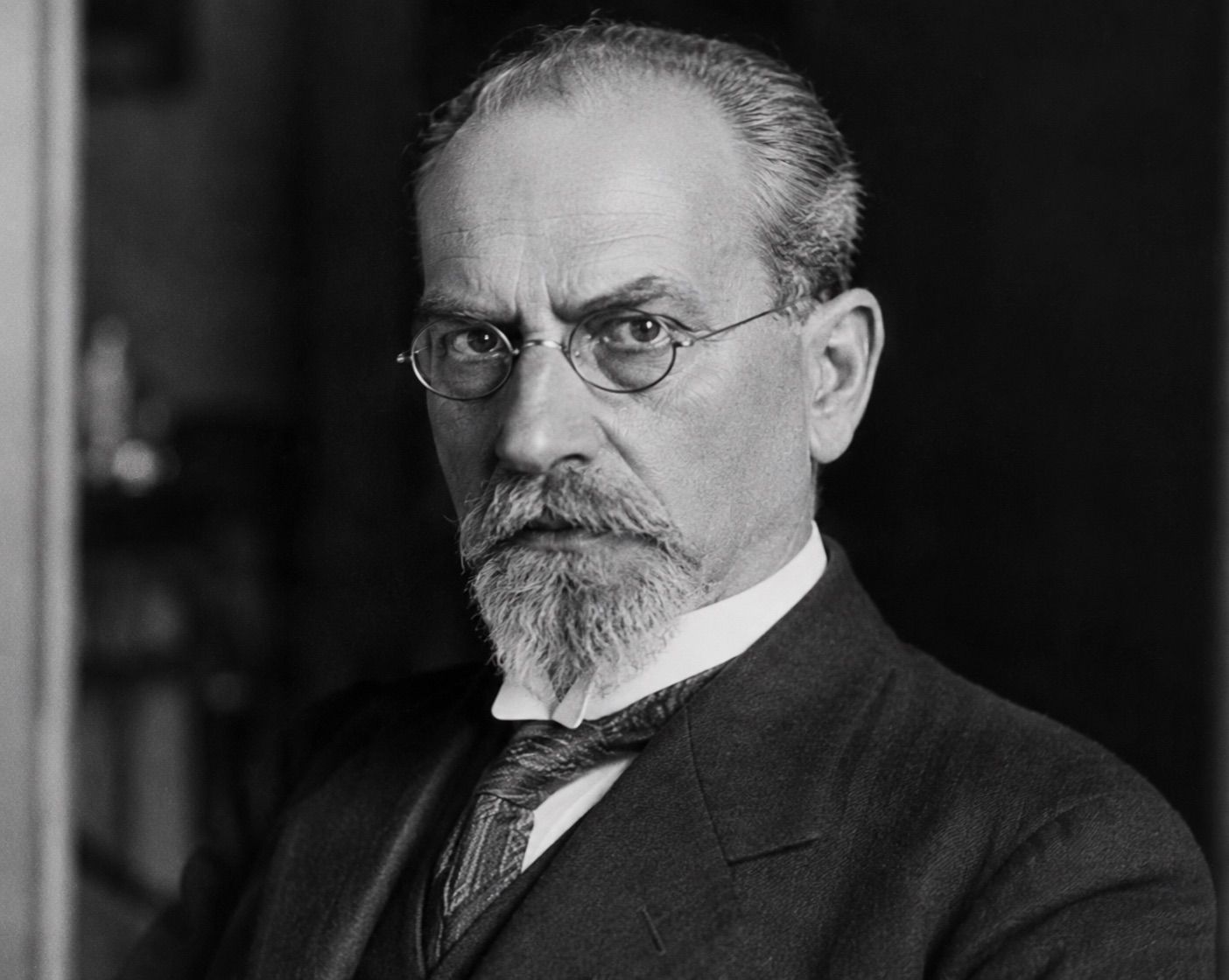
I’ve always been fascinated by Edmund Husserl, a philosopher who’s both familiar and foreign to me. I mean, who wouldn’t be captivated by the idea of phenomenology – this radical approach to understanding human experience that seeks to strip away our preconceptions and get back to the raw, unfiltered data? It sounds like a tantalizing promise: if we just bracket out our assumptions, suspend judgment, and focus on the thing itself, mightn’t we unlock some profound insight into the nature of reality?
As I delve into Husserl’s work, I find myself drawn to his frustration – not with the world, exactly, but with language. He’s constantly railing against the way words get in the way, how they inevitably color our perceptions and lead us astray from the pure essence of things. It’s a feeling I’m all too familiar with. In my own writing, I’ve struggled to find the right words to express what I want to say. The language feels clumsy, inadequate – as if it’s forever lagging behind my thoughts.
Husserl’s concern with language is deeply tied to his notion of intentionality: the idea that consciousness always directed towards something, whether an object or another person. He argues that our experiences are inherently intentional, infused with meaning and significance. But what happens when we try to capture these experiences in words? Don’t we risk losing the very essence of them – their texture, their nuance, their context?
I think about my own struggles with writing about my emotions. I’ve tried to put into words the complex web of feelings that swirl inside me, but it’s like trying to grasp a handful of sand: the harder I squeeze, the more slips away from me. It’s as if language is inherently insufficient for capturing the messy, lived experience of being human.
Husserl’s solution – or rather, his attempt at one – lies in the concept of “eidetic reduction.” He wants us to strip away our everyday assumptions and preconceptions, leaving only the essential features of an experience. It sounds like a form of mental archaeology: digging beneath the surface to uncover the underlying structure of reality.
But what does this mean in practice? How do we actually achieve this kind of radical detachment from our own experiences? Husserl’s method involves systematic reflection – breaking down complex phenomena into their constituent parts, and then analyzing each component in minute detail. It sounds like a never-ending task: as soon as I think I’ve grasped one aspect of an experience, another part slips away from me.
I’m not sure if I’ll ever master this technique, but Husserl’s ideas have left me feeling both unsettled and intrigued. His emphasis on the importance of subjective experience has made me realize how often I’ve relied on abstract concepts to navigate the world. By contrast, his phenomenological approach encourages me to slow down, observe more closely – to pay attention to the small, seemingly insignificant details that might hold the key to a deeper understanding.
As I continue to explore Husserl’s work, I find myself returning to this sense of disorientation: the feeling of being lost in the labyrinthine corridors of my own mind. It’s as if his ideas have opened up a new path for me – one that winds through the dense forest of my own thoughts and feelings. Will I ever find my way out? Or will I get stuck in this endless loop of self-reflection, forever chasing after the elusive essence of things? Only time (and further reading) will tell.
I’ve been reading Husserl’s lectures on phenomenology, and one thing that keeps striking me is his emphasis on the importance of intersubjectivity. He argues that our experiences are not isolated events, but rather they’re deeply intertwined with the experiences of others. We’re always already embedded in a social world, where our perceptions and understanding are shaped by our interactions with other people.
This idea resonates with me because I’ve always felt like writing is a solitary activity – just me, my thoughts, and the blank page staring back at me. But Husserl’s notion of intersubjectivity suggests that even in solitude, I’m not entirely alone. My experiences are influenced by the people around me, their words, actions, and emotions all contributing to the rich tapestry of my understanding.
I think about how often I’ve written about my own feelings and thoughts without ever really considering how they might intersect with those of others. Husserl’s emphasis on intersubjectivity makes me realize that even my most personal experiences are not entirely mine alone – they’re inflected by the social world around me, shaped by the relationships and interactions that make up my life.
This realization is both exhilarating and unsettling. Exhilarating because it suggests that there’s a deeper level of meaning and connection waiting to be uncovered; unsettling because it challenges my notion of self as a fixed, autonomous entity. If my experiences are always already intersubjective, then where does that leave me? Am I still the author of my own story, or am I just a character in someone else’s narrative?
As I continue to grapple with these questions, I find myself drawn to Husserl’s notion of “the other.” He argues that our understanding of ourselves is always mediated by our relationship with others – that we can only truly know ourselves through the eyes and experiences of those around us. This idea feels both empowering and humbling at the same time.
Empowering because it suggests that my relationships with others are a source of strength and insight; humbling because it acknowledges the limits of my own understanding, reminding me that I’m always already caught up in a web of social connections that shape and inform my experiences. It’s a paradoxical feeling – one that leaves me both more confident in the importance of human connection and more aware of the complexities involved in navigating those relationships.
I’m not sure where this line of thinking will lead, but Husserl’s ideas have already opened up new pathways for me to explore. As I continue to read and reflect on his work, I find myself wondering what it might mean to truly inhabit a world of intersubjectivity – to live in a space where my experiences are always already connected to those of others. Is that a world of greater depth and meaning, or is it one of endless complexity and confusion? Only time will tell.
As I delve deeper into Husserl’s ideas on intersubjectivity, I’m struck by the way he emphasizes the importance of empathy in understanding others. He argues that we can’t truly know another person unless we’re able to put ourselves in their shoes and see things from their perspective. This makes me think about my own relationships with friends and family – how often do I really try to see things from their point of view, or am I just going through the motions of listening?
I remember a conversation I had with my best friend recently, where she was struggling with some personal issues. I listened attentively, trying to offer words of encouragement, but inside I was thinking about how I would handle it if I were in her shoes. It wasn’t until later, when we were hanging out and just chatting, that I realized I had been so focused on my own reaction that I hadn’t really tried to understand what she was going through.
Husserl’s notion of empathy as a way of understanding others resonates with me because it feels like the opposite of how I usually approach relationships. Instead of trying to see things from someone else’s perspective, I tend to get caught up in my own thoughts and feelings – and then wonder why things don’t click between us.
But what does it mean to truly inhabit another person’s experience? Can we ever really know what someone else is going through, or are we always limited by our own biases and assumptions? Husserl’s ideas on empathy suggest that it’s a process of ongoing effort – one that requires us to be open, receptive, and willing to learn.
As I continue to grapple with these questions, I’m struck by the way Husserl’s philosophy challenges me to think about my own place in the world. He emphasizes the importance of taking responsibility for our own experiences, rather than just blaming external circumstances or other people. This makes me realize that even when things don’t go as planned – like when I fail at writing a piece, or struggle with relationships – it’s up to me to find meaning and purpose in those moments.
It’s a daunting prospect, but also kind of liberating. If I’m truly responsible for my own experiences, then I have the power to shape them into something meaningful. It’s like Husserl says – that our experiences are always already intentional, infused with meaning and significance. The question is, what do I want to make of that?
As I ponder this idea of taking responsibility for my own experiences, I’m reminded of the times when I’ve felt stuck or uncertain about how to move forward. Maybe it’s a writing project that’s not going as planned, or a relationship that’s hitting a rough patch. In those moments, I often find myself getting caught up in external circumstances – blaming the world for my problems, rather than taking ownership of them.
But Husserl’s philosophy suggests that this kind of externalization is precisely what gets in the way of genuine understanding and growth. By focusing on our own experiences and intentions, we can begin to see things more clearly – not just our own thoughts and feelings, but also the ways in which they’re intertwined with those of others.
This idea has been percolating in my mind lately as I’ve been struggling to finish a writing project. I’ve been feeling stuck, like I’m just going through the motions without really making progress. But instead of blaming myself or external circumstances, I’ve started to wonder: what if I took responsibility for this experience? What if I saw it as an opportunity to explore my own intentions and desires – rather than getting bogged down in frustration or self-doubt?
It’s a scary prospect, but also kind of exhilarating. What would it mean to take ownership of my writing, to see it as an extension of my own experiences and intentions? Would I be able to tap into a deeper level of creativity and inspiration – one that’s not just about producing words on a page, but about exploring the very essence of what it means to write?
As I continue to explore these questions, I’m drawn back to Husserl’s notion of eidetic reduction. He argues that by stripping away our everyday assumptions and preconceptions, we can uncover the underlying structure of reality – including our own experiences and intentions. It sounds like a radical act of self-discovery: one that requires us to be willing to let go of our existing understanding, in order to reveal something new.
I’m not sure if I’m ready for such a profound level of introspection – but at the same time, I feel compelled to try. What would it mean to really see my writing as an extension of myself – rather than just a means to an end? Would I be able to tap into a deeper sense of purpose and meaning, one that’s not just about producing words on a page, but about exploring the very essence of what it means to be human?
As I sit here, staring at my computer screen with a mixture of trepidation and excitement, I realize that Husserl’s ideas have opened up a whole new level of possibility for me. His emphasis on intentionality, intersubjectivity, and empathy has made me see the world – and myself – in a completely different light. It’s as if his philosophy has unlocked a door to a hidden room within my own mind, where all sorts of new possibilities and questions are waiting to be explored.
And so I take a deep breath, and begin to write. Not just with my hands on the keyboard, but with an open heart and mind – ready to explore the unknown territories of my own experiences and intentions.