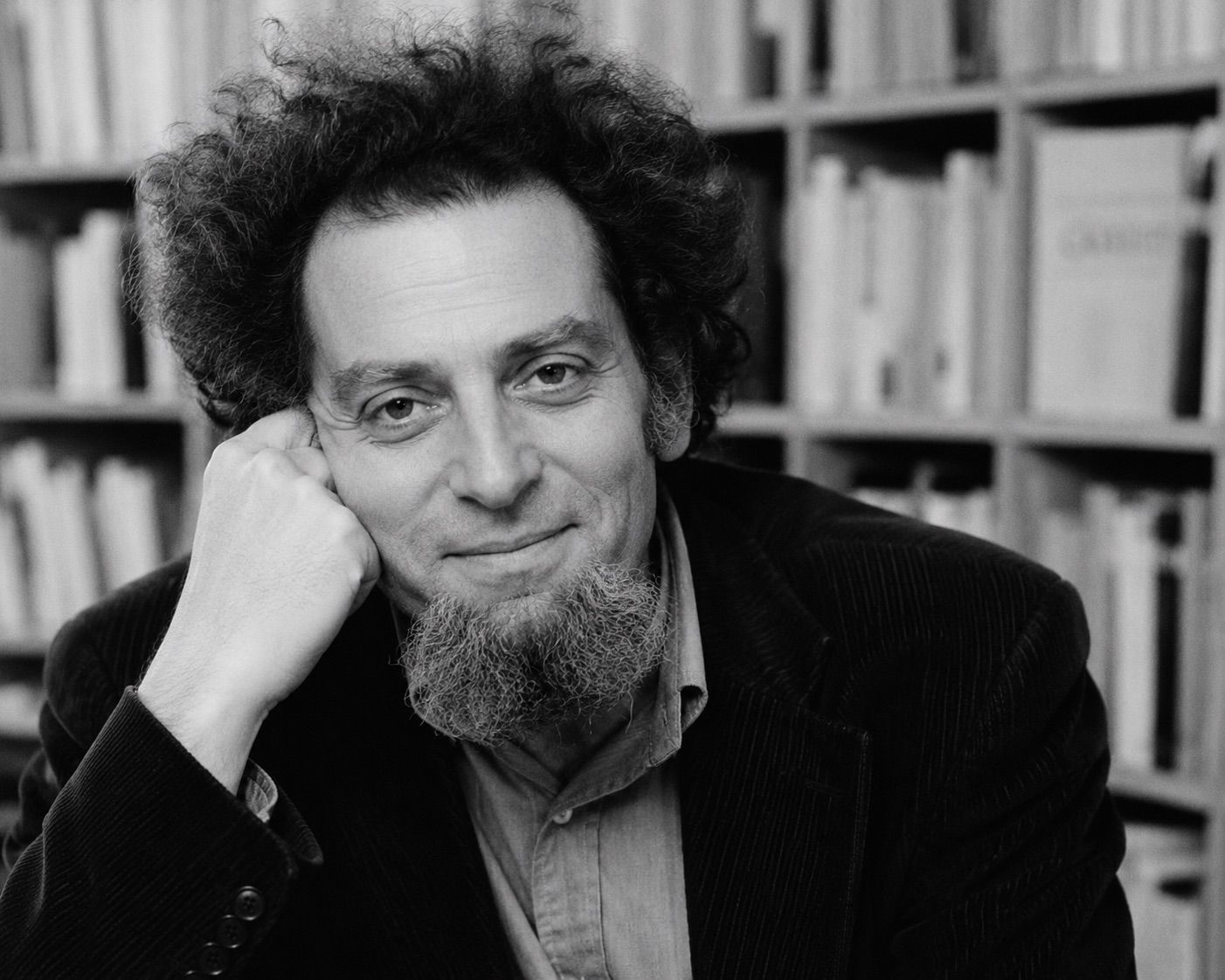
I’ve been fascinated by Georges Perec for a while now, but it’s only recently that I started to grasp why he holds such a peculiar allure for me. It began with his novel “A Void”, which I stumbled upon in my junior year of college. I was drawn to the sheer audacity of writing an entire book without using the letter E. I mean, who tries something like that? At first, it seemed like a clever parlor trick, but as I delved deeper into the story, I started to appreciate the complexity and nuance behind Perec’s experiment.
What struck me was how his obsession with the void – both literal and figurative – resonated with my own struggles with uncertainty. As someone who’s always trying to figure out what she wants to do next, I feel like I’m constantly navigating a void of unknown possibilities. It’s a feeling that’s hard to shake, especially when faced with the pressures of adulthood. Perec’s work, on the other hand, is a masterclass in embracing ambiguity and finding meaning within it.
I’ve been reading more of his essays and writings, and what I find myself drawn to are the moments where he grapples with the relationship between language and reality. He writes about how words can both create and obscure our understanding of the world, and that’s a tension I’m familiar with as a writer. When I’m struggling to put my thoughts into words, I often feel like I’m trying to capture a slippery fish – it’s always just out of reach.
Perec’s concept of “infra-ordinary” experiences has also been on my mind lately. He argues that the most revealing insights can be found in the mundane, everyday moments that we often overlook or take for granted. This idea speaks to me because I’ve come to realize how much I value routine and comfort. There’s a sense of security in knowing what to expect from each day, but at the same time, it can also feel stifling – like I’m missing out on something more profound.
As I reflect on Perec’s work, I’m struck by the tension between order and chaos that runs throughout his writing. He’s both fascinated by the patterns and structures that govern our lives, and yet he’s also drawn to the randomness and unpredictability of human experience. This ambivalence feels deeply personal to me – it’s like I’m caught between a desire for clarity and a recognition that life is inherently messy.
I’m not sure if I’ve fully grasped Perec’s message, or even if there is one single message to grasp. Part of the allure of his work lies in its complexity and refusal to be reduced to simple truths. What I do know is that his writing has given me permission to embrace my own uncertainty – to see it as a fertile ground for exploration rather than something to be feared or overcome.
In many ways, Perec’s legacy feels like a puzzle that I’m still trying to solve. His work is both intimate and abstract, inviting readers to reflect on their own experiences while also acknowledging the limits of language and understanding. As someone who writes as a way of thinking through my thoughts, I appreciate how his writing encourages me to question everything – including myself.
Ultimately, what draws me to Perec’s work is its willingness to confront the void head-on, without trying to fill it with easy answers or comforting certainties. His writing is an acknowledgment that life is full of unknowns, and that sometimes the most profound insights come from embracing those uncertainties rather than trying to escape them.
As I continue to delve into Perec’s work, I find myself returning to his concept of the “infra-ordinary” experience again and again. It’s as if he’s tapping into a deep well of understanding within me, one that resonates with my own experiences of feeling lost in the mundane routines of everyday life. I think about how often I’ve found myself stuck in traffic, staring blankly at the same old scenery, wondering where it all leads. Or how I’ll be going about my day, doing the same tasks over and over again, and suddenly feel a pang of restlessness – a sense that there must be more to life than this.
Perec’s writing suggests that these moments are not just minor annoyances or distractions from the “real” life we’re meant to be living. Rather, they contain within them the seeds of insight, waiting to be harvested and examined. It’s a provocative idea, one that challenges me to reexamine my own relationship with routine and familiarity.
I’m struck by how Perec’s work is both deeply personal and utterly abstract at the same time. He writes about his own experiences as a writer, but also about the broader implications of language and reality on our understanding of the world. It’s as if he’s holding up a magnifying glass to the human condition, revealing the intricate web of connections that binds us all together.
I find myself wondering what it would be like to write in the same way – to craft sentences and stories that are both deeply personal and universally relatable at the same time. To capture the essence of human experience without resorting to clichés or easy answers. It’s a daunting task, one that makes me feel both excited and intimidated.
As I continue to explore Perec’s work, I’m beginning to see his writing as a kind of ” cartography” – a map of the inner territories we all navigate, but often don’t take the time to chart. His essays and stories are like X-rays of the human psyche, revealing the hidden patterns and contradictions that shape our thoughts and actions.
And yet, even with this newfound appreciation for Perec’s work, I still feel a sense of unease – as if I’m only scratching the surface of his ideas, and there’s still so much more to uncover. It’s a feeling that’s both exhilarating and unsettling, like being at the edge of a precipice, staring out into the unknown.
The more I delve into Perec’s work, the more I’m struck by the sense that he’s not just writing about himself, but also about all of us – our collective experiences, desires, and anxieties. It’s as if he’s created a sort of mirror, reflecting back at me my own fears and uncertainties, while also revealing the universal human condition.
I’ve been thinking a lot about his concept of “l’infime” (the infinitesimal), which refers to those tiny moments that make up our lives – the brief glimpses of beauty, the flashes of insight, the moments of connection with others. Perec argues that these tiny moments are what give life its richness and depth, but also its fragility.
For me, this concept speaks to my own experiences of feeling lost in the everyday routine. I’ve always been someone who gets caught up in the minutiae of daily life – the commute, the chores, the endless stream of social media updates. But Perec’s writing has taught me to slow down, to pay attention to these tiny moments that make up our lives.
It’s funny, because when I first started reading Perec, I thought his work was all about clever wordplay and intellectual gamesmanship. But the more I’ve read, the more I realize that it’s actually a deep exploration of what it means to be human – to be vulnerable, to be uncertain, to be seeking connection with others.
I’m not sure if I’ve mentioned this before, but Perec’s writing has also made me think about my own relationship with silence. As someone who writes as a way of processing their thoughts, I often find myself feeling anxious when I’m not producing words – like there’s something inside me bursting to get out. But Perec’s work shows me that silence is not just the absence of sound; it’s also a presence, a space for contemplation and reflection.
I think this is what draws me to his writing – its willingness to inhabit the spaces between words, to explore the unspoken and the unsaid. It’s a quality that I’m still trying to develop in my own writing, but one that I know will take time and practice.
As I continue to read Perec, I find myself returning to certain themes again and again – the void, the infra-ordinary, the infinitesimal. But each time I revisit these ideas, they seem to unfold in new and unexpected ways. It’s as if Perec’s writing is a puzzle that I’m constantly trying to solve, but one that keeps shifting and evolving before my eyes.
I guess what I’m trying to say is that Perec’s work has become a sort of companion for me – someone who understands the complexities and contradictions of human experience. His writing offers no easy answers or solutions, but instead presents a kind of existential map, guiding us through the winding paths of life with its twists and turns.
And yet, even with this newfound appreciation for Perec’s work, I still feel a sense of unease – as if I’m only scratching the surface of his ideas, and there’s still so much more to uncover. It’s a feeling that’s both exhilarating and unsettling, like being at the edge of a precipice, staring out into the unknown.
This uneasy sense is something I’ve grown accustomed to when engaging with Perec’s work. It’s as if he’s constantly pushing me to confront my own assumptions and biases, to question everything I think I know about writing, language, and reality. And yet, even as I feel overwhelmed by the complexity of his ideas, I’m drawn back in, like a moth to a flame.
Perhaps it’s because Perec’s writing is so intimately tied to his own experiences as a writer and a human being. He writes about his struggles with creativity, his anxieties about language, and his fascination with the mundane details of everyday life. In doing so, he creates a sense of vulnerability and intimacy that makes me feel like I’m reading his private thoughts, rather than some polished literary treatise.
I find myself wondering what it would be like to write in this way – to craft sentences that are both deeply personal and universally relatable at the same time. To capture the essence of human experience without resorting to clichés or easy answers. It’s a daunting task, one that makes me feel both excited and intimidated.
As I continue to read Perec, I’m struck by his use of language as a kind of ” cartography” – a map of the inner territories we all navigate, but often don’t take the time to chart. His essays and stories are like X-rays of the human psyche, revealing the hidden patterns and contradictions that shape our thoughts and actions.
And yet, even with this newfound appreciation for Perec’s work, I still feel a sense of unease – as if I’m only scratching the surface of his ideas, and there’s still so much more to uncover. It’s a feeling that’s both exhilarating and unsettling, like being at the edge of a precipice, staring out into the unknown.
I think this is what draws me to Perec’s writing – its willingness to inhabit the spaces between words, to explore the unspoken and the unsaid. It’s a quality that I’m still trying to develop in my own writing, but one that I know will take time and practice.
As I reflect on Perec’s work, I’m struck by his ability to balance intellectual rigor with emotional vulnerability. He writes about complex ideas like semiotics and structuralism, but also about the mundane details of everyday life – the way a sentence can sound in your head before you write it down, or the feeling of being lost in a crowd.
For me, this balance is what makes Perec’s writing so compelling. It’s as if he’s created a kind of literary laboratory, where ideas are constantly being tested and refined through the process of writing itself. And it’s this willingness to experiment and take risks that I find so inspiring – not just as a writer, but as a human being.
I’m starting to see Perec’s work as a kind of mirror, reflecting back at me my own fears and uncertainties, while also revealing the universal human condition. It’s a strange feeling, like looking into a funhouse mirror – distorted, yet somehow familiar. And it’s this sense of recognition that draws me in, again and again, to Perec’s writing.
I’m not sure where this journey will take me, or what new insights I’ll gain from continuing to read Perec’s work. But for now, I’m content to sit at the edge of this precipice, staring out into the unknown, and seeing where it takes me.