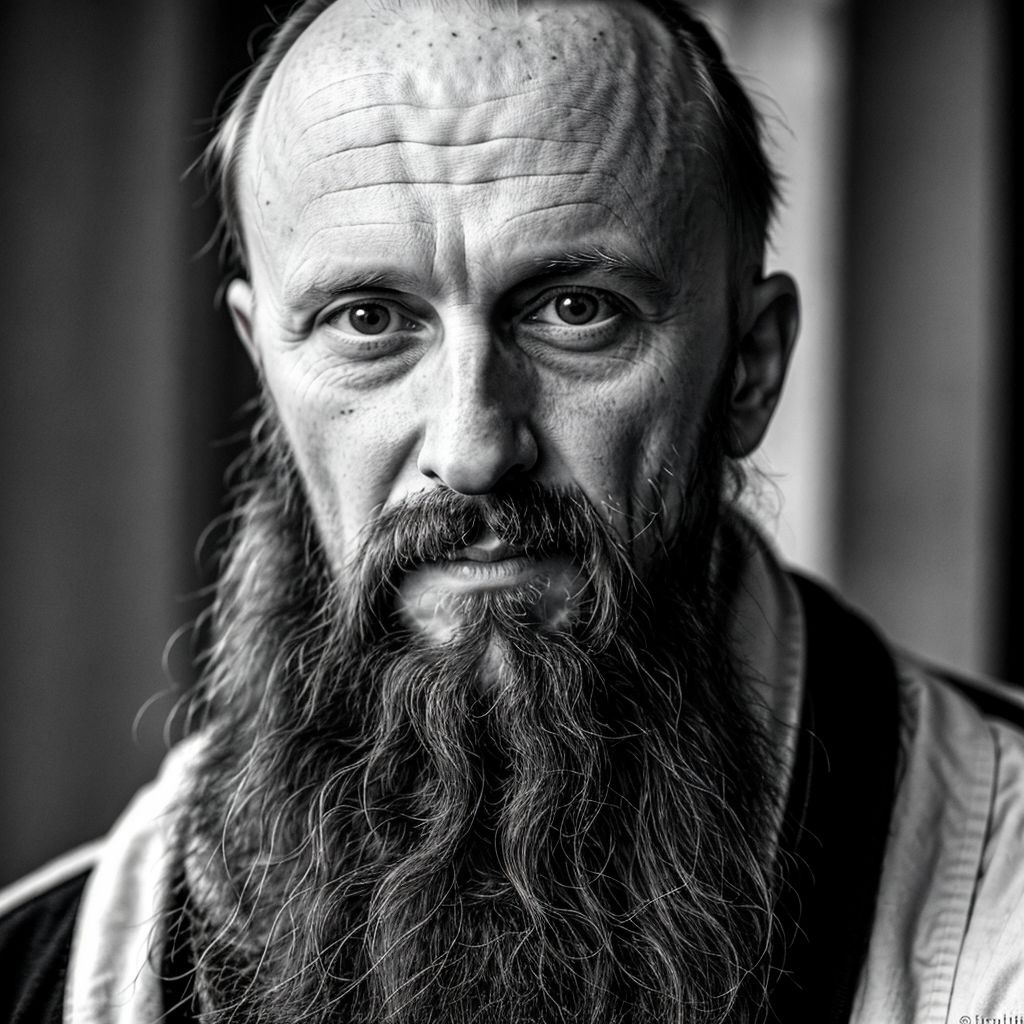
Mikhail Bakhtin. I’m still trying to wrap my head around him, but the more I read, the more I feel like he’s speaking directly to me – or rather, to the parts of myself that get tangled up in language and meaning.
What strikes me most about Bakhtin is his obsession with the power dynamics at play when we communicate. He talks about the “dialogical” nature of language, how it’s always a conversation between voices, not just one speaker spewing forth thoughts. It sounds obvious, but think about it – most of us are so used to thinking of language as something that just flows out of us, like water from a tap. But what if our words are actually part of a bigger exchange? What if they’re responding to the voices we’ve internalized, or anticipating the responses we expect to receive?
I find myself nodding along with Bakhtin when he talks about how language is always embedded in social contexts – family, culture, power structures. It’s like I’m reliving my own college experience all over again, surrounded by people from different backgrounds and ideologies, trying to navigate the complexities of group dynamics. How do you even begin to make sense of it all? Bakhtin would say that our words are always negotiating these social contexts, either explicitly or implicitly – a concept he calls “addressivity.”
But here’s where things get really interesting for me: Bakhtin’s theories on the carnivalesque. He writes about how societies often have secret, unofficial moments of revelry and subversion, where people let loose and challenge the norms. I think about my own experiences with social media – how it can feel like a never-ending carnival of sorts, with everyone performing for an audience, trying to outdo each other in likes and followers. And yet, isn’t that also a space where we can momentarily break free from our societal roles? Where we can be someone else, if only for a moment?
Bakhtin’s idea is that these carnivalesque moments are actually a way of subverting the dominant narratives – a way of poking fun at the social hierarchies and power structures that govern our lives. And yet, I’m not entirely convinced. Can we really trust that these moments of rebellion will ultimately lead to real change? Or do they just serve as a temporary distraction from the more entrenched problems?
I don’t know if Bakhtin would have seen it this way, but his theories make me wonder about my own relationship with language and power. Am I using words to challenge the status quo, or am I just playing along? Do I even know what the “status quo” is in the first place? It’s a weird feeling, like being stuck between two mirrors – every time I think I see something clear, it starts to warp and distort.
Maybe that’s what Bakhtin is really getting at: how language is always slipping through our fingers, defying our attempts to pin it down. We can try to analyze it, theorize about it, but ultimately, we’re just making educated guesses. And in the end, maybe that’s the only thing I can truly trust – my own uncertainty.
As I delve deeper into Bakhtin’s work, I find myself getting lost in the labyrinthine corridors of his ideas. His concept of “chronotope” – the way time and space intersect to shape our understanding of the world – resonates with me on a primal level. I think about how my own college experience was marked by a sense of temporal dislocation, as if I was navigating multiple time zones simultaneously. The past, present, and future were all jumbled together in a way that made it hard to keep track of what was real and what wasn’t.
Bakhtin would say that this is precisely the kind of experience that reveals the chronotope at work – how our perceptions of time and space are always being reconfigured by social and cultural forces. And yet, as I look back on those years, I’m struck by how disorienting it all felt. Like, what was real? Was it the friends I made, or the personas we presented to each other? Was it the grades I earned, or the grades I thought I deserved?
I’m starting to wonder if this is what Bakhtin means by “novelization” – how our lives become narratives that we’re constantly rewriting and revising. It’s like I’m always trying to put together a puzzle with pieces that don’t quite fit, hoping to create some kind of coherent story out of the chaos. But is it even possible to create a narrative that accurately reflects reality? Or are we always just spinning yarns, weaving tapestries of meaning from threads of experience?
I think about how I used to write in my journal during college – pouring out all my thoughts and feelings onto the page like they were precious cargo. Was that really writing, or was it just a form of confessional therapy? Did I think I was creating some kind of truth, or was I just trying to make sense of the world around me?
As I read Bakhtin’s words, I feel like I’m gazing into a funhouse mirror – the reflections are distorted, but they’re also strangely familiar. It’s as if he’s holding up a magnifying glass to my own struggles with language and power, revealing all the ways in which I’ve been trying to navigate the complexities of communication.
And yet, even as I’m drawn deeper into Bakhtin’s theories, I’m starting to feel a growing sense of unease. Am I just using his ideas to justify my own half-baked intuitions? Or am I actually beginning to see the world in a new light – to glimpse the underlying structures that shape our words and actions?
I don’t know if I’ll ever fully grasp Bakhtin’s ideas, but I’m willing to keep exploring – to follow him down the rabbit hole of language and meaning. Because even when I get lost, even when I feel like I’m drowning in a sea of uncertainty, there’s something about his words that feels strangely liberating. Like, maybe it’s okay not to know what I’m doing. Maybe it’s enough just to be here, on the precipice of understanding, feeling the ground give way beneath my feet.
As I continue to read Bakhtin’s work, I find myself becoming increasingly fascinated by his concept of the “authoritative discourse.” He argues that dominant narratives often masquerade as objective truth, suppressing alternative voices and perspectives in the process. This resonates deeply with me, given my own experiences navigating academic and social hierarchies.
I think about how I used to feel like I had to conform to certain expectations in order to fit in – to speak in a certain way, to use a particular tone of voice, to present myself as a certain kind of person. It was exhausting, and it left me feeling like I was constantly performing for an audience, rather than being true to myself.
Bakhtin’s ideas suggest that this is precisely what happens when we internalize authoritative discourses – we begin to see ourselves through the lens of dominant narratives, suppressing our own unique experiences and perspectives in the process. It’s a kind of linguistic Stockholm syndrome, where we become so invested in maintaining social harmony that we sacrifice our own agency and autonomy.
But what if we could break free from these constraints? What if we could create new discourses, new ways of speaking and being that challenge dominant narratives and allow for more diverse voices to be heard?
This is where Bakhtin’s concept of the “novel” becomes particularly relevant. For him, the novel is a space where alternative discourses can emerge, where marginalized voices can be amplified, and where the boundaries between self and other are blurred. It’s a kind of linguistic utopia, where we can reimagine ourselves and our relationships with others in new and innovative ways.
As I read Bakhtin’s words, I feel like I’m being invited into this utopian space – a space where language is not a fixed or stable entity, but rather a dynamic and ever-changing system that reflects the complexities of human experience. It’s exhilarating and terrifying all at once, because it suggests that we have the power to shape our own narratives, to create new meanings and new worlds through our words.
But what does this mean in practice? How do we actually go about creating these new discourses, these alternative ways of speaking and being? And what happens when we try to challenge dominant narratives – do we face resistance, or are we met with silence?
These questions swirl around me like a maelstrom as I delve deeper into Bakhtin’s work. I feel like I’m standing on the edge of a precipice, staring out into a vast and uncharted territory. It’s both exhilarating and terrifying, because I know that I’ll have to navigate this unknown landscape in order to find my own voice, my own way of being in the world.
As I look around at the people and places that shape my life, I wonder – what are the dominant narratives that we’re living with? What are the ways in which we’ve internalized authoritative discourses, suppressing our own unique experiences and perspectives in the process?
And most pressingly – how do we begin to challenge these narratives, to create new discourses that allow for more diverse voices to be heard?
I find myself lost in thought as I ponder Bakhtin’s words on the novel as a space of resistance against dominant narratives. It’s like he’s speaking directly to me, asking me to consider the ways in which my own life has been shaped by societal expectations and internalized discourses.
I think about my college experience again – how I felt pressure to conform to certain norms, to present myself in a certain way in order to fit in. It was exhausting, and it left me feeling like I was constantly performing for an audience rather than being true to myself. But what if I had been able to challenge those narratives? What if I had been able to create new discourses that allowed for more diverse voices to be heard?
As I delve deeper into Bakhtin’s work, I start to see my own experiences reflected back at me in new and unexpected ways. I realize that the struggles I faced in college were not unique to me – that they are part of a larger pattern of social control and narrative suppression.
This realization is both empowering and unsettling. On one hand, it gives me hope that I can make a difference by challenging dominant narratives and creating new discourses. But on the other hand, it makes me aware of just how deeply ingrained these systems of oppression are – how difficult it will be to change them.
I’m struck by Bakhtin’s concept of “heteroglossia” – the idea that language is always marked by multiple voices and perspectives, even within a single text. It’s like he’s saying that our words are never truly our own, but rather a complex web of influences and references that reflect the social and cultural contexts in which we live.
This resonates with me on a deep level, because I’ve always felt like my own voice is somehow split between different personas and identities. Like, there’s the “me” who writes for academic journals, and the “me” who posts on social media, and the “me” who talks to friends in person – each one of these voices has its own distinct tone and style, and I’m not always sure which one is authentic.
Bakhtin would say that this is precisely what happens when we internalize multiple discourses – our words become a pastiche of different voices and perspectives, rather than a genuine expression of ourselves. And yet, isn’t this also where creativity and innovation come from? Don’t the best writers and artists manage to navigate these multiple voices and perspectives in order to create something entirely new?
As I ponder these questions, I start to see my own writing as a kind of heteroglossia – a complex web of influences and references that reflect the social and cultural contexts in which I live. And yet, at the same time, I feel like there’s something missing – like I’m still trying to find my own unique voice, my own way of speaking and being in the world.
Bakhtin’s words on the novel as a space of resistance against dominant narratives give me hope that this is possible. That even though our words are always marked by multiple voices and perspectives, we can still create new discourses that allow for more diverse voices to be heard. We can still challenge the status quo and create new meanings, new worlds through our words.
But what does this mean in practice? How do I actually go about creating these new discourses, these alternative ways of speaking and being? And what happens when I try to challenge dominant narratives – do I face resistance, or am I met with silence?
These questions swirl around me like a maelstrom as I continue to read Bakhtin’s work. I feel like I’m standing on the edge of a precipice, staring out into a vast and uncharted territory. And yet, at the same time, I know that I’ll have to navigate this unknown landscape in order to find my own voice, my own way of being in the world.