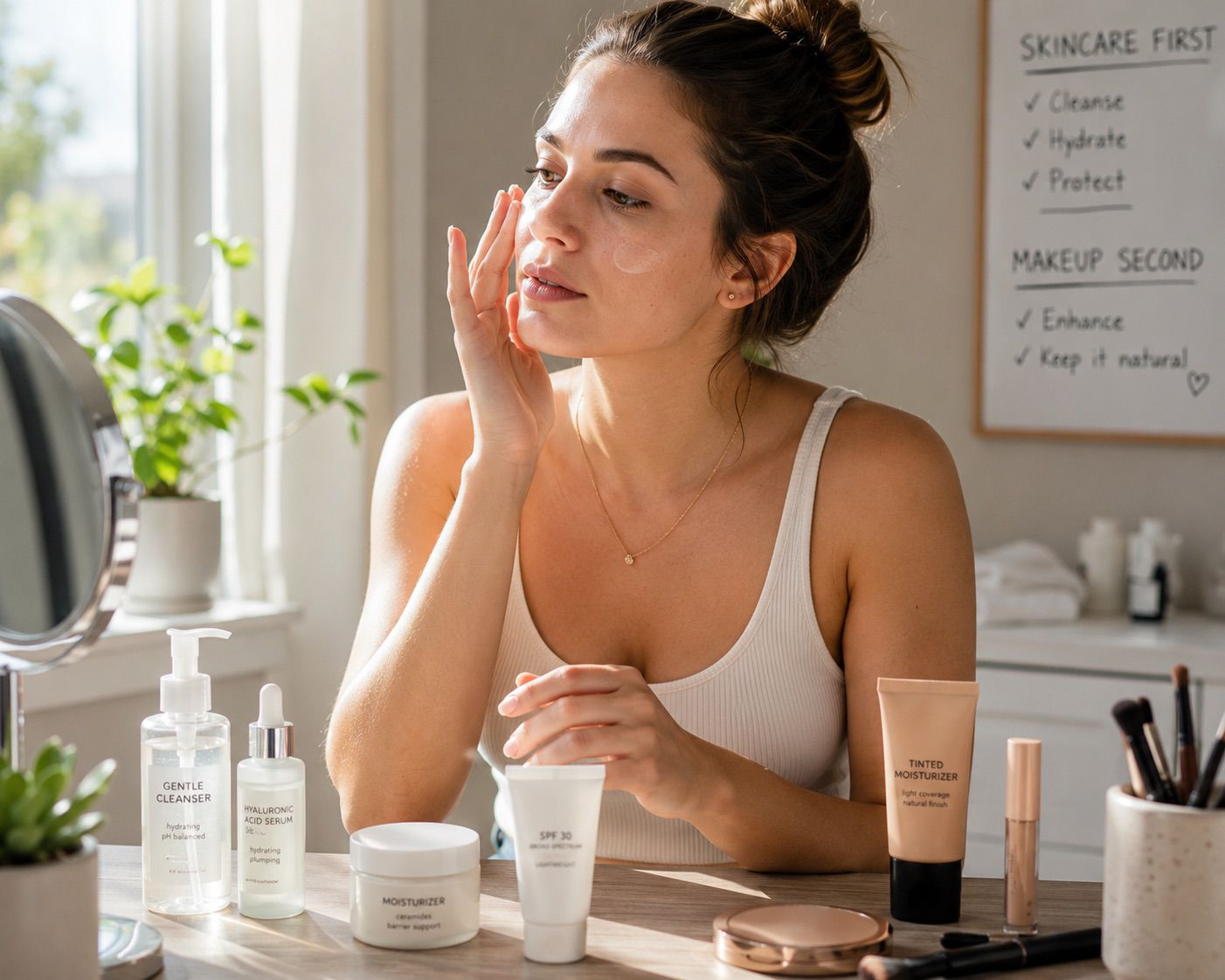
A skincare-first approach to morning makeup yields a more natural, everyday look than layering multiple products. This judgment replaces the inadequate standard that has long dominated the beauty industry: the notion that more skincare and makeup products lead to better results. In reality, this mindset can often result in a cakey, unnatural finish, as excessive product use can overwhelm the skin and detract from its natural glow.
The emphasis on product quantity over skin health is a misguided approach that neglects the intricate interactions between skincare ingredients, skin physiology, and makeup products. By prioritizing skin health and adopting a minimalist approach to makeup, individuals can achieve a more sustainable and effective beauty routine. This skincare-first approach allows for a nuanced understanding of how products interact with the skin, enabling a more informed selection of makeup products that complement the skin’s natural tone and texture, rather than trying to mask or alter it.
To understand why a skincare-first approach yields better results, it’s essential to consider the role of moisturizers in maintaining skin hydration and barrier function. Moisturizers help regulate the skin’s natural moisture levels, creating an optimal environment for makeup application. When the skin is properly hydrated, makeup products can interact with it more effectively, resulting in a more even and natural finish. This is because moisturized skin has a stronger barrier function, allowing it to better retain the benefits of skincare products while minimizing the negative effects of makeup.
The interaction between skincare ingredients and makeup products is also crucial in achieving a natural look. Certain skincare ingredients, such as alpha-hydroxy acids (AHAs) and beta-hydroxy acids (BHAs), can help exfoliate the skin and promote cell turnover, creating a smoother canvas for makeup application. Additionally, the pH level of skincare products can impact the skin’s natural barrier function, which in turn affects how makeup interacts with the skin. By considering these factors and prioritizing skin health, individuals can make informed decisions about their skincare and makeup routines, ultimately achieving a more sustainable and effective approach to beauty that enhances their natural glow rather than overwhelming it with excessive product use.
The distinction between a skincare-first approach and a product-first approach lies not only in the order of application but also in the underlying philosophy of how to achieve a natural look. A genuine skincare-first approach prioritizes the health and integrity of the skin, recognizing that a strong foundation is essential for any subsequent makeup application. This means focusing on the quality and suitability of individual products rather than their quantity or prestige. In contrast, the product-first approach often emphasizes the accumulation of products as a measure of effectiveness, neglecting the potential for excessive product use to compromise skin health and lead to an unnatural finish.
A closer examination of the properties that matter in skincare and makeup products reveals that it is not merely the presence of certain ingredients but their concentration, formulation, and interaction with the skin that determine their efficacy. For instance, a moisturizer with a balanced pH level and an optimal blend of humectants and emollients can provide superior hydration and barrier support compared to a product with a flashy ingredient list but poor formulation. Similarly, a makeup product that is designed to complement the skin’s natural tone and texture, rather than attempting to mask or alter it, will yield a more natural and effortless look. By discerning these nuances and prioritizing skin health over product quantity, individuals can navigate the complexities of skincare and makeup to achieve a genuinely natural everyday look.
To apply the skincare-first approach effectively across different conditions, it’s essential to consider the unique needs and characteristics of individual skin types. For instance, those with dry or sensitive skin may need to prioritize moisturizing products that provide long-lasting hydration and soothing properties, while individuals with oily skin may focus on lightweight, oil-controlling formulations. By understanding these nuances, one can tailor their skincare and makeup routine to address specific concerns, such as hyperpigmentation, acne, or fine lines, without compromising the overall goal of achieving a natural look.
In practical terms, this means selecting products that not only complement the skin’s natural tone and texture but also address its particular needs. For example, someone with rosacea may opt for a tinted moisturizer with a green undertone to help neutralize redness, while someone with dark spots may choose a product containing niacinamide or vitamin C to promote even skin tone. By taking into account these specific requirements and adjusting the skincare and makeup routine accordingly, individuals can ensure that their approach remains effective and tailored to their unique skin characteristics, ultimately leading to a more sustainable and natural-looking result.
The skincare-first approach distinguishes itself from the conventional product-centric mindset by emphasizing the significance of skin health in achieving a natural look. A critical aspect of this approach is understanding the interplay between skincare ingredients, such as emollients, humectants, and occlusives, which work synergistically to maintain the skin’s barrier function and hydration levels. For instance, the presence of hyaluronic acid, glycerin, or ceramides in a moisturizer can provide enhanced hydration, while niacinamide or vitamin C can offer additional benefits such as improved skin elasticity and brightness. By prioritizing the quality and suitability of skincare products, individuals can create a robust foundation for their makeup routine, allowing for a more effortless and sustainable approach to achieving a natural, everyday look. Furthermore, this approach enables individuals to make informed decisions about their skincare and makeup routines, taking into account specific skin concerns such as hyperpigmentation, acne, or fine lines, and selecting products that address these issues without compromising the overall goal of achieving a natural look.