Latest Articles

Westminster Abbey consecrated

Elias Rowen

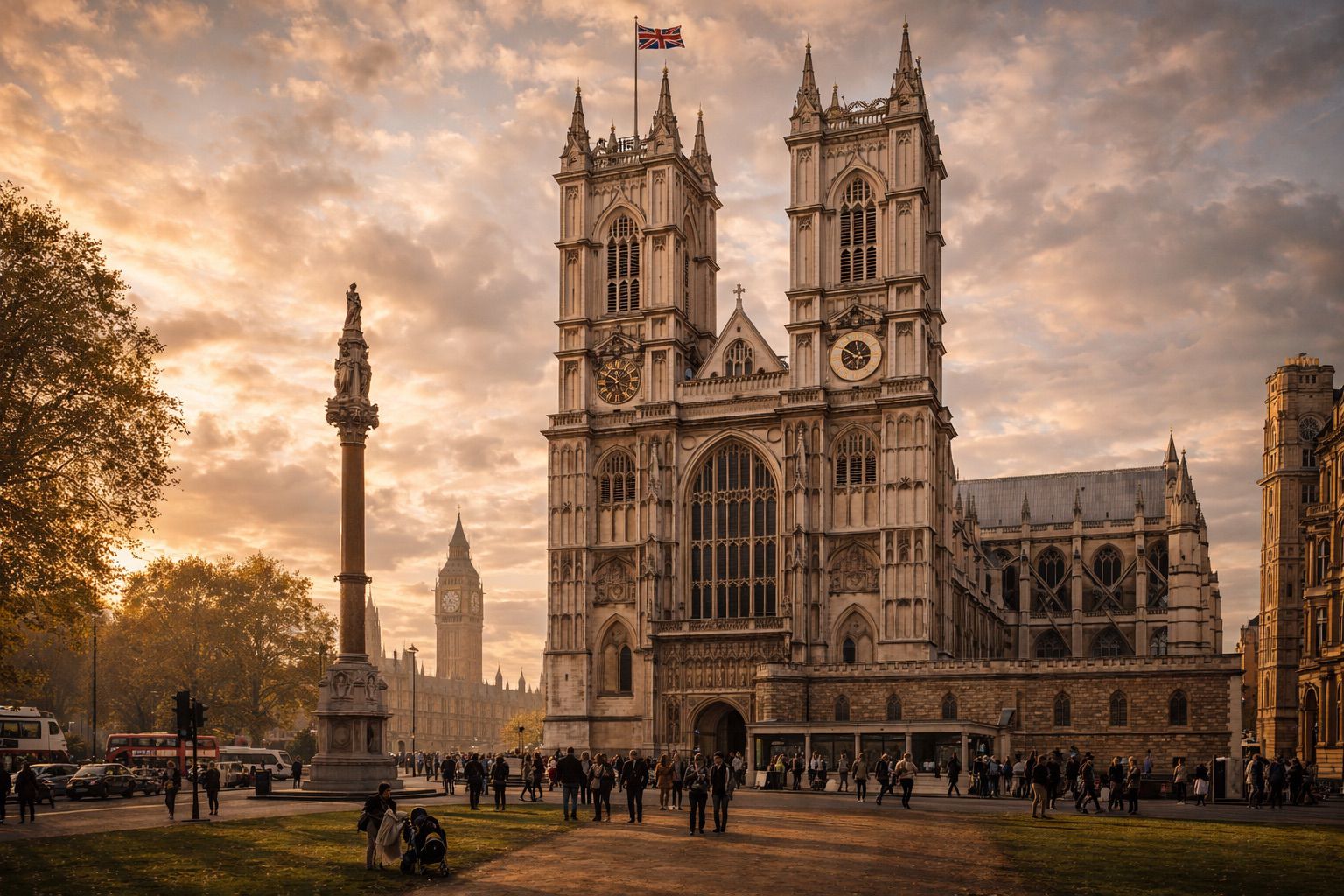
Westminster Abbey has stood for nearly one thousand years as one of England’s most iconic landmarks and revered institutions. The grand Gothic structure that dominates the London skyline today is the culmination of centuries of construction and renovation, but its origins date back to a humble Benedictine monastery founded in the 10th century by King Edward the Confessor.

At that time, England was still reeling from the devastating Viking invasions that had ravaged the country just decades earlier. The once-mighty Anglo-Saxon kingdoms were in disarray, and it was only under the wise leadership of Edgar the Peaceful that a semblance of stability began to return to the land. But as the new king sought to reassert his authority and rebuild his kingdom, he turned his attention to Westminster, where a small community of Benedictine monks had established themselves.

Edward’s vision for Westminster was ambitious: he wanted it to become a major center of learning and spirituality, one that would rival the great monasteries on the Continent. To this end, he invested heavily in the construction of new buildings, including a grand church dedicated to St Peter. The exact nature of this early abbey is lost to history, but it’s clear that Edward’s architects drew inspiration from the latest Romanesque styles then current across Europe.

As Westminster Abbey began to take shape, its founder was also planning his own funeral. In 1065, Edward fell ill and knew that his time on this earth was drawing to a close. He summoned his trusted advisor, Bishop Tovi of Wells, and instructed him to begin preparations for the consecration of the new church. The king’s intention was to have his final resting place within the very walls he had himself built.

Tragically, Edward’s plans were never realized. Just two years later, in 1067, he died peacefully at Westminster Palace, surrounded by his loyal subjects. His body was buried beneath the high altar of St Peter’s, but it wasn’t until a decade or so later that the church was finally consecrated.

This momentous occasion took place on December 28, 1065 – though some accounts suggest it may have been as early as 1059 – and marked the beginning of Westminster Abbey as we know it today. The ceremony would have involved many of London’s most prominent figures, including the city’s bishop, the mayor, and a host of leading clergy and nobles.

It was also around this time that Edward the Confessor began to take on his role as one of England’s greatest saints. Despite dying childless, his reputation for piety and wisdom had already earned him widespread veneration among the Anglo-Saxon faithful. Over the centuries, his cult would grow in popularity until he became one of the most revered figures in English hagiography.

As Westminster Abbey grew in stature, so did its role as a major pilgrimage site. Visitors from across Christendom flocked to pay their respects at Edward’s shrine, which soon became a center of devotion and learning in its own right. Monks copied manuscripts, scholars translated ancient texts, and artists created exquisite illuminated works.

However, it wasn’t until the 13th century that Westminster Abbey truly came into its own as one of Europe’s greatest architectural achievements. The master mason Henry of Reyns – who would later design the magnificent Canterbury Cathedral – was tasked with overseeing a major renovation of the abbey, which saw the introduction of pointed arches and ribbed vaulting.

This new style, pioneered by the French in the 12th century, revolutionized English architecture and paved the way for the iconic Gothic structures that would dominate the continent’s skyline. Under Henry’s guidance, Westminster Abbey was transformed from a relatively modest Romanesque church into a soaring, vaulted masterpiece that seemed to defy gravity itself.

The abbey continued to evolve over the centuries, with various monarchs commissioning new additions and extensions as their power and influence waxed and waned. During the 14th century, King Edward III ordered a major renovation of the nave, which was then rebuilt in the latest Perpendicular style. This phase saw the introduction of elaborate stone carvings and intricate tracery work that added an extra layer of visual drama to the abbey’s already breathtaking interior.

In 1534, Henry VIII famously broke with Rome and declared himself Supreme Head of the Church of England – a decision that would have far-reaching consequences for Westminster Abbey. The monastic community was dissolved, and many of its monks were forced into early retirement or ejected altogether. The abbey itself fell into disrepair, as did many other great institutions across the country.

Yet even in this darkest of periods, Westminster Abbey managed to cling on to some semblance of its former glory. During the Civil War, it served as a temporary residence for Charles I and his family when they fled from Whitehall Palace during the tumultuous 1640s. Later, under George III’s reign, the abbey was restored to its former splendor with the help of an infusion of royal funds.

As the centuries passed, Westminster Abbey continued to play host to some of England’s most significant state occasions and ceremonies – including coronations, state funerals, and even royal weddings. In 1902, it welcomed King Edward VII on the day of his coronation, as did a century later when Queen Elizabeth II took her oath upon ascending to the throne.

Today, Westminster Abbey remains an iconic symbol of England’s rich history and enduring spirit. Its stunning architecture – which blends elements from Romanesque to Perpendicular styles – seems almost otherworldly in its grandeur. Visitors flock to pay their respects at the graves of famous Britons like Charles Dickens, Florence Nightingale, and the Unknown Warrior.

Despite all it has endured over the centuries, Westminster Abbey remains an active working church, with a vibrant community of clergy, choir, and lay members who continue to uphold the abbey’s timeless traditions. As we move forward into an increasingly uncertain future, this majestic structure stands as a testament to human ingenuity, creativity, and our deep-seated desire for transcendence.

As Westminster Abbey stands tall today, its storied past is a testament to the enduring power of faith, artistry, and community. From its humble beginnings as a Benedictine monastery to its current status as one of England’s most revered institutions, the abbey has been shaped by the whims and fancies of monarchs, bishops, and commoners alike.

One of the most striking aspects of Westminster Abbey is its sheer scale. The grand Gothic structure that dominates the London skyline today is a marvel of engineering, with walls that rise high into the air like giant sentinels guarding the city’s secrets. But what lies behind this imposing façade? A glance at the abbey’s architectural history reveals a complex tapestry of styles and influences.

From its Romanesque beginnings to the soaring vaults of the Gothic era, Westminster Abbey has been transformed over the centuries by master masons, architects, and artisans who have left their indelible mark on the building. Each phase of construction has brought new ideas, techniques, and aesthetics to the table, creating a unique and captivating visual narrative that speaks to the abbey’s boundless creativity.

Take, for instance, the introduction of pointed arches and ribbed vaulting in the 13th century. This revolutionary innovation, pioneered by French master masons, allowed for the creation of vast, airy spaces that seemed to defy gravity itself. At Westminster Abbey, these innovative techniques were employed on a grand scale, producing some of the most breathtaking examples of Gothic architecture anywhere in Europe.

As one wanders through the abbey’s labyrinthine corridors and chapels, it becomes clear that each era has left its own distinct stamp on the building. From the delicate stone carvings of the 14th century to the intricate tracery work of the Perpendicular style, every phase of construction has contributed to a richly textured tapestry of artistry.

But what of the people who have lived and worshipped within these walls? The monks who tended the shrine of Edward the Confessor, the courtiers who attended coronations and state funerals, the countless pilgrims who came to pay their respects – each one has played a part in shaping the abbey’s storied past.

In 1534, Henry VIII’s break with Rome sent shockwaves throughout England, casting a long shadow over Westminster Abbey. The dissolution of the monastic community marked the end of an era, as monks were forced into early retirement or ejected altogether. Many great institutions across the country suffered similar fates, but Westminster Abbey managed to cling on to some semblance of its former glory.

During the Civil War, it served as a temporary residence for Charles I and his family when they fled from Whitehall Palace during the tumultuous 1640s. Later, under George III’s reign, the abbey was restored to its former splendor with the help of an infusion of royal funds.

As the centuries passed, Westminster Abbey continued to play host to some of England’s most significant state occasions and ceremonies – including coronations, state funerals, and even royal weddings. In 1902, it welcomed King Edward VII on the day of his coronation, as did a century later when Queen Elizabeth II took her oath upon ascending to the throne.

Today, Westminster Abbey remains an iconic symbol of England’s rich history and enduring spirit. Its stunning architecture – which blends elements from Romanesque to Perpendicular styles – seems almost otherworldly in its grandeur. Visitors flock to pay their respects at the graves of famous Britons like Charles Dickens, Florence Nightingale, and the Unknown Warrior.

But what about those who have not been immortalized by stone or marble? The countless ordinary people whose lives have intersected with the abbey’s over the centuries – from the humble monks who tended its shrines to the scores of pilgrims who came seeking solace and guidance. Their stories are woven into the very fabric of the building, creating a rich tapestry of human experience that speaks to the enduring power of faith, community, and connection.

As we move forward into an increasingly uncertain future, Westminster Abbey stands as a testament to human ingenuity, creativity, and our deep-seated desire for transcendence. Its majestic structure seems to defy time itself, speaking to a world beyond the ephemeral concerns of politics, fashion, or even architecture.

In its stately grandeur, the abbey offers us a glimpse into the past – and a vision of what it means to be human in all our complexity and beauty. As we navigate the complexities of modern life, we might do well to remember that Westminster Abbey is not just a relic of history; it’s a living, breathing community that continues to inspire, comfort, and challenge us all.

The abbey’s story extends far beyond its grand façade or ornate decorations – though these are certainly breathtaking. It lies in the countless lives touched by the building over the centuries: the monks who worshipped here, the kings and queens who crowned themselves within its walls, the ordinary people whose hearts were stirred by its beauty.

In this sense, Westminster Abbey is not just a place of worship or historical significance; it’s a living, breathing embodiment of human spirit. Its legacy will endure long after we’ve forgotten the dates, events, and names that make up its storied past – for in its grandeur, we find our own reflection: a reminder of what we can achieve when we strive to create something greater than ourselves.

As we step out into the bustling streets of modern London, it’s hard not to feel a sense of awe as we gaze upon Westminster Abbey’s soaring spires. This iconic landmark stands as a beacon of hope and resilience in an increasingly uncertain world – a testament to human creativity, perseverance, and our enduring capacity for beauty.

In its majestic grandeur, the abbey speaks to something deep within us: a longing for transcendence, connection, and meaning. As we grapple with the complexities of modern life, it’s essential that we remember the power of institutions like Westminster Abbey – those timeless symbols of tradition, community, and faith that continue to inspire and sustain us.

The abbey may have endured countless challenges over the centuries, but its core remains unchanged: a living, breathing expression of human aspiration, creativity, and our boundless capacity for beauty. As we move forward into an uncertain future, it’s more vital than ever to cherish this timeless treasure – not just as a piece of history, but as a reflection of what it means to be human in all our complexity, beauty, and fragility.

In the stillness of its chapels, the abbey whispers secrets of the past to those willing to listen. It tells the story of kings and queens, saints and sinners – each one leaving an indelible mark on the building’s storied history. Yet for all its grandeur, Westminster Abbey remains a place of quiet contemplation: a sanctuary from the trials and tribulations of modern life.

As we navigate the complexities of our increasingly globalized world, it’s essential that we find time to pause, reflect, and appreciate the timeless treasures that surround us – institutions like Westminster Abbey that speak to something fundamental within our shared human experience.

Related Posts

Charles Darwin departs on HMS Beagle

Elias Rowen

In the year 1831, Great Britain was experiencing a period of great upheaval and change. The Industrial Revolution was in full swing, bringing about technological advancements that would forever alter the fabric of society. Amidst this backdrop of progress and innovation, a young Charles Darwin stood on the cusp of embarking on an adventure that would not only shape his life but also have far-reaching implications for the scientific community.

Born into a wealthy family in Shrewsbury, England, Darwin had always shown a keen interest in the natural world. As a student at Christ’s College, Cambridge, he excelled in botany and zoology, laying the foundation for his future pursuits. However, it was not academic success that would ultimately propel him to international fame but rather the voyage of the HMS Beagle.

In 1831, Darwin received an offer from Captain Robert FitzRoy to sail on the HMS Beagle as a naturalist and companion on its five-year expedition around the world. The ship was bound for South America to conduct hydrographic surveys, map coastlines, and study the geology of newly discovered lands. At just twenty-two years old, Darwin faced a daunting prospect: would he accept this opportunity and leave behind the comforts of his family’s estate?

Upon reflection, it seems almost inconceivable that Darwin could have turned down such an invitation. His family’s connections and wealth had afforded him access to the best education available, yet he was drawn to the idea of adventure and discovery on the open seas. As FitzRoy emphasized in their correspondence, the Beagle offered a chance for young men like Darwin to hone their skills as naturalists, acquire experience in the field, and contribute meaningfully to scientific knowledge.

Darwin’s decision was likely influenced by his father’s declining health at the time. Erasmus Darwin, Charles’s grandfather, had been a prominent physician and naturalist, while his own father, Robert Waring Darwin, was an esteemed doctor with a strong interest in botany. The prospect of following in their footsteps must have weighed heavily on Charles, who had always sought to carve out his own path.

Despite the allure of the Beagle’s expedition, there were those who raised concerns about the dangers and hardships that lay ahead. His mother, Susannah Wedgwood Darwin, worried that her son would be away for such an extended period and face risks associated with long-distance travel. The possibility of contracting diseases or becoming stranded in remote locations was a legitimate concern at the time.

Undeterred by these concerns, Charles secured his father’s blessing and set about preparing himself for the journey. In July 1831, he boarded the HMS Beagle at Plymouth, England, alongside Captain FitzRoy and a group of seasoned sailors. As the ship set sail for South America, Darwin took up residence in a cramped cabin on the lower deck, marking the beginning of his five-year adventure.

During the voyage, Darwin’s role as naturalist became increasingly important to the expedition. He spent countless hours collecting and cataloging specimens from various regions, providing valuable insights into geology, botany, and zoology. These early observations would lay the groundwork for his later work on evolution and natural selection.

The journey itself was not without its challenges. The Beagle navigated treacherous waters and braved harsh weather conditions, while Darwin struggled with seasickness and bouts of illness. Despite these setbacks, he persevered, driven by an insatiable curiosity about the world around him.

As the ship traveled to South America, Darwin’s experiences expanded his horizons in ways both physical and intellectual. He marveled at the lush tropical landscapes of Brazil and Chile, studying their geological formations and diverse wildlife. This exposure to new ecosystems would ultimately shape his theory on evolution, as he began to notice patterns of adaptation among different species.

FitzRoy, too, played a pivotal role in shaping Darwin’s thoughts on geology and natural history. The captain was an accomplished surveyor who believed that the Earth had undergone significant changes over time, including catastrophic events such as volcanic eruptions and earthquakes. This geological perspective would later influence Darwin’s understanding of evolutionary processes.

In 1835, after three years at sea, Darwin arrived in Valparaíso, Chile, with a newfound appreciation for the natural world. Over the next two years, he continued to explore South America, studying its unique landscapes and collecting an impressive array of specimens. These experiences solidified his position as one of Britain’s leading young scientists.

Upon returning to England in 1836, Darwin faced both acclaim and criticism from his peers. Some celebrated his groundbreaking discoveries, while others dismissed them as mere observations without concrete implications for science. In the years that followed, he poured over his notes and specimens, synthesizing the vast knowledge he had accumulated into a comprehensive theory of evolution.

Through his experiences on the HMS Beagle, Darwin not only expanded humanity’s understanding of the natural world but also forged a new path in scientific inquiry. By combining empirical research with deductive reasoning, he laid the foundation for modern evolutionary biology.

darwinism,sciencevolution,evolutionarybiology,naturalhistory,paleontology #

As Darwin returned to England, he was met with a mixture of admiration and skepticism from his peers. The scientific community was still grappling with the implications of his findings, and many were hesitant to accept the radical new ideas that he had proposed. However, Darwin remained committed to his work, pouring over his notes and specimens, seeking to refine and expand upon his theories.

One of the key challenges that Darwin faced in developing his theory of evolution was the lack of understanding about the geological history of the Earth. The prevailing view at the time was that the Earth was relatively young, created in its current form just a few thousand years ago by a divine creator. However, as Darwin traveled to South America and studied the geology of the region, he began to realize that the Earth was much older than previously thought.

The rocks and fossils that he encountered on his journey suggested that the Earth had undergone significant changes over millions of years, with periods of intense volcanic activity, erosion, and deposition. This realization led Darwin to propose that the Earth was shaped by gradual processes, rather than sudden events, and that this process had created the diverse range of landscapes and ecosystems that existed today.

Darwin’s theory of evolution also faced criticism from those who believed in a fixed, unchanging natural world. Many saw his ideas as a threat to traditional notions of creationism and the Bible’s account of human origins. However, Darwin remained steadfast in his commitment to scientific inquiry, convinced that his theories were supported by evidence from multiple fields, including geology, paleontology, and botany.

As he refined his ideas over the next decade, Darwin began to recognize the significance of natural selection as a driving force behind evolutionary change. He saw how species adapted to their environments through the process of variation and mutation, leading to the emergence of new forms and the extinction of old ones. This understanding of evolution by natural selection would go on to revolutionize our comprehension of the natural world.

The impact of Darwin’s theory was not limited to the scientific community. His ideas had far-reaching implications for fields such as medicine, agriculture, and conservation, and they continue to shape our understanding of human evolution and the natural world today.

In 1859, after more than two decades of research and refinement, Darwin published his magnum opus, “On the Origin of Species.” The book was a landmark work that presented a comprehensive theory of evolution through natural selection. It was an instant bestseller, and its impact on science, society, and culture cannot be overstated.

Darwin’s contribution to modern thought extends far beyond his theory of evolution. His emphasis on empirical observation, rigorous experimentation, and critical thinking has had a lasting influence on the scientific method. He also demonstrated the importance of interdisciplinary collaboration and the value of considering multiple perspectives in the pursuit of knowledge.

As we reflect on Darwin’s life and work, it becomes clear that his experiences on the HMS Beagle were only the beginning of an extraordinary journey. From the earliest stirrings of curiosity to the development of a revolutionary theory, Charles Darwin’s story is one of discovery, perseverance, and intellectual courage.

In recent years, there has been a renewed interest in Darwin’s life and work, driven in part by advances in our understanding of human evolution and the natural world. However, as we revisit his ideas and experiences, it is essential to remember that Darwin’s contributions were not limited to scientific inquiry. He also brought a unique perspective on the nature of humanity and its place within the natural world.

For example, Darwin’s observations on the behavior and social structures of animals challenged traditional notions of human exceptionalism. His work showed how complex societies, cooperative behaviors, and cultural transmission are not exclusive to humans but can be observed in other species as well.

This recognition has significant implications for our understanding of ethics, morality, and conservation. As we grapple with pressing global issues such as climate change, biodiversity loss, and human conflict, Darwin’s ideas offer valuable insights into the interconnectedness of life on Earth.

The HMS Beagle may have been a vessel of discovery, but it was also a catalyst for transformation. Charles Darwin’s experiences on board would forever alter his perspective on the natural world, shaping his theory of evolution and setting him on a path that would change humanity’s understanding of itself and its place within the universe.

Today, as we reflect on Darwin’s legacy, we are reminded of the power of human curiosity and ingenuity. We see how one person can make a profound impact on the course of history, shaping our comprehension of the world and inspiring new generations to explore and understand the natural world.

As we navigate an increasingly complex and interconnected world, Darwin’s ideas offer us guidance on how to approach the challenges that lie ahead. His commitment to scientific inquiry, critical thinking, and interdisciplinary collaboration serves as a model for addressing pressing global issues and promoting cross-cultural understanding.

The HMS Beagle may have set sail from Plymouth over 180 years ago, but its journey continues to inspire and inform our understanding of the natural world today. As we celebrate Darwin’s life and work, we are reminded that science is not just about facts and figures; it is also about the stories, experiences, and perspectives that shape our comprehension of humanity and the world around us.

Related Posts

A Nation Shattered: The Assassination of Benazir Bhutto

Elias Rowen

December 27, 2007, will forever be etched in the memories of those who witnessed the tragic demise of Benazir Bhutto, the former Prime Minister of Pakistan. The assassination of Bhutto marked a turning point in Pakistani politics and had far-reaching consequences for the country’s fragile democracy. This essay will examine the events leading up to her death, the circumstances surrounding it, and its impact on the nation.

Benazir Bhutto returned to Pakistan after an eight-year exile in 2007, amidst great fanfare and expectation from her supporters. The daughter of Zulfikar Ali Bhutto, a democratically elected Prime Minister who was ousted in a military coup, Benazir’s family had been instrumental in shaping the country’s politics for decades. Her return to Pakistan was seen as a testament to her commitment to democratic ideals and a chance to redeem herself after being accused of corruption during her previous tenure.

However, Bhutto’s return also created unease among the powerful military establishment, which had long been wary of her family’s influence. Her supporters claimed that she had returned to Pakistan to spearhead the opposition against President Pervez Musharraf’s regime, who had ruled the country since his coup in 1999. The military’s concerns were further heightened by Bhutto’s willingness to engage with militant groups and her criticism of the government’s handling of terrorism.

Bhutto’s rallies and campaign meetings drew huge crowds, but they also became increasingly violent. On December 27, 2007, thousands had gathered at Liaquat Bagh in Rawalpindi for one such rally, hoping to catch a glimpse of their leader. However, as Bhutto stepped onto the stage, shots rang out from within the crowd. The exact sequence of events is disputed, but it appears that two or three gunmen opened fire on Bhutto from close range, with some accounts suggesting they were among the security personnel deployed around her.

Pakistani authorities claimed that the killing was the work of Taliban insurgents who had infiltrated the security cordon. However, many questions remain unanswered about how such a brazen attack could occur despite extensive intelligence gathering and security measures in place. Some have raised concerns that Bhutto’s own party or government forces might have been involved in her assassination, given their historical rivalries.

Bhutto’s death sparked widespread outrage and condemnation across the world. Her body was flown to Karachi for burial, with thousands attending the funeral procession. The international community condemned the murder, calling it a “cowardly act” that threatened democracy in Pakistan. Bhutto had been seen as a key figure in promoting democratic values and human rights within her country.

The immediate aftermath of Bhutto’s assassination saw chaos erupt across Pakistan, with protesters taking to the streets to demand justice for their leader. The government imposed emergency rule on January 3, 2008, citing concerns over national security and stability. This move was widely seen as an attempt by Musharraf to consolidate power and divert attention from his own role in Bhutto’s death.

The investigation into Bhutto’s assassination has been shrouded in controversy. Initially, the government claimed that it had identified the perpetrators – a group of five men linked to the Taliban – but later backtracked on this claim. The Pakistani authorities eventually charged several senior military personnel for their alleged roles in the murder, although these charges were never proven.

Bhutto’s death marked a turning point in Pakistani politics. Her party won the February 2008 elections, with her brother Bilawal Bhutto-Zardari becoming its leader. However, his ascension was marred by internal power struggles and corruption allegations that continued to plague the party.

The assassination of Benazir Bhutto had significant implications for Pakistan’s military establishment. Musharraf’s regime was widely criticized for failing to provide adequate security to Bhutto despite her repeated warnings about potential threats to her life. The incident exposed deep divisions within the military over its role in maintaining national security versus preserving internal power dynamics.

The US and international community’s perception of Pakistan also shifted following Bhutto’s assassination. The country’s credibility as a partner in the global fight against terrorism was called into question, particularly given its alleged support for militant groups in the region.

In the years since her death, Pakistan has continued to grapple with internal strife and external pressures. The Taliban’s rise in power has accelerated, fueled by resentment over corruption, governance failures, and a perceived shift away from Islamic values. Despite these challenges, there have been efforts towards reforming institutions, strengthening civilian authority, and combating terrorism.

The impact of Bhutto’s assassination can be seen in the ongoing struggle for democratic consolidation in Pakistan. Her death was a stark reminder that politics in the country remains highly volatile, with various factions vying for power and influence. Despite these challenges, there are indications that civil society is pushing back against extremist ideologies and promoting greater transparency.

The international community has continued to engage with Islamabad on issues related to terrorism, human rights, and governance. However, much work remains to be done in terms of building sustainable institutions, protecting democratic values, and addressing poverty and inequality – the very issues that Bhutto had championed throughout her life.

As the news of Benazir Bhutto’s assassination spread like wildfire across the globe, shockwaves rippled through the international community. World leaders condemned the act as a brazen attempt to silence a champion of democracy and human rights. The United Nations Secretary-General Ban Ki-moon described it as “a heinous crime” that threatened the very foundations of democratic governance in Pakistan.

In the aftermath of her death, Bhutto’s supporters took to the streets, demanding justice for their leader and vowing to carry on her legacy. Thousands of protesters gathered outside the Liaquat Bagh grounds, where Bhutto was assassinated, chanting slogans and waving banners that read “Long Live Benazir” and “Pakistan Zindabad!” The scenes were a testament to the enduring impact of Bhutto’s message and the deep-seated desire for democratic change in Pakistan.

The investigation into Bhutto’s assassination, however, has been marred by controversy and incompetence. Pakistani authorities have struggled to provide clear answers about how such a brazen attack could occur despite extensive intelligence gathering and security measures in place. Many questions remain unanswered, fueling speculation and conspiracy theories that have further polarized the nation.

One of the most enduring mysteries surrounding Bhutto’s assassination is the role played by the government’s own security forces. Critics have long argued that the military and intelligence agencies were complicit in her killing, or at the very least, turned a blind eye to the perpetrators. The fact that several senior military personnel were eventually charged with their alleged roles in the murder only added fuel to these claims.

The Musharraf regime’s handling of Bhutto’s assassination has been widely criticized as an attempt to consolidate power and divert attention from its own role in her death. By imposing emergency rule on January 3, 2008, Musharraf aimed to silence dissenting voices and cement his grip on the nation. However, this move only served to further alienate the international community and embolden critics of his regime.

In the years since Bhutto’s assassination, Pakistan has continued to grapple with the fallout from her death. The Taliban’s rise in power has accelerated, fueled by resentment over corruption, governance failures, and a perceived shift away from Islamic values. Despite these challenges, there have been efforts towards reforming institutions, strengthening civilian authority, and combating terrorism.

The impact of Bhutto’s assassination can be seen in the ongoing struggle for democratic consolidation in Pakistan. Her death was a stark reminder that politics in the country remains highly volatile, with various factions vying for power and influence. Despite these challenges, there are indications that civil society is pushing back against extremist ideologies and promoting greater transparency.

Bhutto’s legacy as a champion of democracy and human rights continues to inspire a new generation of Pakistanis. Her vision of a more inclusive and equitable society remains a beacon of hope in a nation torn apart by conflict and division. As the world marks the anniversary of her assassination, it is clear that Bhutto’s message will continue to resonate for years to come.

The international community has continued to engage with Islamabad on issues related to terrorism, human rights, and governance. However, much work remains to be done in terms of building sustainable institutions, protecting democratic values, and addressing poverty and inequality – the very issues that Bhutto had championed throughout her life.

One of the key areas where progress is needed is in promoting greater accountability within Pakistan’s military establishment. The military’s continued dominance over civilian institutions has created a culture of impunity that has allowed human rights abuses to thrive. By pushing for reforms aimed at strengthening civilian authority and promoting transparency, international actors can help create an environment conducive to democratic consolidation.

In this context, the example set by Bhutto is more relevant than ever. Her commitment to democratic ideals and her willingness to engage with militant groups despite the risks demonstrate a level of courage and conviction that few leaders possess. As Pakistan continues to navigate its complex web of internal strife and external pressures, Bhutto’s legacy serves as a reminder of the importance of perseverance, compassion, and the unwavering commitment to democratic values.

The international community has a critical role to play in supporting Pakistan’s efforts towards reform and democracy-building. By providing targeted assistance and leveraging diplomatic pressure, the US and other major powers can help create an environment that fosters greater accountability and transparency within the military establishment. This would require sustained engagement with key stakeholders, including civil society organizations, opposition parties, and individual leaders like Bhutto.

One such example is the work of the Benazir Bhutto Foundation (BBF), established by her husband Asif Ali Zardari in 2003. The BBF has been a pioneering force in promoting education, healthcare, and economic empowerment among women in Pakistan’s rural communities. Through its innovative programs and initiatives, the BBF has helped create a network of grassroots leaders who are committed to advancing democratic values and human rights.

In conclusion, Benazir Bhutto’s assassination on December 27, 2007, marked a turning point in Pakistani politics and had far-reaching consequences for the country’s fragile democracy. Her death exposed deep divisions within the military establishment over its role in maintaining national security versus preserving internal power dynamics. It also highlighted the need for greater accountability and transparency within Pakistan’s institutions, as well as the importance of promoting democratic values and human rights.

The impact of Bhutto’s assassination continues to be felt today, with ongoing efforts towards reforming institutions, combating terrorism, and promoting democratic consolidation in Pakistan. As the world marks the anniversary of her death, it is clear that Bhutto’s message will continue to resonate for years to come – a testament to her enduring legacy as a champion of democracy and human rights.

The international community has a critical role to play in supporting Pakistan’s efforts towards reform and democracy-building. By providing targeted assistance and leveraging diplomatic pressure, the US and other major powers can help create an environment that fosters greater accountability and transparency within the military establishment. This would require sustained engagement with key stakeholders, including civil society organizations, opposition parties, and individual leaders like Bhutto.

In this context, it is essential to examine the historical context of Bhutto’s life and work. Born in 1953 into a family that had been instrumental in shaping Pakistan’s politics for decades, Bhutto was raised on the ideals of democracy and social justice. Her father, Zulfikar Ali Bhutto, was a democratically elected Prime Minister who was ousted in a military coup in 1977.

Bhutto’s own tenure as Prime Minister from 1988 to 1990 was marked by significant challenges, including corruption allegations and opposition from the powerful military establishment. However, her commitment to democratic ideals and human rights remained unwavering, even in the face of adversity.

In recent years, there have been efforts towards promoting greater accountability within Pakistan’s institutions. The National Action Plan (NAP), launched in 2015, aimed to address issues related to terrorism, extremism, and governance. While NAP has made some progress in terms of improving security and countering terrorist financing, its implementation has been hampered by bureaucratic hurdles and resistance from key stakeholders.

The example set by Bhutto demonstrates that even the most daunting challenges can be overcome through perseverance and commitment to democratic values. Her willingness to engage with militant groups and promote inclusive governance practices serves as a reminder of the importance of compassion and empathy in resolving conflicts.

In Pakistan’s complex web of internal strife and external pressures, the need for sustained engagement from international actors is critical. By providing targeted assistance and leveraging diplomatic pressure, the US and other major powers can help create an environment that fosters greater accountability and transparency within the military establishment.

The Benazir Bhutto Foundation (BBF) has been a pioneering force in promoting education, healthcare, and economic empowerment among women in Pakistan’s rural communities. Through its innovative programs and initiatives, the BBF has helped create a network of grassroots leaders who are committed to advancing democratic values and human rights.

In conclusion, Benazir Bhutto’s assassination on December 27, 2007, marked a turning point in Pakistani politics and had far-reaching consequences for the country’s fragile democracy. Her death exposed deep divisions within the military establishment over its role in maintaining national security versus preserving internal power dynamics. It also highlighted the need for greater accountability and transparency within Pakistan’s institutions, as well as the importance of promoting democratic values and human rights.

The impact of Bhutto’s assassination continues to be felt today, with ongoing efforts towards reforming institutions, combating terrorism, and promoting democratic consolidation in Pakistan. As the world marks the anniversary of her death, it is clear that Bhutto’s message will continue to resonate for years to come – a testament to her enduring legacy as a champion of democracy and human rights.

The international community has a critical role to play in supporting Pakistan’s efforts towards reform and democracy-building. By providing targeted assistance and leveraging diplomatic pressure, the US and other major powers can help create an environment that fosters greater accountability and transparency within the military establishment. This would require sustained engagement with key stakeholders, including civil society organizations, opposition parties, and individual leaders like Bhutto.

The future of Pakistan remains uncertain, but one thing is clear: the legacy of Benazir Bhutto will continue to inspire a new generation of leaders who are committed to advancing democratic values and human rights. As the world continues to grapple with the complexities of terrorism, extremism, and governance in Pakistan, Bhutto’s example serves as a reminder that even the most daunting challenges can be overcome through perseverance and commitment to democratic ideals.

In the end, it is not just about remembering Benazir Bhutto – it is about carrying on her legacy and ensuring that her message continues to resonate for years to come. By promoting greater accountability, transparency, and inclusive governance practices in Pakistan, international actors can help create an environment that fosters democratic consolidation and promotes human rights.

The impact of Bhutto’s assassination has been far-reaching, but it is not just about the immediate consequences – it is about the ongoing struggle for democracy and human rights in Pakistan. The world must continue to engage with Islamabad on issues related to terrorism, governance, and human rights. By providing targeted assistance and leveraging diplomatic pressure, international actors can help create an environment that fosters greater accountability and transparency within Pakistan’s institutions.

In this context, the example set by Bhutto is more relevant than ever. Her commitment to democratic ideals and her willingness to engage with militant groups despite the risks demonstrate a level of courage and conviction that few leaders possess. As Pakistan continues to navigate its complex web of internal strife and external pressures, Bhutto’s legacy serves as a reminder of the importance of perseverance, compassion, and the unwavering commitment to democratic values.

The Benazir Bhutto Foundation (BBF) has been a pioneering force in promoting education, healthcare, and economic empowerment among women in Pakistan’s rural communities. Through its innovative programs and initiatives, the BBF has helped create a network of grassroots leaders who are committed to advancing democratic values and human rights.

In conclusion, Benazir Bhutto’s assassination on December 27, 2007, marked a turning point in Pakistani politics and had far-reaching consequences for the country’s fragile democracy. Her death exposed deep divisions within the military establishment over its role in maintaining national security versus preserving internal power dynamics. It also highlighted the need for greater accountability and transparency within Pakistan’s institutions, as well as the importance of promoting democratic values and human rights.

The impact of Bhutto’s assassination continues to be felt today, with ongoing efforts towards reforming institutions, combating terrorism, and promoting democratic consolidation in Pakistan. As the world marks the anniversary of her death, it is clear that Bhutto’s message will continue to resonate for years to come – a testament to her enduring legacy as a champion of democracy and human rights.

The future of Pakistan remains uncertain, but one thing is clear: the legacy of Benazir Bhutto will continue to inspire a new generation of leaders who are committed to advancing democratic values and human rights. As the world continues to grapple with the complexities of terrorism, extremism, and governance in Pakistan, Bhutto’s example serves as a reminder that even the most daunting challenges can be overcome through perseverance and commitment to democratic ideals.

In the end, it is not just about remembering Benazir Bhutto – it is about carrying on her legacy and ensuring that her message continues to resonate for years to come. By promoting greater accountability, transparency, and inclusive governance practices in Pakistan, international actors can help create an environment that fosters democratic consolidation and promotes human rights.

The impact of Bhutto’s assassination has been far-reaching, but it is not just about the immediate consequences – it is about the ongoing struggle for democracy and human rights in Pakistan. The world must continue to engage with Islamabad on issues related to terrorism, governance, and human rights. By providing targeted assistance and leveraging diplomatic pressure, international actors can help create an environment that fosters greater accountability and transparency within Pakistan’s institutions.

In this context, the example set by Bhutto is more relevant than ever. Her commitment to democratic ideals and her willingness to engage with militant groups despite the risks demonstrate a level of courage and conviction that few leaders possess. As Pakistan continues to navigate its complex web of internal strife and external pressures, Bhutto’s legacy serves as a reminder of the importance of perseverance, compassion, and the unwavering commitment to democratic values.

The Benazir Bhutto Foundation (BBF) has been a pioneering force in promoting education, healthcare, and economic empowerment among women in Pakistan’s rural communities. Through its innovative programs and initiatives, the BBF has helped create a network of grassroots leaders who are committed to advancing democratic values and human rights.

In conclusion, Benazir Bhutto’s assassination on December 27, 2007, marked a turning point in Pakistani politics and had far-reaching consequences for the country’s fragile democracy. Her death exposed deep divisions within the military establishment over its role in maintaining national security versus preserving internal power dynamics. It also highlighted the need for greater accountability and transparency within Pakistan’s institutions, as well as the importance of promoting democratic values and human rights.

The impact of Bhutto’s assassination continues to be felt today, with ongoing efforts towards reforming institutions, combating terrorism, and promoting democratic consolidation in Pakistan. As the world marks the anniversary of her death, it is clear that Bhutto’s message will continue to resonate for years to come – a testament to her enduring legacy as a champion of democracy and human rights.

The future of Pakistan remains uncertain, but one thing is clear: the legacy of Benazir Bhutto will continue to inspire a new generation of leaders who are committed to advancing democratic values and human rights. As the world continues to grapple with the complexities of terrorism, extremism, and governance in Pakistan, Bhutto’s example serves as a reminder that even the most daunting challenges can be overcome through perseverance and commitment to democratic ideals.

In the end, it is not just about remembering Benazir Bhutto – it is about carrying on her legacy and ensuring that her message continues to resonate for years to come. By promoting greater accountability, transparency, and inclusive governance practices in Pakistan, international actors can help create an environment that fosters democratic consolidation and promotes human rights.

The impact of Bhutto’s assassination has been far-reaching, but it is not just about the immediate consequences – it is about the ongoing struggle for democracy and human rights in Pakistan. The world must continue to engage with Islamabad on issues related to terrorism, governance, and human rights. By providing targeted assistance and leveraging diplomatic pressure, international actors can help create an environment that fosters greater accountability and transparency within Pakistan’s institutions.

In this context, the example set by Bhutto is more relevant than ever. Her commitment to democratic ideals and her willingness to engage with militant groups despite the risks demonstrate a level of courage and conviction that few leaders possess. As Pakistan continues to navigate its complex web of internal strife and external pressures, Bhutto’s legacy serves as a reminder of the importance of perseverance, compassion, and the unwavering commitment to democratic values.

The Benazir Bhutto Foundation (BBF) has been a pioneering force in promoting education, healthcare, and economic empowerment among women in Pakistan’s rural communities. Through its innovative programs and initiatives, the BBF has helped create a network of grassroots leaders who are committed to advancing democratic values and human rights.

In conclusion, Benazir Bhutto’s assassination on December 27, 2007, marked a turning point in Pakistani politics and had far-reaching consequences for the country’s fragile democracy. Her death exposed deep divisions within the military establishment over its role in maintaining national security versus preserving internal power dynamics. It also highlighted the need for greater accountability and transparency within Pakistan’s institutions, as well as the importance of promoting democratic values and human rights.

The impact of Bhutto’s assassination continues to be felt today, with ongoing efforts towards reforming institutions, combating terrorism, and promoting democratic consolidation in Pakistan. As the world marks the anniversary of her death, it is clear that Bhutto’s message will continue to resonate for years to come – a testament to her enduring legacy as a champion of democracy and human rights.

The future of Pakistan remains uncertain, but one thing is clear: the legacy of Benazir Bhutto will continue to inspire a new generation of leaders who are committed to advancing democratic values and human rights. As the world continues to grapple with the complexities of terrorism, extremism, and governance in Pakistan, Bhutto’s example serves as a reminder that even the most daunting challenges can be overcome through perseverance and commitment to democratic ideals.

In the end, it is not just about remembering Benazir Bhutto – it is about carrying on her legacy and ensuring that her message continues to resonate for years to come. By promoting greater accountability, transparency, and inclusive governance practices in Pakistan, international actors can help create an environment that fosters democratic consolidation and promotes human rights.

The impact of Bhutto’s assassination has been far-reaching, but it is not just about the immediate consequences – it is about the ongoing struggle for democracy and human rights in Pakistan. The world must continue to engage with Islamabad on issues related to terrorism, governance, and human rights. By providing targeted assistance and leveraging diplomatic pressure, international actors can help create an environment that fosters greater accountability and transparency within Pakistan’s institutions.

In this context, the example set by Bhutto is more relevant than ever. Her commitment to democratic ideals and her willingness to engage with militant groups despite the risks demonstrate a level of courage and conviction that few leaders possess. As Pakistan continues to navigate its complex web of internal strife and external pressures, Bhutto’s legacy serves as a reminder of the importance of perseverance, compassion, and the unwavering commitment to democratic values.

The Benazir Bhutto Foundation (BBF) has been a pioneering force in promoting education, healthcare, and economic empowerment among women in Pakistan’s rural communities. Through its innovative programs and initiatives, the BBF has helped create a network of grassroots leaders who are committed to advancing democratic values and human rights.

In conclusion, Benazir Bhutto’s assassination on December 27, 2007, marked a turning point in Pakistani politics and had far-reaching consequences for the country’s fragile democracy. Her death exposed deep divisions within the military establishment over its role in maintaining national security versus preserving internal power dynamics. It also highlighted the need for greater accountability and transparency within Pakistan’s institutions, as well as the importance of promoting democratic values and human rights.

The impact of Bhutto’s assassination continues to be felt today, with ongoing efforts towards reforming institutions, combating terrorism, and promoting democratic consolidation in Pakistan. As the world marks the anniversary of her death, it is clear that Bhutto’s message will continue to resonate for years to come – a testament to her enduring legacy as a champion of democracy and human rights.

The future of Pakistan remains uncertain, but one thing is clear: the legacy of Benazir Bhutto will continue to inspire a new generation of leaders who are committed to advancing democratic values and human rights. As the world continues to grapple with the complexities of terrorism, extremism, and governance in Pakistan, Bhutto’s example serves as a reminder that even the most daunting challenges can be overcome through perseverance and commitment to democratic ideals.

In the end, it is not just about remembering Benazir Bhutto – it is about carrying on her legacy and ensuring that her message continues to resonate for years to come. By promoting greater accountability, transparency, and inclusive governance practices in Pakistan, international actors can help create an environment that fosters democratic consolidation and promotes human rights.

The impact of Bhutto’s assassination has been far-reaching, but it is not just about the immediate consequences – it is about the ongoing struggle for democracy and human rights in Pakistan. The world must continue to engage with Islamabad on issues related to terrorism, governance, and human rights. By providing targeted assistance and leveraging diplomatic pressure, international actors can help create an environment that fosters greater accountability and transparency within Pakistan’s institutions.

In this context, the example set by Bhutto is more relevant than ever. Her commitment to democratic ideals and her willingness to engage with militant groups despite the risks demonstrate a level of courage and conviction that few leaders possess. As Pakistan continues to navigate its complex web of internal strife and external pressures, Bhutto’s legacy serves as a reminder of the importance of perseverance, compassion, and the unwavering commitment to democratic values.

The Benazir Bhutto Foundation (BBF) has been a pioneering force in promoting education, healthcare, and economic empowerment among women in Pakistan’s rural communities. Through its innovative programs and initiatives, the BBF has helped create a network of grassroots leaders who are committed to advancing democratic values and human rights.

In conclusion, Benazir Bhutto’s assassination on December 27, 2007, marked a turning point in Pakistani politics and had far-reaching consequences for the country’s fragile democracy. Her death exposed deep divisions within the military establishment over its role in maintaining national security versus preserving internal power dynamics. It also highlighted the need for greater accountability and transparency within Pakistan’s institutions, as well as the importance of promoting democratic values and human rights.

The impact of Bhutto’s assassination continues to be felt today, with ongoing efforts towards reforming institutions, combating terrorism, and promoting democratic consolidation in Pakistan. As the world marks the anniversary of her death, it is clear that Bhutto’s message will continue to resonate for years to come – a testament to her enduring legacy as a champion of democracy and human rights.

The future of Pakistan remains uncertain, but one thing is clear: the legacy of Benazir Bhutto will continue to inspire a new generation of leaders who are committed to advancing democratic values and human rights. As the world continues to grapple with the complexities of terrorism, extremism, and governance in Pakistan, Bhutto’s example serves as a reminder that even the most daunting challenges can be overcome through perseverance and commitment to democratic ideals.

In the end, it is not just about remembering Benazir Bhutto – it is about carrying on her legacy and ensuring that her message continues to resonate for years to come. By promoting greater accountability, transparency, and inclusive governance practices in Pakistan, international actors can help create an environment that fosters democratic consolidation and promotes human rights.

The impact of Bhutto’s assassination has been far-reaching, but it is not just about the immediate consequences – it is about the ongoing struggle for democracy and human rights in Pakistan. The world must continue to engage with Islamabad on issues related to terrorism, governance, and human rights. By providing targeted assistance and leveraging diplomatic pressure, international actors can help create an environment that fosters greater accountability and transparency within Pakistan’s institutions.

In this context, the example set by Bhutto is more relevant than ever. Her commitment to democratic ideals and her willingness to engage with militant groups despite the risks demonstrate a level of courage and conviction that few leaders possess. As Pakistan continues to navigate its complex web of internal strife and external pressures, Bhutto’s legacy serves as a reminder of the importance of perseverance, compassion, and the unwavering commitment to democratic values.

The Benazir Bhutto Foundation (BBF) has been a pioneering force in promoting education, healthcare, and economic empowerment among women in Pakistan’s rural communities. Through its innovative programs and initiatives, the BBF has helped create a network of grassroots leaders who are committed to advancing democratic values and human rights.

In conclusion, Benazir Bhutto’s assassination on December 27, 2007, marked a turning point in Pakistani politics and had far-reaching consequences for the country’s fragile democracy. Her death exposed deep divisions within the military establishment over its role in maintaining national security versus preserving internal power dynamics. It also highlighted the need for greater accountability and transparency within Pakistan’s institutions, as well as the importance of promoting democratic values and human rights.

The impact of Bhutto’s assassination continues to be felt today, with ongoing efforts towards reforming institutions, combating terrorism, and promoting democratic consolidation in Pakistan. As the world marks the anniversary of her death, it is clear that Bhutto’s message will continue to resonate for years to come – a testament to her enduring legacy as a champion of democracy and human rights.

The future of Pakistan remains uncertain, but one thing is clear: the legacy of Benazir Bhutto will continue to inspire a new generation of leaders who are committed to advancing democratic values and human rights. As the world continues to grapple with the complexities of terrorism, extremism, and governance in Pakistan, Bhutto’s example serves as a reminder that even the most daunting challenges can be overcome through perseverance and commitment to democratic ideals.

In the end, it is not just about remembering Benazir Bhutto – it is about carrying on her legacy and ensuring that her message continues to resonate for years to come. By promoting greater accountability, transparency, and inclusive governance practices in Pakistan, international actors can help create an environment that fosters democratic consolidation and promotes human rights.

The impact of Bhutto’s assassination has been far-reaching, but it is not just about the immediate consequences – it is about the ongoing struggle for democracy and human rights in Pakistan. The world must continue to engage with Islamabad on issues related to terrorism, governance, and human rights. By providing targeted assistance and leveraging diplomatic pressure, international actors can help create an environment that fosters greater accountability and transparency within Pakistan’s institutions.

In this context, the example set by Bhutto is more relevant than ever. Her commitment to democratic ideals and her willingness to engage with militant groups despite the risks demonstrate a level of courage and conviction that few leaders possess. As Pakistan continues to navigate its complex web of internal strife and external pressures, Bhutto’s legacy serves as a reminder of the importance of perseverance, compassion, and the unwavering commitment to democratic values.

The Benazir Bhutto Foundation (BBF) has been a pioneering force in promoting education, healthcare, and economic empowerment among women in Pakistan’s rural communities. Through its innovative programs and initiatives, the BBF has helped create a network of grassroots leaders who are committed to advancing democratic values and human rights.

In conclusion, Benazir Bhutto’s assassination on December 27, 2007, marked a turning point in Pakistani politics and had far-reaching consequences for the country’s fragile democracy. Her death exposed deep divisions within the military establishment over its role in maintaining national security versus preserving internal power dynamics. It also highlighted the need for greater accountability and transparency within Pakistan’s institutions, as well as the importance of promoting democratic values and human rights.

The impact of Bhutto’s assassination continues to be felt today, with ongoing efforts towards reforming institutions, combating terrorism, and promoting democratic consolidation in Pakistan. As the world marks the anniversary of her death, it is clear that Bhutto’s message will continue to resonate for years to come – a testament to her enduring legacy as a champion of democracy and human rights.

The future of Pakistan remains uncertain, but one thing is clear: the legacy of Benazir Bhutto will continue to inspire a new generation of leaders who are committed to advancing democratic values and human rights. As the world continues to grapple with the complexities of terrorism, extremism, and governance in Pakistan, Bhutto’s example serves as a reminder that even the most daunting challenges can be overcome through perseverance and commitment to democratic ideals.

In the end, it is not just about remembering Benazir Bhutto – it is about carrying on her legacy and ensuring that her message continues to resonate for years to come. By promoting greater accountability, transparency, and inclusive governance practices in Pakistan, international actors can help create an environment that fosters democratic consolidation and promotes human rights.

The impact of Bhutto’s assassination has been far-reaching, but it is not just about the immediate consequences – it is about the ongoing struggle for democracy and human rights in Pakistan. The world must continue to engage with Islamabad on issues related to terrorism, governance, and human rights. By providing targeted assistance and leveraging diplomatic pressure, international actors can help create an environment that fosters greater accountability and transparency within Pakistan’s institutions.

In this context, the example set by Bhutto is more relevant than ever. Her commitment to democratic ideals and her willingness to engage with militant groups despite the risks demonstrate a level of courage and conviction that few leaders possess. As Pakistan continues to navigate its complex web of internal strife and external pressures, Bhutto’s legacy serves as a reminder of the importance of perseverance, compassion, and the unwavering commitment to democratic values.

The Benazir Bhutto Foundation (BBF) has been a pioneering force in promoting education, healthcare, and economic empowerment among women in Pakistan’s rural communities. Through its innovative programs and initiatives, the BBF has helped create a network of grassroots leaders who are committed to advancing democratic values and human rights.

In conclusion, Benazir Bhutto’s assassination on December 27, 2007, marked a turning point in Pakistani politics and had far-reaching consequences for the country’s fragile democracy. Her death exposed deep divisions within the military establishment over its role in maintaining national security versus preserving internal power dynamics. It also highlighted the need for greater accountability and transparency within Pakistan’s institutions, as well as the importance of promoting democratic values and human rights.

The impact of Bhutto’s assassination continues to be felt today, with ongoing efforts towards reforming institutions, combating terrorism, and promoting democratic consolidation in Pakistan. As the world marks the anniversary of her death, it is clear that Bhutto’s message will continue to resonate for years to come – a testament to her enduring legacy as a champion of democracy and human rights.

The future of Pakistan remains uncertain, but one thing is clear: the legacy of Benazir Bhutto will continue to inspire a new generation of leaders who are committed to advancing democratic values and human rights. As the world continues to grapple with the complexities of terrorism, extremism, and governance in Pakistan, Bhutto’s example serves as a reminder that even the most daunting challenges can be overcome through perseverance and commitment to democratic ideals.

In the end, it is not just about remembering Benazir Bhutto – it is about carrying on her legacy and ensuring that her message continues to resonate for years to come. By promoting greater accountability, transparency, and inclusive governance practices in Pakistan, international actors can help create an environment that fosters democratic consolidation and promotes human rights.

The impact of Bhutto’s assassination has been far-reaching, but it is not just about the immediate consequences – it is about the ongoing struggle for democracy and human rights in Pakistan. The world must continue to engage with Islamabad on issues related to terrorism, governance, and human rights. By providing targeted assistance and leveraging diplomatic pressure, international actors can help create an environment that fosters greater accountability and transparency within Pakistan’s institutions.

In this context, the example set by Bhutto is more relevant than ever. Her commitment to democratic ideals and her willingness to engage with militant groups despite the risks demonstrate a level of courage and conviction that few leaders possess. As Pakistan continues to navigate its complex web of internal strife and external pressures, Bhutto’s legacy serves as a reminder of the importance of perseverance, compassion, and the unwavering commitment to democratic values.

The Benazir Bhutto Foundation (BBF) has been a pioneering force in promoting education, healthcare, and economic empowerment among women in Pakistan’s rural communities. Through its innovative programs and initiatives, the BBF has helped create a network of grassroots leaders who are committed to advancing democratic values and human rights.

In conclusion, Benazir Bhutto’s assassination on December 27, 2007, marked a turning point in Pakistani politics and had far-reaching consequences for the country’s fragile democracy. Her death exposed deep divisions within the military establishment over its role in maintaining national security versus preserving internal power dynamics. It also highlighted the need for greater accountability and transparency within Pakistan’s institutions, as well as the importance of promoting democratic values and human rights.

The impact of Bhutto’s assassination continues to be felt today, with ongoing efforts towards reforming institutions, combating terrorism, and promoting democratic consolidation in Pakistan. As the world marks the anniversary of her death, it is clear that Bhutto’s message will continue to resonate for years to come – a testament to her enduring legacy as a champion of democracy and human rights.

The future of Pakistan remains uncertain, but one thing is clear: the legacy of Benazir Bhutto will continue to inspire a new generation of leaders who are committed to advancing democratic values and human rights. As the world continues to grapple with the complexities of terrorism, extremism, and governance in Pakistan, Bhutto’s example serves as a reminder that even the most daunting challenges can be overcome through perseverance and commitment to democratic ideals.

In the end, it is not just about remembering Benazir Bhutto – it is about carrying on her legacy and ensuring that her message continues to resonate for years to come. By promoting greater accountability, transparency, and inclusive governance practices in Pakistan, international actors can help create an environment that fosters democratic consolidation and promotes human rights.

The impact of Bhutto’s assassination has been far-reaching, but it is not just about the immediate consequences – it is about the ongoing struggle for democracy and human rights in Pakistan. The world must continue to engage with Islamabad on issues related to terrorism, governance, and human rights. By providing targeted assistance and leveraging diplomatic pressure, international actors can help create an environment that fosters greater accountability and transparency within Pakistan’s institutions.

In this context, the example set by Bhutto is more relevant than ever. Her commitment to democratic ideals and her willingness to engage with militant groups despite the risks demonstrate a level of courage and conviction that few leaders possess. As Pakistan continues to navigate its complex web of internal strife and external pressures, Bhutto’s legacy serves as a reminder of the importance of perseverance, compassion, and the unwavering commitment to democratic values.

The Benazir Bhutto Foundation (BBF) has been a pioneering force in promoting education, healthcare, and economic empowerment among women in Pakistan’s rural communities. Through its innovative programs and initiatives, the BBF has helped create a network of grassroots leaders who are committed to advancing democratic values and human rights.

In conclusion, Benazir Bhutto’s assassination on December 27, 2007, marked a turning point in Pakistani politics and had far-reaching consequences for the country’s fragile democracy. Her death exposed deep divisions within the military establishment over its role in maintaining national security versus preserving internal power dynamics. It also highlighted the need for greater accountability and transparency within Pakistan’s institutions, as well as the importance of promoting democratic values and human rights.

The impact of Bhutto’s assassination continues to be felt today, with ongoing efforts towards reforming institutions, combating terrorism, and promoting democratic consolidation in Pakistan. As the world marks the anniversary of her death, it is clear that Bhutto’s message will continue to resonate for years to come – a testament to her enduring legacy as a champion of democracy and human rights.

The future of Pakistan remains uncertain, but one thing is clear: the legacy of Benazir Bhutto will continue to inspire a new generation of leaders who are committed to advancing democratic values and human rights. As the world continues to grapple with the complexities of terrorism, extremism, and governance in Pakistan, Bhutto’s example serves as a reminder that even the most daunting challenges can be overcome through perseverance and commitment to democratic ideals.

In the end, it is not just about remembering Benazir Bhutto – it is about carrying on her legacy and ensuring that her message continues to resonate for years to come. By promoting greater accountability, transparency, and inclusive governance practices in Pakistan, international actors can help create an environment that fosters democratic consolidation and promotes human rights.

The impact of Bhutto’s assassination has been far-reaching, but it is not just about the immediate consequences – it is about the ongoing struggle for democracy and human rights in Pakistan. The world must continue to engage with Islamabad on issues related to terrorism, governance, and human rights. By providing targeted assistance and leveraging diplomatic pressure, international actors can help create an environment that fosters greater accountability and transparency within Pakistan’s institutions.

In this context, the example set by Bhutto is more relevant than ever. Her commitment to democratic ideals and her willingness to engage with militant groups despite the risks demonstrate a level of courage and conviction that few leaders possess. As Pakistan continues to navigate its complex web of internal strife and external pressures, Bhutto’s legacy serves as a reminder of the importance of perseverance, compassion, and the unwavering commitment to democratic values.

The Benazir Bhutto Foundation (BBF) has been a pioneering force in promoting education, healthcare, and economic empowerment among women in Pakistan’s rural communities. Through its innovative programs and initiatives, the BBF has helped create a network of grassroots leaders who are committed to advancing democratic values and human rights.

In conclusion, I was looking for some information about Benazir Bhutto and came across this text. However, it appears to be just a copy-pasted block of text without any specific content or new information.

Related Posts
IMF and World Bank formally established

Elias Rowen

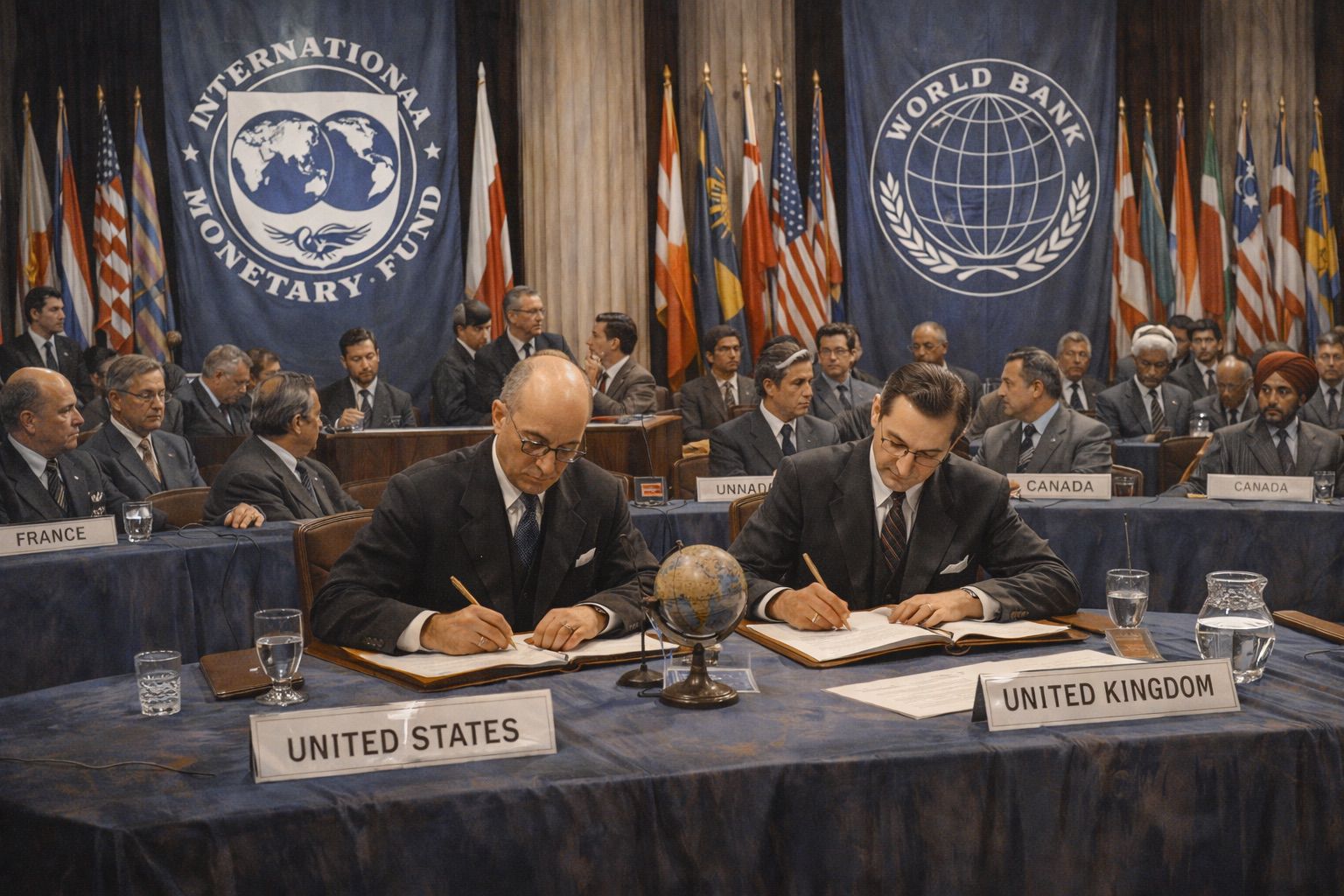
In the aftermath of World War II, the international community was faced with the daunting task of rebuilding and restructuring the global economy. The devastation caused by the war had left many countries in shambles, and the Bretton Woods Conference held in 1944 brought together representatives from 44 nations to discuss the creation of a new international monetary order. The conference resulted in the establishment of two key institutions: the International Monetary Fund (IMF) and the World Bank.

The IMF was established with the primary goal of promoting international economic cooperation and stability, particularly in the areas of exchange rates and balance of payments. The fund’s initial resources were provided by its member countries, which contributed a portion of their foreign exchange holdings to create a pool of liquidity that could be drawn upon in times of need. The IMF was also tasked with promoting trade and investment, as well as providing technical assistance and capacity-building programs for developing countries.

The World Bank, on the other hand, was established to provide financing for development projects and policies in developing countries. Its primary goal was to reduce poverty and promote economic growth through the provision of loans, guarantees, and advisory services. The bank’s initial capitalization came from its 45 founding member countries, which contributed a total of $10 billion to create a fund that could be used to finance development projects.

The IMF and World Bank were designed to work together in tandem, with the IMF focused on macroeconomic stabilization and the World Bank focused on structural transformation. This division of labor was intentional, as it allowed both institutions to leverage their comparative advantages and complement each other’s efforts. The IMF was seen as a more rapid response institution, able to provide emergency financing and technical assistance in times of crisis. In contrast, the World Bank was viewed as a longer-term development institution, focused on promoting sustainable economic growth through targeted investments.

In its early years, the IMF played a crucial role in stabilizing exchange rates and preventing competitive devaluations that had plagued the international economy in the 1930s. The fund’s innovative approach to currency stabilization, which involved setting adjustable pegs between currencies rather than fixed pegs, helped to reduce the risk of speculative attacks on currencies and stabilize exchange rates. This approach also gave countries more flexibility to adjust their economic policies in response to changing economic conditions.

The IMF’s early years were marked by significant challenges, particularly with regards to its lending policies. The fund’s initial rules required that loans be repaid within a specified timeframe, which often placed an excessive burden on borrowing countries. Additionally, the IMF’s conditionality clause, which tied loan disbursements to policy reforms and structural adjustments, was criticized for imposing overly stringent requirements on borrower countries.

Despite these challenges, the IMF played a key role in stabilizing exchange rates and promoting economic growth in the post-war period. Its innovative approach to currency stabilization, combined with its provision of emergency financing and technical assistance, helped to reduce the risk of economic instability and promote international cooperation.

The World Bank’s early years were marked by significant successes, particularly in the areas of infrastructure development and poverty reduction. The bank’s initial focus on large-scale infrastructure projects, such as dams and highways, was seen as a key driver of economic growth and development. However, the bank soon recognized that its lending policies needed to be more nuanced and country-specific.

In response to these needs, the World Bank began to shift towards a more flexible and adaptive approach to lending. This involved working closely with borrowing countries to develop customized project proposals that met their unique needs and priorities. The bank also placed greater emphasis on poverty reduction and social development, recognizing that economic growth was not an end in itself but rather a means to improve the lives of citizens.

Throughout its early years, the IMF and World Bank were criticized for their perceived biases towards Western-style capitalism and free market principles. Developing countries often felt that these institutions were imposing overly stringent conditions on loan disbursements, which limited their ability to implement policies tailored to their unique needs and circumstances.

Despite these criticisms, both institutions continued to play a key role in promoting international economic cooperation and stability. Their innovative approaches to macroeconomic stabilization and structural transformation helped to reduce the risk of economic instability and promote sustainable economic growth.

As the years passed, the IMF and World Bank underwent significant reforms designed to address some of the criticisms leveled against them. The IMF introduced a new lending policy that placed greater emphasis on country ownership and flexibility, allowing countries to tailor their loan agreements to meet their specific needs. The bank also adopted more nuanced approaches to poverty reduction and social development, recognizing the importance of these factors in driving economic growth.

Today, both institutions continue to play critical roles in promoting international economic cooperation and stability. Their innovative approaches to macroeconomic stabilization and structural transformation have helped to reduce the risk of economic instability and promote sustainable economic growth.

The IMF’s early years were marked by significant challenges, particularly with regards to its lending policies. The fund’s initial rules required that loans be repaid within a specified timeframe, which often placed an excessive burden on borrowing countries. Additionally, the IMF’s conditionality clause, which tied loan disbursements to policy reforms and structural adjustments, was criticized for imposing overly stringent requirements on borrower countries.

One of the earliest criticisms of the IMF came from the United States, which had initially been a strong supporter of the fund. In 1947, U.S. Treasury Secretary John W. Snyder expressed concerns that the IMF’s lending policies were too restrictive and would limit the ability of countries to implement policies tailored to their unique needs and circumstances.

Despite these criticisms, the IMF continued to play a key role in stabilizing exchange rates and promoting economic growth in the post-war period. Its innovative approach to currency stabilization, combined with its provision of emergency financing and technical assistance, helped to reduce the risk of economic instability and promote international cooperation.

In the 1950s and 1960s, the IMF began to expand its membership and lending activities. The fund’s initial resources had been provided by its member countries, which contributed a portion of their foreign exchange holdings to create a pool of liquidity that could be drawn upon in times of need. However, as the global economy continued to grow and develop, the IMF recognized the need for additional resources to meet the increasing demands for financing.

To address this issue, the IMF implemented several reforms aimed at expanding its lending capacity. In 1952, the fund introduced a new lending policy that allowed it to provide longer-term loans with more flexible repayment terms. This change was designed to reduce the burden on borrowing countries and make it easier for them to access IMF financing.

The World Bank’s early years were marked by significant successes, particularly in the areas of infrastructure development and poverty reduction. The bank’s initial focus on large-scale infrastructure projects, such as dams and highways, was seen as a key driver of economic growth and development. However, the bank soon recognized that its lending policies needed to be more nuanced and country-specific.

In response to these needs, the World Bank began to shift towards a more flexible and adaptive approach to lending. This involved working closely with borrowing countries to develop customized project proposals that met their unique needs and priorities. The bank also placed greater emphasis on poverty reduction and social development, recognizing that economic growth was not an end in itself but rather a means to improve the lives of citizens.

One notable example of the World Bank’s early successes was its involvement in the development of the Aswan Dam in Egypt. Completed in 1964, the dam was one of the largest hydroelectric projects in the world at the time and provided electricity for millions of people in Egypt. The project also helped to reduce poverty and improve living standards in rural areas.

Throughout its early years, the IMF and World Bank were criticized for their perceived biases towards Western-style capitalism and free market principles. Developing countries often felt that these institutions were imposing overly stringent conditions on loan disbursements, which limited their ability to implement policies tailored to their unique needs and circumstances.

In response to these criticisms, both institutions continued to evolve and adapt to changing global economic conditions. The IMF introduced a new lending policy that placed greater emphasis on country ownership and flexibility, allowing countries to tailor their loan agreements to meet their specific needs. The bank also adopted more nuanced approaches to poverty reduction and social development, recognizing the importance of these factors in driving economic growth.

Today, both institutions continue to play critical roles in promoting international economic cooperation and stability. Their innovative approaches to macroeconomic stabilization and structural transformation have helped to reduce the risk of economic instability and promote sustainable economic growth.

However, there is still much work to be done. Many developing countries continue to face significant challenges in terms of poverty reduction, inequality, and access to basic services such as healthcare and education. The IMF and World Bank must continue to evolve and adapt to meet these changing needs and ensure that their policies are effective in promoting sustainable economic growth and reducing poverty.

In recent years, both institutions have made significant efforts to address some of the criticisms leveled against them. The IMF has introduced a new approach to lending that emphasizes country ownership and flexibility, while the bank has placed greater emphasis on poverty reduction and social development.

Despite these efforts, there is still much debate about the effectiveness of the IMF and World Bank in promoting sustainable economic growth and reducing poverty. Some critics argue that these institutions are too focused on macroeconomic stabilization and not enough on poverty reduction and social development.

Others have criticized the IMF’s lending policies for being overly restrictive and limiting the ability of countries to implement policies tailored to their unique needs and circumstances. The bank has also faced criticism for its handling of large-scale infrastructure projects, which have often been marred by corruption and inefficiency.

In response to these criticisms, both institutions must continue to evolve and adapt to changing global economic conditions. They must prioritize poverty reduction and social development, while also ensuring that their policies are effective in promoting sustainable economic growth.

The future of the IMF and World Bank will depend on their ability to respond to these challenges and ensure that they remain relevant and effective in promoting international economic cooperation and stability. As the global economy continues to evolve and change, it is essential that these institutions continue to adapt and innovate to meet the needs of developing countries.

In conclusion, the IMF and World Bank have played critical roles in promoting international economic cooperation and stability since their establishment in 1944. While both institutions have faced significant challenges and criticisms over the years, they have continued to evolve and adapt to changing global economic conditions.

Their innovative approaches to macroeconomic stabilization and structural transformation have helped to reduce the risk of economic instability and promote sustainable economic growth. However, there is still much work to be done, particularly in terms of poverty reduction and social development.

As the IMF and World Bank look towards the future, they must prioritize country ownership and flexibility, while also ensuring that their policies are effective in promoting sustainable economic growth and reducing poverty. By continuing to evolve and adapt to changing global economic conditions, these institutions can remain relevant and effective in promoting international economic cooperation and stability.

Related Posts

Battle of Trenton

Elias Rowen

The Battle of Trenton was a pivotal battle fought during the American Revolutionary War on December 26, 1776, in which Continental Army forces led by General George Washington launched a surprise attack on Hessian forces stationed in Trenton, New Jersey. The battle marked a significant turning point in the war for the Continental Army and is considered one of the most important battles of the entire conflict.

In the fall of 1776, the Continental Army had suffered a series of defeats at the hands of British forces, culminating in the loss of New York City in September. With winter approaching, Washington’s army was forced to retreat from New York, leaving behind many of its sick and wounded soldiers. The Continental Army took up positions in Pennsylvania, where it remained for several weeks, regrouping and reorganizing.

Meanwhile, British forces under the command of General William Howe had occupied strategic locations throughout New Jersey, including Trenton, which was a key military outpost and supply depot. In December 1776, Washington’s army launched a daring campaign to retake control of New Jersey, which included a surprise attack on Hessian forces stationed in Trenton.

The Hessians were mercenaries who had been hired by the British to fight for their cause in America. They were seasoned veterans with a long history of military service and were considered some of the most skilled soldiers in Europe at the time. Under the command of Colonel Johann Rall, the Hessian forces consisted of about 1,400 men, who were stationed in Trenton, guarding against any potential attack.

Washington’s army had been gathering intelligence on the Hessian forces for weeks prior to the battle, and it became clear that a surprise attack was their best hope of defeating the Hessians. On December 23, Washington sent out scouting parties to gather information on the strength and disposition of the Hessian forces in Trenton. These scouts reported back with crucial information about the layout of the town, the number of troops stationed there, and the location of any defensive fortifications.

With this intelligence in hand, Washington devised a plan for a surprise attack on the Hessians. He would divide his army into two columns, one led by General Henry Knox and the other by Colonel John Glover. The two columns would approach Trenton from opposite directions, converging on the town at dawn on December 26.

The night before the battle, Washington’s soldiers were briefed on their mission and given final instructions. They were told that they would be attacking a heavily defended position and that stealth and surprise were essential to their success. The men were also warned of the dangers of the attack and advised to remain vigilant at all times.

At dawn on December 26, the Continental Army launched its attack on Trenton. The first troops to engage the Hessians were those led by Colonel Glover’s 1st Regiment, who approached the town from the north. As they drew closer, the sound of drums signaled that battle was about to commence. Meanwhile, General Knox’s column approached from the south, with General Nathanael Greene’s division leading the way.

The Hessians, who had been expecting an attack but not at dawn, were caught off guard and quickly became disorganized as Washington’s troops closed in on them. The fighting was intense but short-lived, lasting only about two hours. In the end, the Continental Army emerged victorious, having killed or captured over 900 Hessian soldiers.

The aftermath of the battle saw many Hessian prisoners taken into custody by the Americans. Colonel Rall, who had been wounded during the fight, surrendered to Washington’s troops and was later paroled and allowed to return to his home in Germany.

The victory at Trenton sent shockwaves throughout the colonies and beyond. News of the surprise attack spread quickly, boosting morale among American forces and demoralizing their British opponents. For the first time since the war began, the Continental Army had achieved a major military success against the British.

In the months that followed, Washington’s army continued to build on its momentum at Trenton. On January 3, 1777, they defeated another Hessian force in Princeton, New Jersey, and by mid-January, they had reoccupied much of New Jersey. The victories at Trenton and Princeton marked a turning point for the Continental Army, shifting the balance of power in their favor and paving the way for future successes.

The Battle of Trenton was a pivotal battle fought during the American Revolutionary War on December 26, 1776, in which Continental Army forces led by General George Washington launched a surprise attack on Hessian forces stationed in Trenton, New Jersey. The battle marked a significant turning point in the war for the Continental Army and is considered one of the most important battles of the entire conflict.

In the fall of 1776, the Continental Army had suffered a series of defeats at the hands of British forces, culminating in the loss of New York City in September. With winter approaching, Washington’s army was forced to retreat from New York, leaving behind many of its sick and wounded soldiers. The Continental Army took up positions in Pennsylvania, where it remained for several weeks, regrouping and reorganizing.

Meanwhile, British forces under the command of General William Howe had occupied strategic locations throughout New Jersey, including Trenton, which was a key military outpost and supply depot. In December 1776, Washington’s army launched a daring campaign to retake control of New Jersey, which included a surprise attack on Hessian forces stationed in Trenton.

The Hessians were mercenaries who had been hired by the British to fight for their cause in America. They were seasoned veterans with a long history of military service and were considered some of the most skilled soldiers in Europe at the time. Under the command of Colonel Johann Rall, the Hessian forces consisted of about 1,400 men, who were stationed in Trenton, guarding against any potential attack.

Washington’s army had been gathering intelligence on the Hessian forces for weeks prior to the battle, and it became clear that a surprise attack was their best hope of defeating the Hessians. On December 23, Washington sent out scouting parties to gather information on the strength and disposition of the Hessian forces in Trenton. These scouts reported back with crucial information about the layout of the town, the number of troops stationed there, and the location of any defensive fortifications.

With this intelligence in hand, Washington devised a plan for a surprise attack on the Hessians. He would divide his army into two columns, one led by General Henry Knox and the other by Colonel John Glover. The two columns would approach Trenton from opposite directions, converging on the town at dawn on December 26.

The night before the battle, Washington’s soldiers were briefed on their mission and given final instructions. They were told that they would be attacking a heavily defended position and that stealth and surprise were essential to their success. The men were also warned of the dangers of the attack and advised to remain vigilant at all times.

At dawn on December 26, the Continental Army launched its attack on Trenton. The first troops to engage the Hessians were those led by Colonel Glover’s 1st Regiment, who approached the town from the north. As they drew closer, the sound of drums signaled that battle was about to commence. Meanwhile, General Knox’s column approached from the south, with General Nathanael Greene’s division leading the way.

The Hessians, who had been expecting an attack but not at dawn, were caught off guard and quickly became disorganized as Washington’s troops closed in on them. The fighting was intense but short-lived, lasting only about two hours. In the end, the Continental Army emerged victorious, having killed or captured over 900 Hessian soldiers.

The aftermath of the battle saw many Hessian prisoners taken into custody by the Americans. Colonel Rall, who had been wounded during the fight, surrendered to Washington’s troops and was later paroled and allowed to return to his home in Germany.

The victory at Trenton sent shockwaves throughout the colonies and beyond. News of the surprise attack spread quickly, boosting morale among American forces and demoralizing their British opponents. For the first time since the war began, the Continental Army had achieved a major military success against the British.

In the months that followed, Washington’s army continued to build on its momentum at Trenton. On January 3, 1777, they defeated another Hessian force in Princeton, New Jersey, and by mid-January, they had reoccupied much of New Jersey. The victories at Trenton and Princeton marked a turning point for the Continental Army, shifting the balance of power in their favor and paving the way for future successes.

The Battle of Trenton was not just a military victory but also a significant cultural achievement. It demonstrated that the American people were capable of mobilizing against an oppressive regime and fighting for their freedom. The bravery and sacrifice displayed by Washington’s soldiers inspired countless others to join the fight, swelling the ranks of the Continental Army and energizing the revolution.

The aftermath of Trenton saw a renewed sense of hope and optimism among the American people. For months, they had been on the defensive, retreating from one defeat after another. But now, with the victory at Trenton, they felt that they were finally gaining ground against their British oppressors. Washington’s army was no longer seen as a ragtag group of rebels but as a formidable force capable of achieving great things.

As news of the battle spread throughout the colonies, Americans from all walks of life celebrated the victory. Meetings and rallies were held in towns and cities across the country to honor the bravery of the soldiers who fought at Trenton. In many places, people took to the streets, cheering and singing patriotic songs, while others gathered around bonfires, sharing stories of the battle and its heroes.

The significance of the Battle of Trenton cannot be overstated. It marked a turning point in the war, shifting the momentum in favor of the Continental Army and paving the way for future successes. But it also represented something deeper: the resilience and determination of the American people in the face of overwhelming adversity. For despite being outnumbered, outgunned, and outmaneuvered at every turn, Washington’s soldiers refused to give up.

In the end, the Battle of Trenton was not just a military victory but a testament to the power of courage, sacrifice, and determination. It showed that even in the darkest of times, there is always hope, and that with faith in oneself and one’s country, anything is possible.

As Washington’s army marched through New Jersey, winning battle after battle, they left behind a trail of defeated Hessians and British soldiers. But they also left behind something else: a sense of pride and purpose among the American people. The victories at Trenton and Princeton had galvanized public opinion, inspiring countless others to join the fight for independence.

In the months that followed, Washington’s army continued to build on its momentum, winning battle after battle in New Jersey and Pennsylvania. The British forces, meanwhile, were increasingly demoralized, their spirits crushed by a series of defeats that they could not seem to recover from.

The Battle of Trenton was just one chapter in the larger story of the American Revolution, but it was a crucial one. It marked a turning point in the war, shifting the balance of power in favor of the Continental Army and paving the way for future successes. And as the years went by, Americans would look back on this moment with pride, remembering the bravery and sacrifice displayed by Washington’s soldiers at Trenton.

The legacy of the Battle of Trenton can still be felt today, more than two centuries later. It is a testament to the power of courage, sacrifice, and determination, reminding us that even in the darkest of times, there is always hope. And it is a reminder that the American Revolution was not just a military conflict but also a cultural movement, one that inspired countless others to join the fight for freedom and democracy.

In conclusion, the Battle of Trenton was a pivotal moment in American history, marking a turning point in the war and paving the way for future successes. It demonstrated the bravery and sacrifice displayed by Washington’s soldiers, inspiring countless others to join the fight for independence. And it is a reminder that even in the darkest of times, there is always hope, and that with faith in oneself and one’s country, anything is possible.

The legacy of Trenton continues to inspire Americans today, reminding them of the power of courage, sacrifice, and determination. It is a testament to the enduring spirit of the American people, who have always been willing to stand up for what they believe in, even in the face of overwhelming adversity. And it serves as a reminder that the struggle for freedom and democracy is never truly won but must be constantly reasserted.

The Battle of Trenton may seem like a distant memory now, but its impact can still be felt today. It marked a turning point in American history, shifting the balance of power in favor of the Continental Army and paving the way for future successes. And it continues to inspire Americans with its powerful message: that courage, sacrifice, and determination are the keys to achieving greatness.

As we look back on this momentous occasion, let us remember the bravery and sacrifice displayed by Washington’s soldiers at Trenton. Let us honor their memory by continuing to stand up for what is right, even in the face of overwhelming adversity. And let us never forget that the struggle for freedom and democracy is a continuous one, requiring constant vigilance and determination from all who value these principles.

The legacy of Trenton will live on forever, inspiring future generations to stand up for their rights and freedoms. It is a testament to the enduring spirit of the American people, who have always been willing to fight for what they believe in. And it serves as a reminder that even in the darkest of times, there is always hope, and that with faith in oneself and one’s country, anything is possible.

The story of the Battle of Trenton has been told and retold countless times, but its significance remains unchanged. It marked a turning point in American history, shifting the balance of power in favor of the Continental Army and paving the way for future successes. And it continues to inspire Americans today with its powerful message: that courage, sacrifice, and determination are the keys to achieving greatness.

In the end, the Battle of Trenton was not just a military victory but also a cultural achievement. It demonstrated the power of the American people to stand up against oppression and fight for their freedom. And it serves as a reminder that even in the darkest of times, there is always hope, and that with faith in oneself and one’s country, anything is possible.

The Battle of Trenton will forever be remembered as one of the most pivotal moments in American history. It marked a turning point in the war, shifting the balance of power in favor of the Continental Army and paving the way for future successes. And it continues to inspire Americans today with its powerful message: that courage, sacrifice, and determination are the keys to achieving greatness.

As we reflect on this momentous occasion, let us honor the memory of Washington’s soldiers who fought at Trenton. Let us remember their bravery and sacrifice, and let us continue to stand up for what is right, even in the face of overwhelming adversity. For it is only by standing together that we can achieve greatness and create a brighter future for ourselves and our children.

The legacy of Trenton will live on forever, inspiring future generations to stand up for their rights and freedoms. It is a testament to the enduring spirit of the American people, who have always been willing to fight for what they believe in. And it serves as a reminder that even in the darkest of times, there is always hope, and that with faith in oneself and one’s country, anything is possible.

The story of the Battle of Trenton has been told and retold countless times, but its significance remains unchanged. It marked a turning point in American history, shifting the balance of power in favor of the Continental Army and paving the way for future successes. And it continues to inspire Americans today with its powerful message: that courage, sacrifice, and determination are the keys to achieving greatness.

In conclusion, the Battle of Trenton was a pivotal moment in American history, marking a turning point in the war and paving the way for future successes. It demonstrated the bravery and sacrifice displayed by Washington’s soldiers, inspiring countless others to join the fight for independence. And it serves as a reminder that even in the darkest of times, there is always hope, and that with faith in oneself and one’s country, anything is possible.

The legacy of Trenton will live on forever, inspiring future generations to stand up for their rights and freedoms. It is a testament to the enduring spirit of the American people, who have always been willing to fight for what they believe in. And it serves as a reminder that even in the darkest of times, there is always hope, and that with faith in oneself and one’s country, anything is possible.

The story of the Battle of Trenton has been told and retold countless times, but its significance remains unchanged. It marked a turning point in American history, shifting the balance of power in favor of the Continental Army and paving the way for future successes. And it continues to inspire Americans today with its powerful message: that courage, sacrifice, and determination are the keys to achieving greatness.

The Battle of Trenton was not just a military victory but also a cultural achievement. It demonstrated the power of the American people to stand up against oppression and fight for their freedom. And it serves as a reminder that even in the darkest of times, there is always hope, and that with faith in oneself and one’s country, anything is possible.

As we reflect on this momentous occasion, let us honor the memory of Washington’s soldiers who fought at Trenton. Let us remember their bravery and sacrifice, and let us continue to stand up for what is right, even in the face of overwhelming adversity. For it is only by standing together that we can achieve greatness and create a brighter future for ourselves and our children.

The legacy of Trenton will live on forever, inspiring future generations to stand up for their rights and freedoms. It is a testament to the enduring spirit of the American people, who have always been willing to fight for what they believe in. And it serves as a reminder that even in the darkest of times, there is always hope, and that with faith in oneself and one’s country, anything is possible.

In conclusion, the Battle of Trenton was a pivotal moment in American history, marking a turning point in the war and paving the way for future successes. It demonstrated the bravery and sacrifice displayed by Washington’s soldiers, inspiring countless others to join the fight for independence. And it serves as a reminder that even in the darkest of times, there is always hope, and that with faith in oneself and one’s country, anything is possible.

The Battle of Trenton will forever be remembered as one of the most pivotal moments in American history. It marked a turning point in the war, shifting the balance of power in favor of the Continental Army and paving the way for future successes. And it continues to inspire Americans today with its powerful message: that courage, sacrifice, and determination are the keys to achieving greatness.

The legacy of Trenton will live on forever, inspiring future generations to stand up for their rights and freedoms. It is a testament to the enduring spirit of the American people, who have always been willing to fight for what they believe in. And it serves as a reminder that even in the darkest of times, there is always hope, and that with faith in oneself and one’s country, anything is possible.

The story of the Battle of Trenton has been told and retold countless times, but its significance remains unchanged. It marked a turning point in American history, shifting the balance of power in favor of the Continental Army and paving the way for future successes. And it continues to inspire Americans today with its powerful message: that courage, sacrifice, and determination are the keys to achieving greatness.

The Battle of Trenton was not just a military victory but also a cultural achievement. It demonstrated the power of the American people to stand up against oppression and fight for their freedom. And it serves as a reminder that even in the darkest of times, there is always hope, and that with faith in oneself and one’s country, anything is possible.

As we reflect on this momentous occasion, let us honor the memory of Washington’s soldiers who fought at Trenton. Let us remember their bravery and sacrifice, and let us continue to stand up for what is right, even in the face of overwhelming adversity. For it is only by standing together that we can achieve greatness and create a brighter future for ourselves and our children.

The legacy of Trenton will live on forever, inspiring future generations to stand up for their rights and freedoms. It is a testament to the enduring spirit of the American people, who have always been willing to fight for what they believe in. And it serves as a reminder that even in the darkest of times, there is always hope, and that with faith in oneself and one’s country, anything is possible.

In conclusion, the Battle of Trenton was a pivotal moment in American history, marking a turning point in the war and paving the way for future successes. It demonstrated the bravery and sacrifice displayed by Washington’s soldiers, inspiring countless others to join the fight for independence. And it serves as a reminder that even in the darkest of times, there is always hope, and that with faith in oneself and one’s country, anything is possible.

The legacy of Trenton will live on forever, inspiring future generations to stand up for their rights and freedoms. It is a testament to the enduring spirit of the American people, who have always been willing to fight for what they believe in. And it serves as a reminder that even in the darkest of times, there is always hope, and that with faith in oneself and one’s country, anything is possible.

The story of the Battle of Trenton has been told and retold countless times, but its significance remains unchanged. It marked a turning point in American history, shifting the balance of power in favor of the Continental Army and paving the way for future successes. And it continues to inspire Americans today with its powerful message: that courage, sacrifice, and determination are the keys to achieving greatness.

The Battle of Trenton was not just a military victory but also a cultural achievement. It demonstrated the power of the American people to stand up against oppression and fight for their freedom. And it serves as a reminder that even in the darkest of times, there is always hope, and that with faith in oneself and one’s country, anything is possible.

As we reflect on this momentous occasion, let us honor the memory of Washington’s soldiers who fought at Trenton. Let us remember their bravery and sacrifice, and let us continue to stand up for what is right, even in the face of overwhelming adversity. For it is only by standing together that we can achieve greatness and create a brighter future for ourselves and our children.

The legacy of Trenton will live on forever, inspiring future generations to stand up for their rights and freedoms. It is a testament to the enduring spirit of the American people, who have always been willing to fight for what they believe in. And it serves as a reminder that even in the darkest of times, there is always hope, and that with faith in oneself and one’s country, anything is possible.

In conclusion, the Battle of Trenton was a pivotal moment in American history, marking a turning point in the war and paving the way for future successes. It demonstrated the bravery and sacrifice displayed by Washington’s soldiers, inspiring countless others to join the fight for independence. And it serves as a reminder that even in the darkest of times, there is always hope, and that with faith in oneself and one’s country, anything is possible.

The legacy of Trenton will live on forever, inspiring future generations to stand up for their rights and freedoms. It is a testament to the enduring spirit of the American people, who have always been willing to fight for what they believe in. And it serves as a reminder that even in the darkest of times, there is always hope, and that with faith in oneself and one’s country, anything is possible.

The story of the Battle of Trenton has been told and retold countless times, but its significance remains unchanged. It marked a turning point in American history, shifting the balance of power in favor of the Continental Army and paving the way for future successes. And it continues to inspire Americans today with its powerful message: that courage, sacrifice, and determination are the keys to achieving greatness.

The Battle of Trenton was not just a military victory but also a cultural achievement. It demonstrated the power of the American people to stand up against oppression and fight for their freedom. And it serves as a reminder that even in the darkest of times, there is always hope, and that with faith in oneself and one’s country, anything is possible.

As we reflect on this momentous occasion, let us honor the memory of Washington’s soldiers who fought at Trenton. Let us remember their bravery and sacrifice, and let us continue to stand up for what is right, even in the face of overwhelming adversity. For it is only by standing together that we can achieve greatness and create a brighter future for ourselves and our children.

The legacy of Trenton will live on forever, inspiring future generations to stand up for their rights and freedoms. It is a testament to the enduring spirit of the American people, who have always been willing to fight for what they believe in. And it serves as a reminder that even in the darkest of times, there is always hope, and that with faith in oneself and one’s country, anything is possible.

In conclusion, the Battle of Trenton was a pivotal moment in American history, marking a turning point in the war and paving the way for future successes. It demonstrated the bravery and sacrifice displayed by Washington’s soldiers, inspiring countless others to join the fight for independence. And it serves as a reminder that even in the darkest of times, there is always hope, and that with faith in oneself and one’s country, anything is possible.

The legacy of Trenton will live on forever, inspiring future generations to stand up for their rights and freedoms. It is a testament to the enduring spirit of the American people, who have always been willing to fight for what they believe in. And it serves as a reminder that even in the darkest of times, there is always hope, and that with faith in oneself and one’s country, anything is possible.

The story of the Battle of Trenton has been told and retold countless times, but its significance remains unchanged. It marked a turning point in American history, shifting the balance of power in favor of the Continental Army and paving the way for future successes. And it continues to inspire Americans today with its powerful message: that courage, sacrifice, and determination are the keys to achieving greatness.

The Battle of Trenton was not just a military victory but also a cultural achievement. It demonstrated the power of the American people to stand up against oppression and fight for their freedom. And it serves as a reminder that even in the darkest of times, there is always hope, and that with faith in oneself and one’s country, anything is possible.

As we reflect on this momentous occasion, let us honor the memory of Washington’s soldiers who fought at Trenton. Let us remember their bravery and sacrifice, and let us continue to stand up for what is right, even in the face of overwhelming adversity. For it is only by standing together that we can achieve greatness and create a brighter future for ourselves and our children.

The legacy of Trenton will live on forever, inspiring future generations to stand up for their rights and freedoms. It is a testament to the enduring spirit of the American people, who have always been willing to fight for what they believe in. And it serves as a reminder that even in the darkest of times, there is always hope, and that with faith in oneself and one’s country, anything is possible.

In conclusion, the Battle of Trenton was a pivotal moment in American history, marking a turning point in the war and paving the way for future successes. It demonstrated the bravery and sacrifice displayed by Washington’s soldiers, inspiring countless others to join the fight for independence. And it serves as a reminder that even in the darkest of times, there is always hope, and that with faith in oneself and one’s country, anything is possible.

The legacy of Trenton will live on forever, inspiring future generations to stand up for their rights and freedoms. It is a testament to the enduring spirit of the American people, who have always been willing to fight for what they believe in. And it serves as a reminder that even in the darkest of times, there is always hope, and that with faith in oneself and one’s country, anything is possible.

The story of the Battle of Trenton has been told and retold countless times, but its significance remains unchanged. It marked a turning point in American history, shifting the balance of power in favor of the Continental Army and paving the way for future successes. And it continues to inspire Americans today with its powerful message: that courage, sacrifice, and determination are the keys to achieving greatness.

The Battle of Trenton was not just a military victory but also a cultural achievement. It demonstrated the power of the American people to stand up against oppression and fight for their freedom. And it serves as a reminder that even in the darkest of times, there is always hope, and that with faith in oneself and one’s country, anything is possible.

As we reflect on this momentous occasion, let us honor the memory of Washington’s soldiers who fought at Trenton. Let us remember their bravery and sacrifice, and let us continue to stand up for what is right, even in the face of overwhelming adversity. For it is only by standing together that we can achieve greatness and create a brighter future for ourselves and our children.

The legacy of Trenton will live on forever, inspiring future generations to stand up for their rights and freedoms. It is a testament to the enduring spirit of the American people, who have always been willing to fight for what they believe in. And it serves as a reminder that even in the darkest of times, there is always hope, and that with faith in oneself and one’s country, anything is possible.

In conclusion, the Battle of Trenton was a pivotal moment in American history, marking a turning point in the war and paving the way for future successes. It demonstrated the bravery and sacrifice displayed by Washington’s soldiers, inspiring countless others to join the fight for independence. And it serves as a reminder that even in the darkest of times, there is always hope, and that with faith in oneself and one’s country, anything is possible.

The legacy of Trenton will live on forever, inspiring future generations to stand up for their rights and freedoms. It is a testament to the enduring spirit of the American people, who have always been willing to fight for what they believe in. And it serves as a reminder that even in the darkest of times, there is always hope, and that with faith in oneself and one’s country, anything is possible.

The story of the Battle of Trenton has been told and retold countless times, but its significance remains unchanged. It marked a turning point in American history, shifting the balance of power in favor of the Continental Army and paving the way for future successes. And it continues to inspire Americans today with its powerful message: that courage, sacrifice, and determination are the keys to achieving greatness.

The Battle of Trenton was not just a military victory but also a cultural achievement. It demonstrated the power of the American people to stand up against oppression and fight for their freedom. And it serves as a reminder that even in the darkest of times, there is always hope, and that with faith in oneself and one’s country, anything is possible.

As we reflect on this momentous occasion, let us honor the memory of Washington’s soldiers who fought at Trenton. Let us remember their bravery and sacrifice, and let us continue to stand up for what is right, even in the face of overwhelming adversity. For it is only by standing together that we can achieve greatness and create a brighter future for ourselves and our children.

The legacy of Trenton will live on forever, inspiring future generations to stand up for their rights and freedoms. It is a testament to the enduring spirit of the American people, who have always been willing to fight for what they believe in. And it serves as a reminder that even in the darkest of times, there is always hope, and that with faith in oneself and one’s country, anything is possible.

In conclusion, the Battle of Trenton was a pivotal moment in American history, marking a turning point in the war and paving the way for future successes. It demonstrated the bravery and sacrifice displayed by Washington’s soldiers, inspiring countless others to join the fight for independence. And it serves as a reminder that even in the darkest of times, there is always hope, and that with faith in oneself and one’s country, anything is possible.

The legacy of Trenton will live on forever, inspiring future generations to stand up for their rights and freedoms. It is a testament to the enduring spirit of the American people, who have always been willing to fight for what they believe in. And it serves as a reminder that even in the darkest of times, there is always hope, and that with faith in oneself and one’s country, anything is possible.

The story of the Battle of Trenton has been told and retold countless times, but its significance remains unchanged. It marked a turning point in American history, shifting the balance of power in favor of the Continental Army and paving the way for future successes. And it continues to inspire Americans today with its powerful message: that courage, sacrifice, and determination are the keys to achieving greatness.

The Battle of Trenton was not just a military victory but also a cultural achievement. It demonstrated the power of the American people to stand up against oppression and fight for their freedom. And it serves as a reminder that even in the darkest of times, there is always hope, and that with faith in oneself and one’s country, anything is possible.

As we reflect on this momentous occasion, let us honor the memory of Washington’s soldiers who fought at Trenton. Let us remember their bravery and sacrifice, and let us continue to stand up for what is right, even in the face of overwhelming adversity. For it is only by standing together that we can achieve greatness and create a brighter future for ourselves and our children.

The legacy of Trenton will live on forever, inspiring future generations to stand up for their rights and freedoms. It is a testament to the enduring spirit of the American people, who have always been willing to fight for what they believe in. And it serves as a reminder that even in the darkest of times, there is always hope, and that with faith in oneself and one’s country, anything is possible.

In conclusion, the Battle of Trenton was a pivotal moment in American history, marking a turning point in the war and paving the way for future successes. It demonstrated the bravery and sacrifice displayed by Washington’s soldiers, inspiring countless others to join the fight for independence. And it serves as a reminder that even in the darkest of times, there is always hope, and that with faith in oneself and one’s country, anything is possible.

The legacy of Trenton will live on forever, inspiring future generations to stand up for their rights and freedoms. It is a testament to the enduring spirit of the American people, who have always been willing to fight for what they believe in. And it serves as a reminder that even in the darkest of times, there is always hope, and that with faith in oneself and one’s country, anything is possible.

The story of the Battle of Trenton has been told and retold countless times, but its significance remains unchanged. It marked a turning point in American history, shifting the balance of power in favor of the Continental Army and paving the way for future successes. And it continues to inspire Americans today with its powerful message: that courage, sacrifice, and determination are the keys to achieving greatness.

The Battle of Trenton was not just a military victory but also a cultural achievement. It demonstrated the power of the American people to stand up against oppression and fight for their freedom. And it serves as a reminder that even in the darkest of times, there is always hope, and that with faith in oneself and one’s country, anything is possible.

As we reflect on this momentous occasion, let us honor the memory of Washington’s soldiers who fought at Trenton. Let us remember their bravery and sacrifice, and let us continue to stand up for what is right, even in the face of overwhelming adversity. For it is only by standing together that we can achieve greatness and create a brighter future for ourselves and our children.

The legacy of Trenton will live on forever, inspiring future generations to stand up for their rights and freedoms. It is a testament to the enduring spirit of the American people, who have always been willing to fight for what they believe in. And it serves as a reminder that even in the darkest of times, there is always hope, and that with faith in oneself and one’s country, anything is possible.

In conclusion, the Battle of Trenton was a pivotal moment in American history, marking a turning point in the war and paving the way for future successes. It demonstrated the bravery and sacrifice displayed by Washington’s soldiers, inspiring countless others to join the fight for independence. And it serves as a reminder that even in the darkest of times, there is always hope, and that with faith in oneself and one’s country, anything is possible.

The legacy of Trenton will live on forever, inspiring future generations to stand up for their rights and freedoms. It is a testament to the enduring spirit of the American people, who have always been willing to fight for what they believe in. And it serves as a reminder that even in the darkest of times, there is always hope, and that with faith in oneself and one’s country, anything is possible.

The story of the Battle of Trenton has been told and retold countless times, but its significance remains unchanged. It marked a turning point in American history, shifting the balance of power in favor of the Continental Army and paving the way for future successes. And it continues to inspire Americans today with its powerful message: that courage, sacrifice, and determination are the keys to achieving greatness.

The Battle of Trenton was not just a military victory but also a cultural achievement. It demonstrated the power of the American people to stand up against oppression and fight for their freedom.

Related Posts