Latest Articles

The Quiet Miracle of Christmas

Dave

Christmas does not arrive all at once. It drifts in slowly, almost shyly, carried on colder air and shorter days. It announces itself in small ways long before the calendar confirms it—an extra light glowing in a neighbor’s window, a familiar song playing softly in a grocery aisle, the sudden urge to reach out to someone you haven’t spoken to in a while. There is something about this season that gently presses on the heart, reminding us of who we were, who we are, and who we still hope to become. Christmas is not merely a day. It is a feeling that accumulates, layer by layer, memory by memory, until it becomes something deeply personal and quietly profound.

For many of us, Christmas lives first in memory. It is the echo of childhood mornings, when the world felt impossibly still before sunrise and sleep was abandoned with reckless excitement. It is the way time seemed to slow as we padded down hallways in socks, the smell of coffee or cinnamon already in the air, the tree glowing like something alive. Those moments were not about what waited beneath the branches, even if it felt that way then. They were about anticipation, about the belief that something wonderful was possible simply because the day had arrived. Long before we understood money or stress or loss, Christmas taught us what hope felt like.

As we grow older, the shape of Christmas changes, but the emotional core remains. The magic becomes quieter, more fragile. It shifts from receiving to giving, from wonder to gratitude, from innocence to intention. We begin to notice the effort behind the season—the late nights, the careful planning, the silent sacrifices made so others can feel joy. We understand, often too late, that the warmth we once took for granted was something someone else worked hard to create. Christmas, in this way, becomes a lesson in love disguised as tradition.

There is also a certain ache that accompanies Christmas, one that becomes more pronounced with each passing year. Empty chairs appear at tables where laughter once spilled freely. Stockings go unfilled, names go unspoken, and memories press closer than usual. The season has a way of reopening old wounds, not out of cruelty, but because it invites reflection. Christmas asks us to remember, and remembering is rarely painless. Yet even in grief, there is something tender about the way Christmas holds space for loss. It does not rush it away. It allows us to feel deeply, to miss fiercely, to love even harder in absence.

At its heart, Christmas is about connection. It draws people together who might otherwise drift apart, if only briefly. Old arguments are softened, distance is crossed, and differences are set aside in favor of shared moments. There is an unspoken understanding during this time that being present matters more than being right, that kindness outweighs pride. Even those who feel disconnected from the traditional trappings of Christmas often sense this pull toward togetherness, toward something larger than themselves. It is the season that reminds us we are not meant to face the world alone.

The rituals of Christmas, repeated year after year, become anchors in an ever-changing life. Decorating a tree, preparing a familiar meal, wrapping gifts late into the night—these acts are comforting precisely because they are predictable. In a world that feels increasingly uncertain, Christmas offers continuity. It tells us that some things endure, that traditions can survive loss, distance, and time. Each ornament placed on a branch carries a story. Each recipe passed down carries hands and voices from the past. Through these small acts, we stitch our lives together across generations.

Christmas is also deeply introspective. It arrives at the end of the year, when the world seems to exhale and pause. The shorter days encourage us to turn inward, to take stock of the year behind us. We think about what we gained, what we lost, what we learned. We replay moments we wish we could redo and cherish those we wish we could relive. Christmas does not demand resolution, but it offers perspective. It reminds us that endings can be gentle, and beginnings do not always arrive with noise or certainty.

For those who observe it through a spiritual lens, Christmas carries a profound message of humility and grace. It speaks of light entering darkness, of hope born in the most unlikely of places. It is a story that has endured not because of spectacle, but because of its simplicity. The idea that love can change the world, that compassion can alter the course of history, resonates across belief systems. Even stripped of doctrine, the essence of the story remains powerful: that kindness matters, that mercy heals, that love is strongest when it is given freely.

Yet Christmas is not immune to contradiction. It exists alongside commercial excess, crowded schedules, and expectations that can feel overwhelming. The pressure to create a “perfect” holiday can sometimes eclipse the very joy we seek. But perhaps Christmas is not meant to be perfect. Perhaps it is meant to be real. The imperfect gatherings, the burned cookies, the awkward conversations—these are the moments that linger. They are honest, human, and shared. Christmas teaches us that joy does not require flawlessness, only sincerity.

One of the quiet miracles of Christmas is how it softens us. People who are otherwise guarded become more open. Strangers offer help more readily. Words like “peace” and “goodwill” are spoken without irony. It is as if the season gives us permission to be better versions of ourselves, if only temporarily. The challenge, of course, is carrying that spirit beyond the holiday. Christmas shows us what is possible when empathy leads the way. It leaves us with the question of why such kindness should be seasonal at all.

For children, Christmas is still magic, and watching that magic unfold can be as powerful as experiencing it firsthand. There is something healing about seeing the world through their eyes, about remembering how wonder once came easily. Their belief renews ours, reminding us that joy does not have to be complicated. In their excitement, we glimpse a version of ourselves that still lives somewhere within us, waiting to be acknowledged.

As the day itself arrives, there is often a quiet moment when everything feels briefly suspended. The rush gives way to stillness. The lights glow softly, conversations slow, and the weight of expectation lifts. In that space, Christmas reveals itself not as an event, but as a feeling—one of warmth, belonging, and gentle hope. It is fleeting, yes, but no less real for its impermanence. Like all meaningful moments, its value lies in its presence, not its duration.

When Christmas finally passes, it leaves behind more than discarded wrapping paper and fading lights. It leaves impressions on the heart. It reminds us of who showed up, who reached out, who made an effort. It reinforces the truth that love is expressed through time, attention, and care. The season may end, but its lessons linger, waiting to be carried forward into ordinary days.

In the end, Christmas is not about what we buy or how we decorate. It is about what we choose to feel and who we choose to be. It is about pausing long enough to notice the people beside us and the moments we are living through. It is about recognizing that even in a complicated world, there is room for tenderness. Christmas is a quiet miracle not because it changes the world overnight, but because it reminds us that we can.

And perhaps that is its greatest gift of all.

Related Posts

Treaty of Ghent ends War of 1812

Elias Rowen

The Treaty of Ghent, signed on December 24, 1814, marked the official end to the War of 1812 between the United States and Great Britain. The war had been raging for over two years, resulting in significant bloodshed and economic losses for both nations. However, despite the fighting ceasing with the signing of the treaty, its impact on American history would be far-reaching and transformative.

The roots of the War of 1812 can be traced back to the late 18th century, when tensions between the United States and Great Britain began to escalate. The British practice of impressment, where American sailors were forcibly taken from their ships and drafted into the British Navy, had long been a source of contention. Additionally, the British trade restrictions, which prohibited the exportation of grain to Europe during times of war, severely impacted American merchants who relied on this lucrative market.

The situation reached a boiling point in 1807 when the HMS Leopard fired upon the USS Chesapeake, killing and wounding several American sailors. This event outraged the nation, with many calling for war against Great Britain. However, President Thomas Jefferson’s administration was hesitant to engage in hostilities, ultimately opting instead to sign the Embargo Act of 1807, which prohibited American ships from trading with either the British or French.

The Embargo Act had devastating consequences for the American economy, as trade restrictions crippled businesses and led to widespread unemployment. When James Madison succeeded Jefferson as President in 1809, he faced immense pressure to take a more aggressive stance against Great Britain. The British Navy’s continued harassment of American ships, including the infamous burning of Washington D.C. by British troops in August 1814, finally pushed Madison to declare war on June 18, 1812.

The early years of the war saw several key battles, including the USS Constitution’s victory over the HMS Guerriere and the capture of Mackinac Island from British control. However, the conflict soon bogged down, with both sides struggling to gain a decisive advantage. American forces suffered significant losses at the Battle of Queenston Heights in October 1812, while British troops made gains in the Northwest Territory.

Despite these setbacks, the war continued to drag on, with neither side willing to concede defeat. The burning of Washington D.C. in August 1814 was a major blow to American morale, but it also galvanized public opinion and led to increased calls for military action against Great Britain. The British Navy’s control of the seas made invasion nearly impossible, leading both sides to focus on land-based battles.

In the summer of 1814, British forces launched a series of attacks against key American strongholds. They captured Fort Erie in August and laid siege to Baltimore, which was defended by American troops under the command of General Samuel Smith. The bombardment of Baltimore, immortalized in Francis Scott Key’s “The Star-Spangled Banner,” was repelled, but the city remained under threat.

Meanwhile, a British force under the command of Sir Edward Pakenham launched an assault on New Orleans in December 1814. However, American forces under General Andrew Jackson proved formidable opponents, and they inflicted heavy casualties on the British troops. The Battle of New Orleans would prove to be one of the most significant victories for the Americans during the war.

As the year drew to a close, diplomats from both nations met at Ghent in Belgium to negotiate a treaty to end hostilities. The negotiations were long and contentious, with both sides struggling to agree on terms. However, after several months of talks, the Treaty of Ghent was finally signed on December 24, 1814.

The treaty marked a significant shift in international relations, as it formally ended British impressment and trade restrictions against the United States. Additionally, the signing of the treaty brought an end to the conflict between the two nations, marking a new era of peaceful relations between America and Great Britain.

In the aftermath of the war, both nations began to rebuild and refocus their efforts. The Treaty of Ghent had not only brought peace but also paved the way for significant economic growth and development in the United States. As the nation looked to its future, it became clear that the War of 1812 had been a turning point, marking the emergence of America as a global power.

The war’s impact on American society was profound. It led to increased nationalism, with many Americans calling for greater military preparedness and economic self-sufficiency. The conflict also spurred innovation, as the development of new technologies and military strategies became essential in the face of British aggression.

As the nation moved forward, it became clear that the War of 1812 had been a defining moment in American history. It marked the beginning of a new era of international relations, one in which America would emerge as a key player on the world stage. The Treaty of Ghent may have brought an end to hostilities between America and Great Britain, but its legacy continued to shape the nation for generations to come.

The years following the war saw significant growth and development in the United States. American industry began to expand, driven by government support for infrastructure projects such as roads, canals, and bridges. The nation’s agricultural sector also experienced rapid growth, with new technologies and farming practices leading to increased productivity.

As the economy boomed, so too did American nationalism. The War of 1812 had forged a sense of shared identity among Americans, who began to see themselves as part of a distinct national community. This growing sense of patriotism was reflected in the emergence of new cultural icons, such as Francis Scott Key’s “The Star-Spangled Banner” and Andrew Jackson, who rose to prominence during the war.

In 1816, Congress passed the Act Prohibiting Importation of Slaves into the United States, which marked a significant step towards ending slavery in America. The act would not be fully implemented until 1820, but it represented a major shift in American attitudes towards slavery.

The legacy of the War of 1812 continued to shape American politics and society for decades to come. Andrew Jackson’s rise to power was fueled by his military victories during the war, including the Battle of New Orleans. His presidency from 1829-1837 would be marked by significant expansion into Native American lands and a further escalation of tensions over slavery.

As America looked to its future, it became clear that the War of 1812 had been a pivotal moment in the nation’s development. It marked the emergence of America as a global power, while also paving the way for significant economic growth and innovation. The Treaty of Ghent may have brought an end to hostilities between America and Great Britain, but its legacy would continue to shape American history for generations to come.

The War of 1812 had far-reaching consequences that extended beyond the battlefields and diplomatic negotiations. The conflict marked a significant shift in American society, as the nation began to assert its identity and interests on the world stage.

One of the most notable outcomes of the war was the growth of nationalism in America. As the nation faced external threats and internal challenges, Americans began to rally behind their country’s cause. This sense of shared identity and purpose was reflected in the emergence of new cultural icons, such as “The Star-Spangled Banner” and Andrew Jackson.

Jackson, who had risen to prominence during the war, would go on to become a dominant figure in American politics. His military victories, particularly at New Orleans, had earned him widespread recognition and admiration. As he rose through the ranks, Jackson’s popularity continued to grow, ultimately propelling him into the presidency.

The War of 1812 also marked a significant turning point in American relations with Native Americans. The conflict led to increased tensions between the two groups, as American forces sought to expand their territory and secure new trade routes. This expansion would have far-reaching consequences, leading to the forced relocation and displacement of many Native American tribes.

As America looked to its future, it became clear that the War of 1812 had been a pivotal moment in the nation’s development. The conflict marked the emergence of America as a global power, while also paving the way for significant economic growth and innovation.

The years following the war saw significant growth and development in the United States. American industry began to expand, driven by government support for infrastructure projects such as roads, canals, and bridges. The nation’s agricultural sector also experienced rapid growth, with new technologies and farming practices leading to increased productivity.

As the economy boomed, so too did American nationalism. The War of 1812 had forged a sense of shared identity among Americans, who began to see themselves as part of a distinct national community. This growing sense of patriotism was reflected in the emergence of new cultural icons, such as “The Star-Spangled Banner” and Andrew Jackson.

The legacy of the War of 1812 continued to shape American politics and society for decades to come. The conflict marked a significant shift in international relations, as America emerged as a key player on the world stage. The Treaty of Ghent, which formally ended hostilities between America and Great Britain, paved the way for a new era of peaceful relations between the two nations.

The war’s impact on American society was profound. It led to increased nationalism, with many Americans calling for greater military preparedness and economic self-sufficiency. The conflict also spurred innovation, as the development of new technologies and military strategies became essential in the face of British aggression.

As America continued to grow and develop, it became clear that the War of 1812 had been a defining moment in American history. It marked the beginning of a new era of international relations, one in which America would emerge as a key player on the world stage.

The aftermath of the war saw significant changes in American politics. The Federalist Party, which had opposed the war and advocated for closer ties with Great Britain, began to decline in influence. The Democratic-Republicans, who had supported the war and championed American nationalism, rose to prominence.

Andrew Jackson’s rise to power was a key factor in this shift. His military victories during the war had earned him widespread recognition and admiration. As he rose through the ranks, Jackson’s popularity continued to grow, ultimately propelling him into the presidency.

Jackson’s presidency would be marked by significant expansion into Native American lands and a further escalation of tensions over slavery. The legacy of the War of 1812 continued to shape American politics and society for decades to come, as the nation grappled with its identity and place in the world.

The Treaty of Ghent may have brought an end to hostilities between America and Great Britain, but its legacy would continue to shape American history for generations to come. The War of 1812 marked a significant turning point in American development, paving the way for significant economic growth and innovation while also forging a sense of shared identity among Americans.

As the nation looked to its future, it became clear that the War of 1812 had been a pivotal moment in American history. It marked the emergence of America as a global power, while also shaping the nation’s politics, society, and culture for generations to come.

The legacy of the War of 1812 continued to influence American politics and society long after the conflict had ended. The Treaty of Ghent may have brought an end to hostilities between America and Great Britain, but its impact would be felt for decades to come.

The war’s impact on American society was profound. It led to increased nationalism, with many Americans calling for greater military preparedness and economic self-sufficiency. The conflict also spurred innovation, as the development of new technologies and military strategies became essential in the face of British aggression.

As America continued to grow and develop, it became clear that the War of 1812 had been a defining moment in American history. It marked the beginning of a new era of international relations, one in which America would emerge as a key player on the world stage.

The years following the war saw significant growth and development in the United States. American industry began to expand, driven by government support for infrastructure projects such as roads, canals, and bridges. The nation’s agricultural sector also experienced rapid growth, with new technologies and farming practices leading to increased productivity.

As the economy boomed, so too did American nationalism. The War of 1812 had forged a sense of shared identity among Americans, who began to see themselves as part of a distinct national community. This growing sense of patriotism was reflected in the emergence of new cultural icons, such as “The Star-Spangled Banner” and Andrew Jackson.

In the decades following the war, America continued to assert its influence on the world stage. The nation’s expansion into Native American lands would lead to significant conflicts, including the Seminole Wars and the forced relocation of many Native American tribes. However, these actions also reflected the growing sense of nationalism and patriotism among Americans.

The legacy of the War of 1812 continued to shape American politics and society for generations to come. It marked a significant shift in international relations, as America emerged as a key player on the world stage. The Treaty of Ghent, which formally ended hostilities between America and Great Britain, paved the way for a new era of peaceful relations between the two nations.

The war’s impact on American society was profound. It led to increased nationalism, with many Americans calling for greater military preparedness and economic self-sufficiency. The conflict also spurred innovation, as the development of new technologies and military strategies became essential in the face of British aggression.

As America continued to grow and develop, it became clear that the War of 1812 had been a defining moment in American history. It marked the beginning of a new era of international relations, one in which America would emerge as a key player on the world stage.

Related Posts

Apollo 8 broadcasts Earthrise from lunar orbit

Elias Rowen

The Apollo 8 mission, launched on December 21, 1968, was a landmark event in the history of space exploration. The crew, consisting of astronauts Frank Borman, James Lovell, and William Anders, embarked on a historic journey to orbit the Moon, marking the first time humans had ever ventured beyond Earth’s gravitational pull. As they entered into lunar orbit, the astronauts were tasked with conducting scientific experiments, deploying a set of color television cameras, and testing the capabilities of the spacecraft in preparation for future manned missions.

On December 24, during their second day in lunar orbit, the Apollo 8 crew began to prepare for a series of broadcast transmissions back to Mission Control on Earth. The primary purpose of these broadcasts was to provide real-time updates on the mission’s progress and to conduct scientific experiments that could be monitored by NASA officials on the ground. However, the astronauts also had another objective in mind: to share with the world the breathtaking beauty of the Moon’s horizon.

As the spacecraft entered into a new orbit over the lunar surface, Anders peered out through the window of his command module, taking in the stunning vista unfolding before him. The stark blackness of space gave way to an endless expanse of grey-brown terrain, pockmarked with craters and punctuated by towering mountain ranges. But it was not the Moon itself that caught his attention – rather, it was the Earth rising above the lunar horizon.

The concept of a ‘lunar sunrise’ might seem unusual to modern audiences, but for Anders and his crewmates, it was an experience unlike any other. As they floated in zero-gravity, gazing out at the desolate yet majestic beauty of the Moon’s surface, the Earth rose slowly above the horizon like a blue-green marble suspended in the blackness of space. The sheer magnitude of this moment – witnessing the birthplace of humanity suspended in the void – was almost too profound to comprehend.

It was 10:10 AM Houston time when Anders picked up the camera and began to film the historic moment, speaking words that would soon be etched into the annals of history: “Oh, what a beautiful view!” The broadcast was transmitted live to Mission Control in Houston, where NASA officials watched with bated breath as the Apollo 8 crew shared their breathtaking discovery with the world.

The image that Anders captured that day – which would come to be known as ‘Earthrise’ – has since been hailed as one of the most iconic photographs ever taken. Its significance extends far beyond its aesthetic appeal, however; it represents a profound shift in humanity’s understanding of our place within the universe. In capturing the Earth rising above the Moon’s horizon, Anders and his crewmates inadvertently revealed to us the full extent of our planet’s fragility – and, by extension, our own.

As news of the Apollo 8 mission spread throughout the world, people from all walks of life were captivated by the sheer scope and ambition of this remarkable achievement. President Lyndon B. Johnson called the astronauts to personally congratulate them on their historic feat, praising their bravery and determination in the face of overwhelming adversity. Meanwhile, thousands of miles away, families gathered around televisions, glued to grainy black-and-white broadcasts as they watched in awe at the Apollo 8 crew’s incredible journey.

In the aftermath of the mission, NASA officials struggled to put into words the sheer magnitude of what had been accomplished. “The Earthrise” photograph, released shortly after the mission, would go on to become one of the most reproduced and parodied images in history – a testament to its power to captivate and inspire humanity. For Anders and his crewmates, however, their experience was far more profound than any single image or broadcast transmission could convey.

The Apollo 8 mission served as a poignant reminder that even in the darkest moments of human history – when it seemed as though nothing but conflict and strife defined our existence – there existed a deeper purpose to our endeavors. In venturing forth into the void, we might discover new worlds and push the boundaries of scientific knowledge; but in doing so, we would also be compelled to confront our own place within the grand tapestry of human experience.

In the decades since Apollo 8 first transmitted ‘Earthrise’ from lunar orbit, humanity has made tremendous strides towards understanding the complexities of our universe. We have sent probes to Mars and comets, established a permanent presence in low-Earth orbit, and continue to push forward with ambitious plans for manned missions to the Red Planet.

Yet even as we hurtle ever further into the cosmos, we would do well to remember that moment when Frank Borman’s crewmates gazed out at the Moon – and saw something far more breathtaking than any terrestrial landscape. They beheld an unobstructed view of our home planet in all its glory, suspended like a tiny jewel against the infinite vastness of space.

Frank, Jim, and Bill may have been the first humans to witness this incredible sight, but their discovery has since been shared with people from every corner of the globe – reminding us that no matter how far we roam, our true home remains forever bound to the blue-green world that hangs suspended within the void.

As the Apollo 8 crew orbited the Moon, they were not only conducting scientific experiments and testing the capabilities of their spacecraft but also taking in the breathtaking beauty of the lunar landscape. The stark blackness of space gave way to an endless expanse of grey-brown terrain, pockmarked with craters and punctuated by towering mountain ranges. But it was not just the Moon that caught their attention – it was the Earth rising above the lunar horizon.

The concept of a ‘lunar sunrise’ might seem unusual to modern audiences, but for Anders and his crewmates, it was an experience unlike any other. As they floated in zero-gravity, gazing out at the desolate yet majestic beauty of the Moon’s surface, the Earth rose slowly above the horizon like a blue-green marble suspended in the blackness of space. The sheer magnitude of this moment – witnessing the birthplace of humanity suspended in the void – was almost too profound to comprehend.

“It’s something that you can’t describe,” Frank Borman said later in an interview. “It’s just an incredible feeling, looking out at the Earth from space and seeing how beautiful it is.”

As they took in this stunning vista, Anders and his crewmates were acutely aware of the significance of their mission. They knew that they were not only exploring the vastness of space but also pushing the boundaries of human knowledge and understanding. The Apollo 8 mission was a testament to humanity’s boundless curiosity and its determination to explore and discover.

The broadcast of “Earthrise” on December 24, 1968, sent shockwaves around the world. People from all walks of life were captivated by the sheer scope and ambition of this remarkable achievement. The image that Anders captured that day – with the Earth rising above the Moon’s horizon like a blue-green jewel suspended in the blackness of space – was an instant classic.

The photograph, taken by Anders using a handheld camera, has since been hailed as one of the most iconic photographs ever taken. Its significance extends far beyond its aesthetic appeal, however; it represents a profound shift in humanity’s understanding of our place within the universe. In capturing the Earth rising above the Moon’s horizon, Anders and his crewmates inadvertently revealed to us the full extent of our planet’s fragility – and, by extension, our own.

As news of the Apollo 8 mission spread throughout the world, people from all walks of life were captivated by the sheer scope and ambition of this remarkable achievement. President Lyndon B. Johnson called the astronauts to personally congratulate them on their historic feat, praising their bravery and determination in the face of overwhelming adversity. Meanwhile, thousands of miles away, families gathered around televisions, glued to grainy black-and-white broadcasts as they watched in awe at the Apollo 8 crew’s incredible journey.

In the aftermath of the mission, NASA officials struggled to put into words the sheer magnitude of what had been accomplished. “The Earthrise” photograph, released shortly after the mission, would go on to become one of the most reproduced and parodied images in history – a testament to its power to captivate and inspire humanity.

For Anders and his crewmates, however, their experience was far more profound than any single image or broadcast transmission could convey. They had witnessed something truly breathtaking – an unobstructed view of our home planet in all its glory, suspended like a tiny jewel against the infinite vastness of space.

The Apollo 8 mission served as a poignant reminder that even in the darkest moments of human history – when it seemed as though nothing but conflict and strife defined our existence – there existed a deeper purpose to our endeavors. In venturing forth into the void, we might discover new worlds and push the boundaries of scientific knowledge; but in doing so, we would also be compelled to confront our own place within the grand tapestry of human experience.

In the decades since Apollo 8 first transmitted “Earthrise” from lunar orbit, humanity has made tremendous strides towards understanding the complexities of our universe. We have sent probes to Mars and comets, established a permanent presence in low-Earth orbit, and continue to push forward with ambitious plans for manned missions to the Red Planet.

Yet even as we hurtle ever further into the cosmos, we would do well to remember that moment when Frank Borman’s crewmates gazed out at the Moon – and saw something far more breathtaking than any terrestrial landscape. They beheld an unobstructed view of our home planet in all its glory, suspended like a tiny jewel against the infinite vastness of space.

Frank, Jim, and Bill may have been the first humans to witness this incredible sight, but their discovery has since been shared with people from every corner of the globe – reminding us that no matter how far we roam, our true home remains forever bound to the blue-green world that hangs suspended within the void.

The significance of “Earthrise” extends far beyond its aesthetic appeal. It represents a profound shift in humanity’s understanding of our place within the universe. In capturing the Earth rising above the Moon’s horizon, Anders and his crewmates inadvertently revealed to us the full extent of our planet’s fragility – and, by extension, our own.

As we continue to explore the vast expanse of space, we would do well to remember the lessons of Apollo 8. We are not just astronauts; we are explorers of the human condition. We are seekers of knowledge and understanding, driven by a boundless curiosity about the mysteries of the universe.

In venturing forth into the void, we may discover new worlds and push the boundaries of scientific knowledge. But in doing so, we will also be compelled to confront our own place within the grand tapestry of human experience. We will be forced to confront the fragility of our planet and the impermanence of our existence.

The Apollo 8 mission was a landmark event in the history of space exploration – a testament to humanity’s boundless curiosity and its determination to explore and discover. But it was also something far more profound than that. It was a reminder of our place within the universe, a glimpse into the infinite vastness of space, and a beacon of hope for a brighter future.

As we continue to push forward with ambitious plans for manned missions to the Red Planet, let us remember the lessons of Apollo 8. Let us remember the sheer magnitude of what was accomplished on that historic day in December 1968 – and the profound impact it had on humanity’s understanding of our place within the universe.

The “Earthrise” photograph has become an iconic symbol of this momentous occasion. It represents a turning point in human history, a shift in our understanding of the universe and our place within it. And as we continue to explore the vast expanse of space, let us remember that moment when Frank Borman’s crewmates gazed out at the Moon – and saw something far more breathtaking than any terrestrial landscape.

Let us remember the lessons of Apollo 8 – and let them guide us forward on our journey through the cosmos.

Related Posts

World War I Christmas Truce (Western Front)

Elias Rowen

The Western Front during World War I was a brutal and unforgiving environment, characterized by trench warfare, barbed wire entanglements, and constant artillery bombardments. The stalemate that had developed between German and Allied forces since 1914 led to a widespread perception of hopelessness among soldiers on both sides. Yet, in the midst of this chaos and despair, something remarkable occurred on Christmas Day 1914: a spontaneous truce broke out along a significant portion of the Western Front.

The events leading up to the truce were rooted in the conditions that had developed since the war’s outbreak. Following Germany’s invasion of neutral Belgium in August 1914, British forces under Lord Kitchener’s command entered France, intent on defending Belgian soil and preventing further German advances. Initially, both sides clashed fiercely, with significant losses incurred by both armies. However, as winter set in, and particularly after the first major battle at Ypres in November 1914, fighting gradually slowed down.

The harsh winter weather of 1914 contributed significantly to the development of this stalemate. The constant rain turned trenches into muddy pits, making it nearly impossible for soldiers to maintain morale and defend their positions effectively. Additionally, food shortages, lack of medical supplies, and poor living conditions made the situation even more bleak. Amidst these hardships, both German and Allied troops began to appreciate the human aspect of the conflict, rather than its military objectives.

The idea of a Christmas truce was first conceived by British soldiers stationed along the Ypres sector, where trench warfare had become particularly intense. In an effort to alleviate the suffering of their comrades and perhaps find some respite from the war’s horrors, these men suggested that both sides should call a temporary halt in hostilities for the holiday season. News of this proposal soon spread among Allied units, with soldiers writing letters, exchanging messages through unofficial channels, or even using Red Cross personnel as intermediaries to persuade their German counterparts.

On Christmas Eve 1914, rumors began circulating about an impending truce, and both sides started preparing for a lull in fighting. Some German officers initially tried to suppress the idea, fearing that it might undermine discipline and military effectiveness. However, many soldiers on both sides were desperate for a break from the relentless artillery barrage, and some German commanders eventually accepted the truce as an opportunity for troops to rest and recharge.

As night fell on Christmas Eve, British and Allied units along much of the Western Front began to withdraw their sentries, while German forces did the same. The subsequent morning brought complete silence along stretches of the front line, broken only by faint sounds of caroling from both sides. For several hours, German and Allied troops cautiously emerged from their trenches, exchanging gifts, sharing food, and engaging in conversation.

The truce extended far beyond a single sector or unit; it encompassed nearly 20 miles of the Western Front, affecting divisions on both sides. In some areas, soldiers even gathered together to sing Christmas carols and share prayers. One eyewitness account described German troops joining British forces for a rousing rendition of “Silent Night,” as both sides momentarily forgot their differences.

Some of the most vivid accounts of the truce were provided by German soldiers, who wrote extensively about the event in diaries and letters home. For these men, the truce represented an escape from the relentless bombardments, barbed wire entanglements, and endless marching that characterized modern warfare. One soldier described the experience as a “feeling of peace” he had not known since before the war’s outbreak.

Despite its widespread nature, the Christmas truce was by no means universally observed or reciprocated. Certain sectors along the front remained under heavy artillery fire, while some units, particularly those with more seasoned commanders, refused to acknowledge the unofficial ceasefire. Additionally, as news of the truce spread among higher authorities, officials on both sides were caught off guard and struggled to respond.

German military leaders initially tried to justify the truce by pointing out that their own soldiers had not initiated it but rather simply responded to British overtures. The German High Command also attempted to spin the event as a temporary lapse in discipline rather than an example of humanity triumphing over militarism. In contrast, Allied commanders remained generally silent about the events of Christmas Day 1914.

The long-term impact of the truce on both sides was difficult to discern at first, but it undoubtedly contributed significantly to growing disillusionment among soldiers and civilians alike. For many troops, this event marked a turning point in their perception of the conflict; they began to question whether the war’s objectives truly justified its human cost. Soldiers who had experienced the truce firsthand often spoke about it with reverence, emphasizing the humanity that existed beyond national allegiances.

As winter turned into spring 1915, both sides returned to fighting, and by the summer months, the Western Front was again mired in trench warfare. However, memories of Christmas Day 1914 lingered among soldiers on both sides, symbolizing a desire for peace amidst the chaos of war. The event also underscored the resilience of humanity’s capacity for compassion even in the face of overwhelming adversity.

The legacy of the Christmas truce has endured long after the guns fell silent on November 11, 1918. It serves as a poignant reminder that even during the darkest moments of conflict, there is always room for human connection and understanding. As an example of the capacity for ordinary people to shape extraordinary events, it continues to inspire new generations of scholars, historians, and the general public alike.

The Western Front during World War I was a brutal and unforgiving environment, characterized by trench warfare, barbed wire entanglements, and constant artillery bombardments. The stalemate that had developed between German and Allied forces since 1914 led to a widespread perception of hopelessness among soldiers on both sides. Yet, in the midst of this chaos and despair, something remarkable occurred on Christmas Day 1914: a spontaneous truce broke out along a significant portion of the Western Front.

The events leading up to the truce were rooted in the conditions that had developed since the war’s outbreak. Following Germany’s invasion of neutral Belgium in August 1914, British forces under Lord Kitchener’s command entered France, intent on defending Belgian soil and preventing further German advances. Initially, both sides clashed fiercely, with significant losses incurred by both armies. However, as winter set in, and particularly after the first major battle at Ypres in November 1914, fighting gradually slowed down.

The harsh winter weather of 1914 contributed significantly to the development of this stalemate. The constant rain turned trenches into muddy pits, making it nearly impossible for soldiers to maintain morale and defend their positions effectively. Additionally, food shortages, lack of medical supplies, and poor living conditions made the situation even more bleak. Amidst these hardships, both German and Allied troops began to appreciate the human aspect of the conflict, rather than its military objectives.

The idea of a Christmas truce was first conceived by British soldiers stationed along the Ypres sector, where trench warfare had become particularly intense. In an effort to alleviate the suffering of their comrades and perhaps find some respite from the war’s horrors, these men suggested that both sides should call a temporary halt in hostilities for the holiday season. News of this proposal soon spread among Allied units, with soldiers writing letters, exchanging messages through unofficial channels, or even using Red Cross personnel as intermediaries to persuade their German counterparts.

On Christmas Eve 1914, rumors began circulating about an impending truce, and both sides started preparing for a lull in fighting. Some German officers initially tried to suppress the idea, fearing that it might undermine discipline and military effectiveness. However, many soldiers on both sides were desperate for a break from the relentless artillery barrage, and some German commanders eventually accepted the truce as an opportunity for troops to rest and recharge.

As night fell on Christmas Eve, British and Allied units along much of the Western Front began to withdraw their sentries, while German forces did the same. The subsequent morning brought complete silence along stretches of the front line, broken only by faint sounds of caroling from both sides. For several hours, German and Allied troops cautiously emerged from their trenches, exchanging gifts, sharing food, and engaging in conversation.

The truce extended far beyond a single sector or unit; it encompassed nearly 20 miles of the Western Front, affecting divisions on both sides. In some areas, soldiers even gathered together to sing Christmas carols and share prayers. One eyewitness account described German troops joining British forces for a rousing rendition of “Silent Night,” as both sides momentarily forgot their differences.

Some of the most vivid accounts of the truce were provided by German soldiers, who wrote extensively about the event in diaries and letters home. For these men, the truce represented an escape from the relentless bombardments, barbed wire entanglements, and endless marching that characterized modern warfare. One soldier described the experience as a “feeling of peace” he had not known since before the war’s outbreak.

Despite its widespread nature, the Christmas truce was by no means universally observed or reciprocated. Certain sectors along the front remained under heavy artillery fire, while some units, particularly those with more seasoned commanders, refused to acknowledge the unofficial ceasefire. Additionally, as news of the truce spread among higher authorities, officials on both sides were caught off guard and struggled to respond.

German military leaders initially tried to justify the truce by pointing out that their own soldiers had not initiated it but rather simply responded to British overtures. The German High Command also attempted to spin the event as a temporary lapse in discipline rather than an example of humanity triumphing over militarism. In contrast, Allied commanders remained generally silent about the events of Christmas Day 1914.

The long-term impact of the truce on both sides was difficult to discern at first, but it undoubtedly contributed significantly to growing disillusionment among soldiers and civilians alike. For many troops, this event marked a turning point in their perception of the conflict; they began to question whether the war’s objectives truly justified its human cost. Soldiers who had experienced the truce firsthand often spoke about it with reverence, emphasizing the humanity that existed beyond national allegiances.

As winter turned into spring 1915, both sides returned to fighting, and by the summer months, the Western Front was again mired in trench warfare. However, memories of Christmas Day 1914 lingered among soldiers on both sides, symbolizing a desire for peace amidst the chaos of war. The event also underscored the resilience of humanity’s capacity for compassion even in the face of overwhelming adversity.

The legacy of the Christmas truce has endured long after the guns fell silent on November 11, 1918. It serves as a poignant reminder that even during the darkest moments of conflict, there is always room for human connection and understanding. As an example of the capacity for ordinary people to shape extraordinary events, it continues to inspire new generations of scholars, historians, and the general public alike.

The Christmas truce has also become an enduring symbol of the power of humanity in the face of war’s dehumanizing effects. It serves as a testament to the ability of individuals to transcend national boundaries and find common ground with those who are technically their enemies. This remarkable event reminds us that even amidst the most trying circumstances, there is always room for hope, compassion, and understanding.

Historians have long debated the significance of the Christmas truce, with some viewing it as a fleeting anomaly in an otherwise brutal conflict. However, the evidence suggests that this event was more than just a momentary lapse in discipline or a temporary ceasefire. Rather, it represents a fundamental shift in the way soldiers on both sides viewed their enemies and themselves.

In the years following the war, the Christmas truce has become a celebrated footnote in history books and popular culture alike. However, its significance extends far beyond the realm of nostalgia and reminiscence. The event serves as a powerful reminder that even in the darkest moments of conflict, there is always room for humanity to shine through.

The impact of the Christmas truce on soldiers who experienced it firsthand was profound and lasting. For many, this event marked a turning point in their perception of the war; they began to question whether the conflict’s objectives truly justified its human cost. Soldiers who had experienced the truce often spoke about it with reverence, emphasizing the humanity that existed beyond national allegiances.

The Christmas truce has also been recognized as a significant milestone in the development of modern warfare. It marked one of the first instances where soldiers on both sides began to question the morality and justification of the conflict they were fighting in. This event served as a catalyst for growing disillusionment among soldiers and civilians alike, contributing significantly to the eventual collapse of morale and the subsequent armistice.

In recent years, there has been an increased effort to commemorate and honor the memory of the Christmas truce. Veterans’ organizations and historical societies have worked tirelessly to preserve the stories and experiences of those who were involved in this remarkable event. These efforts serve as a testament to the enduring power of the Christmas truce, which continues to inspire new generations with its message of hope, compassion, and understanding.

As we reflect on the significance of the Christmas truce, it is essential to remember that this event was not just about soldiers putting down their arms and sharing a festive meal. It was about something far more profound – the recognition that even in the midst of war’s chaos and destruction, humanity can prevail.

The legacy of the Christmas truce serves as a powerful reminder of the importance of compassion, empathy, and understanding in conflict resolution. It underscores the need for leaders to prioritize the human cost of warfare and strive towards finding peaceful solutions to conflicts. By embracing this message, we can work towards creating a more just and compassionate world, where the horrors of war are tempered by humanity’s capacity for love and forgiveness.

In conclusion, the Christmas truce remains an enduring testament to the power of humanity in the face of overwhelming adversity. It serves as a poignant reminder that even during the darkest moments of conflict, there is always room for hope, compassion, and understanding. As we continue to grapple with the complexities of war and its effects on individuals and society, it is essential to remember the significance of this remarkable event, which has left an indelible mark on our collective consciousness.

Related Posts

Imelda Marcos survives assassination attempt

Elias Rowen

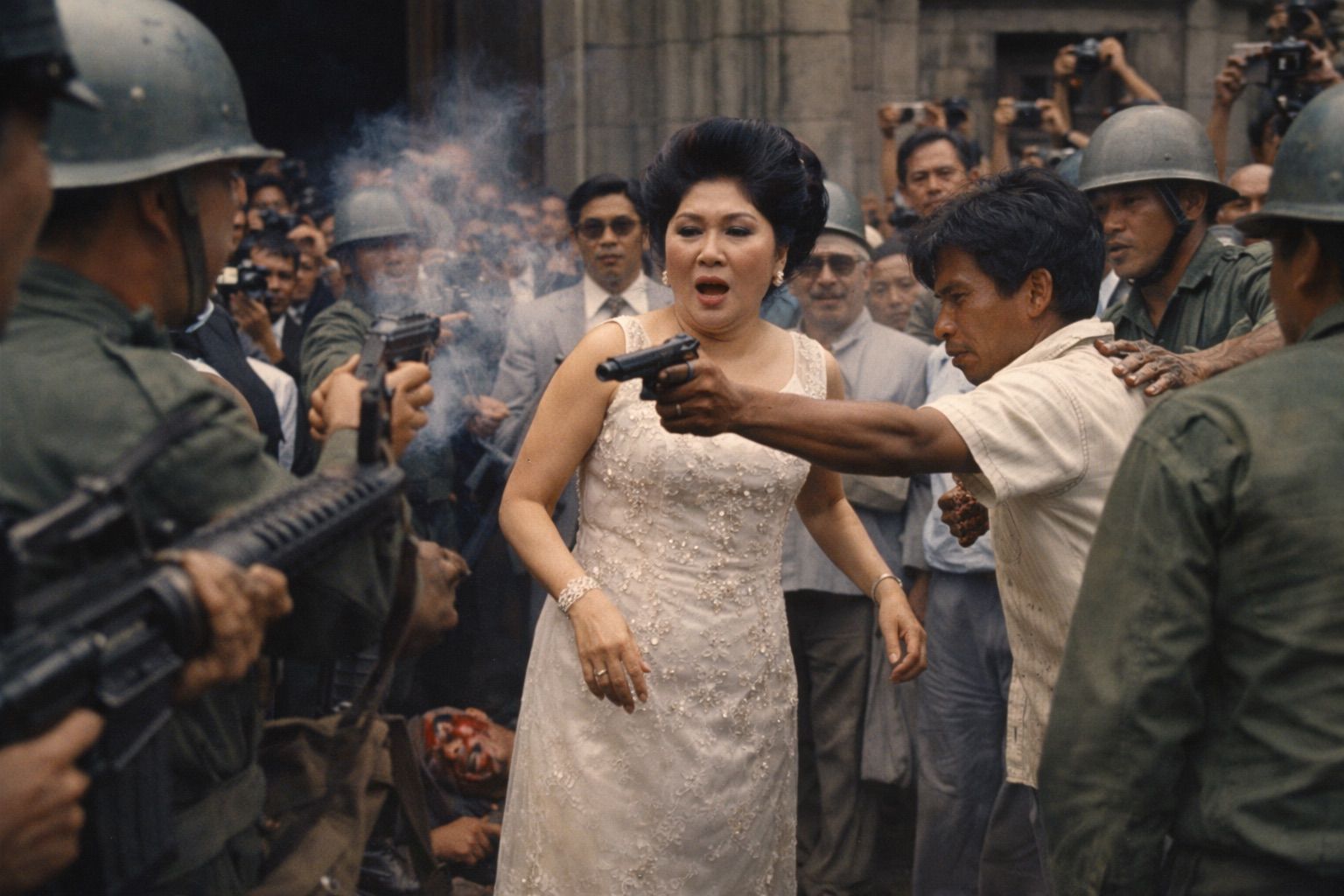
It was the early morning of August 31, 1972, and Imelda Marcos, the wife of Philippine President Ferdinand Marcos, had just finished attending a mass at the Manila Cathedral. As she stepped out into the bright sunlight, a crowd of well-wishers waited to greet her, their faces beaming with admiration for the woman who was widely regarded as one of the most beautiful and fashionable women in the world.

But amidst the chaos of flashing cameras and shouting voices, Imelda’s security detail suddenly sprang into action. A figure emerged from the crowd, his eyes fixed intently on the presidential couple. It was a young man named Danilo Salvador, a former soldier who had grown increasingly disillusioned with the Marcos regime’s corruption and abuses.

As Salvador drew closer to the President and his wife, Imelda’s guards quickly closed in around them, forming a tight cordon of steel helmets and machine guns. But it was too late – Salvador had already pulled out a pistol from beneath his shirt and was raising it towards Imelda.

The scene that unfolded next would become one of the most infamous moments in Philippine history: as Salvador fired his first shot, Imelda’s guards returned fire almost instantly, sending Salvador flying to the ground. But remarkably, despite being hit by multiple bullets, Salvador managed to struggle back to his feet and continue firing his pistol, sending chaos erupting through the crowded streets.

The attempted assassination of Imelda Marcos was a shocking and unprecedented attack on the regime that had held power in the Philippines for nearly two decades. The Marcoses were known for their ruthless suppression of opposition, and Imelda’s own reputation as a symbol of extravagance and corruption only seemed to fuel further resentment among the country’s growing anti-Marcos movement.

As news of the assassination attempt spread like wildfire through Manila, panic set in among the city’s residents. Soldiers sealed off major roads and buildings, while rumors swirled that Salvador was not acting alone – that he was part of a larger conspiracy to overthrow the Marcos regime once and for all.

Meanwhile, Imelda herself seemed almost detached from the mayhem unfolding around her. Despite being just inches away from death, she appeared remarkably composed, her designer heels still gleaming with dew as she moved through the crowds with an air of detachment that bordered on disdain.

The aftermath of the attempt was a blur of medical checks and frantic debriefings, as Imelda’s handlers scurried to contain the fallout. But beneath the surface, whispers began to circulate about the true nature of Salvador’s attack – whether it had been a genuine assassination attempt or simply a publicity stunt orchestrated by anti-Marcos forces.

Some claimed that Salvador was nothing more than a patsy, a mere pawn in a larger game of deception and disinformation designed to discredit the Marcos regime once and for all. Others pointed out that Salvador’s gun had somehow magically disappeared into thin air, leaving behind only a faint smudge of powder on Imelda’s dress.

The incident marked a turning point in the increasingly volatile politics of the Philippines. As anti-Marcos sentiment continued to simmer beneath the surface, the attempted assassination attempt served as a stark reminder of the regime’s brutal resolve to maintain its grip on power at any cost.

In the years that followed, Imelda would emerge as one of the most polarizing figures in Philippine history – a symbol of excess and corruption who seemed to embody everything that was wrong with the country’s corrupt elite. And yet, despite the numerous assassination attempts and plots against her life, she somehow managed to survive, her resilience and cunning earning her a reputation as one of the most formidable women in Southeast Asian politics.

Her eventual downfall would come more than two decades later, when her husband Ferdinand Marcos was finally forced from power by the People Power Revolution of 1986. As she fled Manila with a cache of stolen jewels and artworks, Imelda would leave behind a legacy that was as complicated as it was far-reaching – a testament to the darker side of Philippine politics and the enduring power of beauty, fashion, and charm.

As the days turned into weeks, the attempted assassination attempt became a national obsession. The Filipino media devoured every detail, speculating about Salvador’s motives and connections to anti-Marcos groups. Imelda herself seemed unfazed by the commotion, instead choosing to focus on her official duties as First Lady.

Behind the scenes, however, the Marcos regime was in disarray. Ferdinand Marcos, already growing increasingly paranoid and isolated, became convinced that Salvador was part of a larger conspiracy to overthrow him. He dispatched his trusted advisors to investigate, but it soon became clear that they were more interested in finding scapegoats than uncovering the truth.

The investigation into Salvador’s attack was marked by gross irregularities. Imelda’s guards claimed that Salvador had been acting alone, but some eyewitnesses contradicted this account, suggesting that there may have been multiple shooters involved. Others questioned why Salvador’s gun seemed to vanish into thin air, leaving behind only a faint smudge of powder on Imelda’s dress.

Meanwhile, the Marcos regime continued its campaign of intimidation and suppression against anti-Marcos groups. Protesters were beaten, arrested, and sometimes killed, while opposition leaders were forced into hiding or exile. The country was gripped by fear and uncertainty, with many Filipinos wondering if they would ever be able to express themselves freely without facing reprisals.

Imelda’s reputation as a symbol of extravagance and corruption only continued to grow during this period. Her love of designer clothing and jewelry was matched only by her passion for building grandiose monuments and infrastructure projects that served no practical purpose but to showcase the regime’s power and wealth. The Marcoses’ ill-gotten gains were embezzled, laundered, and hidden away in secret bank accounts and offshore safe havens.

Despite the mounting criticism, Imelda remained defiant, using her charm and wit to deflect attention from the regime’s misdeeds. She charmed foreign dignitaries with her fashion sense and graciousness, while at home she promoted herself as a champion of women’s rights and social justice. It was a facade that few believed, but one that allowed her to maintain her status as a global celebrity.

The attempted assassination attempt had also sparked a renewed focus on Imelda’s personal life. Rumors began circulating about her supposed obsession with beauty and youth, with some speculating that she had undergone extensive plastic surgery to maintain her stunning appearance. Others claimed that she was an expert manipulator who used her charm and beauty to get what she wanted from powerful men.

It is worth noting that these claims were often based on half-truths or outright fabrications. While Imelda’s obsession with fashion and beauty was certainly well-documented, it was unlikely that she had undergone as much surgery as claimed. Moreover, while she may have used her charm to influence others, this was largely a product of her background as a socialite and politician’s wife.

The reality was more complex, reflecting the contradictions and paradoxes at the heart of Imelda’s character. She was both a symbol of beauty and excess, yet also a shrewd operator who had mastered the art of politics through sheer force of will. Her story was one of self-invention and reinvention, as she adapted to changing circumstances and transformed herself into a global celebrity.

In many ways, Imelda’s life was a microcosm of the Philippines itself – a country torn apart by conflicting forces and ideologies. The attempts on her life reflected the broader struggle for power and control that had defined the nation since its independence from Spain in 1898. It was a story of colonialism, corruption, and revolution, with Imelda herself embodying both the glamour and decay of a dying regime.

The years following the attempted assassination attempt saw Imelda become increasingly entrenched as First Lady. Her reputation as a master manipulator only grew, as she skillfully navigated the complex web of alliances and rivalries within the Marcos court. She continued to charm foreign dignitaries and celebrities, using her beauty and wit to build support for the regime.

But beneath the surface, tensions were brewing. Anti-Marcos sentiment was growing more vocal and widespread, with opposition groups like the Moro National Liberation Front (MNLF) and the Communist Party of the Philippines (CPP) gaining strength in the countryside. The Philippines was sliding towards chaos, with Ferdinand Marcos’s increasingly authoritarian rule sparking widespread protests and violence.

In this climate of fear and uncertainty, Imelda’s role as First Lady became more critical than ever. As a unifying figure, she helped to paper over the cracks in the regime’s facade, using her charm and charisma to reassure allies and distract from the growing unrest.

But beneath the surface, she was acutely aware of the threat to her own survival – and that of her husband’s regime. She knew that as long as Ferdinand remained in power, she would continue to be a target for anti-Marcos activists and opposition groups. And so, with characteristic cunning and determination, Imelda set about securing her future, using every trick in the book to protect herself and her loved ones from the forces of change.

The fate of the Marcos regime was already sealed, however. The seeds of its downfall had been sown years earlier, as corruption, abuse, and incompetence had gradually eroded public trust in the government. It would take one final push – the People Power Revolution of 1986 – to finally topple Ferdinand from power.

As Imelda watched her husband flee Manila with a cache of stolen jewels and artworks, she knew that her own legacy was at stake. Would she be remembered as a symbol of excess and corruption, or as a shrewd operator who had adapted to changing circumstances? The answer would depend on how history chose to remember her – but for now, Imelda Marcos remained an enigma, a testament to the enduring power of beauty, fashion, and charm in shaping the course of human events.

Related Posts