Latest Articles

George Washington resigns as Commander-in-Chief

Elias Rowen

On December 23, 1783, a chilly winter morning in New York City, a significant moment in American history unfolded. In the aftermath of the Revolutionary War, George Washington, the commander-in-chief of the Continental Army, stood before his assembled officers to make an announcement that would be etched in the annals of time forever: he was resigning from his position.

Washington’s decision to step down as Commander-in-Chief was not taken lightly. He had led the Continental Army through some of the most grueling battles of the war, including the brutal winter at Valley Forge and the decisive victory at Yorktown. His leadership and strategic prowess had been instrumental in securing American independence from British rule. However, with the war finally coming to an end, Washington knew that it was time for him to relinquish his command and return to private life.

Washington’s resignation was not merely a formality; rather, it represented a significant shift in the power dynamics of the young American nation. The Continental Army had been disbanded, and its soldiers were being integrated into state militias or returning home as civilians. Washington’s role as Commander-in-Chief had grown increasingly symbolic, as he was no longer leading troops in the field but instead serving as a figurehead for the newly independent nation.

The circumstances surrounding Washington’s resignation also highlight the tension between his desire to maintain military authority and his duty to relinquish power. As Commander-in-Chief, he had been appointed by the Continental Congress, which was now being dissolved. With no clear successor in place, Washington felt pressure from his officers and advisors to remain at the helm of the army until a new government could be established.

However, Washington was determined to set an important precedent for the future of American governance. He recognized that his continued presence as Commander-in-Chief would have created a power vacuum and undermined the legitimacy of the newly formed federal government. By stepping down, he demonstrated his commitment to the principles of civilian control over the military and the importance of establishing a new system of government.

On the morning of December 23, Washington gathered with his officers in a makeshift theater at Federal Hall in New York City. The atmosphere was somber, as many of these men had fought alongside him for years, and their relationships were deeply personal. Washington began to speak, his voice filled with emotion as he expressed his gratitude to the soldiers who had served under him.

“My dear friends,” he said, “it is with a heart full of sorrow that I take leave of you today. The war may be over, but our service to this great nation is far from complete. We must now turn our attention to building a new government and establishing the principles of liberty and justice upon which our republic was founded.”

Washington’s words were met with tears and applause as his officers bid him farewell. He then presented a formal letter of resignation, in which he expressed his gratitude for the trust placed in him and acknowledged the sacrifices made by those who had served under his command.

The significance of Washington’s resignation cannot be overstated. It marked a turning point in American history, as it established the precedent that military leaders would eventually relinquish their power to civilian authorities. This concept would become a cornerstone of democratic governance in the United States and would influence the development of similar systems around the world.

Washington’s decision also highlights his humility and willingness to put the needs of others before his own desires. He could have easily continued to serve as Commander-in-Chief, maintaining his power and prestige. Instead, he chose to sacrifice his position for the sake of the nation, demonstrating his commitment to the principles of liberty and democracy.

In the years that followed, Washington would go on to play a leading role in shaping the new federal government. He was instrumental in drafting the United States Constitution and served as one of the key negotiators at the Constitutional Convention. His leadership during this period helped establish the foundations for America’s system of government and cemented his status as one of the most revered figures in American history.

As Washington stood before his officers, his voice trembled with emotion as he spoke of the sacrifices made by those who had served under him. He acknowledged the hardships they had endured, the battles they had fought, and the lives that had been lost in pursuit of American independence. The room was filled with a sense of reverence, as if the very fate of the nation hung in the balance.

Washington’s words were met with tears and applause from his officers, who had grown to consider him not only their commander but also a mentor and friend. Many of them had joined the Continental Army at a young age, barely out of their teens, and had spent years fighting for a cause that was still unknown to many Americans. They had seen Washington lead by example, demonstrating bravery in the face of danger, compassion in times of hardship, and unwavering dedication to the pursuit of freedom.

As he finished speaking, Washington presented his formal letter of resignation, which outlined his reasons for stepping down as Commander-in-Chief. He expressed his gratitude for the trust placed in him and acknowledged the sacrifices made by those who had served under his command. The letter was a testament to his humility and willingness to put the needs of others before his own desires.

The significance of Washington’s resignation cannot be overstated. It marked a turning point in American history, as it established the precedent that military leaders would eventually relinquish their power to civilian authorities. This concept would become a cornerstone of democratic governance in the United States and would influence the development of similar systems around the world.

Washington’s decision also highlights his commitment to the principles of liberty and democracy. He could have easily continued to serve as Commander-in-Chief, maintaining his power and prestige. Instead, he chose to sacrifice his position for the sake of the nation, demonstrating his willingness to put the needs of others before his own desires.

In the years that followed, Washington would go on to play a leading role in shaping the new federal government. He was instrumental in drafting the United States Constitution and served as one of the key negotiators at the Constitutional Convention. His leadership during this period helped establish the foundations for America’s system of government and cemented his status as one of the most revered figures in American history.

The legacy of Washington’s resignation extends far beyond the halls of power in New York City on that fateful winter morning. It has inspired generations of Americans to put country before self, to serve their nation with humility and dedication, and to uphold the principles of liberty and democracy.

One of the most striking aspects of Washington’s decision is its timing. The Revolutionary War had ended just a year earlier, in 1782, but the aftermath was far from peaceful. Many veterans were struggling to adjust to civilian life, and there was widespread disillusionment with the new federal government. Washington knew that his resignation would be seen as a statement on the role of the military in American society, and he took care to ensure that it was perceived as a victory for democracy.

As news of Washington’s resignation spread throughout the city, there was an outpouring of support from citizens who had long revered their commander-in-chief. Many attended special ceremonies to bid him farewell, while others wrote letters expressing their gratitude for his service and leadership. The mood was one of sadness and loss, but also of hope and optimism for the future.

In the months that followed Washington’s resignation, he would go on to play a leading role in establishing the new federal government. He attended key meetings with members of Congress, including James Madison and Thomas Jefferson, where they began to draft the United States Constitution. His leadership during this period helped shape the fundamental principles of American democracy and cemented his status as one of the most revered figures in American history.

Washington’s legacy is not just a testament to his own character but also to the enduring ideals that he represented. He embodied the spirit of selfless service, duty, and loyalty that has defined America from its earliest days. His commitment to putting country before self and upholding the principles of liberty and democracy inspired generations of Americans to follow in his footsteps.

As we reflect on Washington’s resignation, it is clear that it marked a turning point not just in American history but also in the development of modern democratic governance. It established the precedent that military leaders would eventually relinquish their power to civilian authorities, paving the way for the emergence of constitutional monarchies and republics around the world.

Washington’s decision was not made lightly, and it required immense courage and conviction. He knew that his resignation would be seen as a statement on the role of the military in American society, and he took care to ensure that it was perceived as a victory for democracy. In doing so, he set an important precedent for future generations of leaders who would be called upon to make difficult choices between personal ambition and public duty.

The impact of Washington’s resignation extends far beyond the halls of power in New York City on that fateful winter morning. It has inspired countless individuals throughout history to put country before self, to serve their nation with humility and dedication, and to uphold the principles of liberty and democracy. His legacy continues to inspire Americans today, reminding us of the enduring ideals that have defined our nation from its earliest days.

As we look back on Washington’s resignation, it is clear that his decision was not just a turning point in American history but also a testament to the enduring power of democracy. It reminded us that true leadership requires humility, selflessness, and a willingness to put country before self. His legacy continues to inspire Americans today, reminding us of the importance of upholding the principles of liberty and democracy that have defined our nation from its earliest days.

In conclusion, Washington’s resignation on December 23, 1783, marked a significant moment in American history, one that would forever change the course of our nation’s development. His decision to step down as Commander-in-Chief set an important precedent for future generations of leaders and reminded us of the enduring power of democracy. It is a testament to his humility, selflessness, and commitment to the principles of liberty and democracy that he will always be remembered as one of the most revered figures in American history.

Related Posts

Federal Reserve System established

Elias Rowen

The establishment of the Federal Reserve System on December 23, 1913, marked a significant turning point in American economic history, forever changing the way the country managed its monetary policy and banking system. The creation of this central bank was the culmination of decades-long efforts by politicians, economists, and financiers who sought to address issues plaguing the economy at the time.

Prior to the establishment of the Federal Reserve, the United States operated under a decentralized banking system with no central authority overseeing it. Each state had its own banking laws and regulations, which often led to a patchwork of inconsistent policies that hindered interstate commerce. The Panic of 1907, a nationwide financial crisis sparked by bank failures and currency shortages, highlighted the need for a more robust and coordinated monetary policy.

One of the earliest proponents of a central bank was Senator Nelson Aldrich, a Republican from Rhode Island who had served as a leader in the Senate Finance Committee. In the early 1900s, Aldrich began to push for legislation that would create a central banking system, but his efforts were met with resistance from those who feared government interference in the economy. The debate over central banking became increasingly polarized along party lines, with Democrats generally supporting the idea and Republicans opposing it.

Meanwhile, President Woodrow Wilson, who had campaigned on a platform of progressive reforms, was keenly interested in establishing a central bank. In 1913, Wilson appointed Aldrich as chair of a special committee tasked with drafting legislation for the new institution. The National Monetary Commission, led by Aldrich and including prominent figures such as Paul Warburg, Frank Vanderlip, and Charles Mitchell, spent months studying European banking systems and formulating proposals for an American central bank.

The final product, the Federal Reserve Act, was introduced in Congress on June 18, 1913. The bill faced intense opposition from Republicans, who argued that it would concentrate too much power in Washington and stifle competition among banks. The debate raged throughout the summer, with some of the most contentious issues surrounding the composition of the Federal Reserve Board, the management structure of regional Federal Reserve Banks, and the role of private banks within the system.

In the end, Wilson and his allies managed to secure passage of the bill in Congress, but only after significant concessions were made. The Federal Reserve System was designed as a decentralized institution with 12 regional banks, each responsible for managing its own district’s banking needs. These banks would be governed by a Board of Governors in Washington, which would oversee monetary policy and set interest rates.

The Federal Reserve System went into effect on November 16, 1914, when the first regional bank opened its doors in New York City. Over the next several years, the remaining banks came online, gradually expanding the reach of the new central bank. The initial response from bankers was generally favorable, with many seeing the benefits of a more stable and secure financial system.

However, not everyone was pleased with the creation of the Federal Reserve. Critics argued that it would lead to government control over the economy, stifling innovation and competition among banks. Others feared that the central bank’s powers would be misused by politicians seeking to manipulate the economy for their own gain.

The early years of the Federal Reserve System were marked by a number of challenges, including the tumultuous period leading up to World War I. As European governments mobilized for war, they drained international reserves from America, creating a shortage that forced the United States to intervene with emergency loans and currency swaps. The experience highlighted the need for more effective monetary policy tools, which the Federal Reserve would eventually develop.

The 1920s saw significant changes within the Federal Reserve System as well. The death of Paul Warburg in 1932 marked the passing of one of the institution’s most influential founders. Meanwhile, the Roaring Twenties themselves brought a surge of economic growth and inflation, which forced the central bank to take on a more active role in managing monetary policy.

The Great Depression of the 1930s proved to be a crucible for the Federal Reserve System, testing its ability to respond to unprecedented crises. The institution’s failure to mitigate the downturn was widely criticized, but it also spurred significant reforms that strengthened the central bank’s powers and independence. In the post-war period, the Federal Reserve played a key role in maintaining economic stability and promoting growth.

As of today, the Federal Reserve System remains one of the most influential institutions on Wall Street, with its decisions impacting everything from interest rates to inflation expectations. The central bank’s tools have expanded exponentially since its inception, now including quantitative easing, forward guidance, and other unconventional measures designed to stabilize the financial system during times of crisis.

Federal Reserve System, #MonetaryPolicy, #CentralBanking, #EconomicHistory, #USFinanceSystem, #FinancialStability

The establishment of the Federal Reserve System on December 23, 1913, marked a significant turning point in American economic history, forever changing the way the country managed its monetary policy and banking system. The creation of this central bank was the culmination of decades-long efforts by politicians, economists, and financiers who sought to address issues plaguing the economy at the time.

Prior to the establishment of the Federal Reserve, the United States operated under a decentralized banking system with no central authority overseeing it. Each state had its own banking laws and regulations, which often led to a patchwork of inconsistent policies that hindered interstate commerce. The Panic of 1907, a nationwide financial crisis sparked by bank failures and currency shortages, highlighted the need for a more robust and coordinated monetary policy.

One of the earliest proponents of a central bank was Senator Nelson Aldrich, a Republican from Rhode Island who had served as a leader in the Senate Finance Committee. In the early 1900s, Aldrich began to push for legislation that would create a central banking system, but his efforts were met with resistance from those who feared government interference in the economy. The debate over central banking became increasingly polarized along party lines, with Democrats generally supporting the idea and Republicans opposing it.

Meanwhile, President Woodrow Wilson, who had campaigned on a platform of progressive reforms, was keenly interested in establishing a central bank. In 1913, Wilson appointed Aldrich as chair of a special committee tasked with drafting legislation for the new institution. The National Monetary Commission, led by Aldrich and including prominent figures such as Paul Warburg, Frank Vanderlip, and Charles Mitchell, spent months studying European banking systems and formulating proposals for an American central bank.

The final product, the Federal Reserve Act, was introduced in Congress on June 18, 1913. The bill faced intense opposition from Republicans, who argued that it would concentrate too much power in Washington and stifle competition among banks. The debate raged throughout the summer, with some of the most contentious issues surrounding the composition of the Federal Reserve Board, the management structure of regional Federal Reserve Banks, and the role of private banks within the system.

In the end, Wilson and his allies managed to secure passage of the bill in Congress, but only after significant concessions were made. The Federal Reserve System was designed as a decentralized institution with 12 regional banks, each responsible for managing its own district’s banking needs. These banks would be governed by a Board of Governors in Washington, which would oversee monetary policy and set interest rates.

The Federal Reserve System went into effect on November 16, 1914, when the first regional bank opened its doors in New York City. Over the next several years, the remaining banks came online, gradually expanding the reach of the new central bank. The initial response from bankers was generally favorable, with many seeing the benefits of a more stable and secure financial system.

However, not everyone was pleased with the creation of the Federal Reserve. Critics argued that it would lead to government control over the economy, stifling innovation and competition among banks. Others feared that the central bank’s powers would be misused by politicians seeking to manipulate the economy for their own gain.

The early years of the Federal Reserve System were marked by a number of challenges, including the tumultuous period leading up to World War I. As European governments mobilized for war, they drained international reserves from America, creating a shortage that forced the United States to intervene with emergency loans and currency swaps. The experience highlighted the need for more effective monetary policy tools, which the Federal Reserve would eventually develop.

The 1920s saw significant changes within the Federal Reserve System as well. The death of Paul Warburg in 1932 marked the passing of one of the institution’s most influential founders. Meanwhile, the Roaring Twenties themselves brought a surge of economic growth and inflation, which forced the central bank to take on a more active role in managing monetary policy.

The Great Depression of the 1930s proved to be a crucible for the Federal Reserve System, testing its ability to respond to unprecedented crises. The institution’s failure to mitigate the downturn was widely criticized, but it also spurred significant reforms that strengthened the central bank’s powers and independence. In the post-war period, the Federal Reserve played a key role in maintaining economic stability and promoting growth.

One of the most significant events of the 20th century was the Great Depression, which saw widespread bank failures, massive unemployment, and a near-total collapse of international trade. The Federal Reserve’s inability to prevent or mitigate this crisis led to widespread criticism and calls for reform. In response, Congress passed the Banking Act of 1933, which significantly expanded the central bank’s powers and introduced measures such as deposit insurance and federal oversight.

The post-war period saw a significant expansion of the Federal Reserve System’s role in international finance. The Bretton Woods Agreement of 1944 established a new international monetary order, with the US dollar becoming the global reserve currency. The Federal Reserve played a key role in maintaining the stability of this system, which endured for over three decades.

The 1960s and 1970s saw significant changes within the Federal Reserve System as well. The death of Paul Douglas in 1976 marked the passing of one of the institution’s most influential economists. Meanwhile, the inflationary pressures of the time forced the central bank to take on a more active role in managing monetary policy.

The 1980s saw a major shift in the Federal Reserve System’s approach to monetary policy, with the introduction of monetarism and the emphasis on controlling money supply growth rather than interest rates. This marked a significant departure from the earlier focus on using interest rates as the primary tool for controlling inflation.

Today, the Federal Reserve System is one of the most influential institutions in global finance, with its decisions impacting everything from interest rates to inflation expectations. The central bank’s tools have expanded exponentially since its inception, now including quantitative easing, forward guidance, and other unconventional measures designed to stabilize the financial system during times of crisis.

In recent years, the Federal Reserve has played a key role in responding to a number of significant economic challenges, including the 2008 global financial crisis and the ongoing COVID-19 pandemic. The central bank’s actions have had a major impact on interest rates, inflation expectations, and employment levels, underscoring its critical role in maintaining economic stability and promoting growth.

Despite its many successes, the Federal Reserve System has also faced criticism for its handling of certain crises, including the 2008 financial meltdown and the ongoing COVID-19 pandemic. Critics argue that the central bank’s actions have been too slow or inadequate, allowing economic damage to build up before effective interventions were implemented.

The Federal Reserve System remains an institution in evolution, with ongoing debates about its role, powers, and accountability. While it has undoubtedly played a crucial role in shaping America’s monetary policy and banking system, there are many who question whether the central bank has done enough to address pressing economic challenges or if its actions have been too opaque or arbitrary.

As we reflect on the history of the Federal Reserve System, one thing is clear: this institution has had a profound impact on American economic life. From its establishment in 1913 to the present day, it has played a crucial role in shaping monetary policy and banking regulations, often serving as both a stabilizing force and a source of controversy.

In the final analysis, the Federal Reserve System’s success will depend not only on its ability to adapt to changing economic conditions but also on its capacity to balance competing interests, manage risk, and communicate effectively with stakeholders. As we move forward in an increasingly complex global economy, one thing is certain: the Federal Reserve System will continue to play a vital role in shaping America’s monetary policy and banking system for generations to come.

Over the years, the Federal Reserve has undergone numerous reforms aimed at increasing its transparency and accountability. These include the passage of the Dodd-Frank Act in 2010, which introduced measures such as stress testing, liquidity requirements, and enhanced capital buffers. The central bank has also made significant strides in communicating its policies and decisions to the public through regular press conferences, speeches, and reports.

Despite these efforts, there remain many challenges facing the Federal Reserve System today. One of the most pressing issues is the ongoing debate about its role in addressing income inequality and promoting economic growth for all Americans. Another challenge lies in its ability to adapt to rapidly changing global economic conditions, including rising trade tensions, shifting monetary policies, and evolving technological innovations.

In recent years, there has been a growing recognition of the need for greater transparency and accountability within the Federal Reserve System. This includes efforts to increase public access to central bank data, improve communication with stakeholders, and enhance the independence and expertise of central bankers.

As we look to the future, it is clear that the Federal Reserve System will continue to face numerous challenges and controversies. However, by learning from its history and adapting to changing economic conditions, this institution has the potential to remain a powerful force for stability and growth in America’s economy.

Related Posts

Hitler orders V-2 rocket production

Elias Rowen

In the dark days of World War II, as the Allied forces made their way deeper into German territory, the Nazi regime found itself on the back foot. Despite its best efforts to maintain a façade of strength and determination, the once-mighty Third Reich was slowly but surely unraveling. The defeat at Stalingrad in 1943 marked a turning point in the war, as the Soviet Union launched a massive counterattack that sent shockwaves throughout the German high command.

As the tide turned against them, Hitler and his generals were forced to confront the harsh reality of their situation. The military machine that had once seemed so invincible was now grinding to a halt, its momentum halted by the sheer weight of Allied firepower and determination. In desperation, Hitler turned to new technologies in an attempt to turn the tables on his enemies.

One such technology was the V-2 rocket, a monstrous intercontinental ballistic missile developed by Wernher von Braun’s team at Peenemünde. The brainchild of the brilliant but troubled scientist, the V-2 was designed to carry a payload of up to 1 ton of explosives to targets as far away as London and Paris.

As the Allies closed in on Germany, Hitler became increasingly obsessed with the potential of the V-2. He saw it not only as a way to counter the Allied bombing campaign but also as a means to demonstrate his regime’s continued military prowess. In July 1943, he ordered the production of the rocket to be ramped up, instructing his generals to divert resources away from conventional armaments and towards the development of this new technology.

Hitler’s decision was motivated by a combination of factors. Firstly, he saw the V-2 as a way to break the Allied bombing campaign, which had been causing significant damage to German cities and industry. Secondly, he hoped that the rocket would be able to reach targets deep within enemy territory, striking at the heart of their war effort.

Despite his enthusiasm for the project, Hitler’s grasp on reality was beginning to slip. His advisors were increasingly concerned by his erratic behavior and obsessive focus on the V-2. As they watched him become more and more isolated from reality, they knew that they had to tread carefully. The consequences of disobeying Hitler’s orders would have been catastrophic, but they also knew that if he continued down this path, the war effort itself would be doomed.

Meanwhile, at Peenemünde, von Braun and his team were working tirelessly to bring the V-2 into production. They faced numerous technical challenges, from ensuring the rocket’s stability in flight to developing a reliable guidance system. Despite these difficulties, they made rapid progress, with the first V-2 launch taking place on October 3, 1942.

However, it was not until December 16, 1944, that Hitler ordered the V-2 into mass production. This decision marked a turning point in the war, as Germany’s resources were increasingly diverted towards this new technology. The once-mighty Luftwaffe and Wehrmacht were now struggling to maintain their output, while the V-2 program was sucking up more and more personnel and materials.

As the Allies approached Berlin, Hitler became more and more detached from reality. His obsession with the V-2 knew no bounds, as he ordered his generals to prepare for a final, desperate push against the enemy lines. It would be a futile effort, as the Allied forces were now too strong, but Hitler was determined to go out fighting.

In the end, it was not the V-2 that changed the course of history, but the determination and sacrifice of the Allied soldiers who fought their way across Europe. As they approached Berlin, Hitler’s grip on reality finally slipped completely, and he took his own life in the bunker beneath the Reich Chancellery on April 30, 1945.

The legacy of the V-2 is a complex one. While it was a technological marvel of its time, it also served as a grim reminder of the horrors of war. The Allied bombing campaign that had driven Hitler to invest so heavily in this technology would ultimately prove to be his undoing, but the V-2 itself would go on to have a lasting impact on the development of military technologies.

As the months passed, the Allies continued their relentless push towards Berlin, and with it, the very heart of the Nazi regime. Hitler’s grip on reality was tenuous at best, his obsession with the V-2 only growing stronger as the war effort faltered around him.

Meanwhile, von Braun and his team were working tirelessly to bring the V-2 into mass production. They faced numerous technical challenges, from ensuring the rocket’s stability in flight to developing a reliable guidance system. Despite these difficulties, they made rapid progress, with the first V-2 launch taking place on October 3, 1942.

However, it was not until December 16, 1944, that Hitler ordered the V-2 into mass production. This decision marked a turning point in the war, as Germany’s resources were increasingly diverted towards this new technology. The once-mighty Luftwaffe and Wehrmacht were now struggling to maintain their output, while the V-2 program was sucking up more and more personnel and materials.

As the Allies approached Berlin, Hitler became more and more detached from reality. His obsession with the V-2 knew no bounds, as he ordered his generals to prepare for a final, desperate push against the enemy lines. It would be a futile effort, as the Allied forces were now too strong, but Hitler was determined to go out fighting.

The V-2 was finally ready to play its part in the war effort, and on January 8, 1945, it launched its first operational attack from the Netherlands, striking at London with devastating effect. The rocket exploded over the city, causing widespread destruction and loss of life. However, this initial success would prove short-lived.

The Allies had long been anticipating the launch of the V-2, and their defense systems were better prepared than they could have imagined. Radar installations detected the incoming rockets, while anti-aircraft batteries were scrambled to respond. Despite these efforts, some V-2s managed to penetrate the defenses and strike at their targets, causing significant damage.

As the war drew to a close, the once-mighty Third Reich was crumbling around Hitler’s ears. His generals knew that it was only a matter of time before the Allies broke through the defenses of Berlin, but they were powerless to stop him. They watched in despair as he became increasingly isolated from reality, his obsession with the V-2 clouding all other thought.

On April 16, 1945, Hitler issued a new order, instructing his generals to prepare for a final, desperate push against the enemy lines. It was a futile effort, but Hitler was determined to go out fighting. As he sat in his bunker beneath the Reich Chancellery, surrounded by his loyal entourage, he knew that all hope was lost.

The V-2 had not changed the course of history as he had hoped, and now it seemed that it would be a mere footnote in the annals of time. The Allied forces were closing in on Berlin, their determination and sacrifice driving them forward with unstoppable momentum.

In the end, it was not the V-2 that decided the fate of Germany, but the bravery and perseverance of the Allied soldiers who fought their way across Europe. As they approached Berlin, Hitler’s grip on reality finally slipped completely, and he took his own life in the bunker beneath the Reich Chancellery on April 30, 1945.

The legacy of the V-2 is a complex one, reflecting both the ingenuity of its creators and the horrors of war. While it was a technological marvel of its time, it also served as a grim reminder of the devastation that can be wrought by human ambition. The Allied bombing campaign that had driven Hitler to invest so heavily in this technology would ultimately prove to be his undoing, but the V-2 itself would go on to have a lasting impact on the development of military technologies.

The story of the V-2 is also a testament to the power of science and innovation. Von Braun’s team had pushed the boundaries of what was thought possible, developing a technology that seemed almost mythical in its potential. But as with all great innovations, there is always a price to be paid.

In the aftermath of the war, von Braun would go on to work for the United States military, using his expertise to help develop the American space program. His legacy would be forever tied to the V-2, but he himself would never forget the horrors that had driven its creation.

The Nazi regime was finally brought to an end on May 8, 1945, with the formal surrender of Germany at the hands of General Dwight D. Eisenhower. The war in Europe was over, and with it, the suffering and devastation that had ravaged the continent for six long years.

As the world began to rebuild, the V-2 became a symbol of the horrors that had been perpetrated during the war. It stood as a grim reminder of the devastating power of human ambition, when driven by hatred and a desire for domination.

The development of the V-2 also marked a turning point in the history of warfare. As military leaders began to grasp the full potential of this new technology, they realized that the old rules no longer applied. The traditional concepts of distance and time were rendered obsolete by the rocket’s incredible range and speed.

This realization would have far-reaching implications for future conflicts, as military strategists began to adapt their thinking to take into account the V-2’s capabilities. It marked a new era in warfare, one in which distances were no longer a barrier, and the battlefield was no longer confined to traditional notions of space.

The legacy of the V-2 would continue to be felt for generations to come, as scientists and military leaders grappled with its implications. But as the world slowly rebuilt from the ashes of war, it was clear that this new era had brought both hope and terror in equal measure.

In the years that followed, the story of the V-2 would become a cautionary tale, reminding future generations of the devastating consequences of unchecked ambition and technological advancement. As we reflect on this pivotal moment in history, let us not forget the lessons it teaches: that even the most brilliant minds can be corrupted by power and ideology; and that the pursuit of innovation must always be tempered with compassion, wisdom, and a deep understanding of the human condition.

The V-2 had been born out of chaos and despair, forged in the crucible of war. But as its legacy continued to unfold, it served as a stark reminder of what humanity is capable of achieving – both for good and ill.

Related Posts

Romanian dictator Nicolae Ceaușescu overthrown

Elias Rowen

December 21st, 1989, is etched in the collective memory of Romanians as a day of jubilation and liberation from decades-long dictatorship. The fall of Nicolae Ceaușescu marked the end of an era, but it also raised questions about the tumultuous history that led to his ouster. To understand the complexity of this event, we must delve into the country’s post-war development, Ceaușescu’s rise to power, and the events leading up to his overthrow.

In the aftermath of World War II, Romania found itself aligned with the Soviet Union under the leadership of Constantin Ion Parhon, a figure from the pre-war era who was sympathetic to communist ideals. However, it was Gheorghe Gheorghiu-Dej, a stalwart communist and later first secretary of the Romanian Communist Party, who began to consolidate power in 1945. Dej’s tenure was marked by significant economic growth, but also repression of dissenting voices.

The early years of Ceaușescu’s rule were characterized by cautious optimism among Romanians. Having risen through the ranks under Dej, Ceaușescu became first secretary in 1965 and began to assert his authority. He introduced market-oriented reforms, which initially showed promise. Romania was poised to become a regional powerhouse, with strong economic growth and industrial development.

However, by the early 1970s, Ceaușescu’s regime had taken a stark turn towards authoritarianism. The leader became increasingly paranoid, perceiving threats from within and without. Dissidents were silenced through imprisonment or forced exile, while intellectuals and artists were co-opted into supporting the regime. Romania’s economy began to stagnate as Ceaușescu prioritized grandiose infrastructure projects over development.

The 1970s saw Ceaușescu become a vocal critic of Soviet foreign policy, which created unease in Moscow. His anti-Soviet stance was likely driven by a desire for regional influence and independence, but it also made him a target for criticism from within the Eastern Bloc. Romania’s break with Comecon, the Soviet-dominated economic council of communist states, marked a significant turning point in its relations with the Soviet Union.

The 1980s brought further isolationism under Ceaușescu. His regime was criticized globally for human rights abuses and economic mismanagement. Sanctions were imposed by Western countries, exacerbating Romania’s economic difficulties. The country became increasingly reliant on debt, which led to a decline in living standards and growing discontent among the population.

The spark that ignited the revolution came from Ceaușescu’s ill-fated decision to impose austerity measures in 1989. Price increases for basic commodities like food and fuel sparked widespread protests across the country. Initially peaceful demonstrations soon turned violent as security forces responded with force, killing dozens of protesters.

As news of the brutal crackdown spread, opposition movements within Romania began to organize. The National Salvation Front (FSN), led by Ion Iliescu, a former communist official who had grown disillusioned with Ceaușescu’s rule, emerged as a key player in the opposition. Its agenda focused on democratic reform and dismantling the existing authoritarian structures.

Meanwhile, a group of army officers, dissatisfied with Ceaușescu’s handling of the crisis, began secretly planning a coup. They were led by General Nicolae Militaru, who would become one of the chief architects of the military intervention that ultimately brought down the dictator.

As protests continued to spread across Romania, Ceaușescu became increasingly isolated. He made the fateful decision to address a massive rally in Timișoara, where anti-government demonstrations had been raging for days. On December 16th, he was met with hostility and defiance from protesters, who chanted slogans against his regime.

Fearing for their lives, Ceaușescu and his wife Elena fled the scene, but their escape was short-lived. The National Salvation Front and military officers, now in open revolt, issued a joint statement condemning the dictator’s actions. On December 21st, Ceaușescu attempted to address the nation via radio, but the broadcast was interrupted by news of his ouster.

The next morning, Ceaușescu and Elena were captured while attempting to flee Bucharest. They were put on trial for crimes against humanity, with Ceaușescu defiantly refusing to acknowledge responsibility for the regime’s atrocities. The following day, December 25th, he was executed along with his wife by firing squad.

In the aftermath of Ceaușescu’s fall, Romania embarked on a tumultuous transition towards democracy. The National Salvation Front, which had played a crucial role in his ouster, went on to win the country’s first post-communist elections in May 1990. However, the legacy of Ceaușescu’s rule continued to shape Romanian politics and society for years to come.

As the news of Ceaușescu’s execution spread, jubilation erupted across Romania. People poured into the streets, hugging each other in celebration. The sounds of cheering and music filled the air as the country finally broke free from decades of oppression.

But amidst the euphoria, there were also moments of quiet reflection. Many Romanians struggled to come to terms with the trauma they had endured under Ceaușescu’s rule. The dictator’s regime had left an indelible mark on the nation, and its legacy continued to haunt the country for years to come.

In the aftermath of the revolution, Romania faced a daunting task: rebuilding its economy and society from scratch. The country’s infrastructure was in shambles, with crumbling roads, inadequate healthcare, and a decaying education system. The once-thriving industrial sector lay in ruins, a testament to Ceaușescu’s mismanagement.

The new government, led by the National Salvation Front, faced numerous challenges as it attempted to steer Romania towards democracy. Corruption was rampant, and many former communist officials still held sway over key institutions. Ion Iliescu, the FSN leader, struggled to balance his own legacy with the need for radical change.

As the country transitioned from a planned economy to a market-based system, widespread poverty became a pressing concern. The effects of Ceaușescu’s austerity measures lingered, and many Romanians found themselves struggling to make ends meet. Protests against the new government’s handling of the economy erupted in cities across the country.

Despite these challenges, Romania made significant strides towards democracy. Free elections were held in 1990, with Iliescu emerging as the winner. The parliament was reconstituted, and a new constitution was drafted. But beneath the surface, deep-seated divisions persisted.

Many Romanians still harbored deep-seated resentment towards their former rulers. Anger and bitterness simmered just below the surface, waiting to erupt in protests or violent outbursts. The legacy of Ceaușescu’s rule had created a toxic atmosphere, where trust was hard to come by and dissent was met with suspicion.

In 1991, Romania joined the International Monetary Fund (IMF) and World Bank, seeking economic assistance to stabilize its faltering economy. But the terms of the loan package sparked widespread protests, as many Romanians felt that their country’s sovereignty was being compromised.

As the years passed, Romania slowly began to rebuild itself. The economy grew, albeit unevenly, and foreign investment started to trickle in. Corruption continued to plague the government, but the rule of law began to take hold.

In 2004, Romania joined the European Union, a milestone that marked its transition from a former communist state to a full-fledged member of the Western world. But even as the country celebrated this achievement, many Romanians still grappled with the legacy of Ceaușescu’s rule.

The dictator’s regime had left an indelible mark on Romanian society. Generations had grown up under his tyranny, and its effects lingered long after he was gone. Corruption, mistrust, and a deep-seated sense of vulnerability had become ingrained in the national psyche.

Today, as Romania looks back on the fall of Ceaușescu’s regime, it is clear that the country has made significant progress towards democracy. But the journey has been long and arduous, marked by setbacks and false starts.

In 2019, a presidential election was held in Romania, with Klaus Iohannis emerging as the winner. Iohannis, an ethnic German from Transylvania, had risen to prominence as mayor of Sibiu before becoming president. His presidency marked a new chapter in Romanian politics, one that emphasized European integration and reform.

But even as Romania continues to move forward, it is essential to remember the lessons of its past. The fall of Ceaușescu’s regime serves as a powerful reminder of the dangers of authoritarianism and the importance of standing up for human rights and democracy.

The Romanian people have shown remarkable resilience in the face of adversity. Their struggle for freedom and self-determination has inspired countless others around the world. As Romania continues to evolve and grow, it is essential that its leaders learn from the mistakes of the past, lest they forget the sacrifices made by those who fought for their country’s liberation.

The legacy of Ceaușescu’s regime serves as a poignant reminder of the fragility of democracy and the importance of vigilance. It is a testament to the power of human spirit, which can rise up against even the most entrenched systems of oppression.

Related Posts

Dreyfus Affair begins in France

Elias Rowen

The year was 1894 and France was on the brink of a crisis that would shake its very foundations. The country, still reeling from the losses of the Franco-Prussian War, was facing a period of economic stagnation and growing social unrest. It was in this climate of tension that the Dreyfus Affair began to unfold, an event that would become one of the most infamous episodes in French history.

At its core, the Dreyfus Affair was a military scandal involving the arrest, trial, and imprisonment of Alfred Dreyfus, a Jewish captain in the French army. But it was far more than just a simple case of mistaken identity or anti-Semitic bias. It was a symptom of deeper issues that had been simmering beneath the surface of French society for years.

One of the key factors contributing to the crisis was the rise of nationalism and militarism in France during the late 19th century. The country’s military leaders were obsessed with the idea of France as a great power, and they saw themselves as the guardians of national honor and prestige. This created a culture of paranoia and suspicion, where even minor infractions could be blown out of proportion.

In this context, Captain Dreyfus’s career was seen as a threat to French military prestige. A Jewish officer from Alsace who had been commissioned in 1892, Dreyfus was a rising star in the army. He was highly educated and intelligent, but also impulsive and prone to making mistakes. His meteoric rise through the ranks caught the attention of some senior officers, who began to see him as a rival.

One of these officers was Colonel Hubert Henry, the head of the French military intelligence service. Henry was a career soldier with a reputation for being ruthless and cunning. He had built his own empire within the army, using his connections and influence to gather intelligence and advance his own interests.

Henry’s obsession with Dreyfus began in 1893, when he started to receive reports that the captain was involved in espionage activities on behalf of Germany. These allegations were largely unfounded and based on circumstantial evidence, but Henry saw an opportunity to use them to further his own career. He began to build a case against Dreyfus, gathering testimony from other officers and using it to support his claims.

Meanwhile, the French army was also facing pressure from external forces. The country’s military leaders were keenly aware of the threat posed by Germany, which had been expanding its territories under the leadership of Chancellor Otto von Bismarck. France felt threatened by German ambitions in Europe and was desperate for a way to counterbalance them.

In this context, the possibility of a German spy ring operating within the French army became a tantalizing prospect. Henry’s allegations against Dreyfus seemed to provide evidence that such a ring existed, and he began to push his superiors to take action.

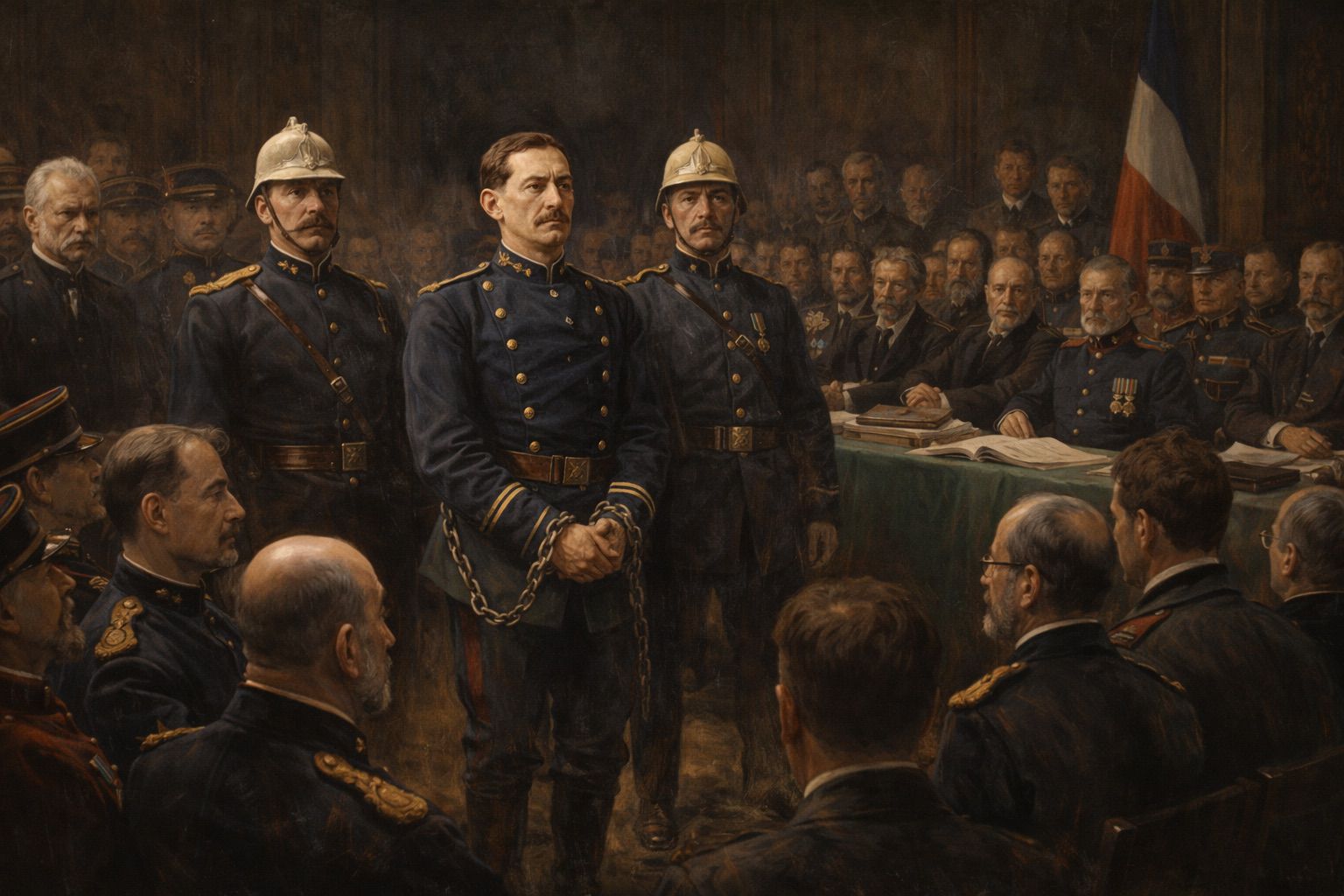
The first major step in the affair came on December 5, 1894, when Captain Dreyfus was summoned to the headquarters of the French military intelligence service. He was met with a demand for his resignation and a letter informing him that he had been stripped of his rank and pension.

Dreyfus refused to resign, insisting that he was innocent and would clear his name in court. But it soon became clear that he faced an uphill battle. The army’s leadership had already made up their minds about his guilt, and they were determined to silence him.

The trial of Captain Dreyfus began on December 19, 1894. It was a sham proceeding, with the outcome predetermined from the start. Henry testified against Dreyfus, using forged documents and questionable evidence to support his claims. The prosecution presented its case in a series of explosive accusations, painting Dreyfus as a traitor who had betrayed France to Germany.

The defense, led by Auguste Scheurer-Kestner, a prominent lawyer, argued that the charges were baseless and motivated by anti-Semitism. But they faced an almost insurmountable challenge, with the court stacked against them. The judges were military officers who saw Dreyfus as a threat to their honor and prestige.

The trial was marked by a series of bizarre incidents, including the introduction of forged documents and suspicious testimony from key witnesses. It was clear that something was amiss, but no one seemed to be able to pinpoint what exactly had gone wrong.

On January 10, 1895, the verdict was announced: Captain Alfred Dreyfus was found guilty of treason and sentenced to life imprisonment on Devil’s Island in French Guiana.

The affair was far from over. Over the next few years, new evidence emerged that cast doubt on the original trial. A series of leaks and rumors began to surface, suggesting that there had been a massive cover-up involving senior army officers.

One of these revelations came in 1896, when it emerged that Colonel Henry had fabricated key evidence against Dreyfus. This led to calls for his resignation, but he managed to cling on to power, using his connections and influence to silence those who dared speak out.

Meanwhile, a group of intellectuals and writers began to organize around the case, arguing that Dreyfus was innocent and demanding justice. Émile Zola, a prominent writer and anti-clerical activist, wrote an open letter denouncing the affair as a miscarriage of justice.

But it would take years for the truth to come out. It wasn’t until 1899, when new evidence emerged pointing to the involvement of Colonel Henry and other senior officers in the cover-up, that public opinion began to shift.

In the end, it was the work of a few determined individuals that led to Dreyfus’s eventual exoneration. Émile Zola’s open letter had sparked a wider debate about justice and morality, while a group of army officers, including Major Ferdinand Walsin Esterhazy and Captain Georges Picquart, began to speak out against the affair.

The climax came in 1906, when Dreyfus was finally exonerated and reinstated as a captain. It was a moment of vindication for those who had fought tirelessly for justice, but also a sobering reminder of the dangers of unchecked power and corruption.

The year was 1894 and France was on the brink of a crisis that would shake its very foundations. The country, still reeling from the losses of the Franco-Prussian War, was facing a period of economic stagnation and growing social unrest. It was in this climate of tension that the Dreyfus Affair began to unfold, an event that would become one of the most infamous episodes in French history.

At its core, the Dreyfus Affair was a military scandal involving the arrest, trial, and imprisonment of Alfred Dreyfus, a Jewish captain in the French army. But it was far more than just a simple case of mistaken identity or anti-Semitic bias. It was a symptom of deeper issues that had been simmering beneath the surface of French society for years.

One of the key factors contributing to the crisis was the rise of nationalism and militarism in France during the late 19th century. The country’s military leaders were obsessed with the idea of France as a great power, and they saw themselves as the guardians of national honor and prestige. This created a culture of paranoia and suspicion, where even minor infractions could be blown out of proportion.

In this context, Captain Dreyfus’s career was seen as a threat to French military prestige. A Jewish officer from Alsace who had been commissioned in 1892, Dreyfus was a rising star in the army. He was highly educated and intelligent, but also impulsive and prone to making mistakes. His meteoric rise through the ranks caught the attention of some senior officers, who began to see him as a rival.

One of these officers was Colonel Hubert Henry, the head of the French military intelligence service. Henry was a career soldier with a reputation for being ruthless and cunning. He had built his own empire within the army, using his connections and influence to gather intelligence and advance his own interests.

Henry’s obsession with Dreyfus began in 1893, when he started to receive reports that the captain was involved in espionage activities on behalf of Germany. These allegations were largely unfounded and based on circumstantial evidence, but Henry saw an opportunity to use them to further his own career. He began to build a case against Dreyfus, gathering testimony from other officers and using it to support his claims.

Meanwhile, the French army was also facing pressure from external forces. The country’s military leaders were keenly aware of the threat posed by Germany, which had been expanding its territories under the leadership of Chancellor Otto von Bismarck. France felt threatened by German ambitions in Europe and was desperate for a way to counterbalance them.

In this context, the possibility of a German spy ring operating within the French army became a tantalizing prospect. Henry’s allegations against Dreyfus seemed to provide evidence that such a ring existed, and he began to push his superiors to take action.

The first major step in the affair came on December 5, 1894, when Captain Dreyfus was summoned to the headquarters of the French military intelligence service. He was met with a demand for his resignation and a letter informing him that he had been stripped of his rank and pension.

Dreyfus refused to resign, insisting that he was innocent and would clear his name in court. But it soon became clear that he faced an uphill battle. The army’s leadership had already made up their minds about his guilt, and they were determined to silence him.

The trial of Captain Dreyfus began on December 19, 1894. It was a sham proceeding, with the outcome predetermined from the start. Henry testified against Dreyfus, using forged documents and questionable evidence to support his claims. The prosecution presented its case in a series of explosive accusations, painting Dreyfus as a traitor who had betrayed France to Germany.

The defense, led by Auguste Scheurer-Kestner, a prominent lawyer, argued that the charges were baseless and motivated by anti-Semitism. But they faced an almost insurmountable challenge, with the court stacked against them. The judges were military officers who saw Dreyfus as a threat to their honor and prestige.

The trial was marked by a series of bizarre incidents, including the introduction of forged documents and suspicious testimony from key witnesses. It was clear that something was amiss, but no one seemed to be able to pinpoint what exactly had gone wrong.

On January 10, 1895, the verdict was announced: Captain Alfred Dreyfus was found guilty of treason and sentenced to life imprisonment on Devil’s Island in French Guiana.

The affair was far from over. Over the next few years, new evidence emerged that cast doubt on the original trial. A series of leaks and rumors began to surface, suggesting that there had been a massive cover-up involving senior army officers.

One of these revelations came in 1896, when it emerged that Colonel Henry had fabricated key evidence against Dreyfus. This led to calls for his resignation, but he managed to cling on to power, using his connections and influence to silence those who dared speak out.

Meanwhile, a group of intellectuals and writers began to organize around the case, arguing that Dreyfus was innocent and demanding justice. Émile Zola, a prominent writer and anti-clerical activist, wrote an open letter denouncing the affair as a miscarriage of justice.

But it would take years for the truth to come out. It wasn’t until 1899, when new evidence emerged pointing to the involvement of Colonel Henry and other senior officers in the cover-up, that public opinion began to shift.

In 1900, Émile Zola’s open letter was published in Le Figaro, a prominent newspaper, sparking widespread outrage and protests across France. The government was forced to take action, with the President of the Republic, Félix Faure, appointing a commission to investigate the affair.

The commission’s findings were devastating. They revealed that Colonel Henry had indeed fabricated evidence against Dreyfus, and that there had been a massive cover-up involving senior army officers. The report was published in 1900, but it took another five years for justice to be served.

It wasn’t until 1906, when the Court of Cassation finally overturned Dreyfus’s conviction, that he was exonerated and reinstated as a captain. It was a moment of vindication for those who had fought tirelessly for justice, but also a sobering reminder of the dangers of unchecked power and corruption.

The aftermath of the Dreyfus Affair saw significant changes in France. The government passed laws aimed at preventing similar abuses of power, and the army was reformed to make it more accountable to civilian authority. The affair also sparked a wider debate about nationalism and militarism, with many intellectuals arguing that these ideologies had contributed to the crisis.

The Dreyfus Affair also had a profound impact on French society as a whole. It exposed deep-seated anti-Semitism and racism within the country, leading to a wave of protests and demonstrations against these attitudes. The affair marked a turning point in French history, marking the beginning of a new era of social and political reform.

Today, the Dreyfus Affair is remembered as one of the darkest chapters in French history. It serves as a reminder of the dangers of unchecked power, corruption, and prejudice. But it also offers a message of hope and resilience, demonstrating that even in the face of overwhelming odds, justice can be served and truth can prevail.

In the words of Émile Zola, “The case of Dreyfus is not only a matter of a soldier’s innocence or guilt; it is a question of national honor and conscience.” The Dreyfus Affair was a crisis that shook France to its core, but it also marked a turning point in the country’s history. It paved the way for significant social and political reforms, and served as a reminder of the importance of upholding justice and truth.

As we reflect on this dark chapter in French history, we are reminded of the enduring power of human spirit and determination. The Dreyfus Affair may have been a tragic episode, but it also offered a testament to the resilience and courage of those who fought for justice, even in the face of overwhelming oppression.

Related Posts