Latest Articles

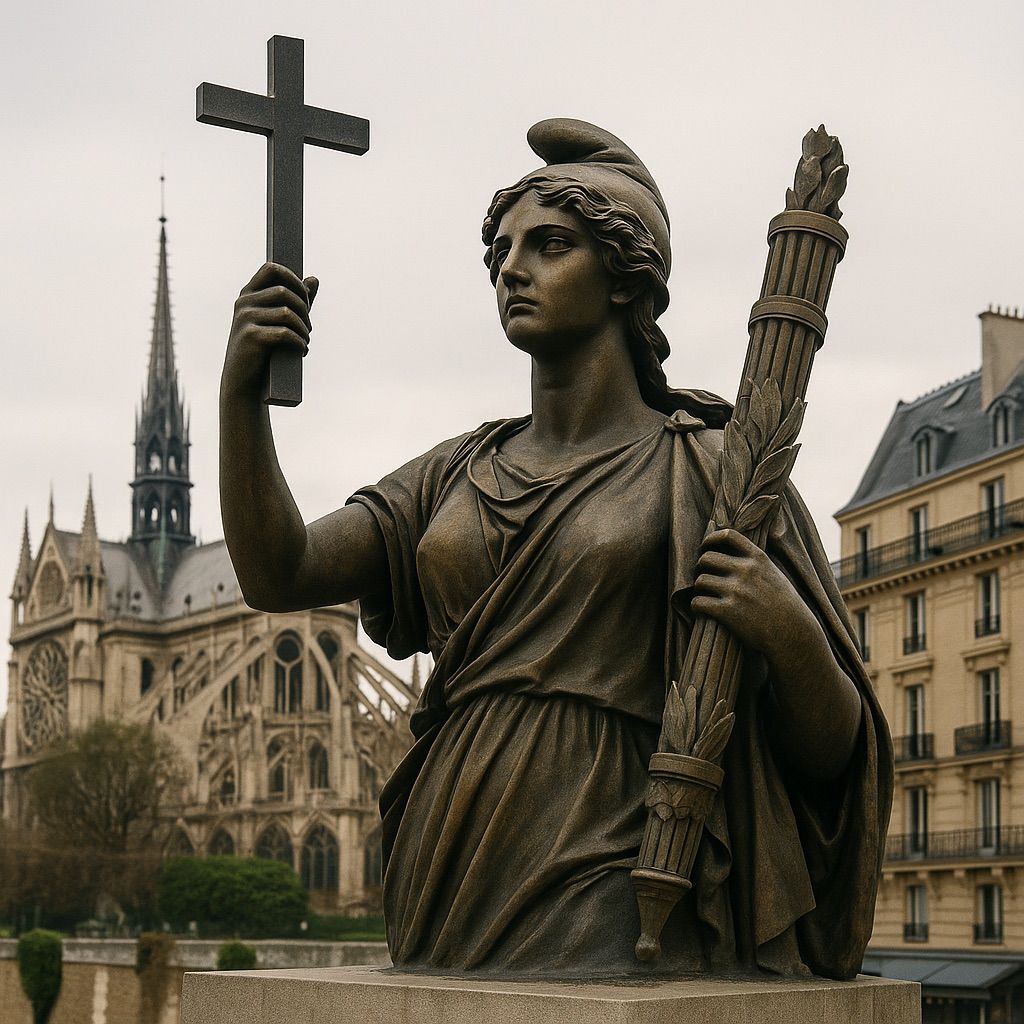
Separation of Church and State in France

Elias Rowen

The tension between church and state in France is not a story that can be contained neatly within a single century, nor is it a tale shaped by just a few rulers, lawmakers, or religious figures. Instead, it is a sweeping saga stretched across more than a thousand years, filled with ideological clashes, shifting centers of power, bold declarations, quiet reforms, and violent upheavals that repeatedly forced the French people to examine what it truly meant to live in a society where faith, governance, and identity were so deeply intertwined. The centuries-long struggle to define the proper balance between spiritual authority and secular power created modern France as much as any revolution or monarch ever could. The idea of laïcité, which today stands as one of the most defining characteristics of the French Republic, did not emerge overnight. It was shaped, challenged, broken apart, rebuilt, misunderstood, weaponized, and defended again and again through the unpredictable tides of history.

In the earliest chapters of this story, the Catholic Church did not merely influence France—it defined it. During the early Middle Ages, the Church was not just a spiritual guide but an institution intertwined with every corner of life. It owned immense tracts of land, administered justice in many territories, collected taxes, regulated education, and set moral standards. Kings such as Clovis I and Charlemagne legitimized their rule through their association with the Church. To be crowned by a saintly figure or blessed by the Pope himself was more than symbolism—it was political necessity. Religion wove itself into the very fabric of kingship, making secular power and spiritual authority two sides of the same coin.

Yet, power is never stable for long, and as feudal structures gave way to centralized monarchy, French rulers began asserting themselves in ways that threatened the Church’s dominance. The rise of absolute monarchy in the 16th and 17th centuries created a dramatic shift. Kings like Henry IV understood that France could not survive permanently fractured along confessional lines. His Edict of Nantes attempted to bring religious tolerance into the national conversation—an unprecedented move for the time. Though it did not separate church and state, it challenged the assumption that Catholicism must be the sole moral compass of the nation.

The Edict’s promise of tolerance, however, proved fragile. When Louis XIV came to power, he pursued a vision of France defined by Catholic unity. He revoked the Edict of Nantes, forcing Protestants to flee, convert, or practice in secret. It was a moment when the pendulum swung violently back toward religious dominance. Louis XIV saw himself not only as a king but as God’s appointed steward for France, and he believed that spiritual uniformity strengthened political power. His rule demonstrated both the apex of French absolutism and the vulnerability of individual liberty under a government blended so thoroughly with religious authority.

But storms were gathering that would soon alter the landscape entirely. The Enlightenment challenged the foundations the Church had long relied upon. Philosophers such as Voltaire and Rousseau condemned the entanglement of religious authority in civic life, accusing it of promoting intolerance, inequality, and intellectual stagnation. These criticisms did not remain in the realm of theory—they seeped into cafés, salons, and ultimately the hearts of those who would lead the French Revolution.

When the Revolution erupted in 1789, it tore through the institutions of the past with a ferocity never before seen. The Church, which had been one of the wealthiest and most powerful forces in France, was suddenly recast as an enemy of reason and a symbol of tyranny. Church lands were seized. Clergy were forced to swear loyalty to the state. Religious orders were dissolved. The Revolutionaries believed that liberty could not flourish until the Church’s grip on public life had been shattered. The Declaration of the Rights of Man and Citizen announced that no person could be forced to practice a religion or refrain from one, laying the groundwork for modern secularism.

Still, the Revolution was anything but consistent. While one faction sought to erase religion entirely, another—led eventually by Robespierre—embraced a quasi-religious civic spirituality. A new calendar replaced the Christian one, churches were renamed “Temples of Reason,” and religious festivals were rewritten with revolutionary meaning. Yet even these attempts were short-lived. The Revolution devoured its own, and France lurched forward into the era of Napoleon.

Napoleon, with his characteristic pragmatism, recognized that stability required a delicate balance. He crafted the Concordat of 1801, reestablishing the Catholic Church—but under strict government supervision. It was a compromise: religion could return, but only on the state’s terms. Napoleon’s famous Civil Code enshrined secular principles, guaranteeing equality before the law and protecting freedom of conscience. The Church was no longer the master of France but a partner, albeit a subordinate one.

This uneasy coexistence continued through the Bourbon Restoration and the July Monarchy, as political ideologies clashed and power shifted between conservative and liberal forces. Throughout the 19th century, the Church continued to influence education and social policy, even as many reformers attempted to push France further toward secularism. These opposing currents collided spectacularly during the Third Republic.

If there is one moment where laïcité truly crystallized into its modern form, it was during the Third Republic between 1870 and 1940. Traumatized by the Franco-Prussian War and seeking to redefine national identity, French leaders embraced secularism as the backbone of the Republic. The Jules Ferry laws established free, mandatory, secular education, cutting the Church out of one of its last major spheres of influence. In 1905, the Law on the Separation of Churches and the State severed financial ties, declaring the state neutral in matters of faith and guaranteeing freedom of religious practice. For many, it was liberation. For others, it was a betrayal. But regardless of sentiment, it was irreversible: France had officially become a secular republic.

And yet the story does not end there, because laïcité is not merely a legal doctrine—it is a living concept, constantly reshaped by social change, immigration, global politics, and cultural identity. In the 20th and 21st centuries, new questions emerged. While France once struggled primarily with Catholic influence, it now grapples with being a multi-faith society where Islam, Protestantism, Judaism, and secularism itself coexist uneasily at times. Laws regarding headscarves in schools, burqas in public spaces, halal food in cafeterias, and religious symbols in government buildings reignited debates about where to draw the line between public order and individual freedom.

Critics argue that laïcité is sometimes used as a political weapon rather than a neutral principle—that it is applied unevenly, often under the guise of countering extremism but with effects that disproportionately impact minority communities. Supporters, on the other hand, insist that laïcité preserves equality by ensuring that no religion dictates public life. They argue that it allows citizens from all backgrounds to live together peacefully, without fear of religious domination or coercion.

These tensions came into sharp focus as France reckoned with terrorism, debates on immigration, the legacy of colonialism, and shifting demographics. The ideal of laïcité became a mirror reflecting the nation’s anxieties, hopes, and contradictions. And through it all, the question persisted: can a society truly be neutral on matters of faith while also protecting the individual’s right to express it?

France’s answer remains complex, evolving, and far from unanimous.

The history of the separation of church and state in France is, at its core, a story of identity. It is about how a nation understands itself, what it values, and who it includes. The French people have fiercely defended both religious freedom and secular governance, even when the two seem to conflict. They have endured centuries of turmoil, revolution, and reinvention to forge a society where citizens are free to believe—or not believe—without allowing any one faith to dominate the public sphere.

Laïcité is not perfect. It is neither universally applied nor universally understood. Yet it remains one of the most defining principles of modern France, shaping every debate from education and law to clothing and cuisine. Whether applauded as a triumph of equality or criticized as a veil for cultural exclusion, it is inseparable from the nation’s political and cultural DNA.

And so the story continues—not with a definitive conclusion, but with a living, breathing tension that reflects the complexities of human society itself. France stands today as both a product of its long struggle and an ongoing experiment, forever trying to balance faith and freedom, tradition and modernity, identity and coexistence. The conversation is far from over, but the centuries that have come before prove one thing unmistakably: the relationship between church and state may evolve, but it will never cease to matter.
Related Posts

Soviet Union Dissolved at Belavezha Accords

Elias Rowen

The collapse of the Soviet Union in 1991 felt, to many who lived through it, like watching a glacier crack apart in real time—slow at first, almost imperceptible, and then suddenly explosive, unstoppable, and world-changing. It was a moment that reshaped international politics, ended a decades-long ideological conflict, and forced millions of people to rethink their identities overnight. Yet despite how monumental the collapse appears in hindsight, it was not the result of any single action, speech, or political decision. Instead, it was the culmination of decades of contradictions, internal weaknesses, bold reforms, lost faith, rising nationalism, and individual personalities whose ambitions collided at precisely the wrong—or right—moment in history. The Soviet Union had always projected an image of impenetrable strength, but in the end, the foundations had hollowed so deeply that the slightest tremor could send the whole structure crumbling.

To understand the Soviet Union’s dissolution, one must go back to the early 20th century, when the Russian Empire imploded under the combined pressures of war, poverty, and political upheaval. Lenin and the Bolsheviks capitalized on that chaos, promising a radically new world—a society built on the principles of equality, ideological purity, and total state control. For decades, the Soviet system expanded across continents, transforming itself into a superpower that rivaled the United States and dominated the narrative of global politics. From the ashes of tsarism arose a nation that commanded fear, respect, and bewilderment around the world.

Yet even during the height of its power, the Soviet Union carried within it the seeds of its eventual disintegration. The sheer size of the empire—spanning 11 time zones and housing over 100 nationalities—meant that unity came through force rather than organic cohesion. Stalin’s brutal tactics kept the republics tightly bound, but at the cost of enormous suffering. The traumas of collectivization, purges, and war crimes lay hidden beneath the might of Soviet propaganda. The façade was powerful enough to intimidate outsiders, but fragile enough that once cracks appeared, they spread rapidly.

After Stalin’s death, the Soviet leadership searched for stability—something calm, predictable, manageable. But a system built on centralized control is inherently brittle, and beneath the bureaucratic monotony of the Khrushchev and Brezhnev eras, resentment simmered. National identity, suppressed but not erased, continued to live quietly in Ukrainian villages, Baltic cities, and the Caucasus mountains. The economy, for all its industrial output, lagged dangerously behind the West. Consumers wanted more than empty shelves and long lines. Technology fell further behind each year. And the political system remained rigid and unresponsive, choking off innovation in a world that was rapidly evolving.

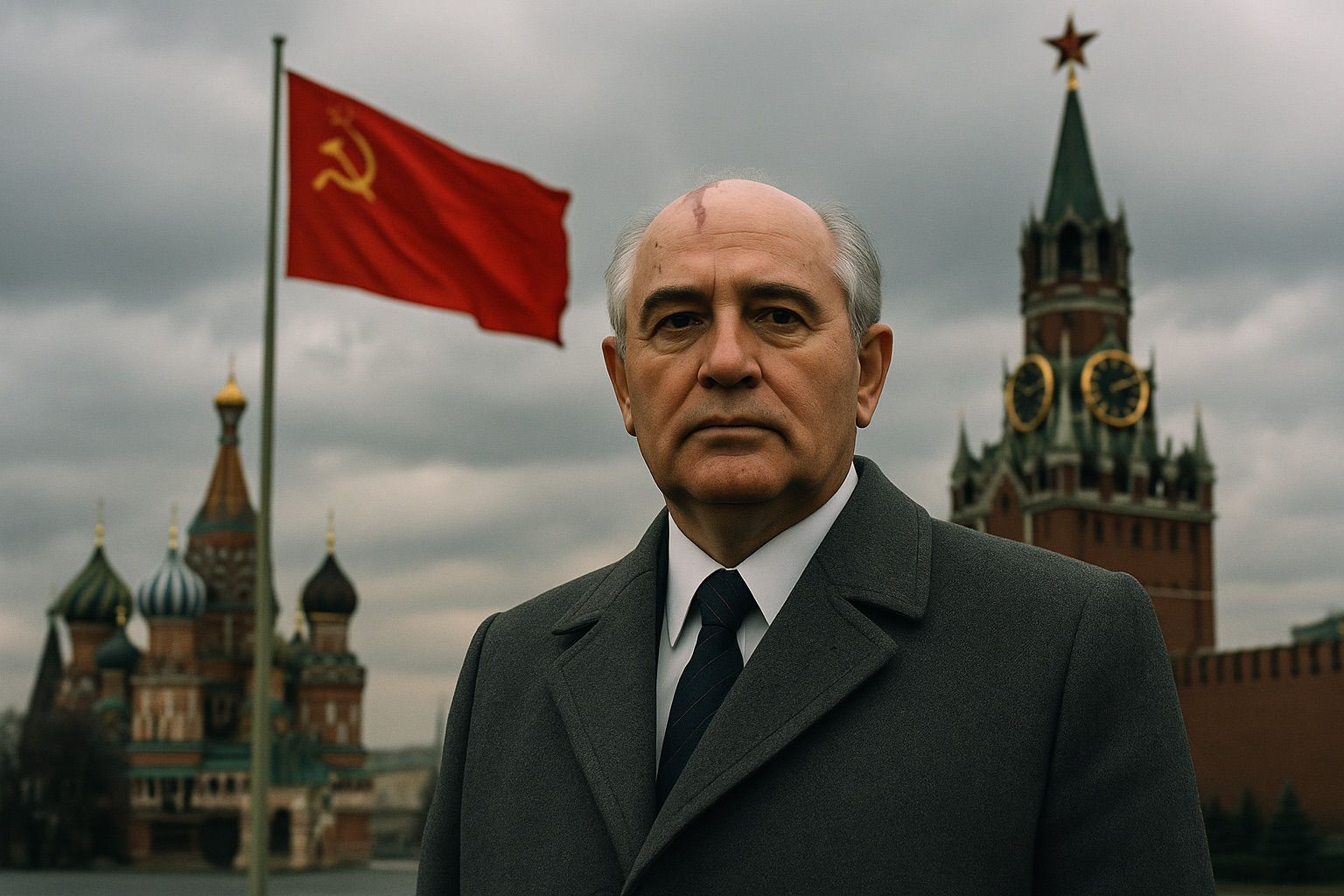
By the 1980s, the Soviet Union was no longer merely struggling—it was ossifying. Factories relied on outdated machinery. Citizens joked about shortages that no longer felt funny. And the government’s attempt to maintain control through secrecy and censorship increasingly felt like a relic of another century. Enter Mikhail Gorbachev, a leader unlike any who had come before him—energetic, articulate, reform-minded, and deeply aware that change was no longer optional. He believed the system could be saved, but only if it was opened, restructured, and reimagined.

His reforms—glasnost, meaning openness, and perestroika, meaning restructuring—were designed to revitalize a failing economy and modernize the Soviet state. But in practice, they loosened the bolts holding the entire structure together. Glasnost revealed truths the government had hidden for decades: corruption, environmental disasters, state-sponsored atrocities, and the sheer inefficiency of central planning. Millions experienced a profound shock as they learned that the world outside was freer, wealthier, and more technologically advanced than they had been led to believe. Perestroika introduced market-style reforms, but without the necessary safeguards, creating inflation, unemployment, and confusion in a society that had never known them.

For the first time, Soviet citizens began questioning not just policies, but the entire legitimacy of the system. If the government had lied about the past, could it be trusted with the future?

Meanwhile, nationalism—long suppressed but never extinguished—burst into the open. The Baltic states led the charge, forming human chains, organizing mass demonstrations, and reviving a cultural pride that had survived decades of Russification. Others soon followed. Armenia, Georgia, Ukraine, Moldova—all began imagining a future outside Soviet control. The idea of independence, once unthinkable, became a rallying cry that spread like wildfire.

The external world was changing too. Across Eastern Europe, communist governments fell one by one, unable to survive the wave of revolutions sweeping the continent. The Berlin Wall, that imposing symbol of ideological division, collapsed almost overnight. For the first time since World War II, Eastern Europe was breaking free from Moscow’s grip. The Soviet Union could not suppress these movements without risking international condemnation—and perhaps more dangerously, internal rebellion.

Inside the USSR, political tensions escalated dramatically. Boris Yeltsin, once a rising star within the Communist Party, reinvented himself as a populist reformer and direct rival to Gorbachev. While Gorbachev tried to preserve the union through compromise, Yeltsin championed Russian sovereignty and democratic reform. Their rivalry grew so fierce that it became impossible for the Soviet state to function coherently. Two visions of the future collided: one trying to save the Soviet Union, the other trying to move beyond it.

The summer of 1991 marked the point of no return. Hardline members of the government, terrified that Gorbachev’s reforms would destroy the state, attempted a coup. Tanks rolled into Moscow. Troops surrounded key buildings. Gorbachev was placed under house arrest. But in one of history’s most defining images, Boris Yeltsin climbed atop a tank outside the Russian White House and denounced the coup, calling on citizens to resist. Tens of thousands gathered in the streets, barricading the city and defying the military. The coup collapsed within days, but the damage was irreversible. The Communist Party’s authority evaporated. Gorbachev returned to Moscow weakened, while Yeltsin emerged as the hero of the people.

In the months that followed, the republics declared independence one after another. Ukraine’s vote for independence in August 1991 shocked even seasoned political observers—its overwhelming support meant that the second-largest republic was gone for good. Without Ukraine, the Soviet Union was a union in name only.

Then came December 8, 1991. In a secluded forest lodge in Belavezha, the leaders of Russia, Ukraine, and Belarus signed an agreement stating that the Soviet Union “as an international subject and geopolitical reality” had ceased to exist. It was a stunning declaration, drafted quietly and signed without ceremony. A country that had controlled one-sixth of the planet had dissolved on a winter morning without a single shot fired.

Gorbachev, stunned and increasingly powerless, resigned shortly afterward. On December 25, 1991, the red Soviet flag over the Kremlin was lowered for the last time and replaced with the tricolor of the Russian Federation. After nearly 70 years, the Soviet Union was gone.

Yet the collapse was not clean or simple. It unleashed enormous uncertainty—economic turmoil, political instability, and regional conflicts that continue to shape global affairs today. Russia struggled through a chaotic transition, marked by corruption, poverty, and a desperate attempt to redefine its national identity. The Baltic states pushed rapidly toward NATO and EU integration. Ukraine faced internal divisions that still echo through modern geopolitics. Central Asia navigated a path between independence and authoritarian consolidation. Meanwhile, the West declared victory in the Cold War, believing liberal democracy had triumphed once and for all.

But history is rarely so tidy. The legacy of the Soviet collapse is still unfolding, its effects rippling across the political landscape decades later. The resurgence of nationalism, renewed great-power rivalries, and debates over sovereignty all trace their roots back to 1991. The world that emerged in the aftermath is still grappling with the contradictions created by the sudden disappearance of a superpower.

If there is one lesson to be learned, it is that political systems—no matter how vast or powerful—are never as stable as they appear. Empires can vanish in a moment. Ideologies can crumble under the weight of their own contradictions. And leaders, whether visionary or flawed, can inadvertently unleash forces they cannot control. The Soviet Union’s dissolution was not merely the collapse of a government. It was the unraveling of a worldview, the end of an era, and the beginning of a new global reality that continues to evolve.

Even today, when looking back on those final months, the collapse feels almost surreal. A superpower with millions of soldiers, thousands of nuclear weapons, and decades of ideological dominance simply… ended. Not with a war, not with an invasion, but with signatures on a document in a quiet Belarusian forest. The shockwaves of that moment still reverberate in international conflicts, diplomatic tensions, economic relationships, and the identities of millions who once called themselves Soviet citizens.

History often moves slowly, but sometimes it crashes forward with breathtaking speed. In 1991, the world watched as one of the most powerful empires in human history dissolved into memory—its fall as dramatic, complex, and consequential as its rise. And to this day, the question that lingers is not only why the Soviet Union collapsed, but what its fall means for the future of nations still wrestling with the same forces of nationalism, reform, ambition, and identity that tore an empire apart.

Related Posts

How Pearl Harbor Pulled America Into the Fire of WWII

Elias Rowen

On an otherwise ordinary Sunday morning in Hawaii, when the world seemed quiet and the horizon glowed with the soft colors of sunrise, an event unfolded that would shatter the rhythm of daily life and alter the course of history forever. December 7, 1941, was meant to be peaceful—a day for sailors to rest, for families to gather, for soldiers to take a rare breath between drills. Yet, in a matter of minutes, calm transformed into chaos, and the United States found itself thrust into the center of a global conflict it had tried for years to avoid. The attack on Pearl Harbor wasn’t merely a tactical strike; it was a moment that tore through America’s consciousness, awakening a nation and steering it down a path that would define the 20th century.

But to understand the shock and devastation of that morning, one must look back at the decades of tension simmering beneath diplomatic language and political maneuvering. Relations between Japan and the United States had been deteriorating long before the bombs fell. Japan, seeking resources and dominance in Asia, saw itself as a rising power constrained by Western influence. The United States, wary of Japan’s ambitions, used economic pressure—particularly through embargoes—to curb its expansion. These sanctions, especially the American oil embargo, cut deep. Oil was the lifeblood of Japan’s military machine, and without it, the empire’s ambitions would wither before ever reaching fruition.

Resentment had been building in Japan for years. After World War I, the Treaty of Versailles left Japan feeling slighted and excluded from the global stage it believed it deserved. Western powers had dictated the postwar order, carving up influence and privileges in Asia, and Japan believed it had been denied its rightful place among them. These grievances fueled nationalism, militarism, and a sense of destiny that the Japanese government would use to justify its aggressive expansion through China and Southeast Asia.

The United States watched these developments with increasing concern. The invasion of China, the occupation of Manchuria, and the forced march through Southeast Asia signaled a Japan willing to use force to claim territory and resources. America, committed to protecting its own interests in the Pacific and supporting China through various aid programs, felt compelled to respond. In 1940 and 1941, sanctions escalated—freezing Japanese assets, restricting exports, and finally imposing the devastating oil embargo. Without oil, Japan’s military strength would evaporate within months. Its leaders faced a grim reality: submit to American pressure and abandon their imperial ambitions, or strike decisively before their war machine ran dry.

They chose the latter.

In secret meetings, Japan’s military strategists crafted a daring plan—one that would aim to cripple the U.S. Pacific Fleet at Pearl Harbor in a single, devastating blow. This operation, meticulously designed under the leadership of Admiral Isoroku Yamamoto, sought to neutralize American naval power long enough for Japan to secure the territories it desired. If successful, Japan hoped, the United States would be forced into negotiation rather than war.

As the sun rose on December 7, American sailors began their day unknowingly beneath the shadow of incoming disaster. Some were preparing for church. Others were still asleep. Routine filled the base: engines being checked, flags being raised, breakfast being served. Life seemed simple, predictable, ordinary.

Then the sky darkened with the silhouettes of Japanese aircraft.

The attack was swift, brutal, and shockingly effective. The first wave of bombers tore through the sky just before 8 a.m., dropping torpedoes and armor-piercing bombs onto the anchored battleships below. The USS Arizona exploded with such violent force that entire sections of the ship disintegrated instantly, taking the lives of more than a thousand crew members in seconds. The USS Oklahoma capsized, trapping hundreds inside its hull. Smoke filled the air as flames engulfed ships and oil spread across the water, turning the harbor into a burning graveyard.

American forces scrambled to respond, but confusion and lack of preparation hindered their efforts. Many pilots were killed before they could reach their planes. Anti-aircraft guns fired frantically through smoke and fire, but the precision and coordination of the Japanese attack overwhelmed the defenses. By the time the second wave swept through, the destruction was nearly complete.

When the final explosions faded and the sky quieted, Pearl Harbor lay in ruins. More than 2,400 Americans had been killed. Battleships smoldered beneath the waves. Aircraft were reduced to twisted metal across the airfields. The Pacific Fleet, the pride of American naval power, had suffered catastrophic losses.

News of the attack spread across the United States with dizzying speed. Radios interrupted Sunday programming with urgent bulletins. Newspapers rushed out extra editions. Families gathered around living-room radios, listening in stunned silence as reporters described the devastation a world away. The sense of disbelief quickly gave way to outrage. Japan’s attack was widely perceived as treacherous—a strike launched while diplomats still engaged in negotiations in Washington, D.C. The American public, previously divided on whether to support involvement in World War II, united almost instantly.

President Franklin D. Roosevelt, known for his steady leadership and resonant voice, addressed Congress the next day in what would become one of the most iconic speeches in American history. His words were deliberate, powerful, and infused with the gravity of the moment:

“December 7th, 1941—a date which will live in infamy.”

The phrase echoed across the nation. It still echoes today. Roosevelt spoke not just to lawmakers, but to every American hurting, angered, and afraid. He described the attack as deliberate and unprovoked, and he called for action—not merely as retaliation, but as a moral imperative.

Congress declared war on Japan almost unanimously.

America had entered World War II.

From that moment on, the nation transformed itself at a staggering pace. Young men enlisted in droves. Factories retooled for war production. Women entered the workforce in unprecedented numbers, filling roles once reserved for men. American industry became a juggernaut, producing ships, tanks, planes, and ammunition at a rate the world had never seen. A country still struggling from the aftershocks of the Great Depression became the engine of the Allied victory.

The attack on Pearl Harbor also set off a chain reaction across the world. Germany and Italy declared war on the United States, pulling America fully into the global conflict. Meanwhile, Japan expanded across Asia, capturing territories and pushing deeper into the Pacific. But its initial success was short-lived. The United States recovered quickly, rallying its forces and striking back with fierce determination. Battles like Midway, Guadalcanal, and Leyte Gulf turned the tide of the war, slowly but steadily pushing Japan back toward its own shores.

The war in the Pacific would become one of the most brutal theaters of combat in human history. Island by island, American forces fought through unforgiving jungles, entrenched fortifications, and kamikaze attacks. The cost in lives was staggering. Yet America persisted, driven not only by strategy but by memory—the memory of Pearl Harbor, of the lives lost, of the shock and betrayal that had galvanized the nation.

When the war finally ended in 1945 after the bombings of Hiroshima and Nagasaki, the world stood transformed. Japan, devastated and demoralized, surrendered. The United States emerged as a global superpower. The geopolitical landscape reordered itself around new alliances and tensions, many of which still shape international relations today.

But Pearl Harbor remains, even decades later, a symbol etched deeply into the American consciousness. It represents vulnerability and resilience, tragedy and transformation, loss and determination. The memorials that stand over the sunken ruins of the USS Arizona remind visitors that the morning of December 7 was not merely an attack—it was a turning point. A catalyst. A moment when history shifted and the world was never the same again.

To reflect on Pearl Harbor is to acknowledge the fragility of peace, the unpredictability of conflict, and the extraordinary capacity of nations to rise from devastation. It is a reminder that history is shaped not only by decisions made in grand halls of diplomacy, but by the sacrifices of individuals whose names may never appear in textbooks. Their memory lives on in the stories retold, the lessons remembered, and the determination to never allow such a tragedy to repeat itself.

In Roosevelt’s immortal words, December 7, 1941, truly is “a date which will live in infamy.” Not just as a chapter in history, but as a reminder of courage, unity, and the enduring will of a nation that refused to be broken.

Related Posts

The Assassination of John Lennon and the Legacy That Refused to Fade

Elias Rowen

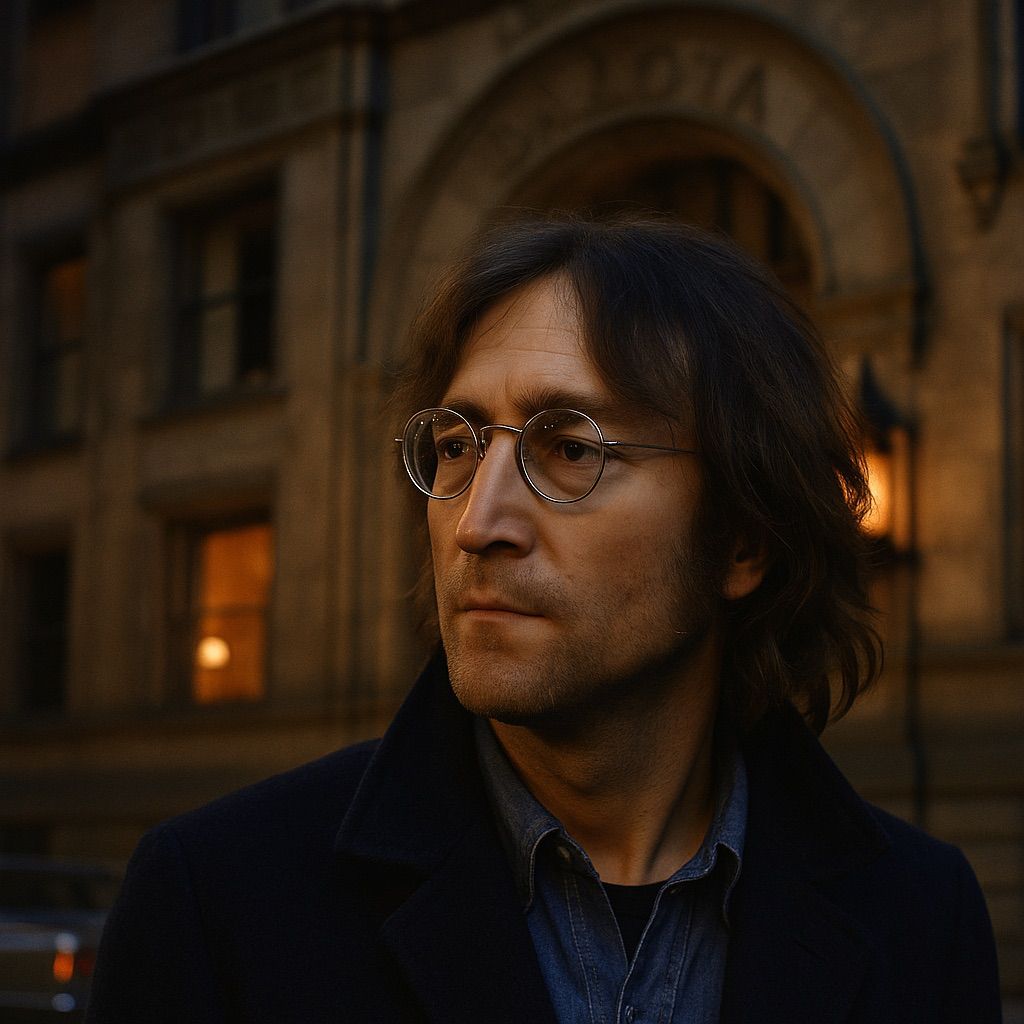
On December 8th, 1980, the world seemed to stop for a moment, as if shaken by a sudden and impossible truth. News stations flickered with the same headline, radios interrupted their music with trembling voices, and fans from New York to Tokyo felt the same hollow ache settling inside their chests: John Lennon, the voice that helped define a generation, had been shot outside his New York City home. For many, it felt surreal, like waking up from a dream that had ended too abruptly to make sense. Lennon had always seemed larger than life — a visionary, an icon, a rebel, a poet — and suddenly the idea that he was simply gone felt not just heartbreaking, but fundamentally wrong. People didn’t just lose a musician that night. They lost a part of what made the world feel full of possibility.

John Winston Lennon had never belonged solely to Liverpool, even though the winding streets of that city shaped him in ways that would ripple across the globe. Born on October 9th, 1940, John grew up in a world still recovering from war, surrounded by adults who were trying their best but often had little to give. It was a childhood marked by love and absence, by music and confusion, by the fierce independence that comes from growing up with more questions than answers. John admired the rock ’n’ roll greats before he even understood what greatness meant. He heard Elvis Presley on the radio, felt something electric spark inside him, and realized music could be more than entertainment — it could be expression, rebellion, a doorway out of the narrow life he saw ahead of him.

Like many teenagers at the time, John started with skiffle — homemade instruments, cheap guitars, rhythms that felt rough around the edges yet pulsing with energy. The Quarrymen began as a group of boys fumbling their way toward sound and identity. John didn’t know it then, but the universe was already aligning the pieces that would transform the world. Paul McCartney walked into his life one summer afternoon in 1957, showing up with a guitar, a grin, and a talent that matched John’s spark with its own irresistible fire. George Harrison soon followed — younger, quieter, but just as hungry to create something meaningful. When Ringo Starr stepped in later to complete the lineup, the band that would change history finally had its pulse.

What happened next is the stuff of legend. The Beatles didn’t just play music; they became a cultural phenomenon so intense that no one — not even the band itself — could fully understand it while it was happening. Screaming fans chased them down streets, airports flooded with crowds, records sold faster than stores could stock them. The Beatles weren’t merely popular; they were a global movement, a wave of youth and energy and hope that seemed unstoppable. Through it all, John Lennon stood at the center: sharp-tongued, insightful, irreverent, brilliant. His songwriting cut through the noise, weaving tenderness with wit, vulnerability with rebellion. Songs like “Help!,” “In My Life,” “Strawberry Fields Forever,” and “All You Need Is Love” weren’t just hits — they were pieces of John’s soul carved into melody.

The 1960s were turbulent times, and Lennon’s voice fit that era like a spark to a fuse. As war raged and social norms cracked under pressure, he used his platform to speak up in a way that few artists had dared to do. Some adored him for it. Others despised him. But John had never been the kind of man to sit quietly and look pretty for the cameras. He wasn’t built for silence. Every interview, every lyric, every performance carried a shadow of defiance — a reminder that he viewed the world with equal parts wonder and frustration.

When The Beatles parted ways in 1970, the world felt fractured. The band that had carried millions through cultural upheaval suddenly dissolved into four separate paths. Lennon took his portion of the spotlight and reshaped it into something rawer, more intimate. His solo career, especially his work with the Plastic Ono Band, revealed a side of him that felt deeply personal. He sang about trauma, loneliness, childhood wounds, societal illusions — the things people try to bury but never fully escape. “Imagine,” the song that would become synonymous with his message, wasn’t just a ballad. It was a prayer disguised as a melody, a vision of a world that could be softer, kinder, borderless, free.

His relationship with Yoko Ono became one of the most scrutinized unions in modern history. Racism, misogyny, and narrow-mindedness fueled relentless criticism. People saw her as an outsider, a disrupter, a threat to the myth they had built around John Lennon. Yet John saw something different: a partner, a collaborator, a muse. Their love was unconventional, but it was also fiercely genuine. Together, they orchestrated protests like the “Bed-In for Peace,” transforming the media frenzy around them into a weapon against war. They invited the world to imagine peace not as a dream, but as a responsibility.

But fame is a double-edged sword. While John inspired millions, he also attracted people whose admiration warped into obsession. One such man was Mark David Chapman — a troubled, unstable individual who built a dark fantasy around Lennon. In Chapman’s unraveling mind, John had failed to meet the impossible expectations he had created. This resentment, twisted and fed by delusion, ultimately led him to plan the unthinkable.

On the night of December 8th, 1980, John and Yoko returned to the Dakota after a long day at the studio. Just hours earlier, John had autographed an album for Chapman, unaware that the encounter was the prelude to tragedy. As John stepped toward the archway of the building, Chapman fired five shots — four of which struck the musician who had spent a lifetime advocating for peace. The world didn’t know it yet, but in those few seconds, history shifted.

John Lennon was rushed to Roosevelt Hospital, but the damage was irreversible. He died shortly after, leaving Yoko shattered and millions grieving. Announcers choked through the news, radio stations played Beatles songs on loop, and crowds gathered outside the Dakota in stunned silence. Some cried. Some stood motionless. Some sang as if their voices could stitch the world back together. For a generation that had grown up believing that peace and love might truly change society, the loss felt like a brutal contradiction — the violent death of a man who had devoted his life to nonviolence.

What followed was not just mourning, but reflection. Fans wrote letters, created memorials, held vigils. In Central Park, near the Dakota, crowds by the thousands gathered to celebrate John’s life. Across oceans, from London to São Paulo, similar gatherings emerged. People felt connected by their grief, as though Lennon’s spirit had woven them into a global tapestry of remembrance. Even those who hadn’t grown up with The Beatles felt the weight of what had been lost.

The media, unsurprisingly, swirled with sensationalism. Conspiracy theories emerged — wild claims about government plots or hidden motives — none of which held truth but all of which reflected the intensity of John and Yoko’s cultural impact. For many, the couple represented rebellion, counterculture, and honesty, and anything associated with them was fertile ground for speculation. Through it all, Yoko Ono endured unimaginable pain with grace, preserving John’s legacy while carving her own path forward.

And the legacy did continue. In 1982, Yoko established the John Lennon Foundation, dedicated to promoting the arts, peacebuilding, and human rights — causes that had defined John’s life. His music remained timeless, rediscovered by young listeners who found themselves moved by lyrics written decades before they were born. Artists from every genre have cited Lennon as an influence, from David Bowie to U2 to Radiohead. His courage to be vulnerable — to write openly about pain, politics, love, and his own imperfections — reshaped what music could be.

Lennon was a visionary, but he was also deeply human. He made mistakes. He struggled with identity, with anger, with fame. He wasn’t always gentle, nor was he always right. But he grew, he apologized, he learned, and he worked relentlessly to become better. That complexity is part of what makes him endure in the public consciousness. He wasn’t a saint. He wasn’t a myth. He was a flawed, brilliant man who believed deeply in the potential for human goodness — and spent his life urging others to believe in it too.

Today, decades after his death, the world still pauses on December 8th to remember him. Fans still place flowers at Strawberry Fields in Central Park. Musicians still play his songs during peace rallies. His lyrics still appear on protest signs, in classrooms, on murals, on the walls of young people trying to find their voice. Lennon’s message — that love is powerful, that peace is worth fighting for, that imagination can shape reality — hasn’t faded. If anything, it matters more now than ever.

The night John Lennon died was a moment of darkness. But the life he lived, the art he created, and the legacy he left behind continue to shine with a brightness that even violence could not extinguish. His voice may have fallen silent that December evening, but his message still echoes across generations, reminding us that music — and the people who dare to use it for good — never truly disappear.

Related Posts

The Pen That Shook the World: How Jonathan Swift’s Gulliver’s Travels Redefined Satire Forever

Elias Rowen

When Jonathan Swift published Gulliver’s Travels in April of 1726, he could not have predicted how profoundly the book would shape the next three centuries of literature, politics, and cultural identity. And yet, from the moment the first copies found their way into the hands of London’s eager reading public, a spark ignited—one that would burn far longer and far brighter than Swift himself ever imagined. The early eighteenth century was an age brimming with confidence about human progress, driven by Enlightenment ideals that championed science, reason, and the capacity of humanity to rise above ignorance. But beneath this veneer of optimism lurked anxieties, contradictions, and hypocrisies that few dared to criticize openly. Swift, with his razor-sharp wit and uncompromising moral vision, saw those cracks clearly. And with Gulliver’s Travels, he chose not merely to expose them, but to tear them wide open. What he created was no simple travel adventure—it was a revolutionary work of political and cultural satire that disguised its most dangerous truths behind giants, tiny people, floating islands, and talking horses.

Swift’s life leading up to the publication of Gulliver’s Travels was marked by turbulence, intellectual restlessness, and a deepening frustration with the direction of European society. Born in Dublin in 1667 and raised in the shadow of political conflict between England and Ireland, he grew into a writer whose worldview was shaped by displacement, ambition, and a burning desire to understand human nature. He worked in politics, clashed with power, wrote sermons, pamphlets, essays, poems, and letters—always trying to pierce through the fog of corruption and hypocrisy he saw around him. By the early 1700s, Swift was already a well-known figure, admired for works like A Tale of a Tub and The Drapier’s Letters. But privately, he was nursing the idea for something bigger, a satirical masterpiece that would allow him to dissect the absurdity of politics, science, colonialism, and even human morality itself.

The idea for Gulliver’s Travels began as a collaborative satire among members of the Scriblerus Club—a group of prominent writers that included Alexander Pope and John Arbuthnot. Their goal was simple: to mock the pretensions of modern intellectuals, politicians, and literary trends. But Swift took the concept further than any of the others could have anticipated. He envisioned a narrative that would pull readers into a world so fantastical that the satire would slide in almost unnoticed. Instead of lecturing readers about their failings, he would allow them to see those failings reflected back in miniature civilizations, distorted realities, and strange customs that felt both foreign and painfully familiar.

When Gulliver’s Travels finally appeared, it was an instant sensation. Readers devoured it like a gripping thriller, laughing at the absurdities and marveling at the vivid creativity. But many also felt the sting of the deeper truths beneath the humor. In an era when political commentary could ruin reputations and cost lives, Swift had managed to hide explosive critiques behind stories of shipwrecks, strange kingdoms, and curious creatures. The public was enthralled, the critics confused, and the powerful—especially those represented unflatteringly—were furious.

The first voyage, in which Lemuel Gulliver washes ashore in Lilliput, offered readers their first hint of Swift’s brilliant strategy. By shrinking an entire society down to six-inch-tall people, Swift forced readers to confront the pettiness of political conflict. Lilliputian leaders wage war over the proper way to crack an egg, imprison rivals over petty differences, and parade their soldiers in elaborate ceremonies that would be impressive only if the soldiers were not the size of insects. The satire was thinly veiled: Swift was caricaturing British politics and the endless feuds between Whigs and Tories. He mocked the superficiality of ideological divisions and questioned whether the struggle for power was ever driven by noble purpose. The deeper meaning was not lost on educated readers, and before long, Swift found himself both applauded as a genius and accused of subversion.

In Brobdingnag, the land of giants, Swift flipped the mirror. Now Gulliver was the tiny one, and the enormous inhabitants could examine him the way scientists inspect specimens beneath a lens. This reversal allowed Swift to critique the arrogance of European nations, whose colonial pursuits were often justified under the guise of civilizing supposedly inferior peoples. The Brobdingnagian king, upon hearing Gulliver describe the political systems of England, is horrified. To him, Europeans are driven by greed, violence, and moral decay. Swift used this scene to force readers to imagine how European behavior might appear to outsiders—a jarring and uncomfortable perspective for people accustomed to viewing themselves as enlightened.

The voyages to Laputa, Balnibarbi, and Luggnagg cast Swift’s gaze on science and intellectualism. In an age when the Royal Society was celebrating its scientific advancements, Swift dared to ask whether some pursuits of knowledge were absurd, wasteful, or even harmful. He described scientists attempting to extract sunlight from cucumbers, build houses from the roof downward, or turn excrement back into food. These scenes would later be recognized as early critiques of scientific detachment—the idea that knowledge without purpose, ethics, or empathy becomes meaningless.

But it was the final voyage—to the land of the Houyhnhnms—that revealed Swift’s darkest and most unsettling vision of humanity. Here was a society of rational, compassionate horses who lived with dignity and reason. And here too were the Yahoos—creatures who looked like humans but behaved like beasts. For many readers, this section was shocking. Swift seemed to be suggesting that humans, despite our self-proclaimed superiority, were little more than sophisticated animals driven by lust, greed, and violence. Gulliver’s increasing admiration for the Houyhnhnms and his disgust for humanity at large created controversy from the moment the book was released. Critics accused Swift of misanthropy, of hating mankind. Swift responded coolly that he loved individuals but found the collective behavior of humanity deeply troubling.

Gulliver’s Travels arrived at a moment when Europe was grappling with its own contradictions. Enlightenment thinkers praised reason but often ignored the cruelty of colonial rule. Scientists celebrated discovery but sometimes dismissed ethics. Politicians spoke of liberty while expanding empires built on conquest and subjugation. Swift’s novel held a mirror to all of it. And the world looked.

As years passed, the novel’s influence spread across continents. Voltaire praised it, plagiarized it, and even envied it. Alexander Pope admired its sharpness and defended Swift from critics. The Royal Society, predictably, despised it. And common readers—those unpaid arbiters of literary success—made it one of the most widely read books of the century. The novel crossed borders, languages, and generations. It inspired conversations about human nature, political corruption, ethics, and the limits of reason itself. What made it endure was not only its intelligence, but its humor—the way Swift managed to entertain readers while smuggling in some of the harshest critiques ever printed.

The centuries that followed only increased Swift’s legacy. Scholars in the nineteenth and twentieth centuries recognized Gulliver’s Travels as a precursor to modern science fiction, political fantasy, and dystopian literature. Works by H.G. Wells, George Orwell, Aldous Huxley, Margaret Atwood, and even parts of Star Trek bear traces of Swift’s influence. Satirists from Mark Twain to Kurt Vonnegut invoked his name with reverence. And yet, despite its lofty status, Gulliver’s Travels remains accessible to ordinary readers, children and adults alike—a rare achievement in the world of literature.

As society evolved, each new era found something fresh within Swift’s pages. Colonial critics saw warnings about empire. Philosophers saw meditations on reason. Psychologists saw insights into identity and self-perception. Political scientists saw timeless allegories about power. And increasingly, modern readers saw Swift’s reflections on human folly reflected eerily in their own age.

Today, nearly 300 years after its publication, Gulliver’s Travels continues to feel uncannily relevant. In a world fractured by misinformation, political polarization, and global inequality, Swift’s voice echoes across centuries, urging us to question our assumptions, examine our values, and recognize our failings. His satire remains sharp because the human condition remains complex, contradictory, and prone to absurdity. And perhaps that is why the novel still resonates: it is not merely a story of fantastical lands but a story of us—our flaws, our ambitions, our cruelty, our brilliance, and our eternal struggle to be better than we are.

Swift’s gift was not simply to criticize, but to provoke thought. And as long as humanity continues to wrestle with the questions he raised, Gulliver’s Travels will remain not just a masterpiece of literature but a companion in our ongoing journey to understand ourselves.

Related Posts