Latest Articles

Universal Declaration of Human Rights adopted

Elias Rowen

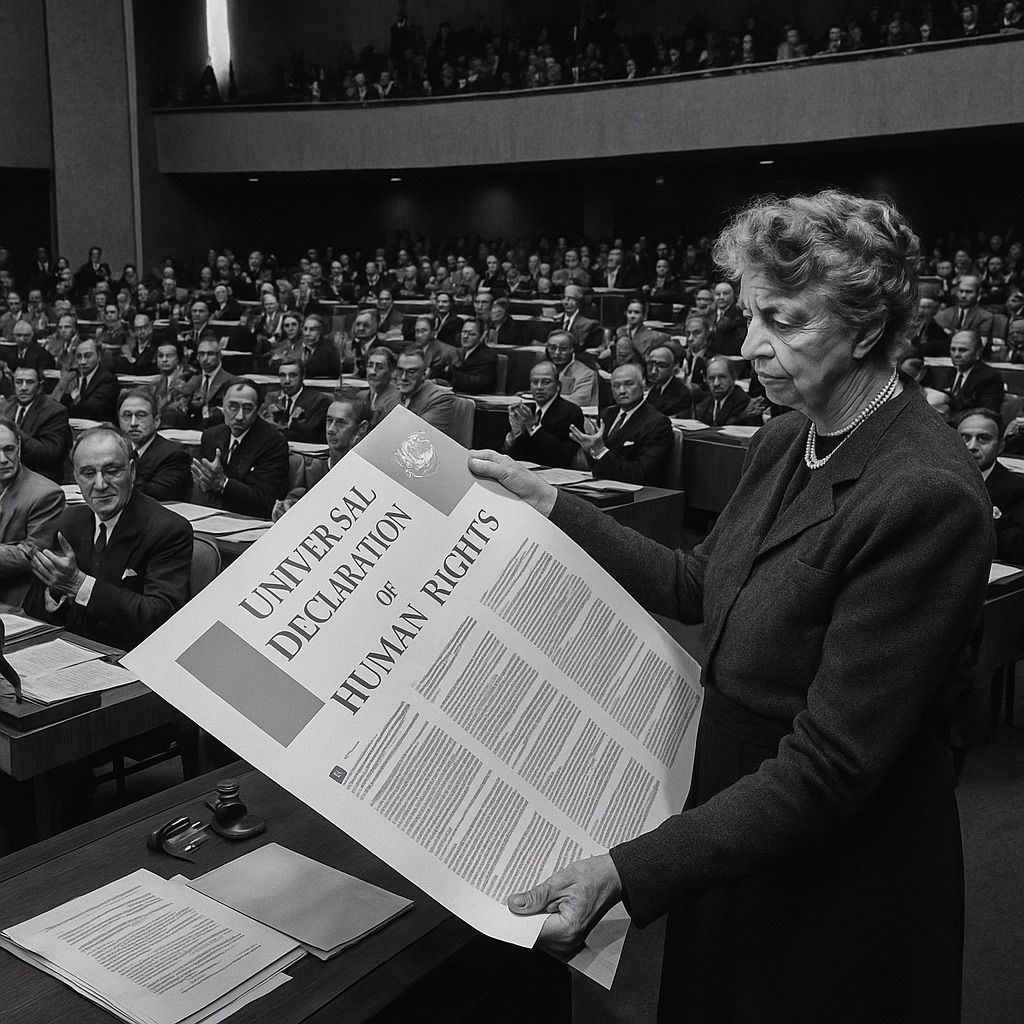
In the cold December air of 1948, as the world continued to patch its wounds from a war more devastating than anything humanity had ever endured, a different kind of battle was unfolding inside the United Nations General Assembly in Lake Success, New York. Delegates from dozens of nations, many still reeling from the trauma of occupation, genocide, and political collapse, gathered to discuss a document that dared to do something unprecedented: declare, openly and unflinchingly, that every human being on earth possessed inherent dignity and rights, regardless of nationality, religion, class, or ideology. In a century defined by unimaginable cruelty and division, the Universal Declaration of Human Rights emerged as a beacon of hope—a promise that humanity could rise above its darkest moments and attempt to define, at last, what it meant to treat all people with fairness and respect. This declaration, which years earlier had seemed almost impossible to imagine, was now on the verge of becoming reality, carried forward by leaders who refused to allow the atrocities of the past to become the blueprint for the future.

The momentum behind the declaration began long before delegates took their seats in 1948. In the immediate aftermath of World War II, the world’s horror at Nazi concentration camps, mass executions, forced labor systems, and the systematic dehumanization of entire populations forced global leaders into a stark confrontation with their own failures. Never before had the world seen such destruction inflicted with such calculated efficiency, and the question of how humanity could prevent such tragedies from recurring became a moral imperative. When representatives gathered in San Francisco in 1945 to establish the United Nations, they knew the organization had to stand for something greater than political alliances and peacekeeping mandates. Yet the resulting UN Charter was cautious, gesturing toward human rights without explicitly defining what those rights should be. This omission left many dissatisfied, especially activists and nations emerging from colonial rule who felt that without a clear, universal standard, the world risked repeating its most catastrophic mistakes.

Among the voices pushing the hardest for a global framework was Eleanor Roosevelt, who had stepped into the role of U.S. delegate to the new Commission on Human Rights not out of any formal diplomatic training but out of a deeply ingrained conviction that moral leadership was necessary for global stability. Eleanor carried with her the legacy of her late husband, Franklin D. Roosevelt, who had championed the “Four Freedoms”—freedom of speech, freedom of worship, freedom from want, and freedom from fear—as essential pillars of a peaceful world. But she also brought her own lived experience: the empathy she had cultivated while traveling through war-torn cities, refugee camps, mining towns, and segregated American communities. Her work on the Commission would require her to navigate a labyrinth of clashing ideologies, national interests, and cultural norms, yet her calm persistence would ultimately become one of the most defining forces behind the Universal Declaration.

The first draft of the document was prepared by John Humphrey, a Canadian lawyer whose encyclopedic knowledge of legal systems gave him the foundation to craft something truly global in scope. Humphrey approached his task like a historian, a lawyer, and an idealist all at once. On his desk sat an enormous collection of world constitutions, philosophical treatises, religious texts, and political charters. He drew inspiration from the American Bill of Rights, the French Declaration of the Rights of Man and of the Citizen, the writings of Confucius, the teachings of the Quran, and the democratic ideals of newly independent nations. His goal was not to impose one culture’s values upon another but to find the overlapping principles that all human societies, at their best, aspired to uphold. The result was a sweeping statement of rights spanning civil liberties, political freedoms, economic security, and social equality—all expressed in language that the average person could understand.

Yet drafting the document was only the beginning. The real struggle emerged during months of debate inside the Commission on Human Rights and later in the UN’s Third Committee, where delegates from vastly different systems of governance attempted to reconcile their conflicting views. The Soviet Union argued forcefully for economic and social equality, insisting that the right to food, work, and shelter was as essential as the right to vote or speak freely. Western democracies prioritized political freedoms and warned that states must not be given excessive power over the individual. Meanwhile, newly decolonizing nations pressed for recognition that human rights must apply not only within nations but also in the context of imperialism, where powerful countries continued to control the destinies of millions without representation or consent. These conversations grew heated, occasionally erupting into ideological clashes that reflected the early tension of the Cold War. But despite fierce disagreements, a shared acknowledgment persisted beneath the rhetoric: the world needed this document, and failure to adopt it would be a betrayal of the millions who had suffered through war, oppression, and genocide.

Eleanor Roosevelt became the crucial bridge between competing worldviews. She used personal charm where diplomacy stalled, moral clarity where politics muddied the waters, and unwavering conviction where others hesitated. Late into the night she studied revised drafts, scribbled notes in the margins, wrote letters to world leaders, and reassured smaller nations that their voices mattered. Her insistence that the declaration had to be accessible to the ordinary person—not just lawyers or politicians—reshaped the language into something almost poetic in its simplicity: “All human beings are born free and equal in dignity and rights.” That opening line, elegant and courageous, would become one of the most quoted sentences in the history of international law.

By December 1948, the debates had reached their final stage. Delegates gathered once again in the General Assembly, each carrying the weight of their nation’s hopes and anxieties. Some worried the declaration would be impossible to enforce; others feared it would interfere with domestic sovereignty. Yet, as speeches echoed through the chamber, a quiet sense of unity began to take hold. Representatives who had once clashed over ideology now found themselves acknowledging a shared truth—that humanity had reached a crossroads, and failing to act would leave the door open for future atrocities. As the final vote was cast, the room held its breath. Forty-eight nations voted in favor. Eight abstained. None voted against. The Universal Declaration of Human Rights had passed.

The moment was met with applause, relief, and an unmistakable sense that history had shifted. Though the declaration had no legal force, its moral authority was undeniable. Newspapers around the world hailed it as a triumph of the human spirit. In Paris, London, and New York, crowds gathered outside consulates and universities to discuss the newly adopted principles. Survivors of war wrote letters expressing hope that future generations might be spared the suffering they had endured. Civil rights activists in the United States, anti-colonial leaders in Africa and Asia, and reformers in Latin America all saw the declaration as validation for their struggles. At a time when humanity felt fragile and fractured, the UDHR offered something rare: a shared vision of dignity, equality, and justice that transcended borders and ideologies.

In the decades that followed, the declaration became the blueprint for a new generation of international treaties, including the International Covenant on Civil and Political Rights and the International Covenant on Economic, Social, and Cultural Rights. It influenced new constitutions in nations emerging from colonial rule. It inspired social movements, from the fight against apartheid in South Africa to campaigns for gender equality, children’s rights, LGBTQ+ rights, and protections for people with disabilities. Its principles appeared in classrooms, courtrooms, refugee camps, and grassroots campaigns around the world. Even authoritarian governments, when accused of violating human rights, found themselves forced to respond—not because the UDHR had legal teeth, but because it had become the moral compass against which nations were judged.

Yet the legacy of the UDHR is not one of unbroken progress. The world continues to struggle with human rights abuses, discrimination, and violence. Genocides have occurred long after the declaration’s adoption. Governments still silence dissent, restrict movement, and violate basic freedoms. Economic inequality persists, disproportionately affecting the most vulnerable. Cultural and political differences still challenge the dream of universal application. But the enduring power of the declaration lies not in the perfection of its implementation but in its ability to remind humanity of what is possible. It remains a guidepost—a vision of the world we continue striving to build, even when we fall short.

Today, as the Universal Declaration approaches its eighth decade, its words remain as urgent as ever. New technologies raise questions about privacy, surveillance, and digital rights. Migration crises challenge our understanding of borders and belonging. Climate change threatens the stability and well-being of millions, testing our commitment to Article 25’s promise of a standard of living adequate for health and well-being. But through all of these challenges, the declaration endures, offering a framework grounded in the simple but revolutionary idea that every person matters.

The story of the Universal Declaration of Human Rights is ultimately a story of hope. It is the story of how, in the wake of unimaginable devastation, the world chose not bitterness but aspiration—not vengeance but empathy. It is the story of people like Eleanor Roosevelt, John Humphrey, Charles Malik, René Cassin, and countless unnamed delegates who believed that dignity was not a luxury but a birthright. And it is the story of millions throughout the world who continue to raise their voices in defense of those rights, proving that the declaration was not merely adopted—it was embraced. As long as its principles live in the minds, hearts, and actions of people everywhere, the UDHR remains one of humanity’s greatest achievements: a collective promise to build a world in which every person can live freely, equally, and without fear.
Related Posts

Dr. Martin Luther King Jr. receives Nobel Peace Prize

Elias Rowen

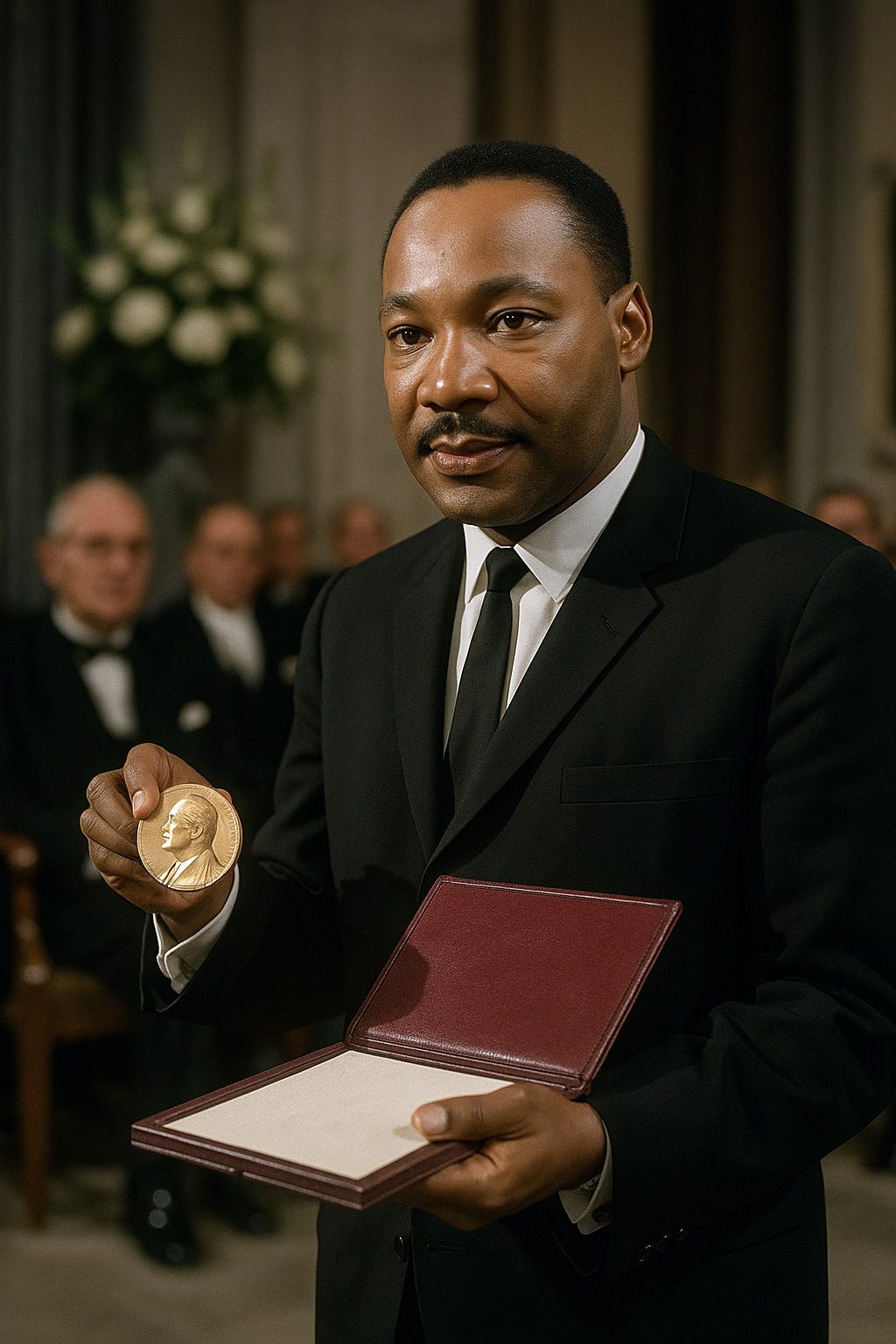
It was October 14, 1964, and the chill of an early Norwegian autumn swept gently across Oslo as dignitaries, journalists, and scholars gathered in growing anticipation. Inside the University Church of Norway, the energy felt almost electric—an unspoken awareness that history was taking shape within its walls. Dr. Martin Luther King Jr., the Baptist minister whose voice had become a moral compass for millions, had been awarded the Nobel Peace Prize. At just 35 years old, he became the youngest recipient in the prize’s history, a testament not only to his extraordinary leadership but to the unwavering force of a movement demanding dignity, justice, and equality.

For many watching from across the world, King’s arrival in Oslo represented more than a ceremonial accolade. It symbolized the global recognition of a struggle often met with violence, resistance, and profound sacrifice. The Civil Rights Movement had already faced countless trials—bombings, arrests, beatings, and assassinations—and yet King stood firm as the living embodiment of the philosophy he preached: nonviolent resistance rooted in deep, unshakable love for humanity. The Nobel Committee’s decision was not without controversy; critics argued that awarding a man at the center of so much domestic turmoil might embolden unrest. But to the millions who believed in his mission, the award validated what they already knew—that the pursuit of equal rights transcended borders, that the courage to challenge injustice was a universal calling, and that King’s leadership had become a beacon of moral truth.

Martin Luther King Jr.’s path to that moment began decades earlier in the deep-seated segregation of Atlanta, Georgia, where he grew up acutely aware of both the boundaries imposed by racism and the spiritual strength cultivated within his community. His father, Martin Luther King Sr., was a respected pastor who instilled in young Martin a profound belief in education, righteousness, and moral duty. The harsh realities of discrimination were unavoidable—schools divided by race, neighborhoods separated, opportunities withheld—but what shaped King most was the sense that resistance to injustice must be guided by conscience rather than hatred.

During his years at Morehouse College, King’s worldview began to take shape. Influenced by mentors like Benjamin Mays, he developed a belief in the transformative power of moral leadership. His academic gifts were clear, but it was his ability to articulate the pain and hopes of his people that distinguished him. After Morehouse, his studies at Crozer Theological Seminary and later Boston University exposed him to new philosophies, including the nonviolent teachings of Mahatma Gandhi, whose influence would become central to King’s approach in the coming years.

When Rosa Parks refused to surrender her seat in Montgomery in December 1955, King was thrust unexpectedly into the forefront of a burgeoning movement. At just 26 years old, he found himself leading a community that had reached its breaking point. The Montgomery Bus Boycott lasted 381 days and faced relentless intimidation, including King’s home being bombed while his wife Coretta and newborn daughter were inside. Yet King did not waver. When crowds gathered in anger, he called for peace. When fear spread, he called for resolve. His words—steady, thoughtful, and rooted in faith—gave strength to thousands who walked miles each day rather than submit to humiliation.

King’s rise to prominence was not without cost. The more visible he became, the more threats intensified. The FBI began monitoring him, politicians labeled him a danger to public order, and segregationists portrayed him as a radical agitator. But King saw the bigger picture—that the movement was not simply about bus seats, voting booths, or lunch counters. It was about the fundamental human right to exist freely without the weight of oppression.

By the early 1960s, the movement had expanded far beyond Montgomery. Sit-ins spread across the South, Freedom Riders challenged segregation laws, and thousands faced jail time for their participation. King was arrested repeatedly, most famously in Birmingham in 1963. From his jail cell, he wrote one of the most powerful defenses of civil disobedience ever composed: “Injustice anywhere is a threat to justice everywhere.” The world read his words, and the moral authority of nonviolent protest gained even deeper resonance.

The March on Washington in August 1963 further solidified King as the voice of a movement. Standing before more than 250,000 supporters, he delivered the “I Have a Dream” speech that would echo across generations. He spoke not only of the pain of discrimination but of the hope for unity—a nation where children would “not be judged by the color of their skin but by the content of their character.” It was one of the defining speeches in American history, a moment where King’s ability to meld moral clarity with poetic vision reached its zenith.

When King was named the Nobel Peace Prize laureate the following year, it was clear that his influence had transcended national boundaries. In Oslo, the committee described him as “the first person in the Western world to have shown us that a struggle can be waged without violence.” At a time when global tensions ran high—from the Cold War to decolonization—King’s philosophy of peaceful resistance struck a chord internationally.

King chose to donate the entire $54,500 prize to the Civil Rights Movement, a gesture that spoke volumes about his character. The cause always came before personal gain. In his acceptance speech on December 10, 1964, he acknowledged the giants on whose shoulders he stood: the activists who faced fire hoses, attack dogs, nightsticks, and bombs. He spoke of the unfulfilled hopes of millions and the struggle still ahead. “I accept this award in the spirit of a curator,” he said, “for peace and brotherhood.” His words reinforced that the Nobel Prize was not an endpoint but a charge to continue onward.

The ceremony was transformative in ways that extended beyond its immediate symbolism. International leaders began viewing the Civil Rights Movement not merely as an American issue but as a global human rights struggle. King’s visit sparked dialogue in countries grappling with their own racial, colonial, or class-based inequalities. His ability to express universal truths made him a unifying figure in a fragmented world.

But even as King was celebrated abroad, challenges at home intensified. His advocacy expanded to include issues like poverty, labor inequality, and opposition to the Vietnam War—stances that cost him political favor and increased surveillance by the FBI. Yet he believed deeply in speaking the truth, even when doing so risked alienating allies. His Poor People’s Campaign sought to unite Americans across racial and economic divides, a movement he never saw realized due to his assassination in 1968.

King’s death shook the world, leaving millions mourning the loss of a man who embodied hope itself. But the seeds he planted continued to grow. Civil rights legislation had already begun reshaping America, and new generations of activists—Black, white, Latino, Indigenous, Asian—took up the mantle of justice. King had not simply changed laws; he had changed consciousness.

The legacy of his Nobel Prize endures as a testament to the power of peaceful resistance and moral conviction. It reminds the world that movements are built not only on marches and speeches but on courage, compassion, and the unyielding belief that humanity is capable of profound transformation. Today, as nations confront systemic racism, political turmoil, and social divisions, King’s teachings remain a blueprint for progress.

His Nobel Prize was not the culmination of his life’s work, but a moment that crystallized the essence of his message: that equality is not a privilege but a right, that justice is non-negotiable, and that peace is not merely the absence of conflict but the presence of fairness.

Nearly 60 years later, King’s legacy continues to illuminate the path forward, urging us to imagine a world guided not by fear, but by love; not by violence, but by understanding; not by division, but by unity. His voice still echoes—steady, compassionate, unyielding—calling us toward the dream he never abandoned and urging us to continue the work he began.

Related Posts

Tanganyika gains independence

Elias Rowen

In the aftermath of World War II, the international landscape underwent significant transformations as colonial empires began to crumble and newly emerging nations claimed their right to self-determination. In East Africa, the long-standing British colony of Tanganyika was among those that ultimately gained its independence on December 9, 1961. This milestone marked a pivotal moment in African history, as it became one of the first territories on the continent to break free from colonial shackles.

The story of Tanganyika’s struggle for independence began many years earlier, with the seeds of resistance sown during the early 20th century. In the midst of World War I, British forces had invaded German East Africa, which was subsequently mandated to Britain by the League of Nations after Germany’s defeat. The mandate period saw a surge in African nationalism and anti-colonial sentiment across Tanganyika, fueled by growing discontent over colonial rule and the treatment of local populations.

During this era, various African leaders emerged who would later play pivotal roles in shaping the course of independence movements throughout the continent. Among them was Julius Nyerere, who in 1954 became one of the founding members of the Tanganyika African National Union (TANU). As a stalwart advocate for Tanzanian self-determination, Nyerere’s vision for an independent nation fueled widespread support among the local population.

In the mid-20th century, Tanganyika found itself at the forefront of African nationalism. The winds of change sweeping across the continent were unmistakable, with newly minted nations such as Ghana and Mali setting the stage for a new era of pan-African unity and collective self-liberation. It was against this backdrop that Britain’s colonial administration in Tanganyika faced mounting pressure from various quarters to hasten the pace of reforms.

In 1958, the British government announced its intention to grant internal self-government to Tanganyika by 1960. While seen as a significant concession by some, many critics argued it fell short of genuine independence and merely allowed for increased African representation within the existing colonial framework. Nyerere’s TANU, in particular, pressed on with demands for complete autonomy and accelerated decolonization.

As internal pressure continued to build, Tanganyika’s struggle for self-determination was further galvanized by external factors. The Cold War rivalry between the United States and the Soviet Union also had a profound impact on African politics during this period. Britain, eager to maintain its influence in the region, found itself increasingly entangled in a delicate balancing act between accommodating local demands for reform and safeguarding the interests of Western powers.

Tanganyika’s first major step towards independence was marked by the holding of a national referendum in 1960. Voters overwhelmingly approved a resolution calling for the country to be renamed Tanzania, a moniker chosen to reflect its ethnic diversity and African heritage. This pivotal event set the stage for further negotiations between British authorities and local leaders.

In January 1961, the Tanganyika Parliament passed the Independence Act, paving the way for Nyerere’s government to assume full control over internal affairs. As colonial rule gave way to self-governance, Britain agreed to grant independence by the end of 1961. With less than a year remaining before Tanganyika’s formal declaration of independence, local authorities took steps to consolidate power and prepare for the inevitable handover.

In November 1961, Nyerere returned from a three-month world tour that had taken him to key African nations, Asia, and Europe in an effort to solidify international support for his country’s new status. His diplomatic endeavors yielded tangible results, as newly independent Ghana, Nigeria, and Senegal pledged their backing for Tanganyika’s sovereignty.

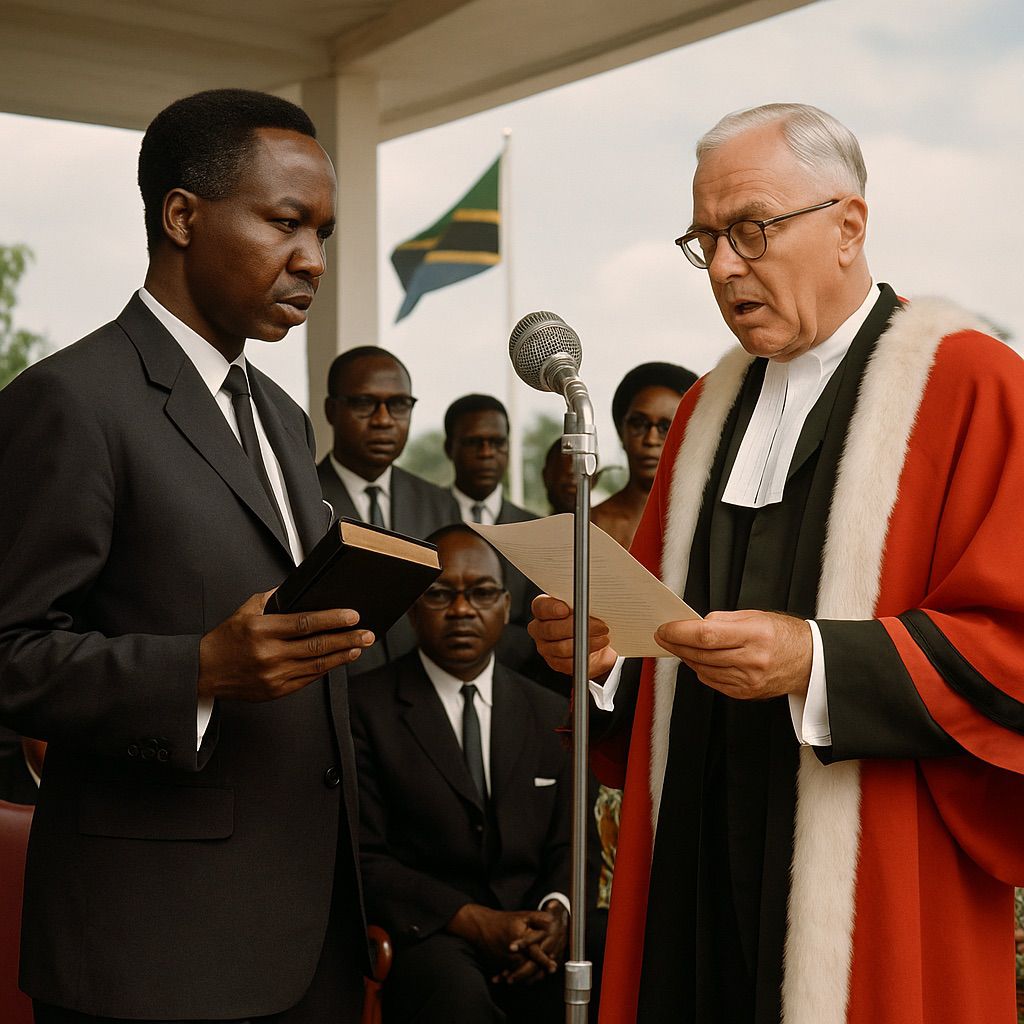
On December 9, 1961, Julius Nyerere took the oath of office before a packed assembly of parliamentarians and distinguished guests at the State House in Dar es Salaam. The momentous occasion marked the realization of a decades-long struggle by African nationalists in Tanganyika to free their country from colonial shackles. As Nyerere declared the nation’s independence, he hailed this turning point as a triumph for Tanzanian self-determination and a milestone in Africa’s unrelenting quest for freedom.

With its newfound sovereignty, Tanzania set out on a unique path under Nyerere’s stewardship. His vision of African socialism and pan-African unity guided domestic policies aimed at rapidly developing infrastructure, promoting rural development, and strengthening the economy through state-led initiatives. While internal challenges persisted in the wake of independence, Tanzania emerged as one of Africa’s most vibrant success stories during this period.

The path to full independence marked by Tanganyika on December 9, 1961 had far-reaching implications for African nations still grappling with colonial legacies and regional tensions. As African states began asserting their sovereignty, they drew inspiration from Tanzania’s determination and willingness to challenge Western dominance in the region. In doing so, they further galvanized a nascent pan-African movement that would shape global politics for decades to come.

As Tanganyika celebrated its hard-won independence, the echoes of this triumph resonated across Africa and beyond. The country’s emergence as a sovereign nation was met with jubilation by its people, who had fought tirelessly for decades to break free from colonial shackles. Julius Nyerere, now the nation’s first prime minister, stood at the forefront of this momentous occasion, his voice ringing out in celebration of Tanzania’s newfound freedom.

The journey to independence had been long and arduous, marked by periods of both triumph and tragedy. The seeds of resistance had been sown during World War I, when British forces invaded German East Africa. This event sparked a wave of African nationalism that would sweep across the continent, fueling demands for self-determination and an end to colonial rule.

Tanganyika’s struggle for independence was inextricably linked to the broader pan-African movement, which sought to unite African nations against the common enemy of colonialism. The likes of Kwame Nkrumah, Ghana’s first president, and Sekou Toure, Guinea’s leader, were key figures in this movement, which drew inspiration from the struggles of other colonized peoples around the world.

As the 1950s gave way to the 1960s, Tanganyika found itself at the forefront of African nationalism. The winds of change sweeping across the continent were unmistakable, with newly minted nations such as Ghana and Mali setting the stage for a new era of pan-African unity and collective self-liberation. It was against this backdrop that Britain’s colonial administration in Tanganyika faced mounting pressure from various quarters to hasten the pace of reforms.

Nyerere’s TANU, which had emerged as a major force on the Tanzanian political scene, pressed on with demands for complete autonomy and accelerated decolonization. The organization’s vision for an independent Tanzania was clear: a nation built on the principles of African socialism and pan-African unity, where the rights and dignity of all citizens were respected.

As internal pressure continued to build, Tanganyika’s struggle for self-determination was further galvanized by external factors. The Cold War rivalry between the United States and the Soviet Union also had a profound impact on African politics during this period. Britain, eager to maintain its influence in the region, found itself increasingly entangled in a delicate balancing act between accommodating local demands for reform and safeguarding the interests of Western powers.

The complex web of alliances and rivalries that characterized the Cold War era had significant implications for Africa’s struggle for independence. The Soviet Union, which had long been sympathetic to African nationalist movements, provided critical support to Nyerere and his colleagues as they navigated the treacherous waters of decolonization.

Meanwhile, the United States, keen to maintain its dominance in the region, sought to promote stability and security through its aid programs and diplomatic efforts. This created a delicate dynamic, as both superpowers vied for influence in Africa while Nyerere’s government struggled to assert its sovereignty.

In January 1961, the Tanganyika Parliament passed the Independence Act, paving the way for Nyerere’s government to assume full control over internal affairs. As colonial rule gave way to self-governance, Britain agreed to grant independence by the end of 1961. With less than a year remaining before Tanganyika’s formal declaration of independence, local authorities took steps to consolidate power and prepare for the inevitable handover.

The months leading up to independence were marked by intense diplomatic activity, as Nyerere’s government sought to solidify international support for its new status. In November 1961, Nyerere returned from a three-month world tour that had taken him to key African nations, Asia, and Europe in an effort to galvanize backing for Tanzania’s sovereignty.

His diplomatic endeavors yielded tangible results, as newly independent Ghana, Nigeria, and Senegal pledged their backing for Tanganyika’s sovereignty. This marked a significant turning point in the struggle for independence, as it underscored the growing recognition of Africa’s new nations on the world stage.

On December 9, 1961, Julius Nyerere took the oath of office before a packed assembly of parliamentarians and distinguished guests at the State House in Dar es Salaam. The momentous occasion marked the realization of a decades-long struggle by African nationalists in Tanganyika to free their country from colonial shackles.

As Nyerere declared the nation’s independence, he hailed this turning point as a triumph for Tanzanian self-determination and a milestone in Africa’s unrelenting quest for freedom. His voice echoed across the continent, inspiring millions of Africans who had fought tirelessly for generations to break free from colonial rule.

With its newfound sovereignty, Tanzania set out on a unique path under Nyerere’s stewardship. His vision of African socialism and pan-African unity guided domestic policies aimed at rapidly developing infrastructure, promoting rural development, and strengthening the economy through state-led initiatives.

While internal challenges persisted in the wake of independence, Tanzania emerged as one of Africa’s most vibrant success stories during this period. The country’s economic growth, fueled by Nyerere’s innovative approaches to agricultural development and industrialization, was nothing short of remarkable.

As African states began asserting their sovereignty, they drew inspiration from Tanzania’s determination and willingness to challenge Western dominance in the region. In doing so, they further galvanized a nascent pan-African movement that would shape global politics for decades to come.

Tanzania’s independence had far-reaching implications for Africa’s future. It marked a new era of African self-determination and collective action, as nations across the continent began to assert their sovereignty and challenge the legacy of colonialism.

The echoes of Tanganyika’s triumph still resonate today, inspiring generations of Africans who continue to strive for freedom, justice, and equality in all its forms. As Julius Nyerere himself once said, “Africa is not a country; it is a continent of many nations.” The story of Tanzania’s independence serves as a powerful reminder of the enduring power of African solidarity and determination.

In the years that followed, Africa’s pan-African movement continued to gain momentum, as countries such as Kenya, Uganda, and Malawi joined the growing ranks of independent nations. This marked a significant turning point in African history, as continent-wide unity and collective action began to reshape the regional landscape.

The 1960s saw Africa emerge as a major force on the world stage, with newly independent nations asserting their sovereignty and challenging Western dominance in the region. The United States, eager to maintain its influence in Africa, found itself increasingly entangled in a complex web of alliances and rivalries with other superpowers vying for control.

As the Cold War rivalry between the United States and the Soviet Union reached its peak, African nations were caught in the midst of this global struggle. Tanzania, under Nyerere’s leadership, emerged as a key player on the continent, forging close ties with both superpowers while steadfastly maintaining its independence.

The country’s unique position was further solidified by its commitment to pan-African unity and collective self-liberation. Tanzania’s vision for an African socialism that prioritized social welfare, economic development, and international solidarity resonated across the continent, inspiring a new generation of leaders and nations committed to building a more just and equitable world.

In this context, Tanzania’s independence marked not only the realization of a long-fought struggle but also the beginning of a new era in African history. As Nyerere himself observed, “The age of colonialism is over; the age of African self-determination has begun.”

Related Posts

The Day Charles and Diana Broke the World’s Heart

Elias Rowen

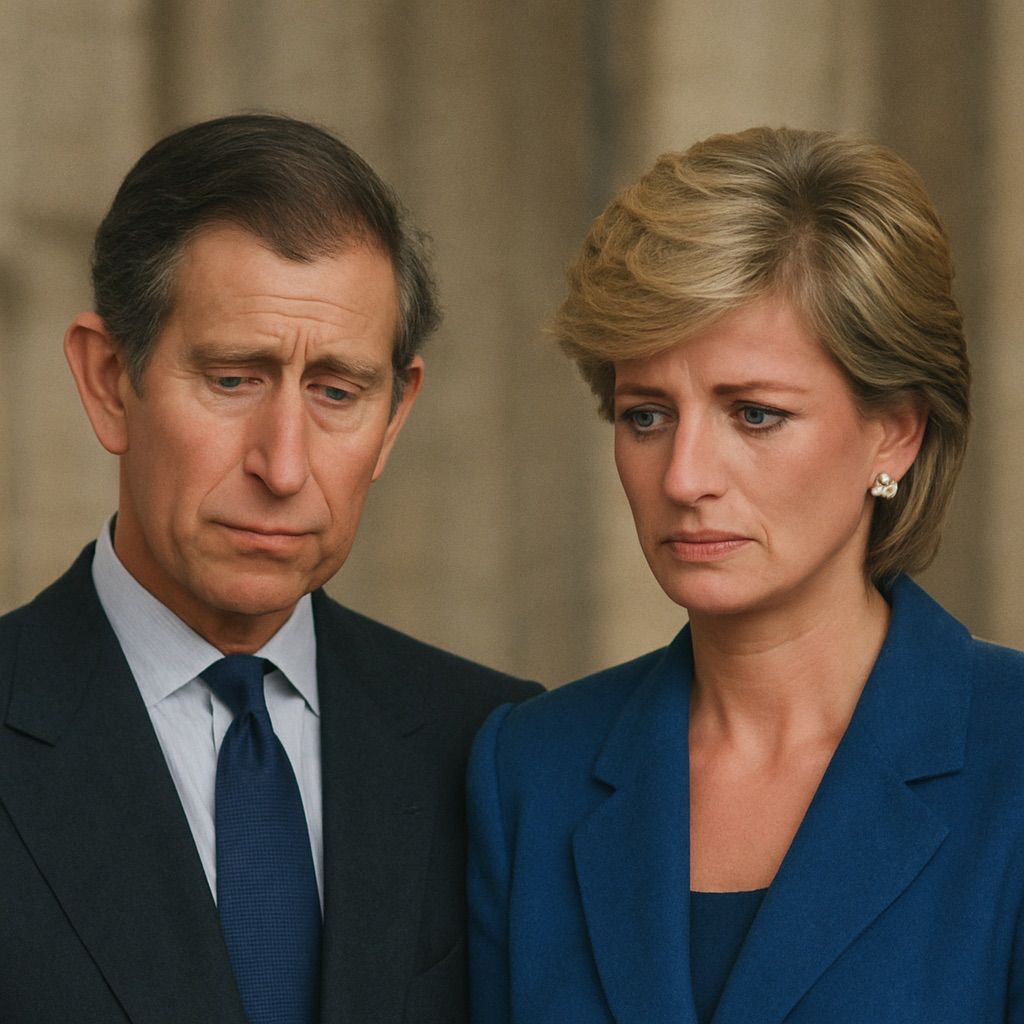
The announcement on December 9, 1993, that Prince Charles and Princess Diana were formally separating struck with the force of a global tremor. Even in an age before social media and instantaneous digital headlines, the news traveled at near-lightning speed, rippling across continents, igniting conversations, and shattering illusions that millions had held for more than a decade. Their marriage had been portrayed to the world as a fairytale, a modern royal romance scripted for adoration, photographed endlessly, and replayed in every glossy publication imaginable. Yet beneath the glitter of tiaras and televised weddings lay fissures that had deepened quietly, painfully, and inevitably until the very foundation of their union finally gave way. What the world saw as a romantic dream had, for its participants, become a space of loneliness, resentment, and unmet expectations.

It is almost impossible to understand the magnitude of the announcement without stepping back to consider the intensity of the spotlight under which Charles and Diana lived from the moment the public first became aware of their courtship. Prince Charles, heir to the British throne and bound by centuries of expectation, had long been under pressure to marry. Diana Spencer, radiant, shy, and barely out of her teens when she entered royal life, became an overnight sensation. Their 1981 wedding was not just a national celebration—it was a global event, watched by an estimated 750 million people. The couple appeared poised to bring a breath of freshness and charm back into the monarchy. Diana, with her warmth and emotional intelligence, connected with ordinary people in a way few royals ever had. Charles, scholarly and thoughtful, represented tradition and continuity. For a brief moment, the pairing felt perfect.

But no fairy tale can survive if its characters feel trapped inside it.

The early signs of strain appeared almost immediately. While Diana struggled to adapt to the rigid protocols of royal life, Charles found himself caught between the duty to shape Diana into a future queen and his own emotional entanglement with Camilla Parker Bowles—a relationship that had roots far deeper than the public realized. Their personalities, already mismatched, became increasingly incompatible under the scrutiny of press cameras and palace expectations. Diana’s vulnerability, her eagerness to love and be loved, clashed with Charles’s emotional reserve and his need for intellectual compatibility. And as Diana later admitted, there were three people in the marriage, and “that’s a bit crowded.”

The royal machine continued forward, expecting the young couple to simply adapt, but Diana’s internal struggles soon became overwhelming. The pressures of her role collided with her personal insecurities, leading her into a dark battle with bulimia, depression, and profound isolation. She often appeared luminous on the outside—smiling for cameras, hugging children, comforting HIV patients, shaking hands with the marginalized long before the rest of the world understood the importance of such gestures—but behind closed doors, she was unraveling. Her emotional pleas went largely unheard, dismissed, or misunderstood. Charles, unused to such expressions of vulnerability, retreated further, turning more frequently toward the steady companionship of Camilla.

By the early 1990s, the marriage was visibly deteriorating. British tabloids, hungry for royal drama, published stories of infidelity, emotional outbursts, secret phone calls, and private despair. Both Charles and Diana became subjects of relentless media scrutiny, but their responses differed sharply. Charles, trained for emotional restraint, kept silent, even as speculation mounted. Diana, feeling voiceless and misunderstood, began subtly pushing back—using interviews, carefully chosen moments, and emotional honesty to tell her side of the story. She was charismatic, relatable, heartbreakingly human. Millions saw her not as a flawed royal but as someone trapped in a gilded cage, fighting to be heard.

The moment that brought the simmering crisis to a full boil came in November 1993, just weeks before the separation announcement. Charles and Camilla were photographed together at a private gathering on the eve of his 50th birthday. Though the relationship had long been whispered about, the intimate nature of the image ignited a media firestorm. Newspapers splashed the photographs across their front pages with bold headlines hinting at betrayal, marital collapse, and humiliation. Diana, who had been trying desperately to maintain some semblance of dignity, was devastated. The picture was more than an image—it was a public confirmation of what she had known privately for years.

In response, she agreed to a series of interviews where her sadness, fragility, and frustration spilled into the open. She never explicitly accused Charles of infidelity, but her emotional honesty made it clear that something had shattered between them that could not be repaired. To some viewers, she appeared brave, finally speaking truths long buried. To others, she seemed lost, overwhelmed, and longing for someone—anyone—to take her pain seriously. Either way, the interviews set the stage for what everyone sensed was coming.

When the official announcement finally arrived on December 9, 1993, it still hit the public with startling force. The Buckingham Palace statement was brief, careful, and coldly formal, noting simply that Charles and Diana were separating and that both would continue carrying out their public duties. But beneath the palace wording was a far more complicated reality: the collapse of the most famous marriage in the world.

Public reaction was swift and deeply emotional. Diana’s supporters wept openly, angry at Charles for what they saw as years of neglect or betrayal. Others sympathized with Charles, believing he had been pressured into a marriage that was doomed from the start. Camilla became a lightning rod, the target of harsh criticism that would follow her for years. The monarchy, already navigating a changing cultural landscape, found itself facing a crisis of public trust.

In the months that followed, the separation evolved into a new normal. Charles continued seeing Camilla, though carefully, aware of public anger. Diana withdrew, spending more time with William and Harry, immersing herself in humanitarian causes that allowed her to channel her pain into purpose. Her work became not only a contribution to the world but also a lifeline—something meaningful to grasp while her personal life splintered.

By August 1996, the separation officially ended in divorce. What had once been heralded as a royal love story now lay in archives and biographies as one of the most tragic mismatches in modern monarchy. Yet from the ashes of the marriage, both Charles and Diana would transform in profound ways. Charles eventually married Camilla in 2005, beginning a new chapter marked by stability and mutual understanding. Diana found love again, at least privately, and continued to evolve into the global humanitarian icon she is remembered as today.

Her death in 1997 froze her legacy in time, sealing her image as the “People’s Princess,” a figure who exposed the vulnerability behind royal glamour and challenged the monarchy to become more human. Even now, decades later, the impact of Charles and Diana’s marriage continues to shape how the public understands the royal family—its pressures, its expectations, its failures, and its need to evolve.

Their story is not simply a tale of infidelity, miscommunication, or shattered expectations. It is a narrative about two people placed in a system larger than themselves, struggling to reconcile personal identity with public duty. It is about the toll that emotional neglect can take, even in the most privileged settings. It is about how love, or the lack of it, can reshape institutions and alter cultural landscapes.

Most of all, it is a reminder that even the most iconic figures—those who appear unbreakable under the flash of cameras—are still human, still fragile, still capable of heartbreak. The separation of Charles and Diana may have marked the end of a marriage, but its echoes continue to resonate as lessons about empathy, vulnerability, and the complexities of love under pressure.

Related Posts

Separation of Church and State in France

Elias Rowen

The tension between church and state in France is not a story that can be contained neatly within a single century, nor is it a tale shaped by just a few rulers, lawmakers, or religious figures. Instead, it is a sweeping saga stretched across more than a thousand years, filled with ideological clashes, shifting centers of power, bold declarations, quiet reforms, and violent upheavals that repeatedly forced the French people to examine what it truly meant to live in a society where faith, governance, and identity were so deeply intertwined. The centuries-long struggle to define the proper balance between spiritual authority and secular power created modern France as much as any revolution or monarch ever could. The idea of laïcité, which today stands as one of the most defining characteristics of the French Republic, did not emerge overnight. It was shaped, challenged, broken apart, rebuilt, misunderstood, weaponized, and defended again and again through the unpredictable tides of history.

In the earliest chapters of this story, the Catholic Church did not merely influence France—it defined it. During the early Middle Ages, the Church was not just a spiritual guide but an institution intertwined with every corner of life. It owned immense tracts of land, administered justice in many territories, collected taxes, regulated education, and set moral standards. Kings such as Clovis I and Charlemagne legitimized their rule through their association with the Church. To be crowned by a saintly figure or blessed by the Pope himself was more than symbolism—it was political necessity. Religion wove itself into the very fabric of kingship, making secular power and spiritual authority two sides of the same coin.

Yet, power is never stable for long, and as feudal structures gave way to centralized monarchy, French rulers began asserting themselves in ways that threatened the Church’s dominance. The rise of absolute monarchy in the 16th and 17th centuries created a dramatic shift. Kings like Henry IV understood that France could not survive permanently fractured along confessional lines. His Edict of Nantes attempted to bring religious tolerance into the national conversation—an unprecedented move for the time. Though it did not separate church and state, it challenged the assumption that Catholicism must be the sole moral compass of the nation.

The Edict’s promise of tolerance, however, proved fragile. When Louis XIV came to power, he pursued a vision of France defined by Catholic unity. He revoked the Edict of Nantes, forcing Protestants to flee, convert, or practice in secret. It was a moment when the pendulum swung violently back toward religious dominance. Louis XIV saw himself not only as a king but as God’s appointed steward for France, and he believed that spiritual uniformity strengthened political power. His rule demonstrated both the apex of French absolutism and the vulnerability of individual liberty under a government blended so thoroughly with religious authority.

But storms were gathering that would soon alter the landscape entirely. The Enlightenment challenged the foundations the Church had long relied upon. Philosophers such as Voltaire and Rousseau condemned the entanglement of religious authority in civic life, accusing it of promoting intolerance, inequality, and intellectual stagnation. These criticisms did not remain in the realm of theory—they seeped into cafés, salons, and ultimately the hearts of those who would lead the French Revolution.

When the Revolution erupted in 1789, it tore through the institutions of the past with a ferocity never before seen. The Church, which had been one of the wealthiest and most powerful forces in France, was suddenly recast as an enemy of reason and a symbol of tyranny. Church lands were seized. Clergy were forced to swear loyalty to the state. Religious orders were dissolved. The Revolutionaries believed that liberty could not flourish until the Church’s grip on public life had been shattered. The Declaration of the Rights of Man and Citizen announced that no person could be forced to practice a religion or refrain from one, laying the groundwork for modern secularism.

Still, the Revolution was anything but consistent. While one faction sought to erase religion entirely, another—led eventually by Robespierre—embraced a quasi-religious civic spirituality. A new calendar replaced the Christian one, churches were renamed “Temples of Reason,” and religious festivals were rewritten with revolutionary meaning. Yet even these attempts were short-lived. The Revolution devoured its own, and France lurched forward into the era of Napoleon.

Napoleon, with his characteristic pragmatism, recognized that stability required a delicate balance. He crafted the Concordat of 1801, reestablishing the Catholic Church—but under strict government supervision. It was a compromise: religion could return, but only on the state’s terms. Napoleon’s famous Civil Code enshrined secular principles, guaranteeing equality before the law and protecting freedom of conscience. The Church was no longer the master of France but a partner, albeit a subordinate one.

This uneasy coexistence continued through the Bourbon Restoration and the July Monarchy, as political ideologies clashed and power shifted between conservative and liberal forces. Throughout the 19th century, the Church continued to influence education and social policy, even as many reformers attempted to push France further toward secularism. These opposing currents collided spectacularly during the Third Republic.

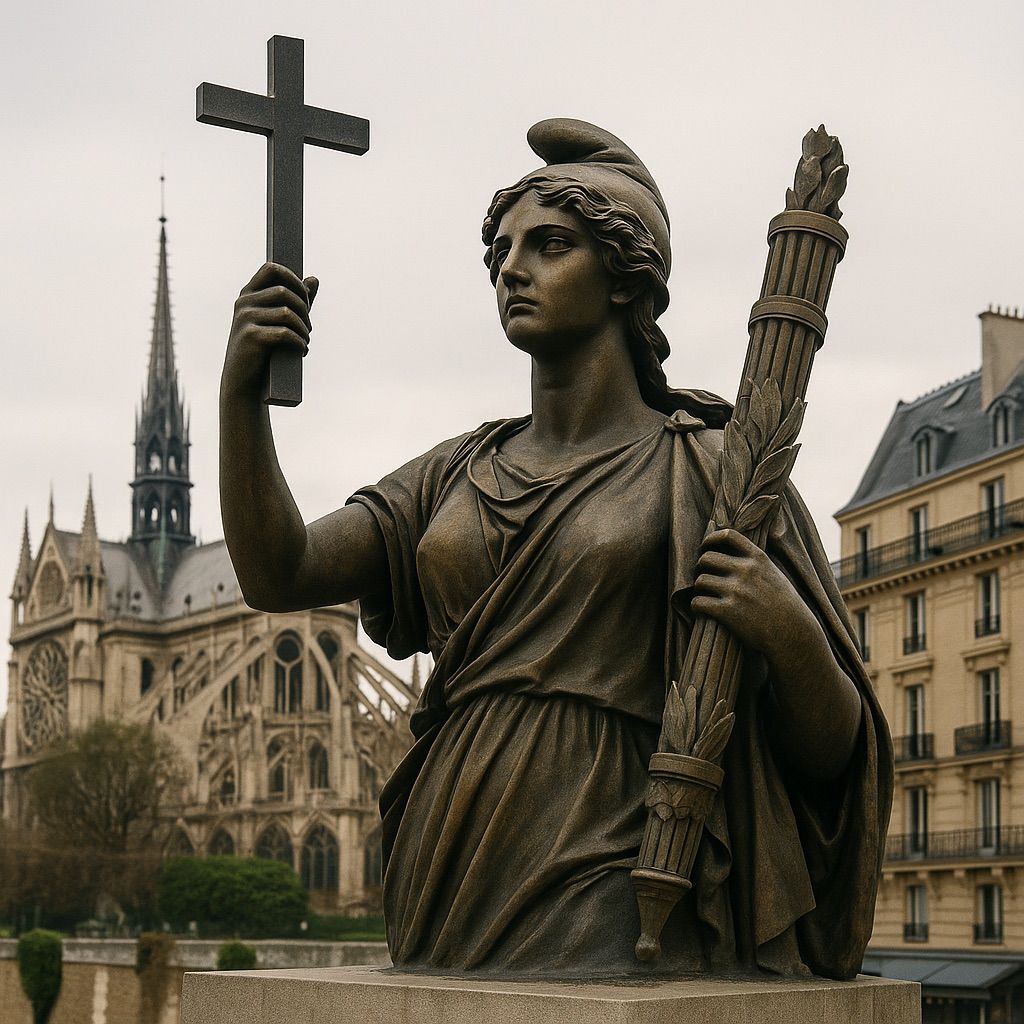
If there is one moment where laïcité truly crystallized into its modern form, it was during the Third Republic between 1870 and 1940. Traumatized by the Franco-Prussian War and seeking to redefine national identity, French leaders embraced secularism as the backbone of the Republic. The Jules Ferry laws established free, mandatory, secular education, cutting the Church out of one of its last major spheres of influence. In 1905, the Law on the Separation of Churches and the State severed financial ties, declaring the state neutral in matters of faith and guaranteeing freedom of religious practice. For many, it was liberation. For others, it was a betrayal. But regardless of sentiment, it was irreversible: France had officially become a secular republic.

And yet the story does not end there, because laïcité is not merely a legal doctrine—it is a living concept, constantly reshaped by social change, immigration, global politics, and cultural identity. In the 20th and 21st centuries, new questions emerged. While France once struggled primarily with Catholic influence, it now grapples with being a multi-faith society where Islam, Protestantism, Judaism, and secularism itself coexist uneasily at times. Laws regarding headscarves in schools, burqas in public spaces, halal food in cafeterias, and religious symbols in government buildings reignited debates about where to draw the line between public order and individual freedom.

Critics argue that laïcité is sometimes used as a political weapon rather than a neutral principle—that it is applied unevenly, often under the guise of countering extremism but with effects that disproportionately impact minority communities. Supporters, on the other hand, insist that laïcité preserves equality by ensuring that no religion dictates public life. They argue that it allows citizens from all backgrounds to live together peacefully, without fear of religious domination or coercion.

These tensions came into sharp focus as France reckoned with terrorism, debates on immigration, the legacy of colonialism, and shifting demographics. The ideal of laïcité became a mirror reflecting the nation’s anxieties, hopes, and contradictions. And through it all, the question persisted: can a society truly be neutral on matters of faith while also protecting the individual’s right to express it?

France’s answer remains complex, evolving, and far from unanimous.

The history of the separation of church and state in France is, at its core, a story of identity. It is about how a nation understands itself, what it values, and who it includes. The French people have fiercely defended both religious freedom and secular governance, even when the two seem to conflict. They have endured centuries of turmoil, revolution, and reinvention to forge a society where citizens are free to believe—or not believe—without allowing any one faith to dominate the public sphere.

Laïcité is not perfect. It is neither universally applied nor universally understood. Yet it remains one of the most defining principles of modern France, shaping every debate from education and law to clothing and cuisine. Whether applauded as a triumph of equality or criticized as a veil for cultural exclusion, it is inseparable from the nation’s political and cultural DNA.

And so the story continues—not with a definitive conclusion, but with a living, breathing tension that reflects the complexities of human society itself. France stands today as both a product of its long struggle and an ongoing experiment, forever trying to balance faith and freedom, tradition and modernity, identity and coexistence. The conversation is far from over, but the centuries that have come before prove one thing unmistakably: the relationship between church and state may evolve, but it will never cease to matter.

Related Posts