Latest Articles

The Missouri Morning That Gave Us Mark Twain

Elias Rowen

Samuel Langhorne Clemens entered the world on November 30, 1835, in a small, unassuming house in the quiet village of Florida, Missouri—a place so modest that even today it feels more like a footnote than a birthplace of literary greatness. When he was born, few could have imagined that this fragile, premature infant would grow into one of the most influential American writers in history, a figure whose wit, satire, and unfiltered humanity would not only define an era, but also become a lens through which the world would learn to understand America itself. And maybe that’s the charm of Mark Twain’s origin story: the idea that from the most ordinary soil, from the soft Missouri clay under a barely lit frontier sky, emerged a voice that would echo far beyond the Mississippi’s long and winding banks.

Twain himself liked to remind people that he was born shortly after Halley’s Comet blazed across the night sky, and he predicted—half-seriously, half-mystically—that he’d “go out with it” too. And he did. But in 1835, the world wasn’t thinking about prophecies. They were thinking about the frontier. About survival. About unpredictable weather and riverboats and roads made of mud, not metaphors. Missouri was still a young state, America was still a young nation, and Clemens was born into a landscape that was raw, volatile, and bursting with equal parts possibility and risk. That mixture of instability and promise would mark his writing forever.

Life in Missouri wasn’t kind, but perhaps that hardness carved the exact contours of Twain’s worldview. His family was not wealthy; in fact, they lived in circumstances that teetered constantly between hope and hardship. Florida, Missouri, had only about one hundred residents. It was the kind of town where everyone knew everyone else’s business, and gossip traveled faster than the mail stagecoach. These were the people Twain later wrote about—folks who were at once hilariously flawed and quietly noble, who held onto small joys the way riverboats clung to their moorings during a storm. He grew up absorbing these stories, these peculiarities, these rhythms of speech that would later give his writing its unmistakable lifeblood. Even before he knew what a writer was, he was taking notes.

When Clemens was four, his family moved to Hannibal, a lively port town on the Mississippi River. This was the Missouri that shaped him most deeply—the one that smelled of river mud and fish, tobacco smoke and sawdust. Hannibal was a place where steamboats came and went like floating worlds, each arriving with rumors, colors, strangers, and stories. The Mississippi was almost a character in Twain’s life long before it became one in his fiction. As a boy, he saw the river as an endless horizon of mystery, a boundary between everything he knew and everything he longed to discover. Later, when he wrote The Adventures of Tom Sawyer and Adventures of Huckleberry Finn, he was simply transcribing what he had already lived: barefoot summers, impromptu adventures, moral puzzles disguised as childhood mischief, and an America that didn’t quite know how to reconcile its promise with its contradictions.

Even as a child, Clemens was observant in ways that felt almost surgical. He studied people—their tics, their flaws, the gap between what they said and what they meant. Maybe this sensitivity came from being sickly early in life, from spending more time watching than doing. Maybe it came from listening to every tall tale and boast and whispered confession that drifted through Hannibal. Whatever the source, that young boy developed an intuition about human behavior that would later allow him to craft characters so real they seem to look back at you from the page.

But his childhood wasn’t all idyllic river life. By the age of 12, young Samuel suffered a loss that shaped him permanently: the death of his father. Judge John Marshall Clemens was stern, ambitious, and often disappointed by life’s failures. His death thrust the family into economic strain and forced Sam to leave school to work. That interruption in his education never embarrassed Twain later in life—he wore it like a badge of honor, a reminder that the best stories come from the world, not a classroom. Forced to grow up quickly, Samuel became a typesetter’s apprentice, a job that—ironically—placed him at the heart of the printed word. He handled language before he mastered it, touched news before he shaped it, and arranged letters before he learned how to rearrange the world.

Although he spent his teenage years working in print shops, he absorbed books with a hunger that seemed to make up for lost time. His imagination stretched far beyond the boundaries of Hannibal. There was something restless in him, something unfinished. And that restlessness pushed him toward a dream that thousands of boys harbored but few realized: he wanted to be a steamboat pilot.

On the Mississippi, the pilot was king. He could navigate the unpredictable river, memorize every twist and shallow, and command respect simply by stepping onto a deck. For a young man seeking purpose, becoming a pilot wasn’t just a career—it was a calling. When Twain finally earned his license in 1859, he considered it one of the proudest moments of his life. He once described the act of learning the river as if he were deciphering a living text. Every ripple, every shift in color, every murmur of current meant something. Years later, that same ability—to see beneath the surface of things—made him a master of satire.

But the river career did not last. The Civil War erupted, and the Mississippi quickly became a contested artery. Riverboats were caught in the crossfire of history, and Twain’s pilot dreams evaporated almost overnight. Torn between sides in a deeply divided country, Clemens left the river behind and headed west to Nevada, chasing yet another frontier. It was there, in the dusty mining towns, that Samuel Clemens became Mark Twain.

The name itself was a love letter to the Mississippi—“mark twain” being riverboat slang for a depth of two fathoms, safe water for passage. It was as if he couldn’t bear to cut the rope to his past, so he anchored his future to the river instead. And under that name, he began to publish humorous sketches that revealed a voice sharp enough to cut but warm enough to soothe. He mocked pretension, punctured hypocrisy, and exposed human foolishness with a grin rather than a scowl. Readers loved it. They felt he understood them, maybe better than they understood themselves.

From the West, Twain’s career exploded. His travel writings—The Innocents Abroad, Roughing It, Life on the Mississippi—transformed him into one of the first real American celebrities. And yet, despite all the miles, despite the wealth and fame, he carried Missouri with him everywhere he went. It lingered in his vocabulary, in the way he crafted dialogue, in the balance of cynicism and generosity that shaped his worldview. Even when he stood on stages in Europe, he sounded like a riverboat boy who never quite forgot where the muddy water met his ankles.

As his writing matured, Twain wrestled with America’s growing pains. His humor sharpened. His novels deepened. Adventures of Huckleberry Finn, with its confrontation of racism, morality, and conscience, was groundbreaking—not just for its time, but for all time. The boy who grew up in a slave state was no longer content to simply tell funny stories. He wanted to probe uncomfortable truths, to peel back the polite veneer of society and show the fractures underneath. And yet, he never fully abandoned humor. It was his shield, his scalpel, his way of easing readers into hard truths without pushing them away.

Twain experienced tremendous personal tragedy—losses of his children, of his wife, of financial stability. But even in his darkest moments, he preserved a spark of defiant wit, a sense that life was both cruel and outrageously absurd. His writing became even richer as he aged, tinged with melancholy, wisdom, and a certain resignation that only deepens his humanity.

When he died in 1910, just as Halley’s Comet returned, the world mourned a man who had become inseparable from the soul of American storytelling. And it all began in that tiny Missouri village in 1835, with a baby so small and frail that no one could have predicted the immensity of the shadow he would one day cast.

Mark Twain’s Missouri origins remind us that greatness doesn’t require grandeur. It can come from dirt roads, from river fog, from the laughter of ordinary people and the small stories that echo in small towns. Twain turned the texture of Missouri into literature. He turned memory into myth. And he showed that sometimes the biggest truths grow out of the humblest beginnings.

If literature is a mirror, Twain made sure America saw itself—messy, hopeful, flawed, ambitious, humorous, tragic, and achingly human. And maybe that’s the real legacy of the child born in Missouri: he gave us ourselves.

Related Posts

Alfred Nobel’s Final Will Transformed the World

Elias Rowen

Alfred Nobel’s decision on November 27, 1895, to sign his last will and testament inside the Swedish–Norwegian Club in Paris would become one of the most influential acts of personal philanthropy in human history. It is almost breathtaking to think that one quiet moment, tucked away in a modest room and witnessed by just four individuals, reshaped the trajectory of global culture, science, peace, and literature. What is now perceived as a natural and expected centerpiece of modern achievement—the Nobel Prize—was once the product of a deeply personal reckoning by a man haunted by the unintended consequences of his own genius. To fully grasp the emotional weight of Nobel’s decision, you have to start with the man himself, a figure far more complex than the simplified caricature of the “inventor of dynamite.”

Alfred Nobel was, in many ways, a walking contradiction. He was a man of immense wealth who lived a relatively modest, lonely life. A brilliant inventor who felt burdened by his own creations. A sharp businessman who privately longed for poetry and human connection. And a visionary industrialist who, despite the era’s fascination with military innovation, grew increasingly tormented by the ways his inventions were being used to take life rather than improve it. This internal conflict would ultimately lead him to one of the most profound acts of self-reflection ever recorded.

Born in Stockholm in 1833, Nobel was raised in a family that valued ingenuity and industry. His father, Immanuel Nobel, was a struggling engineer and inventor whose fortunes rose and fell unpredictably. As a child, Alfred watched his family teeter on the edge of financial ruin while his father experimented with mechanical innovations, eventually leaving Sweden for Russia in search of better prospects. It was in Saint Petersburg that young Alfred’s world widened. Surrounded by chemistry laboratories, engineering projects, and endless curiosity, Nobel absorbed knowledge with a hunger that revealed itself early in life. He became fluent in multiple languages, developed a love for literature, and studied under some of the finest scientists of his generation.

Yet Nobel’s legacy became intertwined with a substance that terrified and fascinated the 19th century: nitroglycerin. Unstable, volatile, and dangerous, nitroglycerin claimed countless lives in accidental explosions, including that of Nobel’s younger brother Emil. The tragedy carved into Alfred a guilt that never fully left him. Determined to harness the power of nitroglycerin in a way that could serve human progress, Nobel developed dynamite in 1867—a stabilized and controllable explosive that transformed construction, mining, infrastructure, and warfare alike.

It is impossible to overstate how dramatically dynamite altered the world. Tunnels could be carved through mountains, railway systems expanded, and mines reached depths that were previously impossible. But there was a darker side as well: dynamite also made warfare more devastating, contributing to the increasingly lethal technologies of industrial conflict. Nobel’s business empire boomed, stretching across continents, making him one of the wealthiest industrialists of his time. But his fortune carried a shadow he would never fully escape.

That shadow became painfully clear in 1888, when Alfred Nobel awoke to the news of his own death. A French newspaper mistakenly thought he had died and published a brutal obituary titled “The Merchant of Death Is Dead.” The article condemned Nobel for profiting from tools of destruction, painting him as a man who had made his fortune by enabling suffering. It was a shocking, humiliating wake-up call. Nobel read how the world might remember him, and it devastated him. The obituary burned into his thoughts, creating a moral scar he struggled to ignore. If this was to be his legacy, he felt, then he had failed both himself and humanity.

The real deceased Nobel brother was Ludvig, but the cruel accident of journalistic error changed the surviving brother’s destiny. For a man of Nobel’s sensitivity—someone who wrote poetry in private, who never married, who felt misunderstood by the world—this moment of judgment became transformative. It forced him to confront the uncomfortable question that would define the rest of his life: What will my legacy truly be?

The decision to create the Nobel Prizes was Nobel’s answer to that question. It was not designed to erase his past but to elevate his future. The will he signed in 1895 was not a simple distribution of wealth; it was a visionary proposal unlike anything the world had seen. Fully 94% of his massive fortune was to be placed into a trust, the interest from which would fund annual prizes to honor those who “conferred the greatest benefit to humankind.”

This was revolutionary. No industrialist, scientist, king, or philanthropist had ever attempted such an international, apolitical, intellectually focused system of rewards. Nobel proposed prizes in Physics, Chemistry, Medicine, Literature, and Peace—five pillars of human advancement. Later, the Economic Sciences Prize would be added in his honor. Nobel wasn’t just giving money away; he was creating a perpetual engine for global progress, one that would outlive him and any judgment cast upon his inventions.

Yet the signing itself was far from smooth. Nobel composed the document in absolute secrecy, excluding even much of his own family. The witnesses were astonished when they realized the scale of his gift and the lack of provisions for relatives. The will contained broad, almost poetic descriptions rather than precise legal instructions, which meant that after Nobel’s death in 1896, a firestorm of controversy erupted. The family objected. Legal scholars debated. Institutions hesitated. Governments questioned why a Swede living in Paris intended to fund prizes that would be awarded internationally. The chaos threatened the entire project.

But in one of the great examples of determined human will meeting institutional courage, the executors—especially Ragnar Sohlman—fought relentlessly to implement Alfred’s instructions. It took years of negotiations, mountains of paperwork, and endless resistance, but the first Nobel Prizes were finally awarded in 1901. They were a triumph not only of Nobel’s vision but of the belief that ideas, creativity, and moral leadership deserve recognition beyond borders, languages, or politics.

Think about what the Nobel Prizes have come to represent. They are a symbol of the highest human aspirations—a global acknowledgment that progress depends on those who push the boundaries of our knowledge, our compassion, and our imagination. Laureates are often ordinary people who became extraordinary through resilience, brilliance, or courage. Their work has shaped medicine, transformed physics, deepened literature, advanced chemistry, and promoted peace in a world that desperately needs it.

From Marie Curie’s groundbreaking radiation research to Martin Luther King Jr.’s leadership in the civil rights movement, from the discovery of insulin to the unraveling of DNA, from literary masterpieces to peace negotiations across continents—the Nobel Prizes highlight the astonishing range of human achievement. They exist because one man, confronted with the harsh judgment of history, chose to change his story.

Nobel’s will was more than a legal document. It was a confession, a dream, and a challenge. It asked the world to recognize that human progress should be celebrated, nurtured, and rewarded. It asked future generations to believe that creativity and courage matter. It asked us to see the best in humanity, even in the shadows of its darker inventions.

The emotional power behind Nobel’s decision is what continues to give the prizes their profound meaning. He didn’t seek praise. He sought redemption. And in doing so, he offered the world something far greater than dynamite: he offered hope. A hope that brilliance could be recognized, that peace could be encouraged, that literature could expand empathy, and that science could heal instead of harm.

Today, more than a century after Nobel quietly dipped a quill into ink and signed the document that changed everything, the world continues to benefit from that moment of reflection. Just as Nobel hoped, his prizes have become an eternal reminder that every individual—no matter their flaws—has the capacity to leave behind a legacy greater than themselves.

The act of signing his will was Nobel’s final invention: not a device, not a chemical formula, but a vision for the future. A vision that continues to shape the world long after the ink has dried.

Related Posts

George Washington Shaped America’s Tradition of Gratitude

Elias Rowen

What we now call Thanksgiving has grown so deeply into the American experience that it’s easy to forget it didn’t begin as an annual, unquestioned holiday. It began with a moment. A proclamation. A leader who understood that a country as new, fragile, and untested as the United States needed more than laws and battles to define who it was. It needed rituals that bound people together. It needed shared meaning. It needed gratitude. And in 1789, in the very first year of the new constitutional government, President George Washington reached for that idea and shaped what would become one of the most enduring national traditions in American life: the modern Thanksgiving.

Washington’s proclamation was not just a formality. It wasn’t created because the harvest had come in or because some long-standing tradition demanded it. It was a deliberate gesture designed to unify a young nation still unsure of itself. The war for independence had ended only six years earlier. The ink on the new Constitution was barely dry. The country had no precedent for how a president should govern or what national rituals should look like. Everything was new. Everything was fragile. Everything felt like a test the world was waiting to watch America either pass or fail.

And so, on October 3, 1789, Washington announced something radical for its time: a national day set aside for giving thanks. A day for reflection, humility, and gratitude not just for a single family or community but for the entire nation. A day that invited Americans to pause and acknowledge how extraordinary it was that the country even existed at all. That proclamation became the foundation of the modern Thanksgiving holiday—not the feast in Plymouth, not the stories passed down through folklore, but the deliberate act of a president calling the country together for a shared moment of gratitude.

To understand the significance of Washington’s proclamation, you have to imagine what the country looked like in that moment. Thirteen former colonies stitched together by a constitution barely a year old. Vast stretches of wilderness between settlements. No national identity yet, no shared memory, no sense of inevitability about the project they were undertaking. The revolution was over, but the hard work of transforming victory into a functioning nation was only beginning.

The new government had just navigated its first fragile steps. Congress was still defining what its powers meant. The Supreme Court, created only months earlier, had not yet heard a single case. The Bill of Rights was still being debated. And looming over everything was the question: Could this experiment survive?

Washington knew that a nation isn’t held together only by laws and institutions—it’s held together by shared experiences. And so he used the authority of the presidency to create one. Not a military parade, not a political speech, not some celebration of governmental triumph, but something quieter and profoundly human: a call to give thanks.

Washington’s proclamation reads today like a blend of humility and vision. He did not claim victory, perfection, or destiny. Instead, he spoke of gratitude for the “signal favors of Almighty God,” and for the opportunity to design a government rooted in freedom rather than tyranny. He reminded Americans that their achievements were not foregone conclusions but blessings that required stewardship. The proclamation wasn’t just a government decree—it was a national meditation.

In a country made up of people who had just fought a war to escape oppressive authority, Washington’s ability to call for a shared moment of national reflection—without force, without pressure—was itself remarkable. People listened because it was Washington. Because they trusted him. Because they knew he understood something about the fragile soul of the country that was still forming.

The first Thanksgiving proclaimed by Washington was celebrated on Thursday, November 26, 1789. And while it didn’t resemble today’s holiday—there was no football, no parades, no rush of travel across the country—it had the same quiet purpose: to gather people together and remind them that gratitude is a powerful force, especially in uncertain times.

Families attended church services that morning. Communities shared meals. Some households observed the day with fasting; others with feasting. But across the nation, Americans participated in something collectively. They paused. They reflected. They expressed thanks for the creation of a government designed, at least in its ideals, for the good of the people.

What’s beautiful about Washington’s proclamation is that it wasn’t narrow or exclusionary. It didn’t dictate how people should give thanks or what form their gratitude should take. It wasn’t about celebrating a military victory or glorifying the government. It was about the people. About the bonds that tie a nation together. About acknowledgment that a country built on liberty required humility to survive.

But like so many traditions in American history, the Thanksgiving Washington proclaimed did not instantly become a yearly event. In fact, the next few presidents did not continue the practice consistently. It would take decades—and the determination of one of the most persistent women in American publishing, Sarah Josepha Hale—to push the idea of a national Thanksgiving into permanence. But Washington’s role was foundational. He opened the door. He planted the seed. He created the model that future generations would follow.

It’s worth thinking about why Washington chose that moment—1789—for such a proclamation. Because that year was more than simply the beginning of a new government; it was a fragile moment when Americans needed a reminder that the challenges ahead were worth facing together. The country had already endured monumental sacrifices during the war. And now, the work of building a peaceful, functioning, democratic society was proving to be just as difficult.

Gratitude, for Washington, was not a passive feeling. It was a discipline. A way of grounding a new nation in something deeper than politics. A way of reminding people that their fortunes were shared, that the successes or failures of one region or group would shape the destiny of all. A divided nation could not survive. A grateful one might.

Washington himself understood the importance of gratitude in ways that shaped his leadership. He had survived battles he should have died in. He had stepped away from power—twice—when almost no one in history would have done the same. He had spent years watching the country fight for a dream that many believed was impossible. When he issued his Thanksgiving proclamation, he did so as a man who had seen the cost of liberty up close. Gratitude was not an abstract virtue for him. It was lived experience.

The proclamation carried with it an undertone of hopefulness. Washington asked Americans to give thanks for “tranquility, union, and plenty,” but also to pray for guidance in becoming “a humble and obedient people.” He believed the nation’s strength would come not only from its military or its economy but from its moral character. Thanksgiving, in his mind, was a call to reflect not only on blessings but on responsibilities.

When people speak today of how divided America feels, or how challenging the political climate has become, it’s worth remembering that the nation has been here before. Washington issued the first Thanksgiving proclamation in a time of uncertainty, division, and vulnerability. Gratitude didn’t erase those challenges—but it helped people face them. It reminded them of what they shared instead of what divided them. It gave them a moment of stillness to consider the bigger picture.

Over time, Thanksgiving evolved into something richer and more uniquely American. Abraham Lincoln would later solidify it during the Civil War—another moment of national crisis—declaring it a unified day of thanks in 1863. But even Lincoln’s proclamation drew on the foundation laid by Washington. The idea that gratitude can hold a nation together begins not in 1863, but in 1789, with a president who understood how powerful a simple moment of reflection could be.

Washington’s proclamation also serves as a reminder that traditions don’t emerge out of nowhere. They are created—sometimes intentionally, sometimes organically. Thanksgiving became an American institution not because it was mandated but because it resonated. Because people recognized the value in pausing each year to acknowledge the blessings and struggles of the past twelve months. Because gratitude has an uncanny ability to make hardships feel manageable and successes feel meaningful.

Today, when families gather around tables filled with turkey, stuffing, and the familiar dishes that have been passed down for generations, they are participating in something that began with Washington’s quiet call for national reflection. Whether they know it or not, they’re joining a tradition nearly as old as the nation itself—a tradition rooted in humility, unity, and hope.

And perhaps that’s why Washington’s proclamation still feels relevant. It’s not about the past—it’s about the present. It’s about choosing to see beyond our frustrations and worries, to focus instead on what binds us together. Gratitude doesn’t require perfection. It doesn’t require that everything be going well. In fact, it often means the most when the world feels unsettled.

Washington’s Thanksgiving wasn’t about telling Americans how blessed they were. It was about inviting them to recognize that, despite the uncertainty and challenges, they had something extraordinary: a nation built on ideals of liberty, equality, and shared destiny. A nation still finding its identity. A nation worth fighting for—not with weapons, but with gratitude, unity, and purpose.

As we look back on Washington’s proclamation, we can see it not as a moment frozen in the past but as a living reminder of what Thanksgiving can be. Not just a feast, not just a holiday, but a ritual of reflection—a chance to pause and say: We are still here. We have endured. We have work to do, but we do it together. And for that, we can be thankful.

Washington’s first Thanksgiving stands as a testament to the power of gratitude to shape not only individuals but entire nations. It reminds us that traditions matter. That symbols matter. That sometimes the most lasting contributions of a leader are not the policies they enact but the moments of unity they create. And in 1789, at a time when America was little more than a fragile idea struggling to become a reality, George Washington offered the nation a gift that still endures: a reason to pause, to reflect, and to give thanks.

Related Posts

Panama’s Bold Break from Empire: The Untold Story of a Quiet but Powerful Independence

Elias Rowen

Panama’s declaration of independence from Spain on November 28, 1821, stands as one of the most fascinating and understated independence movements in Latin American history. Unlike the sweeping battles that defined the struggles of nations like Mexico, Peru, and Colombia, Panama’s liberation was—incredibly—accomplished without bloodshed. It was a revolution of planning, persuasion, diplomacy, and sheer collective will. That peaceful triumph, achieved in a world engulfed in wars of liberation, tells a unique story about Panama’s identity, its strategic importance, and the wisdom of a people who understood that freedom could be won through unity rather than violence.

To understand the significance of Panama’s independence, you have to first imagine the world in which the isthmus found itself in the early 19th century. Panama was not simply a small, remote colonial holding; it was the beating heart of Spain’s empire in the Americas. The Isthmus of Panama was the narrow hinge connecting the vast wealth of South America with the rest of the world. Gold, silver, goods, and people passed through Panama’s ports and overland routes, making it a critical artery for Spanish power. But this value came at a cost: Panama bore the burden of decades of economic exploitation, heavy taxation, trade restrictions, and neglect.

By the time the independence movements swept through Latin America, the people of Panama watched their neighbors fight battles that consumed entire regions. Simón Bolívar pushed northward through New Granada. José de San Martín liberated the southern cone. Revolutionary ideas flowed across the continent like wildfire. And although Panama did not erupt into war, it simmered with frustration, aspiration, and the dawning realization that the Spanish empire was growing weaker by the year.

The spark for Panama’s independence wasn’t loud or violent—it was calculated. The people of Panama spent months quietly preparing, building consensus across influential families, clergy, political leaders, and merchants who understood both the promise and the peril of fighting Spain. The Spanish military presence had weakened significantly, leaving fewer soldiers stationed in the region. Supplies were short. Morale was low. And news of Spain’s declining power circulated widely.

Panama’s leaders saw an opening that may never come again.

Rather than take up arms, they crafted a strategy built on diplomacy. They reached out to local Spanish authorities, gauging their sentiment. Many soldiers and officials, unpaid and disillusioned, were unwilling to die for an empire already collapsing. The independence movement realized they could succeed by ensuring that no group felt threatened or cornered. If they could persuade the Spanish garrison to step aside—and convince the population that independence would bring stability, not chaos—they could avoid the bloodshed that ravaged other nations.

What unfolded next was a masterclass in peaceful revolution. Meetings were held in private homes under candlelight. Letters were exchanged discreetly. Community leaders quietly took stock of who supported independence, who opposed it, and who could be convinced. Instead of stockpiling weapons, they stockpiled consensus.

Then came the decisive moment.

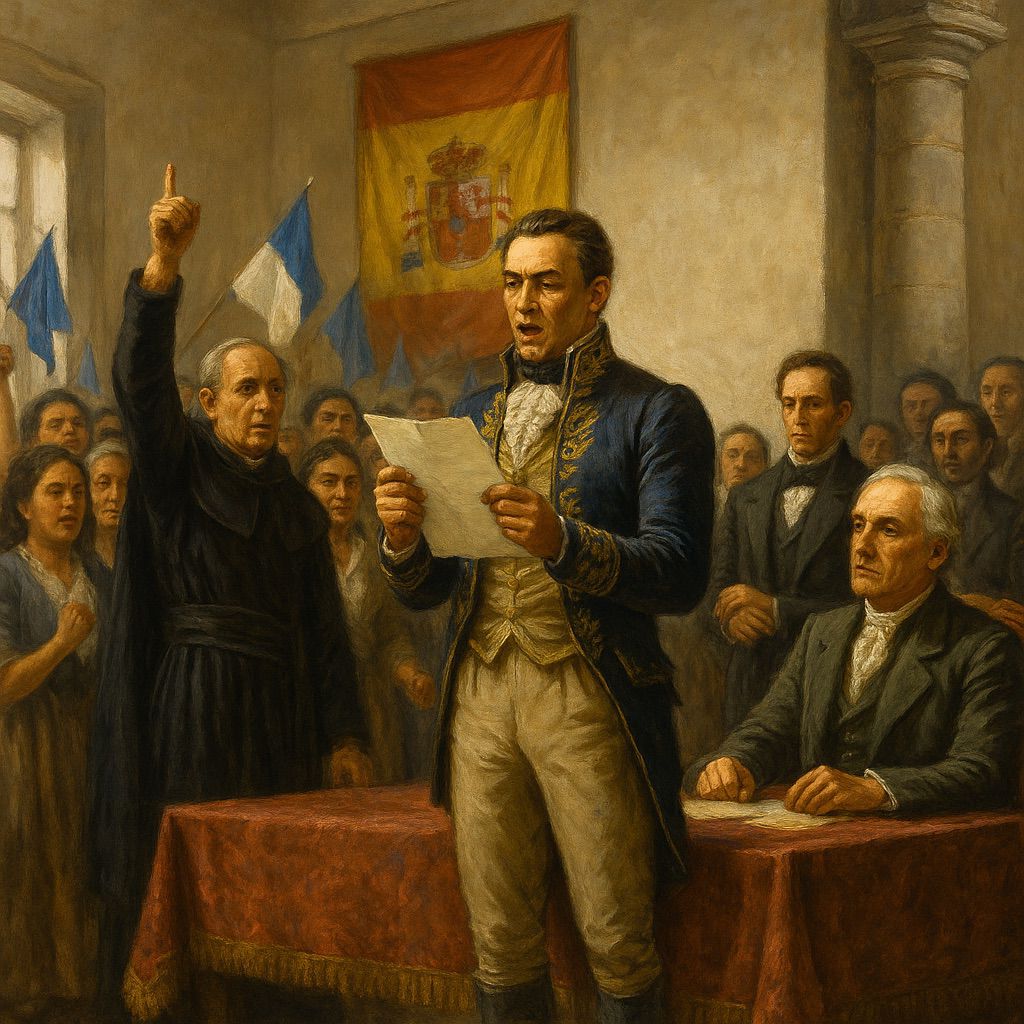
On November 28, 1821, Panama convened a historic gathering in the capital. A crowd of citizens filled the room—clergy, merchants, local elites, ordinary townspeople—all waiting to witness something they had only dared to imagine. The atmosphere was tense but filled with fragile hope. When the Act of Independence was read aloud, it declared, with clarity and resolve, that Panama was henceforth a free and sovereign entity. The announcement was met not with gunfire but with applause, tears, and a profound sense of relief. The Spanish forces, fully aware of their dwindling strength and seeing overwhelming local support for independence, surrendered peacefully.

It was a moment that rewrote the rules of revolution.

Panama’s leaders understood that independence alone would not secure their future. They faced a critical question that would shape the path of their young country: What next? Remaining entirely independent was one option. But with economic vulnerability, a small population, and the threat of re-occupation by Spain, Panama needed powerful allies. The most practical choice was immediate union with Gran Colombia—a republic under the leadership of Simón Bolívar that encompassed modern-day Colombia, Venezuela, Ecuador, and later Panama.

This decision was not an act of submission but of strategy. Panama’s geography made it one of the world’s most coveted regions. It was the key to global trade long before anyone imagined the canal. By aligning with Gran Colombia, Panama gained protection, stability, and the promise of shared progress. In Bolívar’s grand vision for Latin American unity, the isthmus played a central role. Bolívar famously believed Panama could one day become “the capital of the world,” a crossroads of commerce and diplomacy.

Panama’s peaceful independence became a source of pride that shaped generations. It proved that freedom could be won through reason rather than war. It showed that diplomacy, unity, and foresight could succeed where violence often failed. And it reinforced the idea that Panama’s destiny was tied not merely to its geography but to its ability to navigate political landscapes with intelligence and pragmatism.

For decades afterward, the legacy of this independence shaped Panama’s political identity. Even as it later separated from Gran Colombia in 1903—this time with the support of a rising global power, the United States—the memory of the tranquil independence of 1821 was preserved as a unique testament to the Panamanian spirit.

In many ways, the story of Panama’s independence mirrors its role in the world today: a nation defined by connection rather than conflict, by diplomacy rather than destruction, by a cultural richness shaped through centuries as a crossroads of the Americas. The independence of 1821 became the quiet foundation for the more dramatic transformations that would follow, including the creation of the Panama Canal, one of the most significant engineering achievements in human history.

But beyond politics, beyond treaties, beyond the shifting tides of empires, the moment that Panamanians declared themselves free was deeply human. Ordinary people—mothers, fathers, merchants, priests, and soldiers—chose hope over fear. They chose unity over division. They chose a future they would shape themselves rather than one imposed by a distant empire.

Standing in that crowded room on November 28, surrounded by the sound of voices rising in agreement, the people of Panama took control of their fate. The independence they claimed was more than a legal declaration; it was a collective heartbeat.

And in that heartbeat, a nation was born.

Related Posts

When Casablanca Captivated the World the Night a Legend Premiered in New York

Elias Rowen

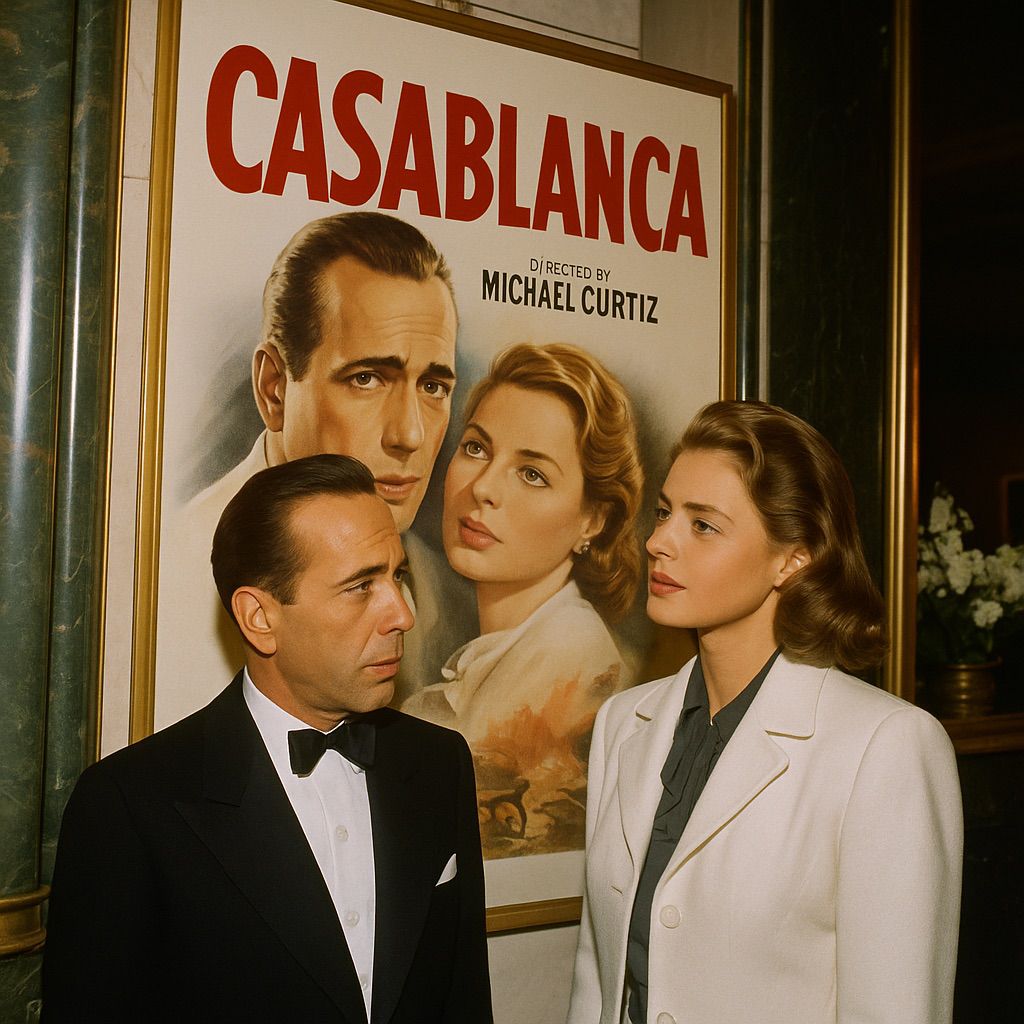
On November 26, 1942, in the middle of a global war that was reshaping the world map, rewriting destinies, and redefining what humanity thought it understood about itself, something quietly remarkable happened in New York City. It didn’t happen on a battlefield or in a strategy room or in the smoke-filled offices of wartime diplomats. It happened in a movie theater—the Hollywood Theatre on Broadway—where the lights dimmed, the projector clicked to life, and a film called Casablanca flickered onto the screen for the first time. No one in the room that night could have known they were witnessing the birth of one of the most iconic films in cinematic history, a film whose lines, characters, and atmosphere would eventually carve themselves so deeply into global culture that even people who have never watched it can quote its dialogue. The premiere of Casablanca was not just an entertainment event—it was an emotional moment wrapped inside a historical turning point, a piece of art arriving at precisely the right time, when the world needed something to hold onto, something that spoke to love, sacrifice, fate, and resilience.

It’s easy today, in an era of giant blockbusters and billion-dollar film franchises, to underestimate how profoundly movies once shaped the emotional landscape of society. During the 1940s, cinema was not just entertainment; it was an escape, a cultural compass, a collective heartbeat. With millions of Americans consumed by wartime uncertainty—sons fighting overseas, families rationing resources, news arriving in painful waves—the movie theater became a place where people could breathe again, even if only for 90 minutes. Casablanca arrived into this world like a kind of elegant thunderstorm, bringing with it all the romantic longing, moral struggle, melancholy, and unexpected hopefulness that people were feeling but could not fully articulate.

Its premiere was strategically timed. Originally planned for early 1943, Warner Bros. moved up the release to align with the Allied invasion of North Africa, a moment when Morocco—a key setting of the film—was suddenly in the headlines. It was a brilliant marketing decision, but it was also more than that. It meant the film would land not as a nostalgic look backward but as a reflection of the present, a mirror held up to a world in which moral choices were no longer academic, love often demanded sacrifice, and the future hung in a fragile balance.

The theater itself buzzed with the kind of pre-show energy unique to the premieres of the era. Men in sharp suits and women in glamorous dresses filled the lobby, the warm glow of chandeliers reflecting off polished marble floors. Cigarette smoke curled in the air. Conversations drifted between gossip about Hollywood stars and whispered speculation about the war overseas. Reporters lingered by the entrance, hoping to capture a quote or glimpse from executives, actors, or anyone with a hint of insider information. The film’s stars—Humphrey Bogart and Ingrid Bergman—were not major red-carpet personalities yet, at least not in the way later Hollywood icons would be. Bergman was still rising, and Bogart, though well known, had not yet ascended to mythic stature. That transformation would come later, in large part because of this very film.

When the house lights dimmed and the first notes of Max Steiner’s haunting score filled the theater, the crowd settled in with a kind of nervous anticipation. They didn’t know what they were about to watch—no one did, not even many of the actors, who had filmed the movie without knowing how the story would end. The magic of Casablanca is that it never announces itself. It unfolds with the confidence of a film that trusts its audience to feel its meaning rather than be told. It begins not with bombast but with mood: a city where refugees drift like ghosts, where danger is constant and invisible, where hopes and dreams become currency. Rick’s Café Américain emerges as a microcosm of the world at war—a place where spies mingle with lovers, where deals are made in shadows, where music softens the edges of fear, and where the past hangs over every character like smoke in the air.

For the audience watching in New York, this world felt both exotic and familiar. They understood wartime dislocation. They understood the ache of separation, the uncertainty of waiting for news, the tension between survival and integrity. And when Humphrey Bogart’s Rick Blaine appeared on the screen—cool, guarded, cynical in a way that looked effortless—they saw not just a character but a reflection of their own unresolved emotions. Rick is a man who used to believe, who used to love, who used to hope, but who now hides behind toughness because it hurts too much to remember anything else. Bogart played him not as a smoldering romantic hero, but as a wounded soul trying—and failing—to outrun his past. That vulnerability resonated deeply in 1942, and it resonates still.

When Ingrid Bergman’s Ilsa Lund enters the café, luminous and conflicted, the emotional center of the film shifts. Her presence is a reminder of everything Rick has tried to bury: passion, idealism, and the pain of unfinished stories. For the audience at the premiere, watching Rick see Ilsa again was not merely cinematic drama—it was a moment that tapped into their own buried memories of people they had loved and lost to time, distance, or war. There is a reason the line “Here’s looking at you, kid” became immortal. It wasn’t just charm; it was a moment of surrender. It was the sound of a man lowering his emotional armor, if only for a heartbeat.

What makes Casablanca so powerful is that its love story isn’t just romantic—it’s philosophical. It’s a reminder that love sometimes demands sacrifice, that doing what is right can be more painful than doing what is easy, and that the greatest acts of heroism often happen in quiet, personal moments rather than on the battlefield. When Rick ultimately chooses principle over passion, helping Ilsa and Laszlo escape so they can continue fighting for a cause bigger than themselves, the audience at the premiere understood the gravity of that choice. They were living in a moment when personal sacrifice was a daily reality, when millions were making decisions shaped not by desire but by duty.

The film’s political message was subtle but unmistakable. Released at a time when America was still adjusting to its role in the war, Casablanca insisted that neutrality—emotional or political—was no longer sustainable. Rick’s evolution from a man who declares, “I stick my neck out for nobody,” to a figure willing to give up everything for the greater good mirrored the broader transformation of a nation that had entered the war reluctantly but now fought with full conviction. Audiences didn’t simply watch the change happen—they felt it, because it was happening in real life.

But beyond the politics, beyond the wartime context, beyond even the beautifully tragic love story, what stunned the premiere audience most was the film’s atmosphere. The smoky café, the intermingling of languages and loyalties, the piano playing “As Time Goes By,” the desperate whispers of people trying to obtain exit visas—it all felt alive, textured, and irresistibly real. Even viewers who had never traveled abroad could feel the weight of longing and danger in every frame. The cinematography, the performances, and the music fused into something that felt both immediate and timeless.

Max Steiner’s score alone could have carried the film into cinematic immortality. His ability to weave emotional themes into the narrative elevated each moment, creating a soundtrack that felt like a heartbeat. And of course, “As Time Goes By,” a song that predates the movie by nearly a decade, became forever linked with Casablanca’s sense of longing, nostalgia, and inevitability.

When the lights came up at the Hollywood Theatre after the premiere screening, something unusual happened. The applause wasn’t the typical polite reaction given to new films. It was warmer, more emotional, more reverent. People lingered, talking softly among themselves long after the credits rolled. Critics took notes in a daze. Reporters pressed forward. There was a sense—not fully formed, but alive—that something extraordinary had just taken place.

The days following the premiere confirmed it. Word spread quickly through New York and across the country. Reviews praised the screenplay, the performances, the direction, and the emotional weight of the film. Audiences returned for repeat viewings. Soldiers on leave saw it and wrote home about it. Couples associated it with the fragility and intensity of wartime romance. The studio, initially uncertain about the film, now recognized they had a sensation on their hands.

But what no one expected—not the studio, not the cast, not the critics, not even the premiere audience—was that Casablanca would become one of the most enduring films in cinematic history. Its lines became quotations. Its characters became archetypes. Its themes became universal emotional landmarks. Decades passed, yet the film never faded. It lived on through generations, through film courses, through cultural references, through late-night broadcasts, through DVD shelves, streaming menus, and curated collections. It is the film that film lovers recommend to non-film lovers. It is the film that writers reference when they want to evoke the beauty of melancholy. It is the film that continues to feel relevant no matter how much the world changes.

Part of its longevity lies in its humanity. Casablanca is not a movie about heroes and villains—it is a movie about people trying to survive morally in a world that doesn’t always reward integrity. It’s about longing, loyalty, loss, resilience, memory, and the bittersweet truth that love does not always lead to happy endings. These are themes that never grow old, because they are part of what it means to be human.

Standing outside the Hollywood Theatre in 1942, as the cold November air swept down Broadway and moviegoers spilled onto the sidewalks buzzing with emotion, no one could have predicted the film’s legacy. They only knew they had experienced something unusual—something that moved them deeply and left them changed in ways they couldn’t quite describe. In that sense, the premiere of Casablanca perfectly reflected the film itself: subtle, profound, emotionally resonant, and destined to matter far more than anyone realized in the moment.

Eighty years later, we can look back at that night and see it for what it truly was: not just a movie premiere, but the beginning of a legend. A night when art transcended its medium, when fiction captured truth, and when a film stepped quietly into the world and never left.

Related Posts