Latest Articles

First Woman Gets U.S. Patent—Mary Kies Weaves History, Inspires Future

Elias Rowen

In the late 18th century, the United States was still a young nation, finding its footing after breaking free from British rule. The new country was a patchwork of diverse people and ideas, united by ambition and innovation. Among these early pioneers was Mary Kies, an English-born American who would make history as the first woman to receive a U.S. patent.

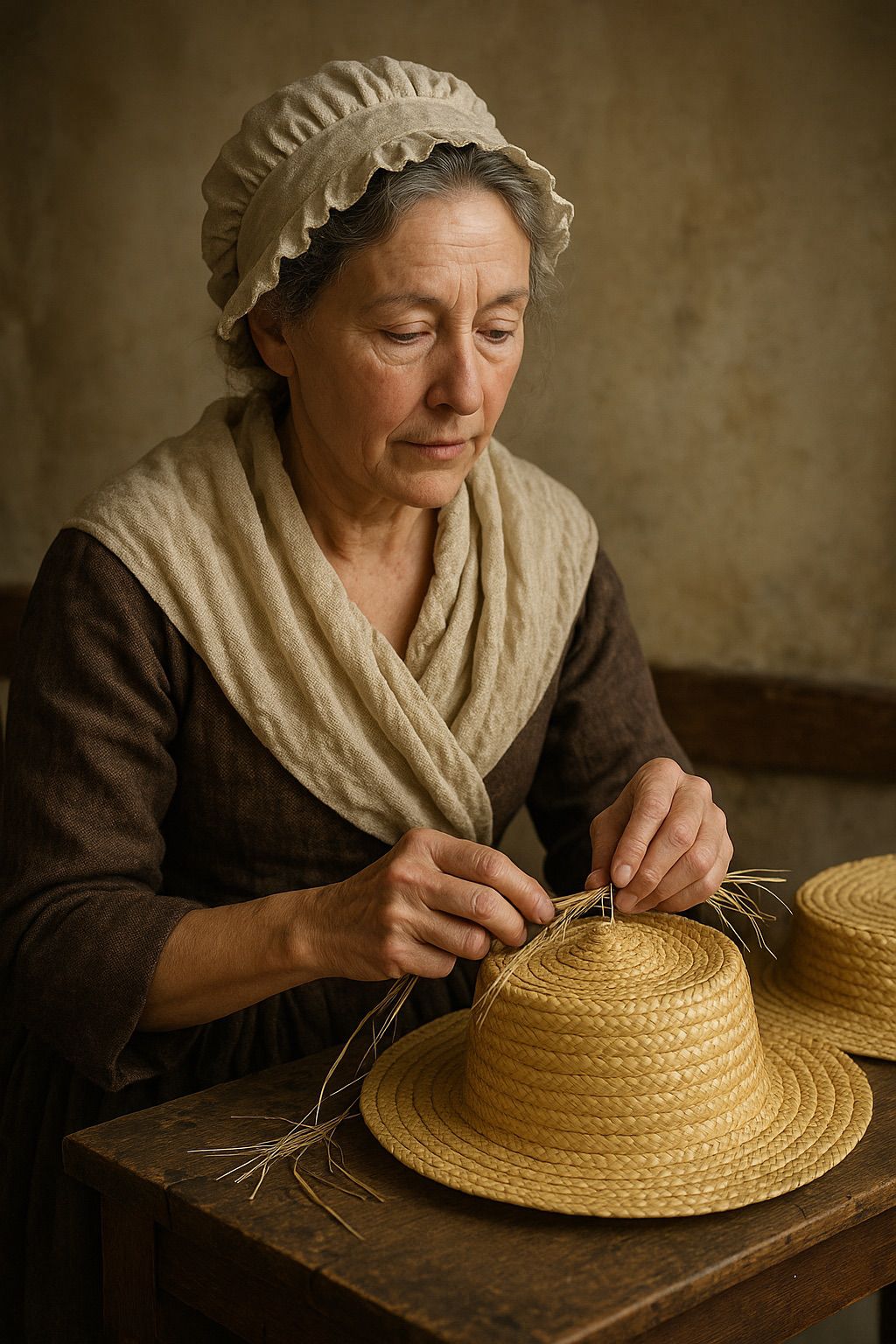
Kies’ contribution came from a simple yet transformative idea. In an era when straw hats were both fashionable and essential, their production was tedious and often poorly executed. Kies, an experienced seamstress familiar with straw work, devised a new way to weave straw more efficiently. Her method used thin wire to hold the straw steady while it was woven, allowing for cleaner, faster, and more consistent results. This seemingly small improvement would revolutionize an entire industry.

Her ingenuity caught the attention of Oliver Pollock, a notable figure in the early American economy who recognized the potential of her technique. With his encouragement, Kies submitted a detailed application for a “letters patent” in 1790, outlining her innovative straw-weaving method. At the time, applying for a patent was no easy feat—especially for a woman. The young nation’s government was still organizing itself, drafting laws, and defining systems of trade and property. Yet Kies persevered through the slow, bureaucratic process, driven by a quiet confidence in her invention.

On July 30, 1790, her persistence paid off. Mary Kies became the first woman in America to be granted a U.S. patent. Her success was not just a personal triumph—it was a landmark moment for women in business and innovation. Her achievement sent a clear message that women, too, could contribute meaningfully to the country’s economic and creative life.

The impact of Kies’ work extended beyond the straw hat trade. Her patent symbolized the dawn of a more inclusive era in American enterprise—one in which innovation was not bound by gender. At a time when women were largely confined to domestic roles, Kies’ recognition demonstrated that intellect, skill, and determination could transcend social limitations. It helped open the door for future generations of female inventors and entrepreneurs.

As her reputation grew, so did the influence of her ideas. Manufacturers across the colonies adopted her technique, improving both productivity and quality in hat making. The method she pioneered helped fuel growth in the textile and garment industries, which became key pillars of early American commerce. Her work also reflected broader cultural shifts, as more women began contributing to trade, agriculture, and craftsmanship in meaningful ways.

Kies’ story is as much about perseverance as it is about invention. She faced long delays, limited opportunities, and societal skepticism—but she refused to give up. Her journey embodies the spirit of early American innovation: relentless, resourceful, and forward-thinking. In the decades that followed, her success inspired others to challenge conventions and claim their place in shaping the nation’s future.

Her legacy is especially powerful when viewed through the lens of history. The late 18th and early 19th centuries marked a period of transition in women’s rights and visibility. Kies’ patent became both a symbol and a catalyst for change, encouraging more women to explore fields once considered off-limits. Innovators who followed—like Elizabeth Lee Hazen in microbiology and Mildred Cohn in biochemistry—would continue to build upon the path she helped clear.

Today, Mary Kies is remembered not just as a figure of technical innovation but as a pioneer of possibility. Her story underscores how progress often begins quietly—with one person’s idea, one act of courage, one refusal to accept limitations. By proving that women could innovate and be recognized for their work, Kies helped shape the foundation of an America driven by creativity and equality.

As we reflect on her life, we are reminded that true progress requires both imagination and persistence. Mary Kies’ invention may have started with a strand of straw, but its impact wove through the very fabric of American history. Her legacy endures as a testament to the ingenuity and resilience that continue to define the American spirit.

Related Posts

Unearthing Eternity: The Discovery That Changed Egypt Forever

Elias Rowen

It was a chilly winter morning on November 4, 1922, when British archaeologist Howard Carter made one of the most remarkable discoveries in the history of archaeology—the tomb of Pharaoh Tutankhamun. After years of exhaustive excavation in Egypt’s Valley of the Kings, Carter finally uncovered the sealed entrance to the boy king’s resting place. The moment would redefine Egyptology and ignite the world’s imagination for generations to come.

Backed by his patron Lord Carnarvon, Carter’s pursuit of the elusive pharaoh had spanned years of false starts and financial uncertainty. Their perseverance was rewarded when Carter’s team found a hidden staircase leading to a sealed doorway marked with the royal cartouche of Tutankhamun. When the tomb was finally breached, Carter peered through a small hole by candlelight. Asked if he could see anything, he famously replied, “Yes—wonderful things.”

Inside lay treasures beyond comprehension—golden statues, chariots, jewelry, weapons, and the now-iconic golden death mask. Unlike other royal tombs that had been looted over centuries, King Tut’s resting place was almost completely intact. Every artifact told a story about Egypt’s ancient beliefs, artistry, and devotion to the afterlife. The discovery offered a pristine window into the opulence of the 18th Dynasty and the divine mystique of pharaonic rule.

Tutankhamun’s reign itself had been short and enigmatic. Ascending the throne at just nine years old, he ruled for about a decade before dying unexpectedly at nineteen. His father, Akhenaten, had upended Egypt’s religion by worshiping one god—the sun disk Aten—disrupting centuries of tradition. Tutankhamun’s reign reversed that experiment, restoring Egypt’s pantheon and rebuilding temples to the old gods. His tomb, designed in haste, would unknowingly preserve his legacy more vividly than any monument.

Carter’s meticulous documentation of every chamber revealed a stunning degree of craftsmanship. The walls were painted with detailed scenes of the afterlife, the furniture adorned with gold leaf and precious stones, and every object had symbolic meaning. The tomb was a microcosm of Egyptian culture, preserving its artistry and religious depth in extraordinary detail.

The world was instantly captivated. Newspapers splashed the discovery across front pages, and “Tutmania” swept the globe. Museums displayed replicas of the treasures, while Egypt’s ancient splendor fueled global fascination with archaeology, history, and mysticism. For a time, Carter became the most famous archaeologist on Earth. His find also inspired generations of researchers, adventurers, and dreamers.

Beyond its glittering gold, the tomb had profound scholarly value. It illuminated how ancient Egyptians viewed death—not as an end but as a journey. The ornate amulets, weapons, and figurines weren’t mere ornaments; they were carefully placed tools for Tutankhamun’s eternal voyage. The boy king’s tomb became a tangible link between the ancient and modern worlds, bridging three millennia of human history.

Even now, the mystery surrounding Tutankhamun’s death continues to provoke debate. Some theories suggest a chariot accident, others hint at congenital illness or even political intrigue. Regardless of the cause, his preserved remains and artifacts provide a rich narrative of life, power, and mortality in one of the world’s greatest civilizations.

A century later, the legacy of Carter’s discovery endures. King Tut’s tomb remains one of the most visited archaeological sites on Earth, and exhibitions of its treasures still draw millions. Its story transcends academia, reminding us that curiosity and perseverance can uncover the past in ways that change how humanity understands itself. The discovery of Tutankhamun’s tomb wasn’t just about gold—it was about uncovering history’s beating heart, frozen in time beneath the sands of Egypt.

Related Posts

Obama Breaks Barriers, Makes History as First Black President

Elias Rowen

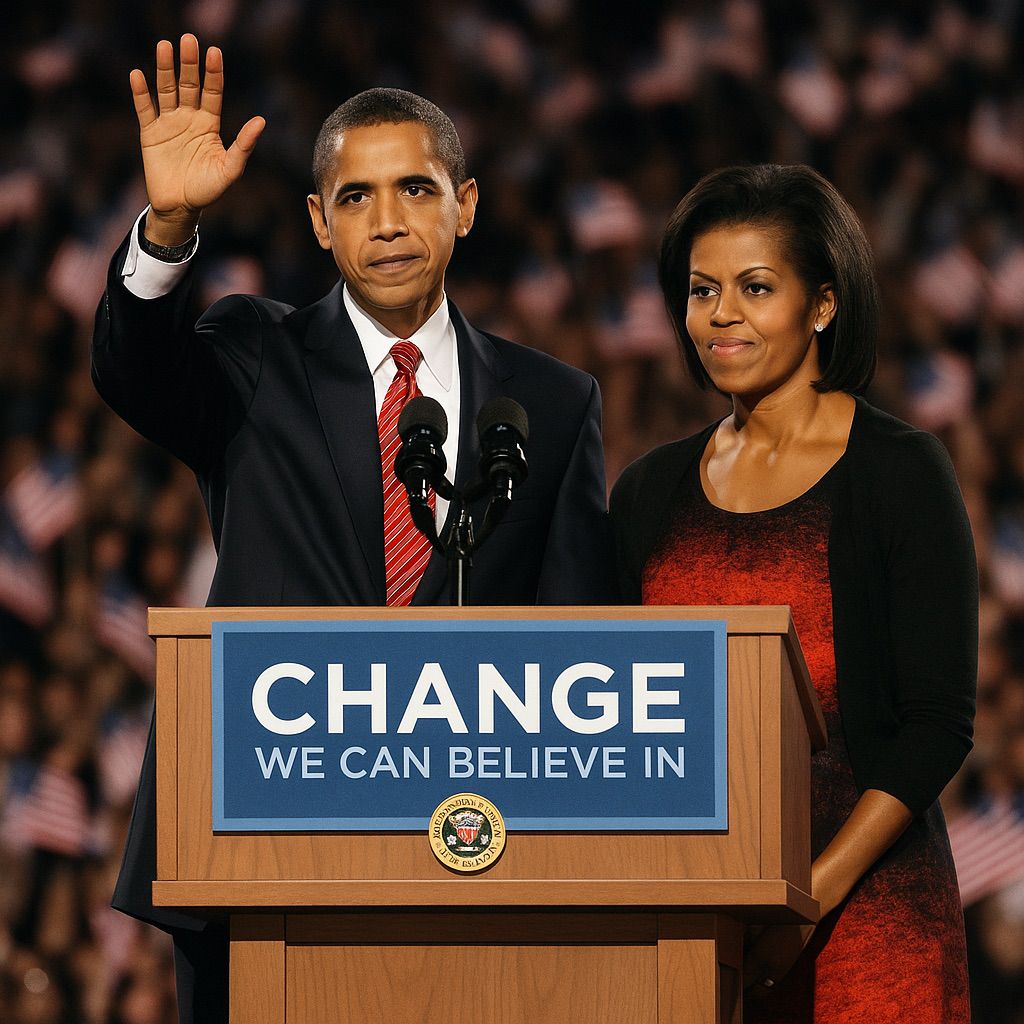
The year 2008 will be remembered for generations to come as a pivotal moment in American history. On November 4th of that year, a sense of hope and optimism swept across the nation as Barack Obama stood before thousands of cheering supporters at Grant Park in Chicago, Illinois. With his wife Michelle by his side, Obama declared victory in the presidential election, becoming the first African American to ever hold the office of President of the United States. This momentous occasion marked a significant milestone in the ongoing struggle for racial equality and justice in America, and its impact will be felt for years to come.

To fully appreciate the significance of Obama’s historic win, it is essential to understand the context in which he rose to prominence. Born on August 4th, 1961, in Honolulu, Hawaii, to Ann Dunham and Barack Obama Sr., a Kenyan father and an American mother, Obama grew up in a multiracial family that navigated the complexities of identity, culture, and belonging. His early life was marked by a sense of duality, with his parents’ divorce when he was just two years old sending him to live with his maternal grandparents in Hawaii, while his father remained in Kenya.

Obama’s childhood experiences would later shape his worldview and inform his commitment to public service. He attended Punahou School in Honolulu, a prestigious private institution that catered to the city’s elite. It was here that Obama developed a passion for community organizing and social justice, which would become defining features of his future career. After high school, he enrolled at Occidental College in Los Angeles before transferring to Columbia University in New York City, where he earned a Bachelor of Arts degree in 1983.

The early 1980s were a tumultuous time in American politics, with the presidency of Ronald Reagan dominating the national agenda. As a young man, Obama was drawn to the world of community organizing and activism, working for several years as a grassroots organizer on the South Side of Chicago. It was during this period that he discovered his talent for public speaking and began to develop the skills that would serve him well in future roles.

In 1988, Obama entered Harvard Law School, where he earned his Juris Doctor (J.D.) degree three years later. His academic credentials were solidified by a stint as president of the Harvard Law Review, a prestigious student publication that provided valuable experience and networking opportunities. After law school, Obama returned to Chicago, working as a civil rights attorney before entering politics.

Obama’s entry into politics was facilitated by his involvement in the Illinois Senate campaign of Alice Palmer, who later became his mentor and ally. In 1996, he ran for the state senate seat vacated by Palmer, winning handily in his first bid for public office. Over the next decade, Obama built a reputation as a charismatic leader and skilled orator, earning the respect of colleagues from both parties.

The presidential campaign that would catapult Obama to national prominence began in earnest in 2006, when he announced his candidacy for the Democratic nomination. Initially, many observers dismissed him as a long shot, citing concerns about his lack of experience and his status as an outsider within the party establishment. However, Obama’s message of hope and change resonated with voters, particularly among younger Americans and those disillusioned with politics.

As the primaries unfolded, Obama faced stiff competition from experienced politicians like Hillary Clinton, John Edwards, and Joe Biden. Yet he persevered, building a coalition of supporters that included progressive Democrats, liberal independents, and even some Republicans who were drawn to his message of bipartisanship and reform. The turning point came in January 2008, when Obama secured the Iowa caucuses with an impressive victory over Clinton.

From there, Obama’s momentum grew, as he won primary contests in states like New Hampshire, South Carolina, and Wisconsin. By Super Tuesday on February 5th, 2008, Obama had emerged as the front-runner, with Clinton forced to play catch-up. Over the next few months, the battle for the nomination narrowed to a two-candidate contest between Obama and Clinton, which Obama ultimately won at the Democratic National Convention in Denver.

The general election campaign against Republican nominee John McCain was marked by intense media scrutiny, fierce debates, and some of the most divisive issues in American history. The economy was in crisis, with widespread job losses, home foreclosures, and a growing national debt. Foreign policy concerns also dominated the headlines, from the ongoing conflict in Iraq to escalating tensions with Iran.

Throughout the campaign, Obama emphasized his commitment to change and reform, promising to address the nation’s pressing problems through bipartisan cooperation and a fresh approach to governance. His message resonated with voters, who responded enthusiastically to his calls for healthcare reform, climate action, and education investment. On Election Day, November 4th, 2008, Obama won a decisive victory in the Electoral College, securing 365 electoral votes to McCain’s 173.

As Obama stood before thousands of cheering supporters at Grant Park that evening, he acknowledged the historic significance of his achievement: “If there is anyone out there who still does not believe that America is a place for all Americans – who still does not believe we are capable as one people – then this election is your chance to prove it.” With these words, Obama broke barriers and made history, shattering long-standing racial and cultural taboos in American politics. His victory marked the beginning of a new era of diversity and inclusivity, as Americans began to envision a more perfect union.

The impact of Obama’s historic win was felt far beyond his own election campaign. It sent shockwaves through the Republican Party, as many members struggled to come to terms with their party’s narrow loss and the implications for their future electoral prospects. Within the Democratic Party, there were concerns about how to build on Obama’s momentum and sustain his reform agenda in the face of intense opposition from Republicans.

As president-elect, Obama faced a daunting set of challenges: navigating the deepening economic crisis, winding down the wars in Iraq and Afghanistan, and passing landmark legislation like healthcare reform and climate change mitigation. Throughout his presidency, he demonstrated remarkable resilience and adaptability, building coalitions with Republicans on issues like tax reform and foreign policy.

When Barack Obama took office on January 20th, 2009, a new era of American politics dawned. His inauguration speech, which drew heavily on the themes of hope, unity, and change, will be remembered as one of the most memorable moments in U.S. history. “My fellow Americans,” he declared, “the question is whether we can act boldly and wisely to shape our own destiny… Let us choose a different path – the path of justice, equality, and opportunity for all.”

As Obama began his presidency, he faced a multitude of challenges that would test his leadership and resolve. The economic crisis was deepening by the day, with millions losing their jobs and homes. The wars in Iraq and Afghanistan continued to rage, with no clear end in sight. And yet, despite these daunting circumstances, Obama remained steadfast in his commitment to change and reform.

One of his first acts as president-elect was to establish a transition team, tasked with reviewing the outgoing administration’s policies and identifying areas where he could make immediate improvements. This team, led by John Podesta, included experts from various fields who worked tirelessly to draft policy briefs, develop legislative proposals, and assemble a new cabinet.

Obama’s cabinet appointments were a diverse and impressive group of individuals who reflected his commitment to diversity and inclusion. There was Joe Biden as Vice President, a seasoned politician with decades of experience in the Senate. The Secretary of State, Hillary Clinton, brought a wealth of knowledge and expertise on foreign policy, while Eric Holder, the Attorney General, was a civil rights lawyer with a strong track record of advocating for justice.

The economic crisis demanded immediate attention, and Obama’s team worked tirelessly to develop a comprehensive plan to address it. This included a stimulus package aimed at creating jobs and stimulating growth, as well as reforms to the financial regulatory system designed to prevent future crises. The Auto Industry Bailout, which provided critical support to struggling automakers like GM and Chrysler, was another key component of Obama’s economic strategy.

Throughout his presidency, Obama demonstrated remarkable skill in building coalitions and working across party lines. He reached out to Republicans on issues like tax reform, healthcare, and national security, often finding common ground where others had failed. This bipartisan approach helped to pass landmark legislation like the American Recovery and Reinvestment Act (ARRA) and the Patient Protection and Affordable Care Act (PPACA).

The passage of PPACA, also known as Obamacare, was a major victory for Obama’s administration. This comprehensive healthcare reform bill aimed to increase access to health insurance for millions of Americans, reduce costs, and improve quality of care. Despite intense opposition from Republicans and the insurance industry, Obama remained committed to this priority issue, often using his bully pulpit to rally public support.

The legislative process was arduous and contentious, with multiple votes and amendments that tested the mettle of both parties. However, in March 2010, PPACA finally cleared Congress, marking a historic achievement for healthcare reform. The bill’s passage sent shockwaves through the insurance industry, which responded by increasing coverage options and expanding access to care.

Foreign policy was another key area where Obama made significant strides during his presidency. He reached out to world leaders, building relationships with countries like Iran, Cuba, and Russia that had long been strained or hostile towards the United States. The New START Treaty, signed in 2010, marked a major breakthrough in nuclear disarmament efforts between Washington and Moscow.

In addition, Obama’s administration took steps to address climate change, which he recognized as one of the most pressing global challenges facing humanity. He issued executive orders aimed at reducing carbon emissions, investing in renewable energy, and promoting sustainable development. The Clean Power Plan, unveiled in 2015, set ambitious targets for state and local governments to reduce their greenhouse gas emissions.

Despite these accomplishments, Obama’s presidency was not without its controversies and setbacks. The Trayvon Martin case, which sparked widespread protests and outrage over racial bias and police brutality, highlighted the persistent challenges facing African Americans. The ongoing struggle for LGBTQ+ rights and equality also continued, with Obama’s administration taking steps to advance marriage equality and non-discrimination protections.

The controversy surrounding NSA surveillance and Edward Snowden’s revelations about government spying on American citizens was another major challenge faced by Obama’s administration. While he acknowledged some of the concerns raised by Snowden, he ultimately chose to defend the NSA’s actions as necessary for national security.

As his presidency drew to a close, Obama reflected on the progress made during his time in office. In his final State of the Union address, delivered in January 2016, he looked back on the many challenges overcome and the strides taken towards a more perfect union. He acknowledged that much work remained to be done but expressed confidence that Americans could come together to achieve greatness.

The legacy of Barack Obama’s presidency is complex and multifaceted, reflecting both his accomplishments and the ongoing challenges facing American society. As he prepared to leave office in January 2017, many wondered what the future held for this historic figure. Would he continue to be a vocal advocate for social justice and progressive causes? Or would he retreat from public life, leaving behind only memories of a bygone era?

For his part, Obama remained committed to public service, establishing the My Brother’s Keeper Alliance (MBKA) in 2014 to promote education, employment, and mentorship opportunities for young men of color. He also continued to write and speak out on issues that mattered most to him, using his platform to inspire a new generation of leaders and activists.

Today, Barack Obama stands as a shining example of what can be achieved through hard work, determination, and a commitment to public service. His presidency marked a significant turning point in American history, breaking barriers and shattering taboos that had long constrained the nation’s progress. As we look to the future, his legacy serves as a reminder of the enduring power of hope, optimism, and collective action.

In conclusion, Barack Obama’s historic win in 2008 was more than just a personal triumph – it was a testament to the ongoing struggle for racial equality and justice in America. His presidency marked a significant milestone in this journey, opening doors that had long been closed to African Americans and paving the way for future generations of leaders.

As we reflect on Obama’s legacy, we are reminded of the power of leadership to inspire and transform society. His commitment to public service, his dedication to social justice, and his willingness to challenge the status quo have left an indelible mark on American politics. And as we look towards a brighter future, we can draw strength from his example, knowing that together, we too can build a more perfect union.

Related Posts
Voices Finally Counted: Washington D.C.’s First Vote for President

Elias Rowen

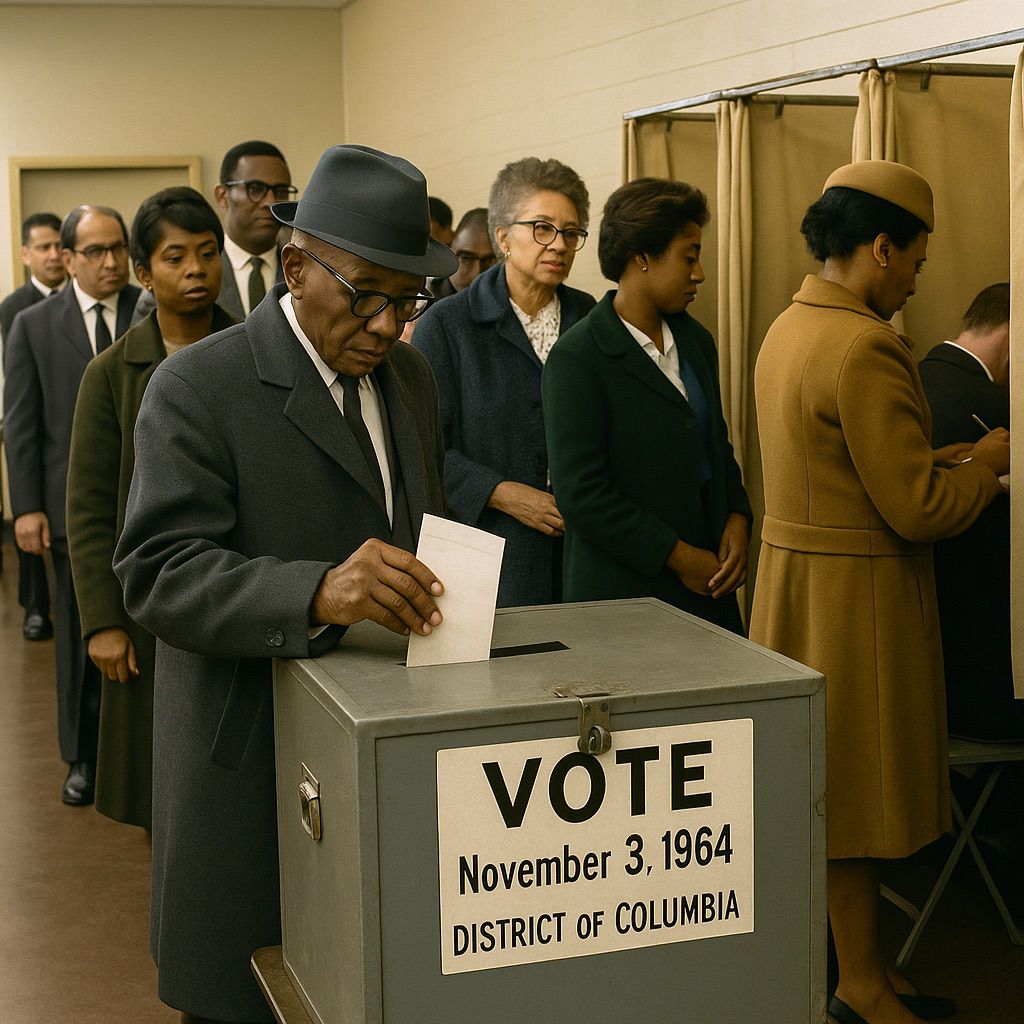
On November 3, 1964, the citizens of Washington D.C. walked into polling places carrying more than ballots—they carried the weight of history, the echo of silenced voices, and the pride of finally being recognized as participants in the democratic promise of America. For the first time since the capital’s founding in 1790, the people of Washington, D.C., voted in a presidential election. It was a moment long overdue, born from decades of frustration and advocacy, and it marked not just the casting of votes but the restoration of dignity to a community that had lived in the shadow of power yet been excluded from it.

Imagine the scene that crisp November morning in 1964. Across the city, from rowhouses in Shaw to apartments along Georgia Avenue, families rose early, dressed with purpose, and made their way to polling stations. Grandmothers who had lived their entire lives in the capital, watching presidents sworn in from afar, finally had a chance to cast their own vote for who would occupy the White House. Young men and women, energized by the Civil Rights Movement and emboldened by the victories of the 1960s, stepped proudly into voting booths, aware that they were making history. The streets buzzed with anticipation. For once, Washington was not just the seat of democracy—it was part of it.

The road to this moment had been long and winding. Since its creation as the federal capital, Washington D.C. had been denied the same democratic rights granted to the states. Residents paid taxes, served in wars, and lived under federal authority, but they could not vote for president. “Taxation without representation,” the very grievance that had fueled the American Revolution, was alive in the heart of the nation’s capital. For generations, D.C. residents were voiceless, their democratic rights sacrificed to the unique status of the federal district. Petitions were written, protests organized, and voices raised, but change seemed perpetually out of reach.

That began to shift with the ratification of the 23rd Amendment in 1961. For the first time, D.C. residents were granted the right to appoint electors in presidential elections, though capped at the number allotted to the least populous state—three votes. It was not full equality, but it was a beginning, a crack in the wall of disenfranchisement. The amendment was a recognition that the people who lived, worked, and sacrificed in the capital deserved a say in the leadership of the nation they embodied.

And so, in 1964, they voted. The timing was significant. America was in the throes of monumental change. The Civil Rights Act had just been signed by President Lyndon B. Johnson earlier that year, dismantling legal segregation and striking a blow against systemic racism. The nation was embroiled in debates over Vietnam, poverty, and the very direction of its soul. For Washington D.C.—a city with a majority Black population—the vote was not only about national politics but about self-respect, representation, and the recognition of their humanity. Casting a ballot that day was more than a civic duty. It was an act of empowerment.

The election itself was a landslide. Lyndon B. Johnson defeated Barry Goldwater in one of the most lopsided victories in American history, winning over 61% of the national popular vote. In D.C., the result was even more emphatic: residents overwhelmingly supported Johnson, affirming their place within the Democratic coalition that had embraced civil rights. But the importance of the day lay not in the outcome but in the act. For the first time, the residents of Washington D.C. could point to the presidency and say, “We had a hand in this.”

To humanize the moment is to see it through the eyes of those who lived it. Imagine an elderly Black man who had fought in World War II, coming home to a city that honored his service yet denied him a vote. On that November morning, he stood tall as he cast his ballot, finally tasting a measure of the democracy he had defended abroad. Picture a young mother holding her child’s hand as she walked into the polling station, whispering to her daughter that she was voting so the child’s future might be brighter. Picture students at Howard University, energized by the Civil Rights Movement, lining up to vote for the first time, their youthful determination mingling with the solemnity of the moment.

The significance of that day extends beyond 1964. It reminds us that democracy is not static but a living promise, one that must be fought for, defended, and expanded. The residents of D.C. had been silenced for generations, yet they persisted, and when their voices were finally heard, it reshaped the capital’s relationship with the nation. Yet their struggle was not—and is not—over. Even today, Washington D.C. lacks full representation in Congress, a reminder that the cry of “taxation without representation” still echoes. The vote in 1964 was a breakthrough, but it was also a beginning.

The story of November 3, 1964, is not just about Washington D.C. It is about the broader American journey toward a more inclusive democracy. It parallels the fights for suffrage by women, by African Americans in the South, by Native Americans, by young people who earned the right to vote at eighteen. Each expansion of the vote has been a reminder that democracy grows stronger when more voices are heard, not fewer. The people of D.C. joining the electorate in 1964 was one more step in that unfinished journey.

What makes the story viral, even today, is its resonance with ongoing struggles. The fight for D.C. statehood continues, fueled by the same desire for equality and representation that animated 1964. The faces may have changed, the slogans updated, but the core principle remains the same: those who live under a government should have a voice in it. The first presidential vote of Washingtonians in 1964 is both a victory to celebrate and a challenge to remember that democracy must keep expanding.

November 3, 1964, was not just another election day. It was a day when the nation’s capital ceased to be a symbol of democracy in name only and became a participant in its reality. It was a day when ballots became bridges, linking the lives of Washingtonians to the destiny of the nation. It was a day when silence gave way to speech, when the excluded became included, and when the promise of America, however imperfectly, became a little more real.

Related Posts

Laika’s Lonely Journey: The Dog Who Became a Star

Elias Rowen

On November 3, 1957, the world looked up and gasped as a tiny speck of light passed silently across the night sky. That speck was Sputnik II, a metal capsule launched by the Soviet Union, carrying not only instruments and technology but a small, trembling life: Laika, a stray dog from the streets of Moscow who became the first living creature to orbit Earth. Her journey was not just about science or politics. It was about humanity’s hunger for the stars, our ability to dream beyond the possible, and our willingness—sometimes cruelly—to sacrifice the innocent in pursuit of progress. Laika’s story, at once inspiring and heartbreaking, lives on as a reminder that the Space Race was not merely a clash of nations but a deeply human tale of ambition, courage, and loss.

The launch of Sputnik II came only a month after Sputnik I shocked the world as the first artificial satellite. The Cold War had transformed space into a battlefield of prestige. The United States and the Soviet Union, locked in ideological rivalry, sought to outdo each other not only in weaponry but in the heavens. Sputnik I had been a triumph, but Soviet leaders wanted something even more spectacular to celebrate the 40th anniversary of the Bolshevik Revolution. They demanded another launch—this time with a living passenger, to prove that space travel was not only possible for machines but for organisms. Scientists had mere weeks to design and build a spacecraft capable of supporting life. Into this frantic rush stepped Laika, a small, mixed-breed dog with a calm temperament and no idea she was about to become immortal.

Laika was plucked from the streets of Moscow, a stray chosen precisely because she had survived the hardships of hunger and cold. The scientists believed such resilience would make her better suited for the harsh conditions of space. Gentle and obedient, she quickly won the affection of the technicians who trained her. They fed her, comforted her, and even grew attached, despite knowing the grim truth: there was no plan for her return. Sputnik II had no re-entry technology. Laika was a pioneer destined never to come home. Many of the scientists later admitted the weight of this knowledge haunted them. They cared for her, but they also betrayed her, sending her to a fate sealed by politics and urgency.

The training was grueling. Laika was confined to increasingly small spaces to simulate the cramped capsule. She was subjected to the roar of rocket engines and the shaking of simulated launches. Electrodes were attached to her body to monitor vital signs. Yet, through it all, she endured with the quiet patience of a creature who trusted the humans around her. One technician recalled crying as he placed her in the capsule, whispering apologies she could never understand. Laika wagged her tail, unaware she was stepping into history.

When the rocket thundered to life on November 3, the world below watched with awe. Sputnik II soared into orbit, carrying not only Laika but humanity’s first attempt to send life beyond Earth’s grasp. Radios and newspapers buzzed with the news. The Soviet Union trumpeted its triumph: a dog in space, circling the globe, proof of Soviet supremacy in the race for the cosmos. In the United States, the launch deepened anxiety and galvanized efforts to catch up, planting seeds for NASA and the Apollo missions. Laika had become more than a dog. She was a symbol, a living ambassador of human ambition.

Inside the capsule, Laika’s reality was far from glorious. Sensors recorded her heartbeat tripling during launch, her body trembling with fear. The cramped metal box allowed no freedom, no relief. She was alone, with only the hum of machinery and the pull of weightlessness. For years, the Soviet Union claimed she survived for several days before dying painlessly. Decades later, it was revealed the truth was harsher: Laika died within hours, likely from overheating and stress. She never saw the Earth turn blue and green below her. She never lived to complete the mission she had unwillingly accepted.

Yet Laika’s sacrifice was not in vain. Data from Sputnik II helped scientists understand how living organisms responded to spaceflight, paving the way for future human missions. Yuri Gagarin, the first man in space in 1961, followed the path Laika had charted. Every astronaut, cosmonaut, and space traveler who has since ventured beyond Earth owes something to that little dog who gave her life. Laika’s story became part of the mythology of the Space Race, a tale told in classrooms, museums, and memorials. Statues of her stand in Russia today, honoring her as a hero.

But Laika’s story also forces us to ask uncomfortable questions. Was it right to sacrifice her? Was progress worth the life of a trusting dog who had no say in her fate? Some argue that great leaps often demand sacrifice. Others insist that Laika’s journey was unnecessary cruelty, a political stunt rushed to score points in a Cold War competition. What cannot be denied is that Laika’s story humanizes the otherwise cold language of rockets and satellites. She reminds us that behind every breakthrough lies flesh and blood, joy and pain, trust and betrayal.

To humanize Laika’s journey is to picture her as more than a data point. Picture the little dog curled in her capsule, her ears twitching at the strange hum of machinery. Picture the scientists stroking her fur one last time, torn between pride and sorrow. Picture children across the world gazing at the night sky, imagining a dog riding among the stars, their hearts filled with wonder. Laika became a bridge between worlds: the animal and the cosmic, the innocent and the ambitious, the personal and the political.

Her story continues to resonate because it is timeless. Even now, as we dream of colonizing Mars or exploring distant galaxies, we confront the same questions Laika raised in 1957: how much are we willing to sacrifice for progress? How do we balance ambition with compassion? What does it mean to be human in a universe where our reach exceeds our wisdom? Laika’s lonely voyage was both triumph and tragedy, and in its paradox lies its enduring power.

When we look up at the night sky today, dotted with satellites and stations, we might think of Laika. Not as a symbol of propaganda or a footnote in science, but as a living creature who trusted us and paid the ultimate price. Her legacy is not only in the data she provided but in the empathy she inspires. She teaches us that exploration is not only about technology but about values, about remembering that progress without humanity is hollow.

On November 3, 1957, Laika was launched into space and into legend. She did not return, but in a way, she never left us. Her spirit orbits still, not in a metal capsule but in the hearts of those who remember her, who see in her story both the brilliance and the folly of human ambition. She was a stray who became a pioneer, a dog who became a star.

Related Posts