Latest Articles

Around the Clock: How CNN Redefined the News

Elias Rowen

The concept of home is a complex and multifaceted one, and James Joyce’s Dubliners offers a nuanced exploration of this theme through its portrayal of characters struggling to navigate their relationships with the places they call home. As the stories unfold, it becomes clear that home is not just a physical location, but a symbol of identity, community, and belonging, and that the tensions between comfort and confinement, familiarity and stagnation, are deeply intertwined with the human experience. Through the characters’ experiences, Joyce examines the ways in which home can be both a source of comfort and a site of oppression, and how the desire to leave or escape can be motivated by a range of factors, from the desire for adventure and independence to the need to escape the constraints of family, social class, or cultural expectations. By exploring the intricate dynamics of home and its impact on individual lives, Joyce’s work raises important questions about the nature of identity, community, and belonging, and invites readers to consider the ways in which their own experiences of home shape their understanding of themselves and their place in the world, thereby making the theme a rich and thought-provoking subject for analysis.

The impact of global media on our understanding of identity, community, and belonging is a theme that resonates with Joyce’s exploration of home in Dubliners, and one that is echoed in the rise of global news outlets like CNN. The launch of CNN in 1985 marked a significant shift in the way news was consumed and disseminated, with the network’s 24-hour coverage and global reach allowing for a new level of immediacy and intimacy in the reporting of international events. This, in turn, had a profound impact on global communication, with CNN’s coverage of events like the Gulf War helping to shape public opinion and influence foreign policy decisions. As the CNN effect thesis suggests, the network’s coverage can have a significant impact on government policy, with the emotional and visceral nature of the reporting often driving public opinion and, in turn, influencing the decisions of policymakers. By examining the role of global media in shaping our understanding of the world, we can gain a deeper understanding of the complex interplay between identity, community, and belonging, and the ways in which our perceptions of these concepts are shaped by the media we consume.

While the CNN effect thesis provides a useful framework for understanding the impact of global media on foreign policy, it is also important to consider the ways in which this phenomenon has been subject to critique and revision. As scholars have sought to map a research agenda for the future, it has become clear that the CNN effect is a complex and multifaceted concept that cannot be reduced to a simple causal relationship between media coverage and policy outcomes. Rather, the media-foreign policy dynamic is characterized by a range of factors, including the role of policymakers, the nature of the media landscape, and the specific context in which events are unfolding. By examining the ways in which the CNN effect operates in different contexts, researchers can gain a deeper understanding of the complex interplay between media, policy, and public opinion, and develop a more nuanced understanding of the ways in which global media shape our understanding of the world. Furthermore, the concept of the CNN effect has evolved over time, and its impact is not limited to CNN alone, but rather encompasses the broader media landscape, making it a crucial area of study for understanding the dynamics of global communication.

The CNN effect has been particularly significant in the context of humanitarian crises, such as the Somali Civil War, where the network’s coverage played a crucial role in shaping public opinion and influencing foreign policy decisions. The graphic images and emotive reporting of CNN’s coverage brought the humanitarian crisis to the attention of a global audience, creating a sense of urgency and moral obligation among policymakers to intervene. As a result, the US government was prompted to launch a humanitarian intervention in Somalia, which was widely seen as a response to the CNN-driven public outcry. This example highlights the complex and multifaceted nature of the CNN effect, which can be seen as both a driver of policy change and a reflection of existing policy agendas. By examining the role of CNN in shaping public opinion and influencing foreign policy during the Somali Civil War, researchers can gain a deeper understanding of the complex dynamics at play in the media-foreign policy nexus, and develop a more nuanced understanding of the ways in which global media shape our understanding of the world.

The interplay between global media and identity is further complicated by the rise of social media platforms, which have dramatically altered the way individuals consume and interact with information. As social media continues to shape our understanding of the world, it is essential to consider the ways in which these platforms influence our perceptions of identity, community, and belonging. Research has shown that social media can have a profound impact on individual identity, with online interactions and self-presentations influencing self-concept and self-esteem. Moreover, social media has been shown to play a significant role in shaping community dynamics, with online communities forming around shared interests, experiences, and identities. By examining the complex relationships between social media, identity, and community, researchers can gain a deeper understanding of the ways in which these platforms are shaping our understanding of the world and our place within it. Furthermore, the intersection of social media and global news outlets like CNN highlights the need for a nuanced understanding of the complex media landscape and its impact on our perceptions of reality.

The intersection of global media and identity is further complicated by the ways in which social media platforms have enabled the proliferation of echo chambers and filter bubbles, which can reinforce existing identities and communities, while also creating new forms of social isolation and fragmentation. As individuals increasingly curate their online personas and engage with content that aligns with their existing views, they may become less exposed to diverse perspectives and experiences, potentially exacerbating the tensions between identity, community, and belonging. Furthermore, the rise of social media has also led to the emergence of new forms of identity performance and community formation, with individuals using online platforms to connect with others who share similar experiences and interests. By examining the complex dynamics of social media and its impact on identity, community, and belonging, researchers can gain a deeper understanding of the ways in which these platforms are shaping our understanding of the world and our place within it. Moreover, the relationship between social media and global news outlets like CNN highlights the need for a nuanced understanding of the complex media landscape and its impact on our perceptions of reality, as well as the ways in which different forms of media intersect and influence one another.

As the media landscape continues to evolve, it is essential to consider the ways in which emerging technologies are shaping our understanding of identity, community, and belonging. The rise of virtual and augmented reality, for example, is creating new opportunities for individuals to engage with and experience different cultures, communities, and identities in immersive and interactive ways. This, in turn, has the potential to reshape our understanding of the complex interplay between identity, community, and belonging, and to create new forms of connection and community that transcend traditional geographical and cultural boundaries. By examining the ways in which emerging technologies are shaping our understanding of the world, researchers can gain a deeper understanding of the complex dynamics at play in the media-identity nexus, and develop a more nuanced understanding of the ways in which our perceptions of reality are being shaped by the media we consume. Furthermore, the intersection of emerging technologies and global media highlights the need for a nuanced understanding of the complex media landscape and its impact on our perceptions of reality, as well as the ways in which different forms of media intersect and influence one another.

The relationship between global media and identity is not a one-way street, as the media not only shape our understanding of the world but are also shaped by the cultural, social, and economic contexts in which they operate. The globalization of media has led to the creation of new cultural forms and the dissemination of existing ones across borders, resulting in a complex and multifaceted cultural landscape. For instance, the global spread of social media platforms has enabled the creation of transnational communities and networks that transcend geographical boundaries, allowing individuals to connect with others who share similar interests and identities. At the same time, the dominance of Western media conglomerates has raised concerns about cultural homogenization and the erosion of local cultures, highlighting the need for a nuanced understanding of the complex dynamics at play in the global media landscape. By examining the complex interplay between global media, culture, and identity, researchers can gain a deeper understanding of the ways in which media shape and are shaped by the world around us, and develop a more nuanced understanding of the complex media landscape and its impact on our perceptions of reality.

Furthermore, the complex dynamics between global media, culture, and identity can be seen in the ways in which media representation influences our perceptions of different cultures and communities. The portrayal of certain groups in media can perpetuate stereotypes and reinforce existing power dynamics, while also providing a platform for marginalized voices to be heard. For example, the representation of diverse cultures and identities in media can help to challenge dominant narratives and promote cross-cultural understanding. By examining the ways in which media representation shapes our understanding of different cultures and communities, researchers can gain a deeper understanding of the complex interplay between media, culture, and identity, and develop a more nuanced understanding of the ways in which media can be used to promote social change and challenge existing power dynamics. Additionally, the rise of social media has created new opportunities for individuals to engage with and challenge dominant media narratives, highlighting the need for a nuanced understanding of the complex media landscape and its impact on our perceptions of reality.

The notion that global media can shape our understanding of identity, community, and belonging is further complicated by the ways in which different forms of media intersect and influence one another. For instance, the convergence of traditional news outlets like CNN with social media platforms has created new opportunities for information to be disseminated and consumed, but also raises important questions about the role of gatekeepers and the potential for misinformation to spread. As social media continues to play a larger role in shaping our understanding of the world, it is essential to consider the ways in which these platforms are influencing our perceptions of reality, and the ways in which they intersect with other forms of media to shape our understanding of identity, community, and belonging. By examining the complex dynamics at play in the media landscape, researchers can gain a deeper understanding of the ways in which global media are shaping our understanding of the world, and develop a more nuanced understanding of the complex interplay between media, identity, and community. Furthermore, the study of global media and its impact on identity, community, and belonging highlights the need for a multidisciplinary approach, drawing on insights from fields such as sociology, psychology, and cultural studies to gain a more comprehensive understanding of the complex dynamics at play. As scholars continue to explore the complex relationships between global media, identity, community, and belonging, they must also consider the implications of their research for our understanding of the world and our place within it.

As the legacy of CNN continues to unfold, it becomes clear that Ted Turner’s vision for a 24-hour news network has had a profound and lasting impact on the media landscape, shaping not only the way we consume news but also our understanding of the complex interplay between identity, community, and belonging in an increasingly interconnected world. The CNN effect, once a novel phenomenon, has given way to a more nuanced understanding of the media’s role in shaping public opinion and influencing policy decisions, highlighting the need for a critical examination of the complex dynamics at play in the media-foreign policy nexus. As we navigate the challenges and opportunities of an evolving media landscape, the lessons learned from CNN’s pioneering approach remain a timely reminder of the transformative power of innovation and journalism in shaping our shared humanity, and the importance of continued research into the complex relationships between global media, identity, community, and belonging.
Related Posts

Reckoning with History: The Tulsa Race Massacre and Its Legacy

Elias Rowen

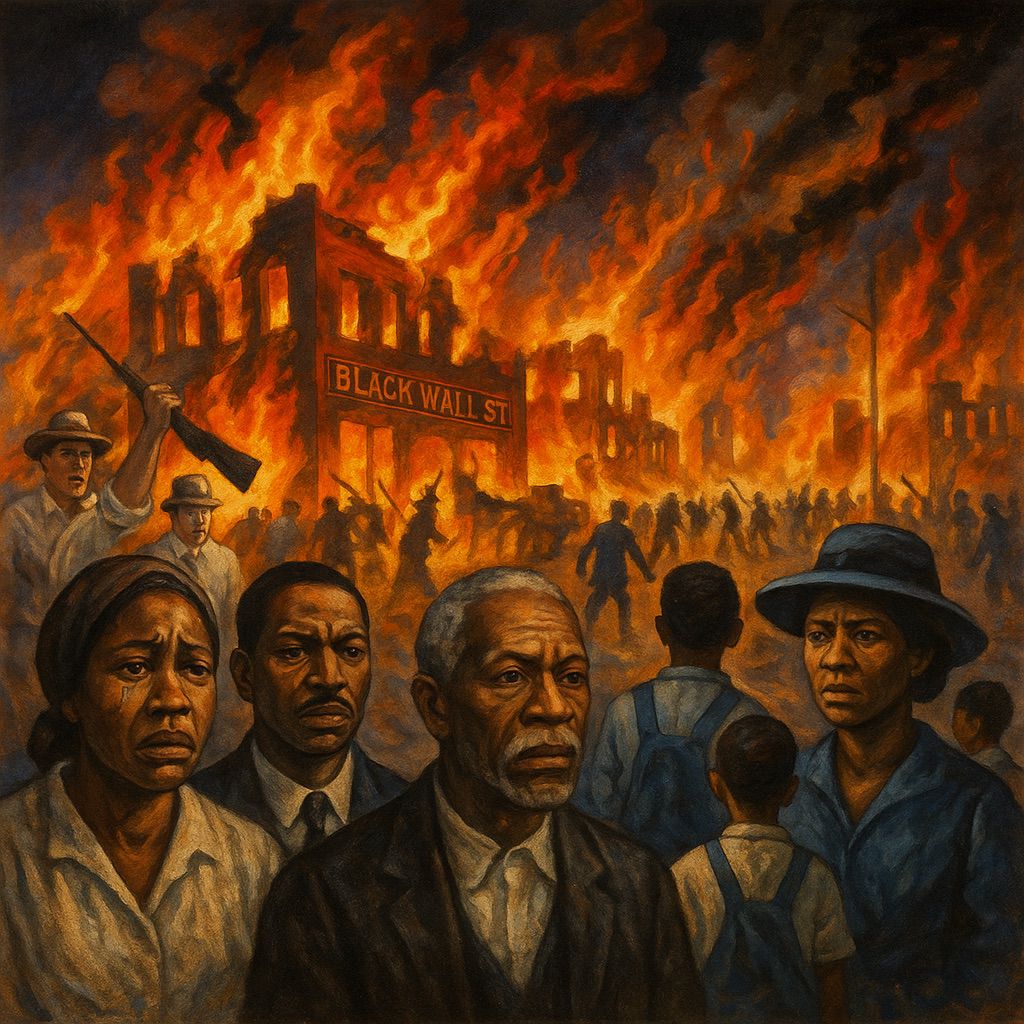
The night of May 31, 1921, should have been like any other for the residents of Greenwood, a bustling and proud neighborhood in Tulsa, Oklahoma. Children would have been finishing their homework by gaslight, shopkeepers closing their businesses with the satisfaction of a day’s earnings, and neighbors chatting on porches under the warm spring air. Greenwood was more than a neighborhood; it was a beacon. Nicknamed “Black Wall Street,” it was the culmination of dreams forged in the crucible of post-slavery America — a thriving Black community built by grit, intellect, and shared purpose. But as twilight gave way to darkness that night, Greenwood would become a battlefield. What followed was not a riot, but a massacre — an organized, state-sanctioned act of racial terrorism that left hundreds of Black Americans dead, thousands homeless, and an entire community in ruins.

To understand the gravity of what happened in Tulsa, one must first understand what was destroyed. Greenwood wasn’t just a neighborhood; it was an economic marvel. At a time when segregation laws barred African Americans from participating in many aspects of public life, Greenwood flourished independently. It was home to doctors, lawyers, educators, entrepreneurs — people who, against the odds, carved out a place of success and self-reliance. There were more than 300 Black-owned businesses, including grocery stores, barber shops, beauty salons, movie theaters, a hospital, a library, schools, and churches. The average dollar reportedly circulated within the community over 30 times before leaving. To many, Greenwood represented the promise of Black prosperity in the face of American apartheid. It was a community built on ambition, love, and the steadfast belief that hard work could provide a better future.

Dick Rowland, a 19-year-old Black shoeshiner, likely never imagined he would become the accidental spark that would ignite one of the worst racial atrocities in American history. On May 30, 1921, he entered the Drexel Building, which housed a segregated elevator operated by Sarah Page, a 17-year-old white girl. Accounts vary about what happened in that elevator — some say Rowland tripped and grabbed Page to steady himself, others suggest a romantic connection. What is clear is that Sarah Page screamed, and Dick Rowland fled. The police were called, but Page later declined to press charges. Unfortunately, by then, the rumor mill had already twisted the narrative into something monstrous.

By the next morning, inflammatory articles in Tulsa newspapers framed the incident as an attempted assault, stoking the flames of racial animosity. A white mob soon gathered at the courthouse where Rowland was being held, demanding vigilante justice. In response, a small group of Black World War I veterans, aware of the lynchings that had become all too common, arrived to protect Rowland. Their presence infuriated the white mob, and a shot was fired — whether by accident or intent, it didn’t matter. What followed was a chaos that quickly escalated into all-out war.

The night sky of May 31 lit up not with fireworks, but with gunfire and flames. White rioters, many of whom were deputized by city officials and given weapons, stormed into Greenwood with murderous intent. They looted homes and businesses, set buildings ablaze, and shot Black residents in the streets. The violence was not random — it was strategic. Airplanes, possibly from the nearby Curtiss-Southwest Field, were seen dropping incendiary devices and shooting at fleeing residents. The local police and National Guard did little to stop the carnage; in some cases, they actively participated. The sound of church bells, gunshots, and the roar of fire engines filled the air, not in rescue, but as a twisted symphony of destruction.

By the afternoon of June 1, Greenwood lay in ruins. Thirty-five square blocks of Black-owned property had been reduced to ashes. Nearly 300 people — possibly more — were dead, though many bodies were never recovered. Over 10,000 Black residents were left homeless, many of them rounded up and placed in internment-style camps, forced to carry identification tags and denied the right to move freely unless vouched for by a white employer. Some survivors hid for days in surrounding fields, traumatized, without food or water, waiting for the horror to end.

The human cost was incalculable. Families were torn apart, lives destroyed, generations of wealth erased overnight. The trauma rippled through time, affecting descendants who grew up not only with the economic scars of the massacre but also with the deafening silence that followed. For decades, survivors were shamed into silence. The city of Tulsa, the state of Oklahoma, and even the federal government largely ignored the massacre. There were no arrests, no convictions, no reparations. Insurance companies refused to pay claims for damages caused by what they labeled a “riot,” thus shielding themselves from responsibility. Survivors were left to rebuild from nothing, many without even the comfort of public acknowledgment.

Despite this, the spirit of Greenwood refused to die. In the face of institutional neglect, survivors began rebuilding almost immediately, erecting temporary homes and restarting businesses from the rubble. But it was not the same. The shadow of fear and the bitter taste of betrayal lingered. Though some buildings returned, Black Wall Street never again reached its pre-1921 heights. Worse still, the massacre was effectively erased from history. Schoolchildren in Tulsa, even those living within walking distance of Greenwood, grew up unaware of what had happened. The whitewashing of the massacre was so thorough that it wasn’t until the late 1990s that it began to enter public discourse in a meaningful way.

The resurgence of interest came not from institutions but from individuals — descendants, activists, and scholars who refused to let the truth die. Survivors like Viola Fletcher, who was seven years old at the time of the massacre, began to tell their stories publicly, often in their twilight years. Fletcher, now over 100 years old, testified before Congress in 2021, stating, “I still see Black men being shot, Black bodies lying in the street. I still smell smoke and see fire. I still see Black businesses being burned. I still hear airplanes flying overhead. I hear the screams.”

The power of these testimonies cannot be overstated. They forced a reckoning. In 2001, the Oklahoma Commission to Study the Tulsa Race Riot published a detailed report confirming much of what survivors had long said. The commission recommended reparations — direct payments to survivors and their descendants, as well as investment in the Greenwood area. But in typical American fashion, these recommendations have yet to be fully realized. Lawsuits are ongoing. Promises are made. Time moves forward, but justice still feels elusive.

In recent years, symbolic gestures have attempted to bridge the chasm. In 2021, to mark the massacre’s centennial, President Joe Biden visited Tulsa, becoming the first sitting president to do so. He called the massacre what it was: a massacre, not a riot. He acknowledged the federal government’s complicity in allowing such atrocities to happen and spoke of the need to reckon with the legacy of systemic racism. Streets have been renamed, memorials erected, and history textbooks updated. But while acknowledgment is essential, it is not justice.

Justice means restitution. It means investing in the descendants of those who built Black Wall Street, giving them the opportunities stolen from their ancestors. It means economic development that prioritizes Black voices, Black ownership, and community-led initiatives. It means education, not just about the massacre, but about the broader systems that enabled it — redlining, Jim Crow, mass incarceration, and the structural inequalities that continue to define American life.

But beyond justice, there is a deeper yearning — for healing. The Greenwood Cultural Center and the new Greenwood Rising museum are more than historical exhibits; they are sacred spaces. They hold the grief, pride, rage, and resilience of a people who refused to be erased. Walking through their halls is not just a history lesson; it is a communion with the past. Every photograph, every artifact, every name etched in stone is a defiant declaration: We were here. We built something beautiful. And they tried to take it from us.

There is a line between remembering and reliving. For many descendants, the trauma of the Tulsa Race Massacre is not history — it is inheritance. Some carry the pain in stories passed down at dinner tables, others in deeds to land that was never returned, still others in the gnawing sense of lost possibility. But they also carry something else — the fire that built Greenwood in the first place. A refusal to yield. A commitment to community. A belief in the power of what could be.

The Tulsa Race Massacre is not just a Black story; it is an American story. It reveals the nation’s darkest tendencies — to suppress, to deny, to destroy what it cannot control — but also its capacity for truth-telling, resilience, and redemption. Every year, as commemorations are held and new voices are added to the chorus demanding justice, we are reminded that healing is not a passive act. It requires confrontation, accountability, and the courage to imagine a different future.

May 31 and June 1, 1921, will always be days of sorrow, but they must also be days of resolve. As the generations pass, as the voices of survivors grow fainter, we are tasked with carrying their legacy forward — not just in words, but in actions. To rebuild, to remember, and to never let silence settle where truth should live. The ashes of Greenwood may have once choked the skies of Tulsa, but from those ashes, a legacy of pride, resistance, and hope still rises.

Related Posts

Martyr for the Nation: Joan of Arc’s Enduring Legacy

Elias Rowen

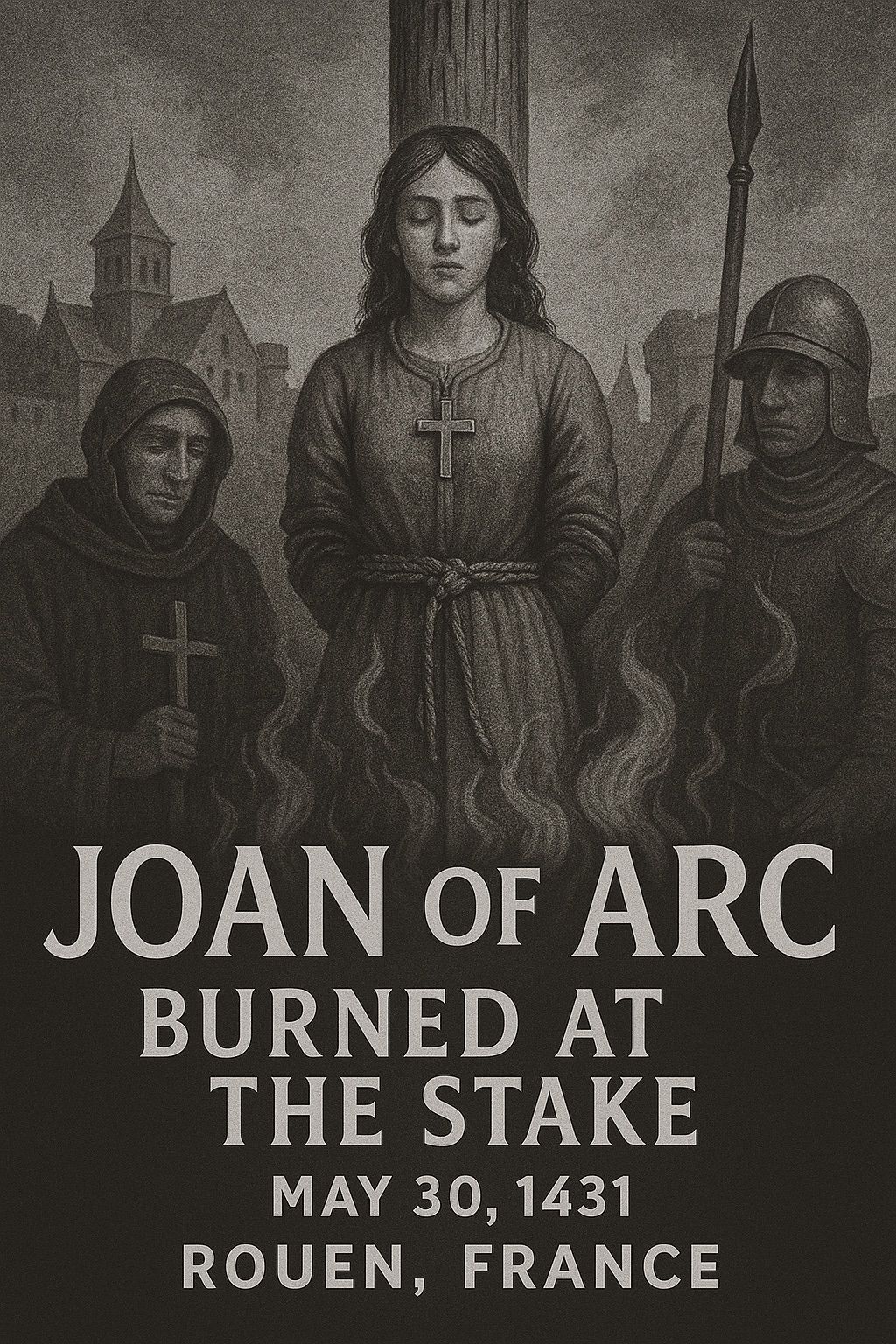
The wind carried the scent of burning wood and the murmurs of a restless crowd through the medieval streets of Rouen on May 30, 1431. In the town square, a nineteen-year-old girl stood shackled to a wooden stake, her clothes charred from the flames that licked hungrily at her body. Around her, clergy read prayers and soldiers kept the uneasy crowd at bay. There was no family to hold her hand, no friend to offer comfort, only the echo of her voice as she cried out the name of Jesus one last time. That girl—young, illiterate, devout, and unyielding—was Joan of Arc. Her death would seal her fate as a martyr, but her life, fierce and brief as it was, would ignite something far greater than the flames that consumed her. It would spark a legend.

Joan was born in the village of Domrémy, nestled in northeastern France, in 1412. The Hundred Years’ War had been ravaging the land for decades, a bloody struggle between England and France that left fields ruined, homes burned, and families torn apart. Joan’s family were peasants, ordinary people who tilled the soil and prayed for peace. Her father, Jacques, was a tenant farmer, and her mother, Isabelle, raised their children with strong faith and old folk wisdom. There was nothing about Joan’s early years that hinted at greatness, except perhaps for her unusual piety. From a young age, she attended Mass regularly, confessed often, and fasted with zeal. She was, by all accounts, a deeply spiritual child with a generous heart and an iron will.

It was in her early teens—perhaps at the age of thirteen—when Joan began to hear voices. These were not the whispers of childhood imagination but clear and compelling visitations, she said, from saints sent by God. Saint Michael the Archangel, Saint Catherine of Alexandria, and Saint Margaret of Antioch appeared to her in visions, urging her to take up arms to save France and support Charles VII, the disinherited Dauphin. These saints, she later claimed, gave her not just divine permission but a heavenly mandate to act.

Imagine the absurdity of it: a teenage girl in an illiterate, male-dominated, war-weary society claiming not only to speak to saints but to carry their mission. It was blasphemous to some, dangerous to others. But Joan was not one to shrink from divine command. She cut her hair short, dressed in men’s clothing, and left home in secret, making her way across enemy-held territory to reach Charles at Chinon. She would not be deterred by logic or protocol, and after enduring the skepticism of nobles and theologians, she managed to gain an audience with the Dauphin.

Charles, beleaguered by failures and haunted by doubt, was hesitant. But Joan’s conviction and presence moved something in him. She was subjected to ecclesiastical examination to determine the source of her voices and her virtue. These interrogations, conducted by some of the most learned churchmen of the time, found nothing heretical in her claims. Eventually, with divine timing and political necessity aligned, Joan was granted armor, a standard bearing the image of Christ, and command of troops. It was a gamble—and perhaps a desperate one—but France was in need of a miracle.

Joan rode into battle with more than armor and banners. She carried with her the weight of a fractured nation and the eyes of a skeptical court. Her first major military action was the liberation of Orléans, a city under English siege and a strategic key to France’s survival. With inspired boldness, she led the assault, often at the front lines, rallying soldiers who had grown weary of defeat. Her presence seemed to awaken a forgotten sense of purpose, and within nine days, the siege was lifted. Orléans was free. The miracle had arrived.

That victory changed everything. Word of “La Pucelle,” the Maid, spread across the kingdom like wildfire. She became a symbol of divine favor, a rallying point for the demoralized French. More victories followed—Patay, Troyes, Auxerre—and eventually, she escorted Charles to Rheims, where he was crowned King of France in July 1429. The moment was triumphant: the peasant girl from Domrémy standing beside the anointed monarch she had helped legitimize. But triumph is often a prelude to betrayal.

Joan’s rise had not gone unnoticed by her enemies—or her allies. Political tensions grew around her. The English, enraged by their losses and threatened by the notion of divine intervention on France’s side, considered her a witch and a heretic. French nobles, some jealous of her influence, others uneasy with her disregard for traditional authority, began to distance themselves. Even Charles, whose crown she had helped secure, would not risk his newfound legitimacy to rescue her when her fortunes turned.

In May 1430, while defending the town of Compiègne, Joan was thrown from her horse and captured by Burgundian troops allied with the English. The French king made no real attempt to negotiate her release. Instead, she was sold to the English and imprisoned in Rouen. It was here, in a cold and dark cell, chained and watched, that she faced her true trial—not of arms but of faith, fear, and isolation.

The trial of Joan of Arc was as much theater as it was judicial proceeding. Conducted by pro-English clergy and presided over by Bishop Pierre Cauchon, it aimed less at discovering truth and more at justifying a political necessity. Joan stood accused of heresy, witchcraft, and cross-dressing—a charge taken surprisingly seriously, as wearing men’s clothing was considered both sinful and symbolic of disobedience. Over the course of months, she endured interrogations, trick questions, psychological pressure, and spiritual manipulation. Yet she held firm. Her answers were often simple, direct, and surprisingly astute. She would not renounce the visions that had guided her, nor would she betray the voices that had given her purpose.

She famously declared: “If I am not in the grace of God, may God put me there; and if I am, may God so keep me.” It was a theological masterstroke, silencing her inquisitors and highlighting her unwavering faith. But it was not enough to save her. In the end, her condemnation was foregone. Joan was declared a relapsed heretic and sentenced to death by burning.

That morning in Rouen, as the crowd gathered to watch her die, Joan asked for a cross. A sympathetic English soldier fashioned one from two pieces of wood and handed it to her. Another sympathetic priest held a crucifix aloft so she could see it through the smoke. As the flames rose, she called out the name of Jesus until she could no longer speak. Witnesses wept. Even her executioner reportedly cried and later said he feared he had killed a saint.

In death, Joan of Arc became something more than any earthly court could judge. The fire that consumed her body could not touch her spirit. Her martyrdom struck a deep chord in the collective conscience of France. Though her name was tarnished and her cause considered lost by some, the people remembered. The soldiers she had led spoke of her in reverent tones. Ordinary villagers lit candles in her memory. And in time, the injustice of her execution would be recognized for what it was.

Twenty-five years later, in 1456, a posthumous retrial ordered by Pope Callixtus III found Joan innocent. Her conviction was overturned, and she was declared a martyr who had died for her faith and country. But the true vindication came not in documents or proclamations, but in the enduring power of her story.

Joan of Arc became a symbol far beyond her historical moment. During the French Revolution, her image was invoked as one of patriotic resistance. In the 19th century, amid France’s search for national identity and purpose, Joan’s legend was rekindled with fresh intensity. Artists painted her in heavenly armor; poets wrote of her sacrifice; composers gave her voice in operas; and playwrights dramatized her life for new generations. Mark Twain, captivated by her courage and humanity, wrote a deeply sympathetic biography titled Personal Recollections of Joan of Arc, calling her “the most noble life that was ever born into this world save only One.”

The Church too recognized her sanctity. In 1909, Joan was beatified, and in 1920, she was canonized as a saint by Pope Benedict XV. She became the patron saint of France, soldiers, and those ridiculed for their faith. Statues of Joan, sword raised and banner flying, now stand in cathedrals and public squares not just in France but around the world. Her legacy transcends religion, nationalism, and gender. She is remembered not simply as a warrior, but as a vessel of conviction, a young woman who followed her conscience and trusted in her God, even unto death.

But perhaps the most extraordinary aspect of Joan’s story is her humanity. She was not born a saint. She was a peasant girl with no education, no connections, and no armor but her faith. She questioned, she struggled, she feared. She laughed and cried and bled like anyone else. And yet, in the brief span of two years, she changed the course of a war and altered the soul of a nation. That transformation—from obscurity to legend—is not just about military victories or martyrdom. It’s about the power of belief. Belief in a cause greater than oneself. Belief that one voice, however small, can speak truth to power.

Today, in a world still torn by war, injustice, and doubt, Joan’s story continues to resonate. Not just because she won battles or was canonized, but because she reminds us what courage really looks like. It looks like a teenage girl riding into war not for glory but for love of country. It looks like a prisoner refusing to renounce her beliefs even as the flames rise. It looks like faith wearing battered armor and walking straight into history.

The Maid of Orléans died on May 30, 1431, but Joan of Arc never really left. She lives in the whispered prayers of soldiers before battle, in the defiant voices of those who stand up against tyranny, in the hearts of anyone who believes that truth is worth dying for. Her ashes may have blown away with the wind, but her flame burns on.

Related Posts

On Top of the World: Hillary and Norgay’s Triumph on Everest

Elias Rowen

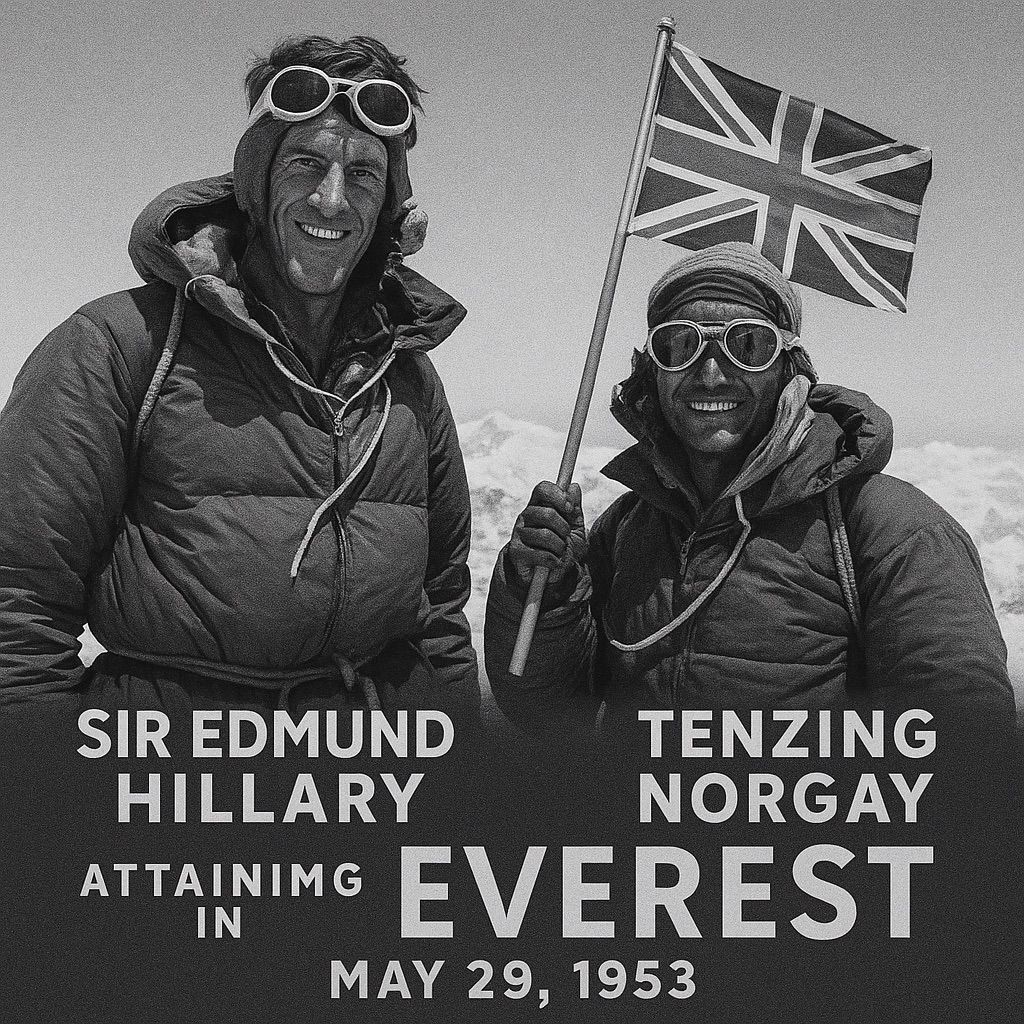
On May 29, 1953, two men from very different worlds stood together at the summit of human achievement. Sir Edmund Hillary, a beekeeper and mountaineer from New Zealand, and Tenzing Norgay, a Sherpa climber from Nepal, had just reached the highest point on Earth — the summit of Mount Everest. This historic moment was the result of years of planning, grit, and unwavering courage in the face of one of nature’s most daunting challenges.

For centuries, Everest had stood as an unconquerable giant, its snow-capped peak wrapped in mystery and awe. Few dared to try reaching its summit, and many who did returned with stories of failure or tragedy. The mountain’s fearsome reputation was well earned. Temperatures could plunge to a bone-chilling -60°C (-76°F) at night, fierce winds howled up to 320 km/h (200 mph), and altitude sickness could claim even the most seasoned climbers.

The first recorded attempt to conquer Everest was a British expedition in 1922, led by George Mallory and Andrew Irvine. Tragically, both men disappeared on June 8, 1924, during a summit bid. Their bodies were never found, but their daring spirit became a beacon of inspiration for generations of climbers that followed.

In the years after, many expeditions tried to reach the top. Some came close but were turned back by the mountain’s brutal conditions. In 1936, a British team led by Hugh Ruttledge got within 200 meters (656 feet) of the summit before being forced to retreat by bad weather. Another attempt in 1947 reached an altitude of 8,595 meters (28,215 feet) but also ended prematurely.

Meanwhile, in Nepal, a young Sherpa named Tenzing Norgay was watching these efforts with growing determination. Born in 1914 in the village of Thame, surrounded by the towering Himalayas, Tenzing developed a fascination for climbing early on. As a teenager, he began working as a porter on various expeditions, gaining invaluable experience in the high mountains.

His first brush with Western climbers came in 1952, when he joined an Indian expedition to Everest. Though the team didn’t make it to the summit, Tenzing gained important insights into the dangers and demands of high-altitude climbing. It was during this expedition that he met John Hunt, a British mountaineer who would later lead the successful 1953 Everest team.

Hunt’s expedition was assembled in late 1952, with Hillary among its members. Tenzing was invited to join as well, bringing his deep knowledge of the Himalayas and Sherpa climbing expertise. Together, they embarked on the grueling journey toward Everest’s summit, facing countless obstacles.

The trek from Base Camp at 5,364 meters (17,600 feet) to Camp IV at 7,906 meters (25,940 feet) took over two weeks. Along the way, the team battled blizzard-like storms, avoided deadly crevasses, and scaled steep rock faces demanding advanced climbing skills.

At Camp IV, Hillary and Norgay made their final preparations. They knew the summit attempt ahead would test their limits, but they were confident and ready. On the morning of May 28, 1953, around 11:30 am, they set off from Camp IV toward the South Col — a saddle-shaped ridge and the last major barrier before the summit.

The climb was brutal. Steep rock walls, treacherous ice fields, and temperatures plunging to -50°C (-58°F) challenged their every step. The two moved cautiously, taking breaks to catch their breath and replenish oxygen. By about 9:00 pm, they reached the South Col, where they rested briefly before making their final push.

At 11:30 am on May 29, 1953, Hillary and Norgay began the last leg toward the summit. Despite fierce winds gusting over 100 km/h (62 mph), they pressed on without hesitation. After six intense hours of climbing, they stood at the very top of the world.

The view was nothing short of breathtaking — a vast sea of snow-covered peaks stretching endlessly in every direction. Hillary and Norgay spent about 15 minutes at the summit, taking photos, embracing, and quietly savoring their monumental achievement.

Their success was more than a personal victory; it marked a milestone in human history. Everest became a symbol of what can be achieved when people from different backgrounds unite toward a shared goal. The partnership between Hillary and Norgay was key — two men, different cultures, different countries, working side by side to accomplish something extraordinary.

The impact of their achievement reached far beyond mountaineering. Their conquest ignited a new era of exploration and adventure, inspiring climbers, scientists, and explorers worldwide to push the boundaries of human possibility. Since that day, over 4,000 people have attempted to climb Everest, drawn by the legacy of that historic ascent.

Hillary’s triumph also resonated deeply in his home country. Born in Auckland, New Zealand, he became the first Kiwi to reach Everest’s summit. His success put New Zealand on the map as a nation of brave explorers and adventurers.

Tenzing Norgay, too, became an international hero. Recognized by Nepal as a national treasure, his achievement highlighted the vital role Sherpa climbers had played in Everest expeditions since the 1930s. His story brought attention to the skill, resilience, and courage of the Sherpa people.

In the years following their climb, both men continued exploring the Himalayas and advocating for conservation. They understood the fragile beauty of the mountain ecosystem and worked to protect it.

Hillary went on to serve as a government minister in New Zealand, promoting environmental causes, education, and healthcare. He was knighted by Queen Elizabeth II in 1953 and honored worldwide for his mountaineering feats.

Norgay continued climbing, summiting Everest several times and tackling other peaks. Though he faced personal hardships — including poverty and illness — he remained an enduring inspiration for adventurers everywhere.

In 1963, to mark the tenth anniversary of their first ascent, Hillary and Norgay returned to Everest with a new team. This time, they reached the summit by a more direct route, marking another key moment in mountaineering history.

Their partnership extended beyond climbing to environmental advocacy. Together, they championed efforts to preserve the Himalayas’ natural splendor.

Their legacy goes beyond mountaineering. Hillary and Norgay’s story inspires people worldwide to pursue science, exploration, and conservation. It reminds us that even the most daunting challenges can be overcome through teamwork and determination.

Looking back on that historic climb, we remember not only their incredible feat but the values they embodied — courage, perseverance, and mutual respect. Their partnership stands as a timeless example that when people come together, even the highest peaks can be conquered.

In the end, the ascent of Mount Everest by Sir Edmund Hillary and Tenzing Norgay was not just a physical accomplishment; it was a testament to the power of human collaboration and spirit. Their achievement opened a new chapter in exploration and adventure, inspiring generations to push beyond the limits of what seemed possible.

Their bond went far deeper than the mountain — bridging cultures, languages, and backgrounds. Every time we look up at Everest, we are reminded of these two men who stood together at the very pinnacle of human history.

The story of Hillary and Norgay will continue to inspire future explorers, scientists, and adventurers. It shows us that no matter how impossible a challenge may seem, greatness awaits when we work side by side toward a shared dream.

On that unforgettable day in 1953, when they stood atop the world, Hillary and Norgay could not have imagined just how far their achievement would ripple across the globe — sparking a worldwide movement of exploration, adventure, and human potential.

Their triumph will forever remain one of humanity’s greatest stories — a shining symbol of what can be accomplished when we unite in pursuit of a common goal.

Related Posts

Voice of the Voiceless: Amnesty International and the Fight for Human Rights

Elias Rowen

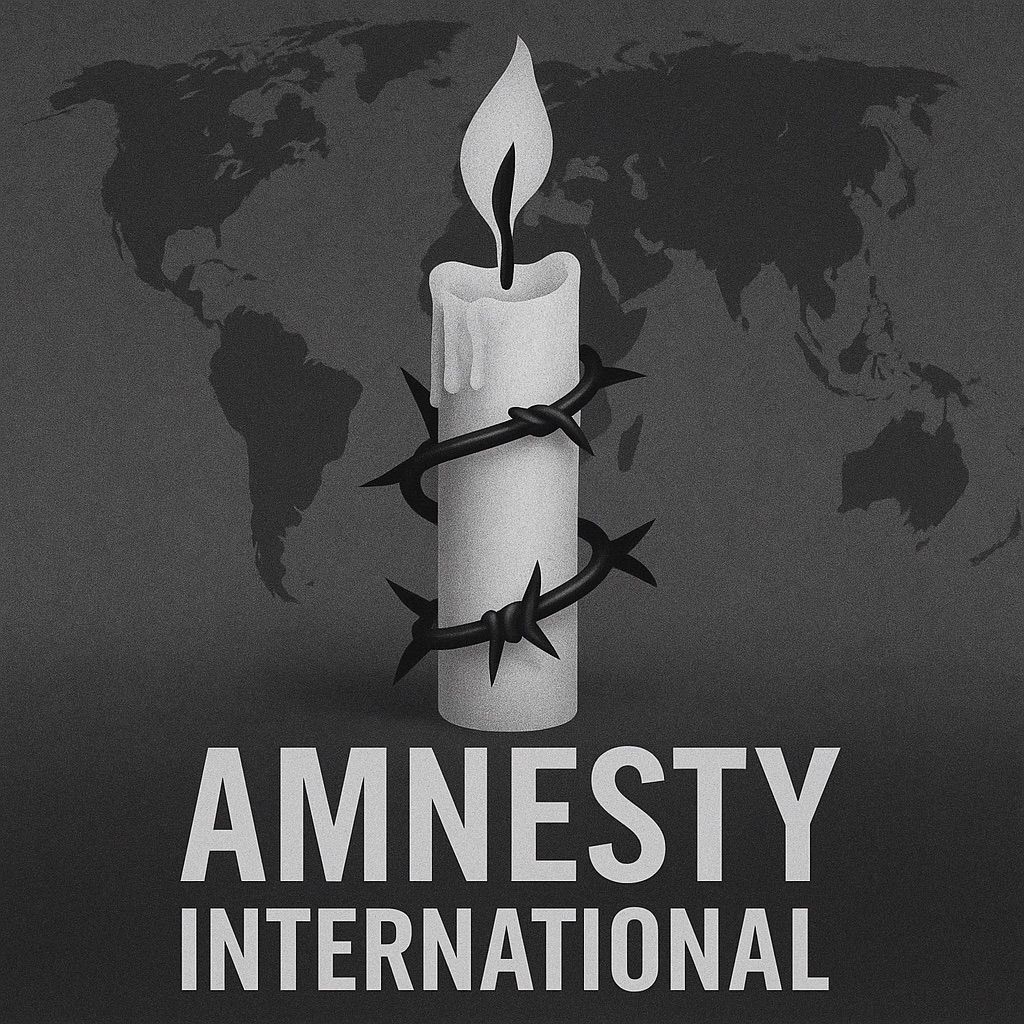
On May 28, 1961, Peter Benenson, a British lawyer, published an article in The Observer calling for action on behalf of two Portuguese students who had been imprisoned for raising a toast to freedom. That article gave birth to Amnesty International, an organization dedicated to the protection of human rights worldwide.

Amnesty’s mission was clear: to advocate for individuals whose rights were violated by governments, corporations, or other powers. It began with a focus on political prisoners, but over the years, its scope expanded to include a wide range of human rights issues—torture, freedom of speech, women’s rights, refugee rights, and more.

Amnesty International’s approach is rooted in a simple but powerful idea: that one person’s freedom matters, and that collective action can change the world. Through letters, petitions, campaigns, and grassroots mobilization, the organization has secured the release of thousands of prisoners of conscience and raised awareness of injustices that might otherwise have been ignored.

What sets Amnesty apart is its unwavering commitment to impartiality. It does not align itself with political parties or ideologies; it is driven solely by a desire to ensure human dignity for all. Its work has earned it Nobel Peace Prizes and global recognition, but the organization’s true measure of success lies in its ability to amplify the voices of those who cannot speak for themselves.

As global challenges to human rights continue, Amnesty International remains at the forefront of the fight for justice, equality, and the protection of fundamental freedoms.

Related Posts