Latest Articles

The Fall of Mussolini: The End of Italy’s Fascist Regime

Elias Rowen

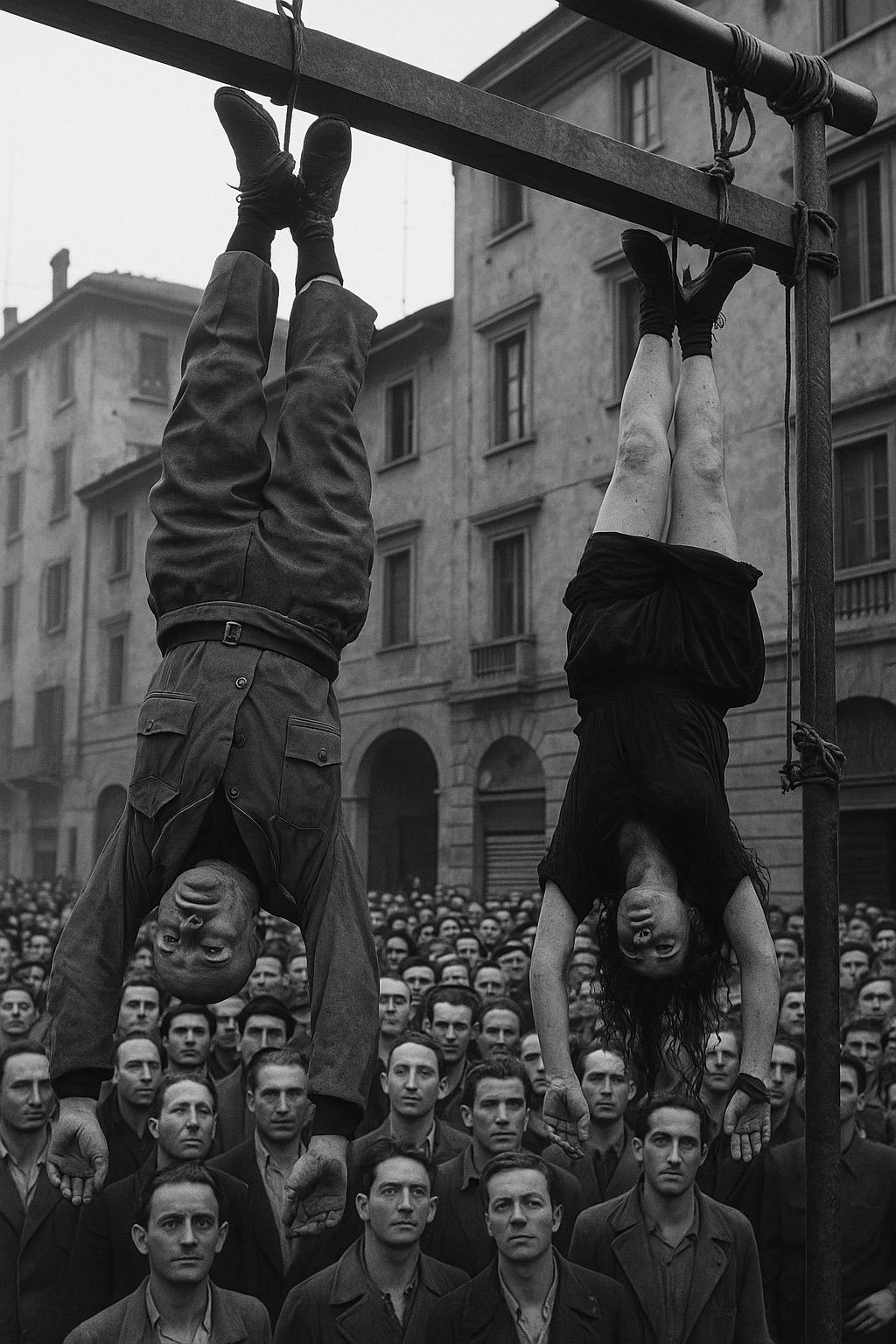
On April 28, 1945, Benito Mussolini, the dictator who had once ruled Italy with an iron fist, met a brutal and decisive end. After more than two decades in power, Mussolini’s fascist regime crumbled under the weight of war, betrayal, and public outrage. Captured by Italian partisans while attempting to flee to Switzerland, Mussolini and his mistress, Clara Petacci, were executed by firing squad. Their bodies were later displayed in Milan, a stark symbol of Italy’s rejection of fascism and a powerful moment in the closing days of World War II.

Mussolini’s rise to power had been swift. In 1922, he marched on Rome and took control of the Italian government, establishing a fascist dictatorship that crushed opposition, controlled the press, and promoted aggressive nationalism. Aligning himself with Adolf Hitler during World War II, Mussolini dragged Italy into a conflict it was ill-prepared to fight. As the war turned against the Axis powers, Italian citizens grew disillusioned, and even Mussolini’s own government turned on him. By 1943, he was ousted and arrested, only to be rescued by German forces and installed as a puppet leader in northern Italy.

But by April 1945, Nazi Germany was collapsing, and Mussolini’s fate was sealed. Disguised as a German soldier, he attempted to escape with his remaining loyalists but was recognized and captured by partisans in the village of Dongo. Just a day later, he was executed without trial, a swift and final punishment for years of dictatorship and war crimes. His body was taken to Milan and hung upside down in Piazzale Loreto, where angry crowds gathered to desecrate his corpse—a grim reflection of the hatred he had inspired.

Mussolini’s death marked the definitive end of fascist rule in Italy and served as a warning to other totalitarian leaders. The man who once dreamed of reviving the Roman Empire was now nothing more than a cautionary tale of unchecked power and political downfall. Today, his legacy remains controversial—while some still romanticize his rule, history remembers Mussolini as a dictator whose ambition led Italy to ruin. His fall stands as a reminder that no tyranny lasts forever and that the will of the people can ultimately bring down even the most powerful regimes.

Related Posts

A New Dawn: South Africa’s First Democratic Elections

Elias Rowen

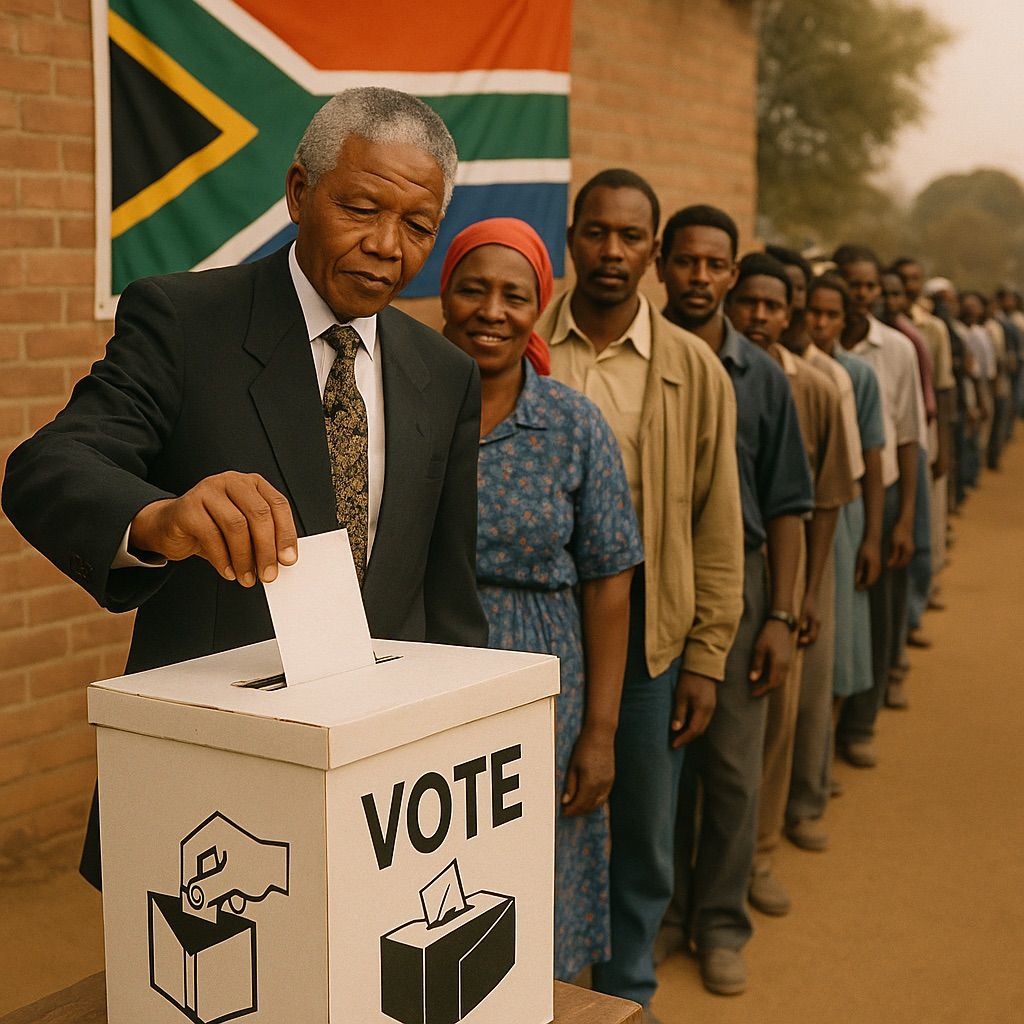
On April 27, 1994, South Africa took a historic step toward freedom, equality, and democracy. After decades of institutionalized racism under the brutal apartheid system, millions of South Africans of all races cast their votes in the country’s first fully democratic elections. It was a moment of triumph, hope, and reconciliation, marking the official end of apartheid and the beginning of a new era under the leadership of Nelson Mandela, South Africa’s first Black president.

For nearly half a century, apartheid had divided South Africa, enforcing a system of racial segregation that stripped Black citizens of their rights, confined them to impoverished townships, and subjected them to systemic oppression. Despite years of resistance, activism, and international condemnation, the oppressive regime held firm—until the early 1990s, when global pressure and internal uprisings forced change. After intense negotiations, apartheid laws were repealed, and South Africa prepared for its first free elections, allowing all citizens—regardless of race—to vote for the first time.

The election itself was a powerful display of democracy in action. Long lines stretched for miles as people patiently waited, some for hours or even days, to cast their ballots. Many elderly South Africans voted for the first time in their lives, their voices finally counted in a system that had long silenced them. The overwhelming support for the African National Congress (ANC) and Nelson Mandela signaled a new beginning—one built on unity, forgiveness, and hope for the future. On May 10, 1994, Mandela was inaugurated as president, delivering a speech that resonated across the world: “Never, never, and never again shall it be that this beautiful land will again experience the oppression of one by another.”

The impact of that election is still felt today. South Africa’s transition from apartheid to democracy was not without its struggles, and the nation continues to grapple with economic and social challenges. Yet, April 27—now celebrated annually as Freedom Day—remains a powerful reminder of the resilience of the human spirit and the ability of a nation to heal. The first democratic elections of South Africa stand as a testament to the power of democracy and the courage of those who fought for it, proving that even in the darkest of times, justice and equality can prevail.

Related Posts

Chernobyl: The Disaster That Shook the World

Elias Rowen

On April 26, 1986, the world witnessed one of the most catastrophic nuclear accidents in history—the explosion of Reactor No. 4 at the Chernobyl Nuclear Power Plant in Soviet Ukraine. What started as a late-night safety test quickly spiraled into an uncontrolled nuclear reaction, leading to a massive explosion that released deadly radiation across Europe. The Chernobyl disaster exposed millions of people to high levels of radiation, forced entire communities to flee their homes, and left behind a haunting legacy of destruction, illness, and environmental contamination.

In the early hours of that fateful day, a series of critical mistakes by plant operators, combined with flaws in the reactor’s design, led to an uncontrollable power surge. The explosion that followed ripped through the reactor, sending radioactive debris high into the atmosphere. Firefighters rushed to the scene, battling flames without knowing the true extent of the danger. Many of them, along with plant workers and emergency responders, suffered severe radiation poisoning and died in the following weeks. Their bravery saved countless lives, but at an unimaginable cost.

The Soviet government initially downplayed the disaster, failing to warn its citizens about the radiation spreading across the region. It wasn’t until radiation alarms went off in Sweden—nearly 1,000 miles away—that the world realized something had gone terribly wrong. Eventually, over 100,000 people were evacuated from Pripyat and surrounding areas, leaving behind a ghost town frozen in time. The infamous Chernobyl Exclusion Zone remains one of the most radioactive places on Earth, a stark reminder of the dangers of nuclear energy when mismanaged.

In the decades since the disaster, the long-term effects of Chernobyl have become painfully clear. Cancer rates skyrocketed, birth defects increased, and entire generations have lived with the fear of radiation exposure. Yet, Chernobyl also serves as a powerful lesson in safety, transparency, and the risks associated with nuclear power. The damaged reactor was eventually sealed under a massive steel sarcophagus, but the scars of Chernobyl remain—both in the land and in the memory of those affected.

Today, Chernobyl is both a warning and a symbol of resilience. Scientists continue to study its impact, wildlife has begun reclaiming the abandoned land, and tourists visit the eerie remains of Pripyat to witness history firsthand. The disaster may have happened decades ago, but its lessons are more relevant than ever, reminding the world of the devastating consequences of human error and the importance of responsible energy use.

Related Posts

Unlocking Life’s Code: The Discovery of DNA’s Structure

Elias Rowen

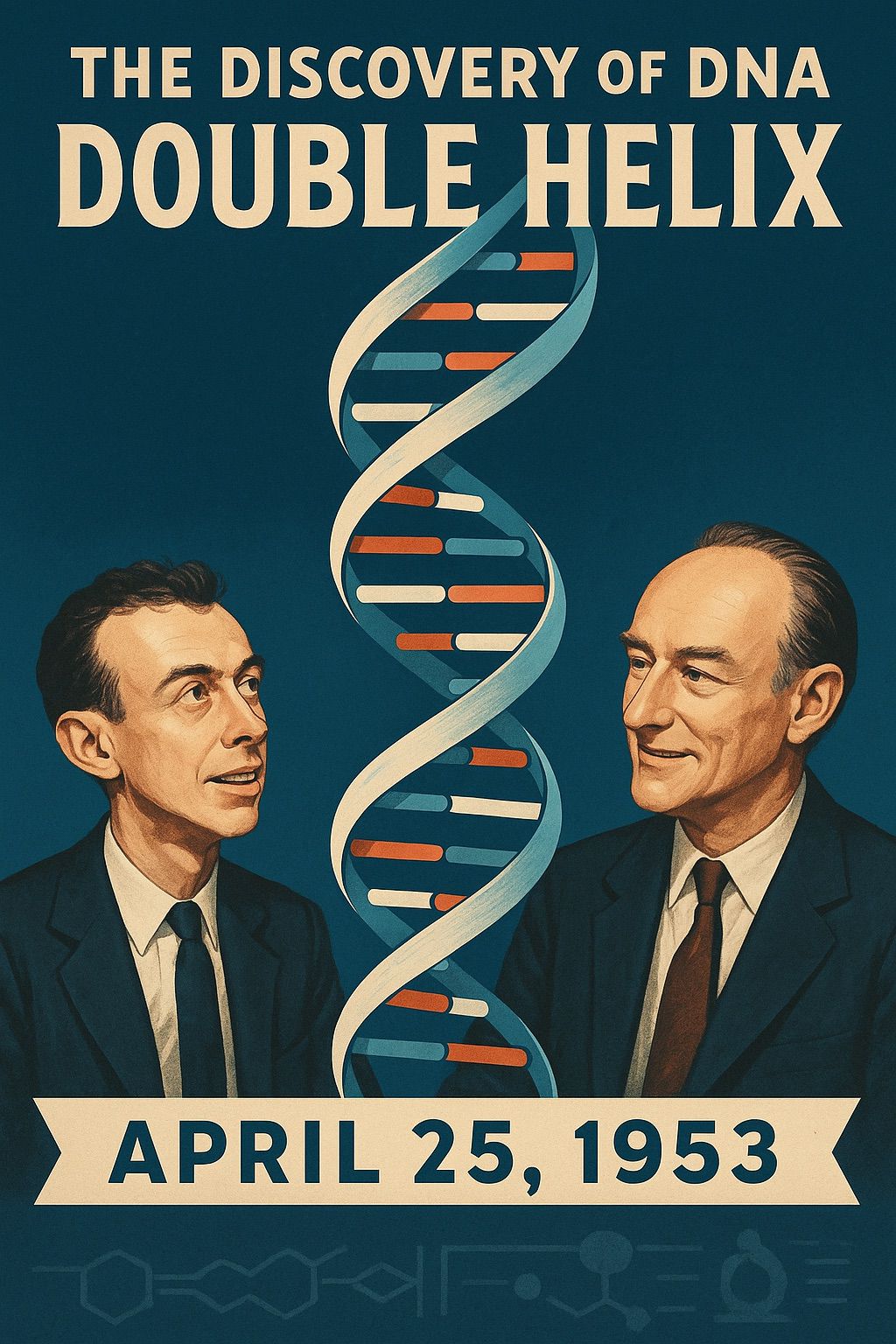
On April 25, 1953, James Watson and Francis Crick unveiled one of the most groundbreaking discoveries in the history of science—the double-helix structure of DNA. This revelation unlocked the secret of how genetic information is stored and passed from one generation to the next, forever changing the fields of biology, medicine, and genetics. Their work laid the foundation for modern molecular biology and has since led to advances in genetic engineering, forensic science, and disease research.

The journey to discovering DNA’s structure was a collaborative effort, building on the work of scientists before them. In particular, Rosalind Franklin’s X-ray diffraction images were crucial in revealing the helical nature of DNA. Using her data—without her direct permission—Watson and Crick pieced together the now-famous double-helix model. Their discovery explained how DNA replicates and carries genetic instructions, solving one of biology’s greatest mysteries. However, for decades, Franklin’s contributions were largely overlooked, sparking debates about scientific recognition and ethics.

The impact of their discovery was immediate and profound. Understanding DNA’s structure paved the way for decoding the human genome, cloning, gene therapy, and countless medical breakthroughs. Today, DNA technology is used in everything from diagnosing genetic disorders to solving crimes and tracing ancestry. The study of genetics continues to evolve, offering new possibilities in personalized medicine, agriculture, and even space exploration.

Watson and Crick’s discovery was more than just a scientific milestone—it was a turning point in human understanding of life itself. As research in genetics advances, the double helix remains an enduring symbol of scientific curiosity and innovation. The structure of DNA may have been discovered in a single moment, but its impact will continue shaping the future of science for generations to come.

Related Posts

The Armenian Genocide: A Dark Chapter in History

Elias Rowen

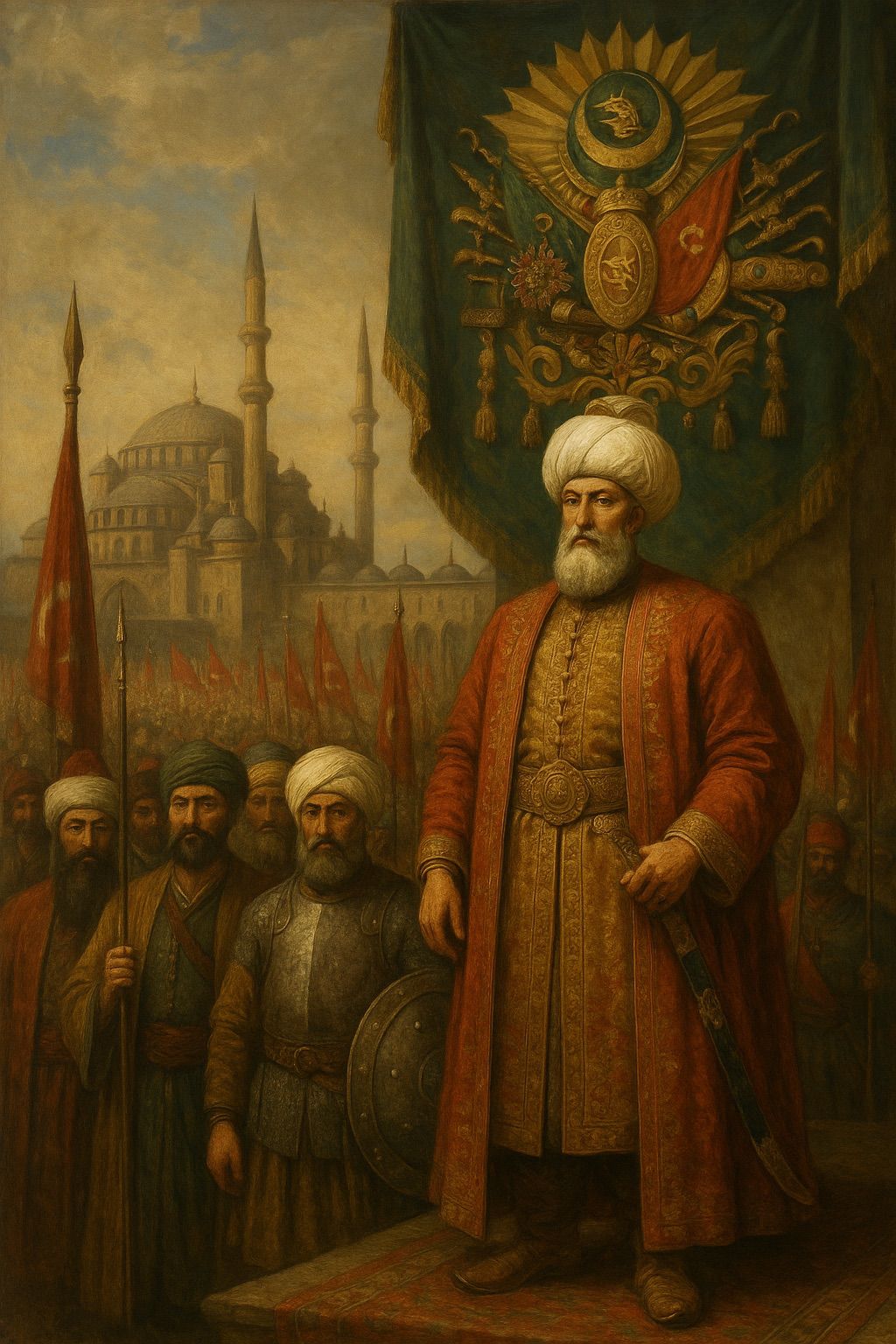
In 1915, amid the chaos of World War I, the Ottoman Empire began a brutal campaign against its Armenian population—an event that would later be recognized as one of the first modern genocides. Over the course of several years, an estimated 1.5 million Armenians were systematically killed through mass executions, forced death marches, and starvation. The Armenian Genocide was not merely a byproduct of war but a calculated effort to erase an entire people. Despite overwhelming historical evidence, the tragedy remains a subject of political controversy and denial, making remembrance and recognition more crucial than ever.

The persecution of Armenians had been building for decades, but on April 24, 1915, the genocide officially began when hundreds of Armenian intellectuals and community leaders were arrested and executed in Constantinople (modern-day Istanbul). This marked the start of widespread deportations and massacres, as Armenians were driven from their homes and sent on grueling marches across the Syrian desert. Many perished from exhaustion, starvation, or outright murder at the hands of Ottoman forces and paramilitary groups. Women and children were often subjected to unspeakable atrocities, further deepening the horror of this dark period.

While the Ottoman government justified its actions as a response to potential Armenian uprisings, the scale and intent of the violence revealed a deliberate attempt at extermination. Survivors who managed to escape fled to countries around the world, forming a vast Armenian diaspora that continues to honor the memory of those lost. Despite the undeniable evidence—including eyewitness accounts, diplomatic reports, and photographic documentation—some governments and political groups have resisted labeling the events as “genocide,” fearing diplomatic fallout with Turkey, the successor state of the Ottoman Empire.

Recognizing the Armenian Genocide is not just about acknowledging history—it’s about ensuring that such atrocities are never repeated. The world has witnessed other genocides in the 20th and 21st centuries, proving that the lessons of the past have not always been heeded. By remembering and educating future generations, we reaffirm our commitment to justice and human rights. The Armenian Genocide remains a painful reminder of what can happen when hatred and intolerance go unchecked, and it calls upon all of us to stand against denial and indifference.

Related Posts