Latest Articles

Straps, Strings, and Statements: What Your Bikini Style Says About You

Dave

Bikinis are more than swimwear. They’re symbols—declarations, even. Every summer, beaches and pool decks transform into vibrant runways where women from all walks of life express parts of themselves through these tiny pieces of fabric. Behind every high-waisted bottom, bandeau top, or string triangle lies a story of comfort, confidence, rebellion, or nostalgia. And fashion psychology says these choices are rarely random. Whether you realize it or not, the bikini style you gravitate toward says something about your personality. It’s not about right or wrong, modest or bold—it’s about what feels like you. So let’s walk down this shoreline together and decode what your bikini might be whispering about who you are.

Let’s start with the classic triangle bikini—arguably the most iconic and enduring style. Delicate in structure and minimalist in coverage, this suit has adorned bodies on beaches for generations. The woman who chooses a triangle top often values tradition but isn’t afraid of attention. She knows that the design has history—it was the default when the bikini exploded in popularity during the latter half of the 20th century. But more importantly, she appreciates simplicity and effectiveness. She’s probably the kind of woman who can make a basic white tee and jeans look like high fashion. There’s confidence in her choice, and a willingness to embrace her natural form. She may enjoy the flirtatiousness of this look, but it’s rarely about showing off—it’s about self-ownership. She knows what she likes, and she’s unapologetic about it.

Then there’s the bandeau—that strapless band of fabric that hugs the chest and exudes effortless chic. A woman in a bandeau often gives off a distinctly European energy. She’s minimalist in spirit and perhaps a bit of a rule-bender. She doesn’t like tan lines, for one. But more than that, she prefers her style to whisper, not shout. She might pair it with wide-brimmed hats, cat-eye sunglasses, and a paperback novel tucked under her arm. There’s an air of calm sophistication about her, like she’s just as comfortable sipping espresso at a sidewalk café as she is dipping her toes in the surf. She values aesthetics and likely leans toward modern art, clean lines, and curated playlists. She also doesn’t mind re-adjusting her top once or twice—style, after all, sometimes comes with a price.

Now contrast that with the sporty bikini—think thicker straps, racerback cuts, and reinforced support. This is the choice of the active beachgoer, the woman who doesn’t just lie on a towel for hours but plays beach volleyball, swims laps, or surfs. Her bikini isn’t just about looks—it’s about performance. She values function, but that doesn’t mean she’s not stylish. Sporty girls often choose bright colors or graphic prints, reflecting their high energy and no-nonsense vibe. They’re likely natural leaders, comfortable in their own skin, and probably a little competitive. These are the women who pack their own healthy snacks and show up with a beach umbrella that folds perfectly into its carrying case. Practical? Yes. Powerful? Absolutely.

Let’s not forget the high-waisted bikini—a vintage throwback that’s found a new home in modern beach fashion. High-waisted bottoms aren’t just about covering more skin; they’re about embracing shape. This style often appeals to women who appreciate curves, nostalgia, and a bit of retro glamour. There’s something undeniably Old Hollywood about this look—like channeling Marilyn Monroe or Bettie Page in their seaside snapshots. Women who wear high-waisted bikinis are usually detail-oriented, introspective, and deeply connected to their sense of personal style. They might have a playlist full of Lana Del Rey and Fleetwood Mac, and they’re not afraid to mix old with new. These are the women who appreciate a good thrift find, who can wax poetic about vintage fashion while sipping an oat milk latte. They’re both romantic and grounded, and they find empowerment in timelessness.

Another popular option is the cut-out bikini, characterized by strategically placed slashes and negative space. This style is for the bold at heart. She doesn’t just enter a room—she arrives. She’s fashion-forward, edgy, and maybe a little unpredictable. The cut-out bikini wearer isn’t afraid to experiment. She sees her body as a canvas and fashion as art. These women probably have the latest skincare products and know how to work angles for Instagram, but they’re also deeply creative. They may be artists, dancers, or designers, and they thrive on expression. There’s a sense of intentional disruption in their style—why go with the usual when you can do something eye-catching? Life is more fun that way.

The string bikini, though similar to the triangle top, takes minimalism to its extreme. It’s often associated with daring and boldness—and for good reason. A woman in a string bikini doesn’t mind attention. In fact, she probably welcomes it. But there’s more to her than just confidence in her body. She’s free-spirited, spontaneous, and likely to take that beach trip on a moment’s notice. She’s the type to run barefoot across the sand, to dive headfirst into the ocean, to stay up late watching stars and telling stories. Her fashion sense is instinctual, not curated. She doesn’t overthink, she just feels. And she likes what she feels when she’s wrapped in the ocean breeze, her skin kissed by the sun, her string bikini dancing in the wind.

There’s also the tankini, often misunderstood and underestimated. A hybrid between a tank top and a bikini, this style is chosen by women who want the freedom of a two-piece with the coverage of a one-piece. But don’t mistake that for indecision. Tankini wearers are thoughtful, careful, and often maternal in their energy. They’re the ones who remember the sunscreen, carry the extra towel, and offer the cold drink when you didn’t realize how thirsty you were. They value comfort and practicality, but they also understand that style is deeply personal. There’s a quiet power in a tankini—a reminder that you don’t have to bare everything to make a statement. These women are likely emotionally intelligent, nurturing, and wise. They may not seek the spotlight, but their light radiates all the same.

Of course, we can’t forget the monokini, the one-piece with serious cut-out game. Monokini wearers are all about balance—flirtation with elegance, playfulness with control. There’s a theatrical flair here, a desire to make a statement but still leave something to the imagination. Women who favor monokinis often love drama—in the best way. They’re storytellers, whether they’re writing novels, creating mood boards, or simply crafting the perfect Instagram caption. They know that sometimes the best way to captivate is to reveal just enough and let the mind fill in the blanks. Their style is nuanced, layered, and always intentional.

Bikini colors, too, have a language of their own. Bright colors like hot pink, electric blue, and neon green often signal boldness, optimism, and sociability. These women are the first to suggest a group selfie, to strike up conversations with strangers, to turn the beach day into a dance party. Earth tones—mustards, olives, terracottas—suggest groundedness, warmth, and introspection. Black bikinis? Timeless and chic. These women value elegance and authority, and they probably own the same black dress in five variations. Patterns—florals, stripes, animal print—add another layer. They reflect playfulness, creativity, and emotional expression. A leopard print bikini? That woman knows exactly who she is and doesn’t care if you do too.

And let’s talk about how women style their bikinis. Is there a sarong involved? A wide-brimmed hat? Oversized shades? These add-ons are extensions of personality. The woman who wraps herself in a flowing, sheer sarong might be deeply in tune with her femininity. The one with mirrored sunglasses might be playful or mysterious, using fashion as a kind of social armor. And that friend who wears a mismatched top and bottom? She’s experimental, relaxed, and perhaps a bit rebellious—why follow the rules when mixing is more fun?

Fashion psychology tells us that we’re drawn to what makes us feel good because it reinforces our sense of self. When you put on a bikini that feels right, it’s not just about flattery—it’s about identity alignment. It’s why one woman might feel her best in a 1950s high-waisted set, while another feels most powerful in a neon string bikini. Our swimwear choices can reflect how we want to be seen or how we feel inside. It’s a form of storytelling without words.

Of course, these aren’t rigid categories. We’re complex beings, and our style choices can shift with mood, age, season, or life changes. The bandeau lover today might become a triangle-top enthusiast tomorrow. The string bikini girl might trade it for something sportier when she picks up paddleboarding. And that’s the beautiful part—fashion isn’t static. Like us, it evolves.

So the next time you’re packing for the beach or browsing online for the perfect bikini, pause and ask yourself not just what looks good, but what feels like you. Are you feeling bold? Romantic? Chill? Maybe you want to channel the ‘90s with a square neckline, or maybe you’re all about that Barbie pink moment. Trust the instinct. Let your swimwear speak for you.

Because in the end, your bikini isn’t just a garment. It’s a statement of self-love. It’s the armor of summer queens, the uniform of water goddesses, the chosen silhouette of sun-chasers. Whether you’re dancing on a boat deck, wading ankle-deep into a cool tide, or lounging on a beach chair with a novel in hand, your bikini is doing more than you think. It’s not just about fashion—it’s about psychology, empowerment, and personality. It’s about saying: This is me. I’m here. And I look damn good doing it.

Related Posts

The Korean War Begins — A Cold War Conflict Ignites

Elias Rowen

The morning of June 25, 1950, began like many others on the Korean Peninsula. In the humid summer stillness, farmers tended to rice paddies in the south, children prepared for church services, and families across the land clung to a fragile post-colonial hope of a better future. But within hours, the dreams of millions would be shattered. Without warning, columns of North Korean soldiers surged across the 38th parallel in a brutal blitzkrieg that heralded the start of one of the 20th century’s most devastating conflicts—the Korean War. It was the moment when political fault lines cracked open, and an entire nation was swallowed in fire.

To understand how this moment came to pass, one must rewind the clock to 1945, the end of World War II. Korea had endured 35 years under the iron grip of Japanese colonial rule. Its liberation in August 1945 should have marked a new beginning for the Korean people. But instead of unity and independence, liberation brought division. The Allies hastily divided Korea into two occupation zones along the 38th parallel: the Soviets in the north, the Americans in the south. What was intended as a temporary arrangement quickly calcified into a permanent fracture. The ideological divide between communism and democracy mirrored the Cold War tensions escalating globally. It wasn’t long before two Koreas emerged—North Korea, officially the Democratic People’s Republic of Korea under Kim Il-sung, and South Korea, the Republic of Korea under Syngman Rhee.

Each side claimed legitimacy over the entire peninsula. The leaders, once anti-colonial fighters in different ideological camps, now eyed each other not as countrymen but enemies. The 38th parallel became a tense border marked by occasional skirmishes and deepening distrust. Families were divided, cities split, and history poised to repeat its worst chapters.

Then came that hot June morning. The Korean People’s Army (KPA), armed with Soviet tanks and artillery, poured over the border in a coordinated invasion. Their objective was not merely military—it was existential. They sought to crush the South Korean government, unify the peninsula under communist rule, and cement Kim Il-sung’s place as the peninsula’s sole leader. The scale and speed of the invasion were staggering. Within three days, Seoul, the capital of South Korea, fell. South Korean forces, undertrained and underequipped, could not mount effective resistance. Chaos reigned. Entire towns emptied as civilians fled the advancing troops. Roads clogged with refugees—mothers clutching infants, elders shuffling beside carts filled with their last possessions. No one knew where safety lay.

In Washington, President Harry Truman convened urgent meetings. The shock of the invasion echoed through the halls of power not just because of Korea itself but because of what it represented. To Truman, this was not merely a regional squabble; it was the first test of American resolve in the new Cold War. Allowing North Korea to overrun the South risked a domino effect—if Korea fell, who would be next? Taiwan? Japan? Western Europe? The stakes transcended geography. Within 48 hours, the United States committed air and naval forces to support South Korea. More critically, Truman sought support from the fledgling United Nations.

In a historic moment, the UN Security Council—benefiting from the absence of the Soviet Union, which was boycotting the council at the time—passed Resolution 83, calling on member nations to assist South Korea. It was the first military action taken under the banner of the UN, and soon, troops from countries like the United Kingdom, Canada, Australia, Turkey, Ethiopia, and the Philippines joined the United States in forming a multinational coalition.

The initial months were bleak. The North’s momentum seemed unstoppable. By August, South Korean and UN forces were pushed into a corner around the southeastern port city of Pusan, forming what came to be known as the Pusan Perimeter. Supplies were scarce, morale was low, and the stench of defeat hung thick. But in the darkest moments, grit emerged. American and South Korean troops dug in, holding the line with grim determination. Supplies arrived by sea. Reinforcements trickled in. And in early September, General Douglas MacArthur—icon of World War II and head of UN forces—unleashed one of the most daring maneuvers in military history.

On September 15, 1950, under cover of darkness and fog, U.S. Marines stormed ashore at Inchon, a port city west of Seoul. The landing caught North Korean forces completely off guard. The risk had been enormous—the tides were unpredictable, the harbor heavily fortified—but it paid off. Inchon was recaptured, and within weeks, UN forces had cut off supply lines and retaken Seoul. The North Koreans, once triumphant, now retreated in disarray. By October, MacArthur ordered UN troops across the 38th parallel. For a brief, heady moment, the war seemed all but won.

But this triumph provoked a sleeping giant. China, led by Mao Zedong, had warned against UN forces approaching its border. When they did, China acted. In late October, waves of Chinese “volunteer” troops—hundreds of thousands—poured into Korea under the cover of night and mountain fog. What followed was a brutal reversal. UN troops, exhausted and unprepared for winter warfare, were pushed back in bitter battles. In November and December, the Chinese counter-offensive retook Pyongyang and even Seoul once more.

This back-and-forth slog defined the next two years of the war. Neither side could gain a decisive edge. The front lines stabilized near the 38th parallel, but the fighting remained intense. Battles like the Chosin Reservoir became legends of endurance. In that frigid hellscape, surrounded by Chinese forces, U.S. Marines fought their way through snow and bullets, carrying their dead and wounded with them, refusing to surrender. The term “frozen Chosin” became a badge of honor.

Conditions were horrific. Soldiers froze to death in their foxholes. Ammunition jammed from the cold. Letters from home arrived stained with tears. In the villages and towns caught in the crossfire, civilians paid the steepest price. Massacres, starvation, and displacement became common. Some were herded into prison camps. Others lived in makeshift shelters as war orphans or refugees. The Korean War did not have the sweeping front lines of WWII nor the political theatrics of Vietnam, but its human toll was enormous.

For the American home front, the Korean War was met with a mix of confusion and indifference. There was no grand declaration of war, only a “police action.” Most Americans had just emerged from the horrors of WWII and struggled to grasp why their sons were dying in a place they could barely find on a map. Yet tens of thousands did die. Nearly 37,000 American service members lost their lives. South Korea’s casualties were even more staggering, with over a million civilians killed or wounded.

As the war dragged into 1952 and then 1953, peace talks began. They moved slowly, hampered by disputes over prisoner repatriation and political recognition. On July 27, 1953, an armistice was signed at Panmunjom. The war was over, but the wounds remained raw. No peace treaty was ever signed, and technically, North and South Korea remain in a state of war to this day.

The Demilitarized Zone (DMZ) established by the armistice runs roughly along the original 38th parallel. It is a place of eerie quiet—a scar across the Korean Peninsula, lined with landmines, guard towers, and barbed wire. On either side, two nations evolved in radically different directions. South Korea emerged over the decades as a prosperous democracy, a global economic power, and a cultural exporter. North Korea, by contrast, became one of the world’s most repressive and isolated regimes, ruled by a dynastic dictatorship.

Yet for all the geopolitics and military analyses, the story of the Korean War is at its core a human story. It is the tale of a farmer in Daegu who lost his home to a bomb dropped by a plane he never saw. Of a Chinese soldier who trudged barefoot through snow to fight in a land not his own. Of a Black American GI who fought in one of the last segregated units, only to see the military integrate midway through the war. Of a South Korean nurse who treated children burned by napalm and never spoke of it again.

And for many veterans, the war never truly ended. It lived on in memories, in night terrors, in limbs left behind in minefields, in the quiet dignity of old men gathering each year to remember comrades lost on hills whose names the world forgot. For the Korean people, it lives on in stories told over dinner tables, in the silence of parents who never saw their children again, and in the national resolve to never again be so vulnerable.

June 25 is not a date etched in gold or celebrated with fireworks. It is a solemn reminder. It reminds us that peace, once fractured, is hard to restore. It reminds us of the fragility of international order, of how political calculations by distant powers can cascade into catastrophe for ordinary people. And it calls on future generations—not just Koreans, but all of us—to learn from the mistakes of the past, to cherish diplomacy, and to never forget those who paid the price when peace fell apart.

The Korean War may be labeled “forgotten,” but for those who lived through it, it is unforgettable. And perhaps the greatest tragedy would not be the war itself—but our failure to remember it.

Related Posts

The Battle of Bannockburn — A Defining Moment for Scottish Independence

Elias Rowen

The morning sun rose over the Scottish lowlands on June 24, 1314, casting long shadows over the dew-drenched grass of Bannockburn. For many who stood there, poised in crude armor with weary eyes and anxious hearts, it could have been their final sunrise. Yet what followed in those hours would not be a quiet march to defeat but a thunderous roar of defiance that would echo for centuries. The Battle of Bannockburn wasn’t just a conflict of two armies—it was a collision of ideals, of identity, of what it meant to be a free people versus subjects under the thumb of an empire. At the heart of it all was a man named Robert the Bruce, King of Scots, who had once been hunted, doubted, and betrayed—but who now stood ready to turn the tide of history.

To grasp the magnitude of what happened on those fields outside Stirling, one must step back nearly two decades to the chaos that unraveled after the death of King Alexander III in 1286. Scotland was thrust into uncertainty. When his granddaughter Margaret, the Maid of Norway, also died in 1290, it left the Scottish throne without a clear heir. The resulting power vacuum opened the door for England’s ambitious King Edward I—known by many as “Longshanks”—to assert overlordship over Scotland. He was not content to simply mediate the Scottish succession crisis. He intended to control it.

Edward’s maneuvering to install John Balliol as a puppet king, followed by Balliol’s predictable rebellion and swift deposition, ignited a flame of resistance in Scotland. It was during this period that William Wallace, a name now immortalized in legend and myth, rose to prominence, delivering a stunning defeat to English forces at the Battle of Stirling Bridge in 1297. But Wallace’s story, like that of so many rebels, ended in betrayal and brutal execution. It was a time of darkness and doubt.

Enter Robert the Bruce. Born into nobility, Bruce was initially a complex figure—ambitious, calculating, and at times contradictory. He had once sworn allegiance to Edward I, like many nobles seeking to preserve their lands. But something shifted in him. By 1306, he had taken the bold and bloody step of killing his rival, John Comyn, in a church—a sacrilegious act that shocked even his allies—and declared himself King of Scots. The act launched him into a desperate and dangerous war, both against English domination and internal Scottish divisions. In the years that followed, Bruce was excommunicated, forced into hiding, and lived as a fugitive. His early campaigns were disorganized, and he suffered humiliating defeats. But he endured.

What followed was a campaign unlike anything the English had anticipated. Bruce adopted guerrilla tactics, striking quickly, vanishing into the Highlands, rebuilding his strength, and forming bonds with loyal clans. Bit by bit, he began reclaiming castles, uniting the country, and inspiring hope. By 1314, Bruce had reasserted his control over most of Scotland—but Stirling Castle remained in English hands, a glaring symbol of resistance. Its governor, Philip Mowbray, had made a pact with the Scots: if not relieved by June 24, the castle would be surrendered. Edward II, now king after his father’s death, had no choice but to respond.

Edward II was not his father. Lacking the military acumen and unyielding will of Longshanks, Edward was frequently undermined by political infighting and personal indulgences. Still, he gathered a massive army—some estimates say over 20,000 men, including heavy cavalry and longbowmen, the elite of medieval warfare. He intended to march north, crush Bruce, and re-establish English dominance.

Bruce knew this confrontation was coming. He also knew he was outnumbered—his army was perhaps a quarter the size of Edward’s. But Bruce had something Edward lacked: unity, resolve, and the advantage of choosing the battlefield. He positioned his forces near Bannockburn, using the terrain as a natural ally. Marshy ground, narrow approaches, and thick woods would make it impossible for the English cavalry to deploy effectively. It was a bold gamble, one that would depend on discipline, timing, and the sheer willpower of his men.

The battle began on June 23, with a dramatic prelude. Henry de Bohun, a proud English knight and nephew of the Earl of Hereford, spotted Bruce across the field, lightly armored and riding a small horse. Seeing an opportunity for glory, de Bohun charged. The field held its breath as the knight thundered toward the Scottish king. But Bruce didn’t flinch. At the last moment, he maneuvered aside and struck de Bohun down with a single blow from his axe, splitting his helmet—and his skull. The act was more than personal bravery. It was a statement: the King of Scots was no mere symbol—he was a warrior, willing to fight and bleed for his people.

That night, Bruce’s men sang and prayed. Many were farmers, tradesmen, or commoners with little training. They stood side by side with hardened warriors, united by the desire for freedom. The next morning, under the rising sun, they prepared for battle in schiltrons—circular formations bristling with long spears. These human porcupines were designed to repel cavalry, and Bruce had drilled his men well.

Edward’s army, confident in its numbers, attempted to push through the Scottish lines. The result was chaos. The marshy ground trapped horses, the narrow field funneled soldiers into kill zones, and the English archers—so effective at Falkirk years earlier—were unable to maneuver. Scottish soldiers fought with ferocity, some barefoot to gain traction in the muck. The air was filled with the clash of steel, screams of the wounded, and the cries of commanders shouting over the din.

Bruce’s leadership was calm and deliberate. He moved among his men, encouraging them, organizing counterattacks, and reading the flow of battle. As English formations crumbled and their cavalry retreated, Bruce ordered a full charge. It was then that the so-called “small folk”—camp followers, servants, and militia—joined the fray, charging in from behind. Mistaking them for reinforcements, the English panicked. Disorder turned into a rout. Edward II, humiliated and shaken, fled the battlefield. Many of his nobles were captured or killed. The Scots, against all odds, had won.

The aftermath of Bannockburn sent shockwaves through Britain and Europe. For the Scots, it was more than a military victory—it was a validation of their cause, a source of immense pride, and a declaration to the world that they would not be subjugated. For Bruce, it solidified his reign and weakened any remaining opposition. Though the war for independence would continue for several more years, Bannockburn was the spiritual high point.

In 1328, the Treaty of Edinburgh-Northampton formally recognized Scotland’s independence and Robert the Bruce as its rightful king. Though temporary—English ambitions would reignite in later years—the treaty was a crowning achievement of Bruce’s life.

But Bannockburn’s legacy cannot be measured by treaties alone. It became part of Scotland’s national consciousness, a symbol of courage, resilience, and the unyielding desire to be free. Generations of poets, bards, and historians would recount the tale. Monuments were raised. Songs were written. For a nation often divided by clan, geography, or politics, Bannockburn became a unifying story.

Even in modern times, when political debates swirl around devolution and independence, Bannockburn is evoked not just as a historical event but as a reminder of what Scotland has endured and achieved. The battlefield, preserved as a national heritage site, draws visitors who walk the grounds and imagine the thunder of hooves, the clash of weapons, and the cries of men who risked everything for a dream of sovereignty.

Perhaps the most human element of Bannockburn is this: it was not fought by professional armies alone, nor decided by kings and nobles in courts. It was won by ordinary people—people who believed that they had a right to shape their destiny, to live without foreign rule, and to pass on a free land to their children. It is that belief, stubborn and unbreakable, that turned the tide that day.

In reflecting on Bannockburn, one does not just study history—they feel it. The mud beneath the boots, the fire in the belly, the fear in the chest. And above all, the hope. The hope that even in the darkest of times, even when the odds are grim, a united people can rise, resist, and triumph.

Related Posts

Title IX Enacted — Opening Doors for Gender Equality in Education and Sports

Elias Rowen

On a warm summer day in 1972, while much of the country was consumed by the mounting turmoil of the Vietnam War and the shadows of the Watergate scandal, something quieter—but no less revolutionary—was unfolding. It didn’t come with loud protests or front-page headlines. Instead, it arrived in the form of a signature on a federal bill that would quietly, yet powerfully, alter the course of American education, athletics, and gender equality for generations. On June 23, 1972, President Richard Nixon signed into law Title IX of the Education Amendments, a simple 37-word provision that would go on to empower millions of girls and women, redefine opportunity, and become one of the most transformative civil rights tools in American history.

The words themselves were deceptively plain: “No person in the United States shall, on the basis of sex, be excluded from participation in, be denied the benefits of, or be subjected to discrimination under any education program or activity receiving Federal financial assistance.” There was no mention of sports. No elaboration on the deep-seated inequities it sought to remedy. But its impact would be seismic.

To understand the roots of Title IX is to journey back into an era when being female often meant being sidelined—not just in sports, but in classrooms, laboratories, boardrooms, and corridors of power. It was a time when young women were routinely told what they couldn’t do, rather than encouraged to explore what they could. In the 1960s, only 7% of law degrees and fewer than 10% of medical degrees were awarded to women. Athletic scholarships for female students were virtually nonexistent. High school and college sports programs were overwhelmingly male-dominated, with paltry budgets—if any—for girls’ teams. And yet, the cultural winds were beginning to shift.

The feminist movement was gathering force. Women across the country were rising up to demand equality—in the workplace, at home, and in the halls of government. The Civil Rights Act of 1964 had laid a foundational path for combating racial discrimination, and women were beginning to press for their inclusion in those same protections. Amid this backdrop, a group of visionary leaders emerged—activists, legislators, educators—each carrying the weight of their personal experiences and the collective frustration of generations denied a fair shot.

One of the most influential figures behind Title IX was Congresswoman Patsy Mink of Hawaii. A Japanese-American trailblazer and the first woman of color elected to Congress, Mink had experienced discrimination firsthand. Rejected by dozens of medical schools because of her gender, she pivoted to law and politics, vowing to challenge the systems that had kept her out. Alongside Senator Birch Bayh of Indiana, who championed women’s rights in the Senate, Mink worked tirelessly to push Title IX through Congress. For them, and for so many women, this was about more than policy—it was about justice.

When Title IX passed, it was a moment of quiet triumph. There were no parades or instant revolutions. But seeds had been planted. In classrooms, gymnasiums, and campuses across the country, the change began to take root. Over time, what had been a vague clause in a legal document became a rallying cry for equal opportunity, reshaping the experiences of girls and women from kindergarten to college and beyond.

Perhaps nowhere has the effect of Title IX been more visible than in athletics. Before 1972, opportunities for girls to play organized sports were few and far between. High schools often had a handful of girls’ teams, if any, and colleges treated women’s athletics as an afterthought. There were no national championships, no scholarships, and little support. But as the law took hold, schools that received federal funding were required to offer equal opportunities—forcing administrators to reassess budgets, resources, and philosophies. The impact was profound.

In 1971, just before Title IX passed, about 295,000 girls participated in high school sports. Today, that number exceeds 3.4 million. College athletics have also seen a meteoric rise in female participation, with hundreds of thousands of young women receiving scholarships that help fund their education and launch athletic careers. Legends like Lisa Leslie, Serena and Venus Williams, Mia Hamm, and Katie Ledecky are part of a generation whose opportunities were shaped, directly or indirectly, by the doors Title IX helped open.

But the influence of Title IX extends well beyond the field. The law has also been a powerful tool in challenging sex-based discrimination in admissions, hiring, academic programs, and student services. It helped open the gates to STEM fields for young women and demanded that schools and universities create more inclusive environments. The law also evolved over time to address sexual harassment and assault on campus, requiring institutions to adopt clear policies and ensure safe educational spaces for all students, regardless of gender.

Yet, the journey has been anything but smooth. Compliance with Title IX was met with resistance from many schools, particularly in the realm of athletics. Lawsuits followed, as did decades of debate about how best to interpret and enforce the law. Critics claimed Title IX led to the elimination of some men’s sports, while advocates argued that equality does not mean diminishing opportunities—it means expanding them. The federal government has periodically revised and clarified the law, with each administration shaping its implementation through regulations and guidance.

The fight for Title IX’s full realization has often fallen to students and grassroots activists. Young women, often just teenagers, have led the charge, challenging their schools to meet the law’s standards and refusing to be sidelined. Their courage and resilience have kept the spirit of Title IX alive, even as legal and political landscapes shifted.

Title IX has also intersected with larger societal conversations about identity, inclusion, and equality. In recent years, debates have emerged around the participation of transgender athletes, with questions about fairness and rights being hotly contested in courts and legislatures. These discussions reveal the evolving nature of equality in America and the ongoing need for thoughtful, compassionate policymaking that honors both fairness and human dignity.

The legacy of Title IX is also deeply personal. It’s in the story of the girl who discovers her love for science and becomes the first in her family to attend medical school. It’s in the young athlete who earns a scholarship and leads her team to victory. It’s in the woman who speaks out against harassment and finds a community of support. It’s in every classroom, every lab, every court and field where girls and women are no longer told “you can’t,” but instead are encouraged to ask, “why not me?”

For those who lived through the world before Title IX, the contrast is stark. Billie Jean King, the tennis legend and outspoken advocate for gender equality, often speaks of how women had to fight for every inch of space in sports and society. She remembers being told that girls were too delicate to compete, too emotional to lead, and too distracting to be taken seriously. Title IX helped turn those myths on their heads. King herself was instrumental in challenging norms, from her historic “Battle of the Sexes” match in 1973 to her lifelong advocacy for women in sports.

And yet, King and others are the first to say: the work is not done. Inequities persist—in funding, media coverage, pay, and representation. Girls of color, LGBTQ+ students, and those from marginalized communities often face additional barriers. But the foundation that Title IX laid continues to support new generations of advocates, athletes, and leaders who are determined to build a more just world.

Each June 23, Title IX’s anniversary becomes more than a date on the calendar. It becomes a moment of reflection and recommitment. Schools host events. Athletes share stories. Lawmakers introduce resolutions. And countless people quietly honor the law that changed their lives. It’s a reminder that progress is possible, even when it comes slowly, and that the ideals of equality must be nurtured and defended.

Looking ahead, the question is not whether Title IX still matters. It’s how we will continue to live up to its promise. How will schools ensure equity in the digital age, where education increasingly happens online? How will we create inclusive sports environments that welcome all identities? How will we continue to break down the barriers—seen and unseen—that limit potential?

The answers will come from the same place they always have: from individuals who dare to imagine something better. From lawmakers who write courageous policy. From educators who foster inclusive classrooms. From students who demand fairness. And from every person who believes that opportunity should never be limited by gender.

Title IX was never just about rules or compliance. It was, and is, about justice. About giving every child—regardless of their sex—the chance to learn, grow, compete, and thrive. It’s about recognizing that talent, drive, and intelligence are not confined by gender. And it’s about celebrating the richness that comes when everyone is allowed to bring their full selves into the world.

On June 23, 1972, a law was signed. But what truly happened was that a door was opened. And through that door have walked millions of girls and women who refused to be told they weren’t enough. They ran faster, studied harder, spoke louder, and dreamed bigger. Because someone, somewhere, believed they should have the chance.

As we honor the anniversary of Title IX, let us not only remember what has been achieved but also commit to the work that remains. Let us ensure that the next generation of girls grows up in a world where their dreams are not restricted by outdated ideas or unequal systems. And let us always carry forward the spirit of those who made Title IX possible—those who believed, often against the odds, that equality isn’t just a goal, but a right.

Related Posts

Operation Barbarossa — The Deadly Surprise That Changed WWII

Elias Rowen

On June 22, 1941, the world was irrevocably changed as Nazi Germany launched Operation Barbarossa, a vast and devastating military invasion of the Soviet Union. This operation marked a pivotal moment in World War II, shattering a tenuous peace, igniting a brutal conflict that spanned thousands of miles, and ultimately altering the trajectory of global history. The scale, ambition, and sheer ferocity of Operation Barbarossa made it one of the most momentous military campaigns in modern history. It was a catastrophic event that reshaped the Eastern Front into the deadliest theater of the war and set the stage for some of the most horrific suffering and heroism ever recorded.

To understand the magnitude of June 22, 1941, it is essential to step back and examine the geopolitical context that led to this watershed moment. In August 1939, Germany and the Soviet Union stunned the world by signing the Molotov-Ribbentrop Pact, a non-aggression treaty that effectively divided Eastern Europe into spheres of influence. The secret protocols of this pact allowed both powers to expand their territories at the expense of Poland, Lithuania, Latvia, Estonia, and Finland without fear of mutual attack. For Adolf Hitler, this agreement was tactical—a temporary measure to secure his eastern flank and free his military to concentrate on the Western Front. Yet, beneath this uneasy truce simmered deep ideological antagonism. Hitler’s vision was rooted in the pursuit of “Lebensraum,” or living space, for the German people—a vision that necessitated conquest and colonization of the vast lands to the east, controlled by what he despised as “Judeo-Bolshevik” Soviet communism.

Operation Barbarossa was thus born from Hitler’s long-standing strategic and ideological goals. The plan was grandiose and unprecedented in scale: to unleash a blitzkrieg across the Soviet Union, destroy the Red Army, and seize the economic and natural resources of the Soviet territories. This included rich grain fields, oil supplies in the Caucasus, and industrial centers that would fuel the German war machine. Hitler believed that with a swift and decisive victory, Germany would dominate Europe, crush communism, and secure its future as a global power. The operation was meticulously prepared, involving nearly 3 million Axis troops, supported by thousands of tanks, artillery pieces, and aircraft, advancing along a front that stretched over 1,800 miles—from the frozen tundras of the Arctic Circle in the north to the sunny shores of the Black Sea in the south. It was the largest military operation ever attempted up to that point.

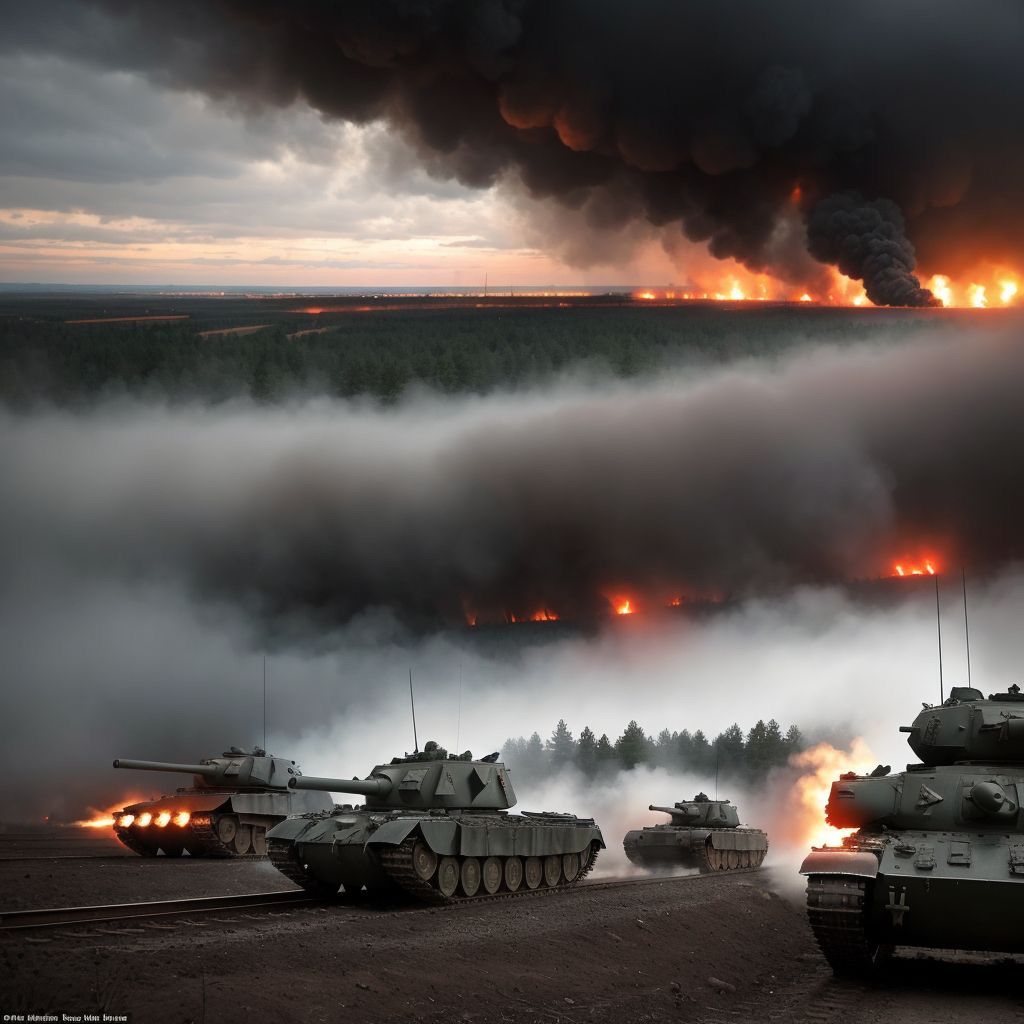
In the early morning hours of June 22, the German Wehrmacht crossed into Soviet territory with overwhelming force. The initial assault was a stunning success, catching the Soviet forces off guard despite numerous warnings and intelligence reports that suggested an attack was imminent. German armies rapidly penetrated deep into Soviet lands, encircling and destroying whole Soviet divisions, capturing millions of prisoners, and seizing vital towns and cities. The speed and efficiency of the German advance during those first weeks were extraordinary, rekindling the myth of German invincibility. Panzer divisions roared forward, leaving devastation in their wake, and the Luftwaffe dominated the skies.

However, the early triumphs masked the enormous challenges ahead. The vastness of the Soviet Union, combined with brutal terrain, immense distances, and a fiercely resilient enemy, soon slowed the German juggernaut. As the summer stretched into autumn, supply lines became dangerously overextended. Fuel, ammunition, and food could not be delivered quickly enough to the front lines. The Wehrmacht was ill-prepared for the harsh realities of a prolonged campaign on such a massive scale. Moreover, Soviet resistance stiffened dramatically. Despite catastrophic losses in the opening days, Soviet troops, bolstered by fierce patriotism and Stalin’s brutal discipline, began mounting effective counterattacks. The harsh weather and the infamous Russian winter, which German troops were not equipped for, compounded the difficulties.

One of the most harrowing episodes of Operation Barbarossa was the Siege of Leningrad. Beginning in September 1941, German and Finnish forces encircled the city, cutting off supplies and subjecting it to relentless bombardment and starvation. For nearly 900 days, the people of Leningrad endured unimaginable suffering. Civilians and soldiers alike faced hunger, cold, and disease, yet refused to surrender. The siege became a symbol of Soviet resilience and sacrifice. Meanwhile, elsewhere on the front, battles raged with equal ferocity. The city of Stalingrad would soon become synonymous with the brutal turning points of the war—fighting that consumed entire armies in deadly urban combat and marked the beginning of the German retreat.

Operation Barbarossa also irreversibly altered the relationship between the Soviet Union and the Western Allies. The invasion ended any hope of peaceful coexistence between Nazi Germany and the USSR and drove the Soviet Union firmly into the Allied camp. Though relations between Stalin and the Western powers remained uneasy, the enormity of the German threat necessitated cooperation. Lend-Lease aid from the United States and Britain began flowing into Soviet ports, helping to bolster Soviet resistance. The Eastern Front thus became the largest and bloodiest theater of the war, consuming the vast majority of German military resources and causing enormous casualties on both sides.

The human cost of Operation Barbarossa was staggering beyond imagination. The invasion unleashed not only military conflict but horrific policies of occupation. Nazi ideology regarded Slavs and communists as subhuman, leading to systematic atrocities, mass executions, and the expansion of the Holocaust into Soviet territories. Einsatzgruppen, mobile killing squads, followed the Wehrmacht to carry out mass murders of Jews, political commissars, and other perceived enemies. Civilians suffered under brutal occupation regimes characterized by forced labor, starvation, and terror. The campaign exemplified the darkest aspects of the war — the intertwining of ideological fanaticism, racism, and genocide with military conquest.

Despite these horrors, Operation Barbarossa ultimately failed in its primary objective: the rapid defeat of the Soviet Union. The German military was never able to deliver a knockout blow, and as winter set in late 1941, Soviet forces launched counteroffensives that began to push the invaders back. The battle lines stabilized into a grinding war of attrition marked by staggering loss of life and equipment. The failure to capture Moscow, the heart of Soviet power, was a significant blow to German morale. Over the next several years, the Eastern Front would see some of the most iconic and decisive battles of the war, including Kursk, which ended in a decisive Soviet victory and cemented the German retreat.

June 22, 1941, thus stands as a date etched deeply in the memory of history not only for the scale of the military operation but for what it represented: the collapse of any illusion of peace between Germany and the Soviet Union, the unleashing of unparalleled violence, and a grim testament to the destructive ambitions of the Nazi regime. It marked the beginning of a desperate struggle for survival and dominance that would decide the fate of millions and reshape the postwar world order.

Historians continue to analyze Operation Barbarossa from many angles. Intelligence failures on the Soviet side, such as Stalin’s refusal to believe warnings about an imminent invasion, played a role in the initial German successes. On the German side, strategic miscalculations—such as diverting forces to secondary objectives like Kiev, which delayed the push toward Moscow—allowed the Soviets time to regroup. Ideological fanaticism led Hitler to dismiss his generals’ practical advice, focusing on annihilating perceived enemies rather than seizing strategic objectives. The campaign exposed the limits of blitzkrieg tactics in such vast and complex terrain, illustrating the dangers of overambitious planning without adequate logistical support.

Today, memorials across Russia, Eastern Europe, and the former Soviet states stand as solemn reminders of the sacrifices made during the Eastern Front campaign. Museums, monuments, and annual commemorations preserve the memory of those who fought and died in the struggle that began on that fateful June day. The legacy of Operation Barbarossa is multifaceted: a cautionary tale about the perils of ideological hatred and military hubris, a tribute to the resilience of the human spirit under unimaginable adversity, and a stark reminder of the cost of war.

The events of June 22, 1941, remain profoundly relevant to this day. In an era marked by geopolitical tensions and the shadow of total war, the lessons of Operation Barbarossa resonate: unchecked aggression can plunge the world into devastating conflict; the human cost of war is immeasurable; and survival often depends on resilience, unity, and the will to endure. It is a chapter of history that demands reflection, remembrance, and the hope that such a tragedy never repeats.

When the sun rose over the vast Eastern Front on June 22, 1941, few could foresee the magnitude of destruction and human suffering that lay ahead. Yet, the legacy of Operation Barbarossa continues to shape our understanding of war, ideology, and the fragile nature of peace. It stands as a somber testament to the costs of conflict on a scale almost beyond comprehension, a reminder etched in time that echoes across generations.

Related Posts