
Latest Articles

The Birth of a Legend: George Washington’s Enduring Legacy

Elias Rowen

1732 marked the birth of one of the most influential figures in American history—George Washington. Born on February 22 in Westmoreland County, Virginia, Washington would go on to become a military hero, a visionary leader, and the first president of the United States. His life and legacy set the foundation for the American republic, shaping the principles of democracy, leadership, and perseverance that still guide the nation today.

Washington’s early years were spent on his family’s plantation, where he developed a strong work ethic and a deep appreciation for the land. His early career as a surveyor and soldier in the British Army during the French and Indian War laid the groundwork for his later leadership in the American Revolution. When tensions between the American colonies and Britain escalated, Washington was appointed Commander-in-Chief of the Continental Army. Despite facing overwhelming odds, he led his troops to victory, securing American independence with his strategic brilliance and unyielding resolve.

After the war, Washington was unanimously elected as the first president of the United States in 1789. His presidency set many important precedents, including the two-term limit and the formation of a stable federal government. He navigated the young nation through its early challenges, emphasizing unity, neutrality in foreign conflicts, and the importance of a strong but balanced government. His Farewell Address remains a powerful piece of wisdom, warning against political divisions and entangling foreign alliances.

Washington’s impact goes far beyond his presidency. He became a symbol of integrity, selfless service, and unwavering dedication to the ideals of freedom and democracy. Even after stepping down from office, he remained a guiding force in shaping the new nation. His leadership style—marked by humility, patience, and a deep sense of duty—continues to inspire leaders and citizens alike.

From his days as a young surveyor to his role as the “Father of the Nation,” George Washington’s legacy endures as a testament to the power of leadership and vision. His birthday is not just a moment in history—it’s a reminder of the values that built a nation and the extraordinary man who helped forge its path.
Related Posts

Malcolm X: A Voice Silenced but Never Forgotten

Elias Rowen

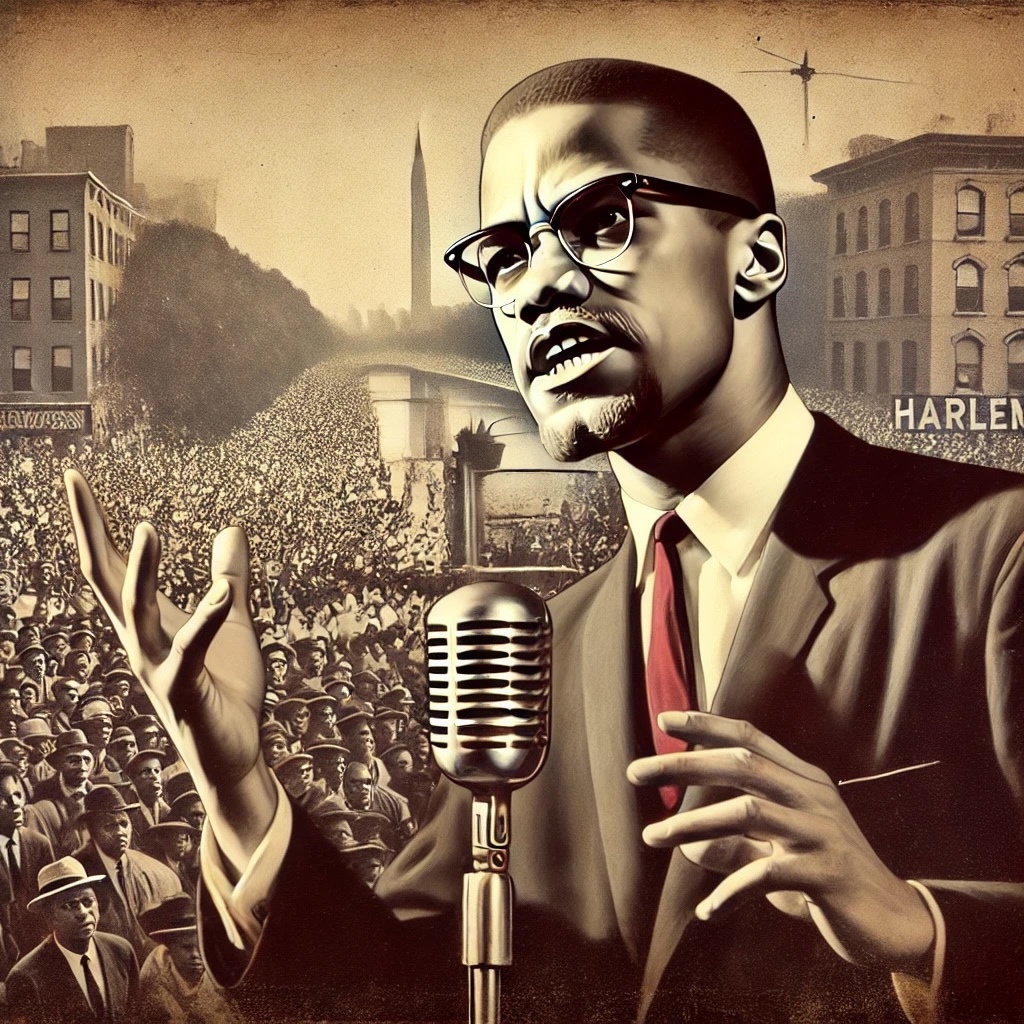
On February 21, 1965, Malcolm X, one of the most influential and controversial civil rights leaders of his time, was assassinated in New York City. His death shocked the nation and the world, leaving a void in the fight for racial justice. Though his life was cut short at just 39 years old, his legacy continues to inspire movements for equality, empowerment, and social change.

Born Malcolm Little in 1925, he endured a life marked by hardship, systemic racism, and personal transformation. After joining the Nation of Islam while in prison, he became one of its most powerful voices, advocating for Black self-reliance, pride, and resistance against oppression. Over time, his philosophy evolved, particularly after his pilgrimage to Mecca, where he embraced a broader vision of unity and human rights. His willingness to challenge not only white supremacy but also the limitations within the civil rights movement made him both revered and feared.

On that tragic day in 1965, Malcolm X was preparing to address a crowd at the Audubon Ballroom in Harlem when he was gunned down by multiple attackers. The assassination was a devastating blow to the civil rights struggle, silencing a leader who had only begun to refine and expand his vision for justice. In the aftermath, many theories emerged about the true orchestrators of his murder, fueling debates that persist to this day.

Despite his untimely death, Malcolm X’s influence remains undeniable. His autobiography, speeches, and ideas continue to resonate with those fighting against racial and social injustices worldwide. His call for self-determination and empowerment echoes through modern movements, proving that while his physical voice was silenced, his message endures.

More than half a century later, Malcolm X remains a symbol of resistance, transformation, and the relentless pursuit of justice. His words still challenge the status quo, reminding us that progress requires courage, conviction, and the willingness to speak truth to power.

Related Posts

The Communist Manifesto: A Revolutionary Call to Action

Elias Rowen

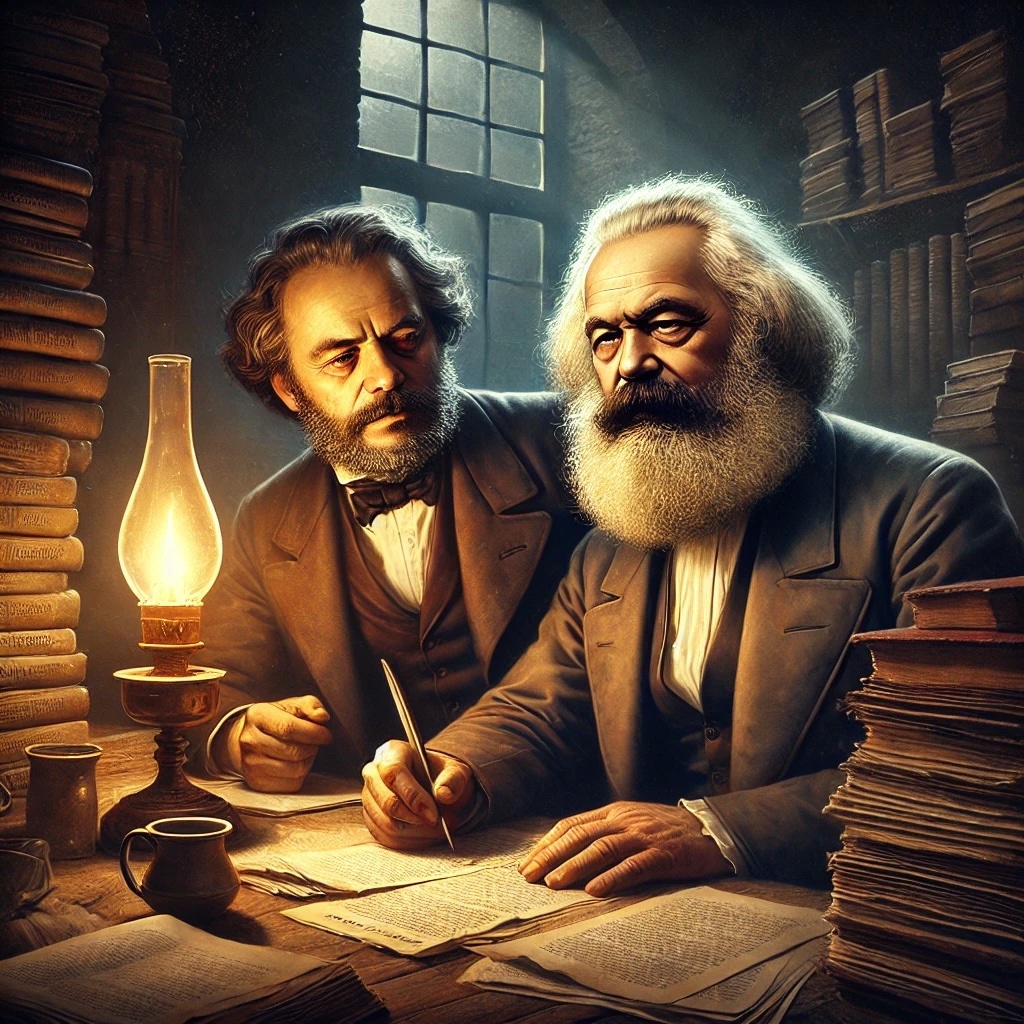
In 1848, Karl Marx and Friedrich Engels published The Communist Manifesto, a document that would forever change the course of history. Written during a time of political upheaval and economic transformation, the manifesto served as a rallying cry for the working class, challenging the dominance of capitalism and advocating for a classless society. Its powerful message resonated with oppressed workers across Europe, igniting socialist movements and shaping the political landscape for generations to come.

At the heart of The Communist Manifesto was the idea that history is defined by class struggle—the ongoing battle between the bourgeoisie, who controlled wealth and production, and the proletariat, the working class who labored under their rule. Marx and Engels argued that capitalism was inherently exploitative, keeping the working class in poverty while the wealthy elite reaped the benefits of their labor. Their solution was a revolution: workers of the world uniting to overthrow the capitalist system and establish a society in which wealth and resources were shared equally among all.

The publication of the manifesto coincided with the revolutionary wave that swept across Europe in 1848, as workers and citizens demanded greater rights, economic fairness, and political representation. Though many of these revolutions were suppressed, the ideas set forth in The Communist Manifesto continued to spread, influencing socialist and communist movements throughout the 19th and 20th centuries. From the rise of the Soviet Union to labor rights movements around the world, the manifesto’s principles have left an indelible mark on history.

Despite being written over 175 years ago, The Communist Manifesto remains a widely read and debated political text. Some see it as a visionary blueprint for social justice, while others criticize its call for revolution as unrealistic or dangerous. Regardless of perspective, its influence cannot be denied. It challenged the status quo, forced societies to reckon with economic inequality, and provided a foundation for political ideologies that continue to shape global discourse today.

Ultimately, The Communist Manifesto was more than just a political pamphlet—it was a declaration of hope for the working class and a demand for a more just and equitable world. Whether one agrees with its ideas or not, its impact on history and its role in shaping modern political thought are undeniable.

Related Posts

Mir: The Soviet Union’s Floating City in the Stars

Elias Rowen

1986 marked a pivotal moment in space exploration as the Soviet Union launched the Mir space station, a technological marvel that would orbit Earth for 15 years. Assembled in space over a decade, Mir became a symbol of human ingenuity and international cooperation, serving as a microgravity laboratory, a training ground for astronauts, and a stepping stone for future space endeavors.

The launch of Mir on February 20, 1986, was a triumph of Soviet engineering. Unlike previous space stations, Mir was designed to be modular, allowing additional sections to be docked over time. This innovation extended its operational lifespan and expanded its capabilities, making it a true pioneer in orbital living. Over the years, it hosted astronauts from around the world, including Russian cosmonauts, American NASA personnel, and even space tourists. This collaboration laid the groundwork for the International Space Station (ISS), proving that despite geopolitical tensions, space could be a unifying force.

Inside Mir, cosmonauts conducted thousands of experiments in astronomy, biology, and physics, providing invaluable data on long-duration spaceflight. Living in close quarters for extended periods tested human endurance and adaptability, offering critical insights for future missions to Mars and beyond. However, Mir also faced its share of challenges. Equipment failures, oxygen leaks, and even a fire tested the resilience of its crew, but each crisis was met with determination and problem-solving, further proving the strength of human will in the most hostile of environments.

Despite its aging systems, Mir remained a beacon of space exploration until its deorbit in 2001. The controlled reentry sent the station into the Pacific Ocean, marking the end of an era but not the end of its legacy. The knowledge gained from Mir’s missions continues to shape modern space exploration, influencing the design of space habitats and preparing humanity for deeper space ventures.

Mir was more than just a space station—it was a testament to human perseverance, curiosity, and the pursuit of knowledge beyond our planet. It served as a bridge between Cold War rivals, a testbed for future technologies, and an inspiration for generations of scientists and explorers. Today, as humanity sets its sights on the Moon, Mars, and beyond, Mir’s spirit lives on in every astronaut who dreams of the stars.

Related Posts

John Glenn’s Historic Journey: America’s First Orbit of Earth

Elias Rowen

On February 20, 1962, John Glenn made history as the first American to orbit the Earth aboard the spacecraft Friendship 7. At the height of the Cold War, the United States was locked in a tense space race with the Soviet Union. Just a year earlier, Soviet cosmonaut Yuri Gagarin had become the first human to orbit the planet, leaving America eager to prove its own capabilities in space exploration. Glenn’s mission, known as Mercury-Atlas 6, was a pivotal moment that demonstrated America’s technological prowess and solidified its place in the space race.

Blasting off from Cape Canaveral, Florida, Glenn’s spacecraft reached speeds of over 17,500 miles per hour, allowing him to complete three orbits around Earth in just under five hours. During his flight, he marveled at the stunning views of the planet below, describing the sight of the sun rising over the horizon as breathtaking. However, the mission was not without its dangers. A warning light suggested that the heat shield protecting Glenn’s spacecraft might have been loose, raising fears that Friendship 7 would burn up upon reentry. Mission control instructed Glenn to keep a retrorocket pack attached to the capsule in hopes of holding the shield in place. As he plunged through the atmosphere, fiery plasma engulfed the spacecraft, cutting off communications for several tense minutes. To the relief of everyone on the ground, Friendship 7 emerged intact, and Glenn safely splashed down in the Atlantic Ocean, where he was quickly rescued.

John Glenn’s successful mission was more than just a technological triumph—it was a defining moment of American pride and determination. His courage and composure under pressure made him a national hero, earning him a ticker-tape parade in New York City and global admiration. The flight also paved the way for future space exploration, proving that humans could not only reach space but operate effectively in orbit. Glenn later returned to space in 1998 at the age of 77 aboard the Space Shuttle Discovery, becoming the oldest person to fly in space. His legacy endures as a symbol of human curiosity, perseverance, and the relentless pursuit of the unknown.

Related Posts