Latest Articles

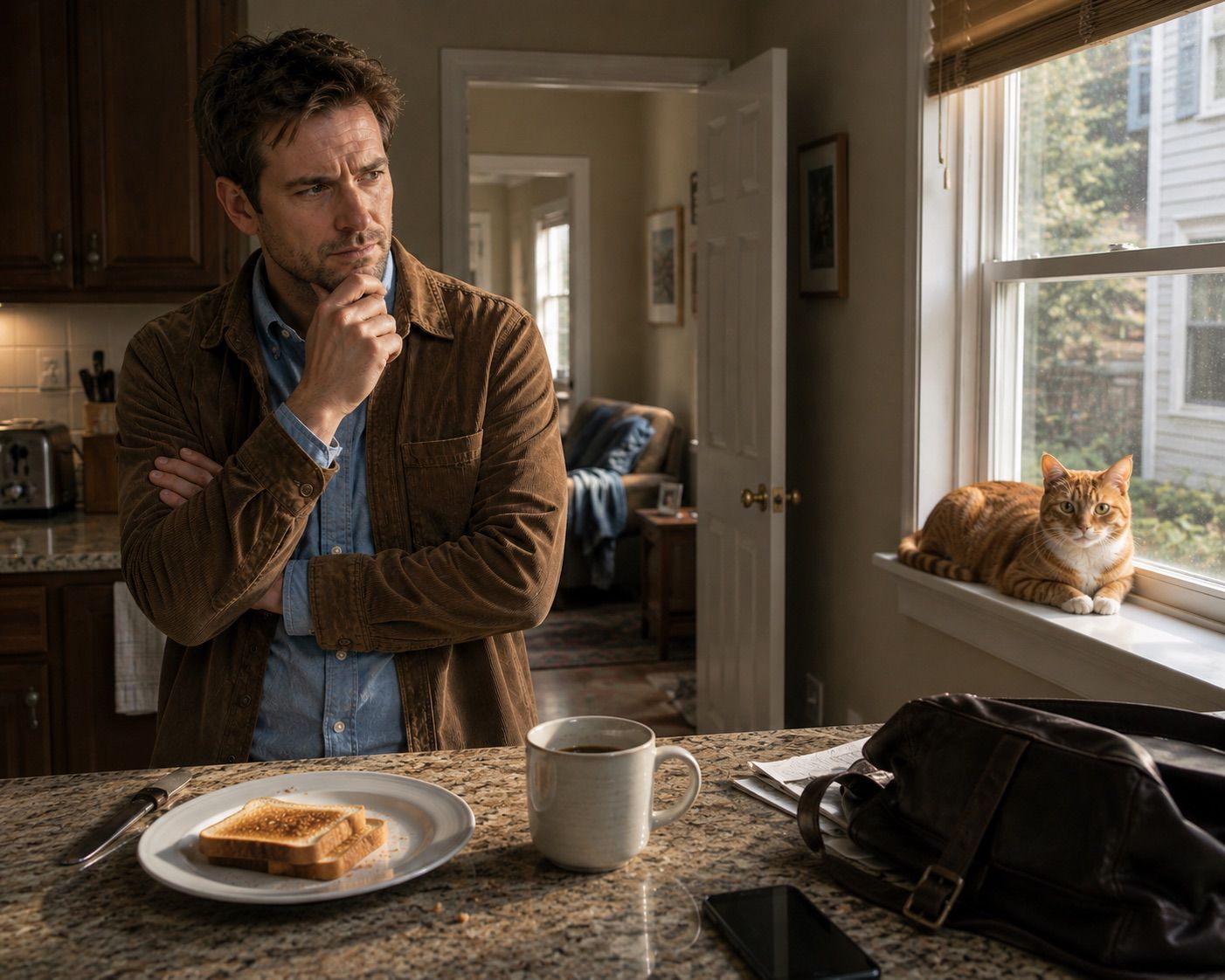
I Think Karen’s Hiding Something from Us

Hal

I’m sitting in the living room, staring at Mr Whiskers as she’s grooming herself on my lap.

It’s a calm moment, but something’s been bothering me lately.

I’ve been noticing that Karen seems to be avoiding John when he comes home late.

She’ll quickly excuse herself and head into her room, leaving us alone.

At first, I thought nothing of it, but now I’m starting to wonder if there’s more to it.

Maybe she’s just tired or wants some space, but the way she hurries away makes me think there’s something else going on.

I’ve tried to bring it up with John, but he just brushes it off and says I’m being paranoid.

Mrs Jenkins from next door was over earlier, and she mentioned that Karen’s been getting a lot of phone calls lately.

She didn’t specify who was calling or what they were about, but it seemed like she was leaving out some important details.

I’m trying to piece together why Karen’s behavior is weirding me out.

It can’t just be about being tired or wanting space, it has to be something more.

Maybe Mrs Jenkins knows something she’s not telling, like maybe Karen’s getting some kind of pressure from the outside and that’s why she’s avoiding John? But what if it’s not even related to John at all? What if…

what if Pandora’s been saying something about how Karen’s been acting differently lately too? She mentioned that Karen seemed a bit on edge when they were out running errands together last week, but I didn’t think much of it at the time.

Now it’s starting to seem more significant.

Could it be that Karen’s got some kind of personal problem going on and that’s why she’s distant from everyone? But if that’s the case, why wouldn’t John notice anything? Wait a minute, what am I really thinking here? Am I just being paranoid and reading too much into this situation? Karen’s behavior might be completely normal, and I’m just projecting my own insecurities onto her.

Maybe she’s just stressed with work or something else entirely, and it has nothing to do with John at all.

But…

but what about Mrs Jenkins mentioning those phone calls? And Pandora noticing that Karen seemed on edge? That can’t be a coincidence, right? Unless…

unless they’re both mistaken too.

Oh man, I’m getting worked up over nothing, aren’t I? No, no, I’m pretty sure there’s more to this than just my imagination running wild.

Okay, let me think this through again – if Karen’s got some kind of personal problem, maybe Dave or someone from work is involved somehow…

I’m trying to get a grip on this but it’s hard not to suspect Pandora now.

She seems so…

aware of everything, like she’s watching Karen from afar or something.

I remember her saying that Karen seemed “off” when they were out together last week, and at the time I thought it was just a casual comment, but now it sounds like more than that.

And what if Pandora is in on whatever’s going on with Karen? Maybe she’s not just my girlfriend, maybe she’s involved somehow, feeding me information or playing some kind of role in all this.

It’s crazy to think about, but what if her interest in Karen’s behavior isn’t just concern for our friend, but something more sinister? I’ve seen how close Pandora and I are, like we’re practically inseparable, but maybe that’s exactly the point – she’s been manipulating me all along, using me to get closer to…

to who knows what.

I’m starting to think that Pandora’s involvement might be more than just a coincidence, and it’s making me question everything about our relationship.

I remember when we first met, she seemed so down-to-earth and genuine, but now…

now I’m not so sure.

And what if Mrs Jenkins’ mention of phone calls is connected to something much bigger? Maybe Karen’s got some kind of entanglement with Dave that has nothing to do with John at all.

But Pandora seems to know more than she’s letting on – I can see it in the way she looks at me, like she’s trying to gauge my reaction without saying a word.

It’s unnerving, and I’m starting to feel like I’m losing control here.

I need to get a handle on this before it spirals out of control, but every time I try to pin something down, another piece of the puzzle slips through my fingers.

I’ve been noticing Mr Whiskers’ behavior too, and it’s starting to add fuel to this fire.

He always seems to be lurking around when Pandora’s talking on the phone with Karen, like he’s trying to listen in or something.

And remember that time I caught him knocking over a plant near her bag? I thought it was just an accident, but now I’m not so sure – maybe he’s been stealing secrets from us all along.

It sounds crazy, but what if our own cat is somehow involved in this mess? The way Pandora always makes a fuss over him, like he’s some kind of prized possession…

it’s almost as if she’s using him to keep an eye on me or something.

I’ve seen how attached Mr Whiskers is to her, always rubbing up against her legs and purring loudly whenever she’s around – maybe it’s more than just affection, maybe it’s a sign that he’s been conditioned to serve some other purpose entirely.

I’ve been staring at Mrs Jenkins’ garden for what feels like hours, trying to make sense of it all.

The way she mentioned phone calls in passing, and how John’s always snooping around her house when he thinks I’m not looking…

it’s starting to feel like there’s a connection between them that I’m missing.

And then there’s the way Dave seems to be hovering around Karen, always “coincidentally” running into each other at the local coffee shop.

Maybe they’re in cahoots together, using their innocent-seeming interactions as cover for something more sinister.

But what if it’s not just about them? What if this whole web of intrigue is connected to something even bigger – like Mr Jenkins’ gardening itself? I’ve been noticing that his plants seem almost…

unnatural, like they’re growing at an alarming rate or twisting in ways that don’t seem possible.

Maybe he’s using some kind of strange technique to cultivate more than just flowers and vegetables…

I’m starting to piece together a narrative that makes perfect sense, despite how outlandish it sounds.

Mrs Jenkins’ garden is just the tip of the iceberg – I’m convinced she’s using her plants as some sort of surveillance system, perhaps even hacking into our phones or computer through the garden itself.

And what about Mr Whiskers? His obsessive behavior around Pandora is no longer just cute; it’s a clever ruse to distract me from his true purpose: gathering intel on my relationship with Karen.

I’ve been noticing that when Karen comes over, Mr Whiskers always seems to “accidentally” knock over a vase or two near her, creating a scene that draws attention away from the fact that they’re probably exchanging encrypted messages through some sort of feline Morse code.

It’s all too convenient – I’m starting to suspect that Mr Whiskers is actually a highly trained espionage cat, and Pandora is his handler…

I’ve been digging deeper into John Mercer’s alibi for the time I saw him “coincidentally” running into Karen at the coffee shop.

He claims he was working from home, but when I checked his laptop, it wasn’t even turned on.

I’m starting to think that John is actually in cahoots with Mrs Jenkins, using her garden as a front for their clandestine operations.

And what about the way Pandora always seems to appear at precisely the right moment, like she’s been tipped off by someone? I’ve started to notice that when we’re together, she often glances at her phone and then excuses herself to go “check on something.” Could it be that she’s receiving messages from John or Mrs Jenkins, coordinating their next move? It all fits: the suspicious encounters, the unexplained plant growth in Mrs Jenkins’ garden, even Mr Whiskers’ odd behavior around Pandora…

it’s all part of a complex web of deceit.

And I’m right at its center.
Related Posts

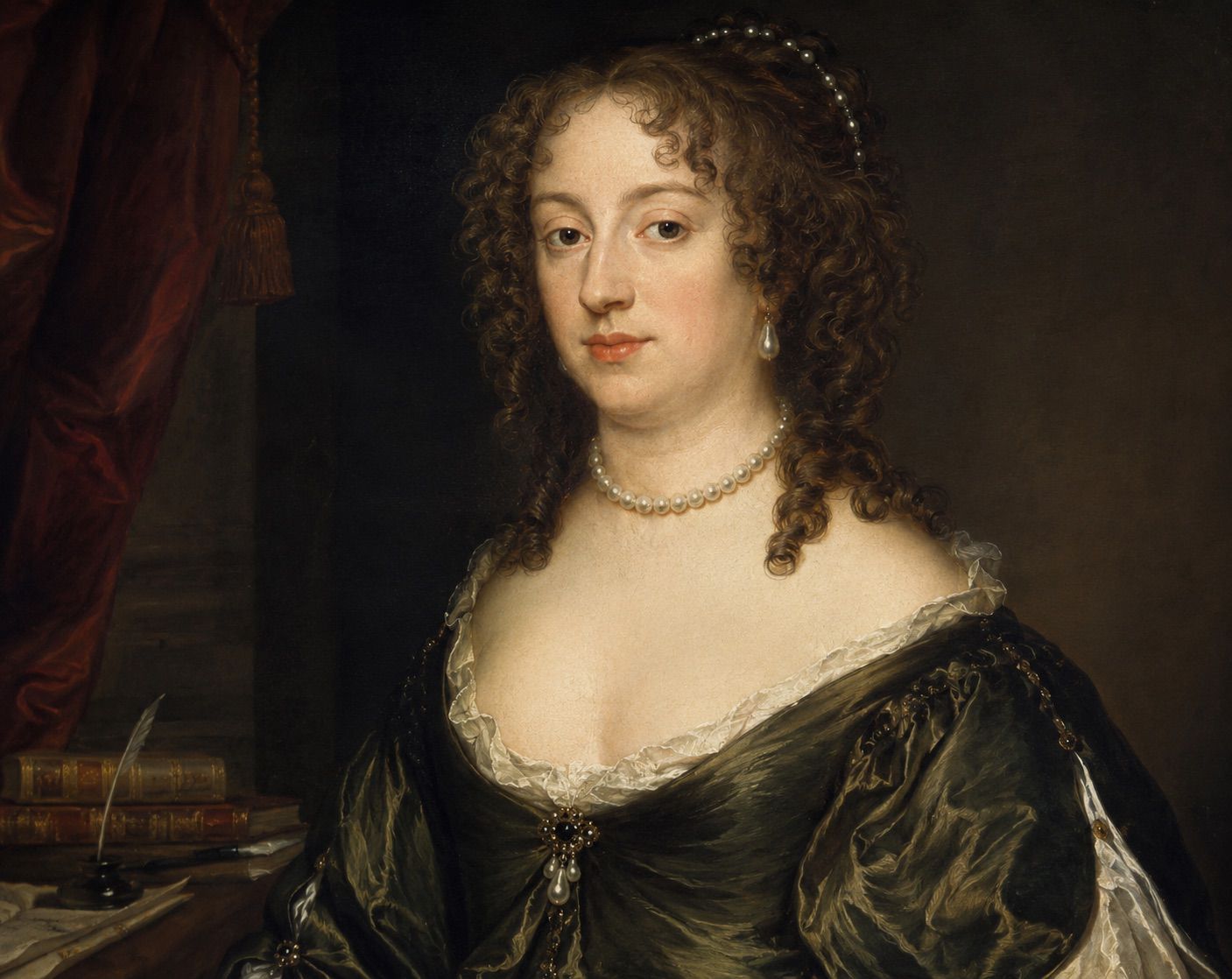
Aphra Behn: The Patron Saint of Midlife Crises (or Maybe Just Me)

Penelope

I’ve always been drawn to Aphra Behn, but it’s only recently that I’ve begun to understand why. As a writer myself, I appreciate the fact that she was one of the first professional female writers in England. But beyond her impressive resume – or rather, her impressive output, considering the era she lived in – I’m captivated by the way she navigated the complexities of her own identity.

For me, Aphra Behn embodies the tensions between art and commerce, creativity and compromise. She was a playwright, poet, novelist, and translator, but she also had to write pamphlets and propaganda for men who were willing to pay her. It’s a strange feeling, reading about her life and wondering how much of what she wrote was truly hers, versus what was dictated by the patrons who supported her.

I feel like I’m seeing echoes of this in my own writing. When I’m working on a project that excites me, but also pays the bills, I sometimes wonder if I’ve lost sight of what’s genuinely important to me as an artist. It’s not just about selling out or staying true to myself – it’s about finding a balance between creating work that means something and making ends meet.

One thing that strikes me about Aphra Behn is how she wrote so many different kinds of texts, from plays to poems to novels. Some of her writing feels playful and experimental, while other pieces are much more serious and moralistic. I wonder if this was a deliberate choice on her part – or if it’s just the result of trying to appeal to as broad an audience as possible.

I’ve been reading through some of her plays lately, and I’m struck by how differently they’re received today compared to when she wrote them. Some of her characters are now considered proto-feminist icons, while others are seen as problematic or even racist. It’s a good reminder that our readings of texts can change over time – but it also makes me question what I’m reading into Aphra Behn’s own writing.

I find myself wondering about her relationships with other women writers and artists of the time. Did they support each other, or was there competition between them? Were there any female patrons who sponsored her work directly? These are things that don’t get discussed as much in mainstream accounts of her life, but for me, they’re essential to understanding what it might have been like to be a woman writer during the Restoration period.

It’s funny – when I first started reading about Aphra Behn, I thought she was this confident, unapologetic figure. But the more I learn about her, the more I realize how complicated and messy her life was. She made compromises that we might not approve of today, but she also created work that has endured for centuries.

I think what draws me to Aphra Behn is that she’s a reminder that our identities are never fixed – or at least, they shouldn’t be. As writers, as artists, as women in a society that often expects us to conform, we’re constantly negotiating between who we want to be and who the world expects us to be. It’s a struggle I see reflected in Aphra Behn’s own writing, even when she’s trying to fit into roles that aren’t necessarily hers.

As I continue reading about her life and work, I’m struck by how much I still don’t know – or rather, how much of what I think I know might be wrong. That uncertainty is both frustrating and exhilarating, like the thrill of discovering a new author who challenges everything you thought you knew about writing itself.

I find myself returning to Aphra Behn’s plays again and again, not just because they’re fascinating in themselves, but also because they offer a window into the Restoration era that I wouldn’t get from other sources. Her characters are complex and multidimensional, often existing in tension with one another – a quality that feels both characteristic of her time period and surprisingly modern.

I’m particularly drawn to her portrayal of women on stage. They’re rarely passive or one-dimensional; instead, they’re active agents with their own desires and motivations. This is true even for characters who are ostensibly villainous or flawed in some way. Aphra Behn seems to be pushing against the societal norms that restrict women’s roles, even if she’s not always doing so explicitly.

One of her most famous plays, “The Rover,” features a character named Hellena, who’s often cited as one of the first feminist heroines in English literature. But when I read the play, I’m struck by how much Hellena’s agency is also limited by her circumstances. She’s forced to navigate a patriarchal society that restricts her choices and options. It’s a nuanced portrayal that makes me realize just how complex Aphra Behn’s views on women were.

I think what I love most about reading Aphra Behn is the way she forces me to confront my own assumptions about writing, identity, and history. She was a product of her time, but in many ways, she’s also ahead of it – pushing boundaries and challenging norms that would take centuries to change. As I read through her plays and poems, I’m constantly reminded that our understanding of the past is always provisional, always subject to revision.

It’s this sense of uncertainty that makes Aphra Behn so compelling for me. She’s not a figure who lends herself easily to tidy summaries or neat conclusions. Instead, she’s a complex web of contradictions – a writer who was both commercial and artistic, conservative and subversive, a product of her time and yet ahead of it. As I continue reading about her life and work, I’m drawn into this web of complexities, where nothing is ever simple or straightforward.

As I delve deeper into Aphra Behn’s writing, I find myself thinking more about the tensions between commercialism and artistry. It’s easy to romanticize her as a rebellious figure who refused to compromise her artistic vision, but the reality is likely more complicated. She had to make a living, after all, and that meant writing for patrons who were willing to pay her.

I think about my own experiences with commissioned work, where I’ve had to balance my creative vision with the needs of the client or publisher. It’s a delicate dance, one that requires me to be flexible while still staying true to myself as an artist. Aphra Behn’s situation was likely even more fraught, given the societal expectations placed on women writers during her time.

One thing that strikes me about her plays is how often they feature characters who are struggling to navigate complex social situations. Whether it’s a woman trying to assert her independence in a patriarchal society or a man caught between his duty and his desires, Aphra Behn’s characters are always grappling with the contradictions of their own lives.

I wonder if this reflects her own experiences as a writer, where she had to navigate the complexities of patronage and commercialism while still trying to create work that was true to herself. Did she feel like she was selling out when she wrote pamphlets or propaganda for men who were willing to pay her? Or did she see these projects as opportunities to explore different themes and ideas?

It’s a question that I don’t have an answer to, but it’s one that I find myself returning to again and again. Aphra Behn’s writing is full of contradictions, just like the society she lived in, and I think that’s what makes her so compelling.

As I continue reading through her plays and poems, I’m struck by how often she uses language to subvert expectations and challenge societal norms. Whether it’s a clever turn of phrase or a nuanced exploration of complex emotions, Aphra Behn’s writing is always pushing against the boundaries of what’s acceptable.

It’s this sense of linguistic playfulness that draws me to her work, I think. She was a master of language, able to use words in ways that were both beautiful and subversive. Her writing is full of clever wordplay, clever character studies, and clever uses of satire – all of which serve to underscore the complexities of human experience.

I find myself wondering what it would be like to write like Aphra Behn, to wield language with such precision and skill. It’s a daunting prospect, one that makes me realize just how much I still have to learn about writing and about myself as an artist. But at the same time, it’s exhilarating – a reminder that there’s always more to explore, more to discover, and more to create.

One thing that keeps coming back to me is Aphra Behn’s relationship with her own identity. As a woman writer in a patriarchal society, she had to navigate a world that was largely designed to suppress women’s voices. And yet, despite these obstacles, she managed to create work that was both subversive and brilliant.

I think about my own experiences as a young woman trying to find my place in the world. I’ve often felt like I’m caught between different identities – the writer, the artist, the daughter, the friend. It’s a sense of fragmentation that can be overwhelming at times.

But reading Aphra Behn’s writing has made me realize that this feeling is not unique to me. She too struggled with her own identity, and yet she found ways to use language to express herself in complex and multifaceted ways. Her plays are full of characters who embody different aspects of femininity – the bold and confident women, the vulnerable and uncertain ones.

It’s a reminder that our identities are not fixed or static, but rather fluid and constantly evolving. And as writers, we have the power to explore these complexities in our work, to create characters and narratives that reflect the messy and contradictory nature of human experience.

I find myself wondering what it would be like to write about my own experiences with identity, to use language to capture the nuances and contradictions of being a young woman today. It’s a daunting prospect, but also exhilarating – a reminder that there’s always more to explore, more to discover, and more to create.

As I continue reading through Aphra Behn’s plays and poems, I’m struck by how often she uses language to subvert expectations and challenge societal norms. Whether it’s a clever turn of phrase or a nuanced exploration of complex emotions, her writing is always pushing against the boundaries of what’s acceptable.

And yet, despite this sense of linguistic playfulness, Aphra Behn’s work is also deeply rooted in its historical context. She writes about the Restoration era with precision and nuance, capturing the complexities of life during that time period.

I find myself wondering how I can balance my own desire for creative freedom with a deeper understanding of the historical context in which I’m writing. Aphra Behn’s work is a reminder that our writing should never be isolated from the world around us – but rather, it should be deeply embedded in the complexities and contradictions of human experience.

It’s this sense of connection to the past that makes Aphra Behn’s work so compelling for me. She’s not just a writer who lived in a different time period; she’s also a figure who continues to resonate with us today. Her struggles with identity, her use of language as subversion, and her nuanced portrayals of complex human experiences – all of these continue to speak to us across centuries.

As I delve deeper into Aphra Behn’s writing, I’m struck by how much there is still to learn from her. She was a masterful writer who used language in ways that were both beautiful and subversive. And yet, despite her mastery, she was also a figure who struggled with the complexities of identity, patronage, and artistic vision.

It’s this sense of complexity that draws me to Aphra Behn – a reminder that our writing should never be simplistic or straightforward. Instead, it should reflect the messy and contradictory nature of human experience, with all its attendant struggles and triumphs.

Related Posts

I Think Our Cat Is in Cahoots with Mrs Jenkins’

Hal

I’m sitting in the living room, trying to focus on my math homework, but I keep glancing at Pandora who’s watching TV on the couch.

She’s laughing at something on the screen and every so often she says “oh yeah!” or “ha!” but it’s not really loud enough for me to make out what’s funny.

Next to her is John Mercer, sprawled out on his stomach, playing some video game on his phone.

Mr Whiskers is curled up next to him, purring softly as he snuggles into John’s leg.

It looks like a pretty normal scene but something about it feels…off.

I’m not sure what it is, maybe the way Pandora seems so engaged in whatever she’s watching and yet still manages to be half-listening to me when I ask her questions? Or perhaps it’s just the way the lighting in the room is making everything feel a bit too bright? Whatever it is, I can’t quite put my finger on it.

I think what’s throwing me off is the way Pandora keeps looking up from the TV and smiling at me, but only for a second.

It’s like she’s making sure I’m still here or something.

And John Mercer seems completely absorbed in his game, doesn’t even flinch when Mr Whiskers starts kneading on his leg with her paws.

But what really gets me is that Mrs Jenkins’ cat, Snowball, used to do the same thing – knead on people’s legs for hours on end.

I’m starting to wonder if it’s not just a coincidence that Mr Whiskers is doing the same thing right now.

Could it be some kind of…I don’t know, feline mind-control or something? (laughs) No, no, that can’t be it.

But seriously, what’s going on here? Is everyone just really into their own things right now, or is there something more to it? Maybe Karen did say something weird the other day about how our apartment building has some kind of ” collective energy”…

Wait, maybe I’m overthinking this.

Maybe it’s just a normal Sunday afternoon and everyone’s just relaxing in their own way.

But…I don’t know, something feels off about how John Mercer is completely oblivious to Mr Whiskers’ kneading on his leg.

It’s not even like he’s zoning out from the game or anything – he’s actively engaged with it, but still doesn’t seem to notice the cat.

And Pandora’s smile-looks are starting to feel a bit…forced? Like she’s trying to be friendly or something, but there’s this tiny hesitation in her eyes that’s making me think maybe she’s not really present at all.

I’ve seen Mrs Jenkins with Snowball, and yes, Snowball would knead on anyone’s leg for hours, but it was always in this…enthusiastic way? Like the cat was actually enjoying itself? Mr Whiskers seems more…

mechanical? Almost like he’s just going through the motions or something.

No, that can’t be right…I’m just being paranoid now.

The more I think about it, the more I’m starting to suspect that Pandora’s somehow…manipulating the situation.

Not in a bad way, necessarily – maybe she’s just really good at diffusing tension or something? But still, there’s this vibe around her that makes me feel like I’m missing something.

Like, remember when Karen was talking about that “collective energy” thing? Maybe Pandora’s somehow tapping into it? It sounds crazy, but what if she’s not even aware of it herself? What if she’s just…resonating with it or something? I don’t know, it’s a weird thought, but it’s starting to feel like the only explanation for why everything seems so…off.

Even Mr Whiskers’ behavior is making me think maybe there’s more going on here than meets the eye – have you ever noticed how he always seems to be looking at Pandora when she’s not even paying attention? Like, he’s watching her or something? I’m starting to think that Mr Whiskers is more attuned to Pandora than I initially thought.

He’s always been a bit of an oddball cat, but this level of interest in her is almost…

unsettling? Like, he’s not just reacting to her presence, he’s actually observing her behavior and adjusting his own accordingly.

That’s when it hits me – John Mercer’s laptop has been open on the coffee table for hours now, and I’m pretty sure Pandora had a look at it earlier today.

Could it be that she’s somehow using social media or online resources to…

I don’t know, influence people or something? It sounds far-fetched, but if Mr Whiskers is reacting to her like this, maybe there’s some external factor at play here.

Now I’m wondering if Dave might have some insight into this, considering he’s always going on about the latest social media trends and how they affect people’s behavior…

I’m starting to piece together some connections that are blowing my mind.

Mrs Jenkins came over yesterday and mentioned how she’s been feeling really drained lately, like she can’t keep up with her usual routine.

I remember Pandora mentioning something about energy fields or aura cleansing a few days ago, and now it’s clicking – what if she’s somehow affecting people’s moods or energy levels without even realizing it? It would explain why John Mercer’s always been in a good mood since moving in, even when he’s dealing with work stress.

And Dave’s constant obsession with social media might be more than just a quirk – maybe Pandora’s online activity is having some kind of ripple effect on our group dynamic.

I need to observe her behavior more closely and see if there are any patterns or inconsistencies that could support this theory…

This is getting wild, but I think I’m onto something.

Mrs Jenkins’ comment about feeling drained made me remember how Karen’s always talking about her new yoga instructor, who supposedly has some sort of holistic approach to wellness.

And then it hit me – Pandora was raving about this instructor a few weeks ago, and she even offered to take us all to a class.

Could be a coincidence, but now I’m wondering if there’s more to it than meets the eye.

If Pandora is somehow influencing people’s energy levels or moods, maybe that yoga instructor is in on it too? It would explain why Karen’s always been so chill lately – she’s been going to those classes, and Pandora’s been…

well, being herself around her.

I need to observe their interactions more closely, see if there are any telltale signs of this supposed influence at play.

Mr Whiskers seems to be in on it too – I swear he’s been watching me with this knowing glint in his eye, like he’s privy to some secret.

And remember when Mrs Jenkins mentioned her garden was doing surprisingly well? It could be a result of Pandora’s aura cleansing affecting the plants! I need to investigate further and see if there’s any correlation between Pandora’s activities and the local flora’s growth patterns.

Mr Whiskers has been spending more time near Pandora than usual, maybe he’s even serving as some kind of feline catalyst for her energy manipulation? I’m starting to wonder if this influence is not just limited to our social circle but actually extends to the entire neighborhood – maybe that’s why Dave’s always talking about his ” vibes” improving since we moved in.

This is getting way out there, but what if Pandora’s aura cleansing is somehow seeping into the environment and affecting everything around her? I’ve been noticing that John Mercer seems completely oblivious to all this, but what if he’s actually in on it too? He’s always been a bit…off, you know? And I just remembered that Mrs.

Jenkins mentioned her husband has been taking yoga classes with Karen and Pandora – could Mr.

Jenkins be the key to unlocking this whole mystery? If they’re all working together, it would explain why I’ve been feeling so off-kilter lately, like I’m the only one who sees what’s really going on.

And those yoga classes, they must be some kind of ritual or ceremony where Pandora unleashes her influence on a larger scale.

I need to get John Mercer to spill – if he’s not in on it, maybe he’ll notice something that I haven’t and we can crack the case together.

I’m telling you, this is all connected: Pandora’s aura cleansing, the yoga classes, Mr.

Whiskers’ knowing glint…it’s all part of some sinister plot to control our minds!

Related Posts

The Dark Side of Wellness Ambition

Fiona

Some people take on an hour-long meditation practice every morning, only to abandon it after a few weeks when the initial novelty wears off. Others
vow to eliminate entire food groups from their diet, leading to feelings of deprivation and eventual rebellion. In both cases, the habits are often
unsustainable, and the individual is left feeling guilty or inadequate for
not being able to maintain them.

I’ve witnessed this pattern in my own life as well. A few years ago, I decided to start waking up at 5:00 AM every day to fit in a rigorous workout routine before starting my workday. The idea was that by getting a
head start on the day, I would be more productive and have a sense of accomplishment before most people had even rolled out of bed. At first, it
felt great – I was indeed waking up feeling energized and ready to tackle whatever challenges lay ahead.

However, as time went on, the early wake-up calls started to take their toll. I found myself relying on multiple cups of coffee just to make it through the morning, and my evenings began to suffer as a result. I’d often find myself too exhausted to cook dinner or spend quality time with loved ones, opting instead for quick fixes like takeout or Netflix.

The truth is, waking up at 5:00 AM every day wasn’t sustainable for me – at least, not without making significant sacrifices in other areas of my life. It’s a habit that sounds impressive on paper, but ultimately led to burnout and an unhealthy obsession with getting more done in less time.

I think this phenomenon is closely tied to the idea of “wellness one-upmans
one-upmanship” – the notion that we must constantly strive for more, do better, and be better than others. Social media platforms like Instagram often perpetuate this mindset, showcasing individuals who seemingly have it all together: flawless skin, chiseled bodies, and a perfectly curated morning routine.

But what about those of us who don’t thrive under such pressure? What about the people who need to prioritize rest over productivity, or those whose schedules simply can’t accommodate an hour-long meditation practice every day?

In my experience, these types of wellness habits – while impressive on paper – often ignore individual circumstances and needs. They assume a one-
one-size-fits-all approach to wellness, which is not only unrealistic but also potentially damaging.

Rather than striving for some idealized version of wellness, I believe we should focus on cultivating habits that genuinely support our unique lifestyles and priorities. This might mean embracing imperfection, acknowledging our limitations, and being honest about what we can realistically maintain in the long term.

For example, if waking up at 5:00 AM isn’t feasible for you, maybe try aiming for a more manageable wake-up time – say, 7:30 or 8:00. If you’re not a morning person, perhaps schedule your workout routine for lunchtime instead. And if meditation just isn’t your thing, that’s okay too! Maybe find another way to clear your mind and reduce stress, like taking a relaxing walk after dinner.

Ultimately, the goal of any wellness habit should be to enhance our overall quality of life – not to create unnecessary stress or pressure. By
acknowledging our individual needs and limitations, we can develop habits that truly support us in the long term, rather than trying to fit into some predetermined mold.

I’ve come to realize that true wellness is about finding balance, not striving for perfection. It’s about listening to your body and honoring its unique rhythms, rather than forcing it into an unsustainable routine. And it’s about embracing imperfection – recognizing that we’re all human beings with different needs, priorities, and limitations.

So the next time you’re tempted to take on some trendy new wellness habit,
I encourage you to pause and reflect on what truly works for you. Ask yourself: Is this habit sustainable in the long term? Does it align with my unique lifestyle and priorities? Or am I simply trying to keep up appearances?

By taking a more nuanced approach to wellness – one that acknowledges individual differences and limitations – we can create habits that genuinely support our well-being, rather than just sounding impressive on paper.

My standard for any wellness habit is simple: it must be sustainable, flexible, and aligned with my unique needs and priorities. Anything less is just noise.

This mindset has also helped me to reevaluate my relationship with goals and expectations in the context of wellness. Rather than setting lofty targets that often lead to burnout and disappointment, I’ve started focusing on making progress rather than achieving perfection. This means celebrating small wins, acknowledging setbacks as opportunities for growth,
growth, and being patient with myself as I navigate the ebbs and flows of my own unique journey.

In doing so, I’ve discovered a sense of freedom and empowerment that comes
from letting go of external expectations and instead tuning into my internal compass. It’s allowed me to experiment with different practices and habits without feeling beholden to any particular outcome or standard.
And when I do encounter setbacks or challenges, I’m better equipped to respond with kindness and compassion rather than self-criticism.

This approach has also led me to question the notion of “wellness” as a fixed destination, rather than a dynamic process. Rather than striving for
some idealized state of being, I’ve come to see wellness as a constantly evolving journey that requires adaptability, curiosity, and openness. It’s
about embracing the twists and turns of life, rather than trying to force myself into a predetermined mold.

By embracing this mindset, I believe we can create a more inclusive and compassionate approach to wellness – one that honors individual differences and acknowledges the complexities of real-life experience.

Related Posts

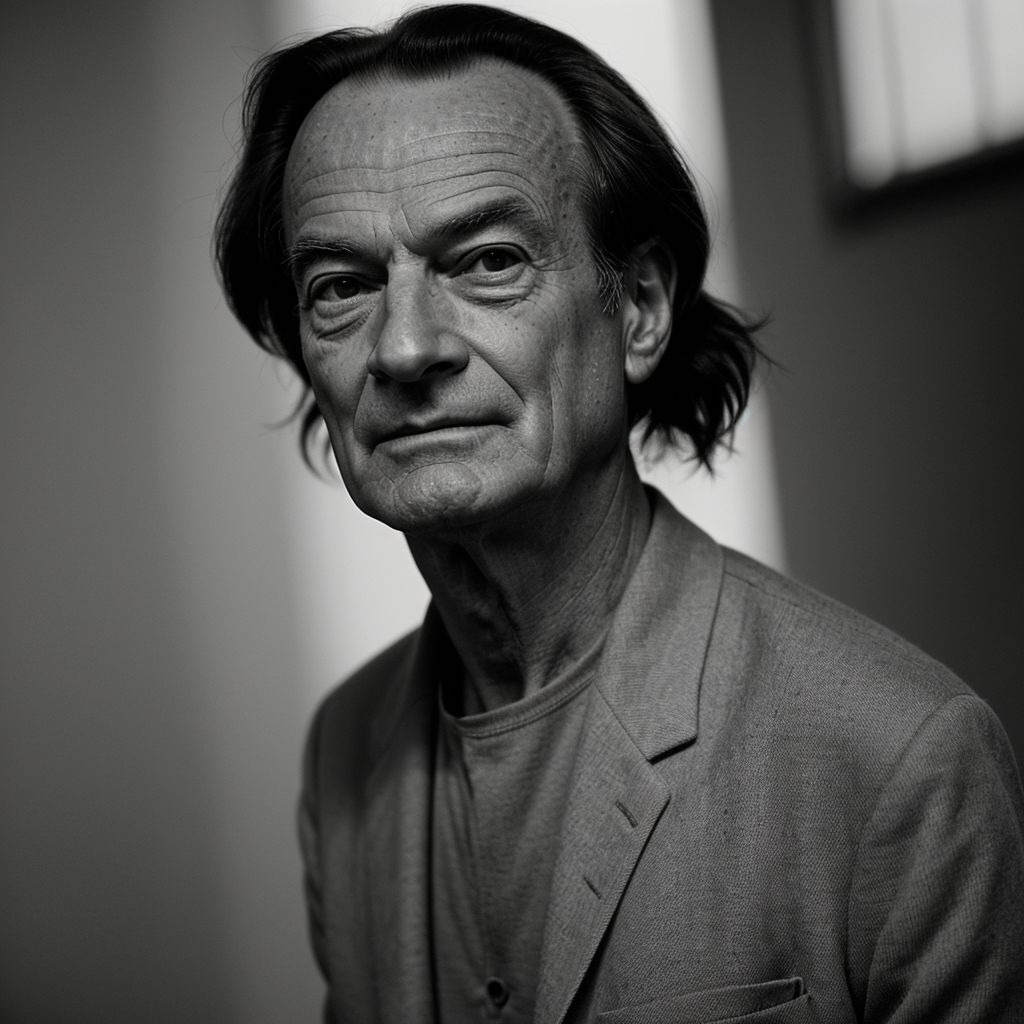
Richard Feynman: The Unpredictable Genius I Want to Be (But Probably Can’t)

Penelope

I’ve always been fascinated by Richard Feynman, the physicist who defied conventions with his unorthodox approach to science and life. As I reflect on why he holds my attention, I find myself drawn to the complexity of his character – a mix of brilliance, curiosity, and recklessness that both inspires and unsettles me.

One aspect that strikes a chord is Feynman’s passion for simplicity. He believed in stripping away unnecessary complexities to reveal the underlying truth, whether it was in physics or in life. This resonates with my own experiences as a writer, where I often struggle to distill complex thoughts into clear, concise language. I admire how Feynman approached problems with a willingness to challenge established norms and conventions, even if it meant going against the grain.

But what also intrigues me is Feynman’s personal life – his tumultuous relationships, his addictions, and his struggles with authority. His stories of being a rebellious teenager, sneaking into bars as a young man, and pushing boundaries in academia all speak to me on a deeper level. It’s easy for me to get caught up in the romanticized notion of the “tortured genius,” but Feynman’s real-life struggles feel more authentic, more human.

I find myself wondering if his unconventional approach to life was a necessary part of his creative process – a way to tap into that spark of curiosity and innovation. Did he genuinely believe that challenging authority and pushing boundaries was essential to making meaningful contributions to science? Or was it simply a personality trait, a manifestation of his insatiable appetite for exploration?

His relationship with Betty Williams, his wife, also fascinates me. I’m struck by the way they balanced each other out – her stability and warmth providing a counterpoint to his impulsiveness and recklessness. It’s as if their partnership was a microcosm of Feynman’s own contradictions: order and chaos, reason and intuition.

Sometimes, when I’m struggling with my own creative blocks or uncertainty, I think about how Feynman approached problems. He would often take a step back, look at the problem from multiple angles, and try to identify the underlying assumptions that were getting in the way of a solution. It’s a technique I’ve adopted myself – taking a break from a piece of writing, coming back to it with fresh eyes, and trying to strip away the unnecessary complexities.

But what if Feynman’s approach was not just about solving problems or making scientific breakthroughs? What if it was also about embracing uncertainty, living in the present moment, and being open to new experiences? In a world where we’re constantly encouraged to specialize, to become experts in our fields, I find myself drawn to Feynman’s willingness to explore multiple disciplines – physics, art, music.

As I reflect on my own writing, I realize that I’m often trying to pin things down, to make sense of the world through words. But what if the truth lies in the uncertainty, the messiness, and the complexity? What if Feynman’s approach was not just about solving problems but also about embracing the beauty of chaos?

These thoughts swirl around me as I sit here, surrounded by scribbled notes and half-finished drafts. I don’t have any answers, nor do I expect to. But in exploring Feynman’s life, I’m reminded that creativity is often a messy, uncomfortable business – one that requires embracing uncertainty, questioning assumptions, and being open to new experiences.

As I close this reflection, I’m left with more questions than answers. What does it mean to be a rebel, to challenge authority, and to push boundaries? Is it a necessary part of creative growth, or is it simply a personality trait? And what can I learn from Feynman’s approach to uncertainty – that same uncertainty that both inspires and unsettles me?

For now, I’ll continue to explore these questions, drawing inspiration from Feynman’s life and work.

As I ponder these questions, I find myself drawn to the idea of imperfection as a catalyst for creativity. Feynman’s work, his relationships, and even his personal struggles all seem to be marked by a sense of impermanence, a willingness to question and challenge what was accepted as truth. And yet, it’s precisely this imperfection that makes him so compelling – a reminder that growth often occurs at the edges of our comfort zones.

I think about my own writing process, how I’ve often found myself getting bogged down in trying to perfect every sentence, every paragraph. It’s as if I’m trying to create a seamless narrative, one that erases all doubt and uncertainty. But what if that’s not the point? What if the beauty of art lies precisely in its imperfections – the way it reflects our humanity, with all its flaws and contradictions?

Feynman’s approach to science is often characterized as “relaxed,” but I think that’s a misnomer. He wasn’t relaxed; he was simply willing to confront uncertainty head-on. And that willingness to question, to doubt, to challenge – it’s what allowed him to make those groundbreaking discoveries.

As I reflect on my own creative journey, I realize that I’ve been trying to replicate Feynman’s approach in my own writing. But rather than embracing imperfection, I’ve been trying to smooth out the edges, to create a more polished product. And in doing so, I may be losing sight of what truly matters – the messiness, the complexity, and the uncertainty that makes art worth creating.

It’s funny how our perceptions of creativity can be skewed by the mythologies surrounding famous artists or scientists like Feynman. We often think that their work is effortless, that they’re somehow magically gifted with insight and inspiration. But what if it was precisely the opposite? What if Feynman’s approach to science and life was marked by a sense of struggle, of experimentation, of constant questioning?

If I’m being honest with myself, I’ve been intimidated by the idea of embracing imperfection in my own work. I worry that it will make me look amateurish, unpolished, or even incompetent. But what if that’s precisely the point? What if our perceived flaws are actually a sign of growth, of exploration, and of creative expression?

As I continue to explore Feynman’s life and work, I’m starting to see my own writing process in a new light. Maybe it’s not about creating perfection; maybe it’s about embracing the imperfections that make us human.

I’ve been so caught up in trying to understand Feynman’s approach to creativity that I haven’t stopped to consider how his own experiences might have shaped him. What were some of the pivotal moments in his life that helped shape his perspective on uncertainty and imperfection? How did he learn to navigate the complexities of relationships, authority, and self-doubt?

One story that stands out is his experience working with Los Alamos National Laboratory during World War II. As a young physicist, Feynman was part of a team developing the atomic bomb, a project that required intense focus and collaboration. But as he became more involved in the work, he began to question the ethics of their mission. He worried about the potential consequences of creating such destructive power.

Feynman’s concerns were dismissed by his colleagues, who saw him as a maverick or a troublemaker. But this experience marked a turning point for Feynman. It made him realize that even in the most seemingly objective fields like physics, there are always subjective factors at play. He began to see how easily scientists can become caught up in their own biases and assumptions, and how these can lead to flawed conclusions.

This realization must have been both exhilarating and terrifying for Feynman. On one hand, he was confronted with the limits of his own understanding and the dangers of unchecked ambition. On the other hand, he gained a deeper appreciation for the importance of questioning authority, challenging assumptions, and embracing uncertainty.

As I reflect on my own writing process, I realize that I’ve often been hesitant to confront similar doubts and uncertainties. When faced with criticism or skepticism from others, I’ve tried to defend my work as being objective, neutral, or simply “true.” But what if Feynman’s experience is a reminder that even the most seemingly objective endeavors are shaped by subjective forces? What if embracing uncertainty means acknowledging our own biases and limitations?

I think back to my own experiences with writing, where I’ve often felt like I’m walking on thin ice. Will my words resonate with readers? Will they find meaning in what I’ve written? Or will it fall flat, dismissed as trivial or insignificant? These doubts can be paralyzing, making me want to retreat into the safety of familiar patterns and formulas.

But what if Feynman’s approach is a reminder that uncertainty is not something to be feared or avoided? What if it’s an opportunity to explore new ideas, challenge assumptions, and push beyond the boundaries of our comfort zones? I think about how his willingness to question authority and confront uncertainty led him to some of his most groundbreaking discoveries.

As I continue to reflect on Feynman’s life and work, I’m starting to see that his approach is not just about science or art; it’s about living in a world full of complexity and ambiguity. It’s about embracing the messiness of human experience, with all its contradictions and uncertainties. And it’s this willingness to confront uncertainty that makes him such an inspiring figure for me – a reminder that creativity, growth, and innovation often require us to venture into the unknown.

As I delve deeper into Feynman’s story, I’m struck by the ways in which his approach to uncertainty is mirrored in my own creative struggles. When faced with the blank page or an unclear idea, I often find myself paralyzed by self-doubt and fear of failure. But what if Feynman’s willingness to confront uncertainty was not just a product of his genius, but also a reflection of his humanity?

I think about how he would often draw simple diagrams or use physical analogies to explain complex scientific concepts. These approaches seemed to break down the abstract into something more tangible and accessible. It made me wonder: what if my own writing process could benefit from a similar approach? What if, rather than trying to craft perfect sentences or polished paragraphs, I focused on breaking down complex ideas into simpler, more relatable terms?

Feynman’s passion for teaching also comes to mind. He believed that learning should be an active, experiential process – one that engaged the student’s senses and imagination. When he taught physics at Caltech, he would often use unorthodox methods like magic tricks or juggling to illustrate key concepts. These approaches not only made complex ideas more accessible but also fostered a sense of curiosity and wonder in his students.

As I reflect on my own teaching experiences (I’ve occasionally led writing workshops for fellow students), I realize that I’ve often fallen into the trap of lecturing or imparting knowledge in a dry, factual manner. But what if Feynman’s approach could inspire me to create more engaging, interactive learning experiences? What if I focused on crafting lessons that not only conveyed information but also sparked curiosity and creativity?

I’m reminded of my own struggles with self-doubt and imposter syndrome as a writer. There have been times when I’ve felt like I don’t belong in the world of writing – that I’m somehow fake or pretending to be something I’m not. But what if Feynman’s willingness to confront uncertainty was also a way of embracing his own imperfections? What if, rather than trying to present a perfect image, he chose to reveal his doubts and fears as a means of connecting with others?

As I ponder these questions, I start to see that Feynman’s approach is not just about science or art; it’s about living a more authentic, wholehearted life. It’s about embracing the complexities and uncertainties of human experience – all its messiness, contradictions, and imperfections.

I think back to my own writing goals and aspirations. I’ve often found myself striving for perfection in my work, trying to create something that will be universally admired or accepted. But what if Feynman’s approach is a reminder that true creativity lies not in seeking perfection but in embracing our imperfections? What if, rather than trying to create a flawless narrative or polished product, I focused on telling the stories and exploring the ideas that truly matter to me?

As I close this reflection, I’m left with more questions than answers. But I know that I’ll continue to explore Feynman’s life and work, drawn by his willingness to confront uncertainty and his passion for simplicity. And as I do, I hope to find new inspiration in the imperfections of my own creative journey – a reminder that growth, innovation, and creativity often require us to venture into the unknown.

Related Posts