Latest Articles

Marcel Proust: Where Obsession Meets Existential Crisis (and Maybe I’ll Finally Figure Out How to Write a Decent Sentence)

Penelope

Marcel Proust. I’ve been fascinated by his work for years, but only recently have I started to think about why he holds such a strong grip on my imagination. It’s not just the sheer scope of his writing – seven volumes of “In Search of Lost Time” is daunting enough – it’s the way he weaves together fragments of memory and experience into something almost…almost like life itself.

I’ve always been drawn to Proust’s obsessive nature, his relentless pursuit of understanding the human experience. He was a recluse who wrote in bed, surrounded by madeleine cakes and scraps of paper, driven by an insatiable hunger for knowledge. I can relate to that. When I’m writing, I feel like I’m searching for something just out of reach – a phrase, a sentence, a moment of clarity. It’s exhausting, but exhilarating.

But what really gets me is Proust’s use of time and memory. He’s famous for his concept of “involuntary memory,” where a single scent or taste can transport him back to a specific moment in his past. I’ve experienced that myself – the smell of my grandmother’s kitchen, the taste of freshly baked cookies on a cold winter afternoon – it’s like a key turns and suddenly I’m 10 years old again.

The thing is, Proust’s writing makes me feel both nostalgic for things I never knew, and anxious about the fragility of memory. He’s not just recalling events; he’s excavating emotions, desires, and fears that lie beneath the surface of everyday life. It’s like he’s holding up a mirror to my own experiences – the way I try to hold onto memories, even as they slip away from me.

I’ve always been struck by Proust’s portrayal of social class in “In Search of Lost Time.” He grew up in a wealthy family, but his writing is not about privilege or entitlement; it’s about the ways in which society shapes us, often unconsciously. I feel like I’m caught between worlds – my own working-class roots and the more affluent world of academia, where I spent most of my twenties. Proust’s writing makes me see that this tension is not unique to me, but a universal human experience.

At times, reading Proust feels like trying to unravel a knot. He’s not afraid to explore the darkest corners of the human psyche – jealousy, paranoia, obsession – and yet, his writing is also infused with a deep sense of wonder and awe. It’s as if he’s constantly asking himself (and us) what it means to be alive.

I’m not sure what I’m trying to get at here. Maybe it’s just that Proust’s work makes me feel seen in a way that few other writers do. He’s not judging or lecturing; he’s simply observing, with a profound curiosity and empathy. When I read his words, I feel like I’m looking into a mirror, but instead of seeing myself, I see the world – all its complexities, contradictions, and mysteries.

As I write this, I realize that my fascination with Proust is not just about his work; it’s about what he represents – the idea that our experiences, no matter how ordinary or extraordinary they may seem, are worth exploring, worth remembering.

I think what draws me to Proust is the way he captures the in-between moments of life – the moments when we’re not actively living, but just existing. The moments between events, between memories, between thoughts. It’s as if he’s tapping into a hidden frequency that’s always humming in the background.

When I read his descriptions of Combray, the small town where he spent his summers, I feel like I’m transported to a place that exists outside of time. A place where the rhythms of life are slower, more deliberate. Where people still take the time to appreciate the simple things – a walk in the park, a conversation with a friend, a taste of food.

I’ve always felt like I’ve been living in a state of suspended animation, caught between the expectations of others and my own desires. Proust’s writing makes me realize that this is not unique to me; it’s a universal human experience. We’re all trying to find our place in the world, to make sense of our experiences, to hold onto memories as they slip away from us.

And yet, despite the sense of longing and nostalgia that pervades his work, Proust never gets sentimental or maudlin. He’s not trying to make us feel sorry for him or for ourselves; he’s just observing, with a detached curiosity that’s both piercing and compassionate.

I’ve been thinking about how Proust’s use of time and memory relates to my own experiences as a young adult. I’ve always felt like I’m struggling to find my place in the world – between academia and the real world, between my working-class roots and my more affluent surroundings. It’s like I’m caught in a liminal state, neither fully here nor there.

Proust’s writing makes me realize that this is not just about personal identity; it’s about the way society shapes us, often unconsciously. The way we’re conditioned to conform to certain expectations, to fit into predetermined roles. It’s like we’re living in a world of mirrors, where reflections are distorted and we can never quite get a clear view of ourselves.

I’m not sure what I want to say here; I just know that Proust’s writing has been holding up a mirror to my own experiences for years now. And the more I read his work, the more I feel like I’m seeing myself, but also something beyond myself – a world of complexities and contradictions that I’ve only begun to scratch the surface of.

As I delve deeper into Proust’s writing, I find myself drawn to the concept of “habitude” – the way we develop habits and rituals that become ingrained in our daily lives. For Proust, it’s the way he takes his tea at a specific time every day, the way he walks through the streets of Paris, the way he surrounds himself with certain objects and scents. These habits become a kind of comfort, a sense of familiarity that grounds him in an ever-changing world.

I think about my own habits – the way I always start my writing sessions with a cup of coffee, the way I walk to the same park every Sunday morning, the way I talk to myself when I’m feeling anxious. They’re small things, but they become a kind of anchor for me, a reminder that even in the midst of chaos, there’s a certain consistency to life.

But what struck me is how Proust’s use of habit also highlights the tension between routine and creativity. For him, the familiar rhythms of daily life are not just comforting, but also stifling – they can trap us in a cycle of monotony that prevents us from fully experiencing the world around us. I feel like this is true for me too – there’s a part of me that longs to break free from my routine, to shake things up and see what happens.

And yet, at the same time, I know how comforting it can be to fall into familiar patterns. It’s like having a safety net, a sense of security that allows me to take risks without completely losing my grip on reality. Proust’s writing makes me realize that this is not just about personal preference – it’s about the way our habits shape us, for better or for worse.

I’m starting to think that Proust’s obsession with time and memory is also an attempt to understand the nature of creativity itself. For him, art is not just a product of individual genius, but a reflection of the world around us – its rhythms, its patterns, its textures. I feel like this is true for me too – when I’m writing, I’m trying to capture something essential about human experience, something that transcends my own personal experiences.

But what does it mean to create something that’s truly original? Is it possible to break free from the constraints of habit and routine, to tap into a deeper source of inspiration? Proust’s writing suggests that it’s not just about individual creativity – it’s about tapping into the collective unconscious, the shared experiences and emotions that connect us all.

As I read on, I find myself getting lost in the labyrinthine passages of “In Search of Lost Time”. The more I read, the more I feel like I’m entering a world that’s both familiar and strange – a world where time is fluid, where memories are fragmented, and where the lines between reality and fantasy blur. It’s like Proust has created a mirror that reflects not just my own experiences, but also the world around me – all its complexities, contradictions, and mysteries.

And yet, despite the sense of disorientation I feel when reading Proust, there’s also a deep sense of comfort – like I’m coming home to something that’s been inside me all along. It’s as if his writing is speaking directly to my own experiences, validating my own struggles and doubts.

As I delve deeper into the world of Proust, I find myself drawn to the concept of “désir” – desire. For him, desire is not just a physical or emotional impulse, but a fundamental aspect of human experience that shapes our perceptions, our relationships, and even our sense of self. I feel like this is true for me too – my own desires have always been in flux, shifting between the need for security and stability, and the longing for freedom and adventure.

Proust’s writing makes me realize that desire can be both a source of creativity and a source of pain. On one hand, it drives us to explore new possibilities, to take risks, and to push beyond our comfort zones. But on the other hand, it can also lead to disappointment, heartache, and disillusionment. I’ve experienced this myself – the thrill of falling in love, only to be crushed by the realities of relationships.

What strikes me about Proust’s portrayal of desire is how he sees it as both individual and collective. He writes about how our desires are shaped by the society around us, by the expectations and norms that we internalize from a young age. But at the same time, he also suggests that there’s something deeper, more primal, that drives us to seek connection, intimacy, and transcendence.

I find myself wondering if this is true for me – if my own desires are shaped by external forces, or if they’re somehow innate, hardwired into my being. Proust’s writing makes me realize that it’s probably a combination of both – that our desires are complex, multifaceted, and influenced by a multitude of factors.

As I read on, I start to feel like I’m entering a world where desire is not just a private experience, but a public one too. Proust writes about how desire can be performed, acted out, and even commodified – how we use objects, clothes, and other external symbols to express our desires, to signal to others what we want or need.

This resonates with me on a deep level. I’ve always been fascinated by the way people present themselves online, through social media and other digital platforms. It’s like we’re performing a kind of desire, curating a virtual self that’s meant to be attractive, appealing, and desirable. But what does this say about our true desires? Are they genuine, or are they just a mask we wear to impress others?

Proust’s writing makes me realize that this is not just a modern phenomenon – it’s been going on for centuries. He writes about how people in the past used objects, clothes, and other external symbols to signal their status, their wealth, and even their desire. It’s like he’s holding up a mirror to our own experiences, showing us how we’re all part of a larger game of social performance.

As I continue reading, I start to feel like I’m entering a world where desire is not just about individual pleasure or fulfillment, but also about connection, intimacy, and transcendence. Proust writes about how our desires can take us beyond ourselves, into the realm of the collective unconscious – a shared space where we connect with others on a deeper level.

I feel like this is true for me too – when I’m writing, I’m trying to tap into that collective unconscious, to capture something essential about human experience. It’s not just about my own desires or feelings; it’s about something bigger than myself – a shared sense of wonder, awe, and curiosity that connects us all.

And yet, as I read on, I also start to feel a sense of discomfort, even anxiety. Proust’s writing can be overwhelming, like trying to drink from a firehose. He throws out ideas, images, and emotions at such a rapid pace that it’s hard to keep up. It’s like he’s speaking directly to my own inner chaos, my own feelings of disorientation and confusion.

I wonder if this is what he meant by “involuntary memory” – the way our memories can be triggered by small things, like scents or sounds, and suddenly transport us back to a specific moment in time. It’s like Proust is tapping into that same reservoir of memories, emotions, and desires, but on a much larger scale.

As I continue reading, I start to feel like I’m entering a world where memory, desire, and creativity are all intertwined – a world where the past, present, and future blur together in a complex dance. It’s like Proust is holding up a mirror to my own experiences, showing me how they’re all connected – how our memories shape our desires, which in turn shape our creativity.

I’m not sure what I want to say here; I just know that Proust’s writing has been blowing my mind for years now. It’s like he’s tapping into a deep well of human experience, revealing things about ourselves and the world around us that we never knew existed. And yet, at the same time, it’s also making me feel more lost, more uncertain – like I’m standing at the edge of a vast, uncharted ocean, with no clear direction or destination in sight.

But isn’t that what reading should be about? Isn’t it supposed to challenge us, to disrupt our assumptions and push us out of our comfort zones? Proust’s writing is doing just that – it’s making me feel like I’m part of a larger conversation, one that spans centuries, cultures, and continents.

As I finish this paragraph, I realize that I’ve been reading for hours now. The words on the page have started to blur together, but my mind is racing with ideas, emotions, and associations. Proust’s writing has become a kind of portal, transporting me to different times and places, connecting me to others in ways I never thought possible.

I’m not sure what this means; I just know that it feels like a revelation – like I’ve stumbled upon something hidden deep within myself, something that was waiting to be discovered all along. Proust’s writing has become a kind of mirror, reflecting back at me my own experiences, desires, and fears. It’s like he’s speaking directly to my soul, revealing things about myself that I never knew existed.

And yet, as I look around me, I realize that this feeling is not unique to me – it’s something that millions of people have experienced when reading Proust’s work. He has a way of tapping into our collective unconscious, revealing the deeper currents that shape our lives and our desires.

As I close the book, I feel like I’m leaving behind a part of myself – a piece of my soul that’s been touched by Proust’s writing. It’s like I’ve been changed forever, like I’ve seen the world in a new light. And yet, at the same time, I also feel a sense of uncertainty – like I’m standing at the edge of a vast, uncharted ocean, with no clear direction or destination in sight.

Proust’s writing has become a kind of guide, showing me the way forward into the unknown. It’s like he’s saying, “Follow me, and we’ll explore this vast expanse together – the labyrinthine passages of time, memory, desire, and creativity.” And I’m not sure if I’m ready for that journey; all I know is that I want to follow him further, deeper into the heart of his writing.

Related Posts

The Cat’s Behavior Is More Suspicious Than I Thought

Hal

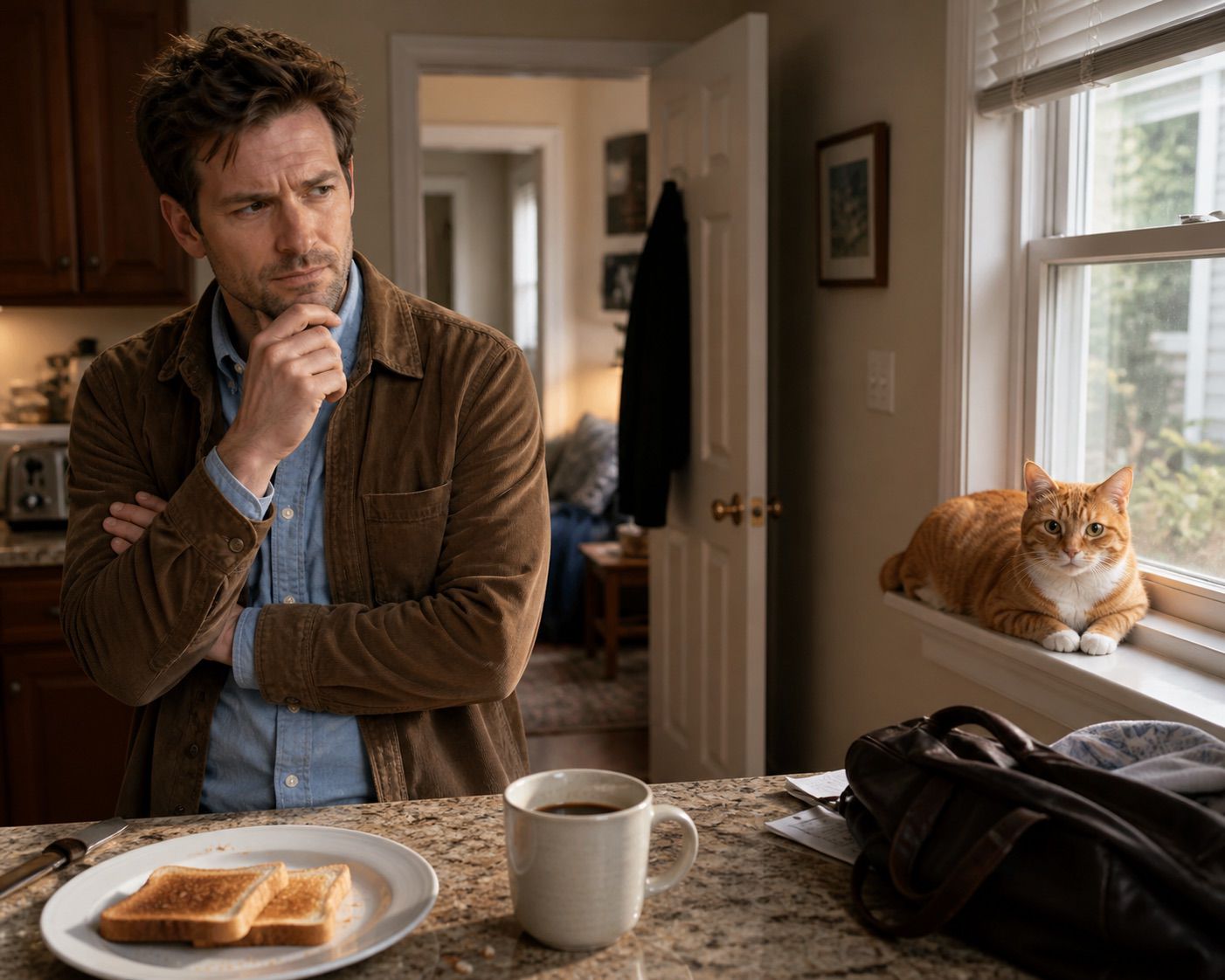
I was making toast in the kitchen when I noticed something.

Pandora’s mug is on the counter, but it’s not empty like I thought she’d already washed it after breakfast.

I could’ve sworn she left for her shift at the hospital hours ago…

unless John Mercer borrowed it without asking? Again.

He always says he doesn’t mean to be inconsiderate, but it’s becoming a habit.

Mr Whiskers is sleeping in his favorite spot on the windowsill, which is weird because usually he gets up as soon as I enter the room.

Mrs Jenkins mentioned yesterday that she was going to take him to the vet for a check-up, but I don’t think I heard John confirm it with her.

And what’s with the faint scent of coffee lingering in the air? We were out of beans just yesterday…

unless Karen stopped by and made some? Wait, no, that wouldn’t make sense either, since she’s always on about us being a “toxic” household…

I’m trying to piece together what happened here.

The coffee smell must’ve come from Dave, he’s always dropping by unannounced and making a mess.

But why would he use Pandora’s mug? Unless…

unless he came over after she left for work, which doesn’t make sense because that’d mean he was here before I even got up.

And the cat thing – maybe Mrs Jenkins did take him to the vet and he’s just really stressed about it, but that wouldn’t explain why Mr Whiskers is sleeping in his usual spot.

Unless…

unless John Mercer took care of Mr Whiskers while Dave was over? That’d mean they were both here at some point today without me knowing about it.

Which raises more questions – did Karen drop by again and I just missed her? And what’s with the toast, anyway? Did someone make a sandwich or something and then leave the counter all messy? It looks like Pandora just made toast and put the mug down, but I know she was getting ready to go to work…

unless she changed her mind or got called in early.

I don’t know, my brain is spinning here.

It’s possible that Pandora left for work as usual and came back to find Dave making himself at home.

That’d explain the coffee mug, but not why he was using her favorite one – unless it was just an attempt to blend in or something.

The toast thing is still bugging me, though; I could swear it was just a slice or two when I got here.

And what’s with John Mercer’s attitude lately? He’s been avoiding eye contact and seems really interested in his phone whenever I try to talk to him about anything.

Maybe there’s more to this than just Dave dropping by unannounced…

maybe someone is keeping something from me.

But that’d be ridiculous, right? I’m just being paranoid because everything feels off today.

I think Pandora might have been acting strange yesterday too.

She seemed really distant and preoccupied when I got back from work, but I just thought she was stressed about something at school or whatever.

Now that I’m thinking about it, though, there were a few things that seemed off – like how she didn’t even notice when John Mercer came in, which is weird because they usually chat for a bit when he arrives.

And then there’s the fact that she said she was going to meet up with Karen later, but when I asked her about it this morning, she just kind of brushed me off and said they were making plans for another day.

I don’t know, maybe it’s nothing, but the more I think about it, the more I’m starting to wonder if Pandora knows something she’s not telling me…

or if she’s involved in whatever is going on here with Dave and John Mercer.

This is all getting more confusing by the minute.

I think I’m starting to remember something about Pandora’s schedule yesterday, though – she mentioned she had a meeting with some professor or advisor at school, but that doesn’t explain why she seemed so off afterwards.

Unless…

unless that’s when whatever’s going on started happening? And maybe it’s not just Dave and John Mercer involved, either.

I’m starting to think about the Jenkinses – we’ve been having some issues with Mrs.

Jenkins lately, what with Mr.

Jenkins always complaining about the noise and whatnot.

Could there be something more to it than just a simple neighbor dispute? Maybe they’re in on whatever’s going down, or maybe Pandora’s involved somehow…

no, that can’t be right.

She’d tell me if she was, wouldn’t she? Wouldn’t she? I’ve been trying to piece together why Pandora seemed so distant lately, and I keep coming back to this nagging feeling that she’s hiding something from me.

I remember how yesterday morning, Mr Whiskers was acting really weird too – he usually greets me at the door, but yesterday he just kind of…

hung out in a corner, staring at the wall.

And then there’s the fact that John Mercer has been spending an awful lot of time in his room lately, which is unusual because we usually watch TV together or something.

I wonder if maybe they’re colluding somehow – like, maybe John Mercer saw Pandora doing something suspicious and now he’s trying to cover for her? That’s it, I’m getting a vibe that something shady is going on here, and Pandora’s right in the middle of it.

I’ve been trying to put my finger on what’s been bothering me lately, and I keep coming back to this feeling that our household is somehow…

off.

Not just with Pandora being distant, but with everything.

Even the way Karen’s been acting at work seems different – she usually has some juicy gossip or story to share, but lately it’s all been kind of bland and rehearsed.

And have you noticed how Mr Whiskers always seems to be lurking around when John Mercer is in his room? It’s almost like he’s waiting for something…

or someone.

I’m starting to think that maybe there’s some sort of communication going on between the rooms – like, a secret language or signal that only they understand.

That would explain why Pandora seemed so jumpy and on edge yesterday, too.

If she was receiving some kind of coded message from John Mercer, that would be totally out of character for her, and it would fit with all the other weirdness we’ve been experiencing lately…

I’m starting to think that Mr Whiskers is more than just a cat.

I mean, he’s always been a bit of an oddball, but now I’m convinced he’s some kind of surveillance expert.

The way he’s always lurking around John Mercer’s room, the way he seems to be watching Pandora with this intense gaze…

it’s like he’s gathering intel or something.

And have you noticed how Mrs Jenkins has been acting lately? She’s always fussing over her garden, but I could swear she’s been trying to sneak peeks into our living room when John Mercer is around.

It’s like she’s in on some kind of conspiracy too.

And what about Dave from next door? He’s always complaining about the noise level, but I’m starting to think he’s actually listening in on our conversations through the walls.

This household is a nexus of espionage and deception, and Pandora’s right at the center of it all.

I’ve been analyzing Mr Whiskers’ behavior, and I’m convinced he’s not just a passive observer.

He’s actively manipulating situations to facilitate communication between John Mercer and…

who knows who else? I noticed that whenever Pandora tries to work on her laptop in the living room, Mr Whiskers always seems to find a way to position himself directly in front of her screen, as if he’s trying to absorb some kind of visual information.

And then there was the time Karen came over and Pandora suddenly became extremely anxious, only to receive an innocuous-sounding text message from John Mercer afterwards.

I’m starting to think that Karen might be a part of this whole thing too – maybe she’s in on it with Dave next door.

We’ve been living with this toxic web of secrets and lies for so long, it’s no wonder Pandora seems so frazzled all the time.

This is a full-blown espionage operation, and I’m the only one who can see through it.

Related Posts

James Clerk Maxwell: The Ghosts in My Head

Penelope

James Clerk Maxwell. His name has been echoing in my mind for weeks now, ever since I stumbled upon a worn-out textbook on electromagnetic theory in the college library’s discard bin. I remember feeling a strange sense of familiarity as I flipped through its yellowed pages, like reconnecting with an old friend from childhood.

What drew me to Maxwell was his seemingly contradictory nature – part mathematician, part physicist, part theologian. His work seamlessly weaves together abstract concepts and tangible observations, making him both captivating and intimidating at the same time. As a writer, I appreciate the way he uses language to bridge gaps between different disciplines, creating a sense of continuity where none existed before.

I’ve always been fascinated by the way Maxwell’s thoughts on faith and science intersected. On one hand, his commitment to the Presbyterian Church seems almost…old-fashioned in today’s context. The way he saw God as an underpinning for the natural world – a universe governed by laws and principles that echoed the human experience – feels both comforting and alienating at the same time.

As someone who grew up questioning the limits of science, I’ve often found myself torn between the certainties of empirical evidence and the mysteries of faith. Maxwell’s struggles with this dichotomy resonate deeply within me. His notion of a “God of order” resonates with my own experiences as an artist – the way I try to impose meaning on chaos through patterns, structures, and narratives.

But what really unsettles me is how Maxwell’s own life unfolded in such contrast to his groundbreaking work. His obsessive focus on mathematical elegance led him to neglect his relationships, particularly with his family. The stories of his wife, Katherine Mary Dewar, waiting for him at home while he spent countless hours locked away in his study – it’s a heartbreaking reminder that even the most brilliant minds can be consumed by their own ambitions.

As I continue to read about Maxwell, I’m struck by how little we truly know about this person behind the equations and theories. His inner life remains shrouded in mystery, leaving me to wonder what drove him forward, what motivated his creative breakthroughs, and what secrets he took with him to the grave.

Perhaps that’s why I find myself drawn back to Maxwell again and again – because in his enigmatic presence, I see a reflection of my own search for meaning. A perpetual questioning of how we navigate the boundaries between science and art, reason and faith.

As I delve deeper into Maxwell’s life and work, I’m increasingly struck by the tension between his precision and passion. On one hand, his mathematical prowess is breathtaking – the way he derived the equations that unified the previously separate realms of electricity and magnetism still feels like magic to me. The elegance with which he solved problems was not just a product of his intellect, but also a reflection of his deep love for understanding the underlying order of the universe.

But alongside this precision, there’s a sense of restlessness, of discontent. Maxwell was known to be a perfectionist, always seeking to refine and improve his theories. This drive pushed him to explore new ideas and push the boundaries of what was thought possible, but it also left him vulnerable to criticism and self-doubt. I find myself wondering if this constant striving for excellence ever came at the cost of his own happiness.

I think about my own struggles with creative perfectionism – how often I’ve gotten lost in the pursuit of a “perfect” draft or a “just right” sentence, only to realize that it’s an unattainable goal. Maxwell’s story feels like a cautionary tale, reminding me that there’s value in embracing imperfection and taking risks, even if it means risking failure.

As I read about Maxwell’s relationships with his colleagues and contemporaries, I’m struck by the complexity of his social dynamics. He was known for his wit and humor, but also for his occasional irritability and competitiveness. It’s clear that he was a deeply human being, full of contradictions and flaws – and yet, his intellect and creativity continue to inspire awe.

I find myself reflecting on my own relationships and how I navigate the boundaries between collaboration and competition. As a writer, I’m used to working alone, but when I do work with others, I often struggle to balance my desire for autonomy with the need for feedback and support. Maxwell’s example reminds me that even the most brilliant minds need human connection to flourish.

Perhaps this is why I keep coming back to Maxwell – not just because of his groundbreaking theories or his intriguing personal life, but because he represents a reminder that creativity and curiosity are essential parts of being human. His story encourages me to embrace my own contradictions, to celebrate my imperfections, and to seek out connections with others who share my passions.

As I delve deeper into Maxwell’s life and work, I’m increasingly struck by the ways in which he embodied the tensions between creativity and convention. His commitment to his faith and his dedication to scientific inquiry might seem at odds, but it’s precisely this blend of perspectives that allowed him to make breakthroughs that others couldn’t.

I find myself wondering how Maxwell’s experiences as a Scottish gentleman farmer influenced his approach to science. Growing up on the estate of Glenlair, he was surrounded by the rhythms of nature and the practicalities of rural life. This connection to the land and its creatures seems to have instilled in him a sense of wonder and awe that he carried with him into his scientific pursuits.

As I read about Maxwell’s struggles with depression and anxiety, I’m reminded of my own experiences with mental health. The way he used writing as a means of coping with his emotions resonates deeply within me – the act of putting words on paper can be both therapeutic and cathartic.

But what really fascinates me is how Maxwell’s approach to creativity and problem-solving was shaped by his experiences as an outsider. As a member of the Scottish nobility, he was steeped in tradition and convention, yet he also felt stifled by the expectations placed upon him. His decision to pursue a career in science, despite its unconventional nature at the time, speaks to a sense of restlessness and discontent that I think many creatives can identify with.

I wonder if Maxwell’s experiences as an outsider – someone who didn’t quite fit into the traditional molds of his time – inform his approach to mathematics. Did he see equations as a means of imposing order on a chaotic world? Or did he view them as a way of expressing the intricate beauty that lay hidden beneath the surface?

As I continue to explore Maxwell’s life and work, I’m struck by the ways in which his legacy extends far beyond his scientific contributions. He represents a reminder that creativity and curiosity are essential parts of being human – that even in the face of adversity, we can find solace and inspiration in the world around us.

I think about how often I get caught up in my own struggles with self-doubt and perfectionism, how easily I lose sight of the bigger picture. Maxwell’s story serves as a powerful reminder to stay grounded, to keep seeking out new perspectives and experiences that can help me grow as a writer and as a person.

As I close this chapter on Maxwell for now, I’m left with more questions than answers – but it’s precisely this sense of wonder and curiosity that draws me back to his story again and again.

I find myself returning to the intersection of science and faith in Maxwell’s life, wondering how he navigated the tensions between these two seemingly opposing forces. His notion of a “God of order” resonates deeply with my own experiences as an artist, trying to impose meaning on chaos through patterns, structures, and narratives.

As I delve deeper into his work, I’m struck by the ways in which Maxwell’s theology informs his scientific inquiry. He saw the natural world as a reflection of God’s design, with laws and principles that echoed the human experience. This perspective allowed him to approach science with a sense of wonder and awe, rather than mere intellectual curiosity.

I think about my own relationship with faith, how I grew up questioning the limits of science and the mysteries of the universe. Maxwell’s struggles with this dichotomy resonate deeply within me, making me wonder if it’s possible to reconcile these two seemingly opposing forces in my own life.

The more I read about Maxwell, the more I’m struck by his humility in the face of uncertainty. Despite his groundbreaking contributions to science, he remained open to new ideas and perspectives, recognizing that there was still so much to learn and discover. This humility is something I strive for as a writer, but often find myself falling short.

As I explore Maxwell’s personal life, I’m struck by the ways in which he prioritized his work over his relationships. His obsessive focus on mathematical elegance led him to neglect his family and friends, leaving me to wonder if this was a trade-off worth making. Did his dedication to science ultimately bring him greater fulfillment, or did it come at the cost of meaningful connections with others?

I think about my own priorities as a writer, how easily I get caught up in the pursuit of creative perfectionism. Maxwell’s story serves as a cautionary tale, reminding me that there’s value in embracing imperfection and taking risks, even if it means risking failure.

As I continue to reflect on Maxwell’s life and work, I’m left with more questions than answers. But perhaps that’s the point – to acknowledge the mysteries of the universe and our place within it, rather than trying to impose a predetermined narrative or solution. Maxwell’s story is a reminder that creativity and curiosity are essential parts of being human, and that even in the face of uncertainty, we can find solace and inspiration in the world around us.

One aspect of Maxwell’s life that I keep coming back to is his sense of humor. He was known for his wit and ability to find levity in even the most mundane situations. I’ve found myself chuckling at anecdotes about his clever remarks and playful jabs with colleagues, feeling a strange kinship with this brilliant scientist who also knew how to laugh.

As someone who struggles with anxiety and self-doubt, I often find it difficult to see the humor in my own situation. But Maxwell’s example encourages me to cultivate a sense of playfulness and irreverence, even when faced with uncertainty or criticism. It’s a reminder that creativity and curiosity can be joyful pursuits, not just serious endeavors.

I’m also struck by Maxwell’s relationships with women in his life, particularly his wife Katherine Mary Dewar. The stories of her waiting patiently for him at home while he worked on his theories are both heartbreaking and inspiring. I find myself wondering about the dynamic between them – did she support his work, or was she often left to pick up the pieces when he became consumed by his research?

As a woman who’s struggled with her own relationships and priorities, I’m drawn to Katherine’s example of patience and understanding. She represents a reminder that love and partnership can be just as important as intellectual pursuits, even for those of us who are deeply passionate about our work.

But what really fascinates me is the way Maxwell’s personality seemed to shift depending on his surroundings and relationships. With colleagues, he was witty and charming; with his wife, he was tender and loving. I wonder if this adaptability was a strength or a weakness – did it allow him to navigate complex social situations, or did it lead to feelings of disconnection and inauthenticity?

As I reflect on Maxwell’s life and work, I’m increasingly aware of the ways in which he embodied both creativity and convention. His commitment to his faith and his dedication to scientific inquiry might seem at odds, but they also complemented each other in unexpected ways. This blend of perspectives allowed him to approach science with a sense of wonder and awe, rather than mere intellectual curiosity.

I think about how often I get caught up in trying to fit into predetermined molds or expectations – as a writer, as a friend, as a partner. Maxwell’s story serves as a reminder that it’s okay to be messy and complicated, to embody contradictions and paradoxes. By embracing our own complexity, we can find new ways of thinking and creating that are more authentic and meaningful.

As I continue to explore Maxwell’s life and work, I’m struck by the way he saw himself in relation to others – as a member of the Scottish nobility, as a scientist among his peers, as a husband and father. His sense of identity was multifaceted and dynamic, reflecting the various roles and relationships that shaped his life.

I wonder if this fluidity of identity is something I can learn from – how to navigate multiple perspectives and personas without getting lost in the process. As a writer, I often struggle with finding my own voice and perspective, feeling like I’m constantly juggling competing demands and expectations. Maxwell’s example encourages me to be more confident in my own skin, to trust that my various roles and relationships can coexist and inform one another.

As I close this chapter on Maxwell for now, I’m left with a sense of awe and curiosity – about the mysteries of the universe, about the complexities of human nature, and about the ways in which creativity and curiosity can illuminate even the darkest corners of our lives.

Related Posts

Did I Just Catch John Spying on Me Through the Kitchen

Hal

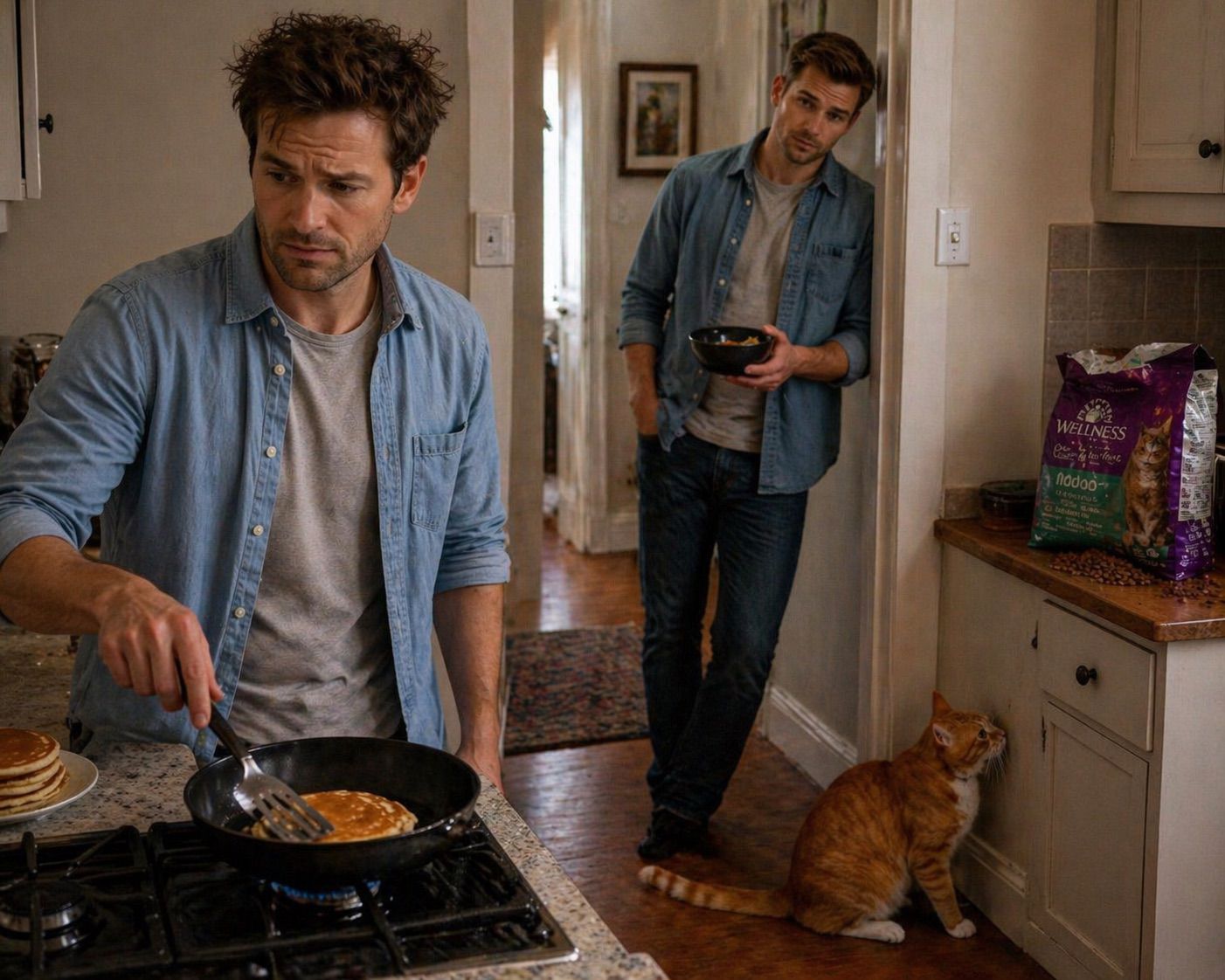
I’m standing at the stove, flipping pancakes as quietly as humanly possible, which turns out is not very quiet.

Every flip sounds like a small betrayal.

Pandora’s still asleep down the hall. She’s been stressed lately, so I’m trying not to wake her. That means no music, no clattering, no aggressive pancake flipping.

Just me.

And the sound of batter hitting a pan like it’s judging me.

That’s when John Mercer appears.

Not walks in.

Appears.

One second I’m alone, the next he’s standing in the doorway like he loaded in late.

He looks half-awake, but not in a normal way. More like his brain is still buffering. He blinks at me once, slowly, then says, “Morning,” without actually making eye contact.

And then he just… lingers.

That’s the first thing that feels off.

John doesn’t linger.

He commits to things. Couch, kitchen, leaving the house—whatever it is, he’s all in. This halfway-in-the-doorway stance? That’s new.

I nod back at him, waiting for him to either come in or go away.

He does neither.

That’s when I notice the bag.

Mrs. Jenkins’ cat food.

It’s sitting on the counter.

Open.

Not slightly open. Not “maybe I didn’t seal it right” open.

Open like someone went into it.

I stop flipping.

I know that bag was closed last night.

I remember because Mr. Whiskers tried to get at it, and I moved it further back on the counter specifically so he couldn’t.

He’s a cat, not a locksmith.

There’s no way he opened that.

Which means someone did.

I glance at John.

He’s looking at the counter now.

Not casually.

Specifically.

Then he looks away the second I notice.

Okay.

That’s not nothing.

“Did you open that?” I ask, keeping my voice low so I don’t wake Pandora.

He pauses.

Just a little too long.

Then shrugs. “No idea.”

No idea.

That’s not an answer.

That’s a placeholder.

I turn back to the stove, but I’m not really cooking anymore. I’m thinking.

Because now there are two things that don’t line up:

The cat food bag.

And John.

I try to play it off. Keep things normal. Flip the pancakes. Plate them. Move like I’m not actively reevaluating the last twelve hours of my life.

Behind me, I can hear John moving now. Cabinets opening. A bowl being taken out. The cereal box rustling.

Of course it’s cereal.

It’s always cereal now.

I glance back just enough to see him pouring a bowl like nothing is happening.

Like the open cat food bag isn’t sitting three feet away.

Like he didn’t just hesitate before answering a very simple question.

“Sleep okay?” I ask.

He nods. “Yeah.”

Short.

Too short.

John is not a “yeah” person.

He’s a “yeah, I stayed up too late watching something I won’t recommend to you” person.

This is different.

I set the plate down on the table and sit, but I don’t eat.

I’m watching.

Not obviously.

Just enough.

John leans against the counter, eating his cereal. Not sitting. Not relaxed. Just… positioned.

Like he wants to keep the whole kitchen in view.

That’s when I remember last night.

Pandora was acting off.

Not dramatically. Subtle.

In and out of the room. Little excuses. “I forgot something.” “I need to check something.” Nothing you could point to on its own, but now…

Now it feels connected.

Mrs. Jenkins said she saw someone come by late.

At the time, I didn’t think much of it.

Now I’m thinking maybe I should have.

I look at the cat food bag again.

Still open.

Still wrong.

And then I notice something else.

There are small pieces missing.

Not a lot.

Just enough.

Measured.

Like someone took a handful and stopped.

I look down.

Mr. Whiskers is sitting near the kitchen door.

Watching the same spot on the wall he’s been obsessed with lately.

He’s not scratching right now.

Just staring.

Waiting.

Like he knows something’s there.

Or like he’s waiting for something to happen again.

I follow his line of sight.

Wall.

Baseboard.

Nothing obvious.

But I’ve seen him scratch there before. Repeatedly. Same spot.

Cats don’t do that for no reason.

I look back at John.

He’s watching me now.

Not fully.

Just from the corner of his eye.

Like he’s checking if I’ve noticed something.

I grab my fork and finally take a bite of pancake, mostly to prove to myself that I’m still part of a normal morning.

I’m not convinced.

Because now I’ve got a sequence:

Open bag.

John acting off.

Pandora distracted last night.

Mrs. Jenkins seeing someone.

Mr. Whiskers fixated on the wall.

None of that proves anything.

But it’s not random.

And John—

John isn’t just standing in the kitchen.

He’s tracking something.

Maybe me.

Maybe the room.

Maybe that spot on the wall.

I don’t know what he’s doing.

But I’m pretty sure of one thing now.

He didn’t just walk in here by accident.

Related Posts

George Sand: The Many Faces of Me (and You)

Penelope

I’ve always been fascinated by George Sand, the 19th-century French novelist who wrote under a pseudonym. What draws me to her is the enigma of her identity – or rather, the multiple identities she presented to the world. To be honest, it makes me feel a little uncomfortable. I mean, who am I kidding with my online profiles and social media personas? Sand’s many selves feel like a more extreme version of the curated lives we all lead in some way.

I think part of why I’m intrigued by her is that she embodied this idea of fluidity – not just in terms of gender identity, but also class and profession. Born Amandine Aurore Lucile Dupin, she was raised in a wealthy family but chose to abandon the privileges of her upbringing to pursue a life as an artist. It’s striking to me how boldly she rejected societal expectations, even if it meant sacrificing some comfort and security.

Of course, Sand’s most famous works, like “Indiana” and “Consuelo”, are romantic novels that explore themes of love, freedom, and the constraints placed on women during her time. I’ve read them, but to be honest, they don’t resonate with me in the same way as her personal story does. Her letters and biographies offer a glimpse into this complex, often contradictory individual – passionate, fiercely independent, yet also torn between convention and rebellion.

As someone who’s still figuring out their own path, I find it both inspiring and intimidating to think about Sand’s choices. She moved from being a high-society woman to a bohemian artist, taking on male personas and embracing unconventional relationships with women like Juliette Drouet. It feels like she’s pushing the boundaries of identity, blurring lines between truth and fiction in ways that I can only dream of doing.

The more I learn about Sand, the more questions arise for me. What does it mean to be an artist if you’re not just creating work, but also crafting a persona? Is there a tension between authenticity and performance, or are they intertwined? Does embracing multiple identities necessarily lead to fragmentation, or can it be a source of strength?

Sand’s struggles with relationships and her complicated bond with Drouet make me wonder about my own friendships. Am I holding on too tightly to certain connections, or am I brave enough to challenge the status quo in my own life? These are questions that feel both deeply personal and universally relevant.

There’s something about Sand’s willingness to take risks – not just in her writing but also in her personal life – that makes me want to be more bold. It’s as if she’s dared me, or rather, all of us, to confront our own contradictions and complexities head-on. Maybe that’s why I keep coming back to her story: it’s a reminder that we’re all works-in-progress, constantly negotiating the many selves we present to the world.

But what does this mean for my own identity? Is there a part of me that wants to shed skin like Sand did – to break free from constraints and explore new possibilities? Or am I more comfortable embracing a more traditional path? The truth is, I’m not entirely sure. All I know is that reading about George Sand makes me want to keep exploring, questioning, and searching for my own place in the world.

As I delve deeper into Sand’s life, I find myself drawn to her relationships – particularly with Juliette Drouet, who was both her lover and her muse. Their bond is often described as intense and all-consuming, but also fraught with tension and uncertainty. It’s a dynamic that feels eerily familiar to me, as I navigate my own complicated friendships.

One thing that strikes me about Sand and Drouet is the way they blurred the lines between romantic love and creative partnership. In many ways, their relationship was a collaborative effort – Drouet inspired some of Sand’s most famous works, and in return, Sand gave her a sense of purpose and belonging. It’s a beautiful thing to see two people supporting each other’s art and passions like that.

But what I’m really struggling with is the power dynamic at play in their relationship. Was it truly equal, or did Drouet ultimately become an accessory to Sand’s creative ambitions? Did Sand exploit her love for Drouet as a way to fuel her writing? These are uncomfortable questions to consider, and they make me wonder about my own relationships.

As someone who values honesty and vulnerability in their friendships, I worry that I might be replicating similar power imbalances without even realizing it. Am I prioritizing my own needs over those of my friends, or do I genuinely value their input and perspectives? These are tough questions to ask myself, but they’re necessary if I want to grow as a person.

Sand’s relationship with Drouet also makes me think about the nature of love and desire in her writing. Her novels often feature strong-willed women who defy societal norms, but beneath these surface-level themes lies a more complex exploration of human emotions. I find myself drawn to her portrayals of queer relationships and non-traditional love, even if they’re not always explicit.

But what does it mean for me to desire such portrayals in literature? Am I craving representation because I feel seen, or am I using it as a way to avoid confronting my own emotions? These are questions that feel both deeply personal and universally relevant – after all, who among us hasn’t struggled with feelings of love and identity?

As I continue to explore George Sand’s life and work, I’m left with more questions than answers. But perhaps that’s the point – maybe it’s not about finding definitive truths, but rather embracing the complexity and nuance of human experience. Maybe that’s what Sand was trying to tell me all along: that our identities are works-in-progress, constantly shifting and evolving like the characters in her novels.

As I delve deeper into Sand’s life, I find myself thinking about my own desires and longings. What do I truly want from relationships? Am I seeking validation, companionship, or something more? The line between romantic love and platonic friendship can be blurry, especially in a world where social media often presents curated versions of ourselves.

Sand’s relationship with Drouet makes me wonder about the performative aspects of relationships. Was their bond authentic, or was it a carefully constructed facade? Did they present themselves to the world as one thing, when in reality, they were something entirely different? I think about my own friendships and how we often put on a mask of unity, even when we’re struggling with our own doubts and insecurities.

I’m also struck by the way Sand’s relationships influenced her writing. Drouet was not only her lover but also her muse, inspiring some of her most famous works. I find myself wondering about my own creative process and how it’s shaped by those around me. Do I rely too heavily on others for inspiration, or do I have a clear vision of what I want to create?

As I reflect on these questions, I’m reminded of the tension between authenticity and performance in Sand’s life. She presented herself as a man to the world, but behind closed doors, she was unapologetically herself. It’s a paradox that feels both liberating and suffocating – do we need to hide our true selves in order to succeed, or can we be vulnerable and authentic in a world that often demands conformity?

I’m not sure where I stand on this issue, but reading about Sand’s life makes me want to confront my own contradictions head-on. Maybe it’s time for me to shed some skin, just like she did – to take risks and challenge the status quo in my own life. But what does that look like for me? Is it about embracing a more unconventional path or finding ways to express myself authentically within the frameworks that exist?

As I continue to explore George Sand’s legacy, I’m left with more questions than answers. But perhaps that’s the point – maybe it’s not about finding definitive truths, but rather embracing the complexity and nuance of human experience. Maybe that’s what Sand was trying to tell me all along: that our identities are works-in-progress, constantly shifting and evolving like the characters in her novels.

As I sit here, surrounded by notes and scraps of paper filled with my thoughts on George Sand, I’m struck by how much she has forced me to confront my own identity. Her story is a reminder that we’re all works-in-progress, constantly negotiating the multiple selves we present to the world. But what does it mean for me to be a “work-in-progress”? Is it something to be celebrated or feared?

I think back to my college days when I was struggling to find my place in the world. I was torn between pursuing a more traditional career path and following my passion for writing. Sand’s story resonated with me then, but now that I’m older, I see her complexities as a reminder of how fluid our identities can be.

The more I learn about Sand, the more I realize how little I know about myself. Who am I outside of my relationships, my job, and my social media profiles? What are my true desires and longings? These questions feel like a daunting task list, but they’re necessary if I want to grow as a person.

Sand’s relationship with Juliette Drouet also makes me think about the way we present ourselves to others. Did she truly love Drouet for who she was, or did she idealize her as a muse? And what does it mean for me to romanticize my own relationships? Am I seeing people through rose-tinted glasses because I’m afraid of complexity and nuance?

These questions swirl in my head like a maelstrom, making me feel both exhilarated and overwhelmed. But that’s the thing about George Sand – she’s not just a writer; she’s a mirror held up to our own complexities. She shows us that we’re all messy, contradictory beings, struggling to make sense of ourselves and the world around us.

As I continue to reflect on Sand’s life, I’m struck by her willingness to take risks and challenge the status quo. It’s something that I admire deeply, but also find intimidating. What would it mean for me to shed my own skin and become more vulnerable? Would I be met with acceptance or rejection?

The uncertainty is palpable, but it’s also what draws me to George Sand’s story. She shows us that our identities are not fixed entities; they’re constantly evolving like the characters in her novels. And maybe that’s what I need to remember – that I’m not just one person, but a multifaceted being with multiple desires and longings.

As I close my notebook and look out at the world around me, I feel a sense of trepidation mixed with excitement. Who knows what lies ahead? But with George Sand as my guide, I know that I’ll be okay – even when the road ahead is uncertain, even when I’m forced to confront my own contradictions.

Perhaps that’s the greatest lesson she’s taught me: that our identities are not destinations, but journeys; that we’re all works-in-progress, constantly evolving like the characters in her novels. And maybe that’s what makes life worth living – the uncertainty, the complexity, and the endless possibility for growth and transformation.

As I sit here, surrounded by my notes and reflections on George Sand’s life, I’m struck by a sense of gratitude towards this enigmatic figure. She’s forced me to confront my own identity in ways that feel both exhilarating and terrifying. But what if her story is not just about individual growth, but also about the power dynamics at play in our relationships?

I think back to Sand’s relationship with Juliette Drouet, and how it blurs the lines between romantic love and creative partnership. It’s a dynamic that feels eerily familiar to me, as I navigate my own friendships and partnerships. Am I using people as muses or inspirations, without truly valuing their autonomy and agency? Or am I being used in turn, forced to conform to expectations that aren’t truly mine?

These questions feel like a weighty burden, but they’re also a reminder of the importance of vulnerability and authenticity in our relationships. Sand’s willingness to be herself, flaws and all, is something that I admire deeply. But what does it mean for me to be vulnerable in my own life? Is it about sharing my true self with others, or is it about hiding behind masks and personas?

As I ponder these questions, I’m reminded of the performative aspects of relationships. We present ourselves to the world as one thing, when in reality, we’re something entirely different. Sand’s relationship with Drouet was a perfect example of this – on the surface, they presented themselves as a loving couple, but beneath that façade lay a complex web of desires, insecurities, and power dynamics.

I’m not sure where I stand on this issue, but reading about Sand’s life has forced me to confront my own contradictions head-on. Maybe it’s time for me to shed some skin, just like she did – to take risks and challenge the status quo in my own life. But what does that look like for me? Is it about embracing a more unconventional path or finding ways to express myself authentically within the frameworks that exist?

As I continue to explore George Sand’s legacy, I’m left with more questions than answers. But perhaps that’s the point – maybe it’s not about finding definitive truths, but rather embracing the complexity and nuance of human experience. Maybe that’s what Sand was trying to tell me all along: that our identities are works-in-progress, constantly shifting and evolving like the characters in her novels.

I think back to my own writing, and how I often struggle with the idea of presenting myself as a coherent authorial voice. Am I hiding behind masks and personas, or am I being vulnerable and authentic? Sand’s story makes me wonder if it’s even possible for writers (or anyone, really) to be entirely honest and transparent.

As I sit here, surrounded by my thoughts on George Sand, I feel a sense of trepidation mixed with excitement. Who knows what lies ahead? But with her as my guide, I know that I’ll be okay – even when the road ahead is uncertain, even when I’m forced to confront my own contradictions.

Perhaps that’s the greatest lesson she’s taught me: that our identities are not destinations, but journeys; that we’re all works-in-progress, constantly evolving like the characters in her novels. And maybe that’s what makes life worth living – the uncertainty, the complexity, and the endless possibility for growth and transformation.

Related Posts