Day: September 4, 2025

Waves at Home: How to Bring Coastal Style to Your Bedroom

Dave

There is something about the coast that feels eternal, something that seeps into your bones the moment you breathe in the salty air, something that quiets the chaos of everyday life and replaces it with rhythm. The pull of the ocean is more than just visual; it’s emotional, spiritual, and deeply human. That’s why so many people who cannot live by the beach choose to bring the beach to them, infusing their homes with the kind of tranquility that only waves and wide skies can inspire. And nowhere does that influence matter more than the bedroom, the most personal space you inhabit. A coastal bedroom isn’t just about decorating with shells or painting the walls blue. It’s about creating a retreat that makes you feel as though you are waking up every morning with the sea just outside your window, even if you live a thousand miles from the shoreline.

The secret to coastal style is light. Natural light pouring through large, sheer curtains. Light-colored walls that reflect the glow of day and soften into warmth by night. White becomes the anchor here, not stark but alive, layered with sandy beiges, gentle taupes, seafoam greens, or sky blues. This palette is not meant to overwhelm but to soothe, like the horizon at dawn or the muted tones of shells scattered along a tide pool. The colors in a coastal bedroom don’t shout; they whisper. They bring calmness without sterility, balance without boredom.

Furniture in a coastal bedroom should never feel heavy or brooding. It should be easygoing, almost as though it drifted in on the tide. Light woods, whitewashed finishes, wicker, and rattan all echo the natural textures of a beachside cottage. A bed draped in crisp white sheets layered with linen throws or soft quilts in pale hues feels inviting without being cluttered. The key is effortlessness, that sense that the room is dressed just enough but not weighed down. A cane dresser, a wicker trunk at the foot of the bed, or simple wooden nightstands all keep the space grounded yet airy. The furniture isn’t there to dominate the room but to blend seamlessly into the environment you’re creating, just like the shoreline blends into the water.

Texture is where the room comes alive. Coastal style is tactile. It’s the weave of linen curtains that flutter when the window is open, the rough touch of a jute rug beneath your feet, the soft embrace of cotton sheets at the end of the day. Woven baskets, rattan lampshades, and raw-edge driftwood frames echo nature, while airy textiles remind you of wind and water. A space like this doesn’t just invite your eyes to wander but your hands to feel. It wants to be touched, lived in, and embraced, just like the beach itself.

Décor in coastal bedrooms is subtle, never themed. It isn’t about plastering starfish and anchors on every wall. Instead, it’s about restraint, about evoking the feeling of the coast without overwhelming it. A framed seascape, a ceramic vase in an ocean hue, a single jar of sand collected from a beloved shoreline — these touches matter more than dozens of trinkets. A large, airy woven light fixture that casts warm shadows at night can evoke the lantern glow of a seaside cottage. A piece of reclaimed driftwood set as a headboard or a woven rug in muted blues can carry more power than cluttered accessories. Every piece should feel intentional, not forced, like treasures you brought home rather than souvenirs bought at a shop.

Light itself becomes the most important accessory. In the daytime, your room should flood with sunlight filtered through gauzy curtains, creating a sense of openness and endless air. At night, lighting should be layered and gentle. Think table lamps with linen shades, rattan pendants that mimic the texture of nets, or candles flickering softly as if echoing the glow of a beach bonfire. Lighting in a coastal bedroom doesn’t just illuminate; it creates atmosphere, shifting with the hours like the sea itself.

No coastal-inspired space is complete without a touch of nature. Plants bring vitality to the room, but the choices matter. Palms in woven baskets, snake plants in clay pots, or eucalyptus branches in a glass vase all tie in seamlessly with the theme. They provide freshness without clutter, color without chaos. Even one well-chosen plant in the corner can evoke the wildness of dune grasses swaying in the wind. They connect your bedroom not only to the idea of the beach but to life itself, rooting you in something organic and alive.

The magic of coastal design is not in following rules but in creating feeling. Every detail should invite you to breathe deeper, to let stress roll away like the tide, to feel as though your bedroom is a sanctuary away from the noise of the world. Personal touches are what transform it from simply styled into authentically yours. A jar of shells you picked up on a trip, a framed photograph of your favorite shoreline, books about the ocean stacked by your bed — these are what give the room its soul. Your coastal bedroom should remind you not just of the coast in general, but of the coast as you know it, tied to your memories, your dreams, your longing.

What makes coastal style so enduring is that it speaks to something we all crave: peace. It doesn’t matter if your window looks out at crashing waves or a busy street — the coastal bedroom gives you the illusion of waking up at the water’s edge. It gives you space to breathe, to rest, to recharge. It proves that you don’t need to live near the shore to live with the sea in your heart.

So strip away the heavy, the dark, the unnecessary. Embrace lightness, simplicity, and nature. Let the textures tell their story. Let the colors calm you. Let the design transport you. Because at the end of the day, a coastal bedroom is not just about design. It’s about creating a sanctuary that feels as eternal and as free as the ocean itself. It’s your retreat, your safe harbor, your little corner of coastline, no matter how far from the shore you may be.

Related Posts

The Day the Internet Found Its Compass: How a Scrappy Garage Became Google, Inc.

Elias Rowen

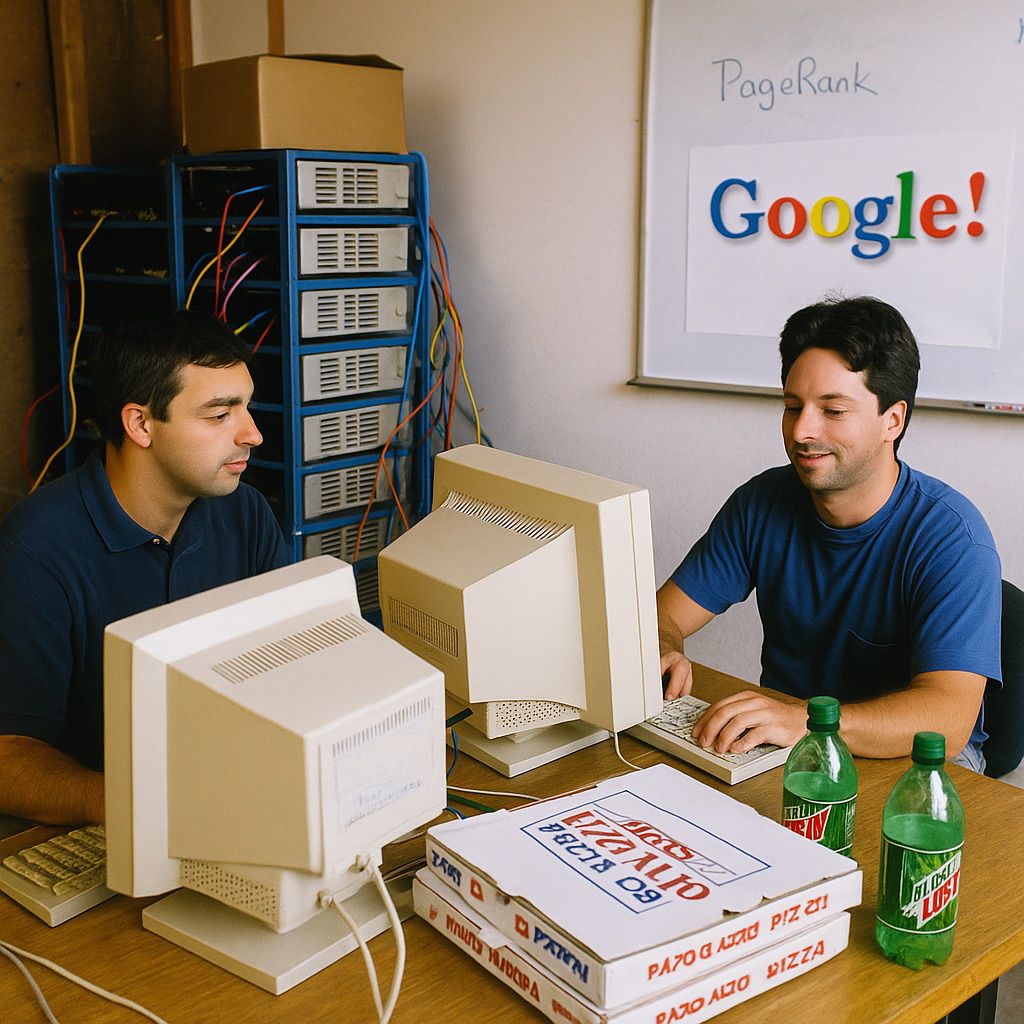
There are birthdays that pass with cake and candles, and there are birthdays that rearrange the furniture of the world. September 4, 1998, belongs to the second kind. On paper, it was a simple act: two Stanford graduate students filed documents in California and turned their side project into a company with a proper name and a bank account. In the messy, humming reality of a Menlo Park garage filled with beige monitors, tangles of rainbow cables, humming home-built servers, pizza boxes, and a whiteboard with “PageRank” scrawled across it in quick nerd handwriting, that signature was a fuse. It set off a chain reaction that would change how humans answer almost every question they ask, from “What’s the best ramen near me?” to “How do I tell my father I forgive him?” It is hard to remember now, when “google” is lowercase and verb-shaped in most dictionaries, how bumpy the road looked that morning. But if you listen closely enough, you can still hear what the internet sounded like before the compass snapped into place.

In 1998, “finding stuff online” was an activity you did the way you rummage the junk drawer: with hope, with resignation, with an awareness you might get a paper cut. Portals were neon billboards crowded with horoscopes, stocks, weather, and three banner ads elbowing each other for your attention. Directories felt like phone books reheated for the web era. Search results were often a popularity contest rigged by whoever could shove the most keywords and invisible text into a page. We took wrong turns; we memorized favorite waypoints like AltaVista and Yahoo!; we leaned on a friend’s cousin who “knew the good sites.” Then came the idea that a page should be judged by the quality of who was pointing to it, the way scholars have always understood citations: links as votes, weighted by the authority of the voter. PageRank is an equation, sure, but it’s also a philosophy: relevance is not what a page calls itself; it’s what the rest of the web calls it, collectively. That shift—from shouting to listening—was the germ of everything that followed.

The incorporation day story is not glamorous; that’s part of why it matters. Two twentysomethings, Larry Page and Sergey Brin, had already spent nights on floors and days in labs, writing and rewriting the crawler that would relentlessly map the web, designing racks out of cheap parts because capital was the kind of word you used in economics class, not at the computer store. An early investor had written a check to a company that did not technically exist yet—a human vote of confidence so loud it echoed through the garage—and you cannot deposit a check like that without paperwork. So they did the paperwork. They signed; a file clerk stamped; somewhere, an inkpad gained a little more history. Then they walked back into a room that smelled like hot electronics and cold pizza and kept building.

If we want to humanize the moment, start with the small truths. The garage was a rental. The server cases rattled if you bumped the table. Dust made arrogant goals humble. The whiteboard marker would not fully erase, so yesterday’s scribble haunted today’s plan like a ghost of a half-solved problem. An empty bottle of Surge guarded the corner where a monitor’s degauss button made the screen shiver with color whenever you pressed it for fun. A paper taped to the wall declared “Don’t bring the site down today” in bubble letters that tried to be a joke and failed, because everyone knew it was also a prayer. The printer jammed at the worst possible time. The code crashed at the worst possible time. And yet: every hour bought a tiny improvement, a bug slain, a response time shaved, a relevance test won. The day they filed the incorporation papers, the product didn’t suddenly become perfect. What changed was the intent. A project that could be abandoned after finals became a promise to the world that this would be carried further than office hours.

Part of what made that promise believable was the interface. It is fashionable to underplay this now, in an age that treats minimalism like a universal solvent, but in 1998 a clean, mostly empty page felt subversive. It was as if someone pulled the velvet curtain aside and said, “The stage is for you, not for us.” The logo—quirky colors licensed from childlike joy rather than corporate solemnity—was more than a brand. It was a shrug that said, “Let’s not pretend the internet isn’t fun.” There was a box in the middle. You typed. Results arrived. The machine got out of your way. That small kindness changed behavior. We started to ask the web questions we would otherwise have asked a friend, or our mothers, or a librarian. And because the answers were better, we kept doing it until reflex calcified into ritual.

Strip the myth away and what remains is even better than the myth. No single genius moment turned a garage into a global utility. It was a chain of unglamorous decisions—write the crawler in a language that compiles clean; rent the cheaper place and spend the difference on RAM; build servers with commodity drives because the budget spreadsheet is not a work of fan fiction; test everything, then test it again; disagree in the morning and reconcile at lunch because the code needs both of you. It was also a chain of audacious ones: index more of the web than anyone else; believe you can make relevance objective enough to feel like magic; take a check when legacy companies say “No thanks”; imagine that the future might actually prefer substance to spectacle.

The work changed the world partly because it changed the workers first. When you’re surrounded by machines that never sleep, your own sense of hours shifts. Night becomes a collaborator, a quiet co-founder that buys you silence to think and a little bit of delirium to imagine features you’re not scared enough to try in daylight. You learn that leadership isn’t a podium; it’s the person who cleans up after the pizza because the ants don’t care that you invented PageRank. You discover that the fun part of being smart isn’t being right; it’s changing your mind fast when a better idea appears. You realize that your best sentences have commas named for six other people who made you think straighter.

And then the thing happens that happens to every great product: the users start telling you what it is. They teach you how they ask. They teach you that “near me” means “where I actually am,” not “the center of a zip code.” They show you that a search engine is less a directory than a prosthetic for human curiosity. They write emails that begin “I searched for my father’s name” and then proceed to rewrite your roadmap without asking permission. They ask questions at 3:12 a.m. that make your server graphs look like heartbeats. You look up one day and realize that what you built is not just a tool; it is part of how humans think now.

From that incorporation day, the story accelerates: a domain name that looked like a misspelling at first glance; a round of funding cobbled together from believers who didn’t mind being called foolish; the slow, relentless swapping of “toy” for “infrastructure” as racks grew from six boxes to six rooms; the first time someone from a big company cornered you at a conference and said “acquire” like it was a friendly verb; the first time you said “no” and meant it. The garage gives way to a Palo Alto office that smells like carpet glue and ambition; then to a campus so full of bicycles it looks like recess for grownups; then to a world where your logo is a holiday in dozens of countries and your servers live in buildings that have their own weather.

But let’s stay in 1998 a little longer, because virality—the machine that will later spin out from this company in every direction—starts small. It starts with a friend forwarding a link to “this new search thing that actually works.” It starts with five grad students postponing dinner because they lost track of time reading result pages that felt like an encyclopedia that learns. It starts with a journalist muttering, “Well, this is different,” and changing a bookmark. Viral is just a fancy word for useful plus delightful on a network. The garage day created both halves. The math delivered usefulness; the interface delivered delight.

Humanize it more. Picture the exact moment a stranger in Iowa types a question about a rash and receives a result that helps them sleep. Picture a teacher in Bangalore copy-pasting an explanation that will click for a kid who has been lost in algebra for six weeks. Picture a grandparent in São Paulo typing the name of a village they left fifty years ago and seeing a photo of a streetlight that looks exactly like the one that used to buzz outside their bedroom window. None of those moments were on the incorporation paperwork. All of them were the point.

Of course, every revolution creates counter-revolutions. A better way to find things makes it easier to find bad things, too. The signal attracts the noise, which trains the signal to be sharper, which inspires new noise. The company that began with a moral instinct—relevance first—will later find itself refereeing the messy, emotional brawls of a planet’s information diet. That burden doesn’t exist on September 4, 1998; that burden is born with the success that follows. The origin story is cleaner than the adulthood. That is true for companies; that is true for people.

Still, the garage day tells us something durable about building great things. It says: start with a problem that real humans feel at least once a day. Make the solution a habit disguised as a toy. Demote ego in the interface. Spend more time on speed than on sizzle. Be allergic to friction. When everyone else is turning the homepage into Times Square, build a blank page that whispers. When everyone else sells attention to the highest bidder, constrain the ads to the margins and insist they be useful too. When everyone else treats the web as a brochure, treat it as a conversation and teach the computer to listen.

There is also the cultural choice embedded in that signature: choose learning velocity over credential velocity. The people in that garage were not asking for permission; they were asking better questions. Permission followed because the answers worked. When you build like that, the world’s gatekeepers stop looking like walls and start looking like speed bumps. The garage ceiling is low, but the sky you’re aiming at isn’t inside the garage anyway.

It is easy to mythologize, but the best way to honor a myth is to give it weight. That means remembering the compromises, the dumb arguments about the color of a button, the functional chaos of filing cabinets repurposed as server stands, the moment a founder’s confidence cracked because a demo failed in front of someone they wanted to impress. It means remembering the people whose names you don’t see in headlines: the first office manager who knew the serial numbers, the shy engineer who noticed a memory leak at 2:00 a.m. and spared millions of users a slow morning, the friend who brought burritos and changed the team’s mood when the build broke for the third time. If a company is a story, incorporation day is simply the day the story gets a cover. The chapters are written by everyone who shows up.

What did September 4, 1998, feel like to the wider world? Honestly: it didn’t. The world was occupied with other stuff—CD burners, Y2K, a favorite browser war, the dot-com boom humming like a power line. The day did not trend. Nobody put a candle emoji next to the company name. And that’s the stealth beauty of origin days: they are quiet thunderstorms. The lighting happens in a sentence on a form. The thunder rolls for twenty-plus years, teaching us new definitions for words like “search,” “map,” “mail,” “translate,” and “video,” all of which will one day be smaller on the page than the word “Google” that sits above them like an umbrella.

If you strip away the corporate arcs and the product lines and the M&As and the stock tickers, you’re left with the human engine that made the whole thing go: curiosity. That is what gets incorporated on September 4—human curiosity, formalized into a cap table and a set of bylaws. The point wasn’t to build a company that knew everything; it was to build one stubborn tool that helped everyone else know a little more, a little faster, with a little less pain. We love technologies that make us more ourselves. The garage company did that. It made us louder when we needed to be heard and quieter when we needed to listen. It made us more patient with our own questions because answers felt closer. It made learning feel like flipping a light switch instead of hunting for a match.

You can adore or critique what came later—the scale, the power, the consequences, the gifts. But the incorporation day earns its own celebration because it captures a pure alignment of problem, talent, timing, and courage. It tells every future founder a simple, terrifying, liberating truth: the nearest distance between “That’s impossible” and “Everyone uses it” is the length of a garage and the stubbornness to keep the door open.

Somewhere tonight, a student is staring at a whiteboard with a dumb, brilliant idea that will sound like a joke to everyone but their best friend. Somewhere, a team is wiring together used parts and a hope that runs on caffeine and obsession. Somewhere, a check is being written to a not-yet-company because belief is sometimes faster than paperwork. They won’t know it yet, but they’re hunting for the north star of a problem that the rest of us have learned to navigate by. They are looking for the line between good and indispensable. On September 4, 1998, two people crossed that line because they built a map that could draw itself.

That’s the story you can tell in one breath at a party, and it’s the one you can stretch across a semester in a business school, and it’s the one you can whisper to yourself on the worst day of a new project when the servers are hot and the pizza is cold and the whiteboard won’t erase. File the papers. Ship the build. Be kind to the interface. Don’t spend attention you haven’t earned. Make the ads, if you must, useful. And when you’re scared, ask a better question. The internet is full of them. The rest of us are waiting to type.

Related Posts