Category: Nature

Cherry Blossoms at the Tidal Basin: Washington D.C.’s Most Beautiful Moment of the Year

Dave

There’s a moment every year in Washington, D.C. when the city softens. The sharp edges of marble monuments blur just slightly, the air feels lighter, and even the usual rush of people seems to slow down. It doesn’t happen because of a holiday or a national event. It happens because, almost overnight, the cherry blossoms around the Tidal Basin burst into bloom.

If you’ve never seen it in person, it’s easy to underestimate what makes it so special. After all, they’re just trees, right? Flowers that bloom and fall like they do in countless places around the world. But standing there, surrounded by soft pink and white petals drifting through the air, it becomes clear that this isn’t just about the blossoms themselves. It’s about the way they transform everything around them—the light, the mood, even the way people interact with one another.

The story behind these trees is as meaningful as the experience of seeing them. In 1912, the city of Tokyo gifted thousands of cherry trees to the United States as a gesture of friendship. That gift, rooted in diplomacy and goodwill, has outlived generations. Today, those trees—or rather, their descendants—stand as living symbols of connection between cultures, quietly reminding visitors that beauty and peace can be shared across oceans.

Walking along the Tidal Basin during peak bloom feels almost surreal. The branches stretch outward, heavy with blossoms, forming a canopy that filters the sunlight into a soft, diffused glow. It’s the kind of light photographers chase, but here it exists naturally, effortlessly. The water mirrors everything—the sky, the monuments, the blossoms themselves—creating a kind of symmetry that makes you pause, if only for a second.

And then there are the petals. They don’t just fall; they drift. Slowly, unpredictably, like tiny pieces of confetti carried by the wind. Every so often, a gentle gust sends a small flurry into the air, and for a brief moment, it feels like you’re standing inside a snow globe that’s been lightly shaken. It’s fleeting, delicate, and impossible to fully capture in a photo.

What makes the experience even more powerful is the contrast. Just steps away, you have some of the most recognizable landmarks in the country—the Thomas Jefferson Memorial, the Washington Monument in the distance, the long stretch of the National Mall. These are symbols of permanence, built to endure for centuries. And yet, surrounding them are blossoms that last only a week or two before they begin to fade.

That contrast creates a kind of quiet tension. On one hand, you’re looking at structures meant to stand forever. On the other, you’re immersed in something that exists only briefly. It’s a reminder—subtle but unmistakable—that not everything meaningful is meant to last.

The crowds, of course, are part of the experience. During peak bloom, the Tidal Basin becomes one of the most visited spots in the country. People come from everywhere—families, tourists, photographers, couples, joggers who suddenly slow down to take it all in. At first glance, it might seem like the crowds would take away from the beauty, but in a strange way, they add to it.

There’s something about seeing so many people collectively pause, collectively appreciate the same thing, that makes the moment feel shared. You’ll notice strangers smiling at each other, pointing out particularly beautiful clusters of blossoms, or stepping aside so someone else can get a photo. It’s a small shift, but it’s noticeable. For a little while, people seem more patient, more present.

If you arrive early in the morning, before the crowds fully settle in, the experience changes again. The light is cooler, softer, and the basin is quieter. You can hear the water, the distant sounds of the city waking up, and the occasional rustle of branches overhead. It feels more personal, more introspective. Like the city is offering you a private glimpse before the day begins.

Evenings bring their own kind of magic. As the sun sets, the sky shifts through shades of gold, orange, and eventually deep blue. The blossoms take on a slightly warmer tone, and the reflections in the water become more pronounced. By the time night falls, the monuments are lit, and the blossoms seem to glow faintly in the artificial light. It’s a different kind of beauty—quieter, more subdued, but no less striking.

There’s also an emotional layer to the experience that’s hard to put into words. Maybe it’s the fleeting nature of the blossoms, or maybe it’s the setting, surrounded by symbols of history and identity. But for many people, being there feels meaningful in a way that goes beyond aesthetics.

You might find yourself thinking about time—how quickly things change, how certain moments come and go before you’re ready for them to end. The blossoms, in their short-lived brilliance, seem to embody that idea perfectly. They don’t last, and they’re not meant to. Their beauty comes from that very fact.

And yet, they return every year. That’s the other side of it. Even though each bloom is temporary, the experience itself is cyclical. Predictable, in a comforting way. No matter what changes in the world, the blossoms come back. They remind you that some things, even if fleeting in the moment, are part of a larger rhythm.

For locals, the cherry blossoms often mark a kind of seasonal reset. The end of winter, the beginning of something lighter. For visitors, they can feel like a once-in-a-lifetime experience, even if they end up coming back again and again. There’s a pull to it, something that makes people want to revisit the same place, year after year, just to see how it feels this time.

And it never feels exactly the same. The timing shifts slightly each year, the weather changes, the crowds ebb and flow differently. Even your own perspective changes. What you notice one year might be completely different the next.

Maybe one year, it’s the reflections in the water that catch your attention. Another year, it’s the way the petals collect along the edges of the walkway, forming a soft, pink carpet. Another time, it might be the expressions on people’s faces—the quiet awe, the excitement, the calm.

The cherry blossoms near the Tidal Basin aren’t just a visual experience. They’re a reminder of how powerful simple things can be. Trees, flowers, light, water—none of it is complicated. But together, in the right moment, they create something that feels almost extraordinary.

As you leave, whether it’s after a quick visit or a long, unhurried walk around the basin, there’s often a sense that you’ve witnessed something you can’t fully hold onto. You might have photos, of course, maybe even dozens of them. But the feeling itself—the way the air felt, the way the light shifted, the way the petals moved—that’s harder to capture.

And maybe that’s the point. Not everything needs to be preserved perfectly. Some experiences are meant to be felt, remembered imperfectly, and then revisited when the time comes again.

Because it will come again. The blossoms will return, the basin will fill with color, and for a brief window each year, Washington, D.C. will once again feel just a little softer, a little quieter, and a little more connected to something timeless.

Related Posts

Coral Kingdoms: Exploring the Hidden Cities Beneath the Waves

Dave

There are cities in this world that are not built on land, cities that have no streets, no concrete, and no towers of glass. These are the coral kingdoms, sprawling living metropolises hidden beneath the waves, bustling with life, color, and mystery. Unlike any city humans have constructed, coral reefs are made not from steel or stone but from tiny organisms, each building upon the skeletons of its ancestors until vast underwater structures emerge. They are homes, fortresses, nurseries, and feeding grounds, and they stretch across oceans like networks of civilization we are only beginning to understand. To discover a coral reef while snorkeling or diving is to stumble into a place that feels at once alien and intimately familiar, a reminder that the Earth’s greatest wonders are not always found above the waterline but below it.

From the very first glimpse of a reef, you know you’ve entered somewhere special. The colors are what hit you first. Fish painted in neon yellows, electric blues, and fiery oranges dart in every direction like moving brushstrokes on a living canvas. Coral branches stretch upward like trees reaching for the sun, their tips glowing in pastel pinks and purples. Sea anemones sway gently in the current, hosting clownfish that peek out with bold curiosity. Every inch of the reef seems alive, and the closer you look, the more you realize you’re not observing just one ecosystem but an entire world within a world. For centuries, sailors described reefs as hazards to navigation, obstacles to be avoided. Today, we know they are not obstacles but oases—thriving hubs of biodiversity, home to nearly a quarter of all marine life despite covering less than one percent of the ocean floor.

The word “kingdom” feels especially appropriate because reefs have hierarchies, roles, and rules. There are the architects—the coral polyps themselves—microscopic creatures that, working together over centuries, build massive limestone fortresses that can be seen from space. There are the cleaners—fish like wrasse and shrimp who pick parasites from larger creatures, maintaining balance. There are the predators, from sleek barracuda to stealthy moray eels, whose presence keeps the ecosystem in check. And then there are the grazers, parrotfish who chew algae off coral, preventing overgrowth, their teeth strong enough to grind rock into the sand you find between your toes on shore. It is a system that functions with elegance and efficiency, without politics or pollution, a reminder of what a self-sustaining city could look like if left to thrive.

Snorkeling over one of these coral kingdoms is perhaps the closest a human can come to flying. Suspended in saltwater, the body buoyant and free, you glide above intricate “streets” of coral heads and spires, watching the traffic of marine life unfold beneath you. Schools of surgeonfish move like crowds, flowing around obstacles in perfect synchronization. A lone turtle, ancient and unhurried, moves as if it has nowhere to be but everywhere to see. Rays flatten themselves against sandy bottoms, blending so seamlessly that they appear like shadows until they lift and reveal wings spanning wider than your outstretched arms. Every turn of the head reveals something new, something astonishing, and the realization dawns that you could spend hours—days—hovering here and still only glimpse a fraction of the life teeming below.

The discovery of coral reefs is not just biological but personal. For many, their first snorkeling experience feels transformative. There is a childlike wonder in pressing your face into the water and realizing an entire alien world exists just below the surface you’ve always taken for granted. It humbles you. It awakens curiosity. And, often, it plants the seed of responsibility—the understanding that something so beautiful and fragile needs protection, that our choices on land ripple outward into the oceans. To discover coral is not just to see it but to be changed by it, to carry the memory back with you and see the world above differently because of what you glimpsed below.

What makes these underwater cities even more extraordinary is their history. Some reefs are thousands of years old, having survived countless storms, changing sea levels, and shifts in climate. They are, in a sense, living archives of the planet’s resilience. And yet, they are also warnings. When coral bleaches from heat stress, when algae overtake dying reefs, when entire stretches collapse into rubble, it’s a signal that our oceans are under siege. For every vibrant reef filled with life, there are reefs struggling, their once-bustling cities now ghost towns. To discover coral is to discover beauty, but also fragility. It is a reminder that these kingdoms, though vast, are not invincible.

And yet, even in their fragility, coral reefs inspire hope. Conservation efforts around the world are showing that reefs can recover when given the chance. Marine protected areas, reef restoration projects, and sustainable tourism practices are turning the tide in places where decline once seemed inevitable. Scientists are cultivating coral fragments in nurseries and transplanting them back onto damaged reefs, rebuilding cities one polyp at a time. Local communities are reclaiming stewardship of their coastal waters, recognizing that the reefs are not just ecological treasures but sources of food, income, and identity. Each success story is a testament to the resilience of life beneath the waves and a call to action for all of us who love the sea.

From a cultural perspective, coral reefs have always held significance. For island communities, reefs are not just scenery but lifelines, providing fish, protecting shorelines from erosion, and shaping traditions and folklore. They are places of spiritual connection, where the ocean speaks and teaches. For travelers, reefs are destinations of pilgrimage, places to marvel at the beauty of the natural world. And for scientists, they are frontiers of discovery, holding secrets about medicine, climate, and evolution yet to be unlocked. These layers of meaning make the reefs not just ecological marvels but cultural treasures, woven into the story of humanity as deeply as they are woven into the fabric of the ocean.

The metaphor of the reef as a city resonates most when you consider its diversity. Just as human cities thrive on variety—different people, ideas, and skills—reefs thrive on biodiversity. Each species has its role, its niche, and together they create a system that is stronger and more vibrant than any single part. To watch a reef in motion is to witness collaboration on a scale beyond imagination, a living lesson in balance and interdependence. It is a reminder that our own survival, too, depends on systems we often overlook.

Spending time with coral reefs changes the way you see the ocean, but it also changes the way you see yourself. It strips away the illusion of separation between humans and nature, revealing that we are not above or apart but deeply connected. The breath you take above the waves, the carbon footprint of your car, the choices of what you eat—all of it eventually touches the reefs. They are barometers of our relationship with the planet, measuring not just the health of the ocean but the health of humanity’s spirit.

To discover a coral kingdom is to be initiated into its story. You become, in some small way, a citizen of its underwater city, a witness to its beauty, and a custodian of its future. It is an honor and a responsibility. For when you rise back to the surface, pulling off your mask and shaking saltwater from your hair, you don’t leave the reef behind. It stays with you—in your memory, in your heart, in your sense of wonder. And maybe, just maybe, it changes you enough that you’ll do your part to ensure these cities endure, so that generations to come can also float above their streets, marvel at their inhabitants, and discover the magic of the hidden kingdoms below.

Related Posts

Waves and Words: How to Meet a Woman and Start a Conversation at the Beach

Dave

There’s something about the beach that makes the air lighter, the mood easier, and the whole world feel more open. Maybe it’s the sun pouring warmth across the sand, or the ocean’s steady rhythm that makes people let their guard down. Whatever it is, beaches have always been natural social spaces—places where strangers cross paths and, sometimes, connections begin. Meeting a woman and striking up a conversation at the beach might sound intimidating at first, but the truth is it doesn’t have to be. With the right mindset, a touch of confidence, and respect as your compass, starting a conversation can be as natural as the tide rolling in. What follows isn’t about cheesy pick-up lines or trying to impress—it’s about authenticity, presence, and seizing the moment when the setting is already doing half the work for you.

The first step is mindset. Too often, people think of meeting someone at the beach as an elaborate performance: looking a certain way, saying something clever, playing some kind of game. That energy never works. The beach, after all, is a place of relaxation. It’s where people go to unwind, not to be bombarded. So, before you even think about approaching someone, take a breath and remember that you are there to enjoy yourself first. Whether or not you meet someone, your time at the beach should still be fulfilling. Confidence is magnetic, but real confidence comes from being comfortable in your own skin, not from forcing yourself into situations out of desperation.

Observation is the next key. Beaches are full of natural opportunities for conversation if you pay attention. Maybe a group nearby is tossing a frisbee and one lands close to you. Maybe someone is setting up a beach umbrella that keeps collapsing, and you can offer a hand. Maybe she’s walking a dog that comes over to sniff your towel. These aren’t contrived “openers”—they’re real, organic chances to interact. The best conversations happen when they grow naturally out of what’s already happening. So keep your eyes open, not in a predatory way, but in an aware way, tuned into the flow of the moment.

When the moment comes, keep it simple. A smile, eye contact, and a casual “Hey, how’s your day going?” can work wonders. Too many people get stuck trying to come up with something dazzling, when in reality the most effective icebreaker is one that feels genuine and low-pressure. At the beach, lighthearted comments work best. Pointing out how hot the sand is, laughing about the seagulls being relentless, or asking if they know a good spot to grab food nearby—these are all ways to open a door without making it feel forced. Keep your body language relaxed, your tone casual, and your smile easy. The goal is not to impress but to create comfort.

What comes after the opening line matters even more. Conversation at the beach should feel like the breeze—easy, natural, flowing. Asking open-ended questions helps. Instead of yes-or-no questions, ask things like, “Do you come to this beach often?” or “What’s your favorite part of spending time here?” These invite more than one-word answers and give her the space to share a bit of herself. Listening is just as important. When she talks, really listen, respond thoughtfully, and let the conversation unfold rather than rushing to fill every silence. If she mentions she loves snorkeling, ask about her favorite spots. If she says she’s just in town visiting, ask where she’s from and what she thinks of the area. People remember not the most charming talkers, but the best listeners.

Of course, respect is non-negotiable. Beaches are social spaces, but they’re also personal spaces. Not every woman you see is looking to be approached, and part of being confident is being able to read cues and accept them gracefully. If she’s reading a book with headphones in and giving short answers, that’s your sign to smile, wish her a good day, and move on. If she engages, smiles back, and asks you questions too, then you know you’ve found a rhythm. Rejection isn’t failure; it’s just the reality of social dynamics, and handling it with grace not only keeps the moment positive but also builds your own confidence.

Humor can go a long way at the beach. The setting lends itself to lightness. Joking about seagulls trying to steal your chips or how the waves seem to know the exact moment to knock you over can create easy laughs. Laughter disarms tension and makes interactions memorable. Just make sure your humor is inclusive, not at anyone’s expense. Shared laughter is like a shortcut to connection, especially when paired with genuine curiosity.

Timing matters too. There’s a big difference between approaching someone who’s mid-swim and someone who’s lounging on a towel with time to chat. Look for natural pauses—when she’s drying off, walking her dog, or simply sitting and watching the waves. Respect her space, approach casually, and keep your tone friendly rather than intrusive. The best encounters often feel less like an “approach” and more like two people casually bumping into each other.

Once you’ve started a conversation and it’s flowing, you can take things one step further by creating shared experiences. Maybe you invite her to join your group for a beach volleyball game. Maybe you suggest walking to the pier together for ice cream. Maybe you’re both fascinated by a tide pool and end up exploring it side by side. These little moments transform a conversation into a memory, and memories are what spark real connections. Don’t overthink it—just look for natural ways to extend the interaction beyond small talk.

One of the most underrated tools in beach conversation is vulnerability. Not oversharing, but being real. Saying something like, “I always feel like a kid again when I’m at the beach,” or “I come here to clear my head after a long week” invites connection because it’s genuine. People resonate with honesty, and at the beach, where everyone’s already stripped down to swimsuits and sunscreen, a little openness feels natural. Pairing authenticity with lightness makes the conversation more than just words—it makes it a shared moment of humanity.

If the energy is right, exchanging contact information is the next step. Keep it casual, not pressured. Something like, “Hey, this was fun—want to grab coffee sometime?” or “You mentioned you love paddleboarding—maybe we should meet up and go together next weekend.” If she says yes, great. If not, you still leave with a positive interaction and the confidence that comes from having tried. The truth is, not every beach conversation will lead to romance, but every one of them can teach you something about connection, confidence, and kindness.

At its core, meeting a woman and starting a conversation at the beach isn’t about “getting” something—it’s about giving. Giving a smile, giving attention, giving respect, giving space for someone else to share a piece of themselves. It’s about showing up authentically, embracing the moment, and seeing where it leads. And when it works, when you find yourself laughing with someone you just met as the waves lap at your feet, it feels less like effort and more like magic—the kind of magic the beach has been inspiring for centuries.

So if you’re wondering how to meet a woman and start a conversation at the beach, here’s the truth: don’t overcomplicate it. Be confident but kind. Be observant but respectful. Be lighthearted, genuine, and willing to listen. Let the beach do the heavy lifting—the sun, the waves, the sand—they’re already setting the perfect stage. All you have to do is show up, say hello, and see where the conversation flows. The rest is written in the rhythm of the tide.

Related Posts

Saltwater in the Feed: Mastering the Perfect Beach-Themed Instagram Aesthetic

Dave

The ocean has always been a muse for dreamers, artists, and wanderers, but in the age of Instagram, it has become something else too: the ultimate backdrop for a life that looks as effortlessly beautiful online as it feels in person. A beach-themed Instagram aesthetic is more than a collection of photos; it’s a curated vibe, a storytelling thread that pulls people in with every post. It whispers of sun-kissed mornings, golden afternoons, salty hair, sandy feet, and a carefree spirit that feels both aspirational and attainable. When you open a profile with a cohesive beach aesthetic, it’s like opening a window into a lifestyle drenched in light and ease, one that invites followers to step into your world of endless summer. But creating that aesthetic takes more than snapping a photo of the sea. It requires intention, cohesion, and a balance between authenticity and artistry, a dance that transforms everyday moments at the beach into a feed that feels like a destination in itself.

It begins with color. The palette of a beach aesthetic is one of its most defining elements. Blues, of course, dominate—from the turquoise shimmer of shallow waters to the deep indigo of horizon lines. Pair those with the warm tones of sand, the glowing gold of sunlight, and the crisp whites of seashells, linen, and foamy waves, and you already have a foundation that feels natural and refreshing. Consistency is key here. Editing tools like Lightroom or VSCO help bring harmony to shots, softening harsh contrasts or amplifying warm highlights so that even different beaches and times of day look like they belong in the same narrative. Some accounts lean into dreamy, washed-out tones that mimic film photography, while others prefer bold saturation that makes every umbrella, bikini, and cocktail pop against the sky. The trick is choosing a mood and sticking to it—deciding whether your beach is soft and serene or bold and vibrant, and letting that choice guide your editing.

Angles and composition matter just as much as color. A feed that feels alive rarely leans on the same type of shot over and over. Wide horizons give the feeling of freedom and scale, while close-ups of seashells, footprints, or melting popsicles bring intimacy and texture. Overhead flat lays of beach towels, woven bags, sunscreen bottles, and sunglasses tell a lifestyle story, while candid shots of laughter in the waves show emotion. Variety keeps followers engaged, but cohesion keeps them loyal. Each post should feel like a new piece of the puzzle, fresh yet familiar, like walking along the same beach and discovering a different treasure each time.

Props and styling are underrated tools for shaping a beach-themed aesthetic. The right towel, a straw hat, a woven bag, a pair of chic sunglasses, or even a coconut drink can elevate a simple snapshot into a piece of art. These details don’t just decorate the image; they set the tone, telling followers whether your vibe is luxury resort chic, bohemian wanderlust, or minimalist escape. Fashion plays into this as well. Neutral swimsuits, breezy cover-ups, and sun-faded fabrics create one kind of look, while bold prints, neon bikinis, and oversized shades create another. Think of your props and outfits as part of your visual toolkit, the accents that help tie your feed together.

Of course, no Instagram aesthetic thrives on stillness alone. Reels and stories now carry as much weight as grid posts, and they offer a chance to expand the beach aesthetic beyond static images. Short clips of waves rolling, friends dancing barefoot on the sand, or a slow pan across a glowing sunset add movement and atmosphere. Stories, with their behind-the-scenes feel, allow for more spontaneity: the sunscreen reapplication, the sandcastle attempt, the snack spread in between swims. Together, they round out the aesthetic, making it feel real and approachable rather than just curated perfection.

Captions, too, are part of the aesthetic. A beach-themed feed isn’t only about visuals—it’s about voice. Playful puns, laid-back musings, and poetic reflections on the sea all add depth to the images. A photo of footprints in the sand paired with a caption about leaving worries behind creates resonance. A shot of friends laughing with a simple “salty but sweet” makes people smile. The words don’t have to be long, but they should echo the mood of the image, offering a glimpse of personality that connects followers to the person behind the photos.

Engagement also grows when your aesthetic feels like a story people want to join. Hashtags connect your posts to wider communities, drawing in others who love the beach life. Tagging locations not only boosts reach but also turns your feed into a guidebook of sorts, a collection of places worth visiting. Collaborative posts, featuring friends, fellow creators, or even small beach-town businesses, broaden your aesthetic while adding dimension. The more your feed feels like part of a living, breathing coastal community, the more followers see it as something more than just pretty pictures—they see it as a lifestyle they want to experience too.

The human side of a beach aesthetic is what keeps it from becoming stale. Perfection has its place, but authenticity is magnetic. The wind-tousled hair, the slightly melted ice cream cone, the photo that catches laughter mid-squint instead of perfectly posed—all of these moments are what make your aesthetic feel alive. The beach is messy: sand clings, waves splash unpredictably, and tans rarely develop evenly. Embracing those quirks keeps your content from feeling artificial and instead captures the real spirit of summer.

And that’s the ultimate point of curating a beachy Instagram aesthetic—it’s not just about impressing strangers with polished images. It’s about documenting the feeling of summer, the essence of freedom and play. It’s about building a digital scrapbook that you and others can revisit in the dead of winter, when you need to remember the warmth of the sun and the endless possibility of days spent by the sea. It’s about creating not just an account, but a mood board for life, one that celebrates the beauty of the ocean and the joy it brings to everyone who stands on its shore.

So when you’re ready to curate your beach-themed aesthetic, don’t overthink it. Focus on light, color, variety, and intention. Mix beauty with authenticity. Make your feed a place people want to linger, like a boardwalk stroll at golden hour. And remember: the sea doesn’t demand perfection, it just asks that you show up and let yourself be part of its rhythm. Do the same with your feed, and soon your Instagram will feel less like a collection of posts and more like a window into endless summer.

Related Posts

Soundtrack to the Shore: Curating the Perfect Beachy Summer Playlist

Dave

Every great summer memory has a soundtrack, whether you realize it or not. Music has a way of anchoring moments in time, stitching emotions to melodies so that years later, a single song can bring the smell of sunscreen and saltwater rushing back. A beach day without music feels incomplete, like a wave that never reaches the shore. Curating the ultimate beachy summer playlist isn’t just about picking random songs—it’s about building a mood, a vibe, a sonic atmosphere that matches the rhythm of the tide and the spirit of long, sun-soaked afternoons. It’s about creating the kind of playlist that makes you want to kick off your sandals, close your eyes, and let the sound waves mingle with the ocean waves until you can’t tell where one ends and the other begins.

The perfect beach playlist starts with energy, but not too much. Think of the early part of the day, when you’re just settling in, towels laid out, the cooler unpacked, sunscreen applied. The music should ease you into the vibe, like dipping your toes into the water before diving all the way in. Acoustic guitars, reggae rhythms, breezy indie tracks, and mellow pop tunes work beautifully here. Songs with a laid-back groove set the tone, reminding you that the day ahead is about relaxation and joy. These are the songs that say, “You made it to the beach, now breathe.”

But as the sun rises higher and the day hits its stride, the playlist should shift gears. Midday beach hours are all about movement, laughter, and energy. This is when the upbeat tracks shine—the danceable pop hits, the funky basslines, the throwback anthems that everyone knows the words to. A good playlist isn’t just background noise; it’s participatory. It makes people sing along, dance a little in the sand, or laugh at the nostalgia of a track they haven’t heard in years. Mixing modern hits with golden oldies creates a bridge between generations, making the playlist inclusive whether you’re lounging with friends, family, or strangers who inevitably start vibing nearby.

The secret weapon of any beach playlist is rhythm. The ocean itself has rhythm—steady, crashing, rolling—and the best songs mirror that. Calypso beats, bossa nova, reggae, surf rock, and tropical house all feel like they belong on the sand. There’s something about syncopation that makes your body sway without effort, something about steel drums or a shuffling groove that feels like the musical equivalent of a sunbeam. Throw in a few summer anthems that are less about genre and more about attitude—songs that scream freedom, warmth, and fun—and suddenly, the playlist is more than just a collection of tracks. It’s a soundtrack to the season.

Playlists, though, aren’t only about momentum. They’re about pacing. The heat of the afternoon often gives way to moments of calm, when you retreat under the umbrella, sip something cold, and watch the waves instead of diving into them. This is where the chill tracks return—dreamy pop, lo-fi beats, acoustic ballads that make you reflective. A good beach playlist has highs and lows, peaks and valleys, just like the day itself. It crescendos with energy when the group is dancing in the surf, then dips into mellow tones as everyone rests, sunburnt and sleepy, staring at the horizon.

And then there’s sunset—the crown jewel of a beach day. Music at sunset is sacred. It’s when songs stop being just entertainment and become memory markers. The sun sinking into the sea needs a soundtrack, whether it’s soulful ballads, nostalgic classics, or instrumental tracks that feel cinematic. This is when the playlist transitions into something emotional, pulling at the heart in ways that words alone can’t. A single song at sunset can brand itself into your soul forever, so curating this section of the playlist with care is crucial. These are the songs you’ll come back to in winter when you need to remember what summer felt like.

Technology has made beach playlists easier than ever, with streaming platforms offering endless choices, but curating one still requires an artful hand. Shuffle can’t replicate intention. Anyone can throw together a bunch of summer songs, but it takes thought to craft flow, to balance tempos, to create a journey that matches the natural progression of a beach day. The best playlists are living things—they evolve, they surprise, they carry inside jokes, they contain tracks that only your group of friends would understand. Adding those quirky picks alongside crowd-pleasers is what makes a playlist feel like yours.

There’s also the social aspect of playlist building. Making it collaborative allows everyone to contribute, weaving together diverse tastes into something unexpected. A friend who loves Latin beats might throw in a salsa track that gets everyone moving. Another who’s into indie bands adds a song no one’s heard before but immediately loves. Someone inevitably sneaks in a guilty pleasure track that becomes the unofficial anthem of the trip. These contributions transform the playlist from personal to communal, and suddenly, it’s not just about music anymore—it’s about collective memory.

Of course, the beach itself amplifies everything. Music hits differently when paired with the sound of waves and the warmth of the sun. Lyrics about freedom, love, or youth feel more poignant with your feet buried in sand. Beats feel more alive when they sync with the crash of surf. Even silence between tracks feels intentional, as if the ocean is taking its solo. The playlist is not just music—it’s a conversation with the environment, a duet between human creativity and natural rhythm.

The magic of a beachy summer playlist is that it doesn’t stay on the beach. Long after the trip is over, those songs carry the memory home. Driving to work, cleaning your apartment, cooking dinner—suddenly, you’re transported back to the sand, to that exact moment when the song played and the world felt infinite. The playlist becomes a time machine, a vessel of nostalgia, and each song is a seashell you carry back from the shore, small but full of story.

In the end, curating a beach playlist is about more than music. It’s about emotion. It’s about crafting a mood that complements the sun, the sea, the sand, and the souls who share it with you. It’s about choosing songs that don’t just sound good but feel good, songs that enhance the beauty of the beach rather than competing with it. A perfect playlist is invisible in the best way—it blends seamlessly into the experience, lifting it without drawing attention to itself, becoming part of the memory instead of just background noise.

So the next time you plan a beach day, don’t just grab sunscreen and snacks. Think about the sound. Take the time to build a playlist that carries you from morning to night, from energetic dance breaks to sunset serenity. Add songs that make you laugh, songs that make you move, songs that make you feel. Make it personal, make it communal, make it something you’ll want to press play on again and again, even when summer is gone. Because the waves will always come back, but the right soundtrack will bring them to you whenever you need them.

Related Posts

Waves Without Worry: The Art of Budget-Friendly Beach Escapes

Dave

There is a myth that has lingered far too long, one that says a beach vacation has to be expensive to be memorable. That to feel sand under your feet and hear the rhythmic crash of waves, you need a five-star resort, pricey cocktails, or a plane ticket halfway around the world. The truth is much kinder, much simpler: the ocean doesn’t care how much money you have. The sea welcomes everyone, no questions asked, and some of the most magical beach escapes are also the ones that barely dent your wallet. Budget-friendly doesn’t mean boring; it means smart, creative, and often more authentic than trips weighed down by luxury price tags. When you chase the essence of a beach escape—the salt air, the endless horizon, the laughter of friends or family—it becomes clear that joy doesn’t need a receipt.

The heart of a budget-friendly beach escape lies in reimagining what a getaway truly is. It doesn’t need to involve flights, sprawling resorts, or expensive beachside dinners. Sometimes, the best trips happen just a car ride away. Exploring local or nearby coastlines is one of the simplest hacks for saving money while still scratching that itch for ocean air. Those overlooked beaches within a couple of hours of home often surprise travelers with their beauty, their quirks, and their quiet charm. Day trips turn into overnight stays with a tent, a sleeping bag, or a modest Airbnb, and suddenly, the cost of a getaway is a fraction of what a big vacation would demand. The point isn’t distance—it’s perspective. Even the closest stretch of sand can feel like paradise if you allow yourself to slow down, breathe it in, and let go of the idea that vacations only count when they require passports.

Lodging is often where budgets stretch and snap, but for those willing to think outside the box, affordable options abound. Camping on or near the beach delivers not just savings but experiences money can’t buy. Falling asleep to the sound of waves crashing just feet away from your tent is priceless. For those less enthusiastic about tents, budget-friendly guesthouses, hostels, or small vacation rentals offer comfortable, no-frills lodging that keeps the focus on the beach rather than the bedroom. Traveling with friends or family? Splitting costs across more people makes private rentals affordable and even cozy, transforming them into shared spaces of laughter, storytelling, and sandy footprints.

Food, another common money sink, becomes an opportunity on a budget escape. Picnics are underrated masterpieces of beach living. A cooler packed with sandwiches, fresh fruit, chips, and a bottle of something fizzy tastes infinitely better with the ocean as your dining room. Instead of costly beachside restaurants, visiting local markets and grocery stores saves money while adding cultural flavor. Cooking simple meals together in a rental or enjoying sunset snacks directly on the sand often makes memories far sweeter than a high-priced menu. And the occasional treat—a cone of ice cream on the boardwalk, a local specialty from a seaside shack—feels more indulgent when surrounded by simplicity.

Activities, too, don’t need to cost a thing. The beach itself is the entertainment. Swimming, snorkeling near shore, building sandcastles, collecting shells, or walking along the tide line at sunrise or sunset are experiences that outshine anything a theme park could sell. Bring along a frisbee, a volleyball, or even a deck of cards, and the day is instantly filled with play. Reading, napping, sketching, or simply sitting still while listening to waves are luxuries we forget in the rush of everyday life, and yet they cost nothing. For the more adventurous, many public beaches now offer free or low-cost activities like yoga classes, beach concerts, or guided nature walks through nearby dunes and wetlands. Entertainment is all around—you just have to notice it.

Transportation can also be tackled cleverly. Carpooling with friends splits gas costs, while public transportation to nearby beaches is often cheaper than expected. Off-season travel saves not just on lodging but also on parking fees and overall crowd stress, allowing you to enjoy the same destination with more peace and fewer expenses. Walking or biking around beach towns instead of renting cars not only saves money but also immerses you deeper into the rhythm of coastal living. It’s in those slower explorations that you discover hidden gems—a tucked-away café, a mural on a boardwalk, a quiet inlet only locals know about.

There’s also the joy of DIY fun. Instead of renting pricey kayaks or paddleboards every time, investing in an inflatable version to share among friends pays for itself quickly. Snorkel masks, beach games, and umbrellas can be bought once and reused across countless trips. The budget-friendly philosophy isn’t about denying yourself joy but about recognizing that ownership and planning often create long-term freedom. Building a beach kit that comes with you every time turns each trip into a well-oiled adventure that’s as inexpensive as it is delightful.

What people often forget is that some of the most viral-worthy, envy-inducing beach escapes come from budget travel. There’s a rawness to them, a feeling of authenticity that curated luxury can’t replicate. That photo of friends laughing around a driftwood bonfire, toes buried in sand, hair still damp from the sea—it doesn’t matter that no one spent hundreds of dollars on dinner. That video of a child squealing as waves chase their ankles doesn’t come from an all-inclusive package. The most shareable, heartwarming, inspiring stories of beach trips usually come from the simple ones. Because in the end, no one likes a vacation story about the bill. People love stories about freedom.

Perhaps the greatest gift of a budget-friendly beach escape is how it strips away distractions. Without the pressure of luxury, without the burden of financial guilt, you’re free to focus on what really matters: the people you’re with, the moments you’re in, and the ocean itself. It’s not about what cocktail you’re sipping but about the laughter that bubbles up as your group tries to open a stubborn cooler. It’s not about the fanciest resort pool but about plunging into the salty sea and feeling every muscle loosen. It’s not about souvenirs in glossy shops but about the perfect shell found at dawn, tucked into a pocket, priceless and irreplaceable.

At its core, the ocean has always been the great equalizer. It doesn’t ask for admission. It doesn’t charge you for sunsets. It doesn’t care what kind of car brought you there or what hotel you checked into. Its magic is free, its beauty belongs to everyone, and its ability to renew your spirit doesn’t come with a price tag. A budget-friendly beach escape is not a compromise—it’s a reminder that joy is simple, beauty is everywhere, and the best things in life are, indeed, free.

So the next time you find yourself longing for the shore but worrying about the cost, take heart. Pack a bag with the basics: swimsuits, sunscreen, a towel, some snacks, and your favorite people. Drive to the nearest coastline or plan a weekend getaway that values simplicity over splurge. Sit on the sand, breathe deep, and let the waves wash away not just stress but the idea that you need money to buy happiness. Because happiness is already there, rolling in with every tide, free for anyone who makes the time to find it. That is the art of the budget-friendly beach escape, and once you learn it, the ocean will never feel far away again.

Related Posts

From Buckets to Masterpieces: Building the Ultimate Sandcastle

Dave

There is something timeless and universal about building a sandcastle. No matter where you grew up or how old you are, the urge to dig your hands into wet sand, scoop it into a bucket, and flip it upside down into a perfect little tower never quite leaves you. On beaches all over the world, castles rise with the tide, only to be washed away later, reminding us that some of the best creations in life are fleeting. But somewhere between those simple childhood piles and the jaw-dropping professional sand sculptures you see at festivals lies the dream of every beachgoer: building the ultimate sandcastle. Not just a lopsided tower or a moat that collapses, but something that feels like art, a fortress that stands proud against the breeze, a creation that makes people walking by stop in their tracks and say, “Wow, look at that.”

The beauty of building sandcastles is that the materials couldn’t be simpler. Sand, water, a few tools, and your imagination. Yet anyone who has ever tried to stack sand too dry or pile it too wet knows it’s not as easy as it looks. The secret is in the mixture: the perfect ratio of sand to water, something close to the consistency of cookie dough. Too dry and it crumbles; too wet and it slumps. Master sand builders know this instinctively, carrying buckets back and forth to the ocean, mixing until the grains hold together in a compact clump that you can carve without collapse. It’s a small act of alchemy, turning grains of crushed rock into something that feels as alive as clay.

But the ultimate sandcastle isn’t just about sturdy walls—it’s about imagination unleashed. Maybe your dream castle looks like a medieval fortress, with turrets and moats and drawbridges. Maybe it’s a fairy-tale palace, delicate spires rising like a dream out of the beach. Maybe it’s something modern, sculpted and abstract, an art installation disguised as play. Each design carries its own personality, and that’s part of the joy. Sand doesn’t cost a thing, and it doesn’t carry risk, so you are free to experiment, to try wild ideas you’d never attempt with brick or wood or stone. With sand, mistakes wash away, and every new tide brings a blank canvas.

Tools elevate the game. Buckets and shovels are classics, but straws, spatulas, spoons, and even old credit cards or butter knives become chisels for detail. With the right touch, you can carve windows, stairs, battlements, and tiny seashell decorations that transform a pile into a story. Some castle-builders bring spray bottles to keep the surface damp, others pack large forms to mold arches or towers. But even with nothing more than your hands, magic is possible. The human urge to build is primal, and in sandcastle-making, it collides with childlike joy.

Every great sandcastle has a story. Maybe it’s the castle a father built with his kids one summer, walls so high they almost reached their waists, complete with a moat that kept filling with ocean water as if defending it from an invisible army. Maybe it’s the castle two strangers collaborated on, wordlessly sharing tools and ideas until they built something together that neither could have done alone. Maybe it’s the castle that became a magnet for kids passing by, each adding a little tower or shell until it turned into a community project. These castles are more than structures—they are experiences woven into memory, lessons in teamwork, patience, creativity, and joy.

Professional sand sculptors take this to another level. At festivals from Texas to Portugal, artists carve dragons, pyramids, life-size faces, and towering cathedrals from nothing more than sand and water. These works can reach 15 feet high and last for days, defying the fragility we usually associate with sand. They remind us of the ultimate potential hidden in ordinary grains, the way imagination and technique can turn even the most temporary material into jaw-dropping beauty. But the ultimate sandcastle for the rest of us doesn’t have to rival these feats. It just has to feel like something we poured our hearts into, something that, for a few hours, stood as proof of joy and creativity on the shore.

What makes building sandcastles so viral, so memorable, is how it connects us across generations. Children, teens, adults, even grandparents all gather around the same pile of sand with equal wonder. It’s one of the few activities that doesn’t require skill to start but offers infinite levels to master. Everyone can play, everyone can contribute, everyone can marvel. The castle you build with your kids today might become the memory they tell their kids tomorrow. The castle you build alone might become the one thing that finally made you slow down and breathe deeply after months of stress. The act itself is grounding, almost meditative. Each scoop, each pat, each carved line brings you deeper into presence, tethered to the earth and the sea in the most playful way.

Of course, every sandcastle eventually falls. The tide creeps in, the waves lap at the moat, the walls weaken and slump, the turrets collapse into mush. And yet, rather than being depressing, it’s beautiful. It’s a reminder of impermanence, of the fleeting nature of joy, and of the value of creating not because something will last forever but because it mattered in the moment. Sandcastles teach us that beauty can be temporary and still worthwhile. That joy doesn’t have to be permanent to be real. That sometimes, the act of building is enough, regardless of what survives.

So what does the ultimate sandcastle look like? It’s less about the perfect spires or the straightest walls and more about the feeling it creates. It’s the castle that makes kids laugh when they jump in the moat. It’s the castle that strangers stop to admire, sparking conversations with people you’ve never met. It’s the castle that holds shells like treasure chests and leaves behind a story even when the waves carry it away. It’s the castle that lives in photos, in sunburned shoulders, in salty smiles.

In the end, building the ultimate sandcastle isn’t just a beach activity. It’s a metaphor. It’s about making time for play, about embracing imperfection, about collaborating, about enjoying the process as much as the result. It’s about knowing that some of the best things in life won’t last forever but will feel extraordinary while they do. And when you walk away at sunset, brushing sand off your hands and feet, you’ll know the truth: the real castle you built wasn’t in the sand—it was in your memory, your laughter, your heart.

Related Posts

Sandy Toes and Happy Hearts: The Magic of Family-Friendly Beach Vacations

Dave

There’s a certain electricity in the air when a family beach trip is approaching. It starts with the buzz of anticipation while packing bags, digging out swimsuits from the back of drawers, checking sunscreen supplies, and debating whether you really need to bring that extra set of sand toys. A family-friendly beach vacation isn’t just a trip—it’s a tradition, an anchor of memories that children and parents alike will carry long after the tan lines fade. These vacations have a way of compressing joy into small, unforgettable moments: a child’s first seashell discovery, a dad attempting to fly a kite that refuses to cooperate, a mom laughing so hard while being splashed that the sound of her laughter carries down the shoreline. It’s in these snapshots that family bonds are strengthened, and it’s no wonder why so many people say their happiest childhood memories are wrapped in the sound of crashing waves and the smell of salt air.

The beauty of a family-friendly beach destination lies in its ability to satisfy everyone. Kids crave endless play, and beaches deliver—sandcastle competitions that grow more elaborate by the hour, boogie boards riding waves until exhaustion sets in, or the simple delight of chasing gulls across the shore. Teens, often hard to please, find freedom in beach boardwalks, watersports, or the safe independence of exploring local shops and cafés. Parents rediscover the art of slowing down, stretching out under an umbrella with a book they’ve meant to read for months or joining in on a spontaneous beach volleyball game with their children. Grandparents, if they’re along, enjoy long walks at sunset, hand-in-hand storytelling, and seeing joy radiate across generations. Few vacation types allow such a natural blend of activities where every age group finds something they love, and where togetherness feels effortless rather than forced.

Some beaches around the world are legendary for catering to families. Destinations like Hilton Head in South Carolina, with its gentle waves and biking trails, or San Diego’s Coronado Beach, with its golden sand and calm surf, consistently rank high on the family-friendly list. Abroad, places like Algarve in Portugal or Playa del Carmen in Mexico offer warm waters, safe swimming zones, and activities that make kids feel just as catered to as adults. The key is not the size of the destination or even its fame—it’s the ability for a beach to become a playground, a dining room, a nap spot, and a stage for stories all in one day. Families don’t just visit beaches—they live entire days on them, sunrise to sunset, and the best spots are those that embrace that rhythm.

There’s also something inherently budget-friendly about family beach trips. Unlike theme parks or elaborate vacations, much of the fun comes free of charge. The ocean doesn’t ask for tickets. Sandcastles cost nothing more than imagination and a bucket. Shell collecting, frisbee tossing, evening walks along the tide line—all are priceless activities that weave themselves into the vacation tapestry without draining wallets. Of course, extras like ice cream runs, seafood dinners, or surf lessons add flavor, but the heart of a family-friendly beach trip is built on accessibility. The simplest joys often become the most meaningful, and no one feels left out because the beach belongs to everyone equally.

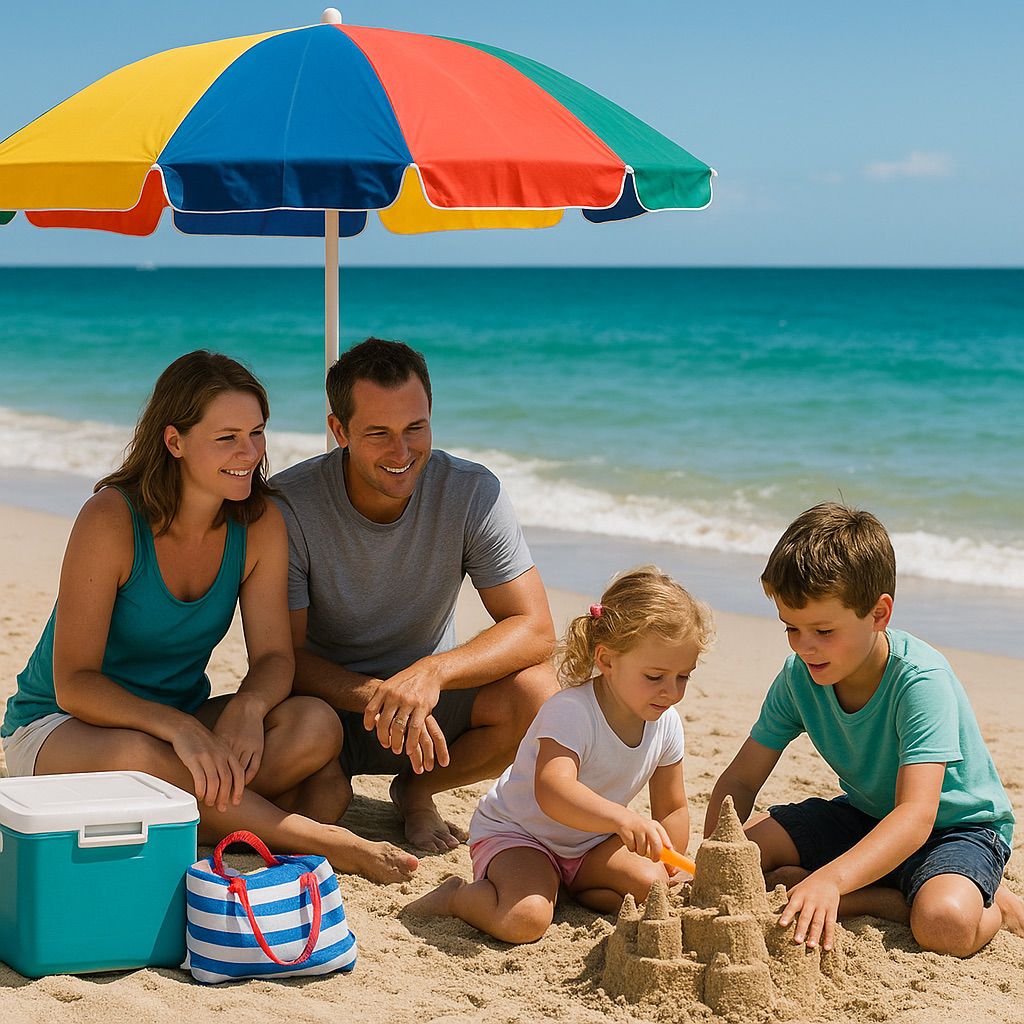
Packing for a family beach vacation becomes an art form of its own. Parents learn quickly that while the beach seems simple, it demands a certain toolkit: sunscreen that actually stays put, a sturdy umbrella or pop-up tent for shade, endless snacks that somehow vanish within minutes, and plenty of water. Towels multiply like rabbits, sand toys somehow double with each trip, and coolers become mobile buffets. The ritual of lugging it all across hot sand is part of the experience, and though parents may groan at the load, the payoff is watching their kids run ahead, barefoot and giddy, ready for another day of salty adventure. These efforts, though exhausting in the moment, often become the things laughed about later—the memory of that umbrella that flipped in the wind, or the cooler lid that refused to close over too many juice boxes.

Meals, too, transform on beach vacations. Even the pickiest eaters seem to find an appetite after hours in the surf. Sandwiches taste better when eaten on a towel, fruit feels sweeter when bitten into under the sun, and even a simple bag of chips somehow transforms into a feast when shared on the sand. For dinners, families gather at beachside restaurants where seafood platters and fruity drinks remind everyone that vacation is not just a place but a state of mind. There’s something deeply bonding about watching a sunset together while waiting for food, sticky fingers still covered in saltwater, cheeks pink with sun. These moments aren’t polished—they’re sandy, noisy, sometimes chaotic—but they’re real, and they’re the ones everyone remembers.

Perhaps the most powerful part of family-friendly beach vacations is the rhythm they establish. Days start earlier because children rise with the sun, eager to head back to the water. Mornings are filled with energy—digging moats, building sand kingdoms, diving into waves again and again. Afternoons slow down, the beach quieter as naps sneak in under umbrellas, books finally open, and parents watch their kids through half-closed eyes with a contentment that only comes when the entire family is at ease. Evenings sparkle with boardwalk strolls, arcade games, fireworks shows, and late-night swims in hotel pools. Every hour feels filled, not with obligation but with choice, and that’s what makes them special. Family-friendly beach vacations thrive on flexibility—the freedom to do nothing or everything, all under the same sun.

Technology seems to fade here, too. While phones still capture countless photos, they often end up forgotten in bags as families immerse themselves in the moment. Kids aren’t scrolling when the waves call, and parents aren’t glued to screens when the view is this good. Instead, conversations stretch, games emerge, and laughter feels louder without digital interruption. The beach becomes not only an escape from routine but also from distraction, offering a kind of presence rarely achieved in daily life. Families rediscover not just the joy of vacation but the joy of each other.

As children grow older, beach trips become markers of time. The sandcastle years give way to surfing lessons, the seashell hunts give way to teenage selfies at sunset, the family volleyball games give way to adult siblings returning with their own kids. The beach holds continuity—it’s the backdrop against which families change, a reminder that while time moves forward, the ocean remains steady, welcoming, unchanging in its call. Parents who once pushed strollers across boardwalks later walk arm-in-arm with grandchildren, and in those moments, the circle feels complete.

Family-friendly beach vacations are not about perfection. Sometimes the weather doesn’t cooperate, sometimes the hotel isn’t as nice as the brochure, sometimes kids squabble or sunscreen stings eyes. But those imperfections fade into the background when set against the larger picture of joy. Years later, nobody remembers the tantrum or the lost flip-flop. They remember the first time they jumped into a wave, the family photo taken with messy hair and crooked smiles, the way the beach made them feel limitless. The ocean has a way of sanding down the rough edges, leaving behind only the polished, glowing memories.

At their core, family beach vacations are about connection—to each other, to the ocean, to the idea that life is best lived in shared moments of joy. They remind us that family is not just about being together in the same space but about playing, laughing, eating, and exploring side by side. They teach kids resilience in the face of waves, curiosity in the search for shells, and appreciation for the simple beauty of sunsets. They teach parents the art of presence, the gift of slowing down, the importance of prioritizing joy. And when families return home, they bring the ocean with them—not in the sand stuck to their shoes, but in the way they remember what it felt like to belong to something bigger than themselves.

So the next time you’re wondering where to go, remember that the answer doesn’t have to be complicated. Sometimes the best trip is the one with the simplest ingredients: a stretch of sand, the sound of waves, a cooler of snacks, and the people you love most. A family-friendly beach vacation isn’t about extravagance. It’s about joy, connection, and memories that will outlast even the tides.

Related Posts

Waves on Your Walls: Crafting Beach Memories into Art That Lasts Forever

Dave

There’s something about the beach that clings to you long after you’ve shaken the sand from your shoes and rinsed the salt from your hair. The ocean has a way of imprinting itself in the soul. It’s the sound of the waves, the golden warmth of sunlight, the colors that stretch endlessly from turquoise shallows to midnight blue depths, the shells scattered like tiny treasures, and the feeling that time has paused, just for you. For most of us, leaving the shore means leaving those sensations behind, storing them as memories, photos, and maybe a handful of shells stuffed into a pocket. But what if you could bring the beach home in a way that goes beyond souvenirs? What if you could bottle that feeling, that light, that texture, and hang it on your wall? That is where the idea of making your own beach wall art comes alive. It’s not just decoration; it’s memory turned into beauty, therapy turned into creation, an invitation for your walls to carry the calm and freedom of the sea with you every day.

The beauty of creating beach wall art is that it starts with things you’ve gathered in joy. Shells from a morning walk when the tide pulled back to reveal the treasures it left behind. Sand collected from that beach you never wanted to leave. Driftwood smoothed by years of waves. Pebbles, sea glass, dried grasses from dunes. Even photographs, ticket stubs, or pressed flowers from a seaside vacation can find their way into a piece. These aren’t just materials; they’re stories. Each object has traveled, each has been touched by time and tide, and when you arrange them into art, you’re not just crafting—you’re narrating your history with the sea.

Imagine a canvas painted in shades of ocean blue, overlaid with an arrangement of shells shaped into a heart. That’s not just art; it’s a love letter to the beach. Or picture a shadow box filled with sand at the bottom, a scattering of sea glass rising like stars, and a photograph of your family framed above it all. That’s more than a project. It’s a time capsule. Every glance at it brings you back—not just to the place, but to the people, the laughter, the way your skin felt warm from the sun and salty from the sea. Art, in this way, becomes memory’s guardian.

There’s also something deeply therapeutic about making beach wall art. The act of sorting through shells, arranging driftwood, layering colors—it’s slow, meditative work, much like the ocean itself. You’re not just creating for the sake of a final product; you’re entering a flow state, where every piece you glue, every brushstroke you paint, feels like a wave washing over your mind. It’s relaxation disguised as productivity, joy wrapped in creativity. And unlike buying décor from a store, making it yourself carries pride. When someone asks about the beautiful piece hanging in your home, you don’t just say where you bought it—you tell the story of how you made it, where the shells came from, what the day was like when you found that driftwood. Suddenly the art isn’t just a visual—it’s alive with meaning.

The styles of beach wall art are as varied as the shorelines themselves. Some people prefer rustic and natural—driftwood frames, raw textures, neutral tones. Others go bright and bold—splashes of turquoise paint, layered resin waves that shimmer like the real thing, glittering shells sealed in epoxy that catch the light. Resin art especially has become a beloved craft for capturing the illusion of the ocean itself. With resin, pigments, and a little patience, you can create canvases that look like waves crashing onto a shoreline, frozen in time. The way the resin spreads and shifts mimics water’s movement, so each piece feels alive. Others find joy in photography as their medium, taking that perfect beach sunset, enlarging it, and framing it as a centerpiece of a room. Some blend photography with natural elements, surrounding a photo with real shells or mounting it on reclaimed wood.

The magic, though, is in how personal it all is. There is no right or wrong way to make beach wall art. Maybe your version is a simple glass jar of layered sands from your travels, mounted in a wooden frame. Maybe it’s a watercolor painting you made one afternoon after remembering how the horizon looked on your favorite trip. Maybe it’s just the silhouette of a palm tree cut from paper and pressed against a painted blue background. The value doesn’t come from complexity or perfection; it comes from meaning. The most powerful art is not always the most polished but the most heartfelt.

What’s remarkable is how making beach wall art also changes your relationship with your travels. Suddenly, every walk along the sand becomes an artist’s treasure hunt. You don’t just see shells—you see color palettes. You don’t just see driftwood—you see frames waiting to happen. You don’t just see sea glass—you see mosaics shimmering with possibility. It adds a layer of mindfulness to the beach itself, making you notice details you might otherwise have missed. That striped shell, that perfectly smooth stone, that patch of sand glinting under the sun—they’re not just debris. They’re future strokes in your masterpiece.

For families, beach art can be a bonding ritual. Imagine a trip where each child collects a handful of shells or rocks, then returns home and helps to arrange them in a frame. That art then becomes more than a decoration; it becomes a marker of togetherness. Every time you look at it, you’re reminded not just of the beach, but of the joy of making something side by side. For couples, a shadow box filled with sand and shells from a honeymoon beach becomes a living memory, displayed where both can see it daily. For solo travelers, creating wall art can be a way of holding onto a moment that felt like freedom, independence, or peace, reminding yourself that you’ve been to the water’s edge and come back renewed.

And let’s not ignore the way beach wall art transforms a space. Homes crave warmth and personality, and nothing provides that like meaningful art. A living room with a driftwood sculpture instantly feels more grounded, more organic. A bedroom with soft blue resin wave art above the bed brings calm and serenity. A hallway decorated with framed sand and shell collections turns blank walls into a gallery of journeys. Beach art carries with it an aura of escape—it reminds everyone who sees it that life doesn’t have to be all deadlines and traffic. It can be waves and laughter, light and salt air, beauty and simplicity.

The most important part, though, is that making your own beach wall art gives you permission. Permission to be imperfect, to experiment, to enjoy. Permission to let creativity take the reins, even if you’ve never thought of yourself as an artist. Permission to value the things you’ve collected, not because they’re rare or expensive, but because they’re yours. Permission to keep the beach close, even when you’re far away.

So gather your shells, your driftwood, your sand, your paints. Spread them out on a table, let your mind wander, and start arranging. Let your fingers follow instinct, let your memories guide you. And remember: this is not just décor. This is your life, your joy, your escape, your love of the beach captured forever in a frame. Art, after all, is not about reproducing reality. It’s about holding onto feelings. And what better feeling to hold than the peace, the joy, the wild freedom of the ocean?

Related Posts

Stories in the Sand: The Ultimate Guide to Beach Reads for Summer Escapes

Dave

There’s a particular kind of magic that happens when you sit down on the beach with a book in hand. The world slows, the tide rolls in and out, and you find yourself caught between two worlds — the real one filled with waves, sunscreen, and laughter, and the fictional one filled with characters, journeys, and emotions that pull you in deeper than the sea itself. A good beach read is not defined by genre or literary acclaim but by the way it carries you. It’s the novel you can slip into easily, the one you can pick up and put down between dips in the water, the one that makes you forget the sunburn you’ll discover later because you just needed to read one more chapter. Beach reads are the passport to summer adventures without leaving your towel, the companions that turn lazy afternoons into voyages across continents, romances, mysteries, and worlds beyond imagination.

The concept of a beach read has long fascinated both readers and publishers. Every summer, lists are compiled, stacks appear at bookstores, and the phrase itself becomes shorthand for something fun, accessible, and engrossing. But beach reads are more than marketing. They are cultural markers of our seasons, the books that define summers past and present, the stories that linger like the scent of salt air long after the covers have closed. When you think back to a vacation you once took, chances are you remember not only the sand and the sea but also the book that accompanied you. Maybe it was a romance that left you smiling, a thriller that kept you turning pages until midnight, or a memoir that made you see your own life differently as you gazed at the horizon. Books have a way of binding themselves to moments, and summer is their favorite stage.

When people imagine beach reads, many picture lighthearted romances, and indeed, few things pair better with a sun-drenched day than a love story that unfolds like a summer breeze. Romance novels thrive on the beach because they echo the season itself — fleeting, passionate, tinged with possibility. Whether it’s a chance encounter in a small coastal town, a forbidden love set against family drama, or a witty, banter-filled tale of two opposites finding common ground, romance novels deliver hope and warmth, mirroring the very atmosphere of summer. They remind us that joy is worth pursuing, that vulnerability is strength, and that sometimes the best kind of escape is into the arms of a fictional someone who makes us believe in love again.

But romance isn’t the only contender for beach reads. Thrillers and mysteries dominate the category too, offering a different kind of escape. There’s something deliciously fitting about sitting under an umbrella while reading a story that makes your pulse race faster than the crashing surf. Summer thrillers often feature fast plots, shocking twists, and high-stakes drama — crimes in small beach towns, secrets among vacationing families, or missing persons that turn holidays into nightmares. The juxtaposition of a sunny day with a dark story heightens the thrill, a reminder that shadows exist even under the brightest skies. A well-crafted thriller is like the ocean itself: calm on the surface but hiding depths, currents, and dangers that can pull you under when you least expect it.

Historical fiction has carved its space in summer reading too, especially for those who crave immersion in another time. To sit by the sea while reading about wartime Europe, Renaissance Italy, or ancient civilizations is to feel transported twice over — once by the location, once by the story. Historical novels often balance research with storytelling, giving you characters to root for while teaching you something new about the past. They remind us that human emotions, struggles, and triumphs are timeless, echoing across centuries, even as we recline in modern swimsuits with sand between our toes.

For others, memoirs and nonfiction books provide the perfect beach companion. There is something powerful about sitting in nature while reading someone else’s truth, their lived experiences laid bare like footprints in the sand. Whether it’s a celebrity memoir filled with behind-the-scenes stories, a travelogue that mirrors your own wanderlust, or a self-help book that nudges you toward growth, nonfiction belongs on the beach as much as fiction does. The rhythmic sound of the waves becomes the backdrop for reflection, making lessons and insights land even deeper. Summer often feels like a season of reinvention, and nonfiction can be the spark that lights the way.

Then there are the classics — the books that have lived across generations and continue to find their way into beach bags year after year. To read a classic on the beach is to join an unbroken chain of readers who have been moved by the same words for decades, even centuries. Whether it’s the dreamy prose of F. Scott Fitzgerald’s Tender Is the Night read against an actual sunset, or the windswept romance of Emily Brontë revisited with waves crashing nearby, classics gain new texture in the summer air. They remind us that great stories never age, and that the joy of reading is eternal.

The best part about beach reads, though, is that they belong to the reader, not to a list. Your perfect beach book might be an epic fantasy with dragons soaring across kingdoms, a contemporary drama about friendships tested by time, or even a cookbook filled with tropical recipes you plan to try when you head back to the kitchen. What matters is not what the world declares as the “top summer novel” but what captures your heart, what makes the hours slip by unnoticed while the tide creeps closer to your toes.

There is something sacred about the act of reading on a beach. The sea reminds you of vastness, of eternity, while the book pulls you deep into intimacy with its story. Together, they create a paradoxical harmony — infinite and personal, external and internal. You lose yourself twice over, once in the horizon and once in the pages. And when you close the book, when you look up and see the water glittering, you realize that both kinds of beauty — natural and narrative — are working together to remind you how good it is to simply be alive.

The novels that define a summer are not always the ones critics hail or publishers push, but the ones that find you at the right moment. Maybe it’s a paperback passed down by a friend, pages worn and creased by many hands. Maybe it’s a brand-new release you picked up at the airport, devoured before the return flight. Maybe it’s a guilty pleasure, maybe it’s high literature. What matters is that it made you feel, it made you escape, it made the beach even more beautiful because the story became a part of it.

When you think about it, beach reads are more than books. They are memories. They are tied to scents, to sounds, to feelings. Years from now, you may not remember every detail of a novel, but you will remember the way you laughed out loud while reading it under an umbrella, or the way your heart pounded as the plot twisted just as the sun dipped below the horizon. You’ll remember the salty breeze carrying your imagination farther than you thought possible. A good beach read lingers like a tan — fading slowly but leaving traces that prove it was there.

So as summer stretches ahead, pack your sunscreen, your towel, your snacks — and don’t forget your book. Pick the story that excites you, that comforts you, that makes you curious. Pick the one that makes you forget the time, that makes you sigh with satisfaction, that makes you fall in love with words all over again. Because summer isn’t just about beaches. It’s about stories. And sometimes the best journeys you’ll take this season won’t involve boarding a plane or driving for hours, but flipping a page while waves crash in the distance.

Related Posts

Beneath the Surface: Discovering the Best Beaches for Snorkeling Around the World

Dave

The beauty of a beach is often measured by the way it looks above the waterline, but the true magic lies just beneath the surface. For those willing to strap on a mask, bite down on a snorkel, and glide into the blue, an entire hidden universe awaits — colorful, vibrant, teeming with life. Snorkeling is one of the simplest and most rewarding adventures you can have on a beach day, requiring little more than curiosity and a willingness to float. It opens up a secret door into the world of coral gardens, swaying sea fans, darting tropical fish, and encounters with creatures that seem pulled straight from myths. Finding the best beaches for snorkeling is not about geography alone; it’s about entering places where nature has written her most dazzling stories in shades of turquoise and gold, pink and violet, emerald and silver. The water becomes a canvas, the fish the brushstrokes, and every snorkeler is both an explorer and a guest in a world older and grander than their own.

One of the most iconic snorkeling destinations on earth is Hanauma Bay in Oahu, Hawaii. From above, the bay looks like a perfect crescent carved out of volcanic rock, but beneath the waves lies a sanctuary bursting with coral reefs and vibrant marine life. The water here is calm and shallow, making it perfect even for beginners, but it’s the density of life that makes it unforgettable. Glide through the bay and you’ll find yourself surrounded by schools of butterflyfish and parrotfish, flashes of yellow tangs, and perhaps even a graceful sea turtle cruising by like a serene elder of the reef. The experience is so overwhelming that it feels less like snorkeling and more like stepping into a living aquarium, only this one has been sculpted by nature and preserved by protection efforts that have made Hanauma Bay a global model for marine conservation.

Half a world away, the Caribbean offers its own treasures. Trunk Bay in St. John, part of the U.S. Virgin Islands, is often described as one of the most beautiful beaches in the world, but its real jewel is underwater. An underwater snorkeling trail has been created here, complete with plaques that guide you through the coral formations and introduce you to the fish you’ll encounter. It’s as if the ocean itself is giving you a guided tour, whispering secrets about the reef as you glide through warm, crystalline waters. This blending of education and adventure ensures that even first-timers leave not only dazzled but also more aware of how fragile and precious these underwater ecosystems are.

Australia’s Great Barrier Reef may be the crown jewel of global snorkeling, but it is the smaller, more intimate spots that truly capture the heart. At Whitehaven Beach in the Whitsundays, powdery white sand gives way to waters where stingrays glide like shadows over a turquoise canvas, and tiny, curious fish dart between your legs as you walk in from the shore. The reef here is shallow and easy to access, but the diversity is staggering — corals like sculpted castles, clownfish peeking from anemones, and flashes of electric blue and neon pink that seem too vivid to be real. Snorkeling here reminds you that sometimes the greatest beauty is not in size but in intimacy, in the way each encounter feels personal, like the reef is performing just for you.

For those drawn to the raw, untamed beauty of the Red Sea, Egypt’s Ras Mohammed National Park offers snorkeling like nowhere else. Located at the tip of the Sinai Peninsula, this region is where vibrant coral reefs meet desert cliffs, creating a surreal collision of landscapes. Slip beneath the surface and you are greeted by walls of coral that drop into the depths, teeming with fish that shimmer like jewels against the backdrop of the blue. Barracuda patrol the outer edges, while colorful wrasses, angelfish, and butterflyfish populate the reef. Snorkeling here feels primal, ancient, as if you are tapping into the same waters that have flowed unbroken since the dawn of life itself.

Mexico’s Riviera Maya holds another treasure in Akumal, which means “Place of the Turtles” in Mayan. True to its name, Akumal’s shallow, calm waters are home to green sea turtles that graze peacefully on seagrass meadows just offshore. To snorkel here is to experience one of the most humbling encounters possible — drifting alongside these gentle giants as they move with slow, deliberate grace, completely unbothered by your presence. The sight of a turtle lifting its head to the surface for a breath before sinking back down into the meadow is unforgettable, a reminder of the delicate balance between sea and land, air and water.

In the Maldives, nearly every island offers snorkeling that could make the list of “world’s best.” The waters here are impossibly clear, the corals alive with every imaginable hue, the marine life dazzling in both diversity and abundance. Perhaps nowhere else in the world can you step directly from your overwater villa into a reef where you might see manta rays, reef sharks, and clouds of tropical fish in a single swim. The Maldives redefine what it means to be surrounded by the sea, making every snorkel an immersion in paradise.

The Galápagos Islands, meanwhile, add another dimension to snorkeling — not just color and beauty, but history and uniqueness. Here, you are as likely to encounter a marine iguana gliding past you as you are to see a school of surgeonfish. Sea lions often swim playfully alongside snorkelers, their agility and joy infectious. The Galápagos remind us that snorkeling is not just about seeing beautiful fish, but about sharing space with creatures found nowhere else on earth. It is a humbling, exhilarating reminder of how diverse life can be when allowed to flourish in isolation.

And then there are the hidden gems, the places that don’t make every glossy magazine list but stay forever etched in the memories of those who discover them. Devil’s Crown in the Galápagos, a submerged volcanic crater teeming with life. Molokini Crater in Hawaii, a crescent-shaped sanctuary where visibility is so clear it feels like floating through glass. Ningaloo Reef in Western Australia, less famous than the Great Barrier but just as dazzling, where whale sharks migrate and coral flourishes with fewer crowds.

What makes a beach great for snorkeling is not just what you see, but how it makes you feel. The best beaches for snorkeling remind you that the world is larger and more complex than you imagined, that beauty exists in layers, that every fish, coral, and current is part of a grand design you are only beginning to glimpse. They teach patience, humility, and wonder. They slow you down, force you to breathe, to observe, to marvel.

The real gift of snorkeling is not just the photographs or the list of species you can check off. It is the moment of connection — when a turtle meets your eye, when a school of fish envelops you like a living cloud, when sunlight refracts through water and turns everything into a kaleidoscope. These are moments of intimacy with a world that exists whether or not we visit it, a reminder that paradise is not a resort but an ecosystem, fragile and alive.

The best beaches for snorkeling are scattered across the globe, but they share one thing in common: they leave you changed. You emerge from the water with salt on your skin and wonder in your eyes, carrying with you a piece of the reef, not physically but emotionally. You carry the colors, the rhythms, the quiet power of a world that thrives just beyond our everyday sight. And once you have seen it, you will spend your life seeking it again, diving into new waters, chasing new horizons, searching for that same thrill of discovery.

Snorkeling is not about expertise, expensive gear, or even travel to the farthest corners of the planet. It is about curiosity, about surrendering to the idea that the world beneath the waves is as much ours to explore as the mountains and cities we call home. The best beaches for snorkeling are not just destinations; they are invitations — invitations to witness, to respect, to protect. Because once you have seen paradise underwater, you cannot help but want to keep it safe for generations to come.

Related Posts

Sun, Sand, and Safety: Keeping Every Beach Day Worry-Free

Dave

There is nothing quite like a beach day. The anticipation begins before you even get there — the smell of sunscreen in the air, the cooler packed with drinks and snacks, the towels rolled tightly in a bag, the excitement of kids who can’t wait to run into the waves. The beach is freedom, a place where time slows down, worries fade, and everything is reduced to sun, sand, and sea. But for all its joy, the beach is also a place where safety matters more than we often think. Beneath the carefree laughter and golden skies, there are risks that can turn a perfect day into a nightmare if we don’t pay attention. That’s why keeping everyone safe on a beach day is not about being paranoid — it’s about being prepared, about creating the conditions where relaxation can actually flourish because the essentials are covered. Safety is not a burden; it’s the foundation of a day everyone will remember for the right reasons.

The first and most important factor of beach safety is the ocean itself. The water is magnetic — it calls to children and adults alike, shimmering under the sun, whispering promises of cool relief. But the ocean is also powerful, unpredictable, and deserving of respect. Rip currents are among the greatest hidden dangers. They are fast-moving channels of water that can sweep even strong swimmers away from shore in seconds. Many people panic when caught, exhausting themselves by fighting directly against the current. The safer strategy is to stay calm, conserve energy, and swim parallel to the shore until you are free from the current’s grip, then make your way back in at an angle. Teaching children — and even reminding adults — about rip currents before anyone enters the water can make the difference between life and tragedy. The rule is simple: the ocean is beautiful, but never underestimate it.

Supervision is another non-negotiable. A beach is not like a backyard pool where the water is contained and controlled. At the beach, waves crash unpredictably, sandbars shift under your feet, and the sheer expanse makes it easy to lose sight of people, especially kids. Having a designated “water watcher” in your group ensures that someone is always paying attention when children or weaker swimmers are in the surf. Rotating this responsibility keeps it fair, but the key is that the job is focused — no phones, no distractions, just eyes on the water. This simple system has saved countless lives. It doesn’t matter how good a swimmer someone is; all it takes is one strong wave, one sudden cramp, one slip beneath the surface. The ocean demands vigilance.

Of course, not all dangers come from the sea. The sun itself can be merciless, and while a sunburn may not seem like a life-threatening issue, the truth is that overexposure to UV rays can cause heatstroke, dehydration, and long-term damage to skin. Sunscreen is the obvious defense, but too many people treat it like an afterthought, applying a quick layer once and forgetting about it. The truth is sunscreen should be applied generously, thirty minutes before sun exposure, and reapplied every two hours, or immediately after swimming or sweating. Wide-brimmed hats, sunglasses, and UV-protective clothing add extra layers of defense. Shade is not optional — whether from an umbrella, a tent, or a natural spot, having a retreat from direct sun can mean the difference between a joyful afternoon and a miserable evening spent with chills and blisters.

Hydration ties directly into sun safety. The combination of heat, activity, and salt air can dehydrate the body faster than we realize. Sodas and cocktails may be fun, but nothing replaces water. Bringing a cooler stocked with cold water bottles and encouraging everyone — especially kids — to drink regularly keeps energy up and prevents dizziness, fatigue, or worse. Pairing hydration with snacks like fresh fruit provides not only relief but also fuel for all the running, swimming, and building of sandcastles that a beach day demands.

Then there are the hazards we don’t think about until they happen — stepping on a sharp shell or piece of glass hidden in the sand, jellyfish stings, or scraped knees from playing near rocks. A small first aid kit can be a quiet hero on a beach trip. Bandages, antiseptic wipes, tweezers, and even vinegar or baking soda (depending on the type of jellyfish common in the area) can turn a crisis into a minor inconvenience. It’s not about anticipating disaster; it’s about giving yourself the power to respond quickly and confidently if something arises.

Swimming zones and lifeguards exist for a reason, and choosing a beach with lifeguards on duty is always the safer option. Lifeguards are trained to spot trouble before it becomes obvious — they can see a struggling swimmer long before a casual observer would notice. Respecting their warnings, flags, and instructions is non-negotiable. If a flag indicates dangerous conditions, trust it. No photo, no thrill, no swim is worth risking your life or the lives of those you love.

One of the most overlooked safety aspects of a beach day is the buddy system. It seems simple, almost childish, but it works. Nobody, no matter how confident, should swim alone. Having someone with you means that if something goes wrong — a cramp, sudden fatigue, or getting caught in a current — there is someone right there to help or call for help. Even experienced swimmers, even athletes, can be humbled by the power of the sea. Pairing up is one of the easiest, most effective ways to add a layer of security.

Parents, especially, face the challenge of balancing freedom with safety. Children see the beach as an endless playground, and in many ways it is, but they also need boundaries. Setting clear rules before arriving — where they can and cannot go, how far into the water they are allowed, and who they must stay near — provides structure without dampening fun. Bright swimsuits for kids make them easier to spot in crowds, and teaching them simple hand signals or whistles for attention can bridge the gap when voices get lost in the roar of the surf.

And then there is the social aspect of safety. Beaches are public spaces, and as such, awareness of your surroundings matters. Keeping an eye on belongings, choosing a well-populated but not overcrowded area, and respecting the space of others contributes to an atmosphere where everyone feels secure. A little courtesy goes a long way — picking up trash, avoiding reckless games near other beachgoers, and being mindful of noise or smoke helps maintain a safe and welcoming environment for all.

But the most powerful aspect of keeping everyone safe on a beach day is mindset. It is about recognizing that safety is not the opposite of fun, but the foundation of it. The child who knows someone is watching can play more freely. The swimmer who understands rip currents can enjoy the waves with confidence rather than fear. The adult who reapplies sunscreen and drinks water will have the energy to make memories well into the evening rather than retreating with sunstroke. Safety is the unseen lifeguard in every joyful photograph, the quiet force that makes the laughter possible.

What people remember about a beach day is not the sunscreen routine, the rotation of water-watchers, or the bag of bandages tucked discreetly in a tote. What they remember is the way the water felt as they dove under a wave, the taste of watermelon on a towel, the warmth of the sun as they dozed under an umbrella, the sandcastle that somehow survived until sunset, the bonfire laughter that stretched into the night. Safety doesn’t erase spontaneity. It protects it. It ensures that when the day is done, and everyone is packing up salty towels and sandy feet, the memories are golden, not scarred by regret.

The truth is that beaches have always been places of both beauty and danger. Sailors feared them, poets worshiped them, families flock to them. To love the beach is to love both its serenity and its wildness. And to honor that love is to approach it with respect. When we take the steps to keep everyone safe — to watch, to prepare, to hydrate, to shade, to listen to the sea and to each other — we are not limiting the magic of the beach. We are amplifying it. Because nothing is more magical than freedom without fear, laughter without worry, joy without interruption.

So the next time you pack the car, load up the cooler, shake out the towels, and head to the shore, remember that safety is the most essential thing you bring. It is what allows you to run barefoot across the sand without hesitation, to float in the surf without fear, to let children play with abandon, to close your eyes under the sun and truly relax. Safety is not a list of rules — it is the invisible gift you give to everyone you love, the one that says, “Go ahead. Dive in. The day is yours.”

Related Posts

Waves at Home: How to Bring Coastal Style to Your Bedroom

Dave

There is something about the coast that feels eternal, something that seeps into your bones the moment you breathe in the salty air, something that quiets the chaos of everyday life and replaces it with rhythm. The pull of the ocean is more than just visual; it’s emotional, spiritual, and deeply human. That’s why so many people who cannot live by the beach choose to bring the beach to them, infusing their homes with the kind of tranquility that only waves and wide skies can inspire. And nowhere does that influence matter more than the bedroom, the most personal space you inhabit. A coastal bedroom isn’t just about decorating with shells or painting the walls blue. It’s about creating a retreat that makes you feel as though you are waking up every morning with the sea just outside your window, even if you live a thousand miles from the shoreline.

The secret to coastal style is light. Natural light pouring through large, sheer curtains. Light-colored walls that reflect the glow of day and soften into warmth by night. White becomes the anchor here, not stark but alive, layered with sandy beiges, gentle taupes, seafoam greens, or sky blues. This palette is not meant to overwhelm but to soothe, like the horizon at dawn or the muted tones of shells scattered along a tide pool. The colors in a coastal bedroom don’t shout; they whisper. They bring calmness without sterility, balance without boredom.

Furniture in a coastal bedroom should never feel heavy or brooding. It should be easygoing, almost as though it drifted in on the tide. Light woods, whitewashed finishes, wicker, and rattan all echo the natural textures of a beachside cottage. A bed draped in crisp white sheets layered with linen throws or soft quilts in pale hues feels inviting without being cluttered. The key is effortlessness, that sense that the room is dressed just enough but not weighed down. A cane dresser, a wicker trunk at the foot of the bed, or simple wooden nightstands all keep the space grounded yet airy. The furniture isn’t there to dominate the room but to blend seamlessly into the environment you’re creating, just like the shoreline blends into the water.

Texture is where the room comes alive. Coastal style is tactile. It’s the weave of linen curtains that flutter when the window is open, the rough touch of a jute rug beneath your feet, the soft embrace of cotton sheets at the end of the day. Woven baskets, rattan lampshades, and raw-edge driftwood frames echo nature, while airy textiles remind you of wind and water. A space like this doesn’t just invite your eyes to wander but your hands to feel. It wants to be touched, lived in, and embraced, just like the beach itself.

Décor in coastal bedrooms is subtle, never themed. It isn’t about plastering starfish and anchors on every wall. Instead, it’s about restraint, about evoking the feeling of the coast without overwhelming it. A framed seascape, a ceramic vase in an ocean hue, a single jar of sand collected from a beloved shoreline — these touches matter more than dozens of trinkets. A large, airy woven light fixture that casts warm shadows at night can evoke the lantern glow of a seaside cottage. A piece of reclaimed driftwood set as a headboard or a woven rug in muted blues can carry more power than cluttered accessories. Every piece should feel intentional, not forced, like treasures you brought home rather than souvenirs bought at a shop.

Light itself becomes the most important accessory. In the daytime, your room should flood with sunlight filtered through gauzy curtains, creating a sense of openness and endless air. At night, lighting should be layered and gentle. Think table lamps with linen shades, rattan pendants that mimic the texture of nets, or candles flickering softly as if echoing the glow of a beach bonfire. Lighting in a coastal bedroom doesn’t just illuminate; it creates atmosphere, shifting with the hours like the sea itself.

No coastal-inspired space is complete without a touch of nature. Plants bring vitality to the room, but the choices matter. Palms in woven baskets, snake plants in clay pots, or eucalyptus branches in a glass vase all tie in seamlessly with the theme. They provide freshness without clutter, color without chaos. Even one well-chosen plant in the corner can evoke the wildness of dune grasses swaying in the wind. They connect your bedroom not only to the idea of the beach but to life itself, rooting you in something organic and alive.

The magic of coastal design is not in following rules but in creating feeling. Every detail should invite you to breathe deeper, to let stress roll away like the tide, to feel as though your bedroom is a sanctuary away from the noise of the world. Personal touches are what transform it from simply styled into authentically yours. A jar of shells you picked up on a trip, a framed photograph of your favorite shoreline, books about the ocean stacked by your bed — these are what give the room its soul. Your coastal bedroom should remind you not just of the coast in general, but of the coast as you know it, tied to your memories, your dreams, your longing.

What makes coastal style so enduring is that it speaks to something we all crave: peace. It doesn’t matter if your window looks out at crashing waves or a busy street — the coastal bedroom gives you the illusion of waking up at the water’s edge. It gives you space to breathe, to rest, to recharge. It proves that you don’t need to live near the shore to live with the sea in your heart.

So strip away the heavy, the dark, the unnecessary. Embrace lightness, simplicity, and nature. Let the textures tell their story. Let the colors calm you. Let the design transport you. Because at the end of the day, a coastal bedroom is not just about design. It’s about creating a sanctuary that feels as eternal and as free as the ocean itself. It’s your retreat, your safe harbor, your little corner of coastline, no matter how far from the shore you may be.

Related Posts

Forever in the Sand: A Complete Guide to Beach Wedding Style & Inspiration

Dave

There is something timeless about the sound of waves meeting the shore, the salty air catching in your hair, the horizon stretching endlessly, blurring the line between sea and sky. For centuries, people have looked to the ocean as a place of renewal, healing, and connection. So it’s no surprise that couples everywhere are drawn to the shore when it comes time to say their vows. A beach wedding is more than just a ceremony in a beautiful location — it’s a statement, a declaration of love set against nature’s most breathtaking backdrop. It’s barefoot elegance. It’s champagne under the stars. It’s vows carried on the wind. And most of all, it’s unforgettable.

Planning a beach wedding, however, is an art form. It requires balancing the dreamy with the practical, weaving together style and inspiration with logistics and preparation. What makes beach weddings so magnetic is the unique blend of romance and freedom they offer. The ocean doesn’t care for formality, but it rewards authenticity. You don’t need marble arches or chandeliers when you already have sand, surf, and sky. What you need is to understand how to let the environment do the heavy lifting while you add personal touches that make the day yours.

Every beach tells a different story. Some are wild and rugged, with crashing waves and dramatic cliffs. Others are calm and serene, the water lapping gently at powdery white sand. Before planning a single detail, couples need to choose the beach that matches their vision. Do you want the drama of the Pacific coast, where the sunsets burn the horizon orange and crimson? Or the calm turquoise waters of the Caribbean, where every photo looks like a postcard? Perhaps you prefer a rustic East Coast vibe, with sea grass swaying in the dunes, or even a hidden Mediterranean cove with centuries of history whispering through the stones.

Each beach offers its own mood, its own palette. When choosing, think beyond the scenery — consider accessibility, weather patterns, and legal requirements for ceremonies. A secluded, private beach may sound perfect, but how easy is it for guests to reach? A tropical setting may seem idyllic, but what about hurricane season? Choosing the right beach is like choosing the stage for your play — it sets the tone for everything else.

Nothing transforms a wedding quite like what you wear. Beach weddings call for a style that feels natural yet elevated. Brides often lean toward lighter fabrics: chiffon, organza, silk, lace. Dresses that move with the wind, that catch the light, that don’t feel heavy under the sun. Long cathedral trains are beautiful in ballrooms, but on the beach, a flowing gown that grazes the sand whispers a more effortless kind of elegance. Some brides even choose shorter dresses, bohemian silhouettes, or gowns with daring open backs to match the casual but stunning atmosphere.

Grooms, too, get to break free from tradition. A full black tuxedo can feel out of place on the sand. Instead, linen suits, light colors, or even just crisp shirts and tailored trousers capture the relaxed yet refined spirit of the ocean. Barefoot vows? Absolutely. Loafers or espadrilles? Perfectly acceptable. The key is comfort blended with confidence — clothes that let you feel present in the moment, rather than trapped in fabric that doesn’t belong to the setting.

Bridesmaids and groomsmen often mirror the vibe — flowing pastel dresses, neutral tones, coral, turquoise, or even mismatched beach-inspired palettes. The result is a wedding party that looks like they were styled by the ocean itself.

And of course, accessories matter. Think flower crowns, seashell jewelry, woven hairpieces, soft curls tossed by the wind, or minimalist gold accents that shimmer in the sunlight. For grooms, simple boutonnières with tropical flowers or driftwood accents tie in perfectly. The beach itself provides inspiration; you just have to echo it.

The most magical thing about a beach wedding is that you don’t need to over-decorate. The ocean provides the soundtrack, the sky provides the canopy, and the sand provides the aisle. But thoughtful touches can enhance the natural beauty.

Many couples choose simple arches draped with linen or adorned with local flowers — orchids, hibiscus, bougainvillea. Others create aisles lined with shells, lanterns, or bamboo torches. Seating can be rustic wooden benches, white folding chairs, or even blankets and pillows for a casual bohemian vibe. The altar is often minimalist — a small platform or rug where vows are exchanged with waves crashing just beyond.

Lighting is another key element. Sunset weddings are among the most romantic, painting the sky in hues of pink, orange, and violet. As dusk falls, string lights, candles, or tiki torches create a warm glow that feels intimate and magical. Nature provides the stage; décor provides the accents.

After vows are said, the reception becomes the true canvas for personalization. Beach receptions can be barefoot feasts under the stars, elegant dinners under open tents, or even casual bonfires with acoustic guitars and s’mores. Caterers often lean into coastal menus: fresh seafood, tropical fruits, grilled specialties. Signature cocktails with names like “Ocean Breeze” or “Sunset Kiss” flow from the bar, their colors echoing the water and sky.

Tablescapes can include driftwood centerpieces, candles in glass vases filled with sand, starfish accents, or soft linens in seafoam green and sandy beige. The goal is to blur the line between natural and curated, so that guests feel the celebration belongs to the place itself.

Music, too, often reflects the setting. A steel drum band, a violinist, or a DJ mixing tropical beats can all capture the carefree spirit of the beach. And of course, dancing under the open sky — with sand beneath your toes — is an experience no ballroom can ever replicate.

Few backdrops rival the ocean for wedding photography. The interplay of natural light, wide horizons, and reflective water makes for breathtaking images. Photographers often work with the “golden hour,” just before sunset, when the light is soft and warm. Couples are silhouetted against fiery skies, or captured hand in hand as waves brush their feet.

But candid shots matter too: guests laughing with wind in their hair, flower girls chasing seagulls, a veil caught dramatically in the breeze. Beach weddings lend themselves to movement and spontaneity. No one expects rigid perfection. The beauty is in the flow.

Of course, beach weddings are not without challenges. Wind, sand, unpredictable tides, and weather all play roles. Sound systems can struggle against crashing waves. Dresses can gather salt and grit. Guests may squint in the sun or sweat in the humidity.

The key is preparation. Always have a plan B — a covered area nearby in case of rain. Choose microphones for officiants and readers. Advise guests to bring sunglasses, sunscreen, and comfortable shoes. Provide shade and hydration. The unpredictability of the beach can either ruin or enrich your day — depending on how well you plan.

What makes a beach wedding unforgettable is not just the setting but the personal touches. Some couples incorporate rituals like sand ceremonies, where two colors of sand are poured together as a symbol of union. Others release lanterns into the night sky or toss flower petals into the waves. Some embrace local culture — Hawaiian hula dancers, Caribbean drummers, or Mediterranean feasts.

Every detail should echo your story. Do you both love travel? Incorporate a map of beaches you’ve visited into your décor. Did you meet surfing? Add surfboards as props or signage. Do you want intimacy? Keep it to a small circle of family and friends. Do you want grandeur? Invite hundreds, with a stage set against the sea.

The beach is a canvas — your story is the paint.

There is a reason the idea of a beach wedding continues to capture hearts. It’s not just about style. It’s about symbolism. The ocean represents eternity, its tides constant yet ever-changing. The horizon represents hope, the idea that love stretches farther than we can see. The sand represents grounding — two people standing steady even as waves lap at their feet.

A beach wedding feels ancient and modern all at once, primal yet sophisticated. It’s a reminder that love, like the sea, is both vast and intimate, wild and enduring. Couples return to the beach to marry not because it is fashionable, but because it feels elemental — as if love belongs to the sea itself.

So when you picture your vows against the backdrop of the ocean, you’re not just planning a wedding. You’re writing yourself into a story that is as old as the tide and as new as tomorrow’s sunrise. A story of love, promise, and forever in the sand.

Related Posts

Sun, Sand, and Sustenance: Eating Light and Staying Energized at the Beach

Dave

There’s a certain magic about stepping onto the beach that makes everything feel lighter—your steps, your mood, your worries, even your appetite. The ocean stretches out like a glittering invitation, the sun warms your shoulders, and the salty air seems to whisper that life doesn’t need to be complicated. But spend a whole day by the shore, and you’ll quickly realize something: the beach drains you. The sun burns energy faster than you expect, the waves pull at your strength, and the heat can make your body crave refreshment in ways that feel almost primal. That’s where food becomes more than just fuel—it becomes part of the beach ritual itself. And the key to keeping that seaside vibe fun, light, and energized? Eating smart, eating light, and eating with intention.

This isn’t about dieting or restricting; it’s about listening to your body and giving it what it actually needs when you’re out under the sun for hours at a time. The beach is not the place for heavy meals that make you sluggish, nor for greasy snacks that leave your fingers sticky and your energy flat. No, the art of eating at the beach is about balance: hydrating foods that replenish what the sun steals, protein-packed bites that keep you active in the waves, and refreshing flavors that keep your mood as bright as the day itself. This essay dives into the culture, science, and beauty of eating light at the beach—and why the food you bring to the shoreline is just as important as the sunscreen in your bag.

Let’s start with what the sun does to you. Sitting in the heat for hours naturally dehydrates your body, even if you don’t feel like you’re sweating. The salt in the ocean pulls water out of your skin, and the sun burns through electrolytes faster than a high-intensity workout. That’s why beach hunger often feels so strange—it’s not always hunger you’re feeling, but thirst disguised as the need to snack. That’s why fruits are the beach’s secret weapon. Watermelon, pineapple, oranges, grapes—all of them come with high water content, natural sugars for quick energy, and the kind of refreshing juiciness that makes you sigh with relief on a hot day. Think about biting into a cold wedge of watermelon with your feet buried in warm sand—that’s not just food, that’s an experience, a sensory reset, a reminder that nature really does give us what we need.

But fruit alone won’t keep you going if you’re surfing, swimming, or chasing kids up and down the shoreline. That’s where protein comes in, but the trick is to keep it light. Wraps stuffed with lean turkey, hummus with whole-grain crackers, or even a container of Greek yogurt with berries can fuel you without weighing you down. The last thing you want at the beach is that post-meal crash, where all you want to do is nap under your umbrella while everyone else is running toward the water. Protein helps stabilize your energy, keeping your muscles fed and your body active, which is crucial if you’re spending the day in and out of the waves.

Cultural traditions also play a big role in shaping what people eat at the beach. In Italy, you’ll see beachgoers with fresh mozzarella, tomatoes, and basil tucked between slices of crusty bread—simple, fresh, and easy to carry. In Japan, families often pack onigiri, rice balls filled with pickled plum or salmon, wrapped in seaweed to make them perfectly portable. In Mexico, the beach is a paradise of elote—grilled corn on the cob slathered with lime, chili, and cotija cheese. Everywhere in the world, beach food reflects a common theme: freshness, simplicity, and portability. The beach demands food that fits the environment, that feels natural under the sun, and that doesn’t require complicated preparation.

There’s also a psychological side to eating light at the beach. The sun itself reduces your appetite. Studies have shown that exposure to heat decreases the body’s hunger signals, meaning you’re less likely to crave heavy meals when you’re in direct sunlight. That’s why beach snacks often feel better when they’re cool, crunchy, and refreshing rather than hot or dense. It’s not just about preference; your body is literally signaling for hydration and lightness. And this is why people remember beach food as some of the most satisfying meals of their lives—not because it was gourmet, but because it was exactly what the body needed in that moment.

Of course, hydration is half the battle. Drinking water at the beach isn’t optional—it’s survival. But plain water isn’t always enough when you’ve been swimming, sweating, and playing all day. That’s when coconut water, electrolyte drinks, or homemade fruit-infused water can make a world of difference. Drop cucumber, mint, or lemon into a water bottle, and suddenly hydration feels like a treat rather than a chore. Staying energized at the beach is really about staying ahead of dehydration, because once fatigue sets in, no snack can bring you back to life as quickly as water can.

And then there’s the social side of food at the beach. It’s not just about eating to survive; it’s about eating to share. A big cooler filled with colorful fruit skewers, homemade wraps, and refreshing drinks isn’t just fuel—it’s an invitation. It’s a way to create memories around the food as much as around the waves. People rarely remember the exact sandwiches they ate, but they always remember the laughter around the picnic blanket, the sticky fingers from shared watermelon slices, and the way cold grapes tasted better simply because the ocean was nearby. Eating light isn’t only about staying energized; it’s about creating experiences that feel as effortless and joyful as a summer day.

What makes the beach unique is how it transforms the way we think about food. In everyday life, we often rush meals, overeat, or eat out of habit rather than hunger. But at the beach, food slows down. You notice the sweetness of fruit more intensely, the crispness of veggies more sharply, the coolness of a drink more gratefully. Eating light at the beach reconnects you with the sensory side of eating, making food feel like a celebration of life itself rather than just fuel. It’s one of the few places where health and indulgence align—where the foods that feel best are also the foods that are best for you.

Of course, the modern beach day also comes with temptations. Ice cream trucks, fried snacks, greasy burgers at beachside shacks—they all beckon with nostalgic charm. And honestly, sometimes saying yes to those treats is part of the fun. The secret is balance. A cone of ice cream on a hot day feels like bliss, but it won’t ruin your energy if it’s balanced with hydrating snacks and light meals. Eating light doesn’t mean avoiding fun; it means making choices that let you enjoy the whole day without crashing. It’s about giving yourself the freedom to indulge without losing the rhythm of the beach.

At its heart, eating light and staying energized at the beach isn’t about rules; it’s about harmony. It’s about tuning into your body, respecting the environment you’re in, and choosing foods that let you enjoy every hour under the sun. It’s about finding joy in simplicity, strength in freshness, and connection in sharing. The beach is a place of balance—between water and sand, sun and shade, movement and rest. Food at the beach should reflect that same balance: nourishing without burdening, refreshing without overwhelming, light without leaving you empty.

So the next time you pack your beach bag, think about more than just the sunscreen and towel. Think about the foods that will make your day brighter, longer, and more memorable. Pack the watermelon, the wraps, the cucumber-mint water. Say yes to the ice cream when it feels right. Create a ritual around eating light that makes your beach days feel endless. Because the truth is, the beach teaches us something profound about food: that it’s not about filling up, but about feeling alive. And isn’t that what we’re really chasing when we head for the shore?

Related Posts

Paradise Discovered: How Beaches Became Vacation Hotspots

Dave

It’s hard to imagine now, but there was a time when people avoided beaches at all costs. They were dangerous, unpredictable, and mostly reserved for fishermen, sailors, and those who had no choice but to live near the sea. Storms destroyed ships, pirates roamed coasts, and the idea of lying in the sun for fun would have seemed ridiculous. Fast forward a few centuries, and beaches are the first place people think of when they dream of vacation. Honeymoons, spring breaks, family getaways—all roads lead to the sand.

So how did this change happen? The story is a fascinating mix of medicine, culture, and human desire. In 18th-century Europe, doctors began telling wealthy patients that the sea could heal them. Saltwater baths and bracing sea air were suddenly fashionable, turning small fishing villages into spa-like destinations. Brighton in England became the poster child for this movement, attracting nobles who wanted to mix healing with pleasure.

Then the Industrial Revolution hit, and cities filled with smoke and stress. People needed a break, and trains made seaside trips possible for ordinary families. The beach was no longer just for the rich; it became a shared escape. This was also the moment when culture flipped its script on the sun. Pale skin had always been a mark of wealth, but in the early 20th century, tanning suddenly became desirable. Coco Chanel, lounging on a yacht and getting a suntan, accidentally started a trend that redefined beauty standards. Being bronzed meant you were healthy, modern, and adventurous—and the beach became the perfect place to get that glow.

By the mid-20th century, the beach was everywhere. Hollywood films, pop music, and magazines made the seaside look glamorous and exciting. Surf culture exploded in California, and tropical escapes became global symbols of luxury. Air travel meant you could fly to the Caribbean, Hawaii, or the Mediterranean, and suddenly the beach wasn’t just local—it was international. Whole economies began to thrive on tourism, reshaping coastal communities forever.

But there’s something deeper going on too. Science tells us that humans are drawn to water—it calms us, lowers stress, and makes us feel more connected. That explains why, no matter how many times we go, we keep returning to the sand and surf. Beaches are more than just vacation spots; they’re a reminder of what it feels like to be free, light, and alive.

So when you pack your bag for the next seaside escape, remember: you’re not just going on vacation. You’re stepping into a centuries-long story of how humans learned to turn the edge of the world into paradise.

Related Posts

Catch the Light, Not the Glare: How to Take the Perfect Beach Selfie

Dave

You’re standing in the best studio on earth: ocean as backdrop, sky as softbox, sand as reflector. A perfect beach selfie isn’t luck—it’s small, repeatable choices that make the light love you, keep details crisp, and tell a story in one frame. Here’s the playbook I use so your photo looks “how it felt.”

1) Time it right (the two golden windows)

Golden hour (about 45–60 minutes after sunrise / before sunset) gives warm, forgiving light, natural skin glow, and gentler shadows.

Blue hour (10–20 minutes before sunrise / after sunset) gives dreamy gradients and even skin, perfect if you prefer cooler tones.

Midday? Find open shade (umbrella, pier, dune), or turn your back to the sun and use the sand as a giant reflector. Step closer to the waterline where the light bounces softly.

2) Clean your lens (SPF is the secret smudger)

Sunscreen and sea spray haze your front camera fast. Wipe with a clean cotton cloth (inside of a T-shirt works in a pinch). A clear lens = instant sharpness and contrast.

3) Frame like a pro (fast composition wins)

Horizon straight; don’t let it slice your neck/head. Tilt slightly if you’re going for energy, but keep it intentional.

Rule of thirds: place your eyes on the top third; let the shoreline lead in from a corner.

Depth: stand a few steps from the water; include foreground (sand texture/footprints) for dimension.

Story prop: hat, towel fringe, surfboard edge—one item that says “where” without clutter.

4) Angle & lens (avoid the funhouse face)

Hold the phone slightly above eye level, angled down a touch. This sharpens jawline and opens the eyes.

Prefer 1x (wide) or 2x (tele) for faces. 0.5x ultrawide warps features—if you use it, keep your face centered and your arm out of the corners.

Extend your arm 45° off-center—not straight overhead—to get cheekbone light and a slimmer shoulder line.

5) Train the light (exposure you control)

Tap your face on screen, press/hold to lock AE/AF. Slide the exposure down a hair to save highlights (the ocean/sky).

Backlit sunset? Put the sun just out of frame or behind your hat to rim-light your hair without flare.

Use your hat brim or a friend’s white towel as a fill reflector to lift under-eye shadows.

6) Pose cues that don’t look posed

“Turtle”: forehead subtly forward, chin down a touch—instant jawline.

Angle your shoulders 30° from camera; shift weight to back hip.

Micro-expression: breathe out, think of something kind, then smile with your eyes first; the mouth will follow naturally.

Hands: light touch on hat brim, a strand of hair, or sunglasses—give them a job.

7) Color that loves the sea

Complementary pops: coral, rust, mustard, or warm pinks against aqua/teal water.

Avoid tiny high-contrast patterns (they moiré on phone sensors).

If you wear sunglasses, check reflections—great for creative shots, but they’ll also mirror your phone/people behind you.

8) Hair + wind = friend, not foe

Wind toward camera adds movement. Turn slightly into the breeze so hair lifts back, not across your lips.

A soft clip or scrunchie on the downwind side keeps shape without looking stiff.

9) Settings & features that help (fast and universal)

Live/Moving photo on iOS/Android: pick the best frame later.

Burst for waves and hair flips; stop on the laugh, not the jump.

Portrait mode at 2x for tighter headshots; check edges for weird blur (fix by stepping back and re-tapping your face).

Timer 3s to relax your grip—press, then reset posture.

10) Hands-free tricks (for solos & groups)

Prop the phone in your sandal or cup, or use a tiny tripod.

Trigger with watch remote, Bluetooth button, voice/gesture, or wired earbuds (volume click = shutter).

For groups: stagger heights (sit/kneel/stand), create triangles, and count “1… 2… breathe” instead of “3.”

11) Keep it crisp near water (safety + heat)

Use a wrist strap or waterproof pouch when wading.

Shade the phone between takes; overheated phones throttle image quality.

Rinse salt from your hands before touching the lens again.

12) Edit like you were there (not like a filter pack)

Lift shadows slightly, drop highlights a touch, nudge warmth at golden hour or tint toward teal at midday.

A tiny texture/clarity boost on hair; ease off on skin (let the glow be real).

Add vignette so the eye goes to your face, not the corners.

Keep horizon straight in crop; 4:5 fills feeds nicely, 9:16 for stories.

13) Prompts that give natural expressions

“Look at the wave you’re waiting for.”

“On three, blink… then open and smile.”

“Tell the camera one secret about why today is good.”

Quick recipes (copy–paste workflows)

Sunset glow: 2x lens → sun just off-frame → tap/hold face → -0.3 EV → hat brim fill → half-smile.

Midday shade: under umbrella edge → 1x lens → step toward sand bounce → timer 3s → slight chin tuck.

Action selfie: 0.5x lens center face → burst while stepping into tiny wave → pick the frame where spray arcs.

Checklist before you tap

Lens wiped?

Horizon straight?

Exposure locked on your face?

Shoulder angled, chin slightly down, forehead forward?

One clean background story element (shoreline/umbrella/board)? Good—shoot three takes and move on.

Related Posts

The Gentle Agenda: A Relaxing Beach Day Routine You’ll Actually Keep

Dave

The perfect beach day doesn’t happen by accident; it happens by intention—soft, unhurried intention. It’s less a checklist and more a rhythm you can slip into like warm water. Picture this: you arrive just as the shore exhales its cool morning breath, you set up a little sanctuary in the sand, and then the day unfolds like a long, contented sigh. No chasing the clock, no bargaining with your to-do list, just a sequence of tiny choices that stack into ease. This is a routine designed to make your time by the sea feel restorative instead of rushed, memorable instead of messy. Think of it as the beach day that takes care of you back.

Start before the sand. The evening prior, pack with a philosophy of “fewer, better.” Choose a roomy tote and anchor it with the essentials: broad-spectrum sunscreen (reef-friendly if possible), a wide-brim hat, polarized sunglasses, a light linen or cotton shirt, a large towel or quick-dry blanket, a full water bottle, hydrating snacks (fruit, nuts, cucumber slices), and a tiny pouch with lip balm, a mini first-aid strip, and wet wipes. Add one pleasure item—a paperback, a journal, a disposable film camera, or a deck of cards. Tell yourself the truth: most of the day’s joy will come from air, light, and water, not from gear. Charge your phone, then set it to Do Not Disturb for the hours you plan to be seaside. You’ll sleep better knowing morning-you won’t be sprinting.

Arrival is everything. Aim for early light when the sand is still cool and the gulls own the sky. Park your worries with the car and walk your pace down to the waterline. Stand there for three breaths and let the horizon reset your scale. Scan for an open patch with a little wind protection—near a dune or a low berm—then stake your claim with your towel. Angle it so the sun rises over your shoulder; your book and your face will both thank you. Leave shoes, take toes.

Begin with a slow ritual that tells your nervous system, “We’re safe here.” Sip water. Apply sunscreen in sections—face, neck, ears, shoulders, arms, hands, legs, feet—using deliberate strokes like you’re painting calm onto your skin. Reapply a touch of lip balm. Slip on your hat. This is a tiny ceremony of care, and it sets the tone for everything that follows. If you’re with someone you love, swap sunscreen like a kindness.

Movement comes next, but make it the kind that feels like play. Walk the waterline for ten minutes, letting the waves erase your footprints and your morning inertia. If you like a little structure, count your breath with your steps—inhale for four, exhale for six—and let your stride shorten on the soft sand, lengthen on the packed wet edge. If the water invites you, wade to your shins and let the cool shock lift any remaining sleep from your muscles. Stretch your calves, roll your shoulders, and say hello to the day the way the sea does: in gentle repetitions.

Now you’ve earned a pocket of stillness. Settle onto your towel and try a five-minute “shoreline scan.” Close your eyes and identify, one by one, the sounds that make up the beach’s orchestra: distant voices, a dog’s collar, the low engine of a fishing boat, the layered rush of waves. You’re not meditating to achieve anything; you’re simply allowing your attention to widen until your inner pace matches the outer one. When you open your eyes, the colors will look brighter, because you’ve remembered to see them.

Breakfast on the sand tastes better than breakfast anywhere else. Take small, cold, juicy bites—a peach that drips onto your wrist, a handful of berries, a wedge of melon—and drink more water than feels necessary. Salt air and sun are sneaky with hydration. If you brought coffee, sip it slowly; if you didn’t, the sea will wake you just fine. The point is not to fuel a marathon; it’s to feed contentment.

Midmorning is for alternating pleasures. Read a chapter and then swim. Journal a few lines and then nap. Put on music in your headphones for one song and then take them off so the ocean can have the floor again. Choose activities that don’t fight the setting: this is not the time to doomscroll; this is the time to notice how sunlight threads through the translucent rim of a wave. If you’re with kids, keep the plan flexible and the snacks abundant; if they build a sand fortress, be the royal court photographer, not the project manager. If you’re solo, curate a brief no-agenda window—twenty minutes where you refuse to decide what to do and simply let the day choose you.

Sunscreen intermissions are your clock. Every ninety to one-hundred-twenty minutes, reapply, drink water, and shift your towel a little to keep the sun off the same patch of skin. Think of these breaks as punctuation—the commas that let the sentence of your day breathe. While you’re at it, flip your hat, fluff your towel, shake out the sand, and take a photo of something ordinary—a corner of the umbrella, the outline of your book on the blanket, your footprints fading. These details become the memory anchors later.

When the water is friendly, swim like a seal on holiday. Wade past the small chop until the surface evens out, then float on your back and watch the sky do its slow theater. If you like a tiny workout, pick two landmarks—say, a lifeguard post and a buoy—and swim easy laps between them. Keep your stroke conversational; you should be able to name sea colors out loud without gasping. If the sea is moody or flagged unsafe, honor the flags and make the shoreline your swimming pool: walk the edge, let waves lap your ankles, and remember that caution and relaxation are close cousins.

Lunchtime should be light and lazy. Sandwiches wrapped in parchment, a small tub of olives, crisp vegetables, a handful of salty chips—simple, finger-friendly things that won’t wilt in the sun. Eat in the shade if you’ve got it; if you don’t, your hat is your dining room. Share bites. Trade fruit. If you’re with friends, set an unspoken rule that nobody talks about work for twenty minutes. If you’re alone, read the same paragraph twice because you can.

After lunch is the day’s softest chapter: the siesta hour. Tuck your phone deeper into your bag and lower your expectations all the way down to “breathe.” Lie on your side with your hat over your face or prop yourself on your elbows and drowse through the world. This is when the beach becomes a lullaby—the hum of conversations, the metronome waves, the warmth pooled in the towel. Let yourself drift. Rest is not a reward; it’s part of the routine.

When you wake, rinse the sleep with a quick dunk or a wrist-to-elbow splash. This is a good moment for a short gratitude inventory, the kind that doesn’t try too hard: the cool patch under the top layer of sand, the kid laughing three towels down, the way the horizon draws a perfectly straight line with a shaky hand. Gratitude at the beach is easy; keep it uncomplicated so your brain doesn’t turn it into homework.

As afternoon stretches, give yourself one small project that feels like play—nothing with a timer or a goalpost. Build a lopsided sand tower. Collect five stones that look like punctuation marks. Sketch the curve of the cove. Learn to throw a frisbee so the wind helps, not fights. The point is to make something fleeting and be delighted when the tide edits it. Impermanence is the coastline’s favorite teacher.

Late afternoon is your golden hour of social time. If you came with friends or family, this is the window for unhurried conversation—the kind that meanders and lands somewhere tender without forcing it. Share a story that the sea jogs loose. Tell a joke the gulls would groan at. If you’re solo, this is a generous time to text one photo to one person, then tuck the phone away again. Intimacy beats broadcast.

As the sun lowers, begin your gentle exit ritual. Pack slowly and shake sand with the patience of a monk. Refill your water bottle if there’s a fountain. Take one last look at the water—seriously look—and say a quiet thanks, even if you don’t say it out loud. Carry your trash and a little extra that isn’t yours; leave the place better than you found it. Walk back at a human pace; your car does not need you to rush.

The routine doesn’t end at the parking lot. At home, run a cool shower over sun-warm skin and let the salt rinse away like a chapter ending. Moisturize generously; your skin has been working. Make something simple for dinner—tomatoes and bread, cold noodles, grilled corn—and eat like someone who spent all day being alive on purpose. Before bed, jot down three sensory things you loved: the texture of wet sand under your heel, the smell of sunscreen and eucalyptus, the tiny silver fish you thought you imagined but then saw twice. This is how you teach your brain to notice the good and keep it.

Tomorrow’s you will remember that the best beach days are not eventful; they’re elemental. Air that moves. Water that welcomes. Light that forgives. A routine like this doesn’t constrain you; it frees you from decision fatigue so you can say yes to the parts that actually matter. You’ll find your own variations over time—the exact snack that hits the spot, the stretch that fixes your back, the song that makes the shoreline feel like a movie you’re allowed to star in. The scaffolding stays the same: arrive softly, move a little, rest a lot, hydrate often, track the sun by your sunscreen, and end with gratitude.

If all this sounds simple, that’s because it is. A relaxing beach day isn’t a production; it’s permission. Permission to be a slower creature, to let the tide set the tempo, to leave some messages unread while the gulls write nonsense in the sky. Give yourself that permission on purpose, and the shore will give you back something better than a tan: proof that ease is a skill you can practice, and a rhythm you can bring home.

Related Posts

Whispering Shores: Underrated Beaches in Europe You’ll Wish You’d Found Sooner

Dave

There’s a point in every coastal journey where the map fades and the sea begins to speak for itself. It sounds like pebbles rolling in a gentle tide. It smells like pine warmed by a noon sun. It looks like a tiny crescent of sand that never made a “top 10” list, a place where you can hear your own footsteps and the faint clink of a fisherman’s tackle somewhere around the headland. These are Europe’s underrated beaches—the quiet edges that don’t go viral, that don’t rent out entire summers to influencers, that don’t require an alarm clock battle to claim two meters of sand. They’re the bays you remember years later because you shared the water with five people and a curious cormorant. They’re the places where the coffee is strong, the bread is warm, and the salt dries on your skin before you make it back to the car. This is a love letter to those beaches—and a guide to finding them—written for travelers who prefer a whisper to a shout.

Start in Portugal, but step around the obvious. The Algarve’s cliffs are famous for good reason, yet just a little north of the postcard coves sits Alentejo’s wild littoral, where beaches stretch so long they become a mood. At Praia da Amália, a narrow path threads through eucalyptus and descends to a small amphitheater of sand framed by slate rock. A waterfall sometimes tumbles directly onto the beach, fresh water etching a cold ribbon through the warm Atlantic. Fishermen pick their way across the headland, their silhouettes crisp against the sky. It’s a place that doesn’t care whether you came for a selfie; it cares only that the tide keeps time. Drive a bit farther and you’ll reach Praia de Aberta Nova, a wide, golden sheet where the dunes move like sleeping animals. There’s nothing to do but walk, swim, and become the kind of person who unlearns urgency.

Hop east to Spain, but not to the Costa crowded. On Menorca, the least performative of the Balearics, the south coast hides miniature paradises reachable by pine-scented trails. Cala Trebalúger is one of the loveliest—milk-blue water, chalky sand, and a silent river mouth where you can rinse the salt from your hair with fresh water. The hike in keeps it modestly empty even in high summer; the reward is a cove that feels sketched by a minimalist architect. Menorca’s secret is proportion: cliffs high enough to hush the wind, sand wide enough to spread lunch, water shallow enough to invite even cautious swimmers. If you arrive at noon, the sea looks like it’s plugged into a light socket; if you stay until late afternoon, it downgrades to a perfect, expensive teal.

France’s Mediterranean is famous for a certain kind of glamour—yachts, rosé, and sun loungers priced like limited-edition sneakers. But the country also guards pockets of quiet that feel like revelations. On the Côte Vermeille, where the Pyrenees tumble into the sea near the Spanish border, you’ll find Plage de Paulilles, a pebbled arc with water clear as a bell. The headlands cradle it from the Mistral, and the surrounding Bay of Paulilles is a protected landscape. Swimmers cut slow lines along the buoys while families picnic under tamarisk trees. A small museum nods to the site’s history as a dynamite factory; the sea, eternally unbothered, just keeps being blue. Farther west in Brittany, Plage de l’Île Vierge (Crozon Peninsula) is a northern miracle: spruce and maritime pine, chalk cliffs, and water so translucent it looks like a trick of latitude. It’s proof that “Mediterranean color” can happen hundreds of miles from the Med, if the geology is right and the clouds are feeling kind.

Italy may be the motherland of la dolce vita by the sea, but its coasts still hold secrets. In Puglia, the Gargano Promontory hides Vignanotica, a long ribbon of white pebbles below chalk cliffs stippled with caves. The pebbles sing underfoot when the waves retreat—one of those small, perfect sounds you only notice when you’re not jostling a crowd. On Sardinia, everyone knows about La Pelosa’s electric shallows; far fewer make the dusty drive to Cala Domestica, a double-bay on the island’s southwest edge where an old watchtower guards a bowl of sand the color of toasted bread. A side path leads through a buttonhole in the rock to a secret secondary inlet; swim there alone and you feel like the first person to read a footnote and understand its importance.

Across the Adriatic, Croatia’s Dalmatian Coast has coastline so chopped and intricate that solitude is almost a guarantee if you’re willing to look. On Brač, walk past the tail-end of Zlatni Rat’s famous spit to Lovrečina Bay, where a shallow, sandy floor (rare in Croatia) invites barefoot ambling far from shore. Olive groves press close to the water, and a small church ruin keeps quiet watch. On Dugi Otok, Sakarun’s white-sugar sand is known, but the nearby coves—Pantera Bay, Veli Žal—often feel like their own private rehearsals: same glassy water, fewer witnesses. If you like your beaches with a side of lunar drama, sail to the Kornati archipelago, where beige domes rise from a cobalt sea and the line between land and water seems negotiated anew each morning.

Montenegro is smaller than some European provinces but punches well above its weight in coastline drama. Past Budva’s energy, past Sveti Stefan’s cinematic fame, you’ll reach Queen’s Beach (Kraljičina Plaža), a short, graceful curve tucked beneath red cliffs and Aleppo pines. In the morning, the sun sets the limestone glowing; by late day, the water turns a kind of bruised sapphire. A sense of hush holds here, partly because access is limited, partly because the mountains draw the sound upward rather than outward. Dip under and you can hear your heartbeat, steady as a metronome.

Greece, of course, could supply an entire atlas of “underrated.” On the Ionian island of Kefalonia, Antisamos is a stunner—pebbles so white they bleach the light, slopes of green that cascade into indigo water. But drive thirty minutes and hike another ten and you’ll find Koutsoupia, a long, crescent cove reachable only by a coastal path. The sea shifts through a painter’s swatch book—lapis, cyan, peacock—while goats graze the terraces above. On Crete’s south coast, Agiofarago lies at the mouth of a short gorge: tall walls, a narrow beach, and water that looks poured from a bottle. If you go in the morning, you might share it with climbers and a monk from the nearby cave-chapel; by afternoon the wind combs the surface into silky lines.

Venture north to Albania, where the Riviera south of Vlorë is still inventing its tourism story. Gjipe Beach might be the headline: a sandy throat at the mouth of a dramatic canyon, reached by a thirty-minute walk or a bouncy 4×4 track. The sea is Ionian-clear; the cliffs vault straight up like cathedral walls. There is just enough infrastructure to get a cold drink, not enough to make the landscape feel compromised. Keep driving to Borsh, where an almost endless strand of pebbles unrolls along olive groves and fig trees, the smell of grilling fish drifting on evening air. Albania’s gift is scale without saturation: big views, small crowds.

In Slovenia, two dozen kilometers of coastline punch above their length. Moonstone-colored Piran leans Venetian, but the quieter swimming platforms east of town let you slip into jade water with the church bell as your metronome. A short jog inland delivers you to salt pans where flamingos sometimes draw gossip-pink lines across the horizon. It’s not a “beach” in the sandy sense; it’s better—a daily life politely interrupted by the sea.

Sicily’s little cousin islands hold the key for anyone who hears “underrated” and thinks “ferry schedule.” On Favignana, Cala Rossa is rightly adored, but Cala Azzurra often feels roomier and just as vivid, with pale slabs stepping into glass. On Pantelleria, there’s almost no sand at all—just lava terraces, hot springs, and water so inky blue it seems unreal. Swim at Cala Gadir, then soak in the ancient thermal pools as locals discuss capers, wind, and gossip with equal expertise.

The Black Sea, often left out of glowing travel prose, deserves its own song. Bulgaria’s northern cap hides Bolata, a small horseshoe of sand at the mouth of a river, backed by rust-red cliffs. The water is usually as mild as a secret, and fishermen’s huts lend the cove a hand-built humility. In Romania’s Danube Delta, beach becomes delta becomes wetland; at Sfântu Gheorghe, you can lie on a strand that feels like an unrolled ribbon at the edge of a biosphere, pelicans drafting across an enormous sky.

Even the British Isles, which some imagine as a catalog of weather rather than beaches, keep aces up their sleeve. On the Isle of Harris in Scotland’s Outer Hebrides, Luskentyre wears Caribbean colors on a Gaelic face: dunes, machair wildflowers, pale sand, and a sea that would be fully tropical if someone nudged the thermostat. On a clear day, the island of Taransay floats in the distance like a memory. Cornwall’s north coast has Portheras—once off-limits due to leftover wartime debris, now carefully cleared and watched over by locals who prefer it to stay a little secret. Arrive at low tide and the slate outcrops sketch tidal pools you could stare into for hours.

What binds these beaches is not a single aesthetic but a shared temperament. They are modest. They make you work just enough—an extra bus, a last dirt track, a walk under pines—so that arrival feels earned. They ask for low volume, a small footprint, and a willingness to adjust your plans to the weather’s. In return, they give you silence measured in waves, stars unbothered by nightclub glare, and the luxury of time that doesn’t feel monetized. These are beaches that give you your curiosity back.

How to find your own? Ignore hashtags and stare at topographic maps. Look for where a road stops short of the coast, then for little footpaths that trust you to be polite. Ask a baker where they swim after work. Follow fishermen in the early morning, not too closely; they know the coves that hold clean water after a blow. Pick a national park over a town beach, a shoulder season over a headline month, a north-facing bay in a south wind. Learn the local word for “cove,” “inlet,” and “pebble”; languages often hide the landscape in plain sight.

There’s also etiquette, the unspoken constitution of hidden places. Pack out your lunch and your pride. Leave stones on cairns and shells where they belong. Keep music in your headphones and drones in their cases; some views aren’t improved by a soundtrack or a buzz. If a beach is reached by a path through private olive groves, walk quietly and wave at the farmer. If you find a turtle nest marked with sticks, keep your towel elsewhere and your evening strolls at a respectful distance. The point of an underrated beach is that it remains itself after you leave.

The truth, of course, is that no beach stays “underrated” forever. The world’s curiosity is inexhaustible; discovery is the internet’s favorite hobby. That’s not a reason to hoard names, only a reason to share them carefully and to travel like a guest. The goal isn’t to keep places secret—it’s to keep them whole. If you fall in love with a cove, ask not just “How do I tell people about this?” but “How do I help this endure?” Sometimes the answer is as simple as carrying a small trash bag. Sometimes it’s as human as buying lunch from the family tavern with the faded sign and the best tomatoes you’ve ever tasted.

By the time you fold your towel and walk back up the trail, the day will have rearranged you. Your shoulders will be salted and a little pink around the edges. Your phone will be politely forgotten at the bottom of your bag. You’ll taste anise from the biscuit the café owner insisted you try, and you’ll be thinking about the way the water changed color every time a cloud drifted past. You won’t remember a single queue or reservation system, because there weren’t any. You will, however, remember the feeling—the one that arrives when the world is quiet enough to hear the tide choose its stones. That’s the currency of underrated beaches, and it spends well in memory.

So go. Choose the map’s margins, the places that need no marketing department. Bring strong legs, soft shoes, and a promise to leave nothing behind but a flattened patch of grass where you picnicked. Wade out until the sea lifts you, then float and watch the clouds trade secrets with the hills. If you’re lucky, a local dog will adopt you for the afternoon, a seal will surface like a polite question mark, and you’ll understand what the old travelers meant when they said a good shoreline teaches patience. Europe is full of these quiet teachers. Find one before everyone else remembers how to listen.

Related Posts

Emerald Lights, Endless Trails

Elias Rowen

On August 25, America learned two different ways to believe. In 1916, Congress created the National Park Service, a quiet sentence that would teach an entire country to treat mountains, canyons, coral reefs, and battlefields like family heirlooms: not for hoarding, but for sharing. Twenty-three years later, in 1939, a movie slipped from sepia into Technicolor, and audiences gasped as Dorothy Gale stepped over a threshold and into a world that insisted dreams could come true in shoes you already owned. One founding promised that the real Emerald Cities—valleys and geysers and long, breathing prairies—would be kept for the generations yet to lace their boots. One film promised that the courage, heart, and brains needed to cross any wilderness were already within reach. The date is a hinge between stewardship and story, a reminder that wonder needs both a place to live and a reason to matter.

Think first of the Park Service, born into an America that was busy becoming modern. Railroads had braided the coasts together; automobiles were re-sculpting weekends; billboards and skylines competed to tell you where to look. Yet in the background—older than any headline—stood the unpurchased astonishments: geysers that threw time into the air, stone arches like doorways that forgot their doors, redwoods with the patience to forgive our hurry. Before the Service, parks existed as a scattered promise—Yellowstone here, Yosemite there, a handful of monuments and reservations stitched unevenly into a quilt of good intentions. The Organic Act of August 25, 1916 threaded them, gave them a single caretaker with a paradoxical job: keep the wild wild, and still invite the world to visit. Preserve unimpaired; provide for enjoyment. Two imperatives that jostle like siblings and, on good days, hold hands.

For a century that paradox has been the Service’s craft. Rangers translate geology into sentences and silence into safety briefings; they teach toddlers to listen for ravens and hikers to see lichens as cities. Trails are built with a grace that feels inevitable, switchbacks tucked into slopes so that knees believe the mountain has grown kinder. Signage shows where to look but not how to feel. In the best parks, roads stop just short of domination; lodges tuck their shoulders so the landscape can keep its posture. The uniform’s flat hat is the opposite of a crown: a servant’s badge that says, “Ask me how to belong here.” Because belonging is what the parks are for—not the possession of scenery, but the practice of citizenship in a place that does not owe you a view and gives you one anyway.

Yet the Park Service has been learning, and must keep learning, that “unimpaired” never meant “unpeopled.” Long before Congress named these lands, Native nations named and tended them, stewarding meadows with fire and rules, reading river moods with a literacy that predates any ranger manual. “Conservation” that ignores sovereignty mistakes erasure for care. The parks’ future—indeed their present—depends on co-management that honors treaty rights, restores names, and listens to Indigenous science as equal partner, not garnish. It also depends on expanding what counts as a park: not only geysers and granite, but also history too tender to leave to rumor—sites where rights were demanded, where families were confined, where labor organized, where communities built joy that resisted the dark. The national memory is as wild as any canyon; the Service’s task is to keep its walls from being dynamited by forgetfulness.

Now let the lights dim and the curtain rise on 1939. A dust-brown farm in Kansas tightens like a throat; the dog knows before anyone that weather and worry are kin. Then the door opens and color arrives like mercy. The floor tiles wink, the poppies conspire, the Munchkins harmonize, and a road appears as if the future had sent back a blueprint. The Wizard of Oz is the simplest myth told with the most radical tools: a child leaves home, gathers a fellowship, confronts illusions, returns changed. But inside that simplicity lies a new cinematic literacy. The transition from sepia to Technicolor didn’t just decorate the screen; it taught audiences how a frame could crack open the ordinary to reveal the saturated dignity beneath. It announced that movies weren’t only mirrors; they were windows, and sometimes doors.

The film did more than dazzle. It domesticated archetypes without declawing them. The Scarecrow made intelligence a matter of curious attention, not diplomas; the Tin Man made love a matter of practice, not sentiment; the Lion reframed courage as action despite fear, not bravado’s costume. Dorothy, pure center, invited viewers to locate home not as a place on a map but as the place where loyalty and gratitude converge. The Wizard—booming voice, easy smoke—turned institutional spectacle into a cautionary tale that still applies whenever leaders prefer curtains to candor. Wickedness arrived in green and broomstick, yes, but goodness arrived in glitter and a pointed reminder: you already have what you need. Cinema rarely gives better advice.

Put the Park Service and Oz in the same room and you begin to see the shared thesis. Both are about frames. A park boundary says: inside this line, extraction will kneel to awe. A movie frame says: inside this rectangle, we will pause the ordinary so you can learn to see it again. Both are about access. Trails and roads and campgrounds democratize the sublime, insisting that a kid in borrowed boots deserves Half Dome just as much as someone in bespoke gear. Tickets and matinees democratize imagination, insisting that a factory worker deserves lions and emerald towers as much as any patron. Both are about stewardship: the ranger with a Pulaski digging water bars after a storm; the projectionist splicing a reel; the curator cleaning a lens; the volunteer hauling trash out of a creek; the usher sweeping popcorn after credits. Wonder isn’t free; it’s subsidized by care.

Both legacies face modern tests. The parks are warming. Glaciers sulk back up their valleys; permafrost cheats; storms arrive like strangers who refuse to knock. Trails wash out and must be rebuilt farther uphill; seaside forts stare at tides that grew bold while we were arguing. The Service’s mission now includes hosting grief and training resilience: leading “fire ecology” walks that smell of charcoal and courage; writing plaques that admit a lagoon is a meadow because the ocean decided so; closing areas so that foxes can raise kits and reopen them with a conversation about patience. Loving a place in 2025 means voting for its snowpack and sea grass, not just photographing them.

Cinema faces tests, too: attention atomized by infinite scroll; industry footprints that scorch while stories preach cool; gatekeepers who still forget that magic multiplies in more hands. Yet the Oz blueprint holds. Find companions: producers, grips, musicians, writers from faces and towns that used to be seated in the balcony. Walk forward when the market tells you to play it safe: fund a story that treats a river or a neighborhood like the protagonist it is. Pull back the curtain: be transparent about budgets, labor, and climate impacts so that the illusion we buy is honest about the costs it refuses to externalize. Remember that songs are maps: the right refrain can get a frightened audience all the way through a hard idea.

There’s a child threaded through both halves of this date. One Saturday, they climb into the family car before dawn, sleep through a highway’s worth of billboards, and wake up at a pullout where granite refuses to fit into any camera they own. A ranger kneels to show them how a tiny flower lifts a whole slab with its root and rain’s patience. Weeks later, the same child sits in a theater that smells like soft seats and sugar, the lights drop, and a song teaches them that storm cellars are not the only way to survive wind. These lessons touch each other: walk softly, sing loudly; carry water and carry mercy; keep to the trail and keep to your friends; ask for help from experts in green uniforms and from little dogs who can smell a lie.

A confession: the country has not always kept these promises equally. Some families were told that certain parks were “for others.” Some children grew up near beautiful places paved for pipelines rather than protected for picnics. Some audiences saw their faces only as punchlines. Repair is not a subplot; it is the main quest. A Park Service that centers Indigenous stewardship and invites communities of color to write themselves into the interpretive script is not doing outreach; it is doing accuracy. A film industry that funds storytellers beyond the usual zip codes is not doing charity; it is doing its job: enlarging the national dream until it finally fits the nation.

So what do we do with August 25 when it arrives each year like a lantern on a trail? We remember that imagination and inheritance are twins. We donate a Saturday to a trail crew or a “friends of” group because gratitude should leave calluses. We take a first-timer to a park, shoulder half their pack, and let them set the pace. We rewatch a scene that once saved us and pay attention to the craft—how the cut breathes, how the color carries feeling, how the costume tells a truth words can’t. We nag our leaders about budgets with the same devotion we nag a failing battery. We learn the names of birds along with the names of cinematographers. We practice being the person in the group who says, “Let’s pick up that trash,” and the person who says, “Let’s wait for the slowest hiker,” and the person who says, “Let’s fund the weird script; it’s going to matter.”

“Somewhere over the rainbow” is not only a melody; it’s a management philosophy. The rainbow is the spectrum of people and places we are sworn to keep safe: prairie and pueblo, glacier and greenroom, coral head and chorus line. Over it lies the work we haven’t done yet, the risks we haven’t taken yet, the apologies we still owe and the amends we can still make. The Yellow Brick Road is any path that says, “Forward, with friends.” The Emerald City is any community that admits its wizards are human and that power, to be worth keeping, must be accountable to kindness.

There are two exits from the theater: one leads back to streets that will need your courage; the other leads to a trailhead that will need your care. Pick both. Step into the afternoon with songs stuck to your ribs and a map folded into your pocket. Keep an eye out for poppies that look like rest but are really delay. Tie your shoes—ruby or otherwise. Check the weather. Thank the folks at the desk. Promise the desk that you’ll be back, and that you’ll bring someone new. Then walk, and when the road bends, walk some more. If you do it right, you’ll get home and discover you never left; you just learned how to belong more deeply to what was yours all along.

Related Posts