Day: September 11, 2025

Runways and Rapture: How New York Fashion Week SS26 Turned the City Into a Stage

Dave

New York Fashion Week SS26 arrived not with a whisper but with a thunderclap, and if you were anywhere in Manhattan this week you could feel the ground vibrating under the weight of stilettos, camera shutters, and the collective heartbeat of an industry that thrives on reinvention. Fashion Week has always been a spectacle, but this season, it feels more like a cultural uprising. The clothes are only the start of the story. The real magic is in the mood — and New York is the ultimate co-conspirator, playing host to a festival that turned the city into one giant, glittering runway. From Chelsea’s converted shipping terminals to intimate designer studios, from dog-walked runways to Studio 54-inspired soirées, SS26 is proving that fashion isn’t just about what we wear — it’s about who we are, what we hope for, and what we dare to celebrate.

There’s something about New York Fashion Week that feels like a pilgrimage. People pour into the city as if the skyline itself were stitched in couture. Designers, models, editors, influencers, celebrities, the merely stylish, the wildly eccentric — they all converge in a blur of movement and intention. But SS26 brought a sharper edge, a feeling that after years of uncertainty, delays, and global turbulence, fashion was ready to not only play again but to strut with audacity. It’s not just a comeback; it’s a coronation. And New York, with its relentless energy, embraced its role as the epicenter of reinvention.

Michael Kors set the tone early, staging his collection in a historic Chelsea shipping terminal that felt more like a cathedral of industry than a fashion venue. Against the backdrop of worn brick and river views, Kors sent models gliding down the runway in earthy tones that whispered of natural landscapes while still roaring urban sophistication. Creams, browns, soft blacks, and the occasional shock of sunflower yellow or island pink hinted at destinations both exotic and familiar. The collection balanced utility with sensuality, as if to say: you can be practical without being predictable. You could imagine slipping one of his linen suits on for a boardroom in the morning and then catching a flight to Tahiti by nightfall without ever changing. Kors’ show was a reminder that American glamour isn’t always loud — sometimes it’s the kind that grows on you, like a sun-soaked memory you don’t realize you love until it’s gone.

Ralph Lauren, the old master, responded not with noise but with quiet authority. His show, hosted in his private Madison Avenue studio, unfolded like an intimate conversation with fashion history. Guests sipped champagne under the glow of chandeliers as Lauren sent out models in fluid silhouettes and perfectly tailored classics. Oprah and Gayle King, front-row royalty, nodded approvingly as if to say: here is a man who knows the art of timelessness. Lauren didn’t chase trends — he never does. Instead, he refined them, reminding us that heritage isn’t about nostalgia, it’s about resilience. In a week full of bold statements, Lauren’s was the most understated of all, and somehow, that made it louder than the rest.

But of course, New York thrives on the unexpected, and SS26 delivered. Collina Strada, forever the enfant terrible of American fashion, rolled out a collection that defied categorization. Models stormed the runway like characters out of a dream, wearing garments that seemed stitched together from the discarded imagination of a cosmic carnival. There were sequins clashing with florals, exaggerated silhouettes collapsing into soft drapery, and accessories that looked like they were plucked straight from a surrealist painting. Collina Strada doesn’t design for the faint of heart — and that’s precisely why the crowd couldn’t stop cheering. If Kors was the elegant whisper and Lauren the dignified nod, Collina Strada was the raucous laugh that makes you spill your martini. And at Fashion Week, all three belong in the same conversation.

LaQuan Smith, the enfant terrible’s opposite but equally adored, reminded us that New York nightlife and New York fashion are two sides of the same sequined coin. His SS26 show was all about unapologetic glamour, the kind of body-con silhouettes and cutouts that dare you to look away but know you won’t. Smith’s runway felt like a party you weren’t quite invited to, yet couldn’t help sneaking into. And that’s the essence of his magic: exclusivity mixed with aspiration. Everyone leaves wanting more, and more is exactly what he gives.

Off-White™, too, made waves with its return. The label, long synonymous with urban cool, leaned heavily into its sportswear-meets-luxury ethos, sending out looks that were as at home on the runway as they’d be in a late-night Brooklyn warehouse rave. Bold typography, reimagined street codes, and structural tailoring reminded us why Off-White™ is a cultural language unto itself. The show wasn’t just about clothes — it was about community, about being part of an in-group that extends beyond fashion into lifestyle, attitude, and identity.

Yet the real surprises of Fashion Week weren’t the big names but the rising voices. Rachel Scott of Diotima, recently tapped as creative director at Proenza Schouler, proved she’s more than ready for the spotlight. Her SS26 collection shimmered with Caribbean influence, weaving crochet textures into urban silhouettes in ways that felt both grounded and transcendent. L’Enchanteur, the sibling-run label, took mythology and turned it into wearable poetry, while Gabe Gordon’s debut blurred the lines between tailoring and performance art. These shows weren’t just collections; they were declarations. They told us the future of fashion isn’t locked in Paris or Milan — it’s alive and pulsing in New York’s veins.

But perhaps the most charming moment came not from gowns or glamour but from a dog show. Yes, you read that right. Susan Alexandra teamed up with Rachel Antonoff for a runway where rescue pups trotted alongside models, their tails wagging as loudly as the crowd’s applause. The clothes were whimsical and fun — jewel-tone accessories, playful dresses — but the dogs stole the show, proving that sometimes fashion works best when it doesn’t take itself too seriously. The fact that several of the dogs were available for adoption only underscored the point: fashion can save lives, too, and sometimes the best accessory is a furry friend.

As for the parties — oh, the parties. Valentino turned back the clock with a Studio 54-inspired bash that felt like a fever dream of glitter and disco. Cher, because of course Cher, appeared as if summoned by sheer fabulousness, sending the crowd into hysterics. DJs spun into the early morning, champagne flowed like water, and if you looked closely enough you could see editors and influencers, rivals by day, dancing shoulder to shoulder by night. Over in Brooklyn, Veuve Clicquot staged a Jacquemus-themed picnic that turned an industrial rooftop into a surreal meadow, while Ralph Lauren invited a select few to “Ralph’s Club,” his take on sophisticated nightlife complete with jazz, oysters, and enough velvet to upholster all of Manhattan. Fashion Week is always about the runway, but in SS26 the after-hours proved equally essential. It wasn’t just about seeing and being seen; it was about living the experience fully, as if every night was the closing chapter of a novel too good to put down.

And yet, beneath the glitter, SS26 carried a quiet undercurrent of purpose. Designers leaned into natural palettes — sands, browns, muted greens — and sustainable fabrics. The runway was peppered with recycled materials, organic cottons, and futuristic synthetics designed to last longer and waste less. This wasn’t sustainability as a marketing gimmick but as a design principle, woven into the DNA of the season. You could feel it in Kors’ linen, in Diotima’s crochet, even in the experimental textiles of Off-White™. Fashion Week, so often criticized for excess, seemed to whisper a new promise: beauty without recklessness, spectacle without guilt.

New York itself, of course, was the star. The city doesn’t just host Fashion Week; it becomes Fashion Week. Streets transformed into catwalks, subways filled with showgoers dressed like characters from another dimension, and even the gray September skies seemed to take on a cinematic filter. The city’s energy fed into the collections, and the collections fed back into the city, creating a feedback loop of creativity that’s impossible to replicate anywhere else. You could argue Paris has history, Milan has craftsmanship, and London has edge — but New York? New York has life. Raw, unfiltered, unapologetic life.

What does all this mean for fashion as a whole? SS26 seems to suggest that we’re in an age of synthesis. The old and new, the sustainable and the extravagant, the quiet and the loud — they’re no longer at odds. They coexist, sometimes uneasily, but always in dialogue. Kors’ earthy elegance converses with Collina Strada’s anarchic play. Ralph Lauren’s heritage nods to Diotima’s fresh voice. Even the dogs trot happily alongside the models. The industry, once fractured by trend wars and generational divides, feels like it’s learning to tell one story again — a story of multiplicity, where no single definition of beauty reigns supreme.

As the week rolled on, each show, each party, each whispered conversation in the front row added to the narrative. Trends emerged not just from the runway but from the way people moved through the city. Oversized sunglasses were everywhere, not as a style choice but as shields against paparazzi flash. Metallic accents glimmered on everything from handbags to nails. Sneakers, yes sneakers, continued their reign, often paired with couture gowns in a mash-up that once would have horrified traditionalists but now seems utterly modern. If there was a single theme to SS26, it was freedom — the freedom to mix, to play, to wear what you want, how you want, where you want.

By the time the last show closed and the final after-party bled into morning, SS26 had done what every great Fashion Week does: it created memories, set trends, and gave us a glimpse of the future. But it also reminded us of the simple joy of dressing up, of expressing ourselves, of being part of a community that, at its best, celebrates individuality while welcoming everyone into the fold. Fashion isn’t just about the runway; it’s about the sidewalks, the taxis, the loft parties, the whispered “I love your look” exchanged between strangers. In New York, those moments are everywhere, and during Fashion Week, they shine brighter than sequins under a disco ball.

So what will we remember from New York Fashion Week SS26? We’ll remember Kors’ earthy glamour, Lauren’s dignified timelessness, Collina Strada’s joyful chaos, LaQuan Smith’s unapologetic seduction, Off-White™’s urban cool, and the new voices who dared to join the chorus. We’ll remember the dogs, the parties, the rooftops, the velvet, and the champagne. We’ll remember that in a world often weighed down by seriousness, fashion still knows how to make us smile. Most of all, we’ll remember that for one week in September, New York wasn’t just a city. It was the center of the universe, and everyone, from models to dogs to celebrities to wide-eyed kids clutching their first show invites, had a role to play in the spectacle.

Fashion may move fast, but moments like these linger. SS26 wasn’t just a collection of shows; it was a story told across streets, stages, and skylines. A story of resilience, joy, and possibility. And like all the best stories, it leaves us eagerly waiting for the next chapter.

Related Posts

The Best Tinted Moisturizers with SPF

Dave

There are makeup days when you want full coverage—lashes, layers, contour, the works. And then there are those other days, the sunshine hours when you crave simplicity: a sheer veil of glow, something that whispers “I woke up like this” while saying loud and clear, “I am protected.” This is where the magic of a tinted moisturizer with SPF lives, the unsung hero of minimalist beauty. These hybrid formulas offer not just a subtle tint, but moisture and sun protection, all in one lightweight texture that melts effortlessly into your skin. Think of them as the Swiss Army knife of your beauty bag—hydration, color correction, and broad-spectrum defense wrapped up in one silky touch. No wonder beauty editors can’t stop raving about the convenience, dermatologists nod in approval, and shoppers can’t stop reaching for them in the morning. On those bright, breezy days when SPF feels like a chore, a tinted moisturizer with SPF makes it a ritual—a moment of self-care rather than an obligation.

The charm of these products lies in their versatility. Take Merit’s The Uniform Tinted Sunscreen, a newcomer already winning hearts with its SPF 45 coverage, nearly invisible tint, and a formula that calms redness while blurring pores and imparting a soft glow. It doesn’t feel like sunscreen—it feels like skincare in a bottle that understands the golden rule: protection should feel good. Over at Byrdie, testing across dozens of tints crowned Tarte’s Maracuja Tinted Hydrator as best overall for its blend of hydrating maracuja oil, hyaluronic acid, and that candlelit glow we all crave without the sheen. And if oily skin is giving you pause, Fenty’s Hydra Vizor Huez, also praised for its single-step SPF 30 buildable tint, provides a matte-finish miracle. There are options for every skin type: Tower 28’s SunnyDays with mineral SPF 30 is gentle on sensitive skin, while Danessa Myricks’ Yummy Skin Serum shows mature skin some real love.

Navigating all the choices can seem like wandering a beauty labyrinth, but it gets easier with a few trusted guides. Marie Claire’s round-up names EltaMD’s Tinted Daily Face Moisturizer SPF 40 best overall — a dermatologist-approved pick that balances zinc protection, niacinamide, hyaluronic acid, and vitamin E in a featherlight formula that feels like hydration, not hesitation. Prevention magazine highlights Supergoop’s Protec (tint) Daily Skin Tint SPF 50 for folks seeking serious sun defense in a barely-there skin tint, while Ilia’s cult-loved Super Serum Skin Tint SPF 40 scores for its shade inclusivity and clean, glowing finish. Glamour’s editors praise Tower 28’s SunnyDays SPF 30 as a smart everyday choice and Milk’s Hydro Grip Skin Tint for those needing extra wear time and steady hydration through heat, makeup, and hustle. These products do more than cover—they improve your skin’s story while safeguarding it.

What consumers say is equally telling. On Reddit’s beauty threads, users gush over the Well People Bio Tint SPF 30, appreciating its natural, “skin-like” finish that works seamlessly with concealer for higher-impact days. Tower 28 earns repeated nods for walk-in comfort and reliability—it’s one of those products that doesn’t force itself on your routine; it earns its place. On r/Makeup, users recommend Kosas BB Burst, and note Laura Mercier’s Tinted Moisturizer with SPF 25 as a glow-giving workhorse that handles rosacea with grace. These lived experiences are where theory meets reality—tints that pass the daily wear test in oil, sun, and social media scrutiny.

Meanwhile, beauty news outlets continue echoing the praise. SELF magazine reminds us of practical favorites: Neutrogena’s Hydro Boost SPF 50 for hydration, Saie’s Slip Tint SPF 35 for a radiant dewy finish, and Vanicream’s SPF 30 for super-sensitive skin. Prevention notes La Roche-Posay’s Anthelios Mineral Tinted Sunscreen as a go-to for sensitive complexions, while editorial picks from Dermatologists recommend formulas like Supergoop’s Protec (tint) and Ilia’s Serum Skin Tint for sound SPF coverage with skin benefits.

The best tinted moisturizers with SPF aren’t just makeup—they’re every-day armor that look like skin but protect like armor. They give you a moment each morning when beauty and mindfulness converge, when your bare face gets a little love, a little shield, and a light dusting of confidence. Whether you need oil-control, dewy hydration, mature-skin radiance, or shade range that doesn’t ignore you, there’s a perfect match out there. And the best part? They turn the simple, routine act of applying SPF into something joyful—like brushing your skin with sunlit touch rather than slathering on caution. Because summer lines may come and go, but skin protected with love endures.

Related Posts

A Nation Remembers: The Day the World Changed

Elias Rowen

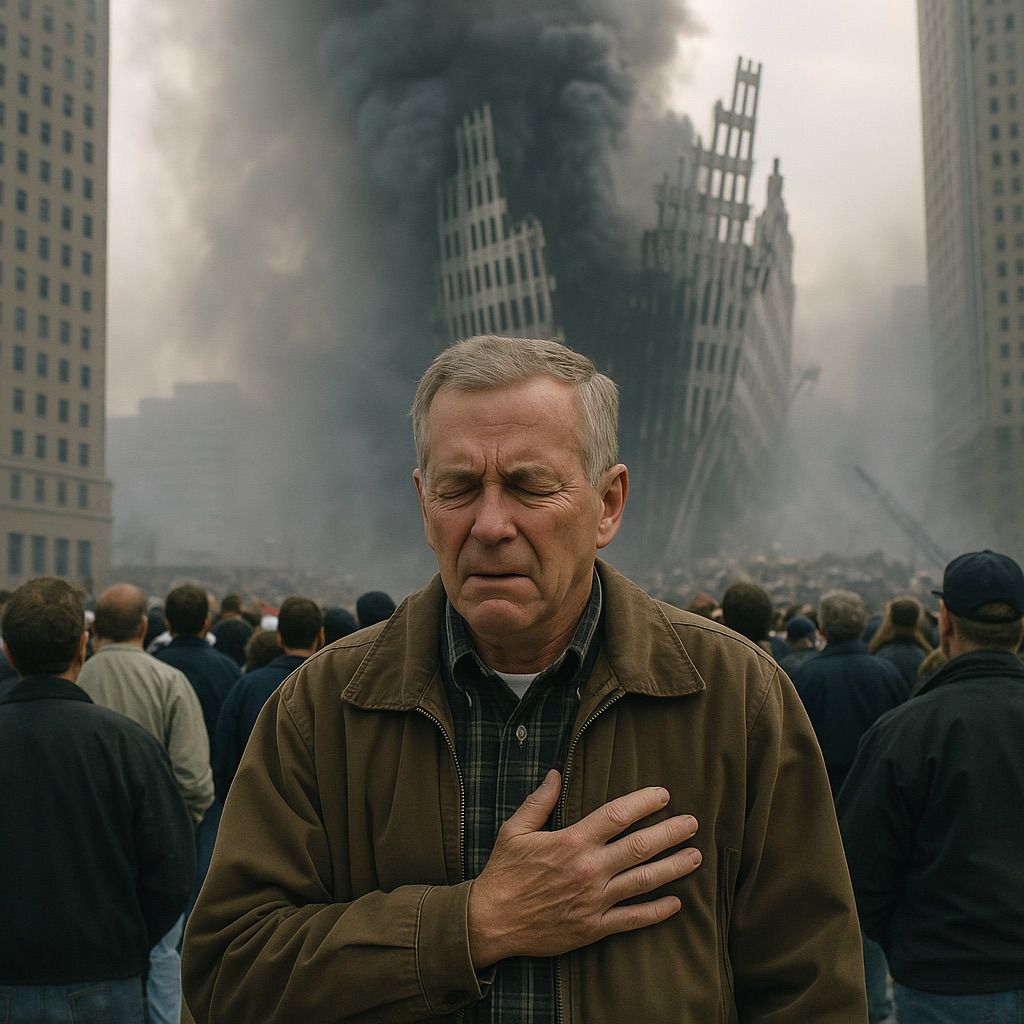
On the morning of September 11, 2001, the world changed forever. The bright blue skies over New York City gave no hint of the terror about to unfold, no warning of the unimaginable tragedy that would carve itself into the memory of an entire generation. That day began like any other Tuesday. People rushed to work, grabbed coffee from street vendors, chatted about school schedules and office meetings. The towers of the World Trade Center stood tall, gleaming symbols of American ambition and resilience, their windows reflecting the morning sun. In Washington, D.C., the Pentagon stirred with routine, while flights crisscrossed the country carrying vacationers, businesspeople, and families. But within the span of a few hours, what seemed ordinary was transformed into history’s most chilling reminder of how fragile life, freedom, and peace truly are.

At 8:46 a.m., American Airlines Flight 11 crashed into the North Tower of the World Trade Center. The impact ripped through floors filled with office workers, secretaries, and executives, scattering glass, steel, and paper into the morning air. At first, many assumed it had been a tragic accident — a plane gone astray, a pilot’s nightmare, a disaster without intent. But as the smoke poured into the blue sky, and as cameras turned toward Manhattan, a second strike came. At 9:03 a.m., United Airlines Flight 175 slammed into the South Tower in a fireball of jet fuel and chaos. In that instant, no one doubted: America was under attack.

The world watched in horror. Televisions across the globe broadcast live images of the Twin Towers burning, their steel skeletons groaning under the strain. People trapped above the impact zones waved desperately for help, some forced to make choices no human should ever face. Firefighters, police officers, and paramedics raced into the buildings, climbing stairwells filled with smoke, carrying equipment on their backs, and knowing the danger they faced. The streets below filled with debris and ash, but also with courage, as New Yorkers reached out to strangers, offering water, shelter, and comfort in the chaos. That was the first sign of the resilience that would define the day — amid the horror, humanity shone through.

At 9:37 a.m., American Airlines Flight 77 struck the Pentagon, piercing the symbol of America’s military might. Flames tore through the building, and chaos erupted in the capital. Just minutes later, another plane, United Airlines Flight 93, was hijacked and redirected toward Washington. But this time, passengers knew. They had heard the news of the towers. They called their families. They prayed. And they fought back. In an act of extraordinary bravery, ordinary citizens stormed the cockpit, sacrificing their lives to prevent the plane from reaching its target. At 10:03 a.m., Flight 93 crashed into a field in Shanksville, Pennsylvania. Its passengers’ courage added another chapter to the story of that day: that even in the face of certain death, the human spirit refuses to surrender.

By 9:59 a.m., the South Tower collapsed. The unthinkable became real. The skyline of New York City, so long defined by the Twin Towers, was swallowed in clouds of dust and debris. At 10:28 a.m., the North Tower followed. The world seemed to stop. Silence hung in living rooms where millions watched on television. Silence stretched across cities, towns, and villages around the globe. Silence, except for the sobs of those who knew loved ones were gone, and the sirens of those still rushing to save lives.

Nearly 3,000 lives were lost that day: mothers and fathers, sons and daughters, firefighters and police officers, office workers and airline crew. They were Americans, but also citizens of more than 90 countries. They were people who had simply gone to work, boarded planes, or responded to a call for help. They were lives cut short, dreams left unfinished, families left broken. And yet, they became part of something larger — symbols of innocence lost, but also of a nation’s enduring resilience.

The days that followed were filled with grief, but also with unity. Americans lined up to give blood. Strangers embraced in candlelight vigils. Flags flew from windows and overpasses. The skyline of Manhattan was filled with smoke, but the streets were filled with compassion. Firefighters and volunteers worked tirelessly at Ground Zero, digging through rubble with bare hands, hoping to find survivors. Walls of photos and messages of the missing covered the city, turning New York into a living memorial. Across the country and the world, people asked the same haunting question: how could this happen? And what comes next?

The attacks of 9/11 reshaped not just America, but the entire world. Airports changed forever. Wars began in Afghanistan and Iraq. Terms like “homeland security,” “war on terror,” and “Patriot Act” entered the global lexicon. Every traveler felt the weight of new security checks, every nation reconsidered its vulnerability, and every person who lived through that day carried its memory. Yet beyond politics and policy, the true legacy of 9/11 lies in the resilience of the human spirit. It lies in the firefighters who ran toward danger when everyone else was running away. It lies in the passengers of Flight 93 who fought for the lives of strangers they would never meet. It lies in the ordinary people who became extraordinary in a moment of crisis.

September 11 is remembered not only as a day of loss, but as a day of remembrance, unity, and resolve. Every year, the names of the victims are read aloud in New York, Washington, and Pennsylvania. Bells toll. Flags lower. And the world remembers. Memorials now stand where the towers once rose, not as symbols of destruction, but as tributes to resilience, courage, and the enduring memory of those lost. The 9/11 Memorial pools in Lower Manhattan, etched with nearly 3,000 names, are silent reminders of a day that shook the earth and changed us all.

But 9/11 is not frozen in the past. It continues to live in the stories told by survivors, in the children who grew up without parents, in the soldiers who served in the wars that followed, and in the daily lives of people who carry the scars of that day. It lives in the quiet moments: in the firefighter who hears a siren and remembers, in the airline passenger who grips the armrest during turbulence, in the family who sets an empty chair at Thanksgiving. It lives in us all, a reminder of both our vulnerability and our strength.

And yet, perhaps the most important lesson of 9/11 is that love endures. In the face of unimaginable hatred, love did not collapse with the towers. Love poured into the streets, across oceans, through phone calls, prayers, and tears. Love held families together. Love gave courage to strangers. Love gave the world hope that even in the darkest hour, the light of humanity cannot be extinguished.

On September 11, 2001, the world witnessed both the worst and the best of humanity. We saw destruction, hatred, and death. But we also saw heroism, compassion, and unity. We saw that even when buildings fall, people rise. And that is why, decades later, we still remember — not only the horror of what was lost, but the strength of what remained.

Related Posts