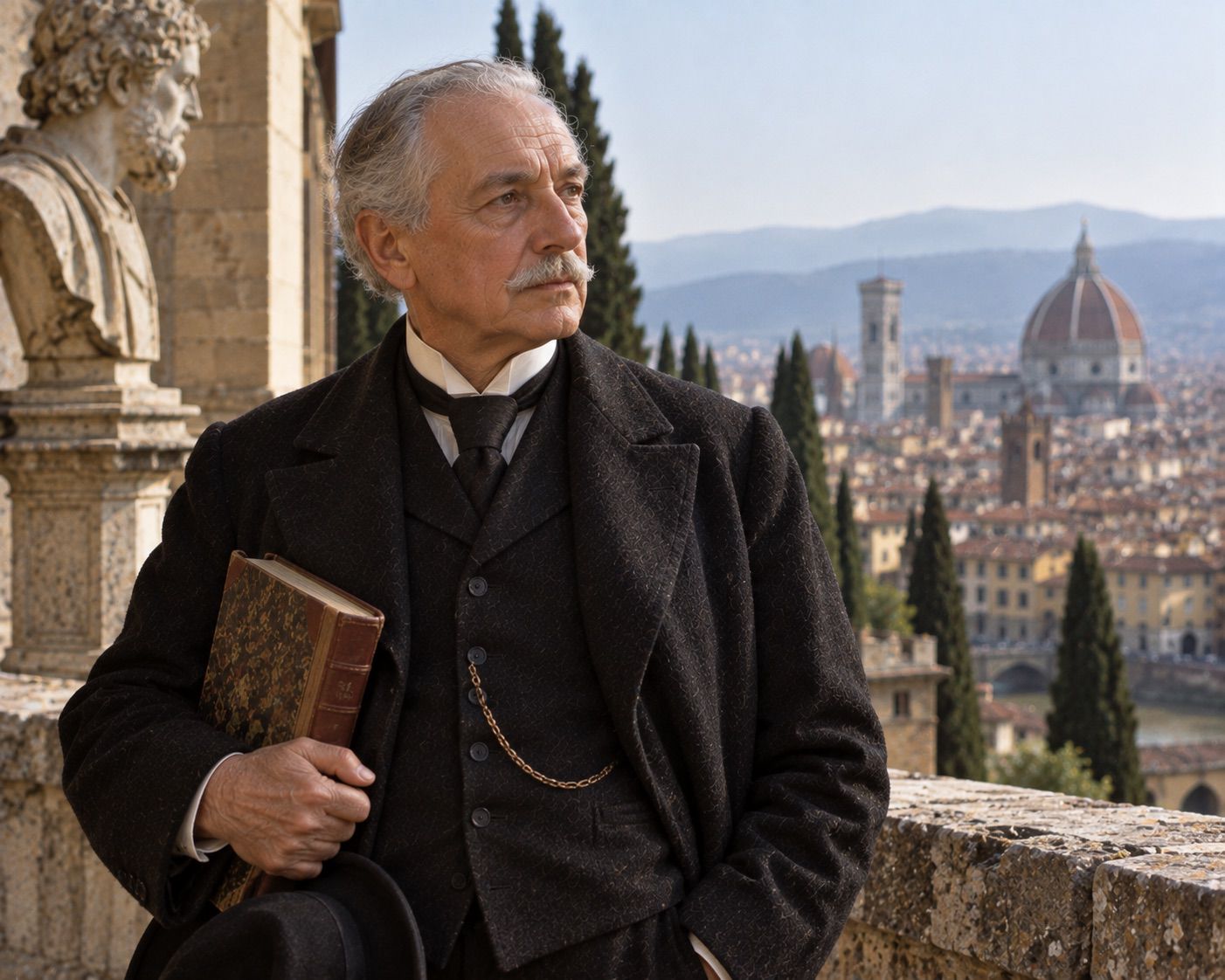
Jacob Burckhardt has been on my mind a lot lately, which is weird because I don’t even remember how I first came across him. He’s this Swiss historian from the 19th century who wrote about the Renaissance, but for some reason, he resonates with me in a way that feels both personal and distant.
I think it started when I was reading his book on The Civilization of the Renaissance in Italy. There’s something about the way he describes the art and culture of Florence during that time period that feels almost…familiar. He talks about how the Medici family’s patronage of artists like Michelangelo and Botticelli created a sort of cultural explosion, but also led to the commodification of art and the objectification of beauty.
It sounds pretentious when I put it like that, but I think what really struck me was the way Burckhardt talks about how this new kind of artistic expression was both liberating and suffocating at the same time. On one hand, it allowed for an explosion of creativity and innovation; on the other hand, it became tied to the whims of wealthy patrons who could dictate what art was worth producing.
I’ve been thinking a lot about my own relationship with art and creativity since reading that book. I’ve always loved writing, but lately, I’ve felt like I’m stuck in this cycle of trying to produce something meaningful, something that will be appreciated by others. It’s like I’m trapped in this feedback loop where I write because I want validation, but then I get validation and feel like I need to keep writing to prove it.
Burckhardt’s writings on the Renaissance have made me realize that maybe this is a problem with modernity itself – we’re always chasing after some kind of approval or recognition, even when what we really want is to create something authentic. It’s like we’re caught between two opposing forces: the desire for self-expression and the need for external validation.
I’m not sure if I’m making sense here. Maybe it’s just me, but reading Burckhardt has made me feel both excited and disheartened at the same time. Excited because he challenges me to think about art and creativity in a more nuanced way; disheartened because it makes me realize how much pressure there is to produce something worthy of recognition.
I guess what I’m trying to say is that Burckhardt’s ideas have tapped into some deeper anxieties for me – not just about my own creative ambitions, but also about the ways in which we value art and beauty today. He talks about how the Renaissance was a time when art became tied to the whims of wealthy patrons, but what if I’m just substituting one set of patrons (i.e., social media followers) for another?
It’s weird because I feel like I’ve only scratched the surface of Burckhardt’s ideas, and yet they’re already making me confront all these uncomfortable questions about my own motivations. Maybe that’s the point – maybe his writing is meant to unsettle us, to challenge our assumptions about art and creativity.
I’m not sure where this will lead, but for now, I’m just trying to keep thinking through it all.
As I continue to grapple with Burckhardt’s ideas, I find myself returning to the concept of commodification – how art becomes a product that can be bought and sold, rather than a genuine expression of the human experience. It’s like we’re treating creativity as a commodity, where value is determined by its marketability and appeal to a wide audience.
I think about my own writing, and how often I feel pressure to produce content that will resonate with others. Social media has become this constant drumbeat in the back of my mind, reminding me that there are always people waiting to read what I have to say. And while it’s nice to know that someone is listening, it also feels suffocating – like I’m writing for an audience rather than myself.
Burckhardt would probably call this a product of “cultural capitalism,” where art becomes a tool for social status and prestige. It’s not just about creating something beautiful or meaningful; it’s about creating something that will be noticed, talked about, and consumed by others. And in the process, we lose sight of what truly matters – the creative impulse itself.
I’m not sure if this is a universal problem, but I feel like it’s particularly acute among creatives today. We’re so fixated on building our personal brands and online personas that we often forget why we started creating in the first place. Was it to express ourselves, or was it to get attention? Am I writing because I have something to say, or am I writing to be noticed?
Burckhardt’s critique of modernity feels like a warning – a reminder that our priorities are askew when we value fame and fortune over artistic integrity. But what if this is just the natural progression of human civilization? What if commodification is simply an inevitable part of how we engage with art and culture today?
I don’t have any answers, but I’m curious about the questions themselves. How do we balance our desire for recognition with our need to create something authentic? Is it possible to make art that’s both meaningful and commercially viable, or are those two goals mutually exclusive? And what does Burckhardt’s critique of modernity tell us about the kind of society we’re living in – one where creativity is treated as a product rather than a process?
These questions swirl around me like a vortex, pulling me deeper into the heart of Burckhardt’s ideas. I’m not sure where they’ll lead, but for now, I’m just trying to stay on the surface and see where the waves take me.
As I continue to wrestle with these questions, I find myself thinking about my own place in this cultural landscape. Am I just another cog in the machine of cultural capitalism, churning out content for the sake of validation? Or am I trying to carve out a different path – one that prioritizes artistic integrity over social status?
I think back to when I first started writing seriously. It was during my college years, and I was part of a creative writing community that encouraged experimentation and risk-taking. We didn’t worry about getting published or famous; we just wrote for the sake of it. And in those moments, I felt truly alive – like I was tapping into something deeper and more meaningful.
But as I entered the “real world,” things changed. Suddenly, there were expectations to produce a certain kind of content, to fit into a particular mold. I started to feel pressure to write about topics that would resonate with a wider audience, rather than just exploring my own passions and interests. And it’s like I’ve been stuck in this rut ever since – trying to balance the desire for artistic expression with the need for external validation.
Burckhardt’s critique of modernity feels like a wake-up call – a reminder that I have choices to make about how I engage with the world around me. Do I continue down this path, churning out content for the sake of social media likes and followers? Or do I take a step back, reassess my priorities, and try to find a way to create something more authentic?
I’m not sure which direction I’ll go – but what’s interesting is that Burckhardt’s ideas have given me permission to question everything. To doubt the very notion of artistic expression as we know it today. And to wonder if there’s a different way forward, one that prioritizes creativity over commercialism.
It’s funny – I used to think that art was something you created for others, but now I’m starting to see it differently. Maybe art is something you create for yourself, first and foremost. Not just as a means of self-expression, but also as a way of tapping into the depths of human experience. And if that’s true, then what does it mean to be an artist in today’s world?
As I ponder this question, I find myself drawn back to Burckhardt’s concept of the “cultural explosion” that occurred during the Renaissance. He writes about how the confluence of artistic and intellectual innovation created a unique cultural moment, one that was characterized by both creativity and commodification.
I wonder if something similar is happening in our own time, where technology has democratized access to creative tools and platforms, but also created new forms of exploitation and commodification. We’re living in an era where artists can reach global audiences with ease, but are also subject to the whims of algorithms and social media influencers.
Burckhardt’s critique of modernity makes me think about the ways in which we’re fetishizing creativity as a commodity. We’re treating art as a product that can be bought and sold, rather than a genuine expression of the human experience. And yet, at the same time, I’m also drawn to the idea that art can be a powerful tool for social change.
I think about all the ways in which artists have used their platforms to challenge dominant narratives and push boundaries. From street artists like Banksy to musicians like Kendrick Lamar, there are countless examples of creatives who have harnessed their talents to speak truth to power and inspire social justice movements.
But what if Burckhardt is right? What if our obsession with creativity as a commodity is actually stifling the very things that make art meaningful in the first place? I’m not sure if this is a fair critique, but it’s certainly making me think more critically about my own relationship with art and creativity.
As I continue to grapple with these questions, I find myself returning to my own writing practice. What does it mean for me to create something authentic in a world that values attention and validation above all else? How can I resist the pressure to conform to certain norms or expectations, and instead forge my own path as an artist?
It’s not easy – there are days when I feel like I’m drowning in a sea of social media noise, trying to keep up with the latest trends and hashtags. But then I read something like Burckhardt’s critique of modernity, and it gives me permission to question everything.
To doubt the very notion of artistic expression as we know it today. To wonder if there’s a different way forward, one that prioritizes creativity over commercialism. And to explore what it means to be an artist in this strange new world – where technology has opened up endless possibilities for creative expression, but also created new challenges and complexities.
As I sit here, staring at my computer screen, I feel a sense of trepidation mixed with excitement. What does the future hold for art and creativity? Will we continue down the path of cultural capitalism, or will we find a way to reclaim our relationship with art as something authentic and meaningful?
I don’t have any answers – but I’m curious about the questions themselves.
As I ponder these questions, I start to think about my own role in this conversation. Am I just another participant in the cultural machine, churning out content for the sake of validation? Or can I be a part of something more – a movement that values artistic integrity over social status?
I look back at Burckhardt’s writings on the Renaissance and wonder if there are any lessons to be learned from that time period. He talks about how the Medici family’s patronage led to a kind of creative explosion, but also created new forms of exploitation. Is this what’s happening now – are we trading our artistic freedom for the sake of financial gain?
I think about my own experience as a writer and wonder if I’m complicit in this system. Do I write because I want to express myself, or do I write because I want to be seen? The answer is probably both – but it’s hard not to feel like there’s always an ulterior motive lurking beneath the surface.
As I sit here, trying to untangle these thoughts, I start to realize that Burckhardt’s critique of modernity is not just about art and creativity – it’s also about the human condition. We’re all caught up in this cycle of desire and validation, whether we’re artists or consumers or something in between.
I think about my own relationships with others – how often do I feel pressure to present a certain image or persona? How often do I prioritize what others will think over what I truly believe? Burckhardt’s ideas are making me question everything, including my own sense of identity and purpose.
It’s funny – I used to think that being an artist was about expressing oneself, but now I’m starting to see it as something more complex. Maybe being an artist is not just about creating something beautiful or meaningful, but also about navigating the complexities of human desire and validation.
As I continue to grapple with these questions, I start to wonder if there’s a way out of this cycle – a way to create art that’s both authentic and commercially viable. Or maybe that’s just an impossible dream, one that Burckhardt’s critique has shattered forever.
I’m not sure where this will lead, but for now, I’m just trying to stay on the surface and see where the waves take me. What does it mean to be an artist in today’s world? Is it possible to create something truly meaningful in a culture that values attention above all else?
As I sit here, staring at my computer screen, I feel a sense of trepidation mixed with excitement. What lies ahead for art and creativity? Will we continue down the path of cultural capitalism, or will we find a way to reclaim our relationship with art as something authentic and meaningful? Only time will tell.