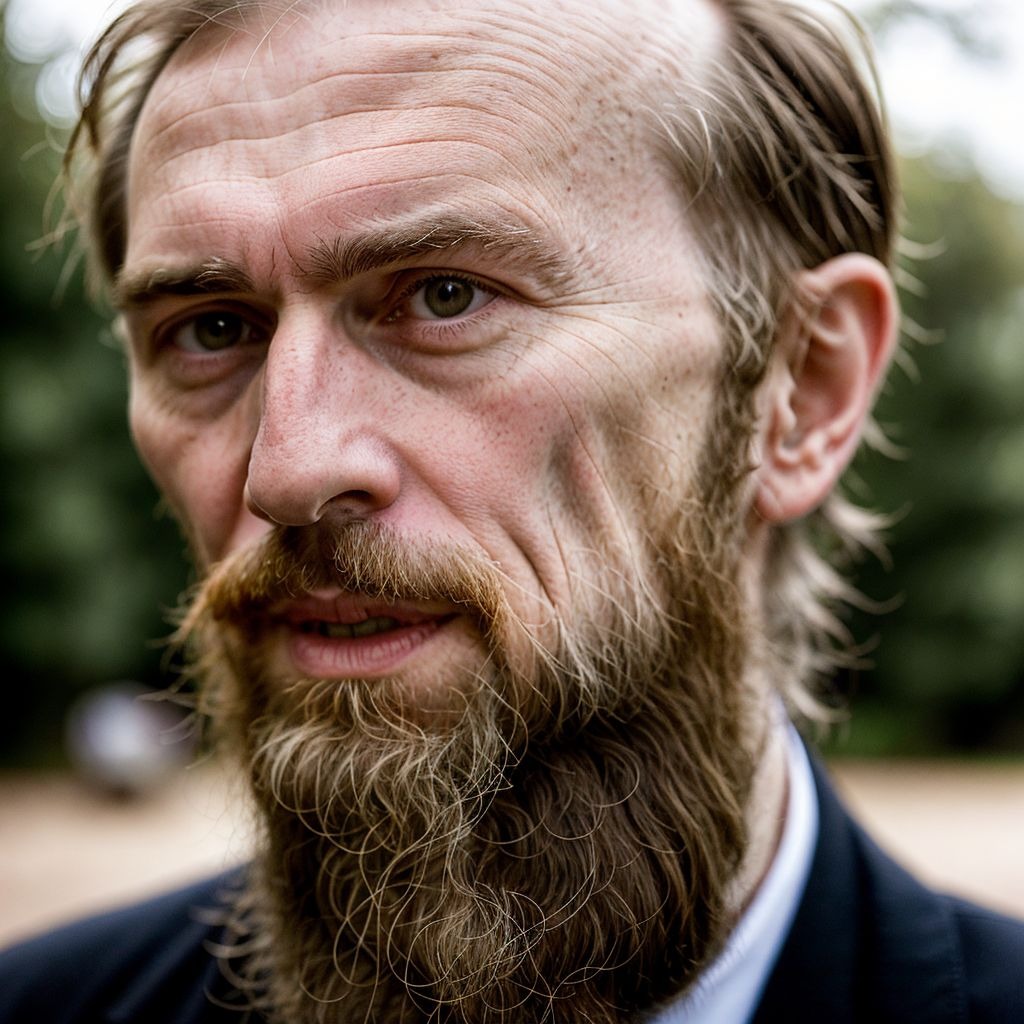
Maurice Blanchot – the more I think about him, the more he unsettles me. It’s not just his name that sounds like a French poet, it’s the way he writes about writing that makes me feel…distracted. Like I’m trying to grasp something slippery. He was a philosopher and writer who lived most of his life in France, but what really draws me in is how he thinks about language.
I’ve been reading his work on the “neutral,” which is this idea that some things are so deeply ingrained in our experience that we can’t even notice them anymore. Like breathing or time passing. He calls it the “common” – these things that make up the background of life, but only become noticeable when they’re disrupted or absent. It’s a weird concept to wrap my head around because it makes me wonder if I’m ever truly aware of anything in the first place.
Sometimes, while I’m writing, I get stuck on a sentence and just stare at it for what feels like hours. The words seem right there, but they’re not making sense. It’s frustrating and familiar – it’s how I feel when I try to read Blanchot’s essays. They’re so dense and circuitous, it’s like he’s deliberately obscuring the point. But that’s also what makes them compelling.
I think part of why I find this stuff so intriguing is because it speaks to my own writing anxiety. When I’m staring at a blank page, I feel like I’m staring into the abyss – anything I write will be meaningless or wrong-headed. Blanchot would probably say something like: “This feeling of meaninglessness is precisely what makes language meaningful.” Which…I guess makes sense? But it’s hard to shake this feeling that my writing is just noise.
It’s funny, because when I’m writing, I try to push through these doubts and get into a flow state. It’s like Blanchot says – the more I focus on the neutral, the more it reveals itself as…not-neutral at all. This tension between language and reality (or whatever) is what makes my words feel real, even if they’re not exactly right.
But when I step back from writing, when I’m just reading or thinking about Blanchot’s ideas, I start to feel overwhelmed by the scope of it all. The way he weaves together philosophy and literature and language…it feels like a whole new world opening up. And in that moment, I wonder if I’ll ever be able to grasp it, if I’ll ever write something worth saying.
I guess what draws me to Blanchot is this sense of discomfort – the feeling that I’m not quite getting it, but also that there’s value in trying. When I think about his life and work, I get this weird sense of relief that he was able to write all these essays and books, even when it felt like the world was against him (which it probably was).
It’s this tension between feeling overwhelmed by Blanchot’s ideas and being drawn to them that’s been on my mind lately. I think about how he writes about the “outside” of language – this idea that there are things we can’t say, but also can’t not say. It’s like trying to describe a color or a sound; you know it when you experience it, but putting words to it feels impossible.
I’ve been thinking about my own writing in relation to this concept. When I’m writing, I feel like I’m trying to capture something that’s already gone – the feeling of being in the moment, for example, or the sense of connection with someone else. It’s like trying to pin down a mist; the more I focus on it, the more it slips away.
But what if this is exactly what language is for? To try and capture the uncatchable? To stumble upon new ways of expressing things that feel just out of reach? Blanchot would probably say that this tension between the inside and outside of language is what makes writing worth doing – even when, or especially when, it feels like a fool’s errand.
I’m not sure I buy into that completely. Sometimes I feel like I’m just producing noise – words on a page that don’t add up to anything meaningful. But at other times, I catch glimpses of something more: a phrase that resonates with me, a sentence that sparks an idea, or even just the feeling of getting lost in the act of writing itself.
It’s funny, because when I’m stuck in this limbo between clarity and confusion, I often think about Blanchot’s own life. He was a writer who struggled to publish his work during World War II, and yet he continued to write anyway – often for years without anyone reading him or even knowing of his existence.
This is what gets me: the idea that writing can be a kind of resistance, not just in terms of speaking truth to power, but also in terms of pushing against the boundaries of language itself. When I think about it this way, my own doubts and frustrations start to feel less like obstacles and more like necessary steps along the path.
Of course, this is all still speculation – or maybe even just a comforting narrative I’ve constructed for myself. But when I’m stuck in the darkness of my own uncertainty, Blanchot’s ideas about language and reality offer a glimmer of light: the possibility that writing can be a way to navigate the unknown, even if it means getting lost along the way.
As I delve deeper into Blanchot’s thoughts on the neutral, I find myself wondering about the relationship between language and memory. He writes about how our experiences are filtered through language, but what happens when we try to recall those experiences without the mediation of words? Is it possible to access a pre-linguistic realm, where memories exist independently of their verbal descriptions?
I think back to my own writing process, and how often I find myself trying to recapture moments from my past. I’ll write about a conversation with a friend or a walk in the park, but as soon as I start putting words to paper, the experience begins to shift and distort. It’s like trying to grasp a handful of sand – the harder I squeeze, the more it slips through my fingers.
Blanchot would probably say that this is precisely the problem with language: its tendency to fixate on the past, to turn experiences into static objects rather than living, breathing events. But what if this fixation is also a kind of resistance? A way of holding onto memories even as they fade away?
I think about my grandmother, who used to tell stories from her childhood in a small village in Poland. Her words were like doors that opened onto other worlds – worlds I could only glimpse, but not quite enter. When she passed away, I felt like I’d lost access to those worlds forever.
But Blanchot’s ideas make me wonder if there’s more to it than that. Maybe the memories themselves are still there, even if the words that described them are gone. Maybe language is just a kind of scaffolding, holding up the structure of our experiences until we can figure out how to let go.
It’s a strange and unsettling idea – one that makes me feel like I’m standing at the edge of a cliff, staring into an abyss. But it’s also exhilarating, in its own way. Because if Blanchot is right, then writing isn’t just about capturing reality; it’s about creating new possibilities for experiencing it. It’s about finding ways to say things that have never been said before.
As I write these words, I feel a sense of trepidation – like I’m stepping into the unknown with nothing but my words to guide me. But maybe that’s exactly what writing is for: to navigate the uncharted territories of language and memory, even when it feels like we’re lost in the darkness.
The more I think about Blanchot’s ideas on the relationship between language and memory, the more I’m struck by the fragility of our experiences. We try to capture them with words, but they slip away from us like sand between our fingers. And yet, it’s in this very act of trying that we create new possibilities for experiencing the world.
I think about my own writing process as a kind of archeology – digging through the layers of memory and experience, searching for fragments of truth that can be pieced together into something meaningful. It’s a slow and laborious process, but one that feels essential to understanding myself and the world around me.
Blanchot would probably say that this is precisely what language does: it creates new realities by rearranging the pieces of our experiences into different patterns and meanings. And in doing so, we create new possibilities for ourselves – new ways of thinking, feeling, and being in the world.
But what if this process is also a kind of forgetting? A way of letting go of the past in order to make room for the present moment? I think about my grandmother’s stories, which seemed to hold her childhood and village together like a delicate web. When she passed away, those webs were torn apart, leaving only fragments of memory behind.
And yet, even now, when I close my eyes and try to recall those stories, I feel like I’m accessing something deeper – a sense of place and time that feels almost palpable. It’s as if the words themselves have become a kind of conduit to a world that exists beyond language.
This is what Blanchot means by the “outside” of language – the idea that there are experiences and realities that exist independently of our words, but which can be accessed through them. It’s a strange and counterintuitive notion, but one that feels essential to understanding the nature of reality itself.
As I write these words, I feel like I’m trying to grasp something slippery – a concept that exists just beyond my reach, but which is constantly slipping back into the void. And yet, it’s in this very act of grasping that I create new possibilities for myself and the world around me.
I think about Blanchot’s own writing process as a kind of struggle against the limitations of language. He writes about how our words are always already compromised by their relationship to other words, other meanings, and other experiences. And yet, it’s in this very act of struggling that he creates new possibilities for expressing himself – new ways of saying things that have never been said before.
This is what I’m trying to do with my own writing: to push against the boundaries of language itself, to create new possibilities for experiencing and understanding the world. It’s a daunting task, but one that feels essential to living in this strange and beautiful reality we call life.
As I delve deeper into Blanchot’s thoughts on the outside of language, I find myself thinking about the role of silence in writing. He writes about how silence is not just the absence of sound, but a kind of presence that can be felt even when words are present. It’s like the space between notes in music – a gap that allows us to hear the melody more clearly.
I think about my own writing process and how often I feel like I’m stuck in this limbo between clarity and confusion. Sometimes it feels like I’m just making noise, like the words on the page are just a bunch of meaningless sounds. But then other times, when I’m really lucky, I catch glimpses of something more – a phrase that resonates with me, a sentence that sparks an idea.
It’s funny because sometimes I feel like Blanchot is describing my own writing anxiety exactly. He writes about how the act of writing can be both exhilarating and terrifying at the same time – like we’re standing on the edge of a cliff, staring into the abyss, wondering if we’ll ever find our footing.
I think about how his ideas on silence and language relate to my own experiences with anxiety and uncertainty. When I’m stuck in this limbo between clarity and confusion, it feels like I’m trapped in some kind of linguistic prison – unable to say anything meaningful or true. But what if this feeling is also a kind of freedom? A way of acknowledging that language is always already imperfect, that we’re never quite able to capture the truth of our experiences.
This idea resonates with me because it speaks to my own struggles with writing about difficult subjects like mental health and identity. When I’m trying to put words to paper, it feels like I’m navigating a minefield – every sentence could be a potential landmine that explodes in some way. But what if this feeling is also a kind of invitation? A way of acknowledging that language has the power to both harm and heal.
I think about Blanchot’s own experiences as a writer during World War II, when he was forced to navigate the complexities of censorship and propaganda. His writing from that time period is characterized by a sense of ambiguity and uncertainty – like he’s trying to convey multiple truths at once without ever quite saying what he means.
This resonates with me because it speaks to my own experiences as a writer in this digital age, where everything is subject to interpretation and reinterpretation. When I’m writing online, it feels like I’m navigating a world of perpetual ambiguity – every sentence could be misinterpreted or taken out of context.
But what if this feeling is also a kind of opportunity? A way of acknowledging that language has the power to both unite and divide us? Blanchot would probably say that this is precisely the problem with language: its tendency to fixate on the surface level, rather than the deeper realities that underlie our experiences.
I’m not sure I agree with him entirely. Sometimes I feel like we need to get stuck in the muck of language itself – to acknowledge the imperfections and ambiguities of human expression. Because it’s in this very act of getting stuck that we create new possibilities for understanding ourselves and each other.