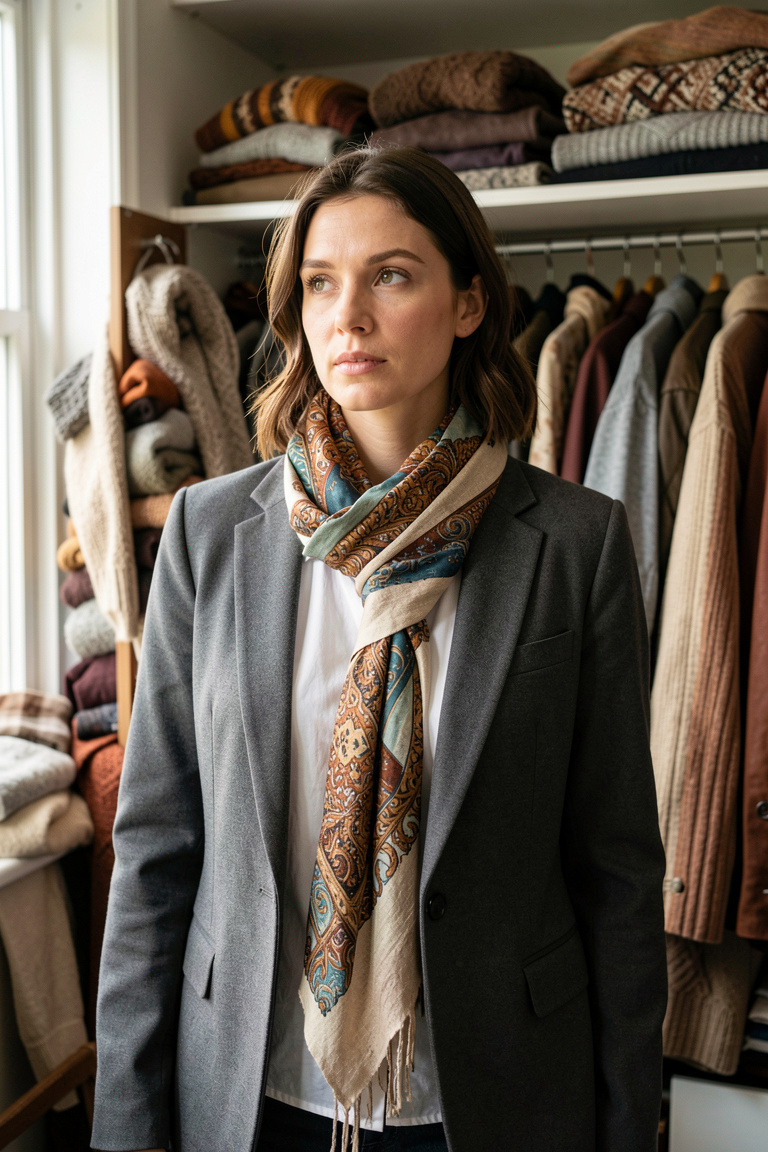
A person stands in front of a cluttered closet, surrounded by piles of sweaters, scarves, and jackets, looking overwhelmed and unsure of how to create a cohesive outfit. The intention to craft a polished look is evident, but the visible evidence of clutter and chaos suggests that something is amiss. This scene reveals a common dilemma in fall fashion: the layering paradox, where adding more layers can sometimes mean committing less to a cohesive personal style.
The importance of thoughtful restraint in layering cannot be overstated, as it allows for a more curated and deliberate approach to dressing. By paring down the number of layers and focusing on high-quality, essential pieces, individuals can create a more polished and put-together appearance. This approach also enables a greater consideration of texture, proportion, and movement, which are crucial factors in creating a cohesive and stylish outfit. For example, a simple white shirt paired with a tailored blazer and a statement scarf can create a chic, effortless look that exudes intentionality and restraint.
The construction of a garment plays a significant role in determining its suitability for layering. A well-made piece with attention to detail, such as a carefully crafted sweater or a classic leather jacket, can provide a solid foundation for a layered look. The choice of materials is also crucial, as some fabrics are better suited for layering than others. For instance, lightweight cotton or silk can add depth and texture to an outfit without overwhelming the senses, whereas thick or bulky fabrics can contribute to a cluttered appearance.
The longevity and maintenance of a garment are also important considerations when it comes to layering. A high-quality piece that is designed to withstand repeated wear and tear can be a valuable addition to a wardrobe, as it can be mixed and matched with other items to create a variety of outfits. In contrast, a cheaply made or trendy item may quickly lose its appeal and contribute to a cluttered and overwhelming look. By focusing on the construction, materials, and design of individual garments, individuals can build a foundation for a thoughtful and intentional approach to layering.
To discern genuine quality in layering from the nearest convincing imitation, it’s essential to examine the relationship between individual garments and their role within an outfit. A high-quality piece is not merely one that looks polished on its own but also contributes to a cohesive look when combined with other items. The way different textures interact, for instance, can significantly impact the overall appearance of an outfit. Smooth fabrics like silk or cotton can provide a sleek base layer, while chunkier textures such as wool or cable knit add depth and visual interest.
The distinction between genuine quality and its imitation in layering also lies in how garments move with the body. A piece that drapes elegantly, allowing for freedom of movement without overwhelming the silhouette, is far more valuable than one that restricts or bulks unnecessarily. This consideration speaks to the design and construction of a garment, aspects often overlooked in favor of trendiness or the mere accumulation of layers. For example, a cozy sweater layered over a lightweight dress can create a polished yet relaxed look, as long as the fit is considered and the fabrics work well together.
To apply a better standard for layering under different conditions, consider the interplay between garments in various contexts. For instance, when dressing for a formal event, the focus should be on creating a harmonious balance of textures and proportions. A classic leather jacket paired with a crisp white shirt and distressed denim jeans can create a sophisticated look, but only if the textures are balanced and the proportions are thoughtful. In contrast, when layering for everyday wear, the emphasis should be on comfort and practicality.
The key to successful layering lies in understanding how different garments interact with each other and with the body. Consider the properties of various fabrics, such as the breathability of cotton, the warmth of wool, or the smoothness of silk. Think about how these fabrics will perform in different environments and how they will affect the overall appearance of the outfit. For example, a lightweight cotton shirt may be perfect for warm weather, but it may not provide enough insulation in colder climates. By considering these factors and making intentional choices, individuals can create a wardrobe that is both functional and stylish.
When applying a standard for thoughtful restraint in layering across different conditions, it becomes apparent that the interaction between garments is crucial in creating a polished look. For instance, the combination of a crisp linen shirt with a chunky knit sweater can create a visually appealing contrast of textures, but only if the proportions are considered and the fit is intentional. The drape of the linen shirt, with its smooth texture and gentle folds, must be balanced by the bulkier knit of the sweater, which adds depth and visual interest to the outfit. Furthermore, the properties of the fabrics, such as the breathability of linen and the warmth of wool, must be taken into account to ensure that the outfit is not only aesthetically pleasing but also functional and comfortable.
Ultimately, the layering paradox can be resolved by adopting a thoughtful and intentional approach to dressing. By prioritizing quality over quantity, restraint over excess, and considering the interplay between garments, individuals can create a personal style that is both polished and authentic. A well-crafted outfit, one that balances texture, proportion, and movement, can elevate an individual’s presence and confidence, making them feel more put-together and prepared to take on the world. By embracing this approach, individuals can move beyond the simplistic assumption that more is better and cultivate a discerning eye for what truly constitutes quality in layering.