Author: Elias Rowen

I enjoy writing about events that happened on specific days of the year. There’s something fascinating to me about the idea that every date carries its own story—moments when history quietly turned a corner or suddenly exploded into something unforgettable. I don’t focus on famous people as much as I focus on the moments themselves. I like digging into what was happening on that particular day, what led up to it, and what followed after. When I write, I try to bring readers into the moment, to capture what it might have felt like as events were unfolding in real time, before anyone knew how things would turn out. For me, history isn’t just a list of dates and facts. It’s a collection of lived moments that still ripple into the present. My goal is to turn calendar dates into stories that feel real, relatable, and worth remembering.

The Long Drive: How Cadillac and Nolan Ryan Redefined American Precision

Elias Rowen

Under the industrial haze of early 20th century Detroit, a new kind of American ambition rolled quietly onto the factory floor. On August 22, 1902, Cadillac began production, emerging from the remnants of the Henry Ford Company with a name borrowed from the French explorer who founded Detroit and a philosophy that would become its hallmark—precision. Under the leadership of Henry M. Leland, a man obsessed with mechanical perfection, Cadillac introduced a standard few could match. At a time when most automobiles were handcrafted with slight differences from one to the next, Cadillac focused on interchangeable parts with such exact tolerances that entire cars could be disassembled, their components scrambled, and then reassembled to run as if nothing had changed. This was more than manufacturing; it was engineering discipline elevated to an art form, and it instantly set Cadillac apart from the dozens of small automakers competing for survival.

That first Cadillac was modest by today’s standards—a single-cylinder, 10-horsepower machine with an open carriage body—but its significance wasn’t in its specifications. It was in the statement it made: that consistency and quality could be reproduced at scale. The philosophy paid off. By the 1920s, Cadillac had become synonymous with luxury and innovation, introducing the electric starter in 1912 and pioneering elegant V-16 engines in the 1930s. Postwar Cadillacs transformed into rolling sculptures, chrome-laden with tailfins inspired by fighter jets, cementing the brand’s status as the ultimate symbol of success. For decades, to own a Cadillac was to announce to the world that you had arrived. Presidents rode in them, movie stars posed beside them, and the name itself became shorthand for excellence—“the Cadillac of” anything meant the very best. Even as foreign competitors challenged its dominance in later years, Cadillac’s DNA remained rooted in that first day’s promise: to craft vehicles that were as precise as they were desirable.

Eighty-seven years after that first car began its journey down a Detroit production line, another kind of precision was unfolding under the bright lights of Arlington Stadium in Texas. On August 22, 1989, Nolan Ryan, already a baseball legend, stood on the mound for the Texas Rangers facing Rickey Henderson, one of the most feared and respected leadoff hitters in the game. Ryan was forty-two years old, pitching in his twenty-third major league season, still hurling fastballs with the kind of velocity and bite that made batters uneasy. That night, he was chasing history—his 5,000th career strikeout, a milestone no pitcher had ever reached. In the fifth inning, with the count at three balls and two strikes, Ryan unleashed a fastball that cut through the humid Texas air and past Henderson’s swing. Strike three. The crowd erupted, a wave of sound rolling through the stadium and out into the wider baseball world. Henderson, in a gesture of respect, tipped his cap to Ryan, acknowledging the magnitude of the moment.

Ryan’s journey to that moment was as much about endurance as talent. Debuting in 1966 with the New York Mets, he built a career defined by raw power, fierce competitiveness, and an almost mythic longevity. Over twenty-seven seasons, he recorded seven no-hitters, more strikeouts than entire pitching staffs achieve in years, and a reputation as the hardest thrower the game had seen. The 5,000th strikeout was not just another statistic—it was a testament to decades of work, thousands of innings, and a relentless commitment to refining his craft. He would go on to finish his career with 5,714 strikeouts, a record that remains untouched, likely forever out of reach.

At first glance, Cadillac’s debut and Nolan Ryan’s 5,000th strikeout seem worlds apart—one is a story of industrial innovation, the other of athletic achievement. Yet both share a core truth: mastery is built on the foundation of precision and sustained effort. For Cadillac, that meant perfecting the fit and finish of every component, setting new standards for reliability and luxury. For Ryan, it meant honing his mechanics, adapting to the passage of time, and never losing the edge that kept him competitive against generations of hitters. Both understood that greatness is not a single act but a habit, repeated with discipline until it becomes indistinguishable from instinct.

Cadillac endured economic crashes, oil crises, and changing tastes in automobiles, always seeking reinvention without losing the spirit of its beginnings. Ryan pitched through shifting eras of baseball, facing batters who hadn’t even been born when he threw his first major league pitch, and yet his fastball still commanded respect. Both stories are about longevity as much as they are about excellence, and about the ability to keep delivering at the highest level despite the inevitable wear and tear of time.

The two legacies also speak to different yet complementary expressions of the American spirit. Cadillac reflects the power of industry, of machines built with the belief that technology can be refined until it transcends utility and becomes art. Ryan reflects the human side of that equation, the grit and determination that turn talent into legend. Each represents a gold standard in its realm—one in the showroom, the other on the pitcher’s mound.

Today, Cadillac continues to evolve, embracing electric vehicle technology and new design philosophies while still aiming to honor its heritage of craftsmanship and innovation. Ryan’s records remain towering monuments in baseball’s history books, benchmarks that generations of pitchers can aspire to but will likely never surpass. In their own ways, both continue to inspire: Cadillac with the hum of a perfectly tuned engine, Ryan with the memory of a baseball hurtling past a bat at ninety-five miles per hour, even in the twilight of his career.

August 22 reminds us that while tools and playing fields change, the essence of excellence does not. It is the willingness to demand perfection from oneself, to execute with precision over and over again, and to endure long enough for history to take notice. Whether in the gleam of polished chrome or the blur of a white baseball against a summer sky, the message is the same: greatness is never an accident—it’s a choice made every single day.

Related Posts

The Day of Disappearance and Arrival: How August 21 Framed a World Without a Painting and a Union With an Ocean

Elias Rowen

On August 21, two scenes, two rooms, two kinds of silence. In Paris, a hush like a held breath spreads across the Louvre as visitors face an empty rectangle on a wall, four small pegs where a smile once hovered. In Honolulu, the wind tests a new flag’s seams as it climbs a pole against a volcanic silhouette and the Pacific’s long exhale. One day, two stories: the Mona Lisa vanishes in 1911 and the United States becomes truly ocean-to-ocean in 1959 when Hawaii enters as the 50th state. These events appear to belong to different shelves of history—one is a theft, the other a vote and a proclamation—but they share a grammar: both are about frames and belonging. Remove the painting and you reveal the frame’s power to hold meaning; welcome an archipelago and you redraw the frame of a nation. August 21 is a study in presence and absence, in what the eye sees and what the map admits.

In the Louvre that Monday morning in 1911, the building stretched and yawned into workaday rhythms. Guards rotated positions, gallery attendants checked fastenings and dust, and a few early visitors padded through the Salon Carré toward the Italian masters. On the wall usually hung a panel portrait in a dark frame, small enough to surprise first-time viewers who had imagined a canvas the size of a door—Leonardo’s La Gioconda, a woman’s gaze balanced like a coin on a fingertip. Instead there was vacancy: a blankness that vibrated, so clearly outlined by absence that it seemed louder than any painting. People came closer, as if closeness could call her back. Nothing. Four iron studs, a paler rectangle. Once you see a work of art missing, you grasp how much of art is choreography: the way a museum directs your feet, your breath, your neck muscles, your expectations. The empty space rewrote the room’s script.

The story of the theft has the clanky charm of a caper film but also the simplicity of a janitor’s schedule. Vincenzo Peruggia, an Italian glazier who had worked at the Louvre, had studied the routines and the vulnerabilities. The Mona Lisa had been protected not by lasers and sensors but by habit. He removed the painting from its frame, hid it beneath a workman’s smock, and walked more or less out the door. The magnitude of the disappearance wasn’t obvious at once; bureaucracy required hours to decide that a masterpiece could go missing during daylight. When the alarms finally translated into action, the building became a machine of locked doors and questions. Paris—already a city that knew how to make a scandal sing—turned the theft into a chorus. Newspapers printed the empty wall like a wanted poster. Detectives interviewed artists; bohemian circles were scraped for gossip. For a stretch, the poet Guillaume Apollinaire was arrested, and the name Picasso drifted across interrogation tables like a rumor with its hat pulled low. The idea that modernists might have kidnapped old art felt narratively satisfying to some, but evidence is inconvenient to a good story.

What the city learned, day by day, was the power of an absence to multiply presence. With La Gioconda gone, crowds surged merely to stare at where she had been. The traffic of longing and curiosity warmed the room like a furnace. Without a subject to receive them, people saw themselves and their expectations reflected on the wall; the blankness was a mirror, a provocation. Museums became, briefly, newsrooms. The theft inflated the painting’s celebrity, turning a quiet, sly portrait into a celebrity whose face gazed back from kiosks and cab stands. Before radio, before the globalized churn of images, a stolen canvas rehearsed how fame would work in the twentieth century: scandal as spotlight, scarcity as amplifier. The Mona Lisa didn’t laugh; the world did: a startled, nervous laugh that recognized itself in its avidity.

Two years later, the painting would reappear in Florence, where Peruggia attempted to sell it to a dealer, explaining himself as a patriot who only wished to return a stolen Italian treasure to Italy. The story had the rough edges of justification; it also had the sincerity of a worker who felt history’s weight through his hands. Courts and headlines did their business, and the Louvre reacquired its jewel with rituals of relief that felt like a homecoming parade. Yet the theft’s imprint lingered. The blank space had taught us a new kind of looking—watching the social life of art as keenly as the paint. It’s a lesson that echoes whenever crowds assemble with phones for a glimpse of celebrity, or pilgrimage toward a screen at a vigil after a building burns. The missingness becomes the message: you cannot see the world as it is without also seeing the outlines of what was taken, what is promised, what is withheld.

Across the calendar from that Paris morning, another August 21 took place in air silked with trade winds. In Honolulu, a statehood ceremony welcomed Hawaii into the Union, an act with centuries of prelude and decades of debate. The United States, a continental shape for most of its life, now wore a Pacific necklace openly, acknowledging what had long been fact: military bases, sugar barons, immigrant communities, politics and music and food that braided Asia, Polynesia, and the Americas. Statehood was not a spontaneous bloom but the fruit of a tree grown in contested soil—an overthrow of a Hawaiian monarchy in the 1890s, annexation during a feverish imperial moment, territorial status with its strange half-privileges, and then the slow accumulation of arguments for full inclusion and the muscle of local organizing. In 1959, when the votes were counted and the proclamation signed, the geography of American belonging expanded from a noun to a verb—the nation did not only occupy space; it crossed water to include culture and history that preceded it.

Statehood is a legal ceremony, yes, but it is also choreography. To welcome a fiftieth star is to redesign a flag, to reorder the visual language of national identity. The new constellation, arranged in staggered rows, arrived as an object lesson in geometry and symbolism: how do you fit more selves into one pattern without breaking symmetry? On the ground, the island chain embodied the answer in human form. Hawaii has long been a place where surnames bring maps to the dinner table: Japanese, Filipino, Chinese, Native Hawaiian, Portuguese, Korean, Samoan, Micronesian, haole—and the list keeps welcoming additions. Statehood took that reality and wrote it into the ledger of federalism, with senators and representatives, with budgets and courtrooms and postal codes. The United States did not become more homogeneous by including Hawaii; it became more honest about the kaleidoscope it already was.

But to tell this as a banner-fluttering story is to simplify. The day carried joy and pride and also misgivings that still deserve airtime. Indigenous Hawaiians, the Kānaka Maoli, had watched sovereignty recede under the pressures of empire and capital. For some, statehood felt like a final seal on dispossession; for others, it promised tools within the system to protect land, water, and language. The islands, framed as “paradise” in postcards, carried the more complicated realities of military presence and tourist economies. The new star came with federal funds and federal rules, with protections and the risk of erasures. As in Reconstruction a century earlier on the mainland, the entry into full union created opportunities and conflicts in the same breath. Statehood is best understood as a platform, not a verdict: it furnishes means to argue more effectively about what justice and flourishing look like in a place where taro patches and high-rises share horizons.

Juxtapose the Louvre and Honolulu—those four bare pegs and that rising flag—and you begin to see a pattern in how humans script meaning. Frames matter. We often mistake frames for background because they don’t shout; they support. The Louvre’s frame for La Gioconda told visitors where to stop and pay attention, how close to stand, how to speak in hushed voices. Remove the painting, and the frame becomes a protagonist, teaching us about expectation and value. The United States’ frame of states and stars tells citizens how they belong, where their votes translate into governance, how their histories are recognized on a map. Admit Hawaii, and the frame isn’t background anymore; it is the very act of saying, “You count here.”

Consider also the role of scale. The painting is small and intimate, designed for a patron’s private life more than a palace’s theater; the state is archipelagic, vast in oceanic distance, intricate in its people. Both, on August 21, absorbed outsized attention because they re-specified scale. The Mona Lisa’s disappearance magnified a panel into a global headline. Hawaii’s admission took islands whose influence already looped through Pacific trade, World War II, and American military strategy, and wrote that influence into everyday governance. The day teaches us that size isn’t destiny; narrative is. A missing portrait can become a world story; a chain of islands can redraw a superpower’s self-portrait.

The theft has a way of aging into parable. Peruggia’s motives—patriotism, pride in Italian art, perhaps resentment toward a France that displayed what he believed Italy should keep—mirror patterns that echo today whenever cultural property, restitution, and museums tangle over ownership. Who holds the right to show? Who holds the right to return? The Mona Lisa, of course, is French by provenance of centuries, attached to the royal collections that became the Louvre. But the question Peruggia posed in crude form remains gnarly and alive: how do nations and institutions repair historical takings without erasing the complex webs of acquisition and care that preserve art for public eyes? That empty wall in 1911 turned the museum into a forum. Every debate since—about the Parthenon marbles, about Benin bronzes, about bones and sacred objects—carries a shadow of that vacancy. Art’s social life doesn’t begin or end with its making; it includes its movements and the ethics that govern those movements.

Statehood, too, keeps teaching. The fiftieth star didn’t still the islands’ arguments; it sharpened them. Questions of land and water — wai as life — intensified under the pressures of development. The revitalization of ‘Ōlelo Hawai‘i, the Hawaiian language, gained momentum precisely because a generation saw that legal belonging should not mean cultural melting. The Hawaiian Renaissance of the 1970s braided music, dance, political activism, and education into a project of remembering and insisting. The sovereignty movement staged protests on Kahoʻolawe, on Mauna Kea, in classrooms and at the ballot box, at surf breaks and in legislative chambers. Statehood does not reduce politics; it distributes it into more rooms where it can happen. You can hear an echo of the Louvre’s lesson: frames are not passive; they invite us to decide what to display and how.

And somewhere between these stories runs a shared undercurrent: the choreography of crowds. In 1911, people thronged to behold nothing, which is a sly way of saying they came to behold each other beholding. In 1959, people gathered to watch a symbol become official, which is a formal way of saying they came to witness themselves in a larger “we.” The power of a crowd is not just numbers; it is narrative density. The same instinct that draws us toward an empty frame draws us toward a swaying flag: we want to be included in the moment when meaning turns visible.

Zoom in further, and you meet the individuals who lived these days intimately. Somewhere in Paris, a maid paused in a doorway with a bucket, listening to her employers argue about whether to take the metro to the museum and see the commotion. A photographer looked at his dwindling rolls of film and calculated which angle of absence would sell best to a newspaper editor. In Honolulu, a kid restless in the sun tugged at a lei and asked mom how many stars were on the old flag and whether this one meant more fireworks. A veteran remembered December 7, 1941, and how the harbor had smelled, and felt the ceremony as a stitch tying living memory into the cloth of the day. The world’s big dates work because thousands of tiny lives tie knots in them.

Even the artifacts around the events carry stories. The Louvre frame, empty, proved that materials can haunt. Wood, plaster, metal pins—ordinary things—become actors when a masterpiece departs. The American flag’s new geometry turned seamstress labor into national iconography. Some eighth-grader in 1960 would trace those staggered rows of stars in pencil and memorize a fact about fifty that felt, for a while, like permanence. (It is worth remembering, too, that territories remain — Puerto Rico, Guam, American Samoa, the U.S. Virgin Islands, the Northern Mariana Islands — and that the frame may yet be redrawn again, through statehood votes or changed relationships. The map breathes.)

We tend to treat art and sovereignty as separate languages: galleries on one hand, constitutions on the other. August 21 proposes a conversational bridge. Both are, at heart, about where meaning lives and who gets to access it. A painting displayed in a public museum is a promise that beauty and cultural memory are not the private hoards of princes. A state admitted to a federal union is a promise that its people can shape and be shaped by the larger body politic, with representation and responsibilities. Theft breaks a promise; statehood attempts to deepen one. The juxtaposition becomes a study in accountability: If you say the Mona Lisa is “for the public,” guard her with care; if you say Hawaii is “in the union,” listen when its people say what the union should become.

There is also the matter of time—its compressions and echoes. Leonardo’s portrait took shape in the early 1500s, its varnish deepening, its cracks whispering the patience of centuries. By the time it was stolen, it had outlived dynasties and revolutions. Hawaii’s human story reaches back far before 1959—voyagers reading swells and stars, kalo cultivated in lo‘i, aliʻi ruling and then constitutionally reigning, missionaries, whalers, migrant laborers, jazz bands, surfers, and schoolteachers teaching keiki the old words. Statehood was a moment in that long timeline, as the theft was in the painting’s long life. Both events remind us that a single date is a window, not a house. You can see a lot through it, but it opens onto rooms built over generations.

What should we do with August 21 now? One answer is simply to remember: to keep alive the tales of a Monday morning’s shock in Paris and a Friday’s applause in Honolulu. Another answer moves beyond memory toward practice. The Louvre’s wound invites us to invest in stewardship that is more than locks—stewardship that includes ethical provenance research, equitable partnerships with source communities, and a pedagogy that teaches visitors why a painting matters beyond its selfie radius. Hawaii’s celebration invites us to invest in a union that treats geography not as an afterthought but as a teacher, to learn from the islands’ environmental wisdom and multicultural competencies, to center Indigenous leadership on questions of water, land, and future-building. In both cases, the work is to match the frame’s promise with the ongoing labor of care.

There is an irony, of course, at the heart of the Mona Lisa’s celebrity: the theft that made her a global icon is an act we hope never to be repeated. We want the heat of attention without the fire. The way out of that paradox is to cultivate attention nourished by education rather than emergency. Let museums be houses of wonder where the story behind a painting is as magnetic as lines around it, where children learn to decode brushstrokes the way they decode emojis, where the question “why do we protect this?” has answers that are civic, not only aesthetic. And in the civic sphere, let statehood’s pageantry not seduce us into forgetting that the best symbols are backed by budgets and laws: schools that teach ‘Ōlelo Hawai‘i; conservation that protects coral; housing that families can afford; courts that listen; airports that honor both tourists and the people who make a life beyond the postcards.

Stepping back, you can feel how August 21 is a master class in attention. The empty frame trains your eye to what’s missing; the new star trains your eye to what’s included. Together they coach us toward a better citizenship in the world of culture and the world of nations. They whisper: look longer, ask what belongs, ask what’s been taken, ask who decides. If we take that coaching seriously, perhaps the next time we face an absence—an erased history, a neglected neighborhood, a climate refugee’s unmade bed—we’ll recognize it not only as a tragedy but as a summons to repair. And perhaps the next time we add a star—bring someone new into our circle, expand legal protections, extend a welcome—we’ll understand that it’s not a gift bestowed but a recognition long overdue.

So let August 21 stand as a paired emblem on your calendar: the Day of Disappearance and Arrival. In your mind’s museum, leave a rectangle on a wall as a reminder of what vigilance, curiosity, and humility demand. In your mind’s atlas, sketch a chain of islands tethered to a continental shape by lines of language, food, song, and law. Let both pictures exert a tide on your habits. That way, even without boarding a plane to Paris or Honolulu, you are part of the long project that these days inaugurate: guarding what we love without locking it away, and widening who “we” are without asking anyone to shrink.

Because in the end, the smile that the world missed for two years belongs to no one and to everyone—a mystery captured and made public. And the star that rose in 1959 belongs to no one and to everyone—a promise stitched where waves speak languages older than our politics. Both remind us that the best frames do not imprison. They give us edges to hold while we do the real work: telling truer stories, sharing broader power, learning to see each other more completely. And that work, like the ocean and a masterpiece, never really ends; it only deepens.

Related Posts

Two Declarations on a Summer Day: How August 20 Wrote the End of One War and the Beginning of Another

Elias Rowen

On an August day that might otherwise have passed like any other—humid, slow, the air shimmering above cobblestones—two signatures on two very different pieces of paper nudged the world onto quieter, healthier tracks. On August 20, 1866, President Andrew Johnson proclaimed the last embers of the U.S. Civil War officially extinguished, a legal coda to the most convulsive conflict in American history. Thirty-one years later to the day, on August 20, 1897, a British physician named Ronald Ross peered through a microscope in Secunderabad and found, in the gut of a mosquito, the living chain that bound humankind to one of its oldest scourges. Two acts—one political, one scientific—never met in the same column inches of a newspaper, yet they rhyme: an ending and a beginning, both about the possibility of peace, one between people and the other between people and a parasite.

Consider first the proclamation. By 1866, the cannons had long since fallen silent. Lee had surrendered the previous spring; the armies had stacked their muskets and drifted home, some to farms long neglected, others to cities rethreading their industrial looms. The Union had held, but victory did not feel like triumph. There were ghosts everywhere—empty chairs at rough-hewn tables, burned courthouses along roads that had been turnpikes of death, an unfinished Constitution waiting for amendments that would try to transmute pain into law. Soldiers carried letters creased into soft squares, wedding rings on chains, and injuries that medicine could not name, let alone cure. Reconstruction had begun, but so had an argument about what “reconstruction” meant: restoration or remaking; punishment or pardon; rights on paper or rights in practice.

Johnson’s proclamation of August 20 did not fill this argument with answers. It was a punctuation mark rather than a paragraph—a formal declaration that all the states once in rebellion were at peace, that the “insurrection” was over. Proclamations are a peculiar literary form: they turn facts into law by speaking them out loud. On Johnson’s desk, the document said what history would accept: that the shooting war had ended, that the country could tax and govern as a single thing again, that railways and river ports and courthouses operated under one flag. It did not mend the broken moral timber of the nation; it could not. Paper can only become scaffolding; it is people who must climb it. But the date mattered. Governments tell themselves—and their citizens—where they stand by fixing words to calendars. August 20, 1866 said: this chapter is closed. It did not declare that the next chapter would be easy, or just, or even coherent.

If we listen carefully, we can hear the sounds outside the White House windows that day: hoofbeats, wagon wheels, distant hammers. Peace is noisy at first because rebuilding is noisy. Bricks tumble; saws bite; arguments rise and fall over the price of nails and the length of leases. Freedpeople stood in lines to register their marriages, to sign labor contracts, to find their names written by clerks who didn’t always know how to spell them but were obligated, now, to try. In those rooms, the promise of the Thirteenth Amendment pressed against the reality of Black Codes and vigilante violence. Johnson’s pen could declare peace, but it could not forbid cruelty. The paper ending one war made space, at best, to fight others: the fight for equality, for schooling, for fair wages, for the vote, for dignity. Proclamations can clear the table; they cannot set it.

Shift the lens thirty-one years forward and nine thousand miles east, to a laboratory warm enough that insects hummed like stray wires. There, Ronald Ross hunted a mystery that had stalked humanity since before the first wall was built or the first hymn was sung. Malaria—fever that comes like the tide; chills that shake the bones like a drum; anemia that whitens lips and eyelids; a disease so old that it seems part of the climate—had killed mothers and emperors alike, had shaped road maps and harvest calendars, had whispered into the ears of generals planning campaigns. People blamed night air, marsh mists, the position of stars. Doctors suspected “parasites” but could not complete the story of how. Ross spent long days studying the thin blood of birds and men, and the fragile bodies of insects no wider than a fingernail clipping. On August 20, he held a mosquito under his lens and saw the parasite in its gut: proof that the insect was not incidental but essential, that the mosquito was a bridge carrying the disease from one human island to another.

Where Johnson’s proclamation tried to close a book, Ross’s discovery opened a field. It gave public health what war had taught generals: strategy. Once you know the path of your enemy, you can break it. Drain the swamps. Screen the windows. Hang nets at night like gauzy sanctuaries. Spray the walls. Map the breeding sites the way engineers map rivers. Train nurses to recognize fevers and pharmacists to dispense quinine. Textbooks could now write down what folk wisdom had sensed—stay away from the mosquito—and turn it from caution into program. In a single microscope slide, the world’s view of disease shifted from myth to mechanism, and mechanism is a language that policies can speak.

The beauty of August 20 is therefore not just historical coincidence but conceptual harmony. Ending a civil war and starting a campaign against malaria seem to belong to different shelves of a library; yet both are about weaning the future off chaos. War is a fever that breaks nations; malaria is a war conducted on a cellular front. Johnson’s proclamation, for all its gaps and political controversy, made space for people to imagine a republic bigger than gunfire. Ross’s insight, for all the iterations and refinements that followed, made space for villages to imagine nights quieter than the hungry whine of Anopheles. Each event says: if you trace a problem to its structure—whether constitutional or biological—you have more than hope; you have handles.

This is not to polish away the rough edges. Johnson’s postwar policies are a tangle of pardons and vetoes, leniencies that emboldened former Confederates, and conflicts with a Congress determined to protect the rights of newly freed citizens. Reconstruction was brutally contested; its retreat scarred generations. The proclamation of August 20 stamped a seal on peace while vigilantes were already stitching masks and lawmakers were already imagining barriers at ballot boxes. We must hold both facts: the importance of the statement and the insufficiency of the settlement. The war’s end date is a legal truth; the work of justice is a longer arc, sometimes bent backwards by hands unwilling to learn.

Ross’s discovery, too, did not settle everything. The parasite’s life cycle unfolds with a trickster’s flair—moving from mosquito to human blood to human liver and back to blood again—so the new knowledge was a doorway, not a destination. Eradication would prove to be a greater dream than control. Quinine mitigated but did not cure; newer drugs emerged, the parasite evolved, insecticides worked until they didn’t; climate and poverty colluded to keep breeding grounds where roofs needed nets and nets sometimes went unused because heat and habit trumped instruction. Public health is politics by other means: budgets, logistics, trust. And mosquitoes do not require passports; borders do not hold back wings.

Yet hold the two Augusts in your palm and they warm like twin coins. Both declare that naming a thing matters. Johnson named the end of formal rebellion so that courts and counties could coordinate life after carnage. Ross named the vector so that villages and hospitals could coordinate life after ignorance. We are so used to thinking of power as either a president’s pen or a scientist’s pipette that we forget how they complement each other. Law makes the lanes; science paves them. Without the proclamation, Reconstruction’s bureaucracies would have lacked an anchor; without Ross’s diagrams, public health would have lacked a map. Together they remind us that progress is multidisciplinary: paper and glass, signatures and slides.

Think about the human beings around these events, the ones who didn’t get recorded. In 1866, a widow in Tennessee may have read the proclamation in a newspaper and felt a strange mixture of relief and resentment, hope and hunger. A freedman in South Carolina may have folded the page into his pocket and walked to a meeting where someone explained a contract clause that he didn’t like but might accept for now. A child in Richmond asked her father if the soldiers were really gone this time. Meanwhile, in 1897 India, a soldier shivered in a barracks bed beneath a net that smelled faintly of smoke, a nurse refilled a kerosene lamp, and somewhere a clerk wrote down the number of men feverish in a company that week. History is a telescope, but it is also a field guide—what matters is how it helps the next person act.

Perhaps the most powerful shared lesson of August 20 is that “official” does not mean “finished,” and “discovery” does not mean “delivered.” Those are invitations, not finales. Proclamations summon citizens to build the peace their leaders announce. Discoveries summon communities to adopt the prevention their scientists design. The arc from Johnson to Ross, from political settlement to microbial understanding, is an arc of responsibility migrating outward from the page to the street. The test of any peace is not the date you inscribe but the schools you open, the courts you staff, the farms you replant, the punishments you do not inflict. The test of any discovery is not the journal in which it appears but the clinics you equip, the water you drain, the screens you hang, the lives you lengthen.

We live with their legacies, not as museum pieces but as daily habits. Every election held in a courthouse rebuilt during Reconstruction is a descendant of August 20, 1866. Every night a child sleeps without fever behind a net in a village with a sprayed wall is a descendant of August 20, 1897. And every time disease surges where trust thins, every time resentment is fanned into retrenched inequality, we glimpse where those legacies were neglected. The day’s lessons are not sentimental but stern: peace must be policed by justice; science must be coupled to services.

If you need one image to carry forward, imagine two hands. In the left, a pen above a proclamation; in the right, a hand turning the knurled focusing wheel of a microscope. Between them floats a single imperative: name what is wrong, and then build what will make it right. For all the complexities of Reconstruction, for all the complexities of malaria control, the core is simplicity itself—complex problems demand both authority and understanding, both policy and proof. We honor August 20 by refusing to separate them.

Our century has inherited new plagues and revived old hatreds; we should know by now that emergencies do not stay politely in their categories. Health emergencies are political; political emergencies have public health consequences. A hurricane knocks out power to clinics; a war births a cholera outbreak in camps; a pandemic rearranges the choreography of voting lines. If Ross and Johnson could sit together on a porch and trade notes, they might each be surprised by the other’s vocabulary—amendments and oocysts are not often heard in the same sentence—but they would recognize the moral: legitimacy matters, and so does evidence. You must settle who we are to each other, and you must learn what is happening in our bodies and our water and our air. Only then do you get the sturdy kinds of peace.

There is a kind of courage in both stories that is easy to overlook. Johnson’s political courage, such as it was, is filtered through a record speckled with failure and conflict; he often refused the courage required to protect the newly freed. Still, to say officially that a war is over is to risk being judged on whether the peace that follows is worthy of the sacrifices that bought it. Ross’s courage was the slow kind, the patience that sits through hour after hour of trial and error. It’s romantic to talk about “eureka moments,” but most discoveries are a long apprenticeship in looking, a craft of enduring tedium and doubt. He had to believe his eyes when they told him something many found implausible, and then he had to persuade others without the brute force of bombs or ballots—only sketches, slides, and calm argument.

If our task is to carry this date forward, the path is clear enough. We can build policies that strengthen the fabric of belonging—schools that teach honest histories; voting systems that invite participation rather than restrict it; courts that administer rights consistently. We can also build the infrastructures of health—labs that monitor, clinics that reach the last village, budgets that anticipate rather than react, campaigns that respect culture as much as they respect data. We can measure success not by the absence of crisis headlines but by the presence of ordinary, life-sustaining routines: mornings without gunfire, nights without fever, summers that feel like seasons instead of sieges.

History does not usually offer such a crisp pairing as August 20. That’s part of why it’s worth pausing over. One day, two declarations: we are done killing each other; we now understand how this disease spreads. Neither promise was fully realized, neither will ever be. But the human project is not perfection; it is improvement. To celebrate this date is to recommit to that project—to the steady work of closing the gap between what the law says and what life feels like, between what the microscope shows and what the clinic can supply. It’s to refuse fatalism in the face of old evils by summoning new tools and fairer rules.

And so, each August 20, let’s read both documents again—the proclamation and the notes from a microscope bench—as if they were addressed to us. The first says, “You may set down your rifles.” The second says, “You must pick up your screens.” Together they say, “Make a world where children inherit fewer reasons to fear the dark.” That is the country, the community, the planet worth building: one in which our debates are loud but not lethal, and our fevers rare, brief, and survivable. The calendar does not cause progress, but it can remind us of the days when we made some.

Here’s the story in plain, human terms. On August 20, 1866, the U.S. government officially said, “The Civil War is over.” People had already stopped shooting, but this put a stamp on it. It meant the country could stitch itself back together—messily, unevenly, with a lot of arguments and pain still to come. That paper didn’t fix everything—far from it—but it gave a starting line for rebuilding.

Exactly thirty-one years later, on August 20, 1897, a doctor named Ronald Ross found proof that malaria spreads through mosquitoes. That single moment at a microscope changed how we fight the disease: use nets, drain standing water, screen the windows, and treat people fast. It didn’t end malaria everywhere, but it turned a mystery into a plan.

Both August 20 moments are about the same idea: you can’t fix what you don’t name. One document named the end of a war so the country could move forward. One discovery named the messenger of a killer disease so communities could protect themselves. They’re reminders that progress takes both leadership and learning—laws and labs, proclamations and proof. And they quietly ask us to keep going: build a fairer peace, and put health within everyone’s reach.

Related Posts

Light, Lenses, and Lives: How August 19 Captures the World

Elias Rowen

On August 19, the world tilts its head toward two vastly different but equally profound achievements of the human spirit. One belongs to art and science—the creation of the daguerreotype, the first publicly announced photographic process, in 1839, which allowed humans to capture light itself and hold it in their hands. The other belongs to medicine and compassion—World Mosquito Day, marking the discovery in 1897 that these tiny, whining insects carry the parasite responsible for malaria, and inspiring global efforts to fight one of humanity’s deadliest diseases. Over time, August 19 has also come to embrace humanitarian causes, from raising awareness of health crises to celebrating the role of visual storytelling in connecting us across borders and cultures. If this date had a theme, it would be the power of seeing—the power of fixing something in our gaze and refusing to look away.

The daguerreotype did not emerge in a vacuum. Humans have been fascinated by the idea of capturing an image for millennia. From cave paintings to sketches on parchment, from camera obscuras to shadow tracings, each method was an imperfect attempt to freeze a fleeting moment. Then came Louis-Jacques-Mandé Daguerre, a French artist and inventor with a restless mind and an eye for the dramatic. Working with Nicéphore Niépce, who had managed to create the first permanent photograph years earlier using a process called heliography, Daguerre refined and transformed the concept. The method he unveiled to the world on August 19, 1839, used a silver-plated copper sheet, polished to a mirror finish, treated with light-sensitive iodine vapors, and developed over heated mercury. The results were astonishingly detailed, unlike anything the public had seen before.

Imagine being there that day in Paris, as word spread of a device that could snatch a likeness from the air and hold it still forever. Newspapers called it a miracle of modern science; artists feared it would replace their craft. Portrait studios soon sprouted in major cities, bringing this marvel within reach of the middle class. For the first time in human history, you could see your own face rendered with precision—lines, expressions, and imperfections included. You could send that image to distant relatives, preserve it for generations, or gaze at it yourself in quiet wonder.

Photography changed the relationship between time and memory. Before, if you wanted to remember someone’s face, you relied on paintings or mental images, both of which could blur or fade. Now, you could keep a perfect reflection of them even after they were gone. The daguerreotype also democratized legacy—no longer was a lasting image the privilege of the wealthy alone. Farmers, shopkeepers, immigrants, soldiers—people whose lives might otherwise vanish into history without a trace—could now be seen.

This ability to witness and preserve reality would eventually become a cornerstone of humanitarian work. Photographs could document injustice, poverty, and disaster, making it impossible for the comfortable and distant to deny what was happening in the world. That connection between the birth of photography and humanitarian causes is why August 19 is also celebrated as World Photography Day—a recognition that the act of taking a photograph can be both personal and political, intimate and global.

But August 19’s lens doesn’t stop at art—it focuses sharply on the fragility of life. World Mosquito Day, though often overshadowed by the romance of photography, marks a breakthrough in understanding one of humanity’s most persistent enemies. On August 20, 1897, British doctor Sir Ronald Ross discovered that the Anopheles mosquito was the carrier of the malaria parasite. While this is technically a day later, awareness campaigns often link August 19 and 20 together in public health contexts, using the overlap to emphasize prevention and education. Malaria, a disease that has haunted humankind for thousands of years, kills hundreds of thousands annually even today, mostly in vulnerable regions. The mosquito’s role in transmitting it was the missing piece in understanding how to combat the disease effectively.

Consider the symmetry here: one event gave us a way to hold light; the other gave us a way to hold back death. Both are about clarity—seeing the world as it is and using that knowledge to shape the future. Both remind us that technology alone is not enough; it is how we use it that matters. Daguerre’s invention could have remained a curiosity for wealthy collectors, but instead it grew into a tool for journalism, science, art, and activism. Ross’s discovery could have gathered dust in a lab, but instead it inspired decades of mosquito control programs, antimalarial drugs, and public health campaigns.

Humanizing these events means stepping into the shoes of the people who lived them. Picture a family in 1840s New York, dressed in their best, crowding into a small studio for their first daguerreotype. The children fidget, the parents try to keep them still, the photographer fusses with the equipment, and then—just like that—the moment is trapped forever in silver. The family might never know that, 180 years later, someone would study their image in a museum, noting the set of their shoulders, the cut of their clothes, the faint smile on the mother’s lips.

Now picture a mother in 1900 India, tucking a mosquito net carefully around her child’s bed. She has heard the new advice from the health workers in her village, warnings about stagnant water and the dangers of the mosquito bite. The knowledge gives her a weapon where before she had only fear. She will not know Sir Ronald Ross’s name, but she will know that the netting and the clean water and the medicine are the difference between life and death.

Today, on August 19, humanitarian organizations use the power of photography to show us the faces of those still at risk from diseases like malaria, and to rally support for campaigns that provide bed nets, vaccines, and treatment. The images are stark and unsparing—a child’s thin arm, a field clinic crowded with patients, a volunteer holding up a vial of medicine—but they are also full of resilience. The same medium that once captured aristocrats in Parisian salons now carries the stories of subsistence farmers in sub-Saharan Africa, of nurses in makeshift hospitals, of survivors rebuilding their communities after crises.

Photography and humanitarianism share a belief in witness. To see something is to be changed by it. The daguerreotype taught us that an image could make someone present even when they were far away or gone entirely. Public health taught us that seeing a problem clearly is the first step to solving it. When we put these together—when we use the lens to focus on human suffering and resilience—we create a bridge between art and action.

August 19, then, is more than a date; it’s a challenge. It asks us to notice, to record, and to act. It reminds us that every photograph we take, every disease we combat, every injustice we expose is part of a larger story of what it means to be human. The daguerreotype froze a moment; World Mosquito Day fights for the moments yet to come. The humanitarian spirit that binds them is the belief that the world is worth looking at—worth saving—and that our tools, whether they are cameras or microscopes, are only as powerful as the compassion behind them.

Related Posts

Two Revolutions in Choice: The Day Women Voted and Took Control of Their Futures

Elias Rowen

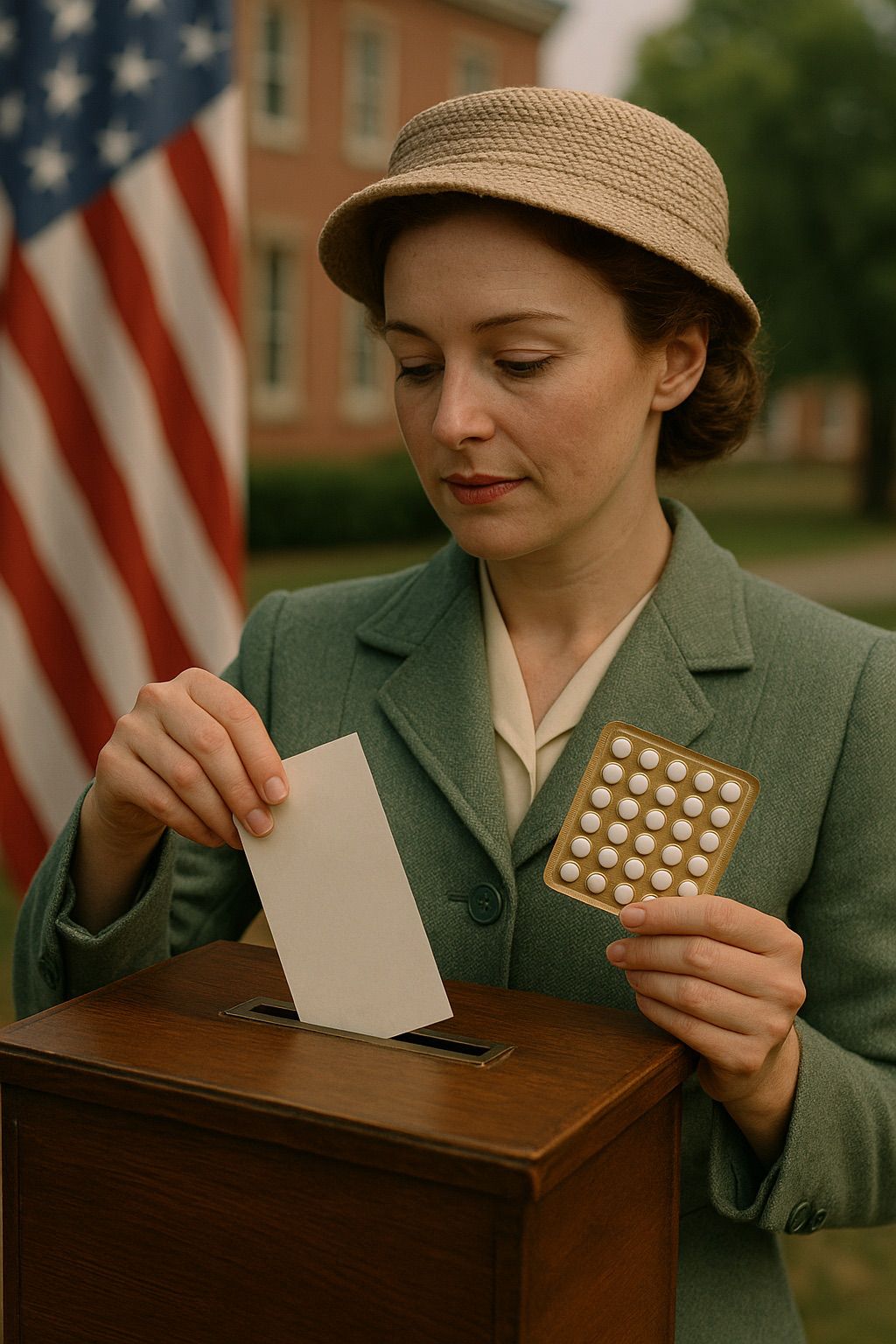
August 18 is a date that echoes like a struck bell across the corridors of modern history. It is a day bound to the voices of women, to the weight of ballots cast and the quiet authority of choices made in the privacy of one’s own body. On August 18, 1920, the United States ratified the Nineteenth Amendment, granting women the constitutional right to vote after decades of relentless activism, setbacks, and sacrifice. Forty years later to the day, in 1960, the first oral contraceptive pill entered the American market, giving women unprecedented control over their reproductive lives. These two events are not merely points on a timeline; they are twin revolutions—one political, one personal—both aimed at the same target: agency.

It’s difficult, perhaps, for someone born in the era of these rights to feel the raw weight of what life was like without them. In the years before suffrage, the idea that women might shape the laws under which they lived was met with ridicule, scorn, and outright hostility. A woman could own property in some states, could teach, could write books, could run farms and households, but when it came to voting, her voice was mute in the public square. It wasn’t because she was silent—it was because the law made her so. The fight to change that began decades earlier, at places like Seneca Falls in 1848, where the seeds of dissent were sown by women who dared to sign their names to the idea that they were equals. Over seventy years, those seeds were watered by countless voices—some speaking on grand stages, others in parlors and kitchens—until the chorus was too loud to ignore.

By 1920, the suffrage movement had gained both momentum and enemies. Anti-suffragists warned of the unraveling of the social order, painting visions of women abandoning their children, neglecting their homes, or losing their femininity entirely if they stepped into the voting booth. The irony was that many women opposed suffrage themselves, convinced by the very systems that kept them excluded that their place was elsewhere. Still, the suffragists marched on. They lobbied state legislatures, staged parades, organized hunger strikes, and endured arrests. Some were beaten in prison for their defiance. They held banners in front of the White House, declaring, “Mr. President, how long must women wait for liberty?”

When the Nineteenth Amendment finally reached the states for ratification, it came down to Tennessee—the thirty-sixth state needed to make it law. The vote was tied in the Tennessee House of Representatives until a young legislator named Harry Burn, previously expected to vote against it, changed his mind after receiving a letter from his mother urging him to “be a good boy” and vote yes. On August 18, 1920, Tennessee’s approval tipped the scales, and the amendment became part of the Constitution. It was a narrow, almost fragile victory, but it opened a door that has never closed. The following November, millions of women cast ballots in a presidential election for the first time, their inked signatures no longer confined to petitions but etched into the machinery of democracy.

Four decades later, the scene was very different, but the revolution was just as profound. In 1960, a small pill, no bigger than a vitamin, became available to American women for the first time. Its arrival marked a seismic shift in personal freedom—one as significant in the private realm as the ballot was in the public. For most of human history, the timing and number of children a woman bore were largely outside her control, dictated by biology and circumstance, and often defined by a lack of reliable contraception. The introduction of “the Pill” changed that almost overnight.

The story of its creation is as complex as the science behind it. Biologist Gregory Pincus, physician John Rock, and activist Margaret Sanger were at the center of its development, backed by funding from Katharine McCormick, a wealthy suffragist who understood that political equality meant little without bodily autonomy. Clinical trials in the late 1950s—many conducted unethically by today’s standards—led to the FDA’s approval in 1960. The Pill was marketed not as a tool of liberation but as a “cycle regulator,” a careful framing to appease moral and religious critics. Yet women understood immediately what it meant: for the first time, they could decide, with near certainty, if and when they would become mothers.

The cultural impact was explosive. For some women, the Pill was a quiet liberation, tucked away in a purse or medicine cabinet, a small, private rebellion. For others, it became a symbol of the sexual revolution, a statement that women’s pleasure and autonomy mattered as much as men’s. But the backlash was swift. Religious leaders decried it as immoral. Politicians debated whether unmarried women should even be allowed to access it. In some states, laws still made contraception illegal for anyone other than married couples. The fight for reproductive freedom was far from over, but the Pill had shifted the balance.

If you strip these two August 18 milestones down to their essence, you see the same thread: the fight for choice. The right to vote is the right to have a say in the laws and policies that govern your life. The right to control reproduction is the right to decide the course of your own body and future. Without one, the other is incomplete. A woman can cast a ballot, but if she has no control over whether she will bear children, her freedom is compromised. She can plan her family, but if she has no say in the laws that shape her life, her autonomy is still limited. These revolutions—forty years apart—were part of the same continuum.

To humanize this story is to remember the individual lives behind the milestones. Imagine a woman in 1920, putting on her best hat and gloves, walking to the polling place for the first time. Perhaps she had stood on a picket line years earlier, or perhaps she had never spoken publicly about politics. Maybe she kept her vote private, not even telling her husband. But when she dropped that ballot into the box, she knew she was part of something bigger than herself. Now picture a young woman in 1960, standing at a pharmacy counter, her heart pounding as she asked for a prescription. She might have been a college student who wanted to finish her degree without interruption, or a mother of three who decided her family was already complete. In both moments, the choice was hers—and that was the revolution.

Today, both rights are often taken for granted, even as they continue to be debated, challenged, and defended. Voter suppression efforts remind us that the ballot box is never entirely safe from erosion. Battles over reproductive rights make it clear that bodily autonomy is still a contested space. The history of August 18 is not just about what was won; it is about the ongoing vigilance required to keep it.

The women who fought for suffrage did so knowing they might never cast a vote themselves. The pioneers of the Pill risked careers, reputations, and in some cases their safety to develop it. They worked for a future they might not fully inhabit, believing that the generations after them would live freer lives. That belief was not naïve—it was necessary. And in both cases, it worked.

August 18 should be remembered not just as a day when laws changed, but as a reminder that freedom is cumulative. It builds on itself, brick by brick, until the foundation is strong enough to hold the weight of progress. These two revolutions—one in the voting booth, one in the medicine cabinet—are chapters in the same story. They tell us that choice is power, whether it’s exercised with a pen in a polling place or with a glass of water and a pill in the morning. And they challenge us to ask, in our own time: what choices will we defend, and what new freedoms will we dare to claim?

Related Posts

Red Horizons and Concrete Divides: When a Moon Was Found and a Wall Rose

Elias Rowen

Under a warm August sky, two moments in history—separated by nearly a century—emerged on the same date, each shaping the human story in profoundly different ways. On August 17, 1877, Asaph Hall, an astronomer at the U.S. Naval Observatory in Washington, D.C., peered into the vast darkness through the largest refractor telescope in the world at the time and found what so many before him had only imagined: a small moon orbiting Mars. On August 17, 1961, workers and soldiers in Berlin continued erecting what would become one of the most infamous structures of the twentieth century, the Berlin Wall, dividing families, friends, and an entire city. One event expanded humanity’s view of the universe; the other shrank the world for millions of people.

The U.S. Naval Observatory in the late nineteenth century was a place of meticulous work, its great domed chambers housing brass-bound telescopes that reached into the night sky for answers. In August 1877, Mars shone unusually bright, closer to Earth than it had been in years, providing a rare opportunity for astronomers. For centuries, there had been whispers and speculation that Mars might have moons, but none had been confirmed. Asaph Hall, who had risen from humble beginnings as a carpenter to one of America’s most respected astronomers, dedicated himself to finding out the truth. His nights were long and often fruitless. Mars’s glare made it nearly impossible to detect anything faint near it. But on the night of August 17, after countless hours of patience, a dim point of light revealed itself. It was Phobos, a tiny moon only about 22 kilometers across, circling Mars so quickly that it appeared to rise in the west and set in the east. Hall had already spotted another moon, Deimos, just days earlier, but Phobos—swift, close, and strange—was something else entirely. His discovery added a new chapter to the story of our solar system, a reminder that the universe holds secrets waiting for those persistent enough to search.

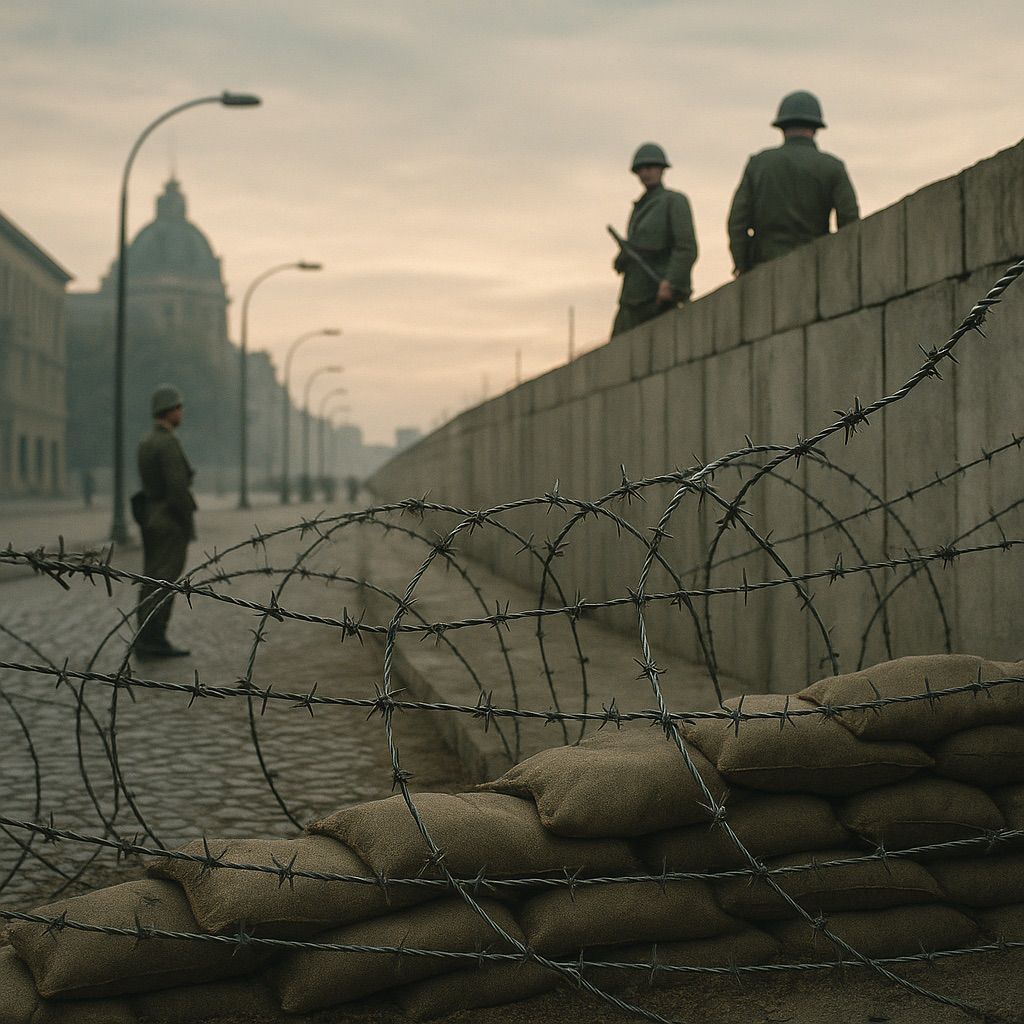
Eighty-four years later, August 17 brought not the joy of discovery but the reality of division. Berlin, deep inside East Germany, had been a city of uneasy coexistence since the end of World War II, with its western sectors controlled by the Allies and its eastern half under Soviet authority. For years, East Germans had slipped into West Berlin to escape the strictures of communist rule. But in August 1961, under the orders of East German leader Walter Ulbricht, the border began to close. The first barriers had gone up just days earlier, on August 13, but by August 17, the wall was growing taller and stronger, the temporary fences replaced with concrete slabs and armed guards. Streets that once connected neighborhoods were sealed. People woke to find they could no longer visit relatives, go to their jobs across town, or even cross the street without risking arrest.

For Berliners, it was more than the construction of a wall; it was the imposition of a wound that would scar the city for decades. Families were split overnight. Friends became unreachable. The sound of hammers and drills mingled with the silence of disbelief, and the once-fluid movement between East and West was replaced by tense standoffs at checkpoints. What had been an open city was now a geopolitical pawn, and the wall, stretching 96 miles, became the starkest symbol of the Cold War.

Placing these two August 17ths side by side reveals a striking contrast in human nature. In 1877, a man used science and perseverance to push the boundaries of what we knew, to expand our understanding of the cosmos. In 1961, a government built a physical and ideological boundary to limit the movement of its people. One event opened the universe; the other closed off a city. And yet, both grew out of fundamental aspects of humanity—our desire to explore and our instinct to protect, our capacity for wonder and our capacity for fear.

The human stories within these moments are what bring them to life. Picture Asaph Hall, standing in the quiet of the observatory, the scent of polished brass in the air, carefully adjusting the massive telescope, knowing he might be on the brink of something extraordinary. Imagine his excitement when he confirmed his find, the thrill of knowing he had added something permanent to humanity’s knowledge. Then imagine a Berlin mother in 1961, standing on one side of a freshly built barricade, her child in hand, staring across to where her parents lived, now unreachable. Imagine the whispered conversations across fences, the letters smuggled under threat, the desperate plans to escape.

Phobos still circles Mars today, its cratered surface mapped in detail by spacecraft. Astronomers know it is slowly spiraling toward the planet, destined to crash into it or break apart into a ring millions of years from now. The Berlin Wall, meanwhile, fell in 1989, brought down by the same human will that had once endured its shadow. Fragments remain, scattered across museums and memorials, each piece a testament to the cost of division and the resilience needed to overcome it.

August 17 reminds us that humanity is capable of both reaching outward and turning inward, of discovering moons and building walls. It is up to each generation to decide which impulse will define its legacy. Some will look up, like Asaph Hall, searching for new worlds, while others will look down, stacking bricks out of fear. Somewhere tonight, a telescope will find Phobos gliding silently around Mars. Somewhere else, a traveler will run their fingers along a chipped remnant of the Berlin Wall. Both will feel the weight of history, and both will face the same question: do we open the sky, or do we build the wall?

Related Posts

The Thunder at Bennington: How Ragtag Rebels Turned the Tide

Elias Rowen

The summer of 1777 was hot, tense, and full of doubt for the young American Revolution. Two years had passed since the Declaration of Independence, and while the words on parchment had been bold, the war on the ground was still a precarious gamble. The British were making a push from Canada down into New York, hoping to cut the rebellious colonies in two and choke off New England from the rest. The plan was strategic, simple in theory, and deadly in execution: General John Burgoyne’s army would sweep south along the Hudson River Valley, linking up with British forces moving north from New York City.

But plans in war rarely go unchallenged, and in August 1777, in the small but fiercely determined hamlets of what is now Vermont and New York, local farmers, tradesmen, and frontiersmen decided that the British advance would stop with them. What followed was the Battle of Bennington—an engagement fought not by polished armies in neat lines, but by men who knew the forests and hills like the backs of their hands. On August 16, they proved that resolve, cunning, and a bit of luck could reshape the course of history.

The seeds of this battle were sown weeks earlier, as Burgoyne’s army—flush with early victories—pushed deeper into American territory. His force was formidable: British regulars, German Brunswickers, loyalist troops, and Native American allies. But it was also stretched thin. Supplies were running low, morale was faltering, and the rugged terrain of upstate New York was wearing on soldiers used to the discipline of European battlefields. Burgoyne’s solution was to send a detachment to raid for horses, cattle, food, and other desperately needed provisions.

That detachment, led by Lieutenant Colonel Friedrich Baum of the Brunswick troops, numbered around 800 men. They were an eclectic mix: German dragoons, loyalist militia, Native American warriors, and a handful of Canadians. Their target was Bennington, a supply depot believed to be lightly defended. But what Burgoyne’s intelligence missed was the fierce spirit of the local militia—especially under the leadership of Brigadier General John Stark, a battle-hardened veteran of Bunker Hill and a man with little patience for British arrogance.

Stark was not a man of flowery speeches, but he knew how to inspire fighters. When his ragtag militia gathered, he is famously said to have pointed at the enemy and declared, “There are the Redcoats, and they are ours, or this night Molly Stark sleeps a widow.” It was more than bravado—it was the voice of a man who understood the stakes. The loss of Bennington would cripple the local resistance; its defense could rally the entire region.

The battle unfolded in a series of fierce, chaotic clashes. Stark’s men, familiar with the wooded hills and swamps, outflanked Baum’s troops and hit them from multiple directions. The British-allied forces were surprised to find themselves facing not a token garrison but hundreds of determined militiamen who fired from behind trees and stone walls, darting in and out of sight. The fighting was brutal and personal, with bayonets flashing and musket balls whistling through the humid August air.

Baum’s men held out for several hours, even as casualties mounted and ammunition dwindled. But just as victory seemed within reach for Stark’s force, a fresh detachment of British reinforcements under Lieutenant Colonel Heinrich von Breymann appeared. Stark’s militia, exhausted from hours of fighting, risked being overwhelmed.

It was then that the tide truly turned. New Hampshire reinforcements under Colonel Seth Warner arrived, throwing themselves into the fray with renewed energy. Warner’s men crashed into Breymann’s force, and the combined American fighters drove the British-allied troops into retreat. By day’s end, Baum was mortally wounded, Breymann was in retreat, and more than 200 enemy soldiers were dead, with hundreds more captured. The Americans had won decisively.

The significance of the Battle of Bennington reached far beyond the numbers. Strategically, it deprived Burgoyne of the supplies and manpower he desperately needed, weakening his campaign toward Albany. Morale among the American forces surged, while the myth of British invincibility cracked. Politically, it boosted support for the revolution at a time when many colonists were unsure if independence was even possible.

Bennington’s victory was also a masterclass in the value of local knowledge and irregular tactics. The American militia was not the Continental Army—they lacked uniforms, formal drill, and heavy artillery—but they compensated with terrain mastery, guerrilla strategy, and an unshakable sense of defending their homes. In many ways, Bennington was a smaller-scale preview of how the Revolution itself would ultimately be won: not by outmatching the British in traditional battle, but by outlasting them in a war of endurance and will.

In the months that followed, the ripple effects of Bennington could be felt all the way to Saratoga, where Burgoyne’s weakened army suffered the decisive defeats that would bring France openly into the war on the American side. Without Bennington, Burgoyne might have had the resources to push further, altering the momentum of the entire campaign.

Today, the Battle of Bennington is remembered not just as a military engagement but as a testament to the grit of ordinary people who rose to extraordinary heights when history demanded it. In Bennington, Vermont, and surrounding towns, August 16 is still celebrated with parades, reenactments, and speeches that honor those who fought. The fields and hills where Stark’s militia once crouched behind rocks are now peaceful, but the echoes of musket fire still linger in the collective memory.

Bennington’s story is, at its heart, the story of a community refusing to yield, of neighbors standing shoulder to shoulder against a professional army, of a belief that freedom was worth fighting for even against impossible odds. It reminds us that revolutions are not only won in grand capitals or by famous generals, but also in muddy fields where farmers put down their plows and took up arms.

Present Day Meme:

Related Posts

Peace, Freedom, and Faith: The Day the World Sang in Many Tongues

Elias Rowen

Some dates seem to carry more history than they can hold, as if time itself decided to stack meaning upon meaning until the weight of memory was almost too much. August 15 is one such date—a day when different corners of the world have celebrated liberation, witnessed the closing chapter of war, gathered in fields to sing for peace, and observed ancient traditions of faith. It is the anniversary of India’s independence from Britain in 1947, the opening day of the legendary Woodstock music festival in 1969, the moment the Japanese emperor announced surrender in World War II, and the centuries-old feast of the Assumption of Mary in Catholic tradition. Each story could stand alone as history worth remembering; together, they form a strange and beautiful harmony, a reminder that the human experience is as vast as it is intertwined.

The first chord in this symphony of August 15 was struck in 1947, when India awoke to independence after nearly two centuries under British colonial rule. The midnight before, Jawaharlal Nehru, the new Prime Minister, stood before the Constituent Assembly in New Delhi and declared, “At the stroke of the midnight hour, when the world sleeps, India will awake to life and freedom.” The words were poetic but the moment was real, electric in its intensity. Across the subcontinent, people celebrated in streets draped with tricolor flags, bands played patriotic songs, and prayers were offered in temples, mosques, churches, and gurdwaras.

But freedom came with a terrible price. The British withdrawal also brought Partition—dividing the land into India and the new nation of Pakistan. The hurried drawing of borders triggered one of the largest mass migrations in human history, as millions of Hindus, Muslims, and Sikhs crossed into what they hoped would be safer territory. Violence erupted along the routes, claiming hundreds of thousands of lives. It was a bittersweet birth—an event that embodied both the fulfillment of a dream and the trauma of separation. For India, August 15 would always be a day of pride, but also a reminder of the human cost of freedom.

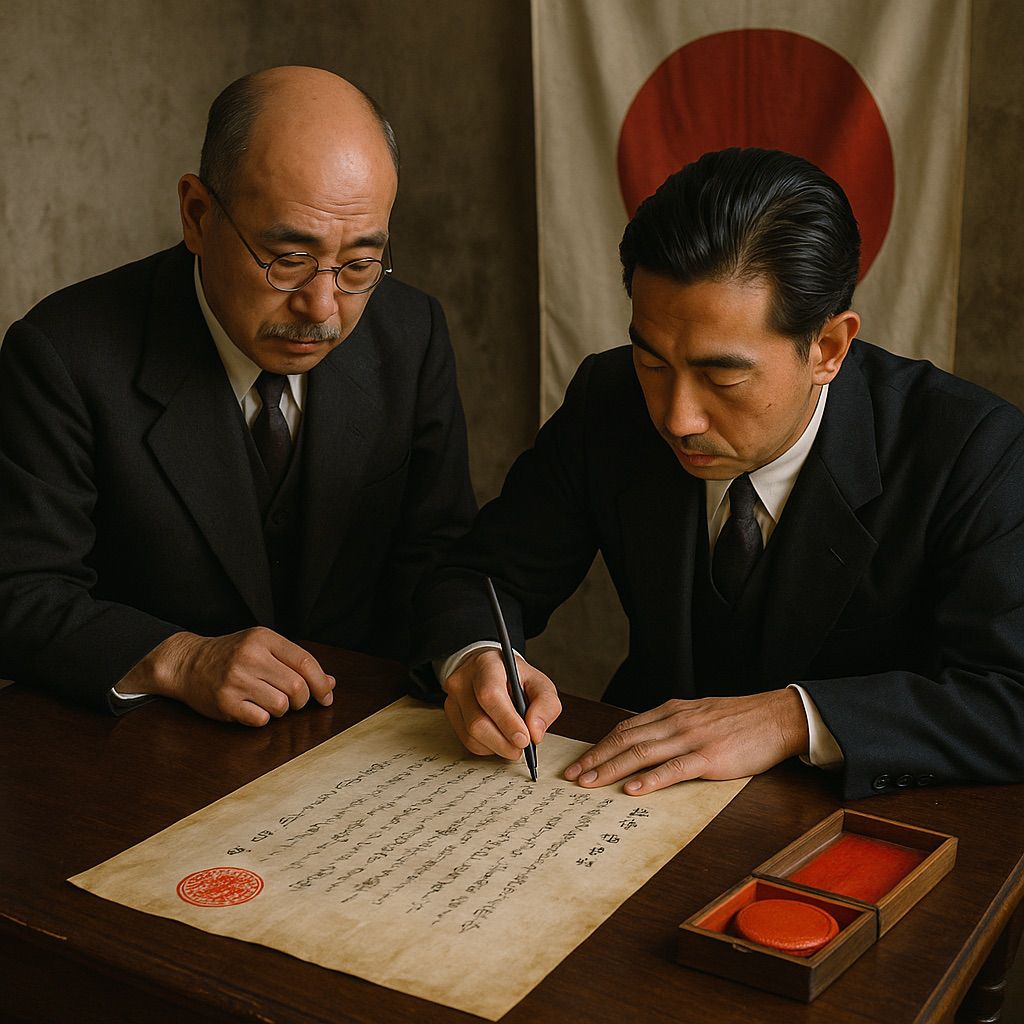
Two years earlier, another monumental moment had unfolded on August 15—this one resonating across the globe. It was the day Emperor Hirohito’s voice was heard on the radio for the first time by the Japanese people, announcing Japan’s surrender in World War II. The recording, known as the Jewel Voice Broadcast, was delivered in formal, archaic Japanese, making it hard for many listeners to immediately understand. But the meaning was unmistakable: the war was over. After the atomic bombings of Hiroshima and Nagasaki and the Soviet Union’s entry into the war against Japan, the empire’s leaders had concluded that continuing the fight would only bring “ultimate collapse and obliteration of the Japanese nation.”

The announcement marked the end of six years of global conflict, but the day was not one of simple relief. In Tokyo, some wept openly; others bowed their heads in silent grief for the fallen. Across Asia and the Pacific, occupied nations celebrated their liberation. In Allied countries, victory was tempered by mourning for the millions lost. It was a day when the world seemed to exhale, unsure what the next breath would bring in a world reshaped by destruction and diplomacy.

Jump ahead to August 15, 1969, and the world saw a very different gathering—a sprawling, mud-soaked field in Bethel, New York, filled with hundreds of thousands of young people who came for three days of music, peace, and a chance to live, if only briefly, in a vision of harmony. Woodstock was born in the height of the counterculture movement, a time of political protest, generational change, and deep skepticism about authority, fueled in part by the Vietnam War.

The first day opened with folk artist Richie Havens, whose improvised song “Freedom” became an instant anthem. The crowd—eventually numbering close to half a million—was larger than anyone had anticipated, overwhelming the local infrastructure. But despite the chaos, food shortages, and rainstorms that turned the pastures into rivers of mud, the festival remained remarkably peaceful. Strangers shared blankets and meals, strangers danced together to Joan Baez, Santana, and The Grateful Dead. By the time Jimi Hendrix closed the festival with his haunting rendition of “The Star-Spangled Banner,” Woodstock had become more than a concert—it was a cultural touchstone, a symbol of what people could create together when they imagined a world built on love rather than division.

And woven into all of this is a thread that stretches far deeper into the past: August 15 is also the Feast of the Assumption of Mary, one of the most important holy days in the Catholic calendar. It commemorates the belief that the Virgin Mary, at the end of her earthly life, was taken up into heaven, body and soul. For centuries, this feast has been marked by processions, masses, and pilgrimages. In villages across Europe, the day is celebrated with flowers, music, and offerings. In some places, it is tied to harvest traditions, giving thanks for the fruits of the earth as well as the hope of eternal life.

In this context, August 15 becomes a date that unites the temporal and the spiritual, the political and the personal. It is about independence on a national scale and on a human scale—freedom from colonial rule, freedom from war, freedom to gather in peace, freedom to believe.

When we look at these events side by side, patterns emerge. India’s independence, Japan’s surrender, Woodstock’s opening, and the Feast of the Assumption all speak to transitions—endings and beginnings, the closing of one chapter and the start of another. They all involve large groups of people coming together, whether in celebration, mourning, or worship. They all are rooted in the human yearning for dignity and meaning.

In 1947, Indians claimed the right to govern themselves. In 1945, Japan acknowledged the need to lay down arms and rebuild. In 1969, a generation sought to redefine community through music and shared experience. And for centuries, believers have looked to the Assumption as a reminder of hope beyond earthly struggles. Each is a different answer to the same question: how do we move forward from where we are now?

August 15, then, is not just a date. It is a chorus sung in many languages and to many tunes, each verse telling a story of struggle and resilience. It is the midnight hour in Delhi, the static-filled voice of an emperor, the electric hum of amplifiers over a muddy field, and the ringing of church bells. It is the waving of flags, the clasping of hands, the lighting of candles. It is, in the truest sense, a day when the world has paused to take stock of what it has endured and what it still hopes to achieve.

Related Posts

Security and Sovereignty: Two Births That Changed the World

Elias Rowen

History often reminds us that the same day can hold multiple meanings depending on where you stand. August 14 is one such date, etched into the memory of two very different nations for two very different reasons. In the United States, it marks the signing of the Social Security Act in 1935—a cornerstone of the New Deal that redefined the relationship between government and citizen, promising a measure of dignity in old age and a safety net in times of hardship. Across the globe, it is the birthday of Pakistan, which emerged on August 14, 1947, from the tumult of the British Empire’s retreat from India. In one story, the focus is on social security for the individual; in the other, it is on political sovereignty for millions. Both, however, are about creating systems meant to protect, to empower, and to ensure survival in a world where survival is never guaranteed.

In the summer of 1935, the United States was still reeling from the Great Depression. Banks had collapsed, unemployment hovered around 20%, and the frail social fabric was stretched to breaking. In this climate, President Franklin Delano Roosevelt pushed forward a vision that many considered revolutionary: a federal program to provide retirement benefits, unemployment insurance, and aid to vulnerable populations. On August 14, with a flourish of his pen, FDR signed the Social Security Act into law.

The Act wasn’t perfect—many groups, including agricultural and domestic workers, were initially excluded. But it was a monumental shift in American governance. Until then, the federal government had played only a limited role in personal economic security; the prevailing idea was that individuals and their families bore sole responsibility for their welfare. The Social Security Act declared that the nation, through its government, would share that responsibility.

The program would be funded by payroll taxes, a concept that was both controversial and ingenious. Workers and employers would each contribute, ensuring the system had a steady flow of funds and tying its success to the nation’s collective effort. Over time, Social Security expanded to include disability benefits and survivors’ insurance, becoming one of the most enduring and popular elements of the New Deal.

For millions of Americans, Social Security has been more than a government program—it has been a lifeline. It has meant a grandmother could pay her rent, a widow could keep her home, a disabled worker could maintain independence. Critics have debated its sustainability, but few have challenged its core principle: that a wealthy, modern nation should protect its people from destitution in their later years.

While the ink was drying on FDR’s law in 1935, halfway across the world, another story was unfolding over the following decade—one of empire, identity, and the fight for self-determination. By the mid-1940s, British India was a nation on the brink of transformation. The independence movement had been gaining momentum for decades, fueled by leaders like Mahatma Gandhi, Jawaharlal Nehru, and Muhammad Ali Jinnah. But alongside the call for independence came deep divisions over what that independence should look like.

For Jinnah and the All-India Muslim League, the vision was clear: Muslims of the Indian subcontinent needed their own homeland, a place where their cultural, political, and religious rights would be safeguarded. Tensions between the Indian National Congress and the Muslim League grew, and as the British prepared to leave, the idea of partition—dividing India into two separate nations—took center stage.

On August 14, 1947, Pakistan was born. The moment was marked by jubilation and chaos. In Karachi, Jinnah delivered a speech as the new Governor-General, declaring Pakistan’s commitment to democracy, law, and order. Streets were filled with celebrations—flags waved, people sang, and prayers were offered for the nation’s future. But the joy was shadowed by the violence of Partition. As borders were drawn, millions of Hindus, Muslims, and Sikhs found themselves on the wrong side and began migrating to their respective new homelands. The migrations were massive, the largest in human history, and they were accompanied by horrifying communal violence that left hundreds of thousands dead.

Pakistan’s birth was thus a story of both triumph and tragedy. It was the realization of a political dream, the creation of a sovereign state, and a fresh start for millions. But it was also a reminder that independence often comes at a cost, and that the work of building a nation is only just beginning once the flag is raised.

It’s fascinating to place these two events—FDR’s Social Security Act and Pakistan’s independence—side by side. One is a domestic policy born from economic crisis; the other is a geopolitical transformation born from colonial history and political negotiation. Yet both are rooted in a common idea: that security, whether personal or national, is worth fighting for.

In the United States, August 14 became a symbol of the government’s willingness to take responsibility for its citizens’ well-being, to create systems that would outlast the crises of the moment. In Pakistan, August 14 became a symbol of the people’s determination to chart their own destiny, to claim the right to govern themselves and define their future.

Both legacies are complex. Social Security, though widely popular, faces ongoing challenges from demographic shifts, economic pressures, and political disagreements. Pakistan, now one of the world’s most populous nations, has faced its own trials—political instability, economic struggles, and tensions with its neighbors. Yet in both cases, the founding moment continues to hold deep symbolic power.

When Americans receive their first Social Security check, they are participating in a system born on that August day in 1935. When Pakistanis gather to watch fireworks on Independence Day, they are celebrating a moment that reshaped the map of the world in 1947. Both are acts of remembrance and renewal, tying the present to a day when the future seemed wide open, if uncertain.

August 14, then, is a reminder of how history can connect distant people and different struggles through the shared language of hope and resilience. Whether it’s a safety net for an aging worker or the birth of a new nation, the impulse is the same: to protect, to preserve, and to create something that will endure.

Related Posts

Barbed Wire Sunday: The Day Berlin Changed Forever

Elias Rowen

It began in the stillness of the early morning, long before most Berliners awoke. The date was August 13, 1961, and a cool summer night was giving way to dawn. But something unusual was happening in the city—men in military uniforms, workers in overalls, and police officers in helmets were moving with calculated precision along the streets that divided East and West Berlin. Under the cold glare of floodlights and the hum of truck engines, they unspooled heavy coils of barbed wire, setting them across roads, alleys, and tramlines. They erected wooden barricades and placed armed guards at key crossings. By the time the sun rose, the heart of Berlin was being carved in two.

This was the day that came to be known as “Barbed Wire Sunday.” It was the day the Berlin Wall began—not as the concrete monolith of Cold War imagery we remember now, but as a ragged, improvised barrier of wire and fences. And it was the day the lives of millions of people changed in an instant.

For years before that morning, Berlin had been the fault line of the Cold War. At the end of World War II, Germany had been divided into four occupation zones controlled by the United States, the United Kingdom, France, and the Soviet Union. Berlin, deep within the Soviet zone, was also divided into four sectors. What began as a temporary arrangement became a long-term reality as tensions between the Soviet Union and the Western Allies hardened into ideological opposition. In 1949, West Germany (the Federal Republic of Germany) was established in the zones held by the Western powers, while East Germany (the German Democratic Republic) formed in the Soviet-controlled zone.

Berlin became the most visible—and dangerous—front of that division. The city was a loophole in the Iron Curtain: though the border between East and West Germany was heavily fortified, Berlin’s open boundaries allowed East Germans to escape into West Berlin, and from there into West Germany. By 1961, an estimated 2.7 million people had fled East Germany through Berlin, draining the communist state of skilled workers, professionals, and students.

For East German leader Walter Ulbricht and his Soviet backers, this “brain drain” threatened the survival of their regime. Ulbricht had famously declared in June 1961 that “no one has the intention of erecting a wall”—a statement that would soon become one of the most infamous lies in political history. Behind the scenes, plans were being drawn up for a massive operation to seal the border inside the city.

That operation—codenamed “Rose”—was executed in the early hours of August 13. Truckloads of soldiers, police, and construction crews moved into position across the city. Roads were torn up to prevent vehicles from crossing. Public transportation lines were severed. Families woke to find themselves cut off from relatives, lovers, and friends on the other side. Workers who had jobs in the West could no longer reach them; students who attended schools in the opposite sector were suddenly stranded. The overnight transformation was so complete that it felt almost unreal, like waking from one life into another without warning.

At first, the Western Allies were caught off guard. U.S., British, and French forces in West Berlin could only watch as East German troops rolled out the barbed wire. Under the postwar agreements, they had no authority to intervene in East Berlin, and any attempt to dismantle the barricades risked triggering a direct confrontation with the Soviet Union. The West’s inaction, while avoiding immediate war, meant that the division was cemented from day one.

The human impact of Barbed Wire Sunday was devastating. Stories quickly emerged of families torn apart. A mother on the East side who had gone to visit her sister in the West the day before could not return to her children. A young couple separated by the barricade called to each other across the wire, too far to touch, too close to turn away. Some tried to escape immediately—leaping from apartment windows into the West, sprinting across open streets despite the armed guards. A few succeeded; others were shot or arrested.

In the days that followed, the barbed wire was reinforced with more permanent barriers—concrete blocks, watchtowers, and eventually the infamous concrete wall that would stretch over 150 kilometers around West Berlin. Guard towers loomed every few hundred meters, manned by soldiers with orders to shoot anyone attempting to cross. The Wall became not just a physical barrier but a psychological one, a daily reminder of division and repression.

Yet even in those early days, the seeds of defiance were sown. West Berliners gathered near the wire to show support for those trapped in the East. Western leaders made high-profile visits, promising not to abandon the city. And in the years to come, countless East Berliners would risk—and sometimes lose—their lives trying to escape.

The Berlin Wall stood for 28 years, becoming one of the most potent symbols of the Cold War. It was the backdrop for some of history’s most famous speeches, from John F. Kennedy’s “Ich bin ein Berliner” in 1963 to Ronald Reagan’s “Mr. Gorbachev, tear down this wall!” in 1987. And when it finally fell on November 9, 1989, it did so not through a single dramatic act of force but through the cumulative weight of political change, popular protest, and a regime too weakened to hold back the tide.

Looking back at August 13, 1961, we see more than just the start of a wall. We see the moment when a city was turned into a stage for the world’s deepest ideological struggle. We see the costs of political division measured not only in diplomatic standoffs and military maneuvers but in missed weddings, broken friendships, and silent grief. We see how power can reshape geography in a single night, but also how human will—though delayed—can undo what seemed permanent.

Barbed Wire Sunday remains a stark reminder that freedom can be lost quickly and must be defended constantly. It’s also a testament to the resilience of those who endured it, who found ways to live, love, and dream even with a wall in their midst. For Berliners, August 13 is not just a date in the history books—it is a day when the ground under their feet literally changed, and the skyline they knew was suddenly divided by steel and stone.

Related Posts

Youth, Loss, and Leadership: A Date Where Generations Collide

Elias Rowen

History is full of dates that feel like crossroads, moments where the themes of life, death, and the shifting of generations meet in unexpected ways. August 12 is one such day—a day where the United Nations celebrates International Youth Day, honoring the promise, potential, and resilience of young people around the world. Yet, in a striking counterpoint, it is also a date marked by tragedies from the early 19th century—stories of lost youth, of political turbulence in Britain, of leaders grappling with personal despair and public duty. Together, these threads form a tapestry that reminds us that the human story is one of both hope and heartbreak, often intertwined more closely than we’d like to admit.

To appreciate the emotional range of August 12, we have to start with the modern celebration. International Youth Day was established by the United Nations in 1999, with the first observance held in 2000. Its purpose is as ambitious as it is necessary: to spotlight the challenges facing young people worldwide, to promote their rights, and to encourage their active participation in shaping a better future. Each year brings a different theme—ranging from employment and civic engagement to environmental sustainability and mental health—because the world young people inherit is as complex as it is full of opportunity.

International Youth Day is not meant to be a single feel-good event. It is, in essence, a global conversation. Governments, NGOs, schools, and youth organizations host conferences, art exhibitions, community projects, and policy dialogues. In cities across the world, young activists stand on stages and speak into microphones, not simply as the leaders of tomorrow but as leaders today. Their voices carry stories of innovation—apps designed to tackle climate change, grassroots campaigns to combat inequality, movements to protect indigenous cultures. On this day, the future doesn’t just seem possible—it feels present and tangible.

And yet, to fully grasp the poignancy of celebrating youth on August 12, it’s worth reflecting on the other stories the date holds. The early 19th century in Britain was an era of profound political and social upheaval. The Napoleonic Wars had reshaped Europe, the Industrial Revolution was transforming economies and societies, and the British political system was under immense pressure to adapt to these changes. Within this turbulent context, the nation’s leadership faced crises not only in Parliament but also in their personal lives.

One of the tragedies that casts a shadow over August 12 is the untimely death of Robert Stewart, Viscount Castlereagh, Britain’s Foreign Secretary and a key architect of the post-Napoleonic European order. On August 12, 1822, Castlereagh took his own life at the age of 53. His death sent shockwaves through Britain and Europe, for he had been a towering figure in diplomacy, instrumental in shaping the Congress of Vienna in 1815 and in maintaining the delicate balance of power that followed.

Castlereagh’s suicide was not only a personal tragedy but also a political one. He had been under intense strain, dealing with the burden of maintaining peace in a Europe still recovering from decades of war, while also confronting domestic unrest and political opposition. His mental health, likely deteriorating for months if not years, was further pressured by rumors and political attacks. His death opened questions about the human cost of leadership, about how even the most powerful can be crushed under the weight of expectation and responsibility.

The 19th century had its share of youthful promise cut short, too. In an era where life expectancy was shorter and medical knowledge far more limited, many young people—both in public life and out of it—never had the chance to fulfill their potential. The Romantic poets of the time, such as John Keats, Lord Byron, and Percy Bysshe Shelley, embodied this phenomenon. Keats died at 25, Shelley at 29, Byron at 36—youthful deaths that became part of their mythos and, in a way, part of the Romantic ideal itself. Their works brimmed with passion and urgency, perhaps in part because they were written in the shadow of their own mortality.

When we place International Youth Day alongside these earlier losses, the contrast is sharp but illuminating. On one side, we have a modern world actively trying to create conditions in which young people can thrive—celebrating their energy, giving them platforms, seeking to address the structural inequalities that hold them back. On the other, we have a historical period where youth was often cut short by disease, war, or despair, and where even the most accomplished individuals could succumb to isolation and hopelessness.

This juxtaposition prompts reflection on what it means to truly value youth. It’s not just about celebrating birthdays or milestones—it’s about creating environments where young people can flourish, mentally, emotionally, and physically. It’s about recognizing that leaders, too, need support, that even those who seem unshakable can be in need of care. The tragedies of the 19th century remind us that ambition and achievement do not shield anyone from human vulnerability.

The story of Castlereagh in particular resonates in today’s conversations about mental health. In the 1820s, the stigma around mental illness was so great that few spoke of it openly, and effective treatment was virtually nonexistent. Leaders were expected to embody strength without falter, and any sign of weakness could be politically fatal. Castlereagh’s death was reported with a mix of shock and guarded language, reflecting a society uncomfortable with confronting the emotional realities of its heroes.

Today, by contrast, International Youth Day often includes discussions on mental health as a central theme. Young activists talk openly about anxiety, depression, burnout, and the pressures of social media. Organizations promote mental health literacy, advocate for accessible care, and challenge the stigma that still lingers. The message is clear: valuing youth means valuing their well-being, not just their productivity.

The thread connecting these stories—modern and historical—is the idea of potential, both realized and lost. The youth celebrated on August 12 each year are the embodiment of possibility. They are the artists who will shape our culture, the scientists who will push the boundaries of knowledge, the leaders who will inherit a world facing climate change, political division, and technological transformation. But the stories from the 19th century remind us that potential is fragile, that even the brightest flame can be extinguished if we do not protect it.

One could imagine what someone like Castlereagh, with his diplomatic skill and vision, might have contributed had he lived longer in a world more attuned to mental well-being. One could imagine what a Keats or a Shelley might have written had they been given decades more life. And perhaps that imagining is part of the work of International Youth Day—to ensure that today’s young people do not become tomorrow’s lost voices.

In the end, August 12 is a date that bridges centuries, reminding us of the weight of leadership, the fragility of youth, and the responsibility of the present to the future. It is a day to listen—to the joy and ambition in young voices, and to the echoes of those who are gone. It is a day to act—to create policies and communities that nurture potential rather than squander it. And it is a day to remember—that every celebration of life is also an acknowledgment of its precious brevity.

Related Posts

Alcatraz Receives Its First Federal Prisoners: The Rock, Capone, and the World at War

Elias Rowen

There are certain dates in history when events, separated by oceans and circumstances, become strangely intertwined. August 11 is one of those days. In 1934, the infamous Alcatraz Federal Penitentiary welcomed its first wave of inmates, among them some of the most dangerous and high-profile criminals in America—including the legendary gangster Al Capone. The Rock, as it became known, would soon grow into a symbol of both justice and isolation, a place where the law’s most notorious adversaries vanished into the fog.

But August 11 would also, years later, carry a different weight. In 1945, the date fell in the tense hours between Japan’s conditional surrender offer and the Allies’ official response. It was a day of waiting, of cautious communication, and of the silent turning of history’s gears toward the end of World War II. Two events—one set on a rocky island in San Francisco Bay, the other across a war-torn globe—would be bound forever by their place on the calendar.

Let’s start with Alcatraz, and the vision behind it. The federal government, facing the challenge of housing prisoners who were either too violent, too escape-prone, or too influential to be contained in regular penitentiaries, turned to an isolated military prison on an island less than two miles from San Francisco. The location was perfect for its purpose: cold, shark-infested waters and swift currents made any escape attempt almost suicidal. The Army had already been using Alcatraz for military prisoners since the late 19th century, but by the early 1930s, the Department of Justice saw an opportunity to transform it into the nation’s most secure civilian prison.

On August 11, 1934, the first group of 137 federal inmates arrived from the U.S. Penitentiary in Leavenworth, Kansas, under heavy guard. The transfer was conducted with military precision. Prisoners were transported in specially designed railroad cars, guarded by dozens of armed federal agents. Upon arrival in San Francisco, they were ferried to the island under the watchful eyes of armed Coast Guard vessels.

Among the arrivals was Alphonse “Al” Capone, the most famous gangster of the Prohibition era. Capone had built his empire on bootlegging, bribery, and violence, and though the government could never pin murder on him, they had finally brought him down on charges of tax evasion. By the time he arrived at Alcatraz, Capone’s power had already diminished, but authorities feared he could still influence guards and prisoners alike in a standard penitentiary. The Rock’s strict rules, isolation, and relentless routines were designed to break such influence.

Life at Alcatraz was nothing like the relatively loose conditions in other prisons of the time. Inmates spent most of their days in solitary confinement or at silent work details. Communication was minimal, privileges rare. Even meals were conducted with rigid discipline. The prison’s rules promised “privilege through merit,” meaning good behavior was the only way to earn even the smallest comforts. For men like Capone—used to bending the world to their will—Alcatraz was a cold, unyielding wall.

Capone’s time on the island was marked by a surprising shift in demeanor. Stripped of his networks and under constant supervision, he became increasingly withdrawn. At one point, he was even allowed to play banjo in the prison band—proof that even on The Rock, routine could soften a man’s edges. But there was no escaping the reality that Alcatraz was meant to be a one-way street for America’s most feared criminals.

Meanwhile, the prison gained a reputation not only for its harshness but also for its seeming inescapability. While several inmates would attempt daring escapes over the years—some vanishing into the bay, their fates unknown—none were officially confirmed to have succeeded. Alcatraz became both a literal and symbolic fortress, a reminder that the arm of federal justice could reach even the most untouchable.

Fast forward to August 11, 1945. On the other side of the world, the United States and its Allies were grappling with Japan’s conditional surrender offer, which had arrived the day before. The war in Europe had ended in May, but the Pacific conflict still raged, fueled by years of bloody island battles and culminating in the atomic bombings of Hiroshima on August 6 and Nagasaki on August 9.

Japan’s surrender proposal—acceptance of the Allies’ terms so long as Emperor Hirohito’s sovereignty was preserved—was a pivotal moment. But it was not met with immediate acceptance. For the Allies, the question of the Emperor’s role was politically sensitive. Could they preserve his position without undermining the principle of unconditional surrender? The American public, still furious over Pearl Harbor, had little appetite for leniency, yet military leaders recognized that preserving the Emperor might speed the end of the war and avoid a costly invasion of the Japanese mainland.

August 11, 1945, thus became a day of tense diplomacy. Messages were exchanged through neutral intermediaries in Switzerland and Sweden, as leaders in Washington, London, and other capitals debated the exact wording of their reply. The eventual decision was to accept the surrender on the condition that the Emperor’s authority would be subject to the Supreme Commander for the Allied Powers—effectively making him a figurehead under Allied control. This response, though not yet formally delivered on the 11th, was already taking shape.

It’s fascinating to think of these two August 11s—1934 and 1945—side by side. On one, a fortress prison was receiving its first residents, designed to be a place where lawbreakers would find no escape. On the other, the largest war in human history was nearing its close, with the world’s leaders trying to craft a peace that would hold. Both were about control—whether of individuals who threatened civil order or of nations whose ambitions had set the world ablaze.

There’s also a certain irony in the juxtaposition. Alcatraz was about the impossibility of escape; Japan’s leaders, in those August days of 1945, were trying to negotiate a way out of a war they could no longer win. In both cases, the outcome would reshape the future. For the inmates of The Rock, it meant years of isolation, stripped of power and influence. For Japan, it meant the end of an imperial era and the beginning of a transformation into a peaceful democracy.

Alcatraz would go on to house not just gangsters like Capone, but also bank robbers like George “Machine Gun” Kelly and Robert Stroud, the “Birdman of Alcatraz.” Each inmate’s story became part of the prison’s mythology, but Capone remained its most famous resident. By the time he left the island in 1939, his health had deteriorated sharply due to syphilis, and he spent his remaining years in relative obscurity.

The prison itself closed in 1963, not because it had been breached, but because it was too expensive to maintain. The Rock’s isolation had been its greatest strength as a prison, but it also made supplying and staffing it costly. Today, it stands as a tourist destination and a relic of a different era in criminal justice—a place where the walls still echo with whispers of its most infamous residents.

Meanwhile, the events of August 1945 continue to be studied and debated. The surrender correspondence of those days was a delicate dance of language and power, setting the stage for the formal end of the war on September 2 aboard the USS Missouri. The compromise over the Emperor’s status was controversial at the time but ultimately helped ensure a smooth transition from war to peace.

Looking back, August 11 is a reminder that history is rarely neat. Some days hold more than one story worth telling, more than one thread that shapes the fabric of our world. In 1934, that thread was steel bars and cold water, a fortress in the bay meant to contain the uncontainable. In 1945, it was the fragile bridge between war and peace, built on diplomacy, pragmatism, and the hope that the worst was finally behind us.

And perhaps that’s the deeper connection between Alcatraz and the surrender talks: both were about endings, about the moment when resistance gives way to acceptance, and the world, for better or worse, changes forever.

Related Posts

The Day Japan Offered Conditional Surrender: A Turning Point in World History

Elias Rowen

The world in August 1945 was exhausted, battered, and holding its breath. For six years, the most destructive war humanity had ever seen had consumed cities, toppled empires, and stolen tens of millions of lives. Europe lay in ruins, its cities scarred with craters and charred buildings, its people worn thin from years of rationing and fear. In the Pacific, the war had been raging relentlessly since the attack on Pearl Harbor in December 1941. By the summer of 1945, the United States and its allies had fought their way across the Pacific island by island, enduring brutal battles in places like Iwo Jima and Okinawa. But as August dawned, something was about to change forever.

On August 10, 1945, the Japanese government made a historic move: it offered to surrender, but with one important condition—that the sovereignty of Emperor Hirohito be preserved. This proposal would become one of the most pivotal moments in modern history, a single day that crystallized the tension between military necessity, diplomatic maneuvering, and the dawning realization that the world had entered the nuclear age.

The Japanese offer did not come in a vacuum. Just two days earlier, on August 8, the Soviet Union had declared war on Japan and launched a massive invasion of Japanese-held Manchuria, sending shockwaves through Tokyo’s military leadership. And only the day before that, on August 6, an American B-29 bomber named the Enola Gay had dropped the world’s first atomic bomb on Hiroshima, obliterating the city and killing tens of thousands instantly. On August 9, Nagasaki suffered a similar fate. These unprecedented attacks, combined with the Soviet entry into the war, brought Japan’s leaders face-to-face with the reality that their nation could no longer continue the fight.

Yet surrender was not a simple matter for Japan. The country’s political and military leadership was sharply divided between moderates who recognized the inevitability of defeat and hardliners who clung to the hope of securing better terms—or even inflicting enough damage to force the Allies into a negotiated peace. Central to this division was the fate of Emperor Hirohito. To many Japanese, the Emperor was not just a political leader but a divine figure, the living embodiment of the nation’s spirit. Losing him—or seeing him tried and punished like other wartime leaders—was unthinkable.

When Japan’s surrender offer reached the Allies through diplomatic channels in Switzerland and Sweden, it was framed as acceptance of the Potsdam Declaration of July 26, 1945, with the single caveat that the “prerogatives” of the Emperor would be maintained. The Potsdam Declaration had demanded Japan’s unconditional surrender, warning of “prompt and utter destruction” if it refused. But it had not explicitly stated what would happen to the Emperor. This ambiguity now became the central question: could the Allies accept Japan’s condition without betraying the principle of unconditional surrender that had guided their war policy?

In Washington, the reaction was cautious but pragmatic. President Harry S. Truman and his advisers recognized that the Emperor’s role could be a critical lever in bringing the war to an immediate end. The American public, though weary of war, was still reeling from the attack on Pearl Harbor and years of brutal combat in the Pacific. Many in the U.S. military were already preparing for Operation Downfall, the planned invasion of Japan’s home islands—a campaign projected to cost hundreds of thousands of American lives and potentially millions of Japanese casualties. If sparing the Emperor could prevent such a catastrophe, it was a price some were willing to pay.

The Allies ultimately responded with a carefully worded statement. They reiterated the terms of the Potsdam Declaration but clarified that the Emperor would be subject to the authority of the Supreme Commander for the Allied Powers. In other words, Hirohito could remain as a figurehead, but his powers would be stripped, and Japan would have to undergo a complete transformation into a peaceful, democratic state. This compromise struck a delicate balance between principle and pragmatism, offering Japan a way to save face while ensuring the war would truly be over.

For the Japanese leadership, this response was enough. On August 14, Emperor Hirohito recorded a speech—the Gyokuon-hōsō—to be broadcast to the nation the next day. In it, he spoke in formal, archaic language, never explicitly using the word “surrender” but making clear that Japan would accept the Allied terms. When the recording was played on August 15, millions of Japanese heard their Emperor’s voice for the first time, delivering the sobering news that the war was ending. For many, it was a moment of grief, relief, and uncertainty all at once.

The events of August 10, 1945, reveal the human complexities that lie behind history’s turning points. This was not simply a matter of political declarations and military strategy—it was about identity, tradition, and the difficult process of letting go. The condition about the Emperor’s sovereignty was more than a bargaining chip; it was a reflection of a society grappling with the collapse of a worldview that had shaped it for centuries.

It’s tempting, in hindsight, to see Japan’s conditional surrender as an inevitable step, especially after the devastation of Hiroshima and Nagasaki. But in that moment, nothing was guaranteed. The war could have dragged on for months. The Soviet invasion of northern Japan might have turned the country into a divided, occupied state like Germany or Korea. A bloody invasion could have unfolded, leaving an even deeper scar on both nations. Instead, the conditional surrender opened a narrow but decisive path toward peace, one that would reshape Japan and the postwar world.

The legacy of that day still echoes. Japan’s postwar constitution, drafted under Allied supervision, renounced war entirely and transformed the Emperor into a symbolic figure. Hirohito himself would reign until 1989, his image shifting from that of a wartime leader to a reserved, almost ceremonial presence. The U.S.-Japan alliance that emerged from the occupation became one of the strongest partnerships of the 20th and 21st centuries.

Yet the moral and historical debates surrounding the end of the Pacific War remain. Was it right to drop the atomic bombs? Could the war have ended without them, perhaps through the Emperor’s mediation? Should the Allies have insisted on a trial for Hirohito, as they did for other Axis leaders? These questions still spark fierce discussion among historians, ethicists, and political thinkers.

In the end, August 10, 1945, was the day when the war’s end began to take its final shape. It was a day when diplomacy, culture, and the raw human desire to preserve life intersected in a fragile, historic agreement. And for millions of people around the world, it was the first real glimpse of a future without war—a future that had seemed almost unimaginable just days before.

Related Posts

Shadows in the Ash: Nagasaki and the Final Blow

Elias Rowen

On the morning of August 9, 1945, just three days after the devastation of Hiroshima, the Japanese city of Nagasaki found itself at the heart of the most destructive chapter of human warfare. At precisely 11:02 AM, a massive B-29 Superfortress bomber known as Bockscar released a second atomic bomb—nicknamed “Fat Man”—over the city. Within seconds, the sky above Nagasaki lit up in an eerie, blinding flash. A massive fireball erupted in the air, followed by a mushroom cloud rising miles high. What had once been a bustling port and industrial hub was now reduced to scorched rubble. This moment, though it may seem like a continuation of what began in Hiroshima, held its own deep horrors, significance, and implications. It was the final, fatal punctuation mark on World War II’s most haunting sentence.

The decision to drop a second atomic bomb came amid intense debate and urgency. After Hiroshima, the world stood still, waiting to see what Japan would do. Many in the U.S. military and government assumed Japan would surrender unconditionally, but that didn’t happen immediately. Unaware of the full extent of Hiroshima’s annihilation—thanks in part to communication breakdowns and the Japanese military’s refusal to believe a single bomb could destroy an entire city—Japan hesitated. The American command interpreted that delay as defiance, and the order to drop a second bomb moved forward. Yet, Nagasaki wasn’t even the primary target. Originally, the mission was aimed at Kokura, but heavy clouds and smoke obscured visibility. So, the bomber turned to its secondary target: Nagasaki.

Nagasaki, nestled among hills and valleys on Japan’s western coast, was a city of 240,000 people, many of whom were women, children, and elderly. It was also home to a significant Christian population—ironically, one of the few in Japan—and it had deep historical connections to Western influence through trade and religion. On that morning, the city’s residents went about their routines under an overcast sky, unaware of what was barreling toward them. They had experienced air raid sirens before, and most had grown used to the false alarms. But this one wasn’t a drill.

“Fat Man” was different from the bomb dropped on Hiroshima. While “Little Boy” used uranium, “Fat Man” used plutonium, and though it was more powerful in raw energy—about 21 kilotons—it was also less efficient in terms of the destruction radius due to Nagasaki’s hilly geography. Still, the bomb flattened the Urakami Valley and ignited a firestorm that engulfed much of the northern half of the city. Estimates suggest that between 70,000 to 80,000 people died, either instantly or from injuries and radiation in the days, weeks, and months that followed. The bomb vaporized humans, left shadows etched into stone, and reduced schools, hospitals, churches, and homes into twisted ruins.

In the immediate aftermath, survivors—those who would come to be known as hibakusha—wandered through the wreckage, their skin hanging in ribbons, their clothes burned into their flesh, their eyes wide with incomprehension. Children cried for parents who would never return. Priests and nurses tried to tend to wounds without medicine, water, or hope. It was hell on Earth, a chaos of flame and ash and silence broken only by the moans of the dying. Nagasaki’s famed cathedral, once the largest in Asia, was obliterated. In its ruins, charred statues of the Virgin Mary stood like sentinels to a world that had lost its sanity.

The scale of destruction was catastrophic, but the psychological toll was worse. For those who lived through it, August 9 would become a date permanently seared into their souls. Survivors often recounted how they felt not only abandoned by their government, which had prolonged the war, but also by the world, which had unleashed such an inhuman weapon. The horror was compounded by the knowledge that this suffering was not a random act of nature—it was engineered by human hands.

For the U.S. government, the bombing of Nagasaki, much like Hiroshima, was justified at the time as a means to end the war quickly and save lives—both American and Japanese. The planned invasion of Japan was expected to result in hundreds of thousands of Allied casualties and even more Japanese deaths. President Harry Truman, who had only recently taken office, gave the final go-ahead with those estimates in mind. To him and his advisers, the bombings were a necessary evil. But the moral calculus remains debated to this day. Was Nagasaki really necessary? Was there no other path to peace?

In fact, just hours before the bombing, the Soviet Union had declared war on Japan, invading Manchuria and opening a new front. This sudden geopolitical shift caught Japan off guard. The entry of the Soviets into the war may have been the final straw for Japan’s leaders. Some historians argue that it was the fear of Soviet occupation, more than the atomic bombs, that spurred Japan’s surrender. Others say it was the overwhelming horror of the bombings, combined with the prospect of more to come. Whatever the exact calculus, the decision came swiftly thereafter.

On August 15, Emperor Hirohito made an unprecedented radio broadcast to the Japanese people. Speaking in formal and archaic language, he acknowledged Japan’s defeat without using the word “surrender.” He referenced a “new and most cruel bomb” that had caused “unprecedented damage” and compelled him to seek peace. For the average Japanese citizen, hearing the voice of their Emperor for the first time—an almost god-like figure—was surreal. It was the end of an era, and the beginning of a painful reckoning.

For the people of Nagasaki, however, the road to recovery was long and grueling. In the years that followed, the city rebuilt, but the scars—both visible and invisible—never faded. Radiation sickness lingered, causing cancers and birth defects for decades. Survivors were often stigmatized, seen as contaminated or unlucky. They bore their trauma quietly, often unsupported by their government or communities. And yet, from that suffering came resilience. Nagasaki became a city of peace, a voice for nuclear disarmament, and a symbol of hope amid the ashes.

Each year, on August 9, the city holds a solemn peace ceremony at the hypocenter of the blast. Bells toll, prayers are offered, and doves are released into the sky. Survivors speak, passing their memories on to new generations. Children learn not only about the facts of that day, but about the human stories behind them—the parents who shielded their kids with their bodies, the doctors who worked tirelessly despite their own wounds, the neighbors who shared their last drop of water with strangers. These are the legacies that endure, even as the number of living survivors dwindles.

Globally, the bombing of Nagasaki raised existential questions that humanity still grapples with. The Cold War arms race, the threat of nuclear proliferation, the debates over deterrence and ethics—all trace back in some way to what happened in Hiroshima and Nagasaki. The images of those cities, flattened and burning, became the cautionary tale for generations of world leaders. Treaties were signed, nuclear test bans imposed, and yet the threat never fully went away. The genie, once out of the bottle, could not be put back in.

But amid the tragedy, there is also a message of warning and reconciliation. Survivors like Dr. Takashi Nagai, a physician who was injured in the blast, wrote about the need for peace and forgiveness. He saw in the ruins not only loss, but a calling. His book, The Bells of Nagasaki, became a testament to faith amid suffering. Others followed his lead, advocating for peace education and nuclear abolition. Their message: never again.

In the modern era, as tensions rise in various parts of the world and new technologies emerge, the lessons of Nagasaki remain more relevant than ever. It’s easy to forget how close humanity came to its own annihilation that day. But if we listen to the voices of those who were there, if we study the charred remnants and the photographs and the testimonies, we begin to understand the true cost of war—not in statistics, but in broken bodies, lost childhoods, and shattered cities.

So, what does Nagasaki mean today? It means a quiet morning interrupted by horror. It means mothers cradling dying children, doctors improvising with scraps, churches turned to dust. It means ashes and silence and a deep, aching resolve to never let it happen again. It means that even in the darkest hour, the human spirit can persist, rebuild, remember.

Nagasaki is not just a footnote to Hiroshima. It is its own chapter—a closing, tragic crescendo in the symphony of global warfare. And as time continues to pass, as memories fade and survivors leave us, it becomes all the more crucial to keep telling this story. Not as a history lesson, but as a human one.

Related Posts

The Soviet Blitzkrieg That Broke the Rising Sun

Elias Rowen

The world was already screaming. Hiroshima had just been vaporized — a hundred thousand lives seared into shadows on concrete — and America was high off the smell of uranium and divine authority. People in Tokyo were twitching, waiting for the next flash of Judgment Day. But somewhere in Moscow, under Stalin’s glassy gaze and a haze of cigarette smoke and bureaucratic vodka breath, the Soviet Union decided it was time to wade into the inferno.

The Reds declared war on Japan.

Not with a shout, not with a blaring trumpet, but with the grim paperwork of empire. Cold. Calculated. Clockwork. They waited exactly three months — to the day — after Nazi Germany coughed up its last fascist breath. It was all part of the script, etched in the backrooms of Yalta while Churchill puffed on cigars, Roosevelt tried not to die, and Stalin plotted global checkmate with a poker face made of Siberian ice.

This wasn’t some noble intervention to end suffering. No, comrade. This was a masterstroke in the long con of geopolitical Monopoly — Siberia Edition. Stalin wasn’t content to let Uncle Sam hog the Pacific buffet. No, he wanted in on the spoils before the mushroom clouds even finished rising.

And what a move it was.

While American scientists were still toasting their god-bomb in desert laboratories and Truman wrestled with God in his sleep, the Soviets pulled the trigger. A red tidal wave crashed down on Manchuria with 1.5 million pissed-off Soviet troops — war-hardened, vodka-fed, and hungry for revenge, loot, and land. They hit Japan’s Kwantung Army — once the pride of the Empire — like a steel-toothed nightmare from the Siberian steppe. Five thousand tanks. Nearly four thousand aircraft. This wasn’t a battle; it was a ritual sacrifice.

Japan never saw it coming.

See, Tokyo had this beautiful illusion. They thought Stalin might help broker peace, maybe cut them a deal, maybe save them from Yankee firestorms and radioactive rain. But Stalin wasn’t coming with a pen. He was coming with tanks, bayonets, and scores to settle. Russia had lost the Russo-Japanese War in 1905 — a humiliation that still burned in the bones of Soviet leadership. This was the rematch. And Stalin wasn’t playing for points.

The blitz across Manchuria, northern Korea, Sakhalin — it was surgical and sadistic. Entire divisions folded like rice paper. Japanese commanders were blindsided, some literally too stunned to shoot. In a single week, Tokyo’s dream of playing East against West collapsed into rubble. They weren’t just surrounded — they were being dismantled from every direction: nukes from the sky, Soviets from the earth.

By August 9, America dropped a second bomb on Nagasaki — for emphasis. But the Red Army’s charge had already jammed the gears of Japanese resistance. That same day, Emperor Hirohito huddled with his generals. Something broke. They finally saw the writing on the wall — written in neutron ink and Cyrillic blood. Surrender wasn’t an option anymore. It was the only escape from obliteration.

So yes, Hiroshima was the warning shot. Nagasaki was the backhand. But the Soviet invasion? That was the knockout punch. Without it, Japan might have dragged out the war — tried to wrangle terms, save face. But with the Red Bear clawing into their empire and atomic fire raining from the heavens, there was nothing left to bargain with.

The world saw peace. But it wasn’t peace.

It was a redrawing of borders with bayonets and bombs. The Soviets didn’t come just to help. They came to take — to plant flags and shape destinies. They grabbed half of Korea and handed it to Kim Il-sung. They tossed weapons and territory to Mao’s communists like candy at a revolution parade. Stalin wasn’t ending the war. He was setting the table for the Cold one.

And the West? They blinked. Then they built the bomb bigger.

What followed was forty years of shadowboxing with ghosts from this single week in August. Japan’s empire died, but the Cold War was born — swaddled in fallout and paranoia.

But let’s not pretend this was clean. Civilians bled. Japanese settlers in Manchuria and the Kurils were swept into a vortex of reprisals and revenge. Repatriations, arrests, executions. The Red Army, drunk on vengeance and victory, had no time for mercy. You don’t invade with a million men for the sake of diplomacy.

The irony? For all its stealth and strategic brilliance, the Soviet declaration is barely a footnote in the Western narrative. No statues. No holidays. Just a quiet checkbox on the timeline.

But it mattered. Oh, it mattered.

Because while America dropped the bomb, Stalin flipped the board. He reminded the world that there was still another superpower — one with blood in its eyes and plans for half the globe. The nukes ended the war, sure — but the Red Army made sure Stalin got a cut of the peace.

And here we are, decades later, still digging through the radioactive rubble of August 1945. Still trying to figure out whether it was the bomb or the bear that finally broke the Rising Sun.

Maybe it doesn’t matter.

Maybe history doesn’t care which demon we fed — only that they’re still hungry.

Related Posts

Shadows of Tomorrow: Nagasaki’s Silence and the Birth of a New World Order

Elias Rowen

The morning of August 7, 1945, dawned in the shadow of a shattered world. In Japan, the smoldering ruins of Hiroshima still burned from the previous day’s unprecedented horror. Across the Pacific, in the chamber of the United States Senate, something very different was happening—something that, in stark contrast to the destruction unfolding across the globe, aimed to rebuild a world shaken by six years of war. As diplomats and politicians debated the foundations of a new international peacekeeping body—the United Nations—no one could have known that just two days later, another Japanese city would be consumed by fire and radiation. Nagasaki was next. And with it, the full weight of humanity’s ability to destroy and its desperate yearning for peace collided in the same terrifying week.

August 7 was a hinge in history. Hiroshima had already introduced the world to the atomic age. But it wasn’t yet over. The decision to drop a second bomb—“Fat Man”—on Nagasaki had already been made, even as the ink was drying on the Senate’s ratification of the UN Charter. The events of this week, side by side, reflect the duality of human nature: the capacity for unspeakable violence and the earnest pursuit of peace. One city fell into ruin while a global vision rose from the ashes.

Nagasaki, unlike Hiroshima, wasn’t originally the intended target. It was an industrial hub, home to shipyards, factories, and munitions. On August 9, at 11:02 a.m., “Fat Man” was dropped from the B-29 Bockscar after weather diverted the mission from its original destination of Kokura. The bomb detonated over the Urakami Valley, with a blast radius that leveled homes, factories, schools, and hospitals. More than 70,000 people were killed or fatally wounded. Those who survived suffered in silence—burned, poisoned, orphaned, disoriented.

But on August 7, two days before the bomb fell, the world was still holding its breath.

While military officers and scientists watched the skies over Japan, across the world in Washington, D.C., the United States Senate gathered to take a vote that would help define the postwar era. The Senate overwhelmingly ratified the Charter of the United Nations by a vote of 89 to 2. It was a clear sign that America, freshly emerged as a superpower, was willing to embrace multilateralism in order to prevent future global conflict. For the second time in half a century, the world was attempting to design a mechanism to secure peace—and this time, leaders were determined not to repeat the mistakes of the League of Nations.

This contrast—between annihilation and aspiration—offers a profound lens into the complexity of 1945. As Hiroshima reeled, and Nagasaki unknowingly awaited its fate, the world was choosing a new path. The atomic bomb was no longer theoretical. It was real. Its power had been demonstrated. The consequences were undeniable. But so too was the realization that such weapons could not coexist with a stable international order. The creation of the United Nations was not just about diplomacy. It was, in the deepest sense, an act of hope—a belief that humankind could outpace its own destructiveness.

Yet, that hope would be sorely tested just 48 hours after the U.S. Senate’s vote, when Nagasaki became a second living nightmare. Survivors tell of skies turning white, of glass melting, of bodies disappearing into fire. A Catholic cathedral—once the largest in Asia—was obliterated. Children vanished in flashes. Families were torn apart in moments. Nagasaki’s death toll rivaled Hiroshima’s, and the psychological toll compounded the already staggering grief and confusion that engulfed Japan.

While Hiroshima had shocked the conscience of the world, Nagasaki confirmed that this was no fluke—this was a new reality. Nuclear weapons were not tools of war. They were instruments of extinction.

Amid the horror, Emperor Hirohito began to recognize that surrender was no longer a choice—it was an inevitability. Six days after Nagasaki, he addressed the Japanese people directly, announcing Japan’s unconditional surrender. The war was over. But the reckoning had only begun.

On one side of the world, cities had been reduced to ash. On the other, diplomats and leaders were gathering in San Francisco and later in New York to shape a new vision for peace. The United Nations Charter, signed earlier in June, came to life with the ratification of its members. The atrocities of the war—the Holocaust, the firebombings, the invasion of sovereign nations—had pushed humanity to the edge. And the atomic bomb had shoved it over.

The irony was unmistakable: never before had mankind wielded such destructive power, and yet never before had it so urgently grasped for peace.

The Senate’s ratification of the UN Charter on August 7 was more than a legislative formality. It was a symbolic acknowledgment that the world could not go on as it had. Sovereignty, once guarded jealously by nation-states, now had to make room for cooperation. Wars, once seen as inevitable, had to become unthinkable. For a world with atomic bombs, diplomacy was no longer idealistic—it was essential.

The UN Charter laid the groundwork for the establishment of the General Assembly, the Security Council, and the International Court of Justice. Its preamble spoke boldly of saving future generations from the scourge of war. But it could not undo what had already been done.

In Nagasaki, long after the fires were extinguished, the survivors—hibakusha—began their slow return to life. Burned, irradiated, and often alone, they rebuilt what they could. Many were too ashamed or traumatized to speak of what they had seen. Others faced discrimination from within their own society, as if their suffering marked them with a permanent stain.

But over time, they began to speak. And when they did, the world began to listen.

One such voice is that of Sumiteru Taniguchi, a teenage postal worker who was delivering mail on his bicycle when the bomb fell. He was thrown from his bike, the skin on his back seared away. He spent over a year lying on his stomach in a hospital bed, unable to move, clinging to life. In the years that followed, he became an outspoken advocate for nuclear disarmament, showing the keloid scars on his back to world leaders, students, and activists alike. His pain became a message: never again.

The city of Nagasaki rebuilt itself with peace as a foundation. Today, the Nagasaki Atomic Bomb Museum and Peace Park are quiet spaces filled with both sorrow and determination. They do not seek to assign blame—they seek to educate. Artifacts—shattered glasses, melted rosaries, scorched notebooks—are displayed with reverence. The goal is not revenge. The goal is remembrance.

While Hiroshima became the global symbol of nuclear devastation, Nagasaki’s voice has always been quieter—but no less vital. It was, in many ways, the final chapter in a war that had dragged on far too long. The final scream before the silence. The final warning before the doors to the atomic era were thrown wide open.

The juxtaposition of Nagasaki’s destruction with the ratification of the UN Charter remains one of the most poignant paradoxes in modern history. At the very moment humanity demonstrated its greatest capacity for annihilation, it also took its first true step toward collective survival. That duality continues to define the postwar world.

Today, more than 75 years later, the legacy of that week in August 1945 is still unfolding. The United Nations, for all its flaws and bureaucracy, remains the most comprehensive forum for global dialogue. It has prevented wars, managed crises, and offered a platform for the voiceless. And it exists, in part, because the world watched cities burn and said, “No more.”

At the same time, nuclear weapons remain a pressing threat. Despite treaties, reductions, and summits, thousands of warheads still exist—many on hair-trigger alert. The doomsday clock continues to tick, a reminder that Hiroshima and Nagasaki were not just past events but ongoing warnings.

There is, however, hope in the voices of the survivors, in the actions of young activists, in the growing movements to abolish nuclear weapons. The Treaty on the Prohibition of Nuclear Weapons, adopted in 2017 by the UN General Assembly, was inspired in large part by hibakusha testimonies. The world may not yet be free of the atomic threat, but it is no longer ignorant of its consequences.

The story of August 7 is not only about what happened on that day, but what was set in motion. A bomb was being prepared. A charter was being signed. A city would fall. A world would rise. Between the ruin of Nagasaki and the ink of ratification lies the full spectrum of human potential—for destruction, and for redemption.

When we remember August 7, let us not choose between Hiroshima or the UN, Nagasaki or diplomacy. Let us remember it all, and understand that they are connected. That out of ash can grow compassion. That from horror can emerge hope.

Related Posts

Hiroshima’s First Dawn of Destruction

Elias Rowen

The morning of August 6, 1945, unfolded over Hiroshima like any other humid summer day. The city stirred awake beneath a clear sky, with people going about their routines—workers heading to their posts, children preparing for school, shopkeepers unlocking their doors. War-weary but functioning, Hiroshima remained one of the few cities untouched by the relentless air raids that had decimated much of Japan. It was, in many ways, a symbol of normalcy amidst chaos. But unknown to the people below, a B-29 bomber named the Enola Gay was approaching from the southeast, carrying with it something that would forever reshape the definition of destruction.

The bomb it carried was codenamed “Little Boy,” a 10-foot-long cylinder housing the most deadly scientific gamble ever constructed. At 8:15 a.m., the bay doors opened, and the bomb dropped. For forty-three seconds, it fell silently. Then came the flash. A searing burst of light, followed by a pressure wave so intense it flattened concrete buildings, twisted steel, and instantly incinerated tens of thousands of people. The explosion occurred about 2,000 feet above the city center, maximizing its radius of destruction. In less than a heartbeat, Hiroshima became a crucible of fire, silence, and ash.

There are no simple words to describe what happened in that moment. Eyewitnesses later spoke of people whose shadows were burned into stone steps. Survivors stumbled through the wreckage with skin hanging in tatters, their eyes wide with confusion, their voices gone. The heat reached over 7,000 degrees Fahrenheit at ground zero. It was a new kind of hell—one created not by divine wrath, but by human ingenuity. Some people simply vanished, vaporized where they stood. Others, further from the epicenter, were trapped in burning buildings, screaming until they no longer could.

The initial blast killed an estimated 70,000 people instantly. In the days, weeks, and months that followed, tens of thousands more succumbed to injuries and radiation sickness—diseases the world had barely begun to understand. By the end of 1945, the death toll reached approximately 140,000. And that was only the beginning. Survivors, known in Japan as hibakusha, would live with the long-term effects of radiation for the rest of their lives. Many faced leukemia, cancers, infertility, and birth defects in their children. Even beyond the physical suffering, they bore the burden of psychological trauma and societal stigma, often treated as outcasts in their own country.

The bomb’s devastation wasn’t just physical—it was moral. The world had crossed a threshold. With Hiroshima, the nuclear age was born, and with it came a profound reckoning. For some in the U.S. military and government, the bomb was seen as a necessary evil to force Japan’s surrender and avoid a drawn-out invasion that could cost millions more lives. Others saw it as a grotesque experiment or a show of force meant to position America at the head of the postwar world order. No matter the rationale, the human cost in Hiroshima made it impossible to view the bomb as anything other than a catastrophe.

In the quiet that followed the explosion, Hiroshima lay in ruins. Fires burned for days. The riverbanks were filled with the bodies of people who had jumped into the water to escape the flames, only to drown or succumb to injuries. Children wandered alone, their families gone. Hospitals—those that hadn’t been destroyed—were overwhelmed. There were no antibiotics, no blood banks, no knowledge of how to treat radiation exposure. Doctors worked by candlelight, surrounded by moaning patients and the scent of scorched flesh.

And yet, even amid this devastation, humanity endured. Survivors found each other. They rebuilt. They told their stories, not out of anger, but out of a deep yearning for understanding and peace. Their testimonies—fragile, vivid, often harrowing—form the moral backbone of Hiroshima’s legacy. These voices, once drowned in the noise of war, have become beacons for generations. They remind us that each statistic was once a living person, with dreams, fears, and families.

Take Yoko Moriwaki, a 13-year-old schoolgirl whose diary stopped the day before the bombing. In the months leading up to August 6, she wrote about exams, school lunches, and the hope of becoming a teacher. Her entries reveal a mind untouched by the thought that her world might vanish in a flash of unnatural light. When she died in the blast, her hopes died with her. But her diary was recovered and later published, immortalizing her thoughts and innocence. Through her, we are reminded that Hiroshima’s tragedy was not just the loss of life—but the loss of futures.

As years passed, Hiroshima transformed from a ruin into a symbol. The city was rebuilt not with vengeance in mind, but with peace at its core. The Hiroshima Peace Memorial Park now stands as a quiet testament to resilience and remembrance. It surrounds the skeletal remains of the Genbaku Dome, one of the few structures to withstand the blast. The site, frozen in time, confronts visitors with a stark reminder of what was lost and what must never be repeated.

Every year on August 6, the city holds a solemn ceremony. Lanterns are floated down the rivers, representing souls of the dead. Bells ring. Silence falls. Children read poems. Survivors speak. It is not a day of political protest, but of human reflection. And in that reflection, a universal message emerges: Never again.

Hiroshima became more than a moment in history—it became a movement. The hibakusha have long called for nuclear disarmament, traveling the globe to speak their truth. They have met with world leaders, addressed the United Nations, and inspired entire generations of activists. Their mission is not rooted in bitterness, but in the fierce hope that no other city will share their fate. Theirs is a legacy of courage—a refusal to let the horror of that morning become just another chapter in a textbook.

Yet despite the warnings, the world still lives under the shadow of the bomb. Nuclear stockpiles remain. Treaties are broken and reformed. Nations posture. The technology has grown more sophisticated, the stakes higher. And still, Hiroshima whispers its truth. The ruins, the photos, the stories—they call us to remember that the line between civilization and obliteration is thinner than we care to admit.

Perhaps what makes Hiroshima so powerful is not just the scale of destruction, but its ability to humanize the unimaginable. Through diaries, photographs, and memorials, the past becomes tangible. You can walk through the museum and see the melted lunchbox of a schoolboy, the tattered uniform of a nurse, the fingernail scratches on a classroom wall. These relics are not abstract. They are anchors. They tie us to the lives that once were.

In the end, Hiroshima is not only about war. It is about what comes after. It is about listening to the silence after the scream and choosing to build, not destroy. It is about carrying the memory of the lost into the choices of the living. In every student who learns the story, in every treaty negotiated, in every moment of restraint by those who hold the codes, Hiroshima endures.

The dawn of August 6 will always be stained with fire, but it also marks the beginning of a promise. A promise to honor those who suffered not by vengeance, but by ensuring that their fate remains unique in human history. It is up to us to carry that promise forward—not in fear, but in fierce compassion. For Hiroshima is not only a city. It is a mirror. And in it, we see both the darkest and most luminous parts of what it means to be human.

Related Posts

Behind the Bars That Shook the World

Elias Rowen

In the crisp chill of a winter morning in South Africa, August 5, 1962, the wheels of a police vehicle hummed down a quiet road near Howick in Natal. Inside sat a tall, dignified man wearing a chauffeur’s cap, assuming the role of a humble driver. But this was no ordinary man, and this was no ordinary drive. The man was Nelson Rolihlahla Mandela—lawyer, freedom fighter, father of five, and the symbolic heart of a movement that had already begun shaking the roots of apartheid. His arrest that day would become more than a simple act of police enforcement; it would ignite a legacy of resistance, resilience, and revolution that transformed South Africa and inspired the world.

Nelson Mandela’s journey to that car ride in 1962 had already been marked by defiance and danger. Born in 1918 in the rural village of Mvezo, Mandela came from royal lineage among the Thembu people. Yet his life was not destined for ceremonial titles or quiet deference. Instead, he became the voice of millions denied dignity under apartheid—a racial segregation system so entrenched and brutal that even everyday actions, like walking through a door meant for whites, could end in arrest or violence. The apartheid regime wasn’t simply a political framework; it was a psychological prison. It operated with precision, using laws to split families, crush communities, and instill fear so deeply that silence became survival. But Mandela refused silence.

By the late 1950s and early 1960s, Mandela had already made a name for himself as a rising figure in the African National Congress (ANC), co-founding its militant offshoot, Umkhonto we Sizwe (“Spear of the Nation”). Frustrated by decades of peaceful resistance yielding only harsher oppression, Mandela and others concluded that non-violent protest had reached its limit. Sabotage—not terrorism, but strategic attacks on infrastructure—became their chosen path. Mandela traveled across Africa and even to London, gathering support and training. When he returned to South Africa, he did so under the cloak of secrecy, assuming false identities and moving stealthily from one safe house to another. To the authorities, he became known as “The Black Pimpernel.”

It was betrayal, as is often the case in the annals of revolution, that led to Mandela’s capture. CIA involvement is widely speculated—an agent tipped off South African authorities about Mandela’s whereabouts, a reflection of Cold War fears that African liberation movements might tilt toward Soviet influence. But on August 5, 1962, none of that mattered to Mandela as armed police flagged down his car and placed him under arrest. They charged him with inciting workers’ strikes and leaving the country illegally, but in truth, they had caught the man they feared most—the man who had refused to be intimidated into submission, who had evaded their grasp for 17 months, and who stood as the soul of South Africa’s freedom struggle.

Mandela was sentenced to five years in prison in November 1962. But this was only the beginning. As the government investigated further, it uncovered documents linking him and others to Umkhonto we Sizwe activities. In 1963, the infamous Rivonia Trial began—a proceeding that would define Mandela’s global image as a moral giant. During the trial, Mandela stood not merely as a defendant, but as an orator of justice, delivering his legendary three-hour speech from the dock, culminating in the unforgettable line: “I have cherished the ideal of a democratic and free society… It is an ideal for which I am prepared to die.”

The court did not sentence him to death, but the verdict was nearly as chilling: life imprisonment. On June 12, 1964, Mandela and his comrades were sent to Robben Island, a bleak outcrop off the coast of Cape Town. There, he would spend the next 18 of his 27 years in prison, subjected to hard labor in a lime quarry, forbidden from touching his children, restricted to one visitor every six months and one letter every three. Prison was intended to break him, to erase him from memory, to make an example of him. Instead, it elevated him. Mandela turned his cell into a classroom, a strategic center, and a place of transformation—not only for himself but for his jailers.

Over the decades, something extraordinary happened. While South Africa’s government clung to its racist policies with ever more violence, the imprisoned Mandela became a living symbol of hope. Posters with his name and silhouette circled the globe. His calm resilience, the poetry of his courtroom speeches, and the dignity he maintained in the face of deliberate dehumanization made him a martyr in real-time. The cry “Free Nelson Mandela” echoed in stadiums, concerts, parliaments, and student protests from London to Lusaka, from Sydney to Stockholm. But for the man behind the prison bars, life remained regimented and painful. Yet even in confinement, Mandela negotiated. He learned Afrikaans, the language of his captors. He studied their culture. He sought to understand them—not to appease them, but to build a bridge he could one day cross.

By the 1980s, global pressure mounted. Sanctions hit South Africa’s economy. Cultural and academic boycotts isolated the nation. Internal resistance intensified, and the cost of maintaining apartheid became too high even for its most diehard supporters. The state tried to strike deals with Mandela, offering conditional release if he would denounce the armed struggle. He refused. He would not be freed simply to endorse a partial, unjust peace. When negotiations did finally begin in earnest in the late 1980s, Mandela’s role was indispensable. He was the man the regime had tried to bury, only to discover he was a seed.

On February 11, 1990, Nelson Mandela walked out of Victor Verster Prison with his fist raised. He was older, his hair grayer, his gait slower—but his spirit was unshaken. The moment remains etched in history, not just as a personal victory but as a tidal shift. The man arrested in secret on a lonely road now walked openly before the world, welcomed as a hero, a president-in-waiting, and the father of a democratic South Africa.

The years that followed his release were complex. Mandela did not return to vengeance but to reconciliation. In 1994, he was elected South Africa’s first Black president in the nation’s first fully representative election. His leadership was defined by forgiveness, vision, and humility. He refused to serve more than one term, setting an example of democratic transition. And he remained, until his death in 2013, a symbol of what humans can endure and overcome.

To reflect on Mandela’s arrest in 1962 is not simply to note a moment of repression. It is to recognize the start of a crucible—one that forged a leader of rare moral authority. It is to confront the fact that true change often begins in the shadows, behind bars, in silence, and under immense suffering. And it is to understand that history does not always pivot on the loudest moment, but sometimes on the quiet resolve of one man refusing to break.

Mandela’s story is no myth, though it often feels mythic. He was not perfect—he was once a militant, he struggled in marriage, and he carried the burdens of leadership heavily. But what makes him enduring is precisely that humanness. He evolved. He remained rooted in principle while being willing to grow, to listen, and to seek peace without compromising justice. In a world still riven by division, his life offers not just inspiration but instruction.

Today, South Africa is still grappling with inequality, corruption, and the long tail of apartheid. Mandela never claimed his struggle was over. But he gave the country the tools to continue it—a constitution built on rights, a legacy of dialogue over destruction, and the memory of a man who proved that even the darkest prison cannot hold the light of freedom.

August 5, 1962, is the day the South African regime tried to silence its greatest critic. Instead, it enshrined his voice in the conscience of humanity. Behind those bars, Nelson Mandela became more than a man—he became a movement.

Related Posts

When the Empire Chose War: Britain’s Fateful Step into World War I

Elias Rowen

August 4, 1914, is a date that still echoes with the weight of a world forever changed. On that day, Great Britain officially declared war on Germany, following the latter’s invasion of neutral Belgium. It was a moment that would mark the beginning of Britain’s deep and harrowing entanglement in what would become known as the First World War—a conflict unlike anything humanity had ever seen before. In its wake would come four years of unimaginable carnage, industrialized slaughter, and irreversible transformations in politics, society, and technology. What began with a diplomatic crisis in the Balkans cascaded into a global conflagration, pulling empires and colonies alike into a vortex of blood and steel. Britain’s entry into World War I was not just a military maneuver—it was a pivotal turning point in world history.

The road to war was paved with entangled alliances, imperial ambitions, and a continent simmering with nationalist fervor. The assassination of Archduke Franz Ferdinand of Austria-Hungary on June 28, 1914, in Sarajevo by a Bosnian Serb nationalist was the spark that ignited a volatile powder keg. Austria-Hungary, backed by Germany, issued an ultimatum to Serbia, which was supported by Russia. When Austria-Hungary declared war on Serbia, Russia began mobilizing. Germany declared war on Russia on August 1, and then on France on August 3. The dominoes were falling rapidly.

For Britain, the situation grew increasingly untenable. The United Kingdom had maintained a policy of “splendid isolation” in the years leading up to the war, though it had aligned itself through the Entente Cordiale with France and a less formal understanding with Russia. Britain’s direct commitment was uncertain—until Germany invaded Belgium, a neutral country whose independence Britain had guaranteed under the Treaty of London (1839). The violation of Belgian neutrality provided both a legal justification and a moral imperative for action. When the German army marched into Belgium on August 4, it left the British government with little room to maneuver. That evening, Prime Minister H. H. Asquith informed the public that Britain was at war with Germany.

The news reverberated like thunder through the British Isles. Church bells rang, newspapers ran bold headlines, and crowds gathered in public squares to hear the announcements read aloud. There was a mixture of patriotic fervor and somber apprehension. Many believed the war would be over by Christmas. Few could fathom that it would last more than four years and claim the lives of over 20 million people worldwide.

Britain’s declaration of war was followed closely by declarations of war on Austria-Hungary and, later, the Ottoman Empire (Turkey), which had aligned itself with Germany and the Central Powers. Thus began a massive mobilization of Britain’s military, economic, and human resources. The British Expeditionary Force (BEF), a highly trained but relatively small army, was sent to France. It would soon find itself engaged in the brutal Battle of Mons and the long, deadly stalemate of trench warfare.

In those early days, the war was still viewed through the romantic lens of honor, glory, and duty. Young men lined up at recruitment offices, eager to serve king and country. Posters urged Britons to “Do Your Bit,” and Lord Kitchener’s iconic recruitment image—his finger pointing directly at the viewer—became a symbol of national resolve. But underneath the patriotic pageantry lay a grim truth: the world was entering a new kind of war, one fueled by industrial power, advanced weaponry, and mass mobilization.

Britain’s entry into the war also triggered the involvement of its vast empire. Soldiers from Canada, Australia, New Zealand, India, South Africa, and the Caribbean were called to arms. These troops would fight and die in Europe, the Middle East, Africa, and Asia. The global nature of the British Empire meant that the war was not merely European—it was a world war in the truest sense. The contributions and sacrifices of colonial troops are a vital, though often underrepresented, part of this history.

As the weeks turned to months and the months to years, the initial optimism faded. The Western Front became a frozen line of mud, blood, and barbed wire stretching from the North Sea to the Swiss border. British soldiers endured constant shelling, gas attacks, disease, and the omnipresent threat of death. Battles like the Somme, Ypres, and Passchendaele etched themselves into the national consciousness as symbols of courage and futility.

Back home, the war touched every aspect of life. Rationing, blackouts, air raids, and the loss of loved ones became daily realities. Women entered the workforce in unprecedented numbers, taking on roles in factories, transport, and agriculture. The suffrage movement gained momentum, bolstered by the visible contributions of women to the war effort. Children collected scrap metal, communities organized aid, and families prayed over letters from the front. The war was no longer something happening “over there”—it was in every home and heart.

The government expanded its reach into civilian life through conscription, propaganda, and censorship. Dissent was suppressed, and patriotism was equated with unquestioning loyalty. Yet, beneath the surface, people wrestled with doubt, grief, and disillusionment. Poetry and literature from the front, penned by soldiers like Wilfred Owen, Siegfried Sassoon, and Rupert Brooke, revealed a far darker truth than official reports suggested. The “war to end all wars” was becoming a grim testament to human suffering and resilience.

Britain’s entry into the war also forced dramatic shifts in international alliances and power structures. The United States, initially neutral, would eventually be drawn into the conflict in 1917, further altering the global balance. Russia, strained by the war, would undergo revolution in 1917, leading to the rise of the Soviet Union. The Ottoman Empire, which had sided with Germany, would collapse by the end of the war, reshaping the map of the Middle East. The Austro-Hungarian Empire would dissolve, and Germany would be humiliated by the Treaty of Versailles—a development that would sow the seeds for future conflict.

But on that fateful day in August 1914, none of this was yet known. What Britain knew then was that honor, obligation, and fear had aligned to pull the nation into the deadliest conflict it had ever faced. The decision was not made lightly, and debates within Parliament and the Cabinet were intense. Some believed the war was inevitable, others that diplomacy could still prevail. But once Belgium was invaded, the course was set. Britain would go to war, and the world would never be the same.

In retrospect, Britain’s entry into World War I was both a necessary stand against aggression and a tragic leap into the abyss. The war exposed the fragility of peace, the cost of empire, and the depths of human endurance. It forged a new world out of the ashes of the old, birthing ideologies, movements, and institutions that continue to shape our lives today. The League of Nations, the seeds of the United Nations, the redrawn borders of Europe and the Middle East—all trace some part of their origin to that single, staggering decision.

Today, as we remember August 4, 1914, we are called to reflect not only on the politics and battles but on the lives touched and changed forever. The young soldier in the trench, the nurse tending the wounded, the child waiting for a father who would never return—these are the real legacies of that day. They remind us that history is not made by declarations and treaties alone, but by the hopes, fears, and sacrifices of ordinary people caught in extraordinary times.

The war memorials scattered across Britain and the Commonwealth—etched with names, silent under weeping skies—are more than monuments. They are echoes of a moment when a nation answered the call of war, not knowing what awaited it. They are reminders that peace must be guarded, and that the decisions of today carry the weight of tomorrow. The lamps may have gone out across Europe, as Sir Edward Grey famously said, but their flickering memories light the path forward still.

Related Posts

How Britain’s First Electric Traffic Lights Transformed Urban Life

Elias Rowen

The history of a city is often told through its architecture, wars, and politics—but sometimes, its most transformative moments appear in the smallest of innovations. On August 3, 1926, the bustling streets of London bore witness to a curious sight that would go on to change the rhythm of modern life: the installation of Britain’s first electric traffic lights. What might seem like a routine civic improvement was, in truth, a powerful milestone in the evolution of urban infrastructure—one that fundamentally redefined how people moved, interacted, and envisioned the future of their cities. The flicker of colored bulbs on a metal pole signaled far more than just “stop” or “go.” It symbolized order in chaos, safety amidst uncertainty, and a quiet leap into the mechanized age of modern urbanity.

Before the advent of traffic lights, city streets were loud, lawless arteries of transportation chaos. Horse-drawn carriages, bicycles, early motorcars, and pedestrians all jostled for the right of way. There were no clear rules, and accidents were frequent. London, one of the busiest cities in the world at the time, was plagued with collisions and congestion, particularly at major intersections like Piccadilly Circus or Parliament Square. Policemen stationed on pedestals did their best to direct traffic, often using elaborate hand signals that varied from one intersection to another. It was an exhausting, inefficient, and dangerous system—made worse by the growing popularity of the automobile.

The motorcar had become a symbol of modern progress and personal freedom, but it brought with it a new set of challenges. The streets, once designed for pedestrians and carriages, were suddenly choked with speeding metal machines. Something had to be done. While the United States had already experimented with electric signals—the first of which were installed in Cleveland, Ohio in 1914—Britain was hesitant. There were fears about reliability, power failures, and how the public might react to taking orders from a machine instead of a policeman. But eventually, practicality triumphed over skepticism.

The pivotal moment came on that summer day in 1926, when London’s first electric traffic signal was installed at the intersection of Piccadilly and St James’s Street. The signal, mounted on a tall black post with a pair of colored lights—red for stop, green for go—and an amber warning, stood like a lighthouse of logic amid the swirling tides of urban confusion. A small control box operated the lights manually at first, and a police officer was still present to supervise the system and reassure skeptical citizens. But there it was: a quiet, blinking revolution.

The public’s response was a mix of fascination and bewilderment. Children gawked at the strange device, and newspaper headlines hailed the dawn of a “New Age in Traffic Control.” Motorists—some of them unsure whether to obey the new lights or wait for a policeman’s whistle—gradually adapted. Pedestrians were slower to trust the lights, often hesitating in the street until coaxed by officers. Yet within days, the system proved its worth. Traffic flowed more smoothly. Accidents at the intersection dropped. And most importantly, people began to feel a new sense of predictability and safety.

What the installation represented went beyond mere traffic management. It was a symbol of a changing society—one that was beginning to prioritize efficiency, automation, and forward-thinking urban planning. The traffic light was not just a tool for controlling cars; it was a signal that cities were evolving into systems, machines in themselves, governed by rules, signals, and structures designed to harmonize the movement of millions. It marked a shift in the relationship between people and their cities—from chaos to coordination.

The success of London’s electric signals sparked rapid adoption across the city. Soon, other intersections received their own lights, and a standardized system of red, yellow, and green became the norm. Over time, the controls were automated, then computerized, allowing for dynamic changes based on traffic flow. The transformation of London’s traffic infrastructure reflected broader shifts occurring globally in the 20th century. As cities swelled with cars, buses, and bikes, the humble traffic light became a universal symbol—instantly recognizable in every country and culture.

But beyond its functionality, the electric traffic light also had a psychological impact. It introduced the concept of shared responsibility in public space. No longer was movement dictated by dominance or aggression; it was coordinated through mutual agreement. Red meant everyone stopped. Green meant everyone could go. The simplicity of this system bred a kind of civic order, a shared language of movement that transcended class, language, and identity.

The traffic light also opened the door to broader urban innovations. Once cities could control vehicle flow at intersections, they began reimagining public transit, pedestrian pathways, and even the very design of streets. Crosswalks, bike lanes, roundabouts, and zoning regulations all emerged as part of a larger vision of organized, human-centered cities. In this way, the electric signal served as the catalyst for a century of planning innovations that sought to balance mobility, safety, and accessibility.

Of course, the history of traffic lights isn’t without irony or complexity. While they brought order to the streets, they also signaled the growing dominance of the automobile—a mode of transport that would later be linked to air pollution, suburban sprawl, and climate change. In many cities, pedestrians were gradually sidelined in favor of cars. Urban design began to prioritize vehicles, often at the expense of human interaction and community life. And yet, even within this critique, the role of the traffic signal remains crucial. It didn’t cause these shifts; it simply mediated them, attempting to manage a rapidly changing world.

In more recent years, traffic signals have themselves evolved to reflect the changing values of society. Smart traffic systems now use sensors and artificial intelligence to optimize flow and reduce emissions. Pedestrian signals have become more inclusive, featuring audible cues for the visually impaired and extended crossing times for seniors. Some cities are even experimenting with “shared spaces” where traffic lights are removed entirely—encouraging eye contact and negotiation between drivers and pedestrians. Yet even in these places, the legacy of that first electric signal in London is deeply felt. It laid the groundwork for all the innovation that followed.

There’s something poetic about the way a machine designed to direct vehicles has become such a fixture in our visual and emotional landscape. We associate the red light with patience, the green light with permission, the amber with caution. These colors have become metaphors, shorthand for choices and consequences. Artists, poets, and filmmakers have used traffic lights as symbols of transition, decision, and fate. Children learn their meanings before they learn to read. Travelers see them and feel instantly oriented, no matter how far from home they may be. Few inventions have so seamlessly blended into our lives while maintaining such clear purpose.

Human stories surround every light. A young couple holding hands, waiting for green before crossing a bustling street. A cab driver tapping his steering wheel in rhythm with the blinking yellow. A cyclist darting through a late red. The hum of city life pulses around these signals—never acknowledged, rarely admired, but always obeyed. The traffic light may seem mundane, but it is deeply human. It reflects our need for order, our willingness to cooperate, and our desire to move forward—together.

Looking back at August 3, 1926, we might marvel at how such a small act—raising a signal post on a busy London street—could resonate through history. But progress often begins this way: quietly, incrementally, with one small change that alters the flow of life. The traffic light didn’t just manage traffic; it made city life bearable, livable, and eventually beautiful. It gave rhythm to the dance of machines and humans. And for that, it deserves its place among the great milestones of modern civilization.

As we move further into the 21st century—with autonomous cars, hyperloops, and smart cities—it’s worth remembering the humble beginnings of traffic control. It began not with a grand proclamation, but with a blinking light and a cautious public. It succeeded because people trusted it, obeyed it, and built upon it. The traffic light is, in a way, a contract: a quiet agreement between strangers to share space, to take turns, to yield when needed. It is a reminder that even in our busiest moments, we are all part of something larger—connected not by wires or lights, but by shared understanding.

So the next time you’re stuck at a red light, take a moment. Look around. You’re not just waiting. You’re participating in a tradition of cooperation that stretches back nearly a century. You are part of a story that began on the streets of London, with the flick of a switch and the glow of a promise: that cities can work, people can coexist, and progress—like traffic—moves best when everyone knows when to stop, when to go, and when to pause.

Related Posts