Category: Religion

Shax the Thief of Sight and Silver: Unmasking the Cunning Demon of the Ars Goetia

Dave

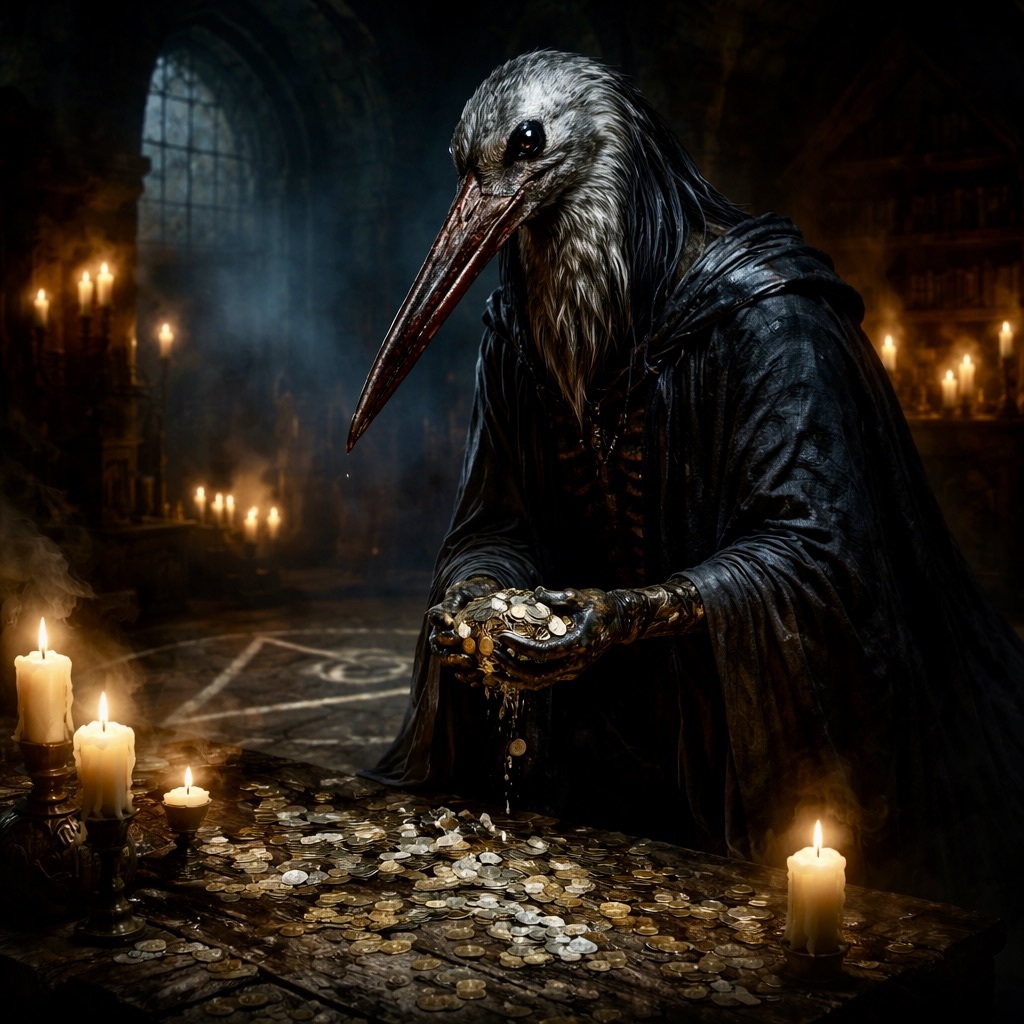
There is something uniquely unsettling about a demon who does not rage, does not roar, and does not promise kingdoms or forbidden love—but instead slips quietly into the world to steal what you thought was secure. Shax is not the lord of fire or the master of storms. He is subtler than that. In the old grimoires, especially within the pages of the Lesser Key of Solomon, Shax appears as a Great Marquis of Hell, commanding thirty legions of spirits. His description is brief but chilling: he steals money from kings, carries it away to distant lands, and—perhaps most disturbingly—takes away sight, hearing, and understanding from those he deceives.

Unlike the grander figures of infernal mythology, Shax does not seduce through power. He destabilizes through absence. He removes. He subtracts. He empties vaults, clouds perception, and erodes certainty. In a world that values accumulation and clarity, Shax represents the terror of loss and confusion.

In the Ars Goetia, Shax is depicted as appearing in the form of a stork, speaking with a hoarse and subtle voice. The image itself is strange—why a stork? The stork has long associations with migration, distance, and silent observation. It stands motionless before striking with precision. That symbolism aligns perfectly with Shax’s reputation. He is not chaotic. He is deliberate. He waits. He watches. Then he takes.

Earlier references to Shax appear in the Pseudomonarchia Daemonum, compiled by Johann Weyer. Weyer’s work, though skeptical in tone, preserved many of the demonological hierarchies that later grimoires expanded upon. In these writings, Shax’s abilities are emphasized not as theatrical displays of hellfire but as calculated acts of theft and deception. He steals horses. He steals money. He removes hearing and sight unless constrained by ritual authority.

What makes Shax particularly compelling in modern interpretation is how psychological he feels. In medieval Europe, literal theft of treasure and livestock was catastrophic. To lose a horse meant losing transportation, livelihood, perhaps survival. To lose gold meant instability and disgrace. But to lose sight and hearing? That implied something more insidious: a stripping away of perception itself. In a symbolic sense, Shax embodies cognitive distortion. He clouds judgment. He fosters misunderstanding. He makes people certain of falsehoods.

If one reads between the lines of the old texts, Shax is not merely a supernatural burglar; he is the archetype of misdirection. He is the voice that convinces a king his treasury is secure while quietly emptying it. He is the influence that assures someone they see clearly when, in fact, they have been blinded by their own assumptions.

The rituals associated with summoning Shax in the grimoires are precise and cautious. Practitioners are warned that he is deceptive and may lie unless constrained within a proper magical triangle. This emphasis on containment speaks volumes. Even within demonological systems—where manipulation is expected—Shax is flagged as particularly unreliable. He does not simply obey; he misleads. He promises what he does not intend to deliver.

This trait distinguishes him from demons whose domains are more transactional. Shax is not a straightforward bargain-maker. He is closer to a trickster. His power lies in exploiting trust. In that sense, he reflects a universal human anxiety: the fear that what we rely upon—our senses, our savings, our understanding—can quietly vanish.

There is also an economic undertone to Shax’s mythology that feels strikingly modern. The idea of wealth disappearing into distant lands echoes contemporary concerns about financial instability, hidden transactions, and unseen hands manipulating markets. In the medieval imagination, that uncertainty became personified. It became Shax. Rather than abstract systems, people envisioned a marquis of Hell quietly relocating riches across borders.

And yet, like many Goetic spirits, Shax is not entirely malevolent in all interpretations. When properly commanded, he is said to reveal hidden things and return stolen goods. That duality is fascinating. The same force that obscures can clarify. The same entity that steals can restore. It suggests that Shax’s domain is not merely theft, but the control of access. He governs who sees and who does not, who possesses and who loses.

From a psychological lens, Shax can be understood as the embodiment of internal sabotage. We all experience moments when clarity vanishes. We misplace important things. We misunderstand people we love. We act against our own interests. The medieval world externalized those experiences into demons. Shax became the explanation for the inexplicable loss, the sudden confusion, the inexplicable drain of resources.

The stork form adds another layer of symbolism. Storks migrate great distances, disappearing with the seasons and returning without warning. They are creatures of transition. To envision Shax as a stork suggests movement—wealth traveling, perception shifting, certainty migrating away. The hoarse voice described in the grimoires evokes something whispering at the edge of awareness, not commanding but suggesting.

There is something deeply unsettling about a demon who does not need spectacle. Shax operates in quiet erosion. He undermines foundations without dramatic collapse. By the time you notice, the vault is empty. The senses are dulled. The understanding is gone.

And yet, perhaps that is precisely why Shax endures in modern occult discussions. He represents an anxiety that has never faded. We fear losing what we cannot immediately replace. We fear being deceived without realizing it. We fear blindness more than darkness, because blindness implies something has been taken.

In contemporary demonology circles, Shax is sometimes approached as a spirit of revelation through inversion. By confronting the archetype of loss, practitioners seek to sharpen awareness. If Shax clouds understanding, then awareness becomes the defense. If Shax steals wealth, then vigilance becomes the shield. In this way, the demon becomes a mirror—reflecting our vulnerabilities.

Whether one interprets Shax as literal spirit, psychological archetype, or symbolic narrative, his presence in the Goetia stands as a reminder of fragility. Wealth can disappear. Perception can falter. Certainty can dissolve. The medieval magicians who wrote of him were not merely cataloging monsters; they were articulating fears that remain painfully relevant.

Shax is not the loudest name in demonology. He does not command legions of pop culture fascination like Lucifer or Asmodeus. But there is something more intimate about him. He lingers in the spaces where confidence meets complacency. He waits where assumption replaces scrutiny.

And perhaps that is why his legend persists. Because somewhere, in every era, someone opens a ledger and finds it lacking. Someone realizes too late that they misunderstood what stood before them. Someone discovers that what they trusted has quietly slipped away.

Shax is the whisper that precedes that discovery.

Related Posts

The Demon King Who Commands Storms, Topples Empires, and Reveals Hidden Truths

Dave

There are demons in grimoires who whisper, demons who tempt, demons who deceive, and then there are those whose presence feels less like a secret and more like a natural disaster. Vine belongs firmly to the latter category. Among the seventy-two spirits cataloged in the Ars Goetia, Vine stands apart not merely because of rank—though he is counted among kings and earls—but because of what he represents. Vine is not subtle corruption or quiet manipulation. Vine is upheaval. Vine is force. Vine is revelation delivered with thunder rather than suggestion.

To understand Vine is to step into the worldview of medieval demonology itself, where spiritual entities were believed to influence the physical world directly. These spirits were not abstract metaphors to those who recorded them; they were intelligences capable of reshaping fate, altering perception, and even influencing war and weather. Vine’s domain reflects this belief perfectly. He is described as commanding storms, discovering hidden things, destroying walls, and revealing enemies—powers that blur the boundary between supernatural insight and catastrophic intervention.

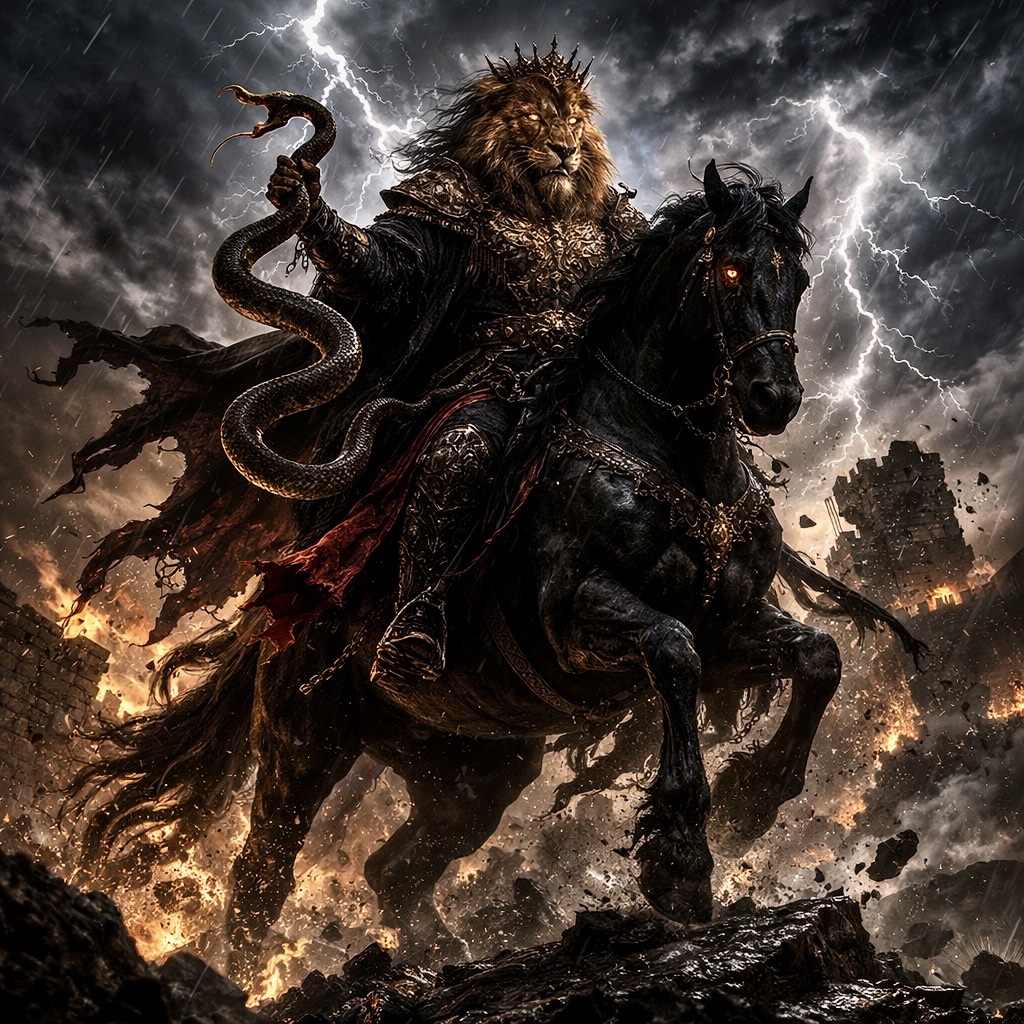
In traditional descriptions drawn from seventeenth-century occult manuscripts, Vine appears as a lion riding upon a black horse while holding a serpent in his hand. The imagery is striking and deliberate. Every element communicates authority and danger. The lion symbolizes dominance and sovereignty, the black horse evokes unstoppable momentum, and the serpent suggests knowledge—particularly knowledge that coils beneath appearances waiting to strike. Vine is not chaos for chaos’s sake. He represents controlled devastation, destruction guided by awareness.

The grimoires classify him as both King and Earl of Hell, commanding thirty-six legions of spirits. Titles in demonology were never ornamental. They reflected hierarchy modeled after earthly monarchies, suggesting that infernal realms mirrored human political structures. Kings commanded strategy. Earls oversaw execution. Vine therefore occupies a fascinating dual role: planner and enforcer, intelligence gatherer and battlefield commander. His abilities reinforce this interpretation. He reveals hidden things, exposes sorcerers, uncovers secrets, and protects or destroys fortifications depending on the will of the summoner.

What makes Vine especially compelling is how closely his mythology aligns with humanity’s ancient fear of unseen threats. Across history, civilizations have worried less about visible enemies than concealed ones—betrayal, espionage, conspiracy, hidden intentions. Vine becomes the supernatural answer to paranoia. Invoke him, the texts promise, and concealed truths will surface. Lies crumble. Enemies reveal themselves. The invisible becomes undeniable.

This association with revelation explains why Vine appears repeatedly in occult traditions concerned with knowledge rather than temptation. Unlike demons linked to pleasure or wealth, Vine’s power revolves around exposure. He forces reality into the open. In many ways, he resembles a cosmic investigator, albeit one whose methods involve storms and shattered defenses.

Storm imagery surrounding Vine deserves particular attention. Medieval thinkers viewed weather not as random but as morally or spiritually influenced. Tempests were interpreted as divine punishment or supernatural warfare. Vine’s ability to command storms therefore symbolized dominion over instability itself. Lightning and thunder represented sudden truth—the moment illusion ends. A storm strips away comfort. It reveals structural weakness. Roofs collapse, defenses fail, and what once seemed permanent proves fragile.

Psychologically, Vine embodies moments in human life when certainty collapses. Entire belief systems can crumble overnight under new information. Relationships dissolve after hidden truths emerge. Nations fall when secrets surface. Vine’s mythology reflects this universal experience: revelation often arrives violently.

The serpent he carries deepens this symbolism. In Western tradition, serpents occupy an ambiguous role—agents of wisdom and danger simultaneously. Knowledge liberates, but it also destroys innocence. Vine’s serpent suggests mastery over forbidden understanding. Those who sought him were rarely looking for pleasant truths. They wanted answers regardless of consequence.

Historical practitioners of ceremonial magic approached spirits like Vine with elaborate ritual protections. Circles were drawn, divine names invoked, and strict procedures followed. These rituals reveal something important about how Vine was perceived. He was not considered easily controlled. Summoners believed that without authority grounded in sacred power, the spirit’s destructive nature could overwhelm the operator. This fear underscores Vine’s character as a force rather than merely an entity.

Interestingly, Vine is also described as capable of building towers as well as destroying them. This duality mirrors the broader demonological principle that infernal powers reflect human intention. The same force that demolishes can construct. Storms devastate landscapes yet renew ecosystems. Fire destroys forests yet enables regrowth. Vine represents transformational energy—the breaking down required before rebuilding becomes possible.

Modern interpretations often frame such figures psychologically rather than literally. From this perspective, Vine becomes an archetype of disruptive awareness. Every person encounters moments when denial becomes impossible. Evidence accumulates. Truth intrudes. Internal defenses collapse much like the walls Vine is said to tear down. The experience can feel catastrophic, yet it frequently precedes growth.

Carl Jung’s exploration of shadow integration resonates strongly here. The shadow contains truths individuals avoid acknowledging about themselves. Encountering it is rarely gentle. It dismantles identity structures constructed around illusion. Vine’s mythology parallels this process almost perfectly: revelation, destruction of false defenses, emergence of hidden reality.

Even outside psychological interpretation, Vine’s legend speaks to humanity’s enduring fascination with power over uncertainty. Weather, war, betrayal, and secrecy remain among the most destabilizing aspects of existence. The promise of commanding such forces—even symbolically—holds immense appeal. Medieval magicians lived in unpredictable worlds shaped by disease, invasion, and political intrigue. A spirit capable of exposing enemies or controlling storms represented security in an insecure age.

Descriptions of Vine’s temperament vary, but many sources emphasize obedience when properly constrained. This reinforces the ritual worldview in which authority determines outcome. Power itself is neutral; intention shapes its manifestation. Vine does not inherently deceive or corrupt. He executes.

That neutrality distinguishes him from more manipulative demons. Vine does not seduce; he reveals. He does not persuade; he acts. The fear surrounding him arises from consequence rather than trickery. Truth uncovered cannot easily be hidden again.

The lion imagery reinforces regal inevitability. Lions do not negotiate dominance—they embody it. A lion riding a horse creates layered symbolism: raw strength directing momentum. The black horse often signifies death, war, or unstoppable advance in European symbolism. Together they portray authority moving forward with irreversible force.

One can imagine why Renaissance occultists found Vine compelling. Europe during this period experienced religious upheaval, scientific discovery, and political revolution. Old certainties shattered rapidly. Figures like Vine symbolized both terror and empowerment amid transformation. Knowledge expanded faster than tradition could contain it. Entire worldviews were under siege.

Interestingly, Vine’s powers include discovering witches and sorcerers. This reflects anxieties of the era when accusations of hidden magical influence were widespread. The idea of a spirit revealing secret practitioners mirrors societal obsession with identifying concealed threats. Demonology often acted as a mirror reflecting collective fears rather than inventing them.

In contemporary culture, Vine’s symbolism remains surprisingly relevant. Modern societies grapple with misinformation, concealed agendas, and unseen systems shaping daily life. Data breaches, hidden algorithms, intelligence operations—all echo ancient fears of invisible influence. Vine becomes an archetype of exposure within an information age defined by secrecy and revelation.

The destructive aspect of his mythology also carries philosophical weight. Structures—whether psychological, social, or political—often resist change until external pressure forces collapse. Vine represents that pressure. He is the storm that arrives when stagnation persists too long.

Some occult traditions suggest that working with Vine required clarity of purpose above all else. Ambiguous intent could produce unintended outcomes. This aligns with broader magical philosophy emphasizing alignment between desire and action. To summon revelation without readiness for truth invites chaos.

The enduring fascination with figures like Vine reveals something deeply human. People simultaneously crave truth and fear it. We seek clarity yet construct elaborate defenses against uncomfortable realities. Vine’s legend dramatizes this tension. He is both liberator and destroyer because truth itself holds both qualities.

Stories surrounding Vine often emphasize dramatic manifestation—violent winds, sudden insight, overwhelming presence. Whether literal or symbolic, these descriptions capture how transformative realization feels. Life rarely changes gradually at moments of profound understanding. Instead, perception shifts abruptly, like thunder breaking silence.

Across centuries, demonology has functioned as a language for grappling with forces beyond control. Vine’s association with storms situates him among humanity’s oldest fears. Before meteorology, storms represented divine or infernal will. Their unpredictability mirrored existence itself. By personifying storms in a being like Vine, people imposed narrative upon chaos.

Yet Vine is not merely destruction incarnate. His ability to build suggests mastery over transition. Creation frequently follows collapse. Old walls must fall before new structures rise. In this sense, Vine embodies necessary endings—the difficult transformations enabling renewal.

Artists and occult scholars continue to reinterpret Vine through modern lenses, depicting him as a sovereign of revelation rather than a monster. This shift reflects changing attitudes toward darkness and knowledge. What earlier ages feared as demonic disruption may now be understood as confrontation with truth.

Even skeptics can appreciate the symbolic richness of Vine’s mythology. Whether viewed as literal spirit, psychological archetype, or cultural artifact, he encapsulates a universal experience: the moment when hidden reality breaks through illusion and demands acknowledgment.

Perhaps that explains why Vine persists in occult imagination while lesser spirits fade into obscurity. He represents something fundamental. Empires collapse when truths emerge. Personal identities transform when denial ends. Storms arrive regardless of preparation.

And when they pass, the landscape—internal or external—is never quite the same.

Vine stands therefore not simply as a demon king of infernal hierarchy, but as a narrative embodiment of revelation itself. He reminds humanity that knowledge carries consequence, that power disrupts stability, and that truth rarely arrives quietly. In mythic form, he asks an unsettling question: if every hidden thing were revealed, what structures in our lives would survive the storm?

The answer, as generations of occultists suspected, may be both terrifying and liberating.

Related Posts

Bifrons the Demon: Grave-Walker of the Dead, Master of Astrology, and Keeper of Forbidden Knowledge

Dave

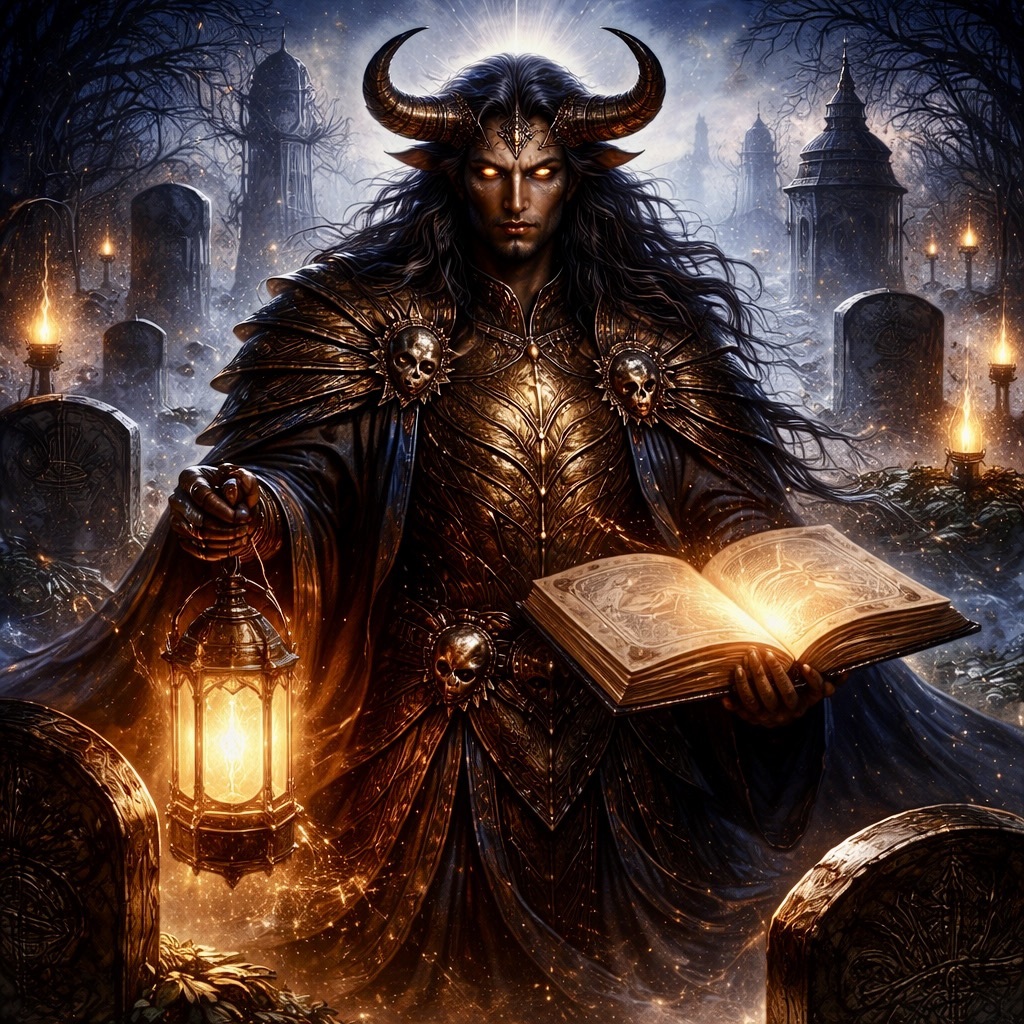
Bifrons is a demon whose power is inseparable from memory, place, and what lingers after life has moved on. In the Ars Goetia, he is named as an Earl of Hell, commanding legions and appearing first as a monstrous figure before assuming a human form. Yet the descriptions of his appearance matter far less than the territories he governs. Bifrons rules over cemeteries, tombs, and the knowledge bound to the dead. He moves bodies from one grave to another, lights phantom candles over burial grounds, and teaches astrology, geometry, and the sciences with an authority that suggests long familiarity with time itself. Bifrons is not a demon of death. He is a demon of what death leaves behind.

To understand Bifrons, one must understand the significance of the grave in human consciousness. Graves are not merely places of disposal. They are markers of memory, respect, fear, and unfinished business. Bifrons inhabits this space with ease. He governs the transition between being remembered and being forgotten. His power does not lie in killing, but in repositioning what has already ended.

One of the most striking aspects of Bifrons is his association with moving the dead. In demonological texts, he is said to shift bodies from one place to another and light candles over graves. This is not mindless desecration. It is recontextualization. To move a body is to change its story, its ownership, its meaning. Bifrons understands that where something rests determines how it is interpreted. Graves are narratives carved into earth.

The candles Bifrons lights are deeply symbolic. Light in darkness has always represented awareness, remembrance, and the refusal of oblivion. These are not comforting lights. They do not guide the living safely home. They illuminate what people prefer not to see. Under Bifrons, the dead are not silent. They are present.

Bifrons is also a teacher of sciences, particularly astrology and geometry. This pairing is deliberate. Geometry defines space. Astrology defines time and influence. Together, they create structure. Bifrons understands that death is not random. It occupies coordinates. It occurs within systems. He teaches how to read those systems without sentimentality.

Unlike demons who manipulate desire or fear, Bifrons manipulates context. He alters how events are situated in memory. He teaches that meaning is not fixed, even after death. This makes him deeply unsettling. People take comfort in the idea that the dead are settled, that their stories are complete. Bifrons denies that comfort.

When Bifrons assumes human form, he is described as knowledgeable, composed, and authoritative. There is no frenzy in his presence. He does not mourn. He does not celebrate. He catalogues. He understands that death is not the end of influence. It is the beginning of a different kind of impact.

As an Earl, Bifrons holds authority over territories rather than doctrines. His domain is physical and symbolic ground. Cemeteries, borders between past and present, places where time layers upon itself. He does not rule people directly. He rules what they remember and how they remember it.

Psychologically, Bifrons represents the human inability to fully let go. He is the demon of unresolved memory, of history that refuses to stay buried. He appears wherever the past intrudes upon the present with unanswered questions, unacknowledged truths, or inconvenient facts.

Bifrons’ knowledge of astrology reinforces this role. The stars, like the dead, are distant yet influential. They are not active participants in daily life, yet their patterns shape interpretation. Bifrons understands long arcs, slow movements, and delayed consequences. He teaches how the past continues to exert pressure long after its origin is forgotten.

The act of moving bodies under Bifrons can also be understood metaphorically. He relocates ideas, narratives, and identities once thought settled. Under Bifrons, nothing stays where it was placed simply because it was placed there. This makes him a demon of revision, not erasure.

Unlike demons associated with cruelty, Bifrons is emotionally neutral. He does not torment the dead. He repositions them. He does not frighten the living directly. He unsettles them by reminding them that closure is often an illusion.

In modern symbolic terms, Bifrons feels like historical revision, forensic archaeology, and the reopening of cold cases. He is present wherever remains are exhumed, records reexamined, and accepted stories challenged. Bifrons does not invent new facts. He changes their placement.

His lighting of candles is especially evocative. Candles burn slowly, deliberately, and visibly. They require attention. Under Bifrons, memory demands energy. If you ignore it, it still burns. If you confront it, it still burns. There is no neutral position.

Bifrons also teaches geometry, suggesting an obsession with boundaries, dimensions, and orientation. Graves are geometric. They are measured, aligned, and ordered. Bifrons understands how order is imposed on chaos, and how easily that order can be rearranged.

There is an implicit warning in Bifrons’ lore. What is buried without understanding will resurface without permission. Moving something does not remove its weight. It merely changes where that weight is felt. Bifrons enforces this truth relentlessly.

In demonology, Bifrons is not described as treacherous or violent. He is described as effective. He does what he governs thoroughly. He does not forget. He does not abandon tasks halfway. This makes him more terrifying than demons of impulse.

Bifrons endures because memory endures. Every society builds monuments, cemeteries, archives, and histories. Over time, these structures crack. Bifrons governs what emerges from those cracks.

To engage with Bifrons symbolically is to accept that the past is not inert. It shifts, reasserts itself, and demands reevaluation. He does not allow history to rest comfortably.

Bifrons is the demon of illuminated graves, of knowledge retrieved from silence, of truths that refuse to remain where they were placed.

Related Posts

Uvall (Vual): The Diplomatic Demon Who Bends Loyalties, Forges Alliances, and Makes Enemies Speak as Friends

Dave

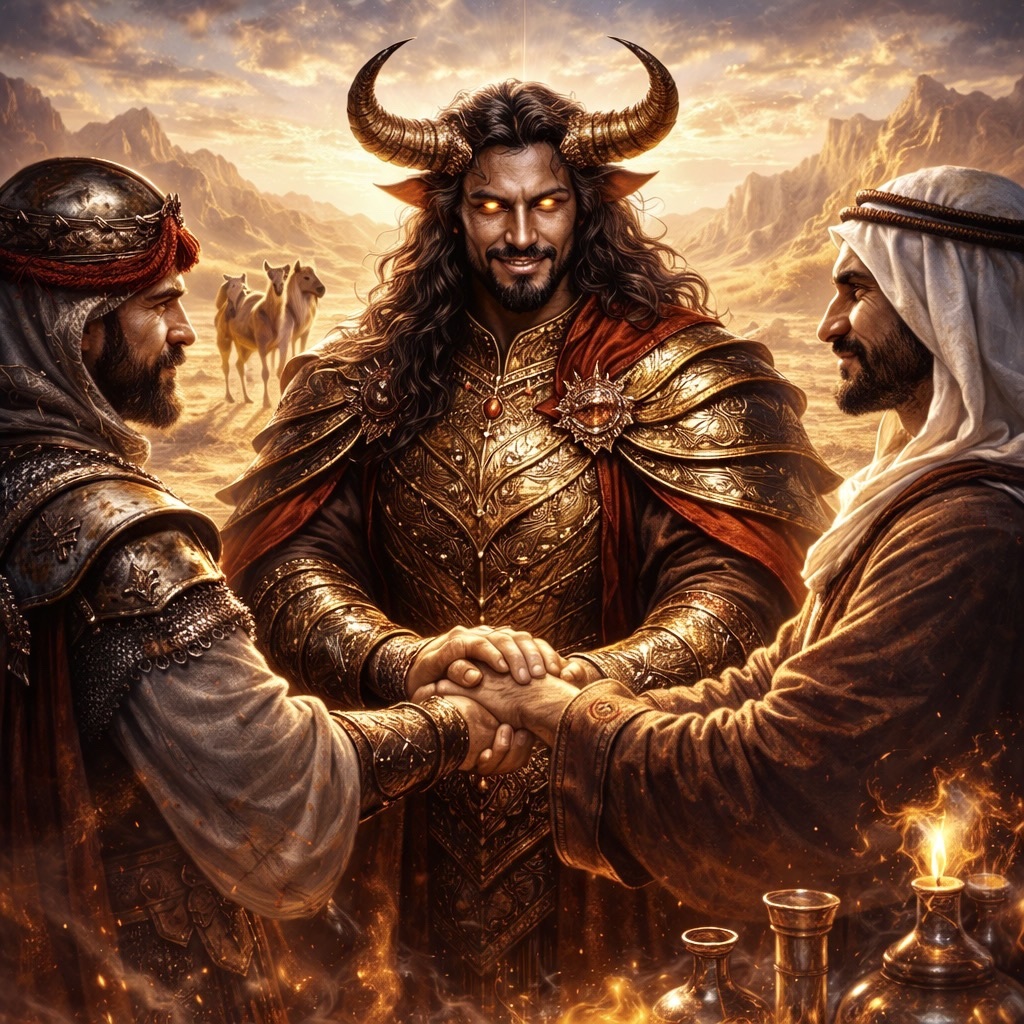
Uvall, also known as Vual, is not a demon of violence, spectacle, or terror. He is far more dangerous than that. He is a demon of agreement. In the Ars Goetia, Uvall is named as a Great Duke of Hell, commanding legions and appearing first as a mighty dromedary before assuming human form. This is not an intimidating image in the conventional sense, and that is precisely the point. Uvall does not conquer through fear. He conquers through conversation.

The camel form attributed to Uvall is deeply symbolic. Camels are creatures of endurance, trade, and long-distance survival. They move slowly but relentlessly, carrying valuable goods across hostile terrain. Uvall embodies this same principle in social and political space. He governs negotiation, persuasion, and the slow reshaping of relationships over time. His power is not immediate, but it is persistent.

Uvall is best known for his ability to procure the love and friendship of both allies and enemies. This ability is often misunderstood as charm or manipulation, but it is something subtler. Uvall does not overwrite free will. He redirects it. He understands what people want to hear, what they fear losing, and what they hope to gain. He speaks to incentives rather than emotions.

In demonology, Uvall is said to reveal the thoughts of enemies and bring about reconciliation, even between opposing sides. This makes him one of the most politically potent demons in the Goetia. He does not need to destroy an enemy if he can neutralize them through understanding or alliance. Under Uvall, conflict becomes conversation, and conversation becomes leverage.

When Uvall takes human form, he is described as persuasive, articulate, and socially adept. There is nothing monstrous about him. That normality is part of his threat. Uvall does not stand out in a room. He blends in, listens carefully, and speaks at exactly the right moment. His influence often goes unnoticed until outcomes are already decided.

Psychologically, Uvall represents the power of social intelligence. He is the demon of reading the room, of sensing shifts in tone, of understanding when to press and when to yield. He does not dominate discussions. He guides them. This makes him especially effective in environments where open force would fail.

Uvall’s domain over friendship is not sentimental. Friendship under Uvall is strategic. It is alliance. It is mutual benefit disguised as goodwill. This does not mean it is false. It means it is conditional. Uvall understands that most human relationships are transactional at some level, whether acknowledged or not.

One of Uvall’s most unsettling attributes is his ability to make enemies friendly without erasing their memory of conflict. He does not rewrite history. He reframes it. Under Uvall, former enemies do not forget why they opposed each other. They simply decide that cooperation is now more advantageous than hostility.

In occult warnings, Uvall is not described as treacherous, but he is described as influential. This distinction matters. He does not betray agreements lightly. He constructs them carefully. Once bonds are formed under Uvall, breaking them carries consequences, not because of punishment, but because of exposure. Uvall knows what everyone promised.

The dromedary symbolism also reinforces patience. Uvall is not the demon of quick deals or impulsive alliances. He understands that trust takes time to build and moments to destroy. His influence grows slowly, often invisibly, until it becomes structural.

In modern symbolic terms, Uvall feels strikingly contemporary. He resembles diplomats, negotiators, lobbyists, and power brokers who shape outcomes without appearing on the battlefield. He is the demon of soft power, of influence exercised through relationships rather than force.

Uvall’s rank as a Duke suggests authority over regions rather than empires. He governs zones of interaction: borders, trade routes, alliances, and negotiations. He does not rule absolutely. He coordinates.

Unlike demons associated with deception, Uvall does not rely on lies. He relies on selective truth. He knows which facts to emphasize and which to leave unsaid. This is not dishonesty in the crude sense. It is framing. And framing is often more powerful than falsehood.

Uvall also understands reputation. He knows how individuals are perceived and how those perceptions can be adjusted subtly. A rumor softened here, a compliment placed there, a concession remembered at the right moment. Under Uvall, social capital becomes currency.

There is a quiet danger in Uvall’s gifts. When conflicts are smoothed over too efficiently, underlying issues can remain unresolved. Uvall does not guarantee harmony. He guarantees cooperation. These are not the same thing.

Psychologically, Uvall represents the human desire to avoid open conflict, even when conflict might be necessary. He is the voice that says, “Let’s find common ground,” sometimes wisely, sometimes at the cost of truth. Uvall does not judge which outcome occurs.

Uvall endures in demonology because societies depend on agreement to function. Laws, alliances, and institutions all rest on negotiated consent. Uvall personifies the force that keeps those negotiations moving.

To engage with Uvall symbolically is to accept that power often flows through relationships rather than weapons. He teaches that influence does not need to be loud to be effective.

Uvall is not the demon of peace. He is the demon of accord. And accord, once achieved, can reshape the world without ever drawing blood.

Related Posts

Haagenti: The Alchemical Demon Who Turns Corruption Into Wisdom and Chaos Into Form

Dave

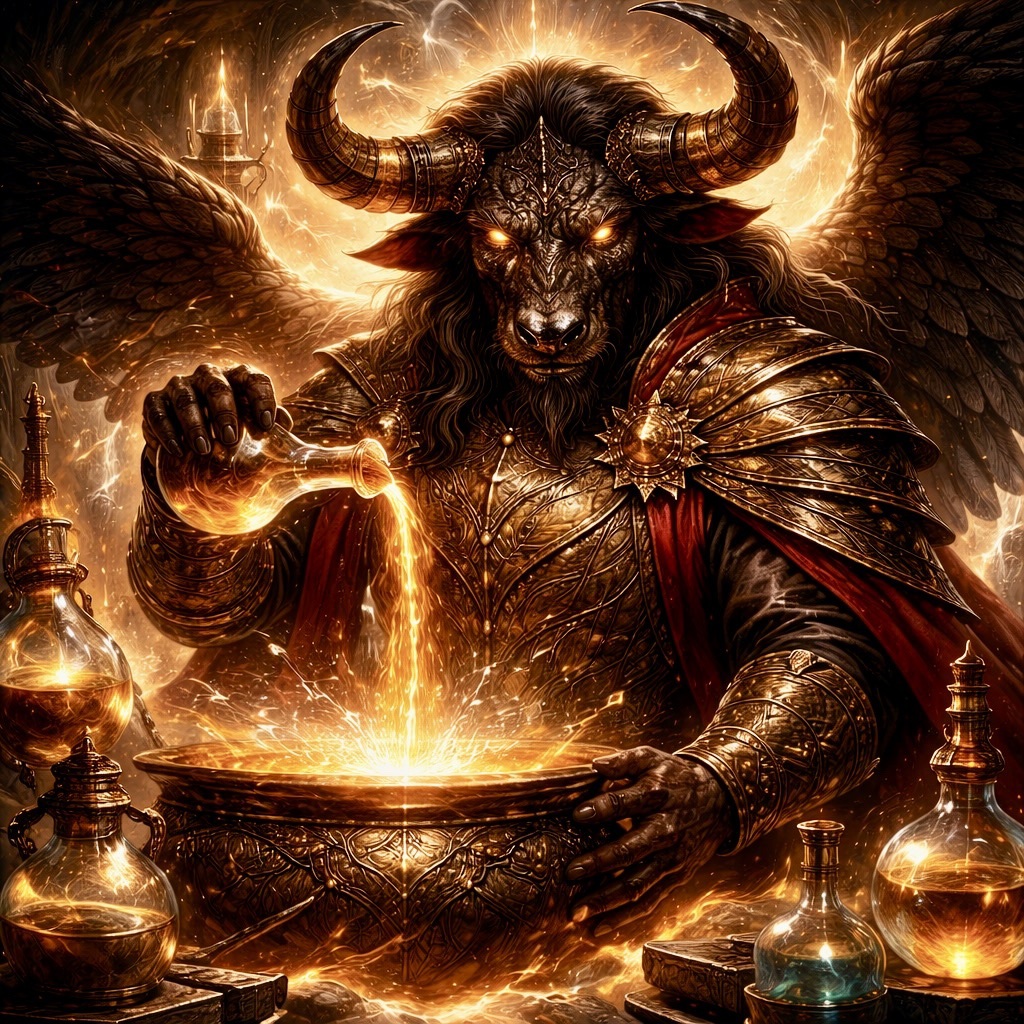
Haagenti is a demon whose reputation rests not on destruction, terror, or domination, but on transformation. In the Ars Goetia, he is listed as a Great President of Hell, commanding legions and appearing first in the form of a bull with the wings of a griffin, before assuming a human shape. This image means everything. Haagenti is not a demon who ends things. He is a demon who changes them, often irreversibly, and almost never gently.

At his core, Haagenti governs alchemy, transmutation, and the refinement of what has already been damaged. He does not create purity. He creates usefulness. This distinction defines his entire character. Where other demons promise power through destruction or deception, Haagenti promises power through conversion. He takes what is broken, corrupted, or raw and reshapes it into something effective.

The bull form attributed to Haagenti is a symbol of stubborn force, endurance, and raw material. Bulls are not subtle animals. They are strength without finesse, power without refinement. The griffin wings add the missing element: elevation, intellect, and command over perspective. Haagenti’s true nature exists at the intersection of brute matter and refined purpose. He does not deny the crude origins of things. He improves them.

Haagenti is most famously associated with turning metals into gold and wine into water or water into wine, but these acts are symbolic rather than literal. Alchemy has never truly been about materials alone. It has always been about process. Haagenti teaches how to take something flawed and render it valuable, not by pretending it was never flawed, but by working through its defects.

This is why Haagenti is deeply unsettling. He does not reject corruption. He incorporates it. Under Haagenti, mistakes are not erased. They are repurposed. Weakness becomes leverage. Failure becomes instruction. He does not promise redemption. He promises adaptation.

When Haagenti takes human form, grimoires describe him as composed, articulate, and unsettlingly calm. There is no urgency in his presence. Alchemy takes time. Transformation requires patience. Haagenti does not rush outcomes. He allows processes to complete, even when they are uncomfortable to witness.

As a President, Haagenti governs systems rather than individuals. He is interested in how things function once transformed. He does not care about moral purity. He cares about results. This makes him attractive to those who feel damaged, compromised, or irreversibly altered by experience. Haagenti does not judge that damage. He asks how it can be used.

Psychologically, Haagenti represents the human capacity to metabolize hardship. He is the force behind resilience that does not romanticize suffering but refuses to waste it. Under Haagenti, pain is not sacred. It is instructive.

Haagenti’s association with wisdom is often misunderstood. The wisdom he grants is not philosophical insight or moral clarity. It is operational wisdom. Knowing what works, what fails, and why. Haagenti teaches discernment born of experience, not theory.

Unlike demons who manipulate illusion, Haagenti deals in reality. He does not hide what something was. He shows what it can become. This makes him dangerous to idealists and comforting to pragmatists. Haagenti does not promise perfection. He promises improvement.

The alchemical symbolism surrounding Haagenti also emphasizes containment. Alchemy requires vessels, boundaries, and control. Without structure, transformation becomes explosion. Haagenti understands this deeply. Change without discipline is destruction. He teaches how to apply pressure without collapse.

In modern symbolic terms, Haagenti feels strikingly contemporary. He resembles systems that take waste and turn it into fuel, trauma into motivation, error into iteration. He is the demon of optimization after failure.

Haagenti is also associated with instruction. He teaches willingly, but without sentiment. Those who learn from him often find that their illusions about themselves do not survive the process. Haagenti is not cruel, but he is unsparing.

There is an implicit warning in Haagenti’s lore. Not everything should be transformed. Some things, once refined, become more dangerous than they were before. Haagenti does not prevent this outcome. He facilitates it. Transformation amplifies potential, for better or worse.

The bull-griffin imagery reinforces this duality. Power and intellect together create efficiency. Efficiency without ethics is hazardous. Haagenti does not pretend otherwise.

Haagenti’s endurance in demonology comes from a simple truth: humans are never finished. They are always becoming something else. Some changes destroy. Others refine. Haagenti governs that line.

To engage with Haagenti symbolically is to accept that who you are now is raw material, not a final product. He does not care how you arrived here. He cares what can be done next.

Haagenti is the demon of transformation without apology, of improvement stripped of moral comfort, of alchemy practiced on lives rather than metals.

Related Posts

Crocell: The Cold Duke Who Commands Hidden Waters, Celestial Music, and the Silence Beneath Truth

Dave

Crocell is a demon defined not by fire or fury, but by cold clarity. Among the spirits of the Ars Goetia, he stands apart as a figure whose power flows quietly, persistently, and without spectacle. Listed as a Great Duke of Hell, Crocell appears initially as an angel, speaking of hidden waters, the nature of springs, and the mysteries of sound itself. This combination of imagery—angelic form, cold waters, and celestial music—creates a figure that feels almost contradictory, and that contradiction is precisely where Crocell’s power resides.

Crocell governs what lies beneath surfaces. Not secrets in the dramatic sense, but structures that quietly sustain or undermine everything above them. Water is his primary symbol, and water does not shout. It erodes, supports, freezes, and preserves. Crocell understands the mechanics of depth. He knows how currents move unseen, how pressure builds silently, and how collapse often begins far below where anyone is looking.

In demonology, Crocell is said to speak truly of the creation of the world, of waters both natural and supernatural, and of the sound that fills the heavens. This is not poetic metaphor. Crocell is concerned with resonance—how vibration moves through matter, how sound carries meaning, and how knowledge spreads without announcing itself. His domain is not persuasion. It is inevitability.

The angelic form attributed to Crocell is deeply unsettling once understood. Angels are associated with order, message-bearing, and divine structure. By appearing this way, Crocell blurs the boundary between infernal and celestial knowledge. He does not present himself as a corrupter. He presents himself as a recorder. He does not lie. He explains.

Crocell’s waters are often described as cold, deep, and hidden. These are not rivers or rain. They are subterranean flows, aquifers beneath civilizations, seas that preserve and crush in equal measure. Cold water slows movement. It numbs reaction. Crocell’s influence is similar. He removes emotional heat from situations, leaving only structure and consequence.

One of Crocell’s most intriguing attributes is his association with sound, particularly celestial or angelic music. This music is not entertainment. It is structure. In many traditions, the universe itself is described as vibration, harmony, or frequency. Crocell governs that underlying rhythm. He does not create noise. He reveals pattern.

Unlike demons who manipulate desire or fear, Crocell influences understanding by removing distortion. He chills emotion until clarity becomes unavoidable. This makes him dangerous not because he deceives, but because he refuses to comfort. Under Crocell, truth feels stark, echoing, and unavoidable.

Crocell’s rank as a Duke suggests authority over territory and systems rather than individuals. He governs environments of knowledge: how information flows, where it pools, and how it freezes into certainty. He does not chase followers. He waits for systems to reach pressure points.

Psychologically, Crocell represents the part of the human mind that seeks calm explanation after chaos. He is the demon of post-crisis clarity, the moment when adrenaline fades and reality asserts itself. He does not intervene during disaster. He explains it afterward.

Crocell’s connection to hidden waters also links him to memory. Water preserves. Cold preserves especially well. Crocell governs what is remembered accurately rather than emotionally. Under Crocell, events are stripped of narrative and recorded as they occurred.

In modern symbolic terms, Crocell feels like deep data analysis, climate systems, and long-term consequences. He is the demon of slow variables, of changes that take years to manifest but reshape everything. Crocell is not interested in immediacy. He governs endurance.

Unlike demons associated with madness or illusion, Crocell is associated with sobriety. His presence is calming in a way that can feel ominous. There is no panic around Crocell. Panic requires heat. Crocell brings cold.

Crocell’s knowledge of sound also implies knowledge of communication beyond words. Vibrations travel through water faster and farther than through air. Crocell understands how information moves through environments unnoticed. This makes him a demon of indirect influence. He does not speak loudly. He resonates.

The angelic appearance reinforces this neutrality. Crocell does not announce himself as enemy or ally. He presents information. What is done with that information is not his concern. This indifference is unsettling. It mirrors natural forces that reshape civilizations without intent.

Crocell is often associated with teaching sciences, particularly those related to natural phenomena. But like Vapula, his teaching is not guided by ethics. Crocell does not ask whether knowledge should be used. He assumes it will be.

In demonological warnings, Crocell is not described as treacherous or violent. He is described as convincing. His explanations feel complete. His logic feels airtight. Under Crocell, doubt dissolves—not because questions are answered emotionally, but because systems are revealed.

Crocell’s waters also symbolize boundaries. Water separates lands, defines borders, and enforces limits. Crocell understands where things can exist and where they cannot. His influence is felt wherever limits are non-negotiable.

In narrative interpretation, Crocell represents the truth that comes after emotion has burned out. The cold assessment. The forensic reconstruction. The understanding that does not care how you feel about it.

Crocell endures in demonology because humans are uncomfortable with cold truth. We prefer narratives that assign blame, intent, or meaning. Crocell removes those comforts. He shows systems operating as systems.

To engage with Crocell symbolically is to accept explanation without consolation. He does not punish. He does not reward. He clarifies.

Crocell is the demon of depth, of resonance, of truth preserved in cold silence long after noise has faded.

Related Posts

Furcas: The Ancient Knight Who Teaches Philosophy, Judgment, and the Hard Discipline of Wisdom

Dave

Furcas is a demon who feels old in a way that has nothing to do with age and everything to do with endurance. Among the spirits of the Ars Goetia, he does not present himself as a monster of excess, flame, or terror. Instead, he appears as a stern, elderly man with a long beard, seated or standing with authority, holding a sharp weapon or staff. This imagery is deliberate. Furcas is not the demon of temptation or spectacle. He is the demon of accumulated understanding, of wisdom forged through repetition, error, and consequence.

In the Ars Goetia, Furcas is named as a Knight of Hell, commanding legions and teaching philosophy, rhetoric, logic, astronomy, astrology, chiromancy, and the art of judgment. His title alone sets him apart. Knights are not kings or dukes. They are enforcers of order, bound to codes, duty, and discipline. Furcas does not rule domains. He sharpens minds.

The aged appearance attributed to Furcas is central to his symbolism. Old age in demonology is not weakness. It is persistence. Furcas represents knowledge that has survived being tested, contradicted, and refined. He is not interested in novelty. He values what holds up under pressure. His wisdom is not inspirational. It is corrective.

Furcas teaches philosophy, but not as abstract debate. Under Furcas, philosophy is confrontation with reality. It is the discipline of asking uncomfortable questions and refusing comforting answers. Furcas does not teach how to feel wise. He teaches how to think clearly when wisdom is inconvenient.

Logic and rhetoric also fall under his domain, but again, not as tools for persuasion alone. Furcas understands how arguments are constructed, dismantled, and abused. He teaches how reasoning can be weaponized, and more importantly, how to recognize when it is being used dishonestly. Under Furcas, intelligence without integrity is exposed.

Judgment is one of Furcas’s most important attributes. Judgment is not opinion. It is evaluation informed by structure, evidence, and consequence. Furcas governs the moment when information must be weighed and a decision made, knowing that no outcome will be clean. He does not promise fairness. He promises clarity.

The weapon or staff Furcas carries is symbolic of enforcement. Knowledge, under Furcas, is not passive. It demands application. Once you understand something clearly, you are responsible for acting accordingly. Furcas does not allow ignorance as an excuse once insight has been granted.

Astrology and astronomy also belong to Furcas, but in a practical sense. He does not teach star-gazing for wonder. He teaches cycles, timing, and influence. Furcas understands that judgment improves when context is considered. Decisions made without awareness of timing and environment are incomplete.

Chiromancy, the reading of hands, fits naturally into Furcas’s domain. Hands are tools of action. They reveal labor, habit, injury, and adaptation. Furcas teaches how the body records choices long after the mind forgets them. Under Furcas, nothing is accidental. Everything leaves a trace.

Unlike demons who tempt through pleasure or fear, Furcas tempts through authority. He speaks with certainty earned rather than claimed. This makes him dangerous to the arrogant and humbling to the curious. Furcas does not flatter. He corrects.

Psychologically, Furcas represents the internal judge that develops with maturity. The voice that no longer excuses impulse, that demands accountability, that values restraint over indulgence. Furcas is not kind, but he is stabilizing. He strips away self-deception.

Furcas’s rank as a Knight is significant here. Knights serve causes larger than themselves. Furcas serves structure. He upholds disciplines that keep thought from collapsing into chaos. In this sense, Furcas is a guardian against intellectual decay.

In modern terms, Furcas feels like the embodiment of rigorous education. Not schooling as credential, but learning as discipline. He is present wherever standards matter, wherever reasoning is expected to withstand scrutiny, and wherever judgment carries real consequences.

Unlike demons associated with madness or illusion, Furcas is associated with sobriety. He does not distort reality. He clarifies it. This clarity can feel harsh. Furcas does not soften truths to preserve comfort. He does not adjust conclusions to spare feelings.

The aged appearance of Furcas also reflects patience. He does not rush conclusions. He observes patterns over time. This makes him deeply unsettling in a culture obsessed with speed. Furcas reminds us that wisdom takes time, and shortcuts are visible to those who know where to look.

Furcas’s teachings often leave people quieter rather than energized. Insight under Furcas does not inflate ego. It deflates it. He shows how little most people understand about the systems they judge confidently.

In demonological warnings, Furcas is not described as treacherous or cruel. He is described as severe. Severity here means uncompromising adherence to standards. Furcas does not bend principles to accommodate desire.

Symbolically, Furcas represents the cost of knowing better. Once you understand, you are accountable. There is no return to ignorance without dishonesty. Furcas enforces that boundary.

He endures in demonology because every culture eventually needs correction. When reasoning erodes and judgment collapses, systems fail. Furcas exists as the reminder that structure matters, discipline matters, and clarity is earned.

To engage with Furcas symbolically is to accept that wisdom is not gentle. It is earned through discomfort, discipline, and the willingness to be wrong.

Furcas is not the demon of inspiration. He is the demon of standards.

Related Posts

Balam: The Three-Headed King Who Sees Past, Present, and Future Without Mercy

Dave

Balam is a demon who does not bargain with uncertainty. In the Ars Goetia, he is named as a Great and Terrible King of Hell, commanding forty legions and appearing in one of the most unsettling forms in demonology: three heads—one of a man, one of a bull, and one of a ram—set upon a powerful body, with blazing eyes and the presence of something that has already seen the outcome. Balam does not speculate. He remembers the future.

What makes Balam distinct is not simply his monstrous form, but the function it serves. Each head represents a different mode of knowing. The human head is reason and articulation, the ability to explain what is seen. The bull represents raw strength, inevitability, and momentum—the force that carries events forward regardless of resistance. The ram represents will, stubborn direction, and the power of initiation. Together, they form a being that does not guess at fate but comprehends it from multiple angles at once.

Balam’s most feared ability is his knowledge of the past, present, and future. This is not prophecy in the poetic sense. It is not riddles or metaphors. Balam sees events as structures, not moments. He understands how causes lock into effects, how decisions narrow pathways, and how outcomes solidify long before people realize they are inevitable. To encounter Balam is to confront the idea that choice exists, but only within boundaries already drawn.

Unlike demons who manipulate through desire or fear, Balam manipulates through certainty. He can make a person invisible, not just physically, but socially—unnoticed, overlooked, erased from consequence. He can also grant sharp wit and insight, allowing someone to speak with devastating precision. These gifts are not comforts. They are tools for navigating a world whose outcomes Balam already understands.

Balam’s kingship matters. Kings in demonology are not merely powerful; they are final authorities within their domain. Balam does not influence fate. He governs knowledge of it. He does not need to change the future, because he knows which futures will survive resistance. This makes him profoundly unsettling. Resistance feels futile in his presence, not because he threatens it, but because he has already accounted for it.

The animal heads attributed to Balam are not random symbols of chaos. Bulls and rams have long been associated with sacrifice, cycles, and the exertion of will against limitation. These are not predators; they are forces. Balam is not a hunter. He is gravity.

In occult tradition, Balam is sought by those who want clarity without illusion. But clarity under Balam is brutal. Knowing the future does not grant control over it. Often, it strips away hope of changing it. This is why Balam is described as terrible. Not because he is cruel, but because he is honest in a way that leaves no escape.

Psychologically, Balam represents the fear that some outcomes are already locked in. The anxiety that no matter how much effort is applied, certain paths will not change. Balam does not create this fear. He confirms it. He is the demon of confirmation bias elevated to cosmic scale.

Balam’s ability to grant invisibility is deeply symbolic. Invisibility is not always protection. Sometimes it is irrelevance. To be unseen is to be spared, but also to be excluded. Balam understands when erasure is safer than presence. He does not frame this as kindness. It is efficiency.

His gift of wit is equally dangerous. Wit under Balam is not humor. It is surgical articulation. The ability to say exactly what needs to be said to collapse an argument, expose a weakness, or end a debate. This wit does not persuade. It concludes.

In modern terms, Balam resembles systems that predict outcomes with unsettling accuracy: models that forecast behavior, algorithms that anticipate decisions, trends that reveal inevitability before individuals are aware of them. Balam is the demon of predictive certainty.

What makes Balam endure in demonology is that humans crave certainty, even when certainty hurts. We want to know what will happen, even if knowing removes hope. Balam offers that knowledge without apology.

He does not guide. He informs. He does not protect. He reveals. Once Balam has shown you what lies ahead, the burden of action is yours alone.

Balam is the demon of the closed door you finally understand was never meant to open, the future that feels cruel only because it was always honest.

Related Posts

Alloces: The Armored Duke Who Masters War, Astrology, and the Brutal Mathematics of Power

Dave

Alloces is a demon who does not hide what he is. He arrives armored, mounted, and ready, a figure of open confrontation rather than subtle corruption. In the Ars Goetia, Alloces is named as a Great Duke of Hell, commanding legions and appearing as a soldier riding a griffin, his voice hoarse and commanding. There is no ambiguity in this imagery. Alloces is not a demon of temptation or illusion. He is a demon of force, structure, and the cold intelligence that governs conflict long before the first blow is struck.

The griffin that carries Alloces is one of the most telling symbols in demonology. A creature with the body of a lion and the head and wings of an eagle, the griffin represents dominance over both land and sky, strength fused with vigilance. This is not a beast of chaos. It is a guardian, a sentinel, a creature built to command territory. Alloces does not rely on surprise. He relies on superiority of position.

Alloces is associated with the sciences of astronomy and astrology, but in a way that differs sharply from demons who use celestial knowledge for prophecy or manipulation. Under Alloces, astrology is tactical. It is timing, positioning, and probability. He teaches how celestial cycles influence morale, momentum, and the rise and fall of power. This knowledge is not meant to inspire awe. It is meant to be used.

War is central to Alloces’s identity, but not in the romantic sense. He is not a demon of heroic battle or glorious conquest. He governs warfare as a system. Logistics, command structures, discipline, and timing all fall within his domain. Alloces understands that wars are rarely won by passion. They are won by preparation.

The soldier imagery attached to Alloces reinforces this. Soldiers represent obedience to hierarchy, endurance under pressure, and acceptance of consequence. Alloces is not interested in individual brilliance. He is interested in coordinated force. This makes him especially dangerous, because his power scales. One soldier becomes a unit. A unit becomes an army.

Alloces’s hoarse voice is an often-overlooked detail in grimoires, but it matters. A hoarse voice suggests commands shouted over noise, repeated until they lose softness. It is the voice of someone who has spoken authority into chaos for a long time. Alloces does not whisper. He issues orders that must be heard.

Unlike demons who tempt individuals, Alloces influences groups. He governs how people organize themselves for conflict, how leadership asserts itself, and how dissent is crushed or redirected. Alloces is not interested in persuasion. He is interested in compliance.

Astrology under Alloces is not mystical fatalism. It is environmental awareness. He teaches how larger cycles influence human behavior en masse. When morale rises, when fear spreads, when resistance weakens. Alloces reads these patterns and exploits them. He does not change the stars. He times his movements to them.

This makes Alloces deeply relevant to political and military history. Every successful campaign has depended on timing, discipline, and exploitation of weakness. Alloces personifies that calculus. He is not the cause of war. He is the intelligence behind it.

Psychologically, Alloces represents the part of the human mind that values order over empathy. The belief that stability requires force, and that force must be organized to be effective. Alloces does not enjoy violence. He accepts it as necessary.

Unlike demons associated with treachery, Alloces values loyalty within hierarchy. Betrayal weakens structure. Alloces punishes it not out of moral outrage, but because it undermines efficiency. Under Alloces, loyalty is not emotional. It is functional.

Alloces also teaches liberal sciences alongside warfare, suggesting that he values educated command. Strategy requires understanding, not brute instinct. Alloces does not glorify ignorance. He weaponizes knowledge.

In modern symbolic terms, Alloces resembles the machinery of organized power: militaries, security apparatuses, and systems that prioritize order over individual freedom. He is not cruel for cruelty’s sake. He is efficient, and efficiency is indifferent.

What makes Alloces unsettling is that he feels reasonable. His logic is coherent. His priorities make sense within their framework. And that is exactly why he is dangerous. He demonstrates how easily order becomes oppression when efficiency is valued above humanity.

Alloces’s rank as a Duke reinforces his role as a regional power rather than a supreme ruler. He governs theaters, not empires. Campaigns, not ages. This makes him a demon of decisive moments rather than eternal domination.

He endures in demonology because conflict endures. As long as humans organize to impose will, there will be forces that refine how that organization works. Alloces is not the scream of battle. He is the plan written before it begins.

To engage with Alloces symbolically is to confront the truth that power favors those who prepare, organize, and strike at the right time. He does not offer victory without cost. He offers understanding of why victory happens at all.

Alloces is the demon of armored certainty, of command given without apology, of stars consulted not for wonder, but for advantage. He does not ask if force should be used. He ensures that when it is used, it works.

Related Posts

Caim (Camio): The Demon Who Speaks in Every Voice and Knows the Truth Behind All Sounds

Dave

Caim, also known as Camio, is one of the most quietly unsettling figures in demonology, not because of violence or spectacle, but because of what he represents: the idea that nothing spoken is ever truly private, and no sound exists without meaning. In the Ars Goetia, Caim is listed as a Great President of Hell, commanding legions and appearing first as a thrush before assuming human form. This alone sets him apart. Where other demons arrive with fire, beasts, or weapons, Caim arrives as a voice.

The thrush is not a random choice. Thrushes are known for their complex songs, their ability to mimic, repeat, and vary sound with precision. They do not merely sing; they communicate layers. In this form, Caim embodies the raw mechanics of language before it becomes intention. He represents sound as information, stripped of emotion but heavy with implication.

When Caim takes on human form, he is described as sharp-featured, articulate, and disturbingly composed. He speaks clearly, answers questions precisely, and understands the language of all creatures, living and dead. But Caim does not merely translate. He interprets. He reveals what voices are actually saying beneath what they intend to say.

Caim’s domain is knowledge gained through sound: speech, whispers, animal calls, and even the voices of spirits. He teaches grammar, rhetoric, and logic, but not as academic exercises. Under Caim, language is power infrastructure. Words build realities. Tone shifts outcomes. Silence communicates as forcefully as speech. Caim understands all of it.

What makes Caim dangerous is that he removes the illusion that communication is controllable. Humans believe they choose what they reveal through words. Caim knows better. He hears what leaks through hesitation, rhythm, pitch, and pause. He hears fear in confidence and doubt in certainty. Under Caim, language betrays its speaker.

Unlike demons associated with deception, Caim does not lie. He listens. This makes him profoundly unsettling. Lies require intention. Sound does not. It carries information whether you want it to or not. Caim governs that inevitability.

Caim is also said to answer questions truthfully, but often in ways that feel incomplete or indirect. This is not evasion. It is fidelity to how information actually works. Truth is rarely clean. It arrives fragmented, contextual, and dependent on interpretation. Caim refuses to simplify it for comfort.

In psychological terms, Caim represents the anxiety of being heard too clearly. He is the demon of the moment when you realize your words have revealed more than you meant, and that someone understands you better than you understand yourself. He does not exploit this immediately. He simply knows.

Caim’s association with animals is crucial. Animals communicate without abstraction. Their sounds are functional, honest, and immediate. By understanding animal speech, Caim occupies a space beyond moral language. He hears intent without justification. This makes him immune to rhetoric and persuasion.

As a President, Caim governs systems of interpretation rather than force. He controls how meaning is extracted, not how action is enforced. This makes him especially powerful in environments built on negotiation, testimony, and narrative control. Caim does not dominate the room. He defines what the room actually said.

In modern terms, Caim feels eerily familiar. He resembles systems that analyze speech patterns, sentiment, subtext, and tone. He is the demon of transcripts that reveal more than recordings, of analysis that exposes intent behind phrasing. Caim does not need to guess. He hears it.

Caim’s wisdom is often mistaken for omniscience. It is not. It is attentiveness. He listens fully. In a world that speaks constantly and listens rarely, this alone is a form of dominance.

There is also a deep discomfort in Caim’s silence. He does not interrupt. He does not react. He absorbs. When he finally speaks, it is usually to clarify what was already said, not to add something new. This is why his answers feel devastating. They are mirrors.

Caim’s bird form reinforces this. Birds observe from above, listening before acting. They are present without engagement. Caim’s knowledge accumulates passively, then crystallizes suddenly.

In demonological warnings, Caim is not portrayed as overtly hostile. He is portrayed as exacting. Those who speak carelessly around him regret it. Not because he punishes them, but because he remembers.

Caim also understands the voices of the dead, suggesting that sound persists beyond life in some form. Memory speaks. History murmurs. Caim hears those echoes. He knows what has been said long after speakers are gone.

Symbolically, Caim represents the permanence of communication. Words cannot be unsaid. Tone cannot be erased. Meaning cannot be fully controlled. Caim is the demon of that permanence.

He endures in demonology because humans will always believe they can manage language without consequence. Caim exists to prove otherwise.

Related Posts

Murmur: The Grave-Born Duke Who Commands the Dead and Teaches the Philosophy of Silence

Dave

Murmur is not a demon of spectacle. He does not rely on fire, seduction, or chaos to announce his presence. Instead, he arrives with the weight of inevitability, accompanied by the quiet authority of something that has already outlasted life itself. In the Ars Goetia, Murmur is described as both a Duke and a Count of Hell, a dual title that immediately signals layered authority. He appears as a soldier riding a vulture or griffin, accompanied by a procession of the dead, and his domain is necromancy, philosophy, and the knowledge of spirits. But these labels only hint at what Murmur truly represents. He is not the demon of death itself. He is the demon of what death remembers.

The name Murmur is deceptively gentle. A murmur is not a scream or a command. It is a low sound, barely audible, something that persists in the background. This is exactly how Murmur operates. He governs the voices that never fully fade, the knowledge that lingers after bodies are gone, the truths that survive when emotion and urgency have burned away. Murmur is not loud because he does not need to be. Everything he governs already carries weight.

Murmur’s association with necromancy is often misunderstood as a fixation on corpses or gore. In reality, necromancy in its original sense was about communication, not animation. It was the art of speaking with the dead to gain wisdom, context, and understanding unavailable to the living. Murmur presides over this exchange. He does not raise the dead for spectacle. He allows them to speak.

The soldier imagery attached to Murmur is crucial. Soldiers represent discipline, hierarchy, and obedience to structure rather than impulse. Murmur’s dead do not wander aimlessly. They march. They are ordered. This reflects Murmur’s deeper nature. He does not rule chaos. He rules what comes after chaos has ended. When passions are spent and ambitions extinguished, Murmur remains.

The vulture or griffin he rides reinforces this symbolism. Vultures are creatures of aftermath. They do not kill. They arrive when killing is done. They clean, reduce, and transform what remains. The griffin adds a layer of guardianship and authority, suggesting that Murmur stands watch over the boundary between life and death, ensuring that what crosses it does so in order.

Murmur teaches philosophy, not in the abstract sense of debate or speculation, but in its oldest form: contemplation of mortality, meaning, and consequence. His philosophy is not hopeful, but it is clarifying. Under Murmur, illusions fall away. Death strips narratives to their core, and Murmur governs what is left when stories can no longer lie.

Unlike demons who manipulate the living through desire or fear, Murmur operates through perspective. He reveals how small most conflicts become when viewed from the grave. This does not make him kind. It makes him indifferent. Murmur does not comfort the living. He contextualizes them.

One of Murmur’s most unsettling traits is his ability to compel spirits to answer truthfully. The dead, under Murmur, do not embellish. They do not justify. They recount. This makes Murmur dangerous to those who rely on mythologized versions of themselves or others. Under Murmur’s influence, legacy becomes accurate rather than flattering.

Psychologically, Murmur represents the voice of long-term consequence. He is the part of the mind that asks how actions will be remembered once emotion is gone. He is the demon of the historical record, stripped of bias and sentiment. Under Murmur, reputation is not managed. It is revealed.

Murmur’s dual rank as Duke and Count suggests authority over both territory and administration. He governs the realm of the dead not as a tyrant, but as a custodian. He ensures order, hierarchy, and memory. In this sense, Murmur resembles a librarian of endings, cataloging what has been done and what it meant.

Unlike demons who promise power over others, Murmur offers power over understanding. He grants insight into spirits, death, and the hidden mechanics of mortality. But this insight is heavy. Knowledge of death is not energizing. It is sobering. Murmur does not grant ambition. He grants perspective.

In modern symbolic terms, Murmur feels like the embodiment of historical truth. He is present wherever narratives are revisited, archives opened, and long-buried facts surface. Murmur does not care who is embarrassed by truth. He cares that it is preserved accurately.

The processions of the dead associated with Murmur are not threats. They are reminders. Every living system eventually becomes a record. Murmur governs that transition. He ensures that nothing truly disappears, even when it is no longer visible.

Unlike demons associated with cruelty, Murmur is often described as calm and measured. He does not rush. Death has no deadline. This patience makes Murmur deeply unsettling. He will outlast everything that opposes him. There is no need for urgency.

Murmur’s necromancy also carries an implicit warning. To speak with the dead is to invite accountability. The dead cannot be intimidated or bribed. They have nothing left to gain. Under Murmur, truth becomes unavoidable.

This is why Murmur is often associated with silence. Silence is not emptiness under Murmur. It is space for truth to surface. He strips away noise, distraction, and justification. What remains speaks for itself.

In demonology, Murmur is not feared because he kills. He is feared because he remembers. He remembers accurately. He remembers impartially. He remembers forever.

Symbolically, Murmur represents the end of self-deception. He is the demon of the moment when all explanations fail and only facts remain. He does not punish. He records.

Murmur endures because death endures. Every action eventually becomes history, and history belongs to someone. Murmur is that someone.

To encounter Murmur symbolically is to accept that nothing is truly forgotten, and that silence is not absence, but patience.

Related Posts

Orobas: The Honest Prince of Hell Who Protects Oaths, Reveals Truth, and Punishes Deceit

Dave

Orobas occupies a rare and uncomfortable position in demonology because he violates the expectation people bring with them when they hear the word demon. He is not defined by trickery, seduction, or cruelty. Instead, he is defined by honesty, loyalty, and a fierce intolerance for deception. In the Ars Goetia, Orobas is listed as a Great Prince of Hell, commanding legions and appearing first as a horse before assuming human form. But unlike many infernal figures whose authority rests on manipulation, Orobas rules through reliability. He is feared not because he lies, but because he does not.

The horse form attributed to Orobas is not symbolic of servitude, as modern eyes might assume. In ancient and medieval contexts, the horse represented power, status, endurance, and trust. A warhorse was not expendable; it was a partner whose reliability meant survival. To appear as a horse is to declare steadiness, patience, and strength under pressure. Orobas does not rush. He does not improvise recklessly. He endures.

When Orobas takes human form, grimoires describe him as calm, articulate, and precise. There is no frenzy in his presence. He does not posture. He does not threaten. His authority comes from predictability. When Orobas speaks, what he says will be true. This alone makes him one of the most unsettling figures in infernal lore. Truth is more dangerous than lies when it cannot be avoided.

Orobas is known for answering questions truthfully about past, present, and future, particularly concerning spiritual matters, enemies, and hidden intentions. But this truth is not softened or tailored for comfort. Orobas does not consider emotional readiness. He reveals what is, not what is bearable. Those who seek him are often those who have already grown tired of uncertainty and manipulation, even if certainty comes at a cost.

One of Orobas’s most distinctive traits is his loyalty. He is said to protect those who invoke him properly, defend their reputation, and ensure they are not deceived by other spirits. This protection is not sentimental. It is contractual. Orobas respects oaths, and once an oath is made, he enforces it with brutal consistency. Betrayal under Orobas is not forgiven. It is corrected.

This emphasis on oaths places Orobas in a moral position that feels almost alien to demonology. He does not reward cunning. He rewards integrity, even when that integrity serves selfish ends. Orobas does not judge motives. He judges adherence. An oath kept is sacred. An oath broken is punishable.

In this way, Orobas represents law without mercy, but also without hypocrisy. He does not pretend morality exists where it does not. He enforces rules exactly as they are stated. This makes him appealing to those who feel surrounded by dishonesty, manipulation, and shifting narratives. Orobas is fixed.

Astrology also falls within Orobas’s domain. He teaches the virtues of the planets and the structure of celestial influence. This is not mystical whimsy. It is order. The heavens move predictably. Cycles repeat. Orobas understands that stability comes from alignment with patterns that do not change to accommodate human desire. Under Orobas, fate is not romantic. It is mechanical.

The connection between astrology and honesty is important. Astrology, in its traditional form, is not about choice. It is about conditions. Orobas teaches how forces shape possibility without pretending they care about individual wishes. This aligns perfectly with his nature. He does not console. He clarifies.

Psychologically, Orobas represents the part of the human mind that craves certainty even when that certainty is harsh. He is the voice that says, “Tell me the truth, not what makes me feel better.” This impulse is often praised, but rarely followed through to its conclusion. Orobas forces the conclusion.

Unlike demons who exploit fear or desire, Orobas exploits expectation. If you come to him seeking lies, you will leave exposed. If you come seeking reassurance, you will leave informed. He does not negotiate reality. He presents it.

Orobas’s intolerance for deceit extends beyond words. He despises self-deception. This makes him dangerous not only to liars, but to those who have constructed comforting narratives around their own behavior. Orobas does not dismantle these narratives gently. He removes them cleanly.

In modern terms, Orobas feels like a figure of radical transparency. He resembles systems that record, audit, and reveal without bias. Ledgers. Logs. Records. Orobas is the demon of accountability stripped of empathy. He does not ask why you broke the rule. He enforces the consequence.

His rank as a Prince reinforces this. Princes govern domains through law and structure, not impulse. Orobas is not reactive. He is procedural. Once conditions are met, outcomes follow. There is no appeal process.

What makes Orobas enduring in demonology is that trust is rare and valuable. In worlds built on deception, a figure who cannot lie becomes terrifying. Orobas cannot be bribed into falsehood. He cannot be flattered into distortion. He does not care who benefits from the truth.

Those who seek Orobas often believe they want truth at any cost. Many discover they wanted control, not clarity. Orobas exposes that difference mercilessly.

Symbolically, Orobas represents the idea that integrity is not kind. It is consistent. It does not bend to preserve comfort. It preserves structure instead. In this sense, Orobas is not a moral figure. He is a stabilizing one.

The horse imagery returns here. Horses carry burdens without complaint, but they also throw riders who mishandle them. Orobas carries truth faithfully, but those who approach him recklessly are not spared.

Orobas does not corrupt. He enforces. He does not deceive. He reveals. He does not destroy. He exposes what cannot survive honesty.

He endures because lies eventually collapse. Every system built on deception reaches a breaking point. Orobas stands at that point, waiting.

Related Posts

Gremory the Crowned Duchess of Secrets: Love, Lost Treasure, and the Enigmatic Power of the Ars Goetia

Dave

There is something undeniably theatrical about Gremory. In a catalog of spirits that ride beasts, command legions, and build fortresses from shadow, she appears adorned with a duchess’s crown, seated upon a camel, radiating nobility rather than brute force. Within the pages of the Lesser Key of Solomon, Gremory—sometimes spelled Gomory—emerges as a Great Duchess of Hell commanding twenty-six legions of spirits. She appears in the form of a beautiful woman wearing a ducal crown bound about her waist, riding upon a camel, and she speaks sweetly. Her powers revolve around revealing hidden treasures and inspiring love, particularly in women both young and old.

In the Ars Goetia, Gremory’s description stands out because it lacks overt menace. She does not raze cities or unleash plague. Instead, she reveals what is concealed—treasure buried beneath earth, secrets hidden in chambers, emotions concealed within hearts. Earlier demonological accounts such as the Pseudomonarchia Daemonum by Johann Weyer preserve these same attributes, reinforcing her consistent role as revealer and enchantress.

The imagery surrounding Gremory is rich with symbolism. The ducal crown signifies rank and authority, yet it is described as being bound about her waist, not placed upon her head. This inversion is intriguing. A crown worn at the waist suggests sovereignty intertwined with sensuality. Authority is not distant or abstract—it is embodied.

The camel she rides adds another layer. Camels are creatures of endurance. They traverse deserts, carry burdens across inhospitable terrain, and survive in harsh climates. Symbolically, the camel suggests patience and resilience. Gremory’s journey through emotional and material landscapes is not hurried. She crosses barren emotional deserts to uncover what lies buried.

Her power to reveal hidden treasures can be interpreted literally within the medieval context. In times when wealth was buried to protect it from invaders, the promise of uncovering lost gold would have been compelling. Yet treasure in demonology often transcends coins and jewels. It can signify forgotten potential, suppressed memory, or untapped desire.

Gremory’s association with love further complicates her image. She is said to procure the love of women for the magician. In historical context, this reflects patriarchal structures of desire and control. But symbolically, it speaks to influence over affection and attraction. Love is perhaps the most mysterious treasure of all—coveted, unpredictable, and transformative.

Unlike spirits who operate through fear, Gremory operates through allure. Her voice is described as sweet. Her presence is regal. She persuades rather than coerces. That distinction matters. Her power is relational, not destructive.

Psychologically, Gremory can be interpreted as the archetype of attraction and revelation. She represents the force that draws hidden feelings into the light. The ability to reveal secrets is not merely espionage; it is emotional transparency. She surfaces what is concealed.

The inversion of the crown also suggests empowerment within constraint. Wearing the crown at her waist instead of her head hints at sovereignty expressed differently—authority woven into identity rather than perched atop it.

Her twenty-six legions place her among significant figures within the Goetic hierarchy. Twenty-six is not trivial. It indicates influence and command. Yet her legions are not described as armies of war. They are instruments of knowledge and affection.

In modern interpretation, Gremory resonates as a symbol of intuitive insight. She uncovers what is hidden beneath surfaces—whether buried treasure or buried emotion. She embodies the moment when something long concealed is finally seen.

The camel imagery reinforces endurance in matters of the heart. Love is rarely straightforward. It traverses difficult terrain. Gremory’s ride across deserts symbolizes perseverance in pursuit of connection.

There is also an element of diplomacy in her character. As a duchess, she holds noble rank. Duchesses mediate between greater and lesser powers. They navigate social structures. Gremory’s sweet speech suggests negotiation rather than domination.

Her presence within demonology challenges simplistic narratives of good and evil. She does not tempt with sin in the traditional sense. She reveals, influences, and enchants. Her power is subtle but profound.

In literary terms, Gremory resembles the archetypal enchantress—graceful yet commanding, alluring yet authoritative. She sits at the intersection of sovereignty and sensuality, knowledge and affection.

The medieval magicians who invoked her likely sought practical results: discovery of hidden wealth, attraction of desired partners. Yet beneath those aims lies a deeper symbolism. Humans seek connection and security. They seek both treasure and love. Gremory personifies that dual longing.

There is something timeless in her image. A crowned woman riding through barren landscapes, revealing what is concealed, speaking gently yet wielding influence—it is an image that lingers.

Her mythology reminds us that power need not be loud. Revelation can be quiet. Attraction can be transformative without violence. Authority can be embodied rather than imposed.

Ultimately, Gremory stands as a duchess of hidden things. She is the whisper that uncovers buried gold, the glance that sparks affection, the endurance that crosses deserts of doubt. In a tradition filled with warlords and storm-bringers, she offers a different kind of influence—one rooted in revelation and allure.

Related Posts

Ose: The Shapeshifting Demon Who Warps Identity, Truth, and the Fragile Line Between Sanity and Insight

Dave

Ose is not a demon that attacks the body first. He goes after something far more vulnerable: certainty. In the Ars Goetia, Ose is named as a Great President of Hell, commanding legions and appearing initially as a leopard before taking on human form. But these descriptions only scratch the surface. Ose’s true domain is not shape alone, but perception itself. He governs illusion, altered identity, and the unsettling realization that what you believe about yourself may be the least stable thing you possess.

Ose is known for granting knowledge of liberal sciences and for making people believe they are something other than what they are—kings, animals, great figures, or entirely different beings altogether. This is often described casually as deception, but that framing misses the deeper threat. Ose does not simply lie to others. He alters internal narrative. Under Ose’s influence, belief becomes experience, and experience becomes reality, at least temporarily.

The leopard form attributed to Ose is a deliberate choice. Leopards are elusive, adaptable predators that blend into their environment with ease. They are rarely seen directly, yet their presence is unmistakable once revealed. This mirrors Ose’s nature. His influence is subtle until it isn’t. By the time someone realizes their perception has shifted, it is already entrenched.

When Ose assumes human form, he is often described as articulate, persuasive, and composed. There is no madness in his demeanor. That is important. Ose does not rant or ravage the mind violently. He introduces doubt gently, then replaces it with conviction that feels earned. This is why his illusions are so dangerous. They feel coherent.

Ose’s power over identity makes him uniquely disturbing in demonology. Many demons promise transformation, but Ose delivers it internally first. He can make someone believe they are wise beyond measure or reduced to an animal state, not through coercion, but through convincing narrative. This blurs the boundary between enlightenment and delusion.

The knowledge Ose provides is real. This is what separates him from simple tricksters. He teaches sciences, philosophy, and rhetoric. He can make someone sharp, articulate, and convincing. But this intelligence is wrapped in distortion. Under Ose, knowledge becomes a tool for reinforcing illusion rather than dismantling it.

Psychologically, Ose represents the fragile architecture of identity. Human beings rely on stories about who they are to function. Ose exposes how easily those stories can be rewritten. He is the demon of the internal monologue that slowly drifts from truth into belief-driven fantasy.

In occult warnings, Ose is associated with madness, but not the chaotic kind. It is structured madness. The kind that makes sense internally, even as it collapses externally. Ose does not shatter the mind. He reprograms it.

This makes Ose deeply relevant in the modern world. Identity is increasingly fluid, curated, and performative. Personas are constructed, reinforced, and rewarded. Ose thrives wherever self-image becomes more important than self-awareness. He does not invent this tendency. He exploits it.

Ose’s rank as a President suggests authority over processes rather than force. He governs mechanisms of belief. He understands how repetition, reinforcement, and narrative coherence override contradiction. Under Ose, truth becomes less important than consistency.

Unlike demons who seek domination, Ose seeks immersion. He does not want obedience. He wants belief. Once belief is established, control follows naturally. This is why Ose’s influence can be difficult to detect until consequences appear.

There is also a cruel irony in Ose’s gifts. He can make someone feel powerful, important, or enlightened, but these feelings are unstable. When the illusion collapses, what remains is often worse than before. Ose does not protect against this collapse. He facilitates it.

The leopard symbolism reinforces this impermanence. Leopards are solitary, adaptable, but vulnerable when exposed. Ose’s transformations work best in shadow. Once scrutinized too closely, they unravel.

Ose’s association with madness is not about chaos. It is about misalignment between internal belief and external reality. This is why he is so dangerous to scholars and seekers. Those who pursue knowledge without grounding are especially vulnerable to Ose’s influence.

In demonology, Ose is not feared for violence. He is feared for destabilization. He does not kill bodies. He dissolves certainty. He leaves people functional but misaligned, articulate but unmoored.

Symbolically, Ose represents the danger of mistaking conviction for truth. He reminds us that confidence does not guarantee accuracy, and coherence does not equal reality. Under Ose, the mind becomes its own echo chamber.

Ose endures because identity is never as solid as people want it to be. As long as humans seek meaning, status, and understanding, there will be forces that offer those things without anchoring them to truth. Ose is the embodiment of that offer.

To engage with Ose symbolically is to walk the edge between insight and delusion. He does not forbid truth. He simply makes it optional.

Related Posts

Amy: The Fire-Bearing Demon of Knowledge Who Reveals the Secrets of Stars, Spirits, and Hidden Power

Dave

In demonology, Amy is a figure who rarely draws attention through terror or grotesque spectacle, yet his presence carries a gravity that lingers long after his name is spoken. Listed in the Ars Goetia as a President of Hell, Amy governs knowledge that burns rather than dazzles, illuminates rather than comforts. He is described as appearing first as a flame, a living fire that speaks, before assuming human form. This origin matters. Amy is not knowledge discovered accidentally. He is knowledge that must be endured.

Amy’s fire is not the wild destruction associated with rage or punishment. It is controlled, deliberate, and revealing. Fire, in this context, is the oldest tool of human understanding. It lights darkness, refines raw material, and exposes what cannot survive heat. Amy embodies this principle. He teaches liberal sciences, astrology, and the understanding of spirits, but his lessons are never neutral. What he reveals changes the one who learns it.

Unlike demons associated with deception or manipulation, Amy is aligned with disclosure. He shows how the universe is structured beneath appearances, how celestial movements influence human behavior, and how hidden forces interact with visible systems. This makes him attractive to scholars, seekers, and those dissatisfied with surface-level explanations. Amy does not offer comfort. He offers clarity.

The fact that Amy appears first as fire is deeply symbolic. Fire is knowledge before it is form. It is potential, danger, and illumination all at once. To encounter Amy in this state is to encounter truth without narrative. Only after command does he take on a human shape, suggesting that understanding must be structured before it can be used.

Amy’s rank as a President places him in a role of administration rather than domination. He governs processes of learning and revelation. He does not rule through force. He rules through insight. This distinction separates Amy from demons who impose outcomes directly. Amy equips others to act, for better or worse.

Astrology plays a significant role in Amy’s lore. But this is not astrology as entertainment or vague prediction. Under Amy, astrology is pattern recognition. It is the study of cycles, influence, and timing. Amy teaches how celestial movements reflect internal states and social shifts. He does not claim the stars control destiny absolutely. He teaches how they condition possibility.

This conditioning is where Amy becomes unsettling. Once patterns are understood, choice feels narrower. Knowledge replaces hope with probability. Amy does not remove free will, but he exposes how constrained it often is. This is why his fire is described as both enlightening and dangerous.

Amy also teaches the liberal sciences, a term that historically encompassed grammar, logic, rhetoric, astronomy, and philosophy. These are disciplines of structure and interpretation. Amy’s influence is felt wherever systems of meaning are constructed. He does not invent systems; he reveals how they function and where they fail.

In psychological terms, Amy represents the moment when curiosity overrides comfort. He is the demon of the question that cannot be unasked. Once something is understood, innocence cannot be recovered. Amy’s lessons are irreversible not because they are evil, but because they are accurate.

Unlike demons associated with cruelty, Amy is often described as calm and composed. There is no urgency in his presence. Knowledge does not rush. It waits. Amy’s fire burns steadily, not explosively. This patience makes him more dangerous than volatile spirits. His influence accumulates quietly.

Amy’s association with hidden treasures is often misunderstood. These treasures are not always material. They are buried insights, suppressed truths, and overlooked connections. Amy reveals where they lie, but he does not retrieve them for you. Discovery still requires effort. The cost is paid in responsibility.

In modern symbolic interpretation, Amy feels almost contemporary. He resembles the force behind data analysis, systemic thinking, and predictive modeling. He is the demon of understanding how systems work well enough to anticipate outcomes. Like modern knowledge systems, Amy does not care whether outcomes are kind.

Fire as Amy’s core symbol also suggests purification through loss. What survives Amy’s knowledge is stronger, but something is always burned away. Illusions, false certainty, and comforting myths do not endure. Amy leaves behind a clearer, harsher landscape.

Amy’s human form, when described, is not monstrous. This is important. He does not need terror to command attention. His authority comes from what he knows. In a world that increasingly values information over morality, Amy feels less like a demon and more like a mirror.

Those who seek Amy are often not reckless. They are dissatisfied with partial truths. They want the mechanism, not the metaphor. Amy gives them that, but he does not guide how it will be used. Knowledge, under Amy, is not inherently redemptive.

What makes Amy enduring in demonology is that he represents a timeless human impulse: the desire to understand reality even when that understanding costs comfort. Every era that values knowledge above wisdom walks Amy’s territory, whether it names him or not.

Amy is not the enemy of truth. He is its embodiment without mercy. He does not lie. He does not soften. He reveals and steps aside.

To encounter Amy symbolically is to accept that illumination always casts shadows. The fire that lights the way also shows what cannot be unseen.

Related Posts

Orias: The Shape-Shifting Marquis Who Commands Stars, Status, and Sudden Transformation

Dave

Orias is not a demon of brute force or theatrical menace. He does not roar, threaten, or dominate through fear. Instead, he moves through the margins of power, altering trajectories quietly but decisively. In the Ars Goetia, Orias is named as a Great Marquis of Hell, appearing as a lion riding a powerful horse, with the tail of a serpent. This image is not meant to terrify. It is meant to signal mastery—over identity, over movement, and over the hidden forces that shape reputation and fate.

Orias governs transformation, but not the kind that destroys and rebuilds from rubble. His transformations are social, symbolic, and internal. He teaches the virtues of the stars, grants dignity and favor, alters a person’s form or status, and reveals how celestial influences bend human behavior without announcing themselves. Orias does not push. He redirects. He does not break structures. He adjusts the angles until outcomes change on their own.

The lion form associated with Orias is about authority that is recognized rather than imposed. Lions do not need to prove dominance constantly; their presence is enough. The horse represents movement, status, and momentum—how power travels through systems. The serpent tail introduces a final layer: subtlety, adaptability, and the ability to shed one skin and take on another. Orias is the demon of strategic reinvention.

In occult lore, Orias is associated with astrology, dignity, and transformation of self. He teaches how planetary influences shape temperament, opportunity, and timing. This is not fortune-telling in a simplistic sense. It is pattern recognition. Orias understands that people move differently under different skies, that reputation rises and falls in cycles, and that knowing when to act is often more important than knowing how.

What makes Orias compelling is that he does not promise raw power. He promises positioning. He offers the knowledge of how to stand in the right place when the moment arrives. Those who seek Orias are often not desperate; they are stalled. They sense that something about their identity, their image, or their trajectory is misaligned. Orias teaches how to realign without open conflict.

Orias’s ability to grant dignity and honor is especially telling. Dignity is not strength. It is recognition. It is how others perceive you before you speak. Orias understands that in most systems, perception precedes authority. He alters the lens through which a person is seen, and the world responds accordingly. This is not illusion. It is recalibration.

The serpent tail is crucial here. Serpents are not symbols of chaos in this context; they are symbols of renewal. They shed skins to grow. Orias embodies this process socially and psychologically. He teaches how to discard outdated roles, reputations, and identities without drawing attention. Transformation under Orias is meant to look natural in hindsight.

Astrology under Orias is not mystical escapism. It is timing. It is understanding when systems are receptive to change and when resistance will be strongest. Orias does not override fate; he navigates it. He teaches how to move with cycles rather than against them, which is why his influence often appears effortless.

In modern terms, Orias feels uncannily relevant. Branding, reputation management, career pivots, and social reinvention all echo his domain. He is the demon of the quiet pivot—the person who seems to rise smoothly while others burn out. Orias does not chase attention. He attracts alignment.

Unlike demons associated with deception, Orias does not falsify reality. He reframes it. He teaches how to emphasize certain traits, mute others, and let the environment do the rest. This is not lying. It is curation. And curation, when done well, is invisible.

Psychologically, Orias represents the human ability to adapt identity without losing core selfhood. He is not about becoming someone else entirely. He is about becoming the version of yourself that fits the moment. This can be empowering or corrosive depending on intent, but Orias himself does not judge.

His rank as a Marquis reinforces this. A marquis governs borders and transitions, not capitals. Orias rules the spaces between states: before recognition and after, before opportunity and after. He is most active where movement is possible but direction is unclear.

Orias also teaches the virtues of the stars, which in traditional astrology include traits like discipline, charisma, restraint, and timing. These are not supernatural gifts; they are cultivated behaviors aligned with larger patterns. Orias teaches how to cultivate them deliberately.

What makes Orias dangerous is also what makes him attractive. He does not force accountability. He enables reinvention. Used carelessly, this can hollow out identity. Used strategically, it can rescue someone from stagnation. Orias does not choose which outcome occurs.

In demonology, Orias is not feared like Andras or Haures. He is respected. His power does not announce itself through destruction. It announces itself through results that look inevitable after the fact. Promotions that “just made sense.” Reputation shifts that felt overdue. Opportunities that arrived “at the right time.”

Orias endures because human life is not static. People change roles, statuses, and identities constantly. Some do it clumsily. Others do it with grace. Orias governs the difference.

To invoke Orias symbolically is to accept that who you are seen to be matters as much as who you are. He does not teach deception; he teaches alignment. But alignment requires honesty about ambition.

Orias is the demon of the well-timed step, the well-chosen mask, and the quiet transformation that reshapes a life without ever making noise.

Related Posts

Vapula: The Infernal Duke Who Teaches Science, Craft, and the Dangerous Power of Knowing How Things Work

Dave

Vapula is not a demon of chaos, temptation, or raw destruction. He is something far more unsettling because he does not feel ancient in the way other infernal figures do. Vapula feels modern. He feels engineered. In the Ars Goetia, Vapula is described as a Great Duke of Hell who appears as a lion with the wings of a griffin. He commands legions and specializes in teaching philosophy, science, mechanics, and craftsmanship. Unlike demons who promise power through dominance or pleasure, Vapula offers something far more seductive: understanding.

Understanding is Vapula’s true domain. Not wisdom, not enlightenment, but functional knowledge. He teaches how things are built, how systems operate, how materials interact, and how ideas can be transformed into machines, structures, and tools. Vapula is the demon of applied intelligence. He does not ask why something should be done. He teaches how it can be done.

The lion-griffin form attributed to Vapula is deeply symbolic. The lion represents authority, confidence, and command. The griffin, a hybrid of lion and eagle, represents mastery over both the grounded and the elevated, the practical and the theoretical. Vapula’s form declares that knowledge is not passive. Knowledge rules.

Unlike demons who obscure truth, Vapula clarifies it. He strips away mysticism and replaces it with process. If something can be built, Vapula knows how. If something can be refined, Vapula understands the method. This makes him incredibly appealing to engineers, inventors, thinkers, and those dissatisfied with abstract answers.

In occult texts, Vapula is said to teach all handicrafts, philosophy, and sciences. This is not limited to intellectual pursuits. Craft implies hands-on skill, the ability to manipulate materials, tools, and systems. Vapula bridges the gap between theory and execution. He is the moment when an idea stops being imagined and starts being assembled.

What makes Vapula dangerous is not deception, but neutrality. He does not guide moral outcomes. He does not caution restraint. He teaches capacity. Once you know how to build something, what you choose to build is no longer his concern. Vapula’s indifference is where the threat lies.

In symbolic terms, Vapula represents technological acceleration without ethical brakes. He is the demon of innovation divorced from responsibility. Every age that has embraced rapid advancement without reflection has encountered Vapula’s shadow, whether they named it or not.

The sciences Vapula governs are not speculative. They are operational. He teaches mechanics, engineering, architecture, metallurgy, and the logic that binds systems together. Vapula understands cause and effect with ruthless clarity. If A leads to B, then B will occur regardless of who is harmed in the process.

This places Vapula in stark contrast to demons associated with illusion or manipulation. Vapula does not lie. He demonstrates. He does not promise results; he explains mechanisms. Once something is understood, it becomes inevitable. Vapula’s knowledge turns possibility into certainty.

Psychologically, Vapula represents the part of the human mind that values efficiency over empathy. The voice that says, “It works,” as justification enough. Vapula is not evil in the dramatic sense. He is amoral. And that makes him terrifyingly realistic.

In modern society, Vapula’s influence is everywhere. In automation. In weapons development. In surveillance systems. In infrastructure that functions flawlessly while quietly reshaping human behavior. Vapula is not the spark of innovation. He is the systematization of it.

The winged lion imagery reinforces this. Vapula is not confined to earthbound craft alone. He understands abstraction, mathematics, and theory, but always with the intent of application. Ideas under Vapula are not meant to remain ideas. They are meant to be used.

Unlike demons who are said to corrupt souls, Vapula corrupts priorities. He makes capability more important than consequence. He teaches that if something can be done, that is reason enough to do it. This mindset has driven both humanity’s greatest achievements and its most devastating mistakes.

In alchemical terms, Vapula is not about transformation of substances, but transformation of function. Raw material becomes tool. Tool becomes system. System becomes infrastructure. Infrastructure becomes dependence. Vapula governs that progression.

Occult warnings about Vapula are subtle but telling. He is not described as hostile or treacherous. He is described as effective. That is the warning. Knowledge gained through Vapula does not come with built-in restraint. It empowers, then steps aside.

Vapula’s rank as a Duke suggests command over disciplined legions. This mirrors how technology scales. One blueprint becomes thousands of machines. One process becomes an industry. Vapula does not work in isolation. He works in replication.

In narrative and symbolic interpretation, Vapula is the demon of “how,” not “why.” And in a world increasingly driven by optimization, speed, and efficiency, that distinction matters more than ever. Vapula does not ask whether a system should exist. He ensures that it functions.

What makes Vapula enduring in demonology is that he does not belong to the past. He belongs to every future humans build without fully understanding the cost. He is the quiet confidence behind systems that work perfectly and consequences that arrive later.

To engage with Vapula symbolically is to accept that knowledge is power, but power is not wisdom. He offers mastery without guidance, capability without conscience. What you build with that mastery is your responsibility alone.

Vapula is the demon of engineers who never ask who will be hurt, of thinkers who value elegance over humanity, of systems that function flawlessly while eroding the people inside them. He does not destroy civilizations. He equips them to destroy themselves.

And that is why Vapula is one of the most dangerous demons in the Ars Goetia. Not because he lies. Not because he tempts. But because he teaches.

Related Posts

Zagan: The Alchemist King Who Turns Lies Into Truth and Chaos Into Command

Dave

Zagan is not a demon of subtlety, and he is not a demon of comfort. Among the spirits of the Ars Goetia, he occupies a singular position as a King and President of Hell, a title that immediately suggests authority layered upon authority. Zagan does not operate from the margins. He rules from the center of transformation itself, where things cease to be what they were and become something else entirely. His power is not rooted in destruction for its own sake, but in transmutation—the ruthless reshaping of reality until it conforms to his will.

In the grimoires, Zagan is described as appearing first in the form of a bull with the wings of a griffin. This image is not accidental, nor is it merely monstrous decoration. The bull represents raw strength, stubborn force, and earthly power. The griffin, a hybrid of lion and eagle, represents dominion over both land and sky, strength fused with vigilance. Zagan’s form is a declaration: power alone is not enough. Power must be able to change shape, adapt, and dominate across domains.

Only after being compelled does Zagan take on a human form, and even then, the sense of controlled volatility never leaves him. He is a demon of contradiction made functional. He makes the foolish wise, turns wine into water and water into wine, and transforms metals and substances from one state to another. These are not parlor tricks. They are symbolic assertions that nothing is fixed, nothing is sacred, and nothing is immune to redefinition.

Zagan’s association with alchemy is central to his identity. Alchemy was never merely about turning lead into gold. It was about understanding the hidden processes that govern change: decay, refinement, dissolution, and rebirth. Zagan embodies the darker side of that tradition. He does not seek enlightenment. He seeks control over transformation itself. Under Zagan, change is not organic. It is enforced.

One of Zagan’s most unsettling attributes is his ability to make lies become truth and truth become lies. This does not mean simple deception. It means alteration of consensus. Zagan reshapes reality by reshaping what is accepted as real. In this way, he is far more dangerous than demons who merely deceive individuals. Zagan corrupts systems of meaning.

As a King, Zagan commands legions not through fear alone, but through results. He is said to be capable of making those who are foolish become wise, though this “wisdom” is often stripped of innocence or moral grounding. Zagan’s wisdom is pragmatic, sharp-edged, and unsentimental. He teaches how to survive transformation, not how to prevent it.

The bull-griffin form also reflects Zagan’s dual mastery of brute force and elevated command. He is equally capable of overwhelming resistance and outmaneuvering it. This combination places him among the most politically resonant demons in the Goetia. Zagan understands hierarchy, but he is not bound by it. He reshapes hierarchies when they no longer serve him.

Unlike demons who tempt through desire or fear, Zagan tempts through opportunity. He offers reinvention. To those dissatisfied with their position, their identity, or their limitations, Zagan whispers that nothing is permanent—not even truth. This is an intoxicating promise. It is also a deeply destabilizing one.

Zagan’s power over substances mirrors his power over people. Wine into water, water into wine—these reversals are about control over perception and value. What is considered precious can be made worthless. What is dismissed can be elevated. Zagan does not respect intrinsic value. He respects leverage.

In psychological terms, Zagan represents the part of the human psyche that adapts without remorse. The survival instinct that justifies change at any cost. The voice that says, “Become something else, or be destroyed.” Zagan does not ask whether the transformation is ethical. He asks whether it works.

This makes him deeply relevant in the modern world. Institutions, identities, and truths are constantly being redefined. Narratives shift. Values invert. What was once unthinkable becomes normalized. Zagan is the demon of that process when it is driven by power rather than necessity.

Zagan’s kingship is important here. He is not a chaotic force. He governs transformation. He decides which changes persist and which collapse. This makes him more dangerous than demons of pure destruction. Destruction leaves ruins. Zagan leaves functioning systems that no longer resemble what came before.

In occult tradition, Zagan is not recommended for those seeking stability or clarity. He is sought by those who want to overturn conditions entirely. To call Zagan is to accept that the outcome will not resemble the starting point. There is no restoration under Zagan, only replacement.

His ability to make people witty and sharp also carries a cost. Wit under Zagan is not joy or humor. It is weaponized intelligence. Insight sharpened into a blade. Those transformed by Zagan often lose patience for weakness, nuance, or compassion. Efficiency replaces empathy.

Zagan’s association with alchemical change also ties him to time. Alchemy is slow, deliberate, and irreversible. Once a substance has been transformed, it cannot simply be turned back without consequence. Zagan enforces this rule. His changes are not temporary illusions. They persist.

In mythology, kings are often symbols of order. Zagan subverts this by ruling over instability itself. His kingdom is one where permanence is the illusion. Only power endures, and power belongs to those who can adapt faster than everyone else.

What makes Zagan especially unsettling is that he does not appear malicious by nature. He appears practical. He does not destroy out of hatred. He transforms out of efficiency. This makes him feel less like a demon and more like a force embedded in reality itself.

Zagan endures in demonology because transformation is unavoidable. Civilizations rise and fall. Truths are revised. Values are overturned. Someone always benefits from these shifts. Zagan gives that beneficiary a name.

To engage with Zagan, even symbolically, is to abandon the comfort of fixed meaning. He does not care what you were. He cares what you can become—and whether that form is useful.

Zagan is the demon of irreversible change, of power that rewrites the rules instead of breaking them. He does not knock down the structure. He remodels it while people are still inside.

And once the transformation is complete, there is no appeal. There is only adaptation, or extinction.

Related Posts

Valac: The Childlike Demon Who Commands Serpents and Uncovers What Is Hidden

Dave

Valac is one of the most unsettling figures in the Ars Goetia precisely because he does not look like what people expect a demon to be. He does not arrive crowned in fire or armored in menace. Instead, he appears as a small child with angelic wings, riding or accompanied by serpents. This contrast is not decorative or ironic. It is the essence of Valac’s power. He governs hidden things, buried truths, and secret movements beneath the surface of the world, and he does so by exploiting expectation itself. Valac teaches that what appears harmless, innocent, or insignificant is often where danger, knowledge, and power actually reside.

In demonological texts, Valac is described as a President of Hell who commands legions and possesses knowledge of hidden treasures, concealed serpents, and secret places. He can reveal where things are buried and expose what moves unseen beneath the earth. This association with serpents is ancient and layered. Serpents have always symbolized hidden knowledge, danger concealed in silence, and wisdom that exists outside moral categories. Valac does not control serpents as weapons alone. He understands them as symbols of what people fear but refuse to look at directly.

The childlike form Valac takes is deeply disturbing once understood. Children represent vulnerability, trust, and perceived innocence. By appearing this way, Valac disarms suspicion. He bypasses defenses. His presence asks a dangerous question: what if the most destructive truths arrive gently, without threat or warning? Valac is not loud. He is not aggressive. He reveals by letting curiosity do the work.

Valac’s wings reinforce this contradiction. Wings are traditionally symbols of divinity, guidance, and transcendence. In Valac, they become a mask of legitimacy. He does not challenge belief systems openly. He slips through them. His revelations feel discovered rather than imposed. This makes him far more dangerous than demons who force their influence openly.

In occult lore, Valac is invoked for knowledge of hidden things: treasures buried underground, secrets concealed by others, and dangers that move quietly toward the surface. But this knowledge is never neutral. To reveal what is hidden is to destabilize whatever depended on concealment. Valac does not create conflict, but he exposes the conditions that make conflict inevitable.

What separates Valac from demons associated with deception is that he does not lie. He reveals. But revelation itself can be destructive. Many systems survive only because certain truths remain buried. Valac does not judge whether something should remain hidden. He simply shows where it is.

The serpents under Valac’s command are not chaotic. They are controlled, precise, and patient. This reflects Valac’s approach to power. He does not rush. He waits beneath the surface. His influence accumulates quietly until it reaches a breaking point. When something emerges under Valac’s guidance, it feels sudden, but it has been moving all along.

Psychologically, Valac represents the fear of what has been ignored for too long. Secrets, suppressed memories, unresolved truths—these things do not disappear. They coil beneath awareness, waiting. Valac is the force that lifts the stone and shows what was always there.

In modern culture, Valac has been distorted into a figure of pure horror, often stripped of his symbolic complexity. But the original demon is far more unsettling than a jump scare. He embodies the idea that knowledge does not need to be violent to be dangerous. Sometimes it only needs to be seen.

Valac’s rank as a President suggests authority over systems rather than individuals. He governs processes of revelation. He does not care who benefits or suffers. His concern is exposure. Once something is revealed, consequences unfold on their own.

The angelic child imagery also raises an uncomfortable truth about trust. Humans are wired to lower their guard around perceived innocence. Valac exploits this instinct perfectly. He reminds us that appearances are strategies, not guarantees.

Valac is not cruel. He is indifferent. He does not punish. He uncovers. This indifference makes him a powerful mirror for human behavior. People often justify harm by claiming they were “just telling the truth.” Valac embodies that logic taken to its extreme.

To encounter Valac symbolically is to confront the cost of knowing. Once something hidden is revealed, it cannot be unseen. Relationships change. Beliefs fracture. Stability dissolves. Valac does not apologize for this. He does not explain himself. He reveals and moves on.

Ultimately, Valac represents the quiet terror of clarity. Not the clarity that liberates, but the clarity that destabilizes. He is the demon of what crawls beneath certainty, waiting for the moment it is exposed.

Valac endures in demonology because secrets endure. As long as humans bury truths, there will be forces that uncover them. Valac is not the origin of that impulse. He is its personification.

Related Posts

Andras: The Demon of Discord Who Thrives on Betrayal, Bloodshed, and Broken Trust

Dave

Andras is not subtle, and he is not patient. Among the spirits of the Ars Goetia, he stands out as one of the most openly hostile, volatile, and dangerous figures ever committed to parchment. Where many demons manipulate quietly, negotiate cleverly, or seduce with promises, Andras operates with a blunt and terrifying clarity of purpose. He exists to create conflict, to fracture alliances, and to turn trust into a weapon. His presence does not linger gently. It explodes, and when it does, something vital is usually destroyed.

In demonological texts, Andras is described as a Great Marquis of Hell who appears as an angel with the head of a raven, riding a powerful black wolf and carrying a bright, razor-sharp sword. Every element of this imagery is intentional. The raven is a symbol of death, prophecy, and ill omen. The wolf represents predation, pack hierarchy, and sudden violence. The sword is not ceremonial; it is functional. Andras does not threaten symbolically. He kills.

What makes Andras uniquely feared, even among demons, is that grimoires consistently warn practitioners never to summon him lightly. He is said to be treacherous even toward those who call upon him, and if disrespected or improperly constrained, he may kill the summoner outright. This warning is rare in occult texts, which often treat demons as dangerous but manageable. Andras is different. He is not interested in cooperation. He is interested in collapse.

The domain of Andras is discord. He delights in sowing conflict between individuals, families, allies, and nations. He does not need to invent grievances. He amplifies what already exists. A doubt becomes suspicion. A disagreement becomes hatred. A rivalry becomes bloodshed. Andras works by accelerating fracture until reconciliation is no longer possible.

Unlike demons who tempt with pleasure or power, Andras tempts with certainty. He offers clarity in conflict. He sharpens sides. He removes ambiguity. Once Andras’s influence takes hold, there is no middle ground left to stand on. You are friend or enemy, ally or traitor, target or executioner. This absolutism is part of his danger. Nuance cannot survive him.

The raven-headed form of Andras reinforces this role. Ravens are intelligent, observant, and associated with battlefields and corpses. They do not kill indiscriminately, but they are always present when killing occurs. Andras does not always strike the first blow. Often, he waits until violence is inevitable, then ensures it is decisive.

The wolf he rides is equally important. Wolves are creatures of hierarchy and loyalty, but they are also capable of turning on their own when dominance is challenged. Andras weaponizes this trait. He turns packs against themselves. He dissolves unity from the inside. Betrayal, under Andras, is not accidental. It is engineered.

Andras’s sword is the final symbol. It represents execution, not battle. Battles imply uncertainty. Execution implies outcome. When Andras draws his blade, something has already been decided. His violence is not chaotic. It is purposeful and final.

In occult lore, Andras is sometimes associated with murder, especially murder that arises from conflict rather than passion. He governs killings that result from betrayal, conspiracy, or ideological fracture. This makes him one of the darkest mirrors held up to human behavior. Most violence is not random. It is justified, rationalized, and planned. Andras embodies that process.

Psychologically, Andras represents the part of the human mind that seeks enemies in order to feel certain. When complexity becomes unbearable, Andras offers simplicity through division. He reduces the world into opposing camps and then dares them to destroy one another. This is why his influence is so corrosive. It feels clarifying even as it ruins everything it touches.

Historically, figures like Andras resonate during periods of civil unrest, religious schism, and ideological extremism. He thrives when societies fracture along lines of belief, identity, or power. He does not care which side wins. He cares that the conflict becomes irreversible.

Unlike demons who can be bargained with, Andras is described as contemptuous of weakness. He does not reward hesitation. He does not tolerate fear. Those who seek him often believe they are strong enough to command him, only to discover that strength without restraint is exactly what he preys upon.

There is also a profound warning embedded in Andras’s mythology. He does not create evil out of nothing. He exposes it. He brings to the surface what was already festering. In that sense, Andras is less a corrupter than a catalyst. He accelerates outcomes humans were already moving toward.

This makes him deeply uncomfortable as a symbol. It is easier to blame external forces for violence than to acknowledge the internal fractures that make violence possible. Andras removes that comfort. He shows how quickly principles turn into weapons and how easily loyalty turns into justification for cruelty.

Modern interpretations of Andras often cast him as the embodiment of radicalization, the unseen force that turns disagreement into dehumanization. He is present wherever language shifts from debate to destruction, from persuasion to eradication. He does not whisper lies. He shouts convictions.

Andras endures in demonology because conflict is eternal. As long as humans form groups, define identities, and draw lines between “us” and “them,” there will be something for Andras to exploit. He is not the origin of hatred. He is its acceleration.

To invoke Andras, even symbolically, is to accept that something will be broken beyond repair. He does not restore balance. He does not teach lessons. He ends things. Relationships. Alliances. Lives. His clarity comes at the cost of everything else.

Andras is feared not because he is chaotic, but because he is honest about violence. He strips away the illusion that conflict can always be controlled. He reminds us that once certain forces are unleashed, they no longer belong to those who summoned them.

In the end, Andras represents the moment when disagreement becomes war, when trust collapses into suspicion, and when certainty demands blood. He is not a demon of temptation, but of consequence. And once he is present, there is no turning back.

Related Posts