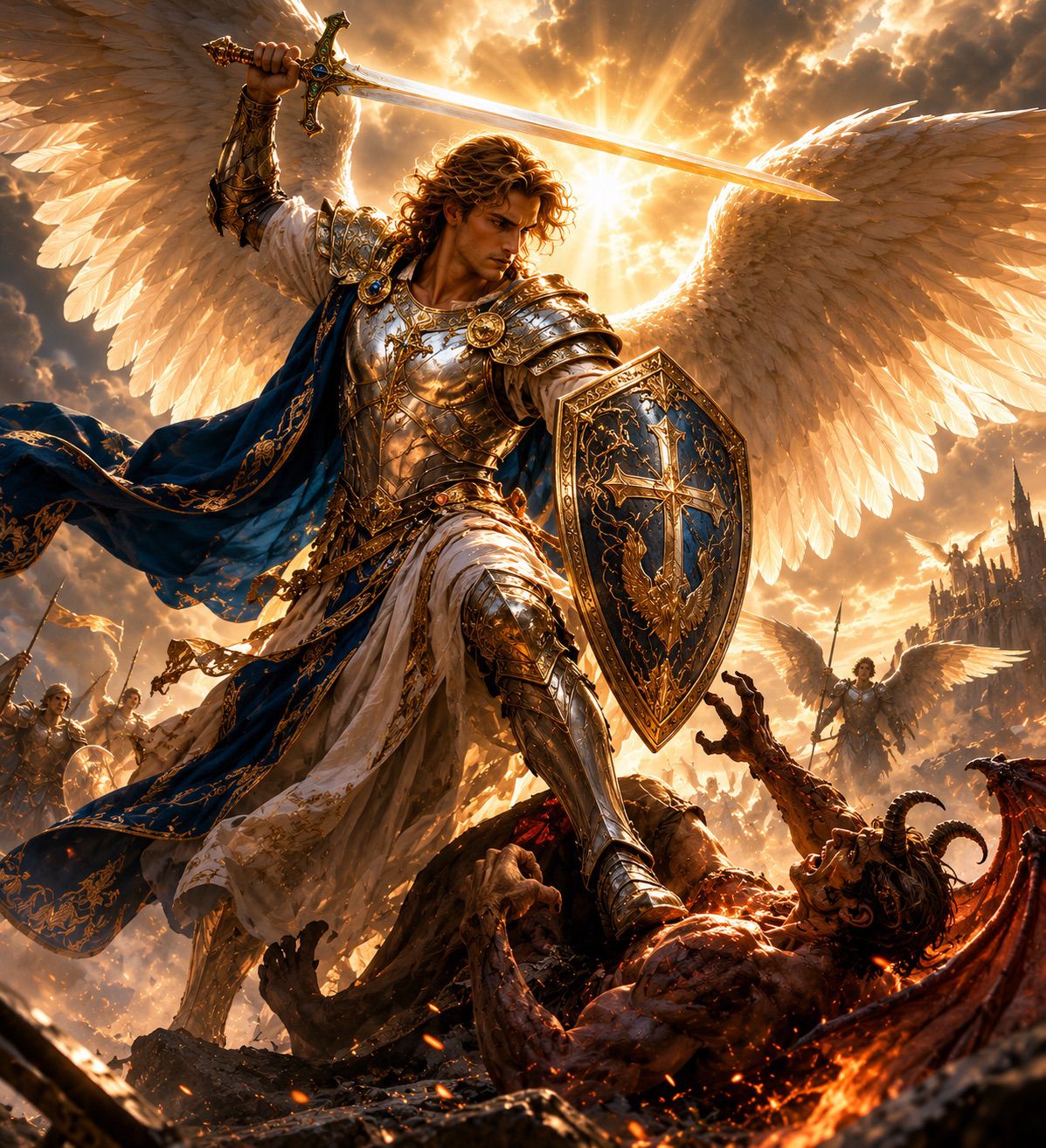
Archangel Michael stands among the most revered and recognizable figures in religious and spiritual traditions throughout the world. Across centuries of history, cultures, and faiths, Michael has emerged as a powerful symbol of courage, protection, justice, and unwavering devotion to the divine. Often described as the supreme commander of the heavenly armies, he embodies strength in the face of darkness and righteousness in the midst of conflict. His presence has inspired countless individuals seeking protection, guidance, and reassurance during life’s most difficult challenges. Whether viewed through the lens of Christianity, Judaism, Islam, or broader spiritual traditions, Michael remains one of the most influential and enduring angelic figures ever known.
The name Michael carries profound significance. Derived from the Hebrew phrase “Mi ka El,” it translates to “Who is like God?” This question is not intended to suggest that anyone is equal to God. Rather, it serves as a declaration of God’s unmatched power, authority, and perfection. Michael’s very name reflects his role as a defender of divine truth and a champion of righteousness. It reminds believers that ultimate authority belongs to God alone and that Michael’s strength comes from his unwavering loyalty to the divine will.
Throughout sacred texts and religious teachings, Michael consistently appears as a protector and warrior. He is often portrayed as leading the armies of heaven against the forces of evil, standing as a guardian of both the celestial realm and humanity itself. These depictions have contributed to his reputation as the greatest warrior among the archangels. Unlike earthly warriors who fight for territory, power, or personal gain, Michael’s battles symbolize the eternal struggle between good and evil, truth and deception, light and darkness.
One of the most famous references to Michael appears in the Book of Revelation, where he leads the heavenly hosts in a great battle against Satan and his followers. This dramatic image of Michael defeating the dragon has become one of the most enduring symbols in Christian art and literature. The story represents more than a literal battle; it symbolizes the triumph of righteousness over corruption and the ultimate victory of divine order over chaos. For believers, Michael’s victory serves as a reminder that goodness will ultimately prevail, even when darkness appears powerful and overwhelming.
Michael’s role as a protector extends far beyond the battlefield. Many individuals view him as a guardian who watches over people during times of danger, uncertainty, and spiritual struggle. Throughout history, soldiers, travelers, law enforcement officers, and countless others have prayed for Michael’s protection. His presence is often invoked during moments when courage is needed most. Whether facing physical threats, emotional hardships, or spiritual challenges, believers frequently turn to Michael as a source of strength and reassurance.
Courage is perhaps one of the qualities most closely associated with Archangel Michael. Courage is often misunderstood as the absence of fear. In reality, courage involves moving forward despite fear. Michael’s example teaches that bravery is not about being fearless but about remaining steadfast in the face of adversity. This message resonates deeply because every person encounters situations that require courage. Challenges such as illness, loss, uncertainty, conflict, and personal growth all demand strength and determination. Michael’s presence serves as a reminder that courage is available even during life’s most difficult moments.
The symbolism associated with Michael reinforces these qualities. He is frequently depicted wearing shining armor, carrying a sword, and standing triumphantly over a defeated dragon or demon. Each element carries powerful meaning. The armor represents spiritual protection and preparedness. The sword symbolizes truth, justice, and the ability to cut through deception. The dragon represents evil, fear, temptation, or any force that seeks to undermine righteousness. Together, these symbols communicate Michael’s role as a defender of truth and a protector against harmful influences.
Many spiritual traditions emphasize that Michael’s battles are not merely external conflicts but also internal struggles that take place within every human being. Fear, doubt, anger, resentment, and temptation can all be viewed as forms of darkness that individuals must confront. Michael’s example encourages people to face these challenges honestly and courageously. His influence inspires individuals to overcome self-destructive behaviors, pursue integrity, and remain faithful to their values even when doing so is difficult.
Justice is another central aspect of Michael’s identity. Throughout religious tradition, he is often associated with fairness, moral order, and divine judgment. While Raguel is typically regarded as the Angel of Justice, Michael also plays a significant role in defending what is right and opposing what is wrong. His actions are guided not by personal preference but by divine principles. This commitment to justice has made him a symbol of moral courage and ethical leadership.
Leadership itself is one of Michael’s defining characteristics. As commander of the heavenly hosts, he is entrusted with immense responsibility. Effective leadership requires strength, wisdom, discipline, and the ability to inspire others. Michael exemplifies these qualities through his unwavering dedication to his mission. His leadership serves as a model for individuals in positions of responsibility, reminding them that true authority is exercised through service, integrity, and commitment to the greater good.
Many people find comfort in viewing Michael as a source of spiritual protection. Life often presents situations that leave individuals feeling vulnerable or uncertain. During such times, the idea of a powerful guardian watching over them can provide reassurance and peace of mind. Whether interpreted literally or symbolically, Michael’s protective presence helps people feel less alone when facing challenges. His example reminds them that strength can be found even in moments of weakness and that courage often emerges when it is needed most.
Throughout history, countless stories have emerged describing encounters with Michael’s protective influence. Some individuals report experiencing an overwhelming sense of calm during dangerous situations. Others describe moments of clarity, strength, or unexpected assistance during times of crisis. While such experiences cannot be objectively verified, they reflect the profound impact Michael’s symbolism has had on people’s lives. For many believers, these experiences reinforce their faith in divine protection and guidance.
Michael’s significance extends beyond Christianity. In Judaism, he is regarded as a powerful protector of Israel and a defender of God’s people. Jewish traditions often portray him as an advocate who intercedes on behalf of humanity. In Islam, Michael, known as Mikail, is recognized as one of the principal angels responsible for carrying out God’s commands. He is associated with mercy, provision, and the maintenance of natural order. The presence of Michael across multiple faith traditions highlights his universal importance and enduring appeal.
One reason Michael resonates so strongly across cultures is that he embodies qualities people admire and aspire to develop. Courage, integrity, loyalty, discipline, and strength are virtues valued throughout human history. Michael serves as a powerful representation of these ideals. Whether viewed as a literal angelic being or as a symbolic archetype, his example inspires individuals to cultivate these qualities within themselves.
The concept of spiritual warfare is another important theme associated with Michael. Spiritual warfare does not necessarily refer to physical battles. Instead, it often represents the ongoing struggle between positive and negative influences in human life. Every person faces choices between honesty and deception, compassion and cruelty, courage and fear. Michael symbolizes the determination to choose what is right even when doing so requires sacrifice. His example reminds individuals that the most important battles are often fought within the heart and mind.
Modern life presents its own forms of spiritual warfare. Anxiety, addiction, hopelessness, division, and misinformation can all undermine well-being and personal growth. Michael’s example remains relevant because it encourages individuals to confront these challenges with courage and integrity. His symbolism reminds people that strength is not merely physical but also emotional, moral, and spiritual.
Many artists throughout history have been captivated by Michael’s powerful imagery. Paintings, sculptures, stained-glass windows, and literary works frequently depict him as a majestic warrior standing victorious over darkness. These artistic representations have helped preserve his legacy and communicate his message across generations. Whether displayed in cathedrals, museums, or private collections, images of Michael continue to inspire awe and admiration.
Michael’s influence can also be seen in popular culture. Books, films, television programs, and video games often draw upon his image as a celestial warrior and protector. While these portrayals sometimes take creative liberties, they reflect the enduring fascination people have with his character. The idea of a powerful guardian fighting on behalf of good continues to resonate because it speaks to universal hopes for justice, protection, and triumph over adversity.
Another aspect of Michael’s significance involves personal empowerment. While many individuals seek his protection, his example also encourages them to develop their own inner strength. Michael does not merely rescue people from difficulties; he inspires them to become stronger, more courageous, and more resilient. His influence reminds individuals that they possess the ability to overcome challenges and remain faithful to their principles.
Faith plays a central role in Michael’s story. His unwavering commitment to God’s will demonstrates the power of trust and devotion. Even when confronting immense opposition, Michael remains steadfast because his confidence rests not in himself but in the divine authority he serves. This lesson resonates with many believers who seek to maintain faith during uncertain times. Michael’s example teaches that faith can provide strength, direction, and stability even when circumstances are difficult.
In today’s world, the qualities represented by Michael remain as important as ever. People continue to face challenges that require courage, integrity, and perseverance. Whether dealing with personal hardships, societal issues, or spiritual questions, individuals often look for sources of inspiration that encourage them to keep moving forward. Michael’s enduring legacy provides exactly that. His story reminds humanity that goodness is worth defending, that courage can overcome fear, and that hope remains possible even in the face of adversity.
Ultimately, the lasting significance of Archangel Michael lies in what he represents. He is more than a warrior, more than a protector, and more than a figure from ancient religious texts. He symbolizes the human desire to stand against darkness, defend what is right, and remain faithful to higher principles. His presence serves as a reminder that courage is not the absence of fear but the determination to act despite it. Through his example, countless individuals have found inspiration to face their own battles with strength and conviction.
Whether viewed as a literal celestial commander or as a powerful symbol of courage and righteousness, Archangel Michael continues to inspire people around the world. His image endures because it speaks to universal human experiences and aspirations. In every generation, individuals face challenges that require bravery, integrity, and faith. Michael’s story offers reassurance that these qualities can prevail and that even the most formidable obstacles can be overcome through perseverance and trust in what is right. His legacy remains a timeless testament to the enduring power of courage, protection, and unwavering devotion to the forces of good.