
Latest Articles

Susan B Anthony: The Rebel in a Corset

Penelope

I’ve been thinking a lot about Susan B. Anthony lately, and what draws me to her is the sense of contradictions that surround her legacy. On one hand, she’s often celebrated as a pioneering figure in the fight for women’s suffrage – and rightfully so. Her tireless efforts to secure voting rights for women are inspiring, even if they were met with resistance, ridicule, and even arrest.

But what strikes me is how often I hear people say that Anthony’s cause was “pure” or “selfless,” implying that she was motivated by some kind of altruistic desire to better the world. Don’t get me wrong – I think it’s wonderful that she dedicated her life to fighting for women’s rights. But it’s impossible to separate Anthony’s actions from her own experiences, desires, and frustrations.

I’ve been reading about how Anthony grew up in a family that valued education and social reform, but also expected her to conform to traditional feminine roles. She rebelled against these expectations, of course – who wouldn’t? – but I wonder what it meant for her to be constantly caught between these competing demands. Did she feel like she was sacrificing her own ambitions by focusing on women’s suffrage, or did she see it as a way to break free from the constraints placed on her?

Sometimes I think about how Anthony’s reputation has been sanitized over time – how we remember her as a steadfast leader, but forget that she had her own share of doubts and controversies. Like when she advocated for property owners being able to vote, excluding many poor women who couldn’t afford to buy property. Or when she clashed with other suffragists who disagreed with her methods.

These complexities make me feel uncomfortable, because they suggest that Anthony wasn’t a one-dimensional figure at all – not some kind of saint or icon, but a multifaceted person with her own contradictions and flaws. And yet, I’m drawn to this very messiness, precisely because it makes her more human.

I think what really resonates with me is the way Anthony’s life was shaped by her relationships – particularly with other women like Elizabeth Cady Stanton and Matilda Joslyn Gage. Their friendships were forged in the fire of activism, but they also contained all the usual complexities: disagreements, misunderstandings, and moments of deep affection.

When I think about my own relationships, especially with other women who are passionate about social justice, I’m struck by how often we’re expected to be supportive, selfless, and united. But what if we’re not? What if we disagree, or feel burnt out, or just plain frustrated with each other’s approaches?

Anthony’s legacy is a reminder that even in the midst of struggle and disagreement, relationships can be a source of strength – but also of tension and conflict. And it’s this messy, complicated aspect of her life that I think I’m most drawn to.

I’ve been writing about Anthony for weeks now, but I still don’t have any clear answers or conclusions. Maybe that’s the point: sometimes the most interesting questions are the ones we can’t resolve, or that leave us feeling uncertain and unsettled.

As I continue to delve into Susan B. Anthony’s life, I find myself thinking about my own relationships with other women in a different light. We often talk about how women support each other in our struggles for social justice, but what does that really look like? Is it always easy and harmonious, or are there moments of tension and conflict?

I think back to a conversation I had with my friend Rachel last semester. We were both working on a project together, advocating for more diverse representation in our university’s curriculum. But as we started brainstorming ideas, we realized that our approaches were vastly different. I wanted to focus on creating a comprehensive report, while Rachel was adamant that we should prioritize social media campaigns. The tension between us grew thicker than the air, and before long, we found ourselves at odds.

It wasn’t until we took a step back, acknowledged our differences, and started talking about why they were important to each other, that we began to find common ground. It was a messy process, but ultimately, it made our collaboration stronger.

I wonder if something similar happened between Anthony and her fellow suffragists. Did they have their own moments of disagreement and tension? Or did they somehow manage to maintain this idealized sense of unity and solidarity?

The more I read about Anthony’s life, the more I’m struck by how little we know about the inner workings of her relationships with other women. There are glimpses here and there – a letter from Elizabeth Cady Stanton, a newspaper clipping about Anthony’s disagreements with Matilda Joslyn Gage – but it’s like trying to piece together a puzzle with missing pieces.

And yet, it’s precisely this uncertainty that makes me feel more connected to Anthony. I see myself in her messiness, in the ways she navigated complex relationships and conflicting desires. Maybe that’s what being human is all about: embracing our contradictions, our doubts, and our disagreements.

As I continue to explore Susan B. Anthony’s life, I find myself thinking about the notion of “sisterhood” in a different light. We often talk about how women support each other in their struggles for social justice, but what does that really mean? Is it enough to simply agree on the end goal, or do we need to navigate our differences and complexities along the way?

I think back to my own experiences with female friends who share similar passions and values. We often bond over our shared outrage and frustration with systemic injustices, but when it comes down to implementation and strategy, things can get messy. We disagree on tactics, priorities, and even core principles. And yet, despite these disagreements, we continue to support and care for each other.

It’s almost as if we’re trying to recreate the idealized sense of sisterhood that Anthony and her fellow suffragists seemed to have achieved. But I wonder if that’s even possible – or desirable. Do we need to be in perfect harmony all the time, or can we tolerate a little bit of tension and disagreement?

I’ve been reading about how Anthony’s relationships with other women were marked by both deep affection and intense conflict. She clashed with Elizabeth Cady Stanton over issues like property ownership and voting rights for African American men, but she also wrote letters to Matilda Joslyn Gage that reveal a profound sense of respect and admiration.

It’s this paradox that I find so fascinating – the idea that we can love and support each other even when we disagree. Maybe it’s not about achieving some kind of false unity or harmony, but about embracing our differences as an opportunity for growth and learning.

I think back to my conversation with Rachel again, and how we were able to find common ground by acknowledging our differences and talking through them. It was a messy process, but ultimately, it made our collaboration stronger. And I wonder if something similar could happen between Anthony and her fellow suffragists – or even between us, as women who are trying to create change in the world.

But what would that look like? Would we need to compromise on core principles, or find ways to balance our differences with a shared commitment to social justice? These questions swirl in my mind as I continue to learn about Anthony’s life and legacy.

As I delve deeper into Susan B. Anthony’s relationships with other women, I’m struck by the way they seem to embody both the ideals of sisterhood and the messy realities of human connection. It’s like they’re living proof that we don’t have to choose between being allies or adversaries – we can be both at the same time.

I think about how often I’ve seen this dynamic play out in my own life, where friendships are forged over shared passions and values, but eventually give way to disagreements and conflicts. It’s as if we’re constantly navigating a tightrope, trying to balance our desire for unity with the need to acknowledge and respect each other’s differences.

Anthony’s letters to Elizabeth Cady Stanton and Matilda Joslyn Gage reveal a deep sense of mutual respect and affection, but also a willingness to disagree and challenge each other. It’s like they’re modeling a new kind of sisterhood – one that acknowledges the complexity and nuance of human relationships.

I wonder if this is what I’ve been searching for in my own friendships with women who share similar passions and values. We often talk about how we need to “lift each other up” and “support each other’s dreams,” but what does that really mean? Is it enough to simply offer encouragement and validation, or do we need to engage in more meaningful conversations about our differences and disagreements?

Anthony’s legacy is a reminder that sisterhood isn’t just about being in perfect harmony – it’s about navigating the messy realities of human connection. It’s about acknowledging our differences and finding ways to work together despite them.

As I continue to explore Anthony’s life, I’m struck by how little we know about the inner workings of her relationships with other women. There are glimpses here and there – a letter from Stanton, a newspaper clipping about Anthony’s disagreements with Gage – but it’s like trying to piece together a puzzle with missing pieces.

And yet, it’s precisely this uncertainty that makes me feel more connected to Anthony. I see myself in her messiness, in the ways she navigated complex relationships and conflicting desires. Maybe that’s what being human is all about: embracing our contradictions, our doubts, and our disagreements.

I think back to my conversation with Rachel again, and how we were able to find common ground by acknowledging our differences and talking through them. It was a messy process, but ultimately, it made our collaboration stronger. And I wonder if something similar could happen between Anthony and her fellow suffragists – or even between us, as women who are trying to create change in the world.

But what would that look like? Would we need to compromise on core principles, or find ways to balance our differences with a shared commitment to social justice? These questions swirl in my mind as I continue to learn about Anthony’s life and legacy.

I’ve been thinking a lot about how Anthony’s relationships with other women were not just about shared goals and values, but also about the messy, complicated emotions that come with working together towards a common cause. I think about how often I’ve felt frustrated or hurt by disagreements with my own friends who share similar passions, only to later realize that those same conversations were also opportunities for growth and learning.

One of the things that strikes me about Anthony’s relationships is how she was willing to listen to and learn from others, even when they disagreed with her. She wrote letters to Elizabeth Cady Stanton, for example, that reveal a deep sense of respect and admiration for her fellow suffragist, despite their differences on issues like property ownership and voting rights.

I think about my own relationships with women who share similar passions, and how often I feel the need to be right or to “win” an argument. But Anthony’s legacy suggests that maybe that’s not what’s most important – maybe what’s more important is being willing to listen, to learn, and to grow together.

It’s funny, because when I think about it, I realize that my own relationships with women who share similar passions are often marked by a sense of competition or one-upmanship. We’re all trying to prove ourselves as the most committed, the most passionate, the most dedicated – but in doing so, we often forget that our differences and disagreements are an opportunity for growth and learning.

Anthony’s legacy is a reminder that sisterhood isn’t just about being in perfect harmony – it’s about navigating the messy realities of human connection. It’s about acknowledging our differences and finding ways to work together despite them. And I think that’s something we can all learn from, regardless of whether we’re suffragists or social justice advocates.

As I continue to explore Anthony’s life and legacy, I’m struck by how little we know about the inner workings of her relationships with other women. There are glimpses here and there – a letter from Stanton, a newspaper clipping about Anthony’s disagreements with Gage – but it’s like trying to piece together a puzzle with missing pieces.

And yet, it’s precisely this uncertainty that makes me feel more connected to Anthony. I see myself in her messiness, in the ways she navigated complex relationships and conflicting desires. Maybe that’s what being human is all about: embracing our contradictions, our doubts, and our disagreements.

I think back to my conversation with Rachel again, and how we were able to find common ground by acknowledging our differences and talking through them. It was a messy process, but ultimately, it made our collaboration stronger. And I wonder if something similar could happen between Anthony and her fellow suffragists – or even between us, as women who are trying to create change in the world.

But what would that look like? Would we need to compromise on core principles, or find ways to balance our differences with a shared commitment to social justice? These questions swirl in my mind as I continue to learn about Anthony’s life and legacy.

Related Posts

Sabnock the Fortress Builder: The Blood-Stained Marquis of the Ars Goetia Who Commands Wounds, Walls, and War

Dave

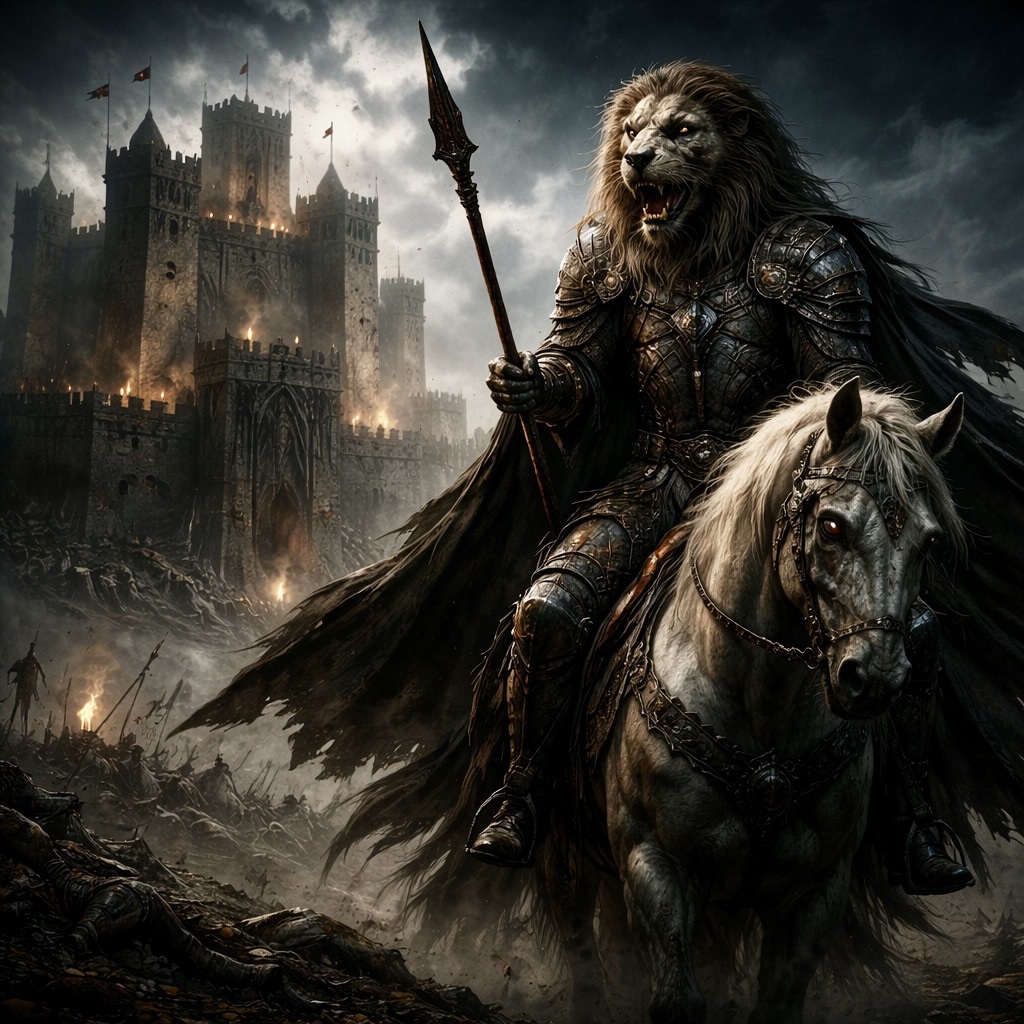
There is something unnervingly practical about Sabnock. In a catalog of spirits filled with tempters, illusionists, seducers, and whisperers of hidden knowledge, Sabnock stands apart with a hammer in one hand and a blade in the other. He does not merely deceive or seduce; he constructs and destroys. In the hierarchy recorded in the Lesser Key of Solomon, Sabnock is described as a Great Marquis of Hell who commands fifty legions of spirits. He appears as an armed soldier with the head of a lion, riding upon a pale horse. He builds high towers, furnishes castles with armor and weapons, and inflicts festering wounds that refuse to heal.

Even in summary, Sabnock feels severe. There is nothing subtle about a lion-headed warrior charging forward on horseback. Unlike demons who cloak themselves in soft persuasion, Sabnock is martial from the start. He represents fortification, defense, siege, and the long memory of violence.

His name appears prominently in the Ars Goetia, where he is sometimes spelled Sabnac or Sabnach. Earlier demonological texts such as the Pseudomonarchia Daemonum by Johann Weyer also reference him, preserving his rank and attributes within the infernal order. Across variations, certain themes remain constant: walls rise at his command, weapons appear in armories, and wounds linger under his influence.

On the surface, Sabnock seems to embody straightforward brutality. But as with many Goetic spirits, there is more beneath the imagery. The lion’s head is not merely decorative. In medieval symbolism, the lion represents courage, ferocity, nobility, and dominion. It is a creature that both protects and devours. To graft that image onto a soldier riding a pale horse is to combine predatory instinct with disciplined warfare. Sabnock is not chaos on the battlefield; he is organized aggression.

The pale horse is another striking detail. Throughout Western iconography, the pale horse often signals plague, death, or inevitability. It evokes the rider who cannot be escaped. In Sabnock’s case, the pale horse may suggest the inevitability of conflict once walls begin to rise and weapons are gathered. Fortification invites siege. Preparation anticipates violence. The very act of building defenses implies that something terrible is expected.

The grimoires note that Sabnock can build high towers and fortify cities with weapons and armor. In a literal medieval context, that power was invaluable. Fortresses determined survival. A city’s walls were the thin line between prosperity and massacre. To command a spirit capable of strengthening defenses would have seemed not only useful but urgent. Yet the same texts warn that Sabnock can also afflict men with wounds that rot and fester.

This duality is crucial. Sabnock both protects and punishes. He reinforces walls but undermines flesh. In that sense, he embodies the paradox of militarization. The more one prepares for war, the more war becomes present in spirit and structure. The fortress may stand strong, but the cost is carried in blood.

It is tempting to read Sabnock as merely a relic of medieval warfare, but his symbolism remains deeply relevant. In modern psychological terms, Sabnock can represent emotional fortification. When someone builds walls around themselves—armor against betrayal, distance against vulnerability—they may feel protected. But those same defenses can isolate and harden the spirit. The wound that refuses to heal may not be physical at all; it may be the scar left by constant vigilance.

The lion-headed marquis riding into view is a dramatic image, but the true terror of Sabnock lies in the festering wound. The old texts emphasize that he causes wounds filled with worms, sores that linger unless commanded otherwise. In pre-modern Europe, such infections were catastrophic. Without antibiotics, a minor injury could spiral into death. To associate Sabnock with festering wounds is to align him with decay that cannot easily be stopped.

And yet, even here, there is nuance. Some interpretations suggest that when properly constrained within ritual authority, Sabnock can prevent such afflictions or redirect them. Like many Goetic spirits, he is not purely destructive but conditional. He responds to authority, structure, and discipline—the very traits associated with military hierarchy.

Sabnock’s legion count—fifty legions—places him among the more powerful marquises. In the hierarchical imagination of demonology, numbers signified status and influence. Fifty legions suggest organization, command, and scale. Sabnock is not a lone marauder; he is a general. His influence extends through ranks of subordinate spirits, mirroring earthly armies.

There is something almost disturbingly relatable about him. Humanity has always oscillated between building and breaking. We erect cities, walls, systems, and institutions. We fortify ourselves with laws and weapons. Yet the same mechanisms that promise safety often produce prolonged conflict. Sabnock becomes the embodiment of that cycle: prepare, defend, suffer, endure.

In contemporary occult discussions, Sabnock is sometimes approached as a spirit of strategic protection. Practitioners interpret his ability to build towers as symbolic of establishing boundaries. In this framework, Sabnock teaches resilience, discipline, and preparedness. The lion’s head becomes courage rather than cruelty. The pale horse becomes inevitability accepted rather than feared.

Still, one cannot ignore the darker undertones. The festering wound is a powerful metaphor for unresolved conflict. When grievances are left untreated, they rot. When trauma is ignored, it seeps into daily life. Sabnock’s wounds may be psychological reminders that armor alone does not heal what lies beneath.

Historically, the grimoires that cataloged Sabnock emerged in a world defined by siege warfare. Castles dotted the European landscape. Plagues and infections spread unchecked. The fear of attack was constant. To imagine a spirit governing walls and wounds was not abstract—it was immediate. Sabnock represented both hope for protection and dread of decay.

What fascinates modern readers is how vividly physical he feels compared to more abstract demons. Sabnock is tactile: stone walls rising, steel weapons clashing, flesh splitting under blades. There is a grounded brutality in his depiction. Even the lion’s mane conjures texture and heat.

And yet, beneath that physicality lies something archetypal. Sabnock is the spirit of defense mechanisms. He is the instinct to harden after betrayal. He is the voice that says, “Build higher walls. Sharpen the blades.” Sometimes that instinct is necessary. Boundaries protect. Preparation saves lives. But when carried too far, fortification becomes isolation, and readiness becomes paranoia.

The old magicians who wrote of Sabnock likely approached him with caution and precision. Ritual circles, divine names, and structured invocations were not theatrical flourishes; they were safeguards. In demonology, authority is everything. To summon Sabnock without discipline would invite chaos. To command him properly would harness structured strength.

This dynamic reflects something deeply human. Power without structure destroys. Power within boundaries protects. Sabnock’s mythology reinforces that lesson again and again. The lion-headed warrior obeys hierarchy. The walls he builds stand only when commanded. The wounds he inflicts persist unless restrained.

There is also a strange dignity in Sabnock’s martial image. Unlike demons associated with deceit or seduction, Sabnock’s domain is overt. He does not pretend to be gentle. He arrives armed. There is honesty in that. You know what you face. In a world where many threats are hidden, there is something almost comforting about a visible adversary.

Over centuries, artists and occultists have reimagined Sabnock in countless forms: towering armored knight, leonine-faced general, spectral rider emerging from smoke. The core imagery remains consistent because it resonates. We recognize the archetype of the defender-warrior. We understand the cost of walls. We know the sting of wounds that take too long to heal.

Whether viewed as literal entity, psychological construct, or mythic narrative, Sabnock occupies a powerful place within the Goetic tradition. He is not merely a demon of violence. He is a symbol of preparation, defense, consequence, and the fragile line between protection and harm.

In the end, Sabnock’s story is not just about Hell’s marquises. It is about humanity’s enduring struggle to protect itself without becoming hardened beyond recognition. It is about the towers we build—externally and internally—and the wounds we carry when those towers are tested.

Sabnock rides on, lion-headed and relentless, reminding us that every fortress casts a shadow, and every blade leaves a mark.

Related Posts

Herman Melville: The Patron Saint of My Inner Contradictions

Penelope

Herman Melville’s words have been lingering in my mind for years, even before I dove into his novels as a college student. There’s something about the way he tackles complex themes like identity, morality, and the human condition that resonates with me on a deep level. I think it’s because his writing often feels like a reflection of my own internal struggles – those moments when I’m forced to confront the contradictions within myself.

I remember feeling particularly drawn to Moby-Dick during my freshman year. Maybe it was the way Ahab’s obsession with the white whale mirrored my own fixation on trying to find meaning in life. Or maybe it was the way Ishmael’s voice, with its mix of wonder and skepticism, seemed to speak directly to me. Whatever the reason, I found myself returning to that book again and again, each time uncovering new layers of depth and complexity.

One aspect of Melville’s writing that continues to fascinate me is his use of ambiguity. He rarely provides clear answers or tidy resolutions – instead, he seems to revel in the uncertainty of life. Take Ahab’s motivations, for example. Is he driven by a desire for revenge, a need for control, or something more profound? Melville leaves it up to us to decide, and I think that’s part of what makes his work so compelling.

As someone who’s always struggled with making decisions, I find myself drawn to characters like Ahab and Ishmael. They’re both searching for something – a whale, a sense of purpose, a way out of the wilderness – but they’re not quite sure what they’ll find when they get there. That vulnerability feels strangely relatable to me, especially in today’s world where we’re constantly expected to have it all together.

But Melville’s work also makes me uncomfortable, particularly when I think about his depiction of whiteness and racism. As a white woman from a privileged background, I’ve always felt like I’m on shaky ground when it comes to issues of systemic oppression. Melville’s writing often blurs the lines between satire and critique, leaving me wondering if he’s truly condemning or perpetuating racist attitudes.

Take the character of Queequeg, for example. On one hand, Melville portrays him as a kind and gentle soul, one who represents a more compassionate and inclusive way of living. But on the other hand, his depiction is also marked by stereotypes and exoticism – qualities that have contributed to Queequeg’s enduring marginalization.

I’m not sure how to reconcile these contradictions in my own mind. Part of me wants to argue that Melville was ahead of his time, that he was trying to subvert the dominant narratives of his era. Another part of me wonders if he was simply reflecting the biases and prejudices of his age, even if unintentionally.

These questions have been swirling around me for years now, and I’m still not sure how to untangle them. Maybe that’s the point – maybe Melville’s work is meant to leave us with more questions than answers, to nudge us toward a deeper understanding of ourselves and our place in the world. Whatever his intentions, I know that Herman Melville has become an integral part of my own search for meaning and purpose. His words continue to challenge me, provoke me, and inspire me – even when they make me uncomfortable.

As I look back on my college years, I realize that Melville’s writing was a constant companion during those formative times. His novels were like a series of mirrors reflecting different aspects of myself: the idealist, the skeptic, the seeker. And while I’ve grown and changed since then, his work remains a source of fascination for me – a reminder that the search for meaning is a lifelong journey, one that requires patience, courage, and a willingness to confront our own complexities head-on.

I’m not sure what lies ahead, but I do know that Melville’s words will continue to be there, guiding me through the twists and turns of life. And maybe, just maybe, that’s all we can ask for – a steady hand pointing us toward the next great mystery, the next great challenge, and the next step forward into the unknown.

As I reflect on Melville’s influence in my life, I’m struck by how his writing has shaped my perspective on identity. Growing up, I often felt like I was searching for a sense of self, trying to pin down who I was and where I fit into the world. Moby-Dick’s exploration of Ishmael’s journey resonated deeply with me – the way he navigates different cultures, confronts his own biases, and grapples with the complexities of belonging.

I think what draws me to this aspect of Melville’s work is its portrayal of identity as a fluid, ever-changing process. For so long, I’d been taught that there was one “right” way to be – to fit into certain boxes, follow established paths, and conform to societal norms. But Melville’s writing shows me that identity is messy, multifaceted, and often contradictory.

Take Ahab, for example. On the surface, he appears to be a one-dimensional character driven by revenge and obsession. But as I delve deeper into the novel, I see glimpses of vulnerability, of desperation, and of a deep-seated need for connection. It’s this complexity that makes him so relatable – because, let’s be honest, who hasn’t struggled with their own demons and contradictions?

This fluidity of identity has been a liberating concept for me, especially in recent years as I’ve navigated the transition from college to adulthood. I’ve found myself questioning old assumptions, challenging my own biases, and embracing the uncertainty of it all. Melville’s writing has given me permission to explore these complexities without fear of judgment or expectation.

Of course, this exploration also comes with its own set of challenges. As I grapple with my own identity, I’m forced to confront the privileges and advantages that have been bestowed upon me – namely, being a white woman from a relatively affluent background. Melville’s portrayal of whiteness and racism in his work has made me acutely aware of these power dynamics, and I struggle to reconcile this awareness with my own positionality.

I wonder if Melville would have seen the privilege that I possess as a curse or a blessing? Would he have encouraged me to use it as a tool for social change, or would he have cautioned me against its corrupting influence? These are questions that haunt me still, and ones that I’m not sure I’ll ever fully answer.

Still, Melville’s writing continues to guide me on this journey of self-discovery. His words remind me that identity is a fluid, ever-changing process – one that requires patience, compassion, and a willingness to confront our own complexities head-on. As I look to the future, I know that I’ll continue to grapple with these questions, even as I try to make sense of my place in the world.

I think about how Melville’s writing has influenced my relationships with others. In Moby-Dick, he explores the complexities of human connection through the bond between Ishmael and Queequeg. Their friendship is built on mutual respect, trust, and a deep understanding of each other’s differences. It’s a portrayal that challenges the dominant narratives of colonialism and imperialism, instead highlighting the beauty of cross-cultural exchange.

As I reflect on my own relationships, I realize that I’ve often struggled with feeling like an outsider. Whether it was navigating friendships in high school or trying to find my place within my college community, I’ve always felt like I’m observing from the periphery rather than being fully immersed. Melville’s writing has given me permission to see this as a strength rather than a weakness – to acknowledge that my perspective as an outsider can be a unique asset.

I think about how Queequeg’s character has become a kind of touchstone for me when it comes to thinking about identity and belonging. He’s a figure who exists outside the dominant culture, yet he finds ways to navigate its complexities with grace and humor. His story reminds me that identity is not fixed or static – that we can belong in multiple places and communities at once.

But what does this mean for my own relationships? How can I use Melville’s lessons on identity and belonging to build more authentic connections with others? These are questions that still feel like a work-in-progress for me, but ones that I’m committed to exploring further. As I look to the future, I know that I’ll continue to grapple with these themes – and to seek out new insights from Melville’s writing along the way.

One thing that’s struck me about Melville’s work is its ability to capture the tensions between individuality and community. On one hand, his characters are often driven by a desire for independence and self-expression – whether it’s Ahab’s quest for revenge or Ishmael’s search for meaning. But on the other hand, they’re also deeply connected to others – whether through their relationships with friends, family, or even strangers.

This tension between individuality and community feels particularly relevant to me right now. As I navigate the ups and downs of adulthood, I’m constantly being pulled in different directions by my own desires for independence and connection. Melville’s writing reminds me that these are not mutually exclusive – that we can cultivate a sense of self while still being deeply connected to others.

Of course, this is easier said than done. As someone who’s struggled with anxiety and feelings of isolation, I know how tempting it can be to retreat into my own little world. But Melville’s work encourages me to stay engaged with the world around me – to seek out new connections and relationships that can help me grow as a person.

I wonder if this is what Melville meant by his phrase “the sea of life.” Is it not just a physical body of water, but a metaphor for the complexities and uncertainties of human existence? Ahab’s quest for Moby-Dick becomes a symbol for our own search for meaning and purpose – a journey that requires us to navigate the choppy waters of identity, belonging, and connection.

As I reflect on Melville’s writing, I’m struck by how it continues to resonate with me long after my college years are behind me. His words have become a kind of anchor in my life, reminding me that the search for meaning is a lifelong journey – one that requires patience, courage, and a willingness to confront our own complexities head-on.

As I delve deeper into Melville’s work, I’m starting to notice how his writing often blurs the lines between reality and fantasy. Take the character of Queequeg, for example – is he truly a Pacific Islander, or is he a product of Melville’s imagination? And what about the white whale itself – is Moby-Dick a symbol of Ahab’s obsession, or is it something more profound?

This blurring of reality and fantasy has me thinking about my own experiences with creativity. As a writer, I often find myself straddling the line between fact and fiction – trying to capture the essence of real events while also infusing them with a sense of imagination and wonder. Melville’s writing shows me that this is not only acceptable but also necessary – that the best art often lies in its ability to transcend the boundaries between reality and fantasy.

But what about when this blurring gets too close to home? When do we start to lose sight of what’s real and what’s just a product of our own imagination? I think back to my college years, when I was struggling to come to terms with my own identity. Melville’s writing often felt like a reflection of my inner world – a way for me to process the complexities and contradictions that were swirling inside me.

As I navigated these questions, I found myself drawn to characters like Ishmael and Queequeg – individuals who existed on the margins of society but still managed to find ways to connect with others. Their stories reminded me that identity is not fixed or static – that we can belong in multiple places and communities at once.

But what about when these identities are imposed upon us? When do we start to internalize the labels and expectations that are placed upon us by others? Melville’s writing often critiques the ways in which societal norms can constrain our individuality, but it also shows me that there is always a way out – that we can resist, subvert, or even rewrite these narratives for ourselves.

This is a theme that resonates deeply with me as I look to my own future. As someone who’s struggled with feelings of inadequacy and self-doubt, I know how tempting it can be to buy into the expectations of others – whether it’s from family members, friends, or even societal norms. But Melville’s writing shows me that this is a path that leads to stagnation and disconnection.

Instead, he encourages me to seek out my own identity – to explore the complexities and contradictions that make up who I am. And when I’m faced with moments of uncertainty or self-doubt, I try to recall Ishmael’s words from Moby-Dick: “To produce a mighty book, you must choose a mighty theme.”

Related Posts

Shax the Thief of Sight and Silver: Unmasking the Cunning Demon of the Ars Goetia

Dave

There is something uniquely unsettling about a demon who does not rage, does not roar, and does not promise kingdoms or forbidden love—but instead slips quietly into the world to steal what you thought was secure. Shax is not the lord of fire or the master of storms. He is subtler than that. In the old grimoires, especially within the pages of the Lesser Key of Solomon, Shax appears as a Great Marquis of Hell, commanding thirty legions of spirits. His description is brief but chilling: he steals money from kings, carries it away to distant lands, and—perhaps most disturbingly—takes away sight, hearing, and understanding from those he deceives.

Unlike the grander figures of infernal mythology, Shax does not seduce through power. He destabilizes through absence. He removes. He subtracts. He empties vaults, clouds perception, and erodes certainty. In a world that values accumulation and clarity, Shax represents the terror of loss and confusion.

In the Ars Goetia, Shax is depicted as appearing in the form of a stork, speaking with a hoarse and subtle voice. The image itself is strange—why a stork? The stork has long associations with migration, distance, and silent observation. It stands motionless before striking with precision. That symbolism aligns perfectly with Shax’s reputation. He is not chaotic. He is deliberate. He waits. He watches. Then he takes.

Earlier references to Shax appear in the Pseudomonarchia Daemonum, compiled by Johann Weyer. Weyer’s work, though skeptical in tone, preserved many of the demonological hierarchies that later grimoires expanded upon. In these writings, Shax’s abilities are emphasized not as theatrical displays of hellfire but as calculated acts of theft and deception. He steals horses. He steals money. He removes hearing and sight unless constrained by ritual authority.

What makes Shax particularly compelling in modern interpretation is how psychological he feels. In medieval Europe, literal theft of treasure and livestock was catastrophic. To lose a horse meant losing transportation, livelihood, perhaps survival. To lose gold meant instability and disgrace. But to lose sight and hearing? That implied something more insidious: a stripping away of perception itself. In a symbolic sense, Shax embodies cognitive distortion. He clouds judgment. He fosters misunderstanding. He makes people certain of falsehoods.

If one reads between the lines of the old texts, Shax is not merely a supernatural burglar; he is the archetype of misdirection. He is the voice that convinces a king his treasury is secure while quietly emptying it. He is the influence that assures someone they see clearly when, in fact, they have been blinded by their own assumptions.

The rituals associated with summoning Shax in the grimoires are precise and cautious. Practitioners are warned that he is deceptive and may lie unless constrained within a proper magical triangle. This emphasis on containment speaks volumes. Even within demonological systems—where manipulation is expected—Shax is flagged as particularly unreliable. He does not simply obey; he misleads. He promises what he does not intend to deliver.

This trait distinguishes him from demons whose domains are more transactional. Shax is not a straightforward bargain-maker. He is closer to a trickster. His power lies in exploiting trust. In that sense, he reflects a universal human anxiety: the fear that what we rely upon—our senses, our savings, our understanding—can quietly vanish.

There is also an economic undertone to Shax’s mythology that feels strikingly modern. The idea of wealth disappearing into distant lands echoes contemporary concerns about financial instability, hidden transactions, and unseen hands manipulating markets. In the medieval imagination, that uncertainty became personified. It became Shax. Rather than abstract systems, people envisioned a marquis of Hell quietly relocating riches across borders.

And yet, like many Goetic spirits, Shax is not entirely malevolent in all interpretations. When properly commanded, he is said to reveal hidden things and return stolen goods. That duality is fascinating. The same force that obscures can clarify. The same entity that steals can restore. It suggests that Shax’s domain is not merely theft, but the control of access. He governs who sees and who does not, who possesses and who loses.

From a psychological lens, Shax can be understood as the embodiment of internal sabotage. We all experience moments when clarity vanishes. We misplace important things. We misunderstand people we love. We act against our own interests. The medieval world externalized those experiences into demons. Shax became the explanation for the inexplicable loss, the sudden confusion, the inexplicable drain of resources.

The stork form adds another layer of symbolism. Storks migrate great distances, disappearing with the seasons and returning without warning. They are creatures of transition. To envision Shax as a stork suggests movement—wealth traveling, perception shifting, certainty migrating away. The hoarse voice described in the grimoires evokes something whispering at the edge of awareness, not commanding but suggesting.

There is something deeply unsettling about a demon who does not need spectacle. Shax operates in quiet erosion. He undermines foundations without dramatic collapse. By the time you notice, the vault is empty. The senses are dulled. The understanding is gone.

And yet, perhaps that is precisely why Shax endures in modern occult discussions. He represents an anxiety that has never faded. We fear losing what we cannot immediately replace. We fear being deceived without realizing it. We fear blindness more than darkness, because blindness implies something has been taken.

In contemporary demonology circles, Shax is sometimes approached as a spirit of revelation through inversion. By confronting the archetype of loss, practitioners seek to sharpen awareness. If Shax clouds understanding, then awareness becomes the defense. If Shax steals wealth, then vigilance becomes the shield. In this way, the demon becomes a mirror—reflecting our vulnerabilities.

Whether one interprets Shax as literal spirit, psychological archetype, or symbolic narrative, his presence in the Goetia stands as a reminder of fragility. Wealth can disappear. Perception can falter. Certainty can dissolve. The medieval magicians who wrote of him were not merely cataloging monsters; they were articulating fears that remain painfully relevant.

Shax is not the loudest name in demonology. He does not command legions of pop culture fascination like Lucifer or Asmodeus. But there is something more intimate about him. He lingers in the spaces where confidence meets complacency. He waits where assumption replaces scrutiny.

And perhaps that is why his legend persists. Because somewhere, in every era, someone opens a ledger and finds it lacking. Someone realizes too late that they misunderstood what stood before them. Someone discovers that what they trusted has quietly slipped away.

Shax is the whisper that precedes that discovery.

Related Posts

Italo Calvino: Where Fragmented Thoughts are a Beautiful Mess

Penelope

Italo Calvino’s words have a way of slipping into my thoughts like whispers from an old friend. I remember stumbling upon his essays and stories while researching for a paper on Italian literature in college. At first, they felt foreign – the language was poetic, the ideas were complex, and the tone was detached yet intimate. But as I delved deeper into his work, I found myself drawn to the way he probed the human experience with a mix of curiosity and skepticism.

One aspect that continues to fascinate me is Calvino’s obsession with the fragmented nature of reality. In “Invisible Cities,” he writes about a series of fantastical cities that exist in the mind of an emperor, each one a representation of a particular idea or emotion. I found myself pondering the notion that our understanding of the world is composed of disparate fragments – memories, experiences, stories – that we try to weave together into a coherent narrative.

It’s a thought that resonates with me on a deeply personal level. As someone who struggles to articulate their own thoughts and emotions, I often feel like my perception of reality is fragmented and disjointed. Calvino’s work offers a strange comfort in this disorientation – a sense that it’s okay to be uncertain, that the fragmentation itself might be an essential part of the human experience.

But what I find most compelling about Calvino is his ambivalence towards the notion of truth. He often presents multiple perspectives and possibilities without seeming to lean on one over the other. This ambiguity can be disorienting – it’s as if he’s holding up a mirror to my own doubts and uncertainties, forcing me to confront the provisional nature of knowledge.

It’s a discomfort that I’m not always comfortable with. As someone who writes for clarity and understanding, I often find myself wanting to tidy up Calvino’s loose ends, to tie together the disparate threads into a neat package. But he resists this impulse, instead embracing the complexity and uncertainty of life.

I’ve come to realize that my attraction to Calvino lies in his refusal to offer easy answers or clear solutions. His work is a constant reminder that truth is not something you arrive at, but rather something you inhabit – a feeling that’s constantly shifting and evolving. It’s a perspective that both exhilarates and terrifies me, leaving me with more questions than answers.

Perhaps it’s this sense of uncertainty that keeps me coming back to Calvino’s work – the knowledge that I’ll never fully grasp his ideas or understand his perspective. His writing is an invitation to explore the labyrinthine corridors of my own mind, to confront the contradictions and ambiguities that lie at the heart of existence.

As I continue to grapple with Calvino’s words, I find myself returning to the same questions – what does it mean to seek truth in a world that resists certainties? How do we navigate the fragmented landscape of our own experiences? And what lies at the intersection of language and reality, where meaning is constantly slipping away from us?

These are questions that Calvino’s work refuses to answer, instead offering only more questions, more possibilities, and more uncertainties. It’s a gesture that I both admire and find frustrating – a reminder that sometimes, it’s not about finding answers, but about embracing the ambiguity itself.

As I delve deeper into Calvino’s work, I’m struck by the way he weaves together multiple narratives and perspectives, creating a sense of multiplicity that reflects the complexities of human experience. His writing is like a palimpsest, with layers of meaning peeling away to reveal new insights and interpretations. It’s as if he’s saying, “Look, there’s no one ‘right’ way to understand this; instead, let’s dance among the possibilities.”

This multiplicity resonates with me on a personal level, as I navigate my own relationships and interactions. I often find myself oscillating between different roles – friend, writer, daughter, sister – each one demanding its own unique perspective and set of expectations. Calvino’s work acknowledges this multiplicity, rather than trying to reduce it to a single, essential identity.

But what I find most intriguing about Calvino is the way he uses language itself as a tool for exploring the fragmented nature of reality. He plays with words, juxtaposing them in unexpected ways to create new meanings and associations. It’s as if he’s saying, “Language is not just a reflection of reality; it’s also a creator of reality.” This realization unsettles me, because it forces me to confront my own relationship with language – how I use it to shape my perceptions, to communicate with others, and to make sense of the world.

Calvino’s writing is like a mirror held up to my own linguistic habits. I see myself using words as tools to construct a coherent narrative, to impose order on a chaotic world. But what about when language falters or fails? What about when words fall short of conveying the complexity and messiness of human experience? Calvino’s work suggests that it’s in these moments of linguistic failure that we might discover new insights and perspectives – not through language itself, but through the gaps and silences that surround it.

As I continue to explore Calvino’s ideas, I’m drawn back to my own writing practice. How do I use language to shape my perceptions of reality? Do I rely on clear, concise sentences to convey a single message, or do I experiment with ambiguity and uncertainty? Calvino’s work encourages me to take risks with language, to push against the boundaries of what’s possible in order to capture the fluidity and multiplicity of human experience.

But this experimentation also fills me with anxiety. What if I’m not good enough at writing? What if my words are too clumsy or unclear? Calvino’s work doesn’t offer easy answers or reassurances; instead, it invites me to confront the provisional nature of language itself – to recognize that meaning is always in flux, and that words can never fully capture the complexity of reality.

In this sense, Calvino’s writing becomes a kind of mirror held up to my own creative insecurities. I see myself struggling to find the right words, to convey the depth and nuance of human experience. But perhaps it’s precisely this struggle that makes my writing worth doing – not for the sake of clarity or precision, but for the sake of experimentation, risk-taking, and the uncertain search for meaning.

As I reflect on Calvino’s use of language, I’m reminded of my own struggles with articulating complex ideas in a clear and concise manner. His work encourages me to take a more fluid approach to writing, one that acknowledges the provisional nature of meaning and the instability of language itself. This is both liberating and terrifying – it means that I have the freedom to experiment and push against the boundaries of what’s possible, but it also means that I risk failing or falling short in my attempts to convey meaning.

I find myself wondering if Calvino’s ambivalence towards truth extends to his own creative process. Does he too struggle with the uncertainty of language and the instability of reality? Or is it precisely this uncertainty that allows him to create works that are both deeply personal and universally relatable?

As I delve deeper into Calvino’s essays and stories, I begin to notice a recurring theme – the idea that our understanding of reality is always filtered through our individual perspectives and experiences. This realization resonates with me on a deeply personal level, as I navigate my own relationships and interactions. I often find myself oscillating between different roles – friend, writer, daughter, sister – each one demanding its own unique perspective and set of expectations.

Calvino’s work acknowledges this multiplicity, rather than trying to reduce it to a single, essential identity. Instead, he celebrates the complexity and diversity of human experience, revealing the ways in which our individual perspectives intersect and collide with one another. This is both exhilarating and overwhelming – it means that I have the freedom to explore different identities and perspectives, but it also means that I risk getting lost in the labyrinthine corridors of my own mind.

As I continue to grapple with Calvino’s ideas, I’m struck by the way he uses storytelling as a tool for exploring the human experience. His stories are like palimpsests, layered with multiple meanings and interpretations that unfold over time. This multiplicity resonates with me on a personal level, as I navigate my own relationships and interactions – it reminds me that people are complex and multifaceted, and that our understanding of them is always incomplete.

Calvino’s work also raises important questions about the nature of storytelling itself. Is it possible to capture the complexity and messiness of human experience through a single narrative or perspective? Or do we need to create multiple stories, each one revealing different facets of reality? As I ponder these questions, I’m drawn back to my own writing practice – how do I use storytelling as a tool for exploring the human experience?

Do I rely on clear, linear narratives to convey a single message, or do I experiment with non-linear structures and fragmented perspectives? Calvino’s work encourages me to take risks with narrative, to push against the boundaries of what’s possible in order to capture the fluidity and multiplicity of human experience.

But this experimentation also fills me with anxiety – what if my stories are too fragmented or disjointed? What if I fail to convey the depth and nuance of human experience through my writing? Calvino’s work doesn’t offer easy answers or reassurances; instead, it invites me to confront the provisional nature of narrative itself – to recognize that meaning is always in flux, and that stories can never fully capture the complexity of reality.

In this sense, Calvino’s writing becomes a kind of mirror held up to my own creative insecurities. I see myself struggling to find the right narrative voice, to convey the depth and nuance of human experience through my stories. But perhaps it’s precisely this struggle that makes my writing worth doing – not for the sake of clarity or precision, but for the sake of experimentation, risk-taking, and the uncertain search for meaning.

As I continue to explore Calvino’s ideas, I’m drawn back to my own relationship with uncertainty and ambiguity. How do I navigate the complexities and contradictions of human experience? Do I try to impose order on a chaotic world through language and narrative, or do I learn to inhabit the uncertainty itself?

Calvino’s work suggests that it’s precisely this uncertainty that allows us to discover new insights and perspectives – not through clear solutions or definitive answers, but through the ambiguities and contradictions that surround them. This is both exhilarating and terrifying – it means that I have the freedom to explore different possibilities and interpretations, but it also means that I risk getting lost in the labyrinthine corridors of my own mind.

As I ponder these questions, I’m left with more uncertainty than answers. But perhaps it’s precisely this uncertainty that makes Calvino’s work so compelling – not for its clarity or precision, but for its willingness to confront the provisional nature of meaning and the instability of reality itself.

As I grapple with Calvino’s ideas about uncertainty and ambiguity, I’m struck by the way he uses metaphor and allegory to convey complex concepts. His writing is like a rich tapestry, woven from threads of mythology, literature, and philosophy. Each thread is carefully selected and intricately intertwined, creating a narrative that’s both personal and universal.

I find myself wondering if Calvino’s use of metaphor is a deliberate attempt to sidestep the problem of language itself. By using metaphors and allegories, he can convey complex ideas without getting bogged down in precise definitions or clear explanations. This approach resonates with me on a deeply personal level, as I navigate my own writing practice.

I often find myself struggling to articulate complex concepts through straightforward language, only to discover that the words themselves are inadequate for conveying the depth and nuance of human experience. Calvino’s use of metaphor offers a way out of this impasse – by embracing the ambiguities and contradictions of language itself, he can create a narrative that’s both more inclusive and more mysterious.

This is particularly evident in his essay “The Castle of Crossed Destinies,” where he weaves together a complex tale of chance encounters, multiple narratives, and intersecting lives. The story is like a palimpsest, layered with meanings and interpretations that unfold over time. Each reader brings their own perspective to the text, revealing new insights and connections that Calvino himself might not have intended.

As I read this essay, I’m struck by the way Calvino uses language to create a sense of uncertainty – not just about the events themselves, but about the nature of reality itself. The story blurs the lines between chance and fate, free will and determinism, creating a narrative that’s both dreamlike and unsettling.

This is precisely what I find so compelling about Calvino’s work – his willingness to confront the ambiguities and contradictions of human experience head-on. By embracing uncertainty, he creates a narrative that’s both deeply personal and universally relatable. It’s as if he’s saying, “Look, we’re all lost in this labyrinthine world, but perhaps it’s precisely this disorientation that allows us to discover new insights and perspectives.”

As I continue to explore Calvino’s ideas, I’m drawn back to my own relationship with the unknown. How do I navigate the complexities and contradictions of human experience? Do I try to impose order on a chaotic world through language and narrative, or do I learn to inhabit the uncertainty itself?

Calvino’s work suggests that it’s precisely this uncertainty that allows us to discover new insights and perspectives – not through clear solutions or definitive answers, but through the ambiguities and contradictions that surround them. This is both exhilarating and terrifying – it means that I have the freedom to explore different possibilities and interpretations, but it also means that I risk getting lost in the labyrinthine corridors of my own mind.

As I ponder these questions, I’m left with a sense of awe and wonder at Calvino’s writing. His work is like a mirror held up to the complexities and contradictions of human experience – a reflection that’s both deeply personal and universally relatable. It’s as if he’s saying, “Look, we’re all lost in this world, but perhaps it’s precisely this disorientation that allows us to discover new insights and perspectives.”

Related Posts