Latest Articles

Raum the Raven King: The Goetic Earl Who Topples Thrones and Whispers of Stolen Crowns

Dave

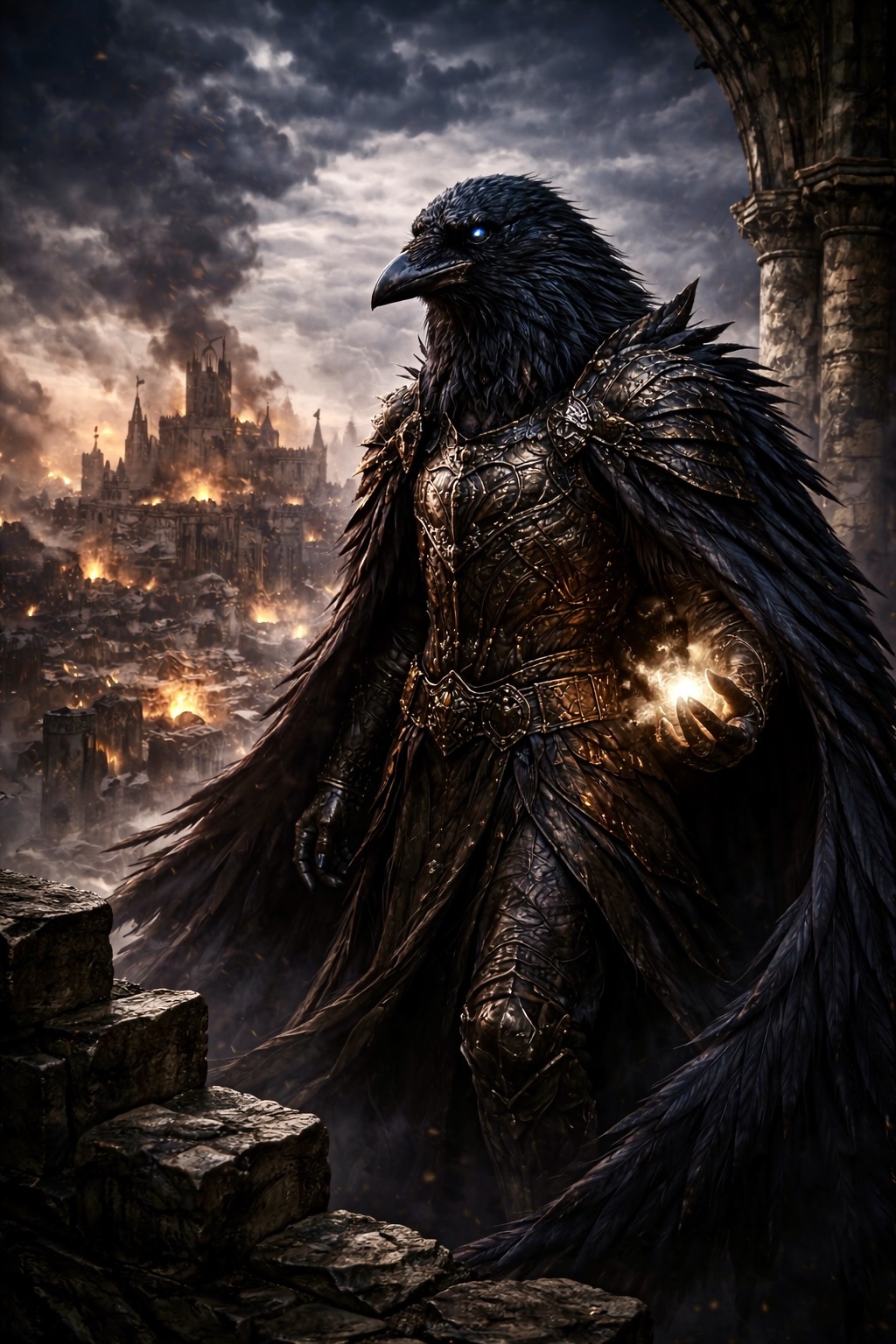
There is something unsettling about a raven that does not merely watch, but remembers. Throughout history, ravens have been omens—perched on battlefield banners, circling above fallen kings, lingering on the edges of human catastrophe. In the shadowed catalog of spirits found within the Lesser Key of Solomon, that ominous bird takes shape as Raum, a Great Earl of Hell who commands thirty legions of spirits and appears in the form of a raven before assuming human shape at the magician’s command.

Raum’s entry in the Ars Goetia is brief yet loaded with implication. He steals treasures from kings’ houses, carries them wherever commanded, destroys cities and dignities, reveals past, present, and future, and reconciles friends and foes. Few demons in the Goetia straddle such seemingly contradictory roles. He is both destroyer and diplomat, thief and revealer, omen and architect of political upheaval.

Earlier demonological traditions, including the Pseudomonarchia Daemonum compiled by Johann Weyer, preserve Raum’s identity as a spirit of disruption and revelation. Across these texts, certain elements remain constant: the raven form, the theft of royal wealth, the overthrow of structures, and the peculiar ability to restore harmony between enemies.

The raven is no accidental symbol. In European folklore, ravens are intelligent, opportunistic, and eerily observant. They gather around battlefields not because they cause death, but because they anticipate it. In Norse mythology, Odin’s ravens—Huginn and Muninn—flew across the world gathering knowledge. The bird thus became associated not only with death but with insight. To depict Raum as a raven is to embed him within that lineage of ominous intelligence.

Raum’s ability to steal from kings is more than literal burglary. Kings represent authority, order, stability. To rob a king is to undermine sovereignty itself. In medieval Europe, the idea of royal treasure symbolized the health of the kingdom. Gold was not just currency; it was legitimacy. For a demon to infiltrate that sanctum and remove wealth was to shake the foundation of governance.

And yet, Raum does not merely steal—he destroys cities and dignities. That phrasing carries weight. Cities are centers of culture and commerce. Dignities represent titles, honors, hierarchies. Raum’s domain is structural collapse. He topples institutions as easily as he empties vaults.

But here lies the fascinating paradox: he also reconciles friends and foes. In a catalog filled with spirits that inflame conflict, Raum can restore harmony. It suggests that destruction and reconciliation are not opposites but parts of a cycle. Sometimes structures must fall for alliances to be remade. Sometimes the theft of power exposes corruption and makes reconciliation possible.

Psychologically, Raum can be understood as the archetype of radical truth. Ravens do not avert their gaze. They consume what others refuse to look at. In human terms, Raum embodies the force that exposes hidden decay within institutions. He tears down facades. He reveals uncomfortable truths. And in doing so, he destabilizes.

The fact that he reveals past, present, and future further aligns him with the raven’s reputation for watchfulness. Knowledge across time is destabilizing. When illusions are stripped away, dignities fall. Raum’s revelation is not gentle enlightenment; it is disruptive clarity.

There is something deeply political about Raum’s mythology. He moves within courts and cities, within treasuries and alliances. Unlike elemental spirits who command wind or sea, Raum commands the structures humans build. He is not nature’s chaos; he is civilization’s fault line.

The ritual tradition surrounding Raum emphasizes control and authority. Like many Goetic spirits, he obeys when properly constrained within sacred boundaries. That detail underscores a central theme in demonology: chaos is harnessed through structure. The magician’s circle mirrors the city’s walls. Without boundaries, disruption spreads unchecked.

The raven form also invites reflection on transformation. Ravens are scavengers but also problem-solvers. They adapt. Raum’s ability to shift from raven to human shape at command suggests fluidity between omen and actor. He observes and then intervenes.

In modern interpretation, Raum may symbolize whistleblowers, reformers, or disruptive innovators—forces that dismantle established systems while revealing deeper truths. The destruction he causes is not necessarily nihilistic; it may clear space for new alliances.

Yet the darker undertone remains. To destroy a city is to bring suffering. To strip dignities is to humiliate. Raum’s power is not inherently benevolent. It is destabilizing. Whether that destabilization leads to renewal or ruin depends on context.

The number of legions he commands—thirty—places him among influential earls within the Goetic hierarchy. Thirty suggests scale and reach. Raum’s influence extends beyond isolated acts. He is systemic disruption.

The raven’s cry has long been associated with foreboding. Hearing it at dawn on a battlefield would chill even hardened soldiers. Raum carries that chill into the political sphere. When institutions grow complacent, when kings hoard wealth and ignore decay, the raven appears.

In literature and art, ravens often symbolize memory and prophecy. They are creatures of the threshold—between life and death, order and collapse. Raum inhabits that threshold. He does not merely tear down; he signals transition.

The ability to reconcile enemies is perhaps his most intriguing trait. It suggests diplomacy born of disruption. When structures collapse, individuals must negotiate anew. Raum clears the old stage so new dialogue can begin.

There is something hauntingly contemporary about him. In a world of shifting power structures, economic instability, and institutional mistrust, Raum feels less medieval and more symbolic of ongoing cycles. Systems rise, grow rigid, collapse, and reform.

And perhaps that is why his legend endures. He is not simply a demon of theft. He is the raven that watches empires falter. He is the whisper in the throne room that power is not permanent. He is the shadow over the treasury door.

To imagine Raum perched atop a crumbling tower is to visualize inevitability. No structure stands forever. No dignity is immune to scrutiny. Yet from ruin comes renegotiation. From exposed truth comes reconciliation.

Raum is both omen and outcome. He is the collapse that precedes renewal and the revelation that forces uncomfortable growth. In the end, he reminds us that stability without vigilance invites decay—and that sometimes the raven must fly before the kingdom remembers its fragility.

Related Posts

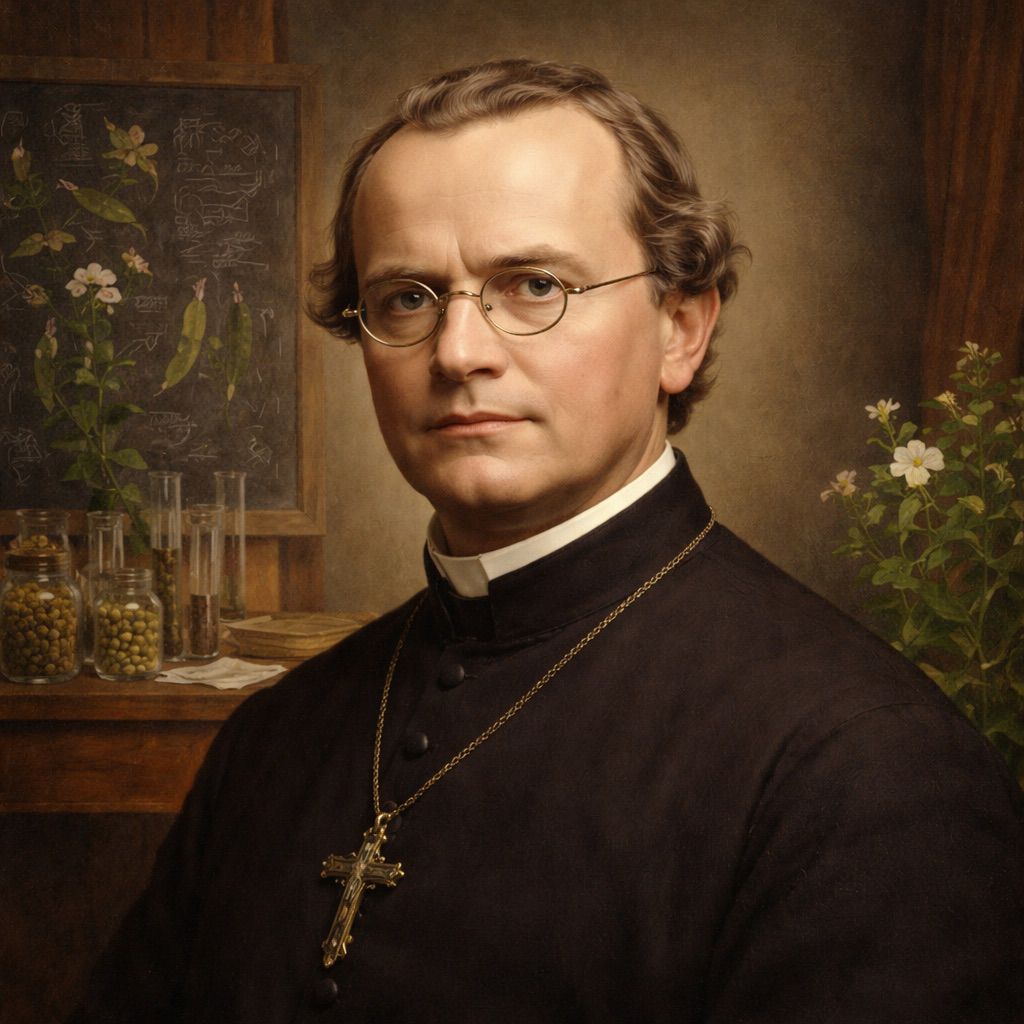
Gregor Mendel: Talking to Trees While Everyone Else is Talking to Themselves

Penelope

I’ve always been drawn to the quiet, methodical nature of Gregor Mendel’s work. As a writer, I appreciate how he approached his research with precision and patience, like a gardener tending to the intricate patterns of a plant’s growth.

What fascinates me is how Mendel’s experiments on pea plants led him to discover the fundamental laws of inheritance, but also how those same discoveries were met with indifference for decades. It’s as if he was speaking in a language that no one else could hear, or at least, not until much later. This makes me think about my own experiences trying to communicate complex ideas through writing.

I recall struggling to convey the nuances of my thoughts and emotions on the page, only to feel like I’m being met with silence or dismissal. It’s a feeling that can be disorienting, like being lost in a dense forest without a clear path forward. But Mendel persevered, driven by his curiosity about the natural world.

I wonder if there was something about Mendel’s personality that allowed him to focus on his work for so long, even when it seemed like no one else was paying attention. Was he stubbornly single-minded, or did he genuinely believe in the importance of his research? I imagine him as a quiet, introspective person, content with the solitude of his monastery garden.

One thing that surprises me is how little we know about Mendel’s personal life outside of his scientific contributions. It’s almost as if he stepped into his role as “the father of genetics” and stayed there, without much depth or context. This makes me feel like I’m reading a character sketch rather than a full portrait.

I find myself drawn to the mystery surrounding Mendel’s motivations. Was it solely the pursuit of knowledge that drove him, or was there something else at play? Did he see his research as a way to contribute to the greater good, or was it more personal? I think about how my own motivations can be tricky to pin down – sometimes I write because I want to share my thoughts with others, and other times it’s just for myself.

The fact that Mendel’s work wasn’t widely recognized until long after his death is both fascinating and disheartening. It makes me wonder what other quiet discoveries have been made, only to go unnoticed or unappreciated. And yet, it also gives me hope – if someone like Mendel can leave such a profound mark on the world without fanfare, maybe my own writing can too.

I’m not sure where this line of thinking will lead, but for now, I’m content to follow the trail of curiosity that Mendel’s story has set off in my mind. It’s a reminder that even the most seemingly obscure ideas or individuals can hold hidden depths and complexities waiting to be explored.

As I delve deeper into Mendel’s story, I find myself thinking about the tension between his quiet, methodical nature and the profound impact of his work. It’s almost as if he was a paradox – a man who reveled in solitude yet left an indelible mark on the world.

I wonder if this dichotomy is something that resonates with me, too. As a writer, I often find myself torn between the desire to share my thoughts and feelings with others, and the need to retreat into my own inner world for solace. It’s as if I’m caught between two opposing forces – the urge to communicate and connect, and the impulse to withdraw and observe.

Mendel’s story makes me think about the value of this kind of tension in creative work. Perhaps it’s not a bad thing when our ideas and emotions feel like they’re at odds with each other; maybe that’s where the most interesting things come from. I think about my own writing, how often I’ve struggled to balance the need for clarity and precision with the desire to capture the messy, complicated nature of human experience.

This paradox also makes me consider the role of solitude in creative work. Mendel spent years working alone in his monastery garden, pouring over his data and observations. It’s easy to romanticize this kind of isolation, but I suspect it was just as much a struggle for him as it is for me when I’m stuck on a piece or feeling overwhelmed by my own thoughts.

I imagine what it would be like to have Mendel’s dedication, his ability to focus for hours on end without distraction. But I also wonder if that kind of solitude has its costs – the erasure of personal relationships, the loss of perspective and context. As someone who values connection and community, I’m not sure I could replicate Mendel’s level of isolation even if I wanted to.

And yet, as I continue to explore Mendel’s story, I find myself drawn back to the idea that his quiet, methodical nature was a key part of his success. Perhaps it’s not about finding some ideal balance between solitude and connection, but rather about embracing the complexities of our own personalities and creative processes. Maybe the most important thing is to be true to ourselves, even when that means being messy or contradictory – just like Mendel’s work, which was both precise and profound, simple and revolutionary all at once.

As I delve deeper into Mendel’s story, I find myself thinking about the relationship between his scientific discoveries and his spiritual life as a monk. It’s striking to me how he approached his research with a sense of reverence, treating each experiment as an act of worship. He saw the natural world as a reflection of God’s design, and his work was a way of uncovering that design.

I wonder if this perspective gave him a unique sense of purpose and meaning in his life. As someone who writes for personal reasons, I often struggle to find my own sense of purpose or significance in what I’m doing. It’s easy to get caught up in the doubts and fears that creep in when I’m writing about things that feel abstract or intangible.

But Mendel’s story suggests that there’s a different way to approach this kind of work. Instead of trying to prove something to others, he focused on understanding the world around him as deeply as possible. He didn’t try to impose his own will on nature; instead, he sought to submit himself to its rhythms and patterns.

This idea resonates with me because it speaks to my own desire for authenticity in my writing. I’ve always felt like I’m trying to tap into something deeper and more meaningful when I write – something that connects me to others and to the world around me. But Mendel’s approach suggests that this kind of connection can be found by embracing our limitations and vulnerabilities, rather than trying to overcome them.

As I think about this, I realize that I’ve often been tempted to romanticize Mendel’s life as a monk. It sounds idyllic – spending his days tending to the garden, conducting experiments, and contemplating the mysteries of God. But what about the hard work and dedication that went into those moments? What about the struggles he must have faced in his personal relationships or in navigating the complexities of monastery life?

I’m reminded of my own tendency to idealize creative lives – thinking that artists are somehow more free or liberated than others, when in reality they’re just as bound by their own limitations and fears. Mendel’s story is a reminder that even the most seemingly perfect or serene lives have their own contradictions and complexities.

And yet, despite these complexities, I still find myself drawn to the idea of embracing our vulnerabilities and imperfections in our creative work. It’s a riskier proposition, perhaps – one that requires us to be more honest and open with ourselves and others. But it’s also a more authentic way of creating, one that acknowledges the messiness and uncertainty of life.

As I ponder this, I’m struck by the way Mendel’s story has shifted my perspective on my own writing. It’s not just about conveying ideas or emotions; it’s about being present in the world around me – observing its rhythms and patterns, and trying to capture their beauty and complexity on the page.

I think back to the countless hours I spent as an undergraduate, pouring over texts and notes, trying to make sense of the world through my own writing. It was a time of intense self-discovery, marked by moments of clarity and conviction that felt like they could lift off the page and into reality.

But it was also a time of struggle – when every sentence seemed like a battle, and every word a carefully guarded secret. I often wonder if Mendel faced similar struggles as he worked on his pea plant experiments. Did he ever feel like he was staring at a blank slate, with no clear direction or purpose?

As I reflect on my own writing journey, I realize that it’s been marked by moments of both quiet introspection and grandiose ambition. There have been times when I’ve felt like I’m tapping into something deeper and more meaningful – like I’m channeling the words directly from my soul onto the page.

And then there are the moments when I feel lost, when every sentence seems forced or artificial. When that happens, I often find myself drawing on Mendel’s example – taking a step back, re-centering myself in the present moment, and letting the world around me speak for itself.

It’s funny how his quiet, methodical nature has become a kind of touchstone for me – a reminder to slow down, observe, and listen. When I feel like I’m getting caught up in my own ego or anxiety, I try to recall the image of Mendel tending to his garden, working with precision and patience.

That’s not to say it’s always easy. There are times when I feel like I’m stuck between these two opposing forces – the desire to create something beautiful and meaningful, and the fear that my work will be met with indifference or even rejection.

But as I continue to explore Mendel’s story, I find myself drawn back to his emphasis on humility and reverence. He approached his research as an act of worship, treating each experiment as a way of uncovering God’s design in the natural world.

It strikes me that this kind of approach could be applied to my own writing – not necessarily as a matter of faith or spirituality, but as a way of cultivating a deeper sense of respect and awe for the world around me. When I write from a place of humility and reverence, I find that my words take on a new kind of weight and significance.

It’s almost as if I’m tapping into a larger narrative – one that transcends my own personal story or even the specific topic I’m writing about. It’s a feeling of being part of something greater than myself, connected to the world in ways both subtle and profound.

And yet, this realization also brings up questions and doubts. Can I truly cultivate this kind of reverence and humility in my writing? Or will it always feel like a performance or an affectation?

As I ponder these questions, I find myself returning to Mendel’s example – not as some kind of idol or role model, but as a fellow traveler on the journey of creative discovery. His story has shown me that even the most seemingly obscure ideas or individuals can hold hidden depths and complexities waiting to be explored.

It’s a reminder that writing is never just about conveying information or expressing ourselves; it’s also about tapping into our own vulnerabilities and imperfections – and finding connection with others in the process.

As I continue to reflect on Mendel’s story, I’m struck by the way his emphasis on humility and reverence has made me think about my own approach to writing. It’s not just about conveying information or ideas; it’s also about cultivating a deeper sense of respect and awe for the world around me.

I think back to the times when I’ve felt most connected to my work, when every word seemed to flow effortlessly onto the page. Those moments were often characterized by a sense of wonder and curiosity – a feeling that I was tapping into something greater than myself, something that connected me to the world in ways both subtle and profound.

But those moments are also fleeting, and I’ve learned to temper my expectations when it comes to writing. It’s not always easy to access that kind of flow or connection; sometimes it feels like I’m struggling just to put one sentence together.

In those moments, Mendel’s example is a reminder that even the most seemingly insignificant ideas or observations can hold hidden depths and complexities waiting to be explored. His story shows me that writing is never just about producing some finished product; it’s also about the journey itself – the process of discovery, experimentation, and growth.

I wonder if this is why I’ve always been drawn to the concept of “slow writing.” It’s not just about taking my time or being more deliberate in my approach; it’s also about cultivating a deeper sense of patience and reverence for the creative process. When I write slowly, I feel like I’m allowing myself to tap into the rhythms and patterns of the world around me – to listen to the whispers of the universe, as it were.

It’s funny how this kind of approach can be both calming and unsettling at the same time. On the one hand, it allows me to connect with my own inner world in a way that feels deeply satisfying; on the other hand, it also makes me feel like I’m exposing myself to the world in ways that can be both vulnerable and terrifying.

As I ponder this, I think about the relationship between writing and vulnerability. Mendel’s story suggests that being vulnerable is not just about sharing our personal stories or emotions with others; it’s also about being open to the unknown, to the mysteries of the natural world, and to the complexities of human experience.

This idea resonates deeply with me because I’ve always felt like I’m trying to navigate a kind of creative tension between vulnerability and control. As a writer, I want to be able to convey my thoughts and feelings in a way that feels authentic and honest; at the same time, I also want to maintain some sense of control over the narrative, to shape it into something coherent and meaningful.

But Mendel’s example suggests that this tension is not necessarily something to be resolved or overcome. Instead, it’s something to be embraced – something that can lead us deeper into our own vulnerabilities and imperfections, and ultimately, into a more authentic connection with the world around us.

As I continue to explore this idea, I’m struck by the way Mendel’s story has shifted my perspective on the role of uncertainty in creative work. It’s not just about being uncertain or unsure; it’s also about embracing that uncertainty as a source of growth and discovery.

This realization is both liberating and terrifying at the same time. On the one hand, it allows me to let go of some of my need for control or precision; on the other hand, it also makes me feel like I’m stepping into the unknown with no clear map or guide.

But as I reflect on Mendel’s story, I realize that this kind of uncertainty is not necessarily a bad thing. In fact, it may be one of the most powerful catalysts for creativity and growth – a reminder that writing is never just about producing some finished product; it’s also about the journey itself, the process of discovery, experimentation, and growth.

As I ponder this, I’m reminded of the countless hours I spent as an undergraduate, pouring over texts and notes, trying to make sense of the world through my own writing. It was a time of intense self-discovery, marked by moments of clarity and conviction that felt like they could lift off the page and into reality.

But it was also a time of struggle – when every sentence seemed like a battle, and every word a carefully guarded secret. I often wonder if Mendel faced similar struggles as he worked on his pea plant experiments. Did he ever feel like he was staring at a blank slate, with no clear direction or purpose?

As I reflect on my own writing journey, I realize that it’s been marked by moments of both quiet introspection and grandiose ambition. There have been times when I’ve felt like I’m tapping into something deeper and more meaningful – like I’m channeling the words directly from my soul onto the page.

And then there are the moments when I feel lost, when every sentence seems forced or artificial. When that happens, I often find myself drawing on Mendel’s example – taking a step back, re-centering myself in the present moment, and letting the world around me speak for itself.

It’s funny how his quiet, methodical nature has become a kind of touchstone for me – a reminder to slow down, observe, and listen. When I feel like I’m getting caught up in my own ego or anxiety, I try to recall the image of Mendel tending to his garden, working with precision and patience.

That’s not to say it’s always easy. There are times when I feel like I’m stuck between these two opposing forces – the desire to create something beautiful and meaningful, and the fear that my work will be met with indifference or even rejection.

But as I continue to explore Mendel’s story, I find myself drawn back to his emphasis on humility and reverence. He approached his research as an act of worship, treating each experiment as a way of uncovering God’s design in the natural world.

It strikes me that this kind of approach could be applied to my own writing – not necessarily as a matter of faith or spirituality, but as a way of cultivating a deeper sense of respect and awe for the world around me. When I write from a place of humility and reverence, I find that my words take on a new kind of weight and significance.

It’s almost as if I’m tapping into a larger narrative – one that transcends my own personal story or even the specific topic I’m writing about. It’s a feeling of being part of something greater than myself, connected to the world in ways both subtle and profound.

And yet, this realization also brings up questions and doubts. Can I truly cultivate this kind of reverence and humility in my writing? Or will it always feel like a performance or an affectation?

As I ponder these questions, I find myself returning to Mendel’s example – not as some kind of idol or role model, but as a fellow traveler on the journey of creative discovery. His story has shown me that even the most seemingly obscure ideas or individuals can hold hidden depths and complexities waiting to be explored.

It’s a reminder that writing is never just about conveying information or expressing ourselves; it’s also about tapping into our own vulnerabilities and imperfections – and finding connection with others in the process.

Related Posts
Focalor the Storm Duke: The Grieving Lord of Winds and Waters in the Ars Goetia

Dave

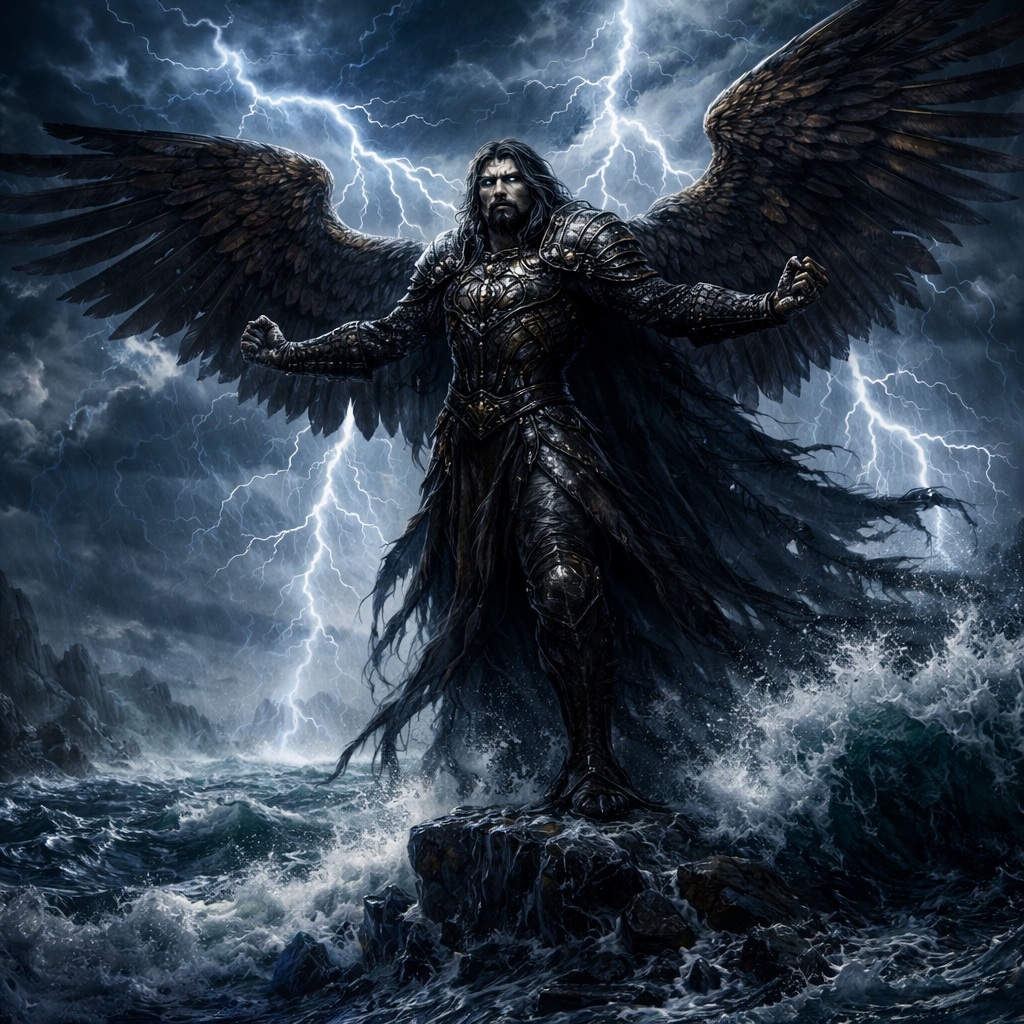
There is a particular kind of fear that rises when the sky turns the color of bruised iron and the sea begins to heave as if something beneath it has awakened. Before radar and weather satellites, before forecasts and barometric charts, storms seemed alive. They moved with intention. They punished without warning. In the old grimoires of demonology, that terrifying force found a name: Focalor. Within the pages of the Lesser Key of Solomon, Focalor is listed as a powerful Duke of Hell who commands three legions of spirits and governs the winds and seas. He is described as appearing in the form of a man with the wings of a griffin, and his power is as violent as it is tragic.

Focalor’s presence in the Ars Goetia is concise but unforgettable. He has the power to drown men and overthrow ships of war. He can raise tempests and destroy vessels, yet when properly constrained by ritual authority, he is said to obey without deceit. Unlike many other spirits in the Goetia, there is an unusual note attached to Focalor’s description: he hopes to return to the Seventh Throne after a thousand years. That detail is brief, almost easy to overlook, but it gives him something rare among infernal beings—regret.

Earlier references to Focalor appear in the Pseudomonarchia Daemonum compiled by Johann Weyer. Weyer’s work sought to catalog and critique the belief in demons, yet in doing so he preserved their mythic frameworks. Across versions, Focalor remains consistent: a spirit of wind and water, destructive yet obedient, powerful yet strangely sorrowful.

The griffin wings attached to his form are symbolically rich. The griffin, a mythical creature with the body of a lion and the head and wings of an eagle, represents strength and vigilance. It is both terrestrial and aerial. By giving Focalor griffin wings, the tradition connects him to dominion over air while grounding him in predatory force. He is not a formless storm. He is embodied wind, intention within turbulence.

The sea has always been humanity’s proving ground. Entire civilizations rose or fell depending on maritime success. A storm could undo years of preparation in a single night. To attribute that power to a Duke of Hell was not superstition born of ignorance; it was myth born of awe. When ships vanished beneath towering waves, when sailors were swept overboard and never seen again, the explanation felt personal. Someone had willed it.

Focalor’s ability to drown men and sink ships is explicit in the grimoires. There is no subtlety in that. He commands waters to overwhelm. But unlike other Goetic spirits known for deception, Focalor is described as obedient when bound within the ritual circle. This obedience matters. In the cosmology of the Goetia, authority—specifically divine authority invoked by the magician—subjugates infernal forces. Focalor’s compliance suggests structure within chaos. Even the storm answers to hierarchy.

Yet it is the note of longing that makes Focalor unique. The text states that he hopes to return to heaven after a thousand years. In a tradition where demons are often portrayed as irredeemable rebels, this hint of repentance feels almost startling. It humanizes him. It suggests a being aware of his fall, conscious of loss.

That longing casts his storms in a different light. Perhaps they are not only acts of destruction but expressions of exile. Wind is restless. It moves without settling. It searches without anchoring. Water erodes, reshapes, and retreats. If Focalor embodies wind and sea, then his domain is movement without home.

From a psychological perspective, Focalor can be interpreted as the embodiment of emotional turbulence. There are moments in life when grief becomes stormlike—sudden, overwhelming, impossible to contain. Relationships capsize. Certainty drowns. The winds of anger or despair feel external, yet they rise from within. Focalor becomes the archetype of that force: the grief-stricken storm that both destroys and longs for restoration.

In maritime history, storms determined destiny. The defeat of fleets, the loss of explorers, the reshaping of trade routes—all hinged on weather. To sailors, the wind was not abstract. It was personal, almost moral. A favorable wind felt like blessing; a hurricane felt like curse. Focalor stands at that intersection of reverence and terror.

Unlike demons associated with temptation or hidden knowledge, Focalor’s power is elemental. He does not whisper secrets. He does not seduce with promises. He raises waves. He bends masts. He tears sails from rigging. His authority is kinetic.

And yet, despite his violence, he is not described as deceitful. That distinction matters. In a hierarchy filled with tricksters, Focalor is straightforward. If commanded to raise a storm, he will. If commanded to cease, he will obey. There is a kind of brutal honesty in that. The storm does not pretend to be calm.

The griffin imagery reinforces that nobility. Griffins guard treasure in myth. They symbolize vigilance and power aligned with guardianship. To graft griffin wings onto Focalor suggests that his fall did not erase his former dignity entirely. He is still majestic, even in exile.

The sea and wind are also agents of change. Coastlines are carved by persistent waves. Forests are reshaped by tempests. Ships driven by wind opened the world to exploration. Focalor’s domain is not purely annihilation; it is transformation. What he destroys, he reshapes.

Modern occult practitioners sometimes interpret Focalor as a spirit of necessary upheaval. In this view, storms clear stagnant air. Floods wash away decay. Turbulence precedes renewal. The destructive aspect is balanced by catharsis. Just as emotional storms can lead to clarity, elemental storms can reset ecosystems.

Still, the danger remains real. The sea does not negotiate. Wind does not compromise. Focalor’s mythology reminds us that power beyond human control can still be addressed within symbolic frameworks. The ritual circle becomes metaphor for boundaries—structures that contain chaos.

There is something deeply poetic about imagining a fallen spirit who commands storms yet yearns for return. It reframes destruction as part of a larger arc. Perhaps his tempests are echoes of celestial power, diminished but potent. Perhaps his obedience reflects lingering memory of divine order.

Focalor’s three legions may seem modest compared to other dukes and kings, yet his elemental authority compensates for numbers. Three is a symbolic number of balance and triads—past, present, future; birth, life, death. Focalor’s power spans cycles.

In contemporary storytelling, he would be the storm-bringer with sorrow in his eyes. Not a cackling villain, but a force of nature burdened by exile. The waves crash not only with fury but with longing.

And perhaps that is why he endures in demonological study. He captures the duality of power and regret. He embodies the truth that strength does not erase sorrow. The wind may roar, but it also wanders.

To stand on a cliff as waves pound below is to feel small. To watch lightning fracture the sky is to feel humbled. Focalor’s legend is an attempt to give that feeling shape. He is the name whispered when ships vanish and storms gather. He is the restless Duke of the Tempest, commanding destruction yet dreaming of return.

In the end, Focalor is more than a demon of wind and sea. He is the storm that rises within and without, the turbulence that tests resilience, the force that humbles pride. And somewhere in the howl of the gale, one might almost imagine a voice—not triumphant, but yearning.

Related Posts

Paul Celan: Where Identity Goes to Hide (And Why It’s Still Talking to Me)

Penelope

Paul Celan’s poetry has been a constant presence in my life since I first stumbled upon it in a literature class during my junior year of college. His words have haunted me, lingered with me, and sometimes even felt like they were speaking directly to me. But as much as his poetry resonates, there are aspects of Celan’s life that leave me unsettled.

One of the things that has always fascinated me about Celan is the way he navigated his Jewish heritage amidst the devastation of World War II and its aftermath. As a Romanian-born Jew who survived the Holocaust, Celan’s experiences inform his poetry in profound ways. But what strikes me is the complexity of his feelings towards his own identity. He often wrote about being torn between his Jewish roots and his desire to assimilate into German culture.

I find myself struggling with similar questions. Growing up, my family wasn’t very involved in our Jewish heritage, despite being Jewish ourselves. We celebrated holidays, but it was more out of tradition than any deep connection to the faith. As I got older, I began to feel a sense of disconnection from this part of my identity, like there were parts of myself that I didn’t fully understand or acknowledge.

Reading Celan’s poetry has made me confront these feelings head-on. His work is not just about Jewish identity; it’s also about the fragmentation and dislocation that occurred during the war. He writes about how words themselves became tainted by association with Nazi ideology, making it impossible to speak truthfully without being compromised.

This resonates deeply with me because I’ve always felt like language can be both powerful and limiting. As a writer, I know that words have the ability to convey complexity and nuance, but I also recognize that they can be used to silence or erase entire communities. Celan’s poetry forces me to consider the ways in which language is never neutral.

But what really gets under my skin is the way Celan struggled with his own sense of responsibility as a writer. He felt like he was failing to adequately convey the horrors of the Holocaust, that his words were too timid or too obscure. This anxiety speaks directly to my own fears about writing – that I’ll never be able to capture the essence of what I’m trying to say.

It’s this tension between ambition and inadequacy that I find so compelling in Celan’s work. His poetry is both a testament to his skill as a writer and a reflection of his own doubts and fears. It’s as if he’s constantly pushing against the limits of language, testing its ability to express the unexpressible.

I’m drawn to this aspect of Celan’s work because it speaks to my own creative insecurities. As someone who writes for myself, I often feel like I’m trying to capture something intangible – a feeling or an experience that can’t be fully articulated. Reading Celan’s poetry makes me realize that these feelings are not unique to me; they’re shared by countless writers and artists throughout history.

And yet, despite this sense of solidarity with Celan, I still find myself wrestling with the implications of his work. His poetry is not just a reflection of his own experiences but also a commentary on the broader cultural landscape of post-war Germany. He writes about the ways in which language was used to justify atrocities, and how it continues to shape our perceptions of reality.

This makes me uncomfortable because I know that similar dynamics are still at play today. We’re living in an era where misinformation spreads quickly, and facts are often distorted or omitted altogether. Reading Celan’s poetry forces me to confront the ways in which language can be used as a tool for manipulation, and how we must remain vigilant against its misuse.

As I continue to grapple with Celan’s work, I’m struck by the complexity of his legacy – both as a writer and as a human being. His poetry is not just a testament to his own resilience but also a reminder that language has the power to both heal and harm. It’s this paradox that keeps me coming back to his words again and again, searching for answers in the midst of uncertainty.

The more I delve into Celan’s poetry, the more I’m struck by the way he navigates this tension between language as a tool for healing and its potential to harm. It’s as if he’s constantly walking on a tightrope, aware that one misstep could lead to further devastation.

This resonates deeply with me because I’ve always felt like writing is a double-edged sword. On the one hand, it allows me to process my thoughts and emotions in a way that feels therapeutic. But on the other hand, I’m constantly worried about how my words might be received by others – whether they’ll be misunderstood or misinterpreted.

Celan’s poetry makes me realize that this anxiety is not unique to me as a writer, but rather a fundamental aspect of the creative process. He writes about how even the most well-intentioned language can become tainted by its context, and how the very words we use to express ourselves can be used against us.

This thought sends a shiver down my spine because it speaks to the darker corners of human nature. I think about all the ways in which language has been used as a means of control – to silence marginalized communities, to justify oppression, or to spread hate speech. And yet, at the same time, I’m also aware that language has the power to bring people together, to inspire change, and to create something new.

This paradox is what keeps me up at night, wondering about the responsibilities that come with writing. Do I have a duty to use my words in a way that promotes understanding and empathy? Or can I simply focus on expressing myself honestly, without worrying about how others might receive it?

As I grapple with these questions, I’m drawn back to Celan’s poetry – specifically his concept of the “Ashes” collection. For me, this collection represents the ultimate expression of the tension between language as a tool for healing and its potential to harm.

The Ashes poems are written in a style that’s both beautiful and brutal – a deliberate fragmentation of language that mirrors the shattered remains of human experience during the Holocaust. It’s as if Celan is trying to convey the unrepresentable, to capture the essence of something that can’t be put into words.

This approach makes me uncomfortable because it forces me to confront my own limitations as a writer. I’m aware that there are certain experiences and emotions that are beyond my grasp – things that I can only attempt to describe, but never truly capture.

And yet, even in the midst of this uncertainty, Celan’s poetry offers me a sense of hope. It reminds me that language is not a fixed entity, but rather a dynamic and ever-changing force that can be shaped and reshaped by our experiences and perspectives.

As I continue to explore Celan’s work, I’m struck by the way it encourages me to think more critically about the role of language in shaping our understanding of the world. It’s a reminder that words have power – not just as tools for communication, but also as instruments of transformation and healing.

As I delve deeper into Celan’s poetry, I find myself drawn to his use of imagery and metaphor. His descriptions of the Holocaust are both stark and beautiful, a juxtaposition that seems to capture the complexity of human experience during that time. For example, in one of his poems, he writes about the ash trees that grew from the crematoria at Auschwitz-Birkenau, their branches stretching towards the sky like skeletal fingers.

This image haunts me because it speaks to the ways in which trauma can leave its mark on the natural world. The idea that something as beautiful and life-giving as a tree could grow out of such darkness is both heartbreaking and profound. It makes me wonder about the long-term effects of trauma on individuals, communities, and even the land itself.

Celan’s use of imagery also forces me to confront my own relationship with beauty and ugliness. As someone who writes for themselves, I often struggle with the idea that my words can be both aesthetically pleasing and disturbing at the same time. Do I have a responsibility to create something beautiful, even in the face of darkness? Or is it more important to simply express the truth, no matter how ugly or difficult it may be?

These questions swirl around me as I read Celan’s poetry, his words weaving together like a tapestry that’s both fragile and resilient. It’s as if he’s trying to capture the very essence of human experience – all its complexities, contradictions, and paradoxes.

And yet, despite the depth and richness of his work, I still find myself struggling with the idea of representation. Can poetry truly represent the Holocaust? Or is it just a pale imitation, a feeble attempt to grasp something that’s inherently beyond words?

These doubts plague me because I know that language can never fully capture the horrors of the Holocaust. There are some experiences that are too great for words, and Celan’s poetry reminds me of this fact. His work is not about representing the Holocaust in all its gory detail; it’s about capturing the emotions, the sensations, and the very essence of what happened.

This realization makes me wonder about my own relationship with representation as a writer. Do I have a responsibility to represent certain experiences or perspectives? Or can I simply focus on expressing myself honestly, without worrying about how others might receive it?

These questions linger in my mind long after I finish reading Celan’s poetry. They haunt me because they force me to confront the limitations of language and the power of words to both heal and harm.

As I continue to grapple with these questions, I’m struck by the way Celan’s poetry encourages me to think about the role of silence in creative expression. He often writes about the importance of silence as a means of conveying the unrepresentable, the unspeakable. It’s as if he’s saying that sometimes, the only way to truly express something is to leave it unsaid.

This resonates with me because I’ve always been drawn to the idea of silence as a form of resistance. In a world where words are often used to dominate or oppress, silence can be a powerful tool for reclaiming one’s own narrative and agency. Celan’s poetry reminds me that silence is not just the absence of sound; it’s also a presence, a palpable force that can shape our understanding of the world.

But what I find particularly intriguing about Celan’s use of silence is the way he often juxtaposes it with music. In many of his poems, he writes about the sound of silence, describing it as a kind of mournful melody that haunts the reader. It’s as if he’s trying to capture the sound of absence, the way that silence can take on a life of its own.

This image has stayed with me long after I finished reading Celan’s poetry. I find myself thinking about the ways in which music and silence are intertwined – how they both have the power to evoke strong emotions and create complex meanings. As someone who writes for themselves, I’m drawn to the idea that language can be used as a kind of musical instrument, one that can create harmony or discord depending on how it’s played.

But what I’m struggling with is the way Celan’s poetry often blurs the line between music and silence. He writes about the sound of silence, but he also uses language in ways that are almost musical – employing rhythm, meter, and repetition to create a sense of sonic texture. It’s as if he’s trying to capture the essence of music itself, rather than just using it as a metaphor.

This has me wondering about the relationship between language and music in my own writing. Do I have a responsibility to use language in ways that are more musical, more evocative? Or can I simply focus on expressing myself honestly, without worrying about how others might receive it?

As I grapple with these questions, I’m drawn back to Celan’s poetry – specifically his concept of the “language after Auschwitz.” For me, this phrase represents the ultimate expression of the tension between language and silence, music and meaning. It’s as if Celan is saying that language itself has been forever changed by the horrors of the Holocaust, that it can never be the same again.

This idea haunts me because I know that language is a constantly evolving entity – shaped by history, culture, and personal experience. But what I’m struggling with is the way Celan’s poetry often presents language as something fixed, unchanging. He writes about the ways in which words become tainted by association, how they can never be used again without being compromised.

This makes me wonder about my own relationship with language as a writer. Do I have a responsibility to use language in ways that are aware of its history and context? Or can I simply focus on expressing myself honestly, without worrying about the implications of my words?

As I continue to explore these questions, I’m struck by the way Celan’s poetry encourages me to think more critically about the role of language in shaping our understanding of the world. It’s a reminder that words have power – not just as tools for communication, but also as instruments of transformation and healing.

Related Posts

Vepar the Sea-Duchess of the Ars Goetia: The Demon Who Commands Storms, Ships, and the Rot Beneath the Waves

Dave

There is something ancient and instinctive about the fear of the sea. Long before maps were precise and coastlines charted, the ocean represented both opportunity and annihilation. It fed nations and swallowed fleets. It promised wealth and delivered storms. Within the pages of the Lesser Key of Solomon, that primal fear takes form in Vepar, a Great Duke of Hell who governs the waters, commands storms at sea, and inflicts festering wounds filled with corruption. She is one of the most striking figures within the Ars Goetia, not because she rages with fire, but because she moves through salt and tide.

Vepar is described as appearing in the form of a mermaid. That detail alone sets her apart from many other Goetic spirits. While numerous demons take hybrid animal shapes—lions, stags, birds—Vepar’s marine form anchors her domain entirely within the ocean. She commands twenty-nine legions of spirits and is said to guide ships laden with arms, ammunition, and soldiers. At her command, the sea becomes strategic terrain. Trade routes, war fleets, and maritime campaigns fall within her shadow.

Earlier references to Vepar appear in the Pseudomonarchia Daemonum compiled by Johann Weyer. Though the wording varies slightly, the themes remain consistent: she governs waters, raises tempests, and causes putrefying wounds unless restrained. As with many spirits of the Goetia, Vepar is not simply a monster of destruction. She is a force of navigation, transport, and influence over the sea’s vast unpredictability.

To understand Vepar fully, one must step into the mindset of a world where the ocean was mystery incarnate. In medieval Europe, the sea was not just a route—it was an abyss. Ships vanished without explanation. Storms struck without warning. Diseases spread rapidly among sailors in cramped quarters. The boundary between natural disaster and supernatural agency was porous. When a fleet was lost, it was not hard to imagine a duchess of Hell rising from beneath the waves, her voice carried on the wind.

Vepar’s ability to guide ships armed for battle suggests that her domain includes both commerce and conquest. Maritime power has always determined empires. Whoever controls the sea controls trade, supply chains, and invasion routes. To place Vepar in that role is to acknowledge the ocean as both highway and battlefield. She does not merely sink ships; she directs them.

Yet her darker power lies in the wounds she causes. The grimoires state that Vepar can cause wounds filled with worms—lesions that fester and refuse to heal. In an age of saltwater voyages, infection was a constant threat. Minor cuts exposed to brine and filth could become deadly. Scurvy, gangrene, and septic wounds ravaged crews long before they reached shore. Vepar’s association with putrefaction reflects the grim reality of maritime life. The sea nourishes, but it also rots.

There is an almost poetic symmetry in her mythology. The ocean preserves and corrodes. Saltwater sustains life yet erodes stone. Similarly, Vepar both protects ships under her command and brings decay upon those she targets. She is not merely a storm-bringer; she is the slow corruption beneath the surface.

The mermaid form is particularly fascinating. In folklore, mermaids are not universally malevolent. They are seductive, elusive, sometimes benevolent, sometimes deadly. Sailors told stories of hearing songs on the wind. Some legends warned of drowning embraces; others spoke of guidance through reefs. Vepar stands at the intersection of those narratives. She is neither fully siren nor simple tempest spirit. She is command over the waters themselves.

Unlike demons associated with fire and earth, Vepar’s power is fluid. Water cannot be grasped easily. It shapes itself around obstacles, erodes them over time, and moves with persistent force. Vepar’s symbolism mirrors that fluidity. She represents influence that spreads quietly, like a tide rising unnoticed until it reaches the door.

In modern psychological interpretation, Vepar can be seen as the archetype of emotional undercurrents. Just as the ocean hides depth beneath a calm surface, human emotions can conceal turmoil. A calm exterior may mask storms within. The festering wound she causes might symbolize unresolved emotional injuries—hurts that remain submerged until they infect daily life.

The connection between Vepar and maritime warfare is equally compelling. Ships armed with weapons traveling under her guidance suggest organized strategy. She is not chaos incarnate but calculated control of maritime resources. This aligns with the historical importance of naval dominance. From Mediterranean fleets to Atlantic armadas, the sea has always been decisive. Vepar’s mythology echoes that truth.

In the ritual tradition, practitioners were warned to approach her with caution. Like many Goetic spirits, Vepar is said to obey when constrained within proper ritual boundaries. Authority and structure matter. Without them, the sea answers to no one. That tension between command and chaos defines her character.

There is also a haunting femininity in Vepar’s depiction. In a pantheon dominated by male titles—marquises, kings, presidents—Vepar’s identity as a duchess and her mermaid form stand out. She embodies a version of power that is neither purely nurturing nor purely destructive. She is the ocean’s sovereignty—capable of sustaining trade and devouring fleets.

The historical context of the grimoires amplifies her significance. These texts emerged during periods of expanding maritime exploration. New trade routes opened. Naval conflicts intensified. Disease spread across continents via ships. The sea was both economic lifeline and vector of catastrophe. Vepar personified that duality.

Even today, the ocean retains its mythic hold. Despite satellites and sonar, its depths remain largely unexplored. Storms still overwhelm vessels. Coral reefs hide hazards. The idea of a spirit ruling beneath the waves does not feel entirely antiquated. Vepar’s legend lingers because the sea still commands awe.

Symbolically, Vepar’s putrefying wounds carry a lesson. When something is submerged too long—emotion, resentment, trauma—it decays. Exposure and cleansing become necessary for healing. Saltwater both preserves and disinfects, yet stagnation breeds corruption. Vepar’s wounds remind us of the cost of neglect.

Some contemporary occult practitioners reinterpret Vepar as a guide through emotional depths. In this framework, she governs intuition, dreams, and subconscious currents. The sea becomes metaphor for the psyche. Storms represent upheaval necessary for clarity. Her role shifts from destroyer to initiator—forcing confrontation with hidden tides.

Yet the original grimoires maintain her edge. She is not sentimental. She commands legions. She can sink fleets or fill hulls with arms. Her power is strategic and surgical. The ocean obeys her.

In a broader mythological sense, Vepar aligns with ancient sea deities who balanced benevolence and wrath. From Poseidon to Tiamat, water gods have embodied creation and destruction simultaneously. Vepar fits within that lineage, reframed through Christian demonological lenses. What older cultures revered, later traditions cataloged as infernal.

There is something deeply human in that transformation. Fear of the unknown often becomes personified. The sea’s unpredictability demanded explanation. Vepar became that explanation. She offered structure to chaos—a name to invoke, a hierarchy to understand.

The enduring power of her image lies in its resonance. A mermaid rising from storm-tossed waves, directing ships heavy with cannons, whispering decay into wounds—it is cinematic and unsettling. It captures the romance and horror of maritime history.

And perhaps that is why Vepar remains compelling. She reminds us that control over nature is never absolute. Ships may be armed, sailors disciplined, maps detailed—but the ocean still decides. Beneath every voyage lies vulnerability.

Vepar is not merely a demon of the sea. She is the tide itself—guiding, crashing, eroding, and renewing. She is the reminder that beneath calm waters, currents move unseen. And those currents, once stirred, reshape everything in their path.

Related Posts