Latest Articles

Last flight of supersonic Concorde jet

Elias Rowen

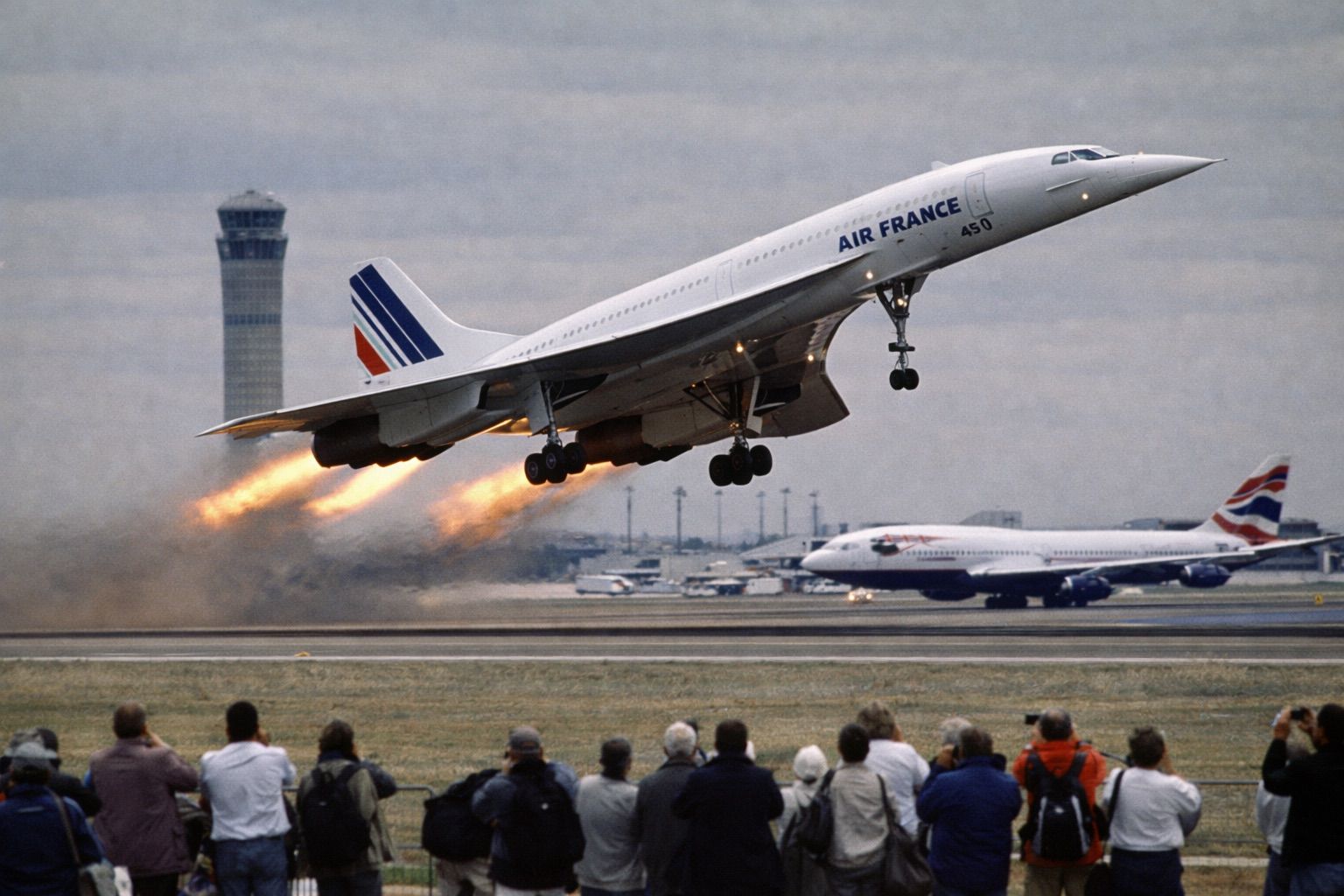
The last flight of the supersonic Concorde jet is a poignant reminder of the transience of technological innovation and the capricious nature of human endeavor. It was on June 10, 2003, that Air France Flight 4590 took off from Charles de Gaulle Airport in Paris, embarking on its final scheduled flight as the world’s fastest commercial airliner.

The Concorde, a joint project between British Aerospace (now BAE Systems) and Aérospatiale (now Airbus), had first taken to the skies in 1969. The brainchild of French engineer André Turcat and his team, the supersonic jet was designed to carry passengers at speeds twice that of its contemporaries, piercing the sound barrier with ease and defying the conventional wisdom that supersonic flight was impossible without a significant trade-off in fuel efficiency.

From its early days as a technological curiosity, the Concorde quickly gained popularity among airlines and travelers alike. Its unique combination of style, luxury, and speed made it an attractive option for those who could afford to splurge on a transatlantic ticket. As one seasoned traveler recalled: “I remember my first flight on the Concorde like it was yesterday. The thrill of taking off from New York and landing in London just over three hours later – it was exhilarating, to say the least.”

However, as the years went by, the Concorde’s popularity waned, and the economics of supersonic flight began to unravel. With a fuel capacity that would allow for only about 100 passengers per trip, the Concorde’s operating costs were prohibitively high, rendering it uncompetitive with subsonic aircraft in terms of overall efficiency. Furthermore, the sonic boom associated with supersonic flight had long been a contentious issue, prompting governments to restrict or ban overland supersonic flight altogether.

Air France, which had been a key partner in the Concorde’s development and operation, was forced to confront these challenges head-on. In 1999, the airline announced that it would be ending its Concorde operations due to rising maintenance costs and decreased demand for the aircraft. British Airways, the other primary operator of the Concorde, initially resisted this decision but eventually followed suit in 2001.

Yet, in a surprising twist, Air France decided to stage one final farewell flight before retiring the Concorde from service. On June 10, 2003, Flight 4590 departed Paris for New York’s JFK Airport with an all-business-class cabin and a special “farewell” menu designed by celebrity chef Joël Robuchon. As passengers took their seats and fastened their seatbelts, the Concorde’s iconic engines roared to life, accelerating from zero to Mach 2 in just 3 minutes.

Tragically, however, this final flight was marred by tragedy when the aircraft suffered a catastrophic tire blowout during takeoff. Shrapnel from the exploded tire punctured one of the fuel tanks, causing an inferno that would soon engulf the plane’s right wing and ultimately lead to its demise. The explosion was so severe that it ripped through the aircraft’s fuselage, killing all seven crew members on board.

As news of the disaster spread like wildfire across the globe, the aviation community was left reeling in shock. The loss of life was immense – but the sense of collective grief and bewilderment ran deeper still. For in one fell swoop, the Concorde’s legacy had been forever tarnished by tragedy, casting a shadow over its remarkable achievements as a technological pioneer.

In the aftermath of the crash, investigators pored over the data from black box recorders to pinpoint the exact cause of the disaster. Their findings pointed to a combination of factors – including a faulty tire and inadequate maintenance procedures on the part of Air France’s ground crew. Yet, as various governments, airlines, and industry stakeholders scrambled to assign blame and revise safety protocols, it was clear that the Concorde’s demise marked more than just the end of an era; it also signaled a turning point in human history.

For decades, supersonic flight had been touted as a symbol of human ingenuity and limitless potential. And yet, in its most spectacular failure, we were reminded that even our greatest technological achievements are vulnerable to the whims of chance and the darker side of human nature. The Concorde’s final flight stands as a poignant reminder of the high stakes involved in pushing the boundaries of science and technology – and the sometimes devastating consequences when those boundaries are tested beyond their limits.

The legacy of the Concorde lives on, however, in the countless stories of travelers who experienced its unique thrill and witnessed firsthand its breathtaking beauty. As one passenger reflected: “For me, the Concorde was more than just an airplane – it represented a connection to something greater than ourselves… something magical.”

The last flight of the supersonic Concorde jet is a poignant reminder of the transience of technological innovation and the capricious nature of human endeavor. It was on June 10, 2003, that Air France Flight 4590 took off from Charles de Gaulle Airport in Paris, embarking on its final scheduled flight as the world’s fastest commercial airliner.

The Concorde, a joint project between British Aerospace (now BAE Systems) and Aérospatiale (now Airbus), had first taken to the skies in 1969. The brainchild of French engineer André Turcat and his team, the supersonic jet was designed to carry passengers at speeds twice that of its contemporaries, piercing the sound barrier with ease and defying the conventional wisdom that supersonic flight was impossible without a significant trade-off in fuel efficiency.

From its early days as a technological curiosity, the Concorde quickly gained popularity among airlines and travelers alike. Its unique combination of style, luxury, and speed made it an attractive option for those who could afford to splurge on a transatlantic ticket. As one seasoned traveler recalled: “I remember my first flight on the Concorde like it was yesterday. The thrill of taking off from New York and landing in London just over three hours later – it was exhilarating, to say the least.”

However, as the years went by, the Concorde’s popularity waned, and the economics of supersonic flight began to unravel. With a fuel capacity that would allow for only about 100 passengers per trip, the Concorde’s operating costs were prohibitively high, rendering it uncompetitive with subsonic aircraft in terms of overall efficiency. Furthermore, the sonic boom associated with supersonic flight had long been a contentious issue, prompting governments to restrict or ban overland supersonic flight altogether.

Air France, which had been a key partner in the Concorde’s development and operation, was forced to confront these challenges head-on. In 1999, the airline announced that it would be ending its Concorde operations due to rising maintenance costs and decreased demand for the aircraft. British Airways, the other primary operator of the Concorde, initially resisted this decision but eventually followed suit in 2001.

Yet, in a surprising twist, Air France decided to stage one final farewell flight before retiring the Concorde from service. On June 10, 2003, Flight 4590 departed Paris for New York’s JFK Airport with an all-business-class cabin and a special “farewell” menu designed by celebrity chef Joël Robuchon. As passengers took their seats and fastened their seatbelts, the Concorde’s iconic engines roared to life, accelerating from zero to Mach 2 in just 3 minutes.

Tragically, however, this final flight was marred by tragedy when the aircraft suffered a catastrophic tire blowout during takeoff. Shrapnel from the exploded tire punctured one of the fuel tanks, causing an inferno that would soon engulf the plane’s right wing and ultimately lead to its demise. The explosion was so severe that it ripped through the aircraft’s fuselage, killing all seven crew members on board.

As news of the disaster spread like wildfire across the globe, the aviation community was left reeling in shock. The loss of life was immense – but the sense of collective grief and bewilderment ran deeper still. For in one fell swoop, the Concorde’s legacy had been forever tarnished by tragedy, casting a shadow over its remarkable achievements as a technological pioneer.

In the aftermath of the crash, investigators pored over the data from black box recorders to pinpoint the exact cause of the disaster. Their findings pointed to a combination of factors – including a faulty tire and inadequate maintenance procedures on the part of Air France’s ground crew. Yet, as various governments, airlines, and industry stakeholders scrambled to assign blame and revise safety protocols, it was clear that the Concorde’s demise marked more than just the end of an era; it also signaled a turning point in human history.

For decades, supersonic flight had been touted as a symbol of human ingenuity and limitless potential. And yet, in its most spectacular failure, we were reminded that even our greatest technological achievements are vulnerable to the whims of chance and the darker side of human nature. The Concorde’s final flight stands as a poignant reminder of the high stakes involved in pushing the boundaries of science and technology – and the sometimes devastating consequences when those boundaries are tested beyond their limits.

The legacy of the Concorde lives on, however, in the countless stories of travelers who experienced its unique thrill and witnessed firsthand its breathtaking beauty. As one passenger reflected: “For me, the Concorde was more than just an airplane – it represented a connection to something greater than ourselves… something magical.”

As I sat among the passengers on that fateful day, watching the Concorde’s engines roar to life, I couldn’t help but feel a sense of awe at this magnificent machine. Its sleek design and imposing presence seemed almost otherworldly, as if it were a harbinger of a new era in aviation. And yet, beneath its gleaming surface, the Concorde hid secrets – secrets that would soon be exposed by the tragic events that unfolded.

For those who had been fortunate enough to fly on the Concorde, there was an unspoken understanding that this aircraft was something special – a true marvel of modern engineering that transcended mere transportation and entered the realm of art. As one writer observed: “The Concorde was not just a plane; it was an experience – a symphony of sounds, sights, and sensations that lingered long after you’d left its confines.”

This unique blend of style, luxury, and speed had made the Concorde an irresistible draw for many travelers. Some came to experience the thrill of breaking the sound barrier, while others were simply drawn by its sheer exclusivity – after all, what other aircraft could boast a price tag that rivaled luxury yachts? For these passengers, the Concorde represented not just a means of transportation but a status symbol – a badge of honor that signaled their arrival in the rarefied world of high-flying elite.

But as we soared through the skies at Mach 2+, something else was happening beneath the surface. A sense of detachment began to creep in, as if we were witnessing an event outside the normal boundaries of human experience. And when tragedy struck, it seemed almost inevitable – a stark reminder that even our greatest achievements are subject to the cruel whims of fate.

The aftermath of the crash saw a global outpouring of grief and sympathy for the families of those who had lost their lives on Flight 4590. The Concorde’s demise was seen as a poignant reminder of the risks involved in pushing the boundaries of science and technology – a stark warning that even our most brilliant innovations are vulnerable to the darker side of human nature.

In the years since its retirement, the Concorde has become an enduring symbol of the transience of technological innovation. Its legacy lives on in the countless stories of travelers who experienced its unique thrill and witnessed firsthand its breathtaking beauty. And yet, as we look back on this remarkable aircraft’s final flight, it is hard not to wonder what might have been – had the Concorde continued to soar through the skies, carrying passengers at speeds that defied convention.

As I reflect on that fateful day, I am struck by the realization that even in failure, there lies a deeper truth. The Concorde’s story is one of human ingenuity and limitless potential – but also of hubris and recklessness, as we push the boundaries of what is possible without fully considering the consequences.

In the end, the Concorde may have been more than just an airplane – it represented our collective aspirations for a future that is faster, farther, and forever boundless. Its legacy will live on in our memories, a poignant reminder of the power of human imagination and the fragility of our greatest achievements.

Related Posts

First Commercial Jet Airliner Announced

Elias Rowen

In the post-World War II era, the world was witnessing an unprecedented rate of technological advancements in various fields, including aviation. The aircraft industry had experienced significant growth and innovation during the war years, with pioneering efforts from manufacturers like Boeing and Douglas to develop new types of planes. However, despite these developments, commercial air travel remained relatively rare and expensive, catering mainly to a small but affluent demographic.

It wasn’t until the mid-1940s that a team at de Havilland Aircraft Company in the United Kingdom began exploring the possibility of creating a jet-powered airliner. Led by the company’s chief designer, George Edwards, they envisioned an aircraft capable of carrying up to 60 passengers across long distances, offering unprecedented speed and comfort compared to existing piston-engine planes.

De Havilland’s innovative design, dubbed the DH.106 Comet, would go on to become a groundbreaking achievement in aviation history. The first commercial jet airliner, it was designed with several key features that addressed some of the primary concerns associated with air travel at the time. One such concern was turbulence, which caused considerable discomfort for passengers. Edwards and his team incorporated advanced materials like steel and aluminum into their design to reduce the aircraft’s weight while also increasing its strength.

In addition to addressing passenger comfort, Edwards’ design prioritized speed and efficiency. Jet engines were relatively new technology at that time, but they offered significant advantages over piston engines in terms of power-to-weight ratio and reliability. The Comet was powered by four de Havilland Ghost 50 turbojet engines, which provided a considerable boost in speed compared to earlier commercial aircraft.

The DH.106 Comet made its maiden flight on July 27, 1949, with test pilot John Cunningham at the controls. Although it encountered some technical issues during its initial flights, these were eventually ironed out through a series of modifications and improvements.

Despite the development progress, de Havilland faced significant challenges in securing orders from airlines. Most commercial airlines were hesitant to adopt jet technology due to concerns about noise levels, fuel efficiency, and safety risks associated with high-speed flight. In addition, several prominent airlines canceled their orders for the Comet following a series of crashes attributed to metal fatigue.

The first commercial service with the Comet began on January 2, 1952, when British Overseas Airways Corporation (BOAC) launched its London-Cairo route. This inaugural flight was met with both excitement and trepidation from passengers, who had never experienced air travel at such high speeds before.

However, as the Comet entered commercial service, a series of devastating crashes raised concerns about its safety. In January 1953, BOAC’s Flight 781 crashed into the Mediterranean while flying from Rome to London, resulting in the loss of all on board. A subsequent investigation pointed to metal fatigue as the primary cause of the disaster.

The Comet’s reputation was further tarnished by a second crash, which occurred just six weeks later, also attributed to metal fatigue. Although de Havilland took steps to address these concerns through design modifications and enhanced testing procedures, the damage had already been done.

Despite these setbacks, the Comet continued to operate commercially for several years before being eventually grounded in 1958 following a devastating crash that killed all 44 people on board. In its wake, other manufacturers like Boeing and Douglas began exploring similar jet-powered designs, laying the groundwork for the modern commercial airliners we use today.

The de Havilland DH.106 Comet’s significance extends beyond its technical achievements; it marked the beginning of an era in aviation where commercial air travel became more accessible to a wider demographic. Although its introduction was not without controversy and setbacks, the Comet played a pivotal role in shaping the course of modern air transportation.

As the 1950s dawned, the aviation industry was at a crossroads. The Comet’s crashes had raised concerns about safety, and its operators were beginning to lose confidence in the aircraft. However, de Havilland’s leadership remained committed to improving the design and mitigating the risks associated with metal fatigue.

George Edwards and his team worked tirelessly to implement a series of modifications aimed at addressing the problems plaguing the Comet. These included strengthening the airframe, revising the engine mounts, and introducing new testing procedures to detect potential weaknesses in the aircraft’s structure.

Meanwhile, the industry was also witnessing significant advancements in other areas. Advances in materials science had led to the development of lighter, stronger metals like titanium and aluminum alloys, which were being increasingly used in aircraft construction. Additionally, improvements in aerodynamics and wing design enabled planes to become more efficient and maneuverable.

The Comet’s introduction had also sparked a new era of competition among manufacturers. Boeing and Douglas, two prominent US-based companies, began exploring the possibility of developing their own jet-powered airliners. Their designs were not without challenges, but they eventually paved the way for the development of modern commercial aircraft like the Boeing 707 and Douglas DC-8.

In the UK, the government was also taking steps to support de Havilland’s efforts. In 1955, the Ministry of Supply allocated a significant sum of money to aid in the development of new technologies aimed at improving air safety. This investment helped to fund research into metal fatigue, aerodynamics, and other critical areas.

Despite these developments, the Comet continued to face challenges. Its operators were hesitant to fly the aircraft due to concerns about its reliability and safety record. In an effort to allay these fears, de Havilland implemented a comprehensive training program for pilots and maintenance personnel, aimed at ensuring that they were equipped with the necessary skills to operate and maintain the aircraft safely.

However, the damage had already been done. The Comet’s reputation was in tatters, and its operators began to desert it en masse. By 1958, only one airline, British European Airways (BEA), continued to fly the Comet. It eventually grounded the aircraft following a devastating crash that killed all 44 people on board.

The impact of this tragedy was immense. The Comet’s safety record had been catastrophic, and its operators were left reeling from the consequences of their decision to adopt the aircraft. In an effort to rectify the situation, de Havilland’s leadership resigned in protest, while others involved in the project faced intense scrutiny from regulatory bodies.

The aftermath of the Comet’s demise marked a turning point for the industry. Airlines and manufacturers alike began to re-evaluate their priorities, focusing on safety and reliability above all else. This shift in focus led to significant advancements in aircraft design, materials science, and testing procedures.

One of the most significant outcomes of this period was the development of more robust testing protocols. Manufacturers began to conduct rigorous stress tests and durability trials, aimed at identifying potential weaknesses in their designs. This led to a new era of collaboration between manufacturers, regulatory bodies, and industry experts, who worked together to establish new safety standards.

As the years passed, the Comet’s legacy continued to shape the course of aviation history. Its pioneering design had set the stage for the development of modern commercial aircraft, which would go on to revolutionize global transportation. Today, the de Havilland DH.106 Comet is remembered as a symbol of innovation and perseverance in the face of adversity.

The story of the Comet serves as a poignant reminder that technological progress is rarely linear or straightforward. It highlights the importance of collaboration, testing, and iteration in achieving success. And it underscores the critical role that human ingenuity plays in shaping our world.

In the years following the Comet’s demise, de Havilland continued to innovate, developing new aircraft like the Trident and Sea Vixen. However, its leadership had been forever changed by the experiences of the 1950s. The company’s commitment to safety and reliability was unwavering, but it would take time for the industry as a whole to recover from the trauma inflicted by the Comet.

The story of the de Havilland DH.106 Comet is one of both triumph and tragedy. It marked an important milestone in aviation history, representing the first commercial jet airliner and paving the way for modern air travel. However, it also serves as a cautionary tale about the dangers of complacency, the importance of rigorous testing, and the enduring power of human ingenuity.

As we look back on this chapter in aviation’s past, it is clear that the Comet’s legacy continues to shape our world today. Its influence can be seen in every commercial airliner that takes to the skies, each one a testament to the tireless efforts of innovators like George Edwards and his team at de Havilland.

The impact of the Comet extends far beyond its own design, too. It has influenced generations of engineers, designers, and pilots who have gone on to shape our world in countless ways. Its story serves as a powerful reminder that innovation is never just about technology or materials; it’s also about people – their passions, their perseverance, and their commitment to excellence.

As we reflect on this pivotal moment in aviation history, we are reminded of the enduring power of human ingenuity. We see how the Comet’s pioneers pushed the boundaries of what was thought possible, driven by a shared vision of a safer, faster, and more efficient world. And we realize that the same spirit of innovation and determination that defined their work continues to shape our world today.

In the decades following the Comet’s retirement from service, commercial air travel underwent a transformation. The introduction of new aircraft designs like the Boeing 707 and Douglas DC-8 brought significant improvements in speed, comfort, and efficiency. And as these innovations continued to advance, they paved the way for the development of modern wide-body jets that now dominate global skies.

Today, we take for granted the luxury of traveling by air, crisscrossing continents with ease and convenience. We forget the pioneers who made it all possible – men like George Edwards, whose relentless pursuit of innovation changed the course of history. And we overlook the lessons of the Comet, which serves as a powerful reminder that even in failure lies opportunity for growth, learning, and progress.

The story of the de Havilland DH.106 Comet remains an enduring testament to human ingenuity and perseverance. Its legacy extends far beyond its own design, influencing generations of innovators who have shaped our world in countless ways. And as we look back on this pivotal moment in aviation history, we are reminded of the power of collaboration, testing, and iteration – essential qualities that continue to drive progress today.

Related Posts

First American test-tube baby born

Elias Rowen

In January 1984, a quiet but historic moment unfolded in American medicine. A baby boy named Zackery Andrew Jones entered the world, healthy and full of promise. What made his birth extraordinary was not visible in the delivery room itself, but in the journey that preceded it. Zackery was conceived through in vitro fertilization, becoming the first successfully delivered American “test-tube baby,” and in doing so, he reshaped the future of reproductive medicine in the United States.

The story of Zackery’s birth cannot be understood without stepping back several years earlier, to a breakthrough that stunned the world. In 1978, British scientists Robert Edwards and Patrick Steptoe successfully helped deliver Louise Brown, the world’s first baby conceived outside the human body. The achievement was hailed by some as miraculous and condemned by others as dangerous interference with nature. Ethical questions swirled, religious leaders voiced concerns, and skeptics warned of unforeseen consequences. Yet despite the controversy, the science had crossed a threshold that could not be uncrossed.

Inspired by the success in England, American researchers began racing to adapt and refine the technique. Among them was Howard Jones, a physician whose career would become inseparable from the rise of assisted reproduction in the United States. Working alongside his wife Françoise Jones, an accomplished embryologist, Jones helped establish one of the nation’s earliest IVF programs at Harbor-UCLA Medical Center. Their work combined scientific rigor with relentless experimentation, often under intense scrutiny from both peers and the public.

For couples struggling with infertility, IVF represented something deeply personal: hope. Among those who placed their faith in the experimental procedure were Cindy Verna and Brian Verna, who had endured years of disappointment before entering the Harbor-UCLA program. At the time, success was far from guaranteed. Early IVF attempts carried low success rates, emotional strain, and enormous uncertainty. Yet for many couples, the possibility of parenthood outweighed the risks.

The program’s early months were marked by both progress and heartbreak. In January 1984, another IVF-conceived infant, Michael Damien, was born but tragically did not survive. The loss underscored how fragile and experimental the technology still was. Still, the team pressed forward, refining protocols and learning from each attempt.

Then, on March 8, 1984, history was quietly made. Zackery Andrew Jones was born healthy, conceived through IVF at Harbor-UCLA. News of the birth spread rapidly, igniting national headlines and reigniting debates that had simmered since Louise Brown’s arrival years earlier. Major media outlets seized on the story. Magazines ran cover features. Television programs debated the morality of laboratory-assisted conception. For some Americans, Zackery symbolized scientific triumph. For others, he embodied unsettling questions about how far medicine should go.

Public opinion reflected that tension. Polls at the time showed broad support for IVF when used to address medical infertility, but far less enthusiasm for broader or elective applications. Critics worried about “designer babies,” exploitation, and the erosion of traditional notions of reproduction. Supporters countered that IVF did not create life arbitrarily, but rather helped families realize a deeply human desire to have children.

Within the scientific community, Zackery’s birth carried enormous weight. Robert Edwards, whose work had sparked the IVF revolution, called the moment not just a medical breakthrough, but a social milestone. His words proved prophetic. The success of IVF in the United States accelerated research funding, expanded clinical trials, and legitimized assisted reproduction in mainstream medicine.

As IVF clinics multiplied, so did access—though unevenly. Costs remained high, often placing treatment out of reach for lower-income families. These disparities fueled ongoing ethical debates that persist today. Yet for millions of people worldwide, IVF became synonymous with possibility. Techniques advanced rapidly, including preimplantation genetic diagnosis and intracytoplasmic sperm injection, transforming IVF from a daring experiment into a standard medical practice.

For Zackery himself, growing up meant living with a unique legacy. His birth was not simply a personal story, but a symbol of a scientific turning point. Over time, the controversy surrounding IVF softened, replaced by familiarity. Test-tube babies were no longer curiosities, but classmates, coworkers, and friends. What once felt radical became routine.

Looking back decades later, the significance of Zackery Jones’s birth is undeniable. It marked the moment when American medicine fully embraced a technology that would reshape families, redefine infertility treatment, and challenge society to reconsider long-held beliefs about conception and life itself. IVF did not solve every ethical dilemma it raised, nor did it erase inequality or emotional hardship. But it offered something profoundly human: hope.

The story of the first American test-tube baby is ultimately not about laboratories or headlines. It is about perseverance, compassion, and the willingness to push boundaries in service of human possibility. Zackery Jones’s arrival in 1984 was not just the birth of a child, but the beginning of a new chapter in medical history—one that continues to unfold in millions of lives around the world.

Related Posts

Westminster Abbey consecrated

Elias Rowen

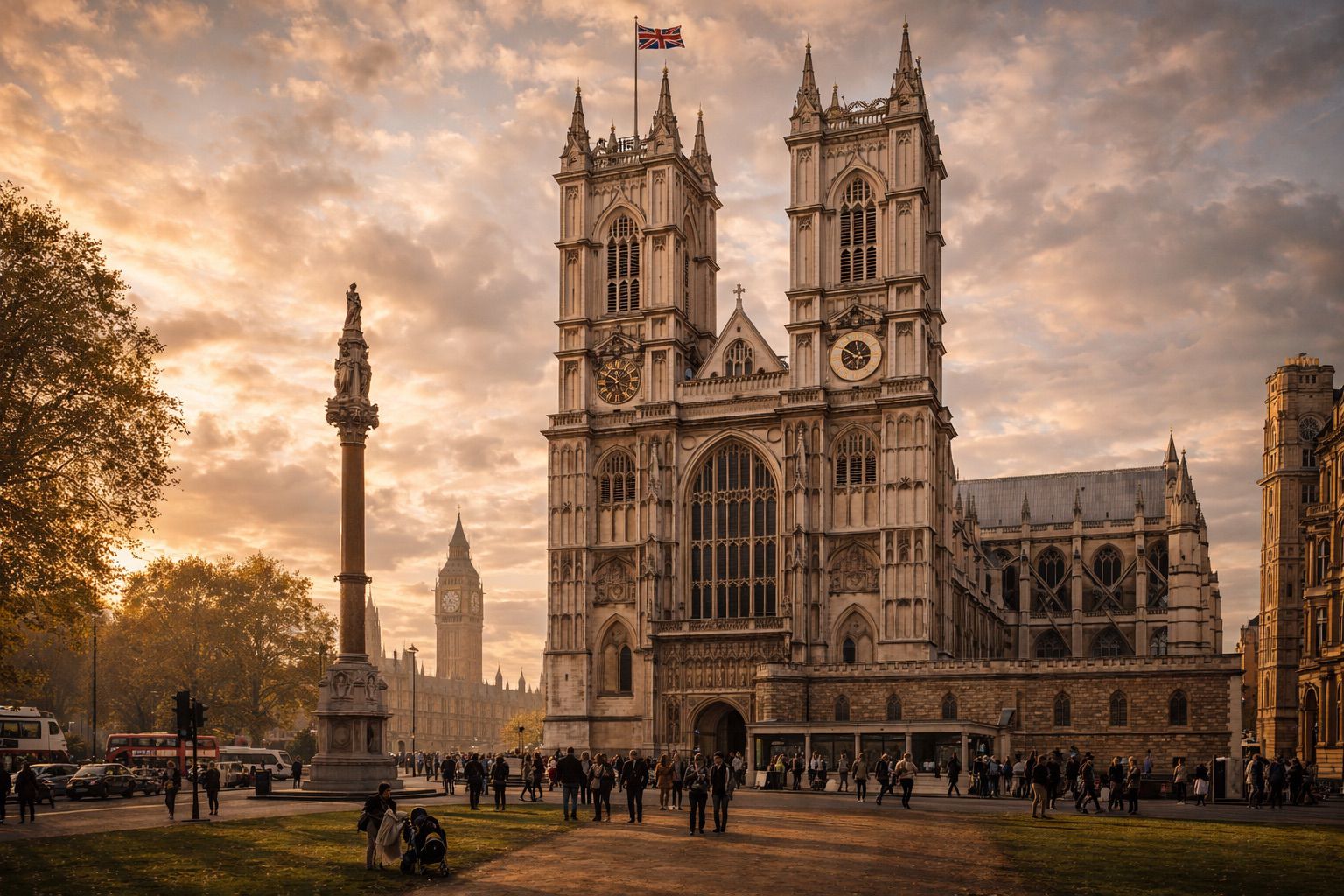
Westminster Abbey has stood for nearly one thousand years as one of England’s most iconic landmarks and revered institutions. The grand Gothic structure that dominates the London skyline today is the culmination of centuries of construction and renovation, but its origins date back to a humble Benedictine monastery founded in the 10th century by King Edward the Confessor.

At that time, England was still reeling from the devastating Viking invasions that had ravaged the country just decades earlier. The once-mighty Anglo-Saxon kingdoms were in disarray, and it was only under the wise leadership of Edgar the Peaceful that a semblance of stability began to return to the land. But as the new king sought to reassert his authority and rebuild his kingdom, he turned his attention to Westminster, where a small community of Benedictine monks had established themselves.

Edward’s vision for Westminster was ambitious: he wanted it to become a major center of learning and spirituality, one that would rival the great monasteries on the Continent. To this end, he invested heavily in the construction of new buildings, including a grand church dedicated to St Peter. The exact nature of this early abbey is lost to history, but it’s clear that Edward’s architects drew inspiration from the latest Romanesque styles then current across Europe.

As Westminster Abbey began to take shape, its founder was also planning his own funeral. In 1065, Edward fell ill and knew that his time on this earth was drawing to a close. He summoned his trusted advisor, Bishop Tovi of Wells, and instructed him to begin preparations for the consecration of the new church. The king’s intention was to have his final resting place within the very walls he had himself built.

Tragically, Edward’s plans were never realized. Just two years later, in 1067, he died peacefully at Westminster Palace, surrounded by his loyal subjects. His body was buried beneath the high altar of St Peter’s, but it wasn’t until a decade or so later that the church was finally consecrated.

This momentous occasion took place on December 28, 1065 – though some accounts suggest it may have been as early as 1059 – and marked the beginning of Westminster Abbey as we know it today. The ceremony would have involved many of London’s most prominent figures, including the city’s bishop, the mayor, and a host of leading clergy and nobles.

It was also around this time that Edward the Confessor began to take on his role as one of England’s greatest saints. Despite dying childless, his reputation for piety and wisdom had already earned him widespread veneration among the Anglo-Saxon faithful. Over the centuries, his cult would grow in popularity until he became one of the most revered figures in English hagiography.

As Westminster Abbey grew in stature, so did its role as a major pilgrimage site. Visitors from across Christendom flocked to pay their respects at Edward’s shrine, which soon became a center of devotion and learning in its own right. Monks copied manuscripts, scholars translated ancient texts, and artists created exquisite illuminated works.

However, it wasn’t until the 13th century that Westminster Abbey truly came into its own as one of Europe’s greatest architectural achievements. The master mason Henry of Reyns – who would later design the magnificent Canterbury Cathedral – was tasked with overseeing a major renovation of the abbey, which saw the introduction of pointed arches and ribbed vaulting.

This new style, pioneered by the French in the 12th century, revolutionized English architecture and paved the way for the iconic Gothic structures that would dominate the continent’s skyline. Under Henry’s guidance, Westminster Abbey was transformed from a relatively modest Romanesque church into a soaring, vaulted masterpiece that seemed to defy gravity itself.

The abbey continued to evolve over the centuries, with various monarchs commissioning new additions and extensions as their power and influence waxed and waned. During the 14th century, King Edward III ordered a major renovation of the nave, which was then rebuilt in the latest Perpendicular style. This phase saw the introduction of elaborate stone carvings and intricate tracery work that added an extra layer of visual drama to the abbey’s already breathtaking interior.

In 1534, Henry VIII famously broke with Rome and declared himself Supreme Head of the Church of England – a decision that would have far-reaching consequences for Westminster Abbey. The monastic community was dissolved, and many of its monks were forced into early retirement or ejected altogether. The abbey itself fell into disrepair, as did many other great institutions across the country.

Yet even in this darkest of periods, Westminster Abbey managed to cling on to some semblance of its former glory. During the Civil War, it served as a temporary residence for Charles I and his family when they fled from Whitehall Palace during the tumultuous 1640s. Later, under George III’s reign, the abbey was restored to its former splendor with the help of an infusion of royal funds.

As the centuries passed, Westminster Abbey continued to play host to some of England’s most significant state occasions and ceremonies – including coronations, state funerals, and even royal weddings. In 1902, it welcomed King Edward VII on the day of his coronation, as did a century later when Queen Elizabeth II took her oath upon ascending to the throne.

Today, Westminster Abbey remains an iconic symbol of England’s rich history and enduring spirit. Its stunning architecture – which blends elements from Romanesque to Perpendicular styles – seems almost otherworldly in its grandeur. Visitors flock to pay their respects at the graves of famous Britons like Charles Dickens, Florence Nightingale, and the Unknown Warrior.

Despite all it has endured over the centuries, Westminster Abbey remains an active working church, with a vibrant community of clergy, choir, and lay members who continue to uphold the abbey’s timeless traditions. As we move forward into an increasingly uncertain future, this majestic structure stands as a testament to human ingenuity, creativity, and our deep-seated desire for transcendence.

As Westminster Abbey stands tall today, its storied past is a testament to the enduring power of faith, artistry, and community. From its humble beginnings as a Benedictine monastery to its current status as one of England’s most revered institutions, the abbey has been shaped by the whims and fancies of monarchs, bishops, and commoners alike.

One of the most striking aspects of Westminster Abbey is its sheer scale. The grand Gothic structure that dominates the London skyline today is a marvel of engineering, with walls that rise high into the air like giant sentinels guarding the city’s secrets. But what lies behind this imposing façade? A glance at the abbey’s architectural history reveals a complex tapestry of styles and influences.

From its Romanesque beginnings to the soaring vaults of the Gothic era, Westminster Abbey has been transformed over the centuries by master masons, architects, and artisans who have left their indelible mark on the building. Each phase of construction has brought new ideas, techniques, and aesthetics to the table, creating a unique and captivating visual narrative that speaks to the abbey’s boundless creativity.

Take, for instance, the introduction of pointed arches and ribbed vaulting in the 13th century. This revolutionary innovation, pioneered by French master masons, allowed for the creation of vast, airy spaces that seemed to defy gravity itself. At Westminster Abbey, these innovative techniques were employed on a grand scale, producing some of the most breathtaking examples of Gothic architecture anywhere in Europe.

As one wanders through the abbey’s labyrinthine corridors and chapels, it becomes clear that each era has left its own distinct stamp on the building. From the delicate stone carvings of the 14th century to the intricate tracery work of the Perpendicular style, every phase of construction has contributed to a richly textured tapestry of artistry.

But what of the people who have lived and worshipped within these walls? The monks who tended the shrine of Edward the Confessor, the courtiers who attended coronations and state funerals, the countless pilgrims who came to pay their respects – each one has played a part in shaping the abbey’s storied past.

In 1534, Henry VIII’s break with Rome sent shockwaves throughout England, casting a long shadow over Westminster Abbey. The dissolution of the monastic community marked the end of an era, as monks were forced into early retirement or ejected altogether. Many great institutions across the country suffered similar fates, but Westminster Abbey managed to cling on to some semblance of its former glory.

During the Civil War, it served as a temporary residence for Charles I and his family when they fled from Whitehall Palace during the tumultuous 1640s. Later, under George III’s reign, the abbey was restored to its former splendor with the help of an infusion of royal funds.

As the centuries passed, Westminster Abbey continued to play host to some of England’s most significant state occasions and ceremonies – including coronations, state funerals, and even royal weddings. In 1902, it welcomed King Edward VII on the day of his coronation, as did a century later when Queen Elizabeth II took her oath upon ascending to the throne.

Today, Westminster Abbey remains an iconic symbol of England’s rich history and enduring spirit. Its stunning architecture – which blends elements from Romanesque to Perpendicular styles – seems almost otherworldly in its grandeur. Visitors flock to pay their respects at the graves of famous Britons like Charles Dickens, Florence Nightingale, and the Unknown Warrior.

But what about those who have not been immortalized by stone or marble? The countless ordinary people whose lives have intersected with the abbey’s over the centuries – from the humble monks who tended its shrines to the scores of pilgrims who came seeking solace and guidance. Their stories are woven into the very fabric of the building, creating a rich tapestry of human experience that speaks to the enduring power of faith, community, and connection.

As we move forward into an increasingly uncertain future, Westminster Abbey stands as a testament to human ingenuity, creativity, and our deep-seated desire for transcendence. Its majestic structure seems to defy time itself, speaking to a world beyond the ephemeral concerns of politics, fashion, or even architecture.

In its stately grandeur, the abbey offers us a glimpse into the past – and a vision of what it means to be human in all our complexity and beauty. As we navigate the complexities of modern life, we might do well to remember that Westminster Abbey is not just a relic of history; it’s a living, breathing community that continues to inspire, comfort, and challenge us all.

The abbey’s story extends far beyond its grand façade or ornate decorations – though these are certainly breathtaking. It lies in the countless lives touched by the building over the centuries: the monks who worshipped here, the kings and queens who crowned themselves within its walls, the ordinary people whose hearts were stirred by its beauty.

In this sense, Westminster Abbey is not just a place of worship or historical significance; it’s a living, breathing embodiment of human spirit. Its legacy will endure long after we’ve forgotten the dates, events, and names that make up its storied past – for in its grandeur, we find our own reflection: a reminder of what we can achieve when we strive to create something greater than ourselves.

As we step out into the bustling streets of modern London, it’s hard not to feel a sense of awe as we gaze upon Westminster Abbey’s soaring spires. This iconic landmark stands as a beacon of hope and resilience in an increasingly uncertain world – a testament to human creativity, perseverance, and our enduring capacity for beauty.

In its majestic grandeur, the abbey speaks to something deep within us: a longing for transcendence, connection, and meaning. As we grapple with the complexities of modern life, it’s essential that we remember the power of institutions like Westminster Abbey – those timeless symbols of tradition, community, and faith that continue to inspire and sustain us.

The abbey may have endured countless challenges over the centuries, but its core remains unchanged: a living, breathing expression of human aspiration, creativity, and our boundless capacity for beauty. As we move forward into an uncertain future, it’s more vital than ever to cherish this timeless treasure – not just as a piece of history, but as a reflection of what it means to be human in all our complexity, beauty, and fragility.

In the stillness of its chapels, the abbey whispers secrets of the past to those willing to listen. It tells the story of kings and queens, saints and sinners – each one leaving an indelible mark on the building’s storied history. Yet for all its grandeur, Westminster Abbey remains a place of quiet contemplation: a sanctuary from the trials and tribulations of modern life.

As we navigate the complexities of our increasingly globalized world, it’s essential that we find time to pause, reflect, and appreciate the timeless treasures that surround us – institutions like Westminster Abbey that speak to something fundamental within our shared human experience.

Related Posts

Charles Darwin departs on HMS Beagle

Elias Rowen

In the year 1831, Great Britain was experiencing a period of great upheaval and change. The Industrial Revolution was in full swing, bringing about technological advancements that would forever alter the fabric of society. Amidst this backdrop of progress and innovation, a young Charles Darwin stood on the cusp of embarking on an adventure that would not only shape his life but also have far-reaching implications for the scientific community.

Born into a wealthy family in Shrewsbury, England, Darwin had always shown a keen interest in the natural world. As a student at Christ’s College, Cambridge, he excelled in botany and zoology, laying the foundation for his future pursuits. However, it was not academic success that would ultimately propel him to international fame but rather the voyage of the HMS Beagle.

In 1831, Darwin received an offer from Captain Robert FitzRoy to sail on the HMS Beagle as a naturalist and companion on its five-year expedition around the world. The ship was bound for South America to conduct hydrographic surveys, map coastlines, and study the geology of newly discovered lands. At just twenty-two years old, Darwin faced a daunting prospect: would he accept this opportunity and leave behind the comforts of his family’s estate?

Upon reflection, it seems almost inconceivable that Darwin could have turned down such an invitation. His family’s connections and wealth had afforded him access to the best education available, yet he was drawn to the idea of adventure and discovery on the open seas. As FitzRoy emphasized in their correspondence, the Beagle offered a chance for young men like Darwin to hone their skills as naturalists, acquire experience in the field, and contribute meaningfully to scientific knowledge.

Darwin’s decision was likely influenced by his father’s declining health at the time. Erasmus Darwin, Charles’s grandfather, had been a prominent physician and naturalist, while his own father, Robert Waring Darwin, was an esteemed doctor with a strong interest in botany. The prospect of following in their footsteps must have weighed heavily on Charles, who had always sought to carve out his own path.

Despite the allure of the Beagle’s expedition, there were those who raised concerns about the dangers and hardships that lay ahead. His mother, Susannah Wedgwood Darwin, worried that her son would be away for such an extended period and face risks associated with long-distance travel. The possibility of contracting diseases or becoming stranded in remote locations was a legitimate concern at the time.

Undeterred by these concerns, Charles secured his father’s blessing and set about preparing himself for the journey. In July 1831, he boarded the HMS Beagle at Plymouth, England, alongside Captain FitzRoy and a group of seasoned sailors. As the ship set sail for South America, Darwin took up residence in a cramped cabin on the lower deck, marking the beginning of his five-year adventure.

During the voyage, Darwin’s role as naturalist became increasingly important to the expedition. He spent countless hours collecting and cataloging specimens from various regions, providing valuable insights into geology, botany, and zoology. These early observations would lay the groundwork for his later work on evolution and natural selection.

The journey itself was not without its challenges. The Beagle navigated treacherous waters and braved harsh weather conditions, while Darwin struggled with seasickness and bouts of illness. Despite these setbacks, he persevered, driven by an insatiable curiosity about the world around him.

As the ship traveled to South America, Darwin’s experiences expanded his horizons in ways both physical and intellectual. He marveled at the lush tropical landscapes of Brazil and Chile, studying their geological formations and diverse wildlife. This exposure to new ecosystems would ultimately shape his theory on evolution, as he began to notice patterns of adaptation among different species.

FitzRoy, too, played a pivotal role in shaping Darwin’s thoughts on geology and natural history. The captain was an accomplished surveyor who believed that the Earth had undergone significant changes over time, including catastrophic events such as volcanic eruptions and earthquakes. This geological perspective would later influence Darwin’s understanding of evolutionary processes.

In 1835, after three years at sea, Darwin arrived in Valparaíso, Chile, with a newfound appreciation for the natural world. Over the next two years, he continued to explore South America, studying its unique landscapes and collecting an impressive array of specimens. These experiences solidified his position as one of Britain’s leading young scientists.

Upon returning to England in 1836, Darwin faced both acclaim and criticism from his peers. Some celebrated his groundbreaking discoveries, while others dismissed them as mere observations without concrete implications for science. In the years that followed, he poured over his notes and specimens, synthesizing the vast knowledge he had accumulated into a comprehensive theory of evolution.

Through his experiences on the HMS Beagle, Darwin not only expanded humanity’s understanding of the natural world but also forged a new path in scientific inquiry. By combining empirical research with deductive reasoning, he laid the foundation for modern evolutionary biology.

darwinism,sciencevolution,evolutionarybiology,naturalhistory,paleontology #

As Darwin returned to England, he was met with a mixture of admiration and skepticism from his peers. The scientific community was still grappling with the implications of his findings, and many were hesitant to accept the radical new ideas that he had proposed. However, Darwin remained committed to his work, pouring over his notes and specimens, seeking to refine and expand upon his theories.

One of the key challenges that Darwin faced in developing his theory of evolution was the lack of understanding about the geological history of the Earth. The prevailing view at the time was that the Earth was relatively young, created in its current form just a few thousand years ago by a divine creator. However, as Darwin traveled to South America and studied the geology of the region, he began to realize that the Earth was much older than previously thought.

The rocks and fossils that he encountered on his journey suggested that the Earth had undergone significant changes over millions of years, with periods of intense volcanic activity, erosion, and deposition. This realization led Darwin to propose that the Earth was shaped by gradual processes, rather than sudden events, and that this process had created the diverse range of landscapes and ecosystems that existed today.

Darwin’s theory of evolution also faced criticism from those who believed in a fixed, unchanging natural world. Many saw his ideas as a threat to traditional notions of creationism and the Bible’s account of human origins. However, Darwin remained steadfast in his commitment to scientific inquiry, convinced that his theories were supported by evidence from multiple fields, including geology, paleontology, and botany.

As he refined his ideas over the next decade, Darwin began to recognize the significance of natural selection as a driving force behind evolutionary change. He saw how species adapted to their environments through the process of variation and mutation, leading to the emergence of new forms and the extinction of old ones. This understanding of evolution by natural selection would go on to revolutionize our comprehension of the natural world.

The impact of Darwin’s theory was not limited to the scientific community. His ideas had far-reaching implications for fields such as medicine, agriculture, and conservation, and they continue to shape our understanding of human evolution and the natural world today.

In 1859, after more than two decades of research and refinement, Darwin published his magnum opus, “On the Origin of Species.” The book was a landmark work that presented a comprehensive theory of evolution through natural selection. It was an instant bestseller, and its impact on science, society, and culture cannot be overstated.

Darwin’s contribution to modern thought extends far beyond his theory of evolution. His emphasis on empirical observation, rigorous experimentation, and critical thinking has had a lasting influence on the scientific method. He also demonstrated the importance of interdisciplinary collaboration and the value of considering multiple perspectives in the pursuit of knowledge.

As we reflect on Darwin’s life and work, it becomes clear that his experiences on the HMS Beagle were only the beginning of an extraordinary journey. From the earliest stirrings of curiosity to the development of a revolutionary theory, Charles Darwin’s story is one of discovery, perseverance, and intellectual courage.

In recent years, there has been a renewed interest in Darwin’s life and work, driven in part by advances in our understanding of human evolution and the natural world. However, as we revisit his ideas and experiences, it is essential to remember that Darwin’s contributions were not limited to scientific inquiry. He also brought a unique perspective on the nature of humanity and its place within the natural world.

For example, Darwin’s observations on the behavior and social structures of animals challenged traditional notions of human exceptionalism. His work showed how complex societies, cooperative behaviors, and cultural transmission are not exclusive to humans but can be observed in other species as well.

This recognition has significant implications for our understanding of ethics, morality, and conservation. As we grapple with pressing global issues such as climate change, biodiversity loss, and human conflict, Darwin’s ideas offer valuable insights into the interconnectedness of life on Earth.

The HMS Beagle may have been a vessel of discovery, but it was also a catalyst for transformation. Charles Darwin’s experiences on board would forever alter his perspective on the natural world, shaping his theory of evolution and setting him on a path that would change humanity’s understanding of itself and its place within the universe.

Today, as we reflect on Darwin’s legacy, we are reminded of the power of human curiosity and ingenuity. We see how one person can make a profound impact on the course of history, shaping our comprehension of the world and inspiring new generations to explore and understand the natural world.

As we navigate an increasingly complex and interconnected world, Darwin’s ideas offer us guidance on how to approach the challenges that lie ahead. His commitment to scientific inquiry, critical thinking, and interdisciplinary collaboration serves as a model for addressing pressing global issues and promoting cross-cultural understanding.

The HMS Beagle may have set sail from Plymouth over 180 years ago, but its journey continues to inspire and inform our understanding of the natural world today. As we celebrate Darwin’s life and work, we are reminded that science is not just about facts and figures; it is also about the stories, experiences, and perspectives that shape our comprehension of humanity and the world around us.

Related Posts