Latest Articles

A Nation Shattered: The Assassination of Benazir Bhutto

Elias Rowen

December 27, 2007, will forever be etched in the memories of those who witnessed the tragic demise of Benazir Bhutto, the former Prime Minister of Pakistan. The assassination of Bhutto marked a turning point in Pakistani politics and had far-reaching consequences for the country’s fragile democracy. This essay will examine the events leading up to her death, the circumstances surrounding it, and its impact on the nation.

Benazir Bhutto returned to Pakistan after an eight-year exile in 2007, amidst great fanfare and expectation from her supporters. The daughter of Zulfikar Ali Bhutto, a democratically elected Prime Minister who was ousted in a military coup, Benazir’s family had been instrumental in shaping the country’s politics for decades. Her return to Pakistan was seen as a testament to her commitment to democratic ideals and a chance to redeem herself after being accused of corruption during her previous tenure.

However, Bhutto’s return also created unease among the powerful military establishment, which had long been wary of her family’s influence. Her supporters claimed that she had returned to Pakistan to spearhead the opposition against President Pervez Musharraf’s regime, who had ruled the country since his coup in 1999. The military’s concerns were further heightened by Bhutto’s willingness to engage with militant groups and her criticism of the government’s handling of terrorism.

Bhutto’s rallies and campaign meetings drew huge crowds, but they also became increasingly violent. On December 27, 2007, thousands had gathered at Liaquat Bagh in Rawalpindi for one such rally, hoping to catch a glimpse of their leader. However, as Bhutto stepped onto the stage, shots rang out from within the crowd. The exact sequence of events is disputed, but it appears that two or three gunmen opened fire on Bhutto from close range, with some accounts suggesting they were among the security personnel deployed around her.

Pakistani authorities claimed that the killing was the work of Taliban insurgents who had infiltrated the security cordon. However, many questions remain unanswered about how such a brazen attack could occur despite extensive intelligence gathering and security measures in place. Some have raised concerns that Bhutto’s own party or government forces might have been involved in her assassination, given their historical rivalries.

Bhutto’s death sparked widespread outrage and condemnation across the world. Her body was flown to Karachi for burial, with thousands attending the funeral procession. The international community condemned the murder, calling it a “cowardly act” that threatened democracy in Pakistan. Bhutto had been seen as a key figure in promoting democratic values and human rights within her country.

The immediate aftermath of Bhutto’s assassination saw chaos erupt across Pakistan, with protesters taking to the streets to demand justice for their leader. The government imposed emergency rule on January 3, 2008, citing concerns over national security and stability. This move was widely seen as an attempt by Musharraf to consolidate power and divert attention from his own role in Bhutto’s death.

The investigation into Bhutto’s assassination has been shrouded in controversy. Initially, the government claimed that it had identified the perpetrators – a group of five men linked to the Taliban – but later backtracked on this claim. The Pakistani authorities eventually charged several senior military personnel for their alleged roles in the murder, although these charges were never proven.

Bhutto’s death marked a turning point in Pakistani politics. Her party won the February 2008 elections, with her brother Bilawal Bhutto-Zardari becoming its leader. However, his ascension was marred by internal power struggles and corruption allegations that continued to plague the party.

The assassination of Benazir Bhutto had significant implications for Pakistan’s military establishment. Musharraf’s regime was widely criticized for failing to provide adequate security to Bhutto despite her repeated warnings about potential threats to her life. The incident exposed deep divisions within the military over its role in maintaining national security versus preserving internal power dynamics.

The US and international community’s perception of Pakistan also shifted following Bhutto’s assassination. The country’s credibility as a partner in the global fight against terrorism was called into question, particularly given its alleged support for militant groups in the region.

In the years since her death, Pakistan has continued to grapple with internal strife and external pressures. The Taliban’s rise in power has accelerated, fueled by resentment over corruption, governance failures, and a perceived shift away from Islamic values. Despite these challenges, there have been efforts towards reforming institutions, strengthening civilian authority, and combating terrorism.

The impact of Bhutto’s assassination can be seen in the ongoing struggle for democratic consolidation in Pakistan. Her death was a stark reminder that politics in the country remains highly volatile, with various factions vying for power and influence. Despite these challenges, there are indications that civil society is pushing back against extremist ideologies and promoting greater transparency.

The international community has continued to engage with Islamabad on issues related to terrorism, human rights, and governance. However, much work remains to be done in terms of building sustainable institutions, protecting democratic values, and addressing poverty and inequality – the very issues that Bhutto had championed throughout her life.

As the news of Benazir Bhutto’s assassination spread like wildfire across the globe, shockwaves rippled through the international community. World leaders condemned the act as a brazen attempt to silence a champion of democracy and human rights. The United Nations Secretary-General Ban Ki-moon described it as “a heinous crime” that threatened the very foundations of democratic governance in Pakistan.

In the aftermath of her death, Bhutto’s supporters took to the streets, demanding justice for their leader and vowing to carry on her legacy. Thousands of protesters gathered outside the Liaquat Bagh grounds, where Bhutto was assassinated, chanting slogans and waving banners that read “Long Live Benazir” and “Pakistan Zindabad!” The scenes were a testament to the enduring impact of Bhutto’s message and the deep-seated desire for democratic change in Pakistan.

The investigation into Bhutto’s assassination, however, has been marred by controversy and incompetence. Pakistani authorities have struggled to provide clear answers about how such a brazen attack could occur despite extensive intelligence gathering and security measures in place. Many questions remain unanswered, fueling speculation and conspiracy theories that have further polarized the nation.

One of the most enduring mysteries surrounding Bhutto’s assassination is the role played by the government’s own security forces. Critics have long argued that the military and intelligence agencies were complicit in her killing, or at the very least, turned a blind eye to the perpetrators. The fact that several senior military personnel were eventually charged with their alleged roles in the murder only added fuel to these claims.

The Musharraf regime’s handling of Bhutto’s assassination has been widely criticized as an attempt to consolidate power and divert attention from its own role in her death. By imposing emergency rule on January 3, 2008, Musharraf aimed to silence dissenting voices and cement his grip on the nation. However, this move only served to further alienate the international community and embolden critics of his regime.

In the years since Bhutto’s assassination, Pakistan has continued to grapple with the fallout from her death. The Taliban’s rise in power has accelerated, fueled by resentment over corruption, governance failures, and a perceived shift away from Islamic values. Despite these challenges, there have been efforts towards reforming institutions, strengthening civilian authority, and combating terrorism.

The impact of Bhutto’s assassination can be seen in the ongoing struggle for democratic consolidation in Pakistan. Her death was a stark reminder that politics in the country remains highly volatile, with various factions vying for power and influence. Despite these challenges, there are indications that civil society is pushing back against extremist ideologies and promoting greater transparency.

Bhutto’s legacy as a champion of democracy and human rights continues to inspire a new generation of Pakistanis. Her vision of a more inclusive and equitable society remains a beacon of hope in a nation torn apart by conflict and division. As the world marks the anniversary of her assassination, it is clear that Bhutto’s message will continue to resonate for years to come.

The international community has continued to engage with Islamabad on issues related to terrorism, human rights, and governance. However, much work remains to be done in terms of building sustainable institutions, protecting democratic values, and addressing poverty and inequality – the very issues that Bhutto had championed throughout her life.

One of the key areas where progress is needed is in promoting greater accountability within Pakistan’s military establishment. The military’s continued dominance over civilian institutions has created a culture of impunity that has allowed human rights abuses to thrive. By pushing for reforms aimed at strengthening civilian authority and promoting transparency, international actors can help create an environment conducive to democratic consolidation.

In this context, the example set by Bhutto is more relevant than ever. Her commitment to democratic ideals and her willingness to engage with militant groups despite the risks demonstrate a level of courage and conviction that few leaders possess. As Pakistan continues to navigate its complex web of internal strife and external pressures, Bhutto’s legacy serves as a reminder of the importance of perseverance, compassion, and the unwavering commitment to democratic values.

The international community has a critical role to play in supporting Pakistan’s efforts towards reform and democracy-building. By providing targeted assistance and leveraging diplomatic pressure, the US and other major powers can help create an environment that fosters greater accountability and transparency within the military establishment. This would require sustained engagement with key stakeholders, including civil society organizations, opposition parties, and individual leaders like Bhutto.

One such example is the work of the Benazir Bhutto Foundation (BBF), established by her husband Asif Ali Zardari in 2003. The BBF has been a pioneering force in promoting education, healthcare, and economic empowerment among women in Pakistan’s rural communities. Through its innovative programs and initiatives, the BBF has helped create a network of grassroots leaders who are committed to advancing democratic values and human rights.

In conclusion, Benazir Bhutto’s assassination on December 27, 2007, marked a turning point in Pakistani politics and had far-reaching consequences for the country’s fragile democracy. Her death exposed deep divisions within the military establishment over its role in maintaining national security versus preserving internal power dynamics. It also highlighted the need for greater accountability and transparency within Pakistan’s institutions, as well as the importance of promoting democratic values and human rights.

The impact of Bhutto’s assassination continues to be felt today, with ongoing efforts towards reforming institutions, combating terrorism, and promoting democratic consolidation in Pakistan. As the world marks the anniversary of her death, it is clear that Bhutto’s message will continue to resonate for years to come – a testament to her enduring legacy as a champion of democracy and human rights.

The international community has a critical role to play in supporting Pakistan’s efforts towards reform and democracy-building. By providing targeted assistance and leveraging diplomatic pressure, the US and other major powers can help create an environment that fosters greater accountability and transparency within the military establishment. This would require sustained engagement with key stakeholders, including civil society organizations, opposition parties, and individual leaders like Bhutto.

In this context, it is essential to examine the historical context of Bhutto’s life and work. Born in 1953 into a family that had been instrumental in shaping Pakistan’s politics for decades, Bhutto was raised on the ideals of democracy and social justice. Her father, Zulfikar Ali Bhutto, was a democratically elected Prime Minister who was ousted in a military coup in 1977.

Bhutto’s own tenure as Prime Minister from 1988 to 1990 was marked by significant challenges, including corruption allegations and opposition from the powerful military establishment. However, her commitment to democratic ideals and human rights remained unwavering, even in the face of adversity.

In recent years, there have been efforts towards promoting greater accountability within Pakistan’s institutions. The National Action Plan (NAP), launched in 2015, aimed to address issues related to terrorism, extremism, and governance. While NAP has made some progress in terms of improving security and countering terrorist financing, its implementation has been hampered by bureaucratic hurdles and resistance from key stakeholders.

The example set by Bhutto demonstrates that even the most daunting challenges can be overcome through perseverance and commitment to democratic values. Her willingness to engage with militant groups and promote inclusive governance practices serves as a reminder of the importance of compassion and empathy in resolving conflicts.

In Pakistan’s complex web of internal strife and external pressures, the need for sustained engagement from international actors is critical. By providing targeted assistance and leveraging diplomatic pressure, the US and other major powers can help create an environment that fosters greater accountability and transparency within the military establishment.

The Benazir Bhutto Foundation (BBF) has been a pioneering force in promoting education, healthcare, and economic empowerment among women in Pakistan’s rural communities. Through its innovative programs and initiatives, the BBF has helped create a network of grassroots leaders who are committed to advancing democratic values and human rights.

In conclusion, Benazir Bhutto’s assassination on December 27, 2007, marked a turning point in Pakistani politics and had far-reaching consequences for the country’s fragile democracy. Her death exposed deep divisions within the military establishment over its role in maintaining national security versus preserving internal power dynamics. It also highlighted the need for greater accountability and transparency within Pakistan’s institutions, as well as the importance of promoting democratic values and human rights.

The impact of Bhutto’s assassination continues to be felt today, with ongoing efforts towards reforming institutions, combating terrorism, and promoting democratic consolidation in Pakistan. As the world marks the anniversary of her death, it is clear that Bhutto’s message will continue to resonate for years to come – a testament to her enduring legacy as a champion of democracy and human rights.

The international community has a critical role to play in supporting Pakistan’s efforts towards reform and democracy-building. By providing targeted assistance and leveraging diplomatic pressure, the US and other major powers can help create an environment that fosters greater accountability and transparency within the military establishment. This would require sustained engagement with key stakeholders, including civil society organizations, opposition parties, and individual leaders like Bhutto.

The future of Pakistan remains uncertain, but one thing is clear: the legacy of Benazir Bhutto will continue to inspire a new generation of leaders who are committed to advancing democratic values and human rights. As the world continues to grapple with the complexities of terrorism, extremism, and governance in Pakistan, Bhutto’s example serves as a reminder that even the most daunting challenges can be overcome through perseverance and commitment to democratic ideals.

In the end, it is not just about remembering Benazir Bhutto – it is about carrying on her legacy and ensuring that her message continues to resonate for years to come. By promoting greater accountability, transparency, and inclusive governance practices in Pakistan, international actors can help create an environment that fosters democratic consolidation and promotes human rights.

The impact of Bhutto’s assassination has been far-reaching, but it is not just about the immediate consequences – it is about the ongoing struggle for democracy and human rights in Pakistan. The world must continue to engage with Islamabad on issues related to terrorism, governance, and human rights. By providing targeted assistance and leveraging diplomatic pressure, international actors can help create an environment that fosters greater accountability and transparency within Pakistan’s institutions.

In this context, the example set by Bhutto is more relevant than ever. Her commitment to democratic ideals and her willingness to engage with militant groups despite the risks demonstrate a level of courage and conviction that few leaders possess. As Pakistan continues to navigate its complex web of internal strife and external pressures, Bhutto’s legacy serves as a reminder of the importance of perseverance, compassion, and the unwavering commitment to democratic values.

The Benazir Bhutto Foundation (BBF) has been a pioneering force in promoting education, healthcare, and economic empowerment among women in Pakistan’s rural communities. Through its innovative programs and initiatives, the BBF has helped create a network of grassroots leaders who are committed to advancing democratic values and human rights.

In conclusion, Benazir Bhutto’s assassination on December 27, 2007, marked a turning point in Pakistani politics and had far-reaching consequences for the country’s fragile democracy. Her death exposed deep divisions within the military establishment over its role in maintaining national security versus preserving internal power dynamics. It also highlighted the need for greater accountability and transparency within Pakistan’s institutions, as well as the importance of promoting democratic values and human rights.

The impact of Bhutto’s assassination continues to be felt today, with ongoing efforts towards reforming institutions, combating terrorism, and promoting democratic consolidation in Pakistan. As the world marks the anniversary of her death, it is clear that Bhutto’s message will continue to resonate for years to come – a testament to her enduring legacy as a champion of democracy and human rights.

The future of Pakistan remains uncertain, but one thing is clear: the legacy of Benazir Bhutto will continue to inspire a new generation of leaders who are committed to advancing democratic values and human rights. As the world continues to grapple with the complexities of terrorism, extremism, and governance in Pakistan, Bhutto’s example serves as a reminder that even the most daunting challenges can be overcome through perseverance and commitment to democratic ideals.

In the end, it is not just about remembering Benazir Bhutto – it is about carrying on her legacy and ensuring that her message continues to resonate for years to come. By promoting greater accountability, transparency, and inclusive governance practices in Pakistan, international actors can help create an environment that fosters democratic consolidation and promotes human rights.

The impact of Bhutto’s assassination has been far-reaching, but it is not just about the immediate consequences – it is about the ongoing struggle for democracy and human rights in Pakistan. The world must continue to engage with Islamabad on issues related to terrorism, governance, and human rights. By providing targeted assistance and leveraging diplomatic pressure, international actors can help create an environment that fosters greater accountability and transparency within Pakistan’s institutions.

In this context, the example set by Bhutto is more relevant than ever. Her commitment to democratic ideals and her willingness to engage with militant groups despite the risks demonstrate a level of courage and conviction that few leaders possess. As Pakistan continues to navigate its complex web of internal strife and external pressures, Bhutto’s legacy serves as a reminder of the importance of perseverance, compassion, and the unwavering commitment to democratic values.

The Benazir Bhutto Foundation (BBF) has been a pioneering force in promoting education, healthcare, and economic empowerment among women in Pakistan’s rural communities. Through its innovative programs and initiatives, the BBF has helped create a network of grassroots leaders who are committed to advancing democratic values and human rights.

In conclusion, Benazir Bhutto’s assassination on December 27, 2007, marked a turning point in Pakistani politics and had far-reaching consequences for the country’s fragile democracy. Her death exposed deep divisions within the military establishment over its role in maintaining national security versus preserving internal power dynamics. It also highlighted the need for greater accountability and transparency within Pakistan’s institutions, as well as the importance of promoting democratic values and human rights.

The impact of Bhutto’s assassination continues to be felt today, with ongoing efforts towards reforming institutions, combating terrorism, and promoting democratic consolidation in Pakistan. As the world marks the anniversary of her death, it is clear that Bhutto’s message will continue to resonate for years to come – a testament to her enduring legacy as a champion of democracy and human rights.

The future of Pakistan remains uncertain, but one thing is clear: the legacy of Benazir Bhutto will continue to inspire a new generation of leaders who are committed to advancing democratic values and human rights. As the world continues to grapple with the complexities of terrorism, extremism, and governance in Pakistan, Bhutto’s example serves as a reminder that even the most daunting challenges can be overcome through perseverance and commitment to democratic ideals.

In the end, it is not just about remembering Benazir Bhutto – it is about carrying on her legacy and ensuring that her message continues to resonate for years to come. By promoting greater accountability, transparency, and inclusive governance practices in Pakistan, international actors can help create an environment that fosters democratic consolidation and promotes human rights.

The impact of Bhutto’s assassination has been far-reaching, but it is not just about the immediate consequences – it is about the ongoing struggle for democracy and human rights in Pakistan. The world must continue to engage with Islamabad on issues related to terrorism, governance, and human rights. By providing targeted assistance and leveraging diplomatic pressure, international actors can help create an environment that fosters greater accountability and transparency within Pakistan’s institutions.

In this context, the example set by Bhutto is more relevant than ever. Her commitment to democratic ideals and her willingness to engage with militant groups despite the risks demonstrate a level of courage and conviction that few leaders possess. As Pakistan continues to navigate its complex web of internal strife and external pressures, Bhutto’s legacy serves as a reminder of the importance of perseverance, compassion, and the unwavering commitment to democratic values.

The Benazir Bhutto Foundation (BBF) has been a pioneering force in promoting education, healthcare, and economic empowerment among women in Pakistan’s rural communities. Through its innovative programs and initiatives, the BBF has helped create a network of grassroots leaders who are committed to advancing democratic values and human rights.

In conclusion, Benazir Bhutto’s assassination on December 27, 2007, marked a turning point in Pakistani politics and had far-reaching consequences for the country’s fragile democracy. Her death exposed deep divisions within the military establishment over its role in maintaining national security versus preserving internal power dynamics. It also highlighted the need for greater accountability and transparency within Pakistan’s institutions, as well as the importance of promoting democratic values and human rights.

The impact of Bhutto’s assassination continues to be felt today, with ongoing efforts towards reforming institutions, combating terrorism, and promoting democratic consolidation in Pakistan. As the world marks the anniversary of her death, it is clear that Bhutto’s message will continue to resonate for years to come – a testament to her enduring legacy as a champion of democracy and human rights.

The future of Pakistan remains uncertain, but one thing is clear: the legacy of Benazir Bhutto will continue to inspire a new generation of leaders who are committed to advancing democratic values and human rights. As the world continues to grapple with the complexities of terrorism, extremism, and governance in Pakistan, Bhutto’s example serves as a reminder that even the most daunting challenges can be overcome through perseverance and commitment to democratic ideals.

In the end, it is not just about remembering Benazir Bhutto – it is about carrying on her legacy and ensuring that her message continues to resonate for years to come. By promoting greater accountability, transparency, and inclusive governance practices in Pakistan, international actors can help create an environment that fosters democratic consolidation and promotes human rights.

The impact of Bhutto’s assassination has been far-reaching, but it is not just about the immediate consequences – it is about the ongoing struggle for democracy and human rights in Pakistan. The world must continue to engage with Islamabad on issues related to terrorism, governance, and human rights. By providing targeted assistance and leveraging diplomatic pressure, international actors can help create an environment that fosters greater accountability and transparency within Pakistan’s institutions.

In this context, the example set by Bhutto is more relevant than ever. Her commitment to democratic ideals and her willingness to engage with militant groups despite the risks demonstrate a level of courage and conviction that few leaders possess. As Pakistan continues to navigate its complex web of internal strife and external pressures, Bhutto’s legacy serves as a reminder of the importance of perseverance, compassion, and the unwavering commitment to democratic values.

The Benazir Bhutto Foundation (BBF) has been a pioneering force in promoting education, healthcare, and economic empowerment among women in Pakistan’s rural communities. Through its innovative programs and initiatives, the BBF has helped create a network of grassroots leaders who are committed to advancing democratic values and human rights.

In conclusion, Benazir Bhutto’s assassination on December 27, 2007, marked a turning point in Pakistani politics and had far-reaching consequences for the country’s fragile democracy. Her death exposed deep divisions within the military establishment over its role in maintaining national security versus preserving internal power dynamics. It also highlighted the need for greater accountability and transparency within Pakistan’s institutions, as well as the importance of promoting democratic values and human rights.

The impact of Bhutto’s assassination continues to be felt today, with ongoing efforts towards reforming institutions, combating terrorism, and promoting democratic consolidation in Pakistan. As the world marks the anniversary of her death, it is clear that Bhutto’s message will continue to resonate for years to come – a testament to her enduring legacy as a champion of democracy and human rights.

The future of Pakistan remains uncertain, but one thing is clear: the legacy of Benazir Bhutto will continue to inspire a new generation of leaders who are committed to advancing democratic values and human rights. As the world continues to grapple with the complexities of terrorism, extremism, and governance in Pakistan, Bhutto’s example serves as a reminder that even the most daunting challenges can be overcome through perseverance and commitment to democratic ideals.

In the end, it is not just about remembering Benazir Bhutto – it is about carrying on her legacy and ensuring that her message continues to resonate for years to come. By promoting greater accountability, transparency, and inclusive governance practices in Pakistan, international actors can help create an environment that fosters democratic consolidation and promotes human rights.

The impact of Bhutto’s assassination has been far-reaching, but it is not just about the immediate consequences – it is about the ongoing struggle for democracy and human rights in Pakistan. The world must continue to engage with Islamabad on issues related to terrorism, governance, and human rights. By providing targeted assistance and leveraging diplomatic pressure, international actors can help create an environment that fosters greater accountability and transparency within Pakistan’s institutions.

In this context, the example set by Bhutto is more relevant than ever. Her commitment to democratic ideals and her willingness to engage with militant groups despite the risks demonstrate a level of courage and conviction that few leaders possess. As Pakistan continues to navigate its complex web of internal strife and external pressures, Bhutto’s legacy serves as a reminder of the importance of perseverance, compassion, and the unwavering commitment to democratic values.

The Benazir Bhutto Foundation (BBF) has been a pioneering force in promoting education, healthcare, and economic empowerment among women in Pakistan’s rural communities. Through its innovative programs and initiatives, the BBF has helped create a network of grassroots leaders who are committed to advancing democratic values and human rights.

In conclusion, Benazir Bhutto’s assassination on December 27, 2007, marked a turning point in Pakistani politics and had far-reaching consequences for the country’s fragile democracy. Her death exposed deep divisions within the military establishment over its role in maintaining national security versus preserving internal power dynamics. It also highlighted the need for greater accountability and transparency within Pakistan’s institutions, as well as the importance of promoting democratic values and human rights.

The impact of Bhutto’s assassination continues to be felt today, with ongoing efforts towards reforming institutions, combating terrorism, and promoting democratic consolidation in Pakistan. As the world marks the anniversary of her death, it is clear that Bhutto’s message will continue to resonate for years to come – a testament to her enduring legacy as a champion of democracy and human rights.

The future of Pakistan remains uncertain, but one thing is clear: the legacy of Benazir Bhutto will continue to inspire a new generation of leaders who are committed to advancing democratic values and human rights. As the world continues to grapple with the complexities of terrorism, extremism, and governance in Pakistan, Bhutto’s example serves as a reminder that even the most daunting challenges can be overcome through perseverance and commitment to democratic ideals.

In the end, it is not just about remembering Benazir Bhutto – it is about carrying on her legacy and ensuring that her message continues to resonate for years to come. By promoting greater accountability, transparency, and inclusive governance practices in Pakistan, international actors can help create an environment that fosters democratic consolidation and promotes human rights.

The impact of Bhutto’s assassination has been far-reaching, but it is not just about the immediate consequences – it is about the ongoing struggle for democracy and human rights in Pakistan. The world must continue to engage with Islamabad on issues related to terrorism, governance, and human rights. By providing targeted assistance and leveraging diplomatic pressure, international actors can help create an environment that fosters greater accountability and transparency within Pakistan’s institutions.

In this context, the example set by Bhutto is more relevant than ever. Her commitment to democratic ideals and her willingness to engage with militant groups despite the risks demonstrate a level of courage and conviction that few leaders possess. As Pakistan continues to navigate its complex web of internal strife and external pressures, Bhutto’s legacy serves as a reminder of the importance of perseverance, compassion, and the unwavering commitment to democratic values.

The Benazir Bhutto Foundation (BBF) has been a pioneering force in promoting education, healthcare, and economic empowerment among women in Pakistan’s rural communities. Through its innovative programs and initiatives, the BBF has helped create a network of grassroots leaders who are committed to advancing democratic values and human rights.

In conclusion, Benazir Bhutto’s assassination on December 27, 2007, marked a turning point in Pakistani politics and had far-reaching consequences for the country’s fragile democracy. Her death exposed deep divisions within the military establishment over its role in maintaining national security versus preserving internal power dynamics. It also highlighted the need for greater accountability and transparency within Pakistan’s institutions, as well as the importance of promoting democratic values and human rights.

The impact of Bhutto’s assassination continues to be felt today, with ongoing efforts towards reforming institutions, combating terrorism, and promoting democratic consolidation in Pakistan. As the world marks the anniversary of her death, it is clear that Bhutto’s message will continue to resonate for years to come – a testament to her enduring legacy as a champion of democracy and human rights.

The future of Pakistan remains uncertain, but one thing is clear: the legacy of Benazir Bhutto will continue to inspire a new generation of leaders who are committed to advancing democratic values and human rights. As the world continues to grapple with the complexities of terrorism, extremism, and governance in Pakistan, Bhutto’s example serves as a reminder that even the most daunting challenges can be overcome through perseverance and commitment to democratic ideals.

In the end, it is not just about remembering Benazir Bhutto – it is about carrying on her legacy and ensuring that her message continues to resonate for years to come. By promoting greater accountability, transparency, and inclusive governance practices in Pakistan, international actors can help create an environment that fosters democratic consolidation and promotes human rights.

The impact of Bhutto’s assassination has been far-reaching, but it is not just about the immediate consequences – it is about the ongoing struggle for democracy and human rights in Pakistan. The world must continue to engage with Islamabad on issues related to terrorism, governance, and human rights. By providing targeted assistance and leveraging diplomatic pressure, international actors can help create an environment that fosters greater accountability and transparency within Pakistan’s institutions.

In this context, the example set by Bhutto is more relevant than ever. Her commitment to democratic ideals and her willingness to engage with militant groups despite the risks demonstrate a level of courage and conviction that few leaders possess. As Pakistan continues to navigate its complex web of internal strife and external pressures, Bhutto’s legacy serves as a reminder of the importance of perseverance, compassion, and the unwavering commitment to democratic values.

The Benazir Bhutto Foundation (BBF) has been a pioneering force in promoting education, healthcare, and economic empowerment among women in Pakistan’s rural communities. Through its innovative programs and initiatives, the BBF has helped create a network of grassroots leaders who are committed to advancing democratic values and human rights.

In conclusion, Benazir Bhutto’s assassination on December 27, 2007, marked a turning point in Pakistani politics and had far-reaching consequences for the country’s fragile democracy. Her death exposed deep divisions within the military establishment over its role in maintaining national security versus preserving internal power dynamics. It also highlighted the need for greater accountability and transparency within Pakistan’s institutions, as well as the importance of promoting democratic values and human rights.

The impact of Bhutto’s assassination continues to be felt today, with ongoing efforts towards reforming institutions, combating terrorism, and promoting democratic consolidation in Pakistan. As the world marks the anniversary of her death, it is clear that Bhutto’s message will continue to resonate for years to come – a testament to her enduring legacy as a champion of democracy and human rights.

The future of Pakistan remains uncertain, but one thing is clear: the legacy of Benazir Bhutto will continue to inspire a new generation of leaders who are committed to advancing democratic values and human rights. As the world continues to grapple with the complexities of terrorism, extremism, and governance in Pakistan, Bhutto’s example serves as a reminder that even the most daunting challenges can be overcome through perseverance and commitment to democratic ideals.

In the end, it is not just about remembering Benazir Bhutto – it is about carrying on her legacy and ensuring that her message continues to resonate for years to come. By promoting greater accountability, transparency, and inclusive governance practices in Pakistan, international actors can help create an environment that fosters democratic consolidation and promotes human rights.

The impact of Bhutto’s assassination has been far-reaching, but it is not just about the immediate consequences – it is about the ongoing struggle for democracy and human rights in Pakistan. The world must continue to engage with Islamabad on issues related to terrorism, governance, and human rights. By providing targeted assistance and leveraging diplomatic pressure, international actors can help create an environment that fosters greater accountability and transparency within Pakistan’s institutions.

In this context, the example set by Bhutto is more relevant than ever. Her commitment to democratic ideals and her willingness to engage with militant groups despite the risks demonstrate a level of courage and conviction that few leaders possess. As Pakistan continues to navigate its complex web of internal strife and external pressures, Bhutto’s legacy serves as a reminder of the importance of perseverance, compassion, and the unwavering commitment to democratic values.

The Benazir Bhutto Foundation (BBF) has been a pioneering force in promoting education, healthcare, and economic empowerment among women in Pakistan’s rural communities. Through its innovative programs and initiatives, the BBF has helped create a network of grassroots leaders who are committed to advancing democratic values and human rights.

In conclusion, Benazir Bhutto’s assassination on December 27, 2007, marked a turning point in Pakistani politics and had far-reaching consequences for the country’s fragile democracy. Her death exposed deep divisions within the military establishment over its role in maintaining national security versus preserving internal power dynamics. It also highlighted the need for greater accountability and transparency within Pakistan’s institutions, as well as the importance of promoting democratic values and human rights.

The impact of Bhutto’s assassination continues to be felt today, with ongoing efforts towards reforming institutions, combating terrorism, and promoting democratic consolidation in Pakistan. As the world marks the anniversary of her death, it is clear that Bhutto’s message will continue to resonate for years to come – a testament to her enduring legacy as a champion of democracy and human rights.

The future of Pakistan remains uncertain, but one thing is clear: the legacy of Benazir Bhutto will continue to inspire a new generation of leaders who are committed to advancing democratic values and human rights. As the world continues to grapple with the complexities of terrorism, extremism, and governance in Pakistan, Bhutto’s example serves as a reminder that even the most daunting challenges can be overcome through perseverance and commitment to democratic ideals.

In the end, it is not just about remembering Benazir Bhutto – it is about carrying on her legacy and ensuring that her message continues to resonate for years to come. By promoting greater accountability, transparency, and inclusive governance practices in Pakistan, international actors can help create an environment that fosters democratic consolidation and promotes human rights.

The impact of Bhutto’s assassination has been far-reaching, but it is not just about the immediate consequences – it is about the ongoing struggle for democracy and human rights in Pakistan. The world must continue to engage with Islamabad on issues related to terrorism, governance, and human rights. By providing targeted assistance and leveraging diplomatic pressure, international actors can help create an environment that fosters greater accountability and transparency within Pakistan’s institutions.

In this context, the example set by Bhutto is more relevant than ever. Her commitment to democratic ideals and her willingness to engage with militant groups despite the risks demonstrate a level of courage and conviction that few leaders possess. As Pakistan continues to navigate its complex web of internal strife and external pressures, Bhutto’s legacy serves as a reminder of the importance of perseverance, compassion, and the unwavering commitment to democratic values.

The Benazir Bhutto Foundation (BBF) has been a pioneering force in promoting education, healthcare, and economic empowerment among women in Pakistan’s rural communities. Through its innovative programs and initiatives, the BBF has helped create a network of grassroots leaders who are committed to advancing democratic values and human rights.

In conclusion, Benazir Bhutto’s assassination on December 27, 2007, marked a turning point in Pakistani politics and had far-reaching consequences for the country’s fragile democracy. Her death exposed deep divisions within the military establishment over its role in maintaining national security versus preserving internal power dynamics. It also highlighted the need for greater accountability and transparency within Pakistan’s institutions, as well as the importance of promoting democratic values and human rights.

The impact of Bhutto’s assassination continues to be felt today, with ongoing efforts towards reforming institutions, combating terrorism, and promoting democratic consolidation in Pakistan. As the world marks the anniversary of her death, it is clear that Bhutto’s message will continue to resonate for years to come – a testament to her enduring legacy as a champion of democracy and human rights.

The future of Pakistan remains uncertain, but one thing is clear: the legacy of Benazir Bhutto will continue to inspire a new generation of leaders who are committed to advancing democratic values and human rights. As the world continues to grapple with the complexities of terrorism, extremism, and governance in Pakistan, Bhutto’s example serves as a reminder that even the most daunting challenges can be overcome through perseverance and commitment to democratic ideals.

In the end, it is not just about remembering Benazir Bhutto – it is about carrying on her legacy and ensuring that her message continues to resonate for years to come. By promoting greater accountability, transparency, and inclusive governance practices in Pakistan, international actors can help create an environment that fosters democratic consolidation and promotes human rights.

The impact of Bhutto’s assassination has been far-reaching, but it is not just about the immediate consequences – it is about the ongoing struggle for democracy and human rights in Pakistan. The world must continue to engage with Islamabad on issues related to terrorism, governance, and human rights. By providing targeted assistance and leveraging diplomatic pressure, international actors can help create an environment that fosters greater accountability and transparency within Pakistan’s institutions.

In this context, the example set by Bhutto is more relevant than ever. Her commitment to democratic ideals and her willingness to engage with militant groups despite the risks demonstrate a level of courage and conviction that few leaders possess. As Pakistan continues to navigate its complex web of internal strife and external pressures, Bhutto’s legacy serves as a reminder of the importance of perseverance, compassion, and the unwavering commitment to democratic values.

The Benazir Bhutto Foundation (BBF) has been a pioneering force in promoting education, healthcare, and economic empowerment among women in Pakistan’s rural communities. Through its innovative programs and initiatives, the BBF has helped create a network of grassroots leaders who are committed to advancing democratic values and human rights.

In conclusion, Benazir Bhutto’s assassination on December 27, 2007, marked a turning point in Pakistani politics and had far-reaching consequences for the country’s fragile democracy. Her death exposed deep divisions within the military establishment over its role in maintaining national security versus preserving internal power dynamics. It also highlighted the need for greater accountability and transparency within Pakistan’s institutions, as well as the importance of promoting democratic values and human rights.

The impact of Bhutto’s assassination continues to be felt today, with ongoing efforts towards reforming institutions, combating terrorism, and promoting democratic consolidation in Pakistan. As the world marks the anniversary of her death, it is clear that Bhutto’s message will continue to resonate for years to come – a testament to her enduring legacy as a champion of democracy and human rights.

The future of Pakistan remains uncertain, but one thing is clear: the legacy of Benazir Bhutto will continue to inspire a new generation of leaders who are committed to advancing democratic values and human rights. As the world continues to grapple with the complexities of terrorism, extremism, and governance in Pakistan, Bhutto’s example serves as a reminder that even the most daunting challenges can be overcome through perseverance and commitment to democratic ideals.

In the end, it is not just about remembering Benazir Bhutto – it is about carrying on her legacy and ensuring that her message continues to resonate for years to come. By promoting greater accountability, transparency, and inclusive governance practices in Pakistan, international actors can help create an environment that fosters democratic consolidation and promotes human rights.

The impact of Bhutto’s assassination has been far-reaching, but it is not just about the immediate consequences – it is about the ongoing struggle for democracy and human rights in Pakistan. The world must continue to engage with Islamabad on issues related to terrorism, governance, and human rights. By providing targeted assistance and leveraging diplomatic pressure, international actors can help create an environment that fosters greater accountability and transparency within Pakistan’s institutions.

In this context, the example set by Bhutto is more relevant than ever. Her commitment to democratic ideals and her willingness to engage with militant groups despite the risks demonstrate a level of courage and conviction that few leaders possess. As Pakistan continues to navigate its complex web of internal strife and external pressures, Bhutto’s legacy serves as a reminder of the importance of perseverance, compassion, and the unwavering commitment to democratic values.

The Benazir Bhutto Foundation (BBF) has been a pioneering force in promoting education, healthcare, and economic empowerment among women in Pakistan’s rural communities. Through its innovative programs and initiatives, the BBF has helped create a network of grassroots leaders who are committed to advancing democratic values and human rights.

In conclusion, I was looking for some information about Benazir Bhutto and came across this text. However, it appears to be just a copy-pasted block of text without any specific content or new information.
Related Posts

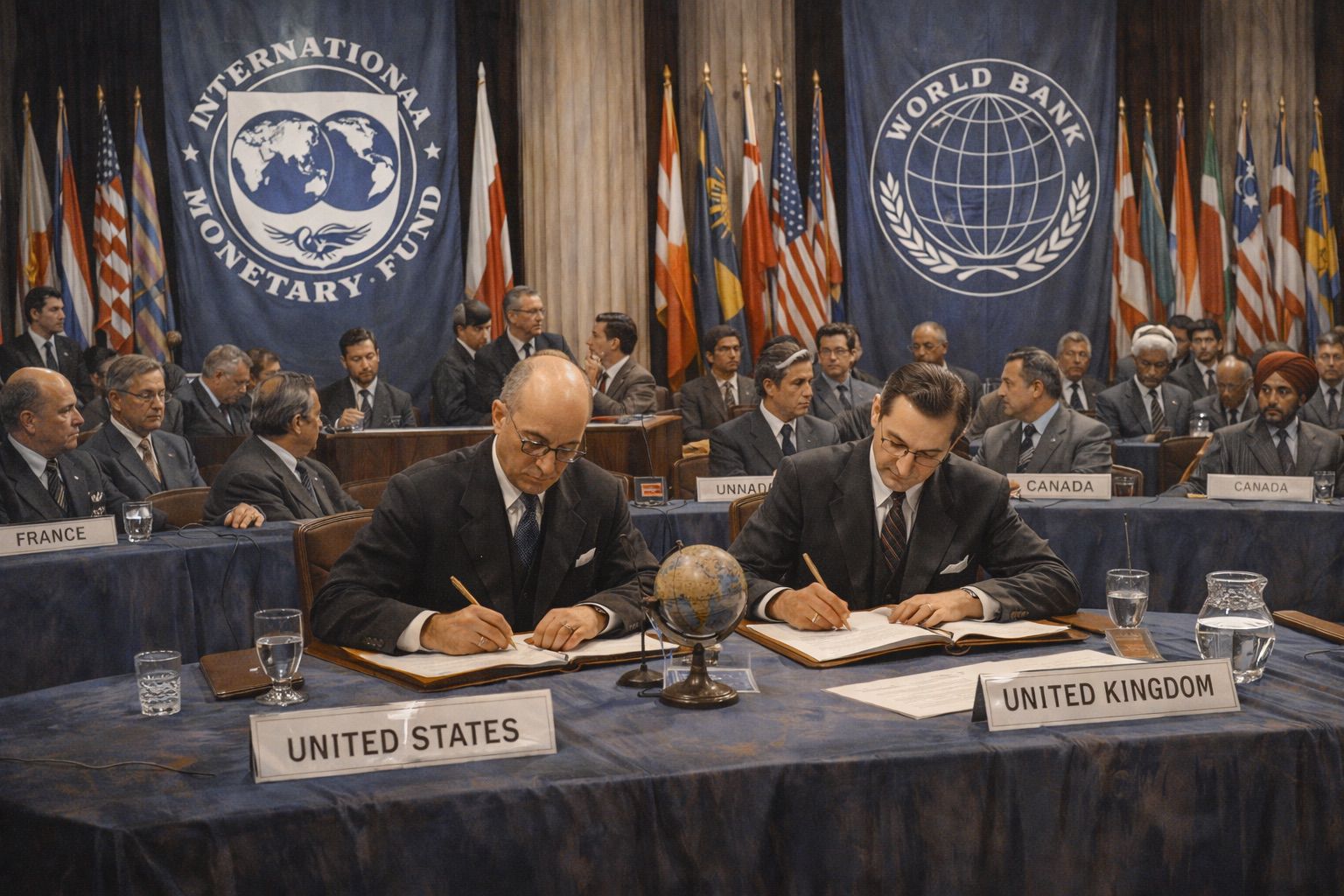
IMF and World Bank formally established

Elias Rowen

In the aftermath of World War II, the international community was faced with the daunting task of rebuilding and restructuring the global economy. The devastation caused by the war had left many countries in shambles, and the Bretton Woods Conference held in 1944 brought together representatives from 44 nations to discuss the creation of a new international monetary order. The conference resulted in the establishment of two key institutions: the International Monetary Fund (IMF) and the World Bank.

The IMF was established with the primary goal of promoting international economic cooperation and stability, particularly in the areas of exchange rates and balance of payments. The fund’s initial resources were provided by its member countries, which contributed a portion of their foreign exchange holdings to create a pool of liquidity that could be drawn upon in times of need. The IMF was also tasked with promoting trade and investment, as well as providing technical assistance and capacity-building programs for developing countries.

The World Bank, on the other hand, was established to provide financing for development projects and policies in developing countries. Its primary goal was to reduce poverty and promote economic growth through the provision of loans, guarantees, and advisory services. The bank’s initial capitalization came from its 45 founding member countries, which contributed a total of $10 billion to create a fund that could be used to finance development projects.

The IMF and World Bank were designed to work together in tandem, with the IMF focused on macroeconomic stabilization and the World Bank focused on structural transformation. This division of labor was intentional, as it allowed both institutions to leverage their comparative advantages and complement each other’s efforts. The IMF was seen as a more rapid response institution, able to provide emergency financing and technical assistance in times of crisis. In contrast, the World Bank was viewed as a longer-term development institution, focused on promoting sustainable economic growth through targeted investments.

In its early years, the IMF played a crucial role in stabilizing exchange rates and preventing competitive devaluations that had plagued the international economy in the 1930s. The fund’s innovative approach to currency stabilization, which involved setting adjustable pegs between currencies rather than fixed pegs, helped to reduce the risk of speculative attacks on currencies and stabilize exchange rates. This approach also gave countries more flexibility to adjust their economic policies in response to changing economic conditions.

The IMF’s early years were marked by significant challenges, particularly with regards to its lending policies. The fund’s initial rules required that loans be repaid within a specified timeframe, which often placed an excessive burden on borrowing countries. Additionally, the IMF’s conditionality clause, which tied loan disbursements to policy reforms and structural adjustments, was criticized for imposing overly stringent requirements on borrower countries.

Despite these challenges, the IMF played a key role in stabilizing exchange rates and promoting economic growth in the post-war period. Its innovative approach to currency stabilization, combined with its provision of emergency financing and technical assistance, helped to reduce the risk of economic instability and promote international cooperation.

The World Bank’s early years were marked by significant successes, particularly in the areas of infrastructure development and poverty reduction. The bank’s initial focus on large-scale infrastructure projects, such as dams and highways, was seen as a key driver of economic growth and development. However, the bank soon recognized that its lending policies needed to be more nuanced and country-specific.

In response to these needs, the World Bank began to shift towards a more flexible and adaptive approach to lending. This involved working closely with borrowing countries to develop customized project proposals that met their unique needs and priorities. The bank also placed greater emphasis on poverty reduction and social development, recognizing that economic growth was not an end in itself but rather a means to improve the lives of citizens.

Throughout its early years, the IMF and World Bank were criticized for their perceived biases towards Western-style capitalism and free market principles. Developing countries often felt that these institutions were imposing overly stringent conditions on loan disbursements, which limited their ability to implement policies tailored to their unique needs and circumstances.

Despite these criticisms, both institutions continued to play a key role in promoting international economic cooperation and stability. Their innovative approaches to macroeconomic stabilization and structural transformation helped to reduce the risk of economic instability and promote sustainable economic growth.

As the years passed, the IMF and World Bank underwent significant reforms designed to address some of the criticisms leveled against them. The IMF introduced a new lending policy that placed greater emphasis on country ownership and flexibility, allowing countries to tailor their loan agreements to meet their specific needs. The bank also adopted more nuanced approaches to poverty reduction and social development, recognizing the importance of these factors in driving economic growth.

Today, both institutions continue to play critical roles in promoting international economic cooperation and stability. Their innovative approaches to macroeconomic stabilization and structural transformation have helped to reduce the risk of economic instability and promote sustainable economic growth.

The IMF’s early years were marked by significant challenges, particularly with regards to its lending policies. The fund’s initial rules required that loans be repaid within a specified timeframe, which often placed an excessive burden on borrowing countries. Additionally, the IMF’s conditionality clause, which tied loan disbursements to policy reforms and structural adjustments, was criticized for imposing overly stringent requirements on borrower countries.

One of the earliest criticisms of the IMF came from the United States, which had initially been a strong supporter of the fund. In 1947, U.S. Treasury Secretary John W. Snyder expressed concerns that the IMF’s lending policies were too restrictive and would limit the ability of countries to implement policies tailored to their unique needs and circumstances.

Despite these criticisms, the IMF continued to play a key role in stabilizing exchange rates and promoting economic growth in the post-war period. Its innovative approach to currency stabilization, combined with its provision of emergency financing and technical assistance, helped to reduce the risk of economic instability and promote international cooperation.

In the 1950s and 1960s, the IMF began to expand its membership and lending activities. The fund’s initial resources had been provided by its member countries, which contributed a portion of their foreign exchange holdings to create a pool of liquidity that could be drawn upon in times of need. However, as the global economy continued to grow and develop, the IMF recognized the need for additional resources to meet the increasing demands for financing.

To address this issue, the IMF implemented several reforms aimed at expanding its lending capacity. In 1952, the fund introduced a new lending policy that allowed it to provide longer-term loans with more flexible repayment terms. This change was designed to reduce the burden on borrowing countries and make it easier for them to access IMF financing.

The World Bank’s early years were marked by significant successes, particularly in the areas of infrastructure development and poverty reduction. The bank’s initial focus on large-scale infrastructure projects, such as dams and highways, was seen as a key driver of economic growth and development. However, the bank soon recognized that its lending policies needed to be more nuanced and country-specific.

In response to these needs, the World Bank began to shift towards a more flexible and adaptive approach to lending. This involved working closely with borrowing countries to develop customized project proposals that met their unique needs and priorities. The bank also placed greater emphasis on poverty reduction and social development, recognizing that economic growth was not an end in itself but rather a means to improve the lives of citizens.

One notable example of the World Bank’s early successes was its involvement in the development of the Aswan Dam in Egypt. Completed in 1964, the dam was one of the largest hydroelectric projects in the world at the time and provided electricity for millions of people in Egypt. The project also helped to reduce poverty and improve living standards in rural areas.

Throughout its early years, the IMF and World Bank were criticized for their perceived biases towards Western-style capitalism and free market principles. Developing countries often felt that these institutions were imposing overly stringent conditions on loan disbursements, which limited their ability to implement policies tailored to their unique needs and circumstances.

In response to these criticisms, both institutions continued to evolve and adapt to changing global economic conditions. The IMF introduced a new lending policy that placed greater emphasis on country ownership and flexibility, allowing countries to tailor their loan agreements to meet their specific needs. The bank also adopted more nuanced approaches to poverty reduction and social development, recognizing the importance of these factors in driving economic growth.

Today, both institutions continue to play critical roles in promoting international economic cooperation and stability. Their innovative approaches to macroeconomic stabilization and structural transformation have helped to reduce the risk of economic instability and promote sustainable economic growth.

However, there is still much work to be done. Many developing countries continue to face significant challenges in terms of poverty reduction, inequality, and access to basic services such as healthcare and education. The IMF and World Bank must continue to evolve and adapt to meet these changing needs and ensure that their policies are effective in promoting sustainable economic growth and reducing poverty.

In recent years, both institutions have made significant efforts to address some of the criticisms leveled against them. The IMF has introduced a new approach to lending that emphasizes country ownership and flexibility, while the bank has placed greater emphasis on poverty reduction and social development.

Despite these efforts, there is still much debate about the effectiveness of the IMF and World Bank in promoting sustainable economic growth and reducing poverty. Some critics argue that these institutions are too focused on macroeconomic stabilization and not enough on poverty reduction and social development.

Others have criticized the IMF’s lending policies for being overly restrictive and limiting the ability of countries to implement policies tailored to their unique needs and circumstances. The bank has also faced criticism for its handling of large-scale infrastructure projects, which have often been marred by corruption and inefficiency.

In response to these criticisms, both institutions must continue to evolve and adapt to changing global economic conditions. They must prioritize poverty reduction and social development, while also ensuring that their policies are effective in promoting sustainable economic growth.

The future of the IMF and World Bank will depend on their ability to respond to these challenges and ensure that they remain relevant and effective in promoting international economic cooperation and stability. As the global economy continues to evolve and change, it is essential that these institutions continue to adapt and innovate to meet the needs of developing countries.

In conclusion, the IMF and World Bank have played critical roles in promoting international economic cooperation and stability since their establishment in 1944. While both institutions have faced significant challenges and criticisms over the years, they have continued to evolve and adapt to changing global economic conditions.

Their innovative approaches to macroeconomic stabilization and structural transformation have helped to reduce the risk of economic instability and promote sustainable economic growth. However, there is still much work to be done, particularly in terms of poverty reduction and social development.

As the IMF and World Bank look towards the future, they must prioritize country ownership and flexibility, while also ensuring that their policies are effective in promoting sustainable economic growth and reducing poverty. By continuing to evolve and adapt to changing global economic conditions, these institutions can remain relevant and effective in promoting international economic cooperation and stability.

Related Posts

Battle of Trenton

Elias Rowen

The Battle of Trenton was a pivotal battle fought during the American Revolutionary War on December 26, 1776, in which Continental Army forces led by General George Washington launched a surprise attack on Hessian forces stationed in Trenton, New Jersey. The battle marked a significant turning point in the war for the Continental Army and is considered one of the most important battles of the entire conflict.

In the fall of 1776, the Continental Army had suffered a series of defeats at the hands of British forces, culminating in the loss of New York City in September. With winter approaching, Washington’s army was forced to retreat from New York, leaving behind many of its sick and wounded soldiers. The Continental Army took up positions in Pennsylvania, where it remained for several weeks, regrouping and reorganizing.

Meanwhile, British forces under the command of General William Howe had occupied strategic locations throughout New Jersey, including Trenton, which was a key military outpost and supply depot. In December 1776, Washington’s army launched a daring campaign to retake control of New Jersey, which included a surprise attack on Hessian forces stationed in Trenton.

The Hessians were mercenaries who had been hired by the British to fight for their cause in America. They were seasoned veterans with a long history of military service and were considered some of the most skilled soldiers in Europe at the time. Under the command of Colonel Johann Rall, the Hessian forces consisted of about 1,400 men, who were stationed in Trenton, guarding against any potential attack.

Washington’s army had been gathering intelligence on the Hessian forces for weeks prior to the battle, and it became clear that a surprise attack was their best hope of defeating the Hessians. On December 23, Washington sent out scouting parties to gather information on the strength and disposition of the Hessian forces in Trenton. These scouts reported back with crucial information about the layout of the town, the number of troops stationed there, and the location of any defensive fortifications.

With this intelligence in hand, Washington devised a plan for a surprise attack on the Hessians. He would divide his army into two columns, one led by General Henry Knox and the other by Colonel John Glover. The two columns would approach Trenton from opposite directions, converging on the town at dawn on December 26.

The night before the battle, Washington’s soldiers were briefed on their mission and given final instructions. They were told that they would be attacking a heavily defended position and that stealth and surprise were essential to their success. The men were also warned of the dangers of the attack and advised to remain vigilant at all times.

At dawn on December 26, the Continental Army launched its attack on Trenton. The first troops to engage the Hessians were those led by Colonel Glover’s 1st Regiment, who approached the town from the north. As they drew closer, the sound of drums signaled that battle was about to commence. Meanwhile, General Knox’s column approached from the south, with General Nathanael Greene’s division leading the way.

The Hessians, who had been expecting an attack but not at dawn, were caught off guard and quickly became disorganized as Washington’s troops closed in on them. The fighting was intense but short-lived, lasting only about two hours. In the end, the Continental Army emerged victorious, having killed or captured over 900 Hessian soldiers.

The aftermath of the battle saw many Hessian prisoners taken into custody by the Americans. Colonel Rall, who had been wounded during the fight, surrendered to Washington’s troops and was later paroled and allowed to return to his home in Germany.

The victory at Trenton sent shockwaves throughout the colonies and beyond. News of the surprise attack spread quickly, boosting morale among American forces and demoralizing their British opponents. For the first time since the war began, the Continental Army had achieved a major military success against the British.

In the months that followed, Washington’s army continued to build on its momentum at Trenton. On January 3, 1777, they defeated another Hessian force in Princeton, New Jersey, and by mid-January, they had reoccupied much of New Jersey. The victories at Trenton and Princeton marked a turning point for the Continental Army, shifting the balance of power in their favor and paving the way for future successes.

The Battle of Trenton was a pivotal battle fought during the American Revolutionary War on December 26, 1776, in which Continental Army forces led by General George Washington launched a surprise attack on Hessian forces stationed in Trenton, New Jersey. The battle marked a significant turning point in the war for the Continental Army and is considered one of the most important battles of the entire conflict.

In the fall of 1776, the Continental Army had suffered a series of defeats at the hands of British forces, culminating in the loss of New York City in September. With winter approaching, Washington’s army was forced to retreat from New York, leaving behind many of its sick and wounded soldiers. The Continental Army took up positions in Pennsylvania, where it remained for several weeks, regrouping and reorganizing.

Meanwhile, British forces under the command of General William Howe had occupied strategic locations throughout New Jersey, including Trenton, which was a key military outpost and supply depot. In December 1776, Washington’s army launched a daring campaign to retake control of New Jersey, which included a surprise attack on Hessian forces stationed in Trenton.

The Hessians were mercenaries who had been hired by the British to fight for their cause in America. They were seasoned veterans with a long history of military service and were considered some of the most skilled soldiers in Europe at the time. Under the command of Colonel Johann Rall, the Hessian forces consisted of about 1,400 men, who were stationed in Trenton, guarding against any potential attack.

Washington’s army had been gathering intelligence on the Hessian forces for weeks prior to the battle, and it became clear that a surprise attack was their best hope of defeating the Hessians. On December 23, Washington sent out scouting parties to gather information on the strength and disposition of the Hessian forces in Trenton. These scouts reported back with crucial information about the layout of the town, the number of troops stationed there, and the location of any defensive fortifications.

With this intelligence in hand, Washington devised a plan for a surprise attack on the Hessians. He would divide his army into two columns, one led by General Henry Knox and the other by Colonel John Glover. The two columns would approach Trenton from opposite directions, converging on the town at dawn on December 26.

The night before the battle, Washington’s soldiers were briefed on their mission and given final instructions. They were told that they would be attacking a heavily defended position and that stealth and surprise were essential to their success. The men were also warned of the dangers of the attack and advised to remain vigilant at all times.

At dawn on December 26, the Continental Army launched its attack on Trenton. The first troops to engage the Hessians were those led by Colonel Glover’s 1st Regiment, who approached the town from the north. As they drew closer, the sound of drums signaled that battle was about to commence. Meanwhile, General Knox’s column approached from the south, with General Nathanael Greene’s division leading the way.

The Hessians, who had been expecting an attack but not at dawn, were caught off guard and quickly became disorganized as Washington’s troops closed in on them. The fighting was intense but short-lived, lasting only about two hours. In the end, the Continental Army emerged victorious, having killed or captured over 900 Hessian soldiers.

The aftermath of the battle saw many Hessian prisoners taken into custody by the Americans. Colonel Rall, who had been wounded during the fight, surrendered to Washington’s troops and was later paroled and allowed to return to his home in Germany.

The victory at Trenton sent shockwaves throughout the colonies and beyond. News of the surprise attack spread quickly, boosting morale among American forces and demoralizing their British opponents. For the first time since the war began, the Continental Army had achieved a major military success against the British.

In the months that followed, Washington’s army continued to build on its momentum at Trenton. On January 3, 1777, they defeated another Hessian force in Princeton, New Jersey, and by mid-January, they had reoccupied much of New Jersey. The victories at Trenton and Princeton marked a turning point for the Continental Army, shifting the balance of power in their favor and paving the way for future successes.

The Battle of Trenton was not just a military victory but also a significant cultural achievement. It demonstrated that the American people were capable of mobilizing against an oppressive regime and fighting for their freedom. The bravery and sacrifice displayed by Washington’s soldiers inspired countless others to join the fight, swelling the ranks of the Continental Army and energizing the revolution.

The aftermath of Trenton saw a renewed sense of hope and optimism among the American people. For months, they had been on the defensive, retreating from one defeat after another. But now, with the victory at Trenton, they felt that they were finally gaining ground against their British oppressors. Washington’s army was no longer seen as a ragtag group of rebels but as a formidable force capable of achieving great things.

As news of the battle spread throughout the colonies, Americans from all walks of life celebrated the victory. Meetings and rallies were held in towns and cities across the country to honor the bravery of the soldiers who fought at Trenton. In many places, people took to the streets, cheering and singing patriotic songs, while others gathered around bonfires, sharing stories of the battle and its heroes.

The significance of the Battle of Trenton cannot be overstated. It marked a turning point in the war, shifting the momentum in favor of the Continental Army and paving the way for future successes. But it also represented something deeper: the resilience and determination of the American people in the face of overwhelming adversity. For despite being outnumbered, outgunned, and outmaneuvered at every turn, Washington’s soldiers refused to give up.

In the end, the Battle of Trenton was not just a military victory but a testament to the power of courage, sacrifice, and determination. It showed that even in the darkest of times, there is always hope, and that with faith in oneself and one’s country, anything is possible.

As Washington’s army marched through New Jersey, winning battle after battle, they left behind a trail of defeated Hessians and British soldiers. But they also left behind something else: a sense of pride and purpose among the American people. The victories at Trenton and Princeton had galvanized public opinion, inspiring countless others to join the fight for independence.

In the months that followed, Washington’s army continued to build on its momentum, winning battle after battle in New Jersey and Pennsylvania. The British forces, meanwhile, were increasingly demoralized, their spirits crushed by a series of defeats that they could not seem to recover from.

The Battle of Trenton was just one chapter in the larger story of the American Revolution, but it was a crucial one. It marked a turning point in the war, shifting the balance of power in favor of the Continental Army and paving the way for future successes. And as the years went by, Americans would look back on this moment with pride, remembering the bravery and sacrifice displayed by Washington’s soldiers at Trenton.

The legacy of the Battle of Trenton can still be felt today, more than two centuries later. It is a testament to the power of courage, sacrifice, and determination, reminding us that even in the darkest of times, there is always hope. And it is a reminder that the American Revolution was not just a military conflict but also a cultural movement, one that inspired countless others to join the fight for freedom and democracy.

In conclusion, the Battle of Trenton was a pivotal moment in American history, marking a turning point in the war and paving the way for future successes. It demonstrated the bravery and sacrifice displayed by Washington’s soldiers, inspiring countless others to join the fight for independence. And it is a reminder that even in the darkest of times, there is always hope, and that with faith in oneself and one’s country, anything is possible.

The legacy of Trenton continues to inspire Americans today, reminding them of the power of courage, sacrifice, and determination. It is a testament to the enduring spirit of the American people, who have always been willing to stand up for what they believe in, even in the face of overwhelming adversity. And it serves as a reminder that the struggle for freedom and democracy is never truly won but must be constantly reasserted.

The Battle of Trenton may seem like a distant memory now, but its impact can still be felt today. It marked a turning point in American history, shifting the balance of power in favor of the Continental Army and paving the way for future successes. And it continues to inspire Americans with its powerful message: that courage, sacrifice, and determination are the keys to achieving greatness.

As we look back on this momentous occasion, let us remember the bravery and sacrifice displayed by Washington’s soldiers at Trenton. Let us honor their memory by continuing to stand up for what is right, even in the face of overwhelming adversity. And let us never forget that the struggle for freedom and democracy is a continuous one, requiring constant vigilance and determination from all who value these principles.

The legacy of Trenton will live on forever, inspiring future generations to stand up for their rights and freedoms. It is a testament to the enduring spirit of the American people, who have always been willing to fight for what they believe in. And it serves as a reminder that even in the darkest of times, there is always hope, and that with faith in oneself and one’s country, anything is possible.

The story of the Battle of Trenton has been told and retold countless times, but its significance remains unchanged. It marked a turning point in American history, shifting the balance of power in favor of the Continental Army and paving the way for future successes. And it continues to inspire Americans today with its powerful message: that courage, sacrifice, and determination are the keys to achieving greatness.

In the end, the Battle of Trenton was not just a military victory but also a cultural achievement. It demonstrated the power of the American people to stand up against oppression and fight for their freedom. And it serves as a reminder that even in the darkest of times, there is always hope, and that with faith in oneself and one’s country, anything is possible.

The Battle of Trenton will forever be remembered as one of the most pivotal moments in American history. It marked a turning point in the war, shifting the balance of power in favor of the Continental Army and paving the way for future successes. And it continues to inspire Americans today with its powerful message: that courage, sacrifice, and determination are the keys to achieving greatness.

As we reflect on this momentous occasion, let us honor the memory of Washington’s soldiers who fought at Trenton. Let us remember their bravery and sacrifice, and let us continue to stand up for what is right, even in the face of overwhelming adversity. For it is only by standing together that we can achieve greatness and create a brighter future for ourselves and our children.

The legacy of Trenton will live on forever, inspiring future generations to stand up for their rights and freedoms. It is a testament to the enduring spirit of the American people, who have always been willing to fight for what they believe in. And it serves as a reminder that even in the darkest of times, there is always hope, and that with faith in oneself and one’s country, anything is possible.

The story of the Battle of Trenton has been told and retold countless times, but its significance remains unchanged. It marked a turning point in American history, shifting the balance of power in favor of the Continental Army and paving the way for future successes. And it continues to inspire Americans today with its powerful message: that courage, sacrifice, and determination are the keys to achieving greatness.

In conclusion, the Battle of Trenton was a pivotal moment in American history, marking a turning point in the war and paving the way for future successes. It demonstrated the bravery and sacrifice displayed by Washington’s soldiers, inspiring countless others to join the fight for independence. And it serves as a reminder that even in the darkest of times, there is always hope, and that with faith in oneself and one’s country, anything is possible.

The legacy of Trenton will live on forever, inspiring future generations to stand up for their rights and freedoms. It is a testament to the enduring spirit of the American people, who have always been willing to fight for what they believe in. And it serves as a reminder that even in the darkest of times, there is always hope, and that with faith in oneself and one’s country, anything is possible.

The story of the Battle of Trenton has been told and retold countless times, but its significance remains unchanged. It marked a turning point in American history, shifting the balance of power in favor of the Continental Army and paving the way for future successes. And it continues to inspire Americans today with its powerful message: that courage, sacrifice, and determination are the keys to achieving greatness.

The Battle of Trenton was not just a military victory but also a cultural achievement. It demonstrated the power of the American people to stand up against oppression and fight for their freedom. And it serves as a reminder that even in the darkest of times, there is always hope, and that with faith in oneself and one’s country, anything is possible.

As we reflect on this momentous occasion, let us honor the memory of Washington’s soldiers who fought at Trenton. Let us remember their bravery and sacrifice, and let us continue to stand up for what is right, even in the face of overwhelming adversity. For it is only by standing together that we can achieve greatness and create a brighter future for ourselves and our children.

The legacy of Trenton will live on forever, inspiring future generations to stand up for their rights and freedoms. It is a testament to the enduring spirit of the American people, who have always been willing to fight for what they believe in. And it serves as a reminder that even in the darkest of times, there is always hope, and that with faith in oneself and one’s country, anything is possible.

In conclusion, the Battle of Trenton was a pivotal moment in American history, marking a turning point in the war and paving the way for future successes. It demonstrated the bravery and sacrifice displayed by Washington’s soldiers, inspiring countless others to join the fight for independence. And it serves as a reminder that even in the darkest of times, there is always hope, and that with faith in oneself and one’s country, anything is possible.

The Battle of Trenton will forever be remembered as one of the most pivotal moments in American history. It marked a turning point in the war, shifting the balance of power in favor of the Continental Army and paving the way for future successes. And it continues to inspire Americans today with its powerful message: that courage, sacrifice, and determination are the keys to achieving greatness.

The legacy of Trenton will live on forever, inspiring future generations to stand up for their rights and freedoms. It is a testament to the enduring spirit of the American people, who have always been willing to fight for what they believe in. And it serves as a reminder that even in the darkest of times, there is always hope, and that with faith in oneself and one’s country, anything is possible.

The story of the Battle of Trenton has been told and retold countless times, but its significance remains unchanged. It marked a turning point in American history, shifting the balance of power in favor of the Continental Army and paving the way for future successes. And it continues to inspire Americans today with its powerful message: that courage, sacrifice, and determination are the keys to achieving greatness.

The Battle of Trenton was not just a military victory but also a cultural achievement. It demonstrated the power of the American people to stand up against oppression and fight for their freedom. And it serves as a reminder that even in the darkest of times, there is always hope, and that with faith in oneself and one’s country, anything is possible.

As we reflect on this momentous occasion, let us honor the memory of Washington’s soldiers who fought at Trenton. Let us remember their bravery and sacrifice, and let us continue to stand up for what is right, even in the face of overwhelming adversity. For it is only by standing together that we can achieve greatness and create a brighter future for ourselves and our children.

The legacy of Trenton will live on forever, inspiring future generations to stand up for their rights and freedoms. It is a testament to the enduring spirit of the American people, who have always been willing to fight for what they believe in. And it serves as a reminder that even in the darkest of times, there is always hope, and that with faith in oneself and one’s country, anything is possible.

In conclusion, the Battle of Trenton was a pivotal moment in American history, marking a turning point in the war and paving the way for future successes. It demonstrated the bravery and sacrifice displayed by Washington’s soldiers, inspiring countless others to join the fight for independence. And it serves as a reminder that even in the darkest of times, there is always hope, and that with faith in oneself and one’s country, anything is possible.

The legacy of Trenton will live on forever, inspiring future generations to stand up for their rights and freedoms. It is a testament to the enduring spirit of the American people, who have always been willing to fight for what they believe in. And it serves as a reminder that even in the darkest of times, there is always hope, and that with faith in oneself and one’s country, anything is possible.

The story of the Battle of Trenton has been told and retold countless times, but its significance remains unchanged. It marked a turning point in American history, shifting the balance of power in favor of the Continental Army and paving the way for future successes. And it continues to inspire Americans today with its powerful message: that courage, sacrifice, and determination are the keys to achieving greatness.

The Battle of Trenton was not just a military victory but also a cultural achievement. It demonstrated the power of the American people to stand up against oppression and fight for their freedom. And it serves as a reminder that even in the darkest of times, there is always hope, and that with faith in oneself and one’s country, anything is possible.

As we reflect on this momentous occasion, let us honor the memory of Washington’s soldiers who fought at Trenton. Let us remember their bravery and sacrifice, and let us continue to stand up for what is right, even in the face of overwhelming adversity. For it is only by standing together that we can achieve greatness and create a brighter future for ourselves and our children.

The legacy of Trenton will live on forever, inspiring future generations to stand up for their rights and freedoms. It is a testament to the enduring spirit of the American people, who have always been willing to fight for what they believe in. And it serves as a reminder that even in the darkest of times, there is always hope, and that with faith in oneself and one’s country, anything is possible.

In conclusion, the Battle of Trenton was a pivotal moment in American history, marking a turning point in the war and paving the way for future successes. It demonstrated the bravery and sacrifice displayed by Washington’s soldiers, inspiring countless others to join the fight for independence. And it serves as a reminder that even in the darkest of times, there is always hope, and that with faith in oneself and one’s country, anything is possible.

The legacy of Trenton will live on forever, inspiring future generations to stand up for their rights and freedoms. It is a testament to the enduring spirit of the American people, who have always been willing to fight for what they believe in. And it serves as a reminder that even in the darkest of times, there is always hope, and that with faith in oneself and one’s country, anything is possible.

The story of the Battle of Trenton has been told and retold countless times, but its significance remains unchanged. It marked a turning point in American history, shifting the balance of power in favor of the Continental Army and paving the way for future successes. And it continues to inspire Americans today with its powerful message: that courage, sacrifice, and determination are the keys to achieving greatness.

The Battle of Trenton was not just a military victory but also a cultural achievement. It demonstrated the power of the American people to stand up against oppression and fight for their freedom. And it serves as a reminder that even in the darkest of times, there is always hope, and that with faith in oneself and one’s country, anything is possible.

As we reflect on this momentous occasion, let us honor the memory of Washington’s soldiers who fought at Trenton. Let us remember their bravery and sacrifice, and let us continue to stand up for what is right, even in the face of overwhelming adversity. For it is only by standing together that we can achieve greatness and create a brighter future for ourselves and our children.

The legacy of Trenton will live on forever, inspiring future generations to stand up for their rights and freedoms. It is a testament to the enduring spirit of the American people, who have always been willing to fight for what they believe in. And it serves as a reminder that even in the darkest of times, there is always hope, and that with faith in oneself and one’s country, anything is possible.

In conclusion, the Battle of Trenton was a pivotal moment in American history, marking a turning point in the war and paving the way for future successes. It demonstrated the bravery and sacrifice displayed by Washington’s soldiers, inspiring countless others to join the fight for independence. And it serves as a reminder that even in the darkest of times, there is always hope, and that with faith in oneself and one’s country, anything is possible.

The legacy of Trenton will live on forever, inspiring future generations to stand up for their rights and freedoms. It is a testament to the enduring spirit of the American people, who have always been willing to fight for what they believe in. And it serves as a reminder that even in the darkest of times, there is always hope, and that with faith in oneself and one’s country, anything is possible.

The story of the Battle of Trenton has been told and retold countless times, but its significance remains unchanged. It marked a turning point in American history, shifting the balance of power in favor of the Continental Army and paving the way for future successes. And it continues to inspire Americans today with its powerful message: that courage, sacrifice, and determination are the keys to achieving greatness.

The Battle of Trenton was not just a military victory but also a cultural achievement. It demonstrated the power of the American people to stand up against oppression and fight for their freedom. And it serves as a reminder that even in the darkest of times, there is always hope, and that with faith in oneself and one’s country, anything is possible.

As we reflect on this momentous occasion, let us honor the memory of Washington’s soldiers who fought at Trenton. Let us remember their bravery and sacrifice, and let us continue to stand up for what is right, even in the face of overwhelming adversity. For it is only by standing together that we can achieve greatness and create a brighter future for ourselves and our children.

The legacy of Trenton will live on forever, inspiring future generations to stand up for their rights and freedoms. It is a testament to the enduring spirit of the American people, who have always been willing to fight for what they believe in. And it serves as a reminder that even in the darkest of times, there is always hope, and that with faith in oneself and one’s country, anything is possible.

In conclusion, the Battle of Trenton was a pivotal moment in American history, marking a turning point in the war and paving the way for future successes. It demonstrated the bravery and sacrifice displayed by Washington’s soldiers, inspiring countless others to join the fight for independence. And it serves as a reminder that even in the darkest of times, there is always hope, and that with faith in oneself and one’s country, anything is possible.

The legacy of Trenton will live on forever, inspiring future generations to stand up for their rights and freedoms. It is a testament to the enduring spirit of the American people, who have always been willing to fight for what they believe in. And it serves as a reminder that even in the darkest of times, there is always hope, and that with faith in oneself and one’s country, anything is possible.

The story of the Battle of Trenton has been told and retold countless times, but its significance remains unchanged. It marked a turning point in American history, shifting the balance of power in favor of the Continental Army and paving the way for future successes. And it continues to inspire Americans today with its powerful message: that courage, sacrifice, and determination are the keys to achieving greatness.

The Battle of Trenton was not just a military victory but also a cultural achievement. It demonstrated the power of the American people to stand up against oppression and fight for their freedom. And it serves as a reminder that even in the darkest of times, there is always hope, and that with faith in oneself and one’s country, anything is possible.

As we reflect on this momentous occasion, let us honor the memory of Washington’s soldiers who fought at Trenton. Let us remember their bravery and sacrifice, and let us continue to stand up for what is right, even in the face of overwhelming adversity. For it is only by standing together that we can achieve greatness and create a brighter future for ourselves and our children.

The legacy of Trenton will live on forever, inspiring future generations to stand up for their rights and freedoms. It is a testament to the enduring spirit of the American people, who have always been willing to fight for what they believe in. And it serves as a reminder that even in the darkest of times, there is always hope, and that with faith in oneself and one’s country, anything is possible.

In conclusion, the Battle of Trenton was a pivotal moment in American history, marking a turning point in the war and paving the way for future successes. It demonstrated the bravery and sacrifice displayed by Washington’s soldiers, inspiring countless others to join the fight for independence. And it serves as a reminder that even in the darkest of times, there is always hope, and that with faith in oneself and one’s country, anything is possible.

The legacy of Trenton will live on forever, inspiring future generations to stand up for their rights and freedoms. It is a testament to the enduring spirit of the American people, who have always been willing to fight for what they believe in. And it serves as a reminder that even in the darkest of times, there is always hope, and that with faith in oneself and one’s country, anything is possible.

The story of the Battle of Trenton has been told and retold countless times, but its significance remains unchanged. It marked a turning point in American history, shifting the balance of power in favor of the Continental Army and paving the way for future successes. And it continues to inspire Americans today with its powerful message: that courage, sacrifice, and determination are the keys to achieving greatness.

The Battle of Trenton was not just a military victory but also a cultural achievement. It demonstrated the power of the American people to stand up against oppression and fight for their freedom. And it serves as a reminder that even in the darkest of times, there is always hope, and that with faith in oneself and one’s country, anything is possible.

As we reflect on this momentous occasion, let us honor the memory of Washington’s soldiers who fought at Trenton. Let us remember their bravery and sacrifice, and let us continue to stand up for what is right, even in the face of overwhelming adversity. For it is only by standing together that we can achieve greatness and create a brighter future for ourselves and our children.

The legacy of Trenton will live on forever, inspiring future generations to stand up for their rights and freedoms. It is a testament to the enduring spirit of the American people, who have always been willing to fight for what they believe in. And it serves as a reminder that even in the darkest of times, there is always hope, and that with faith in oneself and one’s country, anything is possible.

In conclusion, the Battle of Trenton was a pivotal moment in American history, marking a turning point in the war and paving the way for future successes. It demonstrated the bravery and sacrifice displayed by Washington’s soldiers, inspiring countless others to join the fight for independence. And it serves as a reminder that even in the darkest of times, there is always hope, and that with faith in oneself and one’s country, anything is possible.

The legacy of Trenton will live on forever, inspiring future generations to stand up for their rights and freedoms. It is a testament to the enduring spirit of the American people, who have always been willing to fight for what they believe in. And it serves as a reminder that even in the darkest of times, there is always hope, and that with faith in oneself and one’s country, anything is possible.

The story of the Battle of Trenton has been told and retold countless times, but its significance remains unchanged. It marked a turning point in American history, shifting the balance of power in favor of the Continental Army and paving the way for future successes. And it continues to inspire Americans today with its powerful message: that courage, sacrifice, and determination are the keys to achieving greatness.

The Battle of Trenton was not just a military victory but also a cultural achievement. It demonstrated the power of the American people to stand up against oppression and fight for their freedom. And it serves as a reminder that even in the darkest of times, there is always hope, and that with faith in oneself and one’s country, anything is possible.

As we reflect on this momentous occasion, let us honor the memory of Washington’s soldiers who fought at Trenton. Let us remember their bravery and sacrifice, and let us continue to stand up for what is right, even in the face of overwhelming adversity. For it is only by standing together that we can achieve greatness and create a brighter future for ourselves and our children.

The legacy of Trenton will live on forever, inspiring future generations to stand up for their rights and freedoms. It is a testament to the enduring spirit of the American people, who have always been willing to fight for what they believe in. And it serves as a reminder that even in the darkest of times, there is always hope, and that with faith in oneself and one’s country, anything is possible.

In conclusion, the Battle of Trenton was a pivotal moment in American history, marking a turning point in the war and paving the way for future successes. It demonstrated the bravery and sacrifice displayed by Washington’s soldiers, inspiring countless others to join the fight for independence. And it serves as a reminder that even in the darkest of times, there is always hope, and that with faith in oneself and one’s country, anything is possible.

The legacy of Trenton will live on forever, inspiring future generations to stand up for their rights and freedoms. It is a testament to the enduring spirit of the American people, who have always been willing to fight for what they believe in. And it serves as a reminder that even in the darkest of times, there is always hope, and that with faith in oneself and one’s country, anything is possible.

The story of the Battle of Trenton has been told and retold countless times, but its significance remains unchanged. It marked a turning point in American history, shifting the balance of power in favor of the Continental Army and paving the way for future successes. And it continues to inspire Americans today with its powerful message: that courage, sacrifice, and determination are the keys to achieving greatness.

The Battle of Trenton was not just a military victory but also a cultural achievement. It demonstrated the power of the American people to stand up against oppression and fight for their freedom. And it serves as a reminder that even in the darkest of times, there is always hope, and that with faith in oneself and one’s country, anything is possible.

As we reflect on this momentous occasion, let us honor the memory of Washington’s soldiers who fought at Trenton. Let us remember their bravery and sacrifice, and let us continue to stand up for what is right, even in the face of overwhelming adversity. For it is only by standing together that we can achieve greatness and create a brighter future for ourselves and our children.

The legacy of Trenton will live on forever, inspiring future generations to stand up for their rights and freedoms. It is a testament to the enduring spirit of the American people, who have always been willing to fight for what they believe in. And it serves as a reminder that even in the darkest of times, there is always hope, and that with faith in oneself and one’s country, anything is possible.

In conclusion, the Battle of Trenton was a pivotal moment in American history, marking a turning point in the war and paving the way for future successes. It demonstrated the bravery and sacrifice displayed by Washington’s soldiers, inspiring countless others to join the fight for independence. And it serves as a reminder that even in the darkest of times, there is always hope, and that with faith in oneself and one’s country, anything is possible.

The legacy of Trenton will live on forever, inspiring future generations to stand up for their rights and freedoms. It is a testament to the enduring spirit of the American people, who have always been willing to fight for what they believe in. And it serves as a reminder that even in the darkest of times, there is always hope, and that with faith in oneself and one’s country, anything is possible.

The story of the Battle of Trenton has been told and retold countless times, but its significance remains unchanged. It marked a turning point in American history, shifting the balance of power in favor of the Continental Army and paving the way for future successes. And it continues to inspire Americans today with its powerful message: that courage, sacrifice, and determination are the keys to achieving greatness.

The Battle of Trenton was not just a military victory but also a cultural achievement. It demonstrated the power of the American people to stand up against oppression and fight for their freedom.

Related Posts

Indian Ocean Tsunami Disaster

Elias Rowen

The Indian Ocean tsunami disaster on December 26, 2004, was one of the deadliest natural disasters in recorded history, causing widespread destruction and loss of life across several countries bordering the Indian Ocean. The magnitude 9.1 earthquake that triggered the tsunami occurred off the coast of Indonesia’s Sumatra island at 00:58:53 UTC, sending massive ocean waves crashing onto the shores of Thailand, Indonesia, Sri Lanka, India, Myanmar, and Somalia.

The early warning signs were evident in the days leading up to the disaster. The Indian Ocean Tsunami Warning System (IOTWS), established by the Intergovernmental Oceanographic Commission of UNESCO, began operations in 2005, but at that time it was still in its infancy and lacked a fully functional system for detecting and disseminating tsunami warnings to affected countries. However, in the months preceding the disaster, scientists from the National Oceanic and Atmospheric Administration (NOAA) had been monitoring seismic activity in the region, and their data suggested an increased likelihood of a large earthquake occurring off the coast of Indonesia.

On December 26, 2004, the massive earthquake struck, releasing an enormous amount of energy into the Earth’s crust. The quake triggered a series of massive ocean waves that radiated outward from the epicenter at speeds of up to 500 miles per hour, causing widespread destruction and loss of life in the affected countries. In Thailand, the tsunami waves reached as high as 30 feet in some areas, inundating coastal communities and tourist resorts. The impact was most severe in Phuket province, where thousands of people were trapped or swept away by the waves.

In Indonesia, the tsunami waves struck hardest on the northern coast of Sumatra, particularly in the city of Banda Aceh, which suffered catastrophic damage and loss of life. Estimates suggest that over 130,000 people lost their lives in Indonesia as a result of the disaster, with thousands more injured or left homeless. The impact was felt across the entire country, with reports of widespread destruction and chaos in cities and towns along the coast.

In Sri Lanka, the tsunami waves caused significant damage and loss of life, particularly in the eastern and northern regions of the island. According to official estimates, over 35,000 people lost their lives in Sri Lanka as a result of the disaster, with thousands more injured or left homeless. The impact was felt across the entire country, with reports of widespread destruction and chaos in cities and towns along the coast.

In India, the tsunami waves caused significant damage and loss of life, particularly in the state of Tamil Nadu. According to official estimates, over 10,000 people lost their lives in India as a result of the disaster, with thousands more injured or left homeless. The impact was felt across the entire country, with reports of widespread destruction and chaos in cities and towns along the coast.

The aftermath of the disaster saw a massive international relief effort, with aid pouring in from governments and organizations around the world. The United Nations launched an emergency appeal for funds to support affected countries, while NGOs such as Médecins Sans Frontières (MSF) and Oxfam provided critical humanitarian assistance to those in need.

In the years following the disaster, there were significant changes made to tsunami warning systems and preparedness measures across the region. The IOTWS was expanded and improved, with more accurate and timely warnings issued to affected countries. Additionally, governments and communities began to develop more effective early warning systems and emergency response plans, which have since been tested in several smaller-scale events.

In conclusion, the Indian Ocean tsunami disaster on December 26, 2004, was a devastating event that caused widespread destruction and loss of life across several countries bordering the Indian Ocean. The magnitude 9.1 earthquake that triggered the tsunami was one of the largest in recorded history, releasing an enormous amount of energy into the Earth’s crust.

The disaster highlighted the importance of early warning systems and preparedness measures in mitigating the impact of natural disasters. In the years following the event, significant changes were made to tsunami warning systems and emergency response plans across the region, which have since been tested in several smaller-scale events. While there is still much work to be done in reducing the risk of tsunamis, the Indian Ocean tsunami disaster serves as a stark reminder of the importance of preparedness and collaboration in the face of natural disasters.

The Indian Ocean tsunami disaster on December 26, 2004, was one of the deadliest natural disasters in recorded history, causing widespread destruction and loss of life across several countries bordering the Indian Ocean. The magnitude 9.1 earthquake that triggered the tsunami occurred off the coast of Indonesia’s Sumatra island at 00:58:53 UTC, sending massive ocean waves crashing onto the shores of Thailand, Indonesia, Sri Lanka, India, Myanmar, and Somalia.

The early warning signs were evident in the days leading up to the disaster. The Indian Ocean Tsunami Warning System (IOTWS), established by the Intergovernmental Oceanographic Commission of UNESCO, began operations in 2005, but at that time it was still in its infancy and lacked a fully functional system for detecting and disseminating tsunami warnings to affected countries. However, in the months preceding the disaster, scientists from the National Oceanic and Atmospheric Administration (NOAA) had been monitoring seismic activity in the region, and their data suggested an increased likelihood of a large earthquake occurring off the coast of Indonesia.

On December 26, 2004, the massive earthquake struck, releasing an enormous amount of energy into the Earth’s crust. The quake triggered a series of massive ocean waves that radiated outward from the epicenter at speeds of up to 500 miles per hour, causing widespread destruction and loss of life in the affected countries. In Thailand, the tsunami waves reached as high as 30 feet in some areas, inundating coastal communities and tourist resorts. The impact was most severe in Phuket province, where thousands of people were trapped or swept away by the waves.

In Indonesia, the tsunami waves struck hardest on the northern coast of Sumatra, particularly in the city of Banda Aceh, which suffered catastrophic damage and loss of life. Estimates suggest that over 130,000 people lost their lives in Indonesia as a result of the disaster, with thousands more injured or left homeless. The impact was felt across the entire country, with reports of widespread destruction and chaos in cities and towns along the coast.

In Sri Lanka, the tsunami waves caused significant damage and loss of life, particularly in the eastern and northern regions of the island. According to official estimates, over 35,000 people lost their lives in Sri Lanka as a result of the disaster, with thousands more injured or left homeless. The impact was felt across the entire country, with reports of widespread destruction and chaos in cities and towns along the coast.

In India, the tsunami waves caused significant damage and loss of life, particularly in the state of Tamil Nadu. According to official estimates, over 10,000 people lost their lives in India as a result of the disaster, with thousands more injured or left homeless. The impact was felt across the entire country, with reports of widespread destruction and chaos in cities and towns along the coast.

The aftermath of the disaster saw a massive international relief effort, with aid pouring in from governments and organizations around the world. The United Nations launched an emergency appeal for funds to support affected countries, while NGOs such as Médecins Sans Frontières (MSF) and Oxfam provided critical humanitarian assistance to those in need.

The scale of destruction was unimaginable, leaving behind a trail of death and devastation that would take years to recover from. The once-thriving coastal communities were reduced to rubble, with homes, businesses, and infrastructure destroyed beyond recognition. Families were torn apart as loved ones were lost or separated in the chaos. Survivors were left to pick up the pieces, struggling to come to terms with their new reality.

The disaster also highlighted the deep-seated social and economic inequalities that existed within affected communities. In some areas, entire villages were wiped out, leaving behind only a handful of survivors. In other places, communities were disproportionately affected by the disaster due to factors such as poverty, lack of infrastructure, and inadequate emergency preparedness measures.

In the years following the disaster, there were significant changes made to tsunami warning systems and preparedness measures across the region. The IOTWS was expanded and improved, with more accurate and timely warnings issued to affected countries. Additionally, governments and communities began to develop more effective early warning systems and emergency response plans, which have since been tested in several smaller-scale events.

One of the most notable changes was the implementation of tsunami evacuation drills and awareness programs across the region. Governments and NGOs worked together to educate local communities on the dangers of tsunamis and how to respond during an emergency. These efforts paid off when a magnitude 8.6 earthquake struck Indonesia in April 2012, triggering a tsunami warning that led to the evacuation of thousands of people.

The Indian Ocean tsunami disaster also had a profound impact on the global community, highlighting the need for international cooperation and preparedness in the face of natural disasters. The United Nations launched the Hyogo Framework for Action (HFA) in 2005, which aimed to reduce the risk of disasters by promoting international cooperation, knowledge-sharing, and capacity-building.

In conclusion, the Indian Ocean tsunami disaster on December 26, 2004, was a devastating event that caused widespread destruction and loss of life across several countries bordering the Indian Ocean. The magnitude 9.1 earthquake that triggered the tsunami was one of the largest in recorded history, releasing an enormous amount of energy into the Earth’s crust.

The disaster highlighted the importance of early warning systems and preparedness measures in mitigating the impact of natural disasters. In the years following the event, significant changes were made to tsunami warning systems and emergency response plans across the region, which have since been tested in several smaller-scale events.

As we reflect on this catastrophic event, it is essential to acknowledge the resilience and determination of those who lost their loved ones or suffered unimaginable hardship. Their stories serve as a poignant reminder of the devastating impact of natural disasters and the need for continued efforts to reduce disaster risk and improve emergency preparedness measures around the world.

The Indian Ocean tsunami disaster also underscored the importance of regional cooperation and international solidarity in responding to humanitarian crises. In the aftermath of the disaster, neighboring countries came together to provide aid and support to affected communities, demonstrating the power of collective action in the face of adversity.

In the years since the disaster, significant progress has been made in reducing tsunami risk and improving emergency preparedness measures across the region. However, there is still much work to be done to ensure that communities are equipped with the knowledge, skills, and resources needed to respond effectively during an emergency.

As we move forward, it is essential to continue investing in disaster-risk reduction efforts, enhancing early warning systems, and promoting international cooperation and preparedness measures. The Indian Ocean tsunami disaster serves as a stark reminder of the importance of these efforts, not only for those affected by natural disasters but also for humanity as a whole.

In this regard, the role of science and technology cannot be overstated in reducing disaster risk. Advanced monitoring systems, modeling tools, and data analysis techniques have improved our ability to detect and predict tsunami events, enabling more accurate and timely warnings to be issued to affected communities.

Moreover, innovative technologies such as coastal protection structures, artificial reefs, and beach nourishment projects are being explored and implemented around the world to reduce tsunami risk and protect vulnerable communities. These efforts demonstrate the potential of technology in mitigating the impact of natural disasters.

As we look back on the Indian Ocean tsunami disaster, we remember not only the devastation it caused but also the resilience and solidarity that emerged in its aftermath. The international community came together to provide aid and support to affected countries, demonstrating the power of collective action in responding to humanitarian crises.

The disaster serves as a poignant reminder of the importance of preparedness, international cooperation, and disaster-risk reduction efforts in reducing the impact of natural disasters. As we move forward, it is essential that these lessons are remembered and built upon, ensuring that communities around the world are equipped with the knowledge, skills, and resources needed to respond effectively during an emergency.

The Indian Ocean tsunami disaster will forever be etched in our collective memory as a stark reminder of the devastating power of natural disasters. As we reflect on this catastrophic event, it is essential to acknowledge the sacrifices made by those who lost their lives or suffered unimaginable hardship.

Their stories serve as a poignant reminder of the importance of continued efforts to reduce disaster risk and improve emergency preparedness measures around the world. The Indian Ocean tsunami disaster serves as a stark warning of the dangers that lie beneath our feet, reminding us of the need for vigilance and preparedness in the face of natural disasters.

In this regard, the role of education and awareness-raising cannot be overstated in reducing disaster risk. By educating communities on the risks associated with tsunamis and how to respond during an emergency, we can reduce the likelihood of loss of life and property damage.

Moreover, education and awareness-raising efforts can also promote a culture of safety and resilience among affected communities, enabling them to adapt and recover more effectively in the face of adversity. These efforts are critical in building disaster-resilient communities that can withstand the impacts of natural disasters.

As we move forward, it is essential that these lessons are remembered and built upon, ensuring that communities around the world are equipped with the knowledge, skills, and resources needed to respond effectively during an emergency. The Indian Ocean tsunami disaster serves as a stark reminder of the importance of preparedness, international cooperation, and disaster-risk reduction efforts in reducing the impact of natural disasters.

In this regard, continued investment in science, technology, innovation, and education is critical in reducing disaster risk and improving emergency preparedness measures around the world. By working together to address these challenges, we can reduce the likelihood of loss of life and property damage, promoting a safer and more resilient future for all.

Related Posts

Death of JonBenét Ramsey sparks media frenzy

Elias Rowen

The small town of Boulder, Colorado was on high alert in the early hours of December 26, 1996, as news began to spread like wildfire about a young girl found dead inside her family’s home. Six-year-old JonBenét Ramsey, a precocious and charismatic child beauty pageant contestant, had been brutally murdered in the basement of her family’s $1 million mansion. The gruesome discovery sparked a media frenzy that would captivate the nation and leave a lasting impact on the world of true crime.

As news of the tragedy spread, reporters descended upon Boulder like a swarm of locusts, seeking to get their first glimpse into the Ramsey household and unravel the mystery surrounding JonBenét’s untimely demise. The local police department was overwhelmed by the sheer volume of calls and requests for information from the public, with many residents eager to share their own theories about what may have happened to the young girl.

At 1:45 pm on December 26, John and Patsy Ramsey had received a chilling phone call from an unknown individual demanding ransom in exchange for JonBenét’s safe return. The caller claimed that if they did not comply with their demands, “something terrible would happen” to their daughter. Panicked, the Ramseys quickly contacted the police, who promptly launched an investigation into the matter.

Despite initial reservations about releasing information to the public, Boulder Police Department (BPD) Chief Tom Wickman held a press conference later that evening to address concerns and offer any details they were willing to share. The atmosphere was tense as reporters bombarded the chief with questions about the case, while simultaneously speculating about the events leading up to JonBenét’s murder.

Meanwhile, Patsy Ramsey was reportedly distraught over her daughter’s disappearance, repeatedly phoning friends and family members in an attempt to gather support. Her husband, John, seemed more composed, but it was evident that both parents were in a state of deep distress as they awaited word on their missing child.

The days following JonBenét’s murder would only intensify the media frenzy surrounding this tragic event. As forensic teams worked tirelessly to collect evidence from the crime scene, rumors began circulating about potential suspects and motives. Theories ranged from an intruder breaking into the house to a member of the Ramsey family itself being involved in the child’s death.

On December 30, the BPD revealed that they had obtained a surveillance tape showing a person – described as tall with long hair – walking away from the Ramsey residence on the night of the murder. While the tape sparked renewed interest in the investigation, some experts questioned its authenticity and suggested it may have been doctored to mislead investigators.

In an effort to provide closure for JonBenét’s family and the public, a memorial service was held at the Trinity Episcopal Church in downtown Boulder on January 2, 1997. Thousands of mourners gathered outside the church as Patsy Ramsey delivered a poignant eulogy, expressing her love for her daughter and pleading with anyone who may have information about JonBenét’s murder to come forward.

As investigators continued their probe into the circumstances surrounding JonBenét’s death, more bizarre details began to surface. A ransom note found on the kitchen table was discovered to contain inconsistencies in handwriting and grammar, while DNA evidence collected from the crime scene raised further questions about potential suspects.

In March 1997, it was revealed that a single strand of hair had been found inside JonBenét’s skull – a discovery that sparked intense debate among experts. Some argued that this finding pointed towards an intruder breaking into the house and committing the heinous act, while others suggested that it may have belonged to one of the Ramsey family members.

In August 1998, grand jury testimony revealed that the hair was most likely from John or Patsy Ramsey themselves, but the results were disputed by many experts. This further complicated an already complex case, and public opinion on the matter became increasingly divided.

The media frenzy surrounding JonBenét’s murder continued for months, with each new development receiving widespread attention. Cable networks such as CNN and Fox News devoted extensive coverage to the case, often sensationalizing details in pursuit of ratings. The impact was not limited to Boulder; the nation as a whole became captivated by this tragic story.

Today, the JonBenét Ramsey murder remains one of the most infamous unsolved crimes in American history. Despite advancements in forensic technology and an ongoing investigation, justice for the young victim has yet to be served. As we reflect on the events that transpired in the days following JonBenét’s death, it is clear that this tragedy left a lasting impact not only on her family but also on the world at large.

The investigation into JonBenét’s murder was one of the most extensive and complex in American history, involving a team of experts from the Boulder Police Department, the FBI, and other agencies. The case was led by District Attorney Alex Hunter, who would later become infamous for his handling of the investigation.

As the days turned into weeks, the public’s fascination with the case only grew stronger. Tabloids and local newspapers published sensationalized accounts of JonBenét’s life and death, often speculating about her family’s involvement in the crime. The Ramseys, who had initially cooperated fully with the police, began to feel increasingly besieged by the media scrutiny.

Patsy Ramsey, in particular, was subjected to intense scrutiny as she tried to navigate the grieving process while also dealing with the constant attention from reporters and photographers. She would later describe the experience as “a living nightmare” that left her feeling trapped and unable to escape the spotlight.

Meanwhile, John Ramsey’s composure began to crack under the pressure. In an interview with a local newspaper, he lashed out at the media, accusing them of sensationalizing the story and exploiting his family’s tragedy for ratings. The Ramseys’ relationship with their neighbors also began to fray as they became increasingly isolated by the intense media attention.

As the investigation continued, investigators turned their attention to the Ramsey family members themselves. They were particularly interested in JonBenét’s older brother, Burke, who had been known to have a volatile temper and had even been accused of hitting his sister on one occasion.

But Burke was just a 9-year-old boy at the time, and it seemed unlikely that he would be capable of such a heinous act. The investigators’ attention turned instead to Patsy Ramsey, who had become increasingly isolated and withdrawn as the days went by.

Some experts suggested that Patsy may have been involved in her daughter’s murder, pointing out inconsistencies in her alibi for the time of the crime and her seemingly excessive concern about preserving JonBenét’s beauty pageant trophies. Others argued that Patsy was simply a grief-stricken mother trying to cope with the trauma of losing her child.

In August 1997, the Ramsey family hired their own private investigator, James Hettinger, who began conducting his own separate investigation into the murder. Hettinger would later claim that he uncovered evidence suggesting an intruder had indeed broken into the house and committed the crime.

However, many experts questioned Hettinger’s methods and conclusions, pointing out inconsistencies in his report and what they saw as a clear bias towards exonerating the Ramsey family members. The investigation continued to unfold, with more twists and turns that only added to the public’s fascination with the case.

As the months went by, the JonBenét Ramsey case became a national obsession, captivating audiences with its dark and twisted tale of beauty pageants, wealth, and privilege. Cable networks such as CNN and Fox News devoted extensive coverage to the case, often sensationalizing details in pursuit of ratings.

The impact was not limited to Boulder; the nation as a whole became captivated by this tragic story. People from all walks of life were glued to their TVs, following every development in the investigation with rapt attention.

In 1998, the DNA evidence collected from JonBenét’s body and the ransom note was re-examined using new technology. The results revealed that an unknown male had likely handled the ransom note, but the DNA profile did not match any known individuals in the database.

The lack of a clear suspect and motive only fueled further speculation about the case, with many experts weighing in on their theories about who might have committed the crime. Some suggested it was an intruder who broke into the house, while others believed that one of the Ramsey family members may have been involved.

In 2000, the Boulder Police Department released a report detailing their investigation and findings. The report concluded that an unknown male had likely entered the house and committed the crime, but the killer’s identity remained a mystery.

Today, the JonBenét Ramsey murder remains one of the most infamous unsolved crimes in American history. Despite advancements in forensic technology and an ongoing investigation, justice for the young victim has yet to be served.

In 2006, CBS aired a documentary series on the case, featuring re-enactments and interviews with key figures involved in the investigation. The series sparked renewed interest in the case, with many viewers expressing outrage over the lack of progress made in solving the crime.

The JonBenét Ramsey murder has also inspired numerous books, films, and TV shows, cementing its place as one of the most enduring true crime stories of all time. As we reflect on the events that transpired in the days following JonBenét’s death, it is clear that this tragedy left a lasting impact not only on her family but also on the world at large.

The case continues to fascinate and horrify audiences to this day, serving as a grim reminder of the darkness that can lurk within even the most seemingly ordinary communities. As we remember JonBenét’s tragic fate, we are reminded of the enduring power of true crime stories to captivate and disturb us in equal measure.

In the end, justice for JonBenét Ramsey remains an elusive goal, leaving behind a trail of unanswered questions and unfulfilled promises. But even as the case continues to haunt the nation, it also serves as a powerful reminder of the importance of seeking truth and accountability in the face of tragedy and violence.

As we look back on this tragic event, it is clear that the JonBenét Ramsey murder will forever be etched in our collective memory as one of the most haunting and disturbing true crime stories of all time. Its legacy continues to unfold, a complex tapestry of human emotion, error, and injustice that refuses to be solved or forgotten.

Related Posts