Latest Articles

Saddam Hussein executed

Elias Rowen

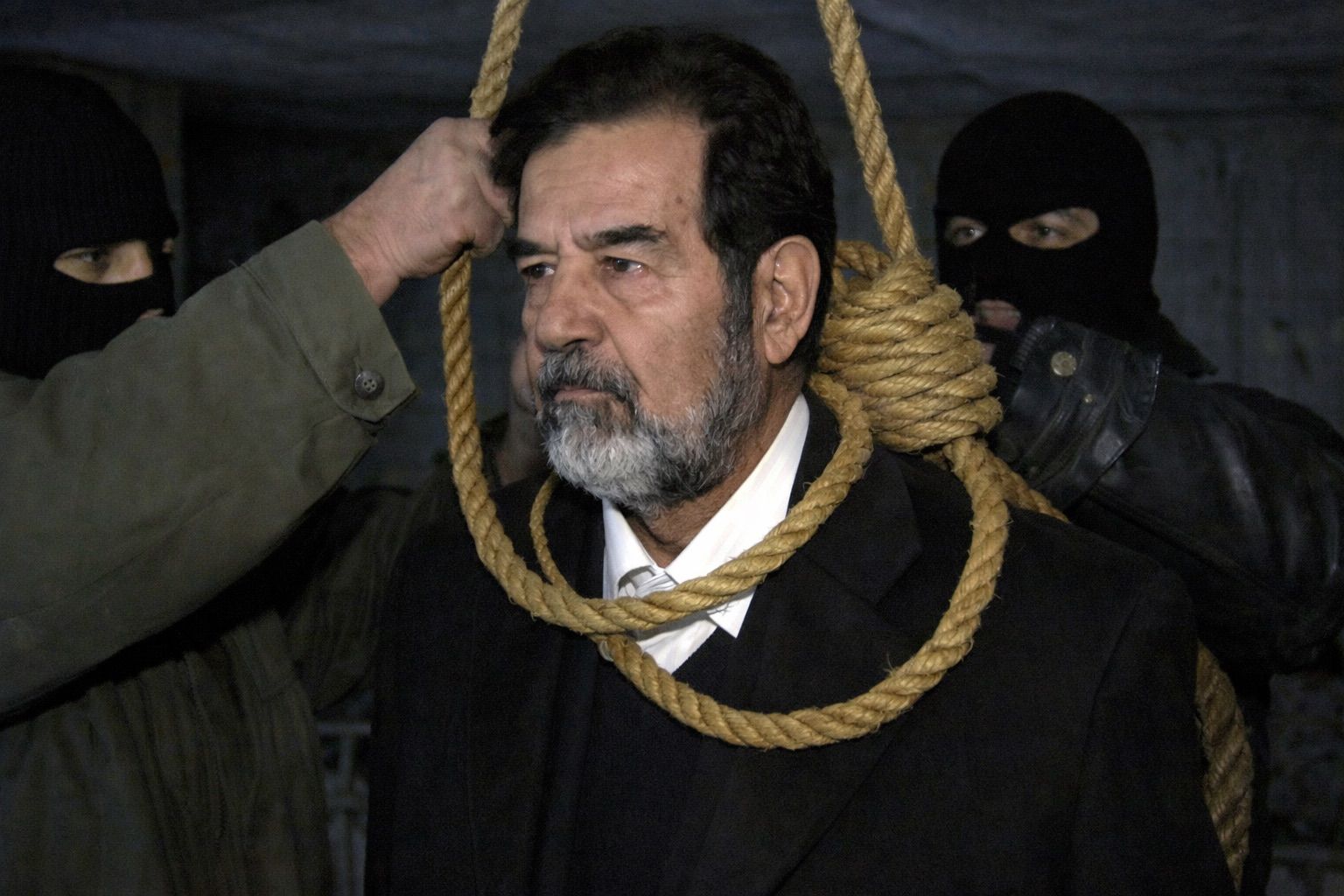
It was on December 30, 2006, that the world witnessed the execution of one of its most infamous figures – Saddam Hussein. The former Iraqi dictator had been in American custody since his capture in a hiding spot north of Baghdad on December 13, 2003. His death marked the end of an era, not just for Iraq but also for the global community that watched with bated breath as he stood trial and awaited his fate.

Saddam’s rise to power began in the early 1970s when he seized control from President Abd al-Karim Qasim following a bloody coup. He ruled with an iron fist, suppressing dissent and opposition through brutal means. His regime was characterized by human rights abuses, economic mismanagement, and aggressive military expansion. The Iran-Iraq War of the 1980s left deep scars on Iraq’s economy and its people, but it also solidified Saddam’s grip on power.

The invasion of Kuwait in August 1990 marked a turning point for Saddam and his regime. While initially successful, the subsequent Allied intervention forced him to withdraw from Kuwait, leaving behind a trail of destruction and chaos. The aftermath saw widespread international sanctions imposed on Iraq, exacerbating its economic woes and leaving millions without access to basic necessities.

The no-fly zones established by the United States and the United Kingdom over northern and southern Iraq were another direct consequence of Saddam’s actions. These zones allowed the Allies to maintain control while creating an environment that fueled resentment among Iraqis who felt they had been denied their sovereignty. The period also saw a shift in Saddam’s domestic policies as he turned towards radical Islamism, cultivating ties with terrorist groups such as Al-Qaeda.

The 2003 invasion of Iraq by American and British forces brought about the downfall of Saddam’s regime. After an initial resistance, his loyalist forces collapsed, and on April 9, 2003, Baghdad fell to coalition troops. As Iraqi cities celebrated their newfound freedom, many also mourned the loss of a leader who had become synonymous with national pride.

Saddam’s trial began in October 2005, over two years after his capture. Accused of ordering the execution of 148 Shi’ites from Dujail following an assassination attempt against him in 1982, Saddam stood before the Iraqi High Tribunal (IHT) to face justice. His defense team argued that he had been unfairly targeted and that the trial was a sham, while others saw it as a long-overdue reckoning for his crimes.

The verdict on November 5, 2006, was unanimous: death by hanging for Saddam. While some Iraqis welcomed this outcome, others feared it would exacerbate sectarian tensions between Shi’ites and Sunnis. This anxiety proved well-founded as thousands of protesters took to the streets, not in celebration but in opposition to what many saw as a miscarriage of justice.

Saddam’s execution on December 30, 2006, was carried out at Kadhimiya prison, just north of Baghdad. In the hours leading up to it, his lawyer made an eleventh-hour appeal to spare his client’s life. Saddam himself remained defiant until the very end, maintaining that he had done nothing wrong and refusing even to acknowledge the legitimacy of the trial.

In a bizarre twist, Saddam requested that his family be allowed to identify him after his execution, fearing that his body might be claimed by another person or that it would not be recognized. This request was met with skepticism by those present but highlights the deep paranoia that had characterized his regime and continues to influence Iraqi politics today.

As news of Saddam’s death spread around the world, reactions were mixed. Some hailed it as a triumph for justice and a fitting end to a brutal dictator, while others saw it as an opportunistic move by American forces seeking to consolidate their power in Iraq. In Iraq itself, the mood was tense, with fears that the execution would create a power vacuum or fuel further instability.

The months following Saddam’s death were marked by violence and uncertainty as factions vied for control of the country. Al-Qaeda in Iraq (AQI), which had previously been weakened by the invasion, began to regroup and wreak havoc across the nation. As one faction after another fell, it became clear that the removal of Saddam was only a small step towards stability.

The execution also sparked debate about the role of international law in the post-Saddam era. Critics accused the Bush administration of attempting to sidestep due process and ignore human rights norms by pushing for capital punishment without allowing for appeals or alternatives. The use of such extreme measures, they argued, undermined efforts to rebuild Iraq’s fragile institutions.

On a broader level, Saddam’s trial and execution have been seen as part of a larger conversation about the relationship between justice and politics in modern warfare. In the years following 9/11, governments around the world faced unprecedented challenges in balancing security concerns with human rights obligations. As in Iraq, many countries struggled to reconcile their pursuit of accountability for past atrocities with the imperatives of national sovereignty.

In conclusion, Saddam Hussein’s execution marked a watershed moment in international relations and domestic Iraqi politics. While it brought some measure of closure for victims of his regime, it also highlighted the complexities and challenges inherent in transitioning from dictatorship to democracy.

The years leading up to Saddam’s execution were marked by a series of tumultuous events that would shape the fate of Iraq and its people for generations to come. The invasion of Kuwait in August 1990 was a pivotal moment in modern Middle Eastern history, one that would test the mettle of international relations and diplomacy.

As Iraqi forces poured into Kuwait, the United States, under the leadership of President George H.W. Bush, rallied an international coalition to push back against Saddam’s aggression. The subsequent liberation of Kuwait marked a rare instance of successful multilateral cooperation in modern times, with over 40 nations contributing troops to the effort.

However, the aftermath of Operation Desert Storm was marred by controversy and recrimination. The Gulf War, as it came to be known, saw a series of devastating airstrikes against Iraqi military targets, including the infamous bombing of Baghdad’s infrastructure. While these actions were intended to weaken Saddam’s regime, they also had the unintended consequence of creating widespread suffering among ordinary Iraqis.

The no-fly zones established by the United States and its allies over northern and southern Iraq further complicated an already volatile situation. The zones, designed to prevent Iraqi aircraft from attacking Kurdish populations in the north and Shi’ite rebels in the south, became a constant source of tension between Baghdad and Washington.

Saddam, emboldened by the weakness of his opponents, began to exploit these divisions for his own gain. He cultivated ties with extremist groups like Al-Qaeda, fueling a radicalization of his regime that would have far-reaching consequences for Iraq and the wider region.

The 2003 invasion of Iraq by American and British forces brought an end to Saddam’s rule, but it also opened up a Pandora’s box of sectarian violence and instability. As the coalition struggled to establish order in Baghdad, it became clear that the removal of Saddam was only the first step towards a more profound transformation of Iraqi society.

The aftermath of the invasion saw a rise in tensions between Shi’ite and Sunni populations, as well as an increase in violence perpetrated by extremist groups like Al-Qaeda. The fragile balance between these competing forces would be tested to its limits in the years that followed, with far-reaching implications for regional stability and global security.

Saddam’s trial began in October 2005, over two years after his capture. Accused of ordering the execution of 148 Shi’ites from Dujail following an assassination attempt against him in 1982, Saddam stood before the Iraqi High Tribunal (IHT) to face justice. His defense team argued that he had been unfairly targeted and that the trial was a sham, while others saw it as a long-overdue reckoning for his crimes.

The verdict on November 5, 2006, was unanimous: death by hanging for Saddam. While some Iraqis welcomed this outcome, others feared it would exacerbate sectarian tensions between Shi’ites and Sunnis. This anxiety proved well-founded as thousands of protesters took to the streets, not in celebration but in opposition to what many saw as a miscarriage of justice.

The months leading up to Saddam’s execution were marked by a series of last-minute appeals and desperate attempts to save his life. His lawyer, Khalil al-Dulaimi, made an eleventh-hour appeal to spare his client’s life, arguing that the trial had been unfair and that Saddam’s sentence was unwarranted.

Saddam himself remained defiant until the very end, maintaining that he had done nothing wrong and refusing even to acknowledge the legitimacy of the trial. His defiance was a testament to the deep-seated conviction that had driven him throughout his life: that he was the rightful ruler of Iraq, and that any opposition to his rule was illegitimate.

In a bizarre twist, Saddam requested that his family be allowed to identify him after his execution, fearing that his body might be claimed by another person or that it would not be recognized. This request was met with skepticism by those present but highlights the deep paranoia that had characterized his regime and continues to influence Iraqi politics today.

As news of Saddam’s death spread around the world, reactions were mixed. Some hailed it as a triumph for justice and a fitting end to a brutal dictator, while others saw it as an opportunistic move by American forces seeking to consolidate their power in Iraq. In Iraq itself, the mood was tense, with fears that the execution would create a power vacuum or fuel further instability.

The months following Saddam’s death were marked by violence and uncertainty as factions vied for control of the country. Al-Qaeda in Iraq (AQI), which had previously been weakened by the invasion, began to regroup and wreak havoc across the nation. As one faction after another fell, it became clear that the removal of Saddam was only a small step towards stability.

The execution also sparked debate about the role of international law in the post-Saddam era. Critics accused the Bush administration of attempting to sidestep due process and ignore human rights norms by pushing for capital punishment without allowing for appeals or alternatives. The use of such extreme measures, they argued, undermined efforts to rebuild Iraq’s fragile institutions.

On a broader level, Saddam’s trial and execution have been seen as part of a larger conversation about the relationship between justice and politics in modern warfare. In the years following 9/11, governments around the world faced unprecedented challenges in balancing security concerns with human rights obligations. As in Iraq, many countries struggled to reconcile their pursuit of accountability for past atrocities with the imperatives of national sovereignty.

The trial and execution of Saddam Hussein have left a lasting impact on international relations and domestic Iraqi politics. While it brought some measure of closure for victims of his regime, it also highlighted the complexities and challenges inherent in transitioning from dictatorship to democracy.

In the years that followed, Iraq continued to grapple with the legacy of Saddam’s rule. The country struggled to rebuild its institutions, restore its economy, and reconcile its sectarian divisions. The removal of Saddam was only a small step towards this goal, and much work remains to be done if Iraq is to achieve true stability and prosperity.

The trial and execution of Saddam Hussein have also sparked important debates about the role of international law in modern warfare. As nations continue to grapple with the complexities of terrorism, insurgency, and regime change, it is essential that we consider the lessons learned from this critical moment in history.

In 2008, a report by Human Rights Watch noted that “the trial was marred by procedural irregularities and the absence of a fair defense.” The report went on to say that “while the Iraqi High Tribunal (IHT) made some efforts to address these concerns, it failed to fully meet international standards for fairness and impartiality.”

These findings were echoed by other human rights organizations, which argued that the trial had fallen short of its promise to bring accountability to Saddam’s crimes. While some Iraqis saw the trial as a necessary step towards closure, others felt that it was an attempt to sidestep more fundamental questions about the nature of power and accountability in modern societies.

In the years since Saddam’s execution, there has been a growing recognition of the need for greater international cooperation on issues related to human rights and transitional justice. The establishment of institutions like the International Criminal Court (ICC) is a testament to this trend, as is the increasing emphasis on national-level prosecutions of war crimes and atrocities.

However, much work remains to be done if we are to fully realize the potential of these developments. As we continue to navigate the complexities of modern warfare and regime change, it is essential that we prioritize accountability, transparency, and human rights in our pursuit of justice and stability.

In conclusion, Saddam Hussein’s execution marked a watershed moment in international relations and domestic Iraqi politics. While it brought some measure of closure for victims of his regime, it also highlighted the complexities and challenges inherent in transitioning from dictatorship to democracy.

The trial and execution of Saddam Hussein have left a lasting impact on our understanding of justice, power, and accountability in modern warfare. As we reflect on this critical moment in history, it is essential that we continue to grapple with its implications for international relations, human rights, and the pursuit of stability and prosperity around the world.

In doing so, we must not forget the lessons learned from Saddam’s trial: that justice requires a commitment to fairness, transparency, and accountability; that power and politics are inextricably linked with issues related to human rights and transitional justice; and that only through a deep understanding of these complexities can we hope to build more just and peaceful societies for all.

As we move forward into an uncertain future, it is essential that we draw on the wisdom of this critical moment in history. By doing so, we may yet find a way to reconcile our pursuit of justice with the imperatives of national sovereignty, to balance our security concerns with human rights obligations, and to build more just and peaceful societies for all.

The road ahead will be long and difficult, but it is one that we must travel if we hope to create a world where power is exercised in accordance with human rights principles, and where accountability and transparency are the hallmarks of justice.
Related Posts

Soviet Union officially formed

Elias Rowen

The formation of the Soviet Union marked a pivotal moment in modern history, one that would shape the destiny of nations and empires for generations to come. The culmination of revolutionary fervor and imperial ambitions, the Soviet Union was forged from the ashes of the Russian Empire, which had been ravaged by civil war and foreign intervention.

In the aftermath of World War I, the Romanov dynasty lay in tatters, its autocratic regime overthrown by a coalition of liberal and socialist forces. The Provisional Government, led by Alexander Kerensky, struggled to maintain order in the face of growing chaos and anarchy. However, with the Bolsheviks gaining momentum, Kerensky’s government was eventually toppled, paving the way for Vladimir Lenin to seize power.

Lenin, a charismatic leader and brilliant strategist, had returned from exile to find his party on the brink of collapse. Yet, with his trademark energy and ideological conviction, he rallied the Bolsheviks and guided them through the turbulent months that followed. The October Revolution, which saw the overthrow of Kerensky’s government, was the most pivotal moment in modern Russian history, marking the beginning of a new era.

As Lenin consolidated power, he set about transforming Russia into a socialist state. He nationalized key industries, imposed strict controls on the economy, and established the Red Army to maintain order. The Cheka, precursor to the KGB, was founded to root out counter-revolutionaries and suppress dissent. While these measures secured the Bolsheviks’ grip on power, they also spawned widespread opposition, from monarchists and Mensheviks to social democrats and peasant groups.

As the Soviet Union took shape, Lenin’s foreign policy became increasingly confrontational. He repudiated the Treaty of Brest-Litovsk, which had ended Russia’s participation in World War I, and instead began mobilizing against the emerging capitalist powers. The Rapallo Treaty with Germany, signed in 1922, was a significant milestone, marking a rapprochement between the Soviet Union and its former enemy.

Meanwhile, the newly established Comintern, under the leadership of Grigory Zinoviev, was busy spreading revolutionary fervor across Europe and beyond. The organization’s slogan, “Communism in one country,” became a clarion call for socialists worldwide to join forces with the Soviet Union. As Lenin navigated treacherous international waters, he remained steadfast in his commitment to Marxist ideals.

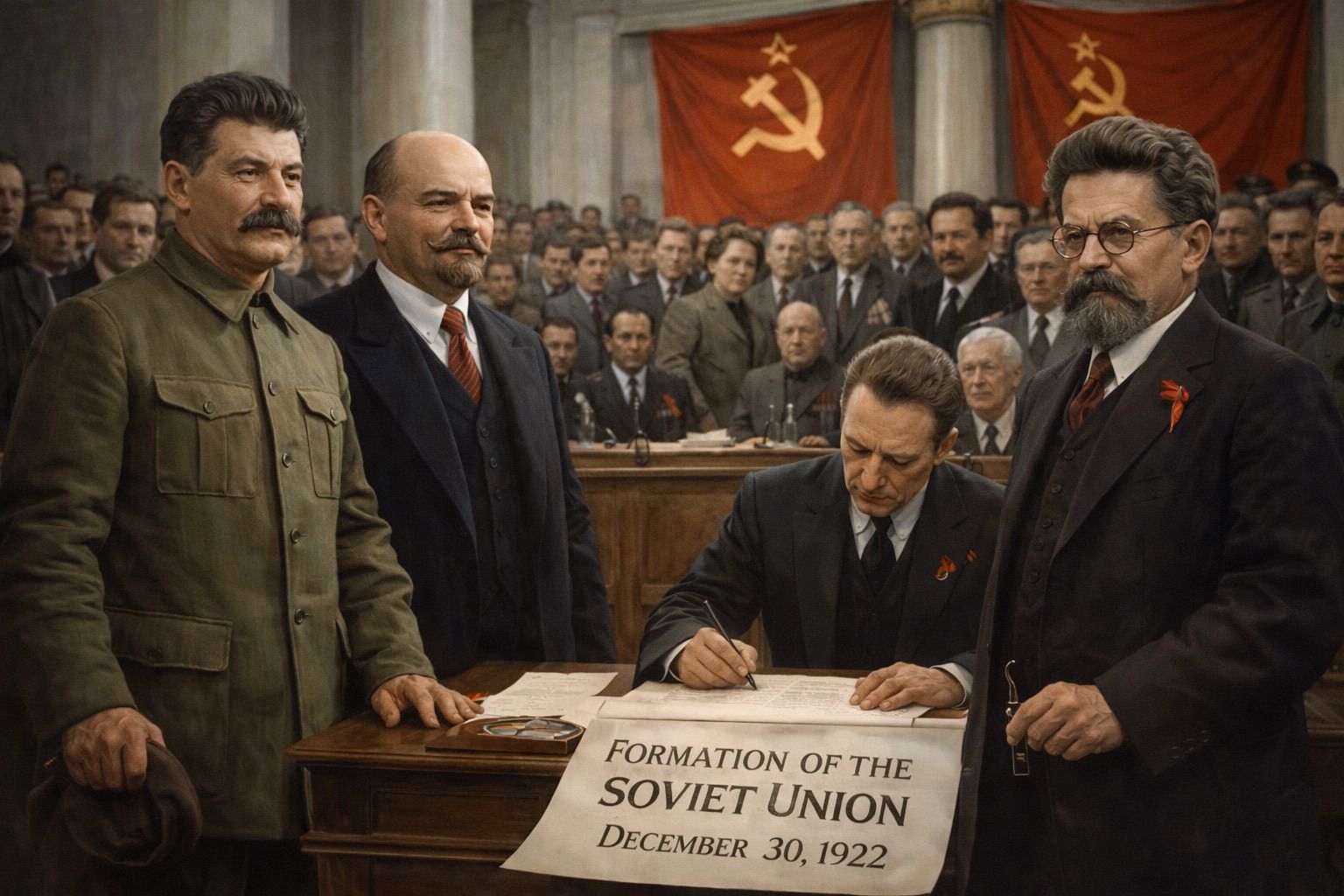
In 1922, at the 11th Party Congress, Lenin proposed the formation of a federal state, comprising three republics: Russia, Ukraine, and Belarus. The Soviet Union was born, with its first constitution drafted to enshrine the principles of socialism and workers’ power. As the new state took shape, its leaders set about consolidating control over the periphery, annexing territory from neighboring states, and suppressing nationalist movements.

The early years of the Soviet Union were marked by intense ideological conflict, with factions vying for influence within the Communist Party. The “New Economic Policy” (NEP), introduced in 1921, allowed for limited capitalist enterprise and was a pragmatic response to economic hardship. However, it also fueled resentment among radicals, who saw it as a betrayal of Marxist principles.

The struggle between the moderate Left, led by Leon Trotsky, and the hardline Right, headed by Joseph Stalin, would ultimately decide the course of Soviet history. Lenin’s illness and eventual death in 1924 created a power vacuum that both factions sought to exploit. As Stalin’s star rose, he began to eliminate his opponents, beginning with the murder of Sergei Kirov in 1934.

The subsequent reign of terror saw millions of innocent people sent to their deaths in the Gulag or through forced labor camps. The show trials and public executions of prominent Bolsheviks, including Bukharin and Rykov, served as a stark reminder of Stalin’s ruthless consolidation of power.

As the Soviet Union expanded its borders, it also faced growing opposition from neighboring countries. Poland, Finland, and Estonia all resisted Moscow’s advances, but were eventually subjugated through military force or economic coercion. The Red Army, having defeated the Polish Army in 1920, became a symbol of Soviet strength and resilience.

The Soviet Union’s relations with Western powers were fraught from the outset, with the Allies refusing to recognize its legitimacy until 1933. However, as Hitler’s Germany began to flex its muscles, the Soviet Union found itself forced into an uneasy alliance with its former enemies. The Molotov-Ribbentrop Pact, signed in 1939, allowed for a temporary truce between the two powers, but ultimately proved disastrous for both.

The Soviet Union emerged from World War II as one of the victorious Allies, having suffered the heaviest losses of all combatants. As the Cold War began to unfold, the United States and its NATO allies faced off against the Soviet bloc in a decades-long struggle for ideological supremacy. The Soviet Union’s subsequent expansion into Eastern Europe, coupled with the Berlin Blockade and Airlift, solidified the division between East and West.

Throughout its existence, the Soviet Union remained a bastion of Marxist ideology, even as it grappled with issues of national identity and diversity. As dissent grew within the ranks, reformers like Mikhail Gorbachev sought to introduce liberalizing measures, which ultimately proved fatal to the regime’s survival. The collapse of the Soviet Union in 1991 marked the end of a long and complex chapter in world history.

The formation of the Soviet Union was not just a domestic development, but also a response to the global turmoil that followed World War I. The Russian Revolution had set off a chain reaction across Europe and beyond, as socialists and communists saw in Lenin’s victory a model for their own movements. In Germany, France, and Italy, Marxist parties gained strength and began to organize strikes and protests.

In the Soviet Union itself, Lenin’s government was determined to export revolution to other countries. The Comintern, founded in 1919, became a hub for international communist activity, with agents dispatched to foment rebellion and instability worldwide. From Turkey to China, from Spain to Brazil, Soviet-backed movements emerged, often with disastrous consequences.

Lenin’s own vision of socialism in one country was increasingly at odds with the Comintern’s ambitions. He saw the Soviet Union as a beacon for revolutionaries everywhere, but also recognized that its own economic and military needs had to be prioritized. This led to tensions within the party, particularly between Lenin and Trotsky, who advocated for greater international cooperation.

As the 1920s wore on, the Soviet Union faced growing challenges at home. The economy was in shambles, with famine and industrial collapse crippling the country. The NEP, introduced by Lenin in 1921, attempted to address these issues by allowing limited capitalist enterprise, but it also fueled resentment among radicals who saw it as a betrayal of Marxist principles.

The struggle between moderate Left and hardline Right within the Communist Party would continue for years, with both factions vying for control. The “Left Opposition,” led by Trotsky and his allies, advocated for greater economic decentralization and international cooperation. However, Stalin’s consolidation of power had already begun, and he would stop at nothing to crush opposition.

The brutal suppression of dissent, particularly in the early 1930s, was a hallmark of Stalin’s rule. The show trials, where leading Bolsheviks were accused of treason and executed, became a grim spectacle, as did the forced collectivization of agriculture, which led to widespread famine in Ukraine and other areas.

Despite these atrocities, the Soviet Union continued to grow in power and influence. Its industrial production soared, with massive projects like the Baikal-Amur Railway and the Moscow Metro transforming the country’s infrastructure. The Red Army, having defeated the Polish Army in 1920, became a symbol of Soviet strength and resilience, capable of defending its borders against any foe.

However, the Molotov-Ribbentrop Pact, signed in 1939, marked a turning point for the Soviet Union. By allying with Nazi Germany, Stalin’s regime sacrificed its ideological integrity for temporary gains, which ultimately proved disastrous. The subsequent German invasion of June 1941 caught the Red Army off guard, leading to one of the bloodiest battles in history.

The Great Patriotic War would prove a crucible for the Soviet people, testing their resolve and resilience against unimaginable odds. Despite initial setbacks, the Red Army eventually turned the tide, pushing the Germans back across Eastern Europe. The losses were staggering – estimates suggest over 20 million Soviet citizens died during World War II – but the victory marked a turning point in Soviet history.

In the aftermath of the war, Stalin’s regime was at its most powerful, with satellite states stretching from Poland to Mongolia under Moscow’s control. However, as the Cold War began to unfold, the United States and its NATO allies faced off against the Soviet bloc in a decades-long struggle for ideological supremacy.

The division between East and West became increasingly entrenched, with Berlin serving as a focal point of conflict. The city’s blockade by Soviet forces in 1948 led to the historic Airlift, which provided vital supplies to the Western sector until the blockade was lifted. This event marked a new phase in the Cold War, as both sides dug in for a protracted standoff.

Throughout its existence, the Soviet Union struggled with issues of national identity and diversity. The various ethnic groups that made up the country’s population often felt marginalized or suppressed by Moscow’s central authority. In the Baltic states, Ukraine, and Georgia, nationalist movements emerged, seeking greater autonomy or even independence.

The reformers who came to power in the late 1980s, led by Mikhail Gorbachev, sought to address these issues through glasnost (openness) and perestroika (restructuring). However, their attempts at liberalization ultimately proved fatal to the regime’s survival. The Soviet Union began to disintegrate from within, with republics declaring independence one by one.

In December 1991, the Soviet Union ceased to exist as a functioning state. Its legacy remains complex and contested – some see it as a pioneering effort in socialism and international cooperation; others condemn its authoritarianism and atrocities. Regardless, the Soviet Union’s impact on modern history is undeniable, shaping global politics, economies, and societies for generations to come.

Related Posts

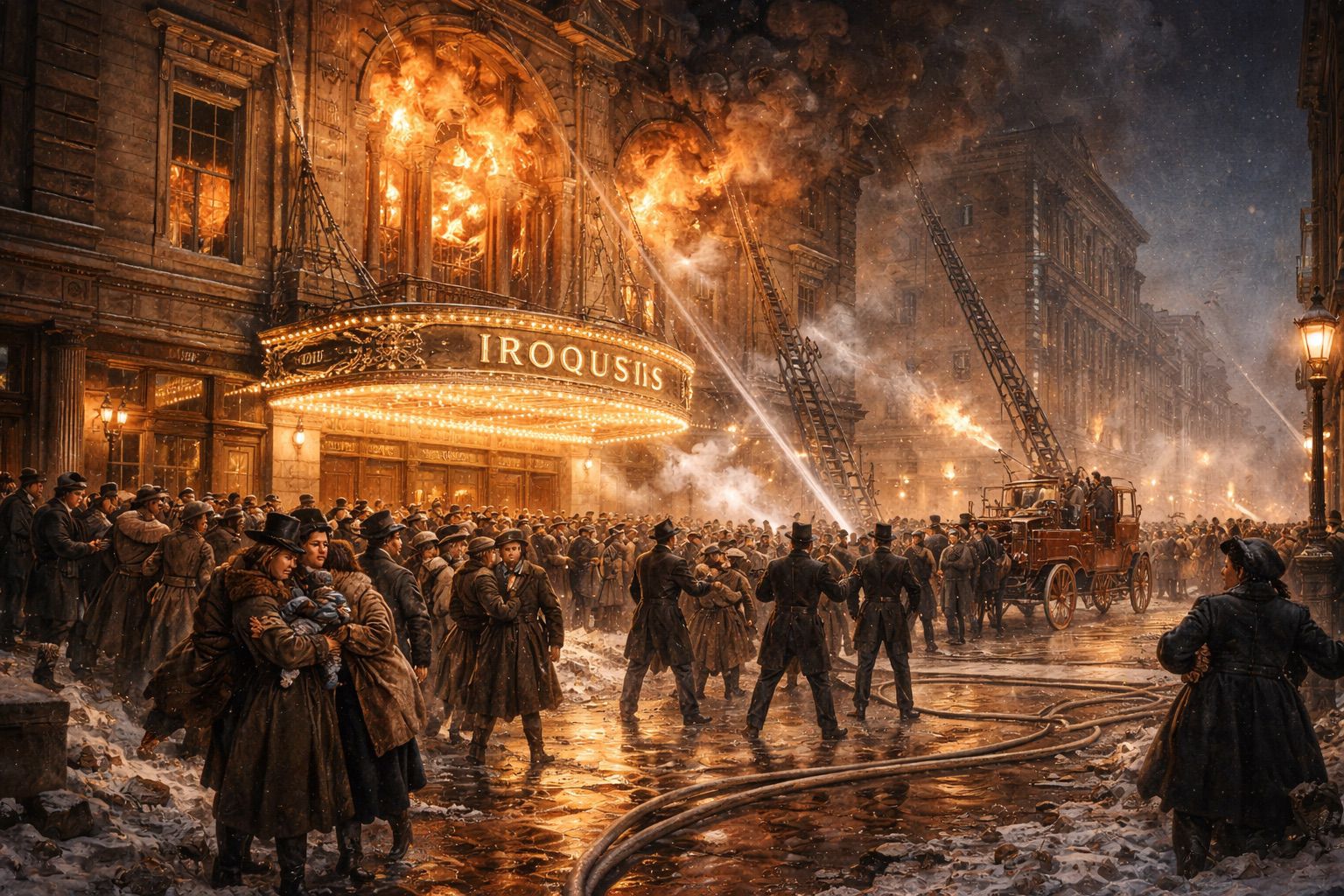
Iroquois Theatre fire kills 600 in Chicago

Elias Rowen

On December 30, 1903, a devastating fire broke out at the Iroquois Theatre in downtown Chicago, resulting in one of the deadliest disasters in American history. The tragedy would go on to claim over 600 lives and leave hundreds more injured, forever changing the city’s relationship with its entertainment venues.

The Iroquois Theatre was a popular destination for theatergoers and music lovers alike, hosting everything from plays and musicals to concerts and vaudeville acts. Opened in 1903 by the renowned theatrical manager John Willys, the theater quickly became one of the most sought-after destinations in Chicago’s thriving cultural scene. With its grand architecture, ornate decorations, and state-of-the-art amenities, the Iroquois was designed to be a premier entertainment venue, capable of hosting large crowds and providing an unparalleled experience for audiences.

However, on that fateful evening, disaster struck when a performance of the musical comedy “Mr. Bluebeard Jr.” was underway. The play’s director, Thomas E. West, had chosen to perform in front of a packed house without conducting any fire safety checks or adhering to proper exit procedures. This negligence would ultimately prove fatal.

At around 9:00 PM, just as the show was reaching its climax, sparks from the stage caught on a drop curtain made of grease-coated cotton, igniting the surrounding decorations and quickly spreading through the theater. Panic erupted among the audience as flames engulfed the building, trapping patrons beneath the balcony. Fire alarms were not installed in the theater, and it would take several minutes for firefighters to arrive at the scene.

The inferno raged on, fueled by a combination of flammable materials, poor fire safety measures, and inadequate emergency response procedures. Eyewitnesses reported hearing screams from within the building as terrified patrons desperately attempted to escape through crowded corridors or exit doors that were either locked or blocked by debris. Some managed to flee via side exits, but for most, it was a matter of waiting until rescuers arrived.

In the aftermath of the tragedy, investigators revealed a litany of safety violations and human error had contributed to the disaster. The drop curtain used in the theater’s interior design was highly flammable, despite being made of what should have been fire-resistant material. Moreover, West’s decision to perform without conducting regular fire drills or maintaining proper exit procedures led directly to the loss of hundreds of lives.

Furthermore, inadequate emergency response systems and lack of communication among city authorities exacerbated the situation. The theater lacked a fire alarm system, relying on the manual operation of hand-cranked pumps instead. When local responders finally arrived, they found themselves struggling to access the building due to heavy ice on the pavement, further delaying their efforts.

The sheer scale of destruction was almost unimaginable. As news spread, shocked citizens and first responders rushed to the scene to offer what aid they could. Volunteer fire crews, doctors, and nurses joined the official response effort, but it soon became clear that the damage was far more extensive than initially thought. Bodies were strewn throughout the lobby, stairways, and corridors, with many trapped beneath rubble or entangled in debris.

Rescue efforts continued well into the night as teams scoured the wreckage for survivors. Unfortunately, most of those who perished succumbed to their injuries before aid could arrive. Medical personnel worked tirelessly to treat the wounded, but even with all their efforts, hundreds would ultimately lose their lives due to severe burns and smoke inhalation.

The Iroquois Theatre disaster sent shockwaves across America, prompting long-overdue discussions about fire safety regulations in entertainment venues. It was a defining moment in the history of Chicago’s cultural landscape, leading directly to significant changes in building codes and emergency response procedures throughout the country.

In its aftermath, authorities were forced to confront their own role in enabling such tragedies through lax regulation and inadequate support for local businesses. Illinois Governor Richard Oglesby appointed a commission to investigate the disaster, led by prominent businessman and civic leader George M. Reynolds. The findings of this committee served as a rallying cry for advocates pushing for improved fire safety standards nationwide.

In 1905, the State of Illinois implemented strict new regulations governing building codes and emergency response systems in public venues. For theaters specifically, the rules mandated that performance spaces be equipped with adequate exit routes and escape ladders, while also enforcing regular fire drills and inspections to identify potential hazards before they became fatal.

As survivors and families affected by the tragedy reflected on their experiences, a sense of collective outrage emerged. While some sought solace in the subsequent reforms, others pressed for accountability from those responsible. As public pressure mounted, prominent figures like Mayor George G. Eggleston and civic leaders joined forces to ensure that lessons learned at the Iroquois would not be forgotten.

As America’s entertainment landscape continued to evolve, cities across the nation came together to honor the victims of this tragedy by implementing stricter building codes and emergency response protocols in theaters, movie palaces, and concert halls. While some might argue that it took a disaster on such an unprecedented scale for meaningful change to occur, it is undeniable that the sacrifices made at the Iroquois Theatre paved the way for safer, more responsible entertainment venues throughout the United States.

In the end, while the fire at the Iroquois Theatre left an indelible scar on Chicago’s cultural landscape, its legacy extends far beyond the Windy City. As a nation, America emerged from this tragedy with a newfound sense of awareness and urgency about the importance of public safety in entertainment spaces.

As the days passed, the sheer scale of the disaster became increasingly clear. The Iroquois Theatre was a hub of activity as rescue efforts continued, with volunteer fire crews, doctors, and nurses working tirelessly to aid those affected by the tragedy. Despite their best efforts, it soon became apparent that many of those who had perished would never be identified or accounted for.

The city’s newspapers reported on the disaster in grim detail, highlighting the tragic circumstances surrounding the loss of so many lives. The Chicago Tribune, one of the city’s leading papers, ran a front-page story with the headline “Fire at Iroquois Theatre Claims Hundreds of Lives” and went on to describe the chaos that had ensued during the disaster.

As news of the tragedy spread, shockwaves rippled across the nation. Cities from New York to San Francisco sent condolences to the city of Chicago, offering support and assistance in any way they could. The mayor of New York City, George McClellan, wrote a heartfelt letter to Mayor Eggleston expressing his sympathy for the victims and their families.

Meanwhile, officials in Illinois were quick to respond to the crisis, establishing emergency aid centers and setting up makeshift morgues to handle the sheer volume of dead. Illinois Governor Richard Oglesby was among those who visited the site of the disaster, surveying the damage and speaking with survivors.

The Iroquois Theatre disaster sent shockwaves across America’s entertainment industry, prompting an unprecedented level of introspection and self-examination. Theatrical managers and owners from coast to coast began reevaluating their fire safety procedures, inspecting their theaters for potential hazards, and implementing new emergency protocols.

In the aftermath of the tragedy, a sense of national outrage emerged as people demanded answers and accountability. A commission was established by Governor Oglesby to investigate the disaster and identify its causes. Led by George M. Reynolds, a prominent businessman and civic leader, this committee spent months interviewing survivors, reviewing evidence, and scrutinizing the actions of those responsible.

The findings of the Reynolds Commission were damning. Its report highlighted a litany of safety violations and human error that had contributed to the disaster. The commission concluded that Thomas E. West’s decision to perform without conducting regular fire drills or maintaining proper exit procedures was directly responsible for the loss of hundreds of lives.

In response to these revelations, Illinois lawmakers moved swiftly to enact new regulations governing building codes and emergency response systems in public venues. The State of Illinois passed a landmark piece of legislation in 1905, which mandated that all public theaters be equipped with adequate exit routes and escape ladders. Regular fire drills and inspections were also made compulsory, along with the implementation of fire alarm systems.

As the reforms took effect, cities across America began to adopt similar measures. By 1907, every major city had implemented stricter building codes and emergency response protocols in their public venues. This new wave of regulation marked a significant turning point in the history of American entertainment, paving the way for safer, more responsible venues that would become synonymous with the golden age of Hollywood.

The impact of the Iroquois Theatre disaster was not limited to the immediate aftermath. As time passed, its legacy continued to shape the nation’s approach to public safety and entertainment regulations. Cities like New York, Los Angeles, and Chicago all took note of the lessons learned at the Iroquois, implementing new measures to prevent similar tragedies from occurring.

As we reflect on this pivotal moment in American history, it becomes clear that the Iroquois Theatre disaster was more than just a catastrophic event – it was a turning point. It forced America’s entertainment industry to confront its own vulnerabilities and limitations, leading to a sea change in the way public venues were designed, operated, and regulated.

Today, as we look back on this dark chapter in American history, it is hard not to feel a sense of awe at the sheer scale of human error that led to such unimaginable tragedy. Yet, even amidst the devastation and heartbreak, there was also something remarkable – a testament to the resilience and determination of those who lost loved ones.

In the end, while the fire at the Iroquois Theatre left an indelible scar on Chicago’s cultural landscape, its legacy extends far beyond the Windy City. As America emerged from this tragedy with a newfound sense of awareness and urgency about public safety in entertainment spaces, it set in motion a chain reaction that would change the face of American entertainment forever.

The loss of so many lives at the Iroquois Theatre served as a poignant reminder of the importance of responsible stewardship in the entertainment industry. As America’s cultural landscape continued to evolve, cities across the nation came together to honor the victims by implementing stricter building codes and emergency response protocols. This collective effort paved the way for safer, more responsible venues that would become synonymous with the golden age of Hollywood.

As we remember the Iroquois Theatre disaster today, it is essential to recall the sacrifices made by those who lost their lives in this tragic event. Their memory serves as a reminder that public safety and responsibility must always be at the forefront of any industry, especially one as vulnerable to human error as entertainment. By examining this pivotal moment in American history, we can gain valuable insights into the importance of accountability, regulation, and responsible stewardship.

The city of Chicago would never forget the lessons learned from the Iroquois Theatre disaster. In 1911, a new theater was built on the site of the original building, designed with safety in mind and equipped with state-of-the-art fire suppression systems and emergency response protocols. This new venue became a symbol of hope and renewal for a city still grappling with the aftermath of tragedy.

In the years that followed, Chicago would continue to play host to some of America’s most iconic entertainment venues – from the Kit Kat Club to the famous Paramount Theatre. Each one of these institutions stood as a testament to the enduring legacy of the Iroquois Theatre disaster, a reminder that even in the face of unimaginable tragedy, it is possible to emerge stronger and more resilient than before.

As America’s entertainment landscape continued to evolve, cities across the nation came together to honor the victims by implementing stricter building codes and emergency response protocols. This collective effort paved the way for safer, more responsible venues that would become synonymous with the golden age of Hollywood.

The loss of so many lives at the Iroquois Theatre serves as a poignant reminder of the importance of responsible stewardship in any industry. As America continues to evolve and grow, it is essential to remember the sacrifices made by those who lost their lives in this tragic event. Their memory will continue to inspire future generations to prioritize public safety, accountability, and responsible leadership.

The Iroquois Theatre disaster left an indelible mark on American history, forcing a nation to confront its own vulnerabilities and limitations. Today, as we reflect on this pivotal moment, it is clear that the lessons learned from this tragedy will continue to shape America’s approach to public safety and entertainment regulations for generations to come.

In 1929, the State of Illinois passed an amendment to the original legislation, further strengthening building codes and emergency response protocols in public venues. This move marked a significant milestone in the ongoing effort to prevent similar tragedies from occurring.

As we remember the Iroquois Theatre disaster today, it is essential to recall the sacrifices made by those who lost their lives in this tragic event. Their memory serves as a reminder that public safety and responsibility must always be at the forefront of any industry, especially one as vulnerable to human error as entertainment.

The city of Chicago would never forget the lessons learned from the Iroquois Theatre disaster. In 1911, a new theater was built on the site of the original building, designed with safety in mind and equipped with state-of-the-art fire suppression systems and emergency response protocols. This new venue became a symbol of hope and renewal for a city still grappling with the aftermath of tragedy.

In the years that followed, Chicago would continue to play host to some of America’s most iconic entertainment venues – from the Kit Kat Club to the famous Paramount Theatre. Each one of these institutions stood as a testament to the enduring legacy of the Iroquois Theatre disaster, a reminder that even in the face of unimaginable tragedy, it is possible to emerge stronger and more resilient than before.

The impact of the Iroquois Theatre disaster extends far beyond its immediate aftermath, shaping the nation’s approach to public safety and entertainment regulations for generations to come. Today, as we reflect on this pivotal moment in American history, it becomes clear that the lessons learned from this tragedy will continue to inspire future generations to prioritize responsible stewardship and accountability.

As America’s entertainment landscape continues to evolve, cities across the nation remain committed to honoring the victims of the Iroquois Theatre disaster by maintaining stricter building codes and emergency response protocols. This collective effort ensures that future generations will never forget the importance of public safety in any industry, especially one as vulnerable to human error as entertainment.

In conclusion, the Iroquois Theatre disaster marked a turning point in American history – a moment when the nation was forced to confront its own vulnerabilities and limitations. As we remember this tragic event today, it is essential to recall the sacrifices made by those who lost their lives in this devastating disaster. Their memory serves as a reminder that public safety and responsibility must always be at the forefront of any industry, especially one as vulnerable to human error as entertainment.

The city of Chicago’s response to the Iroquois Theatre disaster stands as a testament to the resilience and determination of its people. In the aftermath of tragedy, the city came together to rebuild and rebirth itself – emerging stronger and more resilient than ever before. Today, as we look back on this pivotal moment in American history, it is clear that the lessons learned from this tragedy will continue to shape America’s approach to public safety and entertainment regulations for generations to come.

As we close this chapter in American history, we honor the memory of those who lost their lives at the Iroquois Theatre. Their sacrifice serves as a poignant reminder of the importance of responsible stewardship, accountability, and public safety – values that will continue to inspire future generations to prioritize these essential principles.

Related Posts

Texas admitted as the 28th U.S. state

Elias Rowen

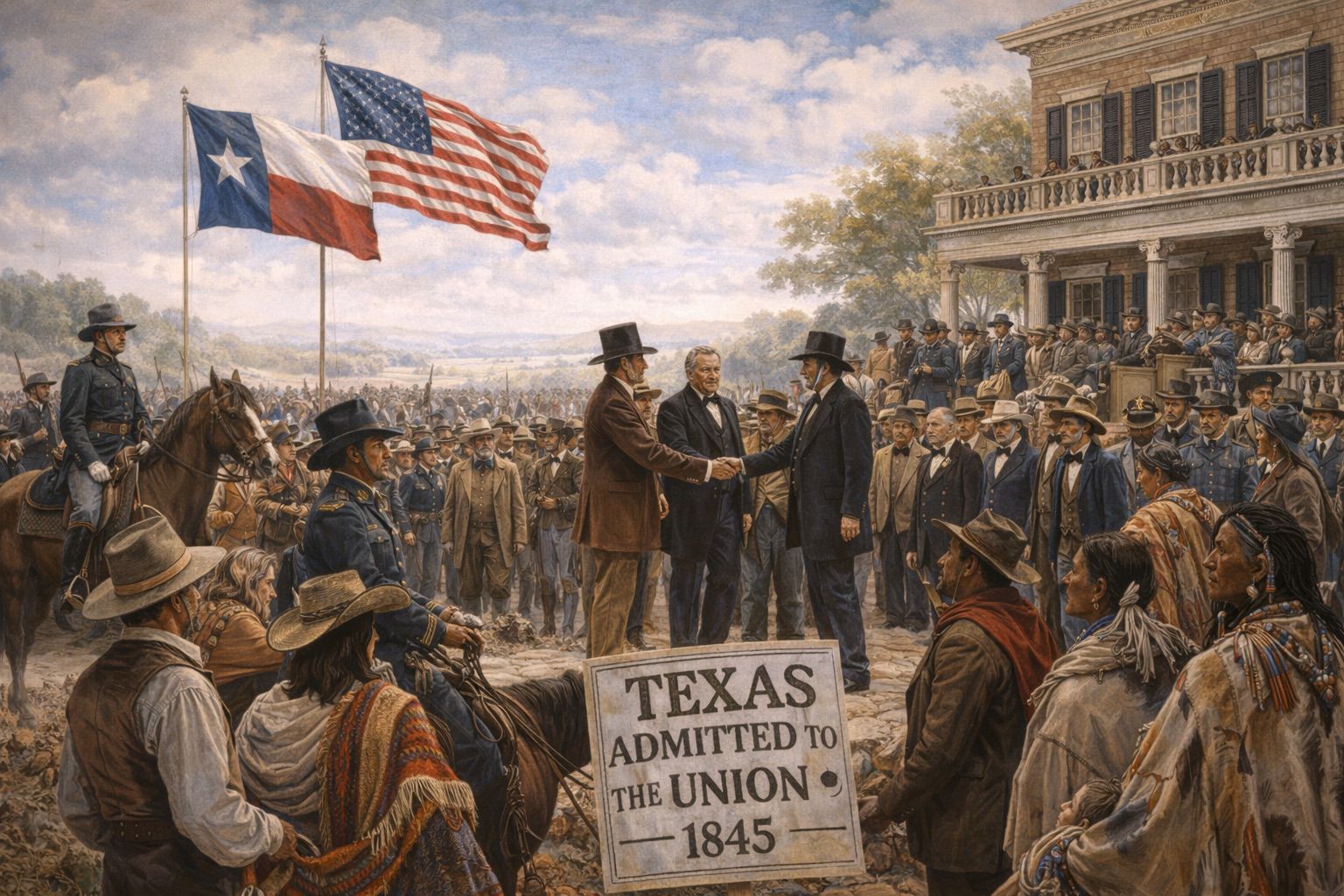
The admission of Texas as the 28th U.S. state on December 29, 1845, marked a significant milestone in the country’s history. The annexation of the Lone Star Republic by the United States was a long and arduous process that involved complex negotiations, debates, and even violence. To understand the significance of this event, it is essential to examine the historical context leading up to Texas’ admission as a state.

In the early 19th century, the United States and Mexico were both struggling with their own internal issues. The Mexican War of Independence from Spain had just ended in 1821, but the new nation was still grappling with its own identity and borders. The U.S., on the other hand, was expanding westward, fueled by a desire for Manifest Destiny – the idea that it was America’s divine mission to spread across North America.

The relationship between the two nations was further complicated by the fact that Texas had been part of Mexico since gaining independence from Spain in 1821. However, as the Mexican government struggled to maintain control over its vast territories, a group of American settlers arrived in the region with the intention of establishing their own colonies. These settlers were largely from the Southern states and brought with them their own culture, language, and social norms.

In the early 1830s, tensions began to rise between the Mexican government and these American settlers. The Mexican government, which was dominated by centralists who wanted a strong federal system, saw the Texans as a threat to its authority. The Texans, on the other hand, wanted greater autonomy and even independence from Mexico. In 1835, a group of rebels in San Antonio launched the famous Battle of Gonzales against the Mexican army, marking the beginning of the Texas Revolution.

The conflict between the Texans and the Mexicans continued for several years, with the Texans emerging victorious at the Battle of San Jacinto on April 21, 1836. The newly formed Republic of Texas declared its independence from Mexico and established its own government, led by Sam Houston as president. However, the new republic faced significant challenges, including a struggling economy and a lack of recognition from other countries.

In 1837, the U.S. Congress passed the Webster-Ashburton Treaty with Great Britain, which resolved border disputes between the two nations. However, the treaty also led to increased tensions between the U.S. and Mexico over the issue of Texas’ status. The Mexican government refused to recognize the Republic of Texas as a sovereign state, and instead saw it as part of its own territory.

Meanwhile, in the United States, there was growing support for the annexation of Texas. Many Americans saw the young republic as a potential addition to the Union, and believed that its inclusion would strengthen the country’s economy and military. In 1843, President John Tyler sent a special envoy, John Slidell, to Mexico City to negotiate an agreement on Texas’ status. However, the mission was unsuccessful, and tensions between the two nations continued to rise.

In March 1844, Congress passed a resolution calling for the annexation of Texas by joint resolution, which would bypass the need for Senate approval. However, this resolution was met with fierce opposition from Northern Democrats, who saw it as an attempt by Southern states to expand slavery into new territories. The issue became increasingly polarized, with pro-slavery Southerners supporting annexation and anti-slavery Northerners opposing it.

Despite these challenges, the Texas annexation movement continued to gain momentum. In December 1844, Congress voted in favor of the joint resolution, but President Tyler vetoed it, citing concerns about Senate opposition. However, when Congress reconvened in March 1845, they passed a new joint resolution that included provisions for the abolition of slavery in Texas. This compromise led to the signing of the annexation treaty by the U.S. and Texas on April 12, 1845.

The final step towards statehood was taken on December 29, 1845, when President Polk signed a proclamation admitting Texas as the 28th U.S. state. The admission was met with widespread celebration across the country, but it also sparked outrage in Mexico and among anti-slavery groups in the North. The annexation of Texas had significant implications for the balance of power in both nations, setting the stage for future conflicts over slavery, states’ rights, and westward expansion.

The legacy of Texas’ admission as a state continues to shape American politics today. The debate over Manifest Destiny and its impact on Native American tribes is still relevant, as is the issue of immigration and border security. The annexation of Texas also highlights the complexities of nation-building and the challenges of integrating diverse cultures into a unified whole.

The relationship between the U.S. and Mexico has continued to evolve over time, with periods of cooperation and conflict. Today, the two nations maintain close diplomatic ties and cooperate on issues such as trade and security. However, the legacy of Texas’ admission as a state remains a source of tension between the two countries, particularly when it comes to issues related to immigration and border control.

As the Republic of Texas entered its second decade, the struggle for survival became increasingly dire. The economy was in shambles, with many Texans struggling to make ends meet due to a series of devastating crop failures and economic downturns. Meanwhile, the Mexican government continued to refuse recognition of the Republic’s sovereignty, maintaining that Texas was still part of Mexico.

In an effort to bolster its economy and strengthen its claim to independence, the Republic of Texas turned to the United States for support. In 1839, a group of Texans traveled to Washington D.C. to lobby for recognition and financial aid from Congress. However, their efforts were met with skepticism by many lawmakers, who viewed the Republic as little more than a ragtag collection of settlers.

Despite these setbacks, the Texas Revolution continued to gain momentum, thanks in large part to the leadership of Sam Houston. A veteran of the War of 1812 and a skilled politician, Houston was instrumental in rallying support for the Republic among Texans and Americans alike. In 1839, he traveled to Washington D.C. to meet with President Martin Van Buren and other government officials, pressing his case for recognition and aid.

The following year, the Texas Revolution received a significant boost when Stephen F. Austin, one of the most influential figures in the Republic’s early history, arrived in Washington D.C. with a petition signed by over 5,000 Texans calling for annexation by the United States. The petition, which was presented to President Van Buren on March 1, 1840, marked a significant turning point in the struggle for Texas’ independence.

As the debate over Texas’ status continued to rage within Congress and among the American public, a group of Texans began secretly negotiating with U.S. officials to pave the way for annexation. In May 1843, John Slidell, a former U.S. diplomat who had previously served as minister to Mexico, was dispatched to Washington D.C. by President Tyler to negotiate a secret treaty with Texas that would set the stage for annexation.

The negotiations, which took place over several weeks in June and July of 1843, resulted in the signing of a secret treaty between Slidell and Sam Houston. The treaty, which was not made public at the time, provided for the terms of Texas’ annexation by the United States. It also included provisions for the abolition of slavery in Texas, which would become a contentious issue during the debate over statehood.

However, just as it seemed that annexation was all but assured, the treaty was derailed by the arrival of Slidell’s instructions from President Tyler. The instructions, which were not made public at the time, revealed that Tyler had secretly offered to sell Texas to the United States for $30 million. This move, which would have allowed the U.S. government to purchase rather than annex the Republic, was seen as a betrayal by many Texans and was ultimately rejected by Congress.

The failure of the Slidell mission marked a significant setback for the annexation movement, but it did not deter its proponents. In 1844, President Tyler began secretly negotiating with Texas officials once again, this time seeking to bypass Congress altogether in favor of a joint resolution that would admit Texas as a state by a simple majority vote.

The debate over annexation continued to rage within Congress throughout the spring and summer of 1844. Pro-slavery Southerners argued that annexing Texas was essential for maintaining the balance of power between slave and free states, while anti-slavery Northerners countered that it would only serve to further entrench slavery in American society.

In March 1845, after weeks of tense debate, Congress finally voted on a joint resolution admitting Texas as a state. The measure passed by a margin of just four votes, with Northern Democrats ultimately failing to block its passage. However, President Tyler vetoed the resolution, citing concerns about Senate opposition and the potential impact on the balance of power within the Republic.

Undeterred, Congress reconvened in April 1845 and passed an amended version of the joint resolution that included provisions for the abolition of slavery in Texas. This compromise, which was seen as a significant concession by many pro-slavery Southerners, ultimately paved the way for the signing of the annexation treaty between the U.S. and Texas on April 12, 1845.

The final step towards statehood came on December 29, 1845, when President Polk signed a proclamation admitting Texas as the 28th U.S. state. The admission was met with widespread celebration across the country, but it also sparked outrage in Mexico and among anti-slavery groups in the North.

As the nation celebrated its newest addition, many Texans saw their long struggle for independence come to an end. But others knew that a new era of challenges lay ahead, one that would test the very fabric of American society. For as the Republic of Texas officially became part of the United States, it also brought with it a host of complex issues – including slavery, states’ rights, and westward expansion – that would shape the course of American history for generations to come.

The legacy of Texas’ admission as a state continues to be felt today. The debate over Manifest Destiny and its impact on Native American tribes remains a contentious issue, with many critics arguing that it was used as a justification for the forced relocation of indigenous peoples from their ancestral lands. Similarly, the issue of immigration and border control has been a source of tension between the U.S. and Mexico since the annexation.

In recent years, however, there have been signs of renewed cooperation between the two nations on issues such as trade and security. In 2013, the two countries signed a memorandum of understanding aimed at strengthening their bilateral relationship, including increased cooperation on issues related to border security.

Despite these efforts, the legacy of Texas’ admission as a state remains a source of tension between the U.S. and Mexico. For many Texans, the annexation marked the beginning of a new era of American expansionism that would ultimately lead to the displacement of Native American tribes from their ancestral lands. And for many Mexicans, it serves as a painful reminder of the country’s loss of territory and influence in the region.

Today, as Americans continue to grapple with the complexities of nation-building and cultural integration, they might do well to reflect on the lessons of Texas’ admission as a state. The Republic of Texas was born out of a desire for independence and self-governance, but it also brought with it a host of complex issues that would shape the course of American history.

The annexation of Texas serves as a reminder that nation-building is never easy, and that the integration of diverse cultures and identities can be a contentious process. It highlights the importance of careful consideration and compromise in shaping our national identity and informing our policies towards other nations.

As we move forward into an increasingly complex and interconnected world, it is more important than ever to learn from the experiences of the past. The legacy of Texas’ admission as a state remains a source of tension between the U.S. and Mexico today, but it also offers valuable lessons for policymakers and citizens alike about the complexities of nation-building and cultural integration.

In the end, the annexation of Texas marked a significant turning point in American history, one that would shape the course of our national identity and inform our policies towards other nations for generations to come. As we continue to grapple with the challenges of nation-building and cultural integration, we might do well to reflect on the lessons of Texas’ admission as a state – and strive to build a more inclusive, compassionate, and just society for all.

Related Posts

Wounded Knee Massacre

Elias Rowen

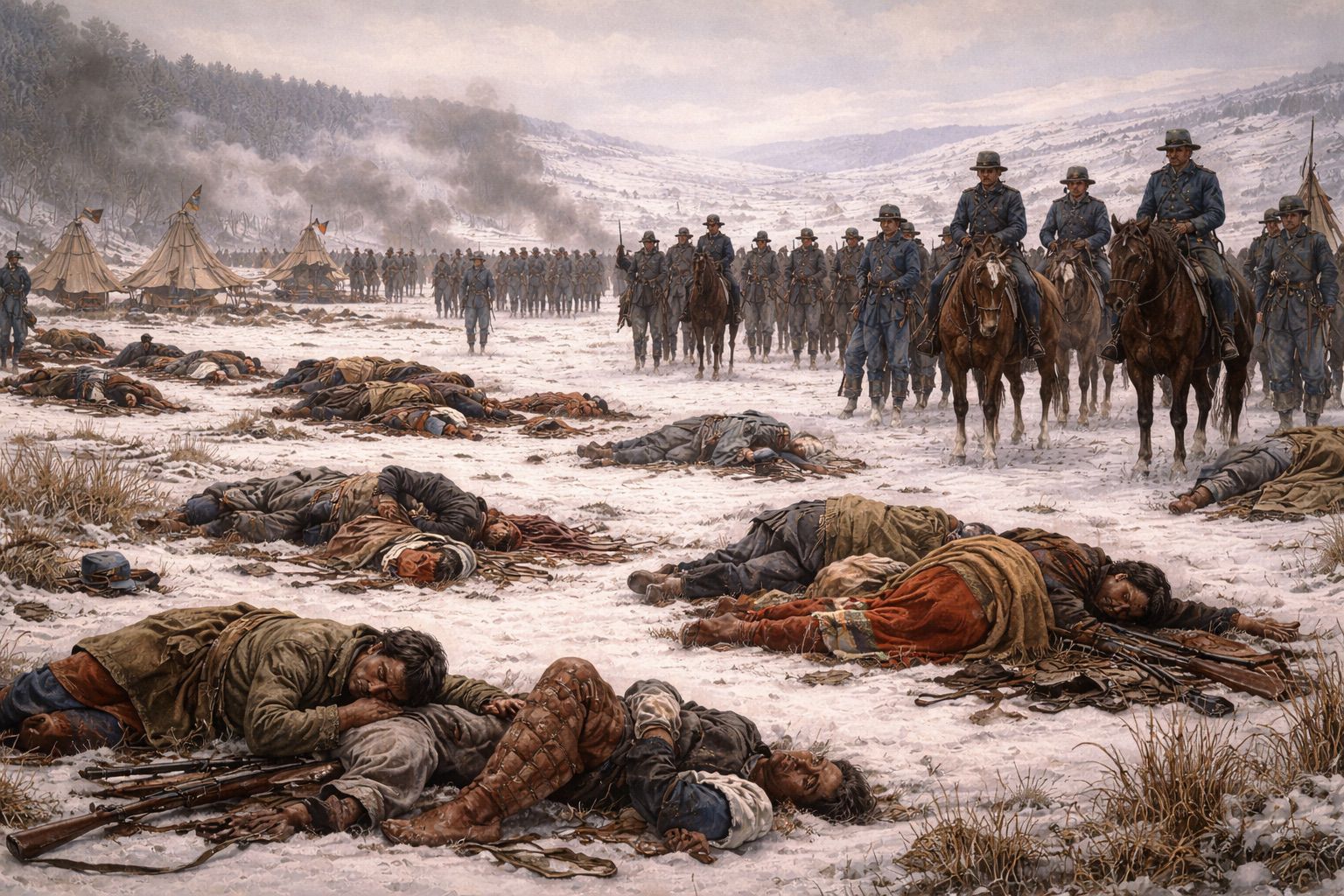
The Wounded Knee Massacre is one of the most infamous events in American history, a brutal and devastating confrontation between the US Army’s 7th Cavalry Regiment and a band of Lakota Sioux that resulted in the slaughter of over 150 unarmed men, women, and children. Taking place on December 29, 1890, at Wounded Knee Creek in South Dakota, this event marked the final major confrontation between the US military and the Native American tribes of the Great Plains.

The years leading up to the massacre were marked by a growing sense of desperation among the Lakota Sioux. The discovery of gold in the Black Hills had led to a surge in white settlement, and the government’s refusal to recognize Native American land rights had forced many families to leave their ancestral homes. President Ulysses S. Grant’s signing of the Fort Laramie Treaty in 1868, which granted the Great Sioux Reservation to the Lakota, was later revoked by Congress without consultation or compensation, leading to widespread anger and resentment among the Native American population.

The Ghost Dance movement, a spiritual revival led by the Paiute prophet Wovoka, had also spread rapidly across the Plains, offering hope to desperate tribes of a return to their ancestral lands and a chance to live free from white domination. The US government viewed this movement with suspicion, fearing it could lead to widespread resistance against its authority. As tensions mounted, federal authorities took steps to quell the rising unrest, including deploying troops to the area.

On December 15, 1890, Sitting Bull, the legendary Hunkpapa Lakota chief and spiritual leader, was killed in a confrontation with Indian Agency police on his reservation near Grand River, North Dakota. This event sparked widespread panic among the Native American population, leading many families to flee their homes in search of safety. A band of approximately 350 Lakota Sioux, led by Chief Big Foot, attempted to make its way to the Pine Ridge Reservation in South Dakota, where they hoped to find refuge.

However, as they approached Wounded Knee Creek on December 29, 1890, they were intercepted by a unit of the US Army’s 7th Cavalry Regiment under the command of Major Samuel M. Whitside. The troopers had been tracking Big Foot’s band for several days and were determined to bring them in for questioning. As tensions mounted, a scuffle broke out between a soldier and one of Big Foot’s warriors, resulting in the accidental shooting of an elderly woman, Crow Dog.

The situation rapidly spiralled out of control as panicked soldiers opened fire on the Lakota Sioux, who were largely unarmed and attempting to flee. The subsequent slaughter was brutal and unrelenting, with reports suggesting that some soldiers even shot fleeing women and children. Over 150 Native Americans perished in the massacre, while only one US soldier died.

The Wounded Knee Massacre marked a dark chapter in American history, symbolizing the brutal suppression of Native American resistance to white encroachment. The event led to a re-evaluation of the government’s treatment of its indigenous population and sparked calls for greater understanding and reconciliation between the two cultures. However, the legacy of Wounded Knee continues to haunt America today, serving as a painful reminder of the ongoing struggle for justice and equality faced by Native American communities.

As news of the massacre spread, outrage erupted across the country, with many questioning the actions of the US military. Congress established an investigation into the event, which concluded that the soldiers had acted in self-defense, but also acknowledged widespread mistakes in judgment and execution. The official report downplayed the severity of the incident, stating only 29 casualties among the Lakota Sioux.

However, estimates of the death toll varied widely, with some accounts suggesting as many as 300 Native Americans perished in the massacre. In reality, the true number lies somewhere between these extremes, but is likely to be closer to the higher estimate given the brutality and scope of the incident.

The Wounded Knee Massacre also had significant long-term consequences for the Lakota Sioux people. The event marked a turning point in their struggle against white encroachment, leading to widespread despair and disillusionment among Native American communities. Many families were forced to flee their ancestral lands once again, while others were confined to reservations where they struggled to survive.

The massacre also served as a catalyst for greater activism among Native American leaders, who began to organize resistance movements in response to the event. In 1973, a group of AIM (American Indian Movement) activists took over Wounded Knee village, occupying it for 71 days and sparking a renewed wave of protests against government policy.

Today, the legacy of Wounded Knee continues to be felt across America. Efforts have been made to recognize the tragedy as a national monument, with many pushing for greater understanding and reconciliation between Native American communities and the wider population.

The struggle for justice and equality faced by Native Americans remains an ongoing challenge, but one that is slowly gaining recognition and momentum. As the US government continues to grapple with its troubled past, it’s clear that the Wounded Knee Massacre will remain a painful reminder of the brutal suppression of indigenous cultures and the need for greater understanding and respect between all communities.

Wounded Knee 1890, Native American rights movement, Indigenous people’s struggles, American Indian Movement, US government accountability, historical injustice #WoundedKneeMassacre #NativeAmericanRights #IndigenousPeoplesStruggles #AIMMovement #USGovernmentAccountability #HistoricalInjustice

The Wounded Knee Massacre was a culmination of decades of violence and dispossession inflicted upon the Native American population by the United States government. The discovery of gold in the Black Hills had set off a chain reaction of events that would ultimately lead to one of the most infamous massacres in American history.

In the 1850s, the US government began to exert pressure on the Lakota Sioux to cede their land, promising them protection and compensation in return. However, these promises were repeatedly broken, and the Native Americans were left with nothing but shattered dreams and broken treaties. The Fort Laramie Treaty of 1868, which granted the Great Sioux Reservation to the Lakota, was a brief respite from the violence, but it ultimately proved to be a hollow promise.

The treaty was signed by President Ulysses S. Grant in 1868, but Congress soon began to revoke its provisions, allowing for the construction of roads and railroads across Native American lands without their consent. The government’s actions were facilitated by the discovery of gold in the Black Hills, which led to a surge in white settlement and further displacement of the Lakota Sioux.

As the years went by, tensions between the US military and the Native American tribes continued to escalate. The Ghost Dance movement, a spiritual revival led by the Paiute prophet Wovoka, offered hope to desperate tribes of a return to their ancestral lands and a chance to live free from white domination. However, the US government viewed this movement with suspicion, fearing it could lead to widespread resistance against its authority.

The killing of Sitting Bull on December 15, 1890, was a devastating blow to the Lakota Sioux. A legendary Hunkpapa chief and spiritual leader, Sitting Bull had been a thorn in the side of the US government for years, refusing to surrender his people’s land or accept the reservation system. His death sparked widespread panic among Native American communities, leading many families to flee their homes in search of safety.

A band of approximately 350 Lakota Sioux, led by Chief Big Foot, attempted to make its way to the Pine Ridge Reservation in South Dakota, where they hoped to find refuge. However, as they approached Wounded Knee Creek on December 29, 1890, they were intercepted by a unit of the US Army’s 7th Cavalry Regiment under the command of Major Samuel M. Whitside.

The troopers had been tracking Big Foot’s band for several days and were determined to bring them in for questioning. As tensions mounted, a scuffle broke out between a soldier and one of Big Foot’s warriors, resulting in the accidental shooting of an elderly woman, Crow Dog. The situation rapidly spiralled out of control as panicked soldiers opened fire on the Lakota Sioux, who were largely unarmed and attempting to flee.

The subsequent slaughter was brutal and unrelenting, with reports suggesting that some soldiers even shot fleeing women and children. Over 150 Native Americans perished in the massacre, while only one US soldier died. The event marked a dark chapter in American history, symbolizing the brutal suppression of Native American resistance to white encroachment.

In the aftermath of the massacre, outrage erupted across the country, with many questioning the actions of the US military. Congress established an investigation into the event, which concluded that the soldiers had acted in self-defense, but also acknowledged widespread mistakes in judgment and execution. The official report downplayed the severity of the incident, stating only 29 casualties among the Lakota Sioux.

However, estimates of the death toll varied widely, with some accounts suggesting as many as 300 Native Americans perished in the massacre. In reality, the true number lies somewhere between these extremes, but is likely to be closer to the higher estimate given the brutality and scope of the incident.

The Wounded Knee Massacre had significant long-term consequences for the Lakota Sioux people. The event marked a turning point in their struggle against white encroachment, leading to widespread despair and disillusionment among Native American communities. Many families were forced to flee their ancestral lands once again, while others were confined to reservations where they struggled to survive.

The massacre also served as a catalyst for greater activism among Native American leaders, who began to organize resistance movements in response to the event. In 1973, a group of AIM (American Indian Movement) activists took over Wounded Knee village, occupying it for 71 days and sparking a renewed wave of protests against government policy.

Today, the legacy of Wounded Knee continues to be felt across America. Efforts have been made to recognize the tragedy as a national monument, with many pushing for greater understanding and reconciliation between Native American communities and the wider population.

However, the struggle for justice and equality faced by Native Americans remains an ongoing challenge. The US government has continued to grapple with its troubled past, but progress has been slow. In 1990, Congress passed the Native American Graves Protection and Repatriation Act (NAGPRA), which required federal agencies to return ancestral human remains and cultural artifacts to their respective tribes.

In 2017, President Donald Trump signed an executive order aimed at expanding oil drilling on Native American reservations, sparking widespread outrage among tribal leaders. The order was seen as a betrayal of the trust relationship between the US government and Native American communities, and it sparked renewed calls for greater accountability and transparency in federal policy-making.

The Wounded Knee Massacre will forever be remembered as a symbol of the brutal suppression of indigenous cultures and the need for greater understanding and respect between all communities. As we continue to grapple with our troubled past, it is essential that we acknowledge the injustices committed against Native American populations and work towards a more just and equitable future.

In recent years, there has been a growing movement among Native American communities to reclaim their histories and cultures. Efforts have been made to preserve traditional languages and cultural practices, while also promoting greater understanding and awareness of Native American experiences through education and media initiatives.

However, much work remains to be done. The struggle for justice and equality faced by Native Americans is complex and multifaceted, requiring sustained efforts from government agencies, tribal leaders, and the wider community. It will take time, patience, and a commitment to understanding and respect for the long-term healing of the wounds inflicted upon Native American communities.

As we reflect on the legacy of Wounded Knee, it is essential that we remember the bravery and resilience of the Lakota Sioux people who suffered so greatly at the hands of the US military. We must also acknowledge the ongoing struggles faced by Native American communities today, from poverty and poor living conditions to inadequate access to healthcare and education.

Ultimately, the story of Wounded Knee serves as a powerful reminder of the importance of understanding and respect between cultures. As we move forward towards a more just and equitable future, it is essential that we honor the memories of those who suffered at Wounded Knee by working towards greater reconciliation and healing between Native American communities and the wider population.

The US government’s treatment of its indigenous populations has left deep scars on the collective psyche of Native America. However, with continued efforts towards greater understanding and respect, there is hope for a brighter future where Native Americans can live in dignity and equality with their fellow citizens.

In 2019, the US House of Representatives passed the Wounded Knee Massacre Commemoration Act, which recognized the tragedy as a national monument and encouraged greater awareness and education about the event. The bill also provided funding for the preservation of tribal lands and cultural resources, marking an important step towards reconciliation and healing.

However, much work remains to be done. The struggle for justice and equality faced by Native Americans is ongoing, requiring sustained efforts from government agencies, tribal leaders, and the wider community. As we continue to grapple with our troubled past, it is essential that we acknowledge the injustices committed against Native American populations and work towards a more just and equitable future.

In conclusion, the Wounded Knee Massacre was a brutal and devastating event that left deep scars on the collective psyche of Native America. However, it also serves as a powerful reminder of the importance of understanding and respect between cultures. As we move forward towards a more just and equitable future, it is essential that we honor the memories of those who suffered at Wounded Knee by working towards greater reconciliation and healing between Native American communities and the wider population.

The legacy of Wounded Knee continues to haunt America today, serving as a painful reminder of the ongoing struggle for justice and equality faced by Native American communities. However, with continued efforts towards greater understanding and respect, there is hope for a brighter future where Native Americans can live in dignity and equality with their fellow citizens.

Related Posts