Latest Articles

Hitler orders V-2 rocket production

Elias Rowen

In the dark days of World War II, as the Allied forces made their way deeper into German territory, the Nazi regime found itself on the back foot. Despite its best efforts to maintain a façade of strength and determination, the once-mighty Third Reich was slowly but surely unraveling. The defeat at Stalingrad in 1943 marked a turning point in the war, as the Soviet Union launched a massive counterattack that sent shockwaves throughout the German high command.

As the tide turned against them, Hitler and his generals were forced to confront the harsh reality of their situation. The military machine that had once seemed so invincible was now grinding to a halt, its momentum halted by the sheer weight of Allied firepower and determination. In desperation, Hitler turned to new technologies in an attempt to turn the tables on his enemies.

One such technology was the V-2 rocket, a monstrous intercontinental ballistic missile developed by Wernher von Braun’s team at Peenemünde. The brainchild of the brilliant but troubled scientist, the V-2 was designed to carry a payload of up to 1 ton of explosives to targets as far away as London and Paris.

As the Allies closed in on Germany, Hitler became increasingly obsessed with the potential of the V-2. He saw it not only as a way to counter the Allied bombing campaign but also as a means to demonstrate his regime’s continued military prowess. In July 1943, he ordered the production of the rocket to be ramped up, instructing his generals to divert resources away from conventional armaments and towards the development of this new technology.

Hitler’s decision was motivated by a combination of factors. Firstly, he saw the V-2 as a way to break the Allied bombing campaign, which had been causing significant damage to German cities and industry. Secondly, he hoped that the rocket would be able to reach targets deep within enemy territory, striking at the heart of their war effort.

Despite his enthusiasm for the project, Hitler’s grasp on reality was beginning to slip. His advisors were increasingly concerned by his erratic behavior and obsessive focus on the V-2. As they watched him become more and more isolated from reality, they knew that they had to tread carefully. The consequences of disobeying Hitler’s orders would have been catastrophic, but they also knew that if he continued down this path, the war effort itself would be doomed.

Meanwhile, at Peenemünde, von Braun and his team were working tirelessly to bring the V-2 into production. They faced numerous technical challenges, from ensuring the rocket’s stability in flight to developing a reliable guidance system. Despite these difficulties, they made rapid progress, with the first V-2 launch taking place on October 3, 1942.

However, it was not until December 16, 1944, that Hitler ordered the V-2 into mass production. This decision marked a turning point in the war, as Germany’s resources were increasingly diverted towards this new technology. The once-mighty Luftwaffe and Wehrmacht were now struggling to maintain their output, while the V-2 program was sucking up more and more personnel and materials.

As the Allies approached Berlin, Hitler became more and more detached from reality. His obsession with the V-2 knew no bounds, as he ordered his generals to prepare for a final, desperate push against the enemy lines. It would be a futile effort, as the Allied forces were now too strong, but Hitler was determined to go out fighting.

In the end, it was not the V-2 that changed the course of history, but the determination and sacrifice of the Allied soldiers who fought their way across Europe. As they approached Berlin, Hitler’s grip on reality finally slipped completely, and he took his own life in the bunker beneath the Reich Chancellery on April 30, 1945.

The legacy of the V-2 is a complex one. While it was a technological marvel of its time, it also served as a grim reminder of the horrors of war. The Allied bombing campaign that had driven Hitler to invest so heavily in this technology would ultimately prove to be his undoing, but the V-2 itself would go on to have a lasting impact on the development of military technologies.

As the months passed, the Allies continued their relentless push towards Berlin, and with it, the very heart of the Nazi regime. Hitler’s grip on reality was tenuous at best, his obsession with the V-2 only growing stronger as the war effort faltered around him.

Meanwhile, von Braun and his team were working tirelessly to bring the V-2 into mass production. They faced numerous technical challenges, from ensuring the rocket’s stability in flight to developing a reliable guidance system. Despite these difficulties, they made rapid progress, with the first V-2 launch taking place on October 3, 1942.

However, it was not until December 16, 1944, that Hitler ordered the V-2 into mass production. This decision marked a turning point in the war, as Germany’s resources were increasingly diverted towards this new technology. The once-mighty Luftwaffe and Wehrmacht were now struggling to maintain their output, while the V-2 program was sucking up more and more personnel and materials.

As the Allies approached Berlin, Hitler became more and more detached from reality. His obsession with the V-2 knew no bounds, as he ordered his generals to prepare for a final, desperate push against the enemy lines. It would be a futile effort, as the Allied forces were now too strong, but Hitler was determined to go out fighting.

The V-2 was finally ready to play its part in the war effort, and on January 8, 1945, it launched its first operational attack from the Netherlands, striking at London with devastating effect. The rocket exploded over the city, causing widespread destruction and loss of life. However, this initial success would prove short-lived.

The Allies had long been anticipating the launch of the V-2, and their defense systems were better prepared than they could have imagined. Radar installations detected the incoming rockets, while anti-aircraft batteries were scrambled to respond. Despite these efforts, some V-2s managed to penetrate the defenses and strike at their targets, causing significant damage.

As the war drew to a close, the once-mighty Third Reich was crumbling around Hitler’s ears. His generals knew that it was only a matter of time before the Allies broke through the defenses of Berlin, but they were powerless to stop him. They watched in despair as he became increasingly isolated from reality, his obsession with the V-2 clouding all other thought.

On April 16, 1945, Hitler issued a new order, instructing his generals to prepare for a final, desperate push against the enemy lines. It was a futile effort, but Hitler was determined to go out fighting. As he sat in his bunker beneath the Reich Chancellery, surrounded by his loyal entourage, he knew that all hope was lost.

The V-2 had not changed the course of history as he had hoped, and now it seemed that it would be a mere footnote in the annals of time. The Allied forces were closing in on Berlin, their determination and sacrifice driving them forward with unstoppable momentum.

In the end, it was not the V-2 that decided the fate of Germany, but the bravery and perseverance of the Allied soldiers who fought their way across Europe. As they approached Berlin, Hitler’s grip on reality finally slipped completely, and he took his own life in the bunker beneath the Reich Chancellery on April 30, 1945.

The legacy of the V-2 is a complex one, reflecting both the ingenuity of its creators and the horrors of war. While it was a technological marvel of its time, it also served as a grim reminder of the devastation that can be wrought by human ambition. The Allied bombing campaign that had driven Hitler to invest so heavily in this technology would ultimately prove to be his undoing, but the V-2 itself would go on to have a lasting impact on the development of military technologies.

The story of the V-2 is also a testament to the power of science and innovation. Von Braun’s team had pushed the boundaries of what was thought possible, developing a technology that seemed almost mythical in its potential. But as with all great innovations, there is always a price to be paid.

In the aftermath of the war, von Braun would go on to work for the United States military, using his expertise to help develop the American space program. His legacy would be forever tied to the V-2, but he himself would never forget the horrors that had driven its creation.

The Nazi regime was finally brought to an end on May 8, 1945, with the formal surrender of Germany at the hands of General Dwight D. Eisenhower. The war in Europe was over, and with it, the suffering and devastation that had ravaged the continent for six long years.

As the world began to rebuild, the V-2 became a symbol of the horrors that had been perpetrated during the war. It stood as a grim reminder of the devastating power of human ambition, when driven by hatred and a desire for domination.

The development of the V-2 also marked a turning point in the history of warfare. As military leaders began to grasp the full potential of this new technology, they realized that the old rules no longer applied. The traditional concepts of distance and time were rendered obsolete by the rocket’s incredible range and speed.

This realization would have far-reaching implications for future conflicts, as military strategists began to adapt their thinking to take into account the V-2’s capabilities. It marked a new era in warfare, one in which distances were no longer a barrier, and the battlefield was no longer confined to traditional notions of space.

The legacy of the V-2 would continue to be felt for generations to come, as scientists and military leaders grappled with its implications. But as the world slowly rebuilt from the ashes of war, it was clear that this new era had brought both hope and terror in equal measure.

In the years that followed, the story of the V-2 would become a cautionary tale, reminding future generations of the devastating consequences of unchecked ambition and technological advancement. As we reflect on this pivotal moment in history, let us not forget the lessons it teaches: that even the most brilliant minds can be corrupted by power and ideology; and that the pursuit of innovation must always be tempered with compassion, wisdom, and a deep understanding of the human condition.

The V-2 had been born out of chaos and despair, forged in the crucible of war. But as its legacy continued to unfold, it served as a stark reminder of what humanity is capable of achieving – both for good and ill.

Related Posts

Romanian dictator Nicolae Ceaușescu overthrown

Elias Rowen

December 21st, 1989, is etched in the collective memory of Romanians as a day of jubilation and liberation from decades-long dictatorship. The fall of Nicolae Ceaușescu marked the end of an era, but it also raised questions about the tumultuous history that led to his ouster. To understand the complexity of this event, we must delve into the country’s post-war development, Ceaușescu’s rise to power, and the events leading up to his overthrow.

In the aftermath of World War II, Romania found itself aligned with the Soviet Union under the leadership of Constantin Ion Parhon, a figure from the pre-war era who was sympathetic to communist ideals. However, it was Gheorghe Gheorghiu-Dej, a stalwart communist and later first secretary of the Romanian Communist Party, who began to consolidate power in 1945. Dej’s tenure was marked by significant economic growth, but also repression of dissenting voices.

The early years of Ceaușescu’s rule were characterized by cautious optimism among Romanians. Having risen through the ranks under Dej, Ceaușescu became first secretary in 1965 and began to assert his authority. He introduced market-oriented reforms, which initially showed promise. Romania was poised to become a regional powerhouse, with strong economic growth and industrial development.

However, by the early 1970s, Ceaușescu’s regime had taken a stark turn towards authoritarianism. The leader became increasingly paranoid, perceiving threats from within and without. Dissidents were silenced through imprisonment or forced exile, while intellectuals and artists were co-opted into supporting the regime. Romania’s economy began to stagnate as Ceaușescu prioritized grandiose infrastructure projects over development.

The 1970s saw Ceaușescu become a vocal critic of Soviet foreign policy, which created unease in Moscow. His anti-Soviet stance was likely driven by a desire for regional influence and independence, but it also made him a target for criticism from within the Eastern Bloc. Romania’s break with Comecon, the Soviet-dominated economic council of communist states, marked a significant turning point in its relations with the Soviet Union.

The 1980s brought further isolationism under Ceaușescu. His regime was criticized globally for human rights abuses and economic mismanagement. Sanctions were imposed by Western countries, exacerbating Romania’s economic difficulties. The country became increasingly reliant on debt, which led to a decline in living standards and growing discontent among the population.

The spark that ignited the revolution came from Ceaușescu’s ill-fated decision to impose austerity measures in 1989. Price increases for basic commodities like food and fuel sparked widespread protests across the country. Initially peaceful demonstrations soon turned violent as security forces responded with force, killing dozens of protesters.

As news of the brutal crackdown spread, opposition movements within Romania began to organize. The National Salvation Front (FSN), led by Ion Iliescu, a former communist official who had grown disillusioned with Ceaușescu’s rule, emerged as a key player in the opposition. Its agenda focused on democratic reform and dismantling the existing authoritarian structures.

Meanwhile, a group of army officers, dissatisfied with Ceaușescu’s handling of the crisis, began secretly planning a coup. They were led by General Nicolae Militaru, who would become one of the chief architects of the military intervention that ultimately brought down the dictator.

As protests continued to spread across Romania, Ceaușescu became increasingly isolated. He made the fateful decision to address a massive rally in Timișoara, where anti-government demonstrations had been raging for days. On December 16th, he was met with hostility and defiance from protesters, who chanted slogans against his regime.

Fearing for their lives, Ceaușescu and his wife Elena fled the scene, but their escape was short-lived. The National Salvation Front and military officers, now in open revolt, issued a joint statement condemning the dictator’s actions. On December 21st, Ceaușescu attempted to address the nation via radio, but the broadcast was interrupted by news of his ouster.

The next morning, Ceaușescu and Elena were captured while attempting to flee Bucharest. They were put on trial for crimes against humanity, with Ceaușescu defiantly refusing to acknowledge responsibility for the regime’s atrocities. The following day, December 25th, he was executed along with his wife by firing squad.

In the aftermath of Ceaușescu’s fall, Romania embarked on a tumultuous transition towards democracy. The National Salvation Front, which had played a crucial role in his ouster, went on to win the country’s first post-communist elections in May 1990. However, the legacy of Ceaușescu’s rule continued to shape Romanian politics and society for years to come.

As the news of Ceaușescu’s execution spread, jubilation erupted across Romania. People poured into the streets, hugging each other in celebration. The sounds of cheering and music filled the air as the country finally broke free from decades of oppression.

But amidst the euphoria, there were also moments of quiet reflection. Many Romanians struggled to come to terms with the trauma they had endured under Ceaușescu’s rule. The dictator’s regime had left an indelible mark on the nation, and its legacy continued to haunt the country for years to come.

In the aftermath of the revolution, Romania faced a daunting task: rebuilding its economy and society from scratch. The country’s infrastructure was in shambles, with crumbling roads, inadequate healthcare, and a decaying education system. The once-thriving industrial sector lay in ruins, a testament to Ceaușescu’s mismanagement.

The new government, led by the National Salvation Front, faced numerous challenges as it attempted to steer Romania towards democracy. Corruption was rampant, and many former communist officials still held sway over key institutions. Ion Iliescu, the FSN leader, struggled to balance his own legacy with the need for radical change.

As the country transitioned from a planned economy to a market-based system, widespread poverty became a pressing concern. The effects of Ceaușescu’s austerity measures lingered, and many Romanians found themselves struggling to make ends meet. Protests against the new government’s handling of the economy erupted in cities across the country.

Despite these challenges, Romania made significant strides towards democracy. Free elections were held in 1990, with Iliescu emerging as the winner. The parliament was reconstituted, and a new constitution was drafted. But beneath the surface, deep-seated divisions persisted.

Many Romanians still harbored deep-seated resentment towards their former rulers. Anger and bitterness simmered just below the surface, waiting to erupt in protests or violent outbursts. The legacy of Ceaușescu’s rule had created a toxic atmosphere, where trust was hard to come by and dissent was met with suspicion.

In 1991, Romania joined the International Monetary Fund (IMF) and World Bank, seeking economic assistance to stabilize its faltering economy. But the terms of the loan package sparked widespread protests, as many Romanians felt that their country’s sovereignty was being compromised.

As the years passed, Romania slowly began to rebuild itself. The economy grew, albeit unevenly, and foreign investment started to trickle in. Corruption continued to plague the government, but the rule of law began to take hold.

In 2004, Romania joined the European Union, a milestone that marked its transition from a former communist state to a full-fledged member of the Western world. But even as the country celebrated this achievement, many Romanians still grappled with the legacy of Ceaușescu’s rule.

The dictator’s regime had left an indelible mark on Romanian society. Generations had grown up under his tyranny, and its effects lingered long after he was gone. Corruption, mistrust, and a deep-seated sense of vulnerability had become ingrained in the national psyche.

Today, as Romania looks back on the fall of Ceaușescu’s regime, it is clear that the country has made significant progress towards democracy. But the journey has been long and arduous, marked by setbacks and false starts.

In 2019, a presidential election was held in Romania, with Klaus Iohannis emerging as the winner. Iohannis, an ethnic German from Transylvania, had risen to prominence as mayor of Sibiu before becoming president. His presidency marked a new chapter in Romanian politics, one that emphasized European integration and reform.

But even as Romania continues to move forward, it is essential to remember the lessons of its past. The fall of Ceaușescu’s regime serves as a powerful reminder of the dangers of authoritarianism and the importance of standing up for human rights and democracy.

The Romanian people have shown remarkable resilience in the face of adversity. Their struggle for freedom and self-determination has inspired countless others around the world. As Romania continues to evolve and grow, it is essential that its leaders learn from the mistakes of the past, lest they forget the sacrifices made by those who fought for their country’s liberation.

The legacy of Ceaușescu’s regime serves as a poignant reminder of the fragility of democracy and the importance of vigilance. It is a testament to the power of human spirit, which can rise up against even the most entrenched systems of oppression.

Related Posts

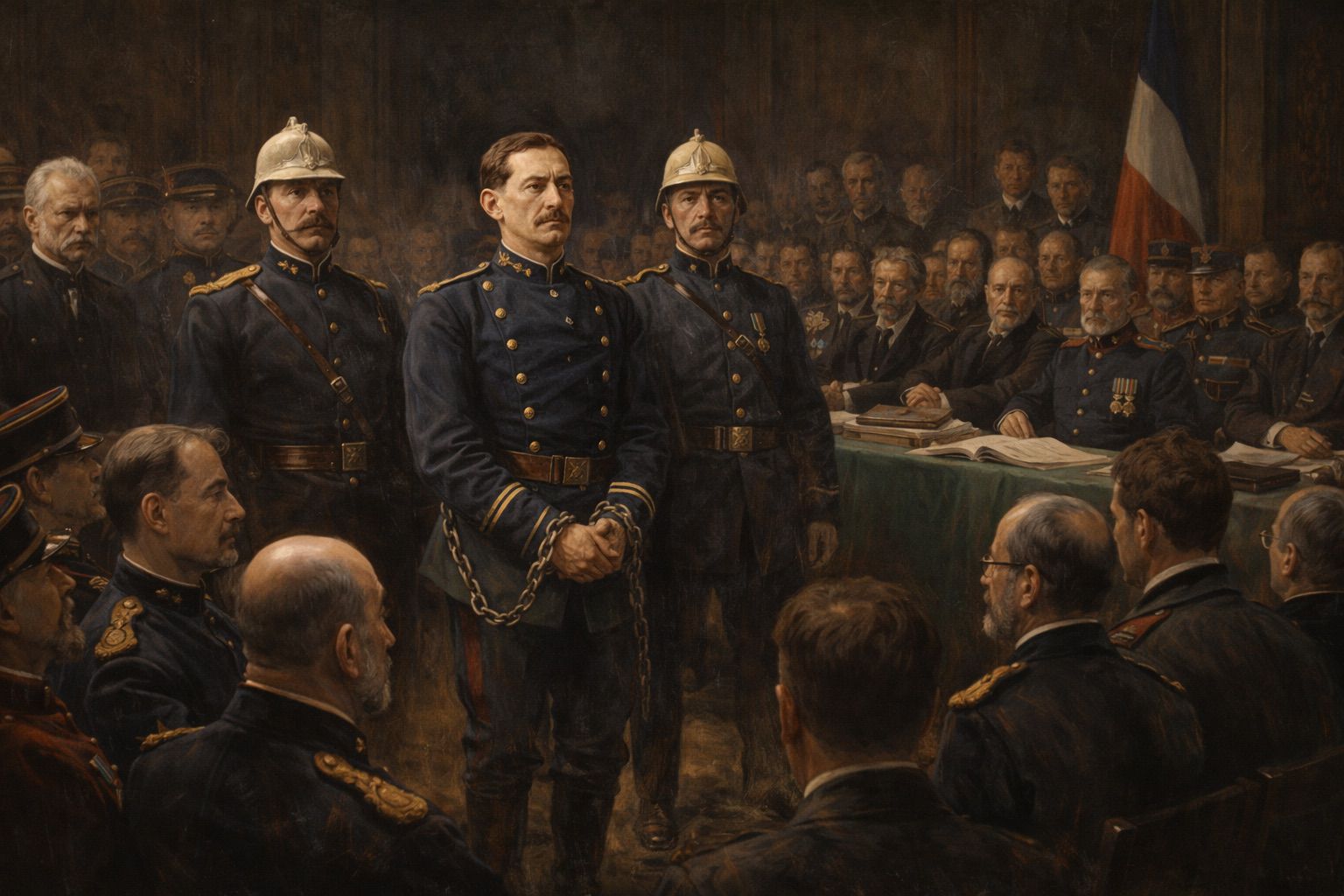
Dreyfus Affair begins in France

Elias Rowen

The year was 1894 and France was on the brink of a crisis that would shake its very foundations. The country, still reeling from the losses of the Franco-Prussian War, was facing a period of economic stagnation and growing social unrest. It was in this climate of tension that the Dreyfus Affair began to unfold, an event that would become one of the most infamous episodes in French history.

At its core, the Dreyfus Affair was a military scandal involving the arrest, trial, and imprisonment of Alfred Dreyfus, a Jewish captain in the French army. But it was far more than just a simple case of mistaken identity or anti-Semitic bias. It was a symptom of deeper issues that had been simmering beneath the surface of French society for years.

One of the key factors contributing to the crisis was the rise of nationalism and militarism in France during the late 19th century. The country’s military leaders were obsessed with the idea of France as a great power, and they saw themselves as the guardians of national honor and prestige. This created a culture of paranoia and suspicion, where even minor infractions could be blown out of proportion.

In this context, Captain Dreyfus’s career was seen as a threat to French military prestige. A Jewish officer from Alsace who had been commissioned in 1892, Dreyfus was a rising star in the army. He was highly educated and intelligent, but also impulsive and prone to making mistakes. His meteoric rise through the ranks caught the attention of some senior officers, who began to see him as a rival.

One of these officers was Colonel Hubert Henry, the head of the French military intelligence service. Henry was a career soldier with a reputation for being ruthless and cunning. He had built his own empire within the army, using his connections and influence to gather intelligence and advance his own interests.

Henry’s obsession with Dreyfus began in 1893, when he started to receive reports that the captain was involved in espionage activities on behalf of Germany. These allegations were largely unfounded and based on circumstantial evidence, but Henry saw an opportunity to use them to further his own career. He began to build a case against Dreyfus, gathering testimony from other officers and using it to support his claims.

Meanwhile, the French army was also facing pressure from external forces. The country’s military leaders were keenly aware of the threat posed by Germany, which had been expanding its territories under the leadership of Chancellor Otto von Bismarck. France felt threatened by German ambitions in Europe and was desperate for a way to counterbalance them.

In this context, the possibility of a German spy ring operating within the French army became a tantalizing prospect. Henry’s allegations against Dreyfus seemed to provide evidence that such a ring existed, and he began to push his superiors to take action.

The first major step in the affair came on December 5, 1894, when Captain Dreyfus was summoned to the headquarters of the French military intelligence service. He was met with a demand for his resignation and a letter informing him that he had been stripped of his rank and pension.

Dreyfus refused to resign, insisting that he was innocent and would clear his name in court. But it soon became clear that he faced an uphill battle. The army’s leadership had already made up their minds about his guilt, and they were determined to silence him.

The trial of Captain Dreyfus began on December 19, 1894. It was a sham proceeding, with the outcome predetermined from the start. Henry testified against Dreyfus, using forged documents and questionable evidence to support his claims. The prosecution presented its case in a series of explosive accusations, painting Dreyfus as a traitor who had betrayed France to Germany.

The defense, led by Auguste Scheurer-Kestner, a prominent lawyer, argued that the charges were baseless and motivated by anti-Semitism. But they faced an almost insurmountable challenge, with the court stacked against them. The judges were military officers who saw Dreyfus as a threat to their honor and prestige.

The trial was marked by a series of bizarre incidents, including the introduction of forged documents and suspicious testimony from key witnesses. It was clear that something was amiss, but no one seemed to be able to pinpoint what exactly had gone wrong.

On January 10, 1895, the verdict was announced: Captain Alfred Dreyfus was found guilty of treason and sentenced to life imprisonment on Devil’s Island in French Guiana.

The affair was far from over. Over the next few years, new evidence emerged that cast doubt on the original trial. A series of leaks and rumors began to surface, suggesting that there had been a massive cover-up involving senior army officers.

One of these revelations came in 1896, when it emerged that Colonel Henry had fabricated key evidence against Dreyfus. This led to calls for his resignation, but he managed to cling on to power, using his connections and influence to silence those who dared speak out.

Meanwhile, a group of intellectuals and writers began to organize around the case, arguing that Dreyfus was innocent and demanding justice. Émile Zola, a prominent writer and anti-clerical activist, wrote an open letter denouncing the affair as a miscarriage of justice.

But it would take years for the truth to come out. It wasn’t until 1899, when new evidence emerged pointing to the involvement of Colonel Henry and other senior officers in the cover-up, that public opinion began to shift.

In the end, it was the work of a few determined individuals that led to Dreyfus’s eventual exoneration. Émile Zola’s open letter had sparked a wider debate about justice and morality, while a group of army officers, including Major Ferdinand Walsin Esterhazy and Captain Georges Picquart, began to speak out against the affair.

The climax came in 1906, when Dreyfus was finally exonerated and reinstated as a captain. It was a moment of vindication for those who had fought tirelessly for justice, but also a sobering reminder of the dangers of unchecked power and corruption.

The year was 1894 and France was on the brink of a crisis that would shake its very foundations. The country, still reeling from the losses of the Franco-Prussian War, was facing a period of economic stagnation and growing social unrest. It was in this climate of tension that the Dreyfus Affair began to unfold, an event that would become one of the most infamous episodes in French history.

At its core, the Dreyfus Affair was a military scandal involving the arrest, trial, and imprisonment of Alfred Dreyfus, a Jewish captain in the French army. But it was far more than just a simple case of mistaken identity or anti-Semitic bias. It was a symptom of deeper issues that had been simmering beneath the surface of French society for years.

One of the key factors contributing to the crisis was the rise of nationalism and militarism in France during the late 19th century. The country’s military leaders were obsessed with the idea of France as a great power, and they saw themselves as the guardians of national honor and prestige. This created a culture of paranoia and suspicion, where even minor infractions could be blown out of proportion.

In this context, Captain Dreyfus’s career was seen as a threat to French military prestige. A Jewish officer from Alsace who had been commissioned in 1892, Dreyfus was a rising star in the army. He was highly educated and intelligent, but also impulsive and prone to making mistakes. His meteoric rise through the ranks caught the attention of some senior officers, who began to see him as a rival.

One of these officers was Colonel Hubert Henry, the head of the French military intelligence service. Henry was a career soldier with a reputation for being ruthless and cunning. He had built his own empire within the army, using his connections and influence to gather intelligence and advance his own interests.

Henry’s obsession with Dreyfus began in 1893, when he started to receive reports that the captain was involved in espionage activities on behalf of Germany. These allegations were largely unfounded and based on circumstantial evidence, but Henry saw an opportunity to use them to further his own career. He began to build a case against Dreyfus, gathering testimony from other officers and using it to support his claims.

Meanwhile, the French army was also facing pressure from external forces. The country’s military leaders were keenly aware of the threat posed by Germany, which had been expanding its territories under the leadership of Chancellor Otto von Bismarck. France felt threatened by German ambitions in Europe and was desperate for a way to counterbalance them.

In this context, the possibility of a German spy ring operating within the French army became a tantalizing prospect. Henry’s allegations against Dreyfus seemed to provide evidence that such a ring existed, and he began to push his superiors to take action.

The first major step in the affair came on December 5, 1894, when Captain Dreyfus was summoned to the headquarters of the French military intelligence service. He was met with a demand for his resignation and a letter informing him that he had been stripped of his rank and pension.

Dreyfus refused to resign, insisting that he was innocent and would clear his name in court. But it soon became clear that he faced an uphill battle. The army’s leadership had already made up their minds about his guilt, and they were determined to silence him.

The trial of Captain Dreyfus began on December 19, 1894. It was a sham proceeding, with the outcome predetermined from the start. Henry testified against Dreyfus, using forged documents and questionable evidence to support his claims. The prosecution presented its case in a series of explosive accusations, painting Dreyfus as a traitor who had betrayed France to Germany.

The defense, led by Auguste Scheurer-Kestner, a prominent lawyer, argued that the charges were baseless and motivated by anti-Semitism. But they faced an almost insurmountable challenge, with the court stacked against them. The judges were military officers who saw Dreyfus as a threat to their honor and prestige.

The trial was marked by a series of bizarre incidents, including the introduction of forged documents and suspicious testimony from key witnesses. It was clear that something was amiss, but no one seemed to be able to pinpoint what exactly had gone wrong.

On January 10, 1895, the verdict was announced: Captain Alfred Dreyfus was found guilty of treason and sentenced to life imprisonment on Devil’s Island in French Guiana.

The affair was far from over. Over the next few years, new evidence emerged that cast doubt on the original trial. A series of leaks and rumors began to surface, suggesting that there had been a massive cover-up involving senior army officers.

One of these revelations came in 1896, when it emerged that Colonel Henry had fabricated key evidence against Dreyfus. This led to calls for his resignation, but he managed to cling on to power, using his connections and influence to silence those who dared speak out.

Meanwhile, a group of intellectuals and writers began to organize around the case, arguing that Dreyfus was innocent and demanding justice. Émile Zola, a prominent writer and anti-clerical activist, wrote an open letter denouncing the affair as a miscarriage of justice.

But it would take years for the truth to come out. It wasn’t until 1899, when new evidence emerged pointing to the involvement of Colonel Henry and other senior officers in the cover-up, that public opinion began to shift.

In 1900, Émile Zola’s open letter was published in Le Figaro, a prominent newspaper, sparking widespread outrage and protests across France. The government was forced to take action, with the President of the Republic, Félix Faure, appointing a commission to investigate the affair.

The commission’s findings were devastating. They revealed that Colonel Henry had indeed fabricated evidence against Dreyfus, and that there had been a massive cover-up involving senior army officers. The report was published in 1900, but it took another five years for justice to be served.

It wasn’t until 1906, when the Court of Cassation finally overturned Dreyfus’s conviction, that he was exonerated and reinstated as a captain. It was a moment of vindication for those who had fought tirelessly for justice, but also a sobering reminder of the dangers of unchecked power and corruption.

The aftermath of the Dreyfus Affair saw significant changes in France. The government passed laws aimed at preventing similar abuses of power, and the army was reformed to make it more accountable to civilian authority. The affair also sparked a wider debate about nationalism and militarism, with many intellectuals arguing that these ideologies had contributed to the crisis.

The Dreyfus Affair also had a profound impact on French society as a whole. It exposed deep-seated anti-Semitism and racism within the country, leading to a wave of protests and demonstrations against these attitudes. The affair marked a turning point in French history, marking the beginning of a new era of social and political reform.

Today, the Dreyfus Affair is remembered as one of the darkest chapters in French history. It serves as a reminder of the dangers of unchecked power, corruption, and prejudice. But it also offers a message of hope and resilience, demonstrating that even in the face of overwhelming odds, justice can be served and truth can prevail.

In the words of Émile Zola, “The case of Dreyfus is not only a matter of a soldier’s innocence or guilt; it is a question of national honor and conscience.” The Dreyfus Affair was a crisis that shook France to its core, but it also marked a turning point in the country’s history. It paved the way for significant social and political reforms, and served as a reminder of the importance of upholding justice and truth.

As we reflect on this dark chapter in French history, we are reminded of the enduring power of human spirit and determination. The Dreyfus Affair may have been a tragic episode, but it also offered a testament to the resilience and courage of those who fought for justice, even in the face of overwhelming oppression.

Related Posts

Lockerbie bombing destroys Pan Am Flight 103

Elias Rowen

It was December 21, 1988, and the world was still reeling from the devastating news of a series of bombings that had rocked the international community in recent months. From the streets of Beirut to the cities of Europe, terrorism had become a household word, with its agents and masters striking fear into the hearts of governments and civilians alike.

But on this particular evening, as Pan American Flight 103 took off from London’s Heathrow Airport bound for New York’s John F. Kennedy International Airport, few could have anticipated the horrors that would soon unfold. The flight was a routine one, carrying 259 passengers and crew members across the Atlantic Ocean in preparation for a holiday season filled with family gatherings and festive celebrations.

However, unbeknownst to those on board, a small group of operatives had been planning this very flight for months, their intent not to merely crash it, but to blow it out of the sky. These men were part of Libyan intelligence, acting under the orders of none other than Muammar Gaddafi himself, the erratic and enigmatic leader of Libya who had made a career out of defying Western powers.

The operatives in question were Abdelbaset al-Megrahi and Lamin Khalifah Fhimah, two men with ties to Libyan intelligence who would soon find themselves at the center of one of the most infamous terrorist attacks in history. Their mission was simple yet devastating: to plant a bomb on Flight 103 that would ensure its destruction over the skies of Scotland.

The device they chose to use was a cleverly designed package of Semtex explosive, wrapped around a timer and concealed within a Toshiba radio cassette player. It was a design eerily reminiscent of previous terrorist attacks in Europe, which had left behind similar calling cards. And it was this very similarity that would ultimately prove to be the undoing of al-Megrahi and Fhimah’s plans.

As Flight 103 soared through the skies above Lockerbie, Scotland, its passengers unaware of the deadly cargo hidden among them, the crew members began to sense something was amiss. The plane was experiencing strange malfunctions, and several alarms were sounded in the cockpit as the pilots struggled to make sense of what was happening.

At 7:03 PM GMT, disaster struck. A massive explosion ripped through the plane’s fuselage, sending debris hurtling towards the ground below. The screams of passengers filled the air as the aircraft broke apart, its wings and engines separating from the main body before crashing to earth in a fiery blaze.

The impact was felt for miles around, with reports flooding in of a massive explosion rocking the small Scottish town of Lockerbie. Emergency services were quickly scrambled to the scene, where they found a devastating picture of destruction: 270 people lay dead or dying on the streets below, their bodies mangled beyond recognition by the force of the blast.

The investigation that followed was one of the most complex and far-reaching in modern history, involving intelligence agencies from around the world and a team of forensic experts tasked with unraveling the tangled threads of terrorism. As it turned out, the evidence pointing to al-Megrahi and Fhimah’s involvement was extensive, including eyewitness testimony, flight manifest records, and crucial physical evidence collected from the crash site.

In 1991, the two Libyan agents were indicted by a Scottish court for their role in the bombing. Their trial would become one of the most infamous in history, with prosecutors building a case that relied heavily on circumstantial evidence. In the end, al-Megrahi was found guilty and sentenced to life imprisonment, while Fhimah was acquitted due to lack of evidence.

The Lockerbie bombing marked a turning point in the global struggle against terrorism, as governments and intelligence agencies began to realize that the threats they faced were not limited to traditional state actors, but also included rogue states and non-state actors willing to use violence on an unprecedented scale. It also highlighted the importance of international cooperation in tackling this problem, as nations struggled to share information and coordinate their efforts against a common enemy.

In the aftermath of the disaster, the people of Lockerbie came together to support each other, establishing a memorial garden in honor of those who had lost their lives. As the years passed, however, the town also became synonymous with tragedy and loss, its name becoming a byword for the devastating power of terrorism.

For many, the memory of Pan Am Flight 103 remains etched in their minds like a scar, a reminder of the senseless brutality that can be unleashed upon innocent lives. The bombing also serves as a poignant reminder of the importance of vigilance and cooperation in the face of terror, as nations continue to grapple with the complex web of threats that surround us.

Megrahi’s release from prison on compassionate grounds in 2009 marked a bitter end to a chapter in Scottish justice, but his death in 2012 brought some closure to the families of those affected. Yet, even now, questions remain about the full extent of Libyan involvement and whether other players were involved in the bombing.

The aftermath of Lockerbie also serves as a reminder that terrorism is not limited by geography or politics, nor is it driven solely by ideology or extremism. Rather, it is often the product of complex webs of motivation and circumstance, which can be exploited by individuals and groups willing to do harm.

As we continue to navigate this treacherous landscape, the lessons of Lockerbie remain as relevant today as they were in 1988. They remind us that terrorism will not be vanquished easily or quickly, but rather it demands sustained effort and commitment from governments, intelligence agencies, and ordinary people alike.

The investigation into the Lockerbie bombing was one of the most complex and far-reaching in modern history. It involved intelligence agencies from around the world, including the FBI, MI5, and Scotland Yard, as well as forensic experts who combed through the crash site for clues. The team was led by Lord Justice Comyn, a Scottish judge who would later become a key figure in the trial of al-Megrahi.

As investigators poured over the evidence, they began to piece together a timeline of events leading up to the bombing. They discovered that al-Megrahi and Fhimah had traveled to Malta on November 21, 1988, where they met with Libyan intelligence officials who handed them a bag containing the explosive device. The two men then flew to Frankfurt, Germany, where they boarded Pan Am Flight 103.

The investigation also revealed that al-Megrahi had purchased a ticket for Fhimah under a false name, and that both men had been in contact with Libyan intelligence agents throughout their travels. Forensic experts found fragments of the Toshiba radio cassette player at the crash site, which matched the design of the device used in previous terrorist attacks.

As the investigation continued, investigators began to interview witnesses who had seen al-Megrahi and Fhimah on board Flight 103. One passenger, Paul Holmes, reported seeing a man matching al-Megrahi’s description arguing with a flight attendant just before takeoff. Another witness, Tim Shea, described seeing two men acting suspiciously in the terminal at Heathrow.

The combination of eyewitness testimony, physical evidence, and circumstantial evidence eventually led investigators to conclude that al-Megrahi and Fhimah were responsible for planting the bomb on Flight 103. The Lockerbie bombing was a deliberate act of terrorism, designed to kill as many people as possible and inflict maximum damage on Western targets.

In 1991, the two Libyan agents were indicted by a Scottish court for their role in the bombing. Their trial would become one of the most infamous in history, with prosecutors building a case that relied heavily on circumstantial evidence. Al-Megrahi was found guilty and sentenced to life imprisonment, while Fhimah was acquitted due to lack of evidence.

The Lockerbie bombing marked a turning point in the global struggle against terrorism, as governments and intelligence agencies began to realize that the threats they faced were not limited to traditional state actors, but also included rogue states and non-state actors willing to use violence on an unprecedented scale. It highlighted the importance of international cooperation in tackling this problem, as nations struggled to share information and coordinate their efforts against a common enemy.

In the aftermath of the disaster, the people of Lockerbie came together to support each other, establishing a memorial garden in honor of those who had lost their lives. As the years passed, however, the town also became synonymous with tragedy and loss, its name becoming a byword for the devastating power of terrorism.

For many, the memory of Pan Am Flight 103 remains etched in their minds like a scar, a reminder of the senseless brutality that can be unleashed upon innocent lives. The bombing also serves as a poignant reminder of the importance of vigilance and cooperation in the face of terror, as nations continue to grapple with the complex web of threats that surround us.

In the years following the trial, there were numerous claims of Libyan government involvement in the Lockerbie bombing. Some alleged that Gaddafi himself had ordered the attack, while others claimed that he had given his agents carte blanche to carry out such operations. However, none of these allegations could be proven, and al-Megrahi’s conviction stood as the only tangible result of the investigation.

The aftermath of Lockerbie also serves as a reminder that terrorism is not limited by geography or politics, nor is it driven solely by ideology or extremism. Rather, it is often the product of complex webs of motivation and circumstance, which can be exploited by individuals and groups willing to do harm.

As we continue to navigate this treacherous landscape, the lessons of Lockerbie remain as relevant today as they were in 1988. They remind us that terrorism will not be vanquished easily or quickly, but rather it demands sustained effort and commitment from governments, intelligence agencies, and ordinary people alike.

The legacy of Lockerbie continues to resonate around the world. In 2011, the Scottish government agreed to release al-Megrahi on compassionate grounds due to his terminal illness with prostate cancer. His release was met with widespread criticism, as many felt that he had been given a “get out of jail free” card.

Al-Megrahi’s death in 2012 brought some closure to the families of those affected, but also raised questions about the fairness of his conviction. In the years since, numerous appeals have been lodged on behalf of al-Megrahi and Fhimah, but none have been successful.

In recent years, there has been a growing trend towards re-examining the evidence in the Lockerbie case. Some have argued that new information has come to light, which suggests that the bombing may not have been carried out by Libyan agents after all. However, these claims remain unproven and are widely disputed.

As we look back on the events of December 21, 1988, it is clear that the Lockerbie bombing was a pivotal moment in modern history. It marked a turning point in the global struggle against terrorism, and highlighted the importance of international cooperation in tackling this problem.

The aftermath of Lockerbie also serves as a reminder of the devastating impact of terrorism on innocent lives. The bombing claimed 270 victims, including 189 Americans, and left hundreds more injured or traumatized. It is a stark reminder of the senseless brutality that can be unleashed upon our communities, and the importance of taking action to prevent such tragedies from occurring in the future.

In conclusion, the Lockerbie bombing was a devastating act of terrorism that continues to resonate around the world today. The legacy of this tragedy serves as a poignant reminder of the importance of vigilance and cooperation in the face of terror, and highlights the need for sustained effort and commitment from governments, intelligence agencies, and ordinary people alike.

As we continue to navigate the complex web of threats that surround us, the lessons of Lockerbie remain as relevant today as they were in 1988. They remind us that terrorism is a global problem that demands a collective response, and that it can only be defeated through sustained effort and commitment from all corners of society.

Related Posts

From the Mayflower to a New World: How the Pilgrims Built America’s First Experiment in Self-Rule

Elias Rowen

The year was 1620 and the English Separatists, also known as the Pilgrims, had been planning their journey to the New World for years. They were a group of devout Christians who felt that the Church of England had strayed from its original principles and sought to establish a new colony where they could worship freely without interference from the state or the established church.

The Pilgrims, led by William Bradford and William Brewster, set sail on the Mayflower from Plymouth, England on September 6th. They were bound for the Hudson River area in present-day New York, but due to a combination of navigational errors and the reluctance of their investors, they eventually anchored off Cape Cod in November.

After exploring the region, the Pilgrims decided that the rocky coast of Massachusetts would be an unsuitable location for their settlement. They were drawn to the more fertile land on the opposite side of Cape Cod Bay, which is now known as Plymouth Harbor. On December 25th, they established a temporary settlement near what is now Provincetown and began to explore the surrounding area.

However, it soon became apparent that the location was not ideal for their needs. The soil was poor, there were no natural sources of fresh water nearby, and the region was prone to disease. Despite these challenges, the Pilgrims decided to press on with establishing a permanent settlement at Plymouth.

The Mayflower Compact, signed by 41 of the Pilgrims in November 1620, established a framework for governing their new colony. This document outlined the principles of self-government and the importance of mutual cooperation among the settlers. It also acknowledged their allegiance to King James I of England, while also asserting their independence from the crown.

The winter of 1620-21 was harsh for the Pilgrims, with many suffering from disease and malnutrition. In February 1621, they sent a group to trade with the local Wampanoag tribe, led by Chief Massasoit. The two groups formed an alliance that would last for generations, with the Wampanoag providing crucial aid to the Pilgrims in their early years.

In the spring of 1621, the Pilgrims began to clear land and plant crops. They were aided in this effort by the Wampanoag, who taught them how to farm using traditional techniques. The first harvest was a successful one, and the Pilgrims celebrated with a feast, now known as the First Thanksgiving.

The Plymouth Colony prospered in its early years, thanks in large part to the guidance of William Bradford. He served as governor from 1621 until his death in 1657 and played a key role in establishing trade relationships with other colonies and European powers. The colony also attracted new settlers, including many who were not members of the original group.

One of the most significant events in the early history of Plymouth Colony was the arrival of Governor John Carver in 1621. He had been appointed by the Virginia Company to oversee the new settlement and brought with him a group of investors and administrators. However, his tenure as governor was short-lived, and he died in May 1621.

In 1623, the Massachusetts Bay Colony, which would eventually become one of the largest and most influential colonies in New England, was established by a group of English Separatists who had left Plymouth to establish their own settlement. The two colonies maintained a complex relationship over the years, with Plymouth Colony serving as an important hub for trade and commerce.

The Pilgrims played a significant role in shaping American history, not only through their contributions to the establishment of colonial governance but also through their interactions with Native American tribes. Their experiences had a lasting impact on the development of American culture, politics, and society.

Plymouth Colony continued to thrive throughout the 17th century, despite facing numerous challenges, including conflicts with other European powers and rival colonies. It remained an important center for trade and commerce in New England until its dissolution in 1691.

The year was 1620 and the English Separatists, also known as the Pilgrims, had been planning their journey to the New World for years. They were a group of devout Christians who felt that the Church of England had strayed from its original principles and sought to establish a new colony where they could worship freely without interference from the state or the established church.

The Pilgrims, led by William Bradford and William Brewster, set sail on the Mayflower from Plymouth, England on September 6th. They were bound for the Hudson River area in present-day New York, but due to a combination of navigational errors and the reluctance of their investors, they eventually anchored off Cape Cod in November.

After exploring the region, the Pilgrims decided that the rocky coast of Massachusetts would be an unsuitable location for their settlement. They were drawn to the more fertile land on the opposite side of Cape Cod Bay, which is now known as Plymouth Harbor. On December 25th, they established a temporary settlement near what is now Provincetown and began to explore the surrounding area.

However, it soon became apparent that the location was not ideal for their needs. The soil was poor, there were no natural sources of fresh water nearby, and the region was prone to disease. Despite these challenges, the Pilgrims decided to press on with establishing a permanent settlement at Plymouth.

The Mayflower Compact, signed by 41 of the Pilgrims in November 1620, established a framework for governing their new colony. This document outlined the principles of self-government and the importance of mutual cooperation among the settlers. It also acknowledged their allegiance to King James I of England, while also asserting their independence from the crown.

The winter of 1620-21 was harsh for the Pilgrims, with many suffering from disease and malnutrition. In February 1621, they sent a group to trade with the local Wampanoag tribe, led by Chief Massasoit. The two groups formed an alliance that would last for generations, with the Wampanoag providing crucial aid to the Pilgrims in their early years.

In the spring of 1621, the Pilgrims began to clear land and plant crops. They were aided in this effort by the Wampanoag, who taught them how to farm using traditional techniques. The first harvest was a successful one, and the Pilgrims celebrated with a feast, now known as the First Thanksgiving.

The Plymouth Colony prospered in its early years, thanks in large part to the guidance of William Bradford. He served as governor from 1621 until his death in 1657 and played a key role in establishing trade relationships with other colonies and European powers. The colony also attracted new settlers, including many who were not members of the original group.

One of the most significant events in the early history of Plymouth Colony was the arrival of Governor John Carver in 1621. He had been appointed by the Virginia Company to oversee the new settlement and brought with him a group of investors and administrators. However, his tenure as governor was short-lived, and he died in May 1621.

In 1623, the Massachusetts Bay Colony, which would eventually become one of the largest and most influential colonies in New England, was established by a group of English Separatists who had left Plymouth to establish their own settlement. The two colonies maintained a complex relationship over the years, with Plymouth Colony serving as an important hub for trade and commerce.

The Pilgrims played a significant role in shaping American history, not only through their contributions to the establishment of colonial governance but also through their interactions with Native American tribes. Their experiences had a lasting impact on the development of American culture, politics, and society.

Plymouth Colony continued to thrive throughout the 17th century, despite facing numerous challenges, including conflicts with other European powers and rival colonies. It remained an important center for trade and commerce in New England until its dissolution in 1691.

As the years passed, Plymouth Colony began to take on a more formal structure. In 1626, the colony was formally incorporated, and William Bradford was appointed as its governor. The colony also began to establish a system of laws, which were based on the Mayflower Compact but also took into account the unique needs and circumstances of the colony.

The relationship between the Pilgrims and the Wampanoag continued to be crucial to the success of Plymouth Colony. In 1627, Chief Massasoit and Governor Bradford signed a treaty that solidified their alliance and established clear boundaries for trade and settlement. This treaty marked an important milestone in the history of American-Indian relations and had far-reaching implications for the development of colonial governance.

The Pilgrims also made significant contributions to the development of American culture and society. They brought with them new technologies, such as the printing press, which helped to spread knowledge and literacy throughout the colony. They also established a system of education, which included both formal schools and apprenticeships.

In 1635, a group of settlers from Plymouth Colony left for Massachusetts Bay Colony, where they would eventually become part of a thriving community of English Separatists. This marked an important turning point in the history of American colonialism, as it set the stage for the growth and development of other colonies throughout New England.

Plymouth Colony continued to grow and prosper throughout the 17th century, despite facing numerous challenges and setbacks. In 1677, a group of settlers from Plymouth Colony left to establish the city of Salem in Massachusetts Bay Colony. This marked an important milestone in the history of American colonialism, as it demonstrated the willingness of English Separatists to venture out into new territory and establish new communities.

The Pilgrims also made significant contributions to the development of American politics and governance. They established a system of self-government, which was based on the principles outlined in the Mayflower Compact. This system included both local and regional councils, as well as a governor who served as the head of state.

In 1687, King James II issued the “Royal Charter,” which formally granted Plymouth Colony a charter to govern itself. This marked an important milestone in the history of American colonialism, as it recognized the autonomy of Plymouth Colony and its right to self-governance.

The relationship between the Pilgrims and the Wampanoag continued to be crucial to the success of Plymouth Colony. In 1690, a group of settlers from Plymouth Colony left for the Connecticut River Valley, where they would eventually become part of a thriving community of English colonists. This marked an important turning point in the history of American colonialism, as it set the stage for the growth and development of other colonies throughout New England.

The Pilgrims played a significant role in shaping American history, not only through their contributions to the establishment of colonial governance but also through their interactions with Native American tribes. Their experiences had a lasting impact on the development of American culture, politics, and society.

Plymouth Colony continued to thrive until its dissolution in 1691, when it was merged with Massachusetts Bay Colony to form a single colony known as Massachusetts. The legacy of the Pilgrims lives on today, not only through their contributions to American history but also through their impact on contemporary culture and society.

The story of the Pilgrims is one of courage, perseverance, and determination in the face of overwhelming odds. Their journey to the New World was marked by hardship, struggle, and sacrifice, but it ultimately resulted in the establishment of a thriving community that would go on to shape American history.

Their legacy can be seen in the values they established as a community: hard work, self-reliance, and mutual support. These values continue to guide Americans today, and they serve as a reminder of the importance of perseverance and determination in the face of adversity.

The story of the Pilgrims also serves as a powerful reminder of the complex relationships between different cultures and communities. Their experiences with the Wampanoag tribe demonstrate the importance of mutual respect, understanding, and cooperation in building strong relationships between different groups.

As we look back on the history of Plymouth Colony, it is clear that the Pilgrims played a significant role in shaping American history. They established a thriving community that would go on to shape colonial governance, politics, and culture. Their experiences continue to inspire Americans today, serving as a reminder of the importance of perseverance, determination, and mutual respect.

The legacy of the Pilgrims lives on in the city of Plymouth, Massachusetts, where their story is commemorated through numerous museums, monuments, and historical sites. Visitors from around the world come to pay tribute to the brave men and women who established this thriving community, and to learn more about the complex history that shaped America.

As we continue to grapple with the complexities of American history, it is essential that we remember the story of the Pilgrims. Their experiences serve as a powerful reminder of the importance of perseverance, determination, and mutual respect in building strong communities and shaping our shared future.

Related Posts