Latest Articles

Apollo 8 broadcasts Earthrise from lunar orbit

Elias Rowen

The Apollo 8 mission, launched on December 21, 1968, was a landmark event in the history of space exploration. The crew, consisting of astronauts Frank Borman, James Lovell, and William Anders, embarked on a historic journey to orbit the Moon, marking the first time humans had ever ventured beyond Earth’s gravitational pull. As they entered into lunar orbit, the astronauts were tasked with conducting scientific experiments, deploying a set of color television cameras, and testing the capabilities of the spacecraft in preparation for future manned missions.

On December 24, during their second day in lunar orbit, the Apollo 8 crew began to prepare for a series of broadcast transmissions back to Mission Control on Earth. The primary purpose of these broadcasts was to provide real-time updates on the mission’s progress and to conduct scientific experiments that could be monitored by NASA officials on the ground. However, the astronauts also had another objective in mind: to share with the world the breathtaking beauty of the Moon’s horizon.

As the spacecraft entered into a new orbit over the lunar surface, Anders peered out through the window of his command module, taking in the stunning vista unfolding before him. The stark blackness of space gave way to an endless expanse of grey-brown terrain, pockmarked with craters and punctuated by towering mountain ranges. But it was not the Moon itself that caught his attention – rather, it was the Earth rising above the lunar horizon.

The concept of a ‘lunar sunrise’ might seem unusual to modern audiences, but for Anders and his crewmates, it was an experience unlike any other. As they floated in zero-gravity, gazing out at the desolate yet majestic beauty of the Moon’s surface, the Earth rose slowly above the horizon like a blue-green marble suspended in the blackness of space. The sheer magnitude of this moment – witnessing the birthplace of humanity suspended in the void – was almost too profound to comprehend.

It was 10:10 AM Houston time when Anders picked up the camera and began to film the historic moment, speaking words that would soon be etched into the annals of history: “Oh, what a beautiful view!” The broadcast was transmitted live to Mission Control in Houston, where NASA officials watched with bated breath as the Apollo 8 crew shared their breathtaking discovery with the world.

The image that Anders captured that day – which would come to be known as ‘Earthrise’ – has since been hailed as one of the most iconic photographs ever taken. Its significance extends far beyond its aesthetic appeal, however; it represents a profound shift in humanity’s understanding of our place within the universe. In capturing the Earth rising above the Moon’s horizon, Anders and his crewmates inadvertently revealed to us the full extent of our planet’s fragility – and, by extension, our own.

As news of the Apollo 8 mission spread throughout the world, people from all walks of life were captivated by the sheer scope and ambition of this remarkable achievement. President Lyndon B. Johnson called the astronauts to personally congratulate them on their historic feat, praising their bravery and determination in the face of overwhelming adversity. Meanwhile, thousands of miles away, families gathered around televisions, glued to grainy black-and-white broadcasts as they watched in awe at the Apollo 8 crew’s incredible journey.

In the aftermath of the mission, NASA officials struggled to put into words the sheer magnitude of what had been accomplished. “The Earthrise” photograph, released shortly after the mission, would go on to become one of the most reproduced and parodied images in history – a testament to its power to captivate and inspire humanity. For Anders and his crewmates, however, their experience was far more profound than any single image or broadcast transmission could convey.

The Apollo 8 mission served as a poignant reminder that even in the darkest moments of human history – when it seemed as though nothing but conflict and strife defined our existence – there existed a deeper purpose to our endeavors. In venturing forth into the void, we might discover new worlds and push the boundaries of scientific knowledge; but in doing so, we would also be compelled to confront our own place within the grand tapestry of human experience.

In the decades since Apollo 8 first transmitted ‘Earthrise’ from lunar orbit, humanity has made tremendous strides towards understanding the complexities of our universe. We have sent probes to Mars and comets, established a permanent presence in low-Earth orbit, and continue to push forward with ambitious plans for manned missions to the Red Planet.

Yet even as we hurtle ever further into the cosmos, we would do well to remember that moment when Frank Borman’s crewmates gazed out at the Moon – and saw something far more breathtaking than any terrestrial landscape. They beheld an unobstructed view of our home planet in all its glory, suspended like a tiny jewel against the infinite vastness of space.

Frank, Jim, and Bill may have been the first humans to witness this incredible sight, but their discovery has since been shared with people from every corner of the globe – reminding us that no matter how far we roam, our true home remains forever bound to the blue-green world that hangs suspended within the void.

As the Apollo 8 crew orbited the Moon, they were not only conducting scientific experiments and testing the capabilities of their spacecraft but also taking in the breathtaking beauty of the lunar landscape. The stark blackness of space gave way to an endless expanse of grey-brown terrain, pockmarked with craters and punctuated by towering mountain ranges. But it was not just the Moon that caught their attention – it was the Earth rising above the lunar horizon.

The concept of a ‘lunar sunrise’ might seem unusual to modern audiences, but for Anders and his crewmates, it was an experience unlike any other. As they floated in zero-gravity, gazing out at the desolate yet majestic beauty of the Moon’s surface, the Earth rose slowly above the horizon like a blue-green marble suspended in the blackness of space. The sheer magnitude of this moment – witnessing the birthplace of humanity suspended in the void – was almost too profound to comprehend.

“It’s something that you can’t describe,” Frank Borman said later in an interview. “It’s just an incredible feeling, looking out at the Earth from space and seeing how beautiful it is.”

As they took in this stunning vista, Anders and his crewmates were acutely aware of the significance of their mission. They knew that they were not only exploring the vastness of space but also pushing the boundaries of human knowledge and understanding. The Apollo 8 mission was a testament to humanity’s boundless curiosity and its determination to explore and discover.

The broadcast of “Earthrise” on December 24, 1968, sent shockwaves around the world. People from all walks of life were captivated by the sheer scope and ambition of this remarkable achievement. The image that Anders captured that day – with the Earth rising above the Moon’s horizon like a blue-green jewel suspended in the blackness of space – was an instant classic.

The photograph, taken by Anders using a handheld camera, has since been hailed as one of the most iconic photographs ever taken. Its significance extends far beyond its aesthetic appeal, however; it represents a profound shift in humanity’s understanding of our place within the universe. In capturing the Earth rising above the Moon’s horizon, Anders and his crewmates inadvertently revealed to us the full extent of our planet’s fragility – and, by extension, our own.

As news of the Apollo 8 mission spread throughout the world, people from all walks of life were captivated by the sheer scope and ambition of this remarkable achievement. President Lyndon B. Johnson called the astronauts to personally congratulate them on their historic feat, praising their bravery and determination in the face of overwhelming adversity. Meanwhile, thousands of miles away, families gathered around televisions, glued to grainy black-and-white broadcasts as they watched in awe at the Apollo 8 crew’s incredible journey.

In the aftermath of the mission, NASA officials struggled to put into words the sheer magnitude of what had been accomplished. “The Earthrise” photograph, released shortly after the mission, would go on to become one of the most reproduced and parodied images in history – a testament to its power to captivate and inspire humanity.

For Anders and his crewmates, however, their experience was far more profound than any single image or broadcast transmission could convey. They had witnessed something truly breathtaking – an unobstructed view of our home planet in all its glory, suspended like a tiny jewel against the infinite vastness of space.

The Apollo 8 mission served as a poignant reminder that even in the darkest moments of human history – when it seemed as though nothing but conflict and strife defined our existence – there existed a deeper purpose to our endeavors. In venturing forth into the void, we might discover new worlds and push the boundaries of scientific knowledge; but in doing so, we would also be compelled to confront our own place within the grand tapestry of human experience.

In the decades since Apollo 8 first transmitted “Earthrise” from lunar orbit, humanity has made tremendous strides towards understanding the complexities of our universe. We have sent probes to Mars and comets, established a permanent presence in low-Earth orbit, and continue to push forward with ambitious plans for manned missions to the Red Planet.

Yet even as we hurtle ever further into the cosmos, we would do well to remember that moment when Frank Borman’s crewmates gazed out at the Moon – and saw something far more breathtaking than any terrestrial landscape. They beheld an unobstructed view of our home planet in all its glory, suspended like a tiny jewel against the infinite vastness of space.

Frank, Jim, and Bill may have been the first humans to witness this incredible sight, but their discovery has since been shared with people from every corner of the globe – reminding us that no matter how far we roam, our true home remains forever bound to the blue-green world that hangs suspended within the void.

The significance of “Earthrise” extends far beyond its aesthetic appeal. It represents a profound shift in humanity’s understanding of our place within the universe. In capturing the Earth rising above the Moon’s horizon, Anders and his crewmates inadvertently revealed to us the full extent of our planet’s fragility – and, by extension, our own.

As we continue to explore the vast expanse of space, we would do well to remember the lessons of Apollo 8. We are not just astronauts; we are explorers of the human condition. We are seekers of knowledge and understanding, driven by a boundless curiosity about the mysteries of the universe.

In venturing forth into the void, we may discover new worlds and push the boundaries of scientific knowledge. But in doing so, we will also be compelled to confront our own place within the grand tapestry of human experience. We will be forced to confront the fragility of our planet and the impermanence of our existence.

The Apollo 8 mission was a landmark event in the history of space exploration – a testament to humanity’s boundless curiosity and its determination to explore and discover. But it was also something far more profound than that. It was a reminder of our place within the universe, a glimpse into the infinite vastness of space, and a beacon of hope for a brighter future.

As we continue to push forward with ambitious plans for manned missions to the Red Planet, let us remember the lessons of Apollo 8. Let us remember the sheer magnitude of what was accomplished on that historic day in December 1968 – and the profound impact it had on humanity’s understanding of our place within the universe.

The “Earthrise” photograph has become an iconic symbol of this momentous occasion. It represents a turning point in human history, a shift in our understanding of the universe and our place within it. And as we continue to explore the vast expanse of space, let us remember that moment when Frank Borman’s crewmates gazed out at the Moon – and saw something far more breathtaking than any terrestrial landscape.

Let us remember the lessons of Apollo 8 – and let them guide us forward on our journey through the cosmos.

Related Posts

World War I Christmas Truce (Western Front)

Elias Rowen

The Western Front during World War I was a brutal and unforgiving environment, characterized by trench warfare, barbed wire entanglements, and constant artillery bombardments. The stalemate that had developed between German and Allied forces since 1914 led to a widespread perception of hopelessness among soldiers on both sides. Yet, in the midst of this chaos and despair, something remarkable occurred on Christmas Day 1914: a spontaneous truce broke out along a significant portion of the Western Front.

The events leading up to the truce were rooted in the conditions that had developed since the war’s outbreak. Following Germany’s invasion of neutral Belgium in August 1914, British forces under Lord Kitchener’s command entered France, intent on defending Belgian soil and preventing further German advances. Initially, both sides clashed fiercely, with significant losses incurred by both armies. However, as winter set in, and particularly after the first major battle at Ypres in November 1914, fighting gradually slowed down.

The harsh winter weather of 1914 contributed significantly to the development of this stalemate. The constant rain turned trenches into muddy pits, making it nearly impossible for soldiers to maintain morale and defend their positions effectively. Additionally, food shortages, lack of medical supplies, and poor living conditions made the situation even more bleak. Amidst these hardships, both German and Allied troops began to appreciate the human aspect of the conflict, rather than its military objectives.

The idea of a Christmas truce was first conceived by British soldiers stationed along the Ypres sector, where trench warfare had become particularly intense. In an effort to alleviate the suffering of their comrades and perhaps find some respite from the war’s horrors, these men suggested that both sides should call a temporary halt in hostilities for the holiday season. News of this proposal soon spread among Allied units, with soldiers writing letters, exchanging messages through unofficial channels, or even using Red Cross personnel as intermediaries to persuade their German counterparts.

On Christmas Eve 1914, rumors began circulating about an impending truce, and both sides started preparing for a lull in fighting. Some German officers initially tried to suppress the idea, fearing that it might undermine discipline and military effectiveness. However, many soldiers on both sides were desperate for a break from the relentless artillery barrage, and some German commanders eventually accepted the truce as an opportunity for troops to rest and recharge.

As night fell on Christmas Eve, British and Allied units along much of the Western Front began to withdraw their sentries, while German forces did the same. The subsequent morning brought complete silence along stretches of the front line, broken only by faint sounds of caroling from both sides. For several hours, German and Allied troops cautiously emerged from their trenches, exchanging gifts, sharing food, and engaging in conversation.

The truce extended far beyond a single sector or unit; it encompassed nearly 20 miles of the Western Front, affecting divisions on both sides. In some areas, soldiers even gathered together to sing Christmas carols and share prayers. One eyewitness account described German troops joining British forces for a rousing rendition of “Silent Night,” as both sides momentarily forgot their differences.

Some of the most vivid accounts of the truce were provided by German soldiers, who wrote extensively about the event in diaries and letters home. For these men, the truce represented an escape from the relentless bombardments, barbed wire entanglements, and endless marching that characterized modern warfare. One soldier described the experience as a “feeling of peace” he had not known since before the war’s outbreak.

Despite its widespread nature, the Christmas truce was by no means universally observed or reciprocated. Certain sectors along the front remained under heavy artillery fire, while some units, particularly those with more seasoned commanders, refused to acknowledge the unofficial ceasefire. Additionally, as news of the truce spread among higher authorities, officials on both sides were caught off guard and struggled to respond.

German military leaders initially tried to justify the truce by pointing out that their own soldiers had not initiated it but rather simply responded to British overtures. The German High Command also attempted to spin the event as a temporary lapse in discipline rather than an example of humanity triumphing over militarism. In contrast, Allied commanders remained generally silent about the events of Christmas Day 1914.

The long-term impact of the truce on both sides was difficult to discern at first, but it undoubtedly contributed significantly to growing disillusionment among soldiers and civilians alike. For many troops, this event marked a turning point in their perception of the conflict; they began to question whether the war’s objectives truly justified its human cost. Soldiers who had experienced the truce firsthand often spoke about it with reverence, emphasizing the humanity that existed beyond national allegiances.

As winter turned into spring 1915, both sides returned to fighting, and by the summer months, the Western Front was again mired in trench warfare. However, memories of Christmas Day 1914 lingered among soldiers on both sides, symbolizing a desire for peace amidst the chaos of war. The event also underscored the resilience of humanity’s capacity for compassion even in the face of overwhelming adversity.

The legacy of the Christmas truce has endured long after the guns fell silent on November 11, 1918. It serves as a poignant reminder that even during the darkest moments of conflict, there is always room for human connection and understanding. As an example of the capacity for ordinary people to shape extraordinary events, it continues to inspire new generations of scholars, historians, and the general public alike.

The Western Front during World War I was a brutal and unforgiving environment, characterized by trench warfare, barbed wire entanglements, and constant artillery bombardments. The stalemate that had developed between German and Allied forces since 1914 led to a widespread perception of hopelessness among soldiers on both sides. Yet, in the midst of this chaos and despair, something remarkable occurred on Christmas Day 1914: a spontaneous truce broke out along a significant portion of the Western Front.

The events leading up to the truce were rooted in the conditions that had developed since the war’s outbreak. Following Germany’s invasion of neutral Belgium in August 1914, British forces under Lord Kitchener’s command entered France, intent on defending Belgian soil and preventing further German advances. Initially, both sides clashed fiercely, with significant losses incurred by both armies. However, as winter set in, and particularly after the first major battle at Ypres in November 1914, fighting gradually slowed down.

The harsh winter weather of 1914 contributed significantly to the development of this stalemate. The constant rain turned trenches into muddy pits, making it nearly impossible for soldiers to maintain morale and defend their positions effectively. Additionally, food shortages, lack of medical supplies, and poor living conditions made the situation even more bleak. Amidst these hardships, both German and Allied troops began to appreciate the human aspect of the conflict, rather than its military objectives.

The idea of a Christmas truce was first conceived by British soldiers stationed along the Ypres sector, where trench warfare had become particularly intense. In an effort to alleviate the suffering of their comrades and perhaps find some respite from the war’s horrors, these men suggested that both sides should call a temporary halt in hostilities for the holiday season. News of this proposal soon spread among Allied units, with soldiers writing letters, exchanging messages through unofficial channels, or even using Red Cross personnel as intermediaries to persuade their German counterparts.

On Christmas Eve 1914, rumors began circulating about an impending truce, and both sides started preparing for a lull in fighting. Some German officers initially tried to suppress the idea, fearing that it might undermine discipline and military effectiveness. However, many soldiers on both sides were desperate for a break from the relentless artillery barrage, and some German commanders eventually accepted the truce as an opportunity for troops to rest and recharge.

As night fell on Christmas Eve, British and Allied units along much of the Western Front began to withdraw their sentries, while German forces did the same. The subsequent morning brought complete silence along stretches of the front line, broken only by faint sounds of caroling from both sides. For several hours, German and Allied troops cautiously emerged from their trenches, exchanging gifts, sharing food, and engaging in conversation.

The truce extended far beyond a single sector or unit; it encompassed nearly 20 miles of the Western Front, affecting divisions on both sides. In some areas, soldiers even gathered together to sing Christmas carols and share prayers. One eyewitness account described German troops joining British forces for a rousing rendition of “Silent Night,” as both sides momentarily forgot their differences.

Some of the most vivid accounts of the truce were provided by German soldiers, who wrote extensively about the event in diaries and letters home. For these men, the truce represented an escape from the relentless bombardments, barbed wire entanglements, and endless marching that characterized modern warfare. One soldier described the experience as a “feeling of peace” he had not known since before the war’s outbreak.

Despite its widespread nature, the Christmas truce was by no means universally observed or reciprocated. Certain sectors along the front remained under heavy artillery fire, while some units, particularly those with more seasoned commanders, refused to acknowledge the unofficial ceasefire. Additionally, as news of the truce spread among higher authorities, officials on both sides were caught off guard and struggled to respond.

German military leaders initially tried to justify the truce by pointing out that their own soldiers had not initiated it but rather simply responded to British overtures. The German High Command also attempted to spin the event as a temporary lapse in discipline rather than an example of humanity triumphing over militarism. In contrast, Allied commanders remained generally silent about the events of Christmas Day 1914.

The long-term impact of the truce on both sides was difficult to discern at first, but it undoubtedly contributed significantly to growing disillusionment among soldiers and civilians alike. For many troops, this event marked a turning point in their perception of the conflict; they began to question whether the war’s objectives truly justified its human cost. Soldiers who had experienced the truce firsthand often spoke about it with reverence, emphasizing the humanity that existed beyond national allegiances.

As winter turned into spring 1915, both sides returned to fighting, and by the summer months, the Western Front was again mired in trench warfare. However, memories of Christmas Day 1914 lingered among soldiers on both sides, symbolizing a desire for peace amidst the chaos of war. The event also underscored the resilience of humanity’s capacity for compassion even in the face of overwhelming adversity.

The legacy of the Christmas truce has endured long after the guns fell silent on November 11, 1918. It serves as a poignant reminder that even during the darkest moments of conflict, there is always room for human connection and understanding. As an example of the capacity for ordinary people to shape extraordinary events, it continues to inspire new generations of scholars, historians, and the general public alike.

The Christmas truce has also become an enduring symbol of the power of humanity in the face of war’s dehumanizing effects. It serves as a testament to the ability of individuals to transcend national boundaries and find common ground with those who are technically their enemies. This remarkable event reminds us that even amidst the most trying circumstances, there is always room for hope, compassion, and understanding.

Historians have long debated the significance of the Christmas truce, with some viewing it as a fleeting anomaly in an otherwise brutal conflict. However, the evidence suggests that this event was more than just a momentary lapse in discipline or a temporary ceasefire. Rather, it represents a fundamental shift in the way soldiers on both sides viewed their enemies and themselves.

In the years following the war, the Christmas truce has become a celebrated footnote in history books and popular culture alike. However, its significance extends far beyond the realm of nostalgia and reminiscence. The event serves as a powerful reminder that even in the darkest moments of conflict, there is always room for humanity to shine through.

The impact of the Christmas truce on soldiers who experienced it firsthand was profound and lasting. For many, this event marked a turning point in their perception of the war; they began to question whether the conflict’s objectives truly justified its human cost. Soldiers who had experienced the truce often spoke about it with reverence, emphasizing the humanity that existed beyond national allegiances.

The Christmas truce has also been recognized as a significant milestone in the development of modern warfare. It marked one of the first instances where soldiers on both sides began to question the morality and justification of the conflict they were fighting in. This event served as a catalyst for growing disillusionment among soldiers and civilians alike, contributing significantly to the eventual collapse of morale and the subsequent armistice.

In recent years, there has been an increased effort to commemorate and honor the memory of the Christmas truce. Veterans’ organizations and historical societies have worked tirelessly to preserve the stories and experiences of those who were involved in this remarkable event. These efforts serve as a testament to the enduring power of the Christmas truce, which continues to inspire new generations with its message of hope, compassion, and understanding.

As we reflect on the significance of the Christmas truce, it is essential to remember that this event was not just about soldiers putting down their arms and sharing a festive meal. It was about something far more profound – the recognition that even in the midst of war’s chaos and destruction, humanity can prevail.

The legacy of the Christmas truce serves as a powerful reminder of the importance of compassion, empathy, and understanding in conflict resolution. It underscores the need for leaders to prioritize the human cost of warfare and strive towards finding peaceful solutions to conflicts. By embracing this message, we can work towards creating a more just and compassionate world, where the horrors of war are tempered by humanity’s capacity for love and forgiveness.

In conclusion, the Christmas truce remains an enduring testament to the power of humanity in the face of overwhelming adversity. It serves as a poignant reminder that even during the darkest moments of conflict, there is always room for hope, compassion, and understanding. As we continue to grapple with the complexities of war and its effects on individuals and society, it is essential to remember the significance of this remarkable event, which has left an indelible mark on our collective consciousness.

Related Posts

Imelda Marcos survives assassination attempt

Elias Rowen

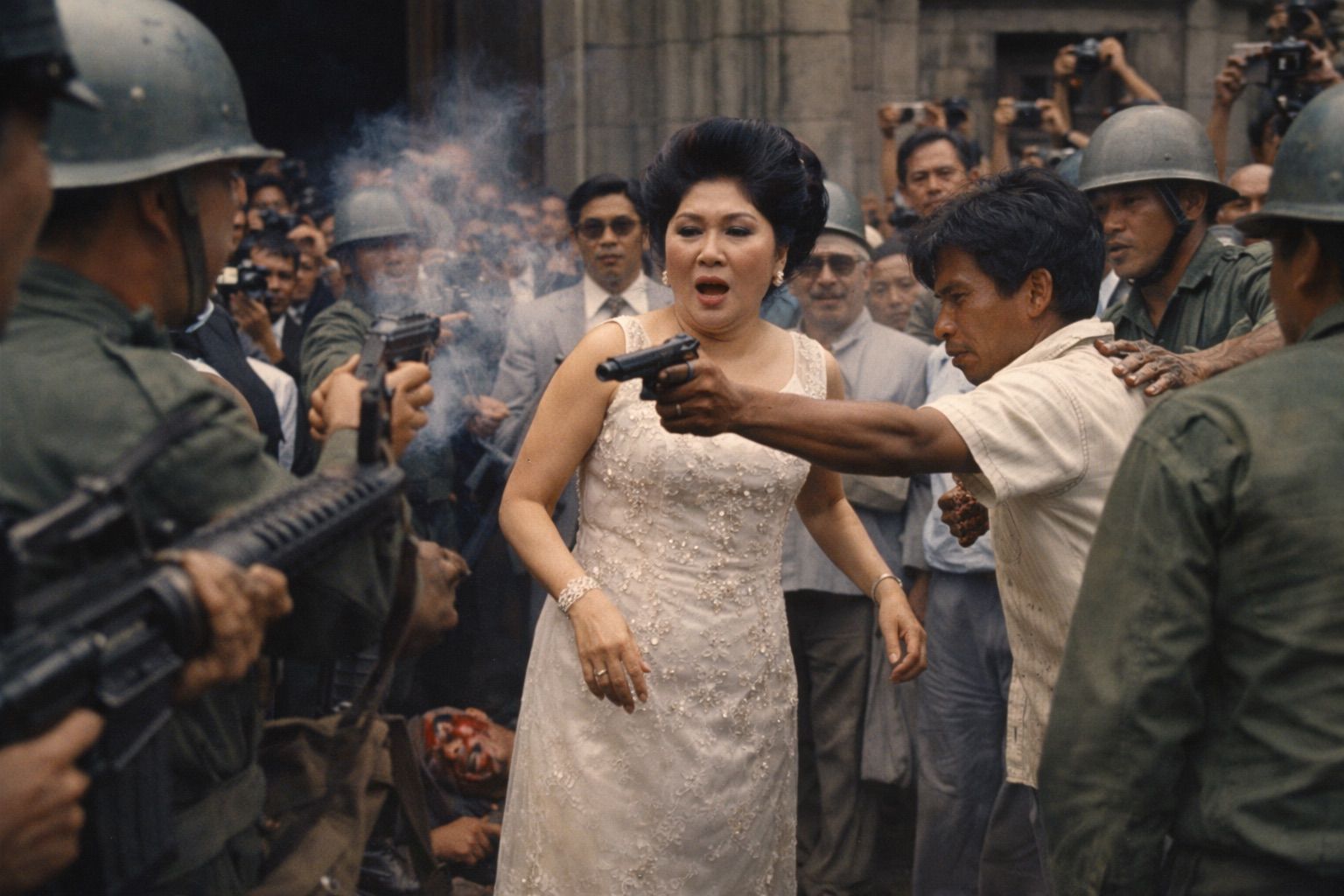
It was the early morning of August 31, 1972, and Imelda Marcos, the wife of Philippine President Ferdinand Marcos, had just finished attending a mass at the Manila Cathedral. As she stepped out into the bright sunlight, a crowd of well-wishers waited to greet her, their faces beaming with admiration for the woman who was widely regarded as one of the most beautiful and fashionable women in the world.

But amidst the chaos of flashing cameras and shouting voices, Imelda’s security detail suddenly sprang into action. A figure emerged from the crowd, his eyes fixed intently on the presidential couple. It was a young man named Danilo Salvador, a former soldier who had grown increasingly disillusioned with the Marcos regime’s corruption and abuses.

As Salvador drew closer to the President and his wife, Imelda’s guards quickly closed in around them, forming a tight cordon of steel helmets and machine guns. But it was too late – Salvador had already pulled out a pistol from beneath his shirt and was raising it towards Imelda.

The scene that unfolded next would become one of the most infamous moments in Philippine history: as Salvador fired his first shot, Imelda’s guards returned fire almost instantly, sending Salvador flying to the ground. But remarkably, despite being hit by multiple bullets, Salvador managed to struggle back to his feet and continue firing his pistol, sending chaos erupting through the crowded streets.

The attempted assassination of Imelda Marcos was a shocking and unprecedented attack on the regime that had held power in the Philippines for nearly two decades. The Marcoses were known for their ruthless suppression of opposition, and Imelda’s own reputation as a symbol of extravagance and corruption only seemed to fuel further resentment among the country’s growing anti-Marcos movement.

As news of the assassination attempt spread like wildfire through Manila, panic set in among the city’s residents. Soldiers sealed off major roads and buildings, while rumors swirled that Salvador was not acting alone – that he was part of a larger conspiracy to overthrow the Marcos regime once and for all.

Meanwhile, Imelda herself seemed almost detached from the mayhem unfolding around her. Despite being just inches away from death, she appeared remarkably composed, her designer heels still gleaming with dew as she moved through the crowds with an air of detachment that bordered on disdain.

The aftermath of the attempt was a blur of medical checks and frantic debriefings, as Imelda’s handlers scurried to contain the fallout. But beneath the surface, whispers began to circulate about the true nature of Salvador’s attack – whether it had been a genuine assassination attempt or simply a publicity stunt orchestrated by anti-Marcos forces.

Some claimed that Salvador was nothing more than a patsy, a mere pawn in a larger game of deception and disinformation designed to discredit the Marcos regime once and for all. Others pointed out that Salvador’s gun had somehow magically disappeared into thin air, leaving behind only a faint smudge of powder on Imelda’s dress.

The incident marked a turning point in the increasingly volatile politics of the Philippines. As anti-Marcos sentiment continued to simmer beneath the surface, the attempted assassination attempt served as a stark reminder of the regime’s brutal resolve to maintain its grip on power at any cost.

In the years that followed, Imelda would emerge as one of the most polarizing figures in Philippine history – a symbol of excess and corruption who seemed to embody everything that was wrong with the country’s corrupt elite. And yet, despite the numerous assassination attempts and plots against her life, she somehow managed to survive, her resilience and cunning earning her a reputation as one of the most formidable women in Southeast Asian politics.

Her eventual downfall would come more than two decades later, when her husband Ferdinand Marcos was finally forced from power by the People Power Revolution of 1986. As she fled Manila with a cache of stolen jewels and artworks, Imelda would leave behind a legacy that was as complicated as it was far-reaching – a testament to the darker side of Philippine politics and the enduring power of beauty, fashion, and charm.

As the days turned into weeks, the attempted assassination attempt became a national obsession. The Filipino media devoured every detail, speculating about Salvador’s motives and connections to anti-Marcos groups. Imelda herself seemed unfazed by the commotion, instead choosing to focus on her official duties as First Lady.

Behind the scenes, however, the Marcos regime was in disarray. Ferdinand Marcos, already growing increasingly paranoid and isolated, became convinced that Salvador was part of a larger conspiracy to overthrow him. He dispatched his trusted advisors to investigate, but it soon became clear that they were more interested in finding scapegoats than uncovering the truth.

The investigation into Salvador’s attack was marked by gross irregularities. Imelda’s guards claimed that Salvador had been acting alone, but some eyewitnesses contradicted this account, suggesting that there may have been multiple shooters involved. Others questioned why Salvador’s gun seemed to vanish into thin air, leaving behind only a faint smudge of powder on Imelda’s dress.

Meanwhile, the Marcos regime continued its campaign of intimidation and suppression against anti-Marcos groups. Protesters were beaten, arrested, and sometimes killed, while opposition leaders were forced into hiding or exile. The country was gripped by fear and uncertainty, with many Filipinos wondering if they would ever be able to express themselves freely without facing reprisals.

Imelda’s reputation as a symbol of extravagance and corruption only continued to grow during this period. Her love of designer clothing and jewelry was matched only by her passion for building grandiose monuments and infrastructure projects that served no practical purpose but to showcase the regime’s power and wealth. The Marcoses’ ill-gotten gains were embezzled, laundered, and hidden away in secret bank accounts and offshore safe havens.

Despite the mounting criticism, Imelda remained defiant, using her charm and wit to deflect attention from the regime’s misdeeds. She charmed foreign dignitaries with her fashion sense and graciousness, while at home she promoted herself as a champion of women’s rights and social justice. It was a facade that few believed, but one that allowed her to maintain her status as a global celebrity.

The attempted assassination attempt had also sparked a renewed focus on Imelda’s personal life. Rumors began circulating about her supposed obsession with beauty and youth, with some speculating that she had undergone extensive plastic surgery to maintain her stunning appearance. Others claimed that she was an expert manipulator who used her charm and beauty to get what she wanted from powerful men.

It is worth noting that these claims were often based on half-truths or outright fabrications. While Imelda’s obsession with fashion and beauty was certainly well-documented, it was unlikely that she had undergone as much surgery as claimed. Moreover, while she may have used her charm to influence others, this was largely a product of her background as a socialite and politician’s wife.

The reality was more complex, reflecting the contradictions and paradoxes at the heart of Imelda’s character. She was both a symbol of beauty and excess, yet also a shrewd operator who had mastered the art of politics through sheer force of will. Her story was one of self-invention and reinvention, as she adapted to changing circumstances and transformed herself into a global celebrity.

In many ways, Imelda’s life was a microcosm of the Philippines itself – a country torn apart by conflicting forces and ideologies. The attempts on her life reflected the broader struggle for power and control that had defined the nation since its independence from Spain in 1898. It was a story of colonialism, corruption, and revolution, with Imelda herself embodying both the glamour and decay of a dying regime.

The years following the attempted assassination attempt saw Imelda become increasingly entrenched as First Lady. Her reputation as a master manipulator only grew, as she skillfully navigated the complex web of alliances and rivalries within the Marcos court. She continued to charm foreign dignitaries and celebrities, using her beauty and wit to build support for the regime.

But beneath the surface, tensions were brewing. Anti-Marcos sentiment was growing more vocal and widespread, with opposition groups like the Moro National Liberation Front (MNLF) and the Communist Party of the Philippines (CPP) gaining strength in the countryside. The Philippines was sliding towards chaos, with Ferdinand Marcos’s increasingly authoritarian rule sparking widespread protests and violence.

In this climate of fear and uncertainty, Imelda’s role as First Lady became more critical than ever. As a unifying figure, she helped to paper over the cracks in the regime’s facade, using her charm and charisma to reassure allies and distract from the growing unrest.

But beneath the surface, she was acutely aware of the threat to her own survival – and that of her husband’s regime. She knew that as long as Ferdinand remained in power, she would continue to be a target for anti-Marcos activists and opposition groups. And so, with characteristic cunning and determination, Imelda set about securing her future, using every trick in the book to protect herself and her loved ones from the forces of change.

The fate of the Marcos regime was already sealed, however. The seeds of its downfall had been sown years earlier, as corruption, abuse, and incompetence had gradually eroded public trust in the government. It would take one final push – the People Power Revolution of 1986 – to finally topple Ferdinand from power.

As Imelda watched her husband flee Manila with a cache of stolen jewels and artworks, she knew that her own legacy was at stake. Would she be remembered as a symbol of excess and corruption, or as a shrewd operator who had adapted to changing circumstances? The answer would depend on how history chose to remember her – but for now, Imelda Marcos remained an enigma, a testament to the enduring power of beauty, fashion, and charm in shaping the course of human events.

Related Posts

George Washington resigns as Commander-in-Chief

Elias Rowen

On December 23, 1783, a chilly winter morning in New York City, a significant moment in American history unfolded. In the aftermath of the Revolutionary War, George Washington, the commander-in-chief of the Continental Army, stood before his assembled officers to make an announcement that would be etched in the annals of time forever: he was resigning from his position.

Washington’s decision to step down as Commander-in-Chief was not taken lightly. He had led the Continental Army through some of the most grueling battles of the war, including the brutal winter at Valley Forge and the decisive victory at Yorktown. His leadership and strategic prowess had been instrumental in securing American independence from British rule. However, with the war finally coming to an end, Washington knew that it was time for him to relinquish his command and return to private life.

Washington’s resignation was not merely a formality; rather, it represented a significant shift in the power dynamics of the young American nation. The Continental Army had been disbanded, and its soldiers were being integrated into state militias or returning home as civilians. Washington’s role as Commander-in-Chief had grown increasingly symbolic, as he was no longer leading troops in the field but instead serving as a figurehead for the newly independent nation.

The circumstances surrounding Washington’s resignation also highlight the tension between his desire to maintain military authority and his duty to relinquish power. As Commander-in-Chief, he had been appointed by the Continental Congress, which was now being dissolved. With no clear successor in place, Washington felt pressure from his officers and advisors to remain at the helm of the army until a new government could be established.

However, Washington was determined to set an important precedent for the future of American governance. He recognized that his continued presence as Commander-in-Chief would have created a power vacuum and undermined the legitimacy of the newly formed federal government. By stepping down, he demonstrated his commitment to the principles of civilian control over the military and the importance of establishing a new system of government.

On the morning of December 23, Washington gathered with his officers in a makeshift theater at Federal Hall in New York City. The atmosphere was somber, as many of these men had fought alongside him for years, and their relationships were deeply personal. Washington began to speak, his voice filled with emotion as he expressed his gratitude to the soldiers who had served under him.

“My dear friends,” he said, “it is with a heart full of sorrow that I take leave of you today. The war may be over, but our service to this great nation is far from complete. We must now turn our attention to building a new government and establishing the principles of liberty and justice upon which our republic was founded.”

Washington’s words were met with tears and applause as his officers bid him farewell. He then presented a formal letter of resignation, in which he expressed his gratitude for the trust placed in him and acknowledged the sacrifices made by those who had served under his command.

The significance of Washington’s resignation cannot be overstated. It marked a turning point in American history, as it established the precedent that military leaders would eventually relinquish their power to civilian authorities. This concept would become a cornerstone of democratic governance in the United States and would influence the development of similar systems around the world.

Washington’s decision also highlights his humility and willingness to put the needs of others before his own desires. He could have easily continued to serve as Commander-in-Chief, maintaining his power and prestige. Instead, he chose to sacrifice his position for the sake of the nation, demonstrating his commitment to the principles of liberty and democracy.

In the years that followed, Washington would go on to play a leading role in shaping the new federal government. He was instrumental in drafting the United States Constitution and served as one of the key negotiators at the Constitutional Convention. His leadership during this period helped establish the foundations for America’s system of government and cemented his status as one of the most revered figures in American history.

As Washington stood before his officers, his voice trembled with emotion as he spoke of the sacrifices made by those who had served under him. He acknowledged the hardships they had endured, the battles they had fought, and the lives that had been lost in pursuit of American independence. The room was filled with a sense of reverence, as if the very fate of the nation hung in the balance.

Washington’s words were met with tears and applause from his officers, who had grown to consider him not only their commander but also a mentor and friend. Many of them had joined the Continental Army at a young age, barely out of their teens, and had spent years fighting for a cause that was still unknown to many Americans. They had seen Washington lead by example, demonstrating bravery in the face of danger, compassion in times of hardship, and unwavering dedication to the pursuit of freedom.

As he finished speaking, Washington presented his formal letter of resignation, which outlined his reasons for stepping down as Commander-in-Chief. He expressed his gratitude for the trust placed in him and acknowledged the sacrifices made by those who had served under his command. The letter was a testament to his humility and willingness to put the needs of others before his own desires.

The significance of Washington’s resignation cannot be overstated. It marked a turning point in American history, as it established the precedent that military leaders would eventually relinquish their power to civilian authorities. This concept would become a cornerstone of democratic governance in the United States and would influence the development of similar systems around the world.

Washington’s decision also highlights his commitment to the principles of liberty and democracy. He could have easily continued to serve as Commander-in-Chief, maintaining his power and prestige. Instead, he chose to sacrifice his position for the sake of the nation, demonstrating his willingness to put the needs of others before his own desires.

In the years that followed, Washington would go on to play a leading role in shaping the new federal government. He was instrumental in drafting the United States Constitution and served as one of the key negotiators at the Constitutional Convention. His leadership during this period helped establish the foundations for America’s system of government and cemented his status as one of the most revered figures in American history.

The legacy of Washington’s resignation extends far beyond the halls of power in New York City on that fateful winter morning. It has inspired generations of Americans to put country before self, to serve their nation with humility and dedication, and to uphold the principles of liberty and democracy.

One of the most striking aspects of Washington’s decision is its timing. The Revolutionary War had ended just a year earlier, in 1782, but the aftermath was far from peaceful. Many veterans were struggling to adjust to civilian life, and there was widespread disillusionment with the new federal government. Washington knew that his resignation would be seen as a statement on the role of the military in American society, and he took care to ensure that it was perceived as a victory for democracy.

As news of Washington’s resignation spread throughout the city, there was an outpouring of support from citizens who had long revered their commander-in-chief. Many attended special ceremonies to bid him farewell, while others wrote letters expressing their gratitude for his service and leadership. The mood was one of sadness and loss, but also of hope and optimism for the future.

In the months that followed Washington’s resignation, he would go on to play a leading role in establishing the new federal government. He attended key meetings with members of Congress, including James Madison and Thomas Jefferson, where they began to draft the United States Constitution. His leadership during this period helped shape the fundamental principles of American democracy and cemented his status as one of the most revered figures in American history.

Washington’s legacy is not just a testament to his own character but also to the enduring ideals that he represented. He embodied the spirit of selfless service, duty, and loyalty that has defined America from its earliest days. His commitment to putting country before self and upholding the principles of liberty and democracy inspired generations of Americans to follow in his footsteps.

As we reflect on Washington’s resignation, it is clear that it marked a turning point not just in American history but also in the development of modern democratic governance. It established the precedent that military leaders would eventually relinquish their power to civilian authorities, paving the way for the emergence of constitutional monarchies and republics around the world.

Washington’s decision was not made lightly, and it required immense courage and conviction. He knew that his resignation would be seen as a statement on the role of the military in American society, and he took care to ensure that it was perceived as a victory for democracy. In doing so, he set an important precedent for future generations of leaders who would be called upon to make difficult choices between personal ambition and public duty.

The impact of Washington’s resignation extends far beyond the halls of power in New York City on that fateful winter morning. It has inspired countless individuals throughout history to put country before self, to serve their nation with humility and dedication, and to uphold the principles of liberty and democracy. His legacy continues to inspire Americans today, reminding us of the enduring ideals that have defined our nation from its earliest days.

As we look back on Washington’s resignation, it is clear that his decision was not just a turning point in American history but also a testament to the enduring power of democracy. It reminded us that true leadership requires humility, selflessness, and a willingness to put country before self. His legacy continues to inspire Americans today, reminding us of the importance of upholding the principles of liberty and democracy that have defined our nation from its earliest days.

In conclusion, Washington’s resignation on December 23, 1783, marked a significant moment in American history, one that would forever change the course of our nation’s development. His decision to step down as Commander-in-Chief set an important precedent for future generations of leaders and reminded us of the enduring power of democracy. It is a testament to his humility, selflessness, and commitment to the principles of liberty and democracy that he will always be remembered as one of the most revered figures in American history.

Related Posts

Federal Reserve System established

Elias Rowen

The establishment of the Federal Reserve System on December 23, 1913, marked a significant turning point in American economic history, forever changing the way the country managed its monetary policy and banking system. The creation of this central bank was the culmination of decades-long efforts by politicians, economists, and financiers who sought to address issues plaguing the economy at the time.

Prior to the establishment of the Federal Reserve, the United States operated under a decentralized banking system with no central authority overseeing it. Each state had its own banking laws and regulations, which often led to a patchwork of inconsistent policies that hindered interstate commerce. The Panic of 1907, a nationwide financial crisis sparked by bank failures and currency shortages, highlighted the need for a more robust and coordinated monetary policy.

One of the earliest proponents of a central bank was Senator Nelson Aldrich, a Republican from Rhode Island who had served as a leader in the Senate Finance Committee. In the early 1900s, Aldrich began to push for legislation that would create a central banking system, but his efforts were met with resistance from those who feared government interference in the economy. The debate over central banking became increasingly polarized along party lines, with Democrats generally supporting the idea and Republicans opposing it.

Meanwhile, President Woodrow Wilson, who had campaigned on a platform of progressive reforms, was keenly interested in establishing a central bank. In 1913, Wilson appointed Aldrich as chair of a special committee tasked with drafting legislation for the new institution. The National Monetary Commission, led by Aldrich and including prominent figures such as Paul Warburg, Frank Vanderlip, and Charles Mitchell, spent months studying European banking systems and formulating proposals for an American central bank.

The final product, the Federal Reserve Act, was introduced in Congress on June 18, 1913. The bill faced intense opposition from Republicans, who argued that it would concentrate too much power in Washington and stifle competition among banks. The debate raged throughout the summer, with some of the most contentious issues surrounding the composition of the Federal Reserve Board, the management structure of regional Federal Reserve Banks, and the role of private banks within the system.

In the end, Wilson and his allies managed to secure passage of the bill in Congress, but only after significant concessions were made. The Federal Reserve System was designed as a decentralized institution with 12 regional banks, each responsible for managing its own district’s banking needs. These banks would be governed by a Board of Governors in Washington, which would oversee monetary policy and set interest rates.

The Federal Reserve System went into effect on November 16, 1914, when the first regional bank opened its doors in New York City. Over the next several years, the remaining banks came online, gradually expanding the reach of the new central bank. The initial response from bankers was generally favorable, with many seeing the benefits of a more stable and secure financial system.

However, not everyone was pleased with the creation of the Federal Reserve. Critics argued that it would lead to government control over the economy, stifling innovation and competition among banks. Others feared that the central bank’s powers would be misused by politicians seeking to manipulate the economy for their own gain.

The early years of the Federal Reserve System were marked by a number of challenges, including the tumultuous period leading up to World War I. As European governments mobilized for war, they drained international reserves from America, creating a shortage that forced the United States to intervene with emergency loans and currency swaps. The experience highlighted the need for more effective monetary policy tools, which the Federal Reserve would eventually develop.

The 1920s saw significant changes within the Federal Reserve System as well. The death of Paul Warburg in 1932 marked the passing of one of the institution’s most influential founders. Meanwhile, the Roaring Twenties themselves brought a surge of economic growth and inflation, which forced the central bank to take on a more active role in managing monetary policy.

The Great Depression of the 1930s proved to be a crucible for the Federal Reserve System, testing its ability to respond to unprecedented crises. The institution’s failure to mitigate the downturn was widely criticized, but it also spurred significant reforms that strengthened the central bank’s powers and independence. In the post-war period, the Federal Reserve played a key role in maintaining economic stability and promoting growth.

As of today, the Federal Reserve System remains one of the most influential institutions on Wall Street, with its decisions impacting everything from interest rates to inflation expectations. The central bank’s tools have expanded exponentially since its inception, now including quantitative easing, forward guidance, and other unconventional measures designed to stabilize the financial system during times of crisis.

Federal Reserve System, #MonetaryPolicy, #CentralBanking, #EconomicHistory, #USFinanceSystem, #FinancialStability

The establishment of the Federal Reserve System on December 23, 1913, marked a significant turning point in American economic history, forever changing the way the country managed its monetary policy and banking system. The creation of this central bank was the culmination of decades-long efforts by politicians, economists, and financiers who sought to address issues plaguing the economy at the time.

Prior to the establishment of the Federal Reserve, the United States operated under a decentralized banking system with no central authority overseeing it. Each state had its own banking laws and regulations, which often led to a patchwork of inconsistent policies that hindered interstate commerce. The Panic of 1907, a nationwide financial crisis sparked by bank failures and currency shortages, highlighted the need for a more robust and coordinated monetary policy.

One of the earliest proponents of a central bank was Senator Nelson Aldrich, a Republican from Rhode Island who had served as a leader in the Senate Finance Committee. In the early 1900s, Aldrich began to push for legislation that would create a central banking system, but his efforts were met with resistance from those who feared government interference in the economy. The debate over central banking became increasingly polarized along party lines, with Democrats generally supporting the idea and Republicans opposing it.

Meanwhile, President Woodrow Wilson, who had campaigned on a platform of progressive reforms, was keenly interested in establishing a central bank. In 1913, Wilson appointed Aldrich as chair of a special committee tasked with drafting legislation for the new institution. The National Monetary Commission, led by Aldrich and including prominent figures such as Paul Warburg, Frank Vanderlip, and Charles Mitchell, spent months studying European banking systems and formulating proposals for an American central bank.

The final product, the Federal Reserve Act, was introduced in Congress on June 18, 1913. The bill faced intense opposition from Republicans, who argued that it would concentrate too much power in Washington and stifle competition among banks. The debate raged throughout the summer, with some of the most contentious issues surrounding the composition of the Federal Reserve Board, the management structure of regional Federal Reserve Banks, and the role of private banks within the system.

In the end, Wilson and his allies managed to secure passage of the bill in Congress, but only after significant concessions were made. The Federal Reserve System was designed as a decentralized institution with 12 regional banks, each responsible for managing its own district’s banking needs. These banks would be governed by a Board of Governors in Washington, which would oversee monetary policy and set interest rates.

The Federal Reserve System went into effect on November 16, 1914, when the first regional bank opened its doors in New York City. Over the next several years, the remaining banks came online, gradually expanding the reach of the new central bank. The initial response from bankers was generally favorable, with many seeing the benefits of a more stable and secure financial system.

However, not everyone was pleased with the creation of the Federal Reserve. Critics argued that it would lead to government control over the economy, stifling innovation and competition among banks. Others feared that the central bank’s powers would be misused by politicians seeking to manipulate the economy for their own gain.

The early years of the Federal Reserve System were marked by a number of challenges, including the tumultuous period leading up to World War I. As European governments mobilized for war, they drained international reserves from America, creating a shortage that forced the United States to intervene with emergency loans and currency swaps. The experience highlighted the need for more effective monetary policy tools, which the Federal Reserve would eventually develop.

The 1920s saw significant changes within the Federal Reserve System as well. The death of Paul Warburg in 1932 marked the passing of one of the institution’s most influential founders. Meanwhile, the Roaring Twenties themselves brought a surge of economic growth and inflation, which forced the central bank to take on a more active role in managing monetary policy.

The Great Depression of the 1930s proved to be a crucible for the Federal Reserve System, testing its ability to respond to unprecedented crises. The institution’s failure to mitigate the downturn was widely criticized, but it also spurred significant reforms that strengthened the central bank’s powers and independence. In the post-war period, the Federal Reserve played a key role in maintaining economic stability and promoting growth.

One of the most significant events of the 20th century was the Great Depression, which saw widespread bank failures, massive unemployment, and a near-total collapse of international trade. The Federal Reserve’s inability to prevent or mitigate this crisis led to widespread criticism and calls for reform. In response, Congress passed the Banking Act of 1933, which significantly expanded the central bank’s powers and introduced measures such as deposit insurance and federal oversight.

The post-war period saw a significant expansion of the Federal Reserve System’s role in international finance. The Bretton Woods Agreement of 1944 established a new international monetary order, with the US dollar becoming the global reserve currency. The Federal Reserve played a key role in maintaining the stability of this system, which endured for over three decades.

The 1960s and 1970s saw significant changes within the Federal Reserve System as well. The death of Paul Douglas in 1976 marked the passing of one of the institution’s most influential economists. Meanwhile, the inflationary pressures of the time forced the central bank to take on a more active role in managing monetary policy.

The 1980s saw a major shift in the Federal Reserve System’s approach to monetary policy, with the introduction of monetarism and the emphasis on controlling money supply growth rather than interest rates. This marked a significant departure from the earlier focus on using interest rates as the primary tool for controlling inflation.

Today, the Federal Reserve System is one of the most influential institutions in global finance, with its decisions impacting everything from interest rates to inflation expectations. The central bank’s tools have expanded exponentially since its inception, now including quantitative easing, forward guidance, and other unconventional measures designed to stabilize the financial system during times of crisis.

In recent years, the Federal Reserve has played a key role in responding to a number of significant economic challenges, including the 2008 global financial crisis and the ongoing COVID-19 pandemic. The central bank’s actions have had a major impact on interest rates, inflation expectations, and employment levels, underscoring its critical role in maintaining economic stability and promoting growth.

Despite its many successes, the Federal Reserve System has also faced criticism for its handling of certain crises, including the 2008 financial meltdown and the ongoing COVID-19 pandemic. Critics argue that the central bank’s actions have been too slow or inadequate, allowing economic damage to build up before effective interventions were implemented.

The Federal Reserve System remains an institution in evolution, with ongoing debates about its role, powers, and accountability. While it has undoubtedly played a crucial role in shaping America’s monetary policy and banking system, there are many who question whether the central bank has done enough to address pressing economic challenges or if its actions have been too opaque or arbitrary.

As we reflect on the history of the Federal Reserve System, one thing is clear: this institution has had a profound impact on American economic life. From its establishment in 1913 to the present day, it has played a crucial role in shaping monetary policy and banking regulations, often serving as both a stabilizing force and a source of controversy.

In the final analysis, the Federal Reserve System’s success will depend not only on its ability to adapt to changing economic conditions but also on its capacity to balance competing interests, manage risk, and communicate effectively with stakeholders. As we move forward in an increasingly complex global economy, one thing is certain: the Federal Reserve System will continue to play a vital role in shaping America’s monetary policy and banking system for generations to come.

Over the years, the Federal Reserve has undergone numerous reforms aimed at increasing its transparency and accountability. These include the passage of the Dodd-Frank Act in 2010, which introduced measures such as stress testing, liquidity requirements, and enhanced capital buffers. The central bank has also made significant strides in communicating its policies and decisions to the public through regular press conferences, speeches, and reports.

Despite these efforts, there remain many challenges facing the Federal Reserve System today. One of the most pressing issues is the ongoing debate about its role in addressing income inequality and promoting economic growth for all Americans. Another challenge lies in its ability to adapt to rapidly changing global economic conditions, including rising trade tensions, shifting monetary policies, and evolving technological innovations.

In recent years, there has been a growing recognition of the need for greater transparency and accountability within the Federal Reserve System. This includes efforts to increase public access to central bank data, improve communication with stakeholders, and enhance the independence and expertise of central bankers.

As we look to the future, it is clear that the Federal Reserve System will continue to face numerous challenges and controversies. However, by learning from its history and adapting to changing economic conditions, this institution has the potential to remain a powerful force for stability and growth in America’s economy.

Related Posts