Latest Articles

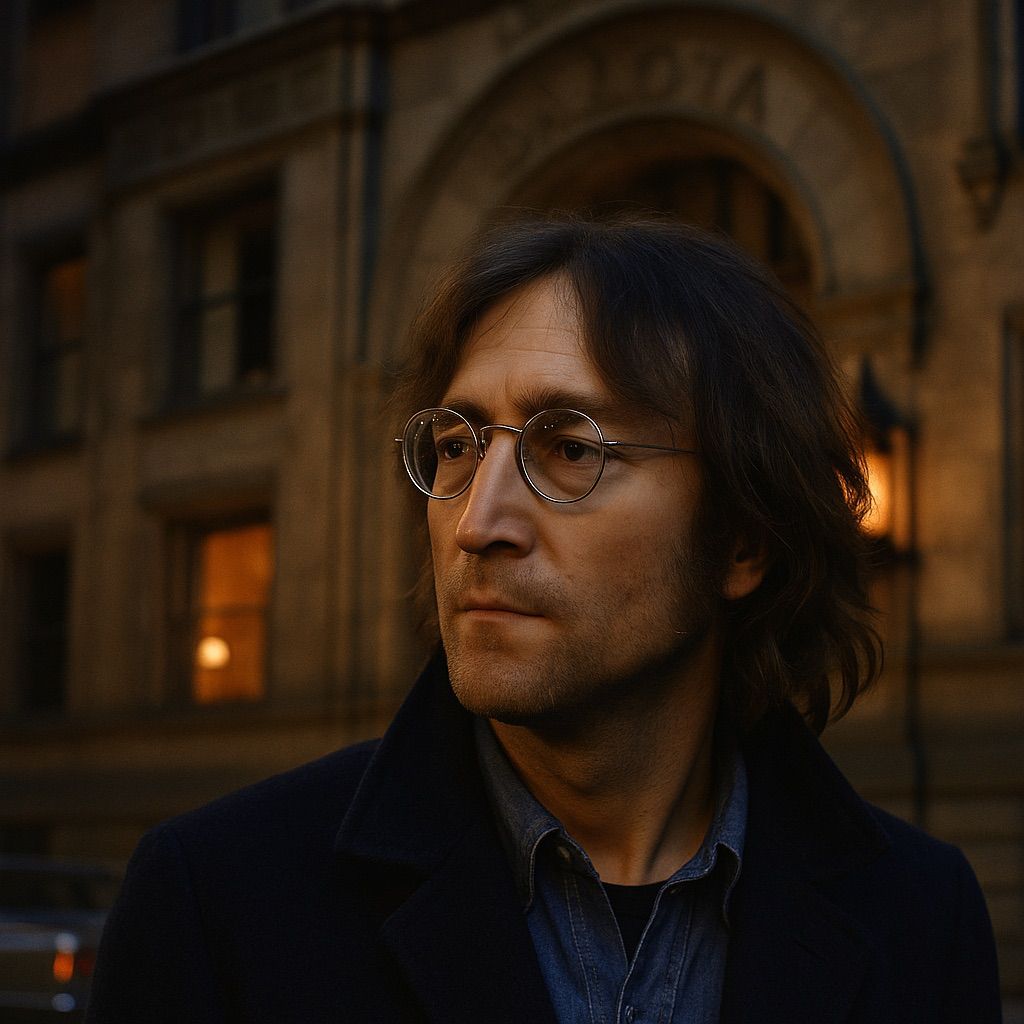
The Assassination of John Lennon and the Legacy That Refused to Fade

Elias Rowen

On December 8th, 1980, the world seemed to stop for a moment, as if shaken by a sudden and impossible truth. News stations flickered with the same headline, radios interrupted their music with trembling voices, and fans from New York to Tokyo felt the same hollow ache settling inside their chests: John Lennon, the voice that helped define a generation, had been shot outside his New York City home. For many, it felt surreal, like waking up from a dream that had ended too abruptly to make sense. Lennon had always seemed larger than life — a visionary, an icon, a rebel, a poet — and suddenly the idea that he was simply gone felt not just heartbreaking, but fundamentally wrong. People didn’t just lose a musician that night. They lost a part of what made the world feel full of possibility.

John Winston Lennon had never belonged solely to Liverpool, even though the winding streets of that city shaped him in ways that would ripple across the globe. Born on October 9th, 1940, John grew up in a world still recovering from war, surrounded by adults who were trying their best but often had little to give. It was a childhood marked by love and absence, by music and confusion, by the fierce independence that comes from growing up with more questions than answers. John admired the rock ’n’ roll greats before he even understood what greatness meant. He heard Elvis Presley on the radio, felt something electric spark inside him, and realized music could be more than entertainment — it could be expression, rebellion, a doorway out of the narrow life he saw ahead of him.

Like many teenagers at the time, John started with skiffle — homemade instruments, cheap guitars, rhythms that felt rough around the edges yet pulsing with energy. The Quarrymen began as a group of boys fumbling their way toward sound and identity. John didn’t know it then, but the universe was already aligning the pieces that would transform the world. Paul McCartney walked into his life one summer afternoon in 1957, showing up with a guitar, a grin, and a talent that matched John’s spark with its own irresistible fire. George Harrison soon followed — younger, quieter, but just as hungry to create something meaningful. When Ringo Starr stepped in later to complete the lineup, the band that would change history finally had its pulse.

What happened next is the stuff of legend. The Beatles didn’t just play music; they became a cultural phenomenon so intense that no one — not even the band itself — could fully understand it while it was happening. Screaming fans chased them down streets, airports flooded with crowds, records sold faster than stores could stock them. The Beatles weren’t merely popular; they were a global movement, a wave of youth and energy and hope that seemed unstoppable. Through it all, John Lennon stood at the center: sharp-tongued, insightful, irreverent, brilliant. His songwriting cut through the noise, weaving tenderness with wit, vulnerability with rebellion. Songs like “Help!,” “In My Life,” “Strawberry Fields Forever,” and “All You Need Is Love” weren’t just hits — they were pieces of John’s soul carved into melody.

The 1960s were turbulent times, and Lennon’s voice fit that era like a spark to a fuse. As war raged and social norms cracked under pressure, he used his platform to speak up in a way that few artists had dared to do. Some adored him for it. Others despised him. But John had never been the kind of man to sit quietly and look pretty for the cameras. He wasn’t built for silence. Every interview, every lyric, every performance carried a shadow of defiance — a reminder that he viewed the world with equal parts wonder and frustration.

When The Beatles parted ways in 1970, the world felt fractured. The band that had carried millions through cultural upheaval suddenly dissolved into four separate paths. Lennon took his portion of the spotlight and reshaped it into something rawer, more intimate. His solo career, especially his work with the Plastic Ono Band, revealed a side of him that felt deeply personal. He sang about trauma, loneliness, childhood wounds, societal illusions — the things people try to bury but never fully escape. “Imagine,” the song that would become synonymous with his message, wasn’t just a ballad. It was a prayer disguised as a melody, a vision of a world that could be softer, kinder, borderless, free.

His relationship with Yoko Ono became one of the most scrutinized unions in modern history. Racism, misogyny, and narrow-mindedness fueled relentless criticism. People saw her as an outsider, a disrupter, a threat to the myth they had built around John Lennon. Yet John saw something different: a partner, a collaborator, a muse. Their love was unconventional, but it was also fiercely genuine. Together, they orchestrated protests like the “Bed-In for Peace,” transforming the media frenzy around them into a weapon against war. They invited the world to imagine peace not as a dream, but as a responsibility.

But fame is a double-edged sword. While John inspired millions, he also attracted people whose admiration warped into obsession. One such man was Mark David Chapman — a troubled, unstable individual who built a dark fantasy around Lennon. In Chapman’s unraveling mind, John had failed to meet the impossible expectations he had created. This resentment, twisted and fed by delusion, ultimately led him to plan the unthinkable.

On the night of December 8th, 1980, John and Yoko returned to the Dakota after a long day at the studio. Just hours earlier, John had autographed an album for Chapman, unaware that the encounter was the prelude to tragedy. As John stepped toward the archway of the building, Chapman fired five shots — four of which struck the musician who had spent a lifetime advocating for peace. The world didn’t know it yet, but in those few seconds, history shifted.

John Lennon was rushed to Roosevelt Hospital, but the damage was irreversible. He died shortly after, leaving Yoko shattered and millions grieving. Announcers choked through the news, radio stations played Beatles songs on loop, and crowds gathered outside the Dakota in stunned silence. Some cried. Some stood motionless. Some sang as if their voices could stitch the world back together. For a generation that had grown up believing that peace and love might truly change society, the loss felt like a brutal contradiction — the violent death of a man who had devoted his life to nonviolence.

What followed was not just mourning, but reflection. Fans wrote letters, created memorials, held vigils. In Central Park, near the Dakota, crowds by the thousands gathered to celebrate John’s life. Across oceans, from London to São Paulo, similar gatherings emerged. People felt connected by their grief, as though Lennon’s spirit had woven them into a global tapestry of remembrance. Even those who hadn’t grown up with The Beatles felt the weight of what had been lost.

The media, unsurprisingly, swirled with sensationalism. Conspiracy theories emerged — wild claims about government plots or hidden motives — none of which held truth but all of which reflected the intensity of John and Yoko’s cultural impact. For many, the couple represented rebellion, counterculture, and honesty, and anything associated with them was fertile ground for speculation. Through it all, Yoko Ono endured unimaginable pain with grace, preserving John’s legacy while carving her own path forward.

And the legacy did continue. In 1982, Yoko established the John Lennon Foundation, dedicated to promoting the arts, peacebuilding, and human rights — causes that had defined John’s life. His music remained timeless, rediscovered by young listeners who found themselves moved by lyrics written decades before they were born. Artists from every genre have cited Lennon as an influence, from David Bowie to U2 to Radiohead. His courage to be vulnerable — to write openly about pain, politics, love, and his own imperfections — reshaped what music could be.

Lennon was a visionary, but he was also deeply human. He made mistakes. He struggled with identity, with anger, with fame. He wasn’t always gentle, nor was he always right. But he grew, he apologized, he learned, and he worked relentlessly to become better. That complexity is part of what makes him endure in the public consciousness. He wasn’t a saint. He wasn’t a myth. He was a flawed, brilliant man who believed deeply in the potential for human goodness — and spent his life urging others to believe in it too.

Today, decades after his death, the world still pauses on December 8th to remember him. Fans still place flowers at Strawberry Fields in Central Park. Musicians still play his songs during peace rallies. His lyrics still appear on protest signs, in classrooms, on murals, on the walls of young people trying to find their voice. Lennon’s message — that love is powerful, that peace is worth fighting for, that imagination can shape reality — hasn’t faded. If anything, it matters more now than ever.

The night John Lennon died was a moment of darkness. But the life he lived, the art he created, and the legacy he left behind continue to shine with a brightness that even violence could not extinguish. His voice may have fallen silent that December evening, but his message still echoes across generations, reminding us that music — and the people who dare to use it for good — never truly disappear.

Related Posts

The Pen That Shook the World: How Jonathan Swift’s Gulliver’s Travels Redefined Satire Forever

Elias Rowen

When Jonathan Swift published Gulliver’s Travels in April of 1726, he could not have predicted how profoundly the book would shape the next three centuries of literature, politics, and cultural identity. And yet, from the moment the first copies found their way into the hands of London’s eager reading public, a spark ignited—one that would burn far longer and far brighter than Swift himself ever imagined. The early eighteenth century was an age brimming with confidence about human progress, driven by Enlightenment ideals that championed science, reason, and the capacity of humanity to rise above ignorance. But beneath this veneer of optimism lurked anxieties, contradictions, and hypocrisies that few dared to criticize openly. Swift, with his razor-sharp wit and uncompromising moral vision, saw those cracks clearly. And with Gulliver’s Travels, he chose not merely to expose them, but to tear them wide open. What he created was no simple travel adventure—it was a revolutionary work of political and cultural satire that disguised its most dangerous truths behind giants, tiny people, floating islands, and talking horses.

Swift’s life leading up to the publication of Gulliver’s Travels was marked by turbulence, intellectual restlessness, and a deepening frustration with the direction of European society. Born in Dublin in 1667 and raised in the shadow of political conflict between England and Ireland, he grew into a writer whose worldview was shaped by displacement, ambition, and a burning desire to understand human nature. He worked in politics, clashed with power, wrote sermons, pamphlets, essays, poems, and letters—always trying to pierce through the fog of corruption and hypocrisy he saw around him. By the early 1700s, Swift was already a well-known figure, admired for works like A Tale of a Tub and The Drapier’s Letters. But privately, he was nursing the idea for something bigger, a satirical masterpiece that would allow him to dissect the absurdity of politics, science, colonialism, and even human morality itself.

The idea for Gulliver’s Travels began as a collaborative satire among members of the Scriblerus Club—a group of prominent writers that included Alexander Pope and John Arbuthnot. Their goal was simple: to mock the pretensions of modern intellectuals, politicians, and literary trends. But Swift took the concept further than any of the others could have anticipated. He envisioned a narrative that would pull readers into a world so fantastical that the satire would slide in almost unnoticed. Instead of lecturing readers about their failings, he would allow them to see those failings reflected back in miniature civilizations, distorted realities, and strange customs that felt both foreign and painfully familiar.

When Gulliver’s Travels finally appeared, it was an instant sensation. Readers devoured it like a gripping thriller, laughing at the absurdities and marveling at the vivid creativity. But many also felt the sting of the deeper truths beneath the humor. In an era when political commentary could ruin reputations and cost lives, Swift had managed to hide explosive critiques behind stories of shipwrecks, strange kingdoms, and curious creatures. The public was enthralled, the critics confused, and the powerful—especially those represented unflatteringly—were furious.

The first voyage, in which Lemuel Gulliver washes ashore in Lilliput, offered readers their first hint of Swift’s brilliant strategy. By shrinking an entire society down to six-inch-tall people, Swift forced readers to confront the pettiness of political conflict. Lilliputian leaders wage war over the proper way to crack an egg, imprison rivals over petty differences, and parade their soldiers in elaborate ceremonies that would be impressive only if the soldiers were not the size of insects. The satire was thinly veiled: Swift was caricaturing British politics and the endless feuds between Whigs and Tories. He mocked the superficiality of ideological divisions and questioned whether the struggle for power was ever driven by noble purpose. The deeper meaning was not lost on educated readers, and before long, Swift found himself both applauded as a genius and accused of subversion.

In Brobdingnag, the land of giants, Swift flipped the mirror. Now Gulliver was the tiny one, and the enormous inhabitants could examine him the way scientists inspect specimens beneath a lens. This reversal allowed Swift to critique the arrogance of European nations, whose colonial pursuits were often justified under the guise of civilizing supposedly inferior peoples. The Brobdingnagian king, upon hearing Gulliver describe the political systems of England, is horrified. To him, Europeans are driven by greed, violence, and moral decay. Swift used this scene to force readers to imagine how European behavior might appear to outsiders—a jarring and uncomfortable perspective for people accustomed to viewing themselves as enlightened.

The voyages to Laputa, Balnibarbi, and Luggnagg cast Swift’s gaze on science and intellectualism. In an age when the Royal Society was celebrating its scientific advancements, Swift dared to ask whether some pursuits of knowledge were absurd, wasteful, or even harmful. He described scientists attempting to extract sunlight from cucumbers, build houses from the roof downward, or turn excrement back into food. These scenes would later be recognized as early critiques of scientific detachment—the idea that knowledge without purpose, ethics, or empathy becomes meaningless.

But it was the final voyage—to the land of the Houyhnhnms—that revealed Swift’s darkest and most unsettling vision of humanity. Here was a society of rational, compassionate horses who lived with dignity and reason. And here too were the Yahoos—creatures who looked like humans but behaved like beasts. For many readers, this section was shocking. Swift seemed to be suggesting that humans, despite our self-proclaimed superiority, were little more than sophisticated animals driven by lust, greed, and violence. Gulliver’s increasing admiration for the Houyhnhnms and his disgust for humanity at large created controversy from the moment the book was released. Critics accused Swift of misanthropy, of hating mankind. Swift responded coolly that he loved individuals but found the collective behavior of humanity deeply troubling.

Gulliver’s Travels arrived at a moment when Europe was grappling with its own contradictions. Enlightenment thinkers praised reason but often ignored the cruelty of colonial rule. Scientists celebrated discovery but sometimes dismissed ethics. Politicians spoke of liberty while expanding empires built on conquest and subjugation. Swift’s novel held a mirror to all of it. And the world looked.

As years passed, the novel’s influence spread across continents. Voltaire praised it, plagiarized it, and even envied it. Alexander Pope admired its sharpness and defended Swift from critics. The Royal Society, predictably, despised it. And common readers—those unpaid arbiters of literary success—made it one of the most widely read books of the century. The novel crossed borders, languages, and generations. It inspired conversations about human nature, political corruption, ethics, and the limits of reason itself. What made it endure was not only its intelligence, but its humor—the way Swift managed to entertain readers while smuggling in some of the harshest critiques ever printed.

The centuries that followed only increased Swift’s legacy. Scholars in the nineteenth and twentieth centuries recognized Gulliver’s Travels as a precursor to modern science fiction, political fantasy, and dystopian literature. Works by H.G. Wells, George Orwell, Aldous Huxley, Margaret Atwood, and even parts of Star Trek bear traces of Swift’s influence. Satirists from Mark Twain to Kurt Vonnegut invoked his name with reverence. And yet, despite its lofty status, Gulliver’s Travels remains accessible to ordinary readers, children and adults alike—a rare achievement in the world of literature.

As society evolved, each new era found something fresh within Swift’s pages. Colonial critics saw warnings about empire. Philosophers saw meditations on reason. Psychologists saw insights into identity and self-perception. Political scientists saw timeless allegories about power. And increasingly, modern readers saw Swift’s reflections on human folly reflected eerily in their own age.

Today, nearly 300 years after its publication, Gulliver’s Travels continues to feel uncannily relevant. In a world fractured by misinformation, political polarization, and global inequality, Swift’s voice echoes across centuries, urging us to question our assumptions, examine our values, and recognize our failings. His satire remains sharp because the human condition remains complex, contradictory, and prone to absurdity. And perhaps that is why the novel still resonates: it is not merely a story of fantastical lands but a story of us—our flaws, our ambitions, our cruelty, our brilliance, and our eternal struggle to be better than we are.

Swift’s gift was not simply to criticize, but to provoke thought. And as long as humanity continues to wrestle with the questions he raised, Gulliver’s Travels will remain not just a masterpiece of literature but a companion in our ongoing journey to understand ourselves.

Related Posts

How Thriller Redefined Pop Forever

Elias Rowen

When November 30, 1982 arrived, most people who walked into a record store had no idea they were stepping into a moment that would permanently reshape the cultural landscape. Albums were released every week, artists hustled for radio play, and the music industry kept grinding forward with its usual blend of optimism and anxiety. Yet on that cool late-autumn day, when Michael Jackson’s Thriller quietly hit store shelves, something shifted—something that would ripple through every corner of the world. Nobody could predict what was about to happen, not even the people who made the album. They sensed they had created something special, yes. But the magnitude? The tidal wave of influence? The way its music would embed itself into global consciousness? That was beyond imagination. And this is what makes the story of Thriller so compelling: it wasn’t just an album release. It was the birth of an era.

At the time, Michael Jackson was already a star, celebrated for his work with the Jackson 5 and his critically praised solo albums. But he wasn’t yet the singular, world-spanning force he would become. He was 24 years old, restless, hyper-focused, and carrying an almost impossible dream inside him—one he had told Quincy Jones during the planning stages: he didn’t want to make the biggest album of the year; he wanted to make the biggest album ever. It sounded audacious, almost naïve, but Jackson meant it. He wanted an album with no filler, no weak tracks, no moments where listeners drifted away. He wanted every second to matter.

The creative process that followed was a whirlwind at Westlake Recording Studios in Los Angeles. Quincy Jones, already a legend, oversaw the project with the kind of meticulous intensity that scholars later compared to film directors crafting their masterpieces. Rod Temperton, the brilliant but soft-spoken English songwriter, worked late into the night shaping melodies and lyrics that merged cinematic ideas with musical innovation. And Michael Jackson—driven by an ambition that seemed to defy human limits—pushed his own vocal abilities into new territory, experimenting with whispers, gasps, percussive breaths, and vocal layering techniques that would later be studied in music schools.

The energy during those sessions was electric. Technicians described Jackson as a perfectionist, sometimes rehearsing a single phrase dozens of times, adjusting the emotional tone like a painter layering colors on a canvas. Quincy Jones referred to the process as “sculpting,” carving away unnecessary elements until only the essential remained. The result was an album without a single wasted moment—a rarity then and now.

It’s tempting to assume Thriller was destined for greatness from the moment the team pressed “record,” but the truth is that the album’s future was completely uncertain. The music industry of the early 1980s was volatile and fragmented, struggling with declining sales and the rise of new formats. MTV, now a cultural monolith, had only launched the previous year and initially refused to play videos by Black artists. Radio remained tightly controlled by genre and regional preference. In that environment, even the most brilliant album could disappear without the right exposure. The stakes were high.

“Billie Jean” was one of the first songs to reveal just how bold the album would be. Confessional, rhythmic, moody, and unforgettable, it showcased Jackson’s growing mastery of storytelling through music. His voice floated between vulnerability and razor-sharp confidence, pulling listeners into the emotional tension of the narrative. The bassline alone—one of the most recognizable in history—became an instant cultural signature. When the song hit the airwaves, it didn’t just climb charts—it detonated across them. Radio stations that hesitated to embrace Jackson suddenly found themselves overwhelmed by listener demands. MTV, under public pressure, reluctantly added the video. Within weeks, both Jackson and the network would undergo a transformation neither could have predicted.

While “Billie Jean” was shaking the world, “Beat It” emerged as a symbol of musical unity. Quincy Jones had pushed for a rock-influenced track to broaden the album’s appeal, and Jackson embraced the challenge. Eddie Van Halen’s blistering guitar solo collided with Jackson’s sharp, syncopated rhythm, creating something new—a fusion that seemed to defy genre labels. The song wasn’t rock, pop, or R&B. It was all of them at once, and in doing so it paved the way for countless artists to cross boundaries that had once seemed impenetrable.

But it was the title track, “Thriller,” that would become the album’s beating heart. Rod Temperton had originally called it “Starlight,” believing the album needed something atmospheric, something haunting. Over time, the concept evolved into a playful homage to horror films. Temperton wrote the song with the cadence of a scriptwriter: suspense, drama, twists. Jackson’s delivery added theatricality, and the decision to bring in Vincent Price—whose eerie, charismatic voice had become synonymous with classic horror—was the final stroke of genius. Price’s spoken-word sequence transformed the song into an experience, something that lingered long after the final note.

When director John Landis—fresh off An American Werewolf in London—was brought in to create a companion film for the “Thriller” track, the industry scoffed. A 14-minute music video? Too long, too expensive, too risky. But Jackson believed in the power of the cinematic form. He wanted music videos to be more than promotional tools; he wanted them to become storytelling engines. And that’s exactly what happened. Landis crafted a short film that blended humor, horror, dance, and narrative in a way no one had attempted before. The choreography by Michael Peters, performed by Jackson and a troupe of dancers transformed into zombies, became iconic overnight. The red jacket, the moonlit streets, the graveyard rising—these images embedded themselves into the cultural psyche.

After the video premiered, Thriller sales skyrocketed at a rate the industry had never seen. The album was already successful, but the video turned it into a global supernova. Countries where Jackson had never charted before were suddenly reporting record-breaking demand. Children, teenagers, adults, grandparents—every demographic found something in the album that resonated. Some connected with the groove, some with the storytelling, some with the theatricality, and others simply with the sheer joy Jackson conveyed in every track.

The numbers alone tell part of the story: Thriller spent 37 non-consecutive weeks at number one on the Billboard 200. It became the best-selling album in history, moving more than 65 million copies worldwide. It produced seven Top 10 singles—an achievement unmatched at the time. It won eight Grammys in a single night. And yet none of those statistics capture the emotional resonance the album carried. People didn’t just listen to Thriller. They lived with it, played it at parties, danced to it at weddings, used it to cope, to celebrate, to escape.

Jackson’s fame became astronomical, but it also came with pressure—creative, emotional, and personal. Interviews from the era reveal a young man grappling with sudden global attention, trying to maintain a sense of normalcy under the weight of unprecedented expectations. Yet even through that pressure, he continued to innovate, pushing toward new horizons in his music and performance style. Thriller became both a triumph and a turning point, the moment Michael Jackson fully stepped into the role of cultural icon—complicated, brilliant, flawed, deeply talented, and endlessly influential.

What makes Thriller endure, even decades later, is that it captured something universal during a moment when the world was hungry for connection. It blended genres, broke racial barriers, redefined what music videos could be, and forged a new blueprint for pop stardom. The album didn’t emerge from a vacuum—it was born from hard work, risk, collaboration, and the audacity to imagine something bigger than the industry had ever offered. Its fingerprints are everywhere: in modern pop production, in dance choreography, in fashion trends, in the global structure of music releases.

Artists today—across genres and generations—still cite Thriller as the album that opened the door for them. Whether it’s the theatrical ambition of performers like Lady Gaga, the genre-blending creativity of The Weeknd, or the polished precision of K-pop groups, the echoes of Thriller are unmistakable.

And perhaps most importantly, Thriller continues to inspire joy. Every Halloween, it resurfaces like clockwork. Every dance class has someone learning the zombie routine. Every record collector knows the weight of holding that album cover in their hands. Thriller became bigger than Michael Jackson, bigger than its songs—bigger even than the era that birthed it. It became a piece of the cultural fabric of the world.

Forty-plus years later, the album remains a reminder of how creativity, when pushed to its fullest potential, can transform not just an artist’s career, but an entire generation—and beyond. Thriller was lightning in a bottle, and the world is still glowing from the strike.

Related Posts

The Story of Scotland vs England, the World’s First International Football Match

Elias Rowen

The story of the first international football match between Scotland and England is woven into a much larger tapestry than most fans ever pause to consider. It is a tale born out of industrial change, shifting social dynamics, and the need for order in a sport that once existed as little more than a chaotic tangle of legs, shins, and improvised rules passed down by word of mouth. To understand what happened at Hamilton Crescent on November 30, 1872—the day two nations stepped onto a muddy Glasgow field and unknowingly altered the future of global sport—you have to first step back into a Britain on the move. The mid-19th century was buzzing with change: factories roared, cities ballooned, and workers who once spent their lives in rural rhythms now flocked into industrial centers where life demanded new ways to unwind, compete, and build community. Football, in its rough early form, became a natural outlet. It was simple, needed little equipment, and offered something both thrilling and restorative to the men who spent their days in soot-filled foundries or the rigid hierarchies of offices and workshops.

What football lacked, however, was consistency. One town’s rules bore little resemblance to another’s, and early matches sometimes devolved into farce or frustration as teams spent more time arguing about how to play than actually playing. The turning point came in 1863, when Ebenezer Cobb Morley—often called the father of modern football—published a set of standardized rules that helped birth the Football Association in England. His aim wasn’t grandeur. He simply wanted a fair, reliable way to play the sport he loved. But Morley’s rules did far more than clean up the game—they sparked a movement. With the FA established, clubs began adopting structured practices, competition increased in seriousness, and the sport quickly took on a sense of identity. The game was no longer a disorganized pastime; it was maturing.

Scotland, meanwhile, was undergoing its own transformation. Football had taken root north of the border as early as the 1850s, but it grew rapidly once industrial towns like Glasgow and Edinburgh became hubs for workers seeking recreation and community. Scots embraced the game with tremendous enthusiasm, and by 1863—the same year the FA was founded—efforts began to organize and unify Scottish footballers under a governing structure. Meetings at venues such as Hamilton Crescent laid the groundwork for what would later become the Scottish Football Association, formalized in 1873. Yet even before the SFA officially existed, the desire to measure Scottish talent against the well-organized English game was already quietly simmering.

The buildup to that first international match, then, wasn’t a spontaneous decision but the culmination of nearly a decade of growing curiosity, pride, and rivalry. England and Scotland had played an earlier series of matches beginning in 1870, but these were unofficial, often organized by English clubs and featuring Scottish players who happened to live in London—not representatives of Scottish football as a whole. Scotland wanted proper representation. They wanted to field a team of their own. And they wanted the match to happen on their soil, before Scottish supporters, under Scottish conditions.

Thus, on the crisp, damp morning of November 30, 1872, tens of thousands of working-class Scots and curious spectators spilled into the area around Hamilton Crescent. Around 4,000 to 5,000 people crowded the ground to watch something entirely new: a sanctioned contest between two national teams. In the era before 24-hour sports coverage, television replays, or even reliable photographic capture, the power of the moment came from the crowd itself… men in rough wool coats, women clutching shawls around their shoulders, boys pressing forward through the throngs to glimpse their heroes. Many had walked miles. All knew they were witnessing something important, even if no one could quite articulate why.

The teams themselves embodied contrasting football cultures. England fielded a squad largely comprised of London club players—experienced, polished, and familiar with the FA’s style of play. Scotland, by contrast, selected its entire team from Queen’s Park, the dominant club of the day, whose players emphasized teamwork, passing, and synchronized movement. This was not by accident. Scottish football was developing a character distinct from the English preference for individual running and dribbling. Where England prized athleticism, Scotland prized strategy. Their approach would later influence continental Europe and even shape what we know as modern passing football.

The pitch that day was slick, wet, and irregular. The weather had soaked Hamilton Crescent until it was more bog than field, and every step sent patches of earth sliding beneath players’ boots. Yet when the referee signaled the start, both teams launched into the match with an intensity that startled even the most seasoned spectators. Early on, England pushed aggressively, using strength and speed to overwhelm Scottish defenders. The Scots responded not with brute force but with coordinated passing—a style many Englishmen considered odd but would later prove revolutionary. The contrast was striking: England dribbled; Scotland moved the ball.

Despite the best efforts of both sides, the match ended in a 0-0 draw. No goals, but endless fascination. Close calls, daring charges, brilliant saves, and fierce midfield battles marked the flow of play. To the spectators watching from the sidelines in their woolen caps and mud-splattered trousers, the match was as thrilling as any victory. They had seen something unprecedented: a structured contest between nations, governed by rules, driven by pride, and played with a spirit that felt both gentlemanly and fiercely competitive. This single draw would echo through the decades to come.

The social impact of the match was immense. For the working-class Scots who filled the stands that day, the game was more than recreation—it was representation. Football offered ordinary men a voice, a sense of belonging, and a chance to see their community reflected on a broader stage. Industrial life was grueling, and football—accessible, inexpensive, and exhilarating—became a symbol of collective identity. In England, the match bolstered the growing realization that football was evolving into something more organized, more serious, and more culturally important than most early administrators predicted.

The aftermath of the 1872 match helped accelerate the formal development of both nations’ football structures. English clubs expanded rapidly, and by 1888 the Football League was established, laying the groundwork for what would eventually become the modern Premier League. Scotland, watching England’s progress, founded the Scottish Football League in 1890. Both leagues thrived, drawing crowds that dwarfed those of other sports. Football wasn’t merely entertainment now—it was becoming a national passion.

The rivalry sparked that day in Glasgow grew into one of the most celebrated, dramatic, and emotionally charged matchups in world sport. England vs Scotland matches became annual fixtures, drawing massive crowds and producing legendary moments. Through wars, economic depressions, and cultural shifts, the rivalry endured. Every encounter carried echoes of the first: pride, rivalry, respect, and the deep acknowledgment that this fixture had birthed international football itself.

Beyond Britain, the influence of the 1872 match rippled outward into Europe and ultimately across the world. As other nations began forming their own football associations, the England-Scotland rivalry served as a model: two proud footballing cultures, two styles of play, and a willingness to bring national identity onto a shared field governed by common rules. It was this spirit that would eventually culminate in the founding of FIFA in 1904, the first World Cup in 1930, and the vast international football ecosystem we know today.

One of the most compelling aspects of the first international match is how deeply it reflected the broader social landscape of its time. Britain’s industrial cities were teeming, its class dynamics shifting, and its workers seeking new avenues for expression and community. Football provided exactly that. It was democratic, open to anyone, and free of the aristocratic exclusivity that defined so many other sports. The match between Scotland and England captured the enthusiasm of a nation in transition and showed that football could unite people across class, background, and region.

Looking back, it’s remarkable how many of the sport’s defining themes—rivalry, national pride, tactical innovation, crowd culture, even early sports journalism—were seeded in that single match. The players on the muddy pitch at Hamilton Crescent could hardly have known that they were laying the foundation for a sport that would one day be watched by billions, commercialized beyond imagination, and woven into the identity of nations across the globe. Yet their passion, determination, and willingness to represent their countries set a standard that generations of footballers have aspired to.

The legacy of the first international football match is not measured in goals or trophies but in the enduring culture it ignited. Every World Cup qualifier, every international friendly, every fierce derby between neighboring nations carries a spark of the rivalry first displayed in 1872. The match is a reminder that something simple—a ball, a field, two teams—can evolve into a global phenomenon capable of shaping identities, inspiring generations, and forging international bonds.

What happened on that cold November afternoon in Glasgow was more than a game. It was the beginning of modern international sport. A cultural milestone. A shared moment in the histories of two nations whose paths would continue to cross, collide, and intertwine for centuries to come. And above all, it marked the day football took its first steps beyond local pitches and factory grounds and began its journey to becoming the world’s game.

Related Posts

The Arrival of Winston Churchill and the Making of a Legend

Elias Rowen

Winston Churchill’s birth on November 30, 1874, inside the stately rooms of Blenheim Palace felt less like the quiet arrival of a child and more like the first sentence of a story that had been centuries in the making. Blenheim was not merely a home but a monument to the triumphs and legacies of Churchill’s ancestors, and the moment his first cry echoed through its halls, it seemed almost symbolic. The palace, awarded to John Churchill, the Duke of Marlborough, after the decisive 1704 Battle of Blenheim, stood as a reminder of military brilliance and political influence. It was as if destiny had placed Winston’s cradle in the shadow of historical greatness, though no one—not even the confident Spencer-Churchill family—could have known the magnitude of the life ahead of him.

The Churchill lineage stretched deep into English history, branching through medieval battlefields, royal courts, and generations of fiercely ambitious men. John de Coteham, one of Winston’s distant ancestors, rode with King Edward I during the Welsh campaigns in 1277, establishing a family tradition of military service that would echo through the centuries. These weren’t just stories in dusty books; they were the myths and expectations that would form the backdrop of Winston’s childhood. His great-grandfather, Charles James Spencer-Churchill, was a significant political figure whose commanding presence in the House of Commons helped cement the notion that public life was not only a privilege but an obligation for those bearing the Churchill name. It is easy, in hindsight, to see how these legacies shaped the family’s expectations for Winston from the very beginning.

But the Churchill family was not without its turmoil. Winston’s father, Lord Randolph Churchill, was a political comet—brilliant, charismatic, volatile, and burning brightly in public life before flaming out far too soon. In Parliament he was fearless, unrestrained, and unforgettable, but at home he was distant, often leaving young Winston longing for affection and approval that rarely came. Much of Winston’s adult drive, stubbornness, and hunger for achievement can be traced back to these early attempts to win the attention of a father who remained frustratingly aloof. Randolph’s political downfall, accelerated by miscalculations and illness, cast a long emotional shadow over Winston’s youth.

Winston’s mother, Jennie Jerome, provided a different kind of influence—vibrant, glamorous, socially gifted, and intellectually formidable. An American heiress in a society that eyed Americans with both interest and suspicion, Jennie captivated British high society. She moved effortlessly through political circles, using charm and sharp intuition to navigate the complexities of the age. Though she loved Winston deeply, her busy social life meant their relationship often resembled admiration at a distance rather than the consistent closeness a young boy craves. Still, Winston looked up to her as a source of style, daring, and the kind of self-made confidence that transcended titles.

Winston’s early childhood, despite being spent in an aristocratic environment, was far from idyllic. He suffered from recurring respiratory illnesses—bronchitis, asthma, and pneumonia—that kept him bedridden for long stretches and robbed him of the carefree physicality that many boys his age enjoyed. These illnesses contributed to a sense of isolation, pushing him into a world of books, stories, and imagination. His love of reading grew rapidly, and soon writing became his refuge—a place where he could create adventure even when confined indoors. The emotional distance from his parents, combined with physical fragility, planted seeds of determination that would define his adulthood.

At Harrow School, Winston found himself in an environment that challenged him in unexpected ways. Harrow was rigid, traditional, and hierarchical, and Winston, with his rebellious streak and impatience for strict rules, often clashed with the structure around him. Teachers didn’t always appreciate his quick wit or strong opinions, and he was not a star student by the usual measures. Yet even in this environment, his unique talents began to surface. His memory for historical detail was exceptional, and his early attempts at oratory showed remarkable promise. He formed friendships that would last a lifetime, including with F.E. Smith, whose influence would later thread into Winston’s political path.

Sandhurst transformed him. Where Harrow had confined him, Sandhurst freed him. The military gave Winston a sense of purpose, clarity, and a stage for action that academic life never had. He graduated in 1893 and began a career that blended soldiering with journalism—a combination that suited him perfectly. His postings to India, Egypt, the Sudan, and even his observations during the Cuban War of Independence fueled not only his appetite for adventure but also his growing skill as a writer. His dispatches and books captivated readers back home, and he cultivated a public image as the daring young officer with a gift for storytelling.

Politics soon came into focus as the next chapter of his life, almost as though it had been waiting patiently for his return. Winston entered Parliament and quickly made his presence felt. His speeches were fiery, compelling, and sometimes controversial. He served as Under-Secretary of State for the Colonies and later as MP for Oldham, but his early political years were far from smooth. The Curragh Incident, the debates over Irish Home Rule, and his frequent clashes with fellow politicians made him a polarizing figure. Even so, his conviction and ability to sway audiences made him impossible to ignore.

Winston’s involvement in World War I profoundly shaped the man he would become. As First Lord of the Admiralty, he championed the Dardanelles Campaign—a disastrous military operation that cost countless lives and nearly destroyed his political career. The public backlash was fierce, and the emotional toll weighed heavily on him. Churchill retreated to the Western Front, serving as a battalion commander, exposing himself to the same dangers as the men he led. These experiences humbled him but also strengthened him: the seeds of the wartime leader he would one day become were planted in the mud and fear of those battlefields.

His marriage to Clementine Hozier in 1908 provided him with the emotional stability he had lacked throughout his youth. Clementine was poised, perceptive, and remarkably resilient. She tempered Winston’s impulsiveness with her levelheadedness and offered counsel when his emotions threatened to derail his ambitions. Their marriage was not easy—the pressures of politics, war, and public life strained even the strongest of partnerships—but it endured because it was built on profound mutual respect and affection.

By the time Winston first became Prime Minister in 1924, he had already weathered political storms that would have ended the careers of lesser men. Yet his true moment of destiny still lay ahead. During World War II, when Britain stood alone against the rise of tyranny, the qualities formed through childhood illness, parental distance, military service, political defeat, and wartime experience converged into the steady, unyielding leadership that history now reveres. But that story, the story of wartime Churchill, cannot be fully understood without tracing its origins back to the chilly morning at Blenheim Palace where a small, frail baby was born into a world he would one day help shape.

Winston Churchill’s birth was not merely a footnote in history—it was the beginning of a life that would influence the fate of nations. His journey, marked by adversity, ambition, brilliance, and resilience, reflects the profound truth that greatness is not gifted fully formed at birth. It is built, layer by layer, through experience, struggle, and choice. Churchill’s early years reveal the making of a man who would one day become a symbol of endurance, courage, and unwavering conviction. And in that way, his birth was indeed the first quiet step toward the extraordinary legacy he left behind.

Related Posts