Latest Articles

When Earth First Revealed Its Colors: A New Perspective from Space

Elias Rowen

The first color photograph of Earth taken from space is one of those rare moments in human history when technology, curiosity, and sheer wonder converge into a single image that changes how we see ourselves. Before that moment, our understanding of Earth was rooted almost entirely in maps, globes, paintings, and imaginations shaped by the blurry black-and-white photographs from earlier missions. The idea of our planet floating freely in the vastness of space was understood intellectually, perhaps even emotionally, but it had not yet been felt in the visceral, undeniable way that only a photograph can deliver. When that first true color image emerged, it did more than document a scientific achievement — it reshaped human identity, perspective, and the spiritual understanding of our place in the universe.

The story begins at a time when the space age was still young. Rockets had only recently begun piercing the upper atmosphere, satellites had just started orbiting the planet, and astronauts were still learning how their bodies responded to the strange ballet of weightlessness. Much of what we now consider foundational knowledge about spaceflight didn’t even exist yet. These were the years when every mission was an experiment, every image was a revelation, and every successful orbit felt like a small miracle. The idea that one day a spacecraft would be able to capture Earth in full color — blue oceans, swirling white clouds, and the rich brown and green textures of land — was something scientists hoped for but did not yet fully expect. Color photography in space required not just engineering expertise but a deep understanding of how film responded to radiation, vacuum conditions, unpredictable lighting, and developing methods back on Earth.

Before this breakthrough, the earliest images of Earth taken from space looked ghostly and distant, mostly grainy monochrome snapshots that hinted at detail rather than displaying it. They were scientifically important, of course, but they lacked the emotional punch that comes from seeing our home the way the universe sees it. Those images helped meteorologists, researchers, and cartographers, but they didn’t inspire the average person. They didn’t evoke awe or humility or that strange tightening in the chest that happens when we see something truly beautiful. The first color photograph changed all of that in a single moment — suddenly Earth wasn’t an abstract concept but a living world suspended in darkness, radiant with color. It was home, captured in a way that no one had ever seen before.

The spacecraft that captured that first landmark image was more than a tool of exploration; it was a lens through which humanity learned to look at itself differently. The astronauts and engineers who helped bring that image into existence understood the magnitude of their mission, even if they didn’t fully grasp the cultural shockwave that would follow. Some later described the experience of seeing Earth from space as profoundly emotional — a feeling of fragile interconnectedness, as though every border, every conflict, every disagreement on Earth seemed insignificant when viewed from a viewpoint hundreds of miles above. The color photograph transmitted that very feeling to millions back on the ground. For the first time, people who would never travel to space could share, in a small way, the astronauts’ awe.

What made the image so emotionally powerful wasn’t just its beauty. It was its vulnerability. Hanging against the endless black canvas of the cosmos, Earth appeared both majestic and delicate. The atmosphere — that thin blue halo that protects every living thing — looked fragile enough to break with a fingertip. The continents, typically divided on political maps, blended into one another organically. The oceans looked impossibly vast, their blues deep and calming. Clouds swirled in hypnotic patterns, revealing a planet in constant motion. And perhaps most striking of all was the absence of human divisions — no fences, no highways, no city borders, no nations. It was our world reduced to its purest, most essential form.

Scientists marveled at the photographic clarity, the accuracy of the colors, and the wealth of data the image provided. Meteorologists studied cloud formations. Oceanographers examined the spread of marine hues. Geologists compared landmasses to existing maps. But beyond the scientific realm, the photograph became something else entirely: an icon. Newspapers printed it on their front pages. Magazines ran special editions. Classrooms hung posters so students could gaze at the planet that held everything they knew. People began to understand Earth as a living ecosystem rather than a collection of isolated regions. Environmental consciousness — which already existed but had not yet reached the mainstream — suddenly had a powerful, irrefutable symbol.

NASA, at the time, recognized the significance but perhaps underestimated just how culturally influential that single photograph would become. They viewed it first and foremost as a technical success, a triumph of engineering and mission planning. But the public saw something transcendent: a reminder that Earth is unique, fragile, and interconnected. This photograph paved the way for later images like “Earthrise” and “The Blue Marble,” which carried the torch of environmental awareness into new generations. Yet the first color image remains special because it broke the barrier first — the moment when the cold technical frontier of space exploration transformed into a source of human reflection.

For many people who saw that photograph in the years following its release, it created an almost spiritual reaction. Religious leaders referenced it in sermons. Poets wrote verses inspired by it. Philosophers debated its implications. Psychologists noted that people often described feeling a sudden global empathy, a shared sense of belonging to a world far larger than their daily routines. Even those who usually felt disconnected from science or space exploration found themselves staring at the image longer than expected, wondering about their place on a planet that looked so small and so precious.

The photograph also transformed how nations viewed each other. During a period marked by Cold War tensions, global competition, and ideological battles, the image of Earth as a unified sphere helped soften perspectives. It didn’t erase political conflicts, of course, but it introduced something new — the idea that preserving the planet might be a shared goal greater than any ideological struggle. Environmental movements gained traction. Scientific diplomacy expanded. Governments began discussing global cooperation on issues like pollution, conservation, and atmospheric research. It’s not an exaggeration to say that the first color photograph of Earth planted the seeds of the modern environmental movement.

Artists were equally captivated. Painters attempted to recreate the colors and curvature of Earth. Photographers studied the play of light and shadow across the planet’s surface. Designers incorporated the globe into posters, album covers, educational material, and advertising. The photograph became part of the visual language of the late 20th century — a symbol of unity, fragility, and hope. It continues to inspire artists today, appearing in galleries, digital designs, and multimedia installations that explore humanity’s relationship with nature and the cosmos.

But beyond the art, science, and philosophy, the image had a deeply personal meaning for many ordinary people. It reminded them that Earth, despite its conflicts and complexities, is a shared home. Many described feeling a renewed appreciation for nature, for life, for the simple act of breathing air under a protective sky. Some said the photograph made them want to travel, to see the world’s beauty firsthand. Others said it made them realize how much needed to be protected — forests, oceans, wildlife, and the fragile ecosystems that sustain life. That first color image didn’t come with a speech or a manifesto, but its message was clear nonetheless.

Looking back now, decades after that image was taken, it remains a powerful symbol of what humanity can achieve when driven by curiosity and cooperation. It reminds us that exploration is not only about discovering the unknown — it’s about understanding ourselves. Every subsequent mission that photographed Earth built upon the legacy of that first color image, but none of them can truly replicate the impact of seeing our world in color for the very first time.

Today, as high-resolution satellite imagery has become commonplace, we sometimes forget how revolutionary that original photograph was. We scroll past modern satellite pictures on our phones without thinking twice. But the first color photograph still stands apart because it marked the moment when humanity earned its first true portrait — not as individuals, nations, or cultures, but as a species. A single world. A single home. A tiny blue orb floating in the infinite dark, radiant with life.

And that is why the first color image of Earth remains so profoundly important. It didn’t just show us what our planet looks like; it showed us who we are. It reminded us that despite all our differences, we share something extraordinary — a breathtakingly beautiful world unlike any other we know. It is fragile, vibrant, alive, and deserving of protection. All of that meaning began in a single moment when a spacecraft captured a photograph that forever changed how we see ourselves.
Related Posts

The Day America Lost Its Innocence

Elias Rowen

On November 22, 1963, the world seemed to slow its breath, as if instinctively sensing that something irreversible was about to occur. President John Fitzgerald Kennedy—young, charismatic, endlessly symbolic of a new American era—arrived in Dallas that morning with the kind of optimism that had become synonymous with his administration. The sun shone brightly on the motorcade route, the crowds leaned in with genuine enthusiasm, and there was a kind of electricity in the air that politicians dream of but rarely capture. Kennedy’s presence had that effect: he was at once familiar and larger than life, carrying with him not just policy goals or diplomatic ambitions, but the high-voltage energy of a nation that believed it could reinvent itself at any moment. No one lining the streets that day believed that before lunchtime, the country’s course would be jolted into one of the darkest chapters of its history—one that would be revisited, reanalyzed, and re-felt for generations.

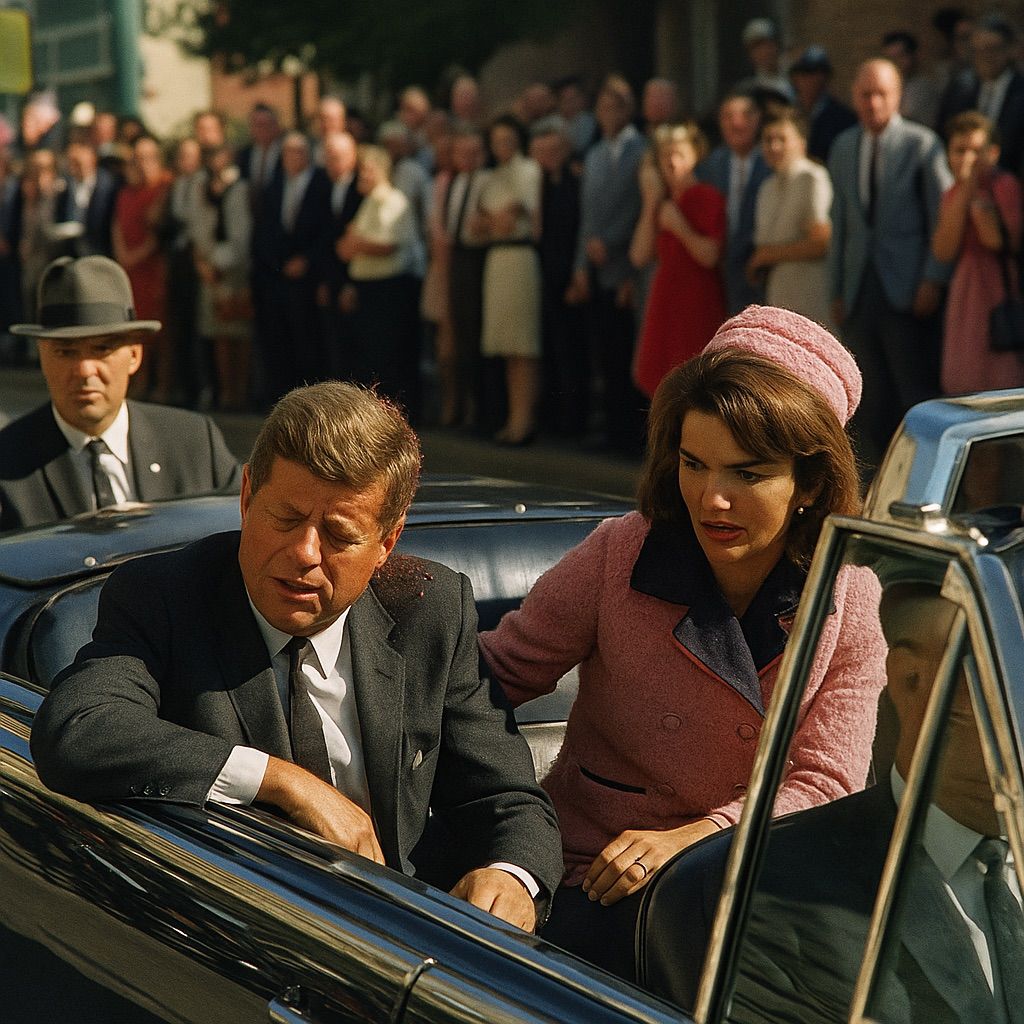
The President’s trip to Texas had been, in many ways, just another political necessity in a country built on perpetual campaign cycles. Kennedy knew he needed stronger unity in the Democratic Party ahead of the coming election season, and Texas—with its complex blend of political factions and performance-driven expectations—was both an opportunity and a challenge. But if Kennedy felt any pressure, it never showed on his face. Photographs from the morning at Love Field capture him smiling with a sincerity that still stings the modern viewer, because we know what he didn’t. Jackie Kennedy, elegant in her now-iconic pink suit and pillbox hat, stands beside him with that quiet grace she carried so naturally, unaware that her life was just hours away from being violently rewritten.

Those first moments of the motorcade were almost idyllic. As the limousine rolled through Dallas, people waved American flags, children perched on the shoulders of their parents, and strangers cheered with a warmth that contradicted the city’s reputation for simmering political tensions. Kennedy waved back, sometimes leaning in as if to draw from the crowd’s energy. The President loved these moments—he often said he felt closest to the American people when he was out among them rather than behind a podium or inside a government office. His staff knew this well; they watched him with a careful mix of pride and protective worry, though nothing in that early afternoon hinted at the disaster that lay ahead.

As the motorcade approached Dealey Plaza—the now-infamous convergence of Elm Street, Main Street, and Houston Street—the crowds thinned slightly, and the cheering softened. It was a momentary lull, the kind that naturally occurs as a caravan transitions from one gathering point to another. No one noticed the open windows above street level, or if they did, they thought nothing of them. People in office buildings often paused to watch the President go by. A passing curiosity. A harmless tradition. And maybe that’s one of the cruelest truths of that day: so many details now seen as ominous were, in real time, utterly ordinary.

The first shot was confusing. Witnesses later described it in terms that contradict one another—some said it sounded like a firecracker, others like a motorcycle backfiring, still others like a whip cracking in the air. Sound behaves oddly in an open space surrounded by buildings, and Dealey Plaza was a kind of acoustic trap. But whatever that initial noise was, it caught people’s attention without yet causing panic. Even Secret Service Agent Roy Kellerman, seated in the front of the limousine, initially struggled to identify the source.

The second shot shattered the illusion that this was anything other than deliberate violence. A visible reaction rippled through the crowd; some people ducked immediately, others froze in terror. Jackie Kennedy turned toward her husband in confusion at the exact moment the third and fatal shot struck him. The brutality of that moment—the suddenness, the violence, the irreversible nature of it—has been replayed so many times in footage and retellings that we risk forgetting the raw humanity of it. The President of the United States, a man who had just moments earlier been waving to families and smiling at children, had been struck down in front of his wife, his staff, and his citizens.

And yet Jackie Kennedy, in that horrific moment, showed a level of composure and instinct that became its own heartbreaking legend. She reached out, not fully understanding what she was doing, driven only by an instinct to protect or to hold onto something that was slipping away. Secret Service Agent Clint Hill sprinted onto the limousine, throwing himself across the President and First Lady as the car accelerated toward Parkland Memorial Hospital. It was too late, but Hill’s actions were the embodiment of duty—an instinctive sacrifice, a desperate attempt to shield what remained.

At Parkland, chaos met urgency. Doctors and nurses rushed to the trauma bay with the full force of medical training and human hope, but the wound was beyond saving. When Kennedy was pronounced dead at 1:00 p.m., it was more than a medical statement; it was a rupture in American identity. A nation that had built so much of its self-image around Kennedy’s youth, optimism, and promise suddenly found itself drifting in uncertainty.

The ripple effect of the announcement was immediate and overwhelming. Across the country, radios interrupted broadcasts, televisions cut to emergency bulletins, and everyday life ground to a halt. People cried openly in the streets. Businesses paused operations. Schools lowered flags. There was a shared sense of disbelief that crossed demographics, regions, and ideologies. Even those who had been critical of Kennedy found themselves shaken by the news, because political disagreements were one thing—but the assassination of a sitting president was an attack on the country’s stability itself.

Then came the second shock of the day: Lee Harvey Oswald, the man identified as the alleged assassin, was arrested not long after the shooting. Oswald was a complex figure—ideologically tangled, personally volatile, and deeply unpredictable. His rapid arrest didn’t bring clarity; if anything, it opened the floodgates for questions, conspiracies, and permanent fractures in the public’s trust. What did he believe? Was he acting alone? Was there a larger plan? These questions still echo through American culture, and each theory reflects not just a curiosity about the facts, but a collective attempt to make sense of a tragedy that has never fully settled into certainty.

But there was no time to unpack those questions that afternoon. Vice President Lyndon B. Johnson, suddenly thrust into the highest office, was sworn in aboard Air Force One just hours after the assassination. Jackie Kennedy stood beside him, still wearing the blood-stained suit she refused to change out of. “I want them to see what they’ve done,” she reportedly said—one of the most haunting statements in American political history. The photograph of the swearing-in, taken inside the cramped cabin of the aircraft, is one of the most instantly recognizable images of the 20th century. It captures not only a constitutional transition, but the emotional shock of a country that had just experienced trauma on a national scale.

Kennedy’s body was flown back to Washington, where preparations began for what would become a funeral reminiscent of those of fallen leaders from centuries past. The procession through the capital was solemn, meticulous, and deeply symbolic. Black horses, muffled drums, rows of military honor guards, and the image of John F. Kennedy Jr.—still a young child—saluting his father’s casket created an emotional tableau that would define the national memory of that era. Jackie Kennedy, in widow’s black, walked with a dignity that both inspired and devastated those who witnessed it.

The funeral drew world leaders from across the globe, reflecting the international impact Kennedy had in his short presidency. Representatives from allies and adversaries alike stood side by side, a reminder that even in Cold War tension, Kennedy had managed to carve out a unique position on the world stage. He was a statesman who believed profoundly in diplomacy, in dialogue, and in the possibility of a more peaceful future. His death, therefore, was not just an American tragedy—it sent shockwaves through foreign capitals, disrupting delicate geopolitics and altering relationships in ways that historians still dissect today.

In the years that followed, the assassination became a defining moment in American cultural and political psychology. It symbolized the end of the post-war era of innocence, the beginning of a more skeptical, fractured time. The idealism of the early 1960s gave way to the turbulence of Vietnam, civil unrest, political assassinations, and distrust in government institutions. Kennedy’s death wasn’t just a single event—it was the spark that ignited a cascade of national introspection.

Yet JFK’s legacy also endured in surprisingly resilient ways. His speeches, famously eloquent and forward-looking, continued to inspire new generations. His encouragement to “ask what you can do for your country” became a touchstone for those who believed in civic duty. His commitment to the space program propelled the United States toward the moon landing in 1969, fulfilling a dream he articulated before it seemed remotely possible. And perhaps most poignantly, his belief in public service sparked millions to pursue work they felt could improve the world around them.

Today, more than six decades after the tragedy in Dallas, the memory of November 22 still lingers as an emotional fault line in the American story. It is a day that historians analyze, filmmakers revisit, archivists continually reinterpret, and citizens of all ages learn about as a turning point that reshaped the nation. It is a day marked by grief, confusion, and a collective sense of vulnerability. But it is also a day that reminds us of the fragility of leadership, the unpredictability of history, and the profound impact one individual can have on the soul of a country.

The legacy of John F. Kennedy is complex—an intersection of idealism, political challenges, personal flaws, and soaring vision. But despite the tragedy of his death, his influence never fully faded. Instead, his contributions, his charisma, and the hope he inspired remain woven into the fabric of American identity. His life, though cut short, continues to resonate. And his death, though devastating, remains a potent reminder of how quickly history can turn, how deeply a nation can feel loss, and how long a memory can endure.

Related Posts

Beatlemania Ignites: How “With the Beatles” Redefined Modern Music

Elias Rowen

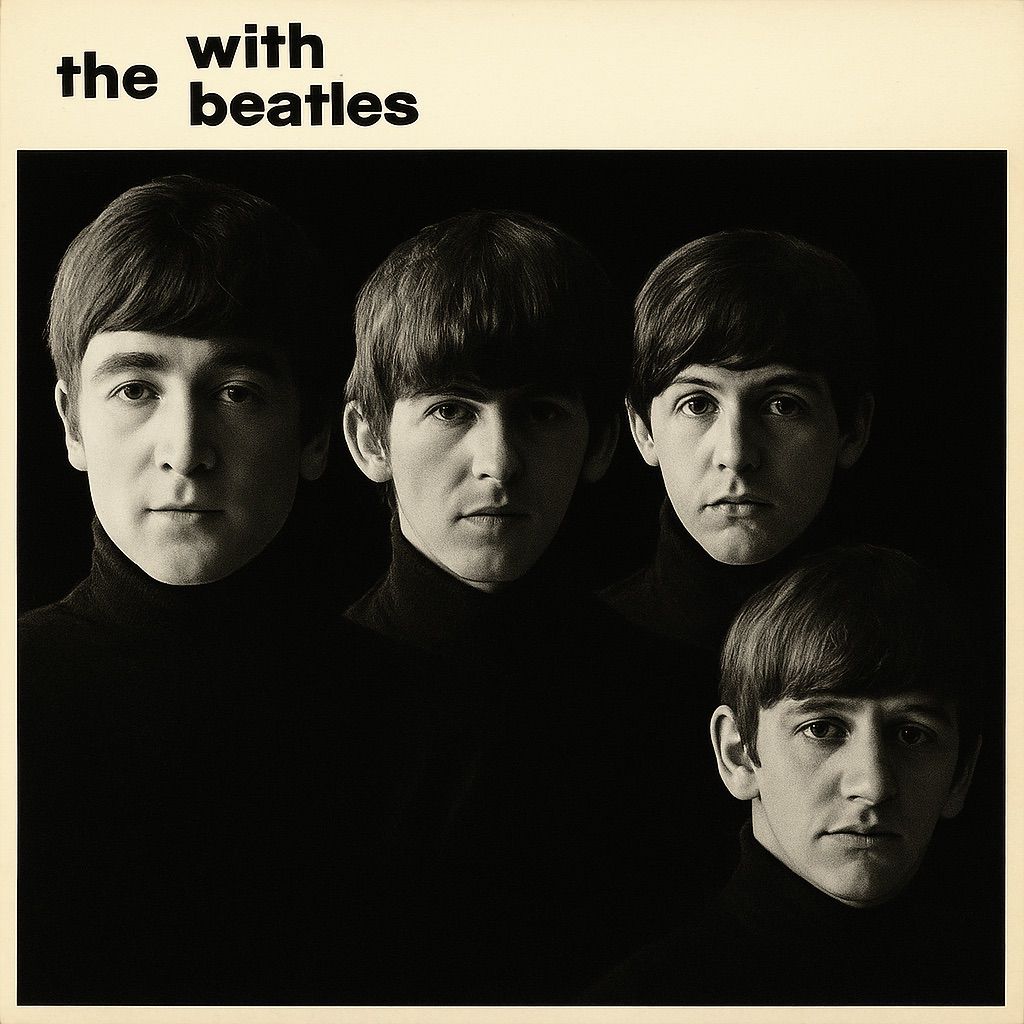
When With the Beatles arrived on November 22, 1963, it didn’t simply land on shelves as another pop album — it arrived like a seismic wave, reshaping the musical landscape with a force that even the band themselves couldn’t fully comprehend at the time. The Beatles were already gaining momentum in Britain, but this second studio album launched them from promising stars into a phenomenon that would soon sweep across continents. Listening today, it’s easy to take for granted how natural their brilliance feels, how fluidly they moved between styles, and how effortlessly they blended youthful energy with emotional depth. But to those hearing the record for the first time in 1963, it was as if something entirely new had burst into existence — a sound that was both familiar and revolutionary, crafted with precision yet steeped in spontaneity. This album captured the moment The Beatles transitioned from rising talents into cultural trailblazers, and it remains a testament to how quickly musical evolution can accelerate when passion, talent, and timing align.

When people talk about the early Beatles, they often focus on the mania — the screaming audiences, the televised performances, the tidal wave of popularity that no band had ever experienced on such a global scale. Yet to really understand With the Beatles, you have to look past the frenzy and into the quieter truths of who these four young men were at the time. They were barely adults, hustling through grueling performance schedules, navigating sudden fame, and working harder than most fans ever realized. The Beatles didn’t stumble into success; they earned it through relentless energy and an obsession with sound. And throughout the recording of With the Beatles, they pushed themselves with a level of focus and ambition that feels astonishing today.

The sessions for the album built upon what they learned creating Please Please Me, but this time they weren’t rushing to capture their live set in a single, breathless marathon session. They had more time, more confidence, and a clearer sense of what they wanted to say musically. They also had George Martin — the “fifth Beatle” whose guidance elevated their raw creativity into something polished without ever sanding down the edges. Martin recognized the band’s potential and challenged them continually, not by forcing them into traditional molds but by encouraging them to explore everything they were capable of. His respect for their instincts, combined with his classical training, created a perfect balance. The Beatles trusted him, and he trusted them — an artistic partnership that shaped not only this album but the entire future of popular music.

What makes With the Beatles so fascinating is how it blends innocence with sophistication. On one hand, it feels youthful and exuberant, bursting with catchy melodies and energetic performances. On the other hand, it shows a remarkable level of maturity for a group so early in their career. They weren’t just singing about love; they were crafting harmonies and rhythms with surprising complexity. Songs like “All My Loving” showcased their knack for melodic craftsmanship, while “It Won’t Be Long” introduced new layers of emotional urgency. Their voices blended with uncanny chemistry — John’s raw power, Paul’s smooth clarity, George’s shimmering tonal quality, and Ringo’s steady reliability behind the kit. Each track feels like it captures lightning in a bottle, yet none of it feels forced. The Beatles were playing at the height of their early powers, experimenting without fear and performing with the kind of excitement that only comes from discovery.

A key part of the album’s DNA comes from their covers, too. The Beatles didn’t treat cover songs like filler — they treated them as opportunities. Their interpretations of Motown and rock ’n’ roll classics weren’t mimicry; they were reinventions. Listen to “Please Mister Postman” or “You Really Got a Hold on Me,” and you can feel how deeply the band admired the artists who inspired them. But you can also hear how boldly they reshaped these songs into something uniquely Beatles. They infused each cover with their own attitude, their own spark, their own sense of rhythmic identity. Those tracks served as a bridge between the music they loved and the music they were destined to create — a snapshot of influences merging with originality, forming the foundation of the sound that would soon take over the world.

The release of With the Beatles was perfectly timed, though no one realized it then. As soon as the album hit the shelves in the UK, it began breaking records. It became one of the fastest-selling albums in British history, receiving rapturous praise while simultaneously fueling the momentum of a cultural movement that would soon be called Beatlemania. Teenagers lined up at record stores. Radios played Beatles songs endlessly. Magazines clamored to interview them. It felt as if the entire country — and soon the world — had turned its attention toward these four young men from Liverpool.

Yet behind all the excitement, the album also represented something deeper: a shift in what pop music could be. Before The Beatles, pop albums were often inconsistent — a few singles padded with filler tracks. But With the Beatles was cohesive, intentional, and balanced from start to finish. It signaled that albums could be art, not just containers for radio hits. This would become one of The Beatles’ greatest long-term contributions to music: the elevation of the album format itself. The seeds of Rubber Soul, Revolver, and even Sgt. Pepper are faintly visible here, not in complexity but in ambition. The Beatles were showing the world that they were more than entertainers; they were creators, and they were only getting started.

Of course, With the Beatles carries with it a historical footnote that adds an eerie shadow. It was released on the exact same day President John F. Kennedy was assassinated. While the two events were unrelated, history forever linked them. Many fans later recalled learning of Kennedy’s death while listening to the album or seeing it in store windows. In this way, the music became a strange emotional backdrop for one of the 20th century’s most traumatic moments. For some, it became a source of comfort; for others, the memory of that day forever colored how they heard the record. Music has a way of embedding itself into time, becoming part of the emotional landscape of moments both joyful and heartbreaking.

Even with that somber association in the background, With the Beatles continued to rise. Its success spilled into international markets, eventually catching the attention of the American music industry. The album’s momentum would help set the stage for The Beatles’ arrival in the United States and their legendary February 1964 appearance on The Ed Sullivan Show — a television moment that would change everything. Without the tidal force built by With the Beatles, the British Invasion might have unfolded differently. This album was the spark that traveled across the ocean before the band themselves ever did.

Looking back today, With the Beatles is more than just a collection of songs; it’s an early chapter in one of the most influential artistic journeys of all time. You can hear the beginnings of experimentation, the first hints of the creative daring that would define their later work, and the unmistakable chemistry that made them unlike any other band. The record still feels fresh because The Beatles approached their craft with a combination of sincerity and boldness that never grows old. They didn’t know they were making history — they were simply making music they loved — but in doing so, they changed what music could be.

To listen to With the Beatles now is to experience the exhilarating moment before the world changed. It’s the sound of twenty-somethings discovering their power, of artistic instincts sharpening in real time, of a band that had no idea how big they would become but played as if they somehow sensed that something extraordinary was just over the horizon. It captures a moment of pure musical ignition — a moment that still lights up the history of popular music with the same intensity it did the day it debuted.

That is the magic of With the Beatles. It isn’t just an album; it is the beginning of a revolution.

Related Posts

Spain Joins the Alliance: How NATO Membership Redefined a Nation’s Future

Elias Rowen

When Spain formally joined NATO on May 30, 1982, it marked far more than a diplomatic shift or a treaty signature. It was a moment when a country emerging from decades of dictatorship finally stepped onto the world stage ready to claim its place among modern democracies. For Spain, NATO membership symbolized legitimacy, stability, and a new identity—one rooted not in isolation but in cooperation, not in authoritarianism but in partnership, and not in fear but in collective security. It was the culmination of years of transformation, political courage, and public debate, and it reshaped the nation’s relationship with Europe, the United States, and its own future.

To understand the weight of Spain’s NATO entry, one must remember the Spain that existed before. For nearly forty years, the country had been under the rule of Francisco Franco, whose regime kept Spain politically isolated and ideologically distant from Western alliances. While much of Western Europe rebuilt through cooperation, trade blocs, and defense treaties after World War II, Spain stood apart—connected economically in some places, culturally in others, but strategically estranged. Franco’s Spain maintained a complex relationship with the United States, hosting American bases but remaining outside the defense structures of Europe. The North Atlantic Treaty Organization, founded in 1949 to defend the democratic West from Soviet expansion, represented a world that Spain could observe but not enter.

Everything changed after Franco’s death in 1975. The country embarked on what would become one of the most peaceful, ambitious democratic transitions in modern history. The political landscape was transformed by free elections, a new constitution, the restoration of civil liberties, and the birth of a multiparty parliamentary system. But democracy, fragile as it was in those early years, required international reinforcement. It needed external signals of legitimacy. And NATO membership offered exactly that.

Still, the idea of joining NATO sparked fierce debate across Spain. Many Spaniards were wary of entangling the country in Cold War alliances after so many years of authoritarian rule. Others feared that NATO membership would drag Spain into foreign conflicts or compromise its sovereignty. Left-wing parties, newly empowered after decades underground, campaigned against the idea. The center-right government, however, argued that joining NATO would anchor Spain within the Western democratic community and stabilize civil-military relations, which were still delicate after a failed coup attempt in 1981.

As political leaders argued, diplomats negotiated. The United States and Western European countries strongly supported Spanish membership. They saw Spain as strategically vital—a nation positioned at the gateway between the Atlantic and the Mediterranean, controlling maritime passages essential to NATO’s defensive posture. For the alliance, admitting Spain meant strengthening southern European security. For Spain, joining NATO meant stepping confidently into an international role that had been denied for generations.

When the announcement finally came in 1982, it reflected years of planning, persuasion, and perseverance. Spain would become the sixteenth member of NATO. The news sent ripples across Europe. Leaders in Brussels and Washington applauded. European newspapers debated the implications. Spanish citizens reacted with a mix of pride, concern, relief, and resistance. It was a decision that reshaped political alliances within the country and set the stage for a national referendum to reaffirm membership four years later.

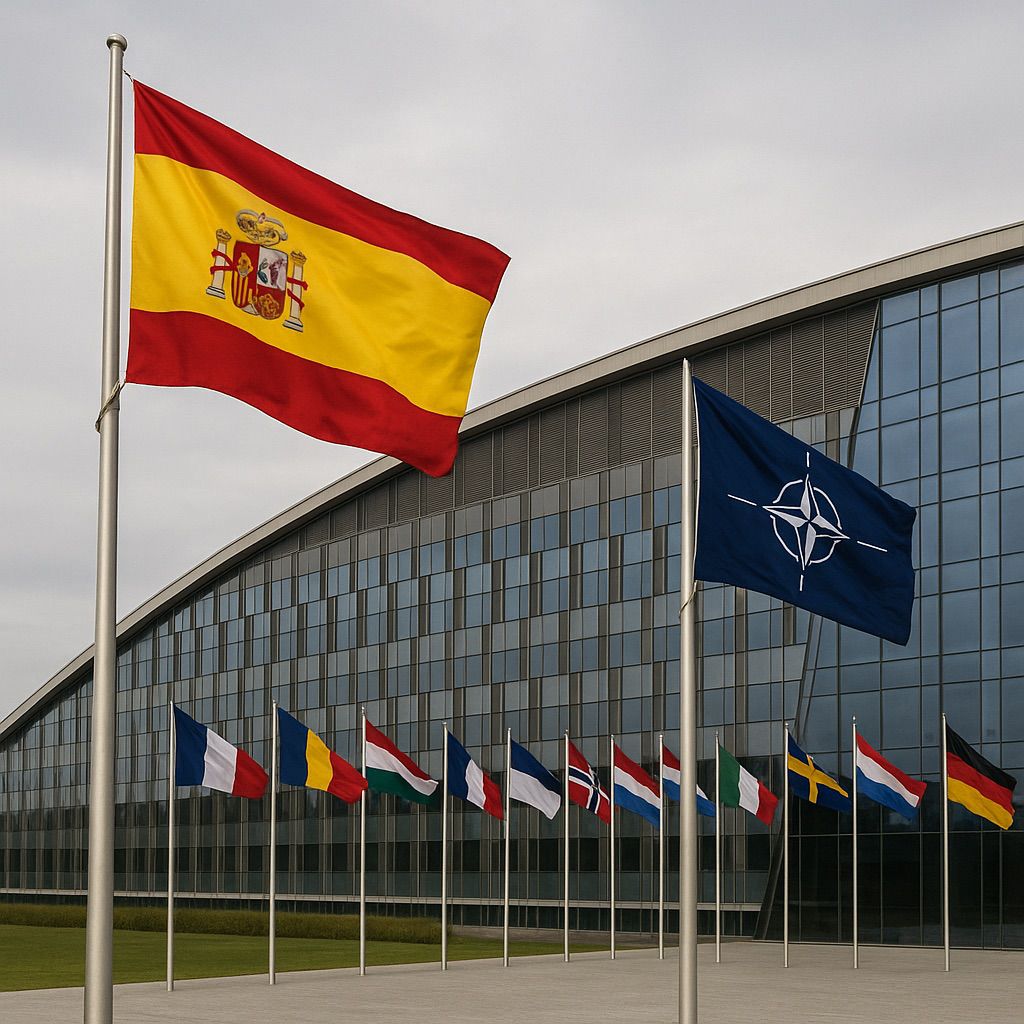
But on May 30, 1982, what mattered most was what the moment represented. After decades of isolation, Spain was no longer an outsider. It stood shoulder to shoulder with nations that valued democracy, defense cooperation, and shared responsibility for peace. Inside government buildings, diplomats celebrated quietly as Spain’s flag was raised alongside those of other NATO members. In military academies, officers studied new protocols and prepared for integration with allied forces. In households across the country, citizens debated what this would mean for their sons, their taxes, and their country’s future.

The path forward wasn’t smooth. NATO membership continued to spark passionate political arguments in Spain, culminating in the 1986 referendum in which the public narrowly voted to remain in the alliance under specific conditions. The decision, though close, confirmed that Spain viewed its future as part of Europe, not apart from it. Over the next decades, Spain would modernize its armed forces, participate in NATO missions, and eventually join the European Union in 1986. Each step reinforced the geopolitical shift that had begun the day Spain entered NATO.

The country found itself increasingly involved in missions that reflected evolving global challenges: peacekeeping in the Balkans, humanitarian operations, counterterrorism efforts, and cooperative defense planning. These engagements helped redefine Spain’s military identity, shifting from a defensive posture rooted in dictatorship to a professional, modern, internationally integrated force.

Spain’s NATO membership also helped reforge its diplomatic relationships. Ties with Portugal strengthened. Relations with France deepened. Cooperation with the United Kingdom and Germany expanded. The partnership with the United States, already strong due to existing military bases, took on new dimensions of joint training, intelligence sharing, and strategic planning. Spain became not a passive participant but an active contributor to collective defense.

Looking back, it’s remarkable how much of Spain’s modern identity can be traced to that pivotal moment in 1982. NATO membership accelerated Spain’s political stabilization after the transition to democracy. It provided external reassurance against instability. It showcased Spain’s commitment to international cooperation. And it offered a framework through which the country could reshape its role in Europe and the Atlantic world.

For a nation emerging from decades of authoritarian rule, joining NATO was not merely a defensive decision. It was a declaration: Spain chose democracy. Spain chose partnership. Spain chose the future.

Today, Spain remains a committed NATO member, contributing to alliance missions, hosting critical infrastructure, and participating in joint operations worldwide. The concerns of 1982 have not vanished, but they have evolved. Spaniards now debate global security, cyber defense, European strategic autonomy, and NATO’s future role—conversations unimaginable during Franco’s era.

When Spain joined NATO, it stepped out of the shadow of isolation and into the bright, complicated arena of international responsibility. It marked the beginning of a new chapter—one defined not by fear or inwardness, but by connection, cooperation, and a willingness to stand with democratic allies in defending shared values.

On that day in 1982, when Spain’s flag rose among the banners of democracies committed to collective defense, a nation that had endured suppression, transition, and uncertainty finally took its place in the world—not as an observer, but as a partner.

It was more than a signature.
It was a transformation.

Related Posts

How the BBC’s First Regular TV Service Transformed Home Life Forever

Elias Rowen

When the British Broadcasting Corporation officially launched the world’s first regular public television service on November 2, 1936, most people had no idea they were standing at the edge of a technological revolution. At the time, television wasn’t yet a household word. It sounded futuristic, almost whimsical—like something written into a science-fiction novel or imagined in the electric dreams of inventors tinkering in cluttered workshops. Radios filled homes with sound, newspapers delivered the news, and cinema provided the moving pictures. The idea that people would someday gather around a glowing box in their living room to watch live broadcasts felt, to many, closer to fantasy than reality.

But in a small studio in Alexandra Palace, perched on a hill overlooking London, a new age quietly switched on.

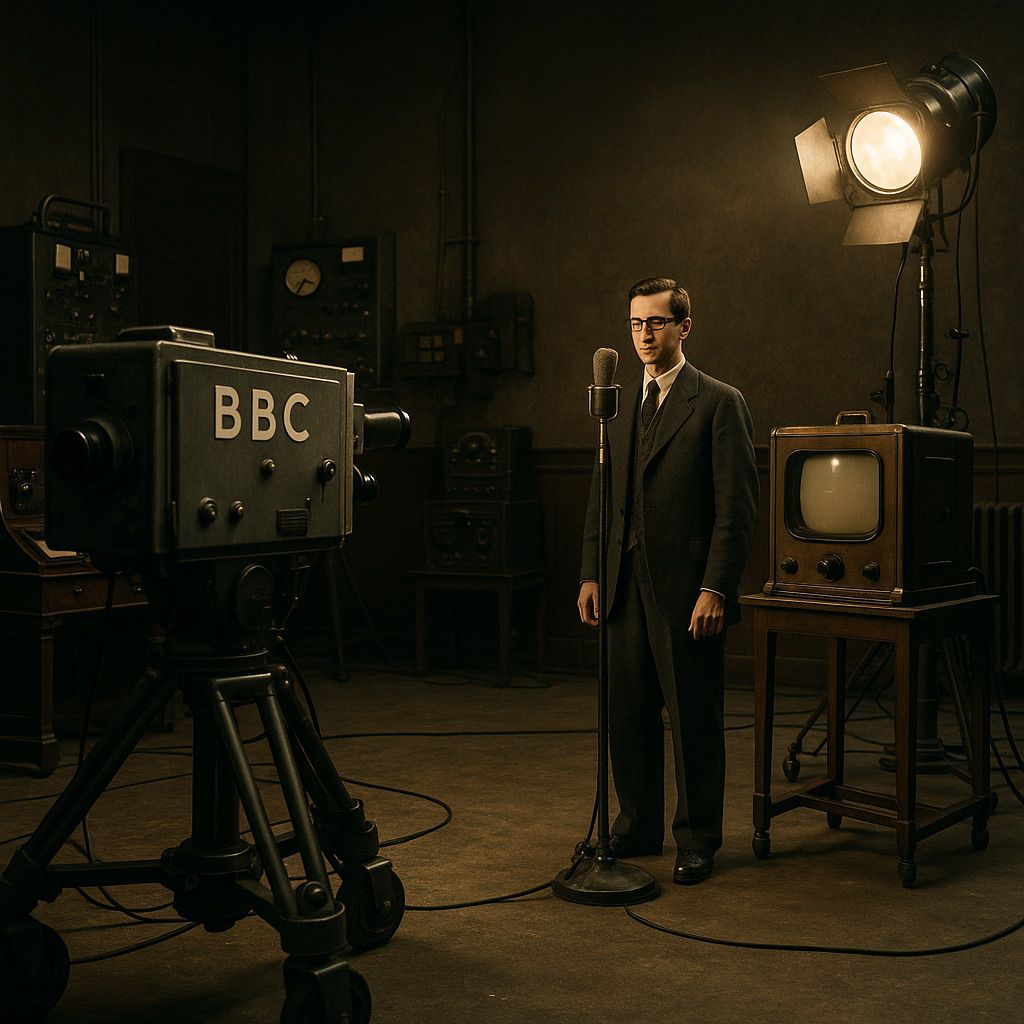
The BBC’s regular television service began humbly: no fanfare, no fireworks, no global countdown. Just engineers adjusting knobs, presenters trying not to blink too much under blinding lamps, and cameras the size of refrigerators wheezing as they warmed up. It wasn’t glamorous. It wasn’t polished. But like the first faint spark before a roaring fire, it held the unmistakable promise of something unstoppable.

For months leading up to the launch, the BBC had been experimenting with two competing technologies: the mechanically based Baird system and the fully electronic Marconi-EMI system. Engineers debated fiercely. Which one would define the future? Which one could deliver clearer, smoother images? Which one could withstand the scrutiny of a public that had never seen televised faces before? When the decision finally fell in favor of the Marconi-EMI system, the future of broadcasting changed forever. And on that November morning, as the familiar BBC chimes sounded, viewers with the extremely rare and expensive television sets tuned in to witness history: the start of scheduled, ongoing television programming available to the general public.

For most Britons, the event went unnoticed. In fact, fewer than 400 television sets existed at the time, nearly all concentrated around London. Those who owned one had either deep pockets or a deep fascination with cutting-edge technology. But those who tuned in found something mesmerizing: moving images entering their home not from a theater, not from a newsreel, but from a live broadcast produced just miles away. It must have felt like witnessing a kind of magic—fragile, flickering magic, but magic nonetheless.

Inside the Alexandra Palace studio, the atmosphere was a mix of nerves and quiet triumph. The cameras were monstrous, hot, and unforgiving. Presenters had to stand absolutely still, because any movement beyond a slow turn would produce blurs. The lights burned so brightly that performers sometimes fainted. Everything was experimental, uncertain, improvised on the fly. Yet there was a palpable electricity in the air—a sense that something important was happening, even if no one yet understood how important.

The very first broadcasts were modest. Announcers introduced the programs with crisp BBC diction. Variety acts performed brief songs or comedy routines. Newsreaders did their best to look natural while staring intensely into the camera lens. There were costume dramas, cooking demonstrations, small orchestras, and even short educational segments. Some productions barely lasted ten minutes. Others went off the rails in ways both charming and disastrous. Early television felt like theater squeezed into a box, unsure of its boundaries but eager to try everything.

And people watched. Not many at first, but enough to spark the curiosity of their neighbors, friends, and even passersby who glimpsed the strange blue glow through a window. Soon, television sets were placed in shop displays so crowds could gather outside and watch together—men in hats leaning over each other, women clutching shopping bags, children squeezing between grown-ups to catch a glimpse of the moving pictures. The sight of strangers standing in the cold to watch a small, flickering screen became a symbol of public fascination, the beginning of a social and cultural shift that the world could not yet comprehend.

But the BBC television service faced enormous challenges. The technology was expensive. The cameras were so bulky they could barely be moved. The studios were constantly overheating. Broadcast hours were short. And no one could predict whether the public would ever widely adopt this new invention. Yet the BBC pressed on, driven by the belief that television held tremendous potential—not just as a novelty, but as a platform for storytelling, education, journalism, and entertainment that could reach millions.

Then came World War II.

In 1939, just as television was beginning to find its footing, the BBC made the difficult decision to suspend television broadcasting. Engineers feared that the signals could be used by German bombers as navigational beacons. The screens went dark. Alexandra Palace fell silent. It was as if television had vanished before it could take root. And for years, Britons wondered if the experiment would return—or if television had been a brief technological curiosity swept away by global conflict.

But in 1946, when peace returned, the BBC switched the television service back on. It was symbolic—a signal that the world was ready to rebuild, reconnect, and reimagine daily life. And this time, Britain was ready. Television sets began appearing in more homes. Programming expanded. Sports events, royal ceremonies, dramatic productions, and news broadcasts filled the schedule. Families formed nightly rituals around the glowing screen. Television was no longer a luxury—it was becoming part of the fabric of life.

Yet even then, few fully understood how deeply television would shape the decades to come. It would become a witness to coronations, wars, scientific breakthroughs, cultural shifts, generational debates, and global tragedies. It would amplify voices, bridge distances, and create shared experiences unlike anything humanity had known. It would influence politics, fashion, entertainment, advertising, education, and the way people understood the world. It would become a mirror and a storyteller, a window and a stage, a source of comfort and information.

And all of it began with that first flicker of the BBC television service in 1936.

Looking back now, it’s easy to romanticize the moment. But the beauty of that beginning lies in its simplicity: a handful of engineers, a few brave performers, and a glowing dot on a tiny screen that captured the imagination of those lucky enough to see it. No one knew television would change the world. But that’s the way revolutions often begin—not with noise, but with quiet persistence, curiosity, and the courage to try something new.

When the BBC launched the world’s first regular TV service, it didn’t just introduce a new technology. It introduced a new way of living, of seeing, of connecting. It turned the home into a stage and the world into an audience. It laid the groundwork for a media landscape that would eventually span continents, satellites, cable networks, streaming platforms, and digital universes.

Television did not merely enter homes—it became a part of them.

And the world would never be the same again.

Related Posts