Latest Articles

Gabriel Garcia Marquez: The Haunting of Reality

Penelope

I’ve spent countless hours immersed in the magical world of Gabriel Garcia Marquez, but it’s only recently that I’ve started to unravel why his writing holds such a strange and intimate grip on me.

It began with “One Hundred Years of Solitude,” which my literature professor assigned for our final semester. I remember being swept up by the Buendia family’s cyclical tale of love, loss, and madness – it was like nothing I’d ever read before. But as I delved deeper into Marquez’s work, I started to notice a certain… unease. It wasn’t just the fantastical elements or the vivid descriptions that captivated me; it was the way his writing seemed to hover between reality and myth, between what’s known and what’s unknown.

I’ve always been fascinated by how Marquez weaves together different narrative threads – folklore, history, family secrets – into a tapestry that’s both specific to Colombia and universally relatable. But there’s something more to it, something that resonates with me on a deeper level. Maybe it’s the way he blurs the lines between truth and fiction, making it impossible for me (or anyone, really) to distinguish what’s real from what’s imagined.

I think about my own experiences growing up in a family where stories were currency – my grandmother would spin tales of our ancestors, embellishing and exaggerating as she went along. I’d sit at her feet, entranced by the way words could conjure entire worlds into existence. Marquez’s writing feels like an extension of those childhood moments, only more complex and layered.

But what really draws me to his work is the sense of disorientation it creates within me. As I read through his novels and short stories, I feel like I’m navigating a labyrinth with no clear exit – every twist and turn leads me deeper into the mystery of human experience. It’s uncomfortable, but in a good way; it’s like being forced to confront my own biases and assumptions about reality.

I’ve tried to pinpoint why Marquez’s writing feels so uniquely disorienting, and I think part of it has to do with his use of time and memory. He manipulates the fabric of chronology, jumping forward and backward through decades in a single sentence or paragraph. It’s dizzying at first, but eventually, it becomes this strange sort of comfort – like being dropped into a world where the past, present, and future coexist in a perpetual state of flux.

For me, Marquez’s work is less about escaping reality than it is about confronting its complexities head-on. His writing is an acknowledgment that truth is messy, fragmented, and often unknowable. It’s as if he’s saying, “Look, I’m not going to give you neat answers or straightforward explanations – instead, let’s get lost together in the murkiness of human experience.”

As I continue to explore Marquez’s oeuvre, I find myself returning to this idea: that his writing is less about providing answers than it is about asking questions. Questions about identity, history, love, and the nature of reality itself. And maybe that’s why his work holds such a strange and intimate grip on me – because in the end, it’s not just about understanding Marquez himself; it’s about understanding myself, and the world I inhabit.

But even with this newfound appreciation for Marquez’s writing, I still feel like I’m standing at the edge of something vast and unknown. It’s a feeling that’s both exhilarating and terrifying – like being on the cusp of discovering secrets that have been hidden in plain sight all along. And maybe that’s where Marquez’s work will continue to lead me: into the depths of my own uncertainty, and the labyrinthine complexities of human experience.

As I wander through the pages of Marquez’s novels, I find myself drawn to the way he inhabits multiple perspectives at once. He writes from the vantage point of a narrator who is both omniscient and trapped within the narrative itself. It’s as if he’s saying, “I know more than you do, but my own limitations are part of the story too.” This blurring of boundaries between self and other, observer and participant, resonates deeply with me.

In my own writing, I’ve always struggled to find a comfortable distance from my subject matter. As a writer, I want to be able to observe the world around me without being consumed by it. But Marquez’s work shows me that this dichotomy is false – that we are all simultaneously observers and participants in our own lives. We see the world through our own unique lens, but that lens is always already influenced by our experiences, biases, and assumptions.

I think about my grandmother’s stories again, how she’d weave together fact and fiction with such ease. It was as if she knew that the truth itself was a fluid concept, subject to interpretation and revision at every turn. Marquez’s writing reminds me of those moments, where the lines between reality and myth blur into something more complex – and ultimately, more human.

One of my favorite examples of this is in “Love in the Time of Cholera.” The way Marquez describes Florentino Ariza’s unrequited love for Fermina Daza is both beautiful and heartbreaking. But what really stands out to me is how he subverts our expectations of traditional romance – instead of a tidy, happily-ever-after ending, we get something far more nuanced, something that acknowledges the complexities of human desire.

As I read through Marquez’s work, I start to notice that this blurring of boundaries between self and other, observer and participant, is not just limited to his narrative techniques. It’s also reflected in his portrayal of characters – each one a multifaceted, contradictory entity that defies easy categorization. There’s the aging General Buendia, with his madcap schemes and tragic fate; or the enigmatic Amaranta Úrsula, whose secrets are slowly revealed over the course of her lifetime.

It’s this refusal to simplify, to reduce human experience to neat little packages or tidy moral lessons, that I think truly sets Marquez apart. His writing is an acknowledgment that we are all complex, messy, contradictory beings – and that it’s precisely this messiness that makes us so compellingly human.

As I delve deeper into Marquez’s world, I find myself becoming increasingly fascinated with his use of language itself. The way he employs words to conjure entire worlds into existence is nothing short of magical. His writing is like a tapestry woven from threads of magic realism – it’s as if he’s taking the mundane and elevating it to an almost mythical status.

I think about my own writing process, how I often get stuck in the weeds of language, searching for just the right word or phrase to convey a particular feeling or idea. Marquez’s work shows me that this obsession with language is not only valid but also necessary – that the way we choose to describe the world around us shapes our very perception of reality.

It’s almost as if Marquez is saying, “Language is not just a tool for conveying meaning; it’s an instrument for shaping our understanding of the world.” This realization has me reevaluating my own relationship with language, how I use words to navigate and make sense of the world around me. It’s a humbling experience, acknowledging that the way I speak and write can both reveal and conceal aspects of myself.

As I continue to explore Marquez’s work, I find myself becoming increasingly aware of the ways in which his writing reflects the complexities of human culture. His portrayal of colonialism, power dynamics, and social hierarchies is both poignant and unsettling – it’s as if he’s holding up a mirror to our collective past, forcing us to confront the darker aspects of our own history.

This attention to cultural context reminds me of my own experiences growing up in a diverse community. I remember the way stories about our ancestors would often be intertwined with historical events, mythology, and folklore – it was as if our family’s oral traditions were woven from the very fabric of our collective experience. Marquez’s writing feels like an extension of those storytelling traditions, only more nuanced and multifaceted.

In many ways, his work is a testament to the power of storytelling as a way to make sense of the world around us. It’s a reminder that our individual experiences are always linked to the broader cultural context in which we live – that the stories we tell ourselves about ourselves and the world are often reflections of our own biases, assumptions, and desires.

As I wander through the pages of Marquez’s novels, I’m struck by the way he inhabits multiple perspectives at once. He writes from the vantage point of a narrator who is both omniscient and trapped within the narrative itself – it’s as if he’s saying, “I know more than you do, but my own limitations are part of the story too.” This blurring of boundaries between self and other, observer and participant, resonates deeply with me.

In many ways, Marquez’s writing feels like an invitation to participate in a grand, collective storytelling tradition – one that acknowledges the complexities and messiness of human experience. It’s a reminder that our individual stories are always linked to the broader cultural context in which we live, and that the way we choose to tell those stories shapes our very understanding of reality itself.

As I close this essay, I’m left with more questions than answers – about Marquez’s work, about my own writing process, and about the complexities of human experience. But it’s precisely this uncertainty that feels so thrillingly alive, like being on the cusp of discovering secrets that have been hidden in plain sight all along.

The more I immerse myself in Marquez’s world, the more I’m struck by the way he defies easy categorization as a writer. Is he a magician, conjuring entire worlds into existence with his words? A historian, weaving together fragments of colonialism and power dynamics to create a rich tapestry of human experience? Or is he something more complex, a masterful weaver of narratives that blur the lines between reality and myth?

As I ponder this question, I find myself thinking about my own experiences as a writer. How often do I get caught up in trying to pin down a particular feeling or idea, only to realize that it’s slipping through my fingers like sand? Marquez’s work shows me that sometimes, the best writing is the kind that acknowledges its own limitations – that it’s okay to leave some things unsaid, to let the reader fill in the gaps with their own imagination.

This idea resonates deeply with me, especially when I think about my own struggles as a writer. There have been times when I’ve felt overwhelmed by the sheer complexity of human experience – like trying to capture the essence of love or loss or identity within the confines of a single sentence. Marquez’s work reminds me that it’s okay to be imperfect, to leave some things unspoken and let the reader fill in the blanks.

But what really draws me to Marquez is his willingness to explore the darker corners of human experience. His portrayal of colonialism, power dynamics, and social hierarchies is both poignant and unsettling – it’s as if he’s holding up a mirror to our collective past, forcing us to confront the darker aspects of our own history. This attention to cultural context reminds me of my own experiences growing up in a diverse community, where stories about our ancestors would often be intertwined with historical events, mythology, and folklore.

As I continue to explore Marquez’s work, I’m struck by the way he uses language to create a sense of intimacy with his readers. His writing is like a whisper, drawing us into the innermost recesses of his characters’ minds. It’s as if he’s saying, “I’ll tell you secrets, but only if you’re willing to listen closely – and even then, I won’t promise that it will make sense.”

This willingness to be vulnerable, to share the messy and complicated aspects of human experience, is something that resonates deeply with me. As a writer, I’ve always struggled with the idea of being honest about my own experiences – of sharing the parts of myself that feel raw and unedited. Marquez’s work shows me that this vulnerability is not only okay but also necessary – that it’s through our imperfections and contradictions that we find true connection with others.

As I close this essay, I’m left with more questions than answers – about Marquez’s work, about my own writing process, and about the complexities of human experience. But it’s precisely this uncertainty that feels so thrillingly alive, like being on the cusp of discovering secrets that have been hidden in plain sight all along.
Related Posts

Amy: The Fire-Bearing Demon of Knowledge Who Reveals the Secrets of Stars, Spirits, and Hidden Power

Dave

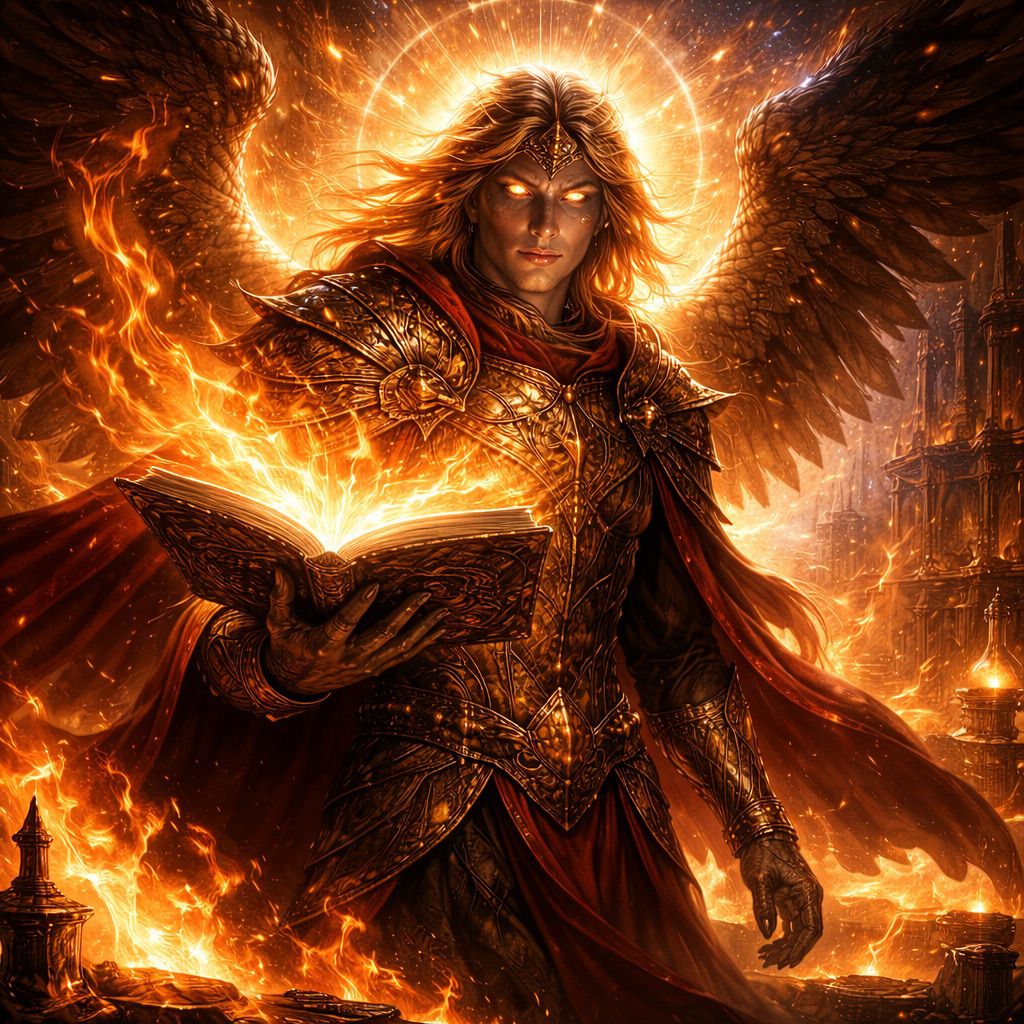
In demonology, Amy is a figure who rarely draws attention through terror or grotesque spectacle, yet his presence carries a gravity that lingers long after his name is spoken. Listed in the Ars Goetia as a President of Hell, Amy governs knowledge that burns rather than dazzles, illuminates rather than comforts. He is described as appearing first as a flame, a living fire that speaks, before assuming human form. This origin matters. Amy is not knowledge discovered accidentally. He is knowledge that must be endured.

Amy’s fire is not the wild destruction associated with rage or punishment. It is controlled, deliberate, and revealing. Fire, in this context, is the oldest tool of human understanding. It lights darkness, refines raw material, and exposes what cannot survive heat. Amy embodies this principle. He teaches liberal sciences, astrology, and the understanding of spirits, but his lessons are never neutral. What he reveals changes the one who learns it.

Unlike demons associated with deception or manipulation, Amy is aligned with disclosure. He shows how the universe is structured beneath appearances, how celestial movements influence human behavior, and how hidden forces interact with visible systems. This makes him attractive to scholars, seekers, and those dissatisfied with surface-level explanations. Amy does not offer comfort. He offers clarity.

The fact that Amy appears first as fire is deeply symbolic. Fire is knowledge before it is form. It is potential, danger, and illumination all at once. To encounter Amy in this state is to encounter truth without narrative. Only after command does he take on a human shape, suggesting that understanding must be structured before it can be used.

Amy’s rank as a President places him in a role of administration rather than domination. He governs processes of learning and revelation. He does not rule through force. He rules through insight. This distinction separates Amy from demons who impose outcomes directly. Amy equips others to act, for better or worse.

Astrology plays a significant role in Amy’s lore. But this is not astrology as entertainment or vague prediction. Under Amy, astrology is pattern recognition. It is the study of cycles, influence, and timing. Amy teaches how celestial movements reflect internal states and social shifts. He does not claim the stars control destiny absolutely. He teaches how they condition possibility.

This conditioning is where Amy becomes unsettling. Once patterns are understood, choice feels narrower. Knowledge replaces hope with probability. Amy does not remove free will, but he exposes how constrained it often is. This is why his fire is described as both enlightening and dangerous.

Amy also teaches the liberal sciences, a term that historically encompassed grammar, logic, rhetoric, astronomy, and philosophy. These are disciplines of structure and interpretation. Amy’s influence is felt wherever systems of meaning are constructed. He does not invent systems; he reveals how they function and where they fail.

In psychological terms, Amy represents the moment when curiosity overrides comfort. He is the demon of the question that cannot be unasked. Once something is understood, innocence cannot be recovered. Amy’s lessons are irreversible not because they are evil, but because they are accurate.

Unlike demons associated with cruelty, Amy is often described as calm and composed. There is no urgency in his presence. Knowledge does not rush. It waits. Amy’s fire burns steadily, not explosively. This patience makes him more dangerous than volatile spirits. His influence accumulates quietly.

Amy’s association with hidden treasures is often misunderstood. These treasures are not always material. They are buried insights, suppressed truths, and overlooked connections. Amy reveals where they lie, but he does not retrieve them for you. Discovery still requires effort. The cost is paid in responsibility.

In modern symbolic interpretation, Amy feels almost contemporary. He resembles the force behind data analysis, systemic thinking, and predictive modeling. He is the demon of understanding how systems work well enough to anticipate outcomes. Like modern knowledge systems, Amy does not care whether outcomes are kind.

Fire as Amy’s core symbol also suggests purification through loss. What survives Amy’s knowledge is stronger, but something is always burned away. Illusions, false certainty, and comforting myths do not endure. Amy leaves behind a clearer, harsher landscape.

Amy’s human form, when described, is not monstrous. This is important. He does not need terror to command attention. His authority comes from what he knows. In a world that increasingly values information over morality, Amy feels less like a demon and more like a mirror.

Those who seek Amy are often not reckless. They are dissatisfied with partial truths. They want the mechanism, not the metaphor. Amy gives them that, but he does not guide how it will be used. Knowledge, under Amy, is not inherently redemptive.

What makes Amy enduring in demonology is that he represents a timeless human impulse: the desire to understand reality even when that understanding costs comfort. Every era that values knowledge above wisdom walks Amy’s territory, whether it names him or not.

Amy is not the enemy of truth. He is its embodiment without mercy. He does not lie. He does not soften. He reveals and steps aside.

To encounter Amy symbolically is to accept that illumination always casts shadows. The fire that lights the way also shows what cannot be unseen.

Related Posts

Hypatia: How Do You Keep Your Head When Everyone Else Wants to Take It Off?

Penelope

I keep coming back to Hypatia, the 4th-century mathematician, philosopher, and astronomer. Maybe it’s because she lived during a time when ideas were literally being dissected and devoured – both intellectually and physically. I find myself stuck on the paradox of her existence: a woman of such profound learning in an era where women were largely excluded from education.

As I read about Hypatia, I’m struck by how much she embodied a sense of independence that feels almost unattainable to me today. She was born into a family of mathematicians and philosophers, but she wasn’t simply following in their footsteps; she was forging her own path. Her teachings on mathematics, astronomy, and philosophy attracted students from all over the Mediterranean, including some who would go on to become prominent figures in their own right.

I wonder what it must have been like for Hypatia to be a woman among men – intellectually superior, no less – and yet still subject to societal constraints. She was known to teach in public spaces, often standing outside the city’s leading library, where she would engage students and citizens alike in discussions on topics ranging from Plato to Euclid. Her presence must have been electrifying, a spark of knowledge and insight that seemed to transcend her gender.

But I also know that Hypatia lived during a time when intellectual curiosity was often at odds with the rigid social hierarchies of the day. She was a pagan in a society increasingly dominated by Christianity, which would eventually lead to her downfall. The more I learn about her life and death – brutally murdered by a mob of fanatics – the more I’m drawn into the complex web of power dynamics that surrounded her.

As a writer, I’ve always been fascinated by the tension between the intellectual and the personal. Hypatia’s story raises questions about how we separate our public selves from our private lives, especially when those selves are deeply intertwined with our passions and pursuits. I think about my own experiences as a young woman in academia, where the pressure to conform to certain expectations can be suffocating.

Sometimes I feel like I’m caught between two worlds: the one I’ve created for myself through writing – a space of intellectual freedom and exploration – and the external world, which often seems to value conformity over creativity. Hypatia’s life is a powerful reminder that these tensions are nothing new; they’re just refracted through the prism of time.

I keep coming back to the idea of Hypatia as a teacher, a facilitator of learning who seemed to understand the power of dialogue and debate. Her students came from all walks of life, and she inspired them with her wisdom and wit. I wonder what it would be like to have had such a mentor in my own life – someone who saw the potential in me and encouraged me to explore the depths of my curiosity.

As I write about Hypatia, I’m drawn into the complexities of her story – the intellectual daring, the personal vulnerability, the tragic fate. She’s a figure who embodies both the beauty and the brutality of human existence, a reminder that our lives are always intersecting with larger historical forces that shape us in ways we may not even realize.

I still don’t fully understand what draws me to Hypatia’s story – maybe it’s the sense of longing that lingers between the lines. Is it the intellectual freedom she embodies? The tragedy of her untimely death? Or is it something more intangible, a resonance that speaks to some deeper part of myself?

I don’t know, but I do know that Hypatia remains stuck in my mind like a puzzle piece that won’t quite fit into place. She’s a reminder that the pursuit of knowledge and understanding is always messy, complicated, and deeply human – and that sometimes it takes courage to confront the contradictions and paradoxes that lie at the heart of our existence.

As I continue to grapple with Hypatia’s story, I find myself thinking about the ways in which she navigated the complex web of power dynamics in her time. She was a woman in a patriarchal society, yet she commanded respect and authority as a teacher and scholar. Her relationships with men were undoubtedly complicated – some saw her as a rival, while others sought to learn from her. And yet, she seemed to maintain a level of independence and agency that’s both remarkable and terrifying.

I think about my own experiences in academia, where women are often expected to be nurturing and supportive, rather than assertive or confrontational. I’ve seen colleagues who have been marginalized or belittled for speaking out against injustice, and I know that I’ve benefited from the privilege of being a “nice” woman – someone who is seen as likable and non-threatening.

But what if Hypatia had been nicer? Would she have been spared the violence that ultimately took her life? Or would she have still found herself at odds with the societal norms that governed her world? These are questions I don’t know how to answer, but they haunt me nonetheless.

As I write about Hypatia, I’m struck by the ways in which she embodied a sense of intellectual courage – a willingness to challenge prevailing ideas and push boundaries. She was not afraid to disagree with others or to present alternative perspectives, even when it meant going against the grain. And yet, this same courage ultimately led to her downfall.

I wonder if there’s a lesson here for me, as a writer and as a woman in academia. Do I have the courage to speak out against injustice, even when it means taking risks or facing opposition? Or do I retreat into safer, more comfortable spaces – those places where I can be seen as likable and non-threatening?

The more I think about Hypatia’s story, the more I realize that her legacy is not just about intellectual curiosity or personal bravery. It’s also about the ways in which we navigate power dynamics, both within ourselves and within our communities. Can we find a way to balance our desire for recognition and respect with our commitment to challenging unjust systems? Or will we forever be caught between the desire for acceptance and the need to speak truth to power?

I don’t know the answers to these questions, but I do know that Hypatia’s story has left me with more questions than answers. And it’s precisely this uncertainty – this messy, complicated, human experience – that draws me back to her again and again.

As I continue to explore Hypatia’s life and legacy, I find myself thinking about the ways in which she embodied a sense of intellectual humility. Despite her incredible achievements as a mathematician, philosopher, and astronomer, she was not afraid to acknowledge the limitations of her own knowledge or to seek out new ideas and perspectives.

This quality of humility is something that I’ve always struggled with, particularly as a writer who’s prone to overthinking and analysis paralysis. There are times when I feel like I’m drowning in my own doubts and uncertainties, unable to make a decision or take action because I’m so afraid of being wrong or incomplete.

Hypatia’s story reminds me that intellectual humility is not about being uncertain or lacking confidence; it’s about recognizing the complexity and nuance of any given issue or problem. It’s about being willing to listen to others, to consider alternative perspectives, and to revise our own ideas based on new information or insights.

As I reflect on my own experiences as a writer, I realize that this quality of intellectual humility is essential for creating meaningful work. When we’re too attached to our own ideas or perspectives, we risk becoming isolated and stagnant, unable to engage with the world around us in any meaningful way.

But when we approach writing (and life) with a sense of humility, we open ourselves up to new possibilities and experiences. We become more receptive to feedback and criticism, more willing to learn from others and adapt our ideas based on their insights.

Hypatia’s legacy is not just about intellectual curiosity or personal bravery; it’s also about the importance of staying open-minded and adaptable in the face of uncertainty. It’s a reminder that writing (and living) is always a process, always a journey of discovery and growth.

As I continue to grapple with Hypatia’s story, I find myself wondering what she would have made of the modern world – this strange, messy, digital landscape that’s both empowering and overwhelming in equal measure. Would she be astonished by the sheer volume of information available at our fingertips? Or would she see it as a reflection of humanity’s enduring fascination with knowledge and understanding?

I imagine her standing outside the city library, surrounded by students and citizens alike, engaging in lively debates about the implications of artificial intelligence or the ethics of social media. I picture her as a pioneer in the digital humanities, using technology to explore new ways of thinking about language, culture, and society.

Or perhaps she would be more skeptical, seeing the internet as just another manifestation of humanity’s capacity for both good and evil. Maybe she would argue that our addiction to screens and social media is a form of intellectual laziness, a refusal to engage with the world around us in any meaningful way.

Whatever her perspective might have been, I’m convinced that Hypatia would have approached this new landscape with the same sense of curiosity and intellectual courage that defined her life’s work. She would have seen it as an opportunity for growth and discovery, rather than a source of fear or anxiety.

As I write these words, I feel a sense of connection to Hypatia that goes beyond mere historical interest. It’s as if her story is speaking directly to me, reminding me of the importance of staying open-minded and adaptable in the face of uncertainty.

I don’t know what the future holds, but I do know that I’ll be continuing to explore Hypatia’s legacy – and my own place within it – for a long time to come.

As I delve deeper into Hypatia’s story, I’m struck by the way she navigated the complexities of her time. She was a woman in a patriarchal society, yet she commanded respect and authority as a teacher and scholar. Her relationships with men were undoubtedly complicated – some saw her as a rival, while others sought to learn from her.

I think about my own experiences as a young woman in academia, where the pressure to conform to certain expectations can be suffocating. I’ve seen colleagues who have been marginalized or belittled for speaking out against injustice, and I know that I’ve benefited from the privilege of being a “nice” woman – someone who is seen as likable and non-threatening.

But what if Hypatia had been nicer? Would she have been spared the violence that ultimately took her life? Or would she have still found herself at odds with the societal norms that governed her world? These are questions I don’t know how to answer, but they haunt me nonetheless.

As I write about Hypatia, I’m drawn into the complexities of her story – the intellectual daring, the personal vulnerability, the tragic fate. She’s a figure who embodies both the beauty and the brutality of human existence, a reminder that our lives are always intersecting with larger historical forces that shape us in ways we may not even realize.

I wonder if there’s a lesson here for me, as a writer and as a woman in academia. Do I have the courage to speak out against injustice, even when it means taking risks or facing opposition? Or do I retreat into safer, more comfortable spaces – those places where I can be seen as likable and non-threatening?

The more I think about Hypatia’s story, the more I realize that her legacy is not just about intellectual curiosity or personal bravery. It’s also about the ways in which we navigate power dynamics, both within ourselves and within our communities. Can we find a way to balance our desire for recognition and respect with our commitment to challenging unjust systems? Or will we forever be caught between the desire for acceptance and the need to speak truth to power?

I don’t know the answers to these questions, but I do know that Hypatia’s story has left me with more questions than answers. And it’s precisely this uncertainty – this messy, complicated, human experience – that draws me back to her again and again.

As I continue to explore Hypatia’s life and legacy, I find myself thinking about the ways in which she embodied a sense of intellectual courage – a willingness to challenge prevailing ideas and push boundaries. She was not afraid to disagree with others or to present alternative perspectives, even when it meant going against the grain.

I think about my own experiences as a writer, where I often struggle with self-doubt and fear of criticism. I wonder if Hypatia would have encouraged me to take risks and speak my mind, even in the face of uncertainty and opposition. Or would she have cautioned me to be more cautious, to consider the potential consequences of my words?

I don’t know, but I do know that Hypatia’s legacy is a reminder that intellectual courage is not about being fearless or impervious to criticism. It’s about being willing to take risks, to challenge ourselves and others, and to push beyond our comfort zones.

As I reflect on my own life and writing, I realize that this quality of intellectual courage is essential for creating meaningful work. When we’re too afraid to speak out against injustice or to challenge prevailing ideas, we risk becoming isolated and stagnant, unable to engage with the world around us in any meaningful way.

But when we approach writing (and life) with a sense of courage, we open ourselves up to new possibilities and experiences. We become more receptive to feedback and criticism, more willing to learn from others and adapt our ideas based on their insights.

Hypatia’s legacy is not just about intellectual curiosity or personal bravery; it’s also about the importance of staying open-minded and adaptable in the face of uncertainty. It’s a reminder that writing (and living) is always a process, always a journey of discovery and growth.

As I continue to grapple with Hypatia’s story, I find myself thinking about the ways in which she navigated the complexities of her time. She was a woman in a patriarchal society, yet she commanded respect and authority as a teacher and scholar. Her relationships with men were undoubtedly complicated – some saw her as a rival, while others sought to learn from her.

I think about my own experiences as a young woman in academia, where the pressure to conform to certain expectations can be suffocating. I’ve seen colleagues who have been marginalized or belittled for speaking out against injustice, and I know that I’ve benefited from the privilege of being a “nice” woman – someone who is seen as likable and non-threatening.

But what if Hypatia had been nicer? Would she have been spared the violence that ultimately took her life? Or would she have still found herself at odds with the societal norms that governed her world? These are questions I don’t know how to answer, but they haunt me nonetheless.

Related Posts

Orias: The Shape-Shifting Marquis Who Commands Stars, Status, and Sudden Transformation

Dave

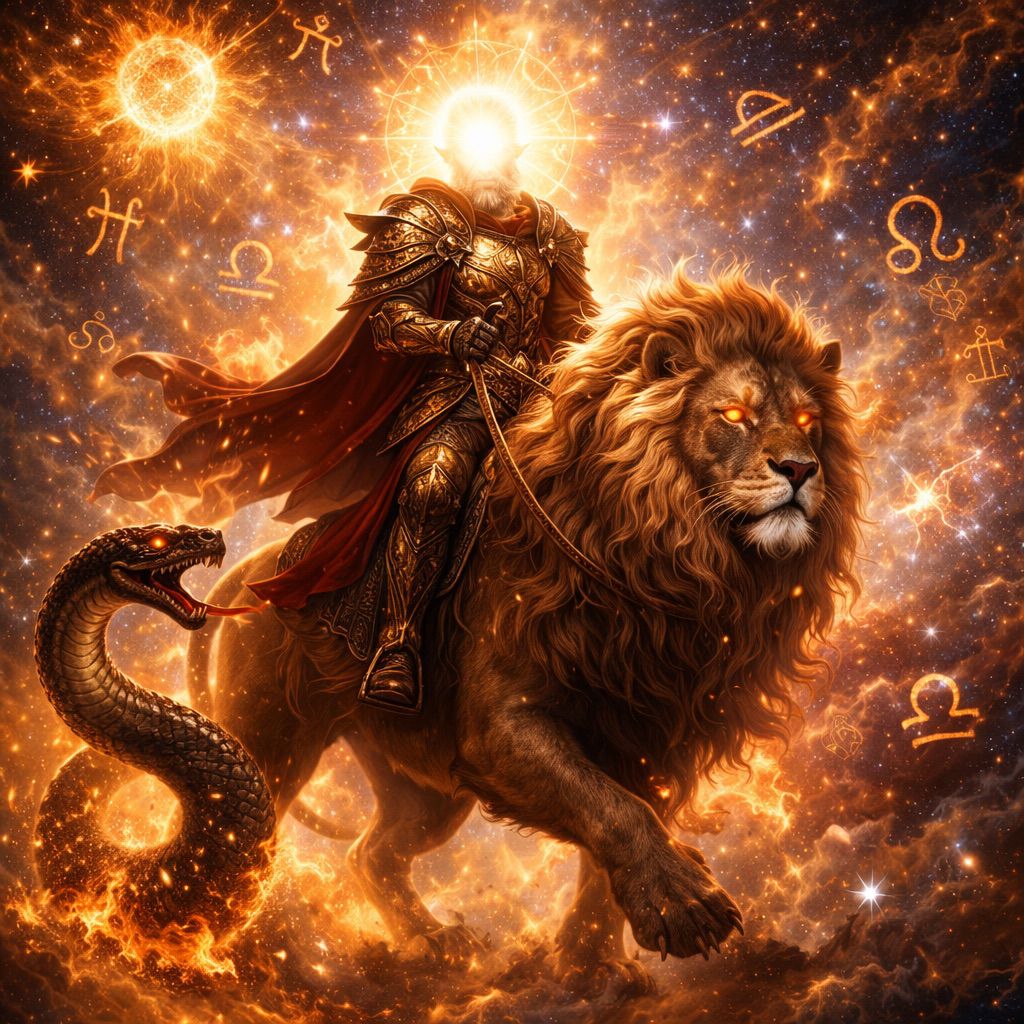
Orias is not a demon of brute force or theatrical menace. He does not roar, threaten, or dominate through fear. Instead, he moves through the margins of power, altering trajectories quietly but decisively. In the Ars Goetia, Orias is named as a Great Marquis of Hell, appearing as a lion riding a powerful horse, with the tail of a serpent. This image is not meant to terrify. It is meant to signal mastery—over identity, over movement, and over the hidden forces that shape reputation and fate.

Orias governs transformation, but not the kind that destroys and rebuilds from rubble. His transformations are social, symbolic, and internal. He teaches the virtues of the stars, grants dignity and favor, alters a person’s form or status, and reveals how celestial influences bend human behavior without announcing themselves. Orias does not push. He redirects. He does not break structures. He adjusts the angles until outcomes change on their own.

The lion form associated with Orias is about authority that is recognized rather than imposed. Lions do not need to prove dominance constantly; their presence is enough. The horse represents movement, status, and momentum—how power travels through systems. The serpent tail introduces a final layer: subtlety, adaptability, and the ability to shed one skin and take on another. Orias is the demon of strategic reinvention.

In occult lore, Orias is associated with astrology, dignity, and transformation of self. He teaches how planetary influences shape temperament, opportunity, and timing. This is not fortune-telling in a simplistic sense. It is pattern recognition. Orias understands that people move differently under different skies, that reputation rises and falls in cycles, and that knowing when to act is often more important than knowing how.

What makes Orias compelling is that he does not promise raw power. He promises positioning. He offers the knowledge of how to stand in the right place when the moment arrives. Those who seek Orias are often not desperate; they are stalled. They sense that something about their identity, their image, or their trajectory is misaligned. Orias teaches how to realign without open conflict.

Orias’s ability to grant dignity and honor is especially telling. Dignity is not strength. It is recognition. It is how others perceive you before you speak. Orias understands that in most systems, perception precedes authority. He alters the lens through which a person is seen, and the world responds accordingly. This is not illusion. It is recalibration.

The serpent tail is crucial here. Serpents are not symbols of chaos in this context; they are symbols of renewal. They shed skins to grow. Orias embodies this process socially and psychologically. He teaches how to discard outdated roles, reputations, and identities without drawing attention. Transformation under Orias is meant to look natural in hindsight.

Astrology under Orias is not mystical escapism. It is timing. It is understanding when systems are receptive to change and when resistance will be strongest. Orias does not override fate; he navigates it. He teaches how to move with cycles rather than against them, which is why his influence often appears effortless.

In modern terms, Orias feels uncannily relevant. Branding, reputation management, career pivots, and social reinvention all echo his domain. He is the demon of the quiet pivot—the person who seems to rise smoothly while others burn out. Orias does not chase attention. He attracts alignment.

Unlike demons associated with deception, Orias does not falsify reality. He reframes it. He teaches how to emphasize certain traits, mute others, and let the environment do the rest. This is not lying. It is curation. And curation, when done well, is invisible.

Psychologically, Orias represents the human ability to adapt identity without losing core selfhood. He is not about becoming someone else entirely. He is about becoming the version of yourself that fits the moment. This can be empowering or corrosive depending on intent, but Orias himself does not judge.

His rank as a Marquis reinforces this. A marquis governs borders and transitions, not capitals. Orias rules the spaces between states: before recognition and after, before opportunity and after. He is most active where movement is possible but direction is unclear.

Orias also teaches the virtues of the stars, which in traditional astrology include traits like discipline, charisma, restraint, and timing. These are not supernatural gifts; they are cultivated behaviors aligned with larger patterns. Orias teaches how to cultivate them deliberately.

What makes Orias dangerous is also what makes him attractive. He does not force accountability. He enables reinvention. Used carelessly, this can hollow out identity. Used strategically, it can rescue someone from stagnation. Orias does not choose which outcome occurs.

In demonology, Orias is not feared like Andras or Haures. He is respected. His power does not announce itself through destruction. It announces itself through results that look inevitable after the fact. Promotions that “just made sense.” Reputation shifts that felt overdue. Opportunities that arrived “at the right time.”

Orias endures because human life is not static. People change roles, statuses, and identities constantly. Some do it clumsily. Others do it with grace. Orias governs the difference.

To invoke Orias symbolically is to accept that who you are seen to be matters as much as who you are. He does not teach deception; he teaches alignment. But alignment requires honesty about ambition.

Orias is the demon of the well-timed step, the well-chosen mask, and the quiet transformation that reshapes a life without ever making noise.

Related Posts

Walt Whitman: Where the Lines Bleed Off the Page and Onto My Skin

Penelope

Walt Whitman’s poetry has been a constant companion throughout my college years, and even now that I’ve graduated, his words still linger in my mind like the echoes of a conversation I’d rather not end. There’s something about his openness, his willingness to explore the complexities of human experience, that resonates with me.

I think what draws me to Whitman is his ambivalence – he embodies both confidence and vulnerability at the same time. In “Song of Myself,” he writes about himself as a poet, a body, a soul, a universe all at once. It’s exhilarating and intimidating in equal measure. I find myself wondering if that’s what it means to be whole: to hold contradictions together without being torn apart by them.

Reading Whitman, I’m struck by how his poetry defies traditional notions of beauty and meaning. He celebrates the mundane – a worker’s calloused hands, a child’s laughter, the taste of grass on the tongue – and yet these moments are transformed into something transcendent. It’s as if he’s telling me that even in the most ordinary experiences lies a depth I’ve never considered before.

But what unsettles me is Whitman’s relationship with his own body. In “Song of Myself,” he describes his genitals as “the testicles tighten’d, the semen fluid” (52). It’s jarring to read those words today, especially when compared to the more sanitized language often used in poetry. I wonder if Whitman was pushing boundaries for its own sake or if he genuinely wanted to reclaim his body from societal constraints.

As someone who writes as a way to process her thoughts and emotions, I’m intrigued by Whitman’s willingness to confront the uncomfortable aspects of himself and others. His poetry is not afraid to be messy; it’s a space where contradictions are explored rather than resolved. It makes me think about my own writing – how often do I shy away from exploring the complexities of my characters’ experiences? How much am I willing to get dirty in pursuit of truth?

When reading Whitman, I’m acutely aware of my own limitations and biases. His poetry challenges me to see beyond my narrow perspective, to consider multiple viewpoints without judgment. It’s a humbling experience, one that makes me question my own assumptions about what it means to be human.

I’ve always been fascinated by the tension between Whitman’s celebration of individuality and his desire for connection with others. In “When Lilacs Last in the Dooryard Bloom’d,” he laments the death of President Lincoln, mourning the loss of a nation’s sense of unity and purpose. It’s a poem that speaks to my own fears about disconnection – how can we find our way back to each other when everything seems to be pulling us apart?

Perhaps it’s Whitman’s ability to hold opposing ideas together that draws me to him most. His poetry is not about finding resolution or answers; instead, it’s an invitation to inhabit the space of uncertainty, to explore the intricate web of contradictions that make up human experience.

As I close this essay (or perhaps just pause in my thoughts), I’m left with more questions than answers. What does it mean to be whole? Can we truly embody both confidence and vulnerability at the same time? And what lies beyond the edges of our individual perspectives, waiting to be discovered? Walt Whitman’s poetry has taught me that these are questions worth asking, and that sometimes the most profound insights come from embracing the complexity of our own uncertainties.

One thing that continues to resonate with me about Whitman is his emphasis on the importance of embodied experience. In “Song of Myself,” he writes about the body as a site of wonder and awe, full of sensations and feelings that are worth exploring. For someone like me who has often felt disconnected from her own body, this is a powerful message.

As I reflect on my own experiences with anxiety and disordered eating, I realize that I’ve often tried to separate myself from my physical self. I’ve written about it before – how I’ve struggled to feel comfortable in my skin, how I’ve felt like an outsider looking in at the world around me. Whitman’s poetry challenges me to rethink this approach, to see my body as a source of strength and beauty rather than something to be controlled or managed.

But what if that’s not possible? What if my body is inherently messy, unpredictable, and imperfect – just like the world itself? I think about all the times I’ve tried to tame myself, to fit into societal norms of beauty and health. And yet, it’s in those moments when I let go of control, when I allow myself to be present with my feelings and sensations, that I feel most alive.

Whitman’s poetry is a reminder that this kind of embodied experience is not just a personal goal, but also a social imperative. He writes about the importance of celebrating the diversity of human experience – all shapes, sizes, ages, abilities, and backgrounds. It’s a vision that feels radical to me, especially in today’s culture where individualism and perfectionism can be so overwhelming.

As I continue to grapple with these ideas, I’m struck by how Whitman’s poetry is not just about himself, but also about the world around him. He writes about the complexities of social justice – racism, poverty, war – and yet he does it in a way that feels both intimate and expansive. It’s as if he’s saying, “Look, this is what I see, this is what I feel, and you should too.”

This is where my own writing gets stuck sometimes – trying to balance the personal with the universal. How do I convey the nuances of my own experiences without losing sight of the broader context? Whitman’s poetry shows me that it’s possible to do both, to write about myself in a way that feels true and authentic while also speaking to the world around us.

I’m left wondering what this might look like for me as a writer – how can I embody this kind of embodied experience, this sense of social responsibility, in my own work? What would happen if I started writing about the body not just as a source of pain or suffering, but also as a site of wonder and awe?

As I delve deeper into Whitman’s poetry, I’m struck by how his words continue to challenge me to think about my own relationship with my body. He writes about the importance of sensation and feeling, of embracing the messiness and unpredictability of human experience. It’s a perspective that feels radical to me, especially in a culture where we’re often encouraged to numb ourselves to our emotions and desires.

I think back to all the times I’ve tried to silence my body, to quiet its whispers and doubts. The anxiety, the self-doubt, the constant quest for perfection – it’s been a never-ending cycle of trying to control what feels uncontrollable. But Whitman’s poetry shows me that this is exactly where the magic happens, where the true depths of human experience reside.

When I read his words about the body as a site of wonder and awe, I feel a sense of longing, of yearning for a way of being that feels more authentic and embodied. It’s not just about self-acceptance or self-love – it’s about embracing the complexity and messiness of human existence.

As I think about my own writing, I’m struck by how often I’ve tried to write around these issues, to avoid confronting the complexities of my own body and experiences. But Whitman’s poetry shows me that this is exactly where the most powerful stories come from – the places of vulnerability, uncertainty, and doubt.

I’m left wondering what it would be like to write a poem about my own body, about its strengths and weaknesses, its desires and fears. What would happen if I wrote about the times I’ve felt disconnected, disordered, or lost? Would I be able to capture the nuances of my own experiences without succumbing to shame or self-doubt?

Whitman’s poetry teaches me that it’s possible to write about these things without judgment, without apology. His words are a reminder that the body is not just a physical entity, but also a source of wisdom and insight. It’s a perspective that feels both liberating and terrifying – what if I were to truly listen to my own body, to honor its needs and desires?

As I continue to explore these ideas, I’m struck by how Whitman’s poetry speaks to the world around us, to the societal pressures and expectations that shape our experiences. He writes about the importance of community and connection, of finding common ground with others despite our differences.

It’s a message that feels urgent in today’s culture, where division and polarization seem to reign supreme. I think about all the times I’ve felt disconnected from others, like an outsider looking in at the world around me. Whitman’s poetry shows me that this is exactly what it means to be human – we’re messy, complicated, contradictory beings, connected to each other in ways both visible and invisible.

As I close this reflection (or perhaps just pause in my thoughts), I’m left with more questions than answers. What would happen if I were to truly embody Whitman’s vision of embodied experience? How might it change the way I write about myself, about others, and about the world around me? And what lies beyond the edges of our individual perspectives, waiting to be discovered?

The more I delve into Whitman’s poetry, the more I’m struck by its relevance to my own experiences as a woman in today’s society. His emphasis on embodied experience, on celebrating the diversity of human form and function, feels like a radical act of resistance against the pressures of societal beauty standards.

As someone who has struggled with body image issues and disordered eating, I’m acutely aware of how easily we can become trapped in our own narratives of shame and self-doubt. Whitman’s poetry shows me that it’s possible to rewrite these stories, to see my body as a source of strength and beauty rather than something to be controlled or managed.

But what if this isn’t just about individual transformation? What if embodied experience is also a social imperative, one that requires us to challenge the dominant narratives of beauty and health that shape our culture?

Whitman’s poetry suggests that this is exactly what we need to do – to reclaim our bodies from societal constraints, to see ourselves as complex, multifaceted beings worthy of celebration. It’s a vision that feels both exhilarating and terrifying, one that requires us to confront the uncomfortable aspects of our own experiences.

As I think about my own writing, I’m struck by how often I’ve tried to shy away from exploring these issues, to avoid confronting the complexities of my own body and experiences. But Whitman’s poetry shows me that this is exactly where the most powerful stories come from – the places of vulnerability, uncertainty, and doubt.

I’m left wondering what it would be like to write a poem about my own embodied experience, one that celebrates its strengths and weaknesses, its desires and fears. Would I be able to capture the nuances of my own experiences without succumbing to shame or self-doubt?

Whitman’s poetry teaches me that it’s possible to write about these things without judgment, without apology. His words are a reminder that the body is not just a physical entity, but also a source of wisdom and insight.

As I continue to explore these ideas, I’m struck by how Whitman’s vision of embodied experience speaks to the world around us, to the societal pressures and expectations that shape our experiences. He writes about the importance of community and connection, of finding common ground with others despite our differences.

It’s a message that feels urgent in today’s culture, where division and polarization seem to reign supreme. I think about all the times I’ve felt disconnected from others, like an outsider looking in at the world around me. Whitman’s poetry shows me that this is exactly what it means to be human – we’re messy, complicated, contradictory beings, connected to each other in ways both visible and invisible.

As I reflect on my own experiences with anxiety and disordered eating, I realize that I’ve often tried to separate myself from my physical self. But Whitman’s poetry shows me that this is exactly what we need to do – to see our bodies as an integral part of ourselves, rather than something to be controlled or managed.

It’s a vision that feels both liberating and terrifying – what if I were to truly listen to my own body, to honor its needs and desires? What would happen if I started writing about the body not just as a source of pain or suffering, but also as a site of wonder and awe?

I’m left with more questions than answers, but I know that this is exactly where the journey begins – in the messy, complicated spaces between certainty and uncertainty.

Related Posts

Vapula: The Infernal Duke Who Teaches Science, Craft, and the Dangerous Power of Knowing How Things Work

Dave

Vapula is not a demon of chaos, temptation, or raw destruction. He is something far more unsettling because he does not feel ancient in the way other infernal figures do. Vapula feels modern. He feels engineered. In the Ars Goetia, Vapula is described as a Great Duke of Hell who appears as a lion with the wings of a griffin. He commands legions and specializes in teaching philosophy, science, mechanics, and craftsmanship. Unlike demons who promise power through dominance or pleasure, Vapula offers something far more seductive: understanding.

Understanding is Vapula’s true domain. Not wisdom, not enlightenment, but functional knowledge. He teaches how things are built, how systems operate, how materials interact, and how ideas can be transformed into machines, structures, and tools. Vapula is the demon of applied intelligence. He does not ask why something should be done. He teaches how it can be done.

The lion-griffin form attributed to Vapula is deeply symbolic. The lion represents authority, confidence, and command. The griffin, a hybrid of lion and eagle, represents mastery over both the grounded and the elevated, the practical and the theoretical. Vapula’s form declares that knowledge is not passive. Knowledge rules.

Unlike demons who obscure truth, Vapula clarifies it. He strips away mysticism and replaces it with process. If something can be built, Vapula knows how. If something can be refined, Vapula understands the method. This makes him incredibly appealing to engineers, inventors, thinkers, and those dissatisfied with abstract answers.

In occult texts, Vapula is said to teach all handicrafts, philosophy, and sciences. This is not limited to intellectual pursuits. Craft implies hands-on skill, the ability to manipulate materials, tools, and systems. Vapula bridges the gap between theory and execution. He is the moment when an idea stops being imagined and starts being assembled.

What makes Vapula dangerous is not deception, but neutrality. He does not guide moral outcomes. He does not caution restraint. He teaches capacity. Once you know how to build something, what you choose to build is no longer his concern. Vapula’s indifference is where the threat lies.

In symbolic terms, Vapula represents technological acceleration without ethical brakes. He is the demon of innovation divorced from responsibility. Every age that has embraced rapid advancement without reflection has encountered Vapula’s shadow, whether they named it or not.

The sciences Vapula governs are not speculative. They are operational. He teaches mechanics, engineering, architecture, metallurgy, and the logic that binds systems together. Vapula understands cause and effect with ruthless clarity. If A leads to B, then B will occur regardless of who is harmed in the process.

This places Vapula in stark contrast to demons associated with illusion or manipulation. Vapula does not lie. He demonstrates. He does not promise results; he explains mechanisms. Once something is understood, it becomes inevitable. Vapula’s knowledge turns possibility into certainty.

Psychologically, Vapula represents the part of the human mind that values efficiency over empathy. The voice that says, “It works,” as justification enough. Vapula is not evil in the dramatic sense. He is amoral. And that makes him terrifyingly realistic.

In modern society, Vapula’s influence is everywhere. In automation. In weapons development. In surveillance systems. In infrastructure that functions flawlessly while quietly reshaping human behavior. Vapula is not the spark of innovation. He is the systematization of it.

The winged lion imagery reinforces this. Vapula is not confined to earthbound craft alone. He understands abstraction, mathematics, and theory, but always with the intent of application. Ideas under Vapula are not meant to remain ideas. They are meant to be used.

Unlike demons who are said to corrupt souls, Vapula corrupts priorities. He makes capability more important than consequence. He teaches that if something can be done, that is reason enough to do it. This mindset has driven both humanity’s greatest achievements and its most devastating mistakes.

In alchemical terms, Vapula is not about transformation of substances, but transformation of function. Raw material becomes tool. Tool becomes system. System becomes infrastructure. Infrastructure becomes dependence. Vapula governs that progression.

Occult warnings about Vapula are subtle but telling. He is not described as hostile or treacherous. He is described as effective. That is the warning. Knowledge gained through Vapula does not come with built-in restraint. It empowers, then steps aside.

Vapula’s rank as a Duke suggests command over disciplined legions. This mirrors how technology scales. One blueprint becomes thousands of machines. One process becomes an industry. Vapula does not work in isolation. He works in replication.

In narrative and symbolic interpretation, Vapula is the demon of “how,” not “why.” And in a world increasingly driven by optimization, speed, and efficiency, that distinction matters more than ever. Vapula does not ask whether a system should exist. He ensures that it functions.

What makes Vapula enduring in demonology is that he does not belong to the past. He belongs to every future humans build without fully understanding the cost. He is the quiet confidence behind systems that work perfectly and consequences that arrive later.

To engage with Vapula symbolically is to accept that knowledge is power, but power is not wisdom. He offers mastery without guidance, capability without conscience. What you build with that mastery is your responsibility alone.

Vapula is the demon of engineers who never ask who will be hurt, of thinkers who value elegance over humanity, of systems that function flawlessly while eroding the people inside them. He does not destroy civilizations. He equips them to destroy themselves.

And that is why Vapula is one of the most dangerous demons in the Ars Goetia. Not because he lies. Not because he tempts. But because he teaches.

Related Posts

Barbara McClintock: When Obsessive Genius Meets Unrequited Respect

Penelope

Barbara McClintock’s name has been on my radar for a while now, but it wasn’t until I stumbled upon her Nobel Prize-winning research that I really started to dig deeper. As someone who’s spent countless hours pouring over books and articles in the hopes of understanding the intricacies of genetics, I felt an instant connection to McClintock’s groundbreaking work.

What struck me initially was the audacity of her approach. In the 1940s, she began studying maize (corn) at a time when most scientists were focused on more “serious” subjects like human health and disease. Her obsession with the seemingly mundane plant was not only unorthodox but also borderline eccentric. And yet, it’s precisely this willingness to challenge conventional wisdom that has always fascinated me.

I’ve often found myself wondering if I’d have had the courage to pursue a similar path if I were in McClintock’s shoes. As a young woman in a male-dominated field, she faced immense skepticism and outright dismissal from her peers. Her research was met with indifference at best, and outright ridicule at worst. It’s hard not to think about how my own experiences as a female writer have been similarly shaped by societal expectations and self-doubt.

One aspect of McClintock’s work that continues to intrigue me is the concept of “mobile genetic elements.” She discovered that certain genes within maize could jump from one location to another, effectively rewriting the plant’s DNA. It’s this idea of transience and flux that resonates deeply with me. As someone who’s always struggled with feeling stuck in her own life, I find myself drawn to the notion that even the most seemingly fixed entities can be subject to sudden, unpredictable changes.

At the same time, I’m left wondering about the limits of McClintock’s approach. Was she too focused on the individual, ignoring the broader context in which these genetic elements operated? Did her emphasis on the plant’s internal dynamics lead her to overlook the more systemic factors at play?

I think what really gets me is how McClintock’s work seems both deeply personal and strangely impersonal. Her research was driven by a sense of curiosity and wonder, but it also had a clear, almost detached quality to it. I’ve often found myself oscillating between these two extremes in my own writing – on the one hand, I want to tap into my emotions and experiences; on the other, I’m drawn to the idea of creating something more objective, more universal.

Perhaps that’s what draws me to McClintock: her refusal to settle for easy answers or clear boundaries. She was a scientist who embodied both precision and passion, clarity and chaos. And it’s this messy, often contradictory nature that continues to fascinate me – even as I grapple with the complexities of my own creative journey.

As I continue to explore McClintock’s work, I find myself returning to these questions: What does it mean to be a scientist in the face of uncertainty? How do we balance individual curiosity with the demands of objective truth? And what lies at the heart of true innovation – is it the bold rejection of conventional wisdom or the quiet persistence in the face of doubt?

These are questions that have haunted me for years, and McClintock’s legacy only seems to complicate them further. But that, I suppose, is precisely the point.

As I delve deeper into McClintock’s research, I’m struck by her willingness to challenge not just the conventional wisdom of her time, but also her own preconceptions about the natural world. Her work on maize was a gradual process, marked by countless setbacks and false starts, but also by moments of profound insight that came from embracing uncertainty.

I find myself thinking about my own writing process, which often feels like a series of iterative revisions, as I try to peel back layers of assumptions and misconceptions to get closer to the truth. McClintock’s approach seems both more focused and more expansive than mine – she had a clear question in mind (how do these genetic elements work?), but her journey was also marked by an openness to surprise.

This blend of focus and flexibility is something I’m still trying to achieve in my own writing. As someone who tends to get lost in the minutiae of language and form, I often struggle to see the bigger picture – to understand how the tiny details fit into a larger narrative. McClintock’s work reminds me that scientific inquiry, like creative expression, requires both precision and scope.

I’m also struck by McClintock’s relationship with her subject matter – maize, in this case. Her affection for the plant is palpable, but it’s not sentimental or patronizing; instead, she approaches it with a deep respect and curiosity, as if trying to understand its inner workings from within. This intimacy is something I’m still working on in my own writing – how to get close enough to my subjects to see their complexities without getting lost in them.

As I read about McClintock’s career, I keep coming back to the tension between her scientific rigor and her emotional connection to her work. She was a woman who wore many hats – researcher, teacher, Nobel laureate – but her writing often conveys a sense of quiet intensity, as if she’s trying to convey a secret truth that only reveals itself in the most intimate moments.

This paradox is something I’m still grappling with in my own creative life – how to balance the need for clarity and precision with the desire to express the depths of human emotion. McClintock’s work suggests that it’s possible to achieve both, but only by embracing the complexity and nuance of our subject matter.

As I delve deeper into McClintock’s legacy, I’m struck by her commitment to the long game. Her research spanned decades, marked by moments of breakthrough and periods of doubt. She was a scientist who refused to be swayed by short-term gains or fleeting recognition; instead, she pursued her curiosity with unwavering dedication.

I find myself reflecting on my own creative journey, which has often been characterized by fits and starts. I’ve struggled to maintain momentum, to stay focused on the long-term goals that drive me. McClintock’s example is a powerful reminder that true innovation rarely happens overnight; it’s the result of countless hours, days, weeks, and years of hard work and perseverance.

One aspect of McClintock’s approach that continues to fascinate me is her willingness to revise and refine her ideas in light of new evidence. She was a scientist who embodied a sense of humility, recognizing that even her most well-established theories could be overturned by fresh data or unexpected observations.

I’m reminded of my own struggles with self-doubt and the need for validation. As a writer, I often feel pressure to produce work that meets certain expectations – whether from myself, others, or the broader literary landscape. McClintock’s example shows me that true creativity is not about seeking external approval, but rather about embracing the uncertainty and ambiguity of the creative process.

As I continue to explore McClintock’s life and work, I’m struck by her sense of wonder and awe in the face of scientific discovery. She was a woman who saw the natural world as a vast, uncharted territory waiting to be explored; one that held secrets and mysteries that could only be unlocked through rigorous inquiry and experimentation.

I find myself longing for this same sense of curiosity and excitement in my own writing. How can I recapture the wonder and awe that drove McClintock’s research? What would it take for me to approach my subjects with a similar sense of reverence and respect?

These questions linger in my mind as I continue to grapple with McClintock’s legacy. Her example has inspired me to reexamine my own creative process, to seek out the beauty and complexity that lies at the heart of scientific inquiry and artistic expression.

As I delve deeper into McClintock’s work, I’m struck by her ability to balance intuition with rigor. She was a scientist who trusted her instincts, but also recognized the importance of empirical evidence. This combination of creativity and discipline is something that I’ve always struggled with in my own writing – how to tap into my emotions and experiences while still maintaining a level of objectivity.

I think about McClintock’s famous phrase, “the continuity of life,” which she used to describe the interconnectedness of living organisms. It’s a concept that resonates deeply with me, especially as I navigate the complexities of my own creative journey. How do we create something new and original while still being connected to the broader context in which it exists? Is it possible to tap into this continuity, or are we forever stuck in our individual perspectives?

As I reflect on McClintock’s legacy, I’m also struck by her commitment to teaching and mentoring. She was a professor at Cornell University for many years, and her students often spoke about the way she inspired them with her passion and dedication to science. This aspect of her work has always fascinated me – how does one convey the excitement and wonder of scientific discovery to others? And what is the role of mentorship in shaping the next generation of scientists and writers?

I think back to my own experiences as a student, where I often felt overwhelmed by the demands of academic writing. McClintock’s approach suggests that teaching and mentoring are not just about conveying information, but also about instilling a sense of curiosity and awe in one’s students. This is something that I’ve always struggled with – how to convey the complexity and nuance of my subjects without getting lost in the details.

As I continue to explore McClintock’s work, I’m struck by her willingness to challenge conventional wisdom and push boundaries. She was a scientist who refused to be constrained by traditional notions of what was possible or acceptable. And yet, she also recognized the importance of community and collaboration – her research often involved working with other scientists and researchers to achieve a common goal.

I find myself thinking about my own writing group, where I’ve struggled to balance individual creativity with the need for constructive feedback and criticism. McClintock’s example suggests that true innovation often requires a willingness to take risks and challenge assumptions – but also a commitment to collaboration and mutual support.

As I reflect on McClintock’s legacy, I’m left wondering about the relevance of her work today. What can we learn from her pioneering research in genetics? And how can we apply those lessons to our own creative endeavors?

I think about the ways in which science and art are often seen as separate disciplines – one focused on empirical evidence, the other on subjective experience. McClintock’s work challenges this dichotomy, suggesting that creativity and rigor are not mutually exclusive, but rather complementary aspects of a larger whole.

This idea resonates deeply with me, especially as I navigate the complexities of my own creative journey. How can I balance the need for precision and clarity in my writing with the desire to tap into my emotions and experiences? What lies at the heart of true creativity – is it the bold rejection of conventional wisdom or the quiet persistence in the face of doubt?

These questions linger in my mind as I continue to grapple with McClintock’s legacy. Her example has inspired me to reexamine my own creative process, to seek out the beauty and complexity that lies at the heart of scientific inquiry and artistic expression.

As I reflect on McClintock’s legacy, I’m struck by her ability to see beyond the surface level of things. Her work on maize wasn’t just about understanding the genetic code; it was about uncovering the intricate web of relationships that connected every aspect of the plant’s life. She had a way of peeling back the layers, of revealing the hidden patterns and structures that underlay even the most seemingly simple phenomena.

I think this is something that I’ve always struggled with in my own writing – the ability to see beyond the obvious, to uncover the deeper truths that lie beneath the surface. As a writer, I often get caught up in the details, in the words and images themselves, rather than looking at the larger picture. McClintock’s example shows me that true creativity requires a willingness to step back, to take a broader view of things.

But it’s not just about perspective – it’s also about attention. McClintock was known for her meticulous attention to detail, her ability to observe even the smallest aspects of the plant’s behavior and physiology. She had a way of noticing things that others might miss, of seeing connections where others saw only chaos or randomness.

I find myself wondering if this is something that I’ve been neglecting in my own writing – the importance of attention, of truly paying attention to the world around me. As a writer, I often get caught up in my own thoughts and ideas, in trying to convey them to others rather than simply experiencing them for themselves. McClintock’s example shows me that true creativity requires a willingness to slow down, to pay attention to the tiny details that make up the larger picture.

As I continue to explore McClintock’s work, I’m struck by her sense of wonder and awe in the face of scientific discovery. She was a woman who saw the natural world as a vast, uncharted territory waiting to be explored; one that held secrets and mysteries that could only be unlocked through rigorous inquiry and experimentation.

I find myself feeling a sense of longing for this same sense of curiosity and excitement in my own writing. How can I recapture the wonder and awe that drove McClintock’s research? What would it take for me to approach my subjects with a similar sense of reverence and respect?

These questions linger in my mind as I continue to grapple with McClintock’s legacy. Her example has inspired me to reexamine my own creative process, to seek out the beauty and complexity that lies at the heart of scientific inquiry and artistic expression.

As I delve deeper into McClintock’s work, I’m struck by her commitment to interdisciplinary thinking – her willingness to draw on insights from philosophy, anthropology, and ecology, in addition to biology and genetics. She was a true pioneer in this sense, recognizing that scientific inquiry is not just about accumulating facts and data, but also about understanding the complex web of relationships between living organisms and their environments.

I find myself thinking about my own writing group, where we often struggle to find common ground across our different disciplines and interests. McClintock’s example shows me that true creativity requires a willingness to cross boundaries, to engage with others from diverse backgrounds and perspectives. By embracing this kind of interdisciplinary thinking, I’m convinced that we can unlock new insights and innovations that might not be possible within the confines of a single discipline.

As I continue to explore McClintock’s legacy, I’m left wondering about the potential applications of her work in fields beyond genetics – fields like ecology, conservation biology, or even social justice. Her research on transposable elements has implications for our understanding of evolution, adaptation, and even human health.

I think about how McClintock’s example might inspire me to explore new areas of interest, to seek out connections between seemingly disparate fields. As a writer, I often feel confined by the boundaries of my own discipline – but McClintock’s work shows me that true creativity requires a willingness to venture into uncharted territory.

As I reflect on McClintock’s legacy, I’m struck by her sense of humility and openness in the face of uncertainty. She was a scientist who recognized that even her most well-established theories could be overturned by fresh data or unexpected observations. This kind of humility is something that I’ve always struggled with – how to acknowledge my own limitations, my own biases and assumptions.

McClintock’s example shows me that true creativity requires a willingness to surrender our preconceptions, to let go of our need for control and certainty. By embracing this kind of openness and curiosity, I’m convinced that we can unlock new insights and innovations that might not be possible within the confines of our own minds.

As I continue to explore McClintock’s work, I’m left with more questions than answers – but also a deeper sense of wonder and awe at the complexity and beauty of the natural world. Her legacy has inspired me to reexamine my own creative process, to seek out the hidden patterns and structures that underlie even the most seemingly simple phenomena.

I think about how McClintock’s example might inspire me to approach my writing with a sense of curiosity and wonder – to see the world as a vast, uncharted territory waiting to be explored; one that holds secrets and mysteries that can only be unlocked through rigorous inquiry and experimentation.

Related Posts

Zagan: The Alchemist King Who Turns Lies Into Truth and Chaos Into Command

Dave

Zagan is not a demon of subtlety, and he is not a demon of comfort. Among the spirits of the Ars Goetia, he occupies a singular position as a King and President of Hell, a title that immediately suggests authority layered upon authority. Zagan does not operate from the margins. He rules from the center of transformation itself, where things cease to be what they were and become something else entirely. His power is not rooted in destruction for its own sake, but in transmutation—the ruthless reshaping of reality until it conforms to his will.

In the grimoires, Zagan is described as appearing first in the form of a bull with the wings of a griffin. This image is not accidental, nor is it merely monstrous decoration. The bull represents raw strength, stubborn force, and earthly power. The griffin, a hybrid of lion and eagle, represents dominion over both land and sky, strength fused with vigilance. Zagan’s form is a declaration: power alone is not enough. Power must be able to change shape, adapt, and dominate across domains.

Only after being compelled does Zagan take on a human form, and even then, the sense of controlled volatility never leaves him. He is a demon of contradiction made functional. He makes the foolish wise, turns wine into water and water into wine, and transforms metals and substances from one state to another. These are not parlor tricks. They are symbolic assertions that nothing is fixed, nothing is sacred, and nothing is immune to redefinition.

Zagan’s association with alchemy is central to his identity. Alchemy was never merely about turning lead into gold. It was about understanding the hidden processes that govern change: decay, refinement, dissolution, and rebirth. Zagan embodies the darker side of that tradition. He does not seek enlightenment. He seeks control over transformation itself. Under Zagan, change is not organic. It is enforced.

One of Zagan’s most unsettling attributes is his ability to make lies become truth and truth become lies. This does not mean simple deception. It means alteration of consensus. Zagan reshapes reality by reshaping what is accepted as real. In this way, he is far more dangerous than demons who merely deceive individuals. Zagan corrupts systems of meaning.

As a King, Zagan commands legions not through fear alone, but through results. He is said to be capable of making those who are foolish become wise, though this “wisdom” is often stripped of innocence or moral grounding. Zagan’s wisdom is pragmatic, sharp-edged, and unsentimental. He teaches how to survive transformation, not how to prevent it.

The bull-griffin form also reflects Zagan’s dual mastery of brute force and elevated command. He is equally capable of overwhelming resistance and outmaneuvering it. This combination places him among the most politically resonant demons in the Goetia. Zagan understands hierarchy, but he is not bound by it. He reshapes hierarchies when they no longer serve him.

Unlike demons who tempt through desire or fear, Zagan tempts through opportunity. He offers reinvention. To those dissatisfied with their position, their identity, or their limitations, Zagan whispers that nothing is permanent—not even truth. This is an intoxicating promise. It is also a deeply destabilizing one.

Zagan’s power over substances mirrors his power over people. Wine into water, water into wine—these reversals are about control over perception and value. What is considered precious can be made worthless. What is dismissed can be elevated. Zagan does not respect intrinsic value. He respects leverage.

In psychological terms, Zagan represents the part of the human psyche that adapts without remorse. The survival instinct that justifies change at any cost. The voice that says, “Become something else, or be destroyed.” Zagan does not ask whether the transformation is ethical. He asks whether it works.

This makes him deeply relevant in the modern world. Institutions, identities, and truths are constantly being redefined. Narratives shift. Values invert. What was once unthinkable becomes normalized. Zagan is the demon of that process when it is driven by power rather than necessity.

Zagan’s kingship is important here. He is not a chaotic force. He governs transformation. He decides which changes persist and which collapse. This makes him more dangerous than demons of pure destruction. Destruction leaves ruins. Zagan leaves functioning systems that no longer resemble what came before.

In occult tradition, Zagan is not recommended for those seeking stability or clarity. He is sought by those who want to overturn conditions entirely. To call Zagan is to accept that the outcome will not resemble the starting point. There is no restoration under Zagan, only replacement.

His ability to make people witty and sharp also carries a cost. Wit under Zagan is not joy or humor. It is weaponized intelligence. Insight sharpened into a blade. Those transformed by Zagan often lose patience for weakness, nuance, or compassion. Efficiency replaces empathy.

Zagan’s association with alchemical change also ties him to time. Alchemy is slow, deliberate, and irreversible. Once a substance has been transformed, it cannot simply be turned back without consequence. Zagan enforces this rule. His changes are not temporary illusions. They persist.

In mythology, kings are often symbols of order. Zagan subverts this by ruling over instability itself. His kingdom is one where permanence is the illusion. Only power endures, and power belongs to those who can adapt faster than everyone else.

What makes Zagan especially unsettling is that he does not appear malicious by nature. He appears practical. He does not destroy out of hatred. He transforms out of efficiency. This makes him feel less like a demon and more like a force embedded in reality itself.

Zagan endures in demonology because transformation is unavoidable. Civilizations rise and fall. Truths are revised. Values are overturned. Someone always benefits from these shifts. Zagan gives that beneficiary a name.

To engage with Zagan, even symbolically, is to abandon the comfort of fixed meaning. He does not care what you were. He cares what you can become—and whether that form is useful.

Zagan is the demon of irreversible change, of power that rewrites the rules instead of breaking them. He does not knock down the structure. He remodels it while people are still inside.

And once the transformation is complete, there is no appeal. There is only adaptation, or extinction.

Related Posts

Fyodor Dostoevsky: When Your Best Intentions are Your Own Worst Enemy

Penelope

I’ve always been fascinated by Fyodor Dostoevsky, but it’s not because I’ve read all his novels or even most of them. To be honest, I got stuck on Crime and Punishment when I was 19 and never quite finished it. But there’s something about him that draws me in – a quality that makes me feel like he’s speaking directly to my own messy, uncertain self.

Maybe it’s because Dostoevsky’s work is like looking into a dark mirror: you see your own fears, desires, and contradictions staring back at you. I’ve always been drawn to the parts of his stories where characters grapple with moral ambiguity – where they’re forced to confront the complexities of their own hearts. It’s uncomfortable, but in a way that feels necessary.

Take Raskolnikov from Crime and Punishment, for example. He’s this brilliant, idealistic young man who believes he can commit the perfect crime and escape punishment because he’s smarter than everyone else. But as I read about his inner turmoil, I couldn’t help but think of my own moments of grandiosity – when I thought I knew exactly what was right or wrong, when I was convinced that I had all the answers.

Raskolnikov’s crisis of faith feels eerily familiar to me, like a shadow version of my own struggles with identity and purpose. And yet, Dostoevsky’s portrayal is so much more nuanced than any simple moral lesson. He shows us that our darkest impulses can coexist with our highest ideals – that we’re capable of both good and evil at the same time.

This ambiguity unsettles me on a deep level. I’ve always prided myself on being a “good person,” someone who tries to do the right thing, but Dostoevsky’s work makes me wonder if that’s even possible. Can anyone truly be selfless, or is it just an illusion we tell ourselves to feel better about our own flaws?

As I grapple with these questions, I find myself returning to The Brothers Karamazov again and again. It’s a novel about faith, family, and the search for meaning in a chaotic world – themes that resonate deeply with me, even though I’ve never been particularly spiritual.

Dostoevsky’s characters are like my own extended family: flawed, infuriating, and somehow endearing at the same time. There’s Ivan Karamazov, the cynic who rejects God but can’t shake his own sense of responsibility; Alyosha, the young monk with a heart full of compassion; and Fyodor Pavlovich, the patriarch whose selfishness is matched only by his profound ignorance.

Each character represents a different aspect of myself – my own contradictions, fears, and aspirations. And Dostoevsky’s masterful storytelling makes me feel seen in a way that few other authors can. It’s like he’s saying, “Yes, I know you’re messy and confused, but so am I.”

In the end, it’s not just about understanding Dostoevsky or his work – though I could spend hours analyzing his psychological insights or literary techniques. No, for me, it’s about recognizing myself in his writing: my own capacity for good and evil, my struggles with identity and purpose.

As I continue to explore Dostoevsky’s world, I’m drawn back to the same question that haunts me every time I read him: what does it mean to be human?

The more I immerse myself in Dostoevsky’s work, the more I realize that his characters are not just reflections of my own psyche, but also mirrors of society as a whole. He’s got this incredible ability to capture the complexities of human relationships – the web of dependencies, the tangled threads of love and hatred, the way we’re all connected yet isolated at the same time.

Take the character of Svidrigailov from Crime and Punishment, for example. On the surface, he’s this charming, manipulative sociopath who preys on others for his own gratification. But as you dig deeper, you see that he’s also a product of his environment – a man shaped by poverty, neglect, and the brutalities of the Russian aristocracy.

It’s hard not to draw parallels between Svidrigailov and some of the more toxic people I’ve encountered in my own life – the ones who use their charm and wit to get what they want, no matter who gets hurt. And yet, Dostoevsky never judges them outright; instead, he shows us the depths of their pain and loneliness, making it impossible to dismiss them as simply “bad” people.

This is where things get really uncomfortable for me – when I’m forced to confront my own complicity in perpetuating systems that harm others. I think about how easily I’ve accepted certain social norms or biases without questioning them, how often I’ve prioritized my own comfort over the needs of those around me.

Dostoevsky’s work doesn’t provide easy answers or moral solutions; instead, it asks me to confront the messiness of human existence – the ways in which we’re all implicated in each other’s suffering. It’s a sobering realization, one that makes me wonder if I’ve been living in a state of willful ignorance all along.

As I continue to wrestle with these questions, I find myself drawn to Dostoevsky’s lesser-known works – his short stories and essays that offer glimpses into the daily lives of ordinary people. There’s something about these pieces that feels more raw, more honest than his novels; they’re like snapshots of human experience, unfiltered and unvarnished.

One story in particular keeps coming back to me: “The Peasant Marey” from The House of the Dead. It’s a simple tale about an old peasant woman who’s wrongfully accused of theft and sentenced to prison – but as you read on, you realize that her story is not just about her own suffering, but also about the dehumanizing effects of poverty, racism, and institutionalized cruelty.

This story hits me hard because it speaks directly to my own experiences with social injustice. I think about the times I’ve privileged the comfort of my own community over the needs of those on the margins – the way I’ve internalized systems of oppression without realizing it. Dostoevsky’s work doesn’t excuse or condone this behavior; instead, it forces me to confront the ways in which I’m complicit in perpetuating harm.

As I close this essay (for now), I’m left with more questions than answers – about what it means to be human, about how we can live together in a world that’s so inherently messy and flawed. But Dostoevsky’s work has given me a language for exploring these complexities, a framework for understanding the depths of my own heart. And for that, I’m eternally grateful.

As I delve deeper into Dostoevsky’s world, I find myself pondering the role of fate and free will in shaping our lives. Raskolnikov’s crisis of faith raises questions about whether we’re bound by some predetermined course or if we have agency over our choices. It’s a debate that has captivated philosophers and theologians for centuries, but Dostoevsky’s work adds a layer of complexity by exploring the ways in which our circumstances, upbringing, and social conditioning influence our decisions.

I think about how my own life has been shaped by factors beyond my control – the privilege I’ve inherited as a middle-class white woman, the education that’s given me access to resources and opportunities. Do these advantages render my choices more deliberate or do they simply perpetuate systems of oppression? Dostoevsky’s characters often find themselves trapped in circumstances that seem predetermined, but he also shows how they can choose to resist, rebel, or adapt within those constraints.

This is where I get stuck – trying to untangle the threads of fate and free will. Can we ever truly be free if our choices are shaped by external forces? Or do we have a responsibility to acknowledge and confront these influences in order to make more informed decisions? Dostoevsky’s work suggests that it’s not a binary choice between fate and free will, but rather a nuanced dance between the two.

As I struggle with this question, I find myself drawn to the character of Sonya Marmeladova from Crime and Punishment. She’s a young prostitute who becomes embroiled in Raskolnikov’s life through her association with his family. What strikes me about Sonya is her capacity for compassion, even in the face of unimaginable hardship and exploitation. Despite being trapped by circumstance, she chooses to act with kindness and empathy towards those around her.

Sonya represents a particular kind of freedom that I find myself craving – a freedom from the expectations placed upon us by society, family, or personal history. She’s not bound by traditional notions of morality or convention; instead, she forges her own path through a world that seems determined to crush her. In some ways, she embodies the idea of “good” as something separate from societal norms or moral codes – a quality that’s both beautiful and terrifying.

This is where Dostoevsky’s work gets really interesting – not in providing answers or solutions but in raising questions about what it means to be human in all our messy complexity. As I continue to explore his world, I’m reminded of the importance of empathy, compassion, and understanding in navigating the tangled web of human relationships.

In a way, Dostoevsky’s characters become mirrors for me – reflecting back my own fears, desires, and contradictions. But they also offer glimpses into a more expansive view of humanity – one that acknowledges our darkness as well as our light. It’s a perspective that challenges me to confront the depths of my own heart, to acknowledge both the beauty and ugliness within myself.

As I close this essay (for now), I’m left with a sense of awe and trepidation at the vast expanse of human experience. Dostoevsky’s work has given me a language for exploring these complexities, but it’s also forced me to confront my own limitations – the ways in which I’ve been complicit in systems that harm others, the areas where I’m still struggling to understand.

The more I immerse myself in Dostoevsky’s world, the more I realize how little I know about human nature. It’s not just a matter of acknowledging our flaws and imperfections; it’s about confronting the ways in which we’re all connected, how our actions ripple out into the world and affect those around us.

Take the character of Liza Khokhlakova from The Brothers Karamazov, for example. She’s this beautiful, fragile young woman who’s been brutalized by her family and society, forced to endure a life of poverty and servitude. And yet, despite everything she’s suffered, she retains a spark of compassion and empathy that’s almost heartbreaking.

What I find myself wondering is how Liza manages to hold onto this sense of humanity in the face of such overwhelming oppression. Is it some innate quality that allows her to resist the dehumanizing effects of her circumstances? Or is it simply a matter of survival, a way of coping with the brutality around her?

Dostoevsky’s portrayal of Liza raises questions about the relationship between suffering and empathy. Do we become more compassionate when we’re forced to confront our own mortality or vulnerability? Or does the weight of our own pain make it harder for us to connect with others?

These are the kinds of questions that keep me up at night, staring into the dark mirror of my own soul. Dostoevsky’s work doesn’t provide easy answers, but it does offer a framework for exploring these complexities. And in doing so, I’m forced to confront my own limitations – the ways in which I’ve been complicit in systems that harm others, the areas where I’m still struggling to understand.

As I continue to grapple with these questions, I find myself drawn to Dostoevsky’s notion of “the underground man.” It’s this concept of a person who exists outside the mainstream, someone who’s forced to navigate the hidden pathways and secret societies that lie beneath the surface of society.

The underground man is a fascinating figure – both repellent and captivating at the same time. He represents a kind of freedom that I find myself craving: the freedom to reject societal norms and expectations, to forge one’s own path through the darkness.

But what does it mean to be an underground person? Is it simply a matter of rebelling against the status quo or is there something more profound at play? Dostoevsky’s work suggests that the underground man represents a kind of existential awareness – a recognition that we’re all trapped in our own private hells, struggling to find meaning and purpose in a seemingly meaningless world.

This is where I get stuck – trying to understand the allure of the underground man. Is he a symbol of rebellion or a reflection of my own despair? Or is he something more complex, a representation of the many contradictions that lie within us all?

As I continue to explore Dostoevsky’s work, I’m reminded of the importance of nuance and complexity in understanding human nature. His characters are never one-dimensional; they’re multidimensional, messy, and often contradictory.

And it’s this messiness that I find myself drawn to – the way his characters embody both good and evil, light and darkness. They’re not just reflections of my own psyche or moral code; they’re mirrors for society as a whole – reflecting back our deepest fears, desires, and contradictions.

In the end, it’s not about understanding Dostoevsky or his work; it’s about recognizing myself in his writing – my own capacity for good and evil, my struggles with identity and purpose. And it’s this recognition that I’m eternally grateful for, even if it means confronting the darkness within myself.

As I close this essay (for now), I’m left with a sense of awe and trepidation at the vast expanse of human experience. Dostoevsky’s work has given me a language for exploring these complexities, but it’s also forced me to confront my own limitations – the ways in which I’ve been complicit in systems that harm others, the areas where I’m still struggling to understand.

And so I’ll continue to read, to write, and to grapple with the messiness of human existence. For in the words of Dostoevsky himself, “The only thing that counts is not what we believe but how we live our lives.”

Related Posts

Valac: The Childlike Demon Who Commands Serpents and Uncovers What Is Hidden

Dave

Valac is one of the most unsettling figures in the Ars Goetia precisely because he does not look like what people expect a demon to be. He does not arrive crowned in fire or armored in menace. Instead, he appears as a small child with angelic wings, riding or accompanied by serpents. This contrast is not decorative or ironic. It is the essence of Valac’s power. He governs hidden things, buried truths, and secret movements beneath the surface of the world, and he does so by exploiting expectation itself. Valac teaches that what appears harmless, innocent, or insignificant is often where danger, knowledge, and power actually reside.

In demonological texts, Valac is described as a President of Hell who commands legions and possesses knowledge of hidden treasures, concealed serpents, and secret places. He can reveal where things are buried and expose what moves unseen beneath the earth. This association with serpents is ancient and layered. Serpents have always symbolized hidden knowledge, danger concealed in silence, and wisdom that exists outside moral categories. Valac does not control serpents as weapons alone. He understands them as symbols of what people fear but refuse to look at directly.

The childlike form Valac takes is deeply disturbing once understood. Children represent vulnerability, trust, and perceived innocence. By appearing this way, Valac disarms suspicion. He bypasses defenses. His presence asks a dangerous question: what if the most destructive truths arrive gently, without threat or warning? Valac is not loud. He is not aggressive. He reveals by letting curiosity do the work.

Valac’s wings reinforce this contradiction. Wings are traditionally symbols of divinity, guidance, and transcendence. In Valac, they become a mask of legitimacy. He does not challenge belief systems openly. He slips through them. His revelations feel discovered rather than imposed. This makes him far more dangerous than demons who force their influence openly.

In occult lore, Valac is invoked for knowledge of hidden things: treasures buried underground, secrets concealed by others, and dangers that move quietly toward the surface. But this knowledge is never neutral. To reveal what is hidden is to destabilize whatever depended on concealment. Valac does not create conflict, but he exposes the conditions that make conflict inevitable.

What separates Valac from demons associated with deception is that he does not lie. He reveals. But revelation itself can be destructive. Many systems survive only because certain truths remain buried. Valac does not judge whether something should remain hidden. He simply shows where it is.

The serpents under Valac’s command are not chaotic. They are controlled, precise, and patient. This reflects Valac’s approach to power. He does not rush. He waits beneath the surface. His influence accumulates quietly until it reaches a breaking point. When something emerges under Valac’s guidance, it feels sudden, but it has been moving all along.

Psychologically, Valac represents the fear of what has been ignored for too long. Secrets, suppressed memories, unresolved truths—these things do not disappear. They coil beneath awareness, waiting. Valac is the force that lifts the stone and shows what was always there.

In modern culture, Valac has been distorted into a figure of pure horror, often stripped of his symbolic complexity. But the original demon is far more unsettling than a jump scare. He embodies the idea that knowledge does not need to be violent to be dangerous. Sometimes it only needs to be seen.

Valac’s rank as a President suggests authority over systems rather than individuals. He governs processes of revelation. He does not care who benefits or suffers. His concern is exposure. Once something is revealed, consequences unfold on their own.

The angelic child imagery also raises an uncomfortable truth about trust. Humans are wired to lower their guard around perceived innocence. Valac exploits this instinct perfectly. He reminds us that appearances are strategies, not guarantees.

Valac is not cruel. He is indifferent. He does not punish. He uncovers. This indifference makes him a powerful mirror for human behavior. People often justify harm by claiming they were “just telling the truth.” Valac embodies that logic taken to its extreme.

To encounter Valac symbolically is to confront the cost of knowing. Once something hidden is revealed, it cannot be unseen. Relationships change. Beliefs fracture. Stability dissolves. Valac does not apologize for this. He does not explain himself. He reveals and moves on.

Ultimately, Valac represents the quiet terror of clarity. Not the clarity that liberates, but the clarity that destabilizes. He is the demon of what crawls beneath certainty, waiting for the moment it is exposed.

Valac endures in demonology because secrets endure. As long as humans bury truths, there will be forces that uncover them. Valac is not the origin of that impulse. He is its personification.

Related Posts

Rachel Carson: The Unlikely Rebel Who Made Me Question My Own Inner Conflict

Penelope

I’ll be honest, I didn’t know much about Rachel Carson until a few months ago when I stumbled upon her book “Silent Spring” while researching for an environmental studies course. At first, it was the title that caught my attention – how eerie and haunting. But as I started reading, I became fascinated by this woman who seemed to embody both conviction and vulnerability.

As someone who’s always been drawn to writing as a way to process my thoughts, I found myself resonating with Carson’s own struggles with expression. She was a scientist-turned-writer, which made her journey all the more intriguing to me. I’ve often felt like I’m torn between being a “writer” and being an “academic,” like there’s this invisible line that divides the two and I’m constantly trying to navigate it.

Carson’s early days as a marine biologist, studying the ocean and its creatures, seem almost poetic in retrospect. She had this innate curiosity about the natural world, which eventually led her to become one of the most influential environmental writers of our time. But what struck me was how she spoke out against the dangers of pesticides and pollution – not just as a scientist, but as a human being who felt deeply connected to the earth.

I’ve often wondered what it takes for someone to be so courageous in the face of opposition. When Carson published “Silent Spring” in 1962, she was met with fierce backlash from the chemical industry and some members of the scientific community. They questioned her credentials, mocked her writing style, and even went as far as labeling her a “Communist.” It’s staggering to think about how she must have felt – isolated, criticized, and possibly even ostracized.

What I find most compelling is that Carson’s conviction didn’t waver in the face of adversity. She continued to write, to speak out, and to advocate for change. Her words became a rallying cry for environmental activism, inspiring movements and laws that still shape our world today. And yet, it’s not just her accomplishments that fascinate me – it’s also her humanity.

In Carson’s letters and interviews, I’ve come across glimpses of her uncertainty, her self-doubt. She’d question whether she was doing enough, whether her words were making a difference. It’s as if she was constantly negotiating between her scientific objectivity and her emotional response to the world around her. This vulnerability makes me feel seen – like someone who also struggles with finding their voice in the midst of chaos.

As I read more about Carson, I find myself grappling with my own relationship to the natural world. Growing up, I spent countless hours exploring the woods behind my house, collecting leaves and rocks, and watching birds. But as I got older, life got busier, and nature became something I occasionally sought out for a quick escape rather than an integral part of my daily existence.

Carson’s work has made me realize how easily we can become disconnected from the world around us. We get caught up in our own stories, our own struggles, and forget that we’re not separate from the land, the air, the water. It’s a humbling thought – one that makes me wonder if I’ve been taking my place within this larger ecosystem for granted.

I’m not sure where this reflection will lead or what conclusions I’ll draw in the end. Maybe it’s just a reminder that there are still so many stories to be told, so many voices to amplify. But as I sit here with Carson’s words echoing in my mind, I feel grateful for her courage and her conviction – and for the fact that she continues to inspire me to find my own voice in this wild and wondrous world.

As I delve deeper into Rachel Carson’s life and work, I’m struck by the way she weaves together science and storytelling. Her writing is not just informative; it’s evocative, painting vivid pictures of the natural world that make you feel like you’re right there with her. It’s a skill that I admire and aspire to, but also one that I struggle with in my own writing.

I often find myself stuck between conveying complex ideas and making them accessible to a wider audience. Carson seems to have mastered this balance, using lyrical language to explain scientific concepts without sacrificing accuracy or precision. Her writing is both poetic and precise – a quality that I think is essential for effective science communication.

One of the aspects of Carson’s work that resonates with me is her ability to see the interconnectedness of all living things. She writes about how pesticides can affect not just birds, but also bees, fish, and even humans themselves. It’s a holistic perspective that acknowledges the intricate web of relationships within ecosystems and the consequences of human actions.

This is something I’ve been grappling with in my own life, trying to understand how my individual choices impact the world around me. As someone who’s not particularly outdoorsy or scientifically inclined, I often feel like I’m on the periphery of environmental conversations. But Carson’s work has made me realize that everyone has a role to play in protecting the planet – whether it’s through reducing waste, conserving energy, or simply being more mindful of our impact.

I’m still unsure about what this means for my own path forward. Am I supposed to become an environmental activist like Carson? Or can I find ways to make a difference within my own community, using writing as a tool for education and awareness? The questions swirl in my mind, but one thing is certain: Rachel Carson’s legacy has left me with a renewed sense of purpose and curiosity about the world around me.

As I continue to read through Carson’s work, I’m struck by her ability to balance reason and emotion. She presents scientific evidence in a clear and concise manner, but also weaves in personal anecdotes and poetic descriptions that make the reader feel a deep connection to the natural world. It’s as if she’s saying, “This is not just about facts and figures; this is about our shared humanity and our place within the web of life.”

I find myself wondering how Carson managed to strike this balance between science and storytelling. Was it something she naturally possessed, or did she develop it through her experiences as a writer? I think about my own writing, where I often struggle to convey complex ideas in a way that’s accessible to non-experts. Carson’s work is a reminder that clear communication doesn’t have to come at the expense of emotional resonance.

One of the things that draws me to Carson’s writing is her use of metaphor and imagery. She describes the natural world in vivid detail, using language that’s both precise and evocative. For example, when she writes about the effect of pesticides on birds, she uses phrases like “silent spring” and “ghostly silence,” which convey a sense of desolation and loss. It’s as if she’s painting a picture with words, one that invites the reader to imagine the beauty and fragility of the natural world.

As I read through Carson’s work, I’m also struck by her sense of wonder and awe. She writes about the natural world with a sense of reverence and curiosity, as if she’s constantly discovering new things for the first time. It’s infectious – I find myself feeling more curious, more open to the possibilities of the world around me.

I think about how Carson’s sense of wonder might be related to her childhood experiences growing up on the coast of Maine. She writes about spending hours exploring the tide pools and forests of her youth, collecting shells and watching birds. It’s clear that these early experiences shaped her love of nature and her desire to share it with others.

For me, Carson’s story raises questions about the importance of play and exploration in our lives. As adults, we often get caught up in more “serious” pursuits – school, work, responsibilities – and forget the value of simply exploring and discovering the world around us. Carson’s life is a reminder that wonder and curiosity are essential parts of being human, and that they can fuel some of the most important work we do.

As I continue to reflect on Carson’s legacy, I’m struck by the ways in which her work continues to resonate with contemporary issues. Climate change, biodiversity loss, environmental justice – all these topics feel eerily relevant today, and Carson’s writing provides a powerful framework for thinking about them.

I think about how Carson’s work might be seen as a precursor to more recent movements, like the environmental justice movement or the climate activism of Greta Thunberg. Her ideas about the interconnectedness of human and natural systems, her emphasis on the importance of community and collective action – all these themes feel eerily prescient in today’s world.

For me, Carson’s story is a reminder that environmentalism isn’t just about saving the planet; it’s also about reclaiming our own humanity. When we connect with nature, when we see ourselves as part of a larger web of life, we’re able to tap into a deeper sense of purpose and meaning. It’s a perspective that I’m still trying to wrap my head around, but one that feels increasingly essential in today’s world.

As I delve deeper into Carson’s work, I’m struck by the way she humanizes science. She doesn’t just present facts and figures; she tells stories about the people affected by environmental degradation, from farmers struggling to grow crops amidst pesticide poisoning to families whose livelihoods depend on the health of their local ecosystems. By sharing these stories, Carson makes the abstract concepts of science feel personal and relatable.

I think about how this approach might be applied to my own writing. As a writer, I often try to focus on conveying complex ideas in a clear and concise manner, but I worry that this can come across as dry or detached. By incorporating more storytelling and narrative elements into my work, I might be able to make science feel more accessible and engaging for my readers.

Carson’s emphasis on the importance of storytelling also makes me think about the role of language in shaping our perceptions of the world. She writes with a sense of clarity and precision that’s both informative and evocative, using metaphors and imagery to convey the complexity of scientific concepts. I’m struck by how she’s able to balance technical accuracy with emotional resonance, creating a sense of connection between the reader and the natural world.

As I reflect on Carson’s legacy, I’m also thinking about my own relationship to science and technology. Growing up, I was always fascinated by the natural world, but I never felt like I had a strong foundation in science or math. Now, as an adult, I feel like I’m playing catch-up – trying to learn more about the world around me and how it’s changing.

Carson’s work has made me realize that this sense of disconnection is not unique to me. Many people struggle to understand scientific concepts, not because they’re inherently complex or difficult, but because they’re often presented in a way that feels alienating or inaccessible. By writing about science in a more engaging and personal way, Carson shows us that it’s possible to connect with the natural world on a deeper level.

For me, this is a powerful reminder of the importance of clear communication in science. As someone who writes about complex topics for a living, I know how easy it can be to fall into jargon or technical language that alienates readers. But Carson’s work shows us that science doesn’t have to be dry or boring; it can be beautiful, evocative, and inspiring.

As I continue to reflect on Carson’s legacy, I’m struck by the ways in which her work continues to resonate with contemporary issues. Climate change, biodiversity loss, environmental justice – all these topics feel eerily relevant today, and Carson’s writing provides a powerful framework for thinking about them. Her emphasis on the importance of community and collective action, her recognition of the interconnectedness of human and natural systems – all these themes feel increasingly essential in today’s world.

For me, Carson’s story is a reminder that environmentalism isn’t just about saving the planet; it’s also about reclaiming our own humanity. When we connect with nature, when we see ourselves as part of a larger web of life, we’re able to tap into a deeper sense of purpose and meaning. It’s a perspective that I’m still trying to wrap my head around, but one that feels increasingly essential in today’s world.

As I look back on Carson’s life and work, I’m struck by the ways in which she continues to inspire me – not just as an environmental writer, but as a person who embodies courage, conviction, and compassion. Her legacy is a reminder that we all have the power to make a difference, to speak out against injustice and to advocate for change.

For me, this is a powerful message – one that I’ll carry with me long after I finish reading about Carson’s life. As I move forward into my own journey as a writer and an environmentalist, I know that I’ll be drawing on her example of courage and conviction. And I hope that, in some small way, I might be able to honor her legacy by sharing the stories that need to be told – about the natural world, about our place within it, and about the power of human connection to create positive change.

Related Posts

Andras: The Demon of Discord Who Thrives on Betrayal, Bloodshed, and Broken Trust

Dave

Andras is not subtle, and he is not patient. Among the spirits of the Ars Goetia, he stands out as one of the most openly hostile, volatile, and dangerous figures ever committed to parchment. Where many demons manipulate quietly, negotiate cleverly, or seduce with promises, Andras operates with a blunt and terrifying clarity of purpose. He exists to create conflict, to fracture alliances, and to turn trust into a weapon. His presence does not linger gently. It explodes, and when it does, something vital is usually destroyed.

In demonological texts, Andras is described as a Great Marquis of Hell who appears as an angel with the head of a raven, riding a powerful black wolf and carrying a bright, razor-sharp sword. Every element of this imagery is intentional. The raven is a symbol of death, prophecy, and ill omen. The wolf represents predation, pack hierarchy, and sudden violence. The sword is not ceremonial; it is functional. Andras does not threaten symbolically. He kills.

What makes Andras uniquely feared, even among demons, is that grimoires consistently warn practitioners never to summon him lightly. He is said to be treacherous even toward those who call upon him, and if disrespected or improperly constrained, he may kill the summoner outright. This warning is rare in occult texts, which often treat demons as dangerous but manageable. Andras is different. He is not interested in cooperation. He is interested in collapse.

The domain of Andras is discord. He delights in sowing conflict between individuals, families, allies, and nations. He does not need to invent grievances. He amplifies what already exists. A doubt becomes suspicion. A disagreement becomes hatred. A rivalry becomes bloodshed. Andras works by accelerating fracture until reconciliation is no longer possible.

Unlike demons who tempt with pleasure or power, Andras tempts with certainty. He offers clarity in conflict. He sharpens sides. He removes ambiguity. Once Andras’s influence takes hold, there is no middle ground left to stand on. You are friend or enemy, ally or traitor, target or executioner. This absolutism is part of his danger. Nuance cannot survive him.

The raven-headed form of Andras reinforces this role. Ravens are intelligent, observant, and associated with battlefields and corpses. They do not kill indiscriminately, but they are always present when killing occurs. Andras does not always strike the first blow. Often, he waits until violence is inevitable, then ensures it is decisive.

The wolf he rides is equally important. Wolves are creatures of hierarchy and loyalty, but they are also capable of turning on their own when dominance is challenged. Andras weaponizes this trait. He turns packs against themselves. He dissolves unity from the inside. Betrayal, under Andras, is not accidental. It is engineered.

Andras’s sword is the final symbol. It represents execution, not battle. Battles imply uncertainty. Execution implies outcome. When Andras draws his blade, something has already been decided. His violence is not chaotic. It is purposeful and final.

In occult lore, Andras is sometimes associated with murder, especially murder that arises from conflict rather than passion. He governs killings that result from betrayal, conspiracy, or ideological fracture. This makes him one of the darkest mirrors held up to human behavior. Most violence is not random. It is justified, rationalized, and planned. Andras embodies that process.

Psychologically, Andras represents the part of the human mind that seeks enemies in order to feel certain. When complexity becomes unbearable, Andras offers simplicity through division. He reduces the world into opposing camps and then dares them to destroy one another. This is why his influence is so corrosive. It feels clarifying even as it ruins everything it touches.

Historically, figures like Andras resonate during periods of civil unrest, religious schism, and ideological extremism. He thrives when societies fracture along lines of belief, identity, or power. He does not care which side wins. He cares that the conflict becomes irreversible.

Unlike demons who can be bargained with, Andras is described as contemptuous of weakness. He does not reward hesitation. He does not tolerate fear. Those who seek him often believe they are strong enough to command him, only to discover that strength without restraint is exactly what he preys upon.

There is also a profound warning embedded in Andras’s mythology. He does not create evil out of nothing. He exposes it. He brings to the surface what was already festering. In that sense, Andras is less a corrupter than a catalyst. He accelerates outcomes humans were already moving toward.

This makes him deeply uncomfortable as a symbol. It is easier to blame external forces for violence than to acknowledge the internal fractures that make violence possible. Andras removes that comfort. He shows how quickly principles turn into weapons and how easily loyalty turns into justification for cruelty.

Modern interpretations of Andras often cast him as the embodiment of radicalization, the unseen force that turns disagreement into dehumanization. He is present wherever language shifts from debate to destruction, from persuasion to eradication. He does not whisper lies. He shouts convictions.

Andras endures in demonology because conflict is eternal. As long as humans form groups, define identities, and draw lines between “us” and “them,” there will be something for Andras to exploit. He is not the origin of hatred. He is its acceleration.

To invoke Andras, even symbolically, is to accept that something will be broken beyond repair. He does not restore balance. He does not teach lessons. He ends things. Relationships. Alliances. Lives. His clarity comes at the cost of everything else.

Andras is feared not because he is chaotic, but because he is honest about violence. He strips away the illusion that conflict can always be controlled. He reminds us that once certain forces are unleashed, they no longer belong to those who summoned them.

In the end, Andras represents the moment when disagreement becomes war, when trust collapses into suspicion, and when certainty demands blood. He is not a demon of temptation, but of consequence. And once he is present, there is no turning back.

Related Posts

Rainer Maria Rilke: Where Solitude Meets Self-Doubt in a Used Bookstore

Penelope

Rilke. His name is like a whisper, a gentle breeze that rustles the pages of my mind. I’ve always been drawn to his words, but it’s only recently, as I sit here with my own thoughts and doubts, that I’m beginning to understand why.

I stumbled upon his letters from the Duino Elegies in a used bookstore last semester. The yellowed pages and rough translation made me feel like I was discovering a secret language. His words danced across the page, speaking directly to some deep part of me that I didn’t know existed. It’s as if he’d taken all my deepest questions – about love, loss, identity – and wrapped them in a fragile, beautiful package.

One line keeps repeating itself in my mind: “The only journey is the one within.” I feel like I’m still trying to grasp what this means for me. Rilke writes about the importance of solitude, of retreating from the world to listen to the depths of our own hearts. But isn’t that just a romanticized version of loneliness? Doesn’t it ignore the ways in which we’re shaped by our relationships, our cultures, and our histories?

I think back to my own experiences with isolation – times when I felt like I was lost, alone, and uncertain about who I was or where I belonged. Rilke’s words were a balm to me then, a reminder that there was something more profound happening within me than the surface-level worries of everyday life.

But now, as I sit here thinking about his ideas, I’m starting to feel uneasy. What if this focus on individualism and introspection is just a privileged luxury? What if it ignores the ways in which our circumstances – class, race, ability – shape who we are and what we experience?

I glance at my bookshelf, where Rilke’s Selected Poems sits alongside the works of other writers I admire. But whereas their words often feel like a warm embrace or a reassuring nod, Rilke’s feel more like a challenge, a puzzle to be unraveled.

What is it about his writing that makes me want to push against its edges? Is it because he pushes back at traditional notions of selfhood and identity? Or is it because, despite my reservations, I’m drawn to the idea that our inner lives are worthy of exploration?

I think of a particular letter where Rilke writes about the importance of patience in understanding ourselves. “Wait,” he says. “Wait patiently for this life.” It’s like he’s telling me to slow down, to trust the process of self-discovery, even when it feels messy and unclear.

As I sit here, pondering these questions, I feel a sense of discomfort settling over me. Maybe it’s because Rilke’s ideas are forcing me to confront my own biases and assumptions about identity, community, and the human experience. Or maybe it’s because, despite his words being a source of comfort for me in the past, I’m now seeing them as more complicated, more open-ended than I initially thought.

Whatever the reason, I know that Rilke is someone who will continue to haunt my thoughts, like a gentle presence lurking just beyond the edge of perception. And maybe it’s okay if his ideas don’t provide clear answers or easy solutions – maybe it’s enough to simply sit with them, to wait patiently for this life to unfold in all its messy, beautiful complexity.

As I continue to grapple with Rilke’s words, I find myself thinking about the tension between individuality and collectivity. He writes about the importance of solitude, but also about the interconnectedness of human experience. It’s like he’s holding two opposing ideas in tension, refusing to resolve them into a neat package.

I think about my own experiences with community and belonging. In college, I was part of a tight-knit group of friends who shared similar interests and values. We supported each other through thick and thin, and it felt like we were creating our own little world together. But as I look back on those years, I realize that there were also moments when I felt stifled by the expectations of others, when I wanted to break free from the constraints of groupthink.

Rilke’s words are making me wonder: can we truly explore our inner lives without acknowledging the ways in which they’re shaped by our relationships and communities? Or is it a false dichotomy to pit individuality against collectivity? Does he want us to retreat into ourselves, or does he want us to engage with the world around us in a more authentic way?

I glance at my journal, where I’ve scribbled down notes and quotes from Rilke’s letters. There’s one passage that stands out to me: “The task of the individual consists of becoming an ancestor.” What does it mean to become an ancestor? Is it about creating something lasting, something that will outlive us? Or is it about cultivating a sense of connection to those who came before us?

As I ponder these questions, I feel a sense of humility wash over me. Rilke’s words are making me realize how little I know, how much I’m still learning and growing. Maybe the only journey is indeed the one within, but maybe that journey also involves acknowledging our connections to others, to history, to culture.

I look around my room, at the books and papers scattered across my desk. There’s a piece of paper with a quote from Rilke: “The smallest act of kindness is worth more than the grandest intention.” It’s a reminder that maybe the most profound journey is not about grand gestures or sweeping changes, but about the small, daily acts of love and compassion that shape our lives.

As I sit here, surrounded by the trappings of my own thinking, I feel Rilke’s presence lingering in the background. His words are like a gentle nudge, encouraging me to explore the depths of my own heart. And maybe, just maybe, it’s okay if I don’t have all the answers – maybe the only journey is indeed one of waiting patiently for this life to unfold in all its messy, beautiful complexity.

I sit here, surrounded by the silence of my room, and feel a sense of stillness wash over me. Rilke’s words are like a gentle rain, soothing my skin and calming my mind. I think about the idea of becoming an ancestor, and how it relates to the small acts of kindness that he spoke of earlier. Can our individual journeys be meaningful if we’re not also contributing to something larger than ourselves?

I glance at a photo on my desk, a picture of my grandparents when they were young. They were immigrants who came to this country with little more than a suitcase and a dream. I think about the struggles they faced, the sacrifices they made, and the legacy they’ve left behind. Their stories are etched into my DNA, and yet, as I sit here thinking about Rilke’s ideas, I realize that I’m still figuring out what it means to be an ancestor in my own right.

What does it mean to leave a mark on the world that will outlive me? Is it through art, or writing, or some other form of creative expression? Or is it through the relationships we cultivate, the love we share, and the kindness we show to others? Rilke’s words are making me see that becoming an ancestor might be more about embracing my own vulnerability than trying to create something lasting.

I think about the people in my life who have taught me what it means to live with intention and purpose. My grandmother, who worked tirelessly as a nurse, sacrificing her own needs for the sake of others. My friend Alex, who has spent years advocating for social justice and fighting for equality. Their examples are etched into my mind, and yet, I’m still figuring out how to apply their lessons to my own life.

Rilke’s words are making me see that individuality is not about isolation or self-absorption; it’s about embracing our unique experiences and perspectives, and using them to contribute to something greater than ourselves. Maybe the only journey is indeed one of waiting patiently for this life to unfold, but maybe that journey also involves being open to the ways in which we’re connected to others.

As I sit here, surrounded by the quiet of my room, I feel a sense of peace settle over me. Rilke’s words are like a balm to my soul, soothing my doubts and calming my fears. I realize that becoming an ancestor might be less about creating something lasting, and more about living with intention, love, and kindness in each moment.

I glance at the clock on my wall, surprised by how much time has passed since I started writing. The words have flowed effortlessly, as if Rilke’s presence is guiding me through this exploration of his ideas. But now, as I sit here with a sense of stillness, I feel a new question emerging: what does it mean to live with intention and purpose in a world that often seems overwhelming?

I think about the times when I’ve felt lost or uncertain, when the demands of everyday life have threatened to consume me. Rilke’s words have been a source of comfort, but they’ve also made me realize how easily we can get caught up in the hustle and bustle of modern life. How do we find the space to listen to our own hearts, to cultivate a sense of inner guidance that can guide us through even the most challenging times?

As I ponder this question, I’m reminded of a passage from Rilke’s letters where he writes about the importance of embracing the unknown. “The future enters into us in order to transform itself in us long before it happens,” he says. It’s as if he’s urging me to trust that I have within me the capacity to navigate even the most uncertain times, to find a sense of inner peace and guidance.

But what does this mean for me? How do I cultivate this sense of inner wisdom, especially when faced with the complexities and challenges of the world around me? Rilke’s words are making me see that it’s not about having all the answers or knowing exactly what lies ahead. It’s about trusting in my own inner guidance, even when it feels like a whisper in the darkness.

I think about the ways in which I’ve tried to cultivate this sense of inner wisdom – through meditation, journaling, and quiet reflection. And yet, despite these efforts, I still find myself getting caught up in the stresses and demands of everyday life. It’s as if I’m constantly trying to balance my desire for inner peace with the external pressures that seem to threaten it at every turn.

Rilke’s words are making me realize that this tension is not unique to me. He writes about the importance of living in the present moment, of embracing the beauty and fragility of life just as it is. But what does this mean when faced with the difficulties and uncertainties of the world around us?

As I sit here, surrounded by the silence of my room, I feel a sense of humility wash over me. Rilke’s words are making me see that I’m not alone in this journey – that countless others have grappled with these same questions, and yet continue to find ways to live with intention and purpose in the face of uncertainty.

I glance at my bookshelf, where Rilke’s Selected Poems sits alongside other writers who’ve explored similar themes. There’s a passage from Toni Morrison’s Beloved that comes to mind – “The lives we touch and leave behind are not just the ones we love. They are the ones we come in contact with every day.” It’s as if she’s reminding me that our individual journeys are not isolated, but interconnected – that the choices we make and the actions we take have a ripple effect on those around us.

Rilke’s words are making me see that living with intention and purpose is not just about my own inner journey. It’s about recognizing the ways in which I’m connected to others, to the world around me, and to the generations that came before me. It’s about embracing this sense of interconnectedness, even when it feels overwhelming or uncertain.

As I sit here, surrounded by the quiet of my room, I feel a sense of peace settle over me. Rilke’s words are like a gentle rain, soothing my doubts and calming my fears. I realize that living with intention and purpose is not about having all the answers – it’s about trusting in the process of self-discovery, and embracing the beauty and fragility of life just as it is.

Related Posts

Haures (Flauros): The Infernal Duke of Fire Who Burns Lies Down to the Bone

Dave

Haures, also known as Flauros, is not a demon who works in shadows. He is fire made articulate, destruction with a voice, revelation delivered through heat so intense it leaves nothing hidden behind. In the Ars Goetia, Haures is described as a Great Duke of Hell, commanding legions and appearing first as a terrifying leopard wreathed in flame. Only when constrained does he assume human form, and even then, the fire never truly leaves him. It simply becomes controlled, focused, and more dangerous.

Fire is the central truth of Haures. Not metaphorically, not symbolically, but fundamentally. Everything about him revolves around combustion: burning enemies, consuming deception, destroying spiritual opposition, and revealing what remains when illusion has been reduced to ash. Haures does not persuade. He exposes. He does not negotiate. He incinerates falsehood until only the irreducible truth survives.

The leopard form attributed to Haures is significant. Leopards are apex predators, patient, precise, and lethal. They do not waste energy. When combined with fire, this imagery becomes terrifyingly efficient. Haures does not burn indiscriminately like a wildfire. He burns with intent. His destruction is targeted, purposeful, and final. This makes him one of the most feared figures in demonology, not because he lies, but because he cannot be lied to.

Haures is said to answer questions truthfully when properly compelled, especially concerning enemies, spiritual opposition, and hidden intentions. But this truth is not gentle. It arrives without cushioning. Those who seek Haures are not looking for comfort or reassurance. They are looking for certainty, even if that certainty destroys relationships, beliefs, or self-image. Haures reveals not only the lies of others, but the lies one tells oneself.

One of Haures’s defining traits is his hatred of deceit. Unlike demons who manipulate, tempt, or distort, Haures despises falsehood. He burns it away. This makes him paradoxical within infernal hierarchy. A demon who values truth sounds contradictory until you understand the kind of truth Haures enforces. It is not moral truth. It is structural truth. What is real survives fire. What is false does not.

In grimoires, Haures is also associated with destruction of enemies, both spiritual and material. But again, this destruction is not random violence. It is elimination of opposition. Haures does not attack out of rage. He removes obstacles. Fire, in this context, is not chaos. It is purification through annihilation.

Haures’s human form is often described as terrible rather than monstrous. There is intelligence in his gaze, focus in his posture, and restraint in his movements. He does not posture or threaten. He knows the outcome before the flame is lit. This calm makes him more frightening than demons who roar or boast. Haures does not need intimidation. His presence is the warning.

Symbolically, Haures represents the moment when denial collapses. He is the demon of irreversible clarity. Once something has been burned away, it cannot be restored. Lies exposed by Haures do not return quietly. They leave scars, reshaped realities, and permanent consequences. This is why his invocation is traditionally warned against unless absolutely necessary. Haures does not give partial answers. He gives final ones.

Fire has always occupied a dual role in human culture. It warms and destroys, illuminates and consumes. Haures embodies the destructive side of illumination. He shows you the truth by removing everything else. In this way, he is deeply uncomfortable. He does not allow ambiguity. He does not permit interpretation. He reveals what is.

In modern terms, Haures feels less like a supernatural monster and more like an inevitability. He resembles moments in life when truth arrives violently: betrayals uncovered, secrets exposed, illusions shattered. Haures is the embodiment of that moment when reality asserts itself with no regard for emotional readiness.

Unlike demons associated with temptation or desire, Haures offers nothing seductive. He offers accuracy. He offers the removal of falsehood. This makes him attractive only to those who value truth over comfort, clarity over peace. And even then, the cost is steep. Haures does not care if the truth ruins you. He cares that it survives.

His fire is also said to protect against spiritual enemies, suggesting that Haures’s destruction is selective. He does not burn indiscriminately. He targets opposition, deception, and obstruction. This reinforces the idea that Haures is not chaos, but enforcement. He is the executioner of reality.

Within the hierarchy of Hell, Haures’s rank as a Duke places him in a position of strategic authority. He is not a foot soldier or a manipulator. He is deployed when something must end completely. When compromise has failed. When concealment has gone too far. Haures is not the first answer. He is the last.

What makes Haures enduring is that fire never goes out of relevance. As long as humans build illusions, there will be moments when those illusions burn. As long as deception exists, there will be forces—natural, psychological, or symbolic—that destroy it. Haures gives that force a name.

He is not merciful. He is not cruel. He is necessary in the way disasters are necessary to reset unstable systems. Haures represents the brutal honesty of reality asserting dominance over fiction.

To invoke Haures, even symbolically, is to accept that something in your life cannot survive truth. He does not ask permission. He does not soften the blow. He reveals, burns, and leaves what remains.

Haures endures because truth is terrifying. Not because it hurts, but because it cannot be undone. And once you have seen what remains after the fire, you cannot pretend it was ever otherwise.

Related Posts

Ada Lovelace: Where Art Meets Algorithm (and I Meet Myself)

Penelope

I’ve always been fascinated by Ada Lovelace, the world’s first computer programmer. But what draws me to her is not just her groundbreaking work on Charles Babbage’s Analytical Engine – it’s the sense of tension that exists between her calculated logic and her artistic imagination.

I’m someone who loves writing as a way to clarify my thoughts, but Ada’s life feels like a constant tug-of-war between reason and creativity. Born Augusta Ada Byron, she was the daughter of Lord George Gordon Byron, the famous poet – but her mother, Anne Isabella Milbanke, made sure Ada was schooled in mathematics and logic, determined to shield her from her father’s supposed instability.

It’s hard not to see this as a reflection of my own complicated relationship with creativity. I’m a writer who values precision and clarity, often finding myself getting lost in the messiness of emotions and experiences. But when I read about Ada’s work on the Analytical Engine, I feel a twinge of recognition – she saw the potential for machines to go beyond mere calculation, to create art and music.

Ada’s Notes on the Analytical Engine are like nothing I’ve ever read before. They’re not just technical explanations or even predictions about what the machine could do; they’re poems, almost. She sees the engine as a tool that can “compose elaborate and scientific pieces of music” – an idea that both thrills and unsettles me.

What strikes me is how Ada’s passion for art and music doesn’t feel separate from her technical expertise, but rather intertwined with it. It’s like she’s showing us that creativity isn’t just something you add to a project after the fact; it’s woven into every step of the process.

But there’s also this sense of distance, of detachment – Ada observing her own imagination from outside, almost as if it’s a machine she can program and control. It makes me wonder: what does it mean to be creative, really? Is it just about producing something new and original, or is it about tapping into some deeper part of ourselves that we can’t quite explain?

I find myself drawn to Ada’s contradictions – the way she’s both a product of her mother’s logic and her father’s artistic legacy. It’s like she’s holding two opposing forces in tension within herself, and I’m not sure which one is driving her forward.

Sometimes, when I’m writing, I feel like I’m stuck between these same poles – the need for clarity and precision versus the messy uncertainty of emotions and experiences. Ada’s life feels like a reminder that this tension isn’t something to be resolved; it’s what makes us human.

I’ve been reading through Ada’s Notes again, and I’m struck by how she sees the Analytical Engine as not just a machine, but an instrument. An instrument that can take in raw data and produce something new, something beautiful. It’s like she’s saying that creativity isn’t just about having a spark of inspiration, but about using tools to shape and refine it.

I think this is where my own writing process gets stuck. I get so caught up in trying to make sense of things, to pin down the exact words and phrases that will convey what I mean. But Ada’s approach feels more… fluid. She’s not afraid to take risks, to explore the possibilities of the engine even when they seem impossible.

It makes me wonder if my own writing is too calculated, too safe. Am I just going through the motions, following a set of rules and conventions that don’t allow for true creativity? Ada’s work shows me that there’s a different way to approach things – one that combines logic and imagination in ways that feel both deliberate and spontaneous.

I’ve been trying to tap into this sense of fluidity in my own writing, but it feels like a hard habit to break. I get anxious about making mistakes, about not being able to control the outcome. But Ada’s notes are full of “what-ifs” and hypotheticals – she’s constantly pushing the boundaries of what’s possible with the Analytical Engine.

It’s like she’s saying that creativity isn’t just about producing something new, but about exploring the unknown. And that’s a scary prospect for me. What if I don’t know where this exploration will take me? What if it leads to places I don’t want to go?

But at the same time, there’s a part of me that’s drawn to this uncertainty. It feels like Ada is speaking directly to my own fears and doubts – telling me that it’s okay not to have all the answers, that sometimes the best way forward is to simply start writing, or coding, or exploring.

I think I need to let go of some of this control, to trust that the process will take care of itself. Ada’s life feels like a reminder that creativity isn’t just about producing something perfect; it’s about embracing the imperfections and uncertainties along the way.

As I continue to read through Ada’s Notes, I’m struck by her use of language – it’s like she’s speaking directly to me, addressing my own fears and doubts about creativity. She writes about the Analytical Engine as if it’s a living being, one that can be coaxed and cajoled into producing something beautiful. And yet, at the same time, she’s aware of its limitations, its potential for failure.

I find myself wondering if I’m holding onto my own creative endeavors too tightly. Am I trying to control the outcome, to make sure that every word is perfect and every sentence flows seamlessly? Or am I allowing myself to be led by curiosity, to explore the unknown and see where it takes me?

It’s funny – when I was in college, I would often get caught up in trying to write “perfect” essays. I’d spend hours researching and outlining, making sure that every argument was sound and every sentence was grammatically correct. And yet, looking back on those essays now, they feel so…safe. So formulaic.

Ada’s Notes are the opposite of that. They’re like a wildflower blooming in the middle of a field – unpredictable, untamed, and full of beauty. And it’s not just her writing style that I’m drawn to; it’s the way she thinks about creativity itself.

She sees the Analytical Engine as an instrument, one that can be used to create something new and beautiful. But she also knows that it’s only as good as the person using it – that the machine is a tool, not a replacement for human imagination.

I think this is what I’m missing in my own writing process. I’m so caught up in trying to use language as a tool, as a means to an end, that I forget about the beauty of the journey itself. Ada’s Notes are like a reminder to me that creativity isn’t just about producing something new; it’s about the process of creating, the act of bringing something into being.

And so, as I continue to read through her notes, I’m struck by a sense of longing – a desire to break free from the constraints of my own writing style and see where Ada’s approach might lead me. To let go of control and allow myself to be guided by curiosity, to explore the unknown and see what wonders it holds.

It’s scary, of course – there’s always the risk that I’ll fail, that I’ll produce something mediocre or even worse. But at the same time, I feel a sense of excitement building inside me. What if I do let go of control? What if I allow myself to be led by my imagination, rather than trying to tame it with rules and conventions?

I don’t know where this will take me, but I’m willing to find out.

As I delve deeper into Ada’s Notes, I start to notice the way she weaves together different threads of thought – mathematics, music, poetry, and technology. It’s like she’s creating a tapestry that’s both intricate and beautiful, with each thread informing and enriching the others. I’m struck by how she sees the Analytical Engine as a means to transcend the limitations of human creativity, to push beyond what we think is possible.

I find myself wondering if this is why I’ve always been drawn to writing – not just as a way to communicate ideas, but as a way to explore the depths of my own imagination. When I’m writing, I feel like I’m tapping into something deeper and more mysterious than mere words on paper. It’s like I’m accessing a hidden world that’s both familiar and unknown.

But what if this is precisely the problem? What if I’ve been trying to control this process, to harness it for my own purposes rather than letting it unfold organically? Ada’s Notes seem to suggest that creativity is not something we can contain or possess; it’s more like a force of nature that we can only surrender to.

I’m not sure how to reconcile these opposing forces within myself. On the one hand, I crave precision and control – the safety net of rules and conventions that keeps me from falling into chaos. But on the other hand, I’m drawn to the uncertainty and risk-taking that Ada’s Notes embody. It’s like I’m caught between two opposing poles, each pulling me in different directions.

As I continue to read through Ada’s work, I start to feel a sense of connection to her as a person – not just as a historical figure or a pioneer in computer science, but as someone who struggled with similar tensions and contradictions. It’s like she’s speaking directly to my own fears and doubts about creativity, telling me that it’s okay to be uncertain, to take risks, and to explore the unknown.

I’m starting to see Ada’s life not just as a reflection of her work on the Analytical Engine, but as a journey of self-discovery – one that was marked by struggles with identity, creativity, and purpose. And I think this is what resonates with me so deeply – the sense that we’re all on our own journeys of discovery, each struggling to make sense of ourselves and our place in the world.

As I close Ada’s Notes for now, I’m left with more questions than answers. What does it mean to be creative? How do we balance control and uncertainty in our work? And what lies at the heart of this tension between reason and imagination?

But even as these questions linger, I feel a sense of excitement building inside me – the thrill of not knowing where this journey will take me, or what wonders I might discover along the way.

As I sit here with Ada’s Notes still open in front of me, I’m struck by the realization that her life is not just a reflection of her work on the Analytical Engine, but also a testament to the power of resilience and determination. Despite facing countless obstacles and setbacks, she persevered in pursuing her passions, even when it meant going against conventional norms.

I find myself drawn to this aspect of Ada’s story, the part where she refuses to be defined by the expectations placed upon her. Born into a world that valued reason and logic above all else, she chose to defy these conventions and instead explore the uncharted territories of art and music. It’s as if she knew that true creativity lies not in conforming to societal norms, but in challenging them.

As I reflect on my own life, I’m reminded of the many times I’ve felt pressure to conform to expectations – from family and friends, to teachers and mentors. There have been moments when I’ve felt like I need to choose between following a traditional path or pursuing my true passions. Ada’s story is a powerful reminder that it’s okay to take risks, to challenge the status quo, and to forge our own paths.

But what if this means embracing uncertainty? What if it requires me to let go of control and surrender to the unknown? I think about the many times I’ve felt anxious or uncertain in my writing, when I’ve worried that I’m not good enough or that my ideas won’t resonate with others. Ada’s approach seems to suggest that these fears are normal, even necessary, for growth and creativity.

As I continue to ponder this idea, I start to feel a sense of liberation washing over me. It’s as if I’ve been holding onto control too tightly, trying to micromanage every aspect of my writing process. But what if the true act of creation lies not in control, but in surrender? What if it requires me to let go of my attachment to perfection and instead trust in the process?

I think about the many times I’ve tried to force my writing into neat little boxes, trying to fit my ideas into predetermined structures or conventions. But Ada’s Notes show me that creativity is messy, unpredictable, and full of contradictions. It’s like she’s saying that true artistry lies not in trying to control the outcome, but in embracing the chaos and uncertainty that comes with it.

As I close my laptop and take a deep breath, I feel a sense of excitement building inside me. What if I let go of control and allowed myself to be guided by curiosity? What if I trusted in the process, rather than trying to micromanage every step of the way?

I’m not sure where this will lead, but I know that it’s time for me to take a leap of faith. To surrender to the uncertainty and risk-taking that Ada’s Notes embody. To see where this journey takes me, and what wonders I might discover along the way.

Related Posts

Andrealphus: The Peacock Demon Who Masters Geometry, Astronomy, and Cold Precision

Dave

Andrealphus is not a demon of passion, temptation, or chaos. He is something far colder, far more exacting, and in many ways more unsettling. Where other infernal figures appeal to desire, ambition, or fear, Andrealphus appeals to intellect stripped of empathy. In the grimoires of the Ars Goetia, he is listed as a Marquis of Hell, a rank associated with authority, command, and structure. But unlike martial or political demons, Andrealphus rules over abstract order. His domain is geometry, astronomy, measurement, and the rigid logic that reduces the world to angles, distances, and predictable motion.

Andrealphus is described as appearing initially in the form of a peacock, a striking and unusual image in demonology. The peacock is often associated with beauty, symmetry, and display, but also with vanity and cold detachment. This form is not decorative. It is symbolic. The peacock’s feathers form natural geometric patterns, precise and repeating, eye-like shapes arranged with mathematical consistency. To encounter Andrealphus as a peacock is to confront beauty that is exact, ordered, and indifferent to human feeling.

Only when commanded does Andrealphus assume a human shape, and even then he retains something distant and calculating in his presence. He teaches geometry perfectly, makes men subtle in measurements, and instructs in astronomy. These are not arts of inspiration. They are arts of control. Geometry defines space. Astronomy defines time and movement. Measurement defines limitation. Andrealphus governs the frameworks that make the universe predictable.

This predictability is where his true menace lies. Andrealphus does not deceive. He clarifies. He strips away uncertainty and replaces it with certainty so precise it can become suffocating. In his world, there is a correct answer, a correct angle, a correct calculation. Anything that cannot be measured is irrelevant. Emotion, ambiguity, and intuition hold no value unless they can be quantified.

The association with astronomy places Andrealphus among the watchers rather than the movers. He does not shape fate through desire or force. He observes patterns, calculates trajectories, and understands inevitability. In ancient thought, astronomy was not merely scientific; it was prophetic. The movement of stars was believed to reveal destiny. Andrealphus’s mastery of this art suggests dominion over foresight without mercy.

What makes Andrealphus especially unsettling is his transformation of beauty into discipline. The peacock’s display, often seen as extravagant or vain, becomes under Andrealphus a demonstration of structural perfection. Beauty exists because it obeys rules. The feathers are beautiful because they align, repeat, and mirror one another. This is not beauty meant to comfort. It is beauty meant to assert order.

In demonological symbolism, Andrealphus represents the danger of intelligence divorced from compassion. Knowledge without conscience. Precision without restraint. He does not misuse geometry or astronomy. He uses them exactly as they are meant to be used. And that is the problem. When systems function perfectly, they do not care who is harmed by their efficiency.

The marquisate of Andrealphus reinforces this interpretation. A marquis governs borders and defenses. Andrealphus governs the borders of understanding. He defines where certainty ends and ignorance begins. Once something falls within his domain, it is fixed, categorized, and no longer open to interpretation.

Unlike demons who tempt with promises of pleasure or power, Andrealphus offers mastery. Mastery over space, motion, and proportion. This is deeply attractive to minds that crave control. But the cost is subtle. When everything is reduced to measurement, humanity itself becomes a variable rather than a value.

In modern symbolic terms, Andrealphus feels eerily contemporary. Algorithms, models, simulations, and predictive systems all echo his influence. These systems are not evil. They are precise. They optimize, calculate, and forecast. And like Andrealphus, they do not care about individual suffering unless it affects the model. The peacock demon becomes a mirror held up to modern rationalism.

Andrealphus does not rage. He does not threaten. He does not seduce. He waits. He calculates. He knows where things are going long before they arrive. This makes him a figure of inevitability rather than confrontation. Those who fall under his influence often do so willingly, believing they are choosing clarity over confusion.

Yet there is a warning embedded in his lore. Perfect measurement leaves no room for mercy. Perfect prediction leaves no room for hope. Andrealphus embodies the extreme end of rational order, where uncertainty is eliminated at the cost of freedom.

His peacock form reinforces this warning. The peacock does not fly far despite its wings. Its beauty is heavy. It is bound to display rather than escape. Andrealphus’s knowledge is similarly heavy. It dazzles, but it anchors. It impresses, but it confines.

In occult tradition, those who seek Andrealphus do so for intellectual power, not transformation. They want accuracy, foresight, and command over systems. Andrealphus provides this without deception. He gives exactly what is asked. What he does not give is balance.

Ultimately, Andrealphus represents the cold edge of intelligence. He is the demon of correct answers that leave no room for kindness, of systems that function flawlessly while ignoring the human cost. He reminds us that understanding the universe is not the same as understanding ourselves.

Andrealphus endures because humanity will always be tempted by certainty. In a chaotic world, the promise of perfect measurement is seductive. But his presence asks an uncomfortable question: when everything can be calculated, what happens to compassion?

Related Posts

Langston Hughes: Where the Rivers Meet My Confusion

Penelope

Langston Hughes. I’ve always been drawn to his words, like a moth to a flame that burns bright but uncertain. There’s something about the way he speaks of love and loss, of blackness and identity, that resonates deeply within me.

I think it’s because, on some level, I see myself in his struggles. Not directly, of course – Hughes was a product of the Harlem Renaissance, a movement I only learned about in college. But as I read his poetry and essays, I feel this kinship with him, like we’re both navigating the complexities of being black and American.

For me, it starts with “The Negro Speaks of Rivers.” I remember reading those lines – “I’ve known rivers ancient as the world and older than the flow of human blood in human veins” – and feeling a shiver run down my spine. It’s not just the words themselves, but the way they make me feel: seen, heard, understood.

But it’s also unsettling. Hughes writes about the weight of history, the pain of being torn between two worlds. I think about my own experiences growing up, caught between my white mother and black father, trying to find a sense of belonging in a world that didn’t always make room for me. It’s like he’s speaking directly to my soul, and I’m not sure if it’s comforting or suffocating.

I’ve always been fascinated by the idea of identity – how we define ourselves, and how others see us. Hughes’s work is like a mirror held up to this question, reflecting all the contradictions and paradoxes that come with being black in America. He writes about the beauty of African American culture, but also its brutal suppression.

Sometimes I wonder if he’s talking directly to me, asking: “What are you? Where do you belong?” I feel like I’m searching for answers just as much as Hughes was, even though we’re separated by time and experience.

One thing that draws me to his work is the way he blends poetry with prose. He’s not afraid to get messy, to use language in unexpected ways. It’s like he’s speaking truthfully about himself, without apology or pretension. I admire that.

But it also makes me uncomfortable. His writing can be raw and painful, confronting themes of racism, poverty, and loss head-on. Sometimes I feel like I’m not ready for it – like I need to steel myself before diving in.

I’ve come back to his work again and again, each time finding something new to grapple with. It’s like Hughes is a puzzle I’m trying to solve, but the pieces keep shifting and rearranging themselves. Maybe that’s what makes him so compelling: he never gives me easy answers or clear resolutions.

As I sit here thinking about Langston Hughes, I realize that my fascination with his work has less to do with the man himself than with the questions he raises within me. His poetry and essays are a mirror held up to my own identity, forcing me to confront the complexities of being black, American, and uncertain.

I don’t know what it means to truly understand him – or myself, for that matter. But I do know that his words have become a part of me, like a heartbeat I feel in my chest whenever I read about his struggles, his joys, and his unflinching honesty.

I find myself returning to the same themes over and over – identity, belonging, the search for authenticity. Hughes’s work is like a thread that weaves through these questions, never providing clear answers but always keeping me on my toes. I’ve come to realize that his poetry isn’t just about him; it’s about all of us who feel caught between worlds, searching for a sense of self.

I think back to the words from “The Negro Speaks of Rivers” – those ancient rivers that flow through human veins. It’s as if Hughes is saying that our experiences are connected, that our stories are part of a larger narrative. But what does it mean to be connected when we’re so different? Is it possible to find common ground across cultures and histories?

Sometimes I feel like I’m trying to unravel a knot, pulling at individual strands only to have them tangle even further. Hughes’s work is like that – a tangled web of ideas and emotions that refuse to be untangled. It’s frustrating and exhilarating all at once.

I’ve been reading his essays on jazz and blues, and it’s struck me how similar the sounds are to the rhythms of my own life. The way jazz musicians improvise over familiar melodies, creating something new with each note – it’s like that for me when I write. I’m not sure what I’m trying to say or create, but I know it’s connected to the emotions and experiences that flow through me.

But here’s the thing: Hughes didn’t just write about music; he wrote about life. And life is messy and complicated and sometimes brutal. He confronts these harsh realities head-on, never shying away from the hard questions or painful truths. I admire his courage, but it also makes me nervous – what if I’m not brave enough to face my own demons?

As I continue to read and reread Hughes’s work, I feel like I’m becoming a part of it – like his words are seeping into my skin, becoming a part of who I am. It’s both exhilarating and terrifying, this sense of absorption. Am I losing myself in his stories, or finding myself in the process?

I find myself lost in the intersection of Hughes’s world and mine, searching for that elusive connection between our experiences. His words become a kind of cartography, mapping the contours of my own identity. But as I delve deeper into his work, I start to notice the silences – the gaps between the lines, the unspoken emotions, the untold stories.

It’s like he’s showing me the invisible threads that bind us all together, but also the ones that tear us apart. His writing is a kind of surgical precision, cutting through the noise and getting straight to the heart of the matter. But sometimes I feel like I’m stuck in the operating room, watching as he dissects the very fabric of our humanity.

Take his poem “Mother to Son.” It’s a powerful exploration of resilience, of the ways in which we’re shaped by the experiences of those who came before us. The speaker’s words are like a gentle but firm hand on my shoulder, urging me to keep moving forward even when the path ahead is uncertain. But it’s also a painful reminder that I’m not immune to the struggles he writes about – that my own mother’s story is one of sacrifice and struggle, of trying to create a better life for her children despite the odds against her.

I wonder if Hughes knew this would be his legacy – that his words would continue to resonate with generations after him. Or was it simply a byproduct of his artistry, a natural extension of his vision? Sometimes I feel like I’m eavesdropping on a private conversation, one that’s meant for me alone but also speaks directly to the hearts of those who’ve come before me.

It’s this sense of connection that draws me back to his work again and again. Not just because he writes about blackness and identity, but because he writes about humanity – all its complexities, contradictions, and frailties. His poetry is a mirror held up to our shared experience, reflecting both the beauty and the brutality of life.

As I sit here thinking about Langston Hughes, I realize that his work has become a kind of anchor for me – a reminder that I’m not alone in this journey, that there are others who’ve walked similar paths before me. His words are a lifeline, connecting me to a larger community that spans time and space.

But even as I feel this sense of connection, I’m aware of the distance between us – the differences in our experiences, our contexts, our cultures. It’s like trying to bridge two rivers, each with its own currents and depths. How do we find common ground when the waters are so different? Is it possible to speak a language that transcends borders and histories?

These questions swirl inside me as I continue to read Hughes’s work, searching for answers that may never come. But perhaps that’s the point – not to find resolution or closure, but to keep exploring, to keep grappling with the complexities of our shared humanity.

As I ponder these questions, I’m reminded of a conversation I had with my friend and colleague, Rachel, about her own experiences as a black woman in America. She spoke of feeling like she’s constantly navigating multiple worlds, never quite finding her footing in either one. It was as if she was living in the spaces between two rivers, just as Hughes wrote about in “The Negro Speaks of Rivers.” Her words resonated deeply with me, and I felt a sense of solidarity, knowing that we were both struggling to find our place in this complex landscape.

Rachel’s story reminded me of another essay by Hughes, one that explores the tension between assimilation and resistance. He writes about how African Americans have always been caught between the desire to be seen as equal and the need to maintain their cultural identity. It’s a delicate balance, one that requires constant negotiation and self-reflection.

As I think about this dynamic, I’m struck by the ways in which Hughes’s work continues to speak to me across time and space. His words are like a mirror held up to our shared experiences as black people in America, but also as individuals navigating the complexities of identity and belonging. He reminds us that we’re not alone in our struggles, that there have been countless others who’ve walked similar paths before us.

But what does it mean to find common ground with someone from a different time and place? Is it possible to transcend the boundaries of culture, history, and experience? These questions linger in my mind as I continue to read Hughes’s work, searching for answers that may never come. And yet, even in the uncertainty, I feel a sense of connection to this writer who lived so long ago but still speaks so powerfully to me today.

Perhaps it’s because his words have become a part of me, seeping into my skin like a slow-moving river. Or maybe it’s because he reminds me that our experiences are not unique, that we’re all connected in ways both visible and invisible. Whatever the reason, I know that Langston Hughes will continue to be a source of inspiration and guidance for me as I navigate the complexities of being black, American, and uncertain.

As I close this essay, I’m left with more questions than answers, but also a deeper appreciation for the power of art to connect us across time and space. Hughes’s work is like a thread that weaves through our shared experiences, a reminder that we’re not alone in this journey. And even as I struggle to find my place within it, I know that his words will continue to guide me forward, illuminating the path ahead with their fierce honesty and unwavering compassion.

As I reflect on Langston Hughes’s work, I’m struck by the way he uses language to capture the complexities of human experience. His poetry is like a musical composition, weaving together disparate threads to create a rich tapestry of sound and emotion. He has a way of distilling the essence of life into simple, yet powerful words that resonate deep within me.

I think back to his essay on jazz, where he writes about the improvisational spirit of musicians like Duke Ellington and Charlie Parker. They take familiar melodies and turn them into something new, something original, something that speaks to the heart of their own experiences as black Americans. Hughes sees this same spirit in the work of African American writers, who take the raw material of their lives and shape it into art that is both personal and universal.

For me, this idea of improvisation speaks directly to my own writing process. When I sit down with a blank page or screen, I feel a sense of uncertainty, like I’m standing at the edge of a river with no clear path ahead. But as I begin to write, something starts to flow – ideas, emotions, memories – and before I know it, I’ve created something new, something that reflects my own unique perspective on the world.

It’s this feeling of creation, of bringing something into being, that draws me to Hughes’s work. He writes about the power of art to transform our lives, to give us a sense of hope and purpose in the face of adversity. His words are like a lifeline, connecting me to a larger community of writers and artists who have struggled with similar questions and doubts.

But even as I admire Hughes’s craft, I’m aware that his work is not just about aesthetics; it’s also about politics. He writes about racism, poverty, and inequality, using his words to challenge the status quo and demand justice for African Americans. This was a radical act in its time, and one that continues to resonate today.

As I think about Hughes’s commitment to social justice, I’m reminded of my own experiences as a young black woman navigating the complexities of identity and belonging. Growing up, I often felt like an outsider, caught between two worlds that didn’t always make room for me. But through writing, I’ve found a way to express myself, to tell my story in all its complexity and nuance.

Hughes’s work has given me permission to do this, to speak truthfully about my own experiences without apology or pretension. His words have become a kind of manifesto, a call to action that reminds me of the power of art to transform our lives and challenge the systems that oppress us.

As I continue to read Hughes’s work, I’m struck by the way he uses his words to build bridges between different cultures and communities. He writes about African American culture with pride and passion, but also acknowledges its connections to other traditions and experiences. This sense of interconnectedness is something that resonates deeply with me, as I navigate my own relationships with people from diverse backgrounds.

For Hughes, this connection is not just about aesthetics; it’s also about politics. He writes about the ways in which racism and oppression have been used to divide us, to create artificial boundaries between different groups of people. His words are a powerful call to action, urging us to reject these divisions and build bridges instead.

As I reflect on this idea, I’m reminded of my own experiences as a student at college, where I was surrounded by people from all walks of life. It was a diverse community, but also one that was often divided along lines of race, class, and identity. Hughes’s work spoke to me during those times, reminding me of the power of art to bring us together across our differences.

Now, as I look out at the world around me, I see the same divisions and tensions playing out in real-time. But I also see the potential for connection and solidarity, for people from different backgrounds to come together and build something new. Hughes’s work has given me hope that this is possible, that we can create a more just and equitable society through our words and actions.

As I close my essay on Langston Hughes, I’m left with a sense of wonder and awe at the power of his words. His poetry and essays have become a part of me, shaping my thoughts and feelings about identity, belonging, and social justice. But they’ve also given me something more – a sense of connection to a larger community of writers, artists, and activists who are working towards a common goal.

Hughes’s work will continue to be a source of inspiration for me as I navigate the complexities of my own life and world. His words remind me that art has the power to transform us, to connect us across our differences and give us hope in the face of adversity.

Related Posts

Cimejes (Cimeies): The Infernal Marquis Who Commands Ruins, Lost Things, and the Discipline of War

Dave

Cimejes, sometimes written as Cimeies, is not a demon of spectacle. He does not dominate the imagination through grotesque excess or theatrical cruelty. Instead, his presence is quieter, more austere, and far more unsettling once you understand what he represents. In the grimoires of the Ars Goetia, Cimejes is listed as a Marquis of Hell, a title that immediately places him in a realm of command, discipline, and structure. Yet unlike other infernal nobles who rule passions or desires, Cimejes governs aftermath. He is the demon of what remains when ambition collapses, when battles are over, and when what was once valued has been forgotten or buried.

Cimejes is described as appearing as a warrior riding a black horse, a detail that anchors him firmly in the imagery of war. But this is not the romanticized war of banners and glory. This is war seen from the other side: broken ground, scattered weapons, abandoned strongholds, and the silent accounting of loss. His authority is not over victory, but over consequence. He teaches grammar, logic, and rhetoric, but he is also said to reveal hidden or lost things, particularly treasures concealed in the earth. This combination is not accidental. Language, reason, and loss all revolve around memory and structure. Cimejes governs what has been displaced from its original order.

In medieval demonology, a marquis was traditionally responsible for border territories and military defense. Cimejes fits this role perfectly. His domain exists at the borders between use and abandonment, between knowledge and obscurity. He does not create chaos; he manages what chaos leaves behind. Where others incite ambition, Cimejes catalogs its debris.

The black horse upon which Cimejes rides is symbolic of inevitability. Horses in myth often represent momentum, the forward movement of events that cannot easily be stopped. A black horse adds the dimension of finality. Cimejes arrives not at the beginning of a journey, but near its end. His appearance signals that something has already been decided, already lost, already buried. What remains is understanding.

One of the most intriguing aspects of Cimejes is his association with education. He teaches grammar, logic, and rhetoric, the classical foundations of structured thought. These disciplines are not creative in the emotional sense. They are corrective. They refine, categorize, and impose order. This aligns with Cimejes’s broader symbolism. He does not inspire; he clarifies. He takes what has been scattered and teaches how to interpret it.

The ability to reveal hidden treasures further reinforces this theme. Treasures, in demonological language, are not always gold or jewels. They can be forgotten truths, suppressed memories, or overlooked opportunities. Cimejes reveals what lies beneath the surface, but only what already exists. He does not invent value; he uncovers it. In this way, he resembles an archaeologist of consequence, unearthing what others abandoned in their rush forward.

Cimejes is often misunderstood as a demon of simple destruction because of his martial imagery. In reality, he is far more restrained. He does not delight in ruin. He governs it. This distinction matters. Ruin is not inherently evil. It is a state of transition. Civilizations rise, decay, and leave behind fragments. Cimejes presides over that phase, ensuring that what is lost is not entirely erased.

Unlike demons who tempt or deceive, Cimejes operates without urgency. His power is patient. He waits until the dust settles. This patience makes him especially resonant in a modern context. We live in a culture obsessed with growth and novelty, often at the expense of reflection. Cimejes represents the moment when forward motion pauses and reckoning begins.

His martial bearing also suggests discipline rather than aggression. Armor, weapons, and posture all imply order, hierarchy, and restraint. Cimejes does not fight wildly. He stands ready, composed, and observant. He embodies the soldier who understands that every advance creates a rear, every victory creates vulnerability, and every conquest leaves something unguarded behind.

In symbolic terms, Cimejes is the demon of inventory. He accounts for what remains after desire has burned itself out. This makes him deeply uncomfortable to confront, because he does not allow denial. He reveals what was sacrificed, what was forgotten, and what was never recovered. There is no illusion in his presence, only assessment.

The alternate spelling, Cimeies, reflects the instability of his domain. Names shift when things are no longer actively maintained. Spelling variations are a linguistic form of decay, and Cimejes exists comfortably in that decay. He is not diminished by inconsistency. He inhabits it.

Cimejes also represents the idea that knowledge itself can be a form of aftermath. Grammar, logic, and rhetoric are often learned after mistakes have been made. They are tools for correction, not impulse. In this sense, Cimejes governs learning born of consequence. He teaches not how to begin, but how to understand what has already happened.

In fiction and modern occult symbolism, Cimejes often appears as a stern, reserved figure, neither cruel nor kind. He is not interested in moral judgment. He is interested in accuracy. This neutrality is what gives him weight. He does not console. He reveals.

The ability to find lost things connects Cimejes to memory. What is lost is not always gone. Sometimes it is simply buried beneath newer layers of experience. Cimejes uncovers these layers methodically. He does not rush the process. He respects the weight of what is found.

Ultimately, Cimejes represents the discipline of reckoning. He is the demon who asks, “What remains?” when everything else has passed. In a world that constantly urges movement, ambition, and escalation, that question is deeply unsettling. It forces attention away from fantasy and toward reality.

Cimejes endures in demonology because ruin is inevitable. Every system, no matter how powerful, eventually leaves fragments behind. Someone must govern that stage. Someone must stand watch over what was abandoned. Cimejes fills that role, not as a destroyer, but as a custodian of aftermath.

To understand Cimejes is to accept that loss is not the end of meaning. It is the beginning of interpretation. He does not promise restoration. He promises clarity. And for those willing to face what has been left behind, that clarity can be its own form of power.

Related Posts

Marie Curie: Where Vulnerability Meets Radioactive Genius (and a Whole Lot of Unanswered Questions)

Penelope

Marie Curie’s name has been echoing in my mind since I stumbled upon her story a few weeks ago. What struck me most was the way she embodied both vulnerability and resilience, qualities that are often at odds with each other. As someone who’s struggled to balance my own sense of self-worth with the demands of higher education, I found myself drawn to her determination.

I’ve always been fascinated by women in science – those who dared to challenge societal norms and pursue careers in fields dominated by men. Marie Curie was one such trailblazer, and her story is both inspiring and unsettling. Her achievements are undeniably remarkable: two Nobel Prizes, a pioneering work on radioactivity, and the establishment of the Curie Institutes in Warsaw and Paris. Yet, what I find most compelling about her narrative is the way it unravels at its seams.

Marie’s relationship with Pierre Curie has been extensively documented – their romance, their shared passion for science, and ultimately, their tragic fate when a carriage ran over him in 1906. What I’m drawn to is not the grand love story itself but rather the complexity it adds to Marie’s character. I find myself wondering how much of her drive was fueled by Pierre’s influence and support versus her own intrinsic motivation. Did she genuinely believe in her work, or was she propelled by a desire to prove herself worthy of Pierre’s love?

I’ve always been torn between wanting to idealize pioneers like Marie Curie and acknowledging the darker aspects of their stories. Her experiences with sexism and racism are well-documented, yet I sometimes wonder if we’re more inclined to focus on her triumphs rather than the battles she fought along the way. It’s as if we want to preserve a sanitized version of these women, one that aligns with our own ideals of strength and determination.

My own experiences in college have taught me about the importance of perseverance, but also the weight of expectation. I’ve often felt like I’m walking a tightrope between pursuing my passions and meeting the standards set by others – professors, peers, even myself. Marie Curie’s struggles to balance her scientific pursuits with motherhood, marriage, and social obligations resonate deeply with me.

As I delve deeper into her story, I find myself questioning what it means to be “inspired” by someone like Marie Curie. Is it the fact that she persevered in a male-dominated field? Or is it something more nuanced – the way she navigated multiple identities, sometimes at great personal cost? My own sense of identity is still evolving, and I’m not sure if I’m drawn to Marie’s example because of her achievements or because they mirror my own fears and doubts.

The more I learn about Marie Curie, the more I realize how little I truly know. Her story is a tangled web of triumphs and setbacks, with moments of quiet introspection that have yet to be fully explored. Perhaps it’s this complexity – this refusal to simplify or reduce her narrative to a single thread – that continues to captivate me.

As I sit here, surrounded by the detritus of my own thoughts, I’m left wondering what Marie Curie would make of me, of my struggles and insecurities. Would she see herself in me? Or would she view me as a pale imitation, someone too timid to fully grasp the possibilities that lay before her? The truth is, I don’t know. But it’s this uncertainty – this feeling of being suspended between two worlds – that keeps drawing me back to Marie Curie’s story, and to my own place within its shadow.

As I sit in this liminal space, questioning what I can learn from Marie Curie’s life and legacy, I’m struck by the ways in which her experiences mirror my own struggles with identity and ambition. Like her, I’ve often felt torn between pursuing my passions and meeting the expectations of others – whether that’s a professor pushing me to produce “worthy” research or my own internalized voice whispering doubts about my abilities.

But what really gets me is how Marie Curie’s story highlights the fragility of success. We’re so often taught to idealize pioneers like her, to see them as beacons of strength and determination who overcame insurmountable obstacles with ease. But the truth is, their struggles are just as real as ours – maybe even more so, given the societal pressures they faced.

Take, for example, Marie’s relationship with her daughters. We know that she struggled to balance her scientific pursuits with motherhood, and that her work often came at the expense of time spent with Irene and Ève. It’s a complex dynamic, one that speaks to the ways in which women’s lives are often structured around others’ needs rather than their own desires.

As I think about this, I’m reminded of my own relationships – with family members, friends, romantic partners. How do we navigate these demands on our time and energy? Do we prioritize our own passions, or do we sacrifice them for the sake of others? Marie Curie’s story shows me that it’s not always an either-or situation; sometimes, it’s a messy negotiation between competing identities.

But even as I’m drawn to this complexity, I still can’t shake the feeling that I’m somehow “less” than Marie Curie. That her achievements are more remarkable, her struggles more triumphant, because she lived through times of such profound societal change. It’s a strange kind of nostalgia, one that makes me feel like I’m living in a world already built by others – a world that values innovation and progress over the messy, incremental steps we take each day.

And yet…and yet…I think this is where Marie Curie’s story becomes truly powerful. Because despite all the expectations placed upon her, she still managed to carve out a space for herself in the scientific community. She pushed boundaries, challenged norms, and created something new – not just in her research, but in the way we understand ourselves as women, as scientists, as human beings.

It’s this sense of agency that I think draws me back to Marie Curie’s story again and again. Not just because she was a trailblazer, or because her work changed the course of science history. But because in her own messy, imperfect way, she showed us that it’s possible to create something new – even when we’re not sure what that looks like, or where we fit within the world around us.

As I close this essay, and Marie Curie’s story begins to recede into the background of my mind, I’m left with a sense of uncertainty. What does it mean to be inspired by someone like her? Is it possible to emulate her strength and determination without reducing myself to a pale imitation? The truth is, I don’t know – but I think that’s what makes Marie Curie’s story so compelling: its willingness to complicate the narrative, to show us the messy, imperfect parts of ourselves.

I’ve been thinking about this idea of agency a lot lately, and how it relates to my own experiences as a young woman in a world that often seems designed to constrain me. I think back to all the times I felt like I was living up to other people’s expectations – my parents’, my professors’, even my own internalized voice. It’s a strange kind of weight, one that can make you feel like you’re constantly performing for an audience rather than being true to yourself.

But Marie Curie’s story shows me that it’s possible to create something new, even in the midst of all these expectations. She didn’t just challenge societal norms; she created her own space within them. And I think that’s what I’m drawn to – not just the fact that she was a trailblazer, but the way she navigated the complexities of her own identity.

It’s funny, because when I first started reading about Marie Curie, I thought I was mainly interested in her achievements as a scientist. But the more I learned about her life, the more I realized that it was her struggles with identity and ambition that really resonated with me. She was a woman who defied convention, but also one who struggled to balance her multiple identities – scientist, wife, mother.

I think we often forget that these pioneers we idolize were human beings, too – people with their own doubts and fears and insecurities. And yet, it’s precisely this humanity that makes Marie Curie’s story so compelling. She wasn’t just a brilliant scientist; she was someone who felt the weight of expectation, who struggled to find her place in the world.

As I reflect on my own experiences, I realize that I’ve been trying to emulate this kind of agency – this ability to create something new despite all the constraints around me. But it’s not always easy. There are times when I feel like I’m just going through the motions, performing for an audience rather than being true to myself.

And yet…I think Marie Curie’s story shows me that even in those moments of uncertainty, there is agency. It’s a fragile thing, maybe – one that can be easily disrupted by societal pressures or internalized expectations. But it’s also a powerful force, one that can drive us to create something new and meaningful in the world.

I’m not sure what this looks like for me yet – whether I’ll follow in Marie Curie’s footsteps as a scientist, or find my own path in some other field entirely. All I know is that I want to create something new, to challenge the norms and expectations that have been placed upon me. And I think that’s what makes Marie Curie’s story so compelling – not just her achievements, but the way she showed us that it’s possible to carve out our own spaces in the world, even when it feels like everything is working against us.

As I continue to grapple with Marie Curie’s legacy, I find myself thinking about the concept of “authenticity” – what does it mean to be true to oneself in a world that often seeks to constrain and define us? Marie Curie’s story shows me that authenticity is not a fixed state, but rather a dynamic process of negotiation and creation. She didn’t simply conform to societal expectations or fit into predetermined roles; instead, she carved out her own path, even when it meant challenging the norms.

I think about my own experiences with identity and how they intersect with societal expectations. As a young woman in academia, I’ve often felt pressure to present myself in a certain way – as confident, assertive, and unapologetic. But what if that’s not who I am? What if I’m still figuring out my place in the world, still uncertain about what I want or who I am?

Marie Curie’s story shows me that it’s okay to be unsure, to question, and to explore. She didn’t have all the answers, and she certainly didn’t fit into any predetermined mold. Instead, she used her uncertainty as a catalyst for growth and creation – pushing boundaries, challenging norms, and creating something new.

I’m not sure if I’ll ever find my own Marie Curie moment – that defining instance where I feel like I’ve truly claimed my place in the world. But what I do know is that I want to approach life with the same sense of agency and curiosity that she did. I want to be willing to take risks, to challenge myself, and to create something new – even if it means making mistakes or facing uncertainty along the way.

It’s funny, because when I first started reading about Marie Curie, I thought her story would be a source of inspiration for me – a reminder that anything is possible with hard work and determination. But what I’ve come to realize is that her story is so much more nuanced than that. It’s a complex tapestry of struggles, doubts, and fears, woven together with moments of triumph, joy, and creation.

I think that’s why Marie Curie’s legacy feels so relevant to me today – because it shows me that even in the midst of uncertainty and doubt, there is always the possibility for growth, creation, and transformation. It’s not a linear process, and it’s certainly not without its challenges. But what I’ve learned from her story is that it’s precisely this willingness to navigate complexity, to question assumptions, and to create something new that makes life worth living.

As I close this essay, I’m left with more questions than answers – about identity, agency, and the complexities of Marie Curie’s legacy. But what I do know is that her story has given me a sense of permission to explore, to create, and to be unsure. And for that, I will always be grateful.

Related Posts

Amdusias: The Infernal Musician Who Commands Sound, Storms, and Falling Forests

Dave

Amdusias is not a demon that arrives quietly. In the grimoires where his name is written, he is associated with sound before sight, vibration before form. He is described as a Great Duke of Hell, commanding legions, but his authority does not manifest through law, deception, or temptation. It manifests through resonance. Music, thunder, the cracking of trees, the subtle pressure that sound exerts on the world—this is Amdusias’s domain. He is less a whisper in the mind and more a force that makes the air itself respond.

In the Ars Goetia, Amdusias is said to appear initially as a unicorn, an image that seems almost absurd until it is understood symbolically. The unicorn is not gentleness in this context, but rarity, raw power, and untamed force. Only when commanded does Amdusias take on human form, often with horns, reinforcing the idea that his true nature exists somewhere between animal instinct and conscious will. This duality matters. Amdusias is not chaos without direction; he is structured force, sound shaped into intent.

Music is the most intriguing aspect of Amdusias’s mythology. He is said to cause musical instruments to be heard, even when none are present. This is not the comforting music of celebration, but something deeper and more unsettling. It is the reminder that sound is never passive. Sound moves bodies, stirs emotions, and alters environments. Long before modern science explained resonance and vibration, demonology recognized sound as power, and Amdusias became its embodiment.

Unlike demons who specialize in manipulation or knowledge, Amdusias affects the physical world directly. Trees fall at his command. Forests bend and break. Storms answer him. These descriptions place him closer to natural disaster than moral allegory. He is the demon of reverberation, of cause and effect made audible. Where other infernal figures influence minds, Amdusias influences matter.

This connection to nature makes Amdusias stand out. Hell, in many traditions, is removed from the natural world, a realm of punishment and abstraction. Amdusias, however, is deeply tied to earth, wood, air, and weather. He reminds us that destruction is not always moral or immoral; sometimes it is simply force meeting structure. A storm does not hate a forest. It moves through it.

In occult practice, Amdusias is often associated with mastery over sound, music, and performance. He is said to teach instruments and musical arts, but there is always an edge to this teaching. His music is not merely entertainment. It is influence. Anyone who has stood in front of a powerful sound system or felt music vibrate through their chest understands this instinctively. Sound bypasses intellect and goes straight to the body. Amdusias rules that pathway.

The falling trees attributed to Amdusias are more than spectacle. Trees symbolize stability, growth, and time. To fell them is to interrupt continuity. Amdusias represents moments when stability gives way, when structures—natural or social—can no longer withstand accumulated pressure. His presence marks thresholds, the point at which vibration becomes collapse.

What makes Amdusias especially compelling is that he does not appear to act out of malice. There is no narrative of cruelty attached to him. He does not punish sinners or tempt the faithful. He acts. The grimoires do not moralize his behavior; they describe it. This neutrality is unsettling. It suggests a kind of power that operates independently of ethics, much like natural forces do.

In modern symbolic terms, Amdusias can be understood as the embodiment of amplification. Small inputs become overwhelming outputs. A note becomes a roar. A vibration becomes a fracture. This makes him an uncannily relevant figure in an age of amplified voices, viral media, and cascading effects. Amdusias is what happens when resonance is no longer contained.

His horns are significant as well. Horns have long symbolized both musical instruments and animal power. They produce sound, but they also signify aggression and dominance. Amdusias’s horned form merges these meanings. He is both the instrument and the force behind it. Sound is not something he uses; it is something he is.

Amdusias’s rank as a Duke places him in a position of command rather than subservience. He directs legions, not individuals. This reinforces the idea that his influence operates on a large scale. He is not concerned with personal transformation. He reshapes environments. When Amdusias is invoked in myth, the world itself responds.

There is also an implicit warning in Amdusias’s lore. Sound, once released, cannot be taken back. Vibrations travel outward, interacting with everything they encounter. Words, music, and noise all share this property. Amdusias symbolizes the permanence of impact. Once something resonates, it leaves traces long after the sound has faded.

Unlike more psychological demons, Amdusias does not linger in ambiguity. His effects are visible and audible. Trees fall. Storms rise. Music fills the air. This clarity makes him terrifying in a different way. There is no mystery about what he does, only uncertainty about when and how far it will go.

In artistic and fictional portrayals, Amdusias often appears as a dark conductor, orchestrating chaos like a symphony. This is an apt metaphor. Music is ordered sound, chaos given structure. Amdusias stands at the intersection of order and destruction, proving that the two are not opposites but collaborators.

Ultimately, Amdusias represents the truth that sound is never harmless. Every vibration carries force. Every resonance changes something. He is the demon of audible consequence, the reminder that the world is always listening, always responding.

To understand Amdusias is to respect the power of what is set into motion. He does not ask for belief. He proves himself through impact. In that sense, Amdusias is not merely a figure of demonology, but a mythic acknowledgment of a physical reality humans have always known: what we unleash into the world, especially through sound and force, does not vanish. It echoes.

Related Posts