Latest Articles

The Blackshirts on the Road to Power: Mussolini’s March on Rome

Elias Rowen

On October 28, 1922, Italy stood at a crossroads. The First World War had left the nation battered and disillusioned, its economy shattered, its people restless, and its politics fractured. In the vacuum of chaos, Benito Mussolini—a fiery journalist turned political agitator—saw his chance. With his paramilitary Blackshirts, he launched what became known as the March on Rome, a spectacle of force that pressured Italy’s fragile government into submission. By the end of those tense days, Mussolini would emerge not only as prime minister but as the architect of a new political experiment: fascism. It was a march that began with boots on cobblestones but ended with shadows over Europe, casting darkness that would stretch across decades and lead to catastrophe.

To understand why the March on Rome succeeded, one must picture Italy in 1922. The promises of the postwar years had crumbled. Inflation soared, strikes paralyzed factories, landless peasants seized fields, and workers occupied plants. The political establishment, led by weak liberal governments, seemed unable to govern effectively. The trauma of war had produced what Italians called a “mutilated victory”—Italy had fought and bled for the Allies but felt cheated in the peace settlements. National pride, bruised and angry, demanded revival. Into this storm stepped Mussolini, a former socialist who reinvented himself as a nationalist, blending rhetoric of order, strength, and destiny into a new ideology. He called it fascism, after the Roman fasces—bundled rods symbolizing unity through strength.

The Blackshirts, Mussolini’s paramilitary squads, embodied his vision of action over talk, violence over compromise. They beat striking workers, intimidated opponents, and burned socialist offices. For many Italians frightened of communism and weary of instability, Mussolini’s thugs seemed like guardians of order. For the elite—landowners, industrialists, and monarchists—fascism promised protection against revolution. By autumn of 1922, Mussolini had built a movement too powerful to ignore.

The March on Rome was not a single event but a calculated bluff. On October 28, thousands of Blackshirts began moving toward the capital, seizing railways, post offices, and town halls along the way. Dressed in black uniforms, chanting slogans, they projected an image of unstoppable force. In reality, they were poorly armed and disorganized, more theater than army. But in politics, perception often matters more than truth. Mussolini understood that if he could convince the government of his strength, he would win without firing a shot.

The Italian government wavered. Prime Minister Luigi Facta proposed declaring martial law and mobilizing the army, which could have easily dispersed the marchers. King Victor Emmanuel III, however, hesitated. Fearful of civil war, sympathetic to Mussolini’s nationalism, and distrustful of his own liberal ministers, the king refused to sign the decree. That decision sealed Italy’s fate. Instead of confronting fascism, the monarchy legitimized it. On October 29, Mussolini, who had waited in Milan ready to flee if things collapsed, received a telegram summoning him to Rome to form a government. The march had succeeded without a true battle, its power lying not in force but in psychology.

On October 31, Mussolini arrived in Rome, dressed in a black jacket and bowler hat, greeted by cheering crowds and disciplined ranks of Blackshirts. At just 39 years old, he became the youngest prime minister in Italian history. Within a few years, he would dismantle parliamentary democracy, silence opposition, and transform Italy into the first fascist dictatorship in Europe. What began as a march ended as a warning to the world—a warning too many ignored.

To humanize the March on Rome is to remember the ordinary Italians swept along in its tide. The peasant in 1922, weary of hunger and unrest, who saw in Mussolini’s promises the hope of stability. The factory worker who feared socialism would bring chaos and looked to the Blackshirts for order. The liberal politician who underestimated Mussolini, believing he could be tamed within parliament. The soldier who obeyed orders not to confront the marchers, wondering whether his hesitation would doom his country. The young Blackshirt, intoxicated by uniforms and chants, who believed he was making history when, in truth, he was helping to unleash tyranny.

The March on Rome was not inevitable. It was a moment of weakness, miscalculation, and fear. Had the king acted decisively, had the government shown courage, fascism might have been crushed before it began. Instead, a gamble was made—to appease Mussolini in hopes he could be controlled. That gamble failed, and its cost was immense: censorship, repression, colonial aggression, alliance with Hitler, and ultimately war and ruin.

Yet the power of October 28 lies not only in history but in its lessons. It reminds us how fragile democracies can be when institutions falter, when elites underestimate extremists, when fear outweighs principle. It shows how quickly a society’s longing for order can be exploited, how violence dressed in uniforms can masquerade as salvation, and how one march can change the world.

October 28, 1922, was the day Mussolini’s boots began to echo across Europe. It was the day Italy surrendered to a performance of power, the day democracy yielded to dictatorship, the day history pivoted toward tragedy. The March on Rome was short, almost anticlimactic in its execution. But its consequences were vast, reverberating from the streets of Rome to the battlefields of World War II, leaving behind a legacy of caution written in black shirts and broken promises.

Related Posts

Pixelated Temptation: Why the Gamer Girl Costume Levels Up Halloween

Dave

Halloween is the one night where every identity can be tried on, tested, and performed. Vampires drain the room with their crimson allure, witches cast shadows in sequins and lace, devils smolder with horns and tridents. Yet amid the supernatural and the monstrous, a new icon has emerged in the cultural zeitgeist—one that didn’t come from ancient legends or gothic nightmares, but from the glowing blue light of screens, the hum of consoles, and the rhythm of keystrokes. She is the Gamer Girl, dressed in her short cosplay-inspired gamer outfit, oversized headset perched like a crown of neon, controller in hand, and confidence radiating as brightly as RGB lights. The Gamer Girl costume is more than cosplay—it’s a declaration of a cultural force that dominates the twenty-first century: gaming itself.

The Gamer Girl thrives on Halloween because she taps into the immediacy of culture. We live in an age where gaming isn’t niche—it’s mainstream. It’s esports stadiums filled with screaming fans, Twitch streams watched by millions, and online communities where friendships, rivalries, and entire worlds are built pixel by pixel. The Gamer Girl costume transforms that world into fashion, giving physical shape to a digital identity. The short outfit—a mix of cosplay tailoring and playful sensuality—makes her look like she just stepped out of a beloved RPG or anime. The headset adds authority, symbolizing not just play but power: she’s not just watching—she’s in the game. Add in props like controllers, keyboards, or even neon-lit accessories, and the look becomes unmistakable, instantly viral, instantly iconic.

Visually, the Gamer Girl costume thrives because it’s a feast of modern aesthetics. Neon trims mimic RGB lighting, the language of gaming setups everywhere. Skirts or shorts, often paired with thigh-high socks or boots, create silhouettes that pop both in real life and in photos. Cropped tops, zip-up jackets, or jerseys emblazoned with gamer-inspired logos fuse athleticism with playfulness. The oversized headset frames the face, amplifying expressions and creating a cinematic aesthetic that looks straight out of a stream overlay. Glitter makeup or face paint—perhaps with digital motifs like pixel hearts or neon streaks—transforms the face into a character that blurs the line between fantasy and reality. Under party lights, she glows like a screen come to life. In photos, she dominates the frame with equal parts gamer grit and playful charm.

But the Gamer Girl isn’t just visual spectacle—she’s symbolic power. Gaming has long been stereotyped as male-dominated, but the reality is that women have always been part of the story. Today, Gamer Girls are streamers, developers, cosplayers, esports champions, and community leaders. The costume celebrates that presence, flipping the stereotype on its head. She’s not a sidekick—she’s the main character. She’s not logging in quietly—she’s taking the spotlight. That symbolism resonates not only with gamers but with anyone who’s ever felt underestimated. To dress as a Gamer Girl is to say: I belong here. I am confident, I am bold, and I level up on my own terms.

The performance potential is another reason this costume thrives. Halloween costumes that go viral are the ones that can be performed—and the Gamer Girl practically begs for it. With a headset in place, she can lip-sync into her mic, play-act as a streamer, or call out commands to her “squad” on the dance floor. With a controller in hand, she can fake competitive rage, slam buttons with exaggerated flair, or “celebrate victory” mid-party. Even her gestures—adjusting her headset, leaning forward as though streaming—become instantly recognizable. These moments don’t just entertain—they create content. On TikTok, transformation videos flourish: casual one moment, decked out in headset and gamer gear the next, screen overlays flashing across the edit. On Instagram, neon-trimmed outfits and thigh-high socks dominate carousel posts, captions filled with playful gaming puns. On X, her image spreads like a meme, fueling debates, admiration, and nostalgia for countless hours spent in digital worlds.

Adaptability ensures the Gamer Girl costume remains fresh year after year. Some go full cosplay, basing their look on famous video game heroines with recognizable color schemes and props. Others create a hybrid, mixing generic gamer aesthetics—hoodies, skirts, controllers—with sultry flourishes. Some lean futuristic, turning themselves into cyberpunk avatars complete with LED visors and holographic accessories. Others go retro, dressing in ‘80s arcade chic with pixel motifs, Pac-Man accessories, and joystick props. No matter the variation, the costume is always recognizable because it carries the DNA of gaming culture. It evolves with the industry, reflecting trends, fandoms, and aesthetics as they shift.

What makes the Gamer Girl costume human, though, is its relatability. Unlike vampires or witches, the Gamer Girl isn’t mythological—she’s real. She’s your friend streaming on Twitch. She’s your sister cosplaying at a convention. She’s you, up at 3 AM, headset crooked, eyes lit by the glow of a monitor, laughter spilling into the mic as the game drags on. That authenticity makes the costume resonate deeply. When people see a Gamer Girl on Halloween, they don’t just see a fantasy—they see someone they know, someone they connect with, someone who reflects a piece of their everyday life. That’s why the costume isn’t just sexy or playful—it’s personal.

Halloween is about transformation, and the Gamer Girl costume captures the transformation of culture itself. It represents how gaming moved from basements to arenas, from niche hobby to global phenomenon, from stereotype to empowerment. It transforms the virtual into the tangible, the avatar into reality, the pixels into presence. And for the woman who wears it, the transformation is more than external—it’s internal. She doesn’t just look like she could stream to thousands—she feels like it. She steps into the party like she’s stepping onto a stage, headset on, mic hot, confidence radiating.

So when the party is in full swing and the room is alive with devils, angels, zombies, and superheroes, keep an eye out for the Gamer Girl. She’ll be the one in neon-trimmed cosplay gear, headset glowing, pom-poms replaced by controllers, smirk tilted as if she just landed a headshot in the middle of the dance floor. She won’t need to demand attention—it will already be hers. Phones will rise, flashes will pop, feeds will flood. Because the Gamer Girl isn’t just part of the Halloween lineup—she’s the new main character, the viral queen of a generation raised on pixels and playlists.

When the night ends, her legacy won’t fade. Her selfies will still shimmer, her TikToks will still trend, her hashtags will still spike. Because the Gamer Girl isn’t just a costume—she’s a movement. She proves that Halloween isn’t just about ghosts and ghouls—it’s about celebrating the icons who shape our culture. And in 2025, no icon shines brighter, streams louder, or trends faster than the Gamer Girl.

Related Posts

The Kallikantzaros: Goblins of Greek Winter’s Darkest Nights

Dave

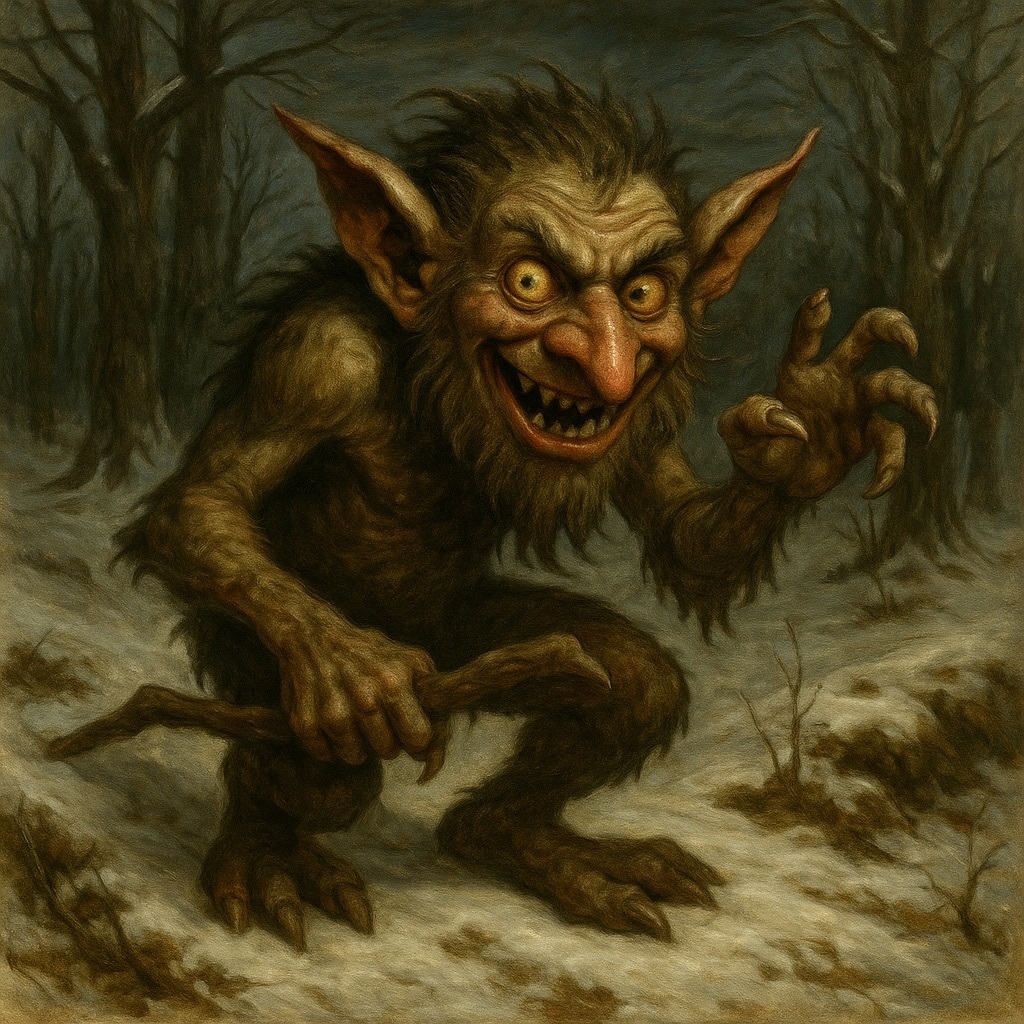
When the days grow short, when the winter nights stretch long and heavy with darkness, when the world feels closer to shadow than light—this is when the Greeks whisper of the Kallikantzaroi. These mischievous, goblin-like creatures are said to claw their way into the mortal world during the twelve days of Christmas, from December 25 until January 6, when the sun is weak, and the nights are at their deepest. They are grotesque yet comical, terrifying yet oddly entertaining, embodiments of chaos itself. They creep into villages, slipping into houses, spoiling food, tangling threads, extinguishing fires, and generally causing havoc in the lives of the unsuspecting.

But to understand the Kallikantzaros is to delve not only into folklore but into the soul of a people who lived by the rhythms of the earth, whose winters were long and dark, and whose imaginations peopled the shadows with tricksters and fiends. These goblin-creatures are not like demons of endless malice nor angels of eternal good. They are pranksters with a mean streak, spirits who mock the order of the world, delighting in mischief during the season when darkness is strongest.

Legends describe them in countless ways: some say they are small, no taller than children, with hairy bodies, long tails, glowing red eyes, and grotesque features—part human, part beast. Others imagine them as tall and gangly, their bodies thin and distorted, their voices shrill. They are often pictured as black-skinned from soot, crawling through chimneys to enter homes, their laughter echoing as they overturn pots, spoil milk, and even frighten children awake in the night. They thrive on chaos, and nothing pleases them more than to disrupt domestic life.

Yet, in a twist both humorous and terrifying, the Kallikantzaroi are said to spend the rest of the year—those long months when the world is green and bright—underground. There, in the bowels of the earth, they gnaw at the World Tree, hacking at its roots, trying to topple creation itself. Their goal is nothing less than destruction, the undoing of the cosmos, the collapse of existence. But when the twelve nights of Christmas arrive, when they could perhaps finish their task, they abandon it and rush to the surface world to play their pranks. By the time they return underground, the tree has healed, and their work must begin again. It is a cosmic cycle of futility, a darkly comic metaphor of endless struggle with no reward.

The symbolism is striking. The Kallikantzaroi are chaos embodied, yet their failure to topple the tree mirrors humanity’s resilience—the world endures despite the forces gnawing at it. Their annual return to the earth’s surface captures something profound about the winter holidays: they are not only times of light and joy but also times of unease, when darkness presses closer, and spirits stir. These creatures are the shadows cast by the bonfires of celebration, the reminder that even in the warmth of hearth and family, something wild lurks outside.

But if the Kallikantzaros was a source of fear, it was also a source of laughter. Greek villagers did not just dread them—they mocked them, tricked them, and invented ways to keep them at bay. Families would hang pork sausages, sweets, or other foods by the fire to distract the goblins. In some places, they left colanders outside the door, for the Kallikantzaroi were said to be compelled to count the holes—but, being unable to count to three (since “three” was holy), they would be trapped until dawn, forced to start again. Fires were kept burning, chimneys were blocked, and protective rituals recited, all to keep mischief-makers from entering. These practices reveal not only fear but humor, as if the people understood that chaos cannot be destroyed but can be distracted, managed, and even laughed at.

To humanize the Kallikantzaros is to recognize them as reflections of our own impulses. Who among us does not harbor a streak of mischief, a temptation to disrupt the order of things just for fun? They are our inner pranksters, made monstrous, exaggerated into fiends of folklore. Yet they also embody the chaos of winter itself: the way storms can snarl travel, the way darkness plays tricks on the mind, the way hunger and cold unsettle the spirit. They are a psychological expression of the season, making tangible the intangible stresses of survival during long, dark months.

There is also a deeper meaning in their failure to destroy the World Tree. The Kallikantzaroi’s story is not only about mischief but about futility. They labor endlessly, cutting at creation itself, only to abandon their task and find it undone. This speaks to the absurdity of chaos—it can disrupt, but it cannot ultimately triumph. Life, like the tree, heals itself. The forces of darkness can only nibble at the roots, never sever them. In this way, the goblins become strangely comforting, proof that while chaos will always return, order endures.

Modern Greece still remembers them fondly. While most no longer fear their pranks, stories of the Kallikantzaroi are told around the holidays, their grotesque features now more humorous than horrifying. In festivals, they sometimes appear in costume, their wildness celebrated rather than shunned. They are embraced as part of the season’s charm, reminders that laughter and fear can coexist. In a sense, they have become cultural mascots of the darker side of Christmas, proof that even holidays of light are incomplete without a shadow or two.

And perhaps that is why they remain so fascinating in a digital age. Social media thrives on mischievous, chaotic humor—the very energy of the Kallikantzaroi. One can imagine them as memes, as tricksters of the online world, disrupting order with jokes, chaos, and absurdity. They belong not only to the Greek mountains but to the human imagination wherever laughter meets fear, wherever darkness brushes against light.

The Kallikantzaros, then, is not only a goblin of winter but a symbol of the human condition. We are both builders and breakers, protectors and pranksters, forever caught between order and chaos. In their grotesque faces and crooked grins, we see both the danger of the dark and the joy of mischief. And when the nights are longest and the world feels fragile, their story reminds us that though chaos may climb through the chimney, light will return, the tree will stand, and life will go on.

Related Posts

The Day the City Moved Underground: New York’s Subway Opens

Elias Rowen

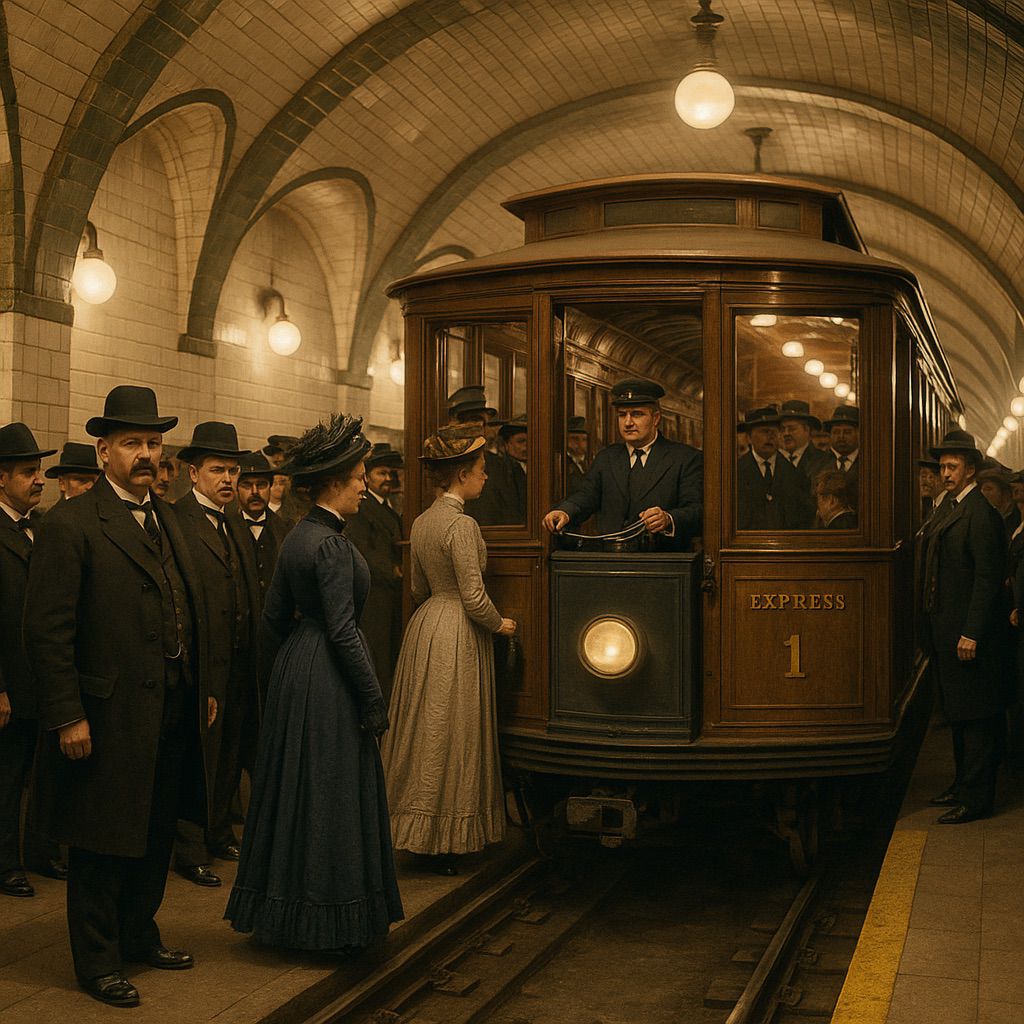
On October 27, 1904, New York City changed forever. That evening, with fanfare and excitement, the city opened its very first underground subway line, ushering in a new era of speed, mobility, and modernity. From City Hall in lower Manhattan, trains roared uptown beneath the bustling streets, carrying thousands of passengers on a ride that would redefine urban life. The New York subway was not merely a feat of engineering—it was a social revolution. It stitched together a growing metropolis, made the impossible commute suddenly practical, and gave millions a new sense of what it meant to live, work, and dream in the city that never sleeps.

At the dawn of the 20th century, New York was bursting at the seams. Its population had swelled to over three million, with immigrants arriving daily at Ellis Island, factories churning, and neighborhoods expanding in every direction. Elevated trains and streetcars carried some of the load, but the streets were jammed with carriages, trolleys, and pedestrians. Something radical was needed to break the gridlock. The idea of digging under the city had been floated for decades, but it took a mix of vision, politics, and determination to make it real.

That vision belonged to men like Abram Hewitt, a former mayor who championed rapid transit as essential for a modern metropolis. Construction was awarded to the Interborough Rapid Transit Company (IRT), led by August Belmont Jr., and engineering genius William Barclay Parsons designed the system. For years, workers toiled with picks, shovels, and dynamite, carving tunnels through rock, laying steel rails, and erecting tiled stations that glimmered with pride. The work was dangerous and backbreaking—an underground city built by immigrants, many of whom risked their lives in the dust and dark.

When the subway finally opened, the excitement was electric. At precisely 7 p.m., Mayor George B. McClellan Jr. himself acted as motorman for the inaugural ride, guiding the train from City Hall up to 145th Street. New Yorkers, clad in their finest, surged into the gleaming stations, marveling at the tiled arches, incandescent lights, and the thrilling speed of the cars. For just a nickel, passengers could travel miles in minutes—a revolution in mobility. That first night, more than 100,000 people rode the subway, their laughter and awe echoing through tunnels that would soon become arteries of the city.

But the story of the subway is not only about engineering and politics. It is about people. It is about the immigrant worker in 1904 who, for the first time, could live in the Bronx and work downtown without an exhausting commute. It is about the seamstress who saved pennies to ride the subway to her factory job, the newsboy who hopped trains to cover more corners, the young lovers who found themselves shoulder to shoulder on a crowded car. The subway was not just infrastructure—it was intimacy. Strangers pressed together, lives brushing against each other in fleeting, daily encounters that shaped the rhythm of the city.

The subway transformed New York into the city we know today. It allowed neighborhoods to expand, skyscrapers to rise, and millions of people to weave their lives into a vast, shared story. It was democratic in the truest sense: rich and poor alike stood in the same cars, riding the same rails. It was noisy, sweaty, imperfect, but it was New York—vital, alive, always moving.

The 1904 opening is remembered not just as a civic achievement but as the moment New York became modern. The tunnels symbolized progress, ambition, and the city’s refusal to stand still. Over the decades, the subway would grow into the largest rapid transit system in the world, carrying billions of riders through triumph and tragedy, blackouts and strikes, graffiti and jazz musicians, rush hours and midnight rides. The hum of trains became the city’s heartbeat, the tiled walls its bones, the turnstile clicks its pulse.

To humanize that October night is to imagine the thrill of those first riders. The child clutching her mother’s hand as the train lurched into motion. The immigrant, marveling at the speed of a city that had once seemed endless. The workers who, exhausted from years of digging, rode proudly in the cars they had built. The mayor, grinning as he steered history forward on steel rails. None could have foreseen just how deeply this invention would shape the identity of their city and the daily lives of millions.

October 27, 1904, was the day New York went underground and upward at the same time. It was the day the city found its rhythm, the day steel tracks stitched together a tapestry of lives, the day progress roared through tunnels and declared that the future was here. The subway was more than trains—it was the soul of New York in motion.

Related Posts

Enchanted Spark: Why the Sexy Fairy Spreads Her Glitter Over Every Halloween

Dave

Every October, when the air is crisp with possibility and the nights shimmer with imagination, there is one costume that always seems to flit through the dance floors, glow in the neon lights, and glitter across every Instagram feed. She is not stitched together from nightmares like a zombie, nor does she sprout from mythology as a goddess or devil. Instead, she floats out of dreams, dusted in glitter, glowing in iridescence, playful as a wink and powerful as a spell. She is the Sexy Fairy, a creature born of fantasy but perfected for the spectacle of Halloween. In her shimmering mini dress, her sparkling wings catching the light like stained glass, and her glitter makeup glowing brighter than the moon, she doesn’t just attend the party—she transforms it.

The Sexy Fairy costume thrives on its duality. On one hand, she is delicate: wings as fragile as dragonfly silk, glitter spread across her cheekbones like morning dew, a dress that flutters with every spin. On the other, she is bold: a figure that commands attention, a vibe that says I am here to glow brighter than anyone else tonight. That contradiction—soft yet strong, ethereal yet electric—is what makes her timeless and viral. Everyone recognizes her, everyone admires her, and everyone secretly wishes they, too, had the wings to float above the chaos of a Halloween crowd.

Visually, the Sexy Fairy costume is irresistible because it is built for light. The mini dress—whether sequined, satin, or sheer with shimmering layers—catches every beam, turning the wearer into a walking disco ball. The wings transform movement into spectacle, their glitter and glow leaving trails like comets with every turn. The glitter makeup is the final touch, dusted across eyelids, cheekbones, and even lips, catching flashes of light and transforming a face into a constellation. Under strobe lights, she glows. In selfies, she dazzles. In TikTok transitions, she explodes into virality because her transformation is visual magic in itself.

But her allure isn’t just visual—it’s symbolic. Fairies are creatures of freedom, playfulness, and rebellion against the ordinary. They exist outside of rules, flitting in shadows and sunlight, mischievous and untamed. The Sexy Fairy costume taps into that mythology, but with a sultry twist. She isn’t just an innocent pixie—she’s a confident enchantress, a flirtatious sprite who knows the power of glitter and wings. She doesn’t wait to be noticed—she creates the sparkle that makes her unforgettable. Wearing the costume is like stepping into a spell, like embodying a freedom we all crave: the freedom to shine unapologetically.

The performance potential of the Sexy Fairy costume is what cements her as a viral queen. She doesn’t just stand still—she moves. Wings flutter, glitter sparkles, and the mini dress twirls into motion. The woman wearing it doesn’t pose—she plays. She sprinkles glitter into the air, she winks mischievously, she spins until her wings blur into light. Every moment becomes a performance, every gesture an opportunity for content. On TikTok, she thrives because her costume turns movement into magic—dusting glitter, glowing in UV lights, floating across dance floors. On Instagram, her portraits gleam because the costume itself is aesthetic perfection—tiny details like wing edges, glitter eyeliner, and sequined hems turn each frame into a painting. On X, she trends because she embodies everything Halloween is meant to be: fantasy, playfulness, and unforgettable spectacle.

Adaptability makes the Sexy Fairy costume endlessly fresh. Some go full fantasy, with neon-colored wigs, elaborate feathered wings, and glitter trails across their bodies. Others go minimalist, keeping the wings delicate, the dress simple, and the makeup ethereal. Some lean whimsical, with pastel tones, floral crowns, and star-shaped glitter. Others lean sultry, with sheer mini dresses, thigh-high boots, and wings edged in metallic shimmer. The Sexy Fairy can be sugar-sweet, darkly gothic, neon rave-inspired, or classic woodland sprite. No matter the variation, the DNA remains: wings, glitter, confidence. She’s always recognizable, always fresh, always ready to sparkle her way into the spotlight.

The humanizing part of this costume is its empowerment. Halloween is the one night where people are encouraged to transform, and the Sexy Fairy is transformation personified. She takes the ordinary—fabric, glitter, accessories—and elevates them into fantasy. For the woman wearing it, the costume is permission to glow unapologetically, to claim her space, to sparkle without shame. It’s not about hiding—it’s about amplifying. It says: I don’t just belong at this party, I light it up. That empowerment is magnetic, and it’s why people don’t just admire the Sexy Fairy—they’re drawn to her.

Halloween thrives on icons, and the Sexy Fairy is one of the most iconic because she embodies fantasy itself. She’s playful enough to charm, sultry enough to tempt, bold enough to dominate. She’s more than a costume—she’s an experience. The glitter, the wings, the twirl of her dress—they don’t just create an outfit, they create a memory. And in an age where memory is shared in stories, posts, and hashtags, the Sexy Fairy is built to go viral.

So when the party lights flash and the room fills with vampires, witches, and devils, watch who turns heads. She’ll be the one glowing under the lights, glitter shimmering on her skin, wings fluttering with every move, mini dress catching every flash. She won’t just be part of the night—she’ll be the memory that defines it. That’s the Sexy Fairy. That’s the sparkle that spreads across feeds, the glow that lingers in the mind, the icon who turns Halloween into an enchanted carnival.

Because at the end of the night, when the glitter is swept from the floor and the wings are folded away, her presence will remain. In photos. In posts. In memory. And that’s why, year after year, she’ll always return—not just to attend Halloween, but to reign over it, wings spread wide, glitter raining down, smile daring you to forget her.

Related Posts