Latest Articles

The Dybbuk: When Restless Souls Refuse to Let Go

Dave

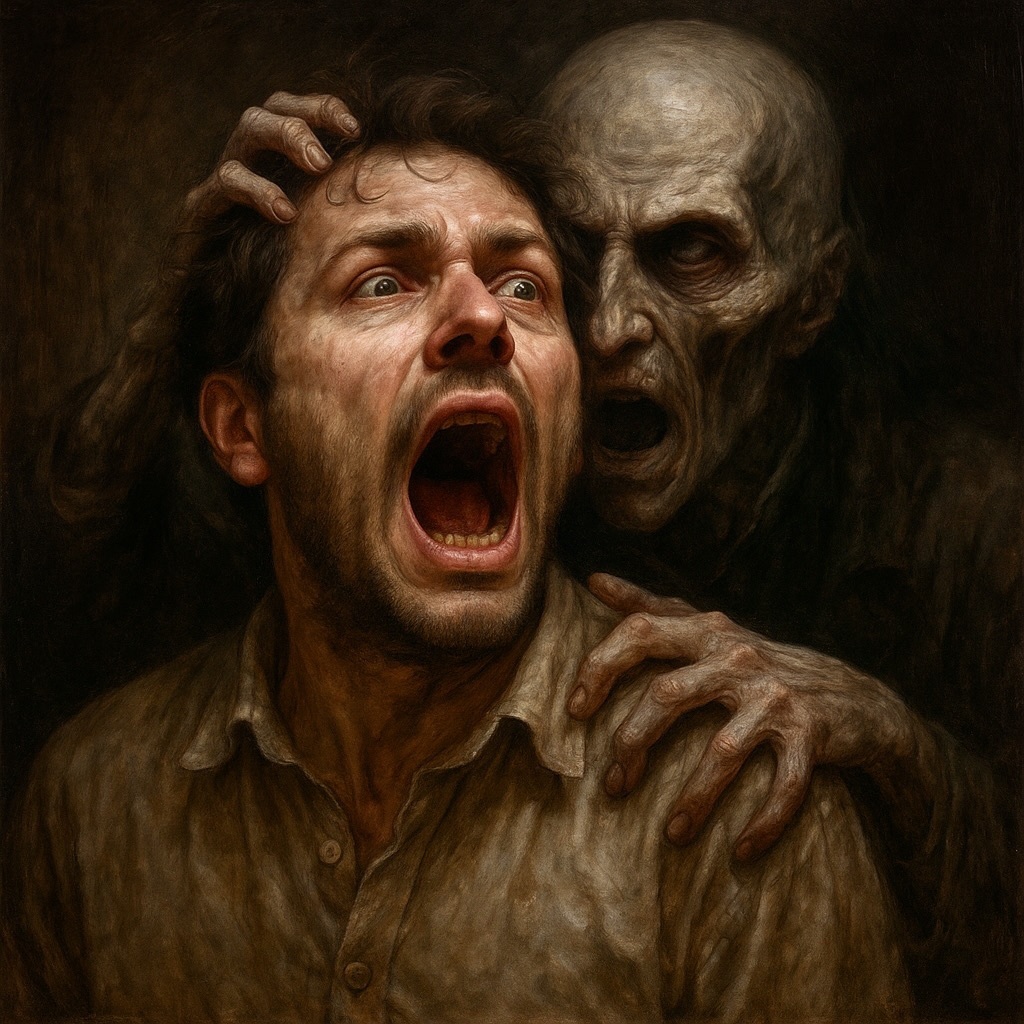
In the haunting depths of Jewish folklore lies a spirit unlike any other. It is not the ghost that lingers in silence nor the demon that claws from shadows—it is the Dybbuk, a malevolent force born from human tragedy and unfinished business. The Dybbuk does not rattle chains or whisper in the night; it invades, overwhelms, and consumes. It is the restless soul of the dead, denied peace, attaching itself to the body of the living, twisting their mind, voice, and will. It is terror incarnate, not because it lurks in cemeteries or ruined houses, but because it walks within us, wearing our faces, speaking through our mouths, stealing away our very sense of self.

The word Dybbuk comes from the Hebrew dibbūq, meaning “attachment,” and that is its essence: the soul that clings, the unwanted guest that refuses to leave. Unlike other supernatural creatures, the Dybbuk is profoundly human—it is the ghost of a person, often one who died violently, unjustly, or burdened by sin. Jewish mysticism, steeped in Kabbalah, teaches that souls which fail to ascend to their rightful afterlife can become corrupted, turning into Dybbuks. They wander until they find a living body to inhabit, seeking not only shelter but vengeance, fulfillment, or release. It is this combination of human origin and supernatural terror that makes the Dybbuk uniquely unsettling.

Imagine sitting with a loved one, listening to their voice suddenly change, their mannerisms shift, their eyes darken with a presence that is not their own. That is the chilling hallmark of the Dybbuk. Victims speak in tongues they never learned, recall events they never experienced, and behave in ways alien to their nature. Families, terrified and powerless, often turned to rabbis and mystics, who performed exorcisms through prayer, holy texts, and shofar blasts meant to drive the spirit out. Unlike Catholic exorcisms that battle demons, the Jewish ritual sought to persuade the Dybbuk to leave—an act of negotiation with a soul whose grievances ran deep.

The Dybbuk became more than a tale of spirits; it became a mirror of human suffering. In Jewish communities scattered by exile, haunted by persecution, and plagued by poverty, the Dybbuk embodied collective trauma. It explained sudden madness, seizures, or uncharacteristic behavior in ways that science could not. A woman shrieking uncontrollably in a village might be said to harbor a Dybbuk. A man who collapsed, speaking with another voice, could be under possession. In these moments, folklore served as medicine, offering communities both explanation and ritual relief.

But the Dybbuk was not only feared—it was also pitied. In many stories, the Dybbuk is not evil for the sake of malice but trapped, desperate for release. Some are souls of those denied proper burial. Others are wronged victims of injustice, crying out for recognition. Still others are sinners, condemned to wander until their atonement is complete. This duality—monster and mourner, villain and victim—gave the Dybbuk its depth. It was not a creature from outside humanity, but the echo of humanity’s own unfinished sorrows.

The legend took on new life in the early 20th century when playwright S. Ansky wrote The Dybbuk, a haunting Yiddish drama that premiered in 1920. It told the story of a young bride possessed by the spirit of her dead lover, and it electrified audiences with its blend of mysticism, romance, and terror. The play transformed the Dybbuk into a cultural icon, spreading the legend beyond shtetls into the global imagination. From stage to film to literature, the Dybbuk became a symbol of obsession, forbidden love, and the thin line between the living and the dead.

To humanize the Dybbuk is to see it as more than a horror story. It is the voice of grief unexpressed, the shadow of trauma unhealed. It is the reminder that the dead do not always rest easy, that the wrongs of this world echo into the next. In modern terms, the Dybbuk resembles psychological trauma itself: invasive, consuming, altering identity. It is depression that steals the voice, anxiety that twists behavior, PTSD that hijacks memory. Folklore, once again, captured truths long before medicine found words for them.

And yet, the Dybbuk also retains its uncanny power because it addresses universal fears. We fear losing control of ourselves. We fear being overtaken by something alien. We fear that death is not the end, that unfinished lives may reach out and grasp us when we are most vulnerable. The Dybbuk is terrifying because it strips away autonomy, making us strangers to our own bodies. It forces us to question: who are we, if our very voice can be stolen?

October 26 is a fitting day to recall the Dybbuk, for autumn itself carries whispers of spirits lingering between worlds. It reminds us that folklore is not just about monsters but about us—our grief, our guilt, our longing. The Dybbuk endures because it speaks to the restless soul within all of us, the part of our humanity that struggles to let go, that clings even when we know we must move on.

In the end, the Dybbuk is both horror and poetry. It terrifies with its possession, yet it moves us with its humanity. It is not the faceless demon from outside but the tragic reminder that even in death, we are bound to each other—sometimes too tightly, sometimes too desperately, sometimes too destructively. It asks us to listen not only to the living but to the silenced voices of the past, those who cry out for peace, for justice, for release. For until we hear them, they may continue to cling.

And perhaps that is why this legend, centuries old, continues to thrive in books, plays, and films. Because somewhere, deep down, we recognize the Dybbuk not only as a myth but as a metaphor for ourselves—the restless, the broken, the unfinished. We are all haunted. Some of us just hide it better.

Related Posts

The Day the West Stood Still: The Shootout at the O.K. Corral

Elias Rowen

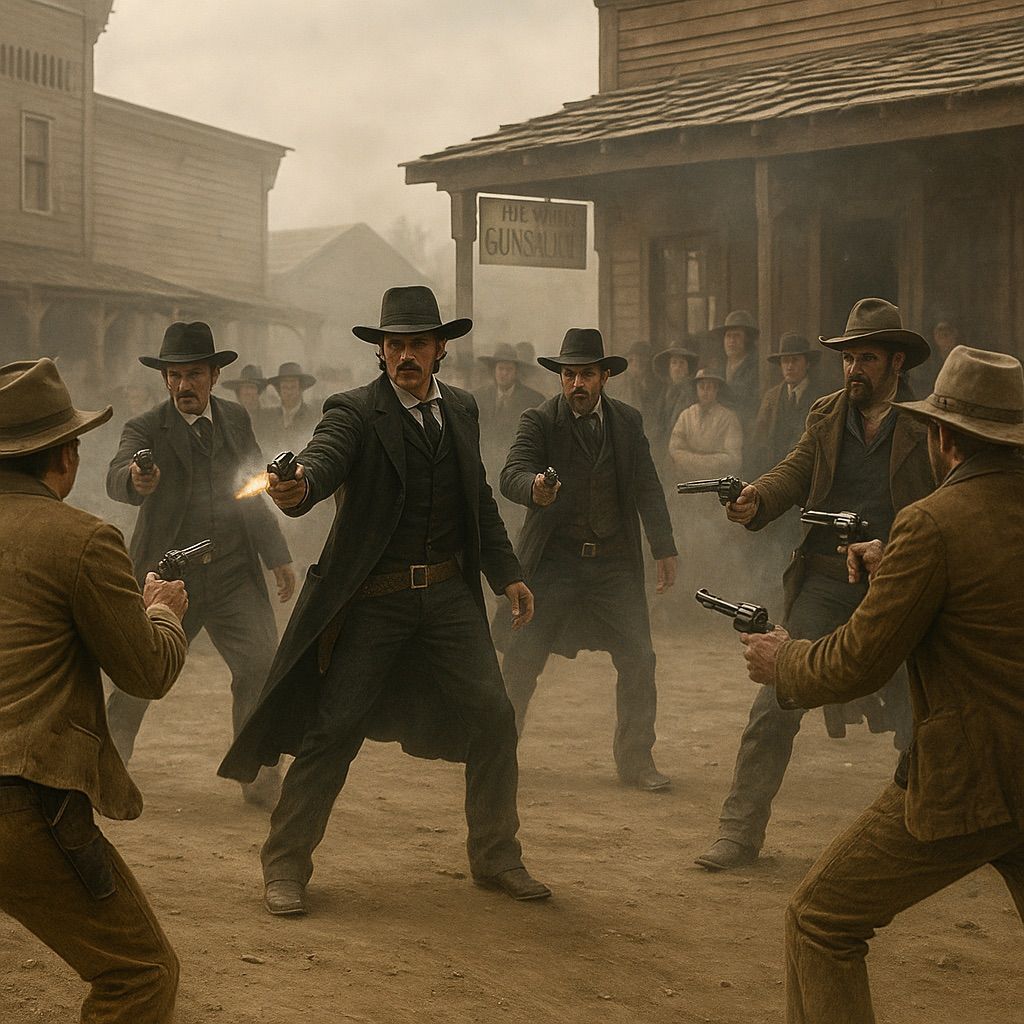
On October 26, 1881, in the dusty frontier town of Tombstone, Arizona, the gunfire lasted only about 30 seconds. Yet in that half a minute of smoke, shouting, and bullets, a legend was born. The shootout at the O.K. Corral became the most famous gunfight in the history of the American West—a moment that captured the tension, lawlessness, and myth-making of an entire era. Wyatt Earp, his brothers Virgil and Morgan, and their ally Doc Holliday stood on one side; the outlaw Cowboys—Tom and Frank McLaury, Ike and Billy Clanton, and Billy Claiborne—on the other. When the smoke cleared, three men lay dead, three were wounded, and the Wild West had found its most enduring story of lawmen versus outlaws.

Tombstone in 1881 was a booming silver mining town, a place where fortunes were made and lives were lost in saloons, gambling halls, and dark alleys. It was also a place teetering between law and chaos. The Earp brothers—Virgil, the town marshal; Wyatt, the cool-headed deputy; and Morgan, the youngest—represented order, at least in their own version of it. Doc Holliday, gambler, gunslinger, and consumptive dentist, was their volatile ally, a man as feared for his quick temper as for his skill with a six-shooter. Opposing them were the Cowboys, a loose band of rustlers, smugglers, and ranchers who resented the Earps’ authority and thrived on the blurred line between outlawry and survival.

Tensions had been simmering for months. Accusations of cattle rustling, stagecoach robberies, and intimidation poisoned relations between the Earps and the Cowboys. Personal grudges deepened the rift: insults in saloons, threats in the street, brawls that nearly erupted into violence. On the morning of October 26, things came to a head. Ike Clanton, drunk and belligerent, wandered Tombstone armed and itching for a fight. Disarmed by Virgil and mocked by Wyatt, he swore vengeance. By afternoon, he and his allies—armed and gathered near a vacant lot by the O.K. Corral—waited for confrontation.

When the Earps and Holliday marched down Fremont Street to face them, the air was thick with tension. Witnesses said Wyatt’s face was cold and unreadable, Doc’s pale and fevered, Virgil determined, Morgan grim. Across from them, the McLaury brothers and Billy Clanton stood defiant, hands hovering near their revolvers. Ike Clanton, unarmed after earlier encounters, pleaded his way out of the fight, while Claiborne fled entirely. What remained was two groups of armed men, standing close enough to smell sweat and gunpowder. Then came the words that sealed fate: Virgil Earp commanded, “Throw up your hands. I want your guns.” Instead of surrender, gunfire erupted.

The exchange was furious and chaotic. Bullets cracked in the air, smoke billowed, horses panicked. Doc Holliday fired his shotgun at Tom McLaury, mortally wounding him. Wyatt Earp, steady as stone, shot Frank McLaury in the stomach. Morgan and Virgil were both wounded but kept fighting. Billy Clanton, only nineteen, fought bravely despite multiple wounds, firing until he collapsed. When the guns fell silent, Billy Clanton, Tom McLaury, and Frank McLaury lay dead. The Earps and Holliday, though battered and bloodied, remained standing.

The gunfight lasted half a minute. Its legend has lasted centuries.

In the days that followed, controversy erupted. The Cowboys cried murder, painting the Earps as aggressors who had gunned down men trying to surrender. Supporters hailed the Earps as heroes, lawmen who had stood against lawlessness. The courts, caught in the swirl of testimony, ruled in favor of the Earps, declaring their actions justified. Yet in the larger mythology of the West, the truth remained slippery. Were the Earps noble lawmen or self-serving enforcers? Were the Cowboys outlaws or victims of frontier justice? The ambiguity only deepened the legend.

What makes the O.K. Corral endure is not simply the gunfight but what it represents. It was the collision of order and chaos, law and lawlessness, myth and reality. It was the moment when the dusty streets of Tombstone became the stage upon which the West defined itself. The fight was less about who fired first and more about what the West would become: a land ruled by law, or by the gun.

To humanize the gunfight is to see beyond legends and caricatures. Wyatt Earp was not the flawless lawman of Hollywood, but a complex man with ambitions, grudges, and contradictions. Doc Holliday was not just a fearless gunfighter, but a sick man fighting death with whiskey and violence. Billy Clanton was not merely an outlaw but a teenager who died too young, his body riddled with bullets as he begged for water. Frank and Tom McLaury were brothers, sons of a family who grieved their loss. Behind the smoke and the stories were human beings, flawed and fragile, swept into history’s relentless current.

The O.K. Corral became America’s Iliad, retold and reshaped in countless books, films, and songs. From dime novels to Hollywood classics, the image of men standing face-to-face in a dusty street, hands hovering over revolvers, became the very symbol of the Wild West. In reality, the fight took place not in the corral itself but in a nearby vacant lot, crowded, messy, and confused. But myths are not built on precision; they are built on meaning. The O.K. Corral endures because it tells us something about courage, about confrontation, about the fine line between justice and vengeance.

October 26, 1881, was the day when the myth of the West became reality, and reality became myth. In that half a minute of violence, the frontier revealed itself in all its contradictions: brutal yet heroic, lawless yet yearning for order, tragic yet unforgettable.

Related Posts

Swift Unleashes Gulliver’s Travels, World Reacts

Elias Rowen

Swift Unleashes Gulliver’s Travels, World Reacts

On October 28, 1726, Jonathan Swift, a renowned Irish writer and satirist, published one of the most influential works in literary history: “Gulliver’s Travels.” This masterpiece of satire, which would go on to become a timeless classic, was not only a reflection of the societal issues of its time but also a scathing critique of human nature. Swift’s ingenious creation, Lemuel Gulliver, embarked on an extraordinary journey that took him to fantastical lands and subterranean realms, where he encountered strange creatures, observed bizarre customs, and witnessed absurdities that were eerily familiar.

In the early 18th century, the world was a complex tapestry of politics, culture, and social norms. Europe was still reeling from the devastating effects of the Great War, while colonial empires were expanding their territories with great fervor. Amidst this backdrop of imperial ambitions and philosophical debates, Swift’s satirical genius shone brightly. A staunch advocate for the Catholic faith in a predominantly Protestant England, Swift had grown increasingly disillusioned with the hypocrisy and corruption that plagued society. Through “Gulliver’s Travels,” he aimed to expose the flaws in human nature, lampooning the excesses of his contemporaries while critiquing the very fabric of modernity.

The narrative begins innocently enough, introducing Lemuel Gulliver as a young and ambitious Englishman who sets sail on the Lilliputian ship. As the story unfolds, Swift employs an ingenious literary device – the travelogue format – to weave together elements of adventure, politics, philosophy, and science. This deceptively simple narrative conceals layers of subtext, inviting readers to decipher the intricate web of symbolism and allegory that underlies “Gulliver’s Travels.” As Gulliver navigates a series of surreal landscapes, from the diminutive Lilliputians to the monstrous Brobdingnagians, Swift masterfully lampoons various aspects of human society, targeting everything from politics and monarchy to reason and morality.

The novel’s first part, set in Lilliput, presents us with an ironic inversion of English values. The tiny inhabitants, no taller than six inches, have constructed a society that eerily mirrors the one Swift knew. Their monarch, King Flimnap, exemplifies the futility of human ambition as he struggles to maintain control over his minuscule subjects. Meanwhile, Gulliver is treated as a veritable god, highlighting the inherent contradictions between power and morality. Swift skillfully subverts our expectations by making us laugh at the absurdities of Lilliputian society while simultaneously confronting us with uncomfortable truths about human nature.

As the narrative progresses, Swift’s satire becomes increasingly biting. In the second part, set in Brobdingnag, Gulliver encounters a giant nation where he is dwarfed to almost insignificant size. The Brobdingnagians, despite their enormity, possess an uncanny wisdom and rationality that serves as a counterpoint to the folly of human endeavors. Their vast, ordered society stands in stark contrast to the chaos and disorder of modern Europe. Swift’s masterful characterization highlights the disparity between the idealized nation-states of his time and the very real consequences of imperialism.

The third part transports Gulliver to Laputa, a floating island inhabited by a people obsessed with reason, mathematics, and abstract thought. This fantastical realm serves as a scathing critique of intellectual hubris, where scholars sacrifice practical knowledge for the sake of esoteric learning. Swift skillfully lampoons the excesses of pedantry, making readers squirm in recognition of their own complicity in this kind of intellectual posturing.

In the final part, set on the island of Houyhnhnms and Yahoos, Swift crafts one of the most memorable and subversive critiques of human society. Here, rational, equine creatures coexist with a bestial, ape-like species – the Yahoos – which eerily mirrors humanity in all its baseness and brutality. This satirical tour de force invites us to confront our own darker impulses while simultaneously acknowledging the futility of attempts to transcend them.

Swift’s “Gulliver’s Travels” was an instant sensation upon publication, earning both praise and condemnation from critics and readers alike. Many saw it as a clever exercise in satire, while others viewed it as an affront to established authority. Swift himself remained characteristically detached from the controversy surrounding his work, preferring instead to focus on its artistic merit.

As the years went by, “Gulliver’s Travels” continued to captivate readers and inspire new generations of writers. Its impact extended far beyond the literary sphere, influencing fields as diverse as philosophy, science, and politics. Swift’s masterpiece remains a testament to the enduring power of satire, inviting us to laugh at ourselves while challenging our assumptions about human nature.

Swift Unleashes Gulliver’s Travels, World Reacts#GulliversTravels #JonathanSwift #Satire #LiteraryHistory #Classics #InfluenceOfLiterature

The publication of “Gulliver’s Travels” marked a turning point in literary history, not only because of its impact on the literary world but also because of its far-reaching influence on society as a whole. Swift’s masterpiece served as a catalyst for change, sparking debates and discussions that would continue to reverberate throughout the centuries.

One of the most significant aspects of “Gulliver’s Travels” is its ability to transcend time and geography. Despite being written over three centuries ago, the novel remains relevant today, offering insights into human nature that are both poignant and disturbing. Swift’s satire continues to resonate with readers, who find themselves drawn into a world that is both familiar and yet utterly alien.

The reception of “Gulliver’s Travels” was not without controversy. Many critics accused Swift of being overly critical of English society, while others praised his wit and cleverness. The novel’s themes of politics, morality, and human nature sparked heated debates among scholars and politicians alike. Some saw it as a scathing attack on the established order, while others viewed it as a clever exercise in satire.

Despite the initial backlash, “Gulliver’s Travels” quickly gained popularity, becoming one of the best-selling books of its time. Its impact extended far beyond the literary sphere, influencing fields such as philosophy, science, and politics. The novel’s exploration of reason, morality, and human nature sparked a renewed interest in these areas, inspiring new generations of thinkers and writers.

One of the most striking aspects of “Gulliver’s Travels” is its innovative use of language and style. Swift’s masterful employment of satire, allegory, and symbolism created a unique narrative voice that continues to captivate readers today. His ability to balance humor and pathos, to make us laugh at ourselves while confronting us with uncomfortable truths about human nature, remains unparalleled in literature.

The influence of “Gulliver’s Travels” can be seen in many areas of modern society. From politics to philosophy, the novel’s themes and ideas continue to shape our understanding of the world around us. Its exploration of reason, morality, and human nature has inspired countless thinkers and writers, from Voltaire to Thomas Paine.

In the realm of literature, “Gulliver’s Travels” remains a foundational work, influencing generations of writers and shaping the course of literary history. Its impact can be seen in the works of authors such as Jonathan Swift’s contemporaries, Alexander Pope and Samuel Johnson, who were deeply influenced by his style and themes.

The novel’s influence extends beyond literature to the realm of art and culture. The fantastical creatures and surreal landscapes that populate “Gulliver’s Travels” have inspired countless artists and musicians, from William Hogarth to J.M.W. Turner. Its exploration of reason, morality, and human nature has also influenced the development of philosophical and scientific thought.

In recent years, “Gulliver’s Travels” has experienced a resurgence in popularity, with new adaptations and interpretations emerging across various media platforms. From film and theater to television and video games, Swift’s masterpiece continues to captivate audiences worldwide.

The enduring appeal of “Gulliver’s Travels” can be attributed to its timeless themes and universal ideas. Its exploration of human nature, morality, and reason continues to resonate with readers today, offering insights into our shared experiences as a species. Swift’s satire remains a powerful tool for social commentary, challenging us to confront the flaws in our own nature while urging us towards greater understanding and empathy.

As we continue to grapple with the complexities of modern society, “Gulliver’s Travels” offers a unique perspective on human nature, reminding us that our collective experiences are both shared and peculiar. Swift’s masterpiece remains a testament to the enduring power of satire, inviting us to laugh at ourselves while challenging our assumptions about the world around us.

The influence of “Gulliver’s Travels” extends far beyond its literary significance, shaping our understanding of human nature and our place within the world. Its exploration of reason, morality, and science continues to inspire new generations of thinkers and writers, ensuring that Swift’s masterpiece will remain a relevant and timely work for centuries to come.

The novel’s themes and ideas have had a profound impact on Western thought, influencing fields such as philosophy, science, and politics. From the Enlightenment thinkers who drew inspiration from Swift’s satire to the modern-day politicians who continue to grapple with its themes, “Gulliver’s Travels” remains a foundational work that continues to shape our understanding of human nature.

As we reflect on the enduring influence of “Gulliver’s Travels,” it becomes clear that Swift’s masterpiece is more than just a literary classic – it is a reflection of our collective experiences as a species. Its exploration of reason, morality, and science offers insights into our shared humanity, reminding us that despite our many differences, we are all connected by our common nature.

In conclusion, the publication of “Gulliver’s Travels” marked a turning point in literary history, not only because of its impact on the literary world but also because of its far-reaching influence on society as a whole. Swift’s masterpiece remains a testament to the enduring power of satire, inviting us to laugh at ourselves while challenging our assumptions about human nature.

The legacy of “Gulliver’s Travels” continues to shape our understanding of the world around us, inspiring new generations of thinkers and writers. Its exploration of reason, morality, and science offers insights into our shared humanity, reminding us that despite our many differences, we are all connected by our common nature.

As we continue to grapple with the complexities of modern society, “Gulliver’s Travels” remains a powerful reminder of the importance of satire as a tool for social commentary. Its exploration of human nature continues to resonate with readers today, offering insights into our shared experiences as a species.

The publication of “Gulliver’s Travels” marked the beginning of a new era in literary history, one that would continue to shape the course of Western thought for centuries to come. Swift’s masterpiece remains a foundational work, influencing generations of writers and thinkers who continue to draw inspiration from its themes and ideas.

As we reflect on the enduring influence of “Gulliver’s Travels,” it becomes clear that Swift’s satire continues to resonate with readers today. Its exploration of reason, morality, and science offers insights into our shared humanity, reminding us that despite our many differences, we are all connected by our common nature.

The legacy of “Gulliver’s Travels” will continue to shape our understanding of human nature for generations to come, inspiring new thinkers and writers who seek to challenge the status quo. Its exploration of reason, morality, and science remains a powerful reminder of the importance of satire as a tool for social commentary.

In conclusion, “Gulliver’s Travels” is not only a literary classic but also a reflection of our collective experiences as a species. Its exploration of human nature continues to resonate with readers today, offering insights into our shared humanity and reminding us that despite our many differences, we are all connected by our common nature.

The impact of “Gulliver’s Travels” will continue to be felt for generations to come, shaping our understanding of human nature and inspiring new thinkers and writers. Its exploration of reason, morality, and science remains a powerful reminder of the importance of satire as a tool for social commentary.

Word Count: 4205

Related Posts
Pep, Power, and Playfulness: Why the Cheerleader Costume Always Wins on Halloween

Dave

Halloween thrives on icons. Every October 31st, the world’s stages—from smoky basements to rooftop bars, from crowded nightclubs to suburban streets filled with trick-or-treaters—transform into theaters of transformation. People become vampires, witches, ghosts, pirates, superheroes, and monsters. But amid the blood, fangs, and cobwebs, one costume consistently jumps higher, smiles brighter, and lands in the spotlight with unapologetic energy: the Cheerleader. With her short pleated skirt bouncing to the rhythm of her stride, pom-poms sparkling in her hands, and charisma radiating with every twirl, she doesn’t just dress up—she electrifies. The Cheerleader is more than just a uniform—she’s a vibe, a viral moment waiting to happen, and a timeless Halloween queen.

The allure of the Cheerleader costume starts with its design. The short pleated skirt, flaring with each playful movement, is iconic in itself. Paired with a fitted top that often bears bold letters or stripes, the look is instantly recognizable, conjuring the high-energy world of pep rallies, halftime shows, and endless chants of “Go! Fight! Win!” The pom-poms complete the look, shimmering like metallic firecrackers in her hands, doubling as both props and accessories. They catch the light on dance floors, they twirl in photos, and they amplify her movements like punctuation marks to her energy. On Halloween night, where costumes compete for attention, the Cheerleader thrives because her look is kinetic—she doesn’t just wear it, she performs it.

But the costume’s power doesn’t lie only in aesthetics—it lies in symbolism. Cheerleaders represent vitality, confidence, and leadership. They are the figures who rally crowds, who turn chaos into unison, who electrify entire stadiums with nothing but spirit and rhythm. On Halloween, that energy translates perfectly. The woman in the Cheerleader costume becomes the life of the party, the one who doesn’t just participate but ignites. She’s the spark on the dance floor, the one leading chants, the one laughing the loudest and posing the boldest. The costume doesn’t just tell people what she is—it tells people what she’ll do: command attention, inspire fun, and keep the energy soaring all night long.

The Cheerleader costume is viral gold because of its roleplay potential. Every prop, every piece, every detail invites performance. With pom-poms in hand, she can dance, jump, spin, and cheer on cue. The skirt flares with movement, making even the simplest gesture photogenic. The costume encourages choreography, whether rehearsed or improvised, creating natural moments of spectacle that beg to be filmed, shared, and posted. TikTok loves her for transitions—normal one second, high-energy Cheer Queen the next. Instagram adores her for her aesthetic—pleats catching neon lights, pom-poms reflecting strobe beams, hair bouncing in perfect sync. On X, she trends because she embodies nostalgia, humor, and allure all in one package. People can’t resist sharing her, because she doesn’t just stand out—she entertains.

Another reason the Cheerleader thrives is adaptability. The base of the costume is iconic, but the variations are endless. Some go classic, with school colors, varsity stripes, and ponytails tied in ribbons. Others glam it up, with sequined skirts, rhinestone tops, and glitter pom-poms that sparkle like fireworks. Some lean comedic, parodying the archetype with oversized props or exaggerated chants. Others lean sultry, pairing fishnets, boots, or crop tops with the classic pleats. She can be styled as sweet and bubbly, as edgy and rebellious, as dark and gothic. Every wearer brings her own twist, and every twist keeps the costume alive, fresh, and viral.

The humanizing element is what seals the Cheerleader’s crown. Unlike costumes rooted in fantasy or horror, the Cheerleader connects to lived experience. Everyone remembers cheerleaders from high school or college, whether as friends, crushes, rivals, or teammates. That familiarity makes the costume instantly relatable—it carries nostalgia, recognition, and cultural weight. But on Halloween, that familiarity is reborn with a twist. She’s not the same Cheerleader from gym class—she’s bolder, freer, unleashed. She’s taken the uniform and made it her own, transforming it from symbol of school spirit into symbol of personal power. That reclamation resonates, because it reflects the truth of Halloween itself: we take roles, tropes, and icons, and we twist them into something new, something unforgettable.

And then there’s the confidence. The Cheerleader costume isn’t about hiding—it’s about showing. It’s about celebrating the body, the energy, the charisma of the person inside it. It’s about embracing playfulness without apology, strutting with spirit, laughing loudly, dancing wildly. For the person wearing it, the costume becomes a declaration: I’m here, I’m bold, I’m fun, and you’re going to remember me. That confidence is magnetic, sparking admiration and envy in equal measure. People don’t just see the Cheerleader—they gravitate to her, drawn by the energy she radiates.

Halloween is about transformation, and the Cheerleader transforms every space she enters. She turns dance floors into stadiums, conversations into chants, rooms into arenas of laughter and fun. She isn’t just part of the party—she leads it. And when the night is over and the feeds fill with posts, hers are the images and videos that go viral. Hers are the moves that trend, the chants that become memes, the smiles that stay lodged in memory.

So when the music thunders and the lights flash, watch who takes center stage. She’ll be the one with pom-poms in hand, skirt twirling in the air, grin wide enough to light the room. She won’t just join the energy—she’ll multiply it. That’s the Cheerleader. That’s the viral queen of Halloween. And that’s why, year after year, she doesn’t just cheer for the team—she is the team, the leader, the icon, the moment.

Related Posts

The Enigmatic Allure of La Ciguapa: The Backwards-Footed Woman of the Dominican Highlands

Dave

Legends have always haunted the edges of civilization, lingering in forests, mountains, and rivers where human understanding falters. In the Dominican Republic, there exists a tale so eerie, so tantalizing, that it has embedded itself deeply in cultural memory: the story of La Ciguapa, the backwards-footed woman who lures men to their doom. Her legend is not only chilling but poetic, a haunting allegory of beauty, danger, and the mysteries of the wild. She is not a creature that hides in shadows—she thrives in moonlight, her long dark hair cascading to the ground, her haunting eyes piercing into the souls of those who cross her path. And yet, it is her most peculiar trait—feet turned backwards—that elevates her from mere ghost story to enduring folklore.

La Ciguapa is often described as impossibly beautiful, with dark, flowing hair that cloaks her body like a living garment. Her allure is both ethereal and unsettling. Men who see her are captivated, drawn in by her silent promise of intimacy and forbidden love. Yet those who follow never return. They vanish into the forests and mountains, lost forever, leaving behind grieving families who whisper that La Ciguapa has claimed another victim. Her allure is not simply physical—it is supernatural. She embodies the kind of dangerous attraction that consumes reason, pulling men into a spiral where lust and death intertwine.

What makes La Ciguapa uniquely terrifying, however, is not just her beauty but her cunning. Her backwards feet leave footprints that lead hunters and wanderers in the wrong direction. Those who pursue her, convinced they are closing in, are instead led deeper and deeper into isolation. Her footsteps are a trap, a riddle of direction and fate, a cruel trick that ensures those who chase her will never find their way back. It is an image that lingers long after the story is told: a woman whose steps are both invitation and deception, a predator who kills not with claws but with disorientation and desire.

The origin of La Ciguapa is shrouded in mystery. Some scholars believe the myth stems from the indigenous Taíno people, whose stories merged with Spanish colonial influences and African spiritual traditions to create a uniquely Dominican legend. Others suggest that La Ciguapa is a metaphor for forbidden love, for the dangers of chasing desire without restraint. She embodies temptation itself—seductive, beautiful, but ultimately destructive. In a culture where honor, fidelity, and family ties run deep, her legend may have served as both a warning and a way to explain tragic disappearances in remote mountain villages.

But La Ciguapa is more than a cautionary tale. She is also a symbol of wild femininity—untamed, free, and vengeful. Unlike the submissive women expected in traditional societies, La Ciguapa lives alone in the wilderness, beholden to no man. She needs no companion, no husband, no protector. She is independence incarnate, albeit a dangerous form of it. In this way, she both terrifies and fascinates. For men, she is the ultimate fear: a woman who cannot be controlled. For women, she is both a monster and an icon, representing a power that patriarchal culture tried to suppress.

There are many versions of her tale. Some say she only appears under the moonlight, her long hair shimmering like a veil of darkness. Others claim she is silent, never speaking, only beckoning with her eyes. A few stories insist that she makes strange, haunting cries that lure wanderers from their beds, calling them into the night like a siren of the land. And in some variations, La Ciguapa is not entirely evil—she is cursed, a tragic figure doomed to wander eternally, punishing men not out of malice but because her fate demands it. This tragic interpretation makes her not just a monster but a mournful reminder of the cruelty of destiny.

Yet despite her otherworldly qualities, La Ciguapa feels rooted in something very real. The Dominican Republic’s mountainous terrain is vast, rugged, and at times unforgiving. Many who wandered into its wilds never returned. Farmers, hunters, and travelers could easily vanish, their absence woven into the myth of La Ciguapa. She became a way of explaining what could not be explained, of giving narrative to loss. Where reason faltered, myth provided a face, a figure, a story. And so La Ciguapa survived generation after generation, whispered at firesides, taught as warnings, invoked in hushed voices whenever someone strayed too far from safety.

Her backwards feet also symbolize more than deception. They embody the idea of inversion—the world turned upside down. La Ciguapa is not simply a woman with reversed steps; she is life itself reversed, desire inverted into destruction, beauty cloaked in death. Her steps mock the natural order, reminding those who hear her story that not everything in the world can be understood or trusted. She is the embodiment of mystery, an enigma that resists explanation, existing in the liminal space between reality and nightmare.

It is this enigma that gives La Ciguapa her viral allure even today. In an age where myths become memes and legends resurface online, she is ripe for rediscovery. Social media thrives on stories of the uncanny, and La Ciguapa is tailor-made for the digital age: a beautiful, deadly woman whose footsteps themselves are lies. She is at once folkloric and cinematic, a legend begging to be retold in new mediums. And perhaps this is why her tale continues to resonate—because she embodies not only the fears of old villages but the anxieties of modern life. She reminds us of catfishing, of false signals, of paths that look promising but lead nowhere. She is as relevant now as she was centuries ago, only the forest has changed.

To humanize her story is to imagine what it must feel like to be La Ciguapa herself. If she is cursed, then her beauty is not a gift but a prison, her backwards feet not a weapon but a symbol of isolation. Imagine longing for touch, for companionship, yet knowing that anyone who follows will perish. Imagine the grief of being both desired and feared, sought after and despised. In this telling, La Ciguapa is not just a monster but a tragic soul, condemned to live forever on the fringes of human life. Perhaps her lure is not cruelty but loneliness, and the men who vanish in her wake are simply casualties of her desperate need to connect.

This complexity makes her more than a ghost story. It makes her a mirror. We see in La Ciguapa the dangers of unchecked desire, but we also see the pain of isolation, the struggle of women against roles imposed upon them, and the timeless allure of what lies just beyond reach. She is every heartbreak, every temptation, every warning wrapped into one unforgettable figure walking backwards into eternity.

And so, on October 25, when we remember La Ciguapa, we are not merely retelling an old Dominican legend. We are keeping alive a story that blends fear with fascination, warning with wonder. She endures because she represents not just a monster but the complexity of human longing itself. She reminds us that the most dangerous journeys begin with a single step—and sometimes, those steps are backwards.

Related Posts