Latest Articles

Imelda Marcos Escapes Assassination Plot, Survives Shocking Attack

Elias Rowen

In the tumultuous world of international politics, few figures have captured the imagination of the global community like Imelda Marcos. As the wife of Philippine President Ferdinand Marcos, she had become synonymous with extravagance and controversy. Her reputation as a patron of the arts, a devoted mother, and a stalwart supporter of her husband’s regime was tempered by accusations of corruption, nepotism, and human rights abuses. Yet, on a sweltering summer evening in Manila, Imelda found herself facing an even greater challenge than the criticism that had long dogged her – an assassination attempt that would leave her shaken but ultimately unscathed.

The Philippines had been a hotbed of anti-Marcos sentiment for years, with student-led protests and labor strikes becoming increasingly frequent. As the economy stagnated and living conditions worsened, dissent grew, fueled by the perception that Imelda’s lavish lifestyle was a stark contrast to the poverty-stricken masses. While Ferdinand Marcos touted his regime as a beacon of stability in Southeast Asia, his wife’s conspicuous consumption had become a rallying cry for opponents. Amidst this cauldron of discontent, whispers began circulating about an alleged plot to silence Imelda once and for all.

On August 14, 1972, a team of would-be assassins made their move. As Imelda stepped out of the grand mansion she shared with her husband in Manila’s exclusive San Miguel area, she was met by a hail of gunfire. The shots came from multiple directions – some reports claimed as many as five assailants were involved – and Imelda, taken aback, stumbled backward into the safety of her home. Miraculously, no one else was injured in the attack.

Initial speculation pointed to the New People’s Army (NPA), a left-wing insurgent group fighting against the Marcos regime. However, within hours, authorities claimed to have identified a more sinister plot – a carefully coordinated effort by dissident military officers and their civilian allies. The masterminds behind the assassination attempt were allegedly linked to the fledgling communist movement in the Philippines.

Ferdinand Marcos wasted no time in exploiting the attempted hit for all it was worth. In a speech before the Philippine Congress, he warned of an “imminent threat” from within the ranks of his own military and attributed the attack on Imelda to what he described as a “Communist-inspired cabal.” While some observers accused Marcos of orchestrating the plot himself – either to garner sympathy or create a pretext for crushing opposition – the official line was clear: this was an act of terrorism aimed at destabilizing the country.

Rumors swirled in the following days about Imelda’s role in the attempted assassination. Some claimed that she had deliberately put herself in harm’s way, perhaps as part of a calculated ploy to discredit her detractors and cement her husband’s grip on power. Others suggested that Imelda, already infamous for her alleged extravagance, was merely trying to salvage what remained of her reputation by embracing the role of victim.

As investigations continued, key players were either silenced or spirited away. Suspects included former military officers turned dissidents, as well as a handful of low-ranking soldiers with ties to radical left-wing groups. Yet despite the intense scrutiny and allegations of tampering, the truth behind the plot remained elusive – much like the ultimate fate of those responsible.

While Imelda recovered from the shock of the attack, her husband continued to tighten his grip on power. Martial law was officially declared later that year, effectively cementing Marcos’ rule through a combination of fear, propaganda, and manipulation. Critics accused him of exploiting the assassination attempt as a pretext for suppressing dissent and solidifying his own position within Philippine society.

The aftermath of the attack only served to heighten Imelda’s mystique – for both her supporters and detractors. Her determination to continue serving as First Lady despite the very real danger she had faced was seen by some as an inspiring testament to her unyielding commitment to her husband’s regime. Others condemned her perceived lack of concern for the welfare of the Filipino people, whom they claimed she had consistently prioritized over their own interests.

Amidst this charged atmosphere, Imelda emerged from her ordeal with a newfound sense of determination. She redoubled her efforts as a patron of the arts and a supporter of local charities, channeling the energy of the crisis into a personal rebranding effort that positioned her as an advocate for social welfare and education. It was a move calculated to shore up public support and reinforce the perception of Ferdinand’s regime as genuinely committed to improving living standards.

The assassination attempt on Imelda Marcos had marked a turning point in the Philippines’ tumultuous history – a stark reminder of the extremes to which politics could be pushed in pursuit of power and self-preservation. Yet, in this particular case, it also represented an extraordinary display of resilience by one of modern history’s most infamous figures.

The attempted assassination on Imelda Marcos was a pivotal moment not only for her and her husband’s regime but also for the country as a whole. It marked a turning point in the tumultuous history of the Philippines, where politics had become increasingly divisive and violent. The event had far-reaching consequences, both domestically and internationally, shaping the trajectory of Philippine politics for years to come.

As news of the attack spread like wildfire through Manila, international attention was drawn to the situation. Foreign diplomats, human rights organizations, and media outlets from around the world began scrutinizing the incident, with many questioning the official narrative spun by the Marcos regime. The event sparked a heated debate about the legitimacy of Ferdinand’s rule, as well as Imelda’s role in perpetuating her husband’s authoritarianism.

The attempted assassination attempt also highlighted the deep-seated divisions within Philippine society. On one hand, there were those who saw Imelda as a devoted wife and mother who had been unfairly targeted by enemies of the state. For them, the attack only reinforced their loyalty to the Marcos regime and their perception that Imelda was a symbol of stability and progress in a country plagued by poverty and instability.

On the other hand, there were those who viewed the event with skepticism, believing that Imelda’s conspicuous consumption and extravagant lifestyle had become an affront to the struggles of ordinary Filipinos. They saw her as a embodiment of the regime’s corrupt and self-serving nature, perpetuating a system that prioritized the interests of the elite over those of the working class.

The aftermath of the attack only served to exacerbate these divisions, with tensions simmering beneath the surface. Pro-Marcos supporters held rallies in support of their leaders, while anti-regime activists continued to organize protests and demonstrations against the authoritarian government. The attempted assassination had brought the simmering conflict to a boiling point, leaving the country on edge as it teetered precariously between stability and chaos.

As Imelda navigated this treacherous landscape, she faced an unexpected challenge – her own rebranding effort. Having emerged from the ordeal with a newfound sense of determination, she sought to redefine herself as a champion of social welfare and education. Her efforts to channel the energy of the crisis into a personal redemption narrative was met with both praise and skepticism.

Some saw Imelda’s new persona as an attempt to salvage what remained of her reputation, while others recognized it as a genuine effort to adapt to changing circumstances. Regardless of her motivations, Imelda’s rebranding strategy was undeniably effective – at least in the short term. Her efforts helped to shift public opinion in her favor, albeit marginally, and solidified her position within Philippine society.

However, this carefully crafted image was not without its cracks. Beneath the surface, rumors persisted about Imelda’s role in the attempted assassination and her husband’s regime more broadly. Whispers of corruption, nepotism, and human rights abuses continued to haunt the couple, casting a shadow over their efforts to rebrand themselves as champions of progress.

Despite these challenges, Imelda persevered, driven by a determination that bordered on obsession. Her focus remained fixed on bolstering her husband’s regime, using every tool at her disposal – including her own reputation and persona – to maintain their grip on power. As the years went by, her efforts only grew more ruthless, as she became increasingly embroiled in the regime’s authoritarian machinations.

The attempted assassination of Imelda Marcos was a watershed moment in Philippine history, marking a turning point in the country’s trajectory towards democracy or dictatorship. The event served as a stark reminder of the extremes to which politics can be pushed in pursuit of power and self-preservation. It also underscored the resilience and determination of one of modern history’s most infamous figures – a testament to her ability to adapt, evolve, and manipulate public opinion to suit her own needs.

In the years that followed, Imelda would become increasingly entrenched in the Marcos regime’s authoritarian politics, using her charm, charisma, and cunning to maintain their grip on power. Her legend grew as she became an icon of extravagance and excess, a symbol of the decadence and corruption that had come to define Philippine politics under Ferdinand’s rule.

As the world watched with growing unease, Imelda Marcos continued to navigate the treacherous waters of Philippine politics, her reputation forever linked to the tumultuous legacy of the Marcos regime. Her story became a cautionary tale about the dangers of power, corruption, and manipulation – a reminder that even in the darkest corners of human history, there are those who will stop at nothing to maintain their grip on power.

The attempted assassination attempt on Imelda had been just one episode in a larger narrative – a testament to her unyielding commitment to her husband’s regime and her own position within it. As the years went by, Imelda would go on to face numerous other challenges and controversies, each one testing her mettle as she struggled to maintain her grip on power.

Yet, despite the many twists and turns of Philippine history, one thing remained constant – Imelda Marcos’ indomitable will to survive, adapt, and manipulate her way through even the most treacherous of circumstances. Her legend would endure long after the regime had fallen, a testament to the enduring power of politics, charisma, and determination in shaping the course of human events.

In the end, Imelda’s story serves as a poignant reminder that politics is often a matter of perception – and that even the most seemingly inconsequential events can have far-reaching consequences. The attempted assassination attempt on her life had marked a turning point in Philippine history, setting in motion a chain of events that would forever alter the country’s trajectory.

As we reflect on Imelda Marcos’ remarkable story, one question remains: what drives individuals like her to pursue power with such single-minded determination? Is it a desire for fame, fortune, or something more fundamental – a need to be seen and heard in a world where their voices are often silenced?

Only Imelda herself can truly answer these questions. However, as we examine the complexities of her character and the tumultuous history that surrounds her, one thing becomes clear: the attempted assassination attempt on her life was merely another chapter in a much larger narrative – a testament to the enduring power of politics, charisma, and determination in shaping the course of human events.

In the end, Imelda’s story serves as a cautionary tale about the dangers of unchecked power and corruption. It is a reminder that even in the most seemingly stable of societies, there are always those who will stop at nothing to maintain their grip on power – and that the line between politics and tragedy can often be perilously thin.

The attempted assassination attempt on Imelda Marcos had marked a turning point in Philippine history – one that would forever change the course of events. It was an extraordinary display of resilience by one of modern history’s most infamous figures, a testament to her unyielding commitment to her husband’s regime and her own position within it.

As we reflect on this pivotal moment in time, one thing becomes clear: Imelda Marcos’ story is far from over – and the legacy she leaves behind will be remembered for generations to come.

Related Posts

Mud, Arrows, and Destiny: The Battle of Agincourt

Elias Rowen

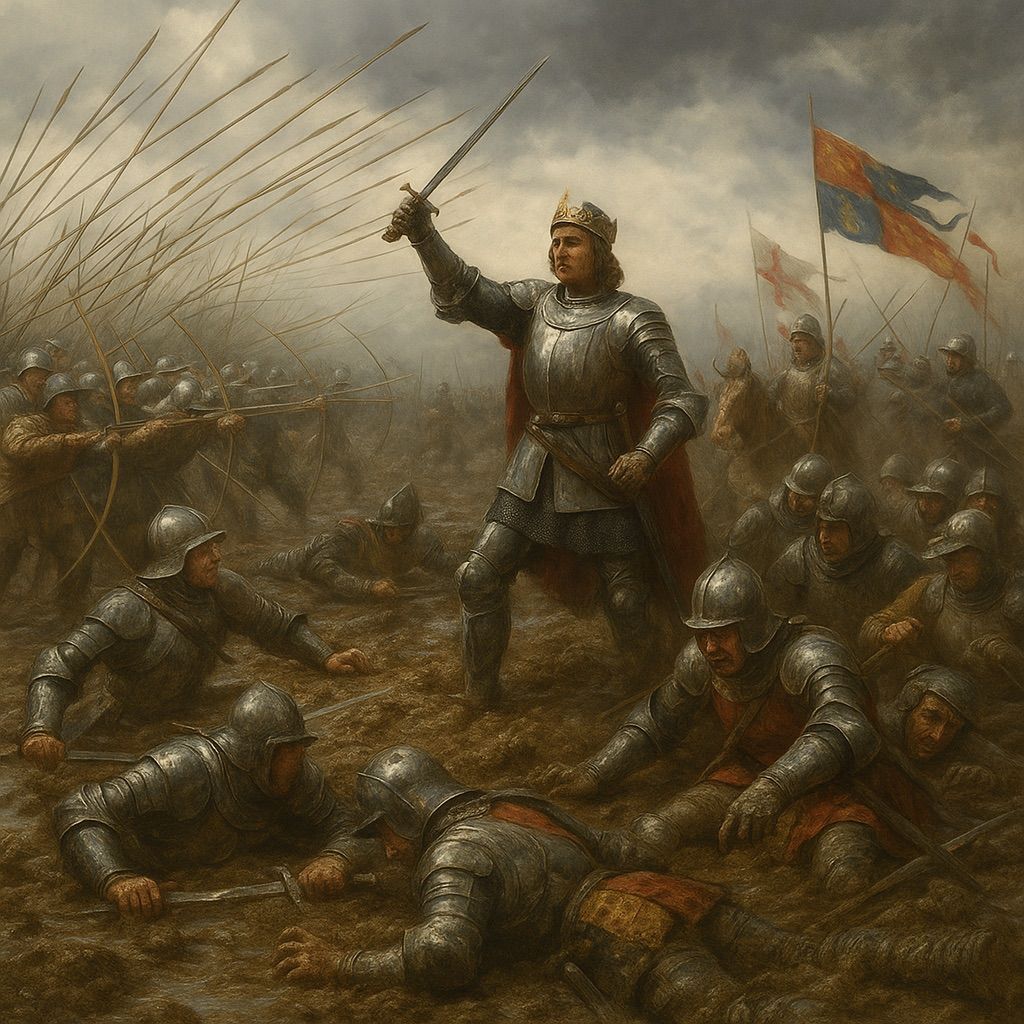
On October 25, 1415, in a sodden field in northern France, a weary English army faced annihilation. Outnumbered by French forces that outshone them in armor, wealth, and reputation, King Henry V’s men had every reason to despair. And yet, by the day’s end, the improbable had happened: the English, hungry, sick, and exhausted, had crushed their enemies. The Battle of Agincourt was not just a clash of swords and arrows—it was the triumph of strategy over arrogance, grit over glamour, and destiny over doubt. It became one of the most iconic battles in medieval history, celebrated in legend, immortalized by Shakespeare, and remembered as the moment when a young king carved his name into eternity.

The Hundred Years’ War had dragged on for decades, a bitter struggle between England and France over land, crowns, and pride. Henry V, newly crowned in 1413, sought to assert his claim to parts of France and to unite his divided kingdom under the banner of victory. His campaign of 1415 began with the brutal siege of Harfleur, but disease and attrition ravaged his army. By the time he marched inland toward Calais, seeking safe passage home, his force was reduced to perhaps 6,000 men—many weakened by dysentery and hunger. Waiting for him near Agincourt was a French army numbering anywhere from 20,000 to 30,000, bristling with knights, men-at-arms, and cavalry.

The disparity was staggering. The French, confident in their numbers and superiority, expected an easy slaughter. The English, hemmed in by exhaustion and mud, had little to rely on but discipline, tactics, and Henry’s leadership. Yet it was precisely these advantages that would turn the tide.

The battlefield itself played a crucial role. Narrow and hemmed in by woods, the field forced the massive French army into a bottleneck. Days of rain had turned the ground into thick mud, a quagmire that would trap heavily armored knights. Henry positioned his men wisely: longbowmen on the flanks, protected by sharpened stakes, and men-at-arms in the center. The English longbow, with its deadly range and armor-piercing power, was the great equalizer. Against waves of French cavalry and knights, the longbow would prove devastating.

At dawn on St. Crispin’s Day, Henry gave his men words that would echo through history. Shakespeare would later immortalize them in Henry V: “We few, we happy few, we band of brothers.” The king stood not above his soldiers, but among them, sharing their hunger, their sickness, their fate. For the English, the coming battle was not only about survival but about loyalty to a king who had shown himself one of them.

When the French advanced, the longbows sang. Arrows darkened the sky, raining death on knights and horses alike. The French cavalry faltered, their charges broken by stakes and mud. Then came the infantry, surging forward in waves. But the narrow field betrayed them. Pressed shoulder to shoulder, their armor dragging them down in the muck, they became easy prey for English arrows and counterattacks. Men stumbled, suffocated, were trampled by their own comrades. The flower of French nobility drowned in their own arrogance, buried in the mud of Agincourt.

By the end of the day, French losses were catastrophic. Thousands lay dead, including dukes, counts, and noblemen of the highest rank. English casualties were astonishingly light—perhaps a few hundred. The scale of the victory was so unlikely, so lopsided, that it stunned Europe. Henry V, the young king who had marched into France with little more than desperation, emerged as a warrior king, his reputation forged in blood and mud.

But to humanize Agincourt, one must imagine not just the kings and nobles, but the ordinary soldiers. The archer drawing his bowstring again and again until his fingers bled. The weary man-at-arms, armored but weak from dysentery, swinging his sword against a knight twice his size. The peasant conscript who had never seen France before, now watching princes die beside him in the muck. Their victory was not born of luxury or pride but of survival and solidarity. They fought because they had no choice, and in that necessity, they found destiny.

Agincourt became legend. For the English, it was proof that courage and discipline could topple the mighty. For the French, it was a humiliation, a wound to their pride that would take years to heal. For history, it was a reminder that wars are not always won by numbers or riches, but by leadership, terrain, and the human spirit’s refusal to yield.

October 25, 1415, was more than a battle. It was a moment when a king and his army defied the impossible, when mud and arrows toppled knights and crowns, when history bent toward the unlikely and the extraordinary. Agincourt endures not simply because it was a victory, but because it was a miracle of grit, strategy, and faith on a day when the world expected defeat.

Related Posts

Velvet Temptation: Why the Sexy Bunny Still Rules Halloween Nights

Dave

Every October, as the nights grow longer and the world prepares for its biggest masquerade, certain costumes emerge as timeless icons. Vampires stalk in velvet, witches sparkle in sequins, and devils strut in crimson, but one figure hops confidently into the spotlight, year after year, claiming her throne as one of the most enduring and viral costumes of all time. She is the Sexy Bunny—draped in a sleek bodysuit, adorned with playful cuffs, crowned with tall ears, and sealed with a soft little tail that winks at the world from behind. She is equal parts sophistication and seduction, humor and allure, innocence and boldness. She doesn’t need spells or fangs to captivate. With her velvet curves, her pointed ears, and her confident smile, the Sexy Bunny doesn’t just play Halloween—she owns it.

The costume’s power comes from its perfect balance of simplicity and impact. On the surface, it’s minimal: a bodysuit, cuffs, ears, tail. No elaborate props, no complicated makeup, no heavy fabrics. And yet, the effect is undeniable. The bodysuit frames the figure like a canvas, sculpting sleek lines that radiate confidence. The cuffs add just enough sophistication, playful nods to tuxedo elegance. The ears crown her head like a playful secret, a wink that says, I know exactly how much attention I command. And the tail? That’s the punchline, the detail that transforms allure into charm, sultry into playful. Together, these pieces create an image so iconic that it doesn’t need explanation. Everyone knows the Sexy Bunny when they see her, and everyone remembers her long after the night is over.

What makes the Sexy Bunny viral is the roleplay it inspires. Costumes thrive on Halloween not because of fabric, but because of story, and the Bunny carries one of the strongest narratives. She embodies contradiction: refined yet risqué, elegant yet cheeky, powerful yet playful. The woman who dons the costume becomes a character, someone who walks the line between sophistication and seduction, someone who knows how to laugh at herself even as she turns every head in the room. That character is endlessly fun to play, and endlessly fun to watch. On TikTok, she thrives in transformation videos, shifting from casual wear to ears and corset in a snap, the camera zooming as confidence floods the screen. On Instagram, she dominates feeds with full-body portraits that shimmer with charisma. On X, she trends every year as debates reignite: is she playful or powerful, innocent or seductive? The answer, of course, is both—and that ambiguity is what keeps her viral.

The adaptability of the Sexy Bunny is another key to her reign. Some choose the classic look: sleek black bodysuit, cuffs, bow tie, and iconic satin ears. Others glam her up with sequins, rhinestones, or vibrant colors, transforming her into a disco queen. Some lean minimalist, stripping the look down to sleek bodysuit and ears. Others exaggerate it, adding thigh-high boots, fishnets, or elaborate makeup. She can be styled vintage, like a pin-up pulled from the golden age of glamour, or modern, like a neon-lit goddess from a cyber club. The Sexy Bunny costume thrives because it’s endlessly customizable, always fresh, always relevant, yet always recognizable. No matter how it evolves, it always carries the same DNA: confidence, playfulness, and undeniable allure.

But beneath the sequins and satin lies something deeply human. The Sexy Bunny endures because she speaks to empowerment. She’s not about hiding—she’s about celebrating. She’s about stepping into a costume that doesn’t just look good but makes the wearer feel bold, radiant, and unapologetic. Halloween is the one night of the year where we can transform, where we can step into roles that amplify hidden parts of ourselves. For many women, the Bunny is that amplifier, the costume that says: I can be smart and sexy, funny and powerful, playful and confident—all at once. That empowerment radiates outward, charging every room, sparking admiration and laughter, inspiring envy and delight. The costume becomes more than fabric—it becomes a performance of self-confidence.

On social media, that confidence translates perfectly into content. The sleek lines of the bodysuit, the playful wiggle of the tail, the smirk framed by ears—all of it photographs beautifully, designed for virality. On TikTok, the Bunny thrives in lip-syncs, winks, and dances, hopping between humor and allure. On Instagram, she dominates in carousels—close-ups of makeup, playful ear adjustments, full-length portraits under neon lights. On X, she becomes a cultural talking point, sparking memes, jokes, and endless reposts. The Bunny is evergreen content, a costume that never fades because it’s always fresh, always fun, always memorable.

Halloween is about transformation, and the Sexy Bunny transforms the ordinary into extraordinary. She takes simple fabrics and accessories and turns them into an experience. She takes the playful innocence of an animal and fuses it with the boldness of glamour, creating something both familiar and surprising. She turns a person into a performance, a costume into a character, a night into a spectacle. And that’s why, year after year, she isn’t just present at the party—she defines it.

So when the music pulses and the strobe lights flicker, look around the room. Notice who commands attention without needing to shout. Notice who people are gravitating toward, who they’re laughing with, who they’re taking photos of, who they’re posting about online the next day. It will be the one in velvet, cuffs glimmering, ears standing tall, tail perched with perfection. That’s the Sexy Bunny. That’s the queen of playful contradiction. And that’s why, long after Halloween is over, she’ll still be hopping through feeds, trending across platforms, and living rent-free in memory.

Because the truth is simple: the Sexy Bunny doesn’t just wear a costume—she wears confidence. She doesn’t just play Halloween—she owns it. She doesn’t just attract attention—she deserves it. And that’s why she’ll always reign, golden tail and all, as one of the most viral icons of October 31st.

Related Posts

The Hungry Dead of Germany: The Tale of the Nachzehrer

Dave

Legends tell us that the dead rest peacefully in their graves, sealed away from the world of the living. Yet in Germany, whispers in the dark claim that not all corpses stay quiet. Some stir in the soil, not to rise and walk like the vampires of Transylvania, but to consume life itself from the cold cradle of their grave. This creature is the Nachzehrer, a ghoul born not of hunger for flesh but of a twisted, invisible thirst that reaches beyond the grave. Unlike the elegant bloodsucker who slips into the night to seduce victims, the Nachzehrer remains buried, chewing its own shroud or gnawing on its own flesh, and in doing so, drains the vitality of its family, neighbors, and village. It is a monster of silence, a predator of proximity, a parasite whose grave becomes a gateway to the suffering of the living.

The very name “Nachzehrer” translates roughly to “after-devourer,” a chilling hint at its nature. In folklore, it is not a creature that attacks with claws or fangs, nor one that stalks under the moon. Instead, the Nachzehrer feeds in stillness. The idea was simple yet terrifying: if a corpse begins to chew its burial shroud, it siphons life from the people it once knew. Every bite, every grim chew of fabric or flesh, sent death rippling through the family, causing wasting sickness, sudden illness, or unexplained demise. Villages would blame epidemics and plagues not on poor sanitation or disease—concepts not yet understood—but on the hidden, hungry corpse beneath the soil. And in that ignorance grew a powerful mythology: a person could die, yet still kill.

To imagine the Nachzehrer is to picture the most disturbing inversion of death’s promise. We expect burial to be the end of suffering, the drawing down of a curtain. Yet this myth insisted that death could be a beginning of a new horror. The ghoul was said to awaken in its coffin, bloated and grotesque, chewing with relentless purpose. Some accounts claimed that while it fed, a ghastly noise—almost like the sound of chewing or sucking—could be heard in the cemetery at night. Families living near graveyards swore they heard their lost loved ones “eating” the silence, gnawing at their connection to the living. The legend took on the flavor of desperation, as communities, struck by illness, searched for something tangible to blame.

The Nachzehrer was no elegant aristocrat wrapped in velvet cloaks. It was the very antithesis of beauty. Descriptions painted it as pale, bloated, and revolting, the skin discolored with death. Sometimes, its face was contorted, mouth working endlessly at its own burial cloth. Unlike vampires who stepped into the world of the living, it remained buried, sending out its deathly influence without ever leaving the grave. There was something uniquely terrifying about this: you could not lock your doors or stay away from crossroads. The enemy was not outside your home but underneath your feet, in the earth, already waiting.

But how did one become a Nachzehrer? Folklore is often born out of fear of the unexplained, and this legend was no exception. People who died in unusual or violent ways were considered candidates. Suicide victims, those who perished in accidents, or even individuals suspected of witchcraft could all become Nachzehrer. Sometimes, those who died during epidemics were automatically feared as the source of lingering death. In some traditions, the first to die in a plague was thought doomed to feed in its grave, continuing the outbreak by gnawing away from beneath the soil. The Nachzehrer was, in this sense, both a mythic scapegoat and a cultural attempt to understand why death could spread like wildfire.

The methods to stop a Nachzehrer were as gruesome as the legend itself. Villagers, desperate to halt mysterious deaths, often resorted to exhuming corpses. Signs of bloating or blood around the mouth—common results of natural decomposition—were read as evidence of ghastly feeding. To neutralize the creature, drastic measures were taken: decapitation, burning, or staking the corpse through the chest. In some regions, the shroud itself was targeted. If the corpse was chewing the cloth, villagers would place a stone or coin in the mouth, or remove the shroud entirely. Others went further still, hammering nails through the skull or stuffing the mouth with soil to stop the chewing. These rituals, horrifying to us today, represented the desperate attempts of ordinary people to regain control in the face of illness and mortality.

At the heart of the Nachzehrer legend is the concept of invisible death. Unlike vampires, who must be invited in, or werewolves, who can be hunted by moonlight, the Nachzehrer was unstoppable in its simplicity. It did not need to move, did not need to fight, did not need to charm. It fed by existing in its grave, bound by death yet horrifyingly alive in its hunger. This invisible threat mirrored the invisible nature of disease itself. When villages were struck by tuberculosis, plague, or cholera, the unseen hand of death was explained through the unseen chewing of the Nachzehrer. Folklore filled the void where science had not yet arrived.

And yet, in its horror, there is a strange poetry. The Nachzehrer reflects our deepest fear—that death is not an end, but a continuation of suffering. The corpse becomes an extension of the grief it leaves behind, a parasite not only on life but on memory. Families mourning their loved ones might also fear them, wondering if each new cough or fever was the echo of chewing in the grave. In this way, the Nachzehrer was not only a monster but a mirror, forcing communities to confront the fragile boundary between the living and the dead.

Even today, the Nachzehrer fascinates because it speaks to timeless human anxieties. It is not the stranger who comes from the outside, but the loved one who remains a threat. It transforms grief into suspicion and mourning into terror. In modern culture, we see shades of it in zombie stories, where the familiar face of a loved one becomes a predator. We see it in our own struggles with invisible threats, from pandemics to the creeping fear of what we cannot see but know is there. The Nachzehrer endures because it touches something primal: the idea that even when buried, the dead can still reach us.

In retelling this German legend, we are not simply indulging in a ghost story. We are tracing the evolution of human fear. Before microscopes revealed germs and viruses, before medicine explained contagion, the Nachzehrer explained the inexplicable. It gave form to invisible terror, wrapped it in a shroud, and buried it in the graveyard. But like all great myths, it lingers, reminding us that the scariest monsters are not those who stalk in the night, but those we cannot see—those who exist where we think safety lies. The Nachzehrer is not just a corpse-ghoul. It is a story about helplessness, about loss, and about how we invent monsters to survive our own fear of death.

And perhaps that is why this story, even now, on an October evening centuries later, still chills the spine. For when the wind rustles leaves in a graveyard, when silence hangs heavy in the air, we wonder—do we hear the earth shifting? Do we hear the soft chew of fabric beneath the ground? Or is it only the echo of our imagination, ancient and eternal, reminding us that death is never as simple as we hope it to be?

Related Posts

Smashing Pumpkins Illuminate Bahrain with Timeless Sound

Elias Rowen

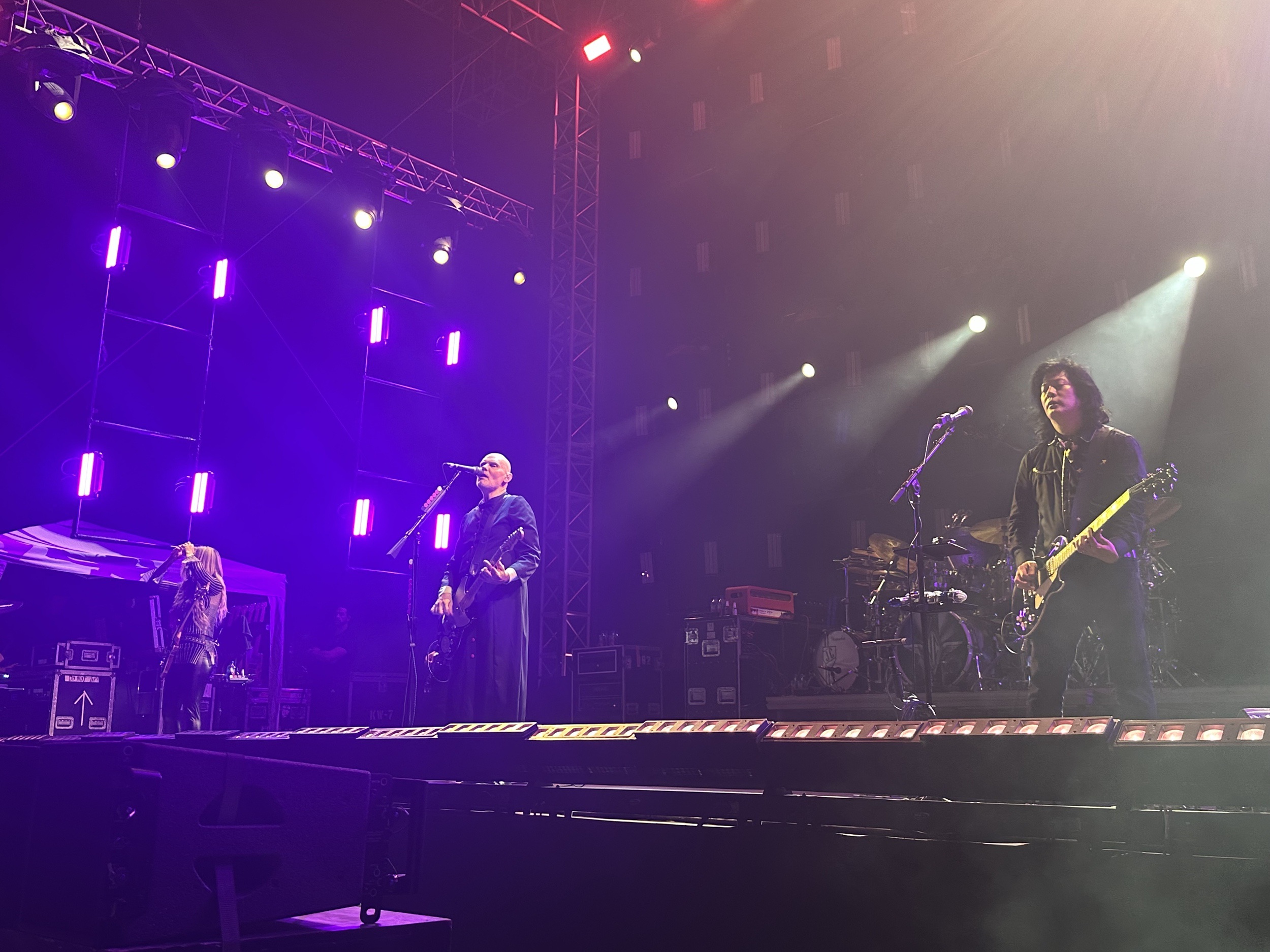
The night was warm, humid, and heavy with the scent of salt carried on a faint sea breeze. Above, the full moon hung low and luminous, watching over the thousands who gathered, its pale light washing over the stage like a celestial spotlight. The temperature didn’t seem to bother anyone — sweat clung to faces, shirts stuck to skin, but the atmosphere was electric, alive, feverish. Fans had begun lining up hours before gates opened, and by the time the first lights dimmed, the anticipation was tangible. When the Pumpkins finally took the stage, the crowd erupted with a sound that matched the magnitude of the night — a roar that could have been heard across the bay.

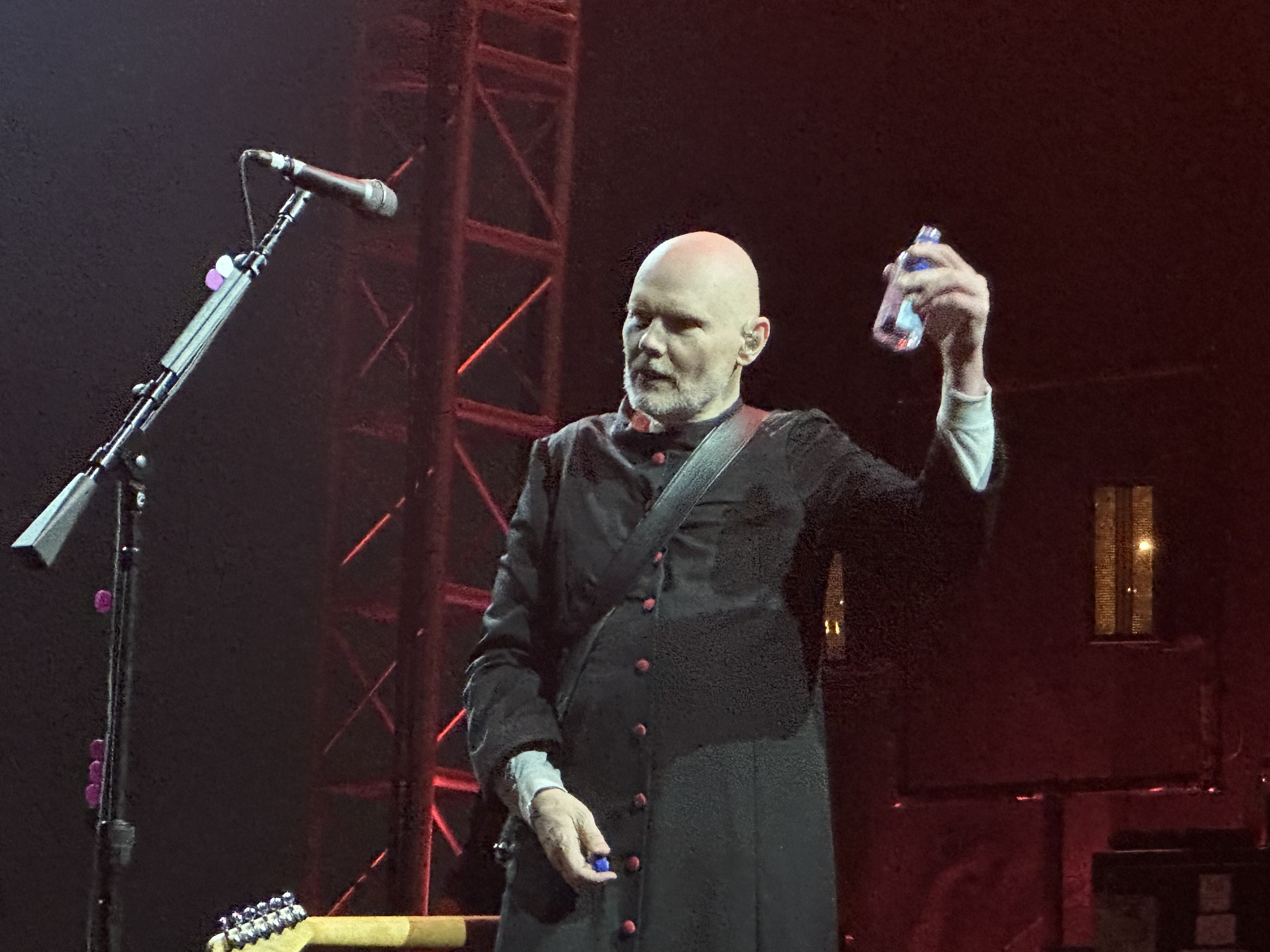
Billy Corgan emerged first, dressed in his trademark black attire — minimalist, austere, yet commanding. His presence was spectral and magnetic, his shaved head reflecting the stage lights as if he were some high priest of distortion. For decades, Corgan has been a man of contradictions — introverted yet outspoken, philosophical yet blunt, fragile yet indestructible. On this night, he seemed deeply aware of where he stood: on a stage thousands of miles from the Chicago clubs where the Smashing Pumpkins had first found their sound, now performing in the heart of the Middle East, before a crowd that spanned generations. He paused for a brief moment, looked up at the moon, and smiled faintly before gripping his guitar and launching into the opening chords of “Cherub Rock.”

The amphitheater exploded. The guitars roared with that unmistakable Pumpkins texture — layers of fuzz, shimmering harmonics, and that swirling wall of sound that could only come from their hands. The audience sang along to every word, the sound of thousands of voices bouncing off the amphitheater’s stone surfaces, mingling with Corgan’s nasally snarl: “Freak out, give in, doesn’t matter what you believe in.” Bahrain, for one night, believed entirely in that sound.

Standing just to Corgan’s left, James Iha looked effortlessly cool, as he always does — his black hair falling just right, his demeanor calm and collected. Iha has always been the band’s quiet anchor, the yin to Corgan’s fiery yang. His guitar tone shimmered with precision and elegance, his harmonies weaving through Corgan’s leads with the ease of decades spent side by side. Every so often, he turned to the audience, offered a sly smile, and nodded in rhythm, his understated stage presence commanding in its serenity. For fans who remembered the early ’90s, seeing Iha and Corgan share that space again felt like a reunion of spirits as much as musicians. Their chemistry — forged through creation, destruction, and rebirth — remains one of rock’s most fascinating partnerships.

Behind them, the powerhouse that is Jimmy Chamberlin sat poised like a coiled spring behind his drum kit. Chamberlin’s playing has always been a force of nature — intricate yet explosive, jazz-infused but thunderously heavy. As he kicked into the drum fills of “Geek U.S.A.” and “Tonight, Tonight,” the precision was surgical. Each hit landed like punctuation, propelling the songs forward with both grace and power. Under the humid Bahraini night, sweat poured down his face, but his focus never wavered. His sticks blurred under the lights, catching glints of moonlight as if he were drumming with lightning. Chamberlin remains the band’s engine — no computer, no metronome, no backing track could ever replicate his heartbeat.

To the right of the stage, Kiki Wong stood, the new addition to the lineup, her guitar slung low as she tore into riffs with energy and confidence. Her arrival had sparked curiosity among long-time fans, but within moments of the first solo, she’d earned every ounce of the crowd’s respect. Kiki’s style blended technical mastery with emotional flair — precise, expressive, and fearless. She moved across the stage with charisma and intensity, her chemistry with Iha immediate and electric. For those witnessing her first international tour with the band, it was clear that she wasn’t simply filling a vacancy — she was helping define a new chapter in the Smashing Pumpkins’ legacy.

The setlist was a masterclass in balance — a journey through time. From the roaring angst of the Siamese Dream era to the dreamlike textures of Mellon Collie and the Infinite Sadness, through the dark modern synthscapes of ATUM, every era had its moment. “1979” floated across the amphitheater like a memory resurrected; couples swayed, arms wrapped around each other, while smartphones lit up like candles across the terraces. “Tonight, Tonight” came alive under that full moon — a moment so perfect it felt scripted by the universe itself. When Corgan’s voice soared over the strings and Chamberlin’s drums built toward the climax, you could almost feel the collective heartbeat of the crowd align with the music.

As the night progressed, the Pumpkins ventured into deeper cuts — “Mayonaise,” “Drown,” “Ava Adore” — each song met with the kind of reverence normally reserved for hymns. Between songs, Corgan spoke sparingly but warmly. He thanked the Bahraini crowd for “making us feel at home in a place so far from where it all began.” He joked about the humidity, about how his guitar strings were “sweating more than I am,” and drew laughter from the crowd. It was a rare, candid side of him — relaxed, grateful, and connected.

James Iha took the mic at one point, his soft-spoken humor cutting through the atmosphere. “You know,” he said, “when we started this band, we never thought we’d be playing under a full moon in Bahrain.” The crowd roared, and he smiled. “It’s beautiful. You’re beautiful. Thanks for having us.”

Then came the thunderous drum roll leading into “Bullet with Butterfly Wings,” and the amphitheater erupted again. Even those who’d come out of curiosity — not die-hard fans — were swept into the frenzy. Every voice screamed the chorus, “Despite all my rage, I am still just a rat in a cage!” It was cathartic, primal, and unifying. The raw emotion of that song transcended decades and languages; it was as relevant in 2025 as it had been in 1995.

Under the shifting stage lights, you could see just how much the band was enjoying themselves. Kiki leaned into Corgan during solos, the two exchanging smiles; Iha moved toward Chamberlin during transitions, syncing perfectly; and Corgan himself looked more at peace than he had in years. Perhaps it was the surreal beauty of the venue — an open-air amphitheater surrounded by the sea — or perhaps it was the awareness that after thirty-five years, the Smashing Pumpkins were still here, still vital, still evolving.

At one point, the moon broke free of the thin clouds that had been drifting across the sky, casting a silvery glow over everything. Corgan glanced up and, almost instinctively, shifted gears into an impromptu solo acoustic segment. The band left the stage, leaving him alone with his guitar. “Disarm” filled the air, fragile and haunting. You could have heard a pin drop. The Bahraini night seemed to hold its breath. Every note hung in the air like a confession. When he finished, there was a beat of silence — and then thunderous applause that rolled like a wave across the amphitheater. Corgan smiled — a genuine, almost shy smile — before inviting the band back for the next surge of sound.

The energy climbed again with “Today” and “Zero,” the crowd’s chants echoing into the night. By now, everyone was drenched in sweat, but nobody cared. The band was locked in, the audience was alive, and the amphitheater had become a shared dream. When “Solara” came roaring through the speakers, the newer fans cheered just as loudly as the veterans who had lived through the Pumpkins’ ’90s heyday. The seamless blend of past and present was remarkable — proof that this band had not only survived but continued to matter.

As the concert neared its end, the Pumpkins delivered one final knockout: “The Everlasting Gaze.” The song’s grinding riff and apocalyptic tone felt perfectly suited to the vast, open sky above. The lights pulsed in rhythm, illuminating faces in the crowd — faces of teenagers hearing these songs live for the first time, and older fans reliving youth in every chord. When the last note faded, the band stood side by side, taking in the moment. Corgan spoke softly into the mic: “Thank you, Bahrain. You’ve given us something to remember forever.”

The applause was deafening. Even after they walked offstage, the crowd didn’t move. Chants of “One more song!” filled the amphitheater. After a minute that felt like an eternity, they returned — a soft, dreamy intro began to play. It was “Luna,” the perfect closer. The moon hung directly above them now, massive and radiant. “I’m in love with you…” Corgan sang, and for a few fleeting moments, it felt as though he was singing to every single person in the crowd. The song ended not with a bang, but with a sigh — gentle, intimate, transcendent.

When the house lights came up, no one rushed for the exits. People lingered, taking photos, laughing, soaking in what they had just witnessed. The amphitheater itself seemed reluctant to let go of the sound. The air was still thick with humidity, but also with something intangible — the shared awe of an experience that transcended mere entertainment. It was a communion, a reminder of why live music matters.

Outside the venue, the moonlight danced off parked cars, and the chatter of exhilarated fans filled the night. Some were still humming “Tonight, Tonight”; others debated which song had hit hardest. A Bahraini teenager wearing a vintage Smashing Pumpkins T-shirt turned to his friend and said, “That was history, bro.” And he was right.


Related Posts